The comet was discovered less than a year ago near the orbit of Jupiter. Now, observers in North America can see it in the northeastern sky around sunrise.
(Image credit: Patrick Prokop/HeavenlyBackyardAstronomy)

The comet was discovered less than a year ago near the orbit of Jupiter. Now, observers in North America can see it in the northeastern sky around sunrise.
(Image credit: Patrick Prokop/HeavenlyBackyardAstronomy)

The British diving star was often seen knitting at the Tokyo Olympics, where he won a gold medal. He sold doggie jumpers for charity; now the purler's going pro with a shop that sells knitting kits.
(Image credit: Clive Rose/Getty Images)

This post, update: my employee sent me a “letter of intent” to look for another job , was originally published by Alison Green on Ask a Manager.
It’s “where are you now?” month at Ask a Manager, and all December I’m running updates from people who had their letters here answered in the past.
Remember the letter-writer whose employee sent her a “letter of intent” to look for another job? Here’s the update.
I wrote in a while ago about an employee who sent me a Letter of Intent to search for a new job. When I sent in the question, I was honestly confused. I had never heard of such a thing, but perhaps that was the done procedure in some industry. After all, he had a contract (more on that later). My question was: does sending a letter of intent to job search constitute a resignation? (The answer was no.)
I ended up putting a lot of details in the comments. To recap: I’m the chair of a small academic department at a reasonably well-respected University. Fergus, the lecturer in question, had had a conflict with a particular group of students the previous semester, and had basically been told to get his act together, plan ahead, and stop chopping and changing his class at the drop of a hat.
He had several of the same students in the Fall semester, and immediately got up to his old tricks, brusquely informing the students that he was changing a class meeting from online to in-person the first week of classes, AFTER students had already set up their work schedules. The tone of the message was brusque, bordering on rude (“This change is MANDATORY and IMMEDIATE!”). The same group of students complained, as they have professional jobs in the area we teach in, and can’t change their schedules like that. I supported the students, saying that you really can’t change something like that partway in.
Fergus flipped out and wrote the letter of intent, which included a page of his accomplishments in the department. (True, he has been very helpful in many ways.) It also included a number of demands such as, a “real” Assistant Professorship with a “fancy title,” two different salary demands both of which were greater than mine, and equivalent to the Assistant Dean’s, and public acknowledgement of his contributions, otherwise he’d find a new job. It also used the phrases “mean girls” and “cancel culture” throughout. It also said I was undermining his “authority as the instructor of record.” The whole thing was about four pages long and, frankly, bonkers. (Note: a new Assistant Professor line has to be approved by the president of the university. There is no budget for such a thing, and the politics of our situation would make a request seem wildly tone-deaf. The university has no provision for “fancy titles” like what he wants, unless he could find a donor to endow a chair for him. NO incoming Assistant Professorships will offer anywhere close to his salary demands, unless it’s Stanford or Harvard wooing a rockstar. This guy is solid, but no rockstar.)
My first thought was that I had assumed he was looking for another job already, since he had already been complaining about his teaching load and wanted more time for research, and was not happy when I pointed out that he’s a lecturer, which doesn’t have a research component. My second thought was that this was bananacrackers. That’s when I emailed you to try to figure out how crazy sauce this was. The answer was very.
Shortly after I emailed you, I found out that he had not only sent this letter to me, but to my boss and the dean. He had also filed an official complaint against me with the Faculty Senate. I met with the dean and gave him the background and he told me not to worry about it, he’d handle it.
I talked to the contracts people, who told me that Fergus didn’t have a contract through June, as I had assumed (I started after him, so had never seen the contract). No, he had a 3-year contract! And a bonkers letter of intent doesn’t constitute a resignation. I needed him to give me a final date. After several one-on-one meetings, he did finally give me a letter of resignation with an end date of “mid-June.” Asked the contract people, nope, no good, I need an end date. After much fussing, I finally got one. Whew! The job ad for his replacement is wending its way through the university, and should be posted in January. Yay!
So all’s happy, except that he STILL can’t seem to get along with this particular group of students. The dean brokered a deal to allow them to join classes remotely, even when everyone else is in-person, given their schedules. Good, except that, apparently. he refuses to answer questions from them, and if they ask questions, he turns off the sound from the computer where they’re logged in, because “it’s annoying.” Even when in person, he will explain things to other students, but give brusque one-word responses to them. Students not in this group have mentioned it to me.
Most recently, the grandmother of one of these students passed away, and he refused to believe that she needed 3 days for the funeral because “funerals are only one day long.” If she wanted 3 days, he wanted a signed letter from her parents! The student is 25 and lives on her own. The student complained, and when I pushed back, pointing out that the student is of a different ethnicity and religion, and these practices vary, he demanded to know if all of the other faculty were being flexible (Yes, I’m one of them. We are.) and then grudgingly agreed to give her a little leeway.
Honestly, his biggest problem is the tone of all of his communications. I pointed out to my boss at one point, that I probably could have swung the schedule change if I thought it was important enough, simply by listening to student concerns, trying to meet them partway, and just not being an authoritarian jerk. Holding a grudge against three of our best students (all female, all POC) and treating them this way for over 6 months is so beyond inappropriate, and there’s nothing I can do about it. At least none of them have to take a class with him again, and I took one of his classes in the spring away from him and hired a new adjunct to teach it. It’s extra money from my budget, since he gets paid the same no matter how many classes he teaches, but it’s an intro class into a major part of our curriculum, and I need it taught well.
I’m keeping my fingers crossed that we make it through the rest of the semester and next semester without any more big blowups, that he finds a new job that he can move into, and that I find a replacement who will fit in with the rest of the program.
P.S. I forgot an important point! The letter of intent also included the phrase, “I expect an extremely positive letter of recommendation from you.” And, yes, he has asked me to be a reference for the jobs he’s applying for now! I haven’t been contacted by anyone yet, but I have no idea what I’m going to say if/when that happens!
If you’ve been away from academia for a few years, you may have forgotten how to write in a way that’s suitable for higher education. Not to worry, though. With just a few steps, you can transform your writing into a bloated, confusing, impenetrable slog. Don’t believe me? Let’s workshop a sentence together. This will be our starting point:
Susan ran outside and tripped.
It’s simple, clear, and totally unambiguous. That’s not going to cut it in higher ed. Let’s rework it.
STEP 1: If you have active verbs that make your sentence interesting, nominalize them. “Ran” will become “the running” and “tripped” will become “the tripping.”
STEP 2: Use tautology. Make sure the sentence says the same thing twice. Susan’s running outside that caused the tripping preceded the tripping that was caused by the running.
STEP 3: If you have a common word like “outside,” find a synonym. Instead of Susan’s running outside, why not make it Susan’s exterior running?
STEP 4: To replace the verbs you’ve nominalized, take other parts of speech and turn them into verbs. Actually, “exterior” is a pretty cool word. Think it has to be an adjective? Not anymore. “Exteriorize”—boom! It’s a verb now.
STEP 5: In order to make a word like “exteriorize” work as a verb, you need to give it a subject. When in doubt, you can always use the noun “space.” The space exteriorized … Wait, that doesn’t work. Let’s add another step:
STEP 6: Passive voice. The space was exteriorized by … (see Step 2). The space was exteriorized by its non-interiority. Perfect. All we have to do is throw a “that” in there somewhere to tack it onto the sentence.
STEP 7: Include the word “problematic” (as a noun). What’s “the problematic” here? Susan’s running.
STEP 8: If you’ve followed all of the above steps and find that something’s grammatically missing, throw in a “vis-à-vis.” It’s like the superglue of language. It can tie anything together.
Okay, I think we’re all done. Now let’s compare. This was our original sentence:
Susan ran outside and tripped.
And now, we have this masterpiece:
The problematic of Susan’s running vis-à-vis the space that was exteriorized by its non-interiority that caused the tripping preceded the tripping that was caused by the running.
Congratulations! You’re ready for grad school.

Enlarge (credit: Aurich Lawson | Getty Images)
If you're a Google Chrome user setting up a new Windows PC, the most important feature of Microsoft Edge is the ability to download Chrome. Microsoft is apparently aware of this behavior and is doing something about it: Neowin has spotted new Edge pop-ups that specifically try to dissuade users from downloading and installing Chrome, a change that I promise I didn't know about when I wrote about Microsoft's annoying promotion of Microsoft Edge literally yesterday.
You won't see the pop-ups every time you try to download Chrome (I haven't yet), but Neowin and other outlets like The Verge have spotted at least three different messages:
While the operating system-level pop-ups are a small escalation in the ongoing browser wars, this kind of behavior isn't new. If you use Bing to search for essentially any web browser, including Chrome, Firefox, Opera, Vivaldi, or Brave, a large ad for Edge appears both above the search results and in a giant box to the right of the search results. And whenever you log into Google's services using Edge or any other non-Chrome browser for the first time, you'll get a "helpful" nudge about downloading and installing Chrome. But as the provider of Windows, Microsoft definitely has more opportunities to suggest using Edge, and it takes advantage of those opportunities with frustrating regularity.
Read on Ars Technica | Comments
 Sean Baker works in the margins, writing and directing movies about people on the tattered fringes of the social fabric. In his 2015 breakout, Tangerine, it was transgender sex workers flitting around the alleys of West Hollywood. His 2017 mainstream breakthrough, The Florida Project, shone a light on the “hidden homeless” huddled inside the cheap motels that dot the outskirts of Disney’s Magic Kingdom. For his latest—the darkly funny, deeply uncomfortable Red Rocket—Baker brings that eye for pockmarked detail to the Gulf Coast town of Texas City, where the indifferent, industrial churn of the self-proclaimed “All-America City” proves a fitting backdrop for exploring the oily underbelly of modern capitalism. “Instead of a town with a refinery, it felt like a refinery with a town,” Baker says…View Original Post
The post Sean Baker’s Provocative ‘Red Rocket’ Gets Down and Dirty in Texas City appeared first on Texas Monthly.
Yesterday, the U.S. Supreme Court heard oral arguments in Dobbs v. Jackson Women’s Health, the most pivotal abortion rights case in decades. While a ruling won’t come until the Justices wrap up the term in June 2022, their decision could further upend the already fragile abortion care network in Texas and devastate care in states across the country.
During two hours of oral argument on Wednesday morning, the six-member conservative majority—Justices John Roberts, Clarence Thomas, Samuel Alito, Brett Kavanaugh, Neil Gorsuch, and Amy Coney Barrett—did little to allay those fears, appearing poised to either overturn Roe directly or allow states to bar care at the 15-week mark.
“Why should this Court be the arbiter rather than Congress, the state legislatures, state supreme courts, the people being able to resolve this?” Justice Kavanaugh said. “There will be different answers in Mississippi and New York … because there are two different interests at stake and the people in those states might value those interests somewhat differently.”
Meanwhile, liberal justices Sonia Sotomayor, Elena Kagan, and Stephen Breyer indicated they would oppose the 15-week ban. Sotomayor sharply cautioned that overriding Roe or the 1992 abortion rights case Planned Parenthood v. Casey—which prevented states from passing abortion laws that impose an “undue burden” on women seeking care—would undermine the Court’s credibility.
“Will this institution survive the stench that this creates in the public perception that the Constitution and its readings are just political acts? I don’t see how it is possible,” Justice Sotomayor said. “If people actually believe that it’s all political, how will we survive?”
Dobbs v. Jackson Women’s Health challenges a Mississippi law that bars abortion after 15 weeks of pregnancy. Since Supreme Court precedent recognizes the right to end a pregnancy before viability, or around 23 weeks, the case constitutes a direct challenge to Roe v. Wade. Dobbs places the landmark 1973 decision—which enshrined abortion care as a constitutional right and prohibited states from banning the procedure prior to fetal viability—in danger of being overturned directly.
Thanks to nominations by former President Donald Trump—and former Senate Majority Leader Mitch McConnell’s successful gambit to wrest a seat away from former President Barack Obama—conservatives now have a supermajority on the bench. With three new anti-choice justices (Gorsuch, Barrett, and Kavanaugh), Mississippi state officials seized the opportunity to strike at the heart of Roe. The fact that the Court decided to take up the case rather than rely on set abortion precedents is telling in itself.
While states across the country brace for the possibility of a post-Roe world, the Supreme Court’s refusal to block Texas’ draconian abortion ban in September has already given our residents—and the nation—a preview of what that bleak landscape will look like.
For three months, Texans have not been able to access abortion care in their home state past six weeks of pregnancy, devastating a reproductive health network that already faces multiple barriers to access. Providers have had to turn away hundreds of vulnerable patients seeking care, leaving them traumatized and forcing them to travel outside of the state. Some have had to carry pregnancies to term against their will.
About half of states in the U.S. are likely to ban abortion without Roe in place.
Senate Bill 8 has caused a ripple effect throughout the U.S. as clinics in neighboring states have been overwhelmed with an influx of patients who have fled Texas for care. About one-fourth of the patients at Jackson Women’s Health—the very clinic in Mississippi at the center of Dobbs and the sole abortion provider in the entire state—now come from Texas.
For many of the seven million women of reproductive age in Texas, Roe already feels meaningless.
And if the Supreme Court chooses to overrule Roe, Texas is one of 12 states that would bar abortion care completely. This is because, during the previous legislative session, Republican lawmakers passed a so-called “trigger law” (House Bill 1280), designed to ban abortion immediately if Roe falls, “wholly or partly.” It offers no exception for rape, incest, or fetal abnormalities. The law would impose criminal felony penalties on providers 30 days following a Supreme Court decision and allow the attorney general to file suit and impose civil penalties of no less than $10,000. Texas Attorney General Ken Paxton has expressed support for the Mississippi ban every step of the way, leading a 24-state coalition calling for the reversal of Roe. What’s more, the state still has pre-Roe bans on the books that were never removed.
Overall, about half the states in the U.S. are certain or likely to ban abortion without Roe in place, including neighboring Oklahoma, Louisiana, and Arkansas. Texans would likely be forced to drive an additional 525 miles to the nearest provider, according to The Guttmacher Institute.
Despite the uncertainty over the future of Roe, attorneys with the Center for Reproductive Rights, who represented the Jackson clinic before the High Court, say they feel it is “critical to remain optimistic” as the “facts and law” are on their side.
“We were able to put all of the key issues in front of the Court, which are 50 years of precedent that support this right—and Mississippi has not made any arguments for taking this right away,” said CRR Litigation Director Julie Rikelman during a press call. “We focused on how important the right is for women and their families […] and the ability for equal status in society.
“I think we powerfully presented those arguments,” she added. “Now, it’s in the court’s hands.”
The post The Supreme Court Is Itching to Overturn Roe v. Wade appeared first on The Texas Observer.
We at the Democratic Party understand that you all have rights and want to keep them. We love that for you. But lately, we’ve heard some concerns. Apparently, you’re very worried that you won’t have rights much longer. Some of you even say you already don’t have rights. Yikes. Let’s see what we can do about that.
Before you complain about anything, remember to vote! Voting is a sacred American—oh, you voted? That’s great. But did you also remember to vote in the—okay, you voted in the midterm elections too. Wow. That’s amazing. Well done!
Hmm. Well, so what you’re saying is, you voted, but now none of the things you wanted to happen are happening even though you voted for people who swore they would make those things happen? People who said: If you do NOT vote for me, everything will go to shit. But now everything is going to shit, and they’re just like … telling you to vote … harder?
Got it, okay. So you’re wondering what the point of supporting any of these candidates was if the minute they had any power to circumvent the worst possible outcomes by, for instance, abolishing the filibuster, granting D.C. statehood, and/or adding a couple of non-knuckleheads to the Supreme Court because it was extremely obvious to anyone paying even a tiny bit of attention that Brett “Beer Me” Kavanaugh and Amy “Sorry I Forgot the Fifth Freedom in the First Amendment, But I’m Sure It’s Not That Important” Coney Barrett were going to join forces like some kind of misogyny Voltron to torch what’s left of Roe v. Wade, they did NONE of those things and instead they just, like, dressed up in dumb as hell “bipartisan” Halloween costumes, proving that they don’t take this, or you, seriously at all?
Yeah, that sounds frustrating. Maybe there’s something wrong with your district? Have you tried turning your vote off and turning it back on again? See if that does anything.
But real changemakers know that elections are just the beginning of the work. So now it’s time to get organized and take to the streets. Make your voices heard: go out there and protest.
No, hang on, not like that. That’s not what we meant. That’s very loud and disruptive. It’s not quite terrorist-violent-insurrection disruptive, but still, it’s kind of … what’s the word we can use for this now? “Urban”? We can tell that you’re very upset. Have you thought about changing slogans to something less mean? And maybe use your inside voices. See if we listen to you then. We probably won’t, but we might. Remember how much you guys liked hoping for stuff? Those were the good old days. Keep doing that. The hoping. So great for you.
Hey, what about a tweet? We love tweets. They’ve never done us wrong. Try a hashtag. You could even use ALL CAPS. That’s shouting, for the internet. See? We get it. We understood the assignment. It’s giving rights. We’re living rent-free in your head, baby!! (Don’t get too excited about that last part; the eviction moratorium is over, just in time for Omicron. Happy holidays.)
The thing is, we can’t just be working to further our agenda, as approved of and voted on by you. What we really need to focus on are the wants of people who didn’t vote at all, or who did vote but voted for other people. They matter to us even more than you do! You may be wondering, Okay, but then WHY THE HELL DID WE VOTE FOR YOU??? So much enthusiasm, fantastic! Stay engaged and keep asking those hard questions.
We hope this solves your problems. It better, because we certainly won’t.
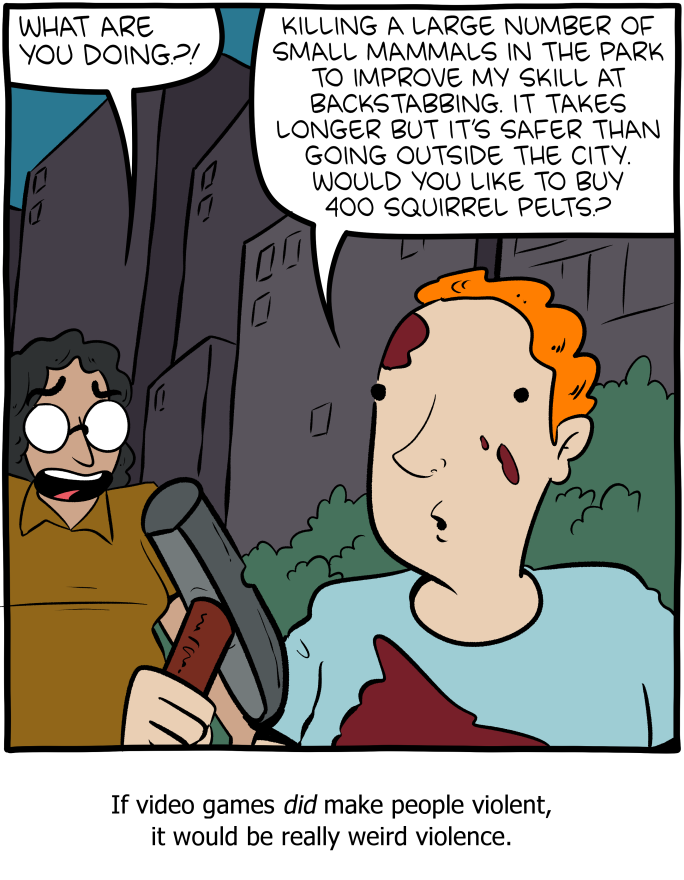
Hovertext:
If you hear someone try to save before attacking you, run.
This post, “I will confront you by Wednesday of this week” , was originally published by Alison Green on Ask a Manager.
Several years ago, a reader shared with us this epic email that was sent by their company’s boss after a holiday party gone terribly awry, and as we enter the holiday season we remember its glory.
“This happened about ten years ago, but the email I received from our boss was so epic I preserved it.
Context: The second year I worked at this company, our holiday party was held on a dinner cruise boat. Our boss footed the bill for dinner and an open bar, and a few other companies also hosted their own parties on the boat at the same time. Since I was underage at the time, I did not drink, and actually left early with my date. Everything was fine when I left. The Monday after, I rolled into the office– the first person there– and was greeted with this email from our boss [identifying details removed]:
‘Good morning to all. I hope all of you had time to recuperate and reflect about the unusual chain of events and circumstances at this year’s Christmas party. Some of you went home early and did not take in the full range of events.
Unfortunately, some of our staff got out of hand, including the spouses. Things were said, and things were done, that quite frankly were very inappropriate. Also, we had people from the adjoining group that decided to take advantage of our open bar and co-mingle with our group.
In regards to the inappropriate behavior, I am not going to go into all of the details, but let it be said that the root cause was probably due to the open bar. Some of our staff decided that the open bar meant that the drinking could be unlimited, not only in how much, but how they drank. As a result, some our staff and spouses decided that shots were OK. Shots were ordered for some who do not even drink. Shots are not OK at a company Christmas party. Other staff and spouses got multiple drinks at once for themselves and for people not even in our group. Others decided it was OK to get openly drunk and beligerent, to the point of making racial slurs. I, myself, am guilty of attacking someone from the other group after he decided to retaliate by groping my wife.
Having thought about the circumstances and the fact that we have to work together as a firm and team, some of you need to apologize for your behavior and/or for the behavior of your spouse. We specifically implemented a no fraternization policy and some of you could get fired on that alone, while other staff exercised no restraint over their spouse for their drunken condition. It is not OK for a spouse to misbehave, just because he or she is not an employee. Many careers have been destroyed, and people get fired, due to the conduct of their spouse. You are expected to exercise constraint over your spouse, or take them home. And if that cannot be done, then you should not bring your spouse.
In regards to the Firm’s policy on drinking, there will be no more open bars. Unfortunately, some of you and your spouses exercise extremely poor judgment. Because of this poor judgment, it puts the Firm at risk. Given the poor road conditions that night, some of you could have ended up dead. It is also unfortunate that a few have to ruin it for the whole group.
I would like to start the apologies by stating I am sorry for not handling the situation that I was confronted with in a different manner. I feel embarrassed, and it was not conduct befitting of the firm’s president. I also felt betrayed by some of you for patronizing the one individual from the adjoining group, who’s behavior was lewd and offensive, not to mention the outright theft by running up our bar tab.
I invite others to make some form of apology, either by email or in person for what they did or said, or what their spouse did or said. You can do this voluntarily, and you know who you are, or I will confront you by Wednesday of this week. I do not intend to ignore what happened. If I have to confront you, you could lose your job. I will be available Monday and Tuesday late afternoon, or you can email me and/or others. Let’s not let this one incidence stop us from being [#1 company in field]. We have a lot going for ourselves and let’s keep it going.’”
This post, update: interviewer badmouthed me to my references because I didn’t want to “harness the power of QAnon” , was originally published by Alison Green on Ask a Manager.
It’s “where are you now?” month at Ask a Manager, and all December I’m running updates from people who had their letters here answered in the past.
Remember the letter-writer whose interviewer called up her references to badmouth her because she didn’t want to “harness the power of QAnon”? Here’s the update.
I so appreciate your answering my question, and so quickly: I was able to use your wording exactly in emails to my references because of your quick response. (Unfortunately, I got the email too late to contribute meaningfully to the comments, but I read all of them and really just love everyone who reads your blog. Thank you all!)
It turns out that the board member had called ALL of them. Of six references, four (including the original one who notified me of this mess) laughed it off just as breezily, understanding completely that the call was absurd and sharing some asinine stories of their own. The fifth had a lot of questions for me, and I had to clearly spell out what the potential client had said to me before they understood (I was hesitant to bring specifics to the table because it could out the organization/board member, but I guess that’s no bad thing at the end of the day). Once they did understand, though, they were so apoplectic with outrage on my behalf that they actually called the board member back, though the call was never returned.
However. The final reference was overwhelmingly concerned by the board member’s allegations and called me into an in-person meeting. I went, realizing the board member may have spun things in such a way that made my client uneasy and eager to rectify that. Almost as soon as I sat down, this client started discussing QAnon in earnest and just…laid into me. It became extremely clear that he, too, was a supporter/believer/whatever and that he and the board member had likely had an extensive chat about those of us who aren’t. He told me that if I was so “closeminded” about “excellent, well-reasoned” strategies presented by board members (see, when he says it without knowing the context, that sounds horrible!) he didn’t see the point of continuing our contract since I had “shown my true colors.”
Well, Alison, I’m embarrassed to admit that I cried. The contract/money wasn’t a make-or-break for me, but I have quite literally never been fired…or reprimanded…or even had a manager be truly disappointed in me. And yes, I know that this man’s opinion of me matters not at all, but I felt blindsided, angry, and embarrassed (I KNOW!) someone’s opinion of me had changed so drastically, and that I was fired. It was a short burst of angry and incredulous tears and I was able to quickly remember another script you’d given for crying at inopportune moments. I explained the origin of my tears matter-of-factly, told him that while I was very surprised by his decision I wouldn’t try to change my mind, and let him know I’d send the files on my outstanding projects along with my invoice in the next 48 hours. His EA had emailed me before I even left the building to request the documents/final invoice…and followed up with an email from her personal account apologizing profusely for her boss, who is apparently unbearable in a variety of other ways. (I suggested she read your blog and get the heck out!)
I closed out my accounts with the organization, was paid promptly by the kind EA, and, in theory, that was it. But for whatever reason, my confidence took a huge hit: How could I not have seen (invisible) red flags with this client? Was I actually close-minded because I couldn’t “see the other side”? I got fired. My perfect employment record was tarnished! It didn’t matter if these people were unhinged…I should have worked harder, or…something?! It doesn’t take a clinical degree to realize pretty quickly that my usually well-controlled anxiety was no longer dormant and, with a little introspection, that I was in fact struggling with the current state of the world, a new NICU-graduate baby, and setting completely unrealistic career goals and business milestones for myself while 1) expanding a business 2) as a new mom 3) in the middle of a pandemic.
Thanks to a therapist who is worth her weight in gold and a husband who is simply the most supportive and understanding human on the planet, I’ve recalibrated my work/life balance and am actively working on why my identity is so wrapped up in being a high-achiever. My other clients are all appreciative of the skills I bring to the table, I’m spending more time with my daughter and husband, and I’m working on making realistic goals and filtering negative self-talk.
Oh, and I also anonymously sent a very…interesting novelty calendar to the board member who started all this. Immature? Yes. Satisfying? BIG YES.
Thank you again for your perfectly-worded and perfectly-timed advice. Your blog has been my go-to resource (and source of entertainment) for over a decade, and I am so appreciative.
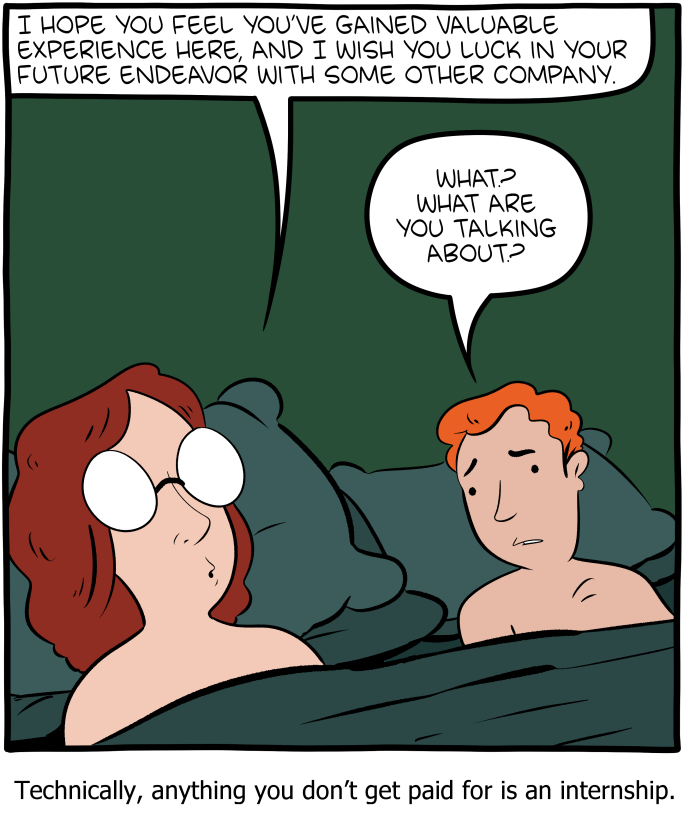
Hovertext:
I hope you have enjoyed your internship reading today's comic.
Good morning. Temperatures have generally fallen into the 40s across the region this morning, and this has brought them down near dewpoints. When the air temperature matches the dewpoint temperature water droplets form, and because winds are light they allow fog to form and thicken. Parts of the Houston area, accordingly, are seeing dense fog this morning. For other areas, where the air temperature is a few degrees above the dewpoint, it’s simply clear and cool outside. This radiation fog will “burn” off as the sun rises and increases air temperatures this morning. Conditions for early morning fog will persist for much of this week.
Monday was a splendid day, and Tuesday will be rather nice as well with mostly sunny skies and highs in the mid-70s. Winds will generally be light, shifting to come from the southeast, and this will allow for temperatures to be 5 to 10 degrees warmer tonight than Monday night. But there will definitely still be a fall-like chill in the air, as lows drop into the 50s.
The middle of the week will bring more sunshine and fine weather, with mostly sunny skies and highs generally in the mid- to possibly upper-70s. Winds will remain light, generally out of the south. Overnight lows will drop to around 60 degrees in Houston, with cooler conditions inland and away from the city, and slightly warmer ones closer to the coast.
As the high pressure that will dominate our weather this week drifts eastward, our region will become a little more susceptible to atmospheric disturbances. As a result, Friday will be partly sunny, with a slight chance of showers. (In the unlikely event that it does rain, accumulations would be very slight). Highs probably will reach the upper 70s. Lows on Friday night may only drop into the 60s in Houston.
Confidence in the weekend forecast remains somewhat low, although most likely we will see a mix of clouds and sunshine, with highs in the mid-70s on Saturday. Some light rain showers are possible on Saturday afternoon and evening, but again any accumulations look fairly light, measured in the hundredths of inches most likely.

It still appears as though a weak front will come into the region late on Saturday night or some time on Sunday, although the details surrounding this remain fuzzy. For now let’s go with partly sunny skies on Sunday with a high in the low 70s. We can’t yet rule out rain chances for Sunday, but my sense is that they’ll wrap up during the morning hours. Stay tuned!
Sunday’s front looks to be fairly modest, so I think the first part of next week will be mild, with highs in the 70s and lows in the 50s. Another, probably stronger front, looks to come through around next Wednesday or Thursday, but you should only write that forecast down in pencil, on cheap paper, that you’re willing to toss into the waste bin.

This post, update: our employee forged the owner’s signature on his mortgage documents , was originally published by Alison Green on Ask a Manager.
It’s “where are you now?” season at Ask a Manager! Every day from now until the end of the year, I’ll be running updates from people who had their letters here answered in the past.
Remember the letter-writer whose colleague had forged the company owner’s signature on his mortgage paperwork? Here’s the update.
Thank you so much for publishing my letter, and your great advice! As it happened, when the letter was published I was on my first vacation since 2019, so I missed replying to any comments made, but I did read all of them when I got back home, and was very appreciative of everything said. Here is my update:
Most importantly of all, John’s wife is fully recovered, and doing great!
The IT company John uses recovered the files Rob deleted, and they were all of a personal nature. Nothing bad, but also nothing that related to the business, thankfully.
John did have his lawyer send a letter to Rob and the mortgage company regarding the forged mortgage documents on his own accord, and never heard back from Rob or the mortgage company, so he still doesn’t know if the forged documents were corrected, or not. Or if Rob got the house, or not. The only thing we know for sure is that Rob will have no reference from John after three years of employment, John has made that clear. Sadly, Rob is the type to think that he WILL be able to list John as a reference, AND get a great one. He is just that kind of person.
When I wrote my letter to you, it was literally the day after everything had happened, and I was just…enraged. I am definitely a “want to see justice done!” type of person, and it is something that I have been working on over the years, sometimes with success, sometimes not. But I did step back in this situation, and did not push/suggest to John to do anything beyond what he wanted to do on his own. I just listened to him vent/process the situation, and was there for him as a friend.
After the dust settled from Rob’s departure, and it came time to hire a someone to replace him, I put your advice to use, and suggested certain things regarding vetting the new hire, and John followed all of my suggestions.
This is where the update takes an odd, but ultimately good turn. John hired someone to replace Rob, and they had great references, etc. Total rock star. I was thrilled, he was thrilled. Until…yeeeaah…it all went bad.
The new employee lasted just a month, before walking out mid-shift one day, and the reason for them doing so was that they decided the client account they were in charge of was “fake”. By this I mean they thought the practice, doctors, staff, and patients didn’t exist. Seeing as how I have been doing the billing for this client for years, have been in their office numerous times, know the doctors, staff, AND the patients…I was whopper-jawed. As was John. The whole situation was truly Kafkaesque/Twilight Zone material. John and I had a lot of discussions about this situation after it happened, and in the end, could only conclude that there were some personal issues going on with the employee, that caused them to quit like they did.
At that point, I recommended that John hire my former assistant office manager, who was looking for remote work, and he did. She came on board in October, and has been just as great at her new position for the billing company as she was when she worked at my office. All is well that ends well, and all is better than well at this point.
I also want to add that I found the “Ask A Manager” site shortly after the pandemic shut down in March 2020. I went from working 50 hours a week to 10, so I had a LOT of time on my hands, and spent it reading everything in your archive, as well as many of your book suggestions. : ) Since then, I have recommended AAM to numerous people, and it has made me a better manager. It is an invaluable site, and I am so grateful for the all the advice on it!
This post, update: the boss who fired me got hired at my new job — and she’s joking about how bad my work was , was originally published by Alison Green on Ask a Manager.
It’s “where are you now?” month at Ask a Manager, and all December I’m running updates from people who had their letters here answered in the past.
Remember the letter-writer whose boss got him fired got hired at his new job — and started joking about how bad his work was? Here’s the update.
Let me begin by saying I really appreciate of the support and advice you and your readers gave me. It was nice to know I wasn’t making too much out of it.
Two things maybe I should mention that I did not before. First, I am a pretty laid back guy, and when folks have a laugh at my expense, that usually doesn’t bother me if I think it is coming from a place of affection. I can laugh at myself, and Lord knows I enjoy teasing the people I love. I think I have pretty good boundaries generally, and I enforce them if I feel it’s not coming from a place of affection. But I think in this instance my boundary setting radar got confused because this generally has not been a problem at work, and because I so wanted to give Jane the benefit of the doubt.
Secondly, Jane’s behavior in all of this tracks, if you know Jane. She is, let’s say, hyperrational. Appeals to her emotions, or telling her how things make you feel, generally don’t work. But if you can quantify your point, if you can back up your argument with data, she is very persuadable, up to and including changing her behavior or backing off on points she’s made in the past.
As you advised, I took the issue up directly with folks who seemed to be treating me differently, calling out what I saw and asking them to please judge me on my record since they’ve known me. Most denied any change at all, and that was enough to shock them back into their pre-Jane behavior. A small number admitted Jane’s stories had made some impact, and agreed that maybe was not entirely fair. For the most part, they too have returned to pre-Jane behavior.
Then I went back to Jane and made my point; the stories were unflattering and unfair, they were harming my reputation with my co-workers, and it needed to stop. She again said she was just kidding and doubted it influenced anyone at all.. I conceded she was just kidding and had no ill-will, but that wasn’t the point. We went through some emails I had with co-workers that I had printed out (including the exchange with the coworker I mentioned in my first note). The point I made was even if it was just this one guy (and it wasn’t) surely she would agree that if the stories kept coming more people might start thinking like this guy.
Having seen the evidence, she agreed. She promised she would stop, and she has. She even went so far as to email a couple folks we discussed (and cc’d me) apologizing for her behavior and saying she should not have put me in such a bad light. That was good enough for me.
And that has been it. We’re pretty much back to normal. The guy from the first e-mail is still double checking me, but less than he was before. Personally I think he’s just trying to cover his tracks.
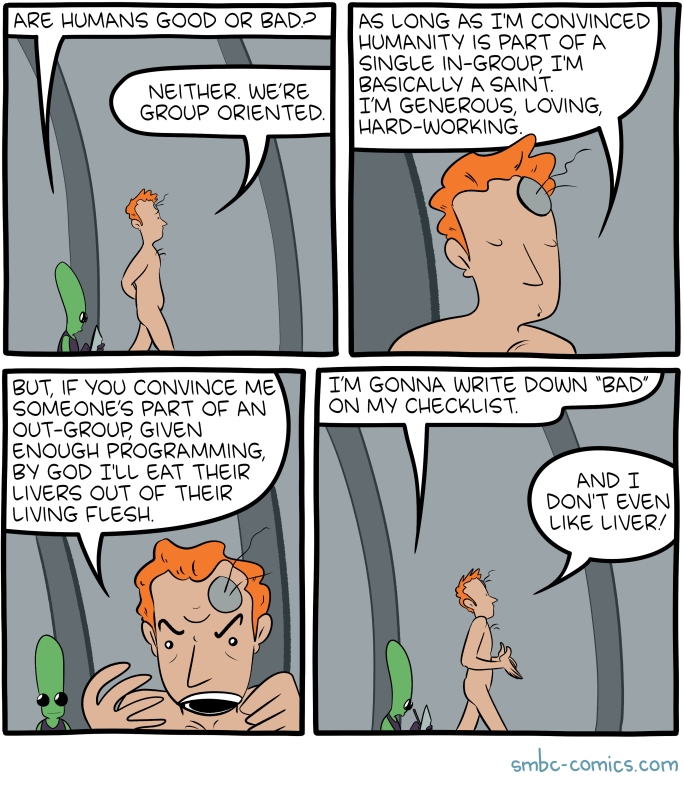
Hovertext:
Asking whether humans intrinsically bad is like asking if a sword is intrinsically bad. The answer is yes, with occasional exceptions.
This post, update: I think my assistant would be better at my job than I am , was originally published by Alison Green on Ask a Manager.
It’s the launch of “where are you now?” season at Ask a Manager! Every day from now until the end of the year, I’ll be running updates from people who had their letters here answered in the past.
We have so many updates this year that I’m going to be posting six to seven times a day for the next several weeks — so keep checking back throughout the entire day.
To kick us off…
Remember the letter-writer who thought her assistant would be better at her job than she was? Here’s the update.
It’s been about five months since I wrote my letter, and I’ve been on quite a mental journey since then. I did respond a little in the comments, and I wish I could have responded more. The outpouring of support was NOT what I expected. It was wonderful but overwhelming.
To be very honest, though, as nice as it was to read, I found myself discounting your response and the responses of the commentariat. I thought maybe I hadn’t explained myself well enough, and your response was based on a fundamental misread of the situation.
The first thing I did was have a heart to heart with Fergus about how he felt about his role. He told me frankly that he thought he wanted my job for awhile, and was on the verge of resigning when I offered him the promotion. Now that he’s seen it up close, though, he has realized he doesn’t want to do what I do. He said he loves coming up with ideas, bouncing them off me to sort out which ones to pursue, and then figure out how to make them happen together. He said, “I do my thing while you manage the children” (the C-suite). We also discussed his career goals and ambitions, and he said he doesn’t want to leave as long as he still feels like there’s work to be done here. He thinks we make a good team and he doesn’t want to work for someone else.
Then, he said something that really made me think. He said when I offered him the job, I told him “I want to give you the opportunity to be part of the solution.” He said that was what made the difference, made him decide to stay. He said it changed his attitude about how to look at problems, and he uses it himself with his own reports.
I thought… well, maybe Alison wasn’t crazy with what she said about my management abilities. I went back and re-read my letter and your response and the comments and I tried to really hear what you were saying.
A lot of the commenters mentioned imposter syndrome. I think I knew I had that, but also thought, doesn’t everyone? For me, the more pernicious aspect of my imposter syndrome is I thought I was promoted not just because I’m a woman, but just because I’m likable. If it was really based on merit, not personality, I reasoned, they should have picked Fergus.
When I expressed that in the comments, one commenter challenged me to analyze what being “likable” means in a work context. I did that, and I realized that people like me because I listen, I genuinely like other people, I’m diplomatic, I don’t lose my temper, I don’t have a big ego, and I want people to succeed.
I’ve also realized since then that I have good judgment and I’m not afraid to make hard decisions.
Seeing myself more clearly has helped me be better at my job. I see now that my self-doubt was interfering with my growth as a manager. Constantly thinking about what I thought I “should” be doing (coming up with Fergus-style Big Ideas) and feeling bad that I wasn’t, made me miss opportunities to do what I’m best at.
The phrase “servant leader” was mentioned in the comments, and that really resonated with me. I’ve decided to lean in to that, and value my approach as something not many people can do. It’s all still a work in progress, but it’s made all the difference in my confidence level. I’ll be forever grateful to you, Alison, and to all the commenters. I feel like a weight has been lifted, and I really mean that. Thank you, thank you, thank you.

The Paper Office
The Tools to Make Your Small Psychotherapy Practice Work
Zuckerman and Guyett
1991
This book is one of those oddly specific titles. It is basically a primer on the business side of setting up a psychotherapy office. They have sample intake forms, an outline of ethics/guidelines (most of it devoted to “don’t sleep with clients”), malpractice (again, this is usually because you shouldn’t sleep with clients), bill collecting (be sure to see the script for collecting unpaid fees), patient files, etc.
In 1991, this was probably decent information, although it looks amateurish. However, I can’t imagine a book like this in 2021 without discussion of issues of confidentiality, computers, HIPAA, insurance, and dozens of other issues that have changed over the last 30 years. (I will say that sleeping with your clients is still a bad idea.)
I also find this to be an odd choice for a small-to-medium public library, even when it was a new publication. It might have worked for larger library systems and academic libraries. In 2021, it doesn’t work anywhere. I have a feeling someone made a donation, and someone else thought it would be good to add it to the collection. This should have been weeded by 2000 at the latest.
Mary


The post Old School Office Management appeared first on Awful Library Books.