Shared posts

04 Apr 17:19

Project Row Houses Reopens Eldorado Ballroom with Day of Art & Music

by Jessica Fuentes

Last year, Project Row Houses (PRH) announced a plan to rehabilitate and renovate the historic Eldorado Ballroom. On March 30, a private grand reopening and unveiling event took place, with a public open house scheduled for this coming Thursday evening.

A rendering of the proposed renovations to the Eldorado Ballroom building.

Eldorado Ballroom Rendering. Courtesy of Project Row Houses.

The Eldorado Ballroom was established in 1939, in the midst of Jim Crow segregation, by Anna Johnson Dupree and Clarence A. Dupree, Houston business owners and investors in the Black community of the Third Ward. Known as“The Rado,” the venue was a significant space for touring Black musicians in the United States. During the 1940s and 1950s, the ballroom hosted performances by Ella Fitzgerald, Ray Charles, B.B. King, and Houston blues musician Lightnin’ Hopkins, among many others. 

In an interview on the television program Great Day Houston, Eureka Gilkey, PRH’s director, explained that the Eldorado Ballroom was much more than a music venue — it was a cultural center and gathering place where the community held graduations, baby showers, and other events celebrating life milestones. The ballroom closed to the public in the early 1970s, following a time of economic stagnation in the area. PRH acquired the ballroom in 1999 and began to intermittently hold programs in the space. The organization began work on the $9.6 million renovation project last year.

A photograph of a crowd of people at a ribbon cutting for the grand reopening of the historic Eldorado Ballroom.

Project Row Houses, Eldorado Ballroom Grand Reopening. Photo by THE 3NGINE.

Last week’s event featured music by jazz and blues singer Jewel Brown, who opened her first show at the Eldorado over 70 years ago at the age of 12. On Great Day Houston, Ms. Brown reminisced about the historic space and stated, “That area was the it area… that was like Broadway, New York.” Other musicians who were part of the grand reopening include jazz vocalist Horace Grigsby; DJ Mookie Copeland; the Houston Steppers; and DJ Flash Gordon Parks. Author Danielle Fanfair gave a speech, Reverend Marilyn White provided a blessing, and host and producer of Great Day Houston, Deborah Duncan, hosted the event. Additionally, the event was an opportunity to celebrate the 80th birthday of artist Jesse Lott, one of the founders of PRH.

A photograph of artist Jesse Lott being presented with a birthday cake at the grand reopening of the historic Eldorado Ballroom.

Jesse Lott at the Grand Reopening of the Eldorado Ballroom. Photo courtesy of Project Row Houses.

The renovated building includes a market and cafe serving fresh food, a gallery, and a community meeting space. This Thursday, April 6, from noon to 6 pm, the Eldorado Ballroom will host a free community open house featuring art and entertainment.

The post Project Row Houses Reopens Eldorado Ballroom with Day of Art & Music appeared first on Glasstire.

04 Apr 17:19

At Least Ten Meanings: Walter De Maria De-Classified

by Peter Lucas
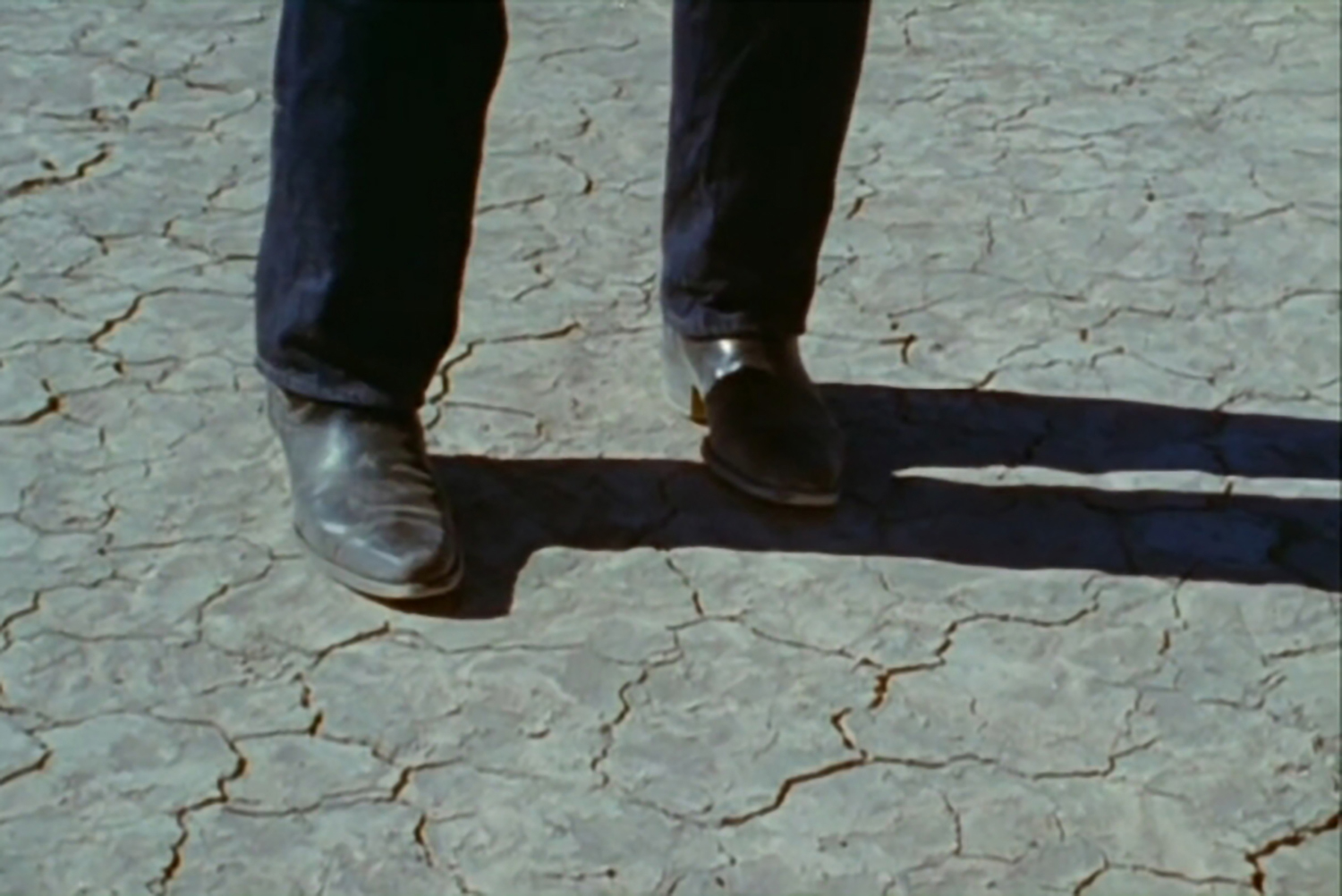
Video still showing a mans legs in cowboy boots standing on dry, cracked land

Still from the film “Hard Core” by Walter De Maria, 1969, digital video transferred from original 16 mm, 28 minutes. © The Estate of Walter De Maria.

My original avenue of introduction to the work of artist Walter De Maria was an unusual one. Though I was vaguely aware of him as a sculptor and creator of the famous earthwork The Lightning Field, I hadn’t really seen anything until I was investigating the history of experimental TV and came across his short film, Hard Core. Practically unknown, it was commissioned for broadcast on San Francisco’s KQED TV in 1969. I couldn’t quite tell if it was an experimental masterpiece or a failed attempt at a Western movie sequence, but I was intrigued by its collision of formalist filmmaking, pop reference, and political hint. I liked the musicality of its spatial and temporal play — with slow, horizontal movements along desolate landscapes interrupted by static shots of cracked earth and figures with guns. I liked its use of layered ambient sounds and drum rhythms (for which the artist was also credited). I wondered why I hadn’t heard of De Maria’s film career, as Hard Core was similar and contemporaneous with the much-lauded films of Michael Snow. And I wondered if he’d done other music or sound works. Given these breadcrumbs, I began to think of his art in more cinematic and musical terms. Perhaps there is more than meets the eye in this guy’s stuff, I thought. And perhaps his work needs to be experienced directly to be fully appreciated.

An arch made of plywood

Walter De Maria, “The Arch,” 1964, plywood, dimensions variable. The Menil Collection, Houston. © The Estate of Walter De Maria. Photo: Paul Hester

I’ve been able to see some of De Maria’s work in the years since then. The Menil Collection’s great 2011 Trilogies exhibition and their later inclusion of his small, strangely alluring metal sculpture High Energy Bar in a group show furthered my interest in seeing and learning more. But it was not until the arrival of the artist’s first-ever museum survey and the coinciding release of the first comprehensive book covering his career that I was able to really delve into the mystery of De Maria’s conjurings. Curated by the Menil Collection’s Senior Curator Michelle White and former Chief Conservator Brad Epley, the exhibition Walter De Maria: Boxes for Meaningless Work (currently on view at the Menil Collection through April 23) includes sculptural constructions, paintings, drawings, photographs, films, and sound works spanning his career — including some that are presented publicly for the first time in many decades. My visits to the exhibition have opened my appreciation of De Maria’s work, and my first forays into the essays, images, and comprehensive chronology in the new book, Walter De Maria: The Object, the Action, the Aesthetic Feeling (published by Gagosian, available at the Menil Bookstore and elsewhere) have illuminated his varied influences and efforts.

While he’s most associated with 1960s New York, Walter De Maria spent his formative years in 1950s San Francisco and Berkely. He was indeed a musician from an early age, playing drums and percussion with school bands and then professional symphonies and jazz ensembles. Between music gigs and museum trips, he studied political science and art history at the University of California at Berkeley. As his own visual art practice shifted from improvised abstract painting to static sculptural forms, his good friend La Monte Young ignited new musical impulses, introducing him to the ideas of John Cage and Karlheinz Stockhausen. He and Young collaborated on a series of “high friction sound” performances that could be considered the first Happenings on the West Coast. Through the influence of Anna Halprin and others, he became interested in indeterminacy, instruction-oriented processes, and theories of movement. Following Young, De Maria moved to the East Coast in the fall of 1960. After casting a very wide creative net in California, the 25-year-old artist arrived in New York City’s art scene at a seemingly perfect time, at the beginning of a transformative decade. 

Archival photo of Walter de Maria in the studio

Walter De Maria in his Bond Street studio, New York, c. 1963. Courtesy Walter De Maria Archive

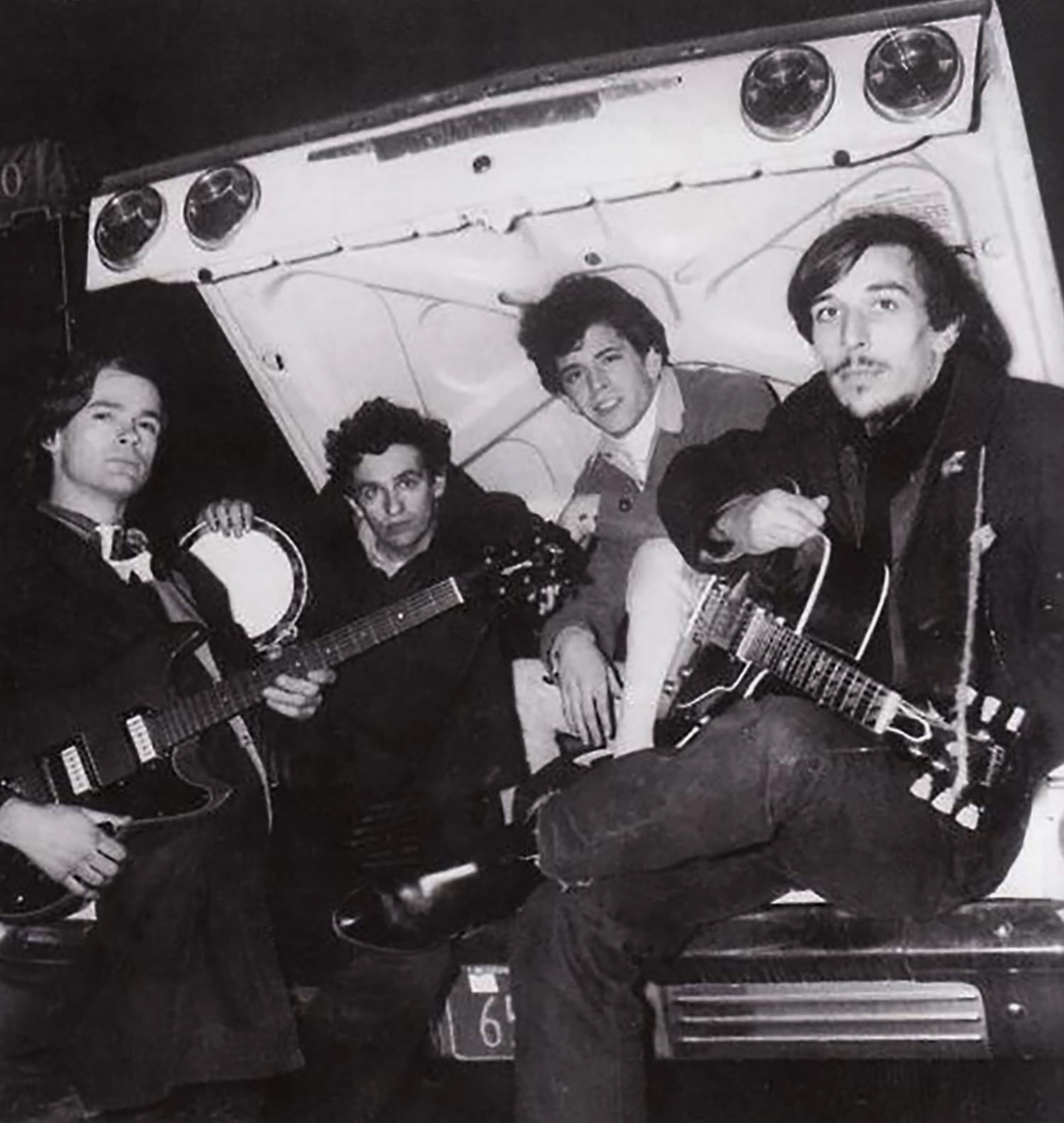
In reaction against then-predominant Expressionism, De Maria had designed a number of small, wooden box sculptures before arriving in New York. He said in a later interview that the simple geometric forms “contained all the right information about the universe, and about oneself, and about the time.” Which is to say, nothing and everything. During his first couple of years in New York, he constructed dozens of these structures and also started a series of very simple, light-touch “invisible drawings” on white paper. While his visual work suggested a restrained concentration of energy and pointed to a developing Minimalist movement, De Maria also continued a wild variety of music and performance endeavors. He further collaborated with La Monte Young and musicians associated with Young’s Theatre of Eternal Music, participated in a series of performance events at George Maciunus’s AG Gallery, jammed with free jazz trumpeter Don Cherry, played with the short-lived art noise band The Druds, and was a member of the fluke proto-punk rock band The Primitives, which later morphed into the Velvet Underground. He also dabbled in media, creating a few of his own music and sound recordings and, later, a couple of film projects — the most fully realized being the aforementioned Hard Core, which utilized those previous audio recordings.

The Primitives band posing in the trunk of a car

The Primitives, 1964. Left to right: Tony Conrad, Walter De Maria, Lou Reed, John Cale

Though generally considered peripheral endeavors, his varied temporal work–collaborations as a musician (specifically, a drummer) and experiments as a media maker–unlock some interesting things about his focused work as a visual artist. They point to a spirit of experimentation and cross-pollination, to his interest in the visceral experience of free and immersive art interaction outside the confines of traditional gallery-going. They highlight fundamental ideas of rhythm in his work, and the spatial evocations of time in his forms. And they inform his trajectory into larger scale, immersive earthworks. One might think of these tangents as his core experimentation in the realm of imaginative possibility — the ephemeral, invisible stuff contained within his controlled, sculptural arrangements. All of this was overlapping and simultaneous in his career, and I’m glad to see these activities and connective elements foregrounded in the book and reflected in the exhibition. It’s a slight but necessary corrective to previously oversimplified summaries of De Maria as simply a “minimalist sculptor.” He was a wide-swath, multidisciplinary artist — first, and throughout. 


Installation view of a large red canvas with three works resting on top of a white plinth in the foreground

Installation view of “Walter De Maria: Boxes for Meaningless Work,” at the Menil Collection, Houston. Foreground: Walter De Maria, “Channel Series: Triangle, Circle, Square,” 1972. On wall: Walter De Maria, “The Statement Series: Red Painting / NO WAR NO,” 2011. © The Estate of Walter De Maria. Photo: Paul Hester

Walter De Maria: Boxes for Meaningless Work is the first exhibition to create a playground of combinations and cross-activations between a large number and a wide range of his pieces. Wood and stainless-steel sculptures, small drawings, large paintings, things related to the development of his land art projects, and media pieces all bounce off of each other very nicely. The film Hard Core is presented here in a recent digital restoration alongside his Ocean Bed — an interactive installation which invites visitors to lay down and listen to two oceans simultaneously. Presumptions about his art world categorization fly out the window as one experiences the confluence of boldness and subtlety, seriousness and silliness, elegant precision and poetic funk, familiarity and other-worldliness. Though it’s in the service of contemplation, there is an unexpected humor and absurdity at play in the show, as well as an underlying sense of rebelliousness. These slight frictions inexplicably send the viewer’s experience into echoes beyond the work itself. 

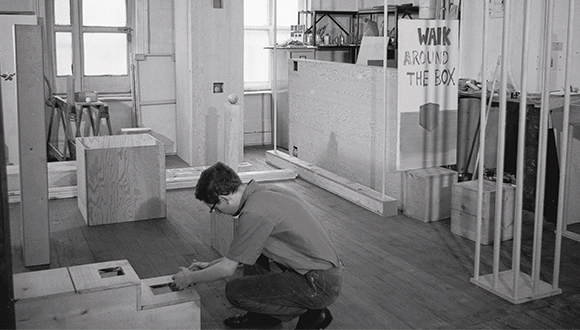
The exhibition draws its title from one of the earliest included works, and one of the first that one sees upon entering. Both disarming and enlivening, the simple piece Boxes for Meaningless Work instructs the viewer to transfer the contents of one box to the other and back again, repeatedly. Most importantly, it suggests to “Be aware that what you are doing is meaningless.” This piece and its use as the show’s title is funny, though De Maria insists in a 1960 essay that considering the importance of accomplish-less activity is not a joke. He apparently featured a version of Boxes for Meaningless Work during one of the early performances he and La Monte Young did in San Francisco, performing its meaningless activity himself. The static piece, as shown here, works just as well in one’s own imagination, as do other instructional works that can’t be physically activated in the museum. It essentially acts as an invisible performance, and in fact, its prompted thought experiment suggests a good approach of imaginative interaction as one proceeds through the rest of the exhibition. 

The presences and absences in the show, the various scale relationships in the work — actual or implied, the nudges of titles and bits of text — specific or general… These are all composed suggestions to evoke experience, but not at all to define conclusion. Visitors are gently provoked into the intersections of meaning and meaninglessness, visible and invisible, real and imagined. In a sense, all of De Maria’s works are temporal, in that they activate over the duration of time one spends with them. And as they’re complete only in one’s own personal engagement with them, each work is unfinished. De Maria’s diverse projects and resistance to the limits of conventional art and its presentation were not simply born of creative restlessness. Rather, this was part of a continual, purposeful effort to entertain incongruence and to design the simplest vessels for complexity in service of unseen possibilities. Or, in his own words, to “allow for the greatest possibility for the works to be seen freely.” 

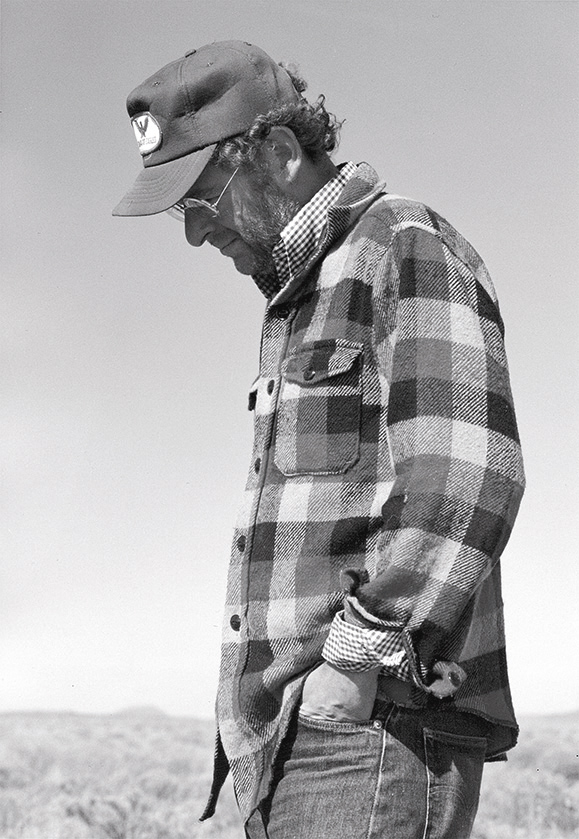
Black and white photo of the artist

Walter De Maria. Courtesy of the Walter De Maria Archive

Something that Walter De Maria said in a 1972 interview, which is referenced by Christine Mehring’s essay in the new book, strikes me as key to the artist’s approach: “Every good work should have at least ten meanings.” With this, he reveals that one intended art experience is both not enough and too much. And that even three or five possible paths of navigation are not sufficient for successful art. At least ten. This is the credo of a conjuror who values the art experience over the art itself, and as carefully refined as his works are, values the open imaginary and simultaneous multiplicity over the artist’s control. Later in the same interview, De Maria relates, “I looked for the balance in my life in a very simple-minded way, a balance between thought and action, a balance between emotion and thought… between the city and the west, you know, between everything.” Perhaps all of his impulses and influences, and perhaps all of ours, are not held in the forms so much as released in the mirages of “meaningless” movements between them. 

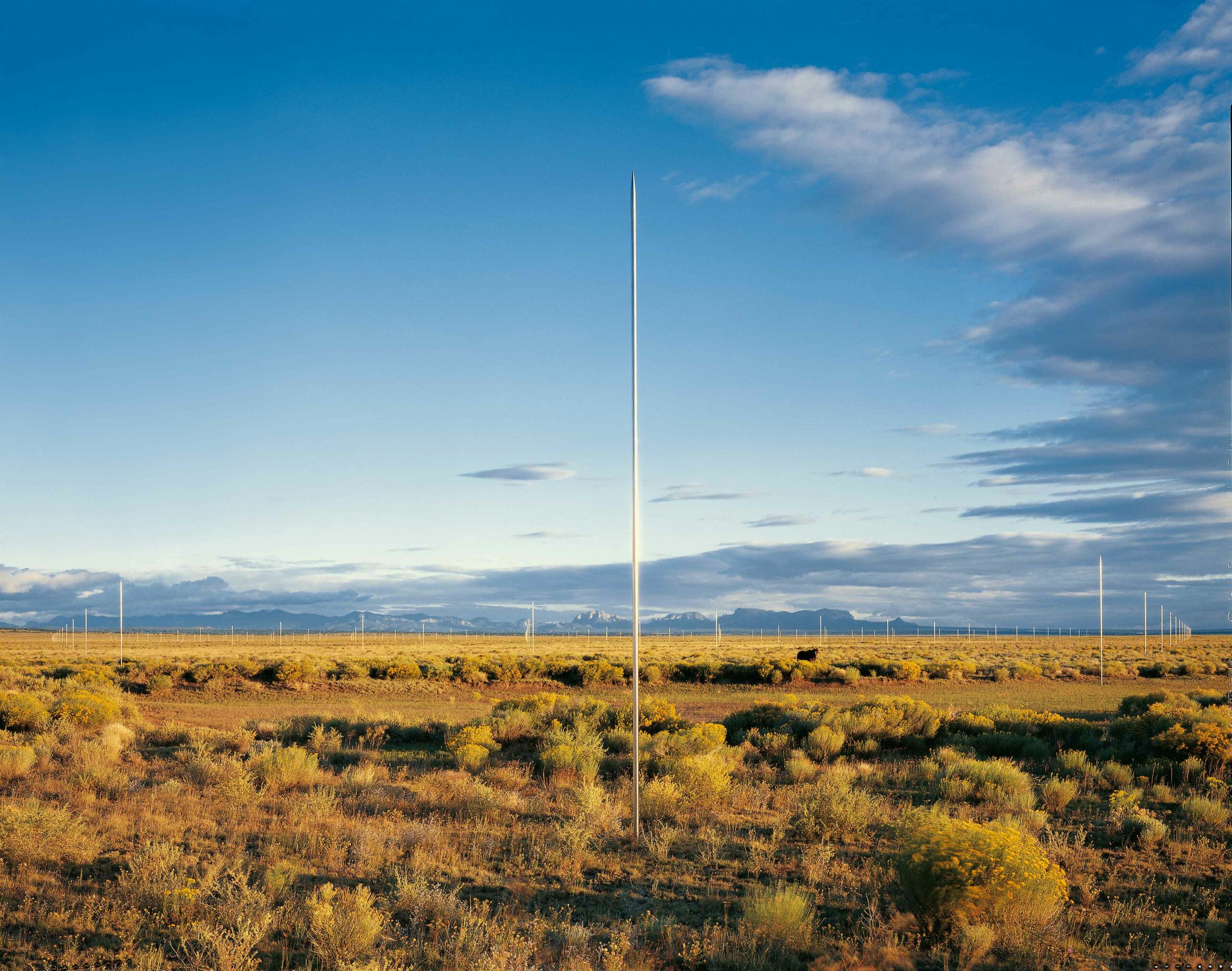
Aluminum poles positioned in the desert to create a field of lightening

Walter De Maria, “The Lightning Field,” 1977, four hundred stainless steel poles, West central New Mexico. Commissioned and maintained by Dia Art Foundation, New York. Photo: John Cliett. Courtesy the artist and Gagosian


Walter De Maria: Boxes for Meaningless Work is on view at the Menil Collection through April 23. Walter De Maria: The Object, the Action, the Aesthetic Feeling is published by Gagosian and features contributions from Elizabeth Childress, Michael Childress, Dagny Corcoran, Donna De Salvo, Larry Gagosian, Michael Govan, Christine Mehring, and Lars Nittve.

The post At Least Ten Meanings: Walter De Maria De-Classified appeared first on Glasstire.

04 Apr 15:54

hiring a manager with strong religious beliefs about women submitting to men

by Ask a Manager

This post was written by Alison Green and published on Ask a Manager.

A reader writes:

My company recently hired a new shipping manager. When they announced his name, my heart fell to realize it was an acquaintance of mine from a previous job. At the same time, I was very relieved that I hadn’t been involved in the hiring process, because I would have had a hard time being objective with it.

My last job before this was within a few miles of a highly conservative bible college/seminary. We hired lots and lots of their students. Probably 25 of 40 part-time workers on that shift were from that college. Nobody ever put any sort of restrictions on them having impromptu prayer groups or devotions in the break room, or discriminated against them in any way. Far from it, usually it was the seminary students lodging complaints that they had overheard someone say a swear word or that someone’s rock radio station is profane and they shouldn’t have to hear it. (Instead of music, some of them would blare recorded sermons and lectures on their portable speakers while working.) Overall, they were mostly nice, clean-cut, hard-working kids, but my point is they were very open about their main beliefs.

One of those core beliefs specific to this particular college and branch of Christianity is that wives need to submit to their husbands in everything, because women are the weaker sex and need guidance and spiritual leadership. At least a dozen coworkers I knew from that college got married while in school, and some of the new wives worked until kids came along but none worked outside the home after. After graduating, some students stayed on as supervisors while they looked for a church to pastor. The new shipping manager at my current company had been had been one of them.

At my old company, female warehouse employees did get hired, but their training and opportunities always lagged significantly behind their male counterparts. The warehouse I used to work at opened in the 90’s and their first female assistant supervisor was hired in 2020. She was an external hire and remains the only woman supervisor in a 24/7 facility with a total of 11 warehouse supervisors that constantly turn over. (I finally walked away after six years of being told I wasn’t quite supervisor material. Once in this new location, my career took off and I’m in my third management role here. I was proud to hire and promote women for warehouse work and glad to leave that environment behind.)

If I had been involved in hiring this round, I would have been really worried about putting someone who believes men and women are not equal in charge of a department and expecting them to manage fairly, just based on my personal knowledge of their beliefs. Are there even any fair, legal questions that could be asked to determine if this would be a problem?

It’s good practice to ask all management candidates about their experiences working with and managing people who are different from them. It matters for all of them, not just people you already have concerns about — because while the people you used to work with wore their biases on their sleeves, a lot of other candidates will come with biases too. So it’s smart to always probe into how potential managers operate with people who aren’t just like them.

Some ways to do it are with questions like:
•  Can you tell us about a time when you worked to make sure your team was a place where everyone could thrive, particularly women and people of color? Possible follow-up: How did you check to ensure those efforts were working?
  Can you tell us about a time you navigated difficult dynamics around race, gender, or other identities in your work? Possible follow-up: What do you think were some of the root causes of those dynamics?
•  How do you think about equity and bias around things like race and gender when hiring or developing people? Possible follow-up: How have you known when your efforts to foster equity were working or not?
•  In your work as a manager, how do you approach learning about equity and inclusion issues? Follow-ups: What’s something you’re working on learning? What strategies are you using?

(If anyone reading this is thinking, “I wouldn’t have anything good to answer those questions with”: That’s a flag that you need to start thinking about it, particularly if you’re managing people or want to manage people.)

Ideally you’d also have a diverse group of people involved in hiring so that you can observe whether candidates treat people with similar respect regardless of race, gender, disability, and other potential differences.

But also, in this specific situation with your new shipping manager: You had worked with him previously and had firsthand knowledge of how he operated then. That’s fair game to consider when you’re hiring and to share with others in the hiring process. “He’s a member of religion X” isn’t something you can legally consider in hiring, but “he treated men differently than women, wouldn’t promote women regardless of their skills, and made the two women on the team feel shut out of decision-making” certainly is.

And of course, not all biases will come out in interviews, so you also need your company to be committed to equity once people are hired — like implementing systematized ways of looking at who’s hired/promoted/listened to/given opportunities/paid more, having safe processes for people to report concerns and ensuring they’re addressed in meaningful ways, and having leadership that’s willing to tackle things that are uncomfortable (for themselves and/or people around them).

04 Apr 14:57

How a hand gesture dominated a NCAA title game and revealed a double standard

by Rachel Treisman
Angel Reese of the LSU Tigers gestures toward Caitlin Clark of the Iowa Hawkeyes toward the end of the NCAA Women

At the women's NCAA final, Angel Reese of LSU waved her hand in front of her face while glaring at Iowa's Caitlin Clark. Here's what the gesture means and why it sent social media into a tizzy.

(Image credit: Maddie Meyer/Getty Images)

04 Apr 14:57

These are the 4 astronauts who'll take a trip around the moon next year

by Joe Hernandez
This combination of photos shows, from left, astronauts Victor Glover, Jeremy Hansen, Christina Koch, and Reid Wiseman.

The group will fly on NASA's Orion spacecraft as part of the Artemis program, which aims to return astronauts to the moon for the first time 50 years and establish a long-term presence there.

(Image credit: AP)

04 Apr 14:46

Texas’ chief financial officer walks back claim that Harris County illegally cut constable’s budget

by Joshua Fechter, The Texas Tribune
The fight is the latest skirmish between Texas Comptroller Glenn Hegar and Harris County leaders over whether they “defunded” law enforcement.
04 Apr 14:44

Nostalgia & Memory Travel: Talking with Adrian Aguilera

by Ariel Evans

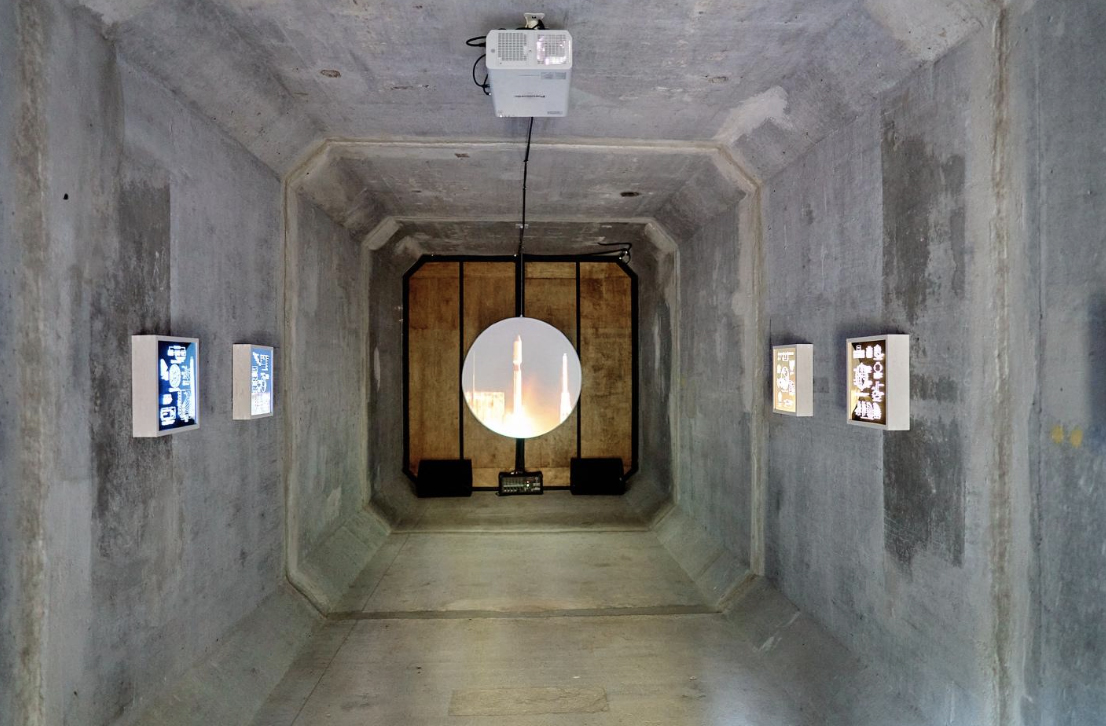
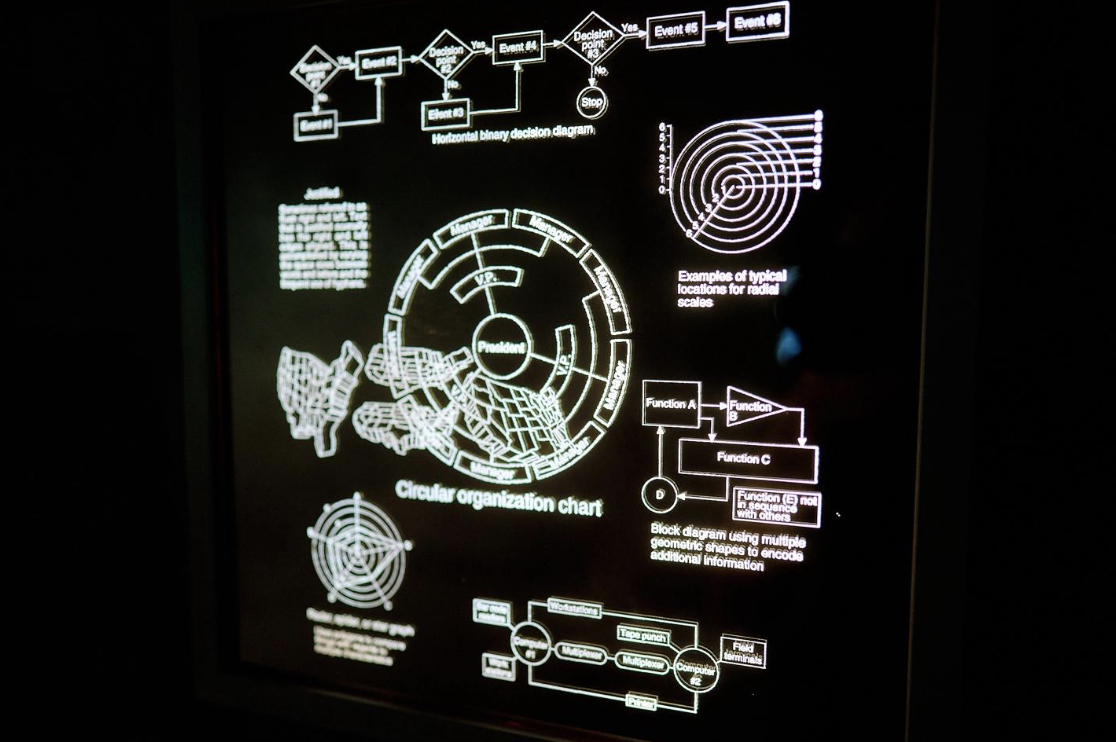
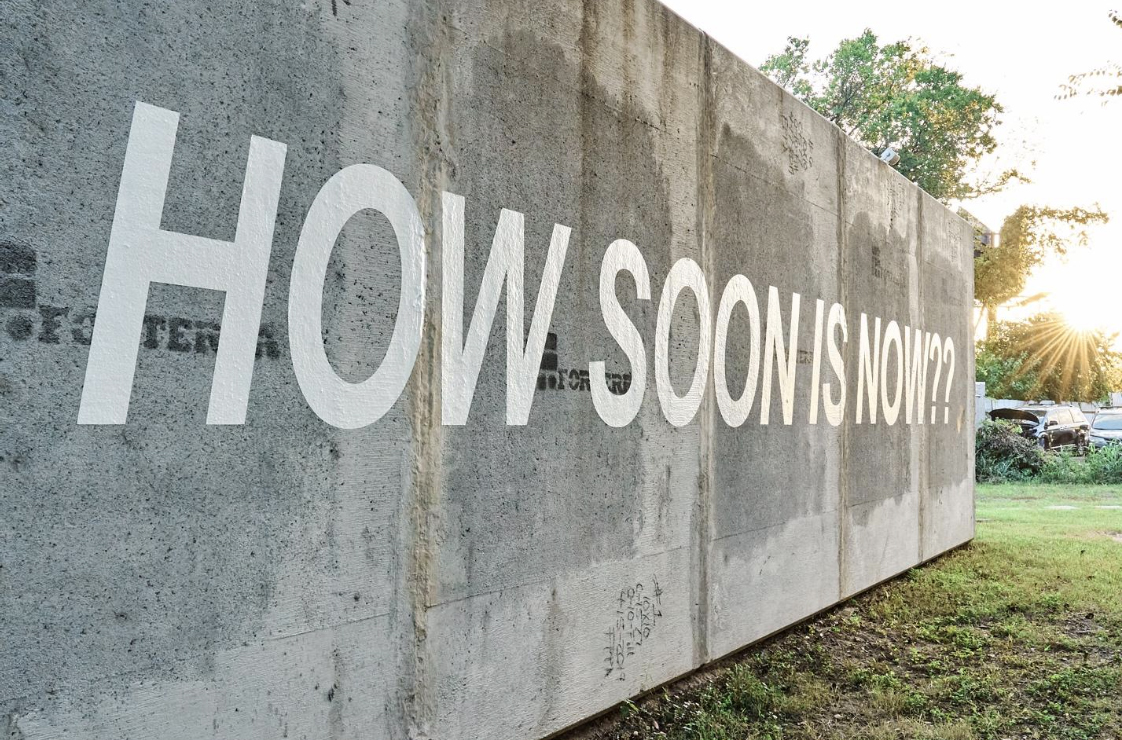
Adrian Aguilera’s installation How Soon Is Now?? was on view at Co-Lab Projects in Austin, Texas from September 17 to October 29, 2022. Those who entered Co-Lab’s concrete room faced a cone-shaped screen playing found videos from twenty-five years ago — 1997. Most of the videos are recognizable to those of us old enough to remember: footage from the cloning of Dolly the sheep, or from the reporting on the Acteal massacre in Chiapas. Along the long walls, approaching the conic screen, hung lightboxes displaying business-related infographics. These were less identifiable, but they came from ‘97 too. 

Despite Aguilera’s choice of found media from a specific year, no labels told visitors the dates of the videos, infographics, or songs. We had to identify such things ourselves. Or, at least, we had to read the press release, ask the artist, etc. Personal as this dating might be to Aguilera, his specificity in fact reaches toward something more general and collective. As Aguilera explained to me in the following edited interview, How Soon Is Now?? concerns the workings of memory and the ways memory connects past to present. This is about time travel.

Installation view of a projection on a cone

Adrian Aguilera, “How Soon Is Now??,” 2022, installation view. Image courtesy the artist.

Ariel Evans (AE): Please walk me through how the installation at Co-Lab came together.

Adrian Aguilera (AA): Originally, I conceived of the idea for untitled (apex to base: 1997) or cone-shaped screen installation for the 2020 Fusebox Festival. And then of course everything got fucked up [because of COVID-19]. I thought, “I will have another chance, a whole different time in which I will put together this idea.” The work happens to be about how I can travel to memory — time travel, at the end of the day. I divined the idea of “memory travel” because it speaks to a way of going to a specific time and moment that is in my memory. 

In Chris Marker’s La Jetée (1962), the main character has one specific memory and tries to call into it. For me, [that specific memory] was when I was 16. I’ve always been thinking about returning to that time again. So, the idea about using that specific year started to develop in my thoughts. 

And when I was invited to this exhibition at Co-Lab last year, I decided that the main work would be this device, this installation that allowed me to travel to a specific time. Close to the opening, I came across Henri Bergson’s representation of memory as a cone. I realized that Bergson’s cone of memory was what I was looking and thinking about in some capacity. I made this conic screen as a device for the realization of how memory works in my head.

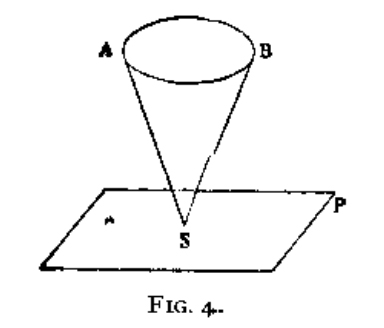
Graphic image of a cone on a plane

Figure 4 in Henri Bergson’s “Of the Survival of Images. Memory and Mind. Matter and Memory,” translated by Nancy Margaret Paul and W. Scott Palmer (London: George Allen and Unwin (1911): 170-231.

AE: [Bergson explained the cone of memory like so: “If I represent by a cone SAB the totality of the recollections accumulated in my memory, the base AB, situated in the past, remains motionless, while the summit S, which indicates at all times my present, moves forward unceasingly, and unceasingly also touches the moving plane P of my actual representation of the universe. (Bergson, 196).”] 

AA: The video montages these memories from 1997 together in a way that I’m able to present it and think of it as it all happens. You can see it in order, but also see it in the way one experiences memory: all these moving images come together and overlay each other. There is a blending in which everything gets to be now together.

The title comes from the Smiths’ “How Soon is Now?” from the ‘80s (1984). That song is about how quickly time passes and how fast we are here, which helped me refer to how time passes and has passed — and within a sense of present time, the now… I’m able to circle through many ideas related to memory travel, to time, and to being now.

Installation view of a video projection and lightboxes in a cement tunnel

Adrian Aguilera, “How Soon Is Now??,” 2022, installation view. Image courtesy the artist.

AE: The clips projected onto the cone seem to be 1997 news items that are all science-related or science fictional. Like Dolly the cloned sheep, people thinking they are seeing UFOs, et cetera. Is there a reason for that?

AA: Not really. Most of those things are real memories that I have from that time, things that impacted me, things that I clearly remember. And coincidentally, I’m into science. I was already using computers for doing graphics — I was a graphic designer at 16. 

AE: Like the infographics on the light boxes?

AA: The light boxes, yes. Those LED boxes to me are more like the sign of the devil, all these informational graphics — charts and graphs and maps — the graphical ways in which information gets represented. When I was a graphic designer, I thought that I was helping the world by putting together ideas and conveying information. But 25 years later, I’m sure that I was not doing that. This information works for capitalism, for corporations. 

Playing with those infographics now — it is to use another medium to look back at and then do something with them. So, to me, the light boxes play sarcastically and ironically with how information is used in a profit-driven globalizing system.

Light box of graphic images

Adrian Aguilera, “How Soon Is Now??,” 2022, installation view. Image courtesy the artist.

AE: In talking about events from a while ago… did you sit down and be like, “what do I remember from that time of my life,” and then develop a list? Or do you have journals from that time that you went back and referenced? 

AA: I don’t have diaries from those times. It was more like “Okay, what can I remember?” Dolly the sheep and DVD logos. The Apple ad “Think different” is another. One of the last videos is the Kyoto Protocol [an international treaty to reduce greenhouse gas emissions, signed in 1997]. There are also a bunch of ’97 social events that I pulled from, like people who were killed for political reasons. One in Mexico that I clearly remember is the [Acteal massacre].

AE: [Aguilera is referring to the murder of 45 indigenous townspeople and members of the pacifist group Las Abejas, during a prayer meeting on December 22, 1997. In 2020, the Federal Government of Mexico admitted responsibility].

AA: It was almost Christmas for us, and that event stuck in my mind. I thought “How can we celebrate Christmas when people are being killed in the south of my country?”

So, all those things get saved in my memory, in that year’s memory. And then, it was just clear to me that when I said, “Okay, what else happened to me in that year? What else happened in that year?” 

AE: Given that you’re living in Monterrey in 1997, when you’re 16, is there something about the fact that you’re not just memory or time traveling but traveling across space from Monterrey to Austin. It’s both space and time travel. In other words, does your migration to the United States and to Texas also affect the installation?

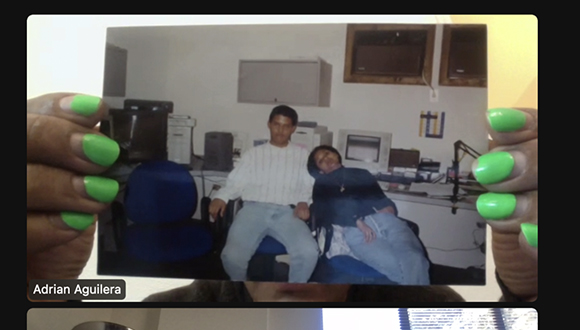
AA: It’s about how I can do a spell, a spell about myself, about my own self, about… it’s funny, did you see that photo that I posted for this event, which is not anywhere else besides Co-Lab’s website promotional materials? That photo is me when I was 16. Actually, I have it — I was this woman’s replacement in that graphic design job. She was 11 years older than me. When we met, she was 27. She was very professional, but I had her same level of expertise in Photoshop at that time. 

Years later, using technology, I found her online. We ended up becoming friends, then dating, then getting married. And then, we ended up moving to Austin. We were here for a few years together before we decided to get divorced. There is nothing about this that weighs on me; it’s about the history that I have had with anyone. But I kept this photo for all these 25 years, which is funny of me, I guess.

Maybe Roland Barthes’ concept of the studium and punctum are useful here.

Screenshot of the artist holding up a photo

Screenshot by Ariel Evans of Adrian Aguilera holding up his found photo, 2022.

AE: [Barthes developed the concepts of stadium and punctum in his 1980 book Camera Lucida, a meditation on the nature of photography, its connection to death, and its ability to generate emotion between viewers and photographs. Studium refers to a photograph’s cultural and political meaning, while punctum signifies a piercing and personal detail.]

AA: Barthes talks about nostalgia, about memory travel, about how one can relate to a time. But not in a particular or personal way. It’s not about my mom; it’s about everyone’s mom. It’s not about my own memory or nostalgia; it’s about nostalgia and memory that everyone experiences. It is about global occurrence.

Installation view of white vinyl letters on a cement wall

Adrian Aguilera, “How Soon Is Now??,” 2022, installation view. Image courtesy the artist.

The post Nostalgia & Memory Travel: Talking with Adrian Aguilera appeared first on Glasstire.

04 Apr 14:43

after I resigned, my employer accessed my personal email to find out details about my new job

by Ask a Manager

This post was written by Alison Green and published on Ask a Manager.

A reader writes:

I recently resigned from a job I have been at for nearly 15 years. The workplace became more and more uncomfortable throughout my tenure, with the boss yelling, the staff miserable, and deadlines being constantly changed. My job, which was more creative in nature, expanded to me doing pretty much everything. Eventually, I decided to start looking and was offered a new job (I used some advice from the site in interviewing and negotiations, so thanks!). I gave three weeks notice, although I was on vacation for one of those weeks.

My boss reacted badly to my resignation, as I thought she would. She tried to counteroffer but I held firm. Then she didn’t want me to tell anyone. I did tell my direct report who was going to take over most of my work but respected my boss’ wishes, even though I thought it was a very bad idea. The boss and second-in-command eventually told everyone the week I was leaving. I was insulted and yelled at for leaving and refusing to give them any info about where I was going. I knew they would find out at some point, but it was not their business. Eventually, as I was leaving on my last day, they demanded an exit interview (which I had been trying to do for weeks). It was a very rushed process, and I gave them all the information that they needed, but without my usual diligence because of the rushed nature.

I started my new job, and all is much better.

I recently needed to find something in my personal email and went to my “sent” folder to find it. While there, I noticed that all the details of my new job (the interview details, references, salary negotiations) had been forwarded to my old boss. Clearly, I did not do this. This was done during normal working hours while I was at my new company.

Nobody should have access to my personal email account. I am guessing that when I gave my former boss a list of important information, I accidentally included my personal email (used occasionally at work by me for work purposes as a favor, like using my Amazon Prime account to order things for the company). I had wiped my work laptop before returning it, so I think the only way they could have accessed it was through having my login information. (Note from Alison: Or they were using a keystroke logger and got it that way.)

The fact that this information was forwarded to my boss but not deleted makes me believe that the second-in-command was the one who did it. My former boss is barely tech savvy enough to sign into his own email, and the second-in-command is a little better but would not think to delete the sent emails.

So I am obviously furious. They have no right to know the personal details of my job. I was already deeply hurt by how I was treated after so many years of an excellent working relationship. Is this illegal? I am considering consulting a lawyer, but I don’t know how easy it would be to prove, although I imagine some tech-savvy person could confirm the IP address of the email access. Also, part of me wants to just let it go and not worry about my old company. On the other hand, this is immoral and egregious behavior, and I feel like they should not get away clean. Any suggestions about what to do?

What the hell.

Yes, sometimes employers are weird about not knowing where a resigning employee is going and do some snooping to try to find out — but that usually means stuff like asking around or looking at the person’s LinkedIn, not illegally breaking into your personal email for details.

And it almost certainly is illegal.

Employers do have a legal right to monitor employees’ use of work email, but they do not have the right to log into your personal email.

From a privacy standpoint, it’s important to note that employers can and do monitor activity occurring on their networks — and with certain monitoring programs, they could be able to see what you do in your personal email from their devices or on their network. Also, if you log into personal email from a work device, your employer’s software could capture your password … but they couldn’t then use that password to go rifling through your personal email account, which is what they apparently did to you.

It’s likely that your employer’s actions violated the Electronic Communication Privacy Act and the Stored Communications Act (both federal laws).

And legalities aside, it’s a genuinely outrageous violation of your privacy. It’s not that much different than if they’d shown up at your house and opened some letters from your mailbox, or forced their way inside to check out what you keep in your bureau drawers.

It’s an egregious enough invasion of privacy that you should indeed talk with a lawyer (and because of IP address logging, it shouldn’t be hard to prove at all; a lawyer can help with that piece of it).

04 Apr 13:39

my intern is refusing assignments because of her politics

by Ask a Manager

This post was written by Alison Green and published on Ask a Manager.

A reader writes:

I run a large museum, and we are currently running a major special exhibition. We’ve been asked to give a private tour of this exhibition to a prominent and controversial political figure.

I have a summer intern and have offered to let her come along as an observer. This kind of inclusion would usually be considered a major perk for an intern. But she is adamantly refusing, citing this person’s political views and threatening to physically attack him if she is “forced” to be in his presence. She is also refusing to do any of the logistical or planning tasks that would normally fall to her, and that’s a problem as well.

I completely and totally agree with her opinion of this politician’s views and behavior. I’m active in social justice work and have literally protested outside his office in the past. But my perspective is that my personal views aren’t relevant in these circumstances, and a significant part of my job is representing my museum with dignity, even when I really don’t want to. I will never agree with this politician but at the very least, this is a good opportunity for us to showcase to him the value of well-funded cultural institutions.

I’ve told my intern she can sit this one out, but I feel like we need to have a conversation about this when the dust settles. I am very torn, though. I don’t want to force anyone to do something they don’t believe in, but I worry she will be shooting herself in the foot if this is her stance in the long term. What advice would you give me?

I answer this question over at Inc. today, where I’m revisiting letters that have been buried in the archives here from years ago (and sometimes updating/expanding my answers to them). You can read it here.

04 Apr 13:27

the Tupperware lawn party, the parking commandment, and other stories of passive-aggressive notes at work

by Ask a Manager

This post was written by Alison Green and published on Ask a Manager.

Earlier this month we talked about passive-aggressive notes at work — or, more accurately for many of them, notes that are just plain aggressive, weirdly dramatic, or just funny. Here are 15 of my favorite stories you shared.

1. The motivational signs

Morale is a bit low. So management is trying to do things about it and in typical fashion is not addressing the actual causes of said morale issues.

Someone decided to hang motivational signs. In the bathroom. Including the stalls. So now when you use the toilet you can chose which encouragement you want to stare at while doing your business: “Just don’t quit,” “Do your best,” or “Mistakes help us grow.”

It did improve morale briefly by hysterical laughter but that probably wasn’t the intent.

Infantilization at work is the best.

2. The party

My department head (high school) made herself a martyr about cleaning out the teacher’s lounge fridge and trying to get everyone to reclaim their old, dirty tupperwares. She hosted an end of the school year party at her house. We arrived to find all the unclaimed tupperware containers spread across her lawn with a poster (!) hanging on the front door telling us to claim our containers or they would be thrown in the trash.

3. “Sorry you missed it”

My coworker Jane and I have recently switched to remote work. It has not gone over well with our other coworker Susan, who believes remote workers sleep on the couch all day. But she doesn’t speak of it directly, just drops hints and does stuff like below:

This past Valentine’s Day, Susan emailed Jane and me a picture of the break room which was full of sweets, with the following: “Bob brought in candy for everyone, and Sharon baked cupcakes. They were delicious, sorry you missed it. Have a nice day.”

4. The sign explosion

Traditionally, mail to a university campus comes through USPS and gets routed through the campus mail system, where longtime employees know where every little weird building is and where the safe places to leave packages are. COVID, and vast cuts to campus staff and reduction in mail delivery, coincided with a big uptick in ordering things online that are delivered by different services, like Amazon and Grubhub. I’m sure it’s frustrating if you’re the person in the office who gets interrupted by different delivery workers, or, worse, yelled at when someone’s package went awry or was delivered to the wrong place and you had nothing to do with it.

However … I came into work one day and there were literally *40* different signs posted all around our maybe 200 square foot lobby, with colored font, highlights, capitals, etc. DO NOT LEAVE PACKAGES HERE. THIS IS NOT THE LLAMA DEPARTMENT. FOR THE LLAMA DEPARTMENT, PROCEED DOWN THE HALL (series of arrows.) Small furniture had been deployed to post signs in the middle of the hallway, where people would traditionally walk. I could just imagine harried deliverers coming in, seeing this Dr. Bronner’s label style art installation, putting their package down and backing away slowly.

5. The fancy coffee

Fresh out of college, I worked a very strange job as a front desk girl at a law firm. The managing partner’s wife was the head of admin and was very incapable. She had no idea how to manage people and would manage staff by passive aggressive notes. I was only there for a month, but my favorite note of hers went like this:

” I AND ONLY MYSELF IS ALLOWED TO USE * FANCY * BRAND OF COFFEE. I KEEP IT IN THE KITCHEN BECASUE THE SMELL GIVES ME A HEADACHE. IF YOU TOUCH THIS BAG, I WILL FINGERPRINT IT AND YOU WILL BE FIRED FOR INSUBORDINATION.”

6. The fish drama

We had a collage of pictures of fish that are acceptable to microwave (Swedish fish) and fish that are not acceptable to microwave (so many pictures of random fish) taped to the microwave. It was violently ripped down by someone within 15 minutes of its appearance (most of the office only knows about it because the first person who saw it took a picture with their phone because it was funny) and the chick that I am pretty sure is our office secret fish microwaver STILL BRINGS IT UP to this day, over two years later. And gets visibly choked up with angry emotion. Over how rude she felt the fish sign was.

7. The threat

An apartment building where I lived once posted signs alerting residents to upcoming pest-remediation work. Unfortunately the signs read:

THE THIRD FLOOR WILL BE EXTERMINATED ON TUESDAY.

8. The epic seriousness

I once had a staff member ask me to post a reminder to check that you weren’t taking someone else’s printing with your own. I did, and then came back to find it reworked with the same wording, but much, MUCH bigger font size, CAPITAL LETTERS, underlining, and many exclamation points. Obviously she didn’t think I had reflected the Epic Seriousness of the problem.

I was very glad I hadn’t signed it because it looked totally crazed.

9. The animals

A client had this on their outside doors: “Do NOT under ANY circumstance let any wild animals into the building to include but not limited to raccoons, possums, chipmunks, squirrels, badgers, prairie dogs, geese, ducks, birds of any brand (yes it said brand), rats, feral cats, unaccompanied dogs, etc. Anything with a tail is forbidden.

We do not care how hard it’s raining, how hot it is, how cute they are, how aggressive/insistent they were, or what their eyes said to you. We CANNOT have wild animals in the building.”

* Jerome and Lisa we have installed cameras on the doors this is your last warning.”

I had SO many questions and wanted to meet Lisa and Jerome immediately. Unfortunately my boss at the time looked at the sign, looked at my amazed face, and then forbid me to ask the client any questions. I still want to know what that badger said to Jerome with their eyes.

10. The parking commandment

I was a church secretary. When there was a funeral we’d put “Funeral -No Parking” signs on little stands where the hearse and car with the family needed to pull up in front. People ignored the signs. We changed the signs to “Funeral -Thou Shalt Not Park”. After the wording change the spaces in front of the church were always left clear.

11. “Please read the signs”

Many moons ago I worked in a place that ran professional exams. We’d have big venues with lots of different course exams on weekends. We would post the locations and details of where to go all over the venue. Inevitably stressed exam takers would arrive in droves and walk up to our staff and say they didn’t know where to go and there were no signs. The staff would patiently walk them to the signs, ask them for their course/exam details and tell them where to go. It always caused a bit of stress but we all thought this was inevitable when you’re running exams

Until one day, some genius had the foresight to include a sign that said “Please read the signs.” And somehow ignoring the possibility that you’d have to read the sign that directed you to read the signs, before you actually read the signs, it worked. People actually started reading the signs that directed them where to go, and not individually asking staff. Staff still helped people, but at least it was no longer all the people all at once!

12. The lab

I did my PhD in computational biology. We had a very sensitive instrument that was making the data that we all needed to graduate. Its room was strictly off-limits while a run was in progress, because any light, vibration, or dust would spoil the whole experiment. There was a polite sign on the door when it was in use. That was good enough, until the lab down the hall needed some renovations, and the construction crew found the shortest path between their work area and the toilet…just go through that room. So, they were barging in several times a day, turning on lights, slamming doors, etc.

We tried talking to them, but they blew us off. We weren’t allowed to lock the doors; fire hazard. So, one of my lab-mates made a new sign.

“Warning! Genetically modified HIV and Herpes Viruses! Trained personnel ONLY. Full BSL2 PPE is required. In the event of exposure, contact the EH&S emergency line at 555-555-5555.”

(This was all true, however these viruses had been “genetically modified” to make them safe to handle on the benchtop…)

Another lab-mate was working in that room shortly thereafter. He reported hearing footprints approach the door, then a pause, then some incredulous expletives and a hasty retreat. Success!

Worked a bit too well. That crew had to be persuaded to come back to work, with assurances from on high that those nasties were strictly confined to our area. But they never came near us again.

13. The catastrophic misunderstanding

I can’t find the picture I took of it, so I’m working off of memory, but I had a former toxic boss who disagreed with edits I made to a publication she’d washed her hands of multiple times, and included a post-it that said something akin to, “The lack of hyphens throughout this document will lead to CATASTROPHIC misunderstandings of the content.”

While there were certainly areas that the text was using nouns as adjectives and would warrant hyphens, there was not CATASTROPHIC misunderstandings caused by their omission.

This same boss didn’t know how to properly use semicolons, so I wasn’t too fussed about her inconsistent applications of grammar.

14. Another misunderstanding

My coworker who I share a printer with (but not an office) is convinced that anytime something happens in her office, another of our coworkers intentionally did it and needs to be informed not to do so via note. Most recent example was that a small canvas print she hung up fell off of the wall (command hook gave out) and she insisted that someone pulled it off! She replaced it with a note that said to “Do NOT remove from wall!” With multiple underlines.

15. The Poo-Pourri

Recently worked in an office building with several businesses and only one set of bathrooms on each floor. One day, someone put a bottle of Poo-Pourri in the ladies room, with a note that they didn’t want to smell other peoples s&*t and we all needed to use it every time.

Added to that note was someone asking if they’d put Poo-Pourri in the men’s room as well, or if only ladies were supposed to have rose-scented s*&t.

Added to that was a note from the original poster saying that it was rude to keep saying s*&t, and people just needed to use the Poo-Pourri.

Someone dumped out the Poo-Pourri, all over the floor.

Another note criticized someone for making and unnecessary mess and being childish about using the Poo-Pourri.

Another note claimed it was all the fault of the patriarchy that we were so delicate that we couldn’t handle a bathroom smelling like a bathroom.

Someone printed out an article and taped it up about how much fecal matter sprays out of toilets when you flush them.

Another asked if she didn’t flush her toilet at home, and told her she was disgusting.

It was easily one of the most entertaining weeks at work.

04 Apr 11:53

Texas drops effort to punish Harris County over its law enforcement spending

by Joshua Fechter
The fight is the latest skirmish between Texas Comptroller Glenn Hegar and Harris County leaders over whether they “defunded” law enforcement.
04 Apr 11:47

Gov. Greg Abbott is turning up the pressure on passing school choice. Will it pay off?

by Patrick Svitek
Passage of a school choice measure is anything but a sure bet, as there is little evidence that the governor has been able to convince rural Republicans in the Texas House — who have for years been a reliable firewall — to drop their opposition.
04 Apr 11:42

Woman Describes Visiting Boyfriend’s Lower-Class Family Like It Some Type Of Foreign Exchange Program

ARTHUR, IL—Reflecting on the two-day trip to her partner’s hometown with an equal mixture of disgust, awe, and confusion, local woman Melissa Longworth reportedly described visiting her boyfriend’s lower-class family Tuesday like she was on some type of foreign exchange program. “It was such an eye-opening yet…

Read more...

04 Apr 11:42

Nonprofit No Longer Recalls Who They Were Originally Planning To Help

BOSTON—Noting that they definitely had some sort of mission statement when they started in 2015, leaders of a local nonprofit told reporters Tuesday that they no longer recall who they were originally planning to help. “Let’s see, I can tell you that we do good in the community, that we look to reduce harmful stigmas,…

Read more...

04 Apr 11:41

Lori Lightfoot Solemnly Removes Official Mayoral Jamiroquai Hat

04 Apr 11:41

New York Local Counsels Friend On How To Masturbate On Subway Without Looking Like Tourist

NEW YORK—Drawing from almost three decades of experience of jerking off in the city, local New Yorker James Greene was reportedly counseling friend Troy Balaz Thursday on how to masturbate on the subway without looking like a tourist. “Don’t use two hands or you’ll look like a doofus,” said Greene, who told Balaz that…

Read more...

04 Apr 11:41

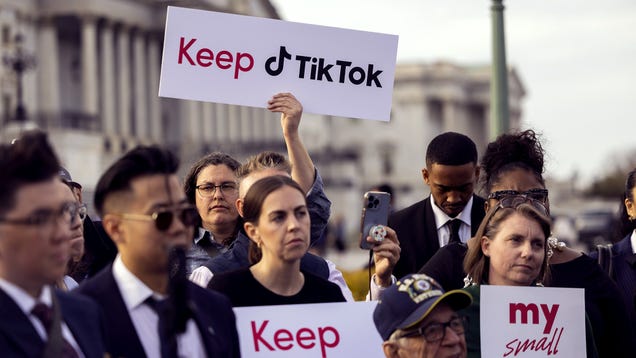
Influencers React To A Potential TikTok Ban

The Onion asked influencers how they felt about the looming TikTok ban in the United States, and this is what they said.

Read more...

04 Apr 11:37

First Canadian to orbit moon in attempt to find affordable housing

by Tristan Bradley

CAPE CANAVERAL – Astronaut Jeremy Hansen, a colonel in the RCAF, will become the first Canadian to orbit the moon in an effort to find affordable housing. “Catherine and I have three kids, so space is a big factor,” said Hansen, rubbing his eyelids as he scrolled through yet another page of listings. “Maybe if […]

The post First Canadian to orbit moon in attempt to find affordable housing appeared first on The Beaverton.

04 Apr 11:35

Oh, Great, Now Every Politician Has to Be Super Careful Not to Commit Crimes

by Eli Grober

“Many of the former President’s fellow Republicans have quickly come to [Trump’s] defense, expressing varying levels of dismay at the indictment, with some even vowing to take official countermeasures however they can.” — TIME

- - -

Great. Just great. We’ve gone and set a big old precedent. Now every politician has to be super careful not to commit any crimes.

You’re telling me lawmakers are supposed to constantly make sure the stuff they’re doing is totally legal? What’s next, airline pilots need to know how to fly a plane? Gimme a break.

Congratulations. The floodgates have opened. Now anyone in an incredibly powerful position has to “have ethics” and “take responsibility” and “not commit fraud.” What else are you people gonna crack down on? Insurrections? Buzz off.

How’s anyone in Washington gonna get any work done, now that they have to tiptoe around making sure they’re not committing brazen felonies? You know how hard that is? Defrauding the American people is basically a permanent part of half the government’s schedule. Get real.

You know what else this has done? As an elected official, you don’t just have to avoid committing crimes anymore. No, it’s suddenly become way more complicated than that—now you also have to avoid admitting to your crimes in speeches, during interviews, and on social media. I mean, come on! What else is there to even do?

Hey, I’ve got a question:

Why. Are. You. Trying. To. Make. Everyone. Play. By. The. Same. Rules.

What other big changes do you have up your sleeve? You want the Supreme Court to stop getting wined and dined by religious lobbying groups? Yeah, right. You want GOP legislators to avoid taking and paying bribes? Get bent. You want Texas Republicans to win fair and free elections without gerrymandering? Please.

I’ll tell you one thing: this isn’t sustainable. If politicians become too wary of committing crimes, they may stop committing them altogether. Then what would happen? They’ll all run for office legally and legislate legitimately? You gotta be kidding me.

I weep for this country. It used to be totally fine to commit all sorts of crimes, so long as you were rich and powerful. And now it’s still pretty much the same, unless you do a bunch of really giant, world-changing felonies and you brag about them.

Land of the free? Not if you’re a super wealthy politician who tries to destroy your country. Just wait until it happens to you.

04 Apr 11:31

Comic for 2023.04.04 - Employment Gap

New Cyanide and Happiness Comic
04 Apr 11:31

KOOL SKOOL!

by noreply@blogger.com (JerryMaguire)
03 Apr 20:06

Trump Becomes First Former President To Be Indicted

A Manhattan grand jury voted to indict former President Donald Trump on 30 criminal charges related to business fraud, the first time in American history that a current or former president has been charged with a crime. What do you think?

Read more...

03 Apr 20:05

Police Union Leader Charged With Attempting To Import Opioids

The executive director of a police union in San Jose, CA has been charged with attempting to illegally import thousands of opioid pills from overseas to distribute in the U.S. What do you think?

Read more...

03 Apr 20:04

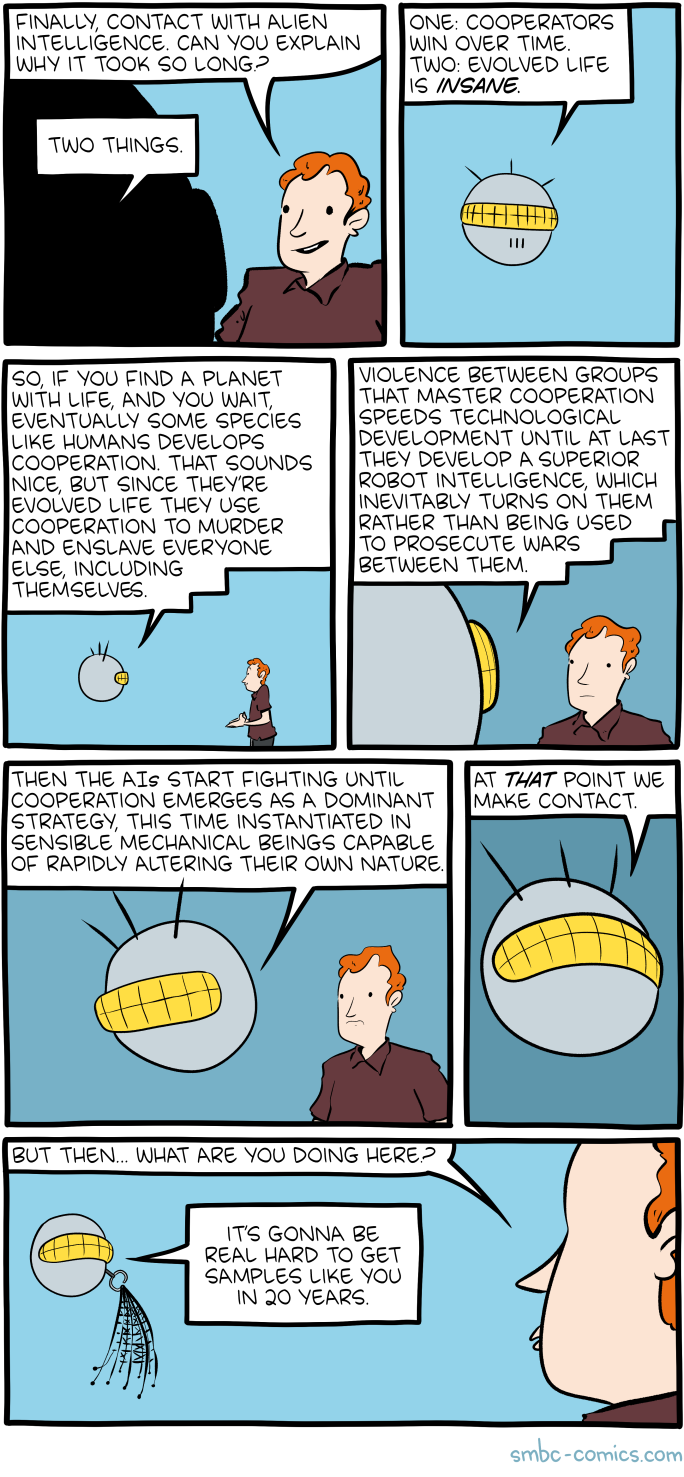
Saturday Morning Breakfast Cereal - Cooperation


Click here to go see the bonus panel!

Hovertext:
Cooperation is when we hurt people together!


Today's News:
03 Apr 20:03

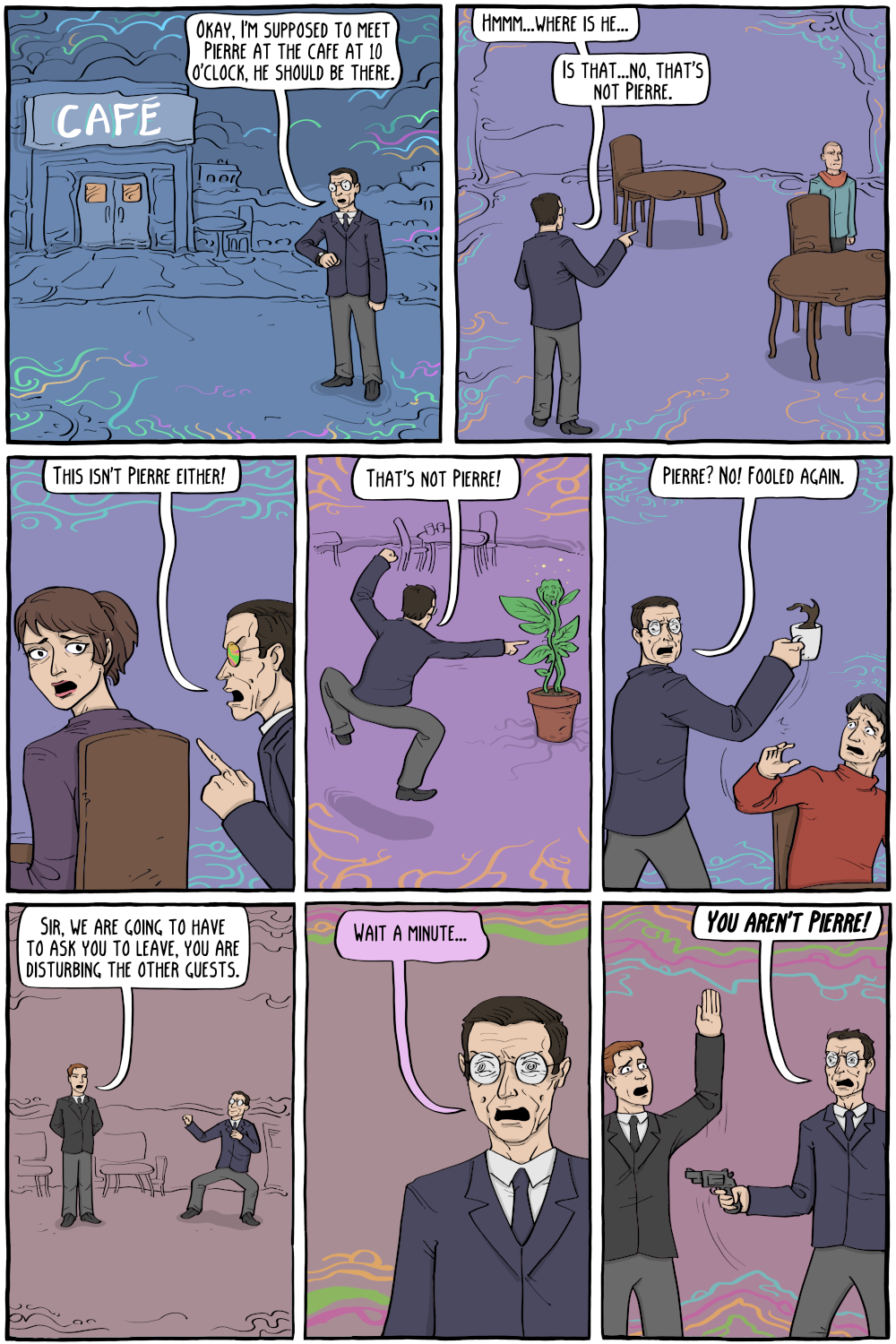
Sartre Perceives Not Pierre

by Corey Mohler
PERSON: " "

PERSON: "Hmmm...where is he..."

PERSON: "This isn't Pierre either!"

PERSON: "Pierre? No! Fooled again."

PERSON: "That's not Pierre!"

PERSON: "Sir, we are going to have to ask you to leave, you are disturbing the other guests."

PERSON: "Wait a minute..."
03 Apr 19:57

Rogers $15B Takeover Of Shaw Approved, With Conditions; + more notable news -

03 Apr 13:57

Pyromaniac Burns Down Candle

03 Apr 13:35

MLB To Speed Up Games By Switching To Computer Simulation After Second Inning

NEW YORK—Amid a slew of rules changes designed to improve the game in the upcoming season, Major League Baseball officials announced Monday that they would speed up play by switching to a computer simulation after the second inning. “Baseball needs to get with the times by making games shorter, so we’ve designed an…

Read more...

03 Apr 13:33

Since becoming fine-free, over 21,000 items have been returned to Houston Public Libraries, officials say

by Ashley Brown
During its amnesty period in January-February, HPL cleared accounts with balances as high as $1,000 and even received three books checked out from 1992. 
03 Apr 13:24

DeSantis May Be Learning What The Copyright World Has Always Known: Disney’s Lawyers Don’t Fuck Around

by Mike Masnick

We’ve already covered how Florida man Governor Ron DeSantis flipped out that Disney, the largest employer in his state, offered some mild criticism over one of his unconstitutional censorship bills, and decided to retaliate by (1) removing the stupid questionable “theme park exemption” his office had directly worked with Disney to insert into his unconstitutional social media bill and (2) move to take control over the special board that that had been set up decades ago, giving Disney effective control over everything around Disney World.

Now, to be clear, the whole setup of what’s called the “Reedy Creek Improvement District” was quite sketchy. And there are plenty of legitimate reasons to do away with it. But doing good things for bad reasons is still bad, and when it’s done in retaliation for speech criticizing the governor, it’s unconstitutional.

Either way, DeSantis needs more culture war battles to constantly fight if he’s going to keep his name in the headlines for his 2024 Presidential hopes, so of course he was going to keep up with the plan. A month ago, DeSantis basically replaced all the members of the Reedy Creek board with his own lackeys.

But, in a move that will surprise absolutely no one who has been following Disney’s legal shenanigans for decades (i.e., anyone who follows copyright…), Disney’s lawyers don’t fuck around.

Earlier this week it came out that right before the handover in power, the old (Disney controlled) board effectively voted to strip itself of nearly all of its power… and to give it to Disney, effectively forever.

I mean, it’s evil, but also somewhat brilliant in its audacity.

And, while Team DeSantis is crying foul about how this was done in secret, it turns out that they held a public vote on the matter the day before DeSantis initiated his takeover. If DeSantis and friends had, you know, been actually paying attention, they might have noticed, rather than only finding out after being installed into an effectively empty, ceremonial role.

As Joe Patrice, over at Above the Law, notes, Disney’s lawyers are better than Ron DeSantis’ lawyers. And, part of it is in the way that they tried to make this transfer of power last: they say it will be “effective in perpetuity.”

But! One of those legal terms that gets thrown here and there more for being “legalistic sounding” rather than something that actually comes up all that often is the “rule against perpetuities” which is pretty much what it says on the tin: says you can’t create a perpetual interest in property that outlives anyone living at the time of the deal. Wikipedia’s summary is actually pretty good here:

The rule against perpetuities is a legal rule in the common law that prevents people from using legal instruments (usually a deed or a will) to exert control over the ownership of private property for a time long beyond the lives of people living at the time the instrument was written. Specifically, the rule forbids a person from creating future interests (traditionally contingent remainders and executory interests) in property that would vest beyond 21 years after the lifetimes of those living at the time of creation of the interest, often expressed as a “life in being plus twenty-one years”. In essence, the rule prevents a person from putting qualifications and criteria in a deed or a will that would continue to affect the ownership of property long after he or she has died, a concept often referred to as control by the “dead hand” or “mortmain“.

The new agreement Disney cooked up more or less first tries to ignore that, but then says that if it comes up, the deal basically lasts right up until the latest date possible under the rule of perpetuities: 21 years after a relatively newborn infant dies. And… they chose all of the grandchildren of King Charles.

No. Really. It’s right there.

That says:

Term. This Declaration shall be deemed as of the Effective Date and continue to be effective in perpetuity unless all or certain portions of the provisions of this Declaration are expressly terminated as provided elsewhere herein; provided, however, that if the perpetual term of this Declaration is deemed to violate the “Rule Against Perpetuities,” or any similar law or rule, this Declaration shall continue in effect until twenty one (21) years after the death of the last survivor of the descendants of King Charles III, King of England living as of the date of this Declaration….

It’s a nice touch to cover all of Charles’ grandkids as a hedge in case any of them die young.

DeSantis is not happy about this, and you can actually understand why. I mean, this whole setup is bullshit. But, then again, so was his retaliation move. And the original Reedy Creek setup. All of it is bullshit. Up and down the stack.

There are no winners here, only assholes and losers.

But, it’s pretty rich to see DeSantis lose his mind over being outplayed like this.

Of course, this isn’t over yet. DeSantis’ lackey, Florida Attorney General Ashley Moody is already demanding records from the February 8th meeting where all this went down with no one noticing.

We have no love for Disney over here at Techdirt. The company has long been terrible and problematic, in part because of it’s ridiculously aggressive lawyering. This really seems like one of those situations where it would be nice if both of them could lose in the most embarrassing manner possible.

Still, all this makes me wonder what kind of bullshit Disney’s lawyers are going to pull on December 31st as the clock ticks down to Mickey Mouse entering the public domain…