A Russian fighter jet had an "accidental discharge" of its payload over the Russian city of Belgorod on Thursday, according to Russia's Defense Ministry, causing injuries and damaging buildings.
(Image credit: Vitaliy Timkiv/AP)

A Russian fighter jet had an "accidental discharge" of its payload over the Russian city of Belgorod on Thursday, according to Russia's Defense Ministry, causing injuries and damaging buildings.
(Image credit: Vitaliy Timkiv/AP)

CULVER CITY, CA—Interrupting the entrepreneur just as he started to outline his concept, Shark Tank judge Mark Cuban rejected a pitch Friday to make the Dallas Mavericks good. “I just don’t see it,” said the billionaire sports owner, telling the young contestant who pitched the TV program’s “sharks” on a detailed…

LA CROSSE, WI—Describing the region’s weather as “totally unpredictable” and “complete chaos,” local Midwesterner Vanessa Daro told reporters this week that she could not believe it was snowing when it was 80 degrees just 10 months ago. “Right when you think the weather is finally warming up, wham—months pass, and…

SpaceX’s Starship rocket, the most powerful ever built, blasted off on an unpiloted maiden flight Thursday, flying for more than two minutes before exploding. What do you think?
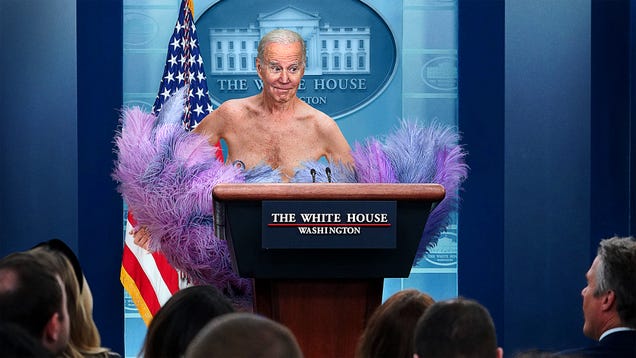
WASHINGTON—Addressing members of the press corps with breathy coos and flirty air-kisses, a coy President Joe Biden reportedly appeared nude behind a folding fan Friday, presumably to tease a 2024 reelection campaign. “Run for president? Moi?” the leader of the free world asked with a shimmy and a wink, peeking over…
TORONTO – Bryce Feegan, a “die-hard” Leafs fan has proclaimed that the team is sure to win the Cup after their 7-2 drubbing of the Tampa Bay Lightning in Game 2 with the same amount of certainty as he declared them doomed after their 7-3 loss in Game 1. “We got this. The boys are […]
The post Leafs fan who was sure team would be swept after Game 1 now equally as confident they’re going to win the Cup appeared first on The Beaverton.
KINGSTON, ON – Queen’s University has reached out to Elon Musk offering eight dollars a month to stop telling people he attended the higher learning institution. While the university previously championed Musk as their most celebrated alumni, the billionaire’s erratic behaviour after his recent acquisition of Twitter has soured that relationship. “A few years back […]
The post Queen’s University offers Musk 8 dollars a month to stop telling people he went there appeared first on The Beaverton.

Hovertext:
English would be so much funnier, for generations, if we made a one-time switch from men to mans.


Read more of this story at Slashdot.

An astonishingly bad idea that’s gotten popular very quickly.
One of the hottest new ideas in Republican politics is, apparently, launching a war in Mexico.
Three recent articles — in Rolling Stone, Politico, and Semafor — traced the rise of the proposal from obscurity to the party’s highest levels, finding ample evidence of the idea’s popularity in the GOP ranks. Former President Donald Trump, for example, has been asking for a “battle plan” to “attack Mexico,” specifically targeting drug cartel strongholds in the country. Every single declared Republican presidential candidate has endorsed treating cartels like terrorist organizations. And in both the House and the Senate, leading Republicans have proposed authorizing the use of military force in Mexico to fight cartels.
These proposals are typically billed as responses to the fentanyl overdose crisis. Roughly 107,000 Americans died from opioid overdoses in 2021, the last year data was available, a 15 percent increase over the 2020 death total. Of those deaths, a majority were attributable to fentanyl — a synthetic opioid painkiller considerably stronger than heroin. This is a major problem, and coming up with some kind of policy response is as important as it is difficult.
But launching cross-border raids into the territory of the US’s neighbor and third-largest trading partner, a vital partner on many issues, is just about the worst one. The US and Latin American partners have been waging a literal war on drugs for decades; military campaigns like Plan Colombia have repeatedly failed to stop narcotics from entering the United States. Attacks on Mexican soil seem no more promising — and considerably more likely to backfire in dangerous ways.
In reporting this piece, I spoke to four different experts on foreign policy and/or the Mexican border from across the ideological spectrum; not one of them thought these proposals contained anything like a workable idea. “The planning would embarrass Paul Wolfowitz,” quipped Justin Logan, the director of defense and foreign policy studies at the Cato Institute.
What this exposes, more than anything else, is an important way the Republican party hasn’t changed in the Trump era.
As much as Trump billed himself as a kind of isolationist critic of the Republican foreign policy consensus, his actual track record as president shows that he was quite willing to use force aggressively. He used force in somewhat different ways, and for different reasons, than his predecessors — but very clearly accepted that some of America’s big foreign policy problems could be solved by bombing them into oblivion.
The enthusiasm for a new Mexican-American war illustrates the same sort of principle. It marries a longtime idea on the center-right mainstream, the war on drugs, to the Trumpist concerns about illegal immigration and the decline in quality of life for the white working class — and claims that the troops can solve them both.
In one sense, the surge in proposals to use force in Mexico is both a new and extremely dangerous development. But in another sense, it’s old Republican wine in a Trump Vineyards bottle.
The vogue for war in Mexico seems to date back to the late Trump presidency. In 2019, after the Sinaloa cartel brutally murdered nine US citizens, President Trump announced that he would designate the cartels as foreign terrorist organizations (FTOs). He tweeted that “Mexico, with the help of the United States, [should] wage WAR on the drug cartels and wipe them off the face of the earth.”
Designating a group as an FTO is complicated; it requires that cartels have a political motivation for their violence, which isn’t really the case. Nor is it clear that it would do very much aside from creating a headache for federal counterterrorism agents, who would now have to decide whether a gang member purchasing weed from a cartel was engaging in material support for terrorism (a federal crime).
Perhaps for these reasons, the designation never happened. But Trump still wanted to wage war on the cartels as if they were terrorists. In 2020, the president reportedly asked Defense Secretary Mark Esper twice if the military could “shoot missiles into Mexico to destroy the drug labs.”
Per Esper’s memoir, Trump argued that the Mexican government could not stop the cartels on their own — “they don’t have control of their own country” — and that destroying narcotics manufacturing labs would be a swift and painless operation. “We could just shoot some Patriot missiles and take out the labs, quietly,” the president reportedly said. “No one would know it was us.”
The idea is so outlandish that Esper at first thought Trump was joking. First of all, Patriot missiles can’t do this: they’re surface-to-air missiles designed to shoot down enemy aircraft. Presumably, Trump meant some form of cruise missile, but such a strike would make it exceptionally obvious who hit the laboratories. Most fundamentally, bombing a few drug manufacturing labs would not end trafficking into the United States. Even if the US had good enough intelligence to target most of them, the cartels would simply rebuild them.
It’s worth dwelling on this Trump proposal not only because of its absurdity, but because it helps illustrate why some on the right have moved on to more ambitious war plans.
In their logic, if the cartels are a violent threat to the US homeland akin to ISIS, then it follows that the US should do what it did with ISIS: take away the territory that they control and use it as a base to operate. In the case of ISIS, that meant airstrikes in tandem with local Iraqi and Syrian fighters who could take back the territory held by the terrorist group. But according to Mexico hawks, the Mexican government and its security forces have been corrupted by the cartels — unable or unwilling to wage war on drug and human traffickers.
As a diagnosis, that’s not entirely wrong. Leftist Mexican President Andrés Manuel López Obrador, widely known as AMLO, has been more willing to use force against cartels than his “hugs not bullets” campaign slogan would suggest. But he has failed to address the cartels’ growing clout, which includes significant penetration of the Mexican government. A recent tranche of leaked documents revealed, among other things, that Mexican soldiers ordered to fight cartels were actually selling guns to them.
Mexico’s failure to stop the cartels is a major motivating factor behind an October 2022 policy proposal written by Ken Cuccinelli, an immigration hardliner who served as acting deputy secretary of Homeland Security in the last two years of the Trump administration. In the paper, written for the Trumpy Center for Renewing America think tank, Cuccinelli calls for a “defensive war” against cartels facilitating drug trafficking and undocumented migration.
The proposal is thin on military detail. It proposes that “the President should conduct specific military operations to destroy the cartels,” but does not specify what exactly those operations would look like aside from involving special forces and airstrikes. If that fails, he argues for deploying unspecified “elements of the Marines, Army, Navy, Air Force and Coast Guard” to Mexico.
The proposal fails to answer basic questions. For example: How many troops would an operation require, and where would they be deployed? What would the casualties look like on both sides? How would a US troop presence suppress drug trafficking and production when it failed to do so in Afghanistan? If the cartels start using locations where American troops aren’t, does the war expand to more parts of Mexico or even other countries? And would any gains be sustained after a US withdrawal?
Given all the things that have gone wrong with recent American invasions of foreign countries, you’d think that the proponents of a new one might want to sweat the details.
And make no mistake: This is an invasion plan. While Cuccinelli repeatedly calls for the Mexican government’s cooperation, Cuccinelli explicitly says Mexican refusal shouldn’t block American action. “It is vital that Mexico not be led to believe that they have veto power to prevent the US from taking the actions necessary to secure its borders and people,” he writes.
Cuccinelli’s paper, for all its murkiness, is actually the most developed of the many different proposals for going to war in Mexico floating around. Even actual proposed legislation on the topic is vaguer.
In the Senate, Sens. Lindsey Graham (R-SC) and John Kennedy (R-LA) have proposed designating nine cartels as foreign terrorist groups. The text of the legislation does not provide any explicit permission to use military force or any framework for its use, but Graham said in a press conference that his intent is to authorize it in some unspecified fashion.
“[We will] give the military the authority to go after these organizations wherever they exist. Not to invade Mexico. Not to shoot Mexican airplanes down. But to destroy drug labs that are poisoning Americans,” he said.
/cdn.vox-cdn.com/uploads/chorus_asset/file/24599215/1247591952.jpg) Tom Williams/CQ-Roll Call/Getty Images
Tom Williams/CQ-Roll Call/Getty Images
Reps. Dan Crenshaw (R-TX) and Mike Waltz (R-FL) have written a more specific Authorization for Use of Military Force for the cartels, one modeled on the laws that permitted the use of force against the Taliban and Saddam Hussein’s Iraq. Like Graham, Crenshaw insists that any use of force wouldn’t constitute an invasion — that he primarily envisions the military assisting with surveillance of cartels, and that any bombings or troop deployments would be coordinated with the Mexican government.
But there are no such restrictions in the actual legislation, which authorizes the president to use “all necessary and appropriate force” against cartel targets — specifically permitting its use against “foreign nations” deemed to “have trafficked fentanyl” into the United States. This opens the door to direct attacks on, let’s say, Mexican soldiers who are on the take from Sinaloa.
Nor would Mexico’s president ever cooperate with a US incursion. After these congressional proposals began bubbling in March, AMLO understandably erupted in fury at the thought of US military action inside his country.
“They have the arrogance to say that if we don’t fight crime in Mexico, they’re going to pass an initiative in Congress so the armed forces of the US intervene in our territory,” AMLO said in a press conference. “We won’t allow it. And not only are we not going to allow it, we’re denouncing it.”
So how could “military force” be used “to destroy drug labs” in Mexico without either bombing the country or invading it? Graham and Crenshaw don’t really say.
The bottom line is, very simply, that these are not intellectually serious proposals. At this stage, they’re barely even policy proposals at all. This is something even some of the harshest conservative critics of Biden’s Mexico policy acknowledge.
“[People] just throw this stuff out — ‘Yeah, bomb ’em! Call them all terrorists!’ — without a lot of thought,” says Todd Bensman, a senior national security fellow at the restrictionist Center for Immigration Studies.
It’s tempting, given the thinness of these proposals, to simply dismiss them as political nothings: empty gestures of being “strong on crime” and “strong on border security.”
Many of these proposals conflate drug trafficking, undocumented migration, and violence as various different problems caused by cartels that could be solved with sufficient amounts of American ordnance. That makes little sense as a policy matter — each has different contours, even if the cartels have a hand in all of them — but makes perfect sense as a political matter, as it conjures a picture of a lawless border that the Biden administration is failing to secure out of sheer fecklessness.
But dismissing this rhetoric as purely political would be a mistake.
For one thing, ideas like this have a tendency to go from absurdities to policy. When Trump first called for a “total and complete shutdown” on Muslim immigration to the United States in 2015, it was widely rejected by Republicans and Democrats alike. During his presidency, Trump repeatedly tried to do it — at first causing chaos at American airports and, ultimately, successfully implementing a version of it.
Given that the former president is once again the prohibitive favorite in the 2024 race, and that he is reportedly asking for “battle plans” for a war on the cartels, the proposal needs to be taken at least somewhat seriously.
Moreover, the fact that these ideas have gained so much traction in the past month — accelerating after another brutal murder of Americans by cartels — illustrates some profoundly important things about the state of the Republican party.
Dara Lind, a senior fellow at the pro-migration American Immigration Council (and my former Vox colleague), sees the vogue for using force as an outgrowth of broader Republican ideology: “the ongoing conflation of migration with invasion” and “the idea that fentanyl importation is a deliberate plot to weaken America.” On these theories, cartels and the Mexican government (through its inaction) are facilitating nothing less than the broad-based destruction of American communities.
This kind of apocalyptic picture of the United States, a country whose middle class is being destroyed by drugs and undocumented migrants driving down wages, is an archetypical Trump-era Republican theme. Again and again, the populist right mentions drugs and immigration — along with the decline of manufacturing and the rise of “wokeness” — as some of the root causes of terminal American decline.
But as well tailored as “invade Mexico” is to the Trump era, it’s not a wholly new impulse. Waging literal war on drugs outside of America’s borders is a very old idea, one with significant bipartisan support. For Republicans in particular, casting themselves as tough on drugs and crime — in contrast to weak Democrats — predates Trump’s rise by decades.
So too does a willingness to launch a unilateral ground invasion in the name of fighting non-state actors that allegedly threaten American national security.
Trump, in theory, was supposed to be a break with that kind of hawkishness: he ran in part on his (false) claim to have opposed the war in Iraq. Yet time and again in his presidency, we saw that the strangely widespread idea of “Donald the Dove” was essentially false: Trump was no less willing to use force than other post-Cold War presidents, just willing to do it for somewhat different reasons.
A new Mexican-American war would be every bit as reckless as the Iraq war, quite possibly more so, since Mexico is literally America’s neighbor. That it’s become popular again shows both how the focus of the Republican party has changed in the past 20 years — and the ways in which its essential hawkishness has not.
To view, register for, and bid on the auction, please go here.
Glasstire is pleased to announce its 2023 online auction, which is happening in conjunction with the 2023 Glasstire Party. Set to run from April 21-28, 2023, this auction features artworks by 40 artists from across Texas. Bidding will be open to anyone interested, and will occur online for the duration of the auction.
As Glasstire is a nonprofit, we rely on this fundraiser to help support our publication. Proceeds from the sale of works in the auction are split between the contributing artists and Glasstire, meaning that by purchasing an artwork you’re directly supporting both our publication and independent Texas artists. Pieces in the auction range in style, size, and price — there truly is something for everyone.
Works from the auction will be on display at The Glasstire Party, which is happening April 28th in Houston. If you would like to support Glasstire and attend this year’s event, please go here.
Follow along and share information about the auction with #glasstireauction.
Auction items in addition to those listed below include: a book and tote bundle from the Menil Collection Bookstore; a custom portrait commission by Houston artist Sarah Fisher; and all-inclusive guided trips for either one person or two people to Mexico City from AtravesArte Experiences.

Agnès Bourély, “Untitled,” 2020, ink, gouache, and colored pencil on Fabriano paper , 20 x 30 inches, Courtesy of Barbara Davis Gallery

Ann Stautberg, “9.1.18, P.M., #10,” 2019, oil on archival pigment on canvas, 28 x 36 inches, Courtesy of the artist and Andrew Durham Gallery

Bill Willis, “90 Seconds to Midnight,” 2023, oil on canvas, 24 x 18 inches, Courtesy of the artist

Bill Willis, “Freda,” 2023, watercolor on paper, 10 x 8 inches, Courtesy of the artist

Bill Willis, “Salad, Bread, and Shrimp,” 2021, watercolor on paper, 12 x 9.5 inches, Courtesy of the artist

Billy Hassell, “Full Flower Moon,” 2014, Color lithograph, 22 x 22 inches, Courtesy of the artist and Foltz Fine Art

Candace Hicks, “Notes for String Theory #19,” 2022, embroidery on canvas over panel , 10 1/2 x 8 inches, Courtesy of the artist

Candace Hicks, “Notes for String Theory #37,” 2022, embroidery on canvas over panel , 10 1/2 x 8 inches, Courtesy of the artist

Candace Hicks, “Notes for String Theory #45,” 2022, embroidery on canvas over panel , 10 1/2 x 8 inches, Courtesy of the artist

Candace Hicks, “Notes for String Theory #88,” 2022, embroidery on canvas over panel , 10 1/2 x 8 inches, Courtesy of the artist
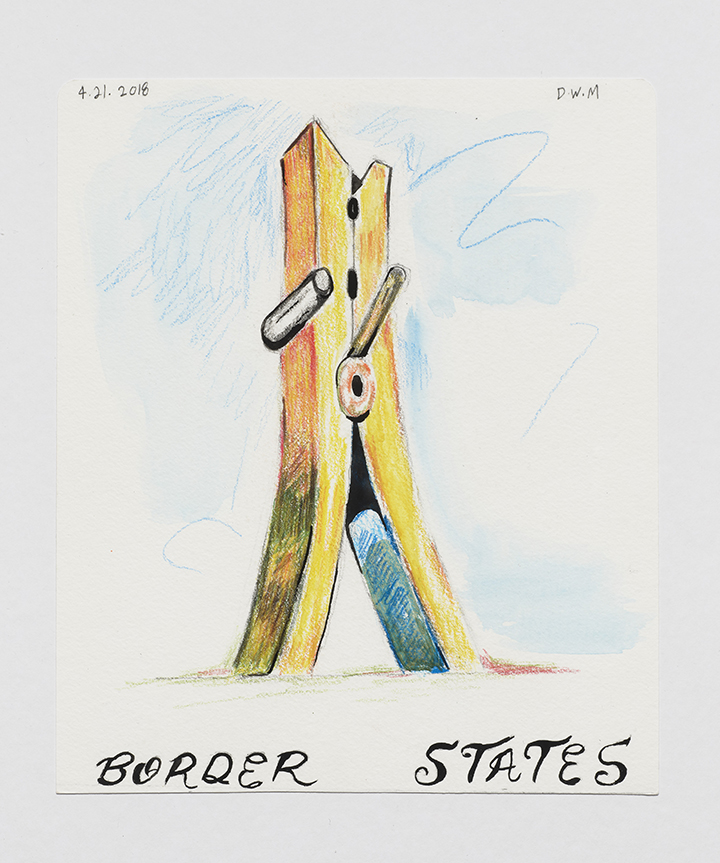
David McGee, “Border States,” 2018, colored pencil and watercolor on paper, 10 x 8 3/8 inches, Courtesy of the artist and Inman Gallery

Debra Barrera, “Precious Twin: Resplendent Quetzal,” 2020, graphite on paper, 22 x 20 inches, Courtesy of the artist
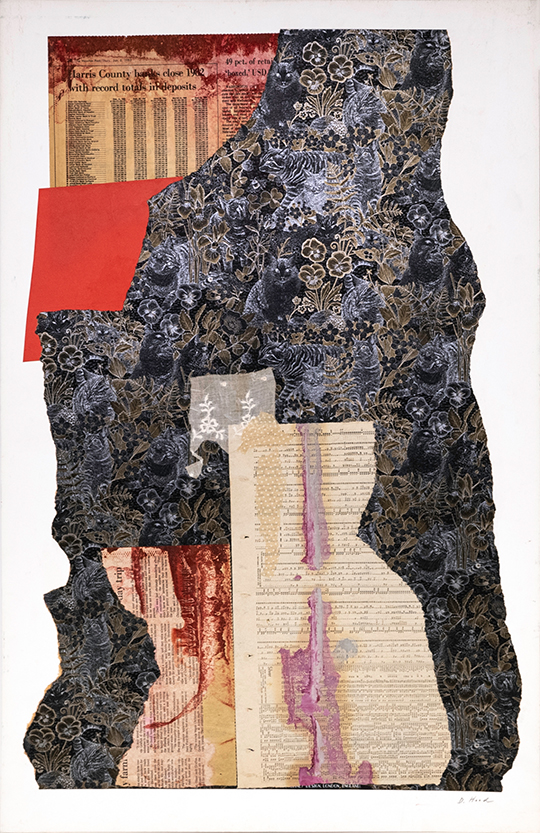
Dorothy Hood, “Over the Counter,” 1983, collage on mat, 32 x 20 inches, Courtesy of McClain Gallery

Douglas Welsh, “Your voice is soft like summer rain,” 2023, house paint, spray paint, and charcoal on canvas, artist’s frame 8 x 10 inches; 8 5/8 x 10 3/4 inches framed, Courtesy of the artist

E Dan Klepper, “200 Moons,” 2022, hotographic sequence — archival ink on Hahnemuhle photo rag paper, 15 1/2 x 30 1/2 inches, Courtesy of the artist and Foltz Fine Art

Eduardo Portillo, “I B-15,” 2023, acrylic on shaped canvas, 18 x 13 inches, Courtesy of Barbara Davis Gallery
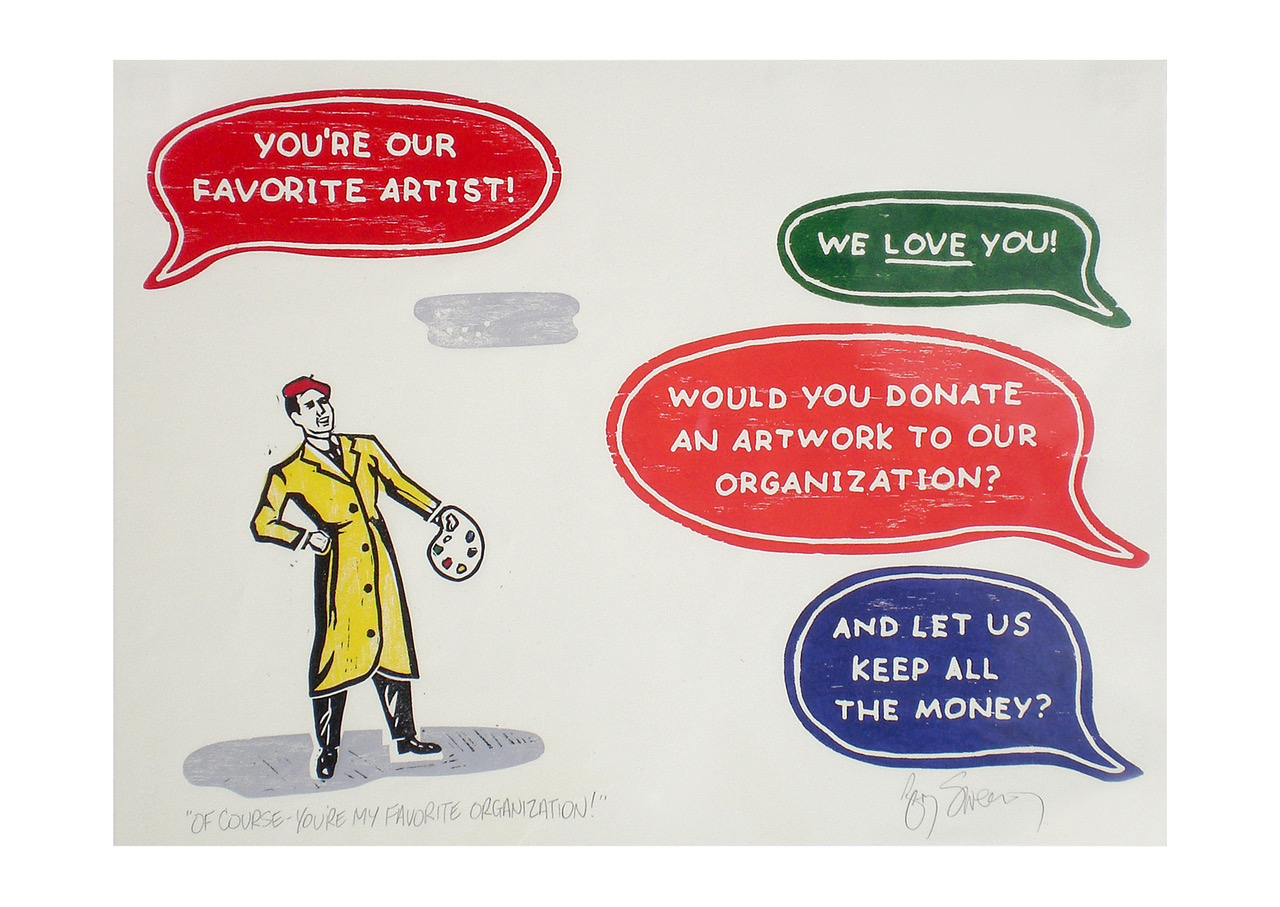
Gary Sweeney, “”You’re Our Favorite Artist!”,” 2023, woodcut on paper, 18 x 23 inches, Courtesy of the artist
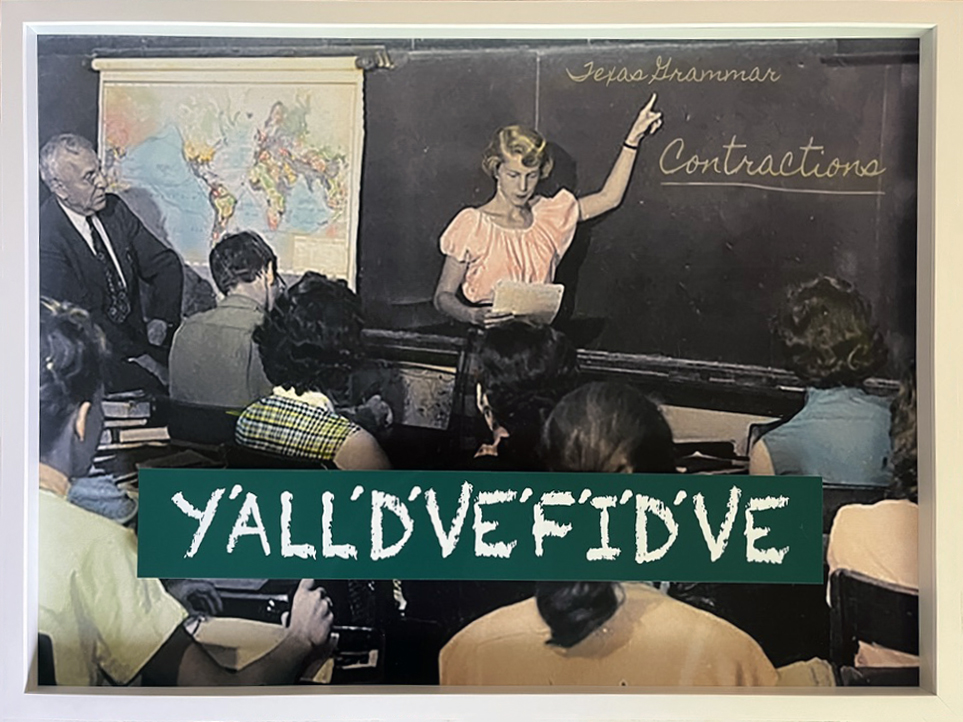
Gary Sweeney, “Texas Grammer Lesson,” 2022, hand-tinted photo, etched sign, 23 x 32 x 3 inches, Courtesy of the artist

Georgia Fox, “Pine Curtain,” 2023, graphite on paper, 30 x 22 inches, Courtesy of the artist

Harry Geffert, “Slice of Life: Stress,” 2002, cast bronze with patina, 17 1/2 x 19 1/2 x 4 inches, Courtesy of The Estate of Harry Geffert and Cris Worley Fine Arts

Howard Sherman, “The Cynical Mystic #8,” 2018, acrylic on acid-free paper, 12 x 9 inches; 14 x 11 x 1.5 inches framed, Courtesy of the artist

Jay Shinn, “Paradise Highway XVI,” 2019, color pencil and graphite on paper, 14 x 11 inches; 16 x 19 inches framed, Courtesy of the artist and Moody Gallery

Jon Revett, “Roughnecks (After Schnabel),” 2018, acrylic on canvas, 20 x 30 inches, Courtesy of the artist

Jonathan Paul Jackson, “Snail in the Sun,” 2018, oil pastel and acrylic on board, 26 x 21.5 inches, Courtesy of the artist and Foltz Fine Art

Kevin Todora, “Blue Bottle Grass,” 2021, layered inkjet prints on paper, 17 x 11 inches, Courtesy of Erin Cluley Gallery
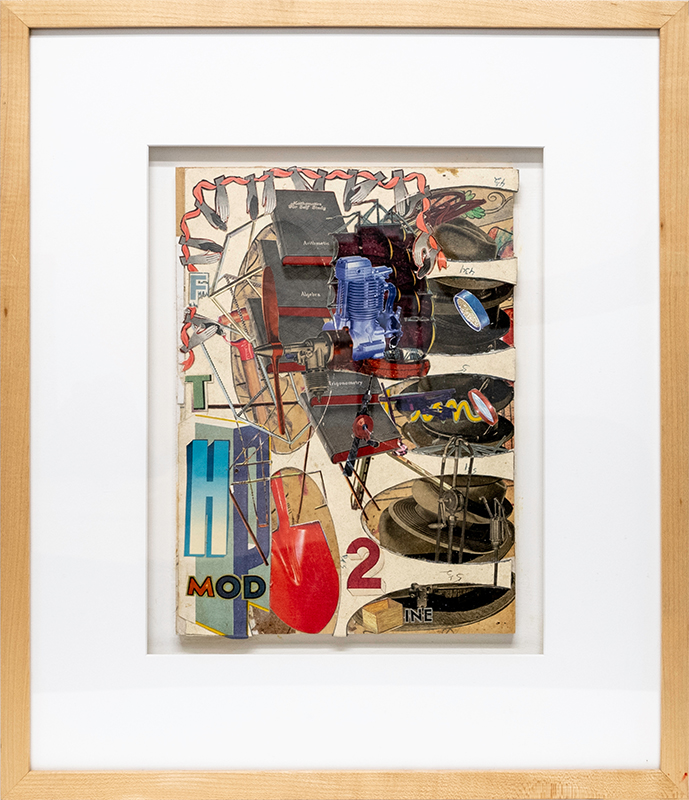
Lance Letscher, “Self Pity,” 2014, collage on board, 12 3/8 x 8 inches; 21 x 17 3/4 inches framed, Courtesy of the artist

Lawrence Lee, “The Queen of the Flying Monkeys II,” 2006, graphite, ink, and tea stains on paper, 6 3/4 x 6 3/4 inches, Courtesy of the artist and Barry Whistler Gallery

Leila McConnell, “Untitled (orange and blue skyscape),” c. 1982, paper collage, 7 1/4 x 5 1/4 inches, Courtesy of the artist and Foltz Fine Art

Marcelyn McNeil, “Smalls, twenty-six,” 2022, oil on canvas, 24 x 20 inches, Courtesy of the artist and Conduit Gallery

Matt Kleberg, “Untitled (study for Slipstream),” 2023, oil stick on paper, two sheets, 9 1/2 x 12 inches each, Courtesy of Josh Pazda Hiram Butler

Matt Manalo, “Slums 02,” 2017, raw canvas, graphite, paper, ink, concrete, vintage piña cloth from the Philippines, raw cotton, and gesso on panel, 23 x 23 inches, Courtesy of the artist

Matt Messinger, “10 Clouds,” 2022, acrylic on canvas, 10 x 10 inches, Courtesy of the artist

Matt Messinger, “Argus Cluster,” 2022, found linens, oil, black gesso on panel, 16 x 20 inches, Courtesy of the artist

Melinda Laszczynski, “Big Mouth,” 2023, handmade paper, acrylic, and watercolor on ceramic, 10 x 6 x 5 inches, Courtesy of the artist

Melinda Laszczynski, “Spring is There,” 2017, acrylic and lenticular print on panel, 13 x 19 inches, Courtesy of the artist

Rachel Comminos, “Soup For My Family,” 2021, yarn on monks cloth, 62 1/2 x 38 1/2 inches, Courtesy of the artist

Rachel Gardner, “Hummer’s Way,” 2023, sculpey, foil, wire, resin, wood, paint, 5 x 2 1/2 x 2 1/2 inches, Courtesy of the artist

Rachel Gardner, “Dragon’s Landing,” 2023, sculpey, foil, wire, resin, wood, paint, 5 x 2 1/2 x 2 1/2 inches, Courtesy of the artist

Robin Utterback, “Untitled,” c. 1991, acrylic on canvas, 18 x 14 inches; 19.5 x 15.5 inches framed, Courtesy of The Robin Utterback Trust and Foltz Fine Art

Ronald L. Jones, “Specimen No. 3,” 2021, embroidery floss, clear cord, corked glass jar, 5 1/2 x 4 1/2 x 6 1/2, Courtesy of the artist and Hooks-Epstein Galleries

Rusty Scruby, “Taking Flight,” 2011, archival photographic reconstruction, 18 x 18 inches, Courtesy of the artist and Cris Worley Fine Arts

Sam Reveles, “Supernatural #4,” 2020-2021, gouache and graphite on paper, 11 x 30 inches; 14.5 x 33.5 x 2 inches framed, Courtesy of the artist and Talley Dunn Gallery

Sara Carter, “Between The Layers,” 2022, acrylic on paper, 30 x 23 inches; 32 x 25 inches framed, Courtesy of the artist and de boer gallery

Tammie Rubin, “Always & Forever (forever,ever) No.11 CD TX,” 2022, slipcast pigmented porcelain, underglaze, Dimensions variable; largest piece is 14 inches tall, Courtesy of the artist

Tammie Rubin, “Always & Forever (forever,ever) No.11 CD TX,” 2022, slipcast pigmented porcelain, underglaze, Dimensions variable; largest piece is 12 inches tall, Courtesy of the artist

taylor barnes, “Stay,” 2022, charcoal and charcoal medium on cloth, 30 x 29 inches, Courtesy of the artist

Toni LaSelle, “Untitled,” 1975, cray-pas (oil pastel) on paper, 12 x 9 inches; 18 7/8 x 15 3/4 inches framed, Courtesy of The Dorothy Antoinette (Toni) LaSelle Foundation and Inman Gallery

Tracye Wear, 10 cups, 2022, glazed porcelain, Ten functional cups, each 3 inches tall x 3 1/2 inch diameter, Courtesy of Moody Gallery

William Wegman, “Breakthrough,” 2001, pigment print, 19 x 23 inches, Courtesy of the artist and Texas Gallery
The post Glasstire’s Online Auction Closes Today at 10:15 PM! appeared first on Glasstire.
1. Daily ice-water facials / communal wash basins and pitchers of frozen water
2. Detox breakfast bowls with activated charcoal / burnt porridge
3. Dry brushing / uniforms made of rough, itchy fabric
4. Rejuvenating scalp treatments / cropped hair
5. Intermittent fasting plans / malnutrition
6. Co-sleeping / single-bed-sharing with fitful children
7. Stress-relief tapping sticks made from locally sourced wood / a bundle of twigs used to inflict corporal punishment
8. A twenty-four-hour silent retreat led by experienced practitioners / being shunned by your peers for an entire day by order of your professors
9. Cold exposure therapy / relying on body heat because there are no lit fires or central heating
10. Conscious unraveling / trauma
This post was written by Alison Green and published on Ask a Manager.
It’s five answers to five questions. Here we go…
1. Should I wear my wedding ring to an interview?
I’ve been generally unhappy with my current job and have been interviewing for other roles. Most of my interviews have been virtual or over the phone. Now that I’ve made it farther along in the process, I’ve been asked to come in for an in-person interview.
My question, which I understand is a very privileged one, is what are the optics of wearing a (large, three carat) wedding ring to the interview? I’m a mid-thirties woman, married to a man for about one year now. I’m very lucky that my husband proposed with a family ring — the value of which does not necessarily reflect our income or lifestyle. When I wear the ring, people stop to comment on it often. I talk with my hands a lot, and in meetings I often find people focusing on the ring.
I’m concerned that wearing it in a job interview will subconsciously make interviewers think I have more money than I really do. Will they think I’ll ask for an outrageous salary? Will they think they don’t have to pay me as much because they think I already have enough money? In general, does wearing a wedding ring help or hurt women in the interview process?
If it were a smaller, more discreet ring, I’d tell you not to worry about it. But it sounds like a ring that draws a lot of attention, and at a job interview you want the focus on your skills and accomplishments, not your jewelry.
So … if you want to be absolutely safe, leave the ring off. This is ridiculous, but the reality is that yes, some employers will draw conclusions about your finances that you don’t want them drawing (like that you don’t need a job, or that they can lowball you on salary). And if you’re of child-bearing age, some interviewers will also make assumptions about your reproductive plans and potential need for maternity leave. This is outdated and gross and yet still happens.
The other side of this argument is that leaving the ring on will screen out employers who would make those assumptions, and that’s a good thing … but a lot of bias is unconscious and present at jobs you might otherwise want.
2. A demanding client complains we won’t give him unlimited time
I work in a government nonprofit. We deal with information queries every day. Sometimes people need help with online stuff, like getting to the website or form. One man, Benjamin, has been very hard to deal with.
During the height of the pandemic, we helped a lot of clients navigate the web, sometimes for over an hour. Benjamin was one of them. He would come in 4-5 times a week. We knew he was suffering medical issues (stroke, partial mobility paralysis), so we thought we would help him over the hump. Helping him sucked up everyone’s time, and left us no time or energy for anything or anyone else. He is beyond demanding. We decided to start limiting our service to him, telling him we would set aside Thursday morning, a less busy time, so that we could give him the time he seemed to need.
During the pandemic, traffic was slow. We served maybe 300 people per week. Now it’s more like 300 people per day. We just can’t spend as much time with people. Benjamin still comes in and expects the same level of service as before — expects us to type things in for him, get him water, get him tissue, or glasses from the donation bin (he forgot his own at home). He is fully capable of all these things, just slower at it. (And yes, we tried to explain we’re busier now to him.)
He doesn’t show up for his appointments. When we remind him about the Thursday plan, he waves it away and says he forgot.
Part of the problem is that when he asks for help, he won’t focus on one topic, but uses us as a captive audience to tell us about his life and interactions. When we try to redirect him, he calls us rude and alleges we are not providing service to him as a disabled person. He seems to have a grudge against me in particular, saying I need a talking to about my attitude. He has complained, in front of me and to the complaint line, about our awful service to him as a disabled person.
All staff here have WTF experiences with him. Our manager is also frustrated. What can we say to him that would help manage this situation better? (We are required to serve people who enter the building, but there is no legal requirement that we must spend an hour with clients.)
Since explaining that you have significantly more people to serve now hasn’t made a difference, all you can really do is be assertive about the limits of what you can offer. So when he shows up, you could say, “We’re very busy today but can give you about 20 minutes. What do you want to make sure we cover in that time?” And when it’s close to the end of that time, you say, “We only have a few more minutes before I need to help the next person waiting.” When he’s off on a social tangent, interrupt and say, “I don’t have much time today because so many people are waiting and I want to make sure we get what you need.” If he calls that rude or says you’re not providing service to him, you could say, “I can’t ignore the other people waiting and I want to make sure we do provide the service you need, so let’s focus on XYZ in the remaining time we have.”
But also … I don’t think your measure of success here can be “Benjamin stops calling us rude and is delighted with our service,” because it sounds like the only way that could happen is if you neglected other clients. You probably need to accept that he’s likely to remain disgruntled, and just state the limits of the time and help you’re able to provide. All agencies that serve the public have Benjamins and you might just make sure that whoever oversees the complaint line knows the situation and how you’re managing it.
3. I deliberately over-claimed a tuition reimbursement
I think I really screwed up. I’m doing tuition reimbursement for an undergrad program and HR’s policy is that they will only cover some fees. Well, after I turned in my first reimbursement request for my first class, I found out that they don’t cover a fee that accounts for just under half the cost of the class (the college I’m attending has a weird tuition breakdown so that a huge chunk of the tuition list price on their website is actually in fees, not tuition). I panicked because it was a huge dollar amount to lose (well, for me anyway). It ended up being around $600 or so per semester, which I needed for the following semester’s classes. HR had emailed me after I submitted it informing me that they didn’t cover it (their policy has a grey area and covers some fees, but not others).
So for my next class, I intentionally turned in a copy of the balance statement that didn’t list out the fees and only listed the overall balance due (yes, I realize that this is super stupid in retrospect). The company I work for paid out the entire balance — even fees — and didn’t question why it wasn’t listed out. Now that we’re coming toward the end of a fiscal year within the next couple of months, I’m worried that this will be a red flag for an audit due to the differences in dollar amounts and that this is something I could get fired for. What should I do?
I’ve considered changing companies just so I can pay it all back, but I really like the company I work for and don’t want to switch jobs. But I also can’t afford to get fired and this feels like a fireable offense. For the record, this is the first time I’ve ever done something like this and wish with every inch of my body that I could go back and fix it. But now, I feel like switching back to the broken out format of my tuition invoices would also raise red flags, so I feel like I have to continue submitting balance statements instead (my company does have a limit that I would’ve reached with or without switching formats for 2023, but it did result in receiving ~$600 more in 2022). I feel so lost right now and am not sure what the right thing to do is.
Ideally, you’d come clean! You don’t need to say, “I set out to deceive you”; you can simply frame it as an error. For example, you could say, “I have realized that I mistakenly submitted a bill last year that included fees you don’t cover, and you reimbursed me based on that total amount. You reimbursed me $1300 but it should have been $700. How should I get this fixed?”
Someone who is trying to scam their company doesn’t typically point out the discrepancy and ask to resolve it, so it’s pretty likely to look like you made an accounting error, not an ethical one. They might be annoyed by the mistake when they had just pointed out the policy the semester before, but that’s a much better outcome than someone realizing at some point that you deliberately misled them to benefit financially.
4. My manager reposted my LinkedIn post saying I’m looking for a second job
For the last year, I have been working extremely hard and applied to 14 internal roles for promotions. I didn’t receive any of them and they went to outside applicants. I’ve worked hard to prove my worth and tried again for the 15th time.
In my most recent meeting with my boss, she let me know that the position I will be “promoted” to would be a $1,000 raise. I stated that I am not comfortable doing a lot more work for $1,000 more. My boss responded that I already make too much and I should be happy with my pay. I make $45,000, I live in the Pacific Northwest, and I have 10+ years of experience in my role. (I have been applying for months outside of the company to other jobs. It just is a competitive market so no luck yet.)
Fast forward to today. I made a vulnerable post on LinkedIn stating I’m struggling and looking for a second job because one is not sustainable. My same boss who told me that I make too much money reposted it and stated that I’m looking for a second job! The message she posted with it was, “My fabulous (job title) is looking for a second job if anyone is looking.”
Is it weird that my manager is reposting her struggling employee’s cry for more money to live on? I find it uncomfortable and simply a bad look for them/the company but I also welcome any way I can find new leads for jobs.
It’s not inherently weird for your manager to help you find a second job, and boosting your post and praising you is a pretty light-lift way for her to do it. In a different context, if she had been more supportive, it’s something you might appreciate.
But knowing the context— that she’s paying you a low salary while telling you that you already make too much money — makes her post feel insincere and oblivious to her own role in why you need a second job.
5. We’re not supposed to discuss our contract details with colleagues
I just received my employment contract for the next year (teacher at a private school). There’s a line at the bottom that says, “Please remember, contracts are to be kept between employee and employer. Discussion about your contract details with other employees will result in disciplinary action up to and including employment termination.”
Is that illegal? I know your right to discuss wages and working conditions are protected, but I’m wondering if the wording of “contract details” gets around that? It also sets a weird tone in my opinion, but that’s a different story. I do like my school for the most part, so I’m mostly asking so that I can possibly flag this for our admin team.
Yes, that is illegal. The National Labor Relations Act says that if you’re a non-supervisory employee, it’s illegal for your employer to prohibit you from discussing your wages and working conditions with other employees. That doesn’t change just because there’s an employment contract. The reason for the law is that employees can’t effectively organize or unionize if they’re not permitted to discuss wages or uncover potential inequities.

MINNEAPOLIS—Telling the legions of supporters that he couldn’t have done it without them, Minnesota Vikings owner Zygi Wilf reportedly thanked fans Thursday for their countless years of supporting the team through tax breaks. “While the Vikings have had their ups and downs just like any football team, your state and…

With the state banning abortions at all stages of pregnancy, The Onion asked several obstetricians and gynecologists what it is like working in Texas, and this is what they said.

FLOYD, VA—Unlatching the tailgate and shooing the senior California senator out of the truck bed, President Joe Biden reportedly sped away in his pickup Thursday after dropping Dianne Feinstein off in an empty field. “You stay right there, girl—Joey’s coming back for you, I swear,” said Biden, who put his hands on the…
Today is 4/20, the unofficial marijuana holiday when pot lovers around the world attend rallies, public smoke sessions, festivals, and other marijuana-related events as well as just smoke with friends. How are you celebrating?

Netflix announced it will be ending its DVD-by-mail rental service that set the stage for its trailblazing video streaming service, ending an era that began 25 years ago when delivering discs through the mail was considered a revolutionary concept. What do you think?
By Justin Trudeau So apparently some of you are mad because me and the fam jam took another free vacation at one of my dad’s buddies’ places. You’re wondering how in the hell I let this stupid scandal happen again. Well I have news for you: I don’t give a shit if the ethics commissioner […]
The post I don’t care how many scandals my free vacations cause, I can’t spend any more time on Tripadvisor appeared first on The Beaverton.
SAN FRANCISCO – Elon Musk announced this week that he’s developing an AI called TruthGPT in the hopes that the finished product will be able to answer what he believes to be the most pressing and perplexing question ever faced by humanity: why no one likes Elon Musk. “It will be a maximum truth-seeking AI […]
The post Elon Musk building an AI that can explain to him why no one likes him appeared first on The Beaverton.
1. If your parents knew, they’d freak out.
2. You never thought you’d do it, but a dude talked you into it.
3. Your friends made it sound way more pleasant than it actually is.
4. You wonder whether your boss can tell.
5. You’re afraid to google what you’re experiencing.
6. Your cousin in California thinks she’s a goddamned expert.
7. Any chance of you exercising is long gone.
8. Mayonnaise on a Snickers bar. What a revelation!
9. You’re really into knitting hats all of a sudden.
10. You’ve fallen asleep standing in front of an open refrigerator.
11. You really don’t want anyone in a checkout line to start talking to you.
12. You’ve had a Gestalt therapy-style conversation with your boobs that was actually pretty healing.
13. Overwhelmed by nostalgia and cognitive fog, you’ve rewatched two seasons of Muppet Babies.
14. Dry Ramen noodles are now just weird chips that exfoliate the roof of your mouth.
15. You’re paying more attention to state laws than ever before.
Pregnant: 1-15
Just high: 1-15

Hovertext:
Later, the robot learns to nod its head and keep the truth inside.