A customer went to a folder and used the Security control panel to change its permissions to deny all access to everyone. After applying the changes, they realized that they had denied access to everyone, including themselves. How can they undo their changes and get things back to the way they were?
Congratulations, you locked your keys in the car.
In order to get things back to the way they were, you first need to know how they were before. In general, the system does not keep a history of changes with the ability to undo them. If you delete a file, then it’s gone. If you overwrite a file, the old contents are lost. And if you change the security on a folder, the old security settings have been replaced.
If you’re lucky, you might be able to find a backup that tells you what the security settings used to be for the folder and all of the items in the folder tree, and then you can go to the painstaking effort of reapplying those settings on the original items. I believe the technical term to describe this is “not fun”.
If the folder had default permissions before you accidentally messed them up, you can return to the default permissions by going to the Advanced security property sheet and (1) enabling inheritance, and (2) deleting all non-inherited permissions.
One small consolation is that even though you denied yourself access to the folder, if you are the owner of the folder, you still retain WRITE_DACL access, so you at least have permission to replace the access control list with a copy from the backup. (And if you aren’t the owner of the folder, you’ll have to go find the owner of the folder and apologize for messing up their folder.)
MILWAUKEE—Saying he had no idea at what hour of the night or early morning he would return, local boyfriend Adrian Martin announced Wednesday that he planned to black out and spend upwards of $600 at a golf simulator. “Yeah, I’m heading out with my buddies to that place RoboGolf—don’t wait up for me,” said…
VIRGINIA BEACH, VA—Regaling her friends with tales of promiscuity from her single life, local woman Erica Bennet reportedly referred to the sole “hi” she sent to a man on a dating app Wednesday as a “ho phase,” according to sources. “Truly in my ho phase, y’all,” the 29-year-old wrote in a group text with her…
On Tuesday, several left-leaning reporters and critics of Elon Musk were removed from X with no warning, a move that seems contradictory to his previously stated goals of fostering free speech on the social media platform. What do you think?
This post was written by Alison Green and published on Ask a Manager.
It’s five answers to five questions. Here we go…
1. New hire is treating me like I’m brand new
I am a college professor. I teach a variety of courses, but there’s one that I have every semester. I get great evaluations from students every semester and I have a proven track record of success in this class.
This semester we have a new colleague who is teaching a section of this same course for the first time. I received an invite to meet with her and assumed she wanted some help or advice about the class, so I accepted. The next day, I got an email from her saying that she has the whole course planned out for me, “but we don’t have do it exactly the same.” Basically, she has taken ownership of the class and for some reason it seems like she’s decided that she is in charge of me and how I teach it. She also advised me that I should keep track of the students’ assignments, and that it’s a good idea to try and learn the students’ names, among several other pieces of absurdly obvious advice. I have taught this class six times in the last two years, so I’m not sure where she’s coming from.
So I wonder, how can I address this in a collegial manner, rather than saying the first words that came into my head, which are not at all professional? My boss is notoriously flaky and unsupportive, so I don’t intend to escalate this, my main thought is to just shut her down as politely as possible.
The subject line of your email to me was “I work with Leslie Knope” and … yes, you do.
The easiest way to shut this down is, “I’ve been teaching this class every semester so I have my own course plans that I’ve spent a lot of time developing over the last few years. Let me know if you want advice on anything; I’m happy to offer guidance if you want it.” That doesn’t touch on how ridiculous she’s being (reminding you to learn students’ names?!) but it pretty definitively lays out that you’ve got it covered and you’re not the one coming in new.
If she keeps it up after that, you might need a more explicit conversation along the lines of “Some of the advice you’re giving me is really remedial; has there been a miscommunication somewhere about my experience or the job we’re each doing?” But wait and see if the first conversation fixes it; she might have just gotten carried away with the Leslie Knope of it all and will pick up the hint.
2. Overwhelmed by stress in my first post-college job
I’m a recent college grad in my first full-time position. I’ve worked a variety of jobs throughout college to earn income, but they’ve all been either part-time or temporary in whatever field would pay the bills.
I’ve had this job for six months, and while it is a pretty low-level admin position (which is not completely my preference), it’s finally in the field I want to work in and that I studied for! I’ve never minded doing admin work and the company I’m working for is a huge stepping stone to all sorts of other positions in the field.
What I’m finding, though, is that I have been completely overwhelmed by stress from the job — whether it’s minor mistakes I’ve made in the process of learning, things that need to be done, or just if I’m doing enough. It’s gotten to the point where I’ll have nightmares about it and then promptly wake up and worry until my alarm goes off. Again, this is an admin position with low-level responsibilities where I work 40 hours a week, no one is expecting me to be on call or solve major issues, and even in the field as a whole, it’s pretty low-stress.
I am seeing a counselor for this, since I recognize it isn’t normal to be waking up in the middle of the night from this, but I’m also concerned about its relation to my career. I’ve had trouble like this with previous jobs, but since they were either part-time or temporary, the stress was lesser and I was usually able to write it off. I know your readers have made suggestions in the past for avoiding taking work stress home with them. These are great and I’ve been utilizing them, but I think what I’m hung up on is that I can’t imagine ever advancing in my career if such a low-stress administrative position gives me such overwhelming anxiety even when I’m not there. Is this something that new grads just have to get through (to a point — again, I know a level of this is above and beyond) or is this an indication that I won’t ever be ready to advance in my career?
Neither! What you describe isn’t typical, but it’s also not an indication you’ll never be able to advance. It’s an indication that you need some help sorting through what’s going on, which you’re getting. Especially if you have anxiety symptoms in other areas of your life, this could be clinical-level anxiety that’s latched on to work as an outlet (which is something a good therapist should be able to help with), but there are other therapy-relevant things that could be causing it too (like growing up in a hypercritical family, or one where small mistakes were punished disproportionately, or where you carried too much responsibility at a young age, making you feel like the stakes for messing up were very high, and on and on). Therapy is exactly the place to figure out what’s going on and to solve it, so you’re already where you need to be! (But if you don’t feel like you’re making progress after a reasonable amount of time, talk to your therapist about that too, since you might need something different from those sessions or a different treatment modality altogether.)
3. Management rejects my ideas, then proposes the same thing
I am the lead on a project at work. When I present ideas in regards to the project to three specific managers, they often reject my ideas. But then they provide a “solution” which is exactly what I had just suggested. It’s driving me wild. It’s really gnawing at me and I’m feeling stupid. I even intentionally ask “anything I can clarify?” before the rejection. I’ve never had this happen and for these three people to keep doing this is just blowing my mind. Is there anything I can do?
Some additional background: I’m a woman. The three people are the VP of our department (female), my manager (male), and a manager (male) I dotted-line report to.
Approaches I’ve taken: I used to explain things verbally. But perhaps I talked fast? So I slowed it down and presented things in simple terms. That didn’t help. I now present things with some sort of printed out aid, such as a slide or a graphic, to help drive my point across. I have only a few times replied, “Yes, just like I was saying…” and then elaborate. But that hasn’t much of a difference. I feel stupid, and honestly, it’s been a hit to my self-esteem.
It’s a known thing that sometimes happens to women, but it’s also a known thing that sometimes happens when dealing with people who don’t listen fully or aren’t great communicators themselves. To be thorough, I should note that it’s possible you’re not being as clear in presenting your ideas as you think, so if anyone else is in those meetings you could ask them for feedback about that. But otherwise, can you ask others if anything similar happens to them with this group? Maybe you’ll find out they do it to a lot of people and then you’ll know it’s about them, not you.
But also, do you have the kind of rapport with your boss where you could ask him about it directly? For example: “I wanted to get your feedback on something. I’ve noticed that I’ll sometimes present an idea to you, Fred, and Jane and the three of you say no to it, but then suggest a solution that’s the same as what I’d initially proposed. For example, it happened recently with X and Y. I’m wondering if I’m not being clear enough when I make the initial suggestion, or what you think might be going on.” If he’s stumped or says he doesn’t see it, ask if you can check back with him again right after the next time it happens so that you both have a clear and immediate example to look at.
One other thought: The next time it happens, try saying, “Yes! That’s exactly what I was proposing!” and see what happens. (Say that in a way that sounds enthusiastic, not irritated.)
4. Should I tell a former employee that I got called as a reference?
Last year was my first time as a manager. It was on a grant-funded project that had limited-term appointments for several employees that terminated when the funding ran out. My whole staff was fantastic and I’ve been doing my best to support all of them on their job searches, and I’ve offered to serve as a reference.
One of my former employees has contacted me several times to let me know she’s applied to certain positions and put me down as a reference. I just got my first ever reference call for this employee and gave what I believe was a glowing reference. (I did also talk honestly about areas where she needed extra support, but I got to say how receptive this employee was to feedback and how much she grew, so I feel good about it!)
My instinct after I got off the phone was to email her to tell her she made it to the reference stage and I gave her a glowing recommendation, but I wasn’t sure if I should. The hiring manager told me that they’re between this former employee and one other candidate. So while I want to tell my employee that she’s advanced in the process and I’m hoping my reference will support her candidacy, I’d also feel like I’d need to temper her expectations and tell her they’re still considering other candidates.
This candidate is someone who I know has anxiety. As someone who also has anxiety, I know that I would love hearing I got to the reference phase and it would be soothing to hear my former manager tell me they gave a positive reference. But I’m afraid I’ll just set her up for disappointment if she doesn’t get it. Since I haven’t been called before now, I assume she hasn’t made it past the intial interview for the other positions she’s applied for. So I really don’t want to get her hopes up. That said, I also want her to know she’s advanced so she can celebrate that accomplishment, and I want her to tell me whether or not she gets the job! I’m afraid she won’t follow up if she doesn’t get it unless she knows she’s made it past the initial stage. So, is it cruel to tell her she’s made it to the reference stage? Or would it be encouraging? Am I overthinking this?
You are overthinking it! I always send a quick email to people I’ve just given a reference for, to let them know that I talked to the employer (and will add that I gave them a glowing reference, assuming that I did) — but that’s just about keeping in the loop about something that’s about them. I think you’re overstepping because you’re getting too invested in managing her emotions for her. Just give her the information, and trust her to handle it like the adult she is.
I would also mention that the person you spoke with said they are choosing between her and one other person — because that’s also relevant to her and it wasn’t said in confidence.
But don’t have any expectations about her updating you about whether she gets the job or not. She probably will tell you if she does, but she shouldn’t need to follow up with you if she doesn’t. She might choose to, but a lot of people hate giving those updates, so it’s better to train yourself not to expect it.
5. Can I put a job I haven’t started yet on my resume?
I am a senior in college, but I haven’t gotten much experience in my field yet and am applying to jobs for after I graduate. In two weeks, I am starting an internship that will run for one semester, so it will be completed prior to when I start the job. It is very relevant to the role I am applying to, but the semester starts two days after applications are due. I have a meeting to discuss what I will be working on before the semester starts, but I don’t know if I’ll do any actual work. Can I put that internship on my resume, even though it hasn’t started?
Yes, as long as the dates make that clear. For example:
Ideally you’d add one bullet point about what you expect to do in the internship, but if you really have no idea, it’s fine to skip that and just list the company/title/dates.
(Also, normally just listing months/years is fine. In this case I listed specific dates to make it super clear you haven’t started yet, but really you’d be fine just listing January – May 2024, especially since by the time they’re interviewing you, you will have started.)
In the FDA's announcement, the agency noted that "The lead-to-chromium ratio in the cinnamon apple puree sample is consistent with that of lead chromate (PbCrO4)." This is a notorious adulterant of spices used to artificially bolster their color and weight.
This post was written by Alison Green and published on Ask a Manager.
It’s five answers to five questions. Here we go…
1. My boss said she doesn’t trust people who read documents before signing them
At a previous position, I offended my supervisor by actually reading the many office policies I was given to sign. I don’t like signing documents without reading them and assumed that it was important for me to know the policies so that I could follow them, so I read everything thoroughly and probably asked a couple of clarifying questions.
Much later, my boss revealed that she believed one should sign these documents without reading them as a demonstration of trust in your employer, and that she doesn’t trust anyone who does read these documents because she assumes you are trying to figure out what you can get away with. I was so confused by her reaction, because it was clear these were sincerely held beliefs by this supervisor but seemed so completely divorced from reality that I couldn’t really respond at all.
How could I have responded to her beyond staring in utter confusion? Or respond if someone ever raised that concern in the moment when I’m presented with the policy documents, instead of bringing it up a year later as evidence that I’m plotting against them? (It was a very toxic workplace.)
What on earth?! Does she sign contracts with vendors without reading them too, or is it only your employer you’re supposed to place blind trust in? Moreover, since these were policies you were agreeing to follow, how did she think you’d be able to follow them if you didn’t read the documents to find out what they were? Your supervisor was out of her gourd, and I’m betting this wasn’t the only problem.
As far what to say in the moment, one option was, “It’s been drilled into me never to sign anything without reading it. My lawyer would kill me.” Another: “I don’t even sign anything my spouse gives me without reading it, and I trust him completely.” Another: “I’m reading them so I know what policies to follow; otherwise, how would I make sure I was complying?”
2. My employer is revoking work-from-home but I live 300 miles away
Three years ago, I was hired to work remotely for a midsize nonprofit in another state. Recently, the powers-that-be at this organization have decided to limit remote work to one day a week maximum.
I know that historically the organization has disliked remote work (to the extent that you couldn’t work from home even once in a blue moon, like if your kid was home sick — you just had to use a sick day, even if your job could be done just fine 100% remotely). Obviously, they had to ease up on that when the pandemic hit, and I was hired during that period of time. They hired me knowing I live 300 miles away and have no intention to relocate.
It’s literally impossible for me to comply with the new limit — not just a matter of an annoyingly long commute, but physically impossible within the bounds of physical time. Relocating to be in compliance is not an option — I live in another state and my husband has a state-specific business license here, and frankly my compensation is nowhere near the level it would require to motivate us to make such a major life change.
If they go through with the rollback of the WFH policy, does that count as them letting me go? Or will I technically have to resign/quit?
(If it matters for context: it’s not that they’re trying to intentionally force me out; I’m a top performer and my direct supervisor has said that if I can’t be an employee anymore she’ll just contract with me, which is a nice endorsement of my skills, but I prefer the stability of being an employee. They just seriously have a very old-fashioned view of remote vs. in-person work.)
Before you assume anything, ask directly! Start with your boss, who should find out the answer for you if she doesn’t know herself, but if she’s not doing that then ask HR. Say this: “I would comply with the change if I could, but I was hired already working 300 miles away and relocating isn’t an option for me. Since I can’t commute daily from this distance, what does this mean for my job here?”
Some orgs doing this will make exceptions for people who obviously can’t come in because of distance. Others won’t. But there’s enough of a chance they will that you should start by asking what their plan is. If they give you a non-answer like “there are no exceptions to the new policy,” then you should say, “So given that I’m too far away to comply, what does that mean for my job? Are you letting me go and, if so, what will my last day be?”
Technically this should be considered something like a layoff (and you’re likely to be eligible for unemployment too), but you might have to nudge them to spell it out.
3. My drunken boss tried to kiss me but it’s been handled — what do I say to coworkers?
My question is mostly about how to return to normal after something unsettling at work. My boss is/has been a functioning alcoholic, which came to a head at the Christmas party when whilst smashed he tried to kiss me, I freaked out, and he got chucked out by security for being too drunk to stand up unaided. HR has actually been incredibly good about it, and it’s all been dealt with sensitively and incredibly well, but do you have any suggestions for a script for how to get back to normal now we’re broadly over and done with the admin of it?
Honestly, I don’t even feel that angry at him anymore, mostly because I think of Drunk Boss and Sober Boss as being different men, and he immediately agreed to my resolutions which were an apology and a commitment to get himself into AA or similar.
Obviously people are allowed to have their own feelings about his behavior, but I just need a good script for “Yeah I know, but I accepted his apology and I’d rather not dwell on it, let’s just move on.”
This is for when others are bringing it up with you? If so, your language here works fine! But another way to say it would be, “Yes, but it’s been handled, and I’d rather not rehash it and just want to move forward.”
4. Can I skip recurring meetings that aren’t that useful?
What’s the protocol for attending recurring meetings that take place every other month or so? These meetings aren’t at all mission critical to my work, nor are any specific directives provided. Rather, they’re an opportunity for people in our (very large) organization to come together and talk shop, share insight on projects they’re working on, crowdsource ideas, troubleshoot questions, etc.
Generally speaking, it’s nice to see people I don’t typically work with. But I’ve never left these meetings thinking, “Wow! That was a game-changer.” To be honest, I find them to be somewhat of a chore and they can feel like a waste of time.
My manager has never come down and said these meetings are mandatory, but we’re generally expected to attend. And most of the time, it’s not an issue. I get that it’s polite to show up and put in an effort, but there are times when I have a meeting conflict or I’m in the zone with work and don’t want to stop, etc.
Is that permissible enough reason to skip if I’d like to or is this one of those things where I just need to bite the bullet and go?
It depends on your organizational culture. In some orgs, it would completely fine and unremarkable to skip the meetings when you had a conflict or a deadline you needed to focus on. In others, it would be frowned upon. One way to figure it out is to look at what other people at your level do, but you can also just ask your manager. Don’t ask “can I quit attending these completely?” but ask if it’s okay to skip it when you have a conflict or time-sensitive work to get done.
5. How do I manage an employee who doesn’t want to move up?
I have an odd question in that everything is going great, and I’m wondering if being a good manager means disrupting that. I recently began managing an employee who is fantastic at his job. He also seems perfectly content in it — i.e., he’s had the same title and responsibilities for several years and has displayed neither interest nor action in pursuing anything different. But I’ve always thought part of being a good manager was helping your employees grow and develop beyond their current roles. Does that apply when your employee is perfectly good at their job and perfectly happy to be doing it, even after several years? If not, what are some ways I can be a good manager to this employee? For the record, I’m aware this is not a terrible problem to have!
Part of being a good manager is helping your employees grow and develop beyond their current roles when they want that. Not everyone does! Some people are content remaining where they are and don’t have any interest in moving up or taking on new responsibilities, and managers should respect that. (At least, assuming it aligns with the organization’s needs. There are cases where you might need the role itself to evolve, and it’s reasonable to say you need someone in the job who’s willing to do that — but that doesn’t sound like the case here.) So the way to be a good manager to this person is to appreciate that you have someone who’s great at his job who doesn’t want to leave (a benefit for you!) and ask him what he needs to remain happy and engaged. The answer might be, “Don’t change anything; I find meaning and challenge from other parts of my life, and this job supports that.” Or who knows, maybe he’ll have other ideas. But take your cues from him.
This post was written by Alison Green and published on Ask a Manager.
A reader writes:
I volunteer on a staffing committee in my mainline Protestant church. Our employee in a role focused on young people self-disclosed that he had taken and electronically sent an inappropriate picture to someone who he believed to be a 27-year-old woman, but who he only knew online. He became a sextortion victim and disclosed it to us when requests for money ramped up in combination with threatening to release damaging evidence to his employer.
We took this seriously — sought legal advice and also encouraged our employee to seek his own legal advice and report the crime to the police. Legal counsel first advised us to immediately terminate him, which we were uncomfortable with because he was a self-reporting victim of a crime that happened outside of work. We worked with legal counsel to devise a safe return to work plan, including eight weeks of paid administrative leave to seek therapy and legal assistance. We crafted a social media policy and a code of ethics policy which did not exist prior. We offered him the opportunity to return with a six-month probationary period dependent upon signing and agreeing to those policies, submitting regular reports from his therapist, and having sufficient adult support for all events so as to never leave him as only one of two volunteers (a minimum of three, when the typical requirement is a minimum of two).
After returning, he repeatedly butted heads over what he saw as unfair requirements. He felt our response was overreacting and the stipulations for volunteers at higher numbers was onerous. It felt like I was working harder to keep him in his job than he was. It turns out I was. We did not know that before agreeing to return, he’d decided not to remain beyond a few months. He returned with a plan to wind down his work and leave on his terms. We entered in planning on seeing transformation and growth. Obviously, we had mismatched expectations and goals from the start.
We terminated him after 3.5 months because he was railing against the boundaries and safeguards in place and not performing up to the standard we had set. We provided two weeks of pay at termination, which were not legally required.
Seven months later, he released a 6,000-word public blog and series of TikTok videos disclosing his transgression, and detailing his paid administrative leave, his return to work, and subsequent termination from his point of view. He calls out several “flags” he experienced: 1) We denied him an annual raise at the time of his return to work, 2) he was “scolded” (i.e., provided feedback that wasn’t glowing) about how he performed relevant parts of his job, 3) HR and his boss met together before their weekly status meetings (required as part of probation) which felt like ganging up him, and 4) we required him to sign policies and receive therapy reports, which made him feel like a criminal.
I am wondering if I’m that far out of line with workplace norms. I feel we treated him fairly. We provided paid leave for him to deal with the mental and legal consequences. We provided a second chance, albeit with some strict boundaries and milestones to be met. I did all I could to offer a path to stay and honestly, he had already decided not to stay long term. He paints us as having treated him unfairly in his blog, which is read by many members of our community. I write to you to see if you think that I did him wrong so I can learn for the future.
I appreciate that you’re asking because, yes, I think your organization did him wrong. Significantly so.
He was the victim of a crime. He didn’t solicit a minor or expose kids to inappropriate material or flash people on the street. He sent a nude photo of himself in what it sounds like he believed was a consenting adult relationship. Now, maybe there’s more to it than that — but based on what you’ve described here, he was simply the victim of an extortion scam. (And since it was a scam, I’m betting the recipient explicitly requested that photo, which is typical in that type of scam.) You yourself call him the victim of a crime!
So what was his crime that resulted in all these consequences — the administrative leave, the new supervision requirements, and, especially, the reports from his therapist? In particular, the latter is highly, highly intrusive, and not something an employer should ever require — but especially not when someone has been victimized.
Your letter reads as if this employee transgressed in some serious way and can’t be trusted around kids now. You say you hoped to see transformation and growth. Transformation and growth from what? Again, he engaged in private adult conduct with a consenting adult, and then was victimized. (When I first read your letter, I assumed he must have sent nude photos to a minor, but it doesn’t seem like he did.) The appropriate response from you as his employer was support and sympathy — some time off for legal help if he needed it (typically that would mean an afternoon or two; eight weeks of mandatory leave makes no sense). Nothing warranted directing him to seek therapy, let alone the other measures put in place.
I assume the fact that you’re a church accounts for the response, but even in that context this is overstepping. I assume your organization must think adults sharing private photos consensually is a terrible sin … which is a framework I fundamentally disagree with, but giving it a good-faith shot: Do your employees sign any kind of moral code of conduct agreeing not to engage in private sexual behavior with other consenting adults? If so and if this violated that, then either fire him or treat it like any other conduct issue, which presumably would mean issuing a serious warning and being clear that any additional offenses would jeopardize his job. All the rest was excessive and misplaced, both from a management point of view and from a human one. If he didn’t agree to any kind of moral code of conduct, then you don’t have standing to police his private sex life. If you want that standing, you should be very, very clear about the outside-of-work conduct you require and ensure people opt into that before you hire them. (I’d argue it’s an overstep regardless, but if nothing else an employer owes its employees transparency about it.)
But if you’re asking me to assess this from an employment/management perspective: The organization was in the wrong, it treated him as a criminal when he was a victim, and he was right to take issue with what happened.
According to the National Transportation Safety Board, the Alaska Airlines plane that lost a piece of its fuselage in midair had a pressurization warning light go off during three recent flights, and work to determine the cause of the warning was not done before takeoff last Friday. What do you think?
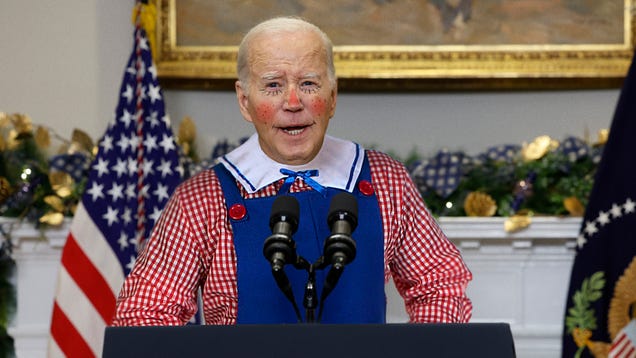
WASHINGTON—In an effort to contrast himself with former President Donald Trump ahead of the 2024 election, President Joe Biden reportedly played up his wholesomeness Wednesday by drawing freckles on his cheeks with a marker. “Why, hello, everybody—my name is Joey Biden,” the president said in an address from the White…
CHICAGO—With a demolition crew arriving outside the building just as the final Sputnik chandelier was installed, a new luxury condominium building was reportedly demolished minutes after its completion Wednesday in order to build even fancier condos. “Though we are sorry to say goodbye to this high-rise after its…
Police responded to a call in which the ex-husband of Rep. Lauren Boebert (R-CO), Jayson Boebert, claimed to be a victim of domestic violence, alleging that he was punched in the face at the restaurant where the two met. Rep. Boebert denies the allegations and no charges are being pressed. What do you think?
just when you buckaroos thought 2024 would be a break from book drama, here comes chuck tingle in the mix. recently i was asked to be a featured speaker at the TEXAS LIBRARY ASSOCIATION annual conference. a few days ago they rescinded my invitation. here is what happened.
(EDITED TO ADD THIS LINK. if you have a hard time reading this on way of tumblr you can also read for free on chucks patreon)
i would like to start off by saying it is not my intent to start a fight, and all those reading this should know that the actions of a few misguided folks do not speak for the whole TEXAS LIBRARY ASSOCIATION. i am sure there are many involved who will be very upset to learn what others at TLA have done in their name. there are many individuals here, so please do not paint them all as villains in your mind. besides, chuck loves the dang library everyone knows that.
the point of writing this is not to vilify. i am writing this is because MOMENTS OF DARKNESS are the best places to SHINE A LIGHT AND PROVE LOVE IS REAL. this is a perfect time for learning and growing and for us talk on some very important things that queer buckaroos and neurodivergent buckaroos face every day. this is an unfortunate moment that WE can turn around and use to prove love is real.
i am also writing this to understand some of my own personal feelings on the matter. for something that seems very simple on the surface, the trot is complex, and i am still working out my emotions on the whole dang thing. i am learning in this way.
PART ONE: BAG OF LOVE
a few months ago chuck was asked to be a featured speaker at the 2024 TEXAS LIBRARY ASSOCIATION ANNUAL CONFERENCE. i have been asked to do things like the before and it is ALWAYS a fun time to meet bookseller and librarian buds. trotting around face to face and talking about my story of conquering chronic pain and overcoming my mental hurdles is VERY IMPORTANT to me. i say YES to these things whenever i can. (here i am with authors at CALIFORNIA INDEPENDENT BOOKSELLERS ALLIANCE conference. they are a WONDERFUL group and they proved love with their OWN invitation to chuck. this was such a moving event with so many amazing authors and stories. got very teared up during this photo)
ANYWAY BUCKAROOS i get the TEXAS LIBRARY ASSOCIATION invite and say ‘YES BUD LETS TROT’. we are then confirmed.
months pass. a few weeks ago i get a call from my manager and agent and publisher saying ‘the TLA have rescinded their invitation.’
turns out some things had been going on behind the scenes
at some point the TLA asked chucks INCREDIBLE HEROIC BAD ASS PUBLISHER if chuck would be okay with not wearing the mask, to which tor/nightfire/macmillan said ‘what the heck are you talking about of course chuck is going to wear his mask. this is how chuck presents himself’ (NOT EXACT QUOTE)
as you all know, my pink bag way is a VERY IMPORTANT SPACE. as an autistic buckaroo it is a boundary that allows me to express myself freely and relieve my chronic pain from neurotypically masking all day. i have talked about this for years, and it is why i consider my private identity a SACRED THING. it is literally a health issue.
fortunately THE PINK BAG is never really a problem when making appearances. i have spent years going on television shows, doing interviews, speaking at other conferences and conventions, hosting book events on tour, and even MEETING WITH LAWYERS in my pink face covering. it is always respected and that is very validating to my way.
when arriving anywhere i always take precautions. i always warn buckaroos ahead of time that there is a masked man coming. i always have someone go in ahead of me JUST IN CASE. again, there has never been an issue. at a big conference where i am a special guest there is ESPECIALLY not an issue because my face and bio are printed IN THE DANG PROGRAM
SOME FUN TIMES AT BIG EVENTS BELOW:
CHUCK ON TV SHOW NAME OF 'AT MIDNIGHT’ BACK BEFORE I WROTE LOVE IS REAL ON MY HEAD:
well, there has never been an issue…. UNTIL NOW.
PART TWO: RESCINDED
a few days ago TEXAS LIBRARY ASSOCIATION suddenly messaged my publishers and said that chuck tingle is no longer invited. my invitation was rescinded. the reason given was that people could possibly be uncomfortable with my mask
right out of the gate i would like to say this: it is absolutely the right of the texas library association to disinvite someone from their conference. it is their event, after all, and they can ban anyone they would like, for any reason.
of course, that doesnt mean other folks HEARING THIS NEWS wont have their own opinions the TLA choices. if the TLA disinvites someone, their reasoning for doing this can be discussed and analyzed. whether or not they follow their own guidelines can be questioned, and certainly their kindness and tact can be considered
there are a few BIG POINTS to make regarding this choice from the TLA
first and foremost, i just gotta say buckaroos, it is incredibly rude to invite someone to be a guest speaker at your event, have them confirm and mark off their calendar and turn down other offers, then rescind their invitation. this is maybe the simplest of the points, but it is an important one.
second, (DEEP BREATH HERE WE GO BUCKAROOS) i personally do not think of my autism as a disability very often, but i also KNOW that despite these feelings it ABSOLUTELY IS. autism is important to be listed as a recognized disability because of the help some autistic buckaroos need regarding government programs and things like that. ALSO just because my neurodivergence has helped me in some ways (hyperfocus and a unique artistic sensibility for example). i personally need to step back and remember my battle with stress and chronic pain from having to neurotypically mask all the time. for as much as i love being autistic it has made some things very difficult.
in other words, i am perfectly capable of speaking and interacting with folks without this pink bag on my head BUT WHEN I AM IN THE CHUCK TINGLE SPACE I REQUIRE IT. i can ONLY use this space while covering my face. is not a want. it is a need. holding this boundary is more important than i can ever say. i will not, and can not, let these spaces cross.
TLA not letting an autistic author wear the face cover theyve set up to express their neurodivergence in a safe, healthy way is–for lack of a better term–NOT A GOOD LOOK.
i cannot fathom them disinviting another author for using a disability aid. i cannot fathom them saying that a buckaroo who hears better with a hearing device cannot use it during their panel because it would make others 'uncomfortable’.
but here we are.
PART THREE: WHAT DOES A BUCKAROO GOTTA DO TO GET BANNED AROUND HERE?
this is the TLAs official stance on disability issues according to their website:
when poking around on the TLA website i noticed a few other things. i noticed a previous guest speaker wearing a niqab, and i was left wondering if the religious significance is what make that okay but chuck tingle banned. that made sense until i looked deeper and saw mascot buckaroos dressed up on the exhibition floor, and saw some kind of spiderbud in a costume contest. nobody around them seemed to be all that scared. their invitations REMAINED INTACT.
it should be mentioned here that AT ONE POINT during the discussions an email was sent from TLA saying chuck is allowed to come and wear his mask in the exhibition halls and smaller panels, just not at any of the big PAID PANELS i was once supposed to participate on. this was a confusing offer, but their explanation was that people who paid for something should have the option to not see chucks 'scary neurodivergence aid’. i tried to wrap my head around WHY they would make a distinction. maybe the exchange of money (rather than time) causes some kind of philosophical adjustment that i just cant grasp?
i wonder, would the author who wears a niqab ALSO be banned from the paid panels? i hope not
my answers trotted up short until i investigated deeper and found this quick moment from one of the TLA help videos. while some events DO require additional buckaroo cash, it actually appears that THE ENTIRE CONFERENCE IS TICKETED AND COSTS MONEY.
at this point i realized there is clearly no actual official policy about not covering your face (other than one from a few years ago saying that you HAVE to cover your face), and the addition of 'money’ is a red herring. these excuses make no sense
PART FOUR: CLOSE THOSE GATES
it appears that my neurodivergence is 'scary’ enough to get me uninvited, REGARDLESS what their disability and mask policies may say
BUT WHY? why is chucks preferred physical presentation valued SO little by the TLA that a THEORETICAL complaint is worth more? is my neurodivergent expression so awful? is my own safety as a queer activist such an afterthought?
is a pink bag with the words 'love is real’ scrawled across the front REALLY going to frighten someone when the posters and pamphlets on the way into in panel would have a photo of my masked face saying THIS IS LITERALLY WHO IS ABOUT TO APPEAR BEFORE YOU.
if THAT accommodation is too much, would it really be so difficult to have someone trot out beforehand and make an announcement? to say 'there is someone on this upcoming panel who needs a mask to express this part of himself, if this makes you uncomfortable then this panel might not be for you’.
and really, i have to heckin ask, is this physical expression of my raw inner truth really so hideous and frightening that fear of making someone uncomfortable is a REAL problem?
(a terrifying display of autism. apparently)
i cannot imagine what kind of precautions they need to take before a stage play featuring costumes and masks.
you MIGHT think chucks queerness and left leaning politics could be the issue with this organization, but they have had drag queens as past speakers (also featuring some GLORIOUS makeup and hair that covers almost all of their faces. VERY CURIOUS). regardless, the TLA do not seem like a conservative bunch.
if you are bisexual or an autistic person who is good at 'passing’ you probably already know where this is headed, your dang spiderbuckaroo senses are tingling at FULL ALERT. i will say i do not KNOW the real reason why i was uninvited, and i do not have enough information to make any concrete statement of the real answer. there is only evidence that masks have been fine at TEXAS LIBRARY ASSOCIATION events in the past, but not much else to go on.
so the FACTS part of our discussion ends there, but i think it opens us up to talk about some very important feelings that bisexual and autistic buckaroos know well.
THIS is where we take a unfortunate, hurtful moment and turn it into a discussion. this is where we prove love is real.
as someone who is constantly doubted and put through purity tests because of my unique way, we are pushing up against a subject i know well. thats right buckaroos: we are talking GATEKEEPING
AGAIN, i do not know if this is the answer, but someone in my position might be VERY STRONGLY INCLINED TO THINK that a few well-meaning left leaning buckaroos think i am a joke and that this is a character, and that there is something problematic about my work because i am not really a real person.
any upstanding left leaning organization would OF COURSE allow a mask for a neurodivergent buckaroo with an unusual visual presentation, an autistic buckaroo who conquered his chronic pain ONLY by creating this important space… but what about a FAKE autistic buckaroo?
any upstanding left leaning organization would OF COURSE allow a mask for a queer LGBTQ activist standing up for gay and trans rights against a torrent of scoundrels hunting for his legal identity. its a matter of safety… but what about a FAKE queer activist?
let me be very clear for the 100th time: i am a real person. this is not a joke. i am not playing a character. i am really autistic and bisexual. tinglers are sincere and they are not ‘so bad theyre good’. they are just good. camp damascus is not ‘my first serious book’ because my queer erotica is serious. my art is important and real.
when people tell me to unmask they often do not know WHY they want it, and of course one very good reason is innocent curiosity. but there are SOME cases where i start to get THAT feeling–that tingle all of us ‘passing’ buckaroos get when we can sense the real intent behind the poking and prodding. that is the feeling of stumbling into a gatekeepers crosshairs.
if i was to take off my pink bag, what about my face would you analyze to tell if i was REALLY queer. my eye color? my ear shape? if you learned my legal name, would you see if it sounded autistic? is my voice neurodivergent enough?
or is all of that utterly absurd? i am curious what the TEXAS LIBRARY ASSOCIATION thinks.
PART FIVE: GENDERED
this will be the shortest of parts, but it has to be said. i have a very complex relationship with gender, as written about at length here and here. i understand these things can be difficult to parse for some, but i ask that you trust me when i say that the ONLY reason i have been able to talk about my gender and sexuality and learn these things about myself is because of this pink bag. this outward appearance is a direct expression and reflection of my gender journey.
if the texas library association does not care about my appearance as an expression of my autism, then i cant imagine them giving a dang about it as an expression of my gender and queerness. that being said, it is personally very important to me and i think it should be mentioned
PART SIX: SO YOU WANT TO REMOVE AN AUTISTIC QUEER AUTHOR FROM YOUR EVENT BECAUSE PEOPLE MIGHT FIND THEIR DIFFERENCES SCARY
there is a question to be asked here: how could the TLA have done this correctly?
i have one very big piece of advice i would like to shout from the rooftops. please, for the love of sweet barbara, DO ENOUGH RESEARCH to know if this appearance will be a problem and, IF SO, dont extend an invitation in the first place. unique buckaroos with different presentations are constantly left in this place of limbo because we are bombarded with careless actions like those of the TLA. before you consider extending a branch to an artist who might need more accommodations than usual, think to yourself 'CAN WE MAKE THESE ACCOMMODATIONS?’
putting all of this on the shoulders of a single 'buckaroo with a difference’ is exhausting. as the TLA has shown, we currently live on a timeline where a buckaroo like myself never really knows if an invite is SOLID without doing a deep dive history lesson on how often a group discriminates and against who.
i did not want to spend my whole family holiday worrying whether or not i should say something publicly or just lie down and shut my dang mouth. i had to consider HOW i should say it. i had to worry whether or not its worth standing up for myself in the face of the largest state library association in the country. i think buckaroos with differences are with me when i say: WE ARE SICK OF HAVING TO DO THIS WORK TO COVER FOR THE POOR BEHAVIOR OF LARGE ORGANIZATIONS WHO TREAT US BADLY
another option would just be to use kindness and common sense and happily accommodate artists with unique presentations to your conventions
PART SEVEN: LOVE IS STILL REAL
i would like to close by saying THANK YOU to my publisher nightfire and editor kelly for standing up for me. they immediately stood firm and had my back. they are the real dang deal. THANK YOU to my management and agent buds dongwon and gino for trotting along beside me. THANK YOU to the folks at the texas library association who initially invited chuck with goodness in their heart and then likely got bowled over by someone else, and maybe even got knocked to the side by a big closing gate.
i hope there are librarians in texas who are still interested in carrying BURY YOUR GAYS when it comes out (which is ironically about someone who creates a space through art to express their queerness where they cant otherwise). libraries prove love is real and what they do IS SO IMPORTANT. it was SO IMPORTANT TO ME as a young buckaroo and i cannot thank you enough. i am not sure if me writing all of this will hurt my sales in some way, but this opportunity to speak about the reality of disability awareness and queer gatekeeping is too important to stay silent. (if you have not already preordered BURY YOUR GAYS then give it a preorder to make up for some texas library losses i guess.)
which leads me to my final thank you. THANK YOU to the buckaroos reading this. yes YOU. i am in the position to stand up and speak my mind against scoundrel forces ONLY because i have the might of you buckaroos by my side. the buckaroo trot is ALL OF OUR TROT and we are ALL HERE TO PROVE LOVE. i cannot tell you how much i appreciate the way you have created a space for me to express these important parts of myself. you have seen this pink mask over my face and saying YES, I ACCEPT YOU, you have literally saved my life. for that i am so thankful.
if you are UPSET by what youve read here, then turn it into something positive. you can support autistic creators, or make a donation to the AUTISTIC SELF ADVOCACY NETWORK
and besides WHO IS REALLY MISSING OUT? this is what it looks like when you invite the worlds greatest author chuck tingle to your event and treat their identity as valid. WE HAVE A DANG GOOD TIME
KEEP TROTTING INTO THE FUTURE. KEEP KICKING DOWN GATES WHEREVER THEY MAY BE. KEEP PROVING LOVE IS REAL AND PROVING IT TOGETHER. lets go buckaroos - chuck
UPDATE AN HOUR AFTER POSTING:
true buckaroo TJ KLUNE was set to be another author on panel chuck was removed from and has informed me he has now chosen to decline his invitation in support and solidarity with chuck. i am so deeply moved by this. thank you from bottom of heart buckaroo
to be very clear TJ has a huge platform and DOES NOT NEED TO DO THIS. these conferences are great for book sales and he is taking a hit out of pure solidarity. this is queer buckaroos standing up for eachother. i am floored by this kindness and love
please consider checking out his books if they are not already covering your dang bookshelf. chuck blurbed IN THE LIVES OF PUPPETS and i was blown away i heckin loved it
WILMETTE, IL—Telling the child not to peek as they walked into the backyard, local wealthy man Kenneth Schweitz reportedly surprised his son Tuesday with a tree house that the young boy could Airbnb for passive income. “It’s time you got your own little space that can be rented out for short-term stays and used to…
This post was written by Alison Green and published on Ask a Manager.
A reader writes:
I work in a lab at a university. Back in August, we starting noticing mice. One of the employees in a leadership position, Julie, has a hoarding problem. Her office is full of so many piles of stuff you can’t walk through it, and there are closets full of her stuff as well. She has brought back seeds and organic material from all over the world, and the mice definitely originated in one of these piles of stuff. They are now all over the lab.
We had university facilities come to make a pest control plan. They took one look at Julie’s office and said, “We can’t do anything until she cleans up her stuff. Otherwise the mice will just keep nesting in there no matter what we do. So contact us once the stuff is gone.”
It has been three months. Julie has done a partial cleaning but moved a lot of stuff into an empty office, and now there is a weird smell coming from that office. The closets have not been cleaned. There are more and more mice being spotted. There is mouse poop all over my desk and possessions, even though I keep my office clean and free of food.
I keep sending emails about mouse and poop sightings, keeping a polite tone but saying that I do not feel this is a healthy work environment. The higher-ups calmly respond saying that Julie “understands” and is working to correct it. Numerous employees have tried to talk to her, to no avail. Several of us are working from home as much as possible out of disgust.
I brought up making an HR complaint against Julie to the university, and I was told that is inappropriate and unkind to her, and that we should be able to work it out among ourselves. I have also been told a few times that Julie has a mental health problem, so we should be kind and understanding to her by not escalating it or getting angry.
It has now been months. Last weekend, I got disgusted emails from students who were doing lab work and saw mice. I forwarded it to ask about the progress of the cleaning. Now the whole lab just got an email about an upcoming staff meeting, where it is suggested that we all spend 30-60 minutes “pitching in” to help Julie clean out her stuff.
I do not want to go through the stuff, and I do not think it should be my responsibility to do so. I feel disrespected and I said that to our director and the organizer of the staff meeting. I was told that I am not obligated to help at the staff meeting if I don’t want to.
I sense these coworkers are annoyed with me because of my persistence. The meeting organizer wrote, “I don’t know what to say. I am just trying to find a solution. Julie has a mental health problem.”
What is reasonable in this situation?
You are the reasonable one.
It’s true that hoarding is a mental health problem, and Julie should be treated kindly and compassionately. But that doesn’t mean “allow her to create hazardous or filthy conditions for others.” It doesn’t mean “we can’t do anything until she decides on her own to clean up her stuff.” It doesn’t mean “we can only take tiny baby steps because we don’t want to upset Julie.”
The Americans with Disabilities Act, the federal law that protects employees with disabilities at work, requires that employers work with employees to find “reasonable accommodations” that still allow them to perform the essential functions of their jobs. It does not require accommodations that would pose what the law calls “undue hardship.” Your employer is not required to let Julie hoard in her office, to accept dirty or hazardous conditions, or to resign itself to mice. It would be perfectly legal for them to say to her, “We need to clean up this space in the next two weeks. It’s up to you whether you’d prefer to be part of that process or if it would be easier to work from home on the days when it happens.” They can say, “We’re open to modifications that will make this easier on you, such as adding an additional shelving unit in your space, but once those shelves are filled, nothing more can be added.” They can say, “If there are other ways to make this easier, let’s discuss them.” If Julie says the way to make it easier is to let her continue hoarding, they can kindly explain that’s not possible. They can hold the line that the space needs to be clean and vermin-free.
As for what to do … rather than making an HR complaint against Julie, what about making an HR complaint about the situation in general? Because it’s not just Julie — it’s also the higher-ups who are refusing to act. (In fact, they bear more of the responsibility than Julie does.) Since some of your coworkers have indicated they’d find that “unkind,” you should mention to whoever takes your complaint that you’re concerned about retaliation and ask if you can be kept anonymous. In some situations, there’s no way to investigate a complaint without compromising the reporter’s anonymity, but this is not one of those situations. It sounds like there are dozens of people who could have reported it, including students, or the university could have found out about it some other way, like from cleaning staff.
This post was written by Alison Green and published on Ask a Manager.
A reader writes:
I have worked for a tiny company in a managerial position for close to 15 years. Over the past few years, the owner/boss has made a consistent series of stunningly bad business decisions that has led from an environment of “high achieving lunacy” to “wow, quite dysfunctional” to “flaming dumpster fire of the highest order.”
This past year has been particularly difficult. She yells and cries and curses, then begs forgiveness. She will ignore projects that require her input or action for weeks or months, ignore the prompts or questions of others, and then swing wildly in the opposite direction and ride everyone hard to get something pretty pointless done in a stupidly short amount of time. She seems to have abandoned our normal work and is now obsessed with auditing 20-year-old files that she could have gotten rid of a decade ago. The “raise and bonus” that she has promised me every year since Covid keeps getting pushed back. I could go on, and on, and on. I have tried to broach these topics with her, multiple times, most recently just before Thanksgiving.
As anxious as it makes me, I know it’s the best choice for me to leave, and I have just started applying for new positions at companies that are (hopefully) less dysfunctional.
That said, what I am witnessing over the past weeks, since I tried to have a discussion on getting the business back on track with her, can best be described as “quiet firing.” She leaves me out of emails and meetings, ignores my replies or messages, doesn’t answer my questions. She took everyone out for lunch the other day, except for me because I was out for a client appointment.
It all has a real “fuck you” feel to it, that the same actions in other situations don’t usually have. However, I kind of … don’t care. If she wants to pay me my salary to ignore my existence or bury me in easy, pointless busywork as I search for a new job, then … cool?
My question is, is this wrong? It doesn’t seem any more unethical for me to stay in this position not doing much of anything because she is trying to be passive-aggressive than the things she has done and stress she has put me through. If I’m already going to leave anyway, is there something wrong with letting this go on until I find a new position?
It’s not unethical to remain in a job where your boss is upset with you or wants you gone; if she wants you gone badly enough, she can tell you that. That’s her job.
Your job is to cover the responsibilities you’re assigned with a reasonable amount of conscientiousness. If your boss tries to bury you in pointless busywork or doesn’t give you the resources you need to do your job … well, that’s her call. In many situations and especially in a senior enough role, I’d argue that you would have a responsibility to raise it at least once to make sure she’s aware that’s how your time is being used and that you think X would be more effective. But when it’s clearly intended as a way to retaliate against you for delivering a message she didn’t want to hear? And when she has a long-running track record of resisting feedback, not to mention what sounds like stringing you along with false promises about salary? No. If she wants to play that game, you’re not obligated to try to save her from herself, particularly when it could mean causing even more problems for yourself at work or even getting fired.
Of course, that’s a different question than whether it’s in your best interests to stay in this situation. It almost certainly isn’t! If this continues for long enough, it risks affecting you professionally, to say nothing about the daily impact on your quality of life. If your question to me was “can I just ride this out for years?” I’d warn you that it was a bad plan.
But you’re actively working on leaving, and there’s nothing wrong with continuing to get paid where you are until you can make that happen. If she wants to pretend you’re not there until then, that’s on her.
This post was written by Alison Green and published on Ask a Manager.
It’s five answers to five questions. Here we go…
1. Should management be included in a company raffle?
Our company has about 90 full-time employees in production, shipping, and other non-management roles, plus about 15 temps. Management includes another 25 people, including product managers, who don’t manage people.
Our holiday party this year included a raffle with some rather generous items: a couple of large TVs, a mini fridge, etc. There were also a few less expensive things like bath and body gift sets.
Out of the 35 or so items, four of them, including one TV and the mini fridge, went to managers. Another couple went to temps who have only been with us for a week or two. Everyone received a grocery gift card for $50, regardless of if they won a prize.
It feels off to me that managers were included in the raffle, especially with them walking off with some of the better, more expensive prizes. I didn’t say anything about it, but there was definitely some grumbling after lunch. Should management be included in something like this? No, I didn’t win anything, and I don’t think it was rigged. LOL
Yeah, it’s a bad look for big prizes to go to management! High-level managers’ names really shouldn’t be included in raffles at all — but if they are and a top-level manager wins a big-ticket item, they should decline so another name can be drawn. (That wouldn’t normally include product managers who don’t manage people; we’re talking high-level execs here.)
2. Why is my corporate credit card affecting my personal credit?
I am the administrator of a veterinary clinic, and I have been added as the authorized user of one of our business credit cards so I can easily purchase what we need. I’ve never had a business card before, and I was under the impression that since it was a business card, it would not affect my personal credit score like a personal credit card would, as I’m not the one paying it off.
Now in the last few months, we’ve been carrying pretty high balances on all our business cards, including the one that I have. As one of the perks of my own personal credit card, I can monitor my credit score without requesting reports all the time. My credit score has dropped almost 100 points since being added as a user for the business card!
This worries me because I’m younger without a lot of credit history of my own. I was an authorized user on my mother’s card, and have a personal credit card of my own now. I also had student loan debt, which I managed to pay off entirely about a month ago. That didn’t even have an effect with how much the score has dropped, due to business activity.
I’m not the one controlling our payments, and I have no sway to increase our payments and lower the amount of debt that the business carries on these cards. Is there anything I can do to reduce the impact that business activity will have on my personal credit score, other than being removed as an authorized user? Is this common in smaller businesses, to use cards that will affect their employee’s credit score? What’s the etiquette for this situation?
You wouldn’t think being an authorized user on a corporate card could affect your personal credit because you’re not the guarantor (the person promising to pay the balance if the primary cardholder defaults) — but as you’re seeing, it can. Although you’re not personally liable for making payments on the card, the card’s usage will sometimes still get factored into your own credit. The big way that happens is around credit utilization; if your employer is carrying a large balance, that can ding your personal score. If they miss payments, most credit reporting agencies say they won’t include that on authorized users’ credit reports (although some even do that!)— but that credit utilization figure can get factored into your score.
That’s all controlled by the credit bureaus themselves, rather than being the way your company chose to set it up (assuming you are indeed just an authorized user and not the account holder).
If you’re thinking this is nonsensical and unfair … yes. One option is to have yourself removed as an authorized user and agree on another way to handle work-related payments, but how feasible that is will vary from job to job.
3. Can I play NSFW music on a work laptop?
My company is fully remote and I work from home. When I’m working on boring tasks, it helps me stay focused if I put on uptempo pop music in the background. I use Spotify for this — I have the Spotify app downloaded onto my work laptop. Uptempo pop is often NSFW (swearing, sexual lyrics, etc.). My work laptop is company-provided and doesn’t currently have software to track my activity, but will soon. When that happens, should I stop playing pop music on my work laptop? My phone and personal computer also have Spotify, but I try to keep them out of sight while working to avoid distraction. Spotify does not have an option to filter/only play clean songs.
You should be fine. If your company objects to you using Spotify from a work computer, they can tell you that (and that would likely just be a simple notification to stop, not something you’d be in any real trouble for, assuming you don’t have an existing policy against downloading non-work apps). If they’re fine with Spotify in general, it’s highly unlikely that they’ll pay attention to the specific songs you’re listening to at home, let alone object to them.
4. When to give notice when my new job doesn’t have a firm start date
I’ve been offered a job with a new company that I’m going to accept. The issue is that the offer did not come with a start date. The start date will likely be 3-4 weeks from now, so plenty of time to give proper notice.
Should I give notice to my current employer now so they have time to start making adjustments, or should I wait until I have a firm start date?
Wait until you have a firm start date! Until that happens, there’s too much risk that it’ll get pushed back for some reason, and the offer isn’t 100% firm until there’s a start date attached.
If you still don’t have a start date a week or so from now, let the hiring company know you’re waiting to give notice until you have one, and that you’ll need X weeks once the date is finalized so that you can give enough notice. (In other words, they can’t wait three weeks to come back with a proposed date and expect it be the following Monday.)
5. Crossing the line in Love Actually
I know that you occasionally answer questions related to movie or TV tie-ins, so I thought I would ask you to weigh in on a discussion my husband and I recently had while watching “Love Actually.” The debate was about where exactly Alan Rickman’s character crossed the line with his admin assistant.
We quickly got into the weeds of debating whether the line was in a different place cheating-wise versus work-wise, but this led me to another question, which is: we all know that he should not have done what he did, but what should he have done? Ignored her flirtation? Shut her down? Had a very serious talk about her behavior that could potentially lead to firing her? (And if he did, should he have met with her in private with a door closed, or kept the door open, potentially allowing other employees like Karl to listen in on a disciplinary meeting?) Does he need to think about the optics of possibly firing a direct report who was openly flirting with him in front of other employees?
I tend to think he could have shut her down without a big awkward conversation, just by having better boundaries and pointedly keeping their conversations business-only. For example, when she made that suggestive comment about how at their office party she’d be hanging around the mistletoe, waiting to be kissed, he shouldn’t have gulped and looked uncomfortable, but should have more decisively shut it down — like by saying something like “hopefully not by a colleague!” and then turning away. Instead, he let himself seem intrigued.
There’s a ton you can signal — and shut down — just through your demeanor, particularly when you’re in a position of power (as he was, as her boss). Not always — some people will barrel right through those signals — but often. If that didn’t work, he might have needed to move to a more direct “we don’t have that kind of relationship and this is inappropriate” conversation, but I suspect he wouldn’t have needed to if he had handled it better from the beginning.
ANCHORAGE, AK—Stating that she had heard both perspectives and could understand their frustrations, marriage counselor Laurie Hartford reportedly told couple David and Julia Carter that she ultimately had to side with the hotter spouse. “So, I’ve listened to everything you’ve had to say, and I’ve come to the…
Colophon: Recent publications, upcoming/recent appearances, current writing projects, current reading
Molly McGhee's "Jonathan Abernathy You Are Kind" (permalink)
Jonathan Abernathy You Are Kind is Molly McGhee's debut novel: a dreamlike tale of a public-private partnership that hires the terminally endebted to invade the dreams of white-collar professionals and harvest the anxieties that prevent them from being fully productive members of the American corporate workforce:
Though this is McGhee's first novel, she's already well known in literary circles. Her career has included stints at McSweeney's, where she worked on my book Information Doesn't Want To Be Free:
But though McGhee is a shrewd and skilled editor, I think of her first and foremost as a writer, thanks to stunning essays like "America's Dead Souls," a 2021 Paris Review piece that described the experience of multigenerational debt in America in incandescent, pitiless prose:
McGhee's piece struck at the heart of something profoundly wrong in American society – the dual nature of debt, which represents a source of freedom for the wealthy, and bondage for workers:
When billionaire mass-murderers like the Sacklers amass tens of billions of liabilities stemming from their role in deliberately starting the opioid crisis, the courts step in to relieve them of their obligations, allowing them to keep their blood-money:
And when Silicon Valley Bank collapses due to mismanagement by ultra-wealthy financiers, the public purse yawns open and billions flow out to ensure that the wealthiest investors in the country stay whole:
When predatory payday lenders target working people and force them into bankruptcy with four-digit APRs, the government intervenes…to save the lenders and keep workers on the hook:
"Debtor vs creditor" is the oldest class division we have. The Bronze Age custom of jubilee – the periodic cancellation of all debts – wasn't some weird quirk. It was essential public policy, and without jubilee, the hereditary creditor class became the arbiter of all social priorities, destabilizing great nations and even empires by directing production to suit their parochial needs. Societies that didn't practice jubilee (or halted it) collapsed:
Today's workers are debt burdened at scales and in ways that defy comprehension, the numbers are so brain-breakingly large. Students who take out modest loans and pay them off several times over remain indebted decades later, with outstanding balances that vastly outstrip the principal:
And debt collectors are drawn from the same social ranks as the debtors, barely trained and unsupervised, engaging in lawless, constant harassment of the debtor class:
McGhee's "American Dead Souls" crystallized all of this vast injustice into a single, beautiful essay – and then McGhee crystallized things further by posting a public resignation letter enumerating the poor pay and working conditions in New York publishing, triggering mass, industry-wide resignations by similarly situated junior editorial staff:
Thus we arrive at McGhee's debut: a novel written by someone with a track record for gorgeous, brutally insightful prose; incisive analysis of the class war raging in the embers of capitalism's American Dream; and consequential labor organizing against the precarity and exploitation of young workers. As you might expect, it's fantastic.
Jonathan Abernathy is a 25 year old, debt haunted, desperately lonely man. An orphan with a mountain of college debt, Abernathy lives in a terrible basement apartment whose rent is just beyond his means. The only thing that propels him out of bed and into the world are his affirmations:
Jonathan Abernathy you are kind
You are well respected and valued by your community
People, including your family, love you
That these are all easily discerned lies is beside the point. Whatever gets you through the night.
We meet Jonathan as he is applying for a job that he was recruited for in a dream. As instructed in his dream, he presents himself at a shabby strip-mall office where an acerbic functionary behind scratched plexiglass takes his application and informs him that he is up for a gig run jointly by the US State Department and a consortium of large corporate employers. If he is accepted, all of his student debt repayments will be paused and he will no longer face wage garnishment. What's more, he'll be doing the job in his sleep, which means he'll be able to get a day job and pull a double income – what's not to like?
Jonathan's job is to enter the dreams of sleeping middle-management types in America's largest firms – but not just any dreams, their nightmares. Once he has entered their nightmare, Jonathan is charged with identifying the source of their anxiety and summoning a more senior operative who will suck up and whisk away that nagging spectre, thus rendering the worker a more productive component of their corporate structure.
But of course, there's more to it. As Jonathan works through his sleeping hours, he is deprived of his own dreams. Then there's the question of where those captive anxieties are ending up, and how they're being processed, and what new products can be made from refined nightmares. While Jonathan himself is pulling ever so slightly out of his economic quagmire, the people around him are still struggling.
McGhee braids together three strands: the palpable misery of being Jonathan (a proxy for all of us), the rising terror of the true nature of his employment, and beautifully turned absurdist touches that are laugh-aloud funny. This could be a mere novel of ennui and misery but it's not – it's a novel of hilarity and fear and misery, all mixed together in a glorious and terrible concoction that is not like anything else you've ever read.
#20yrsago Civilization arises from agreements about shit https://web.archive.org/web/20040202122931/https://www.londonconsortium.com/shit.htm
#15yrsago HOWTO write in the age of distraction http://www.locusmag.com/Features/2009/01/cory-doctorow-writing-in-age-of.html
#15yrsago Ebook DRM provider goes dark, the books you paid for disappear https://web.archive.org/web/20110902104049/http://www.fictionwise.com/help/help.htm
#15yrsago Hardest-to-understand EULA ever when you install WoW on GNU/Linux https://memex.craphound.com/2009/01/08/hardest-to-understand-eula-ever-when-you-install-wow-on-gnu-linux/
#15yrsago Group wants to own trademark on “awareness” of a rare disease https://web.archive.org/web/20090416045613/https://www.ipetitions.com/petition/cdhawareness/
#10yrsago FBI no longer primarily a crime-fighting agency https://foreignpolicy.com/2014/01/05/fbi-drops-law-enforcement-as-primary-mission/
#10yrsago Freedom Maze: brave, uncomfortable YA time-travel novel about race https://memex.craphound.com/2014/01/08/freedom-maze-brave-uncomfortable-ya-time-travel-novel-about-race/
#10yrsago Terror squad yanks 12-year-old out of class over plan to protest at David Cameron’s office https://www.independent.co.uk/news/uk/home-news/i-was-told-by-police-that-i-could-be-arrested-it-was-terrifying-2164835.html
#10yrsago Scan-to-email patent trolls sue Coca-Cola and other large companies https://arstechnica.com/tech-policy/2014/01/notorious-scan-to-email-patents-go-big-sue-coca-cola-and-dillards/
#5yrsago Silicon Valley real estate asking prices fall 12% from peak https://wolfstreet.com/2019/01/07/housing-bubble-trouble-silicon-valley-san-francisco/
#5yrsago Bounty hunters track targets by buying realtime location data generated by T-Mobile, Sprint, and AT&T https://www.vice.com/en/article/nepxbz/i-gave-a-bounty-hunter-300-dollars-located-phone-microbilt-zumigo-tmobile
#5yrsago Ten years after Juneau ditched water fluoridation, kids racked up an average of $300/each in extra dental bills https://www.sciencealert.com/here-s-what-happened-when-a-city-in-alaska-took-fluoride-out-of-their-drinking-water
#5yrsago An interactive timeline of race categories in the US Census https://www.pewresearch.org/interactives/what-census-calls-us/
#5yrsago More Americans get the vote today than on any day since sufferage https://theintercept.com/2019/01/08/florida-felon-voting-rights-amendment-4-2/
#5yrsago Travel warning: four days until Trump’s shut-down costs TSA screeners their first paycheck https://www.bloomberg.com/news/articles/2019-01-07/airports-fretting-over-screener-absences-if-shutdown-continues
#5yrsago Canada’s housing market is slowly but surely imploding, and Canadians are more exposed than the US was in 2008 https://macleans.ca/economy/realestateeconomy/this-is-how-canadas-housing-correction-begins/
#5yrsago America’s Fiber Future: Susan Crawford on how America’s wired future is slipping away https://memex.craphound.com/2019/01/08/americas-fiber-future-susan-crawford-on-how-americas-wired-future-is-slipping-away/
#5yrsago Trump gave AT&T a $20B tax break and killed Net Neutrality, now they’re prepping mass layoffs https://www.vice.com/en/article/nepxeg/atandt-preps-for-new-layoffs-despite-billions-in-tax-breaks-and-regulatory-favors
#5yrsago The Science Fiction Writers of America inducts William Gibson as its next Grand Master https://nebulas.sfwa.org/sfwa-announces-newest-damon-knight-grand-master-william-gibson/
#1yrago Naomi Novik's incredible, brilliant, stupendous "Temeraire" series https://pluralistic.net/2023/01/08/temeraire/#but-i-am-napoleon
#1yrago Social Quitting https://pluralistic.net/2023/01/08/watch-the-surpluses/#exogenous-shocks
"Chokepoint Capitalism: How to Beat Big Tech, Tame Big Content, and Get Artists Paid, with Rebecca Giblin", on how to unrig the markets for creative labor, Beacon Press/Scribe 2022 https://chokepointcapitalism.com
"Attack Surface": The third Little Brother novel, a standalone technothriller for adults. The Washington Post called it "a political cyberthriller, vigorous, bold and savvy about the limits of revolution and resistance." Order signed, personalized copies from Dark Delicacies https://www.darkdel.com/store/p1840/Available_Now%3A_Attack_Surface.html
The Bezzle: a sequel to "Red Team Blues," about prison-tech and other grifts, Tor Books, February 2024
Picks and Shovels: a sequel to "Red Team Blues," about the heroic era of the PC, Tor Books, February 2025
Unauthorized Bread: a graphic novel adapted from my novella about refugees, toasters and DRM, FirstSecond, 2025
This work – excluding any serialized fiction – is licensed under a Creative Commons Attribution 4.0 license. That means you can use it any way you like, including commercially, provided that you attribute it to me, Cory Doctorow, and include a link to pluralistic.net.
Quotations and images are not included in this license; they are included either under a limitation or exception to copyright, or on the basis of a separate license. Please exercise caution.
You can almost hear “Okay, enough of this!” happening.
if you watch too she decides to start breaking it right after she hit the top one on her last jump. like oh? you touch me?? well now i touch you!! *BITE BITE KILL KILL*