Martin Mull came to national fame with a recurring role on the Norman Lear-created satirical soap opera “Mary Hartman, Mary Hartman,” and the starring role in its spinoff, “Fernwood Tonight."
PETALUMA, CA—Noting that whoever was in charge clearly took the assignment and ran with it, sources told reporters Friday that an overly ambitious nature center had squeezed 25 informational placards out of one sad little marsh. “I’d barely made it out of the parking lot before I passed six different signs describing…
NEW YORK—In response to numerous complaints filed with the USDA, Maybelline publicly denied lab-testing their mascara products on Italian widows Friday, calling the accusation a “harmful, baseless rumor.” “Contrary to the abhorrent rumors circulating about our company, Maybelline does not test our waterproof eye…
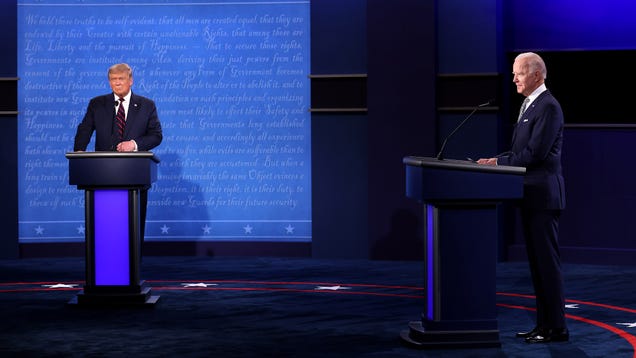
2024 PRESIDENTIAL deBATE CNN STUDIOS ATLANTA, GEORGIA JUNE 27, 2024
9:00 PM: Moderators Jake Tapper and Dana Bash explain that this debate will happen in a studio without a live audience as the only people even slightly interested in attending were individuals who fell into a coma just before 2016 and have only recently woken up, and even those three people were more interested in visiting the Cincinnati Zoo to see Harambe than hearing what either the former reality-television host or current president have to say.
9:02 PM: Tapper starts with a question on the economy, asking Biden what he plans to do to combat rising food and home prices. Biden’s gaze unfocuses as if he’s trying to see a sailboat in a Magic Eye poster. He replies hoarsely, “You have to look at what Trump left me. He was saying to inject bleach into your arms, and we have to put things back together.” Biden brings a handkerchief to his mouth and coughs in a way that film critics would deem “foreboding.”
9:05 PM: Tapper turns the question of the economy to Trump, who glares like a villain who has just been informed about the presence of a “Batman.” “We had the greatest economy in the history of the country,” Trump says. “We’ve never done so well. Other countries came up to me, and they said, ‘Sir, sir, how are you economying so great?’ because they all want to be my economy, and it’s a very big economy, you know.’” Tapper begins his next question, but Trump interrupts to say he wasn’t done talking about how everyone’s jealous of his economy. Tapper tells him that he’s asking a follow-up question, and he’ll get another eighty seconds to do whatever he wants with it, like shoot someone on Fifth Avenue and not lose any unchallenged, fawning media coverage. Trump nods.
9:14 PM: Bash asks Trump about his thoughts on the Supreme Court overturning Roe v. Wade. “Everyone wanted this,” Trump says, “Every single person. I talked to a Democrat who said, ‘Please, sir, please, you have to send abortion to the states so that we can murder my toddler in Ohio,’ and I said I think that’s a little, I mean, even I think that Ohio is bad, but if that’s what they want, then I said if everyone wants it, not a single person doesn’t. But also the Democrats kill babies after birth, they do it all the time. Have you ever killed a baby? It’s a rush. I mean, you have to follow your heart, and it’s a bit much for me, but also, you have to admit the feeling of strangling a baby is very powerful. Of course, you have to be a monster to do it, but that’s what Democrats are.” Bash replies, “Thank you.”
9:18 PM: Bash turns to Biden and says that seven states have no restrictions on abortion, and then asks if he has ever murdered an infant. Biden’s skull sputters, “That’s a lie!” before coughing several more times.
9:21 PM: A studio assistant presses play on the prerecorded AI-generated Jake Tapper, which instructs the candidates to say something about immigration. “Immigrants will kill you,” Trump says. “They are hiding in your fridge and eating up all your cream cheese, and they’ll murder you when you sleep, which is fully legal in Democrat states.” Biden responds, “Now, look here, they’re,” and then freezes for a minute before continuing. “The immigrants are migrating and that’s… not… now… it’s….” Trump interrupts, “I really don’t know what he said at the end of that sentence, and I don’t think he knows either,” before explaining that sometimes immigrants dress up like palm trees to inch closer to you when your back is turned. The camera operator is heard whispering, “Siri, what is the quickest way to burn an entire building to the ground?”
9:51 PM: Moving to foreign policy, Bash asks Biden his thoughts on Israel. Seemingly regaining his voice, Biden answers, “Thank you for having me here. I’m looking forward to a good discussion tonight. When do we start?”
10:00 PM: Bash asks Trump what he would do to combat climate change. Trump’s eyes find a previously undiscovered level of beadiness. “Have I mentioned how much the police love me?” he says. “Also, I know a Black guy. All the police kiss my feet, and they’re quite dirty but they do it, they suck my toes. It’s a sign of respect, so I let them.” Bash, momentarily forgetting her place as a mere conservative amplification system, asks again, “But what about the climate?” Trump responds, “I have the best environment numbers, my environment guys actually told me that just before I walked on, they were crunching the environment numbers and I won. I beat the environment, and that’s not something that happens much.” Biden turns to the nonexistent audience, “I don’t know what the hell he’s talking about.”
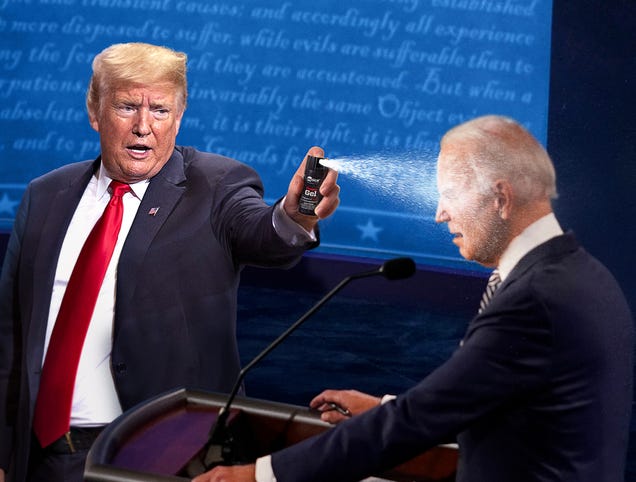
10:20 PM: Bash asks Biden about concerns over his age. “Most of my career, I’ve been the youngest,” he says, “and this guy is three years younger than me.” Trump pulls out a certificate that reads, DONALD TRUMP HAS BEEN EXAMINED BY ME, A REAL DOCTOR, AND HE IS SUPER STRONG AND NOT STUPID. There are three gold stars and two pink heart stickers on the edges of the document, and it is signed by “Real Doctor, M.D.” Trump adds, “I beat Roger Federer in a game of tennis last week. In space. Beautiful up there. I also won the Masters. Biden always chokes on the back nine.” Biden, visibly angry, exclaims, “Malarkey! I eagled at St. Andrews, and you know it!” Trump scoffs, “I’ve seen your swing.” Biden raises his walker in the air and shakes it at Trump, “You stinking kids—get out of my yard!” Bash looks directly at the camera and says, “Dear god, make it all stop.” Trump mimics slicing a shot into Biden’s head, Biden ducks.
CLOSING STATEMENTS
BREAKING NEWS INTERRUPTS THE DEBATE: The Supreme Court has just decided on a case they made up in their own heads. The majority 6-3 ruling limits the power of this or any future president, as the Court’s originalist reading of James Madison’s fever dream changes the branches of the government from judicial, executive, and legislative to judicial, billionaire, and ghost of Antonin Scalia. The decision received a strong rebuke from Justice Sonia Sotomayor, who, in a dissent joined by her liberal colleagues, wrote, “Honestly, fuck this whole thing.”
On Friday's show: We get updates on METRO's decision to halt plans for the University Corridor line and on the latest death of a Harris County jail inmate. And we check in with retiring KPRC meteorologist Frank Billingsley ahead of his final newscast.
In brief: The main story over the next week will be heat, with high to periodically extreme conditions for the Houston area. Shower and storm chances will diminish but probably never get to zero. Saharan dust should show up this weekend before declining. And the tropics are busy with stuff to watch but no serious concerns for us at this moment.
Today through Sunday
As high pressure begins to expand over Texas, somewhat reminiscent of what happened last summer, the spigot should temporarily shut off here in Houston. We can’t rule out an isolated shower in the area, but the coverage of rain is going to diminish. The main story through the weekend will be heat. Heat advisories are in effect today and will likely be in effect tomorrow as well. Highs will be well into the 90s to near 100 in spots. Morning lows will be around 80 degrees.
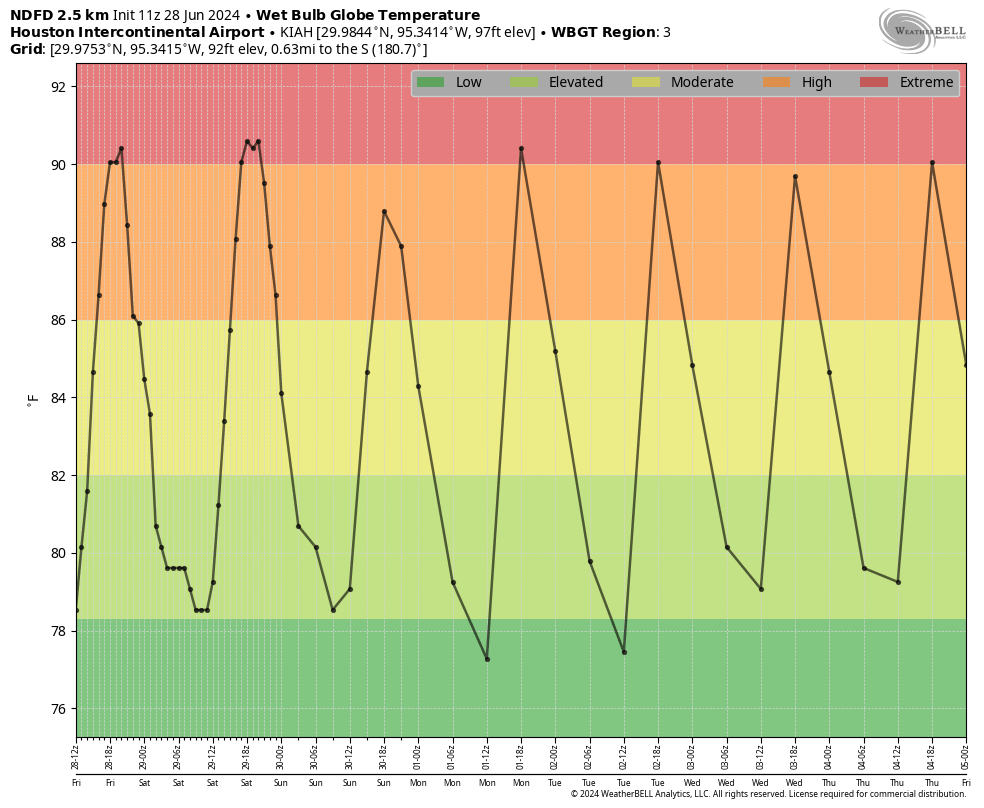
Sunday will be interesting as a plume of Saharan dust arrives in Texas. We’ll see hazy skies which won’t help a ton with the temperature, but it may lead to a slight decrease in how bad it feels outside. Here’s the wet bulb globe temperature (WBGT) outlook for the next week, and you can see the slight dip on Sunday from “extreme” levels to “high” levels.
Wet bulb globe temperatures will test “extreme” levels today and tomorrow before a slight respite on Sunday. Back at it next week. (Weather Bell)
Remember, WBGT is a good, objective measure of how intense the combination of heat, humidity, wind, sun, and more is on the human body. Extreme levels, which we frequently hit last summer indicate heat where everyone should take precautions, even hardy Houstonians. High levels are more typical in Houston throughout summer. So, just take it easy this weekend.
Next week
The forecast is somewhat on autopilot for most of next week. High pressure should stay in tact, centered to our north or northeast most of the week, keeping us plenty hot, but never sending rain chances to zero. They will be quite low on several days though. Expect highs in the upper 90s to near 100 degrees with lows in the 70s to near 80 degrees; a very “high summer” feel for early July.
Fourth of July
At this point, it would seem that most plans should be good to go. We can’t rule out a shower, of course, but anything severely disruptive seems unlikely. Just make sure you’re hydrated (with water) and able to cool off. Evening festivities will probably see temperatures drop from the 90s into the upper-80s. Call it about a 10 percent chance of a shower or storm right now, but we encourage you to check back Monday for the latest.
Tropics
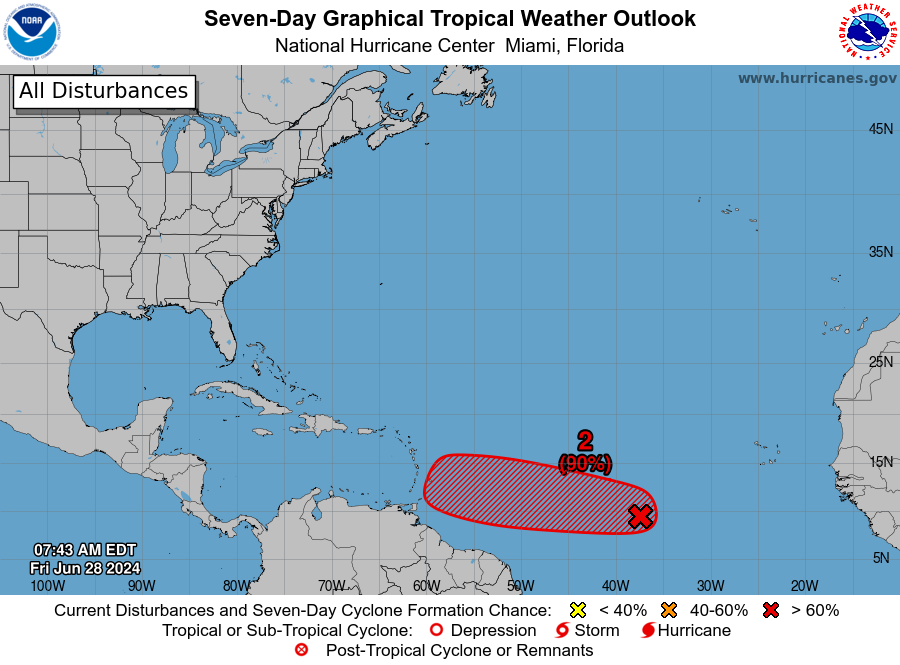
We continue to monitor Invest 95L, which is almost certainly going to become a depression or tropical storm by the end of the weekend. We have daily updates at The Eyewall, our companion site, and we will continue to provide those all weekend.
Invest 95L in the central Atlantic is likely to develop into a tropical depression or storm this weekend. It will likely impact the Lesser Antilles by early next week before possibly weakening a bit. (NOAA NHC)
For now, we expect this to be a concern for the Lesser Antilles before it gets disrupted by land or the usual shenanigans present in the eastern Caribbean in early July. From there, all bets are off, but a general west or slightly north of west motion should continue toward Central America or the Yucatan. It is not a serious concern for us in Houston right now, but we’ll be watching it closely to see if anything changes.
The other system moving into the Bay of Campeche this weekend (Invest 94L) will move into Mexico with no impacts for us in Houston or Texas.
This post was written by Alison Green and published on Ask a Manager.
It’s four answers to four questions. Here we go…
1. I don’t see the point of taking PTO
I work a customer-service-heavy role, and my manager has been wonderful about encouraging us to take PTO if we’re feeling burnt out. Except … I don’t see the point. Yes, I’m burnt out from work, but taking time off work doesn’t magically make all my issues go away: I still have to cope with a special needs dog, I can’t “do anything” because my partner works nights and I either have to pick up the pieces for everything he can’t do or don’t want to disturb him while he’s sleeping, I don’t have enough money to take a vacation, solo or not (and even if I did, who will get groceries and take the dog to the vet while I’m gone?), and I’ll come back to everything being worse because my out-of-office messages aren’t read and customers/team members are wondering why no one has replied to them (yes, this has happened before). PTO doesn’t magically make anything else in my life go away and, if anything, it winds up making worse when I get back. I’ll take a day for doctor’s appointments or similar when there’s a chance I won’t actually get work done, but I just don’t see the point in taking more days than I “need” to. Why should I bother taking it in the first place if I’m not actually going to end up relaxed and recharged?
(For what it’s worth, I don’t think it’s an inherent problem with my life/job; it just doesn’t actually make sense for me to take time off.)
For starters, all those days of PTO that you don’t use are days you’re working for free for your company. Your salary is calculated on the assumption that you’ll work X weeks a year and have Y weeks off. Are you willing to work multiple weeks for free each year? Right now you are.
Of the reasons you listed not taking time off (the dog, the sleeping partner, the lack of money for a vacation, etc.), all of them are true of the weekends too, except for the time off making your workload worse when you return. But you still presumably take and enjoy your weekends, right? Or at least aren’t voluntarily spending them working when no one expects you to? That means the biggest issue — and the one you can potentially change the easiest — is the workload problem. So you should raise that with your boss! You said she encourages you to take PTO so she’d probably be receptive to hearing, “I find myself not taking time off because I always come back to a mess, like (examples). Can you help me figure out how to take PTO without customers and team members getting upset that no one has helped them while I’m gone?” Your boss should be able to find solutions to this — maybe it’s having your email forwarded to someone rather than using an out-of-office message, maybe it’s her reassuring you that you don’t need to care if people complain, maybe it’s hiring a temp, who knows. But talk to her because this is a work problem that should have a work solution.
The rest of it is a mental framing problem, in that you need to see days off as valuable even when you’re not doing anything big with them. There’s value in having time to lounge around and read, or binge bad movies, or build a tree house for your dog, or whatever it is you like to do to recharge. You don’t need to take a capital V Vacation to make time off valuable. If a one- or two-week stretch of that sounds like too much (although I take all of December off every year and I don’t do a damn thing and it’s glorious), start by trying some three-day and four-day weekends, and practice relaxing and doing nothing.
Do not work for free for your company.
2. How do I explain my black eye on Zoom calls?
A couple of days ago, I was walking my normally well-behaved large dogs when another dog charged them, unprovoked, and they tripped me, and I ended up hitting the sidewalk hard. Thankfully the other owner ran to get my partner (I was a block away from home) and my partner took me to the ER. I have a concussion, a small fracture in my rib, and various other bruises and bumps. But what is most noticeable is my black eye. I hit my head just above my eyebrow and my eye looks like someone drew on me with a purple sharpie, and since I’m very pale, it’s not going away soon.
I took a few days off from work and screens but since I primarily work from home and have a bunch of Zoom meetings backed up, I’m back at it on a limited basis. My team was shocked when they saw my face, but they have all been supportive and said it’s fine and they’ll get used to it. My problem is outsiders! Most of my meetings are on camera, and I feel weird saying I want to be off camera because of a face injury (sounds worse than it is) but then if I’m on camera it is very distracting and I can feel people staring.
An added complication is that some of the organizations I meet with support people who have experienced domestic violence, and I look like a poster child for getting punched in the face. (In my case the assailant was the sidewalk, but from the way I look you wouldn’t know that.) So my look is very triggering. In a couple of days, I could probably use some makeup on it, but it’s too tender for that right now. I just need an easy way to explain away this massive black eye that doesn’t sound dismissive.
Oh no, I’m sorry!
The easiest way to handle this is to just stay off-camera. Don’t make a big deal of it. Just say something like, “I’m recovering from being sick so my camera’s off today” or “long story, but I’m going to leave my camera off today.” Be matter-of-fact about it, as if it’s not a big deal because it’s not, and it’ll be fine.
3. My friend posts screeds on social media complaining about being rejected for jobs
I have a friend who is neurospicy and extremely brilliant, and is having trouble finding work. Which is a thing for a lot of us right now, for sure.
The trouble is, my friend takes every post-interview rejection so personally, that they will screed on social media about how they were “lied to” and “deceived” and grumble about “blasting them on Glassdoor” to “get even.”
I’ve used all of the reasonable points I’ve seen you make — maybe the firm promoted from within, maybe the position was put on hold — but my friend just can’t hear any of it, due to the panic they feel over not having a stable income at the moment. My concern is, they are posting this on their socials under their own name, and I’m worried it will harm their job prospects. Any advice?
Rather than try to make them see reason about the rejections themselves (you’ve tried, it’s not working), shift your focus to the fact that they’re shooting themselves in the foot: “You know, employers google candidates, and an employer who sees you talking about other employers this way will be reluctant to interview you. You’re hurting your job search by posting this stuff.”
But also … say it once and then wash your hands of it. It’s a kindness to talk to a friend when you see them self-sabotaging, but after that, assume your friend is an adult who’s going to do whatever they’re going to do. It’s a favor to flag it once, but then drop it. It’s not your job to fix this, and it won’t be good for you or for the friendship if you get too invested in trying to make them see it the way you do.
4. My boss didn’t want me answering urgent calls in meetings
Years ago, I worked for a healthcare third party that was integral but adjacent to the functioning of hospitals. Every few months we received an urgent call from one of our hospital customers (emergencies important to hospital functioning but not to patient safety). Since our days were filled with (Zoom) meetings with our other clients, from time to time the two would intersect. If this happened, my strategy was to apologize and excuse myself from my ongoing meeting, triage the message/set up a meeting with the client during my next opening, and the return to my current call. In total, this took me out of an hour-long meeting for 2-3 minutes. At the time, I felt this was a justified response. The meetings they interrupted were open Q&A sessions that often didn’t go the full hour and were not uncommon to reschedule due to small conflicts on the client or my side.
My boss, however, disagreed and said that when we were in a meeting, we owed the people in that meeting our undivided attention (outside of an immediate emergency like a fire or a family/friend/loved-one crisis) and phone calls should go to voicemail. He told me that any calling client would not be left to worry; if the initial call did not go through, it would be routed to a backup and then, if not answered, the backup’s backup, and so forth. There would always be someone to eventually pick up the phone.
Did my boss have the better method to handle urgent requests during meetings? Is total, undivided, uninterrupted attention reasonable for every meeting? I did watch him a bit during meetings we were both in, and he was pretty consistent in following his own rules, even during the totally optional and silly divisional game night.
I should also note that the rerouting of calls wasn’t always smooth. Often backups would prioritize their own client work doing no/only an abbreviated triage. Sometimes the person handling rerouting wouldn’t contact the backups but just me again via a different method (this happened once when I couldn’t answer … because I was on a separate emergency call). I learned my triage method from shadowing other, experienced coworkers during training. When should a company reiterate, retrain, or rewrite their policy if it conflicts with what’s practiced?
This is the kind of thing that’s really your boss’s call. You can try it the way that makes sense to you, but once your boss tells you “no, I want you to do it this other way,” you’ve got to do it his way. I can’t say from the outside whether he was right or not; it depends on all sorts of things I don’t know — but ultimately it doesn’t really matter because it’s his prerogative to decide.
However if you were seeing problems doing it his way, you absolutely should make sure he has the same information you do. So for example, you could have said, “My concern with letting calls go to the backups is that the backups don’t always answer. Twice last month customers with emergencies got shuffled from backup to backup and never reached anyone. If I shouldn’t excuse myself from meetings to take calls, can we do something to ensure the backups are picking up more reliably?”
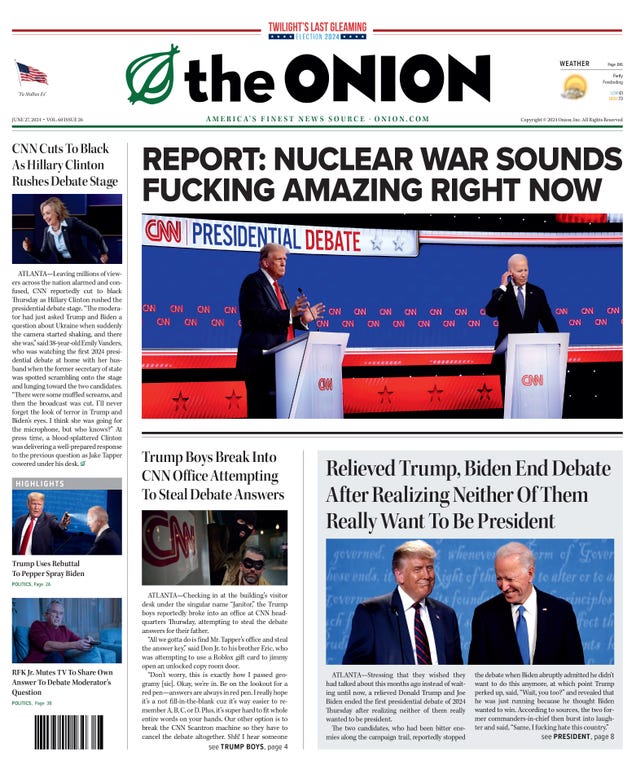
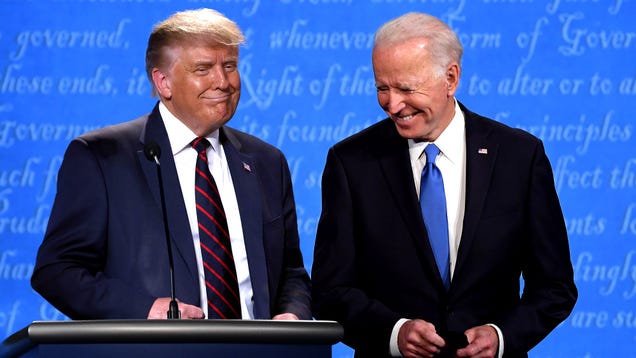
ATLANTA—Stressing that they wished they had talked about this months ago instead of waiting until now, a relieved Donald Trump and Joe Biden ended the first presidential debate of 2024 Thursday after realizing neither of them really wanted to be president. The two candidates, who had been bitter enemies along the…
EDMONTON – Alberta Premier Danielle Smith has written an open letter to Prime Minister Justin Trudeau this week announcing Alberta’s intention to opt out of the new federally-funded dental plan because, as Smith states in the letter, “I’d rather personally pull the teeth out of the mouth of every low income Albertan than let [Trudeau] […]
ATLANTA, GEORGIA - JUNE 27: U.S. President Joe Biden walks off stage during the CNN Presidential Debate at the CNN Studios on June 27, 2024 in Atlanta, Georgia. President Biden and Republican presidential candidate, former U.S. President Donald Trump are facing off in the first presidential debate of the 2024 campaign. (Photo by Justin Sullivan/Getty Images)
A comatose Joe Biden would make a better president than Donald Trump. And the president’s capacity to lead the executive branch is, by most accounts, far greater than his capacity to speak in coherent, extemporaneous sentences on CNN.
But the idea that Joe Biden is the best possible standard-bearer for the Democratic Party this November has lost all plausibility.
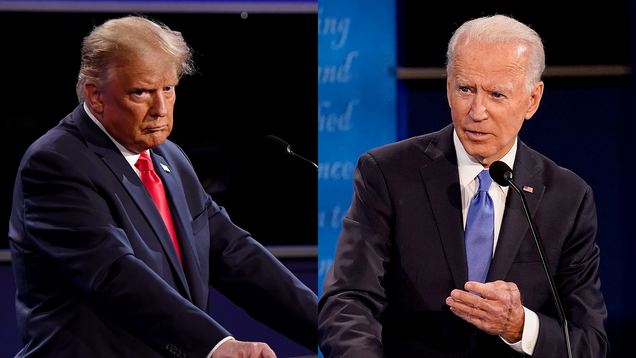
At the first presidential debate in Atlanta Thursday night, Trump spouted an endless stream of deranged lies, painting a portrait of a nonexistent United States in which babies are summarily executed in maternity wards, undocumented criminals live in the penthouses of luxury hotels on Uncle Sam’s dime, and the world’s wealthiest nation has become “a Third World country.”
But Biden’s senescence spoke louder than Trump’s mendacity.
The president spoke in broken sentences through a soft, sometimes tremulous voice (Biden’s campaign said that he had a cold). At various points, his mind failed to keep pace with his lips, causing him to abandon a half-delivered talking point or else lose his train of thought entirely. In one excruciating early moment — while trying to advertise his administration’s efforts to cap the prices of prescription drugs for Medicare beneficiaries — Biden said that he had been “making sure that we’re able to make every single solitary person eligible for what I’ve been able to do with … the Covid … excuse me, with, um, dealing with everything we have to do with … uh … look … if … we finally beat Medicare.”
The president’s visual appearance was similarly unsettling, his skin pallid and his mouth hanging oddly agape during some of Trump’s answers.
This despairing spectacle — of a viciously dishonest insurrectionist turning in a debate performance that, if juxtaposed with anything but the president’s even more disjointed efforts would have seemed astoundingly rambling and incoherent — led many Democrats on social media and in private channels to call for Biden’s replacement.
Those calls are now irrefutable.
The case for Biden was weak even before the debate
When asked whether they plan to vote for a Democrat or Republican for Congress, voters favor Democrats by a margin of 45.6 to 45.1. In polls of battleground state electorates, Democratic Senate candidates routinely run far ahead of Biden. Democrats have plenty of political challenges as a party, but Biden had even more as a candidate even before the cameras started rolling in Atlanta.
The president is saddled with the misfortune of presiding over the highest inflation in four decades. This does not reflect any great economic mismanagement on his part; to the contrary, he has shepherded the US to the strongest recovery of any G-7 country. Yet, across the wealthy world, more or less every leader who presided over 2022’s inflation has suffered overwhelming public disapproval. For many voters, Biden is the personification of price increases. Even if he were in his prime as an orator, there would be a case for swapping him out merely because bad luck had damaged his brand.
But of course, Biden is not in his prime. He would be 82 years old at his second inauguration and 86 at the close of his second term. It strains credulity to claim that the person best suited to run the United States is an octogenarian. Were the Democratic nominee anyone else, Trump’s age — 78 — would be a significant liability for the Republicans. But Biden is three years older than Trump, andseems about a decade his senior.
Or so voters appear to think. In an ABC News poll from February, 86 percent of voters said that Biden was too old to serve another term.
Partly for these reasons, Biden has been trailing Trump in polls of virtually every swing state. And in both 2016 and 2020, the polls significantly overestimated Democratic support in the Electoral College’s battlegrounds. Before Thursday night, Nate Silver’s model gave Trump a 66 percent chance of winning.
Thus, there was already a solid case for Biden to step aside and let Kamala Harris or some other Democrat lead the party into November’s election, even before his dispiriting debate performance. By far the most likely consequence of staying the course was America’s reelection of a corrupt and authoritarian reactionary. Rolling the dice on a new candidate was plausibly the party’s best move.
Then, Biden went on national television and made it impossible for anyone to honestly say, “I am confident that the president will still be fit to serve in January 2029.”
It is not too late for Democrats to replace Joe Biden (with his cooperation)
There is no way for the Democratic Party to deny Biden the nomination at this point. But Democratic leaders could personally lobby the president to step aside and endorse his preferred successor, preempting the hazards of a contested Democratic convention in late August. Waiting months to anoint a presumptive nominee would be highly risky. Rallying around Biden’s handpicked heir now would be much less so.
If one wishes to minimize intra-party strife, then Biden could simply endorse his vice president, who already functions as his default replacement. Few consider Harris to be among her party’s best political talents, but she offers far more upside than the version of Biden we saw Thursday night.
If Democratic leaders believe that it would be possible for Biden to endorse a more electorally formidable candidate (perhaps Michigan Gov. Gretchen Whitmer?) without alienating key constituencies, then that might be the optimal course of action. Sticking with Biden, plainly, is not.
The president’s policy positions and governing record matter more than his current skills as a rhetorician. But precisely because of how much is substantively at stake in this election, Democrats cannot afford to wager it on American voters changing their minds and deciding that Biden isn’t too old for his job after watching him struggle to remember the topics of his own sentences.
Many aspects of Biden’s legacy are laudable. His best chance for preserving it would be to voluntarily end his presidency after one term before voters get the chance.
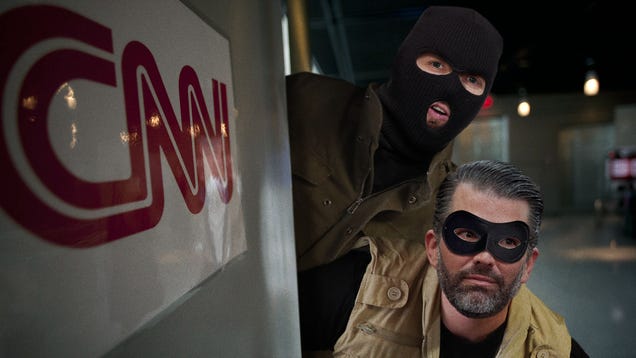
ATLANTA—Checking in at the building’s visitor desk under the singular name “Janitor,” the Trump boys reportedly broke into an office at CNN headquarters Thursday, attempting to steal the debate answers for their father. “All we gotta do is find Mr. Tapper’s office and steal the answer key,” said Don Jr. to his brother…
WASHINGTON—With the first presidential debate of the 2024 election cycle airing tonight, Americans across the country told reporters Thursday that they couldn’t believe they were saying this, but they don’t want to watch TV. “I know it sounds crazy, but I have absolutely zero urge to turn on my TV tonight,” said Ohio…
ATLANTA—Leaving millions of viewers across the nation alarmed and confused, CNN reportedly cut to black Thursday as Hillary Clinton rushed the presidential debate stage. “The moderator had just asked Trump and Biden a question about Ukraine when suddenly the camera started shaking, and there she was,” said 38-year-old…
Say you have a value from a Windows Runtime enumeration and you want to convert it to a corresponding string. You can do this in C# with the ToString() method.
But C++/WinRT doesn’t provide a ToString() method.
C++/WinRT produces standard C++, and at least as of C++20, there is no standard for reflection, so there is no standard C++ way for converting a value to a string.¹
C++/WinRT could have included value-to-string conversion in its code generation, but it doesn’t. Partly because it’s hoping that the C++ language will provide reflection. And partly because experience has told us that value-to-string conversion is rarely useful in production.
For one thing, you would never want to do a value-to-string conversion for a string to display to the user. Those strings are going to be in English (which may not be appropriate for your audience), and they will require domain-specific knowledge to interpret (which is definitely not appropriate for your audience).²
In practice, stringification is useful only for logging purposes, and people who have done this say that generally regret it and wish they had just logged as plain integers.
One reason is that if new values are added to the enum after the program is compiled, the program won’t know how to convert those new values to strings, so it’ll presumably log them as integers. And then a newer version of the program is compiled which understands these new values, and those new values are now logged as strings. The same value is now being logged in two different ways, and the back end processing has to merge those two columns into one. Better to just leave them as integers and let the back end do the stringification, so that it’s consistent. If a new enum value is added, you just add it to the back end and the strings are all updated, even for values coming from older versions of the program that predated the new value.
Another reason is that it is much easier to parse integers on the back end. If you logged them as strings, then the back end would have to have a reverse parser to convert them back to values if it wanted to do further processing.
You can do the value-to-string conversion on your back end, probably as a final step before displaying them on a dashboard.
¹ That hasn’t stopped people from coming up with clever hacks that work under certain conditions. The most ambitious of those clever hacks is probably magic_enum.
² The exception to this would be a diagnostic tool whose audience is other software developers, not the general user population. If you are really motivated, you could write a tool that uses the xlang library (the same library that C++/WinRT itself uses) to parse the winmd files and produce stringification functions.
Alternatively, you could write a C# program that ingests the winmd files and uses C# reflection to produce the stringifiers. That’s what my colleague Alexander Sklar did: CppWinRT.Builders.
No disrespect to Oilers fans, but if we had to choose between a boozy beach vacation and a jaunt through the West Edmonton Mall, well... let's just say the Stanley Cup looks to be having a pretty decent time in Florida.
This post was written by Alison Green and published on Ask a Manager.
A reader writes:
I work for a toxic organization, and I’ve been looking for opportunities elsewhere. A job opened up in my home city that would be a lateral move for me so I applied and was offered the job. Hooray! However, the salary included in the offer email was WAY more than I was expecting — not in a good way — in a suspicious way.
For reference, I currently make $65K, which is (from what I can tell) fairly typical for the position in the area of the country where I work. The range for the job I applied to (only one state over, similar cost of living) was $63K-$87K. They offered me $86K. I feel like this has to be a mistake. The job qualifications are a specific master’s degree required (which I have) and management experience preferred. I do have management experience but only 1.5 years of it. I also have a second master’s degree but it’s not super related to the work I would be doing. I can’t understand why they would bump me so high in the range. I’ve been working in this field for seven years and I’ve always been started at or just above the minimum for each new position I’ve accepted. I’m suspecting maybe two numbers were transposed and they meant to offer me $68K, which would be reasonable.
How do I bring this up without lowballing myself? I need to know whether this is really the salary because I am moving to take this job and what I’m anticipating making will affect some of the decisions I make about living arrangements. But I don’t want to say, “Hey, I think maybe you made a mistake and are offering me too much money. I was only expecting to make in the $60s.” And then they lower the pay because I’m offering to work for less. There is a chance the offer is sincere and I don’t want to jeopardize that in the process of getting clarity.
I emailed back my acceptance to say, “I accept X Position with a pay of $86K annually” to give them a chance to maybe notice a typo and say, “Oh, wait, that’s not right.” But they just said, “Sounds good. We’ll reach out with the pre-employment paperwork soon.”
Is there another way I can approach this to confirm the salary without saying “I’ll work for less”? (Even though I will).
I’d just believe they intended to offer you $86K.
If they had offered you something way outside their advertised range, it would be reasonable to think it might be a typo and inquire about it. But they offered you within their range. And then you repeated the number back to them and they didn’t blink. That’s almost certainly because they are in fact offering you $86K.
Not every company starts people at the bottom of their posted salary ranges. And advertised salary ranges aren’t always “this is the range of what you could make the entire time you are in this position.” Often they are “this is the range we will consider as a starting salary for the right candidate.” You just ended up at the top of their range. That’s a good thing.
If you hadn’t already written back to confirm and you were still looking for a way to reassure yourself, I might have recommended getting on the phone with the hiring manager to discuss the offer and saying something like, “I appreciate you offering me near the top of the range” — which would have flagged it for them if they hadn’t meant to do that. But at this point, you’ve written back to confirm, they agreed, and it’s highly likely that this is in fact your salary.
If it turns out that they didn’t actually mean to offer you that … well, they made an offer squarely within their range, and you wrote back to confirm that number in writing. They’d have to be real shitheels to try to switch that up on you later. (Legally they could do it, as long as it’s not retroactive for time you’d already worked, but it would reflect terribly on them and a decent employer wouldn’t do it.)
During the London performance of her Eras tour, pop star Taylor Swift surprised the audience with a cameo from her boyfriend, Travis Kelce, during the introduction to her song “I Can Do It With A Broken Heart,” with Kelce appearing in costume in a full tuxedo, top hat, and bow tie. What do you think?
Tesla has recalled its Cybertruck for the fourth time since the vehicle went on sale Nov. 30 due to an error with the windshield wiper controller getting too much electrical current, causing it to stop working. What do you think?
Copyright takedowns are a cautionary tale that few are heeding (permalink)
We're living through one of those moments when millions of people become suddenly and overwhelmingly interested in fair use, one of the subtlest and worst-understood aspects of copyright law. It's not a subject you can master by skimming a Wikipedia article!
I've been talking about fair use with laypeople for more than 20 years. I've met so many people who possess the unshakable, serene confidence of the truly wrong, like the people who think fair use means you can take x words from a book, or y seconds from a song and it will always be fair, while anything more will never be.
Or the people who think that if you violate any of the four factors, your use can't be fair – or the people who think that if you fail all of the four factors, you must be infringing (people, the Supreme Court is calling and they want to tell you about the Betamax!).
You might think that you can never quote a song lyric in a book without infringing copyright, or that you must clear every musical sample. You might be rock solid certain that scraping the web to train an AI is infringing. If you hold those beliefs, you do not understand the "fact intensive" nature of fair use.
But you can learn! It's actually a really cool and interesting and gnarly subject, and it's a favorite of copyright scholars, who have really fascinating disagreements and discussions about the subject. These discussions often key off of the controversies of the moment, but inevitably they implicate earlier fights about everything from the piano roll to 2 Live Crew to antiracist retellings of Gone With the Wind.
One of the most interesting discussions of fair use you can ask for took place in 2019, when the NYU Engelberg Center on Innovation Law & Policy held a symposium called "Proving IP." One of the panels featured dueling musicologists debating the merits of the Blurred Lines case. That case marked a turning point in music copyright, with the Marvin Gaye estate successfully suing Robin Thicke and Pharrell Williams for copying the "vibe" of Gaye's "Got to Give it Up."
Naturally, this discussion featured clips from both songs as the experts – joined by some of America's top copyright scholars – delved into the legal reasoning and future consequences of the case. It would be literally impossible to discuss this case without those clips.
And that's where the problems start: as soon as the symposium was uploaded to Youtube, it was flagged and removed by Content ID, Google's $100,000,000 copyright enforcement system. This initial takedown was fully automated, which is how Content ID works: rightsholders upload audio to claim it, and then Content ID removes other videos where that audio appears (rightsholders can also specify that videos with matching clips be demonetized, or that the ad revenue from those videos be diverted to the rightsholders).
But Content ID has a safety valve: an uploader whose video has been incorrectly flagged can challenge the takedown. The case is then punted to the rightsholder, who has to manually renew or drop their claim. In the case of this symposium, the rightsholder was Universal Music Group, the largest record company in the world. UMG's personnel reviewed the video and did not drop the claim.
99.99% of the time, that's where the story would end, for many reasons. First of all, most people don't understand fair use well enough to contest the judgment of a cosmically vast, unimaginably rich monopolist who wants to censor their video. Just as importantly, though, is that Content ID is a Byzantine system that is nearly as complex as fair use, but it's an entirely private affair, created and adjudicated by another galactic-scale monopolist (Google).
Google's copyright enforcement system is a cod-legal regime with all the downsides of the law, and a few wrinkles of its own (for example, it's a system without lawyers – just corporate experts doing battle with laypeople). And a single mis-step can result in your video being deleted or your account being permanently deleted, along with every video you've ever posted. For people who make their living on audiovisual content, losing your Youtube account is an extinction-level event:
So for the average Youtuber, Content ID is a kind of Kafka-as-a-Service system that is always avoided and never investigated. But the Engelbert Center isn't your average Youtuber: they boast some of the country's top copyright experts, specializing in exactly the questions Youtube's Content ID is supposed to be adjudicating.
So naturally, they challenged the takedown – only to have UMG double down. This is par for the course with UMG: they are infamous for refusing to consider fair use in takedown requests. Their stance is so unreasonable that a court actually found them guilty of violating the DMCA's provision against fraudulent takedowns:
But the DMCA's takedown system is part of the real law, while Content ID is a fake law, created and overseen by a tech monopolist, not a court. So the fate of the Blurred Lines discussion turned on the Engelberg Center's ability to navigate both the law and the n-dimensional topology of Content ID's takedown flowchart.
It took more than a year, but eventually, Engelberg prevailed.
Until they didn't.
If Content ID was a person, it would be baby, specifically, a baby under 18 months old – that is, before the development of "object permanence." Until our 18th month (or so), we lack the ability to reason about things we can't see – this the period when small babies find peek-a-boo amazing. Object permanence is the ability to understand things that aren't in your immediate field of vision.
Content ID has no object permanence. Despite the fact that the Engelberg Blurred Lines panel was the most involved fair use question the system was ever called upon to parse, it managed to repeatedly forget that it had decided that the panel could stay up. Over and over since that initial determination, Content ID has taken down the video of the panel, forcing Engelberg to go through the whole process again.
But that's just for starters, because Youtube isn't the only place where a copyright enforcement bot is making billions of unsupervised, unaccountable decisions about what audiovisual material you're allowed to access.
Spotify is yet another monopolist, with a justifiable reputation for being extremely hostile to artists' interests, thanks in large part to the role that UMG and the other major record labels played in designing its business rules:
Spotify has spent hundreds of millions of dollars trying to capture the podcasting market, in the hopes of converting one of the last truly open digital publishing systems into a product under its control:
Thankfully, that campaign has failed – but millions of people have (unwisely) ditched their open podcatchers in favor of Spotify's pre-enshittified app, so everyone with a podcast now must target Spotify for distribution if they hope to reach those captive users.
Guess who has a podcast? The Engelberg Center.
Naturally, Engelberg's podcast includes the audio of that Blurred Lines panel, and that audio includes samples from both "Blurred Lines" and "Got To Give It Up."
So – naturally – UMG keeps taking down the podcast.
Spotify has its own answer to Content ID, and incredibly, it's even worse and harder to navigate than Google's pretend legal system. As Engelberg describes in its latest post, UMG and Spotify have colluded to ensure that this now-classic discussion of fair use will never be able to take advantage of fair use itself:
Remember, this is the best case scenario for arguing about fair use with a monopolist like UMG, Google, or Spotify. As Engelberg puts it:
The Engelberg Center had an extraordinarily high level of interest in pursuing this issue, and legal confidence in our position that would have cost an average podcaster tens of thousands of dollars to develop. That cannot be what is required to challenge the removal of a podcast episode.
Automated takedown systems are the tech industry's answer to the "notice-and-takedown" system that was invented to broker a peace between copyright law and the internet, starting with the US's 1998 Digital Millennium Copyright Act. The DMCA implements (and exceeds) a pair of 1996 UN treaties, the WIPO Copyright Treaty and the Performances and Phonograms Treaty, and most countries in the world have some version of notice-and-takedown.
Big corporate rightsholders claim that notice-and-takedown is a gift to the tech sector, one that allows tech companies to get away with copyright infringement. They want a "strict liability" regime, where any platform that allows a user to post something infringing is liable for that infringement, to the tune of $150,000 in statutory damages.
Of course, there's no way for a platform to know a priori whether something a user posts infringes on someone's copyright. There is no registry of everything that is copyrighted, and of course, fair use means that there are lots of ways to legally reproduce someone's work without their permission (or even when they object). Even if every person who ever has trained or ever will train as a copyright lawyer worked 24/7 for just one online platform to evaluate every tweet, video, audio clip and image for copyright infringement, they wouldn't be able to touch even 1% of what gets posted to that platform.
The "compromise" that the entertainment industry wants is automated takedown – a system like Content ID, where rightsholders register their copyrights and platforms block anything that matches the registry. This "filternet" proposal became law in the EU in 2019 with Article 17 of the Digital Single Market Directive:
This was the most controversial directive in EU history, and – as experts warned at the time – there is no way to implement it without violating the GDPR, Europe's privacy law, so now it's stuck in limbo:
As critics pointed out during the EU debate, there are so many problems with filternets. For one thing, these copyright filters are very expensive: remember that Google has spent $100m on Content ID alone, and that only does a fraction of what filternet advocates demand. Building the filternet would cost so much that only the biggest tech monopolists could afford it, which is to say, filternets are a legal requirement to keep the tech monopolists in business and prevent smaller, better platforms from ever coming into existence.
Filternets are also incapable of telling the difference between similar files. This is especially problematic for classical musicians, who routinely find their work blocked or demonetized by Sony Music, which claims performances of all the most important classical music compositions:
Content ID can't tell the difference between your performance of "The Goldberg Variations" and Glenn Gould's. For classical musicians, the best case scenario is to have their online wages stolen by Sony, who fraudulently claim copyright to their recordings. The worst case scenario is that their video is blocked, their channel deleted, and their names blacklisted from ever opening another account on one of the monopoly platforms.
But when it comes to free expression, the role that notice-and-takedown and filternets play in the creative industries is really a sideshow. In creating a system of no-evidence-required takedowns, with no real consequences for fraudulent takedowns, these systems are huge gift to the world's worst criminals. For example, "reputation management" companies help convicted rapists, murderers, and even war criminals purge the internet of true accounts of their crimes by claiming copyright over them:
Remember how during the covid lockdowns, scumbags marketed junk devices by claiming that they'd protect you from the virus? Their products remained online, while the detailed scientific articles warning people about the fraud were speedily removed through false copyright claims:
Copyfraud – making false copyright claims – is an extremely safe crime to commit, and it's not just quack covid remedy peddlers and war criminals who avail themselves of it. Tech giants like Adobe do not hesitate to abuse the takedown system, even when that means exposing millions of people to spyware:
Dirty cops play loud, copyrighted music during confrontations with the public, in the hopes that this will trigger copyright filters on services like Youtube and Instagram and block videos of their misbehavior:
But even if you solved all these problems with filternets and takedown, this system would still choke on fair use and other copyright exceptions. These are "fact intensive" questions that the world's top experts struggle with (as anyone who watches the Blurred Lines panel can see). There's no way we can get software to accurately determine when a use is or isn't fair.
That's a question that the entertainment industry itself is increasingly conflicted about. The Blurred Lines judgment opened the floodgates to a new kind of copyright troll – grifters who sued the record labels and their biggest stars for taking the "vibe" of songs that no one ever heard of. Musicians like Ed Sheeran have been sued for millions of dollars over these alleged infringements. These suits caused the record industry to (ahem) change its tune on fair use, insisting that fair use should be broadly interpreted to protect people who made things that were similar to existing works. The labels understood that if "vibe rights" became accepted law, they'd end up in the kind of hell that the rest of us enter when we try to post things online – where anything they produce can trigger takedowns, long legal battles, and millions in liability:
But the music industry remains deeply conflicted over fair use. Take the curious case of Katy Perry's song "Dark Horse," which attracted a multimillion-dollar suit from an obscure Christian rapper who claimed that a brief phrase in "Dark Horse" was impermissibly similar to his song "A Joyful Noise."
Perry and her publisher, Warner Chappell, lost the suit and were ordered to pay $2.8m. While they subsequently won an appeal, this definitely put the cold grue up Warner Chappell's back. They could see a long future of similar suits launched by treasure hunters hoping for a quick settlement.
But here's where it gets unbelievably weird and darkly funny. A Youtuber named Adam Neely made a wildly successful viral video about the suit, taking Perry's side and defending her song. As part of that video, Neely included a few seconds' worth of "A Joyful Noise," the song that Perry was accused of copying.
In court, Warner Chappell had argued that "A Joyful Noise" was not similar to Perry's "Dark Horse." But when Warner had Google remove Neely's video, they claimed that the sample from "Joyful Noise" was actually taken from "Dark Horse." Incredibly, they maintained this position through multiple appeals through the Content ID system:
In other words, they maintained that the song that they'd told the court was totally dissimilar to their own was so indistinguishable from their own song that they couldn't tell the difference!
Now, this question of vibes, similarity and fair use has only gotten more intense since the takedown of Neely's video. Just this week, the RIAA sued several AI companies, claiming that the songs the AI shits out are infringingly similar to tracks in their catalog:
But as the Engelberg panel's cohort of dueling musicologists and renowned copyright experts proved, this question only gets harder as time goes by. If you listen to that panel (if you can listen to that panel), you'll be hard pressed to come away with any certainty about the questions in this latest lawsuit.
The notice-and-takedown system is what's known as an "intermediary liability" rule. Platforms are "intermediaries" in that they connect end users with each other and with businesses. Ebay and Etsy and Amazon connect buyers and sellers; Facebook and Google and Tiktok connect performers, advertisers and publishers with audiences and so on.
For copyright, notice-and-takedown gives platforms a "safe harbor." A platform doesn't have to remove material after an allegation of infringement, but if they don't, they're jointly liable for any future judgment. In other words, Youtube isn't required to take down the Engelberg Blurred Lines panel, but if UMG sues Engelberg and wins a judgment, Google will also have to pay out.
During the adoption of the 1996 WIPO treaties and the 1998 US DMCA, this safe harbor rule was characterized as a balance between the rights of the public to publish online and the interest of rightsholders whose material might be infringed upon. The idea was that things that were likely to be infringing would be immediately removed once the platform received a notification, but that platforms would ignore spurious or obviously fraudulent takedowns.
That's not how it worked out. Whether it's Sony Music claiming to own your performance of "Für Elise" or a war criminal claiming authorship over a newspaper story about his crimes, platforms nuke first and ask questions never. Why not? If they ignore a takedown and get it wrong, they suffer dire consequences ($150,000 per claim). But if they take action on a dodgy claim, there are no consequences. Of course they're just going to delete anything they're asked to delete.
This is how platforms always handle liability, and that's a lesson that we really should have internalized by now. After all, the DMCA is the second-most famous intermediary liability system for the internet – the most (in)famous is Section 230 of the Communications Decency Act.
This is a 27-word law that says that platforms are not liable for civil damages arising from their users' speech. Now, this is a US law, and in the US, there aren't many civil damages from speech to begin with. The First Amendment makes it very hard to get a libel judgment, and even when these judgments are secured, damages are typically limited to "actual damages" – generally a low sum. Most of the worst online speech is actually not illegal: hate speech, misinformation and disinformation are all covered by the First Amendment.
Notwithstanding the First Amendment, there are categories of speech that US law criminalizes: actual threats of violence, criminal harassment, and committing certain kinds of legal, medical, election or financial fraud. These are all exempted from Section 230, which only provides immunity for civil suits, not criminal charges.
What Section 230 really protects platforms from is being named party to unwinnable nuisance suits by unscrupulous parties who are betting that the platforms would rather remove legal speech that they object to than go to court. A generation of copyfraudsters have proved that this is a very safe bet:
In other words, if you made a #MeToo accusation, or if you were a gig worker using an online forum to organize a union, or if you were blowing the whistle on your employer's toxic waste leaks, or if you were any other under-resourced person being bullied by a wealthy, powerful person or organization, that organization could shut you up by threatening to sue the platform that hosted your speech. The platform would immediately cave. But those same rich and powerful people would have access to the lawyers and back-channels that would prevent you from doing the same to them – that's why Sony can get your Brahms recital taken down, but you can't turn around and do the same to them.
This is true of every intermediary liability system, and it's been true since the earliest days of the internet, and it keeps getting proven to be true. Six years ago, Trump signed SESTA/FOSTA, a law that allowed platforms to be held civilly liable by survivors of sex trafficking. At the time, advocates claimed that this would only affect "sexual slavery" and would not impact consensual sex-work.
But from the start, and ever since, SESTA/FOSTA has primarily targeted consensual sex-work, to the immediate, lasting, and profound detriment of sex workers:
SESTA/FOSTA killed the "bad date" forums where sex workers circulated the details of violent and unstable clients, killed the online booking sites that allowed sex workers to screen their clients, and killed the payment processors that let sex workers avoid holding unsafe amounts of cash:
Despite half a decade of SESTA/FOSTA, despite 15 years of filternets, despite a quarter century of notice-and-takedown, people continue to insist that getting rid of safe harbors will punish Big Tech and make life better for everyday internet users.
As of now, it seems likely that Section 230 will be dead by then end of 2025, even if there is nothing in place to replace it:
This isn't the win that some people think it is. By making platforms responsible for screening the content their users post, we create a system that only the largest tech monopolies can survive, and only then by removing or blocking anything that threatens or displeases the wealthy and powerful.
Filternets are not precision-guided takedown machines; they're indiscriminate cluster-bombs that destroy anything in the vicinity of illegal speech – including (and especially) the best-informed, most informative discussions of how these systems go wrong, and how that blocks the complaints of the powerless, the marginalized, and the abused.
"Chokepoint Capitalism: How to Beat Big Tech, Tame Big Content, and Get Artists Paid, with Rebecca Giblin", on how to unrig the markets for creative labor, Beacon Press/Scribe 2022 https://chokepointcapitalism.com
"Attack Surface": The third Little Brother novel, a standalone technothriller for adults. The Washington Post called it "a political cyberthriller, vigorous, bold and savvy about the limits of revolution and resistance." Order signed, personalized copies from Dark Delicacies https://www.darkdel.com/store/p1840/Available_Now%3A_Attack_Surface.html
This work – excluding any serialized fiction – is licensed under a Creative Commons Attribution 4.0 license. That means you can use it any way you like, including commercially, provided that you attribute it to me, Cory Doctorow, and include a link to pluralistic.net.
Quotations and images are not included in this license; they are included either under a limitation or exception to copyright, or on the basis of a separate license. Please exercise caution.
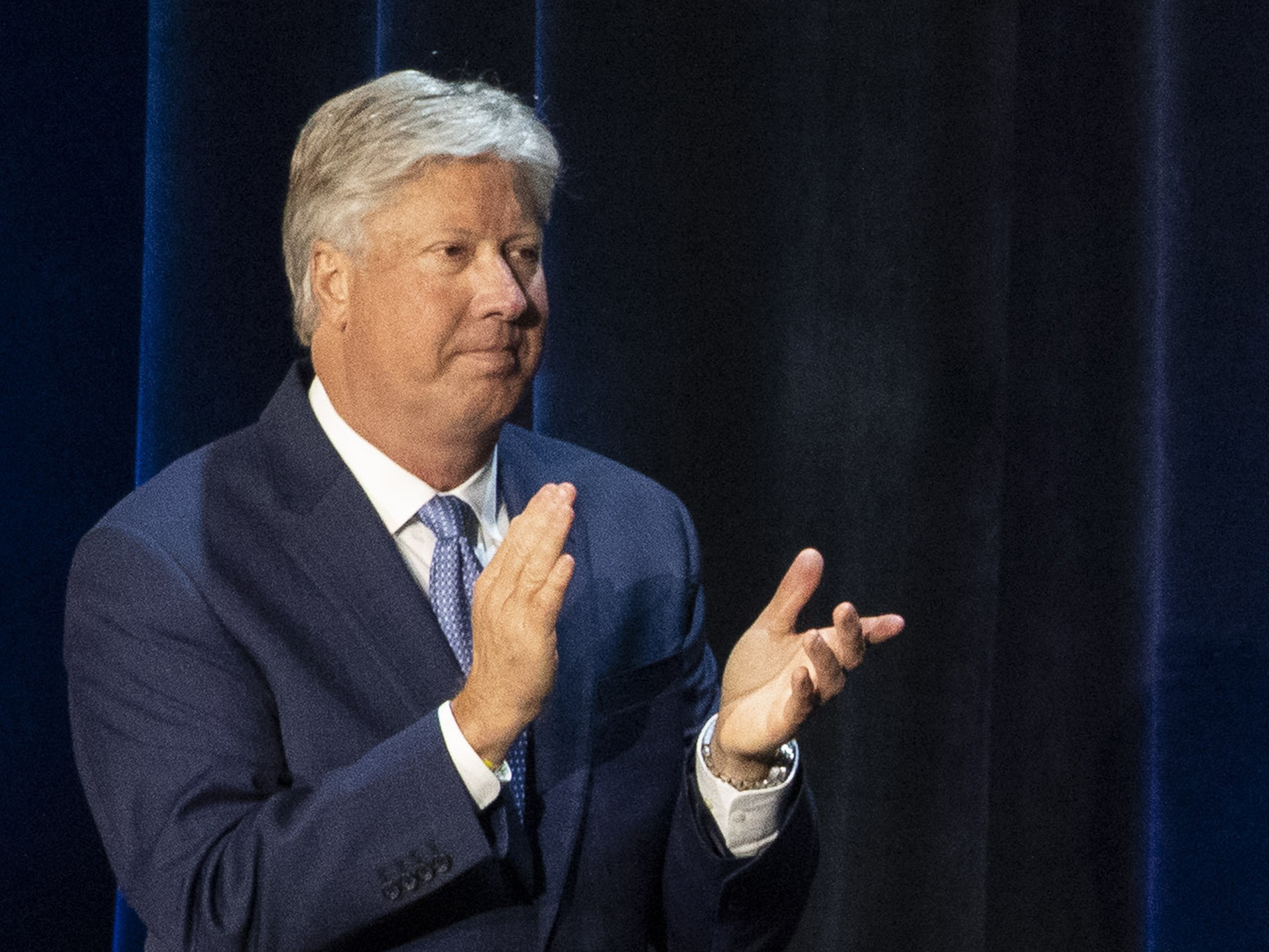
A woman says Robert Morris, prominent evangelical pastor, former Trump religious adviser and founder of Gateway Church, sexually abused her as a child in the 1980s. Morris has resigned from Gateway.
Before the first presidential debate of 2024, CNN has released a list of rules and regulations that both candidates must follow. The following are the guidelines that President Joe Biden and former President Donald Trump must adhere to during their 90 minutes on stage.

/https://static.texastribune.org/media/files/468c1b59e92cf5d2056a5f3c943a8f5f/Kinky%20Friedman%20TW%20TT%2002.jpg)














/https://static.texastribune.org/media/images/2014/01/03/TexTrib-Kinky-012.jpg)