Shared posts

12 Nov 14:46

asking to change desks because you don’t like someone, are typos in a draft a huge deal, and more

by Ask a Manager

This post was written by Alison Green and published on Ask a Manager.

It’s five answers to five questions. Here we go…

1. Is it unprofessional to ask to change desks because you don’t like someone?

Two years ago I started a job as an engineer at my current company and was assigned a mentor, “Rob.” My cubicle is directly adjacent to his. For various reasons related to his behavior towards me, Rob will no longer be my mentor going forward. I’m not sure yet who management is going to assign as my mentor, but I’m confident they’ll be better than Rob, who has caused me a lot of stress over the last year.

Would it look unprofessional or immature to ask to move seats? Rob’s behavior has mostly consisted of giving me really bad feedback to the point of gaslighting, not anything like harassment, but I’d still like to move seats to make it a clean break.

Can you come up with a reason that’s not related to Rob? Ideally it would be something like there being less noise at the open desk down the hall, sitting closer to someone you collaborate with a lot, preferring not to sit right under a vent that blasts cold air, or so forth — not “I’d rather have a clean break from Rob.” The latter isn’t impossible to say, but there’s pretty high risk of it reading as more drama than you’d ideally want. Exceptions would be if (a) “for various reasons related to his behavior towards me, Rob will no longer be my mentor” means Rob behaved so egregiously toward you that anyone would understand the discomfort of remaining where you are, and/or (b) you have the kind of rapport with your manager where you could say, “The situation with Rob has been rough; any chance I could move into that open desk in the corner just to have a clean break?”

2. Are typos in a draft a huge deal?

I work at a not-for-profit that relies heavily on volunteers. I manage one staff member and around 30 volunteers across two sites. Recently, our on-site graphic artist designed a sign for one of my sites, and I sent it to one of the volunteers to get her thoughts on it, and also as a second pair of eyes as I was slammed.

This volunteer called me and went off about the design, saying it was sloppy and had two spelling errors (typos) in it. To me, typos in a draft are not a big deal — that’s why we check drafts before they go to the printer. Also, we are seriously understaffed and I know everyone is doing several people’s worth of work, so small things are bound to slip through the cracks (I have no power over staffing). I’ve been guilty of forgetting to do small things because I’m constantly trying to stop the sky from falling in, so I’m not going to criticize someone else for the same thing.

I told the volunteer this and it all seemed fine — but then I was telling the story to someone else, and they said any spelling errors/typos are unacceptable. I just don’t think they are a big deal unless, of course, they get printed.

Basically I’m looking for a third opinion! Are typos in a draft unacceptable, or are they not worth getting stressed about?

It’s a draft! In most contexts, typos in an early draft are not a big deal, as long as you have a reliable process in place for proofing and ensuring any errors (typos or otherwise) are caught before it’s finalized.

Did you proactively make it clear to your volunteer what stage things were at when you sent the draft and what kind of feedback you were looking for at that point in the process? It can help to say, for example, “This hasn’t been proofed yet and is in rough form but I wanted to get your thoughts on the content and overall framing.” Or, conversely, “This is close to being finalized so if you see anything we missed, please flag it.”

But also, any chance your volunteer was reacting to something more than this one draft — like that they feel there’s been a problematic amount of sloppiness overall and they’re getting fed up with the big picture, more than truly thinking typos in a not-yet-proofed draft are a big deal? That might explain what’s otherwise a pretty intense reaction.

3. Did I put my foot in it about my company’s post-election plans?

I work for a large consulting firm that mostly works in the U.S. We do a lot of work for all levels of government. People are tactful about not crossing professional lines about politics at work, but our office has a pretty relaxed and friendly culture, and lots of people do express their feelings to other like-minded people in indirect ways. As someone who at different points in my life has been in both major parties and has in both cases been at times a minority in the office, I appreciate the importance of maintaining a fairly neutral environment, though I believe some things are beyond the pale.

The morning after the election, our area manager, who I have have a very friendly relationship with, sent out a thoughtful and appropriate email acknowledging that this may be a stressful moment, reminding us that there are different views in our company, reiterating our commitment to being a client-centered company working to improve humanity, and inviting us to follow up with any questions. I thought this was a perfectly good precautionary email to send out, but I did reply directly to just my area manager to ask about how to get a better sense of what our leadership’s bright lines are for maintaining our commitment to both the client (the government) and our moral obligations. I have pretty mainstream politics, and there’s nothing specific worrying me about any of my company’s current work, but my concern is just to know that senior management has some sort of plan or internal moral standards to limit what kind of things we will work in support of, should the incoming administration go in a worst case scenario direction.

The response I got from my manager was very nice and replied to my questions in a way consistent with the original email — but on reading it, it immediately became apparent that she hadn’t actually answered any of them, and in fact the responses were so indirect that I now am worried that I am talking to the hand, and that maybe I put my foot in it and caused offense. I’m unsure how to follow up, because while I didn’t have any expectation that my concerns would actually come to fruition, the response’s lack of candor by absence of substance has now made me worried that I do have cause for concern. I’m curious about your take, and before you reply, yes, I am aware that I am an overthinker with an anxiety disorder.

You asked a question she couldn’t really answer, and you got a response consistent with that. They don’t know what’s going to happen yet, and they probably don’t know how they’ll respond when it does because the climate is shifting rapidly. Moreover, to the extent that they do have plans for worst-case scenarios or bright will-not-cross lines, they’re unlikely to put those in a casual email (and she may not be the right person to supply those answers anyway).

It sounds like you emailed her hoping for some general reassurance and you got … general reassurance, which is singularly unhelpful in a situation like this. What you really want to know is specifically how they will respond to specific individual events, but they’re probably not there yet — or since you didn’t ask about those specifics, they’re not getting into them, or the answers are ones you wouldn’t much like if they did.

You asked how to reply and I don’t think you necessarily need to; you asked a general question and she gave a general answer. I also don’t think you put your foot in it; she’s undoubtedly aware lots of people are feeling similar anxiety right now.

Depending on the nature of your concerns, it might make sense to refine them more narrowly with your colleagues and ask for strategy planning on those in particular, but that’s something bigger than a casual email exchange.

4. New manager wants me to travel and I can’t

I work fully remote, and it’s quite possibly the only thing that has allowed me to keep working. I am disabled, with chronic pain, poor mobility, and all of the fatigue that comes with that. I love being able to take a 30-minute nap at lunch! My whole team is remote, but most of them are concentrated in the same state, fairly close together.

I have a new manager, who has had one quarterly meeting and is planning the next one. For the first, he had all of the semi-local folks meet in person, with the five of us outside that area on Zoom. For this next meeting, he has gotten permission to fly all of us outliers in for the six-hour meeting. I just … can’t. Traveling is super hard for me, and flying in one day, the six-hour meeting the next, and flying home the next day may damn well kill me. The time to recover from this will be insane.

I tried gently bringing up that it would be difficult for me, but he brushed me off, saying how important it was to meet face-to-face. I’m facing the whole “not a team player” thing here, but I just can’t do it. How do I frame this and stay in his good graces?

“I have a medical condition that means I can’t do this sort of travel. Should I seek a formal accommodation with HR or is simply letting you know enough? I’m of course happy to attend over Zoom again.”

Depending on your sense of your manager and this company in general, it may make more sense to start with HR — but either way, that’s the framing you want. Since you’ve been doing your job successfully this entire time without traveling, it should be hard for your manager to argue that it’s an essential function of your position. (That doesn’t mean he won’t try, but that’s part of the legal framework around disabilities: can you successfully perform the essential duties of the job with or without accommodations?)

5. Charging extra to add a spouse to health insurance, if the spouse has insurance through their own job

My husband works for an insurance company (ironically) and it’s open enrollment season here in the U.S. for health insurance. I have good insurance through my own job and have my husband and our toddler as dependents. My husband was going to add both of us to his insurance as well, so we can have some double coverage as we’re planning to have another kid and we’ve had some health troubles recently.

Because I am employed and insured on my own, his company will charge him an extra fee each paycheck to add me to his insurance. It is not a small fee. It would significantly impact our monthly finances. If I was unemployed and/or uninsured, it wouldn’t cost him extra. Even with insurance, healthcare is freaking expensive in this country and double coverage can be life saving, and has been for us in the past. It feels like his company is essentially penalizing those employees who have families. Is this really allowed?

It’s legal, and it’s common. It’s called a “working spouse premium,” and it’s because employers don’t want spouses running up their costs if the person could instead get insurance through their own job, and they don’t want to make adding a spouse an attractive option if that person has other coverage available. (In fact, some employers won’t let you add spouses at all if the spouse has the option of being insured through their own job.)

11 Nov 21:04

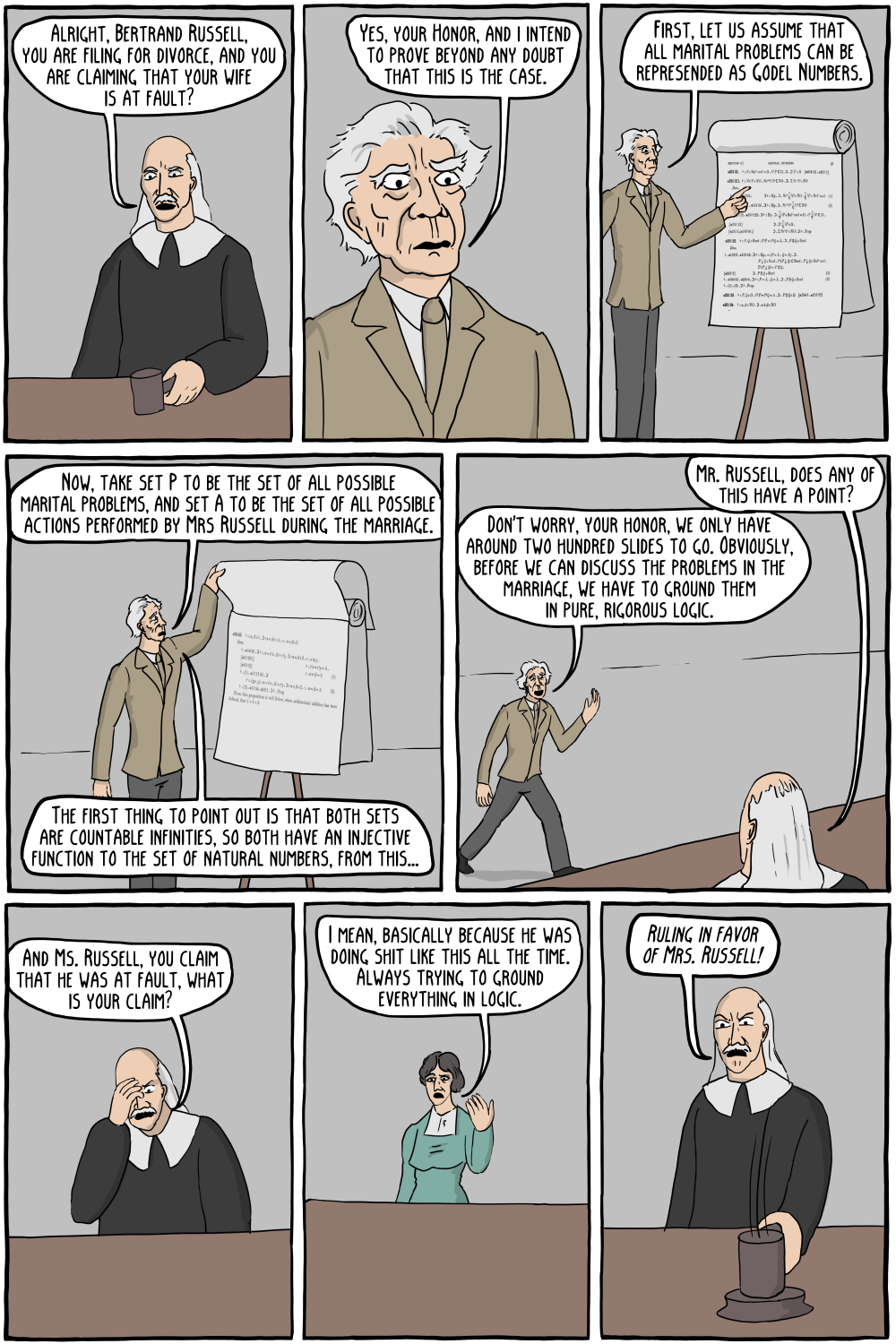
Bertrand Russell Files for Divorce

by Corey Mohler
PERSON: "Alright, Bertrand Russell, you are filing for divorce, and you are claiming that your wife is at fault? "

PERSON: "First, let us assume that all marital problems can be represended as Godel Numbers."

PERSON: "Yes, your Honor, and i intend to prove beyond any doubt that this is the case."

PERSON: "The first thing to point out is that both sets are countable infinities, so both have an injective function to the set of natural numbers, from this..."

PERSON: "Mr. Russell, does any of this have a point?"

PERSON: "Don't worry, your honor, we only have around two hundred slides to go. Obviously, before we can discuss the problems in the marriage, we have to ground them in pure, rigorous logic."

PERSON: "And Ms. Russell, you claim that he was at fault, what is your claim?"

PERSON: "I mean, basically because he was doing shit like this all the time. Always trying to ground everything in logic."
11 Nov 20:58

Space policy is about to get pretty wild, y’all

by Eric Berger

The global space community awoke to a new reality on Wednesday morning.

The founder of this century's most innovative space company, Elon Musk, successfully used his fortune, time, and energy to help elect Donald Trump to president of the United States. Already, Musk was the dominant Western player in space. SpaceX launches national security satellites and NASA astronauts and operates a megaconstellation. He controls the machines that provide essential space services to NASA and the US military. And now, thanks to his gamble on backing Trump, Musk has strong-armed himself into Trump's inner circle.

Although he may not have a cabinet-appointed position, Musk will have a broad portfolio in the new administration for as long as his relations with Trump remain positive. This gives Musk extraordinary power over a number of areas, including spaceflight. Already this week, he has been soliciting ideas and input from colleagues. The New York Times reported that Musk has advised Trump to hire key employees from SpaceX into his administration, including at the Department of Defense. This reflects the huge conflict of interest that Musk will face when it comes to space policy. His actions could significantly benefit SpaceX, of which he is the majority owner and has the final say in major decisions.

Read full article

Comments

11 Nov 17:24

With Rafael out of the picture, a new disturbance may pose a threat to the southwest Caribbean or Central America

by Matt Lanza

Headlines

  • Rafael (mostly) did what it was supposed to do in the Gulf, although it’s unclear if there was a “winner” among the models.
  • A tropical wave has an increasing potential to develop in the Caribbean later this week.
  • This system may pose a threat to Central America either through development into a storm or through a slow-moving heavy rainmaker.
  • It bears close watching between the Yucatan and Nicaragua.

Rafael’s demise

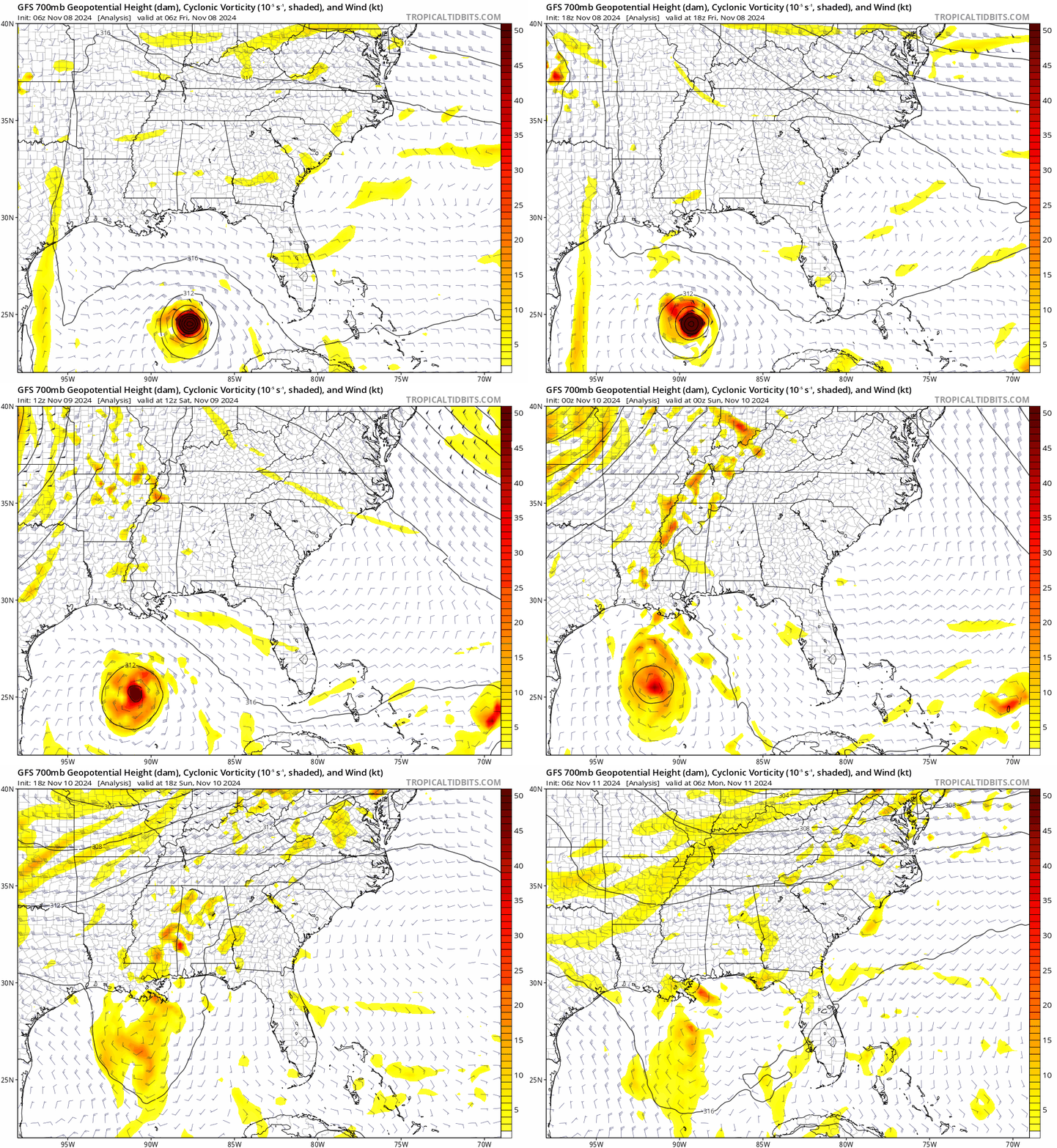
Mostly as expected, Rafael succumbed to wind shear and dry air over the Gulf of Mexico this weekend. Just to tie a ribbon on this whole thing, remember, model guidance was sort of split on taking Rafael southward into the Bay of Campeche or north into Louisiana. The majority of guidance shifted toward the Bay of Campeche track late last week, and the official forecasts all generally pointed toward that happening. Interestingly, when you look at the initialization of the models since Friday, you can see the mid-level signature of Rafael kind of shear apart with some going north and some going south.

The mid-level vorticity (or “spin”) over the Gulf of Mexico associated with Rafael basically got stretched and torn apart, with some going north and some staying put or going south. (Tropical Tidbits)

That said, there was likely some element of Rafael’s moisture that got picked up by a cold front in the Deep South this weekend. Heavy rain and flooding occurred in Louisiana, especially between Alexandria and Lake Charles, with radar estimates in excess of 12 inches since Friday morning.

Much of southwestern and central Louisiana into southwest Mississippi saw as much as 4 to 6 inches of rain with 10 to 12 inches or more between Alexandria and Lake Charles. (NOAA NSSL MRMS)

Heavy rainfall in excess of 4 inches also occurred in eastern Louisiana and even southwest Mississippi. All in all, it was a substantial autumn rain event, perhaps aided a little by Rafael.

Potential trouble brewing for Central America

With Rafael now just a remnant in the Gulf, our attention will focus back to the Caribbean, where we should see a tropical disturbance in about 4 or 5 days or less drifting into the western part of the Sea. The NHC assigns about 40 percent develop odds, and a slow moving system could cause some problems in Central America. Models are divergent on exactly where, what, and when. But in general, a system tracking toward Honduras or Nicaragua seems plausible. Upper level steering currents look to be generally weak. This means that whatever does or does not develop is likely to remain slowly moving in this area.

Potential trouble is brewing for Central America late this week or weekend. (Weathernerds.org)

This means that a couple unideal solutions are on the table right now, ranging from a potentially strengthening system to a slow-moving hefty rainmaker. Neither option usually leads to good outcomes in Central America, so unfortunately this will bear very close watching for those areas between the Yucatan and Nicaragua. For the Gulf, at least initially it appears that high pressure should exert control and effectively close off the area to anything from the Caribbean. So it is not likely to be a concern. But for folks in Central America, watch this one closely.

11 Nov 17:22

Biden Promises Peaceful Transition Of Power

by The Onion Staff

President Joe Biden vowed to ensure a peaceful and orderly transition to his Republican predecessor and now successor, Donald Trump, urging Americans to “accept the choice the country made.” What do you think?

“Wow, could the Democrats be any more out of touch about what the American people want?”

Conrad Agee, Button Smoother

“I’ll always admire his devotion to America’s founding delusions.”

Liza Trimble, Rodent Whisperer

“He knows a thing or two about reluctantly ceding power.”

Phil Arroyo, Footage Splicer

The post Biden Promises Peaceful Transition Of Power appeared first on The Onion.

11 Nov 17:22

Tips For Checking In On Friends’ Mental Health

by The Onion Staff

More than one in five adults in the U.S. live with a mental illness. The Onion offers helpful tips for checking in on your friends. 

Gain their trust by agreeing with and reinforcing all of their negative self-talk.

Remind your friend that they don’t have to be strong just because they’re the reigning WWE heavyweight champion.

To get a truly accurate assessment, pose as their psychiatrist for three to five years.

Triage by focusing on the friends that need support, but have some chance of making something of themselves.

Listen without judgment unless it gets boring. 

Encourage them to find a creative outlet, but not one that requires you to attend a public performance.

Rifle through their medicine cabinet. 

Invite your friend to a fitness class to show them that compared to their physical health, their mental health is pretty strong. 

Shushing them like they’re a horse is more effective than you think.

The post Tips For Checking In On Friends’ Mental Health appeared first on The Onion.

11 Nov 17:21

Amazing Amazonia

The Amazon is often described as an ecosystem under dire threat due to climate change and deliberate deforestation. Yet there is still considerable hope that these threats can be mitigated. In the face of these threats, indigenous conservationists are attempting to strike a balance between tradition and preserving Amazonia. Meanwhile, two river journeys more than 100 years apart – one by a contemporary National Geographic reporter and another by “The Lewis and Clark of Brazil”— draw attention to the beauty and diversity of one of the world’s most important ecosystems.

Guests:

Cynthia Gorney – Contributing writer at the National Geographic Society, former bureau chief for South America at The Washington Post

Larry Rohter – Reporter and correspondent in Rio de Janeiro for fourteen years for Newsweek and as The New York Times bureau chief. Author of Into the Amazon: The Life of Cândido Rondon, Trailblazing Explorer, Scientist, Statesman, and Conservationist

João Campos-Silva – Brazilian researcher and conservationist, and cofounder of Instituto Jura, a conservation organization. His work, along with that of other conservationists, is featured in the National Geographic issue devoted to the Amazon.

Featuring music by Dewey Dellay and Jun Miyake

Big Picture Science is part of the Airwave Media podcast network. Please contact advertising@airwavemedia.com to inquire about advertising on Big Picture Science.

You can get early access to ad-free versions of every episode by joining us on Patreon. Thanks for your support!


Learn more about your ad choices. Visit megaphone.fm/adchoices

11 Nov 17:12

Pluralistic: General Strike 2028 (11 Nov 2024)

by Cory Doctorow


Today's links


The Wobbly One Big Union graphic, depicting several workers with raised fists, their fists all merging into a single giant fist. The giant fist has sent a man flying: he wears a loud checked suit and carries a carpet-bag, and his head is a skull with a human face that has been pushed back like a hat. The face has Trump's hair. In the top corners of the image are the Democratic donkey and Republican elephant.

General Strike 2028 (permalink)

Trump is a scab.

https://www.democracynow.org/2024/9/2/shawn_fain_2024_election

Trump is a scab and the Dems need unions. While working class votes were all over the place – lotsa turkeys voting for Christmas – union voters voted against Trump with near-unanimity.

Trump is a scab, the Dems need unions, and the Dems are not faithful friends to unions. Harris's campaign advisor – her brother-in-law Tony West – is Uber's chief legal officer and the architect of Prop 22, California's scab law that formalized "gig work" labor violations. The fact that when the eminently guillotineable union-buster Howard Schultz tries to win a presidential nomination he does so in the Democratic party speaks volumes. If your political party has room for Michael Bloomberg, it doesn't have room for workers. Seriously, fuck that guy.

Trump is a scab, the Dems need unions, Dems are not faithful friends to unions, and unions keep the Dems honest. The #RedForEd teachers' strikes of 2018 kicked off a wave of public support for unions – and worker interest in unionization – that has only grown in the years since:

https://theweek.com/articles/764828/teacher-strikes-could-future-alt-labor

Trump is a scab, Dems need unions, Dems are not faithful to unions, unions make the Dems better, workers want unions, the public loves unions, and union membership is falling.

It's falling! This one is on the union leadership. Unions are sitting on gigantic warchests that they are resolutely not spending organizing the workers who are clamoring to join unions:

https://www.hamiltonnolan.com/p/ten-times-this

Unions have historic high cash reserves and are doing historically low organizing. This part is the unions' fault:

https://www.radishresearch.org/_files/ugd/2357dd_135794f88aa140f2962ee5c71ac31ff0.pdf

Or rather, it's the union bosses' fault. Union leadership in America, broadly speaking, sucks. Bosses love shitty unions, and the biggest unions obliged bosses for decades, with leaders who established suicidal practices like "two-tier contracts." That's a union where all the workers have to pay dues, but only the senior workers get protection from the union those dues fund:

https://pluralistic.net/2024/05/20/a-common-foe/#the-multinational-playbook

If you sat down and said, "Let's design a union contract that will ensure that every worker hired from this day forward hates unions," this is the contract you'd come up with.

Those shitty union bosses? They're on the way out. In 2023, the UAW held its first honest elections for generations, and radicals, led by Shawn Fain, swept the board. How did workers win their union back? They unionized more workers! Specifically, the UAW organized the brutally exploited Harvard grad students, and the Harvard kids memorized the union by-laws, and every time the corrupt old guard tried to steal the leadership election, one or another of them popped to their feet, reciting chapter-and-verse from the union's own rules and keeping the vote going:

https://theintercept.com/2023/04/07/deconstructed-union-dhl-teamsters-uaw/

Fain led the UAW to an historic strike: the UAW took on all three of the Big Three automakers, and cleaned their clocks. UAW workers walked away with three new contracts, all set to expire in 2028. Fain then called upon every union to bargain for contracts that run out in 2028, because if every union contract expires in 2028, we've got the makings of a general strike.

That means that when the next presidential election rolls around, it's going to be in the middle of the most militant moment in a century of US labor history. That is an opportunity.

Labor movements fight fascists. They always have. Trump and the GOP are not on the side of workers, notwithstanding all that bullshit about supporting workers by fighting immigration. Sure, when the number of workers goes up, wages can go down – if you're not in a union. Conservatives have never supported unions. They hate solidarity. Conservatives want workers to believe that they can get paid more if labor is scarcer, and there's some truth to that, but solidarity endures in good times and bad, and scarcity ends any time bosses figure out how to offshore, outsource, or automate your job. Scarcity is brittle.

"Law-and-order" candidates want to throw millions of our neighbors in jail. By the way, the 13th Amendment abolished slavery, except for prisoners. America imprisons more people than any other country in the history of the world. We make Stalin's gulags and Chinese Cultural Revolution "re-education camps" look unambitious. American prisoners produce $9b worth of services and $2b worth of goods every year. The average US prison wage is $0.53/hour, but six states ban prison wages altogether and North Carolina caps them at $1/day:

https://pluralistic.net/2024/04/02/captive-customers/#guillotine-watch

If you think immigrants are bad for American workers' wages, wait'll you see what legions of newly imprisoned slave laborers earning $0.53/hour do to those wages. Also: Californians just voted down a ballot measure to abolish prison slavery:

https://www.kqed.org/news/12013392/californians-voted-against-outlawing-slavery-why-is-prop-6-failing

The GOP are not on workers' side, and workers will not earn more under Trump's policies. Workers will earn more if they join a union, which they will only do if union leaders focus on organizing, which will only happen if we get rid of shitty union bosses. Start with this asshole, who belongs on the scrapheap of history:

https://www.npr.org/2024/07/16/nx-s1-5041345/teamsters-president-sean-obrien-addresses-the-republican-national-convention

With the GOP running the country for the next four years, it's tempting to look for hope in social movements. Maybe Trump will be so terrible that people will band together in informal solidarity networks and #Resist. History teaches us otherwise. The people who need the most help under Trump will be too embroiled in the fight for their own survival to put together the kind of movement that can make a difference.

As Astra Taylor reminded us on the Know Your Enemy podcast, Occupy and Black Lives Matter formed under Obama, when things were eleven kinds of fucked up, but at least ICE wasn't raiding our neighbors' homes:

https://know-your-enemy-1682b684.simplecast.com/episodes/voting-what-is-it-good-for-w-astra-taylor-olufmi-taiwo-malcolm-harris-teaser

Occupy and BLM arose in a moment when people had just enough breathing room to think beyond their immediate survival. Even deeply flawed progressive administrations provide that breathing room.

By contrast, the #RedForEd teachers' strikes were a creature of the Trump years. Even if social movements struggle to find their power under authoritarian, far-right regimes, these are the conditions in which organized labor movements are renewed:

https://www.hamiltonnolan.com/p/to-unfuck-politics-create-more-union

Trump won the election because white men, especially young white men, voted for him, but he couldn't have done it without the votes of white women, and Black and Latino men. These voters may even conceive of themselves as being in favor of women's rights and of the rights of racial minorities, but they still voted for Trump, because some facet of their identity – their maleness, their whiteness – mattered more to them than everything else.

Bosses have always excelled at this game, bringing in Irish scabs to break strikes of German workers, or Polish scabs to break Irish workers' pickets. The Pinkertons relied on Black workers who were excluded from the lily white unions.

Our identities are complex and ever-shifting, and men who worry that women's power comes at their own expense, or whites who worry that this is true of Black and Latino power aren't entirely wrong. As the saying goes, "When you're accustomed to privilege, equality feels like oppression."

But there's one part of your identity that is inherently solidaristic: whether you are a worker or an owner. If you own the business, you make more money when your workers earn less. If you work at the business, every dollar you earn is a dollar your boss doesn't get. Workers' gains are bosses' losses.

That's why they want us to "vote with our wallets." It's not just that those votes are rigged for the people with the fattest wallets. By tricking you into thinking of yourself as a "consumer" who benefits from low prices, they get you to stop thinking of yourself as a worker who suffers from low wages.

This remains true even after decades of "market based pensions" that forced workers to flush their savings into the stock market casino, to be the perennial suckers at the table in a game where their bosses have an unbeatable house advantage:

https://pluralistic.net/2022/11/06/the-end-of-the-road-to-serfdom/

Even after generations of this, the share of the stock market owned by workers is a negligible crumb. This is how GDP can rise, the stock market can surge, and you stay poor. Workers' fortunes don't rise and fall with the stock market. They're not owners.

You're a worker even if you're well-paid. Tech workers are just figuring this out, after a generation-long con in which bosses convinced techies that they were temporarily embarrassed entrepreneurs who definitely didn't need a union:

https://pluralistic.net/2024/02/16/narrative-capitalism/#sell-job

Tech workers' power came from scarcity, and scarcity is brittle. Tech fired 260,000 workers in 2023, and another 100,000 in the first six months of 2024. Tech bosses have smashed their workers' power, and we know what comes next.

We know what comes next because we know how tech bosses treat workers they can replace. Amazon warehouse workers piss in bottles and get maimed on the job at a rate that outstrips any other warehouse worker in America. Jeff Bezos and Andy Jassy didn't welcome coders with pink mohawks, facial piercings and black t-shirts with incomprehensible slogans because they liked tech workers and hated warehouse workers. Amazon coders owed the privilege to pee whenever they felt like it to their bosses' fear that they couldn't be replaced. Now that coders are replaceable, their kidneys are on the firing line.

"The future is here, it's just not evenly distributed." If you want to see the future of a replaceable Amazon coder, look at the working conditions of a replaceable Amazon delivery driver, monitored by a fucking AI that punishes them if they open their mouths while driving:

https://jalopnik.com/amazon-bans-its-drivers-from-moving-their-own-lips-too-1851639312

Remember lovely Tim Cook, the guy who took over Apple from its sainted juice-cleansing cofounder Steve Jobs? Cook's accomplishment, the one that earned him the CEOship and a personal net worth in excess of $2 billion, was to figure out how to offshore Apple's production to Chinese factories where the working conditions were so terrible that they needed to install suicide nets to catch workers who couldn't face another minute on the job:

https://www.theguardian.com/technology/2017/jun/18/foxconn-life-death-forbidden-city-longhua-suicide-apple-iphone-brian-merchant-one-device-extract

That's how Tim Cook treats workers he's not afraid of. Apple workers, no matter how well paid, no matter how pampered, need a union, because the instant Tim Cook can treat you like a Chinese iPhone assembly-line worker, he will.

Tim Cook had some choice words for Donald Trump this week:

Congratulations President Trump on your victory! We look forward to engaging with you and your administration to help make sure the United States continues to lead with and be fueled by ingenuity, innovation, and creativity.

It wasn't just Cook. Every tech boss lined up to kiss Trump's ass: Bezos ("Wishing @realDonaldTrump all success"); Zuck ("Looking forward to working with you"); Pichai ("We are in a golden age of American innovation"); Nadella ("Congratulations President Trump"):

https://daringfireball.net/2024/11/i_wonder

You don't just deserve a tech union, you need one, now:

https://abookapart.com/products/you-deserve-a-tech-union.html

Organizing a 2028 general strike under Trump won't be easy. Workers won't be able to secure support from the courts or the NLRB, whose brilliant Biden-era leadership team is surely doomed:

https://pluralistic.net/2023/09/06/goons-ginks-and-company-finks/#if-blood-be-the-price-of-your-cursed-wealth

But the NLRB only exists today because workers established unions when doing so was radioactively illegal and union organizers were beaten, jailed and murdered with impunity. The tactics those organizers used are not lost to the mists of time – they are a tradition that lives on to this day.

The standard-bearer for this older, militant, community-based union organizing was the great Jane McAlevey (rest in power). McAlevey ran organizing and strike drives as mass-movements; she wouldn't call for either without being sure of massive majorities, 70%-95%:

https://pluralistic.net/2023/04/23/a-collective-bargain/

McAlevey understood union organizing as a source of worker power, but also as a source of community power. When she helped organize the LA #RedForEd Teachers' strike, the teachers didn't just demand better working conditions for themselves, but also green space for their students, and protection from ICE raids for their students' parents. They did this under Trump, and built a turnout organization that flipped key seats and delivered a House majority to the Democrats in 2020.

In her work, McAlevey excoriated the kind of shittyass Dem power-brokers who just lost an election to a convicted felon and rapist, condemning their technocratic conceit that the path to electoral victory was in winning over precisely 50.1% of the vote in each tactically significant precinct. McAlevey said that's how you get the nightmarish Manchin-Synematic Universe where Dems can't deliver and workers don't vote for Dems. To transform America, we need the kinds of majorities that McAlevey and her fellow organizers won in those strike votes – majorities that produced durable, anti-fascist power that turned into electoral victories, too.

McAlevey died last summer. But she left behind a legion of people she taught and inspired, and a playbook we all can follow:

https://jacobin.com/2024/07/jane-mcalevey-strategy-organizing-obituary

We've got four years. Join a union. Take over its leadership. Create solidarity with your fellow workers and your community. Bargain for a contract. Make it expire in 2028. Get ready.

Because in 2028, we're having a general strike.


Hey look at this (permalink)


A Wayback Machine banner.

This day in history (permalink)

#20yrsago Jabberwocky in many languages https://web.archive.org/web/20041209010448/http://www.cd.chalmers.se/~jessica/Jabberwock/

#20yrsago Asimov’s magazine on DRM, copyright and Creative Commons https://web.archive.org/web/20041020235706/https://www.asimovs.com/_issue_0412/onthenet.shtml

#15yrsago MPAA shuts down entire town’s muni WiFi over a single download https://web.archive.org/web/20091114054844/http://www.coshoctontribune.com/article/20091109/UPDATES01/91109015

#15yrsago EFF lawyers grin like holy fools, surrounded by a fan of formerly secret government documents https://memex.craphound.com/2009/11/11/eff-lawyers-grin-like-holy-fools-surrounded-by-a-fan-of-formerly-secret-government-documents/

#15yrsago McDonald’s Gitmo is hiring! https://web.archive.org/web/20091112101249/http://www.azcentral.com/offbeat/articles/2009/11/10/20091110guantanamo-mcdonalds-ON.html

#15yrsago EFF to represent Yes Men in Chamber of Commerce lawsuit https://www.eff.org/press/archives/2009/11/11

#15yrsago Pratchett’s “Unseen Academicals” – a gift to Discworld lovers and an argument for the importance of sport https://memex.craphound.com/2009/11/11/pratchetts-unseen-academicals-a-gift-to-discworld-lovers-and-an-argument-for-the-importance-of-sport/

#15yrsago Slow News: designing reflection and contemplation into the news-cycle https://mediactive.com/2009/11/08/toward-a-slow-news-movement/

#15yrsago Rupert Murdoch vows to take all of Newscorp’s websites out of Google, abolish fair use, tear heads off of adorable baby animals https://www.inquisitr.com/46786/epic-win-news-corp-likely-to-remove-content-from-google

#15yrsago Ebook license “agreements” are a ripoff https://www.theguardian.com/technology/2009/nov/08/amazon-kindle-licence-orwell

#15yrsago Epoch: podcast of my story about the death of the first AI https://memex.craphound.com/2009/11/09/epoch-podcast-of-my-story-about-the-death-of-the-first-ai/

#15yrsago How EFF saved Indymedia from an unconstitutional subpoena for all its visitors’ IP addresses https://web.archive.org/web/20091122074424/http://www.eff.org/wp/anatomy-bogus-subpoena-indymedia

#15yrsago TSA doesn’t understand what “random” means https://web.archive.org/web/20091113094106/https://www.hlswatch.com/2009/11/10/where-are-all-the-white-guys-update-on-do-i-have-the-right-to-refuse-this-search/

#15yrsago BBC’s outrageous plan to put DRM on TV broadcasts shot down in flames — thanks to you! https://web.archive.org/web/20091122133719/https://www.ofcom.org.uk/tv/ifi/tvlicensing/BBC_letter.pdf

#10yrsago Creative Commons and Aaronsw’s sweet hack https://web.archive.org/web/20141108110122/http://www.takepart.com/article/2014/11/06/how-celebrate-aaron-swartzs-legacy-go-hackathon-weekend

#10yrsago Net Neutrality activists blockade FCC Chairman Wheeler’s house https://popularresistance.org/breaking-net-neutrality-activists-blockade-fcc-chairman-tom-wheelers-house/

#10yrsago DOJ helps local cops get around state limits on civil forfeiture https://www.muckrock.com/news/archives/2014/nov/10/asset-forfeiture-article/

#10yrsago New KKK organization open to people of color, Jews, LGBT https://www.ibtimes.co.uk/ku-klux-klan-opens-its-doors-hispanic-blacks-jews-gays-1473907

#10yrsago Italian scientists acquitted of culpability in L’Aquila quake https://web.archive.org/web/20160826014632/https://www.dw.com/en/court-acquits-natural-disaster-experts-over-laquila-quake/a-18055155

#10yrsago Expat activists and journalists leave USA for Berlin’s safety https://www.theguardian.com/world/2014/nov/09/berlins-digital-exiles-tech-activists-escape-nsa

#10yrsago Senate races were won by dump-trucks full of “dark money” https://www.nytimes.com/2014/11/09/opinion/sunday/dark-money-helped-win-the-senate.html

#10yrsago The Oatmeal to Ted Cruz: Net Neutrality is not Obamacare https://theoatmeal.com/blog/net_neutrality

#5yrsago AOC really plays in Iowa https://www.motherjones.com/politics/2019/11/turns-out-alexandria-ocasio-cortez-is-huge-in-iowa/

#5yrsago Bill Gates just accidentally proved that even “unsuccessful” antitrust enforcement works https://memex.craphound.com/2019/11/11/bill-gates-just-accidentally-proved-that-even-unsuccessful-antitrust-enforcement-works/

#10yrsago Net Neutrality activists blockade FCC Chairman Wheeler’s house https://popularresistance.org/breaking-net-neutrality-activists-blockade-fcc-chairman-tom-wheelers-house/

#10yrsago DOJ helps local cops get around state limits on civil forfeiture https://www.muckrock.com/news/archives/2014/nov/10/asset-forfeiture-article/

#10yrsago New KKK organization open to people of color, Jews, LGBT https://www.ibtimes.co.uk/ku-klux-klan-opens-its-doors-hispanic-blacks-jews-gays-1473907

#10yrsago Italian scientists acquitted of culpability in L’Aquila quake https://web.archive.org/web/20160826014632/https://www.dw.com/en/court-acquits-natural-disaster-experts-over-laquila-quake/a-18055155

#10yrsago Expat activists and journalists leave USA for Berlin’s safety https://www.theguardian.com/world/2014/nov/09/berlins-digital-exiles-tech-activists-escape-nsa

#10yrsago Senate races were won by dump-trucks full of “dark money” https://www.nytimes.com/2014/11/09/opinion/sunday/dark-money-helped-win-the-senate.html

#10yrsago The Oatmeal to Ted Cruz: Net Neutrality is not Obamacare https://theoatmeal.com/blog/net_neutrality

#5yrsago AOC really plays in Iowa https://www.motherjones.com/politics/2019/11/turns-out-alexandria-ocasio-cortez-is-huge-in-iowa/

#5yrsago Bill Gates just accidentally proved that even “unsuccessful” antitrust enforcement works https://memex.craphound.com/2019/11/11/bill-gates-just-accidentally-proved-that-even-unsuccessful-antitrust-enforcement-works/

#5yrsago UK spies secretly granted power to spy on journalists and lawyers https://web.archive.org/web/20141107223052/https://firstlook.org/theintercept/2014/11/06/uk-surveillance-of-lawyers-journalists-gchq/

#5yrsago Blizzard’s president apologized for suspending Blitzchung, but the suspension is still in force https://www.pcgamer.com/blizzard-president-clarifies-decision-to-ban-hearthstone-player-and-two-casters-over-hong-kong-controversy/

#1yrago The enshittification of garage-door openers reveals a vast and deadly rot https://pluralistic.net/2023/11/09/lead-me-not-into-temptation/#chamberlain

#1yrago Biden wants to ban ripoff "financial advisors" https://pluralistic.net/2023/11/08/fiduciaries/#but-muh-freedumbs

#1yrago "Brand safety" killed Jezebel https://pluralistic.net/2023/11/11/ad-jacency/#brand-safety


Upcoming appearances (permalink)

A photo of me onstage, giving a speech, holding a mic.


A screenshot of me at my desk, doing a livecast.

Recent appearances (permalink)


A grid of my books with Will Stahle covers..

Latest books (permalink)


A cardboard book box with the Macmillan logo.

Upcoming books (permalink)

  • Picks and Shovels: a sequel to "Red Team Blues," about the heroic era of the PC, Tor Books, February 2025
  • Unauthorized Bread: a middle-grades graphic novel adapted from my novella about refugees, toasters and DRM, FirstSecond, 2025


Colophon (permalink)

Today's top sources:

Currently writing:

  • Enshittification: a nonfiction book about platform decay for Farrar, Straus, Giroux. Friday's progress: 765 words (79442 words total).
  • A Little Brother short story about DIY insulin PLANNING

  • Picks and Shovels, a Martin Hench noir thriller about the heroic era of the PC. FORTHCOMING TOR BOOKS FEB 2025

Latest podcast: Spill, part four (a Little Brother story) https://craphound.com/littlebrother/2024/10/28/spill-part-four-a-little-brother-story/


This work – excluding any serialized fiction – is licensed under a Creative Commons Attribution 4.0 license. That means you can use it any way you like, including commercially, provided that you attribute it to me, Cory Doctorow, and include a link to pluralistic.net.

https://creativecommons.org/licenses/by/4.0/

Quotations and images are not included in this license; they are included either under a limitation or exception to copyright, or on the basis of a separate license. Please exercise caution.


How to get Pluralistic:

Blog (no ads, tracking, or data-collection):

Pluralistic.net

Newsletter (no ads, tracking, or data-collection):

https://pluralistic.net/plura-list

Mastodon (no ads, tracking, or data-collection):

https://mamot.fr/@pluralistic

Medium (no ads, paywalled):

https://doctorow.medium.com/

Twitter (mass-scale, unrestricted, third-party surveillance and advertising):

https://twitter.com/doctorow

Tumblr (mass-scale, unrestricted, third-party surveillance and advertising):

https://mostlysignssomeportents.tumblr.com/tagged/pluralistic

"When life gives you SARS, you make sarsaparilla" -Joey "Accordion Guy" DeVilla
11 Nov 14:30

coworker derails meetings, employer wanted a weekend interview, and more

by Ask a Manager

This post was written by Alison Green and published on Ask a Manager.

It’s five answers to five questions. Here we go…

1. My coworker constantly derails meetings

I have a coworker, Mary, who does not know how to stay on topic or when to stop talking. It’s like she thinks a meeting is a time to discuss everything and anything tangentially related to a person’s position in our org, and so I have to plan that any meeting with her will run over unless I cut it off.

In meetings I’m leading, I’ve learned to say, “We will need to table that for another time” when she gets off track. But what do I do in meetings where I’m not the one leading? For example: we’re on the same committee for fundraising for an event. That is our job. We meet once a month. Every month, Mary derails the meeting with suggestions for the event, ideas for activities (many of which are absurd, like making vendors wear costumes, etc.). Usually the actual agenda for this meeting is handled in 20 minutes, so the next 40 are dedicated to this coworker and her questions. My boss is the one leading this meeting, and I want to support her in her work but I also want to offer to step up and say, “Do you need help with shutting Mary down?”

It’s not really your place to ask your boss if she wants help shutting Mary down. There are some manager/employee relationships where you could ask that, but they’re very much the exception rather than the rule, and generally if you had one you wouldn’t be asking.

But there are lots of ways where you can nudge your boss in that direction herself. For example, when you’re done with the agenda but Mary starts to go off-topic, you can say, “Before we get too far off-topic, is there anything else on the agenda we need to cover or should we wrap up?” You can also say at the start of the meeting, “I’ve got a hard stop at (time) but I think that’ll be enough for everything we need to cover.” And during the meeting itself, if Mary begins a tangent, you can say, “I think that will take us pretty far off-topic” or “Could we focus on X and Y, which I think are the highest priorities to sort out right now?” (You can’t say that if you’re the most junior person in the room, but it doesn’t sound like that’s the case.)

Also, if your boss is scheduling one-hour meetings when a half hour would do, you can point that out to her: “We’ve been scheduling these for an hour but typically cover our agenda items in much less time and the second half never seems as productive. Could we experiment with scheduling for 30 minutes and see how that works?”

2. Company wanted me to interview on a weekend for a Monday-Friday job

I am a research scientist currently looking for new roles. One company I applied for called me back to wanting to discuss my resume in detail before potentially scheduling an interview. It was late on a Friday afternoon. I was in a meeting and missed their call. They sent me an email asking me when would be a convenient time for a chat. When I saw the email, I responded saying I would be free Monday. They then emailed me back saying that if I wanted to, they could phone me on Saturday or Sunday.

These are standard 9 to 5 jobs I am applying to, so is wanting to talk on a weekend a red flag that they will have poor work/life boundaries? I am fine working overtime on some occasions but not all the time.

It’s not a red flag screaming at you not to proceed, but it is a sign to gather more information as you do.

It’s possible that this is an indicator that everyone there works horrible hours and work will be constantly bleeding into your evenings and weekends … but it’s just as possible that the person who emailed you works non-standard hours themself, or is about to go on leave and is trying to squeeze in a few interviews before they go, or thinks candidates appreciate interviewing during non-work hours so they don’t have to take time off, or they’re a rare workaholic in a culture of people with better boundaries.

It would be foolish to ignore what this could represent, but at this point you don’t know which of these possibilities is most likely, so your job is to take note of it and ask questions about the culture and typical hours as you progress through their process. It also would be fine to ask during the interview, “I recall you asked about doing our initial interview on the weekend. How often do people on this team work on the weekends?”

3. Talking at work about an emergency gay wedding

I was originally planning to have a wedding next fall. However, due to recent events, my fiancée and I have decided to get married in late November. The reasons are twofold: (1) My fiancée is currently employed by a federal program that the incoming administration is planning to eradicate, and I don’t want her to be left without insurance. (2) We are both women living in a conservative state. The federal ruling on gay marriage has also been named as a possible target in the next four years. This was always our plan if the election went the way it did.

I have a reputation for, let’s say, non-impulsivity at work. Also, I have mentioned that part of the reason we were waiting until next fall was that my only sibling is currently abroad. So this will likely come as a shock to anyone we didn’t share our plans with beforehand.

I like my coworkers; I like my job. The atmosphere is a friendly one, where good news is comfortably shared. I don’t want to vanish for a week and a half and come back with a new last name like it’s a secret, but I’m also not comfortable “bringing up politics” at work.

I was wondering if you could provide a script for how I can tell people I’m going to get married without it seeming like a rushed, secretive caper, and what I should say when people ask why I’m doing it this way? (They have asked.) I want to be able to enjoy the fact that I’m getting married, to share it with the people I see every day, without it being a dirty little secret or political landmine.

The fastest, simplest explanation: “We want to get married while we know we still can.” That’s not bringing politics into work in an inappropriate way; it’s a clear statement of the situation you and many others are in.

If you’re not comfortable with that, you could also just say, “Our plans changed and we decided to do it now!” People may be surprised, but they’re unlikely to be shocked; people move up weddings for logistical reasons all the time. They’re also likely to take their cues from you; if you’re cheerfully matter-of-fact about it, they likely will be too. And you really don’t owe any more explanation than that — I don’t mean that in a chilly way, but at the end of the day these are work colleagues and it’s normal not to get into the level of personal detail that you might share with close friends or family.

And as for announcing it initially — “We’re moving our wedding up! I’ll be out (dates) and when I’m back I’ll be Valentina NewLast Name.”

I’m sorry you’re dealing with this.

4. My company is not prepared for the overtime change in January

I work for a pretty small company (about 20 employees), all remote workers around the U.S. Most of us are salaried, making around $45,000-$50,000 per year, so the exemption threshold change in July did not affect anyone but the change in January will affect almost everyone.

I asked our HR about this over the summer, and they said that I shouldn’t be working overtime, so it won’t affect anything. But our company does multiple conventions and events every year; it would be a huge logistical change to prevent anyone from working overtime during these. They are easily 50-60 hour weeks under the current set-up. And my understanding of the law is that even if we aren’t working overtime, we’ll need to maintain timesheets.

What should or can I do? Is this worth pushing, or should I just wait until January 1 and see how it plays out?

Background for readers: An increase to the salary level that makes you exempt from overtime is set to take effect on January 1. If it goes through, it would mean that your employer would be required to pay you overtime (time and a half for all hours over 40 that you work in a week) unless you earn at least $58,656 annually — up from the current threshold of $43,888. (Exceptions include teachers, doctors, and lawyers, who are always exempt.)

For now, though, wait and see what happens. A group of states are suing to stop the increase and if a court puts it on hold, the incoming new administration is highly likely to scrap or significantly scale back the whole thing (as they did the last time they were in the White House). On the other hand, if courts don’t stop it, it’s scheduled to go into effect January 1, while the old administration is still in charge, and the new administration is unlikely to be able to roll it back immediately so it’ll be in effect for at least a while.

In other words, it’s pretty up in the air right now, but it’s something to keep an eye on. If we get to December with no signs of it being halted, raise it again at that point. This time you should specifically point out your concern about overtime during conventions and events — and it would be useful to calculate how many hours you worked each week during those events in the past, so that your company has hard numbers to look at.

Related:
what the hell is all this talk of exempt and non-exempt about?

5. You never know what’s happening behind the scenes of a hiring process

I’m a relatively new manager hiring for my third permanent position. I read your blog regularly and I was excited to apply everything I’ve been learning to the hiring process. I’ve been thinking through my requirements vs nice-to-haves, challenging my internal biases, everything. The position was posted a month ago, and I brought in four external people to interview after a phone screening. I was really excited for them and the opportunities they presented for the position. I was planning to be checking references next week and hopefully making an offer shortly after that.

And then on the day of the last two interviews, I got an email from HR that there was an internal candidate who we needed to urgently consider because they will otherwise be laid off next month. My supervisor told me that we pretty much have to hire them unless there are massive red flags, as it is in the agency’s best interest to retain staff. Of course I am happy to help someone keep working and not be laid off, but I also feel for the external candidates.

This radically altered the entire hiring process in a way that none of us could predict, and it was the worst for the external candidates who were now going to be rejected through literally no fault of their own. There is nothing they could have done differently.

I know it is cold comfort for job seekers, but I wanted to share this story to illustrate that when you say “you never know what is happening on the hiring side,” it is really true.

Thanks for illustrating exactly the sort of thing that can be going on behind the scenes that job seekers often don’t have a window into. When you’re agonizing over what happened with a job you thought you were perfect for, keep in mind that things like this can happen and you might never know about it!

11 Nov 14:25

Wanted: Chastity Belt for My Black Woman Optimism, Which Never Ever Learns

by Alexandria Portée

Hello, I’m currently searching for a chastity belt. Not for purity or protection but for one purpose only: locking up my optimism so it never sees the light of day again. Ever. As a thirty-three-year-old Black woman, my optimism has the nerve to keep hanging around, “trying to find the good in ALL people,” defying every harsh truth that should have killed it off long ago. In fact, it’s still here, rearing its head with messages of “justice prevailing” and “light at the end of the tunnel.” The thing won’t die, so I need it restrained.

Required Specifications

Impenetrable, Ideally with the Force of History
Give me your tungsten, your steel. Your titanium forged to suppress and control. The kind that can survive one or several terms of a Trump presidency and come out the other end with an unwavering grip. Optimism in this world can grow like weeds, and mine goes rampant at the slightest whiff of change in the air. I want a belt that’s so locked down that not even sweet nothings about “the arc of justice” can penetrate.

Air-Tight, Resistant to All Positivity
Optimism is sneaky, capable of slipping through even the smallest crack if it catches a hint of feel-good rhetoric or sees wearable symbols of democratic solidarity like pussy hats or the latest: “blue bracelets.” This chastity belt needs to be fully sealed, with no chance of catching wind of “safe spaces” or land acknowledgments at weddings. If it could withstand the blows of performative curiosity and listening at dinner parties, that would be ideal.

Rust-Resistant, Built to Last
I need a model that can handle repeated exposure to progress. Optimism, especially my brand of Black woman optimism, is resilient to a fault, so I want a chastity belt built to outlast the most seductive of delusions. No ramshackle contraption for my optimism-constraining chastity belt. No, I want one that won’t start to crack when the pots and pans start banging it with #StrongerTogether, a place at the table or chants of “breaking glass ceilings.”

Rigid and Uncomfortable, on Purpose
My optimism starts to relax and spread at trending platitudes. Think: “I want to understand better,” “equity,” and “I’m here to listen.” The chastity belt I’m looking for provides regular chafing and pinching, especially when phrases like “building bridges” or “I’m with her" come out to play.

Someone to Throw Away the Key
Finally, if you’re the type to have a chastity belt, I’m thinking you probably have a girlfriend or wife on hand to lock it shut for good? Ideally, you’ve got a woman who lacks solidarity and is easily swayed by the seduction of power. I’m talking about a “Real woman,” the kind who gets “bored” by talk of challenging the status quo. The kind who is gonna look the other way, who has no sleeves to roll up. To cut to the point, if she has a “Focus on the Real Issues” stance on politics, she’s my knight in shining armor.

Terms and Payment

If you know of a model that’s sturdy enough to silence a Black woman’s hope, send me the details. I’ll pay in tears, plus whatever fragments of patience and energy I’ve got left.

11 Nov 14:24

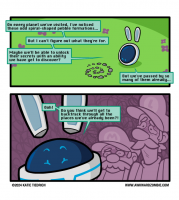
Awkward Zombie - Worry Stones

by tech@thehiveworks.com

New comic!

Today's News:

It turns out these don't mark a collectable to be picked up -- if you do a little twirl on them, a coin pops out. It's just a neat little thing.


Until I broke down and looked this information up, I had been accumulating a compounding sense of dread that I'd be expected to remember where all of these pebbles were later. I don't think modern games are generally that cruel anymore, but I still expect them to be. Some wounds never heal.

10 Nov 23:31

Racist text messages target Black Americans, including some in Houston, after presidential election

by Lucio Vasquez
The FBI says it's aware of the text messages, which reportedly came from unknown phone numbers and appear to be specifically targeting Black individuals across the United States.
10 Nov 23:27

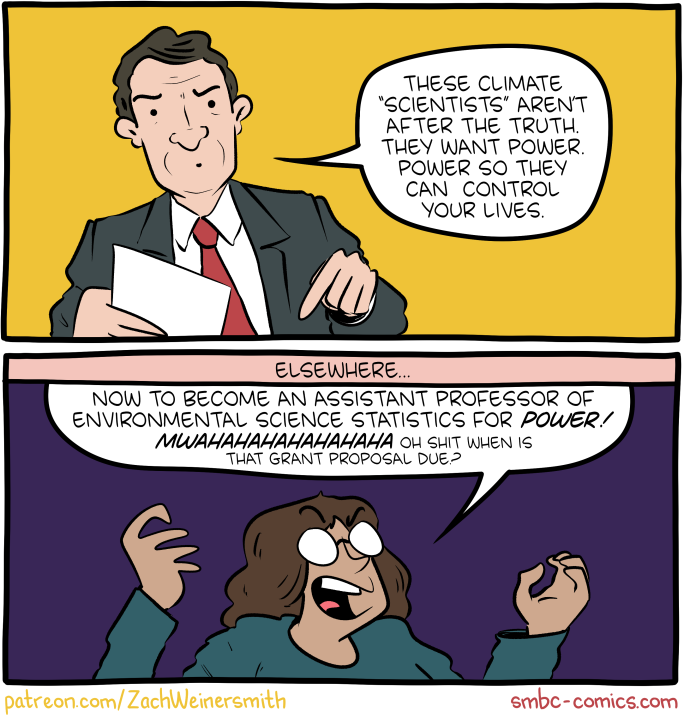
Saturday Morning Breakfast Cereal - Climate

by Zach Weinersmith


Click here to go see the bonus panel!

Hovertext:
We had a thing with A City on Mars where a lot of people couldn't disagree without assuming Secret Motives.


Today's News:
10 Nov 20:36

NSFW artist's truth

by kekeflipnote

I am a SFW artist and a big page as well but I always take the time to say that NSFW artists should get the same respect as any other artists!

I should not get more respect simply because I do SFW, they work very hard as well.

So once again, they deserve the good words, keep it up!
10 Nov 18:22

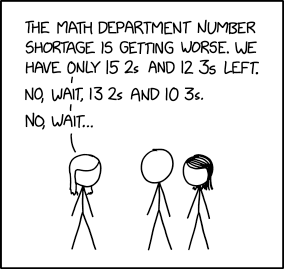
Number Shortage

"10 minutes ago we were down to only 2 0s!" "How many do we have now?" "I ... don't know!!"
10 Nov 18:20

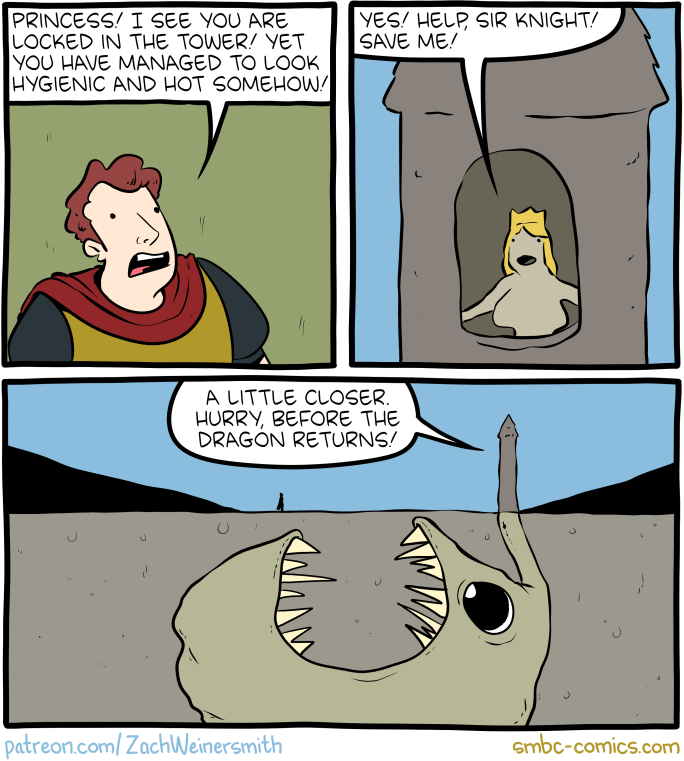
Saturday Morning Breakfast Cereal - Knight

by Zach Weinersmith


Click here to go see the bonus panel!

Hovertext:
The really creepy part is the tower is its cloaca.


Today's News:
08 Nov 20:37

Photo

by David M Willis

08 Nov 20:34

Paramour

by David M Willis

08 Nov 19:50

FBI investigates racist text messages sent to black people across US

The messages tell recipients they have been selected "to pick cotton" or “chosen to be a slave", authorities say.
08 Nov 18:59

Democrats Search For Answers After Trump Victory

by The Onion Staff

Democrats across the country were left in disbelief as they confronted the reality of another Donald Trump presidency, searching for answers about how he could have become the first Republican to win the popular vote in 20 years. What do you think?

“Have they tried running an insane demagogue of their own?”

Leo Fedyk, Boxing Historiographer

“I didn’t vote, so don’t blame me.”

Paige Sternberger, Systems Analyst

“Hopefully they’ll be allowed to live long enough to figure out.”

Ryan Lusk, Plate Polisher

The post Democrats Search For Answers After Trump Victory appeared first on The Onion.

08 Nov 18:59

Judge rejects Biden plan for undocumented spouses

The plan seeks to help undocumented immigrants married to US citizens obtain a path to citizenship.
08 Nov 18:54

Trump Boys Have Slap Fight Over Who Gets To Run Foreign Policy Meetings

by The Onion Staff

PALM BEACH, FL—Lashing furiously at each other’s faces with their flailing hands, the Trump boys were reportedly engaged in a slap fight Friday over who would get to run their dad’s foreign policy meetings. “No, you got to do it last time, Eric—it’s my turn, it’s mine!” said Donald Trump Jr., who flinched and cried out “Ow!” after his younger brother Eric’s finger nearly made contact with his cheek. “It’s my turn to play with the foreign dignities [sic]! It’s my turn to meet the samurai king! Dad said I get to go on the plane with Uncle Jared! Dad, tell him! Tell him I can meet the samurai king. You promised! Dad! Dad! Dad! Dad!” At press time, Don Jr. was shrieking at the top of his lungs as Eric sank his teeth into his older brother’s hand.

The post Trump Boys Have Slap Fight Over Who Gets To Run Foreign Policy Meetings appeared first on The Onion.

08 Nov 18:54

Finally, the Elites Have Been Defeated by the Billionaires

by Eli Grober

“Resentment against elites proved to be deeper and more profound than many in both parties had recognized.” — NYT

“Many other billionaires and industry titans have thrown their support behind Trump. Now, some could be in the running for cabinet posts, while others may wield influence behind the scenes.” — USA Today

- - -

At long last, the privileged elites have been defeated. And by who? The perfect heroes, of course. The ultimate anti-elites. The champions of the average worker. The most relatable folks on the planet: the billionaires.

Finally, the out-of-touch vision of the ruling class has been thwarted by a handful of the world’s wealthiest people who plan to make even more money off the suffering of the poor and disenfranchised. Take that, aristocrats!

But how did we get here? How did we win the fight against the corporate political machine that’s out to line its pockets at the expense of the most vulnerable? The answer is simple: a corporate political machine that’s out to line its pockets at the expense of the most vulnerable. Check and mate.

The good news is true. The pendulum has swung. The power now lies in the hands of the people—specifically, the people with the most money. The coastal elites have been bested by the coastal elites. But not without the help of financial backing from the Silicon Valley elites, ringing endorsements from the Texas elites, and, of course, journalistic support from the e-commerce and cloud computing elites. Thank you, the elites, for defeating the elites.

And we can’t forget organized labor. After a lengthy battle, we’ve won a great victory for unions by putting a guy in charge who hates unions, bankrolled by the planet’s richest man who hates unions even more, and cheered on by mega-millionaire owners of media conglomerates and martial arts organizations who threaten their employees and lie to their talent to keep them from unionizing.

In short, the unions have been saved from themselves. “Take that, corporate oligarchy!” That’s a quote from the corporate oligarchy.

What about the billionaires who weren’t on the front lines in the fight against the elites? Don’t be too hard on them—they watched patiently from the sidelines, biding their time, ready to tag in at a moment’s notice. And now that the billionaires have won, the other billionaires have congratulated those billionaires to show their billionaire solidarity. Because if we don’t have class solidarity, what else do we have?

Finally, you may be wondering: Did anyone see this coming? Of course. Those of us who were paying attention sure did. We saw the signs. A widening wealth gap can be solved only by one group: the people doing the widening. We can now move past an era of robber barons and political shills, and instead look forward to a future filled with robber barons and political shills.

And if those barons and shills ever get too out of control, we’ll just need to find some even richer guys to take them down. But for now, my friends, we can breathe easy—because once and for all… the elites have finally been defeated by the billionaires.

08 Nov 18:49

The voice of America Online’s “You’ve got mail” has died at age 74

by Benj Edwards

On Tuesday, Elwood Edwards, the voice behind the online service America Online's iconic "You've got mail" greeting, died at age 74, one day before his 75th birthday, according to Cleveland's WKYC Studios, where he worked for many years. The greeting became a cultural touchstone in the 1990s and early 2000s in the early Internet era; it was heard by hundreds of millions of users when they logged in to the service and new email was waiting for them.

The story of Edwards' famous recording began in 1989 when Steve Case, CEO of Quantum Computer Services (which later became America Online—or AOL for short), wanted to add a human voice to the company's Quantum Link online service. Karen Edwards, who worked as a customer service representative, heard Case discussing the plan and suggested her husband Elwood, a professional broadcaster.

Edwards recorded the famous phrase (and several others) into a cassette recorder in his living room in 1989 and was paid $200 for the service. His voice recordings of "Welcome," "You've got mail," "File's done," and "Goodbye" went on to reach millions of users during AOL's rise to dominance in the 1990s online landscape.

Read full article

Comments

08 Nov 17:11

Judge strikes down Biden administration program shielding immigrant spouses from deportation

by By Hannah Schoenbaum, Associated Press
A Tyler-based federal judge ruled the administration overstepped its authority with the “Keeping Families Together” program. Texas and other states sued to halt it.
08 Nov 17:02

What To Know About Zyn

by The Onion Staff

Zyn, a brand of nicotine pouches, has surged in popularity, particularly among young men. Here is what you need to know about the product. 

Q: How is Zyn different from other nicotine products?

A: Unlike cigarettes, you cannot swallow Zyn. 

Q: Are there any health risks linked to Zyn?

 A: Only if you like having gums.

Q: What’s cooler to say, ‘lip pillow’ or ‘upper decky?’ 

A: There are better ways to earn your new stepson’s respect. 

Q: Why has Zyn become so popular?

A: More people are looking for a lung-disease-free way to damage their heart and brain.

Q: Can Zyn help people stop smoking?

A: It can help people start Zynning.

Q: Where can I purchase Zyn?

A: The third stall in the middle school bathroom.

Q: Should I let my teens use Zyn? 

A: Who are you to deprive them of this small respite in a cruel and unforgiving world?

The post What To Know About Zyn appeared first on The Onion.

08 Nov 16:06

“Retratos de Frida Kahlo por Lucienne Bloch y Nickolas Muray” en la galería PDNB, Dallas

by Madison Ford

Editor’s note: This article is also published in English on Glasstire. Find that here.

Nota del editor: Este artículo se publicó originalmente en inglés en Glasstire el 29 de octubre del 2024.

Traducción de Viera Khovliáguina y Yolanda Fauvet

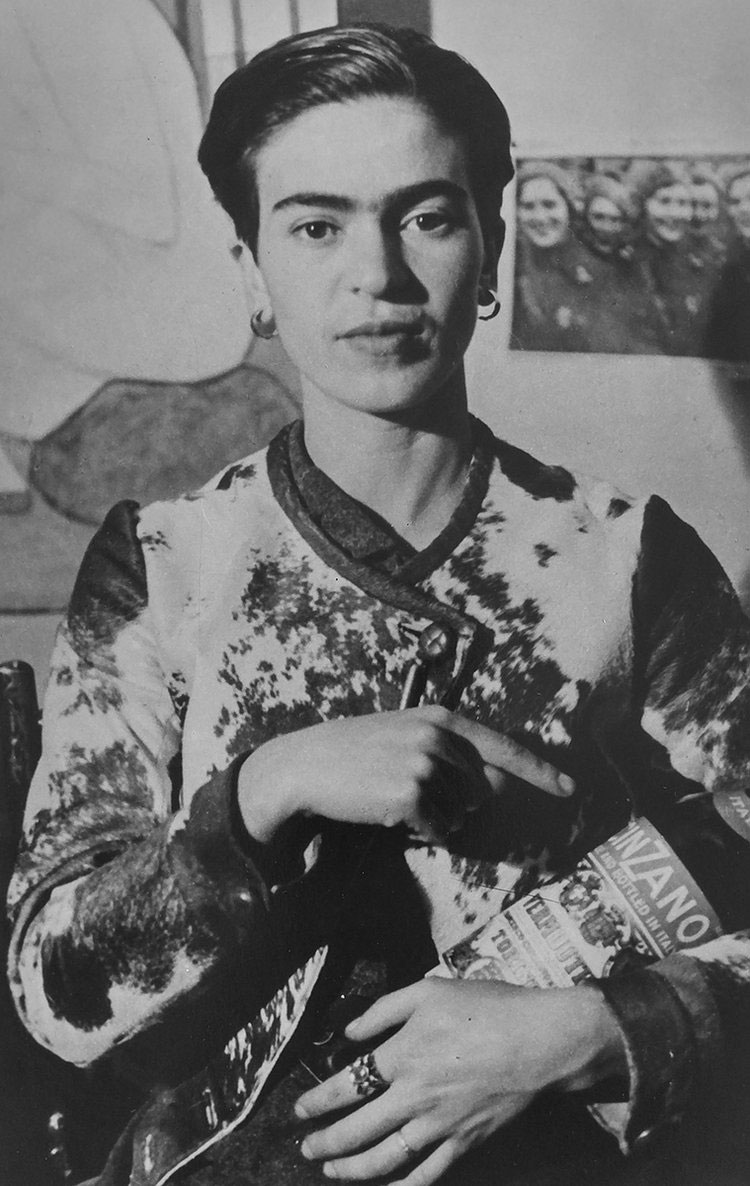
Fotografía en blanco y negro de Frida Kahlo con el cabello corto. Lleva puesta una chaqueta con estampado de vaca. Sostiene una botella grande de vermouth Cinzano con una mano y la señala con el índice de la otra. Mira directamente a la cámara.

Lucienne Bloch, “Frida with Cinzano Bottle” [Frida con la botella de Cinzano], 1935, impresión en plata sobre gelatina, 31.1 x 20.3 cm. Cortesía del patrimonio de Lucienne Bloch y la galería PDNB

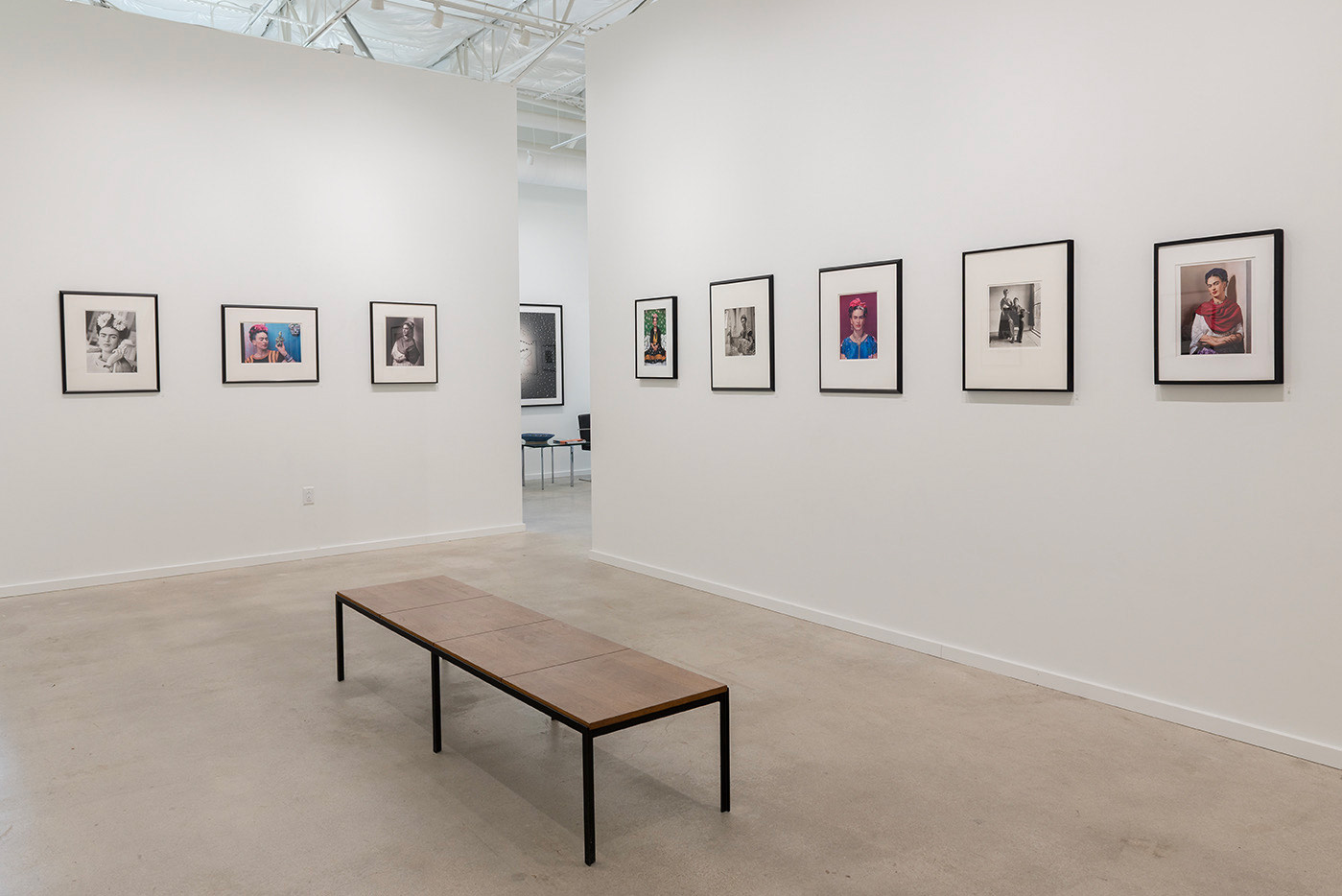
Frida Kahlo luce una chaqueta con estampado de vaca, sostiene una botella grande de vermouth Cinzano. Lleva el cabello corto, a la pixie. Te mira directamente. Esta es una Frida fuera del tiempo; una figura que sabemos que dejó su marca en la primera parte del siglo XXI, pero tras el lente de Lucienne Bloch se siente menos como un gigante esquivo de la historia del arte y más como una amiga del presente; mordaz y con estilo; la que, al pedirle que lleve lo que sea a la fiesta, aparece con el vermouth. Frida with Cinzano Bottle [Frida con la botella de Cinzano] (1935) no representa una intimidad artificiosa; es un retrato de Frida en manos de su amiga Lucienne, quien la conoció en su hogar, en su matrimonio y por medio de una correspondencia que duró décadas. La fotografía en Portraits of Frida by Lucienne Bloch and Nickolas Muray [Retratos de Frida por Lucienne Bloch y Nickolas Muray] de la galería Photographs Do Not Bend (Las Fotografías No Se Doblan; PDNB, por sus siglas en inglés) reta a nuestra percepción de la artista que llegamos a conocer a través de la insularidad de sus autorretratos y de la infamia de su figura pública. En PDNB se nos presenta una nueva y silenciosa cercanía con Frida Kahlo a través del lente de una amiga y a través del lente de un amante, quienes nos ofrecen imágenes de Frida en cuartos de hotel, cruces fronterizos y en medio de la creación de su propia vida (su obra, su estudio, su adorado venado mascota).

Fotografía en blanco y negro de Frida Kahlo. Al centro está su rostro, que guiña el ojo derecho. Lleva puesto un collar de cuentas blancas. En primer plano, borrosa, cuelga una pequeña campana de una cuerda.

Lucienne Bloch, “Frida Winking” [Frida guiñando el ojo], 1933, impresión en plata sobre gelatina, tamaño de la imagen: 21 x 26 cm. Cortesía del patrimonio Lucienne Bloch y la galería PDNB

La exhibición abre con tres fotos que encapsulan la evolución de la vida de Frida en los 1930. En Frida Winking [Frida guiñando el ojo] (1933, Bloch), una fotografía en blanco y negro, una Frida de 26 años le lanza un guiño juguetón a la cámara; ante ella cuelga una campana, otra capa en el abarrotado encuadre. En un retrato de algunos años antes, se le ve sentada con soltura; de postura segura, un cigarro suspendido de sus dedos (Frida at the Barbizon Plaza Hotel [Frida en el Plaza Hotel Barbizon], 1931, Bloch). Detrás de ella cuelga uno de sus retratos tempranos, con el cual combina, con su camisa blanca y su collar de cuentas, aparentemente haciendo cosplay de sí misma. Su expresión descansa en el precipicio de una sonrisa. En medio de estas dos obras está Frida with Picasso Earrings [Frida con aretes de Picasso], de Muray (1939), un estudio de color de las manos: una presionada levemente sobre su cuello y dos que cuelgan de sus orejas, un obsequio de Pablo Picasso.

Fotografía a color de Frida Kahlo. Sobre un fondo azul porta un rebozo magenta que hace juego con las bugambilias que adornan su peinado. Tiene una mano sobre las clavículas y dos pequeños aretes con forma de mano cuelgan de sus orejas.

Nickolas Muray, “Frida with Picasso Earrings” [Frida con aretes de Picasso], 1939, impresión al carbón a color, 34.9 x 24.13 cm. Cortesía del patrimonio de Nickolas Muray y la galería PDNB

PDNB descarta tanto la cronología como la delimitación seccional entre Muray y Bloch en su disposición de las imágenes. En vez de ello,  la vida de Frida se nos presenta plegándose a través del tiempo y de los observadores. A los veintiséis, a los treinta y tres, a los veinticuatro; Bloch, Muray, amiga, amante; la juventud y el célebre Barbizon; un momento lúdico luego de años de pérdida personal; el cierre de una década tras las exposiciones en Nueva York y París: la yuxtaposición de la obra de Muray frente a dos fotos de Bloch de mediados de los treinta aportan pistas sobre la evolución tanto personal como profesional de Frida durante esos ocho años. Cuando Kahlo se muda recién a Estados Unidos en 1930, su identidad como artista se ve oscurecida por el estatus de su nuevo esposo, el renombrado muralista Diego Rivera. Con el avance de la década, el interés de Frida por el mundo del arte se solidifica más mientras plasma sobre el lienzo la turbulencia de su salud y de su relación con Rivera. 

Se nos han dado muchas representaciones de Frida a través de los años, a menudo de la mano de Frida misma en sus pinturas que retratan la angustia por el aborto (La cama volando, 1932), por la infertilidad (Frida y el aborto, 1932), por el dolor crónico (La columna rota, 1944), por su divorcio de Diego (Las dos Fridas, 1939). Diego también introduce discretamente a Frida en su obra, aunque oscurecida como representación de las masas; la disfraza de activista en su mural de la Secretaría de Educación Pública (1928) y en su mural Historia de México a través de los siglos en el Palacio Nacional. Portraits of Frida se ancla con algunos retratos icónicos de Muray (Frida on White Bench, New York [Frida en banca blanca, Nueva York], 1939; Frida Kahlo with Magenta Rebozo, New York [Frida Kahlo con un rebozo magenta, Nueva York], 1939; Frida with Granizo [Frida con Granizo], 1939) pero la muestra se interesa más por sus momentos inescrutables.

Portraits of Frida es reveladora en su ternura. La juventud y el carácter lúdico de Frida son casi inquietantes; es como si nos hubieran otorgado libre acceso a los entremedios de su vida. Bloch y Muray tienen sus modos particulares de enmarcarla. Bloch la pilla en medio de su vida: en un abrazo con Diego, mientras mastica su collar, sentada sobre un radiador en la Nueva Escuela de Trabajadores. Las fotos de Bloch se sienten palpablemente orgánicas; evocan los a veces gentiles, a veces hostiles ritmos de la etapa de los veintes; de los veintes de Frida, plagados de movimiento por Estados Unidos, de traiciones románticas, de coqueteos, de trabajo, de política y de pérdidas. Los retratos de Muray están estilizados, vivos, y contemplan a Frida centrada en una seguridad bien fundada. Hay una sensualidad madura y una mirada desinteresada que casi parecen retar al espectador. En los retratos de Muray, Frida a menudo se toca a sí misma.

Fotografía a color de Frida Kahlo. Fondo azul. Porta una blusa negra con anaranjado; el cabello recogido en una trenza con bugambilias. Una pulsera gruesa de plata rodea su muñeca. Mira al pequeño ídolo verdoso que sostiene con una mano.

Nickolas Muray, “Frida with Idol” [Frida con ídolo] 1939, impresión al carbón a color, 27.9 x 40 cm. Cortesía del patrimonio de Nickolas Muray y la galería PDNB

¿Cuál es el punto crucial de estas intimidades? El personaje de Frida Kahlo está atrincherado por muchas historias; por las décadas de su vida durante la Revolución mexicana y la Segunda Guerra Mundial, como la esposa de un gigante del arte y luego como una artista enorme, asimismo en los muchos años que siguieron a su muerte, cuando su rostro y su obra se hubieron convertido en inspiración y en un emblema sobre el cual proyectar ideales feministas. Lo que provee PDNB en Portraits es una nueva manera de atestiguar a Frida, fuera de su tórrida relación con Diego, fuera de sus propias pinturas que emplean modos surrealistas para desempacar el dolor, el placer y el ser, fuera de los tomos de los historiadores del arte que intentan condensar toda una vida en unos cuantos cientos de páginas. Bloch y Muray nos regalan a Frida como amiga: un alias quizás más pequeño pero también más profundo que el ícono.

Nos rodean muchos testigos de nuestras vidas: lo más documentado son los testimonios hechos por nuestras parejas y por nuestra propia mano. Uno de los logros más conmovedores de Frida como artista fue el filo con el que se atestiguó a sí misma. No vaciló al retratar las cicatrices físicas y emocionales que había acumulado y no rehuyó de las realidades grotescas de su vida, de toda su vida. Frida se miró de adentro para afuera, sus órganos fuera de su cuerpo, sus venas al conectar con la tierra. Se vio a sí misma partida por el dolor, sentada en compañía de dioses e ídolos y rodeada de inocentes y no tan inocentes. Mucho de nuestro conocimiento de Frida proviene de su compromiso con la introspección a través del retrato a lo largo de su vida. Su estilo surrealista, su humor negro y su desinhibido rango de temáticas ha perdurado.

En una galería de paredes casi blancas cuelgan diversos retratos de Frida Kahlo. Todos enmarcados con marialuisa blanca y amplia. Al centro, una banca larga de madera para sentarse y contemplarlos.

Vista de la instalación: “Portraits of Frida by Lucienne Bloch and Nickolas Muray.” [Retratos de Frida Kahlo por Lucienne Bloch y Nickolas Muray] Cortesía de la galería PDNB

El ser retratada por una misma con un sentido de intencionalidad y luego participar en la acción de ser retratada por otro, por el flash de un lente, quizás pueda sentirse reductivo. Pero los retratos de Bloch y Muray no son destellos frívolos de Frida, puesto que ellos no eran sólo fotógrafos sino testigos de su vida. Bloch escuchó los lamentos de Frida en la habitación contigua cuando tuvo un aborto en Detroit. Miraron un eclipse juntas (y Frida expresó lo que muchos de nosotros tenemos miedo de decir cuando se trata de la fanfarria de los eclipses: “¿Eso es todo?”). Bloch acompañó a Frida en un viaje transcontinental de Detroit a la Ciudad de México ante la noticia de la muerte imperante de la madre de Frida. En algún punto, quedaron varadas en la frontera esperando por un autobús de conexión que las llevaría a México. La sensación de quedar suspendida en una de las fronteras más contenciosas de la Historia quedó descrita en Autorretrato en la frontera entre México y Estados Unidos (1932), donde detalla las historias industriales y antropológicas de ambas naciones; aparece Frida al centro, porta un vestido rosa de olanes, guantes largos sin dedos y un cigarrillo. Bloch también capturó Frida at the Border [Frida en la frontera] (1932), donde las preocupaciones de la frontera están menos afianzadas y son más inmediatas: una hija espera con impaciencia por la conexión con su madre moribunda. 

Bloch fue testigo de las arduas realidades de los inicios de la vida adulta de Frida, como compañera de cuarto y como confidente. En la PDNB, los retratos de Bloch aterrizan a una mujer legendaria en la realidad, en algo contemporáneo; a la amiga en una relación tóxica, a quien es el alma de la fiesta, una apasionada por la política que aviva el fuego e intenta construir algo para sí misma y trae consigo un vermouth. Para Lucienne Bloch esta amiga fue Frida Kahlo.

De las muchas aventuras de Frida, Muray fue quizás la más significativa; un vaivén que duró diez años y al final dejó tanto congoja como arte. En medio del romance, hubo una amistad, cartas y préstamos; mantuvieron una relación amistosa a pesar de sus enredos románticos, una amistad que sin duda fue teñida por aquellos enredos. Mientras el matrimonio de Frida con Diego se descosía y se volvía a coser, la correspondencia con Muray era transparente y vulnerable y quizás con un tinte manipulador (“No vayas a Coney Island con ella, en especial al Half Moon”). En 1939 Muray capturó a Frida en la que se convertiría en una de las fotos más icónicas de la artista: Frida on White Bench. En ella, se le ve envuelta de suavidad, cubierta de telas e inmersa en los motivos florales que adornan el fondo y el primer plano. Al año siguiente, Frida le envió a Muray un retrato de sí misma con un collar de espinas, Autorretrato con collar de espinas y colibrí (1940); a sus costados hay un mono y un gato negro encorvado. Frida nunca perdió de vista sus bordes. A diferencia de los retratos en blanco y negro de Bloch, los de Muray remiten a las pinturas de Frida tanto en su composición como en sus componentes coloridos. Pero allí donde la obra de Frida se compromete con las resonancias fisiológicas de la naturaleza, sus baratijas y sus mascotas, el lente de Muray aporta un filtro más emocional a estos intereses. Bajo el lente de su amante, Frida luce perpleja, impaciente y preciosa. Es evidente que la visión que Muray tiene de Frida en sus retratos es la de una figura hipnotizante; incluso en Frida Painting “Me and My Parrots” [Frida pintando “Yo y mis pericos”] (1941), Muray no puede quitarle los ojos de encima.

Fotografía cuadrada en blanco y negro. Un estudio de arte con un par de pinturas colgadas y algunas esculturas pequeñas al fondo. En primer plano, con las piernas abiertas y las manos sobre los muslos, está sentada Frida Kahlo. Porta una blusa blanca bordada y pantalones negros. Mira a la cámara con seriedad. Frente a ella, una mesa con pinturas y pinceles. A su lado, sobre un caballete, su pintura Yo y mis pericos. Parado junto a ella, Nickolas Muray con un pañuelo al cuello y la mirada puesta sobre Frida.

Nickolas Muray, “Frida Painting ‘Me and My Parrots’” [Frida pintando “Yo y mis pericos”], 1941, impresión en plata sobre gelatina, 28.3 x 28.3 cm. Cortesía del patrimonio de Nickolas Muray y la galería PDNB

¿Cómo es que somos vistos? No, ¿cómo es que se nos revela? ¿Quién nos revela? Gran parte del legado de Kahlo tiene raíces hondas en el dolor, pero en los retratos de Bloch y de Muray se nos otorga el privilegio de contemplar otras caras de la identidad de Frida, al margen de su dolor (o tal vez como cohabitantes de su dolor). Una Frida con humor, con vicios (más allá de Diego); en los retratos de la galería PDNB podemos hallar a una Frida casual.

Exhibiciones recientes de Frida se inclinan por el espectáculo de su obra y su expresión personal, y esto ciertamente tiene su lugar. Frida era extremadamente intencional en los modos estéticos que imbuyó en su hogar, en su guardarropa y en su trabajo. Pero PDNB ofrece una experiencia simplificada de Frida: algo sutil pero no menos vivo. Podemos ver a Frida menos delimitada por su dolor o por su relación con Diego y con sus demonios, y lo que florece es la parte de ella que pulsa dentro de su obra: su ingenio, su franqueza y el análisis eterno del individuo.

Portraits of Frida by Lucienne Bloch and Nickolas Muray está expuesta en la galería PDNB hasta el 9 de noviembre. 

The post “Retratos de Frida Kahlo por Lucienne Bloch y Nickolas Muray” en la galería PDNB, Dallas appeared first on Glasstire.

08 Nov 16:05

Where is the Body? Recent Exhibitions in Dallas

by William Sarradet
A symmetrical depression in the earth, lined with concrete and turf.

Ariel Wood
: “detention; 32.778, -96.816,” 2024, 
concrete, steel, ceramic, turf

A semi-symmetrical sculpture made out of a composite concrete material and covered in spray paint sits on the ground of an untamed grassy field.

Tatiana Sky: “Bridge,” 2024 
cement, steel rod, paper pulp, oil paint, spray paint, sealant, wire lathe

Sculpture School: Concrete at Sweet Pass Sculpture Park, September 7–November 16, 2024

Sculpture School: Concrete, the final exhibition at the Dallas iteration of Sweet Pass Sculpture Park, takes the most ubiquitous material of the modern world — concrete — and opens a dialogue about its historical, cultural, and material complexity. The exhibition is the culmination of Sweet Pass Sculpture School’s 2024 intensive, where selected artists engaged in a rigorous investigation of concrete as a medium and metaphor. Participants in this year’s program were invited  to explore the construction of the Dallas-Fort Worth Metroplex and the socio-political histories tied to the material. The artists have responded with an array of works that confront the often-unseen legacies of concrete in shaping our built environments, cultural consciousness, and even racial histories.

Concrete, as noted by writer and participant J. Molina Garcia, has long been intertwined with the narratives of colonization, industrial capitalism, and racial subjugation. Garcia’s curatorial text emphasizes that concrete, especially Portland cement, is not just a neutral, structural material but a deeply politicized one. From its Roman origins to its widespread use in contemporary construction, concrete has often been associated with societal progress, but at a significant human and environmental cost. The tone of the exhibition does not shy away from the darker associations of concrete with displacement, environmental degradation, and racial violence.

Valentina Jager’s My Dream Techno Dome is a standout piece, both visually and sonically. The work combines Portland cement with blue iron oxide and industrial soundscapes recorded at local cement factories. The immersive, looped sound of techno — blasting through outdoor speakers and a subwoofer — underscores the industrial might behind concrete production, linking it to the rhythms of capitalism. The labor-intensive construction of the dome itself, involving a 10-person crew, speaks to the collaborative and physical demands of the material. This piece illustrates how concrete, while inert, is brought to life by human effort, noise, and industry — a reminder of how deeply embedded it is in the modern psyche.

Dalila Sanabria’s Ruka takes a more elemental approach. By integrating materials like rebar, steel, biochar, and wild clay, the work interrogates the relationship between organic and industrial processes. Sanabria’s mixture of natural elements with Portland cement evokes a tension between nature and urbanization, echoing Garcia’s ideas about concrete as both a tool of civilization and a marker of destruction. The work’s solar panel, LED light, and fire pit create an almost post-apocalyptic dwelling — concrete as both shelter and symbol of environmental ruin. Sanabria pushes the boundaries of concrete beyond architecture, reimagining it as a conduit for survival in a dystopian landscape.

Ariel Wood’s detention; 32.778, -96.816 and breadth; 32.766, -96.811 continue the critical conversation, using concrete alongside steel, ceramic, and turf. Wood’s installation works with precise geographic coordinates, grounding the exhibition in Dallas’s local terrain. The intersection of turf with concrete and steel gestures towards the ways concrete shapes not only urban spaces but also nature itself. By embedding the exact coordinates of her works into their titles, Wood draws attention to the particular, often overlooked ways that concrete defines the landscape of Dallas — a city dominated by highways, parking lots, and industrial sprawl.

Tatiana Sky’s Bridge utilizes cement, steel rod, and paper pulp to examine the metaphoric potential of concrete. The bridge — both literal and symbolic — acts as a transitional space, connecting ideas, people, and structures. Sky’s use of paper pulp softens the rigidity of the cement, pointing to the fragility beneath the material’s hardened exterior. The integration of oil paint and spray paint adds a layer of visual complexity, suggesting that concrete can be a canvas for creative and political expression, not just a structural necessity.

In sum, Sculpture School: Concrete challenges viewers to rethink the material that defines so much of the built environment around them. Through a combination of historical analysis, material experimentation, and critical engagement with the politics of urban development, the artists featured in this exhibition uncover the layers of meaning embedded in concrete. The exhibition reminds us that concrete, for all its utilitarian associations, is far from neutral. It is a material that carries with it the weight of history, exploitation, and possibility.

****

A room-sized installation lined with mirrors along the wall and ceiling.

Samara Golden, “if earth is the brain then where is the body,” installation view

A room-sized installation lined with mirrors along the wall and ceiling.

Samara Golden, “if earth is the brain then where is the body,” installation view

Samara Golden: if earth is the brain then where is the body at Nasher Sculpture Center, September 28, 2024 – January 12, 2025

Samara Golden’s latest installation at the Nasher Sculpture Center in Dallas is an immersive, mind-bending experience that distorts space and perception. Curator Catherine Craft describes Golden’s work as “rare and unusual,” aptly capturing the artist’s fascination with creating “impossible spaces.” The installation occupies the entire lower level, transforming the traditional white-cube gallery into a surreal, infinite landscape through the clever use of mirrors, warped plastics, and alternative materials like Thermax insulation.

Visitors ascend a wooden ramp to a viewing station, where they are greeted by a kaleidoscopic visual effect created by mirrors reflecting each other at sharp angles. The ceiling features Golden’s graphic paintings, overlaid with a clear layer of warped plastic, which can be seen by looking downward due to the mirror’s reflection. This manipulation of space invites viewers to deeply engage with the piece, as its infinite reflections offer a disorienting yet captivating experience.

Golden’s work avoids the pitfall of simple, selfie art by offering something more socially interactive — guests are part of the installation, with their figures reflected endlessly, becoming as much a part of the experience as the art itself. This exhibition reconfigures how space is perceived, reinforcing Golden’s reputation for creating environments that challenge viewers’ sense of reality. 

The installation is on view this season at the Nasher Sculpture Center, making it a must-see for those intrigued by spatial manipulation and immersive art.

****

William Sarradet is the Assistant Editor for Glasstire.

The post Where is the Body? Recent Exhibitions in Dallas appeared first on Glasstire.

08 Nov 16:04

Chairman of the Texas Democrats resigns after election losses, controversial comments

by Lauren McGaughy, Texas Newsroom
Gilberto Hinojosa, 72, served as the party’s chairman for more than a decade. He resigned after telling The Texas Newsroom that immigration and transgender issues contributed to Democrats’ 2024 election losses.
08 Nov 15:20

Texas Democratic Party chair steps down after dismal election performance

by By Jasper Scherer
Gilberto Hinojosa’s resignation ends a 12-year run leading the state party, dating back to his election at the 2012 Texas Democratic Convention.