Shared posts

10 May 00:54

Carney resists urge to teach Trump meaning of words “tariff”, “economy”, and “chair”

by Ian MacIntyre

“I think Trump’s greatest dream is to have a podcast where he is both the host and always the guest.” Guest host Ian MacIntyre and the Panel (Clare Blackwood, Megan MacKay, and special guest Aaron Hagey-MacKay) discuss Mark Carney’s first face-to-orange-face with Donald Trump, pitches for non-tariffed Canadian Hallmark movies, Western Separatism as understood by […]

The post Carney resists urge to teach Trump meaning of words “tariff”, “economy”, and “chair” appeared first on The Beaverton.

09 May 13:40

What were the MS-DOS programs that the moricons.dll icons were intended for?

by Raymond Chen

Last time, we looked at the legacy icons in progman.exe. But what about moricons.dll?

Here’s a table of the icons that were present in the original Windows 3.1 moricons.dll file (in file order) and the programs that Windows used the icons for. As with the icons in progman.exe, these icons are mapped from executables according to the information in the APPS.INF file.

Generic MS-DOS prompt
Fancy MS-DOS logo
Microsoft Basic Compiler
Microsoft C Compiler 7.0
Microsoft Quick C
Microsoft C Compiler 6.0
Microsoft C Compiler 5.1
Microsoft Quick C with QASM
Flight Simulator 3.0
Flight Simulator 4.0
Learning MS-DOS Quick Reference
Learning Microsoft Works
Learning MS-DOS 3.0
MS Quick Pascal Express 1.0
Learning Microsoft Word 5.0
Learning Microsoft Word 5.5
Microsoft Multiplan
Microsoft Project
PC Config 7.x
Microsoft Word 4.0
Microsoft Word 5.0
Microsoft Word 5.5
Microsoft Works 1.x
Microsoft Works 2.0
MS-DOS Editor
Microsoft Game Shop
Programmer’s WorkBench
Microsoft QuickBASIC
Microsoft QBASIC
Microsoft QuickBasic Extended
APPLAUSE II 1.5
Framework II
Framework III
MultiMate
MultiMate 4.0
Extra! for MS-DOS
Now!
Kid Pix
Borland C++ IDE
Quattro Pro 1.0
Quattro Pro 2.0 to 4.0
Turbo Pascal 5.0
Turbo Pascal 6.0
Paradox 3.0
Paradox 3.5
Paradox SE
Reflex 2.0
ACCPAC BPI
ACCPAC Plus
HotWire
Procomm Plus 1.1B
Procomm Plus
DataEase
Crosstalk Mark 4
Crosstalk-XVI 3.71
Remote 2 call
PATHWORKS Mail for MS-DOS
Network Control Program
SEDT Editor
Sethost Terminal Emulator
Decnet Job Spawner
FTP FTPSRV Utility
FTP LPQ Utility
FTP LPR Utility
FTP PCMAIL Utility
FTP PING Utility
FTP RLOGINVT Utility
FTP RSH Utility
FTP TN Utility
FTP VMAIL Utility
[programs by FTP Software]
OPTune
Q-DOS 3
Quicken
KnowledgePro (MS-DOS)
Lotus 1-2-3 3.1
Lotus 1-2-3 2.2 to 2.4
Lotus 1-2-3 2.3 WYSIWYG
Lotus Agenda
Freelance Plus 3.0
Freelance Plus 4.0
cc:Mail for MS-DOS
Magellan 2.0
Relay Gold
Close-Up 4.0
Manifest
Harvard Graphics 2.3
Harvard Graphics 3.0
Harvard GeoGraphics
Harvard Project Manager
Harvard Total Project Manager
OfficeWriter
OfficeWriter 6.2
Professional Write
Professional File
SPSS/PC+
LapLink Pro
WordStar Professional 6.0
WPOffice Calculator
WPOffice Calendar
DataPerfect
DrawPerfect
WPOffice Editor
WPOffice File Manager
LetterPerfect
WPMail
WPOffice NoteBook
PlanPerfect
Scheduler
Word Perfect Office
Word Perfect
Reflection 1
Reflection 2
Reflection 4
Reflection 7
Reflection 8
XcelleNet X/Mail for MS-DOS
PC Paintbrush IV Plus
PATHWORKS for DOS
PCTOOLS – View
FoxPro
Foxbase Plus
Harvard Graphics 2.0
Harvard Graphics 2.1
Interleaf 5 for MS-DOS
LotusWorks 1.0
Symphony 2.2
Symphony (Access)
SAS 604
Sidekick 2.0
Microsoft Mail – Admin
Microsoft Mail
Access for DOS
PCTools Desktop 5.5
PCTools Desktop 6.0
PCTools Desktop 7.x
PCTOOLS – Directory Maintenance
Comm Server 3270
PCTools PCShell 5.5
PCTools PCShell 6.0
PCTools PCShell 7.x

Maybe seeing these program names will bring back a wave of nostalgia. Or maybe you’d rather forget that any of these ever existed.

The post What were the MS-DOS programs that the <TT>moricons.dll</TT> icons were intended for? appeared first on The Old New Thing.

09 May 13:35

I’m better friends with my barber than you are friends with your barber

by Tom Cardy

I'm better friends with my barber than you are friends with any barber
09 May 13:35

Pluralistic: Who broke the internet? (08 May 2025)

by Cory Doctorow


Today's links


The logo for 'Who Broke the Internet' - a shattered hard-drive with the CBC logomark.

Who broke the internet? (permalink)

"Who Broke the Internet?" is a new podcast from CBC Understood that I host and co-wrote – it's a four-part series that explains how the enshitternet came about, and, more importantly, what we can do about it. Episode one is out this week:

https://www.cbc.ca/listen/cbc-podcasts/1353-the-naked-emperor/episode/16144078-dont-be-evil

The thesis of the series – and indeed, of my life's work – is that the internet didn't turn to shit because of the "great forces of history," or "network effects," or "returns to scale." Rather, the Great Enshittening is the result of specific policy choices, made in living memory, by named individuals, who were warned at the time that this would happen, and they did it anyway. These wreckers are the largely forgotten authors of our misery, and they mingle with impunity in polite society, never fearing that someone might be sizing them up for a pitchfork.

"Who Broke the Internet?" aims to change that. But the series isn't just about holding these named people accountable for their enshittificatory deeds: it's about understanding the policies that created the enshittocene, so that we can dismantle them and build a new, good internet that is fit for purpose, namely, helping us overcome and survive environmental collapse, oligarchic control, fascism and genocide.

The crux of enshittification theory is this: tech bosses made their products and services so much worse in order to extract more rents from end-users and business customers. The reason they did this is because they could. Over 20+ years, our policymakers created an environment of impunity for enshittifying companies, sitting idly by (or even helping out) as tech companies bought or destroyed their competitors; captured their regulators; neutered tech workers' power; and expanded IP laws to ensure that technology could only ever be used to attack us, but never to defend us.

These four forces – competition, regulation, labor power and interoperability – once acted as constraints, because they punished enshittifying gambits. Make your product worse and users, workers and suppliers would defect to a competitor; or a regulator would fine you or even bring criminal charges; or your irreplaceable workers would down tools and refuse to obey your orders; or another technologist would come up with an alternative client, an ad-blocker, a scraper, or compatible spare parts, plugins or mods that would permanently sever your relationship with whomever you were tormenting.

As these constraints fell away, the environment became enshittogenic: rather than punishing enshittification, it rewarded it. Individual enshittifiers within companies triumphed in their factional struggles with corporate rivals, like the Google revenue czar who vanquished the Search czar, deliberately worsening search results so we'd have to repeatedly search to get the answers we seek, creating more opportunities to show us ads:

https://www.wheresyoured.at/the-men-who-killed-google/

An enshittogenic environment meant that individuals within companies who embraced plans to worsen things to juice profits were promoted, displacing workers and managers who felt an ethical or professional obligation to make good and useful things. Top tech bosses – the C-suite – went from being surrounded by "adult supervision" who checked their worst impulses with dire warnings about competition, government punishments, or worker revolt to being encysted in a casing of enthusiastic enshittifiers who competed to see who could come up with the most outrageously enshittificatory gambits.

"Who Broke the Internet?" covers the collapse of all of these constraints, but its main focus is on IP law – specifically, anticircumvention law, which bans technologists from reverse-engineering and modifying the technologies we own and use (AKA "interoperability" or "adversarial interoperability").

Interoperability is at the center of the enshittification story because interop is an unavoidable characteristic of anything built out of computers. Computers are, above all else, flexible. Formally speaking, our computers are "Turing-complete universal von Neumann machines," which is to say that every one of our computers is capable of running every valid program.

That flexibility is why we call computers a "general purpose" technology. The same computer that helps your optometrist analyze your retina can also control your car's anti-lock braking system, and it can also play Doom.

Enshittification runs on that flexibility. It's that flexibility that allows a digital product or service to offer different prices, search rankings, recommendations, and costs to every user, every time they interact with it:

https://pluralistic.net/2023/02/19/twiddler/

It's that flexibility that lets tech companies send over-the-air "updates" to your property that take away functionality you paid for and valued, and then sell it back to you as an "upgrade" or worse, a monthly subscription:

https://pluralistic.net/2023/10/26/hit-with-a-brick/#graceful-failure

But that flexibility cuts both ways. The fact that every computer can run every valid program means that for every enshittificatory app and update, there's a disenshittificatory program you could install that would reverse the damage. For every program that tells your HP printer to reject third-party ink, forcing you to buy HP's own colored water at $10,000/gallon, there's another program that tells your HP printer to enthusiastically accept third-party ink that costs mere pennies:

https://www.eff.org/deeplinks/2020/11/ink-stained-wretches-battle-soul-digital-freedom-taking-place-inside-your-printer

In other words, show me a 10-foot enshittifying wall, and I'll show you an 11-foot disenshittifying ladder.

Interoperability has long been technology's most important disenshittifier. Interop harnesses the rapaciousness of tech bros and puts it in service to making things better. Someone who hacks Instagram to take out the ads and recommendations and just show you posts from people you follow need not be motivated by the desire to make your life better – they can be motivated by the desire to poach Instagram users and build a rival business, and still make life better for you:

https://www.digitaltrends.com/mobile/the-og-app-instagram-alternative-ad-free/

And if they succeed and then recapitulate the sins of Instagram's bosses, turning the screws on users with ads, suggestions and slop? That just invites more disenshittifying interoperators to do unto them as they did unto Zuck.

That's the way it used to work: the 10-foot piles of shit deployed by tech bosses conjured up 11-foot ladders. This is what disruption is, when it is at its best. There's nothing wrong with moving fast and breaking things – provided the things you're breaking belong to billionaire enshittifiers. Those things need to be broken.

Enter IP law. For the past 25+ years, IP law has been relentlessly expanded in ways that ensure that disruption is always for thee, never me. "IP" has come to mean, "Any law that lets a dominant company reach out and exert control over its critics, competitors and customers":

https://locusmag.com/2020/09/cory-doctorow-ip/

The most pernicious IP law is far and away "anticircumvention." Under anticircumvention, it is illegal to "break a digital lock" that controls access to a copyrighted work, including software (and digital locks are software, so any digital lock automatically gets this protection).

This is mind-bending, particularly because it's one of those things that's so unreasonable, so very, very stupid that it's easy to think you're misunderstanding it, because surely it can't be that stupid.

But oh, it is.

One of the best ways to grasp this point is to start with what you might do in a world without digital locks. Take your printer: if HP raises the price of ink, you might start to refill your cartridges or buy third-party cartridges. Obviously, this is not a copyright violation. Ink is not a copyrighted work. But once HP puts a digital lock on the printer that checks to see if you've done an end-run around the HP ink ripoff, then refilling your cartridge becomes illegal, because you have to break that digital lock to get your printer to use the ink you've chosen.

Or think about cars: taking your car to your mechanic does not violate anyone's copyright. It's your car, you decide who fixes it. But all car makers use digital locks to prevent mechanics from reading out the diagnostic information they need to access to fix your car. If a mechanic wants to know why your check engine light has turned on, they have to buy a tool – spending five-figure sums every year for every manufacturer – in order to decode that error. Now, it's your car, and error messages aren't copyrighted works, but bypassing the lock that prevents independent diagnosis is a crime, thanks to anticircumvention law.

Then there's app stores. You bought your console. You bought your phone. These devices are your property. If I want to sell you some software I've written so you can run it on your device, that's not a copyright violation. It is the literal opposite of a copyright violation: an author selling their copyrighted works to a customer who gets to enjoy those works using their own property. But the digital lock on your iPhone, Xbox, Playstation and Switch all prevent your device from running software unless it is delivered by the manufacturer's app store, which takes 30 cents out of every dollar you spend. Installing software without going through the manufacturer's app store requires that you break the device's digital lock, and that's a crime, which means that buying a copyrighted work from its author becomes a copyright violation!

This is what Jay Freeman calls "felony contempt of business model." We created laws – again, in living memory, thanks to known individuals – that had the foreseeable, explicit intent of making it illegal to disenshittify the products and services you rely on. We created this enshittogenic environment, and we got the enshittocene.

That's where "Who Broke the Internet?" comes in. We tell the story of Bruce Lehman, who was Bill Clinton's IP czar. Anticircumvention was really Lehman's brainchild, and he had a plan to make it the law of the land. When Al Gore was overseeing the demilitarization of the internet (the "Information Superhighway" proceedings), Lehman pitched this idea to him as the new rules of the road for the internet. To Gore's eternal credit, he flatly rejected Lehman's proposal as the batshit nonsense it plainly was.

So Lehman scuttled to Switzerland, where a UN agency, the World Intellectual Property Organization (WIPO) was crafting a pair of new treaties to create a global system of internet regulation. Lehman lobbied the national delegations to WIPO to put anticircumvention in their treaties, and he succeeded – partially. WIPO is a very bad agency, since the majority of delegations that are sent to Geneva by the world's nations come from poor countries in the global south, and they're made up of experts in things like water, agriculture and child health. The vast majority of national reps at WIPO are not experts in IP, and they are often easy prey for fast-talking lobbyists from US-based media, pharma and tech companies, as well as the US government reps who carry their water.

But even at WIPO, Lehman's proposal was viewed as far too extreme. In the end, the anticircumvention rules embedded in the WIPO treaties are much more reasonable than Lehman's demands. Under the WIPO treaty, signatories must pass laws that make copyright infringement extra illegal if you have to break a digital lock on the way. But if you break a lock and you don't infringe copyright (say, because you refilled a printer cartridge, took your car to an independent mechanic, or got some software without using an app store), then you're fine.

Lehman's next move was to convince Congress that they needed to pass a version of the anticircumvention rule that went far beyond the obligations in the WIPO treaties. In this, he was joined by powerful, deep-pocketed lobbyists from Big Content, and later, Big Tech. They successfully pressured Congress into passing Section 1201 of the Digital Millennium Copyright Act in 1998 – a law that protects digital locks, at the expense of copyright and the creative workers whom copyright is said to serve.

Lehman has repeatedly, publicly described this maneuver as "doing an end-run around Congress." Once America adopted this extreme anticircumvention rule, the US Trade Representative made it America's top priority to ram identical laws through the legislatures of all of America's trading partners, under the explicit or tacit threat of tariffs on any country that refused (the information minister of a Central American country once told me that the USTR threatened them, saying that if they didn't accept anticircumvention as a clause in the Central American Free Trade Agreement – CAFTA – they would lose their ability to export soybeans to America).

Canada took more than a decade to enact its own version of the anticircumvention rule, which was the source of public outrage by the USTR and US industry lobbyists. These neocolonialists found plenty of Parliamentary sellouts willing to introduce laws on their behalf, but every time this happened, the Canadian people reacted with a kind of mass outrage that had never been seen in response to highly technical proposals for internet regulation. For example, the Liberal MP Sam Bulte was challenged on her support of the rule by her Parkdale constituents at a public meeting, and had a screeching meltdown, screaming that she would not be "bullied by user-rights zealots and EFF members." Voters put "User-Rights Zealot" signs on their lawns and voted her out of office.

Anticircumvention remained a priority for the US, and they found new MPs to do their dirty work. Stephen Harper's Conservatives made multiple tries at this. After Jim Prentice utterly failed to get the rule through Parliament, the brief was picked up by Heritage Minister James Moore (who liked to call himself "the iPad Minister") and now-disgraced Industry Minister Tony Clement. Clement and Moore tried to defuse the opposition to the proposal by conducting a public consultation on it.

This backfired horribly. Over 6,000 Canadians wrote into the consultation with individual, detailed, personal critiques of anticircumvention, explaining how the rule would hurt them at work and at home. Only 53 submissions supported the rule. Moore threw away these 6,130 negative responses, justifying this by publicly calling them the "babyish" views of "radical extremists":

https://pluralistic.net/2024/11/15/radical-extremists/#sex-pest

Named individuals created policies in living memory. They were warned about the foreseeable outcomes of those proposals. They passed them anyway – and then no one held them accountable.

Until now.

The point of remembering where these policies came from isn't (merely) to ensure that these people are forever remembered as the monsters they showed themselves to be. Rather, it is to recover the true history of enshittification, the choices we made that led to enshittification, so that we can reverse those policies, disenshittify our tech, and give rise to a new, good internet that's fit for the purpose of being the global digital nervous system for a species facing a polycrisis of climate catastrophe, oligarchy, fascism and genocide.

There's never been a more urgent moment to reconsider those enshittificatory policies – and there's never been a more auspicious moment, either. After all, Canada's anticircumvention law exists because it was supposed to guarantee tariff-free access to American markets. That promise has been shattered, permanently. It's time to get rid of that law, and make it legal for Canadian technologists to give the Canadian public the tools they need to escape from America's Big Tech bullies, who pick our pockets with junk-fees and lock-in, and who attack our social, legal and civil lives with social media walled gardens:

https://pluralistic.net/2025/01/15/beauty-eh/#its-the-only-war-the-yankees-lost-except-for-vietnam-and-also-the-alamo-and-the-bay-of-ham

"Understood: Who Broke the Internet" is streaming now. We've got three more episodes to go – part two drops on Monday (and it's a banger). You can subscribe to it wherever you get your podcasts, and here's the RSS feed:

https://www.cbc.ca/podcasting/includes/nakedemperor.xml


Hey look at this (permalink)


A Wayback Machine banner.

Object permanence (permalink)

#20yrsago Self-referential multiple-choice test https://web.archive.org/web/20050126084907/https://math.wisc.edu/~propp/srat-Q

#15yrsago Big Content’s depraved indifference https://memex.craphound.com/2010/05/08/big-contents-depraved-indifference/

#15yrsago Use rust particles to reveal the data on your credit-card’s magstripe https://www.tetherdcow.com/another-science-experiment/

#15yrsago FCC hands Hollywood the keys to your PC, home theater and future https://memex.craphound.com/2010/05/07/fcc-hands-hollywood-the-keys-to-your-pc-home-theater-and-future/

#15yrsago Walt Disney World’s Haunted Mansion: stupendous essay https://passport2dreams.blogspot.com/2010/05/history-and-haunted-mansion.html

#15yrsago Eating IHOP’s cheesecake-stuffed pancakes https://www.salon.com/2010/05/07/ihop_pancake_stackers_the_new_kfc_double_down/

#10yrsago Drug pump is “most insecure” devices ever seen by researcher https://securityledger.com/2015/05/researcher-drug-pump-the-least-secure-ip-device-ive-ever-seen/

#10yrsago Appeals Court rejects NSA’s bulk phone-record collection program https://www.eff.org/press/releases/eff-hails-court-ruling-rejecting-nsa-bulk-collection-americans-phone-records

#10yrsago Keurig CEO blames disastrous financials on DRM https://money.cnn.com/2015/05/06/investing/keurig-green-mountain-earnings-stock-fall/index.html

#5yrsago Volcano gods demand workers https://pluralistic.net/2020/05/08/volcano-gods/#reopening

#5yrsago US public health officials on apps: "Meh" https://pluralistic.net/2020/05/08/volcano-gods/#shoe-leather

#5yrsago Wechat spies on non-Chinese users for in-China censorship https://pluralistic.net/2020/05/07/just-look-at-it/#training-data

#5yrsago Sidewalk Labs pulls out of Toronto https://pluralistic.net/2020/05/07/just-look-at-it/#ding-dong

#5yrsago Unix and Adversarial Interoperability https://pluralistic.net/2020/05/07/just-look-at-it/#multics

#5yrsago EU: "Cookie walls violate the GDPR" https://pluralistic.net/2020/05/07/just-look-at-it/#cookie-theatre

#5yrsago Helicopter flyover of deserted Disneyland https://pluralistic.net/2020/05/07/just-look-at-it/#emptyland

#5yrsago Wink will brick your smart home if you don't pay a monthly fee <a #ebook"="" 05="" 07="" 2020="" href="https://pluralistic.net/2020/05/07/just-look-at-it/#wink'>https://pluralistic.net/2020/05/07/just-look-at-it/#wink</a>

#5yrsago EFF's Guide to Digital Rights During the Pandemic <a href=" https:="" just-look-at-it="" pluralistic.net="">https://pluralistic.net/2020/05/07/just-look-at-it/#ebook

#5yrsago America is united https://pluralistic.net/2020/05/07/just-look-at-it/#national-unity

#5yrsago The TSA is hoarding N95s https://pluralistic.net/2020/05/07/just-look-at-it/#taking-shit-away

#1yrago The disenshittified internet starts with loyal "user agents" https://pluralistic.net/2024/05/07/treacherous-computing/#rewilding-the-internet


Upcoming appearances (permalink)

A photo of me onstage, giving a speech, pounding the podium.


A grid of my books with Will Stahle covers..

Latest books (permalink)


A cardboard book box with the Macmillan logo.

Upcoming books (permalink)

  • Enshittification: Why Everything Suddenly Got Worse and What to Do About It, Farrar, Straus, Giroux, October 7 2025
    https://us.macmillan.com/books/9780374619329/enshittification/
  • Unauthorized Bread: a middle-grades graphic novel adapted from my novella about refugees, toasters and DRM, FirstSecond, 2026

  • Enshittification, Why Everything Suddenly Got Worse and What to Do About It (the graphic novel), Firstsecond, 2026

  • The Memex Method, Farrar, Straus, Giroux, 2026


Colophon (permalink)

Today's top sources:

Currently writing:

  • Enshittification: a nonfiction book about platform decay for Farrar, Straus, Giroux. Status: second pass edit underway (readaloud)
  • A Little Brother short story about DIY insulin PLANNING

Latest podcast: Nimby and the D-Hoppers CONCLUSION https://craphound.com/stories/2025/04/13/nimby-and-the-d-hoppers-conclusion/


This work – excluding any serialized fiction – is licensed under a Creative Commons Attribution 4.0 license. That means you can use it any way you like, including commercially, provided that you attribute it to me, Cory Doctorow, and include a link to pluralistic.net.

https://creativecommons.org/licenses/by/4.0/

Quotations and images are not included in this license; they are included either under a limitation or exception to copyright, or on the basis of a separate license. Please exercise caution.


How to get Pluralistic:

Blog (no ads, tracking, or data-collection):

Pluralistic.net

Newsletter (no ads, tracking, or data-collection):

https://pluralistic.net/plura-list

Mastodon (no ads, tracking, or data-collection):

https://mamot.fr/@pluralistic

Medium (no ads, paywalled):

https://doctorow.medium.com/

Twitter (mass-scale, unrestricted, third-party surveillance and advertising):

https://twitter.com/doctorow

Tumblr (mass-scale, unrestricted, third-party surveillance and advertising):

https://mostlysignssomeportents.tumblr.com/tagged/pluralistic

"When life gives you SARS, you make sarsaparilla" -Joey "Accordion Guy" DeVilla

READ CAREFULLY: By reading this, you agree, on behalf of your employer, to release me from all obligations and waivers arising from any and all NON-NEGOTIATED agreements, licenses, terms-of-service, shrinkwrap, clickwrap, browsewrap, confidentiality, non-disclosure, non-compete and acceptable use policies ("BOGUS AGREEMENTS") that I have entered into with your employer, its partners, licensors, agents and assigns, in perpetuity, without prejudice to my ongoing rights and privileges. You further represent that you have the authority to release me from any BOGUS AGREEMENTS on behalf of your employer.

ISSN: 3066-764X
09 May 13:32

Texas’ measles outbreak is nation’s largest since 2000

by By Stephen Simpson
The outbreak that originated in Texas has spread into multiple states. And, the summer will be the real test of how much bigger this outbreak can grow.
09 May 13:32

Texas lawmakers want to spend millions on Child ID kits. Experts say there’s no evidence they work.

by By Lexi Churchill, The Texas Tribune and ProPublica
Texas legislators slipped millions for child ID kits into a 1,000-page budget proposal. The move comes two years after they quietly cut funding for such kits following a ProPublica and Texas Tribune report that showed there’s no evidence they work.
09 May 13:31

Trump names Fox News host as top Washington DC prosecutor

Jeanine Pirro replaces Trump's previous pick, who lost Republicans support over the US Capitol riot.
09 May 13:21

Storms firing up in central Houston tonight—yes, this is a bit of a surprise

by Matt Lanza

In brief: Good evening! Matt here with a quick update for you on the weather that has, well, escalated across Houston. I am currently writing this from my son’s bed because some of the lightning (as many of you will attest) was too close for comfort.

As of 10:30 pm CT we have a nearly stationary line of thunderstorms anchored over the Highway 59 corridor, or on either side. It’s maneuvering around a bit but not enough to avoid some developing flooding issues. There is a flash flood warning in effect for this area until midnight.

Area of flash flood warning in effect until midnight. (National Weather Service)

Rain rates have been on the order of 2 to 4 inches an hour in the heaviest downpours. We would advise you to drive cautiously this evening. Based on modeling, our best guess is that this may continue through 12-2 AM and then quickly push out of here. Storms exiting the Texas coast to our south should help to get that going. But there is certainly a hint of uncertainty given how this system developed into unexpectedly potent showers and thunderstorms.

We will have the latest for you in the morning or overnight if for some reason things continue to get worse. 

09 May 13:19

should I remove DEI work from my resume?

by Ask a Manager

Two questions, same topic. The first one:

I’m on the job hunt, and I have some DEI-focused experience on my resume. I’ve received five rejections from the ~15 jobs I’ve applied for (at least they responded instead of ghosting me!) and I’m wondering if the DEI work is getting flagged.

I revamped my team’s interview process to be more equitable and reduce bias, I joined the company’s DEI group when it started in 2020, and I have volunteer experience with a DEI group outside of work. It’s not my entire resume, but it’s enough bullet points and buzzwords to show that I have opinions.

In today’s anti-DEI world, should I remove this from my resume? Probably worth noting, I’m a woman in tech.

And the second:

I work for a nonprofit that does not take government grants. I previously served a two-year set term on the company’s IDE Council, which was later renamed DEI Council, and has now been named Voices and Values Council due to wanting to stay under the radar of the current administration.

I am proud of the work I did when I served and have my time on that council listed on my resume and LinkedIn profile. Would you recommend that I change how I reference it to the new non-DEI name (on my resume and/or LinkedIn)? Would leaving the explicit DEI reference help me weed out potential employers that would be turned off by that and align with those who still value it, or would leaving it be seen as out of touch with the current environment and lessen my chances of an interview?

Yes, keeping the explicit references to the work will indeed help you weed out employers who are turned off by advocacy of diversity, equity, and inclusion. Companies that do support the work are unlikely to see you as out-of-touch for including it.

More broadly, though, I’d decide based on three factors:

1. First and foremost, how important it is to you to screen out companies that have a problem with it. If you’re in a position where you don’t care if you’re screened out by those companies — and especially if that’s an outcome you’d see as desirable — keep it on! In that case, you can stop reading here. Otherwise, though, you could also consider…

2. The company you’re applying for. Do they seem committed to equity and inclusion work? Do they currently talk about it on their website, under any name? Have you seen recent statements from them about it? This could be a different answer for different companies, so you could have two versions of your resume (just like you also might have multiple versions to tailor your application in other ways).

3. How much the work contributes to your resume. If you have significant accomplishments from DEI work, you should generally leave those on, especially if you can talk in concrete terms about how they helped your company get better results in its work. On the other hand, if the line on your resume isn’t much more than just being a member of a working group, it might not be adding enough to keep it (and that could have been true in the last administration as well).

If you do keep it and the organization has renamed the work (as in the Voices and Values Council example), use the new name. It won’t hurt to switch it, and it could help.

For letter #1, I would not assume that five rejections indicate the DEI work is an issue; it’s just a hard job market right now. That said, you can always try taking it off your resume temporarily and see if it changes your results; that’s always a reasonable course when you’re not sure if something in your materials is holding you back.

We won’t be in this place forever, though.

The post should I remove DEI work from my resume? appeared first on Ask a Manager.

09 May 13:18

employee is in remote limbo, we’re expected to provide treats for better-paid coworkers, and more

by Ask a Manager

It’s four answers to four questions. Here we go…

1. My employee is in remote limbo and it’s impacting her work

I have an employee, Jane, who moved two hours from our office during the pandemic. My manager, who has since been let go, told Jane she could work from anywhere. It was a verbal agreement never formally agreed to with HR.

Since 2022, our company has became stricter about working in the office. In summer of 2023, our HR rep told Jane she had by the end of the year to come into the office four days a week or she would have to “exit” the company. Understandably, she freaked out and had difficulty focusing on her job. Unfortunately, she became ill and had to take a lengthy medical leave. Discussion of exiting the company was put off, and we encouraged her to focus on her health.

Fast forward to the end of 2024, when our team began reporting to a different VP, Bob. He said Jane could continue working from home, but would not seek formal HR approval. She was relieved and putting in a strong effort with her assignments.

At the beginning 2025, company leadership announced they expect 90% compliance with coming in four days a week. Bob’s team of roughly 20 people has been averaging 67% compliance. Jane is distraught again, fearing she will be told to “exit” the company.

She is doing the basics of her job, but in no way reaching her potential. In our weekly touchbases, she complains about high levels of stress and uncertainty. I’m trying to manage her work assignments and brace myself for her negative attitude.

I asked her if she was interested in looking for another job closer to home since she has been visibly impacted over the years. She insists that she likes her work and doesn’t want to leave the company.

She is in a state of limbo and it is impacting her work. As her manager, I feel for her. But at the same time, her 50% effort and complaining is difficult to manage. How should I handle this situation?

You need to have a much more blunt conversation with Jane! Something along these lines: “The reality is, the company is increasingly becoming stricter about requiring people to return to the office. At any time, they could put pressure on Bob to make you return to the office, or he could change his mind on his own. In fact, given the trajectory of the pressure so far, I think that’s likely to occur, potentially without much notice. We’re at the point where I need you to be realistic about that and decide whether you want to move back here or just figure out what you’ll do if that happens. I also want to be up-front that while I fully understand why you’re stressed about this, it’s been showing up in your work (give specifics) and I do need you to get back on track, meaning (specifics).”

Right now you’re being sort of passive about the situation, as if you just need to accept whatever Jane presents you with. But you actually have the standing — and the obligation, really — to be clear with her about what you need to see change.

2. We’re expected to provide treats for better-paid coworkers

I’m a library para (essentially a library assistant) at an elementary school. Next week is Teacher Appreciation Week in our district, and admin has put out a schedule showing each day’s activities: Monday was admin’s day to bring in treats. Tuesday, Wednesday, and Friday are being covered by the PTA. And Thursday is designated as the day for paras to bring in treats for the teachers.

While I know teachers are horribly underpaid in most of the country, they’re actually quite well-paid in our district: first-year teachers start at $80k/year, and based on the published salary schedule most of the teachers at my school make well-over $100k. In contrast, paras are all part-time hourly employees making far, far less than that. While I could technically afford to spend $5 on some cheap treats for work, we’re on a tight enough budget that $5 for work treats means we have to cut $5 from somewhere else. I generally like my job and feel it’s reasonably fair pay for what I’m asked to do (only four hours a day, with a lot of down time during those hours, I don’t have to deal with any student discipline, etc.). But the fact remains that I just don’t make much, and I’m outraged at being asked to provide treats for coworkers who make 4-6x my annual salary while I’m making $20k/year and am on Medicaid.

Ranting aside, how do I get out of this? I was feeling pretty confident about my plan to just quietly not sign up for anything on the sign-up sheet, but one of my coworkers (also a paraeducator) has asked me several times if I’ve decided what I’m going to bring. So far I’ve put her off with, “Oh, I haven’t decided yet!” but I feel like I can only say it so many times, and I’m certain that come Thursday she’ll ask me what I ended up bringing. For what it’s worth, I know she makes a fair bit more than I do (decades of seniority, more hours/day) and has a high-earning spouse, so I doubt she’s feeling the crunch of this in quite the same way I am. What can I say to get her to stop asking me about it, short of screaming “I can’t afford to bring anything! I make $20,000 a year and it’s insane that they asked us to do this!”?

There’s no reason not to say that. Don’t scream it, but “I can’t afford to bring anything; I’m on a really tight budget” is a reasonable thing to say, and it’s stance your coworker apparently would benefit from being exposed to.

In fact, you might feel out whether any of the other paras feel the same way as you so you can ask as a group that they not repeat this next year.

3. Should I tell the truth when I turn down a job change and say I won’t work with a difficult colleague?

I work for a large social service nonprofit in training/support. We have an executive who is brilliant and an amazing rainmaker with connections to keep our agency up and running in these hard times. He is also acknowledged to be the missing stair by anyone who works with him. Colleagues get desperate messages at night to get info or start projects that never get mentioned again. Email chains go on and on because he will answer any question except the one you need. I got caught up in a kerfuffle because he told my team to do something, I did it, and a long weird thing started, pulling in more and more people and asking me to justify it. The best I can tell is that he forgot he told us to do the thing and thought I went off the rails. Every interaction with him leaves me frustrated, uncertain, and feeling like I’m a little crazy.

Whatever, I don’t have to work with this exec often. Except my boss just told me there is a new initiative, and they want me to take on a new role and spend half my time working with this guy. I Will Not Be Doing That. I am not interested in spending half my time frustrated, off balance, and struggling to communicate enough to get my job done.

I’m not worried right now about losing my job. We are desperate for front line service staff and I’d happily go back to that role if needed. We do have a history of being voluntold — people have been moved from supervision back to front line whether they like it or not, in so-far successful attempts to serve our clients and keep our doors open.

Do I tell the truth? Saying “I don’t feel I can work effectively with Michael” or detailing why will be understood but a shock, because no one says it out loud. Based on history, they will be insistent because if they are asking, they already have plans in place that include this move. I don’t think they want to lose me, but I will leave if they tell me it’s the only job for me.

I can come up with another reason or just decline the move, but I wonder if that would confuse things. I would do anything needed, except work closely with Michael. If they know that, maybe they can figure out something that will still get the agency what it needs? If they don’t know, maybe I’ll get another offer that changes everything except reporting to Michael. But if I tell them why, would I be seen as difficult, not a team player, etc. in a way that would make it hard to stay?

In a reasonably functional organization — even one that continues to work around a Michael — you wouldn’t be seen as difficult for simply explaining this isn’t a move you’re interested in making. Or at least, you wouldn’t be seen as difficult in a way that caused lasting problems for you there; they might feel you were being difficult in the moment, but it shouldn’t permanently poison things for you. That goes triple if you’ve always been accommodating in the past.

That’s not a guarantee of how it will play out here, of course — but it’s a reasonable thing to try and, since you’d be willing to leave over it if you have to, you should try it and see where things go from there.

Say it this way: “I am willing to change up my role in lots of different ways if it’s what the organization needs, but I wouldn’t be willing to take a position working closely with Michael. When I’ve worked with him in the past, it hasn’t gone well; I encountered so many difficulties that it’s just not something I can say yes to. If there’s a different way I can help, though, I’m very open to it.”

Related:
how to say “I’ll quit over this”

4. How can I ask HR to move along a hiring process?

I just recently graduated with a bachelor’s in computer science. I’ve been job searching for a while now, and I came across an opportunity and the company was really interested in hiring me. I had an interview with HR, and he seemed really interested and said that he would get back to me in two days. I waited around a week to get a reply. He finally did reply, saying that he had spoken to the branch manager and was planning on setting up a call with them. Now it’s been two weeks and no call has been arranged yet. But HR did text me two days ago that he is waiting for the manager to be available.

I’m getting impatient because all this started a month ago and there has been no actual progress made, other than just long days of waiting. How do I professionally text the HR person to move things forward? How do I check in without seeming desperate? And for context, this isn’t a situation where a lot of people are competing for the position; I’m the only one, since it’s through a recommendation. But this doesn’t mean I have an advantage since they can simply say no, as they aren’t actively hiring.

I know it’s really frustrating to wait, especially if you haven’t had other bites, but you can’t really move it forward; they know you’re interested, and the timeline is up to them. The hiring manager might be busy with higher priorities, or might be waiting on information to determine if it’s something they’d even be able to move forward with, or who knows what. If it had been two weeks since you’d heard anything at all, you could check back with HR to ask about their timeline for next steps, but he just sent an update two days ago. If you don’t hear back for another two weeks, you can check back in then … but meanwhile, the best thing you can do is to assume it isn’t happening and keep applying to other jobs. If they do get back in touch, great — but don’t rely on it.

In general, it’s always good practice to add a week or two to any timeline you’re given as a candidate. Hiring always takes longer than people think it will (even on the employer side) and if you put too much weight on the timelines they give you, you will end up frustrated and disappointed.

Related:
how long should you wait to move on when you haven’t heard back from an employer?
when should I follow up after a job interview?
how to make waiting to hear back about a job more bearable

The post employee is in remote limbo, we’re expected to provide treats for better-paid coworkers, and more appeared first on Ask a Manager.

09 May 12:48

Pope Leo XIV: ‘There Couldn’t Be A Better Time To Get The Fuck Out Of America Forever’

by The Onion Staff
09 May 12:47

God Loses $400 Betting On Cardinal Tagle

by The Onion Staff

THE HEAVENS—Cursing aloud the moment news of Leo XIV’s election arrived on His phone screen, the Lord Almighty told reporters this week He had lost $400 betting on Cardinal Luis Antonio Tagle to become pope. “Oh, son of a bitch, that pretty much cleans out My savings,” said the visibly frustrated deity, groaning that He had always known the Filipino prelate was a long shot but that the “insane payout” had been too good to pass up. “Dammit, I should’ve guessed they would go with another white dude. I know you’re never supposed to bet more than your liquid assets, but clearly I got greedy. Shit. I should probably just turn off My phone and lay low in purgatory or something. Otherwise, My bookie’s gonna break My knees.” At press time, God was reportedly spotted calling His son to ask if Christ could do Him a massive favor.

The post God Loses $400 Betting On Cardinal Tagle appeared first on The Onion.

09 May 12:47

Conclave Selects First Chicago-Style Pope

by The Onion Staff
09 May 12:46

Danielle Smith demands referendum to separate measles from Albertans

by Mark Hill

EDMONTON – As Alberta suffers its worst measles outbreak since the 1980s, Premier Danielle Smith has called on Albertans to demand a better deal from the airborne disease.   “As we all know, medical science has yet to find a way to prevent preventable diseases,” Smith told reporters. “But everyday Albertans have been frustrated by our […]

The post Danielle Smith demands referendum to separate measles from Albertans appeared first on The Beaverton.

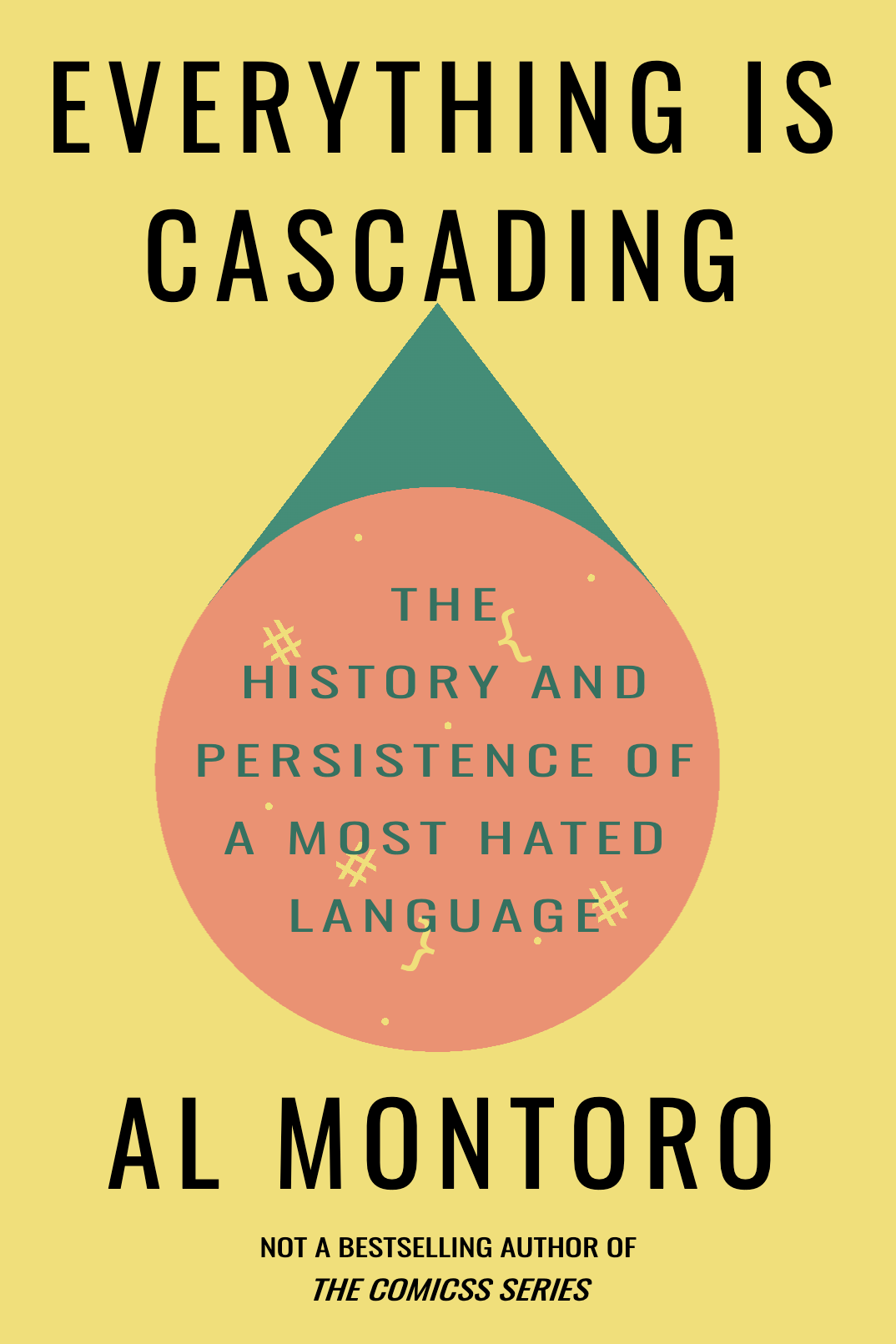
09 May 12:43

Everything is Cascading

by Alvaro Montoro

parody of the book cover for Everything is Tuberculosis by John Green: a yellow background with the tile (Everything is Cascading) and the author (Al Montoro) in big laters, a subtitle below the author (Not a bestselling author of the comiCSS series). The center of the drawing looks like a microscope preview with the text The History and Persistence of the Most Hated Language

09 May 12:43

‘Don’t want to see another child get hit’: Spring ISD families call for road safety upgrades

by Brooke Kushwaha

Seven years ago, a Ford F-150 truck barreled into then-12-year-old Tamia Tolliver as she crossed a busy street walking to school, shattering her legs. 

The truck driver apparently hadn’t seen Tolliver as she navigated an intersection with no crosswalk or guard outside Spring ISD’s Claughton Middle School.

“She looked like she was dead, the way she was,” said Tolliver’s grandfather, Marvin Jenkins, who found her crumpled in the intersection after rushing to the scene. “It knocked her shoes off.”

The crash marked the latest of several accidents involving students hit by cars, despite years of advocacy from concerned Spring residents. Local and county officials ultimately installed a stoplight and crosswalk at the site of Tolliver’s crash, helping students get to and from school each day.

Now, Spring residents are once again fighting for more pedestrian safety measures between Claughton Middle and neighboring Link Elementary School, where children sometimes trudge through narrow road shoulders, steep drainage ditches and the middle of the street to get to classes. 

Their calls for a new mile-long sidewalk along Walters Road, which connects the two schools, have hit a roadblock at the county level, leaving them wondering if it will take another accident to spur action. 

“We don’t want to see another child get hit or killed,” said Joseph Bowen, the father of a Link Elementary student and director of Municipal Utility District 150, which borders the proposed sidewalk. “That’s the worst thing that could happen, knowing that something could have been fixed.”

About 1,400 students combine to attend Claughton Middle and Link Elementary in Spring, a sprawling, suburban district north of Houston city limits. The Harris County government, led by five elected commissioners who represent 4.8 million people, is responsible for shepherding sidewalk projects in the area.

In 2021, following several years of lobbying by local residents, county engineers drew up plans for sidewalks on both sides of Walters Road, with the estimated high-level cost totaling $7.9 million. Harris County, Spring and local municipal utility district leaders agreed to split the costs.

That same year, however, Harris County commissioners voted to redraw the boundaries of representation, moving Spring’s territory from Cagle to Commissioner Rodney Ellis. Since then, the project hasn’t moved forward despite repeated requests from residents for updates.

Ellis’ office did not respond to questions for this article submitted by the Houston Landing on May 2.

In a statement, Spring administrators said students are prohibited from walking down Walters Road. But the Houston Landing on Wednesday observed two students walking in the middle of Walters Road, where the speed limit is 35 mph and the school traffic zone — which requires drivers to slow down near the start and end of classes — does not extend to the area.  

In an interview Wednesday, Spring Board President Justine Durant said the district and county commissioners’ offices have spent the past seven years improving pedestrian safety in the area, most recently adding sidewalks to a heavily trafficked area with a high pedestrian fatality rate — Farm to Market 1960 Road and Ella Boulevard — about five miles north of Claughton Middle.

“This is an issue that used to make me lose sleep at night, but Commissioner Ellis has been wonderful in working with the district,” Durant said.

All walk, no action

Following the March 2018 crash outside Claughton Middle School, Tolliver underwent 13 surgeries, spent several months in the hospital and missed nearly a full year of school during her recovery. She still has metal splints in her legs, refuses to walk to places anymore and still hasn’t learned how to drive, her grandfather said.

Even though she has moved out of Spring, Tolliver’s mother, Keiunta Murray, still visits the site of her daughter’s crash when she travels to see family. Seeing children walk on the side of the road without a crosswalk and drivers ignore “No turn on red” signs at the intersection where her daughter nearly died makes her angry, she said.

“I cannot fathom if that happened to somebody else, because they may not make it the same way that my kid did,” Murray said. “Seeing those babies trying to cross the street to get over to school — I always have to stop and say a prayer for those kids. And sometimes, when I’m driving right there and I see groups of kids, I will stop traffic with my car just so they can cross the street.”

In the years following the crash, local residents rallied to improve safety along nearby Walters Road. The homeowner’s association of Camden Park, a neighborhood that borders Walters Road, and leaders of Municipal Utility District 150 took the lead in fighting to build a sidewalk along the street.

Initially, residents were encouraged by the county’s response. Records created in 2021 by the Harris County Engineering Department show plans to add 1.3 miles of sidewalks and safety improvements along Walters Road between the two schools. The project would take three to five years to complete, engineers estimated.

But the following year, after Ellis took over representation of the area, no major progress had been made. Robert Cadena, then the director of Municipal Utility District 150, contacted Ellis’ office in May 2022 to discuss where the project stood.

“They were claiming that the project was never approved, and that I was mistaken,” Cadena said. “I said, ‘Look, I know how these things work. If the Commissioner’s Office wants a project done, all they’ve got to do is say they want it done and it gets done.’”

When Bowen became the director of Municipal Utility District 150 in 2023, he and other longtime residents took up the charge. Spring resident Carylon McFarland, who has lived in Camden Park since the early 1990s, said she calls Ellis’ office two or three times per month to get an update on the planned sidewalk.

McFarland said Ellis’ office sent a representative to the Camden Park Homeowners Association to hear the residents’ concerns, but she was not impressed.

“They tell you the same thing repeatedly, over and over,” McFarland said. “That they’re having a meeting, that they’re gonna go and bring this up to the engineers, and see where it goes from there.”

Slow-walking solutions

Spring leaders have acknowledged pedestrian safety issues over the past decade, offering in 2017 to provide bus service to families living within one mile of campus. Under state law, school districts only get funding to transport students living more than two miles from campus, with a few exceptions.

But while the wait for a sidewalk continues, some parents have argued local leaders could do more to improve safety. For example, Spring administrators could add a crossing guard or local police could station more traffic officers near Link Elementary and Claughton Middle, they said. 

Cars pass by Spears Road, Monday, May 5, 2025, in Houston. (Antranik Tavitian / Houston Landing)

Without any movement from the county, Spring administrators have relied on telling children to avoid Walters Road and instead walk alternate routes that could take longer for some students. 

“Decisions regarding the placement of crossing guards and transportation route adjustments are based on a variety of factors, including traffic patterns, student population data, and input from the community,” district administrators said in a statement. “At this time, no formal concerns have been raised that would trigger a reassessment near Claughton. However, the district remains open to reviewing the area if new concerns are brought forward.”

For Spring parent Gaspar Guevara, who has one son attending Link Elementary and one son at Claughton Middle, the lack of movement has been frustrating. Guevara recalled attending Camden Park Homeowners Association meetings in 2017, fighting for a stoplight at the intersection where a driver would seriously injure Tolliver the following year.

“For a whole year, the (county) precinct was saying, ‘We’re gonna put it up, we’re gonna put it up,’” Guevara said.

Next school year, both of Guevara’s sons will attend Claughton Middle. On the days when they walk home to their mother’s house, the most direct route will be down Walters Road.

“It has me thinking things like, if it’s not gonna be this son, is it gonna be the next son?” Guevara said.

The post ‘Don’t want to see another child get hit’: Spring ISD families call for road safety upgrades appeared first on Houston Landing.

09 May 04:02

Part 1.74

Part 1.74
09 May 03:59

The ponchos were my idea

by John Allison

That’s right, underwater diagetic captions, that’s the stuff, you don’t get that in [cruelly insert name of other comic here but John do remember to punch up not down so you don’t get cancelled].

The post The ponchos were my idea appeared first on Bad Machinery.

08 May 18:29

The Trump Administration Signal Scandal, Somehow, Gets Worse

by John Gruber

Micah Lee, in a spectacularly detailed post:

  • On Thursday, 404 Media reported that in the Reuters photo showing former National Security Advisor and war criminal Mike Waltz checking his Signal messages under the table, he was actually using an obscure modified Signal app called TM SGNL, and not the real and actually secure Signal app.

  • On Friday, I wrote an analysis of everything I could find out about TM SGNL using OSINT, including the fact that it’s nearly impossible to install without a device enrolled in an MDM service that’s tied to an Apple Business Manager or a Google Enterprise account.

  • On Saturday, after discovering that TeleMessage published the source code for the TM SGNL apps for Android and iPhone themselves, I re-published them on GitHub with the goal of making them easier to research. (It looks like the iOS source code is actually just unmodified Signal, so maybe they actually only published their Android code.)

  • On Saturday night, an anonymous source told me they hacked TeleMessage.

  • On Sunday, I, along with Joseph Cox, published an article about the hack to 404 Media (and to my blog).

  • On Monday, NBC News reported that TeleMessage suspended its service after a second hacker breached TeleMessage and “downloaded a large cache of files.”

  • Today, Senator Ron Wyden published a letter, which cites the 404 Media article and my analysis of TM SGNL, to Attorney General Pam Bondi, requesting that the Justice Department investigate the “serious threat to U.S. national security posed by TeleMessage, a federal contractor that sold dangerously insecure communications software to the White House and other federal agencies.”

National security leaders using this app — which effectively just removes all of Signal’s actual security features by backing up all messages as plain text — is so stupid it’s surprising, even from these idiots Trump has surrounded himself with. I mean think about how stupid it is that Mike Waltz was using this app while in front of press photographers at a Cabinet meeting.

Lee goes deep, including an analysis of TM SGNL’s open source Android source code, to show that it’s designed to transmit backups of messages in plain text to publicly-facing servers. And it turns out those servers had easily-hackable flaws.

See also: Wired: “The Company Behind the Signal Clone Mike Waltz Used Has Direct Access to User Chats”.

08 May 18:27

How to Catch a North Korean Fake Worker

by John Gruber

Iain Thomson, for The Register:

According to Adam Meyers, CrowdStrike’s senior veep in the counter adversary division, North Korean infiltrators are bagging roles worldwide throughout the year. Thousands are said to have infiltrated the Fortune 500.

They’re masking IPs, exporting laptop farms to America so they can connect into those machines and appear to be working from the USA, and they are using AI — but there’s a question during job interviews that never fails to catch them out and forces them to drop out of the recruitment process.

“My favorite interview question, because we’ve interviewed quite a few of these folks, is something to the effect of ‘How fat is Kim Jong Un?’ They terminate the call instantly, because it’s not worth it to say something negative about that,” he told a panel session at the RSA Conference in San Francisco Monday.

You could do the same thing with MAGA derps too. Just ask them how fat Trump is. (Via Charles Arthur.)

08 May 18:18

The Perils of Offshoring Justice

by Orlando J. Pérez

President Donald Trump’s recent Oval Office photo-op with El Salvador President Nayib Bukele, who calls himself the “world’s coolest dictator”, was staged to unveil a shiny new “alliance” against crime. Both leaders congratulated each other for achieving something U.S. courts forbid at home: rounding up alleged gang members (including longtime U.S. residents with pending protection orders) and locking them away offshore. When pressed about a Maryland man who had been deported in defiance of a court ruling, Bukele shrugged off the case, implying he couldn’t risk letting a “terrorist” back into the United States—and Trump nodded in approval. The exchange distilled a stark message: Human rights are expendable when the political spectacle is good television.

Since March 2022, El Salvador has operated under a rolling “state of exception” that suspends basic constitutional rights. In just three years, more than 110,000 Salvadorans—nearly 2 percent of the country’s population—have been put behind bars. This draconian crackdown gives El Salvador the highest incarceration rate in the world. Official homicide rates have indeed plummeted by over 80 percent under Bukele’s campaign, but that drop has come in tandem with the collapse of due process. Mass arrests are often indiscriminate, mass hearings process hundreds of defendants at once, and detainees meet lawyers only fleetingly, if at all. At least 261 prisoners perished inside Salvadoran prisons during the crackdown, according to the human rights group Cristosal. Reports have emerged of abuse, torture, and medical neglect of those swept up in Bukele’s anti-gang dragnet. 

El Salvador’s flagship “mega-prison,” the Terrorism Confinement Center (CECOT), epitomizes President Bukele’s hardline approach. Built to hold 40,000 inmates in eight fortress-like pavilions, CECOT keeps prisoners in near-total isolation. Inmates receive no family visits and are never allowed outdoors; there are no workshops or educational programs to rehabilitate offenders. Bukele’s own justice minister once remarked that those sent to CECOT will never return to their communities—that the only way out is in a coffin. Harsh images of tattooed prisoners hunched together, shuffling in shackles, are routinely broadcast on government social media. These dystopian visuals have become Bukele’s calling card in the name of “security.”

What began as a Salvadoran experiment in iron-fisted policing has now mutated into a formal bilateral program. The U.S. government is actively funding and facilitating the offshoring of detainees to Bukele’s prison state. U.S. Senator Chris Van Hollen, who recently visited the country, said that the Trump administration had quietly offered to wire about $15 million to El Salvador to underwrite the costs of warehousing U.S. deportees (with at least $4 million already spent). News reports have also confirmed an initial $6 million agreement for the first year of this arrangement. Custody of detainees effectively shifts the instant a charter plane lifts off U.S. soil—once airborne, shackled migrants become Bukele’s prisoners, placed beyond the reach of American courts or oversight.

Bukele’s “iron fist” security model is not contained to El Salvador—it’s becoming a regional export. Honduras has announced plans to build a 20,000-bed mega-prison of its own, explicitly citing Bukele’s success as inspiration. In Ecuador, President Daniel Noboa boasts that mirroring Salvadoran tactics (mass detentions and emergency measures) helped shave dozens of percentage points off the murder rate in Guayaquil, and arguably helped him secure reelection. Analysts at the International Institute for Strategic Studies warned of a “due process contagion.” Once mass incarceration and militarized crackdowns become the go-to metric for public safety, governments across the region begin normalizing states of exception, purging high courts, and erasing judicial oversight in the name of fighting crime. In other words, democratic erosion becomes contagious.

Far from acting as a brake on this trend, the United States has become an accelerant. By bankrolling El Salvador’s excesses and broadcasting the dramatic footage for domestic political gain, Washington is sending a signal that rights-free “security” can be not only tolerated but internationally legitimized. Each cash transfer tells regional leaders that outsourcing mass detention is a billable service; each made-for-TV deportation convoy gives authoritarians a propaganda boost. This feedback loop reinforces ever-harsher tactics and sidelines voices (judges, journalists, human rights defenders) that insist on constitutional limits. American credibility on the rule of law erodes when taxpayer dollars subsidize abuses that even the U.S. State Department has condemned. 

This extraordinary deportation-to-CECOT pipeline might sound like a distant foreign affair, but Texas is directly entangled in its operation, and stands to bear some of the fallout. The logistics of these renditions run straight through the Lone Star State. In mid-March, immigration officials quietly shuttled hundreds of detainees from across the country to a small airport in Harlingen as part of the first mass transfer to El Salvador. Charter flights carrying Venezuelan and Central American migrants departed from Dallas, El Paso, Phoenix, and other cities, all converging on Harlingen as a staging ground. Within 24 hours, multiple jets then took off from the Texas border city to  El Salvador, delivering planeloads of shackled men into Bukele’s custody. Such Saturday deportation flights are highly unusual, as is the covert route through Harlingen, according to a watchdog advocacy group that tracks ICE Air charters.

On the ground, Texas families are feeling the human toll. Many of those swept up have deep roots in U.S. communities, and their sudden removal leaves broken homes behind. Children come home from school to find a parent gone, with no prospect of visitation, given that their loved one is now locked in a foreign prison thousands of miles away. Families and legal advocates are left scrambling, often with scant information—the detainees essentially disappear into CECOT, their fate largely in the hands of Salvadoran guards. 

There are tangible economic stakes for Texas. Our state hosts one of the country’s largest Salvadoran communities—roughly 15 percent of the entire U.S.-Salvadoran diaspora—and their Texas paychecks flow south week after week. In 2023, Salvadorans living abroad sent a record $8.18 billion home—about 24 percent of El Salvador’s GDP—and an estimated $1.1 billion of that originated in Texas alone, largely from the Houston and Dallas-Fort Worth metropolitan areas. Those Texas-earned dollars stock neighborhood tiendas, pay school fees, and keep household budgets afloat from San Salvador to La Unión. When breadwinners in Houston’s Gulfton district or Dallas’s Oak Cliff are yanked from their jobs and diverted to a Salvadoran cell, that lifeline snaps—impoverishing relatives abroad while simultaneously draining spending power and local tax revenue from communities across Harris, Dallas, and Hidalgo counties.

Texans should understand that this isn’t just someone else’s problem. Our state has a stake in this drama. It’s our tax dollars helping pay for secret flights out of our airports, our neighbors and coworkers who are disappearing into overseas prisons, and our nation’s credibility on the line. We know from history that democracies endure by rejecting the false choice between security and freedom. A durable social contract protects both. 

By contrast, outsourcing constitutional constraints for short-term optics is a tempting shortcut—but one whose costs will boomerang. The longer the United States bankrolls and applauds this “iron fist” illusion, the faster that illusion will spread across a region already battered by insecurity and disillusionment with democracy. Ultimately, sacrificing the rule of law for a made-for-TV spectacle is a devil’s bargain. It may offer momentary political gain, but it leaves behind broken families, weakened institutions, and a more dangerous hemisphere for everyone, including here in Texas. 

The post The Perils of Offshoring Justice appeared first on The Texas Observer.

08 May 18:17

Texas has thousands of abandoned oil and gas wells. Who is responsible for cleaning them up?

by By Alejandra Martinez
Across Texas, abandoned wells are erupting with chemical-infused liquid and some have created massive lakes of contaminated water. Regulators say they need more money to address the problem.
08 May 18:16

First American pope: Cardinal Robert Prevost of Chicago elected, takes name of Pope Leo XIV

by NPR Staff
A missionary who spent his career ministering in Peru and leads the Vatican's powerful office of bishops was elected the first American pope in the 2,000-year history of the Catholic Church.
08 May 18:16

Judge orders sale of Texas Renaissance Festival following lengthy legal battle

by Kyle McClenagan
The renaissance festival is an annual fall event that’s been held for more than 50 years in a small town northwest of Houston.
08 May 18:16

Is Houston about to get its final decent front of the season? Probably.

by Eric Berger

In brief: Houston still has a few chances for some scattered showers today and Saturday, but for the most part we are going to see sunny skies for awhile. The biggest news today is that a cool front, perhaps the final one of this spring, will slowly push into the area today and tonight. This will set the stage for a grand weekend of May weather.

Cool fronts

Ahh, cool fronts. Is there anything better in Houston than that? I mean, the food around these parts is pretty darn good. The people, when they’re not screeching along freeways, are generally quite friendly. You can find a good living here. But for me, there is not much in this southern city to beat a cool front that comes along and knocks down the humidity, allowing us to pretend we don’t live in a jumped-up swamp.

I love cool front season. I live for cool front season.

Houston got its first (admittedly weak) front of fall last year in late September. On the 27th of the month, the temperature at Bush Intercontinental Airport dipped below 64 degrees. That means we’ve had 222 days during which we might reasonably hope for a cool front in Houston. It’s been a good run, but I’m afraid it’s about to end.

Today and tomorrow are going to see dry air slowly percolating into the area, such that Saturday, Sunday, and Monday aren’t exactly going to feel humid outside. It won’t be particularly cool, mind you. But it won’t be hot, either, and the air won’t feel sultry. For this time of year we cannot ask for much more. I’m also not entirely ruling out one more (almost certainly weaker) front later in the month. It’s possible. But I wouldn’t bet on it. I’d bet on summer. But hey, I just checked, and the end of September is only 20 weeks away…

Thursday

Today will be sunny and fairly warm, with high temperatures reaching the mid- to upper 80s with a fair amount of humidity. Winds will generally be light, from the northeast, at 5 to 10 mph. Late this afternoon, and evening, an atmospheric disturbance will approach from the west and this will introduce a chance of showers and thunderstorms. I think overall rain chances are only about 20 or 30 percent, and the primary time frame will be this evening or during the overnight hours. We could see a few thunderstorms as well, and we cannot entirely rule out some of them becoming severe. However, I doubt it. Lows tonight drop to around 70 degrees.

There is a marginal chance of severe weather well to the south of Houston on Thursday and Thursday night. (NOAA)

Friday

Winds will come more prominently from the north on Friday, and this will start to bring some modestly drier air into the region. Highs will likely only reach the lower 80s on Friday under mostly sunny skies. Lows on Friday night will drop into the mid-60s.

Saturday

Highs on Saturday may only reach the upper 70s, with mostly sunny skies. There will be enough of a disturbance in the atmosphere that we may see a few scattered showers later in the day due to daytime heating, but overall chances are quite low. Temperatures on Saturday night should drop into the upper 50s for some inland areas, while remaining in the lower 60s closer to the coast.

Sunday morning should be rather pleasant. You’re welcome, mom! (Weather Bell)

Sunday

Mother Nature is bringing the goods for Mother’s Day this year, with a lovely day in store. Expect mostly sunny skies, highs of around 80 degrees, and moderate humidity levels. Really, an A+ day for mid-May. We’ll have one more somewhat chilly night on Sunday.

Next week

We’ll see a warming trend next week, and by Tuesday or Wednesday we’ll begin a stretch of at least several days with high temperatures in the 90s with plenty of humidity. Rain chances appear to be low at least until next weekend. It is that time of year.

08 May 18:16

Warhol & Frankenthaler Foundations Grant $800,000 to Visual Arts Programs that Lost NEA Challenge America Grants

by Jessica Fuentes

The Andy Warhol Foundation for the Visual Arts and the Helen Frankenthaler Foundation have announced their joint commitment to provide $800,000 of funding to 80 small and midsized organizations whose National Endowment for the Arts (NEA) Challenge America Grants were canceled in February. The support is specifically for visual arts programs.

Though the Challenge America grantees were announced in January 2025, the following month the NEA announced the granting program, which supports historically underserved communities, was canceled. The move falls in line with President Trump’s January 20 Executive Order Ending Radical and Wasteful Government DEI Programs and Preferencing, which orders federal agencies to terminate all diversity, equity, and inclusion programs. 

In a press release, Joel Wachs, President of the Andy Warhol Foundation, said, “The Warhol Foundation recognizes the essential contributions that small arts organizations make to our cultural lifeblood by giving artists in every corner of the country a platform from which to be seen and heard. We want them to know that we see the extremely difficult circumstances under which they are operating and we value and appreciate their work. We are committed to providing some semblance of stability and continuity during this time of unprecedented upheaval.”

Elizabeth Smith, Executive Director of the Helen Frankenthaler Foundation, added, “In times of crisis — whether in response to natural disaster, global pandemic, or financial disruption — foundations do their best work when they come together to assert shared values. … While our missions focus support on the visual arts, our shared hope is that this effort may inspire peer funders to support Challenge America grantees working outside of the visual arts, who remain in urgent need of assistance.”

A photograph of the exterior of the International Museum of Art and Science in McAllen, Texas.

International Museum of Art and Science in McAllen, Texas.

Six Texas arts organizations will receive funding through this initiative, including the Art Museum of Southeast Texas in Beaumont, in support of a solo exhibition featuring José Villalobos; Cine Las Americas in Austin, in support of its international film festival; Latinitas in Austin, which is working to create a public installation of mosaics honoring local Black and Latina community leaders; the International Museum of Art and Science in McAllen, to support a touring exhibition of Mexican and Latin American folk art; the Old Jail Art Center in Albany, for its exhibitions in historic jail cells; and Shabach Enterprise in Houston, to support a series of master classes for artists.

The Warhol and Frankenthaler announcement acknowledges the federal administration’s proposal to eliminate the NEA completely in 2026. In April, the Department of Government Efficiency (DOGE) recommended drastically reducing National Endowment for Humanities (NEH) staff and canceling grants, which immediately had far-reaching effects on humanities councils across the country

This larger initiative of defunding the NEA and the NEH has been a part of Republican Party’s political plans since the 1990s. The Heritage Foundation website provides a 1997 report detailing reasons to defund NEA, one being “The arts will have more than enough support with NEA.” The report notes that private funding already makes up a substantial portion of arts funding and that budget cuts to NEA in the past resulted in increased private funding. 

Just as the Warhol and Frankenthaler Foundations have stepped in to support some of the funding lost through the Challenge America grant, at the end of April, the Mellon Foundation granted $15 million to the Federation of State Humanities Councils to support humanities organizations that recently lost funding. However, according to the National Assembly of State Arts Agencies, it is often rural communities that rely on federal support and are more likely to be underfunded by private funding alone. 

In recent days, the NEA has announced the termination of and withdrawal of grant awards from its Grants for Arts Projects program, and a slew of NEA staff have shared their plans to step down from the organization. In email newsletters, high-level employees shared that staff was “given the opportunity to accept an offer to leave the agency through the Deferred Resignation Program or, if eligible, retirement.”

Staff who have announced the upcoming departures include Michelle Hoffmann, the Arts Education Director; Bridget Zangueneh, Museum & VIsual Arts Director; Lei Maahs, Folk & Traditional Arts Director; Greg Reiner, Theater & Musical Arts Director; and Michael Orlove, Director of State, Regional & Local Partnerships, and International Activities.


Disclosure: Glasstire is a recipient of funding from the National Endowment for the Arts and is among the organizations that, late last week, received an email announcing the termination of an awarded grant. 

The post Warhol & Frankenthaler Foundations Grant $800,000 to Visual Arts Programs that Lost NEA Challenge America Grants appeared first on Glasstire.

08 May 18:15

Federal judge orders Trump administration to unblock pandemic relief money for schools

by MORIAH BALINGIT

A federal judge on Tuesday ordered the Education Department to undo a freeze on the last of the U.S. relief money given to schools to help students recover academically from the COVID-19 pandemic.

The federal government provided $189 billion in aid money for schools during the crisis, giving them broad latitude in how to spend it.

Nearly all that money had been spent, but some school districts received deadline extensions that gave them additional time to use it. Districts spent it on things like after-school tutoring, summer school, social workers, college counselors, library books and renovations to make school buildings safer.

On March 28, Education Secretary Linda McMahon sent a letter to school officials saying she had moved the deadline up — to that very day. She said the department would consider releasing some funds, but only on a project-by-project basis.

“Extending deadlines for COVID-related grants, which are in fact taxpayer funds, years after the COVID pandemic ended is not consistent with the Department’s priorities,” McMahon said.

Officials in sixteen states and the District of Columbia sued in response, leading to Tuesday’s order from U.S. District Judge Edgardo Ramos in New York City.

Since taking office in January, President Donald Trump has unilaterally cut education funding and downsized the Education Department, leading to numerous legal challenges. The Trump administration also cut teacher-training programs that helped rural schools combat educator shortages and has threatened to withhold funding from schools with diversity, equity and inclusion programs.

08 May 18:15

let’s talk about people “misusing” their power for good

by Ask a Manager

Last week we talked about the smallest amount of power you’ve ever seen someone abuse. But people can also use even small amounts of power for good — like the crossing guard who wasn’t really a crossing guard, or the graphic designer who sabotaged a homophobic group’s ad in her newspaper.

This week, let’s talk about times when you’ve seen someone exploit their power for good — not just times when you saw someone be a good person at work, but times when someone violated the letter or the spirit of a rule or otherwise did something that could technically be considered under-handed in order to achieve good in the world. Please share in the comments!

The post let’s talk about people “misusing” their power for good appeared first on Ask a Manager.

08 May 18:13

In embarrassing snafu, starting line-up of St. Louis Cardinals included in Conclave to elect new pope

by Eric Turkienicz

VATICAN CITY – In a clear administrative error by the Holy See, the recently convened Conclave to choose the next pope has mistakenly included both the entire College of Cardinals as well as the starting line-up of the 2025 St. Louis Cardinals. “It’s definitely a big oopsie,” said Giovanni Battista Re, current Dean of the […]

The post In embarrassing snafu, starting line-up of St. Louis Cardinals included in Conclave to elect new pope appeared first on The Beaverton.

08 May 17:30

Letters to Moms: A Letter to Back to the Future’s Lorraine Baines-McFly

by Kristen Mulrooney

Dear Lorraine,

How are you? Or maybe I should ask, when are you? Haha, nah, just a little time travel joke. But seriously, I hope everything is good and chronological, and that you are residing comfortably in the timeline where Biff washes your car.

Even though decades have passed since your kids were babies (two decades? Or is it six? Whatever, time is relative), I wonder how well you remember what it was like. How well do you remember those years when you had babies attached to you like brambles?

The youngest of my three kids is now five years old, a milestone that felt like crossing an enormous life-changing threshold, but I still remember viscerally how I felt during the baby years. They were a relentless cycle of waking up, changing diapers, feeding, and entertaining something that could never be sated. I’ll go out on a limb here and call the years when I had babies the worst years of my life, as I marinated in stress, exhausted, weighed down by a diaper bag, and trapped in a never-ending present that refused to forge ahead. It’s like my babies were a bolt of lightning that left my life hovering in the silence of a broken clock tower that couldn’t tick to the next minute.

I remember it all the way down to my bones, but what I remember most about those days is how often people looked into my sleep-deprived eyes and said, “You’ll miss these days.” If I had a dime for every time someone told me “You’ll miss these days,” I wouldn’t even need to lift plutonium off terrorists, because I could afford enough to generate 1.21 gigawatts of electricity every day for the rest of my life.

Part of me gets why people say it. I feel a pang of sadness when I see pictures of my kids as babies, and I can’t help but think, I wish I appreciated them more in that moment. The photos and videos remain clear, their little shiny-eyed cartoon faces and impossibly squeaky voices, but for some people, I think the memory of reality starts to fade away. They begin to forget what it’s like to be alone with a baby, all day every single day, and how lonely and thankless it is. But not me. Great Scott, I remember everything.

Would you go back if you could, Lorraine? Set that dial to 1960-something and go back to a time when you had your three babies crawling all over you? Something happened to you between 1955 and 1985, and it changed you. You went from a carefree and mischievous girl, sipping milkshakes and parking with boys you plucked out of trees, to a tired, beaten-down middle-aged woman with an oddly lumpy face. I know life wears you down, but I blame the babies most of all.

Because I’ve changed too. If I buckled my son into a DeLorean, cranked it up to eighty-eight miles per hour, and shot him back to my senior year of high school in 2003, I wonder if he’d even recognize me. Low-rise jeans and bedazzled baby tees aside, would he recognize the teenager with the loose-limbed confidence as his uptight mother? Would he recognize my face without the permanent line I frowned into the space between my eyebrows when he and his sisters were babies? Would he recognize it without the odd lumpiness?

I did the best I could during those baby years, but it’s clear I’m more suited to the older years. I have more patience for these crazy kids and their Roblox and Minecraft and “Johnny B. Goode” than I ever had for board books. If I had a choice between following a toddler slowly around a petting zoo with that stupid diaper bag sliding off my shoulder and giving a tween the sex talk, I’m busting out my copy of Gray’s Anatomy and flipping to the dog-eared page with the ballsack diagram (some people might not be ready for that yet, but their kids are gonna love it).

My main concern when I see those pictures of them as the beautiful little Muppet Baby versions of themselves is that I was too tired and miserable to have loved them enough. My big fear is that I was too strung out on cortisol to be the mother they deserved. If I went back to the past, it wouldn’t be because I miss it. It would be because I want to correct it.

Here’s what I’d do:

  • Set the date to November 5, 2019, and return to the day two weeks after my third child was born, officially completing my family.
  • Real quick, put all my money into hand sanitizer stock.
  • Hug my kids so tight and tell them I love them, I love them, I love them, for as long as they’ll allow before they wriggle out of my grasp to do something insane like set the living room rug on fire.
  • Hop back in the DeLorean and hope to hell that sucker is nuclear because that’s about as much more of the baby years as I can take. I have to go back… to the future.
  • Peel out of there, leaving two flaming tire tracks in my wake.

I mean it when I tell you, from where I’m standing—in my house at the window, waving goodbye to my kids as they get on the bus that will take them to school for the next seven hours—I don’t miss those days at all. Nope, I’m happy here in the present. Elementary schoolers are fun! They can ice skate, sit quietly for a Broadway show, cut their own hot dogs, and play on these things we call “hoverboards” that aren’t actually hoverboards.

I don’t want to go back. I don’t need time travel. The only thing I find interesting about a flux capacitor is how closely it resembles an IUD. Let’s keep moving forward, Lorraine, one tick tick tick at a time. Because where we’re going, we don’t need diaper bags.

Until next time,
Kristen