Cowboy Who?
Shared posts
Retail News: Primark is taking shape at Katy Mills Mall
Sodas, candy to be banned from Texas food stamp purchases

/https://static.texastribune.org/media/files/75a06952a668415b866f8d939a563550/Carniceria%20El%20Torito%20RL%20TT%2001.jpg)
120,000 Texans send letters and petitions against THC ban to Gov. Abbott
my boss’s parenting choices are driving me nuts
A reader writes:
I’m absolutely prepared for you to tell me there is nothing I can do about this at all besides ignore it, but I REALLY need to change my thinking around my boss’s parenting choices, which I find bizarre and am frankly tired of hearing about.
My boss’s adult daughter and 13-year-old grandchild live with her. The daughter doesn’t work but often needs my boss to babysit. Fine, this is her business. But when she leaves work to do it, she gives us a convoluted and overly detailed explanation of why, every time. This has the effect of making it seem much more annoying than it would be otherwise, especially if we’re in the middle of a deliverable or project.
For example, the daughter has to go to the store and the grandchild doesn’t want to go. My boss will have to go home and sit with the grandchild until the mom gets back. The child is never allowed to be alone, not even to walk to the mailbox. The daughter is excessively paranoid about human traffickers and kidnappings. (There is no known history of human trafficking in our area, certainly not of children from middle-class homes, and I haven’t heard of any spates of abductions either.) All this detail has made other coworkers roll their eyes behind my boss’s back and make cracks about how spoiled and entitled the daughter and grandchild are. One of my coworkers said recently, “If someone kidnapped that kid, they’d bring them back.” Which is obviously not okay! But JUST STOP TELLING US ALL THIS, OMG.
The thing I can’t get over is that this child has a smartphone and unlimited, unfettered access to the entire internet, in spite of this paranoia about them being trafficked out of their suburban house while their mom runs to Target for 20 minutes. My boss has told and shown me things the kid has gotten up on social media or people’s profiles they’ve talked to, and I’ve been alarmed. No one is monitoring this child’s internet usage; sometimes they will show things to my boss voluntarily but that is it. Some of the profiles they’re interacting with are clearly adults not even pretending to be children. The child assures their family that this is just children using filters to appear older. No, it is not! I may be an elder millennial but I can tell the difference. I’ve tried gently pointing this out to no avail. I don’t have children myself, but none of my friends or family who do give their children a smartphone and then just hope for the best. Especially coupled with the absolute paranoia about the child never being alone or even allowed to attend a birthday party or sleepover without either my boss or the boss’s daughter, this is just insane to me. I fully know it’s not my business, but with so much of it coming into the workplace, what is my obligation to really be clear that this is potentially unsafe?
And also, should I push back on the snark from coworkers? I’m a team leader and while I don’t technically outrank anyone else in my department of eight, I feel more of a burden to not participate in this kind of venting. Believe me, I understand it, but I know it’s not okay. Or should I just practice deep breathing and not let this drive me slowly insane?
Well … I get why your coworkers are annoyed and making snarky remarks — AND YOUR BOSS IS NOT HELPING THAT SITUATION — but talking crap about a 13-year-old is not great. You’re right that at a minimum you shouldn’t join in when they’re doing that … and as a team leader, yeah, you do have some additional obligation to say, “Hey, I get why this annoying, but we don’t know the whole situation and we shouldn’t be snarking on a kid.”
Speaking of not knowing the whole situation, would it help to allow that there could be details you don’t know that would make the protectiveness make more sense? There are kids who need safety plans where they’re not left alone (for example, because of self-harm behaviors). If that’s the case, the parent ideally would have a plan beyond “ask my own parent come home from work to stay here,” but the situation might be more complicated than you can see from where you’re standing. (It’s also possible that your boss doesn’t feel like divulging that so is citing “kidnapping” without realizing how exasperated it’s making people.)
That said, any chance you’re in a position where you could point out to your boss that giving the team all these details is starting to frustrate and demoralize people? One possibility is to come at it as a team lead and frame it as, “Obviously your schedule is your own business, but my sense is people are getting frustrated that you leave during the day whenever Jane needs to go out, when they don’t feel they could do the same. I think it would go a long way toward mitigating that if you didn’t tell people that that’s what you’re leaving to do — I think it’s rubbing salt in the wound a bit every time they hear it. I’m not suggesting you change what you’re doing, just how much information you give people about it.”
You may or may not have the kind of relationship where you can say that. If you don’t, you don’t — it’s not your responsibility to solve this for your boss. But if you do, it’s worth considering.
As for pointing out that the real danger is the unsupervised internet access … you don’t have to, but ethically I do think you should raise it once. If your boss remains unconvinced, you don’t need to make it your mission to get through to her, but since she’s sharing this stuff with you, you’re well positioned to say, “I’m worried by some of things you’ve told me about Matilda’s internet usage. It sounds like she’s interacting with adults, which is a high risk factor for being exploited. Can I send you a couple of articles about why that can be dangerous and ways you can protect her?” (And then consider sending her this and this. Warning, the first one is disturbing.)
You can also have a natural reaction in the moment when your boss shares information with you. For example, if she tells you something that makes it obvious Matilda is interacting with a strange adult, let yourself look shocked and say, “That’s really not safe for her. It’s how adults end up exploiting kids. Please don’t let her do that.” (I do worry about making a potentially already overprotective parent even more so, but talking to strange adults online is such a significant risk factor that it’s worth raising, the same way you’d speak up if someone’s kid was playing in traffic.)
If your boss and her daughter persist in focusing all their worries on kidnapping and trafficking and ignore info that you’re putting right in front of them about a much more likely danger that’s right in their house … well, your ability to make them act is inherently limited. But when your boss brings it up, you don’t need to stay politely silent either.
The post my boss’s parenting choices are driving me nuts appeared first on Ask a Manager.

Trump is forcing states to funnel grant money to Starlink, Senate Democrats say
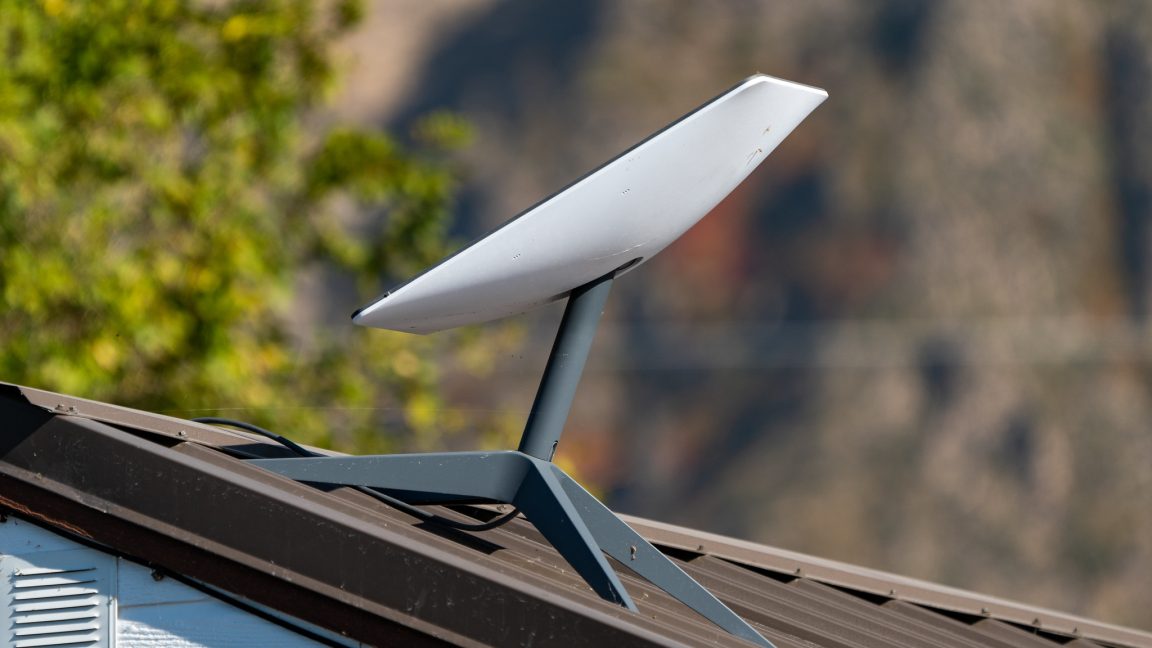
Senate Democrats are pleading with the Trump administration to stop delaying distribution of $42 billion in grants for construction of broadband networks in areas with poor Internet access.
The Biden administration spent about three years developing rules and procedures for the Broadband Equity, Access and Deployment (BEAD) fund and then evaluating plans submitted by each US state and territory. Republicans repeatedly alleged that Democrats should have distributed the grants more quickly, but the Trump administration halted progress after taking over.
"States are ready to put shovels in the ground and have been waiting for months to get started... Additional delays and onerous changes to the program at this stage threaten to further stall urgently needed deployment and leave communities behind," Senate Democrats wrote in a May 30 letter to President Trump and Commerce Secretary Howard Lutnick. The letter was sent by Senate Democratic Leader Chuck Schumer (D-N.Y.), Sen. Maria Cantwell (D-Wash.), and Sen. Ben Ray Luján (D-N.M.).
Child Given First Stock To Learn About Losing Everything Early
HUNTINGTON, NY—Eagerly explaining to the 9-year-old that the investment was already down 11% since purchase, Marcus Aldaco reportedly gave his son Eddie his first stock Wednesday so the boy could learn early about losing everything. “I want Eddie to have a firm grasp of how to sink money into a hot stock and then get absolutely fucked by the market,” said Aldaco, who has lost nearly $80,000 by investing in high-risk stocks over the past five years. “Financial literacy is important, which is why I’m teaching him the ins and outs of buying prudent financial vehicles like options, futures, and meme stocks. My hope is that he’ll start using his allowance to go big on a speculative biotech firm that skyrockets before eventually going bust, leaving him absolutely devastated as he watches that ticker tumble downward. I wish my dad had taught me how to invest in volatile markets when I was little—I can only imagine where I’d be now.” Aldaco added that he hopes Eddie sees him as a financial role model and that he had recently pulled everything out of his 401(k) in order to invest in crypto.
The post Child Given First Stock To Learn About Losing Everything Early appeared first on The Onion.
Your AI Assistant or Your Mother?
1. Relive these memories from this day seven years ago.
2. Make sure you pack an umbrella, it looks like it might rain this afternoon.
3. I’d leave a little early for Claire’s dance recital today. The rain will make traffic heavier than usual.
4. I’ve compiled a list of seventeen articles on perimenopause that you might find interesting.
5. Tickets to Fort Lauderdale are the cheapest they’ve been in two weeks. Would you like to see flights?
6. How about a haircut before your trip to Florida? Here are fourteen different hairstyles that could make you look younger and skinnier than
your current haircut. I’d go with the third one.
7. I’ve gone ahead and made a hair appointment with Sherry for the day before your flight.
8. Teeth-whitening strips were on sale at Costco, so I went ahead and ordered you five boxes.
9. Don’t frown or you’ll get wrinkles.
10. Would you like to see this week’s top-rated wrinkle creams on the Sephora app?
11. Did you see this article about Alice Baker, who you went to elementary school with but haven’t interacted with since 1994, other than accepting her Facebook friend request in 2013, who just died from brain cancer and is survived by her husband and five children?
12. Did you see this article about Scott McAllister, who is the older brother of Jonathan McAllister, who you went to junior prom with, who just sold his company to a private equity firm for millions of dollars?
13. Would you like to mute “Mother”?
Answer Key
1. Your AI Assistant. Your Mother would have said, “Look how skinny you were seven years ago!”
2. Your Mother. She recently discovered the weather app on her new iPhone, a retirement gift you are already regretting.
3. Your Mother. She remembered you mentioning the dance recital when you talked to her on the phone six days ago.
4. Your AI Assistant. Your Mother knows better than to send you paywalled articles. Also, you need to remember to take off your smartwatch before you go to bed from now on.
5. All you know is now the family is spending the last week of August in South Florida.
6. Your Mother.
7. Your Mother. You have no idea who Sherry is.
8. Your Mother. Also, you’re welcome.
9. Your Mother.
10. Your AI Assistant.
11. Your Mother, who likes to remind you that the threat of death is always hovering, and that poor Claire needs a sibling.
12. Your Mother, who likes to gently indicate that, in her opinion, you are a professional disappointment. This is not mutually exclusive of #11.
13. Your AI Assistant.
A chance of storms today in Houston before hotter and hazy weather arrives
In brief: A decaying front will provide the spark for some shower and thunderstorm chances today. Not everyone will see rain for sure, but a few locations may see heavy showers. After today we start drying out and heating up, with the weekend looking especially warm. Some locations will approach 100 degrees.
Wednesday
A weak front will stall out north of the Houston metro area today, but it should get close enough to perturb our atmosphere enough to make things interesting in terms of showers and thunderstorms. Later this morning, and during the afternoon hours, we will see boundaries setting up across the region that may collide with the sea breeze to produce some activity. Overall rain chances are probably on the order of 40 percent—so for many us we may see dark skies and possibly lightning nearby, but no rain. However, I do think there will be some pockets of the Houston area (more likely north of Interstate 10, but it really could be anywhere) that pick up a quick 1 to 3 inches of rain. We may also see some damaging winds, but for the most part I think the predominant threat is heavy rain.
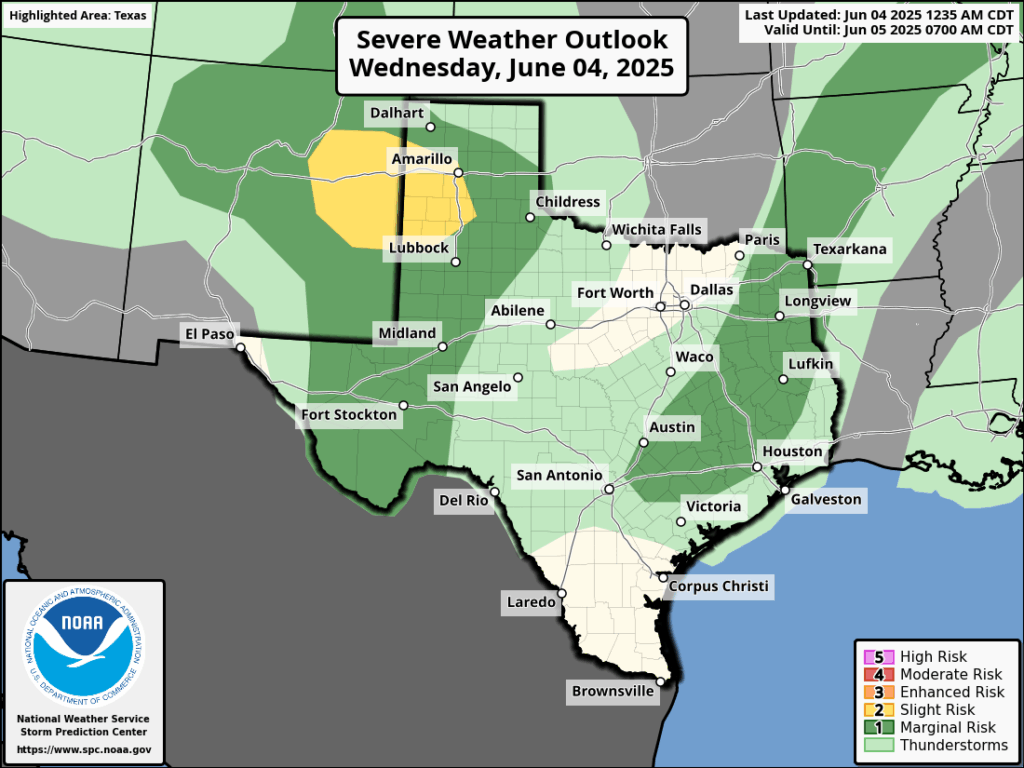
Mostly cloudy skies and rain-cooled air should help keep a lid on temperatures this afternoon. Most of us will probably reach around 90 degrees, give or take a bit. Humidity will remain high, of course. Winds will generally be about 10 mph from the south, but stronger gusts will be possible within thunderstorms. Lows tonight will drop into the upper 70s.
Thursday and Friday
These should be a pair of mostly sunny days, with high temperatures in the low 90s. So, fairly typical as early June weather goes. However, at some point on Thursday or Thursday night, we should start to see increasing levels of haze (due to Saharan dust) over the area. This is mostly harmless, and actually benefits our soils. But for people who have sensitivity in breathing, it is certainly unwelcome. Another change on Friday is that we should also see more pronounced winds from the south, with gusts as high as 20 or 25 mph.

Saturday and Sunday
There’s no way to sugar coat this: The weekend looks hot as high pressure sets up over the area. Saturday will see highs in the mid-90s, and Sunday should jump up into the upper-90s. A few inland locations may touch 100 degrees. Hazy conditions should linger into the weekend. Nights will be sultry. A few showers may develop along the sea breeze both afternoons, but I’d peg the chances at somewhere near 10 percent. So, unlikely.
Next week
Some relief is at hand, however. The ridge of high pressure should retreat next week, opening us up to daily shower and thunderstorm chances. Accordingly I think we’re looking at highs of around 90 degrees next week, with partly to mostly cloudy skies, and perhaps an accumulation of 1 to 2 inches of rain. That’s a very rough guess, of course.

Harris County sergeant struck, killed by U-Haul truck while riding bicycle

Man accused of writing Trump assassination letters was framed, officials say
‘Physicality: The New Age of UI’
Sebastiaan de With, in a wonderfully-illustrated piece (a) examining, in detail, where iOS UI has been, and (b) speculating, with detailed mockups, where he thinks/hopes it’s about to go, starting at WWDC next week:
I’d like to imagine what could come next. Both by rendering some UI design of my own, and by thinking out what the philosophy of the New Age could be.
A logical next step could be extending physicality to the entirety of the interface. We do not have to go overboard in such treatments, but we can now have the interface inhabit a sense of tactile realism.
Philosophically, if I was Apple, I’d describe this as finally having an interface that matches the beautiful material properties of its devices. All the surfaces of your devices have glass screens. This brings an interface of a matching material, giving the user a feeling of the glass itself coming alive. [...]
I took some time to design and theorize what this would look like, and how it would work. For the New Design Language, it makes sense that just like on VisionOS, the material of interactivity is glass.
I hope, very much, that what Apple has been working on is along the lines of what de With has mocked up. It both looks great (and better than what we have now) and makes sense. I also agree with him that it would be a competitive advantage for Apple to establish a new visual design language that no existing design tools can create. You can’t make the sort of things de With is describing with Figma. Competitors could (and I guarantee will) superficially copy the look, but not the interactive responsiveness of lighting effects.
In a profound way, a UI language comprised of glossy and matte glass, running on phones and tablets that themselves are made of glossy and matte glass, would hark back to the early days of Mac OS X, when the “lickable” translucent Aqua UI theme felt of a piece with the colorful translucent plastic enclosures of the iMac, PowerMac, and iBook. Right down to the pinstripes. (Apple never did make an Aqua-style PowerBook along those lines, instead going straight from classic black plastic to the Titanium PowerBook G4, the styling of which augured the post-Aqua look-and-feel of Mac OS X 10.5 Leopard and the much-beloved 10.6 Snow Leopard.) I’ve been clamoring for buttons to look like buttons again ever since iOS 7.
But as much as I truly love de With’s mockups, they’re all for iOS. What I’m left unsettled by is my failure to imagine how this design language could be brought to the Mac. Macs aren’t made of glass; they’re all made of aluminum. But the main difference is that the way many of us use MacOS is with a lot of stacked windows atop each other. The last thing MacOS needs is more transparency/translucency than it already has. Some depth to its UI controls, though? That’s something MacOS is in almost desperate need of. A horse, a horse, my kingdom for a Mac UI theme where you can tell, instantly, whether a button is enabled or disabled or which item in a tabview controller is selected.
We’ll soon see.
Musk calls Trump's tax bill a 'disgusting abomination'
Watch: Slurry of mud and hot water erupts from Yellowstone pool
Oreo maker sues Aldi in US over 'copycat' packaging
Former Afghan soldier arrested at Houston-area home by ICE, stripped of asylum protections, attorney says
Pleasantly esoteric humour

HUGE PLOT REVEAL THAT AFTER THIS WEEK WILL NEVER BE DISCUSSED AGAIN! But again, this would have eventually have been part of the continuation of Wicked Things.
The post Pleasantly esoteric humour appeared first on Bad Machinery.


Saturday Morning Breakfast Cereal - Evil
Click here to go see the bonus panel!
Hovertext:
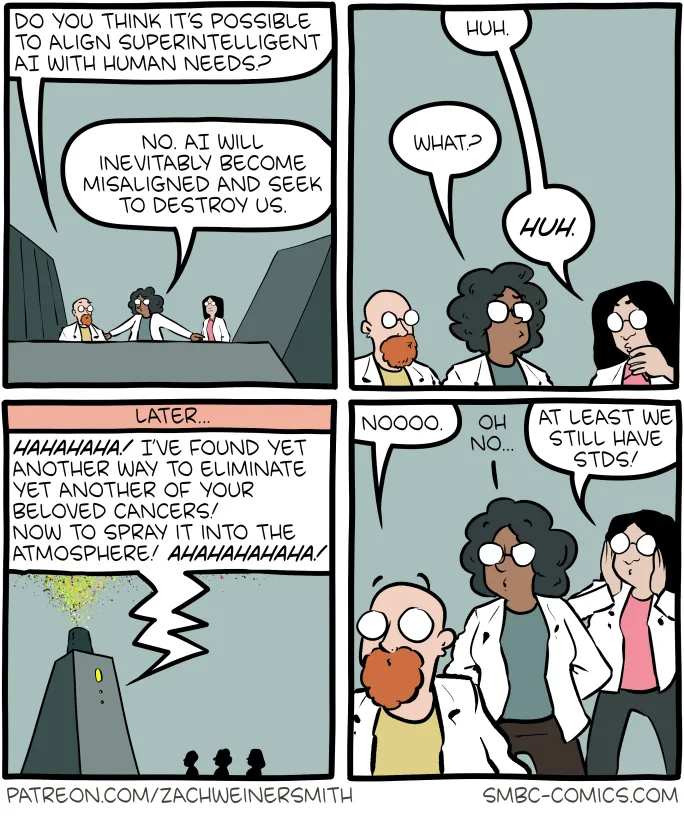
It's not an AI Control Problem, it's an AI Control Solution!
Today's News:
JD Vance Rushed To Walter Reed After Inner Hillbilly Returns
The post JD Vance Rushed To Walter Reed After Inner Hillbilly Returns appeared first on The Onion.
New York Times’ Style Guide Substitutions for “The President Violated the Constitution”
Our 22nd most-read article of 2025.
Originally published June 3, 2025.
“The president remained steadfast in his novel interpretation of constitutional law.”
“Faced with the choice between clinging to the letter of the law and marching to the beat of his own legal drum, the president chose the latter.”
“The president’s solutions-focused approach to legal roadblocks necessitated thinking outside the constitutional box.”
“Perhaps unaware that he had sailed beyond the Constitution’s horizons, the president found himself drifting further and further from legal terra firma.”
“The president followed the Constitution the way a jazz pianist might follow a standard chart—treating its chords as suggestions upon which to solo as he saw fit.”
“In a feat of legal engineering, the president stressed the Constitution’s support structures past what experts considered their maximum load.”
“The president, tiptoeing precipitously down the sidelines of legality, inadvertently ran the constitutional football out of bounds.”
“As a tailor might stitch together a suit from pieces of textile, so too did the president fashion himself a bespoke garment from the supple threads of the nation’s legal fabric.”
“The president realized that the framework for governance that the Founding Fathers had laid forth appeared to preclude an action that he wished to take. Viewing this encumbrance as unintended on their part, the president disregarded their erroneous guardrail and pressed on.”
“The president did nothing that his crooked, senile predecessor hadn’t already done before.”
See also:
New York Times’ Style Guide Substitutions for ‘The President Lied’
‘King of the Hill’ actor shot and killed on San Antonio’s South Side
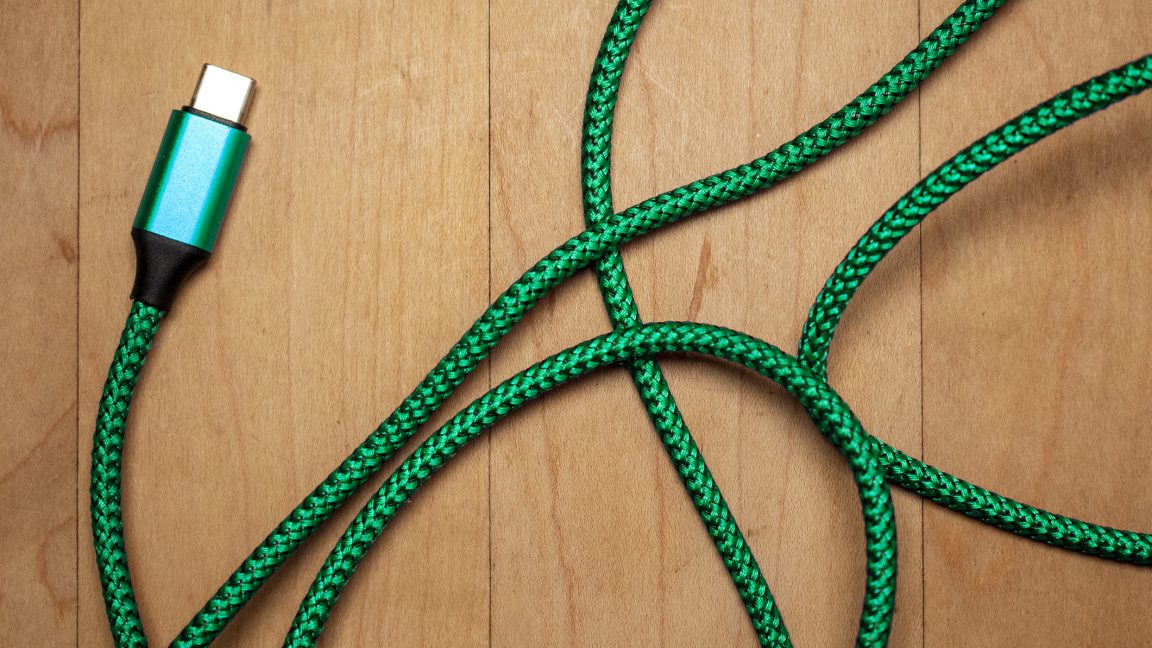
Microsoft wants a version of USB-C that “just works” consistently across all PCs
We've been covering the small, reversible USB Type-C connector since the days when it was just a USB Implementers Forum tech demo, and in the decade-plus since then, the port has gradually taken over the world. It quietly migrated from laptops to game consoles, to PC accessories, to Android phones, to e-readers, and to iPhones. Despite some hiccups and shortcomings, we're considerably closer to a single connector that does everything than we were a decade ago.
But some confusion persists. A weakness built into the USB-C from the very beginning was that the specification for the physical connector was always separate from the specifications for the USB Power Delivery specification for charging, the USB-C Alt Mode specification for carrying non-USB signals like DisplayPort or HDMI, and for the USB protocol itself (that is, the data transfer speed a given port is capable of).
All of these specifications were frequently grouped together so that individual USB-C ports could handle charging, display output, and data transfers (or some combination of all three at once), but they weren't required to go together, so occasionally users will still run into physical USB-C ports that fall short of the port's do-everything promise.

Circles of Influence: Private Collections, Public Encounters, and the Politics of Space
In 2021, Lund Humphries Publishers released The Rise and Rise of the Private Art Museum by Georgina Adam. The book investigates the extraordinary growth of private art collections and the increasing trend of collectors displaying their works publicly, through privately funded museums or partnerships with commercial entities. Adam explores the various motivations behind this boom, from a desire to share art with the public to personal legacy-building, as well as the different models of financing such institutions. These private museums often enrich the cultural fabric of a community by supporting emerging artists, offering educational programs, and revitalizing neglected areas within the arts. Yet, as public funding for cultural institutions continues to decline, the growing influence of private museums raises critical questions about accountability, access, and the long-term impact on public arts infrastructure.

Installation view of “The Architecture of Culture.” Photo: Ryan Conway, courtesy of Gensler
The exhibition The Architecture of Culture, which was on view at Gensler, a major architecture firm in Houston, earlier this year, raises many of the questions explored in Adam’s book. The exhibition showcases artworks from the private collection of John Guess Jr. and Melanie Lawson. Featured on the walls of Gensler Houston are works by well-known local, national, and international artists, including John Biggers, Radcliffe Bailey, Violette Bule, David McGee, and many more.
The selected works focus on the relationship between art and activism, a topic close to the collectors’ hearts. Since January 2025, many museums have sought to remain politically neutral in order to retain public and/or government funding. It is now within the slim, elite spaces of private galleries and an even smaller circle of private collectors that art engaging with race, gender, and otherness continues to be supported and seen. The display of a private collection in a private business becomes an alternative space for exhibiting and financially supporting art and artists.

Installation view of “The Architecture of Culture.” Photo: Ryan Conway, courtesy of Gensler
Art shown outside the traditional, academic structure of the museum space can express its voice in subtler ways. Engagement can happen as coworkers sip coffee; someone may pause and ask: “Why is this artwork here? What is it saying? Why is it displayed this way?”
While many of the artworks explore societal challenges such as gender and income inequality, the experience of the exhibition can vary widely depending on who walks through the space. For those working in the corporate world of Houston, it’s an opportunity to encounter art they might not otherwise come across in their daily lives.
A powerful component of this exhibition is the way it guides viewers through space. Rather than presenting the artwork in a straightforward line, the exhibition is arranged along corridors that create a circular path. With each turn, a new narrative is revealed, and whether walking clockwise or counterclockwise, a larger story begins to take shape. This circular movement is not just physical, it’s symbolic. It evokes ideas of ritual, repetition, and return, suggesting that the viewer is not simply looking at art, but participating in a journey.

Installation view of “The Architecture of Culture.” Photo: Ryan Conway, courtesy of Gensler
Christina Sharpe, professor of English literature and Black Studies at York University, writes about the meaning of movement through space, especially for people of color. In her book In the Wake: On Blackness and Being (2016), she explores how Black bodies have historically been watched, restricted, or displaced, and how that history shapes spatial experience today. When a viewer is made to move through an exhibition in a particular way, it can mirror the feeling of being guided, or even controlled, by larger systems.
Walking through an architecture firm to see art can feel uncomfortable to someone who does not work in the space or who has no business there beyond viewing the installation. That uneasiness is often subdued after speaking with Gensler team members. But the opposite discomfort can also occur: a viewer who belongs in the corporate space might feel challenged or unsure when encountering contemporary art addressing race, gender, or class. These encounters, during casual moments, can spark conversations they may have never had otherwise, conversations that feel less confrontational than those often found online.
Bringing art into office spaces encourages reflection. How do bodies move through space? How does awareness of that movement shift when art intervenes?

Work by Violette Bule. Photo: Ryan Conway, courtesy of Gensler
Similarly, writer and activist Rebecca Solnit describes walking as a political act. In Wanderlust: A History of Walking (2000), she explains that walking can be a form of resistance, a way to reclaim space, slow down, and remain present in a world obsessed with speed and productivity. In this exhibition, the circular layout prompts the viewer to move slowly and deliberately. This act becomes a quiet resistance to the fast-paced world outside and a reminder that deeper understanding often requires one to walk, pause, reflect, and return.
In this way, The Architecture of Culture echoed the core tensions Georgina Adam raises in her book of private museums: who gets to collect, who gets to display, and who gets to see. The Guess Lawson Collection, situated in the offices of Gensler, showcased the potential of private collections to enrich public discourse and is a reminder of the complex dynamics they inhabit. As art institutions face increasing pressure to depoliticize, it is often within these hybrid, semi-private spaces that critical, activist-driven works continue to thrive. But this shift also demands careful reflection. When protest and power share the same walls, what stories get amplified, and which ones are made to whisper? The act of walking through this exhibition — circular, reflective, and unhurried — asked viewers to not only engage with the art, but to consider their place within the structures that frame it.
The Architecture of Culture was on view at Gensler in Houston through April 25.
The post Circles of Influence: Private Collections, Public Encounters, and the Politics of Space appeared first on Glasstire.
Proactive Man Starts Working On Dracula Impression Early So It Ready For Halloween
BEVERLY, MA—Launching into preparations months early in an effort to get a head start, proactive local man Mark Cromwell was reportedly already working on his Dracula impression Wednesday so it would be ready for Halloween. “An ounce of prevention is worth a pound of cure when it comes to having a world-class Count Dracula voice,” said Cromwell, confirming he had purchased a rehearsal pair of fangs weeks ago so he could practice enunciating perfectly through the costume teeth. “At this point, it’s just 45 minutes of Dracula voice in the morning and 45 minutes before bed, which is much more manageable than trying to cram all that work in during the first few weeks of October. Right now, my impression is still pretty indebted to Bela Legosi, but I’ve been studying everyone from Gary Oldman in Bram Stoker’s Dracula to Christopher Lee in the Hammer films to make sure I can bring my own spin to the performance that won’t seem like a ripoff. The last thing I want to do is panic on the day and end up saying something stupid like ‘Bleh!'” At press time, Cromwell was said to be contemplating a pivot to a mummy costume after realizing a Dracula impression could take a lifetime to fully perfect.
The post Proactive Man Starts Working On Dracula Impression Early So It Ready For Halloween appeared first on The Onion.
Man Cuts Back From 6 Normal Beers Per Day To 3 Huge Ones
BRAINERD, MN—Admitting that it was finally time to grow up and start making healthy life choices, local man Russell McGrath told reporters Monday that he was cutting back from drinking six normal beers a day and would now just drink three huge ones. “While it may have been fine back in my 20s, drinking a whole six-pack just isn’t sustainable anymore, and honestly, three stovepipe cans is more than enough,” said McGrath, adding that on nights when he brings home beer from the craft brewery near his home, he has reduced his consumption to a single growler. “It’s about learning some self-control and actually caring about what I put in my body. Pounding a six-pack is fun, but now I enjoy a nice relaxing evening with just a few tall boys, and I feel a whole lot better the next morning. It was actually a real wake-up call when my doctor told me to cut back, and I was nervous, but swapping out all those cans of Miller High Life for a couple bombers of imperial stout has been way easier than I expected. It’s the best decision I could have made for my future. I’ve even convinced some of my buddies who were making fun of me to swap their six-packs for some 1.5-liter Belgian magnums, and they say they feel fucking incredible.” At press time, McGrath had reportedly realized he could be healthy without even having to track his drinking if he just switched from beer to wine.
The post Man Cuts Back From 6 Normal Beers Per Day To 3 Huge Ones appeared first on The Onion.
Nintendo Warns Users Not To Remove Protective Foreskin From Switch 2
REDMOND, WA—Issuing a warning before the console’s highly anticipated launch this week, Nintendo announced Tuesday that users of the Switch 2 should not remove its protective foreskin. “When unwrapping your new Switch 2, please be careful not to peel off the device’s highly sensitive frenulum,” said Nintendo spokesperson Jason Knight, explaining that the thin, retractable skin fold contained tens of thousands of nerve endings, and severing them amounted to “console mutilation.” “While some prefer the look of a circumcised Switch, the foreskin greatly enhances gameplay. Peeling off your console’s foreskin can lead to decreased sensation, reduced enjoyment, and difficulties with button function. Sadly, playing Mario, Zelda, or Animal Crossing will never feel the same.” The spokesperson added that anyone who had inadvertently removed their Switch 2’s foreskin could buy a set of weighted attachments from Nintendo to help grow back the sheath of skin.
The post Nintendo Warns Users Not To Remove Protective Foreskin From Switch 2 appeared first on The Onion.