Shared posts

10 Jun 02:55

This Session’s Worst Anti-Abortion Bill Died, but Pro-Choice Advocates Aren’t Celebrating

by Mary Tuma

For four years, maternal health experts, reproductive rights advocates, and patients who suffered under Texas’ abortion ban have pleaded for lawmakers to clarify medical emergency exceptions in the state’s abortion law, seen as the bare minimum they could do to mitigate the disaster inflicted by the harsh restrictions. 

Vague exceptions coupled with severe penalties that include $100,000 in fines and up to 99 years in prison have led confused and fearful doctors to deny critical care to high-risk patients. Last fall, when ProPublica reported the tragic—and “preventable”—deaths of three pregnant Texans who faced delayed care for miscarriages, Republicans continued their unabashed defense of the state’s ban. 

Pressure from constituents and public outcry may have finally tilted the scales for state Senator Bryan Hughes, a Mineola Republican, who authored Senate Bill 31 this legislative session, a measure that seeks to provide clarity about when doctors can perform life-saving care. Under the bipartisan bill, an “imminent” risk of death or a “substantial impairment of a major bodily function”—the previous standard—does not need to be present before a doctor can intervene. The bill also clarifies that a doctor or lawyer can discuss a medically necessary abortion with a patient without facing “aiding and abetting” charges.

Bryan Hughes on the Senate floor on May 19 (Jordan Vonderhaar for the Texas Observer)

SB 31 was a glacially slow response to a public health crisis that Republicans themselves created, so it was expected that reproductive rights advocates would remain wary. (After all, it was Hughes himself who authored the state’s bounty hunter-style abortion ban in 2021, prior to the fall of Roe.) But what surprised many was the full-on opposition to the bill from pro-abortion activists—largely around the concern that the bill was a “Trojan horse” to revive a century-old abortion ban that could criminalize abortion supporters and even patients. Lawmakers later added language meant to neutralize the issue, but groups say they still are not entirely assuaged.

For reproductive rights advocates, SB 31—which has been sent to the governor for signing—does not offer meaningful change. They’ve deemed the legislation an “exception deception” bill. The clarifying language remains vague and open to interpretation, leaving the legal gray area intact, which will continue to “cause confusion, delay care, and endanger lives,” said leaders from six Texas abortion support groups, including The Lilith Fund, Fund Texas Choice, and The Afiya Center. 

And, glaringly, the bill fails to add carve-outs for rape, incest, or fatal fetal diagnoses—exceptions approved in a number of other red states with bans. 

“[SB 31] will not stop hospitals from prioritizing legal risks over patient health nor fully shield doctors from prosecution,” said the abortion fund leaders. “This bill only exists to provide anti-abortion politicians cover for their decision to ban abortion, while still keeping care inaccessible.” 

In a statement, Blair Wallace, policy and advocacy strategist for reproductive rights at the ACLU of Texas, didn’t mince words: “Texans know bullshit when we see it. This bill is a political stunt designed to distract us from the damage the state’s abortion ban continues to cause.” 

Moreover, no abortion providers were engaged in the drafting of the bill, as Dr. Ghazaleh Moayedi—a Dallas-area OB-GYN and complex family planning specialist—pointed out. “You can’t address the problem of abortion access without actually talking to the doctors who provide abortion care—it’s a fallacy to think you can,” Moayedi, a vocal opponent of SB 31, told the Observer. “You need our expertise and our lived experiences to inform the legislation.” 

Pro-reproductive rights march in May 2022 (Gus Bova)

When the Observer spoke with Hughes earlier this session to ask if, indeed, any abortion providers were sought to help craft the bill language, he replied, “No abortionists were consulted or invited to participate in this process. This bill is not about them.”

Pushback to SB 31 emphasizes the innate problem with attempts at “fixing” draconian abortion bans. “Any ‘exceptions’ language is always going to result in lingering confusion about when doctors can provide life-saving care,” Lucie Arvallo, executive director of Jane’s Due Process, told the Observer. “The only real way to solve the public health crisis started by politicians is to fully repeal the ban.””

Amy Bresnen, an attorney and health care lobbyist who has championed widening exceptions and is among those who helped draft SB 31, acknowledged some of the measure’s shortcomings but called it the “first step” in a long process. Ultimately, she views it as a victory for Texans. “At the end of the day, we are a red state, and we pushed as far as we could go,” Bresnen said. “Obviously, we didn’t get everything we wanted. We just didn’t have the votes, but I do believe this is a great bill that will save women’s lives.”

During the session, Hughes pushed with one hand his bill to “save mothers” while using the other to advance Senate Bill 2880—which would have been the nation’s most aggressive assault on the flow abortion pills, among the only options left for many pregnant Texans. The bill would have empowered citizens to sue anyone who “manufactures, distributes, mails, prescribes, or provides” abortion pills to Texans for at least $100,000 in damages. 

Meant to serve as a blueprint for other red states to model, the legislation seemed poised to pass. However, after gliding through the Senate, the bill stalled in the House State Affairs Committee for three weeks (where it received pressure from more than 40 right-wing lawmakers), only making it out at the last minute and never reaching the House floor for a vote. Anti-abortion advocates attribute SB 2880’s death to “apathy” from what they consider less ardently “pro-life” Republicans, specifically State Affairs Committee Chairman Ken King. “The House didn’t prioritize this important bill and Ken King is responsible for sabotaging it, along with Speaker [Dustin] Burrows, who shares the blame because the buck stops with [the] Speaker,” Texas Right to Life president John Seago told the Observer

The bill’s failure marks a significant—and rare—loss for Texas anti-abortion activists, who have been increasingly successful at the Capitol, and underscores the tension between the Lege’s extremist faction and more moderate Republicans. It also mirrors the reality that Texas voters largely oppose allowing private lawsuits against those who provide abortion pills. 

Deemed  “unprecedented” and “shocking” by legal experts, SB 2880 would have also been immune from constitutional challenges in state court, per the bill text. 

“This bill was calling to fundamentally restructure our judicial system. It was pushing some radical legal theories which caused a stampede away from it,” Senator Sarah Eckhardt, an Austin Democrat, told the Observer. “I think this bill rightfully scared the crap out of a lot of people.”

Texas Right to Life says it is not giving up on other avenues to get the bill passed, including lobbying Abbott for an additional 30-day special session. “We are the most stubborn and committed pro-life group in Texas, and we will push for a special session to ensure passage of this bill,” said Seago.

While SB 2880 died, abortion rights in Texas did not exit this legislative session unscathed. Republicans managed to pass a measure that restricts local governments from using public funds to help abortion patients with practical support like out-of-state travel costs, lodging, food, and childcare. That financial assistance has become increasingly vital as Texans are forced to trek hundreds—and even thousands—of miles for care. 
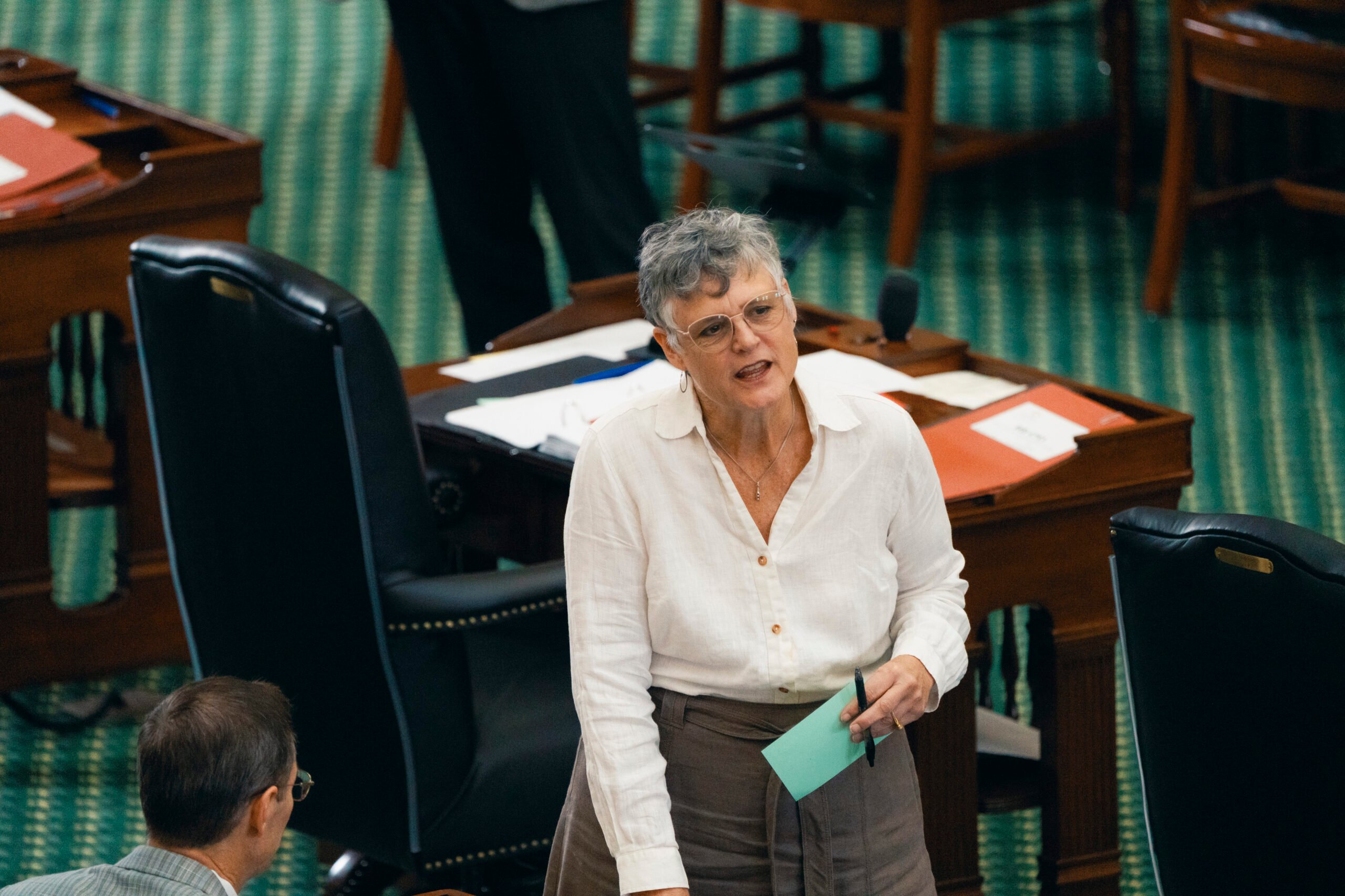
Sarah Eckhardt on the floor in May (Jordan Vonderhaar for the Texas Observer)

State Senator Donna Campbell’s Senate Bill 33, a priority item for Lieutenant Governor Dan Patrick, takes direct aim at voter-approved investments from the cities of San Antonio and Austin, the latter of which allocated $400,000 to assist abortion patients in their current budget. 

“This law will strip away Austin’s ability to support Texans navigating complex, confusing, and difficult medical decisions,” Council member Vanessa Fuentes told the Observer. “It means that many in our community will face even greater barriers to accessing essential health care.”

Local government support for practical abortion needs served as one of the surviving vehicles for communities to help patients amid a state-level ban. “We at least still have the ability to make grassroots change in our local communities when it comes to reproductive rights, so for elected officials to undermine that, and make it harder to help the most marginalized get health care—it’s disgraceful,” Kamyon Conner, executive director of the Texas Equal Access Fund, said.

A dozen abortion support groups worked to remove some of the most harmful language from the bill, and they say they can at least still partner with city governments to fund access to Plan B and birth control, as well as text support lines and hotlines. 

All told, reproductive rights leaders view the demise of SB 2880, the session’s most aggressive anti-abortion bill, as a temporary reprieve.

“We don’t necessarily feel victorious, we just feel relief for now. We can catch our breath a little; that’s a much different feeling than celebrating,” said Conner. “The bill is a stark reminder that even after making abortion illegal, Republicans are still continuing to find new ways to block any remaining access. It’s pretty scary to see how far they will go. I mean, what more do they want?”

The post This Session’s Worst Anti-Abortion Bill Died, but Pro-Choice Advocates Aren’t Celebrating appeared first on The Texas Observer.

10 Jun 02:14

Vanishing Culture: Recovering Lost Software

by vanishingculture

The following guest post from journalist and computer historian Josh Renaud is part of our Vanishing Culture series, highlighting the power and importance of preservation in our digital age. Read more essays online or download the full report now.

Mom and Me (Atari ST, 1985) (color) by Yaakov Kirschen, preserved and playable at the Internet Archive.

Whether it’s Pac-Man or Pikachu, Link or Lara Croft, Master Chief or Mario, we love playing video games.

But what about preserving them?

Data shows we spend big money on video games: more than $200 billion globally. By some reports, gaming is now bigger than the global film industry and the North American sports industry combined. 

Despite all this growth, data also shows the industry has done a poor job stewarding its heritage and history. In fact, a recent study shows classic games are in critical danger of being lost.

Only 13 percent of all classic games released between 1960 and 2009 are currently commercially available.

Survey of the Video Game Reissue Market in the United States (2023).

Only 13 percent of all classic games released between 1960 and 2009 are currently commercially available, according to the “Survey of the Video Game Reissue Market in the United States,” published in 2023 by Phil Salvador for the Video Game History Foundation and the Software Preservation Network.

Worse, this percentage drops below three percent for games released before 1985, “the foundational era of video games,” the study found.

The study considered a random sample of 1,500 games from the MobyGames database, as well as the entire catalog of the Nintendo Game Boy—4,000 games altogether.

The commercial unavailability of so many classic games leaves few viable options for playing them today. People can attempt to track down and buy increasingly-rare vintage games and hardware, visit a few specialty institutions, or resort to piracy, the study noted. Terrible options all around. 

But what about cases where a game was never archived in the first place?

Journalist and computer historian, Josh Renaud.

That was a situation I ran into when I wanted to find copies of “Mom and Me” and “Murray and Me,” two graphical chatbots created in 1985 by Yaakov Kirschen, the Israeli artist best known for the “Dry Bones” cartoon in the Jerusalem Post. Kirschen died on April 14, 2025, at the age of 87.

These “artificial personalities” were among the earliest entertainment software released for the Atari ST computer, and they got splashy write-ups in newspapers including the London Times, the San Francisco Chronicle, and the Los Angeles Times. Even three-time Pulitzer prize winner Thomas Friedman wrote a profile in the New York Times.

Despite that publicity, and the advantage of getting in on the ground floor of a brand new computer platform, probably fewer than 2,000 copies were sold. Apparently I was one of the very few who had copies, which I received from my uncle Jim when he handed down his old Atari 520ST computer to my family in the early 1990s. I remember being amused as my brothers and I conversed with “Mom” and “Murray” back then.

When nostalgia hit me decades later, I began searching online for disk images of these old programs. But there weren’t any, except for one obscure German translation of “Murray” in monochrome.

It was a startling realization: not all software has been preserved in an archive.

I wrote about this predicament in 2014 on my blog, Break Into Chat, which put me in touch with Kevin Ng, who also had some copies. We each made digital images of our old floppy disks, preserving several original versions of “Mom” and “Murray.” But the monochrome version of “Mom” remains lost.

In the years since then, I have continued researching Kirschen’s other lost software, ranging from multiple Jewish and secular educational games for the Apple II computer, to his “artificial creativity” autonomous music composing technology for the Commodore Amiga and the IBM PC. Like “Mom” and “Murray,” none of it sold well, nor was it preserved despite good publicity.

With the help of three fellow retrocomputing enthusiasts in St. Louis, I recovered many of Kirschen’s games and programs from floppy disks Kirschen sent to me. Keith Hacke imaged most of the Apple II and the IBM PC disks, while I imaged the Commodore Amiga disks using hardware loaned by Dan Hevey and Scott Duensing.

I published the disk images with summarized histories on Break Into Chat. Then I uploaded them to the Internet Archive, making them playable in web browsers—but more importantly, preserving them for posterity.

I’m proud to have played a part in bringing this dead software back to life, and restoring a part of Kirschen’s legacy. I think this work is worth rediscovering today. 

Mom and Me screenshot.

Take “Nosh Kosh” from 1983, for example. Essentially a Jewish take on Pac-Man, this is an action game designed to teach children about kashrut, Jewish dietary law. It was one of three games modeled on existing arcade classics made by Kirschen together with Gesher Educational Affiliates in Israel.

In “Nosh Kosh,” the player moves a kippah-wearing character named Chunky around the screen, trying to eat all the food items while avoiding three non-kosher bad guys: Peter Pig, Larry Lobster, and Freddy Frogslegs. There are three kinds of food—ice cream, meat, and carrots—but the player must wait a bit between eating the meat and ice cream, otherwise Chunky will yell “Oy!” and lose a life. 

Nosh Kosh screenshot.

Or consider Kirschen and Gesher’s more ambitious “The Georgia Variations,” a choice-based narrative game about Jewish history, identity, and migration, introduced the same year as “Nosh Kosh.”

In this game, the player takes on the role of Boris Goldberg, a Jewish boy in Eastern Europe in the nineteenth century who must make decisions about school, work, marriage, and even what to do in the face of persecution and pogroms. The player’s decisions affect the storyline, but in the end, all the threads eventually lead to the same ending: Goldberg immigrates to Atlanta, Georgia. 

Vanishing Culture
Download the complete Vanishing Culture report.

Niche educational games like these were far less popular than mainstream action and adventure games. The hobbyists and amateur archivists who preserved software of that time often skipped this genre entirely. And today, these sorts of games may not hold much interest for the general public. 

So why bother preserving them? 

The prolific Apple II preservationist “4am” gave a great answer in Paleotronic magazine:

“This was how we taught math and science and grammar and history to an entire generation of children. That seems like something worth saving.”

That’s certainly true of Kirschen’s work. In the Apple II games he made with Gesher, we see Jewish educators’ early steps learning to use a new medium to reach kids. And Kirschen’s later work with “artificial personalities” and “artificial creativity” foreshadows the promise and pitfalls of today’s AI craze.

I’m glad to have played a part in bringing this software back to life so others can have the opportunity to play it and study it.

About the author

Josh Renaud is a journalist at the St. Louis Post-Dispatch. He publishes computer history research on his website, Break Into Chat. He is interested in recovering lost or obscure software, and telling the stories of the people who made and used it. In 2024 he received a Geffen and Lewyn Family Southern Jewish Research Fellowship  from Emory University to study papers related to Gesher’s educational computer games.

10 Jun 02:12

New Livestream Brings Microfiche Digitization to Life for Democracy’s Library

by Chris Freeland

Ever wonder how government documents, once locked away on tiny sheets of microfiche, become searchable and accessible online? Now you can see it happen in real time.

Today, the Internet Archive has launched a livestream from our microfiche scanning center (https://www.youtube.com/live/aPg2V5RVh7U), offering a behind-the-scenes look at the meticulous work powering Democracy’s Library—a global initiative to make government publications freely available to the public.

“This livestream shines a light on the unsung work of preserving the public record, and the critical infrastructure that makes democracy searchable,” said Brewster Kahle, founder of the Internet Archive. “Transparency can’t be passive—it must be built, maintained, and seen. That’s what this livestream is all about.”

Watch the livestream now:

What You’ll See

The livestream features five active microfiche digitization stations, with a close-up view of one in action. Operators feed microfiche cards beneath a high-resolution camera, which captures multiple detailed images of each sheet. Software stitches these images together, after which other team members use automated tools to identify and crop up to 100 individual pages per card.

Each page is then processed, made fully text-searchable, and added to the Internet Archive’s public collections—completed with metadata—so that researchers, journalists, and the general public can explore and download them freely through Democracy’s Library.

📅 Live activity occurs Monday–Friday, 7:30am-3:30pm U.S. Pacific Time (GMT+8)—except U.S. holidays—with a second shift coming soon.


What Is Microfiche?

Microfiche is a flat sheet of film that holds dozens—sometimes hundreds—of miniaturized document images. It’s been a common format for archiving newspapers, court documents, government records, and more since the 20th century.

Why Is Microfiche Digitization Important?

“Materials on microfiche are an important part of our country’s history, but right now they are often only available online from expensive databases. We are excited that this project will digitize court documents from our collection and make them freely available to everyone,” said Leslie Street, Director of the Wolf Law Library of William and Mary College.

“Thousands of documents and reports from across the federal government were distributed in microfiche to Federal Depository Library Program (FDLP) libraries around the country from 1970 – 2022. While important for space-saving and preservation, microfiche has long been problematic for public access. So this digitization work of Democracy’s Library is incredibly important and will unlock free access to this essential historic public domain corpus to readers and researchers around the world!” noted James R. Jacobs, US government information librarian and co-author of the recently published book, Preserving Government Information: Past, Present, and Future.

To learn more about the importance of microformats like microfiche and microfilm, read Brewster Kahle’s essay, “Microfilm: The Rise, Fall, and New Life of Microfilm Collections.

About Democracy’s Library

Democracy’s Library is the Internet Archive’s ambitious project to collect, digitize, and provide free public access to the world’s government publications. From environmental impact reports to court decisions, these materials are essential for accountability, scholarship, and civic engagement.

The microfiche collections that will be digitized in this process include US GPO documents, Canadian government documents, US court documents, and UN publications. We are always looking for more collections to be donated.

Meet the People Behind the Work

From left: Internet Archive’s digital librarian, Brewster Kahle, with microfiche scanning operators Dylan, Louis, Elijah, Avery, and Fernando.

This digitization livestream was brought to life by Sophia Tung, appmaker & designer behind the viral robotaxi depot livestream on YouTube.

The digitization is overseen by scanning operators who are trained to handle physical library materials and digitization equipment.

Thanks also to Internet Archive staff who assisted this project, including CR Saikley, Merlijn Wajer, Brewster Kahle, Derek Fukumori, Jude Coelho, Anastasiya Smith, Jonathan Bloom, Bas Kloosterman, Andrea Mills, Richard Greydanus, Louis Brizuela, Carla Igot Bordador, and Ria Gargoles.

Thanks to Our Partners

Thank you to Wolf Law Library at the William & Mary Law School, University of Alberta, and Free Law Project for donating microfiche and helping advise this project.

If your library has microfiche or other materials to donate to the Internet Archive, please learn more about donating materials for preservation and digitization.

Support the Work

Preserving and digitizing these fragile, analog records is resource-intensive—and deeply worthwhile. Donate today to support the Internet Archive and Democracy’s Library.

Enjoy the livestream! Thank you for helping us preserve history and protect access to knowledge.

10 Jun 02:11

Meet Sophia Tung, the Creative Force Behind Internet Archive’s Microfiche Scanning Livestream

by Caralee Adams

Setting up a livestream is more complicated than just turning on a camera. That’s why the Internet Archive tapped into the expertise of Sophia Tung, a software engineer and online content creator, to help create the livestream for its microfiche scanning center, which launched May 21.

The 29-year-old garnered international media coverage for her livestream of robotaxis parked in a depot just below her San Francisco apartment as they jostled and honked – sometimes in the middle of the night.

“I put it up just sort of as a meme to get some attention. If I couldn’t do anything about it, then I might as well make the best of it,” Tung said of the livestream she posted on YouTube with Lo-fi music in the background. “People became fans of it and Brewster [Kahle, Internet Archive’s digital librarian] reached out to see if I could do something similar with the Internet Archive.”

An avid user of the Internet Archive for years, Tung said she was eager to visit its Funston Avenue headquarters and work with the staff on the project. As a sign of our tech-connected times, it’s become popular to have a mesmerizing scene with mellow music playing on a second monitor as people work. Tung said she could envision a relaxing, but informative, feed showing the preservation process.

Sophia Tung

Tung met with the team who take microfiche – flat sheets of film that hold miniaturized documents – and turn them into digital images that can be accessed online. The team is now digitizing U.S. Supreme Court case documents and government records from Canada dating back to the 1930s.

After assessing the space with five active microfiche digitization stations,Tung decided on a three-camera setup for the livestream. One is focused on an operator feeding microfiche cards under a high-resolution camera that captures multiple detailed images. Another is an up-close look of what actually happens on the machine. A third wide-angle camera covers the entire room and is blurred for security, but still conveys motion.  

All team members are open to being on camera as they work, but Tung said she recognized privacy concerns may arise. She devised a pause button to be installed to stop the feed, momentarily dimming the “on air” sign in the room. Although initially concerned that employees might not like being on camera, Tung said staff were hired who agreed to the concept and they are on board with the livestream as a mixed media project.

Live activity with the scanners occurs Monday–Friday, 7:30am-3:30pm U.S. Pacific Time (GMT+8)—except U.S. holidays. Ambient Lo-fi music plays continuously. After hours, other Internet Archive content runs on the video feed including silent films, lost landscape footage from everyday life, and public domain photographs from NASA and other sources.

The project has required a combination of engineering to make the infrastructure work 24/7, plus physical design integrating signage and broadcasting lights, which Tung says she enjoyed. Her goal was two-fold: to recreate the excitement of her last livestream and to shine a light on the individuals working behind the scenes at the Archive.

“I always thought about the Internet Archive as just some mysterious entity, trying to preserve what we as individuals cannot. It’s an invaluable tool for journalists and, basically, everybody,” Tung said. “Now, preservation is more important than ever. I think people just assume that it happens. Actually, it takes money, effort, machinery and people. I think it’s important to highlight all the people-hours that go into it.”

Tung produced an explainer video about the microfiche livestream project on YouTube. “The reception has been great so far,” said Tung, who is working on more features and possible additional channels to add to the stream. “I hope the stream brings awareness to the effort it takes to preserve all this important material. If we don’t preserve it now, we are going to lose it.”

All microfiche materials are added to Democracy’s Library, the global project to collect, digitize, and provide free public access to the world’s government publications.

More details on the livestream project can be found here: https://blog.archive.org/2025/05/21/new-livestream-brings-microfiche-digitization-to-life-for-democracys-library/

10 Jun 02:11

Announcing “Future Knowledge”: A New Podcast from the Internet Archive & Authors Alliance

by Caralee Adams
Listen and subscribe to the Future Knowledge podcast: https://futureknowledge.transistor.fm/

How is knowledge created, shared, and preserved in the digital age—and what forces are shaping its future?

We’re thrilled to announce the launch of Future Knowledge, a new podcast from the Internet Archive and Authors Alliance. Hosted by Chris Freeland, librarian at the Internet Archive, and Dave Hansen, executive director of Authors Alliance, the series brings together authors, librarians, policymakers, technologists, and artists to explore how knowledge, creativity, and policy intersect in today’s fast-changing world.

In each episode, an author discusses their book or publication and the big ideas behind it—paired with a thought-provoking conversation partner who brings a fresh perspective from the realms of policy, technology, libraries, or the arts.

We’re kicking off the podcast with a double feature—two episodes tackling copyright history and AI’s global impact:

Episode 1: The Copyright Wars

Historian Peter Baldwin joins copyright scholar Pamela Samuelson to unpack The Copyright Wars—a sweeping look at 300 years of trans-Atlantic copyright battles. From 18th-century publishing monopolies to today’s clashes between Big Tech, libraries, and the entertainment industry, this conversation reveals how history can illuminate the future of intellectual property in a digital world.

Episode 2: Copyright, AI, and Great Power Competition

Authors Joshua Levine and Tim Hwang sit down with Lila Bailey to discuss Copyright, AI, and Great Power Competition. Together they explore how artificial intelligence is transforming copyright law—and how global powers are using IP policy as a strategic tool in the race for technological dominance.

Whether you’re an author thinking about how to share your work, a librarian navigating digital access, or a curious listener exploring how knowledge shapes our world, Future Knowledge is for you.

10 Jun 02:09

Anti-vaccine advocate RFK Jr. fires entire CDC panel of vaccine advisors

by Beth Mole

Anti-vaccine advocate and current US Health Secretary Robert F. Kennedy Jr. has taken the extraordinary action of firing all 17 vaccine experts on a federal committee that advises the Centers for Disease Control and Prevention on immunization practices.

In an opinion piece published Monday in The Wall Street Journal, Kennedy announced that he had cleared out the committee, accusing them of being "plagued with persistent conflicts of interest" and a group that has "become little more than a rubber stamp for any vaccine."

"Without removing the current members, the current Trump administration would not have been able to appoint a majority of new members until 2028," Kennedy added.

Read full article

Comments

10 Jun 02:09

YouTube will “protect free expression” by pulling back on content moderation

by Ryan Whitwam

YouTube videos may be getting a bit more pernicious soon. Google's dominant video platform has spent years removing discriminatory and conspiracy content from its platform in accordance with its usage guidelines, but the site is now reportedly adopting a lighter-touch approach to moderation. A higher bar for content removal will allow more potentially inflammatory content to remain up in the "public interest."

YouTube has previously attracted the ire of conservatives for its removal of QAnon and anti-vaccine content. According to The New York Times, YouTube's content moderators have been provided with new guidelines and training on how to handle the deluge of provocative content on the platform. The changes urge reviewers to pull back on removing certain videos, a continuation of a trend not just at YouTube, but on numerous platforms that host user-created content.

Beginning late last year, YouTube began informing moderators they should err on the side of caution when removing videos that are in the public interest. That includes user uploads that discuss issues like elections, race, gender, sexuality, abortion, immigration, and censorship. Previously, YouTube's policy told moderators to remove videos if one-quarter or more of the content violated policies. Now, the exception cutoff has been increased to half. In addition, staff are now told to bring issues to managers if they are uncertain rather than removing the content themselves.

Read full article

Comments

10 Jun 02:09

DOGE wins at Supreme Court; conservative majority ends limits on data access

by Jon Brodkin

The Supreme Court allowed the Department of Government Efficiency (DOGE) to access Social Security Administration (SSA) records on Friday, overturning lower-court decisions that imposed some limits on DOGE's data access.

"We conclude that, under the present circumstances, SSA may proceed to afford members of the SSA DOGE Team access to the agency records in question in order for those members to do their work," the Supreme Court order said. The court also sided with the Trump administration in a different DOGE case, finding that a lower court's discovery order requiring DOGE to provide information about its government cost-cutting operations was too broad (more on that ruling later in this article).

The data-access ruling was in a case filed by the American Federation of State, County and Municipal Employees; the Alliance for Retired Americans; and American Federation of Teachers. US District Judge Ellen Lipton Hollander previously issued a preliminary injunction, writing that DOGE "is essentially engaged in a fishing expedition at SSA, in search of a fraud epidemic, based on little more than suspicion." The District of Maryland judge found that plaintiffs are likely to win their case alleging that the government violated the Privacy Act and the Administrative Procedure Act.

Read full article

Comments

09 Jun 21:43

Please, can’t I have just ONE more Justice?

Please, can’t I have just ONE more Justice?

09 Jun 21:25

Interview: Roswell Artist-in-Residence Jennifer Sirey

by Ryan Hawk

Roswell, New Mexico, is burdened by what I call the “little-big” problem: it’s rural enough that you can go days without seeing a familiar face, yet large enough to have traffic on the weekends — not to mention the whole alien thing. That same tension permeates the local arts community, which centers entirely around the Roswell Artist-in-Residence program (RAiR).

I’m sure this condition is precisely what makes RAiR so compelling. However, as a lonely college professor, I found Roswell life had its challenges. I was grateful, then, to be drawn into RAiR’s orbit, where I first met Jennifer Sirey, one of the many brilliant artists affiliated with the residency.

Sirey’s artwork is tender. It is also wonderfully gross. Within this classic aesthetic binary unfolds a deeply personal practice that’s as formally precise as it is experimental. In our conversation below, Sirey discusses her work and offers insight into her original processes while intertwining her unique life experiences as a biology student, a go-go dancer, and much more. 

Working with bioorganic material since the mid-1990s, Sirey has undoubtedly influenced an entire younger generation now working in the same vein. Despite this influence, her practice remains underrecognized. I’m happy to contribute to that undoing in some small way; to encourage more attention and knowledge of her work.

A photograph of artist Jennifer Sirey in her Roswell Artist-in-Residence studio.

Jennifer Sirey in her RAiR Studio, 2024

Ryan Hawk (RH): I’m excited to introduce you and your work to Texas audiences. Can you start by offering a brief overview of your practice?

Jennifer Sirey (JS): I’m a sculptor and my chosen medium is natural phenomena, incorporating bacteria, architecture, and viscera. I developed a technique to construct living sculptures by collaborating with the fermentation culture Acetobacter, also known as “mother of vinegar,” which exists in colonies throughout the natural world. 

I construct glass vessels with armatures to grow the culture on the surface of wine. I tilt the tank until the level surface of the wine forms a geometric shape like a rhombus or a hexagon. As the bacteria grow, a composition is created where a series of fleshy planes, blown glass, and wax forms are suspended. In the finished works, submerged microbes are hibernating in diluted vinegar, torpid and alive. The sculptures stand there, elevated and exposed, presenting their insides to the outside.

Additionally, I pour molten wax planes onto the surface of water to create colorful textures and forms. These gnarly wax planes have begun showing up outside the tanks on pedestals and other parts of the sculptures. I’ve also been casting them in metal and other materials as separate, autonomous works.

A photograph of Jennifer Sirey’s process of growing Acetobacter for the work “Sanguine 35.”

A photograph of Jennifer Sirey’s process of growing Acetobacter for the work “Sanguine 35” (2021)

RH: You’re at the end of your year-long residency at the Roswell Artist in Residence program (RAIR). How would you characterize your time at the residency and in the Southwest more broadly? What kind of impact has it had on you and your work?

JS: I’m from Brooklyn, New York, and have never lived anywhere else for this long. The RAiR residency has been incredible. I love it here, the desert landscape, the expanse. From my house and studio windows, I see the sky unblocked by buildings and trees, and the sunrises and sunsets every day. 

It has always been important for me to get to a place where I can see the horizon, and in NY, that means going to the ocean. My early sculptures were vertical glass columns, based on the seascape, like a core sample of earth, water, and sky. I was thinking of a landscape as a body. I was a competitive swimmer and an ocean lifeguard in the summers while in college. I spent countless hours in swim workouts, breathing and counting strokes. The sound and visual experience of being underwater is womb-like. Later, I attended a yoga teacher training in India for three months and started a formal meditation practice. The work is a place for my mind to retreat. I find serenity as I inhale the horizon and ground into balance as the sculptural composition takes shape. 

The vertical seascape is also a motif in my 2D work, where it acts as a ground for body mapping. The body is a porous mass overlaid and enmeshed on the three equal sections of the seascape, where the horizon line, foreground, and sky signify a division of densities. 

The horizon is also physically manifested in my sculptures. When I grow a bacteria plane or cast a wax plane, they are parallel to the horizon. As I tilt the glass containers, these material planes are captured on the surface of the liquid corresponding to gravity and the horizon. When the containers are installed upright, the various planes and temporary orientations are positioned diagonally. I understand these planes as energy that passes through a body.

An installation image from Jennifer Sirey’s exhibition “Wiggly & Orderly” at the Anderson Museum of Contemporary Art.

An installation image from Jennifer Sirey’s exhibition “Wiggly & Orderly” at the Anderson Museum of Contemporary Art

RH: I thought your recent show, Wiggly and Orderly at The Anderson Museum of Contemporary Art, was successful. I found that the title playfully illustrated the contradictory material transformations in the sculpture. How did you arrive at that title?

JS: The words wiggly and orderly were often used by Alan Watts in his lectures and writings addressed to Western audiences from the early 1950s to the 1970s. He generally said that the world, including all things and people, is “wiggly,” or inherently dynamic and constantly changing. While not always symmetrical or patterned, there is an order in the essence of nature. For example, cloud forms, wood grain, and the edge of continents. It’s the energy that passes through us and all things. 

When I heard him use these words to describe Taoism, I thought, “That’s what I try to do in my work.” The terms “Li,” or wiggles, connect the “Chi,” or vital energy, and create an orderly structure of everything. I try to preserve the inherent expression of the materials and not show my hand, while simultaneously creating order. I think that we, and all matter, are porous patterns of energy; and this energy is only seen as the form it takes in the medium it passes through. 

RH: While I admittedly don’t know much about Alan Watts’ thought, this binary seems useful when trying to understand the futility of human struggle. As a metaphor, it also delineates a playful relationship to the material world. 

JS: Alan Watts talked about consciousness from the perspective of non-duality; the idea that everything is interconnected, there is no separation between living beings, objects, and experiences. This philosophy is inherent in the Eastern spiritual traditions of Vedanta, Buddhism, Taoism, Sufism, as well as Christian mysticism. I love listening to his lectures because his metaphors draw a playful relationship to the material world in a very clear, accessible, idiosyncratic, and humorous way. 

A photograph of a sculpture by Jennifer Sirey.

Jennifer Sirey, “Blood Sky Mend,” 2024, glass, red mother of vinegar bacteria, wax, monofilament, and painted plywood, 66 x 11 x 11 inches

RH: This brings me to another reading of your work, which is all about the carnivalesque. The carnival is not only a large, absurdist party and gathering — it is a celebration of illusion, magic, bodily transformation, and social transgression. This is especially evident, for me, in works such as Blood Sky Mend. Do you see the work in this light? 

JS: Yes, I think about magic, the carnival, bodily transformation, fetish, the supernatural, social transgression, etc. The sculptures are specimens in a container for the voyeur as well as the exhibitionist within the container. They are worlds inside extra-corporeal bodies that will outlive us. They are freak shows, and we are freak shows too. Our sublime, fundamentally unified consciousness in a soft, dirty human suit! 

When I started combining frilly cast wax forms with the bacteria, it reminded people of dark red velvet and skin deformities. These associations triggered an interest in the baroque, the decorative, and the grotesque. 

After I finished art school at the School of Visual Arts, I got a job as a dancer in strip clubs in NYC. The copious amount of time standing on stages and the grunginess of that experience found its way into my work. The sculptures are an embodiment of a naked, see-through being, with no skin and holes. Vulnerable as fuck yet standing in power. In the beginning, I was so shy that I could only look down and dance really fast. Eventually, I learned that it was sexier to stand on the stage, stare at people, and barely move. Occasionally, while dancing next to another girl, I would think about the Star Trek episode where aliens invade the Starship Enterprise and report back to their ship to say that humans are ugly bags of mostly water. We are two bags of mostly water, and what makes one bag hotter than the other?

The physical action of making the work is a way of regrowing parts of my interior into idealized form. Organizing the interior viscera of these bodies in an idealized way is healing for me. The physical and emotional trauma in my body gets mended as the viscera grows and repairs. As time goes on, they accumulate iterations of experience to integrate and process. The work is always seeking to find balance.

An installation image from Jennifer Sirey’s exhibition “Wiggly & Orderly” at the Anderson Museum of Contemporary Art.

An installation image from Jennifer Sirey’s exhibition “Wiggly & Orderly” at the Anderson Museum of Contemporary Art

RH: This personal relationship to the work is very illuminating; it makes me think differently about the glass containers. The glass speaks to voyeurism, of course, but more significantly, you’ve introduced a transparency and agency that are otherwise lacking in a corporeal context. We can see inside, but the object can also see back. A fundamental aspect of both horror and sex (something I explore in my own work) is this exact blurring of boundaries and power. This blurring also takes place in your pedestals. Can you talk more about the pedestals? 

JS: I think of the pedestals as thrones, elevating a supernatural event, an immortal colony. They are fancy, and the decoration celebrates the creation of this event. My impulse is to make the pedestals with creative immediacy as opposed to the vitrines, which have a planned and orchestrated vision and architectural design. I want the pedestals to feel alive like the vessels they support. The paint I use to cover the pedestals is typically transparent, like sheer stockings on legs or makeup and blush on a face. I’ve been visualizing iterations inside glass tanks for so long that I think of the pedestals as opaque skin, and question what is underneath. I devise various ways to see inside and through them. 

If there is an outside, there has to be an inside. I make sigils with paper mache and embed them in the surface of the pedestals, creating an opening like a wound with a secret code. What secret is incubating there? What has gone through its crisis to emerge anew? When secrets are set free, they will no longer oppress us. The butterflies in my stomach fly out. The sculptures have their own life outside of and independent of me. 

RH: You have been working with bacteria to make sculptures since the mid-90s. This is also around the time that the term Bioart emerged. Do you see yourself as contributing to the framework of Bioart?

JS: I never liked the term Bioart, even though people say I’m the OG. I was growing live things for my work before the term was used. I stumbled upon it through my interest in science and a desire to see something that doesn’t yet exist. My sculpture with live material was stumbled upon and invented rather than created to fit a genre. 

Inspired by earth art and process art, I wanted to make a sculpture that grows into itself, that preserves itself. I was interested in the minimalist idea that the work of art has its own presence and aura, separate from me. I grew the bacteria culture to push this idea further; investing the sculpture with its own life.

RH: You also have a collaborative music/sound practice. Can you tell us about that?

JS: Sure! I have always been into music and collecting records. I’ve been playing guitar on and off since the eighth grade, and then learned the drum kit. In the ‘90s, I played drums in a band called Blood Necklace, with friends (artists) Steven Parrino and Trixie Reis. 

Later, when my son was little, I took out my guitar to play Pete Seeger and Woody Guthrie songs for him. I was interested in early country, acoustic blues, and Appalachian folk, the music my rock heroes were influenced by. I learned acoustic fingerstyle and slide guitar. I played in various string bands and started a duet called Billygoat with my friend and great sculptor, Michelle Segre, in 2007. With two acoustic guitars and a slide and a heavy emphasis on harmony singing, we played traditional songs, murder ballads, the Carter Family, Louvin, Stanley, and the Delmore brothers, eventually writing original songs. 

All of our influences, like post-punk, prog rock, psychedelic, and fairy folk, found their way into the songs, which technically categorizes us in the freak folk/psych folk genre. Multi-instrumentalist Kat Lewis joined the band, and we quickly fell in love with her. She fleshed out our songs with percussion, keys, more guitar, and amazing harmony. 

Our first album, titled Billygoat, was recorded and mixed by Kat. It was released in September 2024 on Bandcamp and is now streaming everywhere. We made the album art ourselves, which has a magenta goat face with Bridgette Bardo’s eyes and lips holding a daisy. Our songs have been played on the best NYC radio station, WFMU, and they invited us to perform at their Monty Hall venue a few times. The next gig and interview will be aired live on July 27, on WFMU’s Pseu’s thing with a Hook

In addition to Billygoat, I play in a band called The Queens of Everything” with Arminda Thomas and Liz Rabson. We were invited to write and perform a song for Filthy Song Night at the Fabulous Jalopy Theater in Brooklyn in 2023. What resulted is a song titled “Girl Cum.” While writing the lyrics, I got annoyed with how little research and information there is on female sexual health and pleasure. I decided to make it a girl power song that brags about what comes out of our vaginas and dedicated the song to Planned Parenthood, Dr. Ruth (1928-2024), and all of us Goddesses. It’s like a Schoolhouse Rock episode about squirting! 

I recorded “Girl Cum” at the Bemis Center in Omaha, Nebraska, while in residence, and released it as a single last summer. Keith, the audio engineer at Bemis, recorded me and fellow Bemis residents and staff as we sang, yelled, and played drums and bass. I professionally mixed it with Junction Recording in Des Moines and added Liz and Arminda’s banjo, harmonica, and more vocals from friends and family. The upcoming video includes some footage of my friends and fellow residents here at RAiR dancing in the desert landscape. It’s a girl cum hootenanny. It is streaming as Girl Cum Collective on Spotify, with more information available on Instagram

I recently met Tamara Zibners, a visual artist and stellar singer/songwriter in Roswell. Together, we’ve been having so much fun working to accompany each of our original songs with harmony and additional instruments, and have begun writing songs together. Our duet is called Butterfly Cult. We have performed a couple of times at Hills Snyder’s space, A Kind of Small Array, in Magdalena, New Mexico, as well as the Anderson Museum and the Liberty here in Roswell. 

The post Interview: Roswell Artist-in-Residence Jennifer Sirey appeared first on Glasstire.

09 Jun 20:38

Sly Stone, leader of Sly and the Family Stone, dies aged 82

The funk music icon died following a "prolonged battle" with COPD and other underlying health issues, his family said.
09 Jun 20:37

updates: the awkward new employee, the “lady boss,” and more

by Ask a Manager

It’s “where are you now?” season at Ask a Manager! Here are four updates from past letter-writers.

1. How can I help an awkward new employee connect better with coworkers?

My question was about Bill, a socially awkward team member, interacting with more junior members of the team.

Your advice and the advice of the readers was helpful, in that most people were saying “that’s not your job, people are allowed to be weird.” That was liberating to hear, especially from the Bill-types themselves who affirmed the notion.

The update is that, while they are still all far from being friends, everything calmed: Bill got more situated and a smidge more comfortable, work ramped up so there was less time to talk about pop culture he had no idea about, other opportunities for the junior team members came up which made them happier, and I took Alison’s advice and tried to pair Bill up with the different team members on one-on-one projects. This helped because suddenly it wasn’t a Bill vs. three BFFs all on a project who would sneak glances to each other, but rather: Bill with Jane on project A, Bill with Neel on project B, Bill with Charlie on project C. Dividing it up and connecting them through work definitely helped a bit, and this slight improvement was really all I was hoping to get to. Thanks!

2. Employee calls me his “lady boss” (#3 at the link)

I did take the advice you gave and the employee has stopped calling me Lady Boss. I also paid attention to the commentariat — that a reasonable person would pick up on norms in 30 years, and reflected on this employee’s other performance where picking up details and adjusting to different situations is important. He is in a sales role, so that is most of his job. I began to notice a pattern that wasn’t great. He is now on a PIP. I wish I had a better update, but in retrospect, even writing in to ask about him was probably a sign that my gut wasn’t happy with the direction. Thank you for always being a voice of reason!

3. We did a trauma-dumping ice-breaker at a work retreat

I have been on maternity leave so I missed the last team gathering. However, I reached out to some coworkers who were at the last team gathering, and it sounds like we’ve moved away from these types of activities! My hunch is that it’s simply because our company has grown too big for these to be feasible. But I did provide feedback to our CEO and HR director expressing my concerns about these types of activities, and how they made me (and likely others) feel. One commenter correctly ID’d this as the “personal histories” exercise from the “5 Dysfunctions of a Team,” and that is where our leaders found this exercise. As many commenters said, the exercise could have some utility on a very small team with the level of sharing properly explained and demonstrated, but this was not that.

In a related note, I’ve heard that some coworkers have been sharing this SNL skit, and I can see why!

4. How should I decorate my office?

A low-stakes update for a low-stakes question!

The suggestions from the commenters were amazing and I’m delighted to say I now have an office with lego flowers and a few prints that at first glance look normal until you remember where the Overlook Hotel is from… I’ve kept it fairly sparse with just enough to feel personal without being cluttered. My colleagues seem to really enjoy the lego flowers and prints without it being too distracting, so it’s exactly what I wanted!

I really appreciate the advice about keeping it to the amount that would fit in a box as I found out after my letter was published that we’ll be moving buildings in the next year, so that advice was timely!

The only downside is that my wallet and home shelf space are not as pleased about my newfound love of Lego! I hadn’t used Lego since I was a kid and had forgotten just how satisfying it is, so thanks to all of your readers for that!

The post updates: the awkward new employee, the “lady boss,” and more appeared first on Ask a Manager.

09 Jun 20:16

Protesters Urged Not To Give Trump Administration Pretext For What It Already Doing

by The Onion Staff

LOS ANGELES—Responding to escalating clashes between civilian activists and militarized immigration authorities, Los Angeles Mayor Karen Bass publicly urged protesters Monday not to give the Trump administration any pretext for what they’re already doing and will keep doing no matter what. “Angelenos—don’t engage in violence and give the administration an excuse to inflict all the damage they have been inflicting carte blanche for months on end,” said Bass, adding that Trump and his team are just looking for a reason to respond with violence, as they would have done whether or not any of this happened. “Don’t fan the flame that has been fanned behind the scenes at the White House since day one of Trump’s term in office. You wouldn’t want them to start abducting people in broad daylight and deporting them, would you? No, so let’s not become scapegoats for the horrific violations of civil liberties that would have eventually landed at our doorstep regardless.” At press time, Bass warned that Trump was using the actions of protesters to justify sending in the National Guard that had been pre-deployed to the conflict days before it even began.

The post Protesters Urged Not To Give Trump Administration Pretext For What It Already Doing appeared first on The Onion.

09 Jun 20:15

Wild Elephant Raids Grocery Store

by The Onion Staff

A hungry wild elephant caused havoc in a grocery store in Thailand when he strolled in from a nearby national park and helped himself to food on the shelves. What do you think?

“This generation of elephants has no sense of decorum.”

Ellen Morin, Megaphone Tester

“This is what happens when you destroy their native shops.”

Jermaine Montiel, Tourism Discourager

“A few years locked away in a zoo should straighten him out.”

Clayton Hubbard, Nylon Engineer

The post Wild Elephant Raids Grocery Store appeared first on The Onion.

09 Jun 20:15

Tips For First-Time Hikers

by The Onion Staff

​Hiking can be an enjoyable way to achieve your exercise goals while spending quality time in nature. Here are The Onion’s tips for first-time hikers.

Before heading into the wilderness, practice walking around and getting bored in your neighborhood.

Carry a writing implement and paper for your heartbreaking last note.

Don’t hike with anyone you’re not willing to eat.

Head in a general “up” direction.

When encountering potentially dangerous animals, spread your wallet open as wide as you can to demonstrate that you are richer than they are.

Only venture off the official trail to investigate the mystical voice of a woman singing somewhere just out of view.

Wear reflective gear so circling vultures can find you.

Be considerate of other hikers by only playing Cher’s greatest hits from your bluetooth speaker, not deeper cuts that nobody knows.

Tip wildlife generously.

Start early so you can ditch the hike and get to IHOP before the crowds.

The post Tips For First-Time Hikers appeared first on The Onion.

09 Jun 20:14

It’s Not Going Great, but Imagine How Much Worse Things Would Be with a Woman President

by Talia Argondezzi

A lot has gone wrong under Donald Trump, but at least we narrowly avoided the catastrophe of a female president. Don’t get me wrong, I liked Kamala Harris. But it’s hard to imagine how any woman would have managed the unrelenting cascade of crises that have descended the escalator this year.

Women don’t understand money, and that would have created a perfect storm, since presidents don’t understand money either. Presidents are tasked with mismanaging the economic world order by misapplying the dubious lessons they learned while floundering as unsuccessful businessmen. What if a woman had to navigate the constant economic whiplash brought on by her own ruinous financial policies—while on her period?

Relationships with foreign leaders are an important part of the presidency. You know women: they love to talk and talk and listen and talk and listen, but presidents need to yell, threaten, harangue, decline to follow through on threats, alienate, and negotiate like an overtired toddler refusing his nap. Would a woman have what it takes to instantly destroy decades of built-up goodwill by cutting foreign aid? Plus, what if she took her finger off the nuclear button to get her nails done?

In fact, since a woman president would be so busy putting on makeup, shopping for shoes, and baking pies, would she even have time to stage ego-mad public slapfights with her billionaire friends-turned-advisors? I doubt her she-schedule could fit in deploying federal troops to incite chaos among peaceful protestors.

A woman president simply could not have handled today’s president-caused challenges. Plus, because society is sexist, she would have been judged so much more harshly for how she’d cope with the self-inflicted disasters that presidents continuously create.

I want a female president to succeed! How could she, considering all the ways presidents fail these days? If she had called herself a queen, sort of as a joke, but then confirmed that she wasn’t joking, I feel like no one would ever trust a lady president again.

Could women’s reputation as leaders ever recover from how presidents build their Cabinets? Once she surrounded herself with uniquely unqualified snake-oil salesmen and general dumdums who merely needed to flatter their way into her inner circle, no woman would ever again be trusted to assemble an incompetent leadership team.

Once a woman president attacked education, national parks, legal refugees seeking asylum, cancer research, and Muppets, as presidents must, she would be condemned as a monster. It’s not fair, but consequently, all women would be thought of as monsters unfit for the presidency.

If a woman president made tasteless jokes at the expense of the defenseless, people would say women are too cruel to be in charge. If she lashed out in juvenile anger at enemies and allies, people would say women are too emotional to lead. If she rambled on senselessly without completing a train of thought, people would say that women are too stupid to serve as commander-in-chief.

As bad as things are right now, it’s better to have a president who makes the expected cataclysmic mistakes, but with no reputational consequences to his gender.

Because, while we can’t foresee what would happen with a woman president, there’s one thing we can count on from the male presidents we prefer: a complete lack of accountability.

09 Jun 20:04

Kierkegaard Reads Hegel

by Corey Mohler
PERSON: "Kierkegaard, did you hear the news? Hegel has solved philosophy!"

PERSON: "What? Seriously?"

PERSON: "Yes, he has fully synthesized rationality with religion, history, politics, and art."

PERSON: "Wait, it says here that art is fully rational like science?"

PERSON: "Amazing, let me read it!"

PERSON: "He says that religion is rational too? That God can be understood through reason?"

PERSON: "He even thinks our freedom to choose what we do with our lives is rational? How is that freedom?"

PERSON: "Wait, he thinks German is the best language to do philosophy in? Is that a joke? "

PERSON: "Danish things! Like not reading Hegel, eating horrible food, and being sad all the time!"

PERSON: "What will it be about?"
09 Jun 20:03

With the potential for heavy rain looming, we are putting a Stage 1 flood alert in place for this week

by Eric Berger

In brief: Good afternoon. Matt and I have seen enough data to put a Stage 1 flood alert into place beginning today, and to remain place until further notice. In truth we can probably expire it Wednesday or Thursday, but we want to see how the pattern evolves before setting an end date.

Essentially, with high pressure having departed, the region now lies open to a series of disturbances that will bring rounds of showers into the region for much of this week. The first of these can be expected later this afternoon and into the early evening, and the next one after that by either late morning on Tuesday or into the early afternoon. Then we will continue to see the potential for additional rounds of showers, thunderstorms, and potentially severe weather (perhaps hail) for a couple of more days.

The threat level here is not super high. But with this Stage 1 flood alert we want to call attention to the possibility of intermittent heavy rainfall that may briefly back up streets and lead to some mobility issues. Not everywhere is going to see rain every day, or as every round passes through. However, with each passing system there are likely to be some pockets of heavier rain, and we want you to take a little extra time and care in such storms.

We will, of course, have a comprehensive update on all of this Tuesday morning.

09 Jun 19:28

updates: everyone at my new job loves my high school bully, and more

by Ask a Manager

It’s a special “where are you now?” season at Ask a Manager and I’m running updates from people who had their letters here answered in the past. Here are four updates from past letter-writers.

There will be more posts than usual this week, so keep checking back throughout the day.

1. Everyone at my new job loves my high school bully

I stuck with the show, and I’m so glad I did. I focused on the present and establishing myself in the community. She was mentioned a couple more times, but I brushed it off. The show brought up some other trauma, but it was easier to talk about and I was able to cope. I formed some great relationships!

I recently did another show and had an absolute blast! We all became incredibly close, and several people said they would love to work with me again. Funny enough, the person who first mentioned my bully is who I became closest to (they were involved in both shows). I I eventually told them about it and they were so kind. Thanks to you and commenters who helped me work through this. Going forward, I feel confident that I can manage my anxiety much better.

Thank you,
A Much Less Troubled Thespian

2. My boss says we can’t call out sick any sooner than 2 hours before our shift

Today I was in a meeting conducted by my manager’s grandboss. A few other colleagues were there, but my manager was not. It was an annual meeting meant to refresh everyone on company standards and procedures. The grandboss went over the policy for calling out sick, (which said nothing about waiting until two hours before one’s shift to do so). I brought up what my manager previously said about not calling out the night before, and the grandboss was completely bemused and said that was not the policy at all, and he would want employees to give more notice, not less. (He also mentioned that people often need to sleep in when they’re sick!) Then he said he’d address the matter with whoever had told people not to call out more than two hours in advance, (and wrote himself a note about it as a reminder).

Suffice to say, I feel satisfied and validated! My manager might figure out it was me who brought this to her grandboss’s attention, but it’s still worth it.

3. How do I motivate myself to work from home?

What started as a low-stakes question turned into a much bigger life change for me. It has been a journey and AAM has been such a helpful resource along the way. Reading the letter I wrote a few years ago makes me want to give past me a hug and tell her it’s going to be okay. I’ve figured out a few things since then:

Four years ago, I was completely burnt out in a job that made me miserable … so I quit. I used my accumulated vacation payout as a cushion to start my own business. Four years later, I’m still at it, and I couldn’t be happier. I’ve built a small roster of clients who value my work and enjoy working with me.

One big turning point came from advice in the comments: instead of trying to fight my nature, I started working with my brain and body, not against them. That shift started to make things click. I tried the Pomodoro method and still use it when I need to really focus.

It also became clear that I was dealing with untreated depression and anxiety, which the pandemic only intensified. At the start of Covid, I went through a traumatic move, felt trapped in an unhappy job, was dealing with the pandemic itself, and caring for my elderly, ailing dog (the love of my life), all while navigating a strained personal relationship.

I saw my primary care doctor, got tested for ADHD (negative), started therapy (after a rocky first try), and began SSRIs. I also came out — to myself and to my husband — and realized I’m not straight. That alone lifted a massive weight off my shoulders. We’re still working through what that means for our relationship, but he’s been supportive in ways I never expected and am so grateful for.

We’ve since moved again. The advice to separate work and living space? Absolutely correct. Our last place was sold after one of our elderly landlords passed away, and we ended up in a quirky little ADU with dedicated live/work areas that work really well for us.

As for a morning routine? Not really. Every day looks a little different. The only consistent part is a good cup of coffee. I’ve learned that rigid routines aren’t for me, and I’ve built a business that gives me flexibility. I have office hours I try to stick to, but I give myself some grace. If there’s a morning meeting or deadline, I’m up and ready. But if not, I take my time. I hang out with the dogs, eat a leisurely breakfast, check email, read my favorite local (and sassy) news, check in on AAM, and make a list for the days ahead.

That is kind of a routine, I suppose, it’s just flexible. I keep a master project list and a more focused list of short-term tasks. I’m a pen-and-paper person through and through; digital tools never stuck. I’ve also built a small cohort of fellow business owners. We share ideas, send each other overflow work, and support each other through the ups and downs. This little group is the camaraderie I missed after leaving office life.

I think we can all acknowledge that the beginning of the pandemic was traumatic in ways many of us are still processing. I’m so grateful to the AAM commentariat, and to Alison, for the thoughtful advice, the encouragement, and the occasional nudge I clearly needed.

4. Coworker says she loves shoplifting (first update)

Our young shoplifter friend is moving away back to her hometown — her last day is this weekend — and this morning we had a big three-hour all-staff meeting. At the end of the meeting, she asked if she could make a goodbye speech. She talked for at least five, maybe even ten minutes without pause.

The content of her speech was almost entirely about how bad our boss is. Micromanagement, lack of support, being more concerned with getting rid of our fun decorations and making sure there’s no dust than with serving our high needs customers. She mentioned being called into HR and then reprimanded for not wanting to talk with an HR person that she doesn’t know and who has never done our job about her handling of a traumatic event. (She handled more than one customer overdose in the year or so she worked here.)

No one stopped her. Our boss just kept packing up the meeting supplies. Our boss’s boss just sat there listening. When she finished, many of our coworkers clapped and said thank you.

So farewell to my little anarchist colleague. Please don’t grow up too fast because we need your burn-it-down anarchic energy more than ever.

The post updates: everyone at my new job loves my high school bully, and more appeared first on Ask a Manager.

09 Jun 19:21

Neighbors

by Reza
09 Jun 19:20

Trump officials are vowing to end school desegregation orders. Some parents say they’re still needed

by Collin Binkley and Sharon Lurye

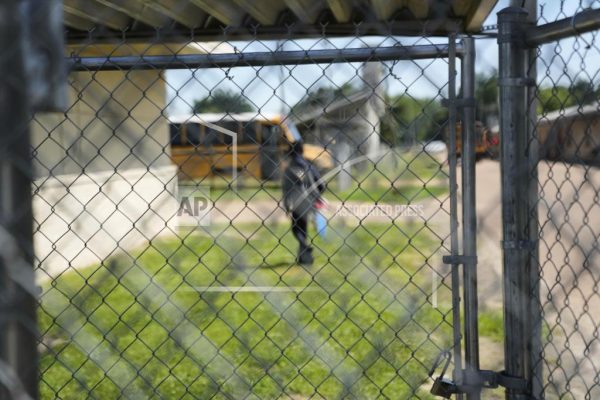
Even at a glance, the differences are obvious. The walls of Ferriday High School are old and worn, surrounded by barbed wire. Just a few miles away, Vidalia High School is clean and bright, with a new library and a crisp blue “V” painted on orange brick.

Ferriday High is 90% Black. Vidalia High is 62% white.

For Black families, the contrast between the schools suggests “we’re not supposed to have the finer things,” said Brian Davis, a father in Ferriday. “It’s almost like our kids don’t deserve it,” he said.

The schools are part of Concordia Parish, which was ordered to desegregate 60 years ago and remains under a court-ordered plan to this day. Yet there’s growing momentum to release the district — and dozens of others — from decades-old orders that some call obsolete.

In a remarkable reversal, the Justice Department said it plans to start unwinding court-ordered desegregation plans dating to the Civil Rights Movement. Officials started in April, when they lifted a 1960s order in Louisiana’s Plaquemines Parish. Harmeet Dhillon, who leads the department’s civil rights division, has said others will “bite the dust.”

It comes amid pressure from Republican Gov. Jeff Landry and his attorney general, who have called for all the state’s remaining orders to be lifted. They describe the orders as burdens on districts and relics of a time when Black students were still forbidden from some schools.

The orders were always meant to be temporary — school systems can be released if they demonstrate they fully eradicated segregation. Decades later, that goal remains elusive, with stark racial imbalances persisting in many districts.

Civil rights groups say the orders are important to keep as tools to address the legacy of forced segregation — including disparities in student discipline, academic programs and teacher hiring. They point to cases like Concordia, where the decades-old order was used to stop a charter school from favoring white students in admissions.

“Concordia is one where it’s old, but a lot is happening there,” said Deuel Ross, deputy director of litigation for the NAACP Legal Defense Fund. “That’s true for a lot of these cases. They’re not just sitting silently.”

Debates over integration are far from settled

Last year, before President Donald Trump took office, Concordia Parish rejected a Justice Department plan that would have ended its case if the district combined several majority white and majority Blac k elementary and middle schools.

At a town hall meeting, Vidalia residents vigorously opposed the plan, saying it would disrupt students’ lives and expose their children to drugs and violence. An official from the Louisiana attorney general’s office spoke against the proposal and said the Trump administration likely would change course on older orders.

A person walks inside a barbed wire fence inside Ferriday High School in Ferriday, La., Thursday, May 22, 2025. (Gerald Herbert)

Accepting the plan would have been a “death sentence” for the district, said Paul Nelson, a former Concordia superintendent. White families would have fled to private schools or other districts, said Nelson, who wants the court order removed.

“It’s time to move on,” said Nelson, who left the district in 2016. “Let’s start looking to build for the future, not looking back to what our grandparents may have gone through.”

At Ferriday High, athletic coach Derrick Davis supported combining schools in Ferriday and Vidalia. He said the district’s disparities come into focus whenever his teams visit schools with newer sports facilities.

“It seems to me, if we’d all combine, we can all get what we need,” he said.

Others oppose merging schools if it’s done solely for the sake of achieving racial balance. “Redistricting and going to different places they’re not used to … it would be a culture shock to some people,” said Ferriday’s school resource officer, Marcus Martin, who, like Derrick Davis, is Black.

The district’s current superintendent and school board did not respond to requests for comment.

Federal orders offer leverage for racial discrimination cases

Concordia is among more than 120 districts across the South that remain under desegregation orders from the 1960s and ’70s, including about a dozen in Louisiana.

Calling the orders historical relics is “unequivocally false,” said Shaheena Simons, who until April led the Justice Department section that oversees school desegregation cases.

“Segregation and inequality persist in our schools, and they persist in districts that are still under desegregation orders,” she said.

With court orders in place, families facing discrimination can reach out directly to the Justice Department or seek relief from the court. Otherwise, the only recourse is a lawsuit, which many families can’t afford, Simons said.

In Concordia, the order played into a battle over a charter school that opened in 2013 on the former campus of an all-white private school. To protect the area’s progress on racial integration, a judge ordered Delta Charter School to build a student body that reflected the district’s racial demographics. But in its first year, the school was just 15% Black.

After a court challenge, Delta was ordered to give priority to Black students. Today, about 40% of its students are Black.

Desegregation orders have been invoked recently in other cases around the state. One led to an order to address disproportionately high rates of discipline for Black students, and in another a predominantly Black elementary school was relocated from a site close to a chemical plant.

A signs warns of firearms on a fence at a gate for Ferriday High School in Ferriday, La., Thursday, May 22, 2025. (Gerald Herbert)

The Justice Department could easily end some desegregation orders

The Trump administration was able to close the Plaquemines case with little resistance because the original plaintiffs were no longer involved — the Justice Department was litigating the case alone. Concordia and an unknown number of other districts are in the same situation, making them vulnerable to quick dismissals.

Concordia’s case dates to 1965, when the area was strictly segregated and home to a violent offshoot of the Ku Klux Klan. When Black families in Ferriday sued for access to all-white schools, the federal government intervened.

As the district integrated its schools, white families fled Ferriday. The district’s schools came to reflect the demographics of their surrounding areas. Ferriday is mostly Black and low-income, while Vidalia is mostly white and takes in tax revenue from a hydroelectric plant. A third town in the district, Monterey, has a high school that’s 95% white.

At the December town hall, Vidalia resident Ronnie Blackwell said the area “feels like a Mayberry, which is great,” referring to the fictional Southern town from “The Andy Griffith Show.” The federal government, he said, has “probably destroyed more communities and school systems than it ever helped.”

Under its court order, Concordia must allow students in majority Black schools to transfer to majority white schools. It also files reports on teacher demographics and student discipline.

After failing to negotiate a resolution with the Justice Department, Concordia is scheduled to make its case that the judge should dismiss the order, according to court documents. Meanwhile, amid a wave of resignations in the federal government, all but two of the Justice Department lawyers assigned to the case have left.

Without court supervision, Brian Davis sees little hope for improvement.

“A lot of parents over here in Ferriday, they’re stuck here because here they don’t have the resources to move their kids from A to B,” he said. “You’ll find schools like Ferriday — the term is, to me, slipping into darkness.”

09 Jun 18:01

Staff vacancies hit Texas weather offices as they brace for a busy hurricane season

by By Alejandra Martinez
Houston’s National Weather Service office has lost its head meteorologist amid a federal requirement to cut 10% of NOAA’s staff.
09 Jun 18:00

update: my new manager is someone I slept with years ago … and he doesn’t know we have a child

by Ask a Manager

Welcome to the mid-year “where are you now?” event at Ask a Manager! All this week and next, I’ll be running updates from people who had their letters here answered in the past.

There will be more posts than usual this week, so keep checking back throughout the day.

Remember the letter-writer whose new manager was someone she slept with years ago … and he didn’t know they have a child together? The first update was here, and here’s the latest.

I’m incredibly grateful for the support you and the AAM community gave me at a stressful time, so I thought I’d share a final update.

My daughter changed her mind and has been in contact with Jacob. It’s still a bit awkward between them but they have some hobbies in common, which they’ve bonded over. My daughter also seems very excited to have some siblings who adore their cool new big sister.

I know some people were wondering why my old company reacted the way they did. For reasons I can’t go into, my work gets scrutinised by outside authorities and my manager’s role is primarily a quality control one. Any suggestion that my manager had not checked my work impartially enough due to a personal relationship could have been career-ending for both of us.

Additionally, the work I do is in a very specialist field and there are only a handful of people in the country who do it. Another company in a similar field had initially approached Jacob, who has had an amazing career by the sounds of it, to start a new department at their company doing the same thing. My old company paid a buttload of money to lure him over so that he wouldn’t be in direct competition for clients (and employees).

All of this meant that I couldn’t report to Jacob, there was no other manager I could report to, and the company couldn’t risk him going back to their competitor. Between the two of us, Jacob was the better asset to keep and the worse threat to lose. I’m not excusing the behaviour of my old company, but there was a logic to it. I’m still angry about the way they treated me and how helpless I felt, but that is slowly fading over time.

I had trouble finding a new job. Financially, we were okay so I was being picky (e.g. wanting to stay in my current city). After almost a year out of work, Jacob told me he’d been approached by the first company who still wanted him to start their new department. He was happy at my old company but he offered to take the new role if I wanted to try to get my old job back. I would never ask him to do that, and I also never want to go anywhere near that company again, so I said no.

Jacob turned the other company down but gave them my name. It’s a step up from where I was but they interviewed me and I got the job! I’ve been here about 6 months and it’s enjoyable so far, plus I’ve never procreated with anyone in my chain of command so it seems like a good place to work.

I’ve hired one of my former coworkers, plus two recent graduates from my alma mater who are bright, motivated and quickly getting up to speed. Unlike my old company, we don’t have a lengthy waitlist for our services (yet!) so a few clients have started coming to us instead of them. I am delighted that I am becoming the very threat my old company was trying to avoid when they pushed me out.

The post update: my new manager is someone I slept with years ago … and he doesn’t know we have a child appeared first on Ask a Manager.

09 Jun 17:49

how should we demote an employee?

by Ask a Manager

A reader writes:

My company is a young and growing start-up. We are in a period of rapid growth that is leaving all of us stretched to the brim. I am on the leadership team, and we have a situation with an employee, Adam, who we (maybe carelessly) promoted to a key position. He has been in the position for six months and it’s just not working out. It is absolutely our mistake. We put him in the position out of necessity rather than carefully considering who would be a good fit.

Now we are being forced to reckon with our mistake. It is just not working out, and it’s time to replace him. We would like to move Adam to another position where he has a greater chance of success.

The debate we are having is about how we should go about this. I am advocating that we tell him, hope he still wants to stay on with us, and allow both internal and external candidates to apply for the position. I want to allow our internal candidates the opportunity to move up.

My colleague is arguing to hire externally for the position and not tell Adam what is going on until we have found a suitable replacement. We are short-staffed and need to hire more people regardless.

Both of us are concerned about Adam quitting before we have found a replacement. It is a vital position to our organization, and not having someone there for any extended amount of time would place more work on our already overburdened team. I am very concerned about what it would do to trust and morale if we are not transparent in this situation. What would you recommend that we do in this situation?

I answer this question over at Inc. today, where I’m revisiting letters that have been buried in the archives here from years ago (and sometimes updating/expanding my answers to them). You can read it here.

The post how should we demote an employee? appeared first on Ask a Manager.

09 Jun 17:39

Cologne Evacuated After Discovery Of Unexploded WWII Bombs

by The Onion Staff

The biggest evacuation in the German city of Cologne since World War II is under way after the discovery of three unexploded bombs dropped by allied forces 80 years ago. What do you think?

“All a part of the long game.”

Randy Talarico, Citrus Extractor

“There was still a chance those bombs could have gotten a really old Nazi.”

Wendi Zales, Ballroom Uplighter

“All I’m hearing is no line at the Lindt Chocolate Museum.”

Austin Herrera, Gelato Thickener

The post Cologne Evacuated After Discovery Of Unexploded WWII Bombs appeared first on The Onion.

09 Jun 17:38

Comics return on June 23rd

by John Allison

There follows a brief pause while I finish drawing SAVAGE SWORD OF SUSAN, which runs for 11 weeks rather than the usual seven. Yes, it is epic in scale (for a single issue), you guessed right. It’s certainly not 34 pages of titting about in a forest*. I’ll see you back here on the 20th for the unveiling of the cover, and new pages begin to run on June 23rd. My Patreon subscribers will be able to read it in full then.

* It is 34 pages of titting about in a forest.

The post Comics return on June 23rd appeared first on Bad Machinery.

09 Jun 16:54

Texas Quietly Downsizes Border Security Spending

by Justin Miller

Without any announcement or open debate, the Republican-controlled Texas Legislature passed a biennial state budget that will effectively halve the amount dedicated to its multi-billion-dollar border security operations—from a proposed $6.5 billion down to about $3.4 billion. 

This marks the first time that GOP lawmakers have pulled back on their border security spending since Governor Rick Perry inaugurated state operations in the 2000s and Governor Greg Abbott supercharged them with the 2021 launch of Operation Lone Star (OLS). Still, that $3.4-billion level remains four times higher than the $800 million that Texas budgeted prior to OLS.

While the significant spending slash was a surprise decision that emerged in final negotiations by state House and Senate budget writers, it was not entirely unexpected. 

Ahead of the 2025 legislative session, Abbott (and Lieutenant Governor Dan Patrick) had hinted that he might roll back the state’s border  once incoming President Donald Trump was able to initiate his promised crackdown. But, for almost the entirety of the session, Republican lawmakers pressed forward with a budget that kept Operation Lone Star (OLS) fully funded with $6.5 billion divvied up among a handful of agencies—namely the Texas Department of Public Safety, the Texas Military Department, the governor’s office, and the state emergency management agency.

Throughout the session, the governor was lobbying Trump and the GOP Congress in Washington, D.C., to reimburse Texas for the more than $11 billion in state funds spent on its sprawling border schemes—which have included a surge of National Guard deployments, a criminal arrest dragnet targeting migrants, the busing of tens of thousand of asylum-seekers out of state to Democratic cities, and the building of Trump-style border wall.

Last summer, the state wound down its busing program, and this spring it shuttered one of its temporary detention centers after arrests of migrants in the border region had trickled nearly to a stop. Abbott credited the ability to close that facility in Jim Hogg County to the Trump administration, though records showed that it had been processing very few migrants for many months while Biden was still president. In early April, state police and National Guard soldiers pulled out of Shelby Park on the Rio Grande in Eagle Pass, which they had occupied and used as a stage for border security theater for well over a year. 

The brunt of the OLS spending cuts for 2026-27 come from the governor’s office, amounting to $2.7 billion, according to budget documents, leaving just around $230 million of the amount originally requested by the governor. Abbott’s office has controlled billions in OLS funding for local grants, state border wall, migrant busing, and the private contracting of migrant temporary detention centers used to process migrants arrested by state and local police. These have in turn helped fuel a private contracting bonanza, which has proven lucrative for both contractors and Abbott’s campaign coffers. 

The budget cuts largely target Abbott’s border wall construction program, for which future funding appears to be zeroed out or close to it.  GOP state Senator Joan Huffman previously told the Houston Chronicle that most of the cuts are for the border wall. Huffman said Abbott did not push back on the cuts: “It seemed appropriate to reduce the state funding in a way where we still have a presence, we could assist the feds on their operations, but it just didn’t take quite the same amount of state resources,” Huffman said.. 

Abbott first announced his plans for the state to continue building Trump’s border wall in several Texas border counties back in 2021, directing the Texas Facilities Commission (TFC) to oversee the program, with an aim to build several hundred miles of fencing.  Since then, the state has allocated about $3.1 billion for construction of the wall. As of mid-April, contractors had completed 61.8 miles of wall segments across six different counties, and the state had acquired easement rights to nearly 20 additional miles, TFC executive director Mike Novak said at the agency’s most recent meeting in April. With current funding, Novak said “we’re in a position to build up to approximately 85 miles.” 

Asked about the cuts to the border wall construction program, TFC referred the Observer to the governor’s office. “TFC has no knowledge on the future of the [border wall] program,” the agency’s spokesperson said in a statement. The governor’s press office did not respond to the Observer’s emails requesting comment. 

At that meeting, Novak acknowledged that the wall program’s future was dependent on both the state and the Trump administration. “We’re sort of at an intersection right now of both state and federal policy spending decisions, which are pending,” he said in April. “As those policy decisions are made, we are standing by and ready to move forward accordingly. Whatever policies come out in the upcoming weeks and months, we’ll use whatever guidance given.” 

The state has spent anywhere from $20 million a mile to over $30 million a mile, depending on the location and terrain (comparable to what Trump spent in his first term)—and at times has run over budget. Texas is not allowed to use eminent domain to secure private land rights to build its wall and, due to landowner resistance in many areas, has often resorted to building fragmented segments in far-flung locations—including on the land of wealthy ranchers, some being allies of the governor. 

So far, the state has spent about $34 million on easement rights for dozens of parcels along the border—including several $1 million-dollar-plus transactions involving large ranches—state records and prior Observer reporting has shown. 

TFC has estimated that it will cost as much as $500,000 per mile to maintain the wall it’s already built, along with the adjoining patrol roads, lighting, and other infrastructure. Funding for that ongoing maintenance was also cut from the Texas budget. During his recent push for federal reimbursement from Washington, Abbott has floated the idea of transferring the state’s land rights and border wall to the federal government. The state’s easements with private landowners include a clause allowing Texas to transfer control of the property and wall to the feds. 

The U.S. House budget bill—aka Trump’s “Big Beautiful Bill”—was recently passed with $12 billion for state reimbursements for border security, as well as an astronomical $46.5 billion for federal border wall and “river barriers” likely akin to Abbott’s controversial buoys. The U.S. Senate is still considering the budgetary proposal. 

The other big OLS cut is $500 million to the Texas Military Department, though the agency still has a total of $1.7 billion for border security—enough to retain much of its large soldier deployment on the border. (Last year, the Military Department built a permanent military base outside Eagle Pass that can house up to 1,800 soldiers.) 

Abbott’s office told the Houston Chronicle that any TMD reductions in deployment will be supplanted by troops sent by Trump and that “total border security posture will remain at similar levels.” 

Untouched by the OLS cuts is the Texas Department of Public Safety, the massive state police agency that has effectively directed all facets of OLS since it began—and has dramatically expanded its technology and surveillance capabilities via the state’s border security windfall. Its $1.2 billion allocation for border security appears to have remained untouched, budget documents show. 

Meanwhile, the governor’s office still has plenty of money to play with for his border operation. Much of it will continue to flow to local counties to subsidize their own law enforcement efforts related to OLS. 

Among the finer print, Abbott and the GOP budget-writers were kind enough to include a $1 million line-item to reimburse the City of Eagle Pass for the costs incurred by the year-plus military occupation of Shelby Park. 

The post Texas Quietly Downsizes Border Security Spending appeared first on The Texas Observer.

09 Jun 16:51

Pickleball popularity slips with gay seniors “The whole name is misleading”

by Trevor Campbell

PORT COLBORNE, ON — Large numbers of gay seniors initially drawn to popular racquet sport pickleball are abandoning the game after realizing it has nothing to do with male genitalia. “We may be gay, but we’re still boomers,” shared Don Stevenson, a 72-year-old resident of Niagara Falls. “We don’t get pronouns, skew conservative, and will […]

The post Pickleball popularity slips with gay seniors “The whole name is misleading” appeared first on The Beaverton.

09 Jun 16:51

Saturday Morning Breakfast Cereal - Cave

by Zach Weinersmith


Click here to go see the bonus panel!

Hovertext:
Would you rather sit with friends watching shadows on the bigscreen or spending your time arguing with Plato about whether poetry should be legal?


Today's News:
09 Jun 15:39

Next day, I guess.

Next day, I guess.