Shared posts

03 Jul 13:37

Review: Adriane McMillon’s Nostalgic Journey at Perspective 6

by Michelle Green

Walking through Adriane McMillon’s exhibition at Perspective 6 Art, I found myself stopping repeatedly, overwhelmed by waves of recognition and emotion that would linger long after I’d left the gallery. I’m still getting goosebumps. There’s something about encountering art with such a clear and complete vision — it creates connection in ways that feel rare and powerful. The gallery has consistently been presenting work of this caliber, establishing itself as a space where thoughtful curation meets exceptional artistry.

Adriane McMillon’s first solo show, A Page From My Book, is a stunning collection that merges deep nostalgia with refreshingly modern technique. These are paintings that present as collages — layered images with torn edges seemingly crumpled as if impulsively ripped from magazines, and attached with realistically detailed pieces of tape. Rendered entirely in acrylic, the textured surfaces emphasize the accumulation of identity over time, each mark a deliberate choice in the story of becoming.

The idea of the Book of Life is a prevalent metaphor worldwide, and McMillon has made it his own. Stemming from childhood memories of collecting ads, articles, and posters to hang on the walls of his room, the artist has transformed that intimate practice into a sophisticated artistic language. I imagine his book as a living scrapbook — clippings of events and moments float around and reorder themselves as time, self-reflection, and healing provide new context. Each painting becomes a chapter from this book, a reflection of part of his life or lessons learned.

McMillon is self-taught with only 11 years of painting under his belt, yet his technique is exceptionally refined. He effortlessly blends flattened pop art, dimensional realism, and illustration into a cohesive visual language. His color choices are bold and emotionally evocative — think editorial magazine sophistication but deeply personal. The rough edges of his layered elements reference ripped pages, but also represent how uneven and messy experience and memory actually are. We don’t get to meticulously edit our experiences, after all.

Playing with the idea of ephemera — those items originally meant to be tossed but which somehow become treasures — McMillon’s approach feels both uniquely his and universally relatable. We all hoard fragments from meaningful moments: screenshots, pressed flowers, concert tickets. From my work with historical ephemera in archival collections, I’ve found these remnants often reveal more about a person, time, or place than any formal document. It’s what we choose to keep that lets others peek into our inner worlds.

McMillon’s cultural references are distinctly millennial, and I found them deeply relatable and fun as I remembered the shared inside jokes that shaped our generation’s DNA. Those things we once hid or felt embarrassed about as kids (hello, anime and comics!) often become our most celebrated qualities as adults. It’s proof of how crucial play is to figuring out who we are and – how shared cultural touchstones create unexpected bonds between strangers.

More significantly, McMillon’s representation of a grounded, hopeful young Black man offers a viscerally positive expression of struggle and growth. His reflection on youth through what social media terms “Black Boy Joy” — a concept explored by writers like Danielle Young at The Root — importantly confronts traditions of suppressed emotion and stoic masculinity imposed by the weight and constraints of being a Black man in America. Gallerists Lewis and Miller have created a Black narrative that is narrative first, art forward, allowing the Black experience to exist fully while speaking for itself. It is elevating the importance of the human experience without denying or erasing racial identity.

The overarching theme of the exhibition is established in the first section with the idea that “growth begins where release takes root,” as noted in the curatorial statement. McMillon uses imagery of lush greenery to suggest what can flourish when properly nurtured. McMillon’s paintings Rooted and Dare to Serve establish this foundation with an innate coolness of their blend of graphic text and throwback aesthetics.

A painting of a person sitting in a chair reading a book and surrounded by potted plants. The word "Vintage" appears over the figure's head.

Adriane McMillon, “Rooted,” acrylic on wood, 48 x 48 inches

In Rooted, a figure relaxes in a floral chair, legs crossed and absorbed in reading a comic book. The comic itself carries historical and racial significance, featuring Black Panther fighting the KKK, grounding personal joy in larger narratives of resistance and empowerment. While surrounded by abundant greenery, the plants tellingly remain in pots, suggesting that as we thrive and grow, we often outgrow our current environments and containers. The large text overhead, that reads “Vintage,” reinforces the nostalgic comfort of returning to what genuinely nourishes us.

Dare to Serve takes a more direct approach, featuring a man in a sweatshirt reading “Stop Watering Dead Plants.” Layered graphic text spelling out “Dare” and “Serve” challenges viewers to examine what they’re cultivating in their lives — asking pointedly what we’re serving if we’re giving energy to things that don’t help us grow. The section simultaneously asks the critical questions: Are we watering dead plants? How do we objectively assess our lives and decide what serves us versus what drains our energy?

A photograph of a painting that mimics the style of layered torn pages and includes imagery of a desert landscape, a person riding a bus, and the words "Now here."

Adriane McMillon, “Two Ways,” acrylic on wood, 36 x 72 inches

Two Ways is a moving representation of the isolation felt during seasons of struggle and change. Split into three sections, seemingly disparate images combine to create an arresting feeling of solitude that turns to hope when a second way of seeing is revealed. The vast Southwest landscape — harsh, empty, yet strikingly beautiful — recalls the artist’s time in Arizona and New Mexico, while evoking the allure of open horizons and endless possibility. Layered below this is a scene of a young man riding on a late-night bus, illuminated orange in traffic blur. Taking long journeys on public transportation means being surrounded by waves of humanity while remaining alone with your thoughts — the monotony of stop-and-go balanced by the journey’s beauty, if you take time to look. McMillon explained that while the handsomely stylized text at the bottom appears to say “Nowhere,” it actually reads “Now Here,” shifting the work’s entire meaning and demonstrating how a simple perspective change can transform struggle into growth.

The exhibition’s interactive elements extend beyond traditional gallery walls. A thoughtful questionnaire engages visitors across the five sections with prompts like “How does letting go of ‘dead plants’ in your life make room for new growth?” and “If your younger self could see where you are now, what would they be most proud of?” Selected responses were later posted on Instagram, creating ongoing dialogue that reinforces both the show’s and gallery’s philosophy: art as transformation, and is a way of seeing ourselves in others.

A photograph of crowd of people in an art gallery.

Visitors at the opening reception of “A Page from my Book” at Perspective 6 Art in Dallas

The space’s co-owners Ebony Lewis and Bobby Miller — both artists themselves — have been operating in this location since April 2024 bring exceptional thoughtfulness and empathy to their gallery, creating a welcoming environment that uplifts the local community. Their curation actively engages viewers by putting connection at the forefront and encouraging visitors to experience the art first and then dig deeper into personal meaning.

According to Lewis and Miller, their curatorial goal is translating lived experience into visual, spatial, and emotional language, while cultivating environments rooted in care, rigor, and intuition. “We believe meaningful exhibitions don’t just present work,” they explain. “They listen, stretch, and move culture forward.” They’re doing a phenomenal job of this — creating something that feels much bigger than individual artworks. I’m genuinely excited to see what they do next and looking forward to participating further in their world.In Deep Ellum’s rapidly evolving landscape, Perspective 6 has established itself as essential viewing, where every show promises to move you in ways you didn’t expect.


A Page from my Book was on view June 7 – 29, 2025 at Perspective 6 Art in Dallas.

The post Review: Adriane McMillon’s Nostalgic Journey at Perspective 6 appeared first on Glasstire.

03 Jul 13:37

Interview: Hung Hsien on Her 70-Year Art Career

by Lauren Moya Ford

Hung Hsien is a living legend in Houston. A member of the renowned Fifth Moon Group with work in the collections of the Smithsonian and the University of Chicago, the 92-year-old artist has quietly been making elegant ink paintings in her Museum District apartment since 1984. Born in Yangzhou, China, in 1933, Hsien’s art career began in Taiwan, where she studied under the Manchu prince and traditional Chinese ink painter Pu Ru before moving to Chicago in the late 1950s. There, the artist discovered American Abstract Expressionism — she still names Arshile Gorky as a major influence — and developed her own distinct voice. Hsien’s paintings fuse aspects of traditional Chinese materials and methods with her own modern and very individual approach to the beauty of nature. 

Hung Hsien: Between Worlds at Asia Society Texas Center celebrates 70 years of the groundbreaking artist’s career. “It was really amazing that she had lived here all these years and hadn’t had a show in Houston yet,” exhibition co-curator Owen Duffy told me. “She has been working for her entire life, so it really is an honor and a privilege to have the opportunity to step into that world and help tell a story about how important this work is and how innovative she was as a painter throughout the 20th century.” The majority of the more than 50 works on display in the show are from the artist’s studio and private collections, making Between Worlds a rare opportunity to, in Duffy’s words, step into Hsien’s world. I spoke with the artist via video call recently to learn more about her life and work.

An ink on paper painting by Hung Hsien of clouds rolling across a landscape.

Hung Hsien, “Sea of Clouds,” c. 1950, ink on paper. Collection of the artist. Photo: Alex Barber

Lauren Moya Ford (LMF): Your exhibition at Asia Society in Houston encompasses more than 70 years of your artistic career. How does it feel to see the artworks from different chapters of your life together in one place? 

Hung Hsien (HH): It’s not easy to see all the work at the same time because when you think back to each painting and how much time you spent and how you did it, they all contain different feelings from that moment. When I see the works, I go back and remember the time when I was doing each piece.

LMF: You first started drawing when you were a child. What is your first memory of making art?

HH: My very first experience was marvelous, because at that time I didn’t have to think about anything, I would just draw. I’d draw on the walls in my house and in my room, and I’d also always draw pictures on books. And one time in the classroom my teacher took my book away, saying, “No more drawing for you!” No one taught me and I didn’t have any lessons. No one told me how to hold the brush or how to do the artwork. I just did it myself.

An abstract landscape ink painting by Hung Hsien.

Hung Hsien, “Floating without End,” 1970, diptych, ink and color on paper. Collection of Chu-tsing and B. U.K. Li. Photo: Alex Barber

LMF: In your paintings, there’s a delicate balance between depicting nature and abstraction. You started painting in an abstract manner in the late 1960s. How did that part of your work emerge?

HH: After I came to this country, I saw the work of Mark Tobey at the The Art Institute of Chicago. Every time I visited the museum, I saw his paintings. I didn’t understand them at all, and I just sat there and looked at them, trying to to digest them. No one had told me about modern art before.

 I went to graduate school for painting at Northwestern University. My professors talked to me a lot, but they never said that I should paint this way or that. So from there I just had to use my own ideas to do what I wanted to do.

It was a struggle for a while, because I had to translate from the Chinese painting that I’d learned before to abstract oil painting. It was not easy. It was very painful in fact, because I didn’t know what to do at first.

LMF: In your 2017 oral history interview with Rice University’s Houston Asian American Archive, you said that you paint from your mind, and that your work has nothing to do with the outside world. Can you tell me more about how you feel when you’re painting, and how you achieve that special state of concentration?

HH: I think it’s like Zen. I do not prepare any notes or sketches. I just go ahead to do it. The first stroke is hard because you don’t know where to put it on such a big piece of paper. With writing, you always start from the first sentence and then go ahead to do the rest, and so you have the flow from the beginning to the end. Music is the same: You start from the beginning and go to the end. But with art, after you’re finished, it’s not clear where you started. 

LMF: In that interview you mentioned that you often grind your ink before painting as a way to help you enter a more focused, meditative mindset.

HH: Yes. When you grind ink, you just concentrate. You do not rest, and you do not think of anything. You have to clear your mind first before you prepare for the process of making something.

An ink painting by Hung Hsien of beach rocks.

Hung Hsien, “Beach Rocks II,” 1985, ink and color on paper. Collection of the artist. Photo: Alex Barber

LMF: One thing that is striking about your work is that in your paintings, the white space around your marks plays a very strong role, and almost has the same strength as the painted areas. 

HH: With [Western style] oil painting or watercolor, you always cover the background entirely. But in Chinese painting, white is important, and we leave that space so that the marks can breathe. That white space is also left for people to write a poem or other kinds of text on the piece. 

LMF: You’ve been in a special position that not many artists have in that you have bridged very different worlds. You’ve lived in China, Taiwan, and Hong Kong, as well as Chicago and Houston. Do you think that these experiences gave you a unique voice or a perspective in your artwork?

HH: I was born in China, and left for Taiwan when I was only 15. I lived there for 10 years. But actually, the United States is my home. It feels very, very nice to live here. I’m glad that I came to this country while I was still trying to figure out what to do for my own artwork. It was really good for me. Otherwise, if I had stayed in Taiwan, I might still be doing copies of my teachers’ work. Some people who start making art in the traditional way cannot free themselves enough to make their own work. Moving to the United States allowed me to find more freedom for everything.

LMF: Do you have any advice for young artists? What should a young artist do at the beginning of their career?

HH: Everyone is an individual, and everyone develops differently, so their ideas will be different from mine. But, they should simply draw from their heart and not be influenced by too many artists. It’s nice to study art history, but in the end you have to be yourself. If you copy others too much, then you lose yourself, especially when you are young. That’s a very important period. Just go ahead to do it yourself. That’s the best way.


Hung Hsien: Between Worlds is on view at the Asia Society Texas Center through September 21, 2025. The exhibition will travel to Asia Society Hong Kong in 2026.

The post Interview: Hung Hsien on Her 70-Year Art Career appeared first on Glasstire.

03 Jul 13:36

Houston Community College Has A New Name On The Way

by Joanna Soltero

HOUSTON – After more than 50 years, Houston Community College has a new name on the way.

News broke on this exciting news during an HCC’s Board of Trustees meeting June 18th. Houston Community College will now be named “Houston City College”. The colleges’ board of trustees voted 6-3 in favor of the rebranding of the school.

Besides the name, there will be many other changes coming to the HCC school system like expanding into bachelor’s degree programs. The Southern Association of Colleges and Schools CommisSion on Colleges was able to approve HCC’s request to become a Level 2 institution. This approval is what HCC needed in order to be able to offer bachelor’s degrees on top of the associate’s degree which they are currently offering. Many other colleges around Texas have made the same move as HCC in order to reflect the expansion of their schools.

Chancellor Margaret Ford Fisher had been petitioning for the change since August of 2024. Her hope for this change is to boost enrollment and improve the image of HCC as a possible destination for students determined to get a 4-year degree. Some programs that will be offered for the 4-year degree will be robotics, health care management, business management and even artificial intelligence.

This name initiative began with a submission of new names from students, faculty, staff and the community itself. There were three other top contenders like, Houston College, City of Houston College, and Greater Houston College, but ultimately, they decided on Houston City College. KPRC Click2Houston created an online poll asking its readers on how they felt about the new name change. 14% felt indifferent, 36% liked the new name, and 50% said they hated it. Besides the name it seems like Chancellor Margaret wants to make sure people know that the schools’ purpose will not change. “As Houston City College, we will continue to provide quality, affordable instruction through certificates, associate and baccalaureate degrees at a community college price.”

03 Jul 13:33

should people be allowed to volunteer for a for-profit business like a horse farm or yoga studio?

by Ask a Manager

A reader writes:

We have friends/acquaintances who own a horse farm. They give riding lessons and various other things they charge for. I’m sure they’re not making a ton of money, but as far as I know they are not a nonprofit. They often post “volunteer hours” on social media or send emails and post photos of people “volunteering” at the farm to help with various chores, including horse care, etc. I’m pretty sure this is technically illegal, but in some ways, should it be?

(I’m curious about this, but I’m not planning on doing anything about it.)

You’re right that for-profit businesses can’t legally accept volunteer help (unlike nonprofits, which can). Businesses are required by law to pay people who work for them at least minimum wage. That’s true even if the volunteers in question are happy to be volunteering and want to waive their right to be paid. (There are some exceptions to this. The Fair Labor Standards Act doesn’t require the minimum wage for workers who perform services for an “amusement or recreational establishment” if it doesn’t operate for more than seven months in any calendar year. That’s intended to cover seasonal activities like amusement parks and sports events.)

That said, despite the law, it’s not uncommon to see arrangements like your friends’ in certain fields — for example, yoga studios that have members work at the front desk in exchange for free or discounted classes, for-profit events that are partly staffed by volunteers (in exchange for free attendance or getting access behind the scenes), theaters that use volunteer ushers, etc.

People who do this generally look at it like bartering: they’re trading their labor for something else of value to them. But employers still have to comply with wage and hour standards, keep strict records of all hours worked and payments made, and provide itemized wage statements to employees, and the value of any in-kind trade needs to be reported and taxed. (Also, some states, like California, don’t allow that at all.) One exception: if someone could be legally classified as an independent contractor — meaning they’re not subject to the type of control employees are subject to and otherwise meet the legal test for independent contractors — they could choose to barter for their services, but the value of the goods or services received would still need to be reported to the IRS and taxed.

Now, you asked whether this should be illegal. Personally, I think it’s fact-dependent. One advantage of the law as written is that it prevents for-profit businesses from pressuring people into working without pay for “exposure” or to “get a foot in the door.” That’s a good thing; it prevents people who otherwise would be vulnerable to exploitation. (Or at least it’s supposed to prevent it. In reality, it still happens.) On the other hand, many people who enter into these agreements feel they’re being compensated in ways that are sufficiently valuable to them and that it gives them access to things (like classes or riding) that might otherwise be unaffordable.

Ultimately, different people will come down in different places on this.

The post should people be allowed to volunteer for a for-profit business like a horse farm or yoga studio? appeared first on Ask a Manager.

03 Jul 13:24

elderly employee isn’t doing his job, can you use sick days for car trouble, and more

by Ask a Manager

It’s five answers to five questions. Here we go…

1. Elderly employee isn’t doing his job

I work in a public library with a part-time employee who is 85. He needs the paycheck and we all feel empathy for him, but he is losing his hearing, forgets things and generally doesn’t do much that he doesn’t feel like doing. He wants a lot of attention and people to listen to him, his health troubles, and what he’s going to have for dinner and has little initiative in helping out with daily tasks. Our director seems lost as to how to address his aging and decline. How do managers address an aging employee who should retire but won’t?

By holding them accountable to meeting performance and conduct standards the same way they would at any age — meaning that in this case your boss should be telling your coworker that he needs to be working on XYZ, and addressing with him why ABC hasn’t happened, and asking him to stop distracting people while they’re working. At some point in those conversations there should be a way to say, “What we need from you if you want to stay in this role is ___. Can you commit to doing that or is the job not matching up with what you’re looking for anymore?”

Of course, that requires a manager who’s willing to have hard conversations, which is … not all managers. But it gets easier if you see it through a performance/job alignment lens rather than a needs-to-retire lens.

2. Can you use sick days for car trouble?

I’m curious on your opinion of whether or when it’s acceptable to use sick days for car trouble.

I recently had some mechanical trouble where my car wasn’t starting reliably. I scheduled an appointment with a mechanic for one of my days off, when I had time to be without the car for a day or two. They looked at the car, said it started fine for them and nothing was wrong, and sent me away without fixing anything.

Halfway through my next work week, the issue came back as I was trying to leave for work and my car wouldn’t start at all. I was contemplating calling an Uber to get to work when it finally started and I was able to drive to work. While chatting with a coworker, “Jim,” that morning, I mentioned I had thought I might have to Uber in. Jim’s reply was, “If my car didn’t start, that would be an instant sick call.” Calling in sick hadn’t occurred to me as an option, because I wasn’t sick.

I took the car to a different mechanic, who said the starter needed to be replaced. Unfortunately, they couldn’t have it fixed until the next afternoon because they needed to order a part. They recommended leaving the car there because if the starter totally gave out, I’d be stranded somewhere. So I Ubered home and contemplated calling in sick for the next morning.
If I had called out, my shift would have been covered with overtime. There’s a list of people for every shift who are willing to come in for overtime and lots of us take all the overtime we can get. If I had called out sick 35 minutes prior to my shift when my car didn’t start, the person I relieve would probably have had to stay an hour late, but somebody would have picked up the shift last-minute to start ASAP. If I called out in the afternoon when I found out the car needed to stay at the mechanic overnight, my shift the next morning would have been covered immediately with no schedule disruption to the person I’d been scheduled to relieve.

I’m in a union and our contract says the company can’t ask for a sick note unless you’re out for more than three days in a row. We don’t get “personal days” or any kind of leave that could officially be used for car trouble, only sick time. Additionally, I make about $550 dollars a day and Ubering would probably have been $50-100 round trip, so I’d still be ahead. I don’t have a partner or family nearby, so I couldn’t ask anybody to borrow their car or for them to drive me either.

I ended up emailing my workgroup to see if anyone would trade the shift with me, and somebody took me up on my offer. Trading shifts is very common at my workplace, and I figured I would Uber in if nobody was available for a last-minute trade. The “danger” of trying to trade last-minute is that once you email the workgroup to ask for the day off, the company can see you were trying to get that day off, so if you then call out sick it looks suspicious.

I think it should be okay to use sick days for car trouble, but in a lot of offices it wouldn’t be. In some offices, it would! The idea would be that sick days are functioning as a proxy for “last-minute emergency that means I can’t make it in, for health reasons or otherwise.” But other offices, and other managers, are sticklers about keeping sick days for sickness only. So you have to know your own office and your own manager.

When you’re unsure, it’s generally better to err on the side of caution and be “sick” (although I take your point that it risks looking suspicious if you were already seen trying to find coverage — although perhaps in that case you are already feeling sick the day before).

3. My boss is upset I didn’t tell him I was applying for another job internally

I recently applied for an internal position at my company. It would be a lateral move to a different team that works indirectly with my current team. The application directions for internal candidates stated that if offered an interview, you must notify your direct line manager.

Well, I was offered an interview. I immediately informed my manager that I had applied and was being offered an interview (even though I’d really rather not tell anyone at that stage). He seemed supportive at the time and admitted that I was well-qualified for the role.

Fast forward a couple months. I have not been offered the job and assume it has since been filled, which is fine. However, in an unrelated meeting with my manager today, he brought up my application and expressed that he was upset that I hadn’t told him before I applied. He seems to feel that it was unprofessional and disrespectful to apply without telling him until I was offered the interview.

My feeling is that internal or not, job searches are confidential and quite frankly, none of anyone’s business until it needs to be their business. Despite this, I still followed the company guidelines and notified him. If I had applied and not even been offered an interview, he would not have known and it wouldn’t have made a difference in the end.

I understand why he feels like this was deceitful and done behind his back, but from my point of view as a private person, I only like to share information when it’s relevant, and simply applying for an internal job is not relevant to my position on his team if it’s not going to advance beyond an application. I need a reality check here: are his expectations realistic, or an overreach of authority?

It’s not deceitful not to tip off your manager that you’re applying for another job! It’s normal; there’s no point in potentially causing alarm if you’re not going to actually make the move.

That said, it is a little different when the job is an internal one. It’s not uncommon for companies to have policies requiring you to tell your manager at some point (or even get their sign-off); some require it upon application, some at the interview stage, and some only if you move forward from there. Even if the policy doesn’t require you to disclose until later in the process, your manager may find out anyway; managers sometimes talk to each other, and it can get mentioned unless you specifically ask for it not to be.

In any case, your boss is being ridiculous. You followed your company’s policy on when to alert him, and he wasn’t entitled to earlier notice than that. You weren’t unprofessional or disrespectful to apply without alerting him. However, if he’s the type to hold it against you (or to start treating you as if you have one foot out the door), the smartest thing might be to assure him you’re not actively looking but were just interested in this particular job because ___.

4. Interviewers want me to talk about influencing without authority

I’m on the job hunt, and I’ve been asked a few times, “Tell me about a time when you influenced without authority.” I know the meaning of all those words, but I don’t really understand what I’m being asked. When I search for explanations, it’s all things that just sound like … working together? Could you share examples of good answers for this question?

They’re asking for examples of times when you got something done that involved other people even though you didn’t have formal authority over them. That could be a project you were in charge of where you needed to rely on other people to do work when you weren’t in their chain of command, or where you raised a concern or idea or proposed a new system and were able to convince people to see things your way, or when you helped contribute to a culture change — basically any time where you weren’t the boss but other people did something or changed their thinking or approach because of you.

5. How can I ask to work from another state for a few weeks?

My partner lives out of state in California and I live in South Carolina. I wanted to go out to California and stay with my boyfriend for about two weeks while continuing to work (I work remotely). How should I phrase my question to my boss asking if there’s a chance for me to continue to work while I’m out there visiting?

The first thing to know is that technically you’ll owe income taxes to California for those two weeks, and your company would have to report the income to the state. (This is more common than people realize; a lot of states have very low thresholds for how many days you can work there before you’re taxed on the income as a non-resident.) That said, it’s also true that people ignore this requirement all the time (to the point that your boss may not even know about it and your company might not bother to follow it) … but you should be aware that it could come up so that you’re not blindsided by it.

Aside from that, you could simply say, “Since I’m already working remotely, any objection to me working from California for two weeks while I’m visiting my partner next month (or family, or however you want to say it)? I’d keep the same hours and availability that I have now and wouldn’t have any change in my output; I’d just be working from a different chair than the one I’m normally in.”

Lots of managers will say yes to this. Some will say no — which could be because of information security (particularly in fields with strong data protection policies), or because they think you’ll treat it as a vacation and not work as much, or because they’re aware of the tax hassle. But it’s reasonable to ask.

Related:
when I work from home, do I have to be AT home?

The post elderly employee isn’t doing his job, can you use sick days for car trouble, and more appeared first on Ask a Manager.

03 Jul 13:23

my boss said I’m threatened by his “masculine energy”

by Ask a Manager

A reader writes:

I am a Millennial woman and my new boss is a Gen X man. We have been butting heads a lot, mostly because I think he lacks the basic skills and competencies to do his job. My frustration has gotten to the point where I feel like screaming most days.

This past week I had to send him yet another email where I tried to politely and professionally explain that he was yet again doing something wrong. I had two people read it for tone before I sent it. This is the opening paragraph to the 10 paragraphs he sent in response:

“I think [Name] that you would benefit from learning about the unconscious and the psychological defense of projections and transferences that emanate from the unconscious of a person, especially one with a highly dysregulated nervous system. I am a human being too — I have done it and can do it (still do it at times) and that’s why I know about it experientially. It’s also why I speak to the need for grace often (as well as accountability). Believe it or not (and that is a literal statement because I really don’t think you can believe it at this point in your life), I extend a great deal of grace to you. But that does not mean I am going to take on crap that you are trying to offload on to me. Nor am I going to just be a wallflower as a director of an organization that needs to address its challenges. Because you have been working in an all-female environment for so long, it’s quite possible that you (and others) take the masculine energy that I at times emanate as a threat, when there is no threat. But you perceive it as so. I’m sorry about that and I can be mindful of behaviors but I am not going to sit in analysis paralysis while we try to adjust to the chaos left behind in the emotional wake of the Trump Train.”

The best part about this email is that he voluntarily cc’d the board chair on it. He tries to paint me as a hysterical, flakey, incompetent woman, which fell flat because I’ve worked with our chair, a man, for the last 10+ years.

A few weeks prior to this email, I had asked an external project partner if I could use him as a professional reference as he has had nothing but very nice things to say about the work I’ve done with him for the last 3+ years. The day after I received this unhinged email from my boss, that project partner called me and asked how my job search was going. I said “not great,” and he asked if I wanted to come work with him. We later had a two-hour long conversation, and I’m being offered a pay bump and an opportunity to oversee a really awesome project.

So, now I need to write my resignation letter to my boss. Due to our summer PTO schedules, I won’t actually see my boss for another 2.5 weeks, and I won’t be starting my new job until mid-August. When he gets back to the office, I would love to have a polite and professional response composed that burns this man and his “masculine emanations” to the ground. Can you offer me any advice on what to say?

P.S. I spoke to an employment attorney and because our organization has fewer than 15 employees, it’s not required to comply with federal anti-discrimination laws. I apparently don’t have a lot of legal rights in this instance. While this is bonkers, I am working to put together additional documentation for the board that will hopefully inspire them to fire him.

Eww, my skin crawls every time I try to read the paragraph he wrote to you. From the bottom of my heart, thank you for not sending the other nine paragraphs.

I don’t think the issue is this guy’s “masculine energy.” It’s that he seems incapable of engaging on actual work issues and instead wants to psychoanalyze you and conclude that you just don’t know how to work around masculine men because of all that estrogen you’ve been steeping in.

I don’t have any real context for what’s been going on in your office or what he refers to as “crap that you are trying to offload on (him),” and an effective response would probably require knowing some of that.

But in this case, you really don’t need to respond at all! You’re leaving. This isn’t someone who’s engaging in good faith or in a productive way, and you’re on your way out. There’s no reason you need to work toward a greater understanding with him so you can both move forward, and there’s little that indicates that would succeed even if you wanted to try. So why bother?

Your resignation letter itself should be bland and dry, as should all resignation letters. They’re not meant to have any meaningful content at all beyond, “I am resigning and my last day will be X.”

As for responding to his ludicrous email, if you respond at all, at most you should say, “This email is inappropriate on multiple levels, and you should not be applying this sort of explicitly gendered lens to work interactions. I do not think it will be productive to discuss this further, so I will leave this with BoardChair to handle from here.”

The post my boss said I’m threatened by his “masculine energy” appeared first on Ask a Manager.

03 Jul 13:18

updates: the sleep clinic, the aggressively red wall, and more

by Ask a Manager

Here are four updates from past letter-writers.

1. I work in a sleep clinic and some patients want to sleep naked

I’ve been sitting on this reply to you because my experience as a brand new sleep tech student trainee went horribly awry. It was such a hostile and abusive work environment I felt forced to leave/pushed out. It was so bad I was advised by a third party to pursue a court case against my employer, but at the time I did not have the spoons or funds to do so (they’re a world-renowned health and learning institution).

My formal request for hospital gowns was denied by the manager. Some of the more senior level techs vocally supported my request at the team meeting, but one senior-level tech invoked the ol “Back in my day…” speech which completely dismissed my concerns of sexual harassment by patients. However, a newly hired supervisor, who is much younger than our senior techs and more understanding of the problem, was able to procure a package of robes from the hospital for us to use, and they were used.

As of this moment, I am at a crossroads of sorts. I get anxiety when I think about working in a hospital again. I drove by the building the other day and my entire body went stiff. The problem wasn’t the patients or the scope of the work itself, it was the people I was forced to work with for 12-hour night shifts. They were so mean and downright nasty, and none of it was necessary. I did request a change to day shift or move to another office, but HR just made everything worse.

I paid a significant amount of money for schooling to change careers, and I put in an incredible amount of work to get comfortable working with patients- I absolutely loved working with my patients (and I was good at it for the most part). It would be a shame to abandon all of that training due to some emotionally immature, poorly trained, and abusive people. I’m lucky enough to have a good group of techs who will provide recommendations for me, but the anxiety is REAL. I’ve been gritting my teeth while writing this email. I really don’t want to give up.

2. Coworkers are very concerned that I’m not wearing a coat

This became less of a problem as the weather got warmer, but I did take your advice and start mentioning to my well-meaning colleagues that I run hot and the comments tapered off. It was really helpful to me to reframe their concern as something that they would express to everyone. I’ve also tried to take my age in stride in the workplace and offer perspectives that my older coworkers maybe haven’t thought about and I’ve been really thriving since I wrote to you in January! My youth comes into play quite often in my job as I am a youth services librarian — something I didn’t mention in my original letter since I guess part of me already knew that my proximity to kids probably also made me seem younger than I am to my coworkers.

I was in the comments section briefly the day my letter was published, and I do live in an area of the U.S. that tends to get snow in winter and drop to chilly temperatures after sunset, so I do keep a spare coat in my car that I don’t touch, haha. Thank you commenters for your kind words!

3. How can I push for a standard fee that wasn’t in a contract? (#5 at the link)

I’m the writer who asked about trying to get my cancellation fee from an organization who didn’t use contracts.

The update is short and sweet — they paid me! I replied to them and simply said, “You’re likely aware that [old org] has not historically executed contracts. Instead they create agreements with speakers according to their own internal system, which I’m assuming you all intend to honor.”

They said yes, and a while later the check came. Fast forward to a few weeks prior to the conference, and about a third of their line up withdrew, citing ethical concerns over the board’s handling of the previous President’s misconduct. I was grateful to already be done with them before needing to do the same.

4. Can I ask to have the red wall in my new office repainted? (#4 at the link)

The red wall lives on in my office, despite my best efforts. I’ve done what I can to cover it up — strategic furniture placement, art, giant bulletin boards — but it still makes its presence known.

I have students dropping by daily and they always mention how comfortable the space makes them feel … and then immediately add, “Well, except for that giant red wall.” Thankfully, they quickly add that they can tell I didn’t pick it because it doesn’t fit my ‘vibe.’

So, for now, the wall remains — an aggressively bold and unwelcome conversation piece.

Nothing short of an in-person inspection can convey how truly terrible corporate chili pepper looks when it’s looming over your desk like a hostile deadline.

The post updates: the sleep clinic, the aggressively red wall, and more appeared first on Ask a Manager.

03 Jul 12:46

Saturday Morning Breakfast Cereal - Dollars

by Zach Weinersmith


Click here to go see the bonus panel!

Hovertext:
The waiter then politely reminds the customer that all possible information is contained in the price.


Today's News:
03 Jul 12:45

Whoops… ran out of gas.

Whoops… ran out of gas.

03 Jul 12:45

Hey, stop making Uranus cracks, alright?

Hey, stop making Uranus cracks, alright?

03 Jul 10:54

Retail News: Foodarama closes long time Maplewood location

by Mike
The Foodarama store located at 5665 Beechnut St, Houston, TX 77096, closed last week. According to HHR reader John Biundo, who informed me about the closure, the store has a closing note dated June 27th. This location, which was initially a Weingarten’s, was Foodarama’s second ever location, opening in 1974. The store, which was featured in a 2022 post on HHR, was listed as available around the time of the post, raising concerns about its future. ...
03 Jul 10:45

Table for science-backed vaccine recommendations

by Nathan Yau

Jen Christiansen and Meghan Bartels provide a quick reference for Scientific American:

Kennedy’s decision to replace ACIP wholesale and the comments he has made about deviating from standard vaccine policymaking practice suggest that new recommendations won’t be backed by established vaccine science—hence our reproduction of the vaccine recommendations as of the end of 2024.

There are tables for young children, older children, and adults. Green represents a recommendation for everyone. Yellow represents a recommendation for a subset.

It’s annoying that this is necessary, but it is necessary. It seems wise to keep watch on how these reproduced tables compare against shifting CDC recommendations.

Tags: CDC, science, Scientific American, vaccination

03 Jul 10:44

Ted Cruz’s Dumb Plan To Punish States That Regulate AI By Withholding Broadband Grants Falls Apart

by Karl Bode

While the GOP budget bill continues to include no limit of corrupt garbage that will kill millions of Americans (the cuts to Medicaid and rural hospitals being particularly brutal), one key component of the GOP agenda didn’t quite make the cut. Ted Cruz had proposed withholding billions of dollars in federal broadband grants for states that attempt any oversight of AI.

The proposal was one of several cut to try and get the hugely unpopular GOP bill across the finish line. As it turns out, Cruz had a tough time getting enough support for his ignorant plan, and ultimately joined 98 other Senators in a 99-1 vote shooting down the amendment (Sen. Thom Tillis was the one dissenting vote):

“Facing overwhelming opposition from both Democrats and Republicans, Sen. Ted Cruz (R-Texas) accepted defeat and joined a 99-1 vote against his own plan to punish states that regulate artificial intelligence.”

States are poised to get more than $42.5 billion dollars in broadband deployment subsidies as part of the 2021 infrastructure bill. The Broadband Equity, Access and Deployment (BEAD), a key component of the bill, had taken years of collaborative work between state and federal governments. In part because we needed to remap broadband access across every county in the United States.

A lot of this money is poised (as usual) to get dumped in the laps of telecom giants, which is a major reason Cruz’s gambit failed (AT&T drove heavy opposition by longtime AT&T ally Marsha Blackburn, who initially worked with Cruz on a “compromise” offering, before that collapsed entirely). But much of this money is also poised to go to really useful fiber upgrade proposals via efforts like regional cooperatives or community-owned broadband networks.

If the bill had passed states would have been faced with choosing between funding rural broadband, or avoiding oversight of increasingly reckless AI giants keen on ignoring what’s left of U.S. labor and environmental standards. They would have definitely taken the broadband money.

Cruz and the GOP have also been busy “helping” American broadband connectivity in other ways, like his recent successful effort to kill an FCC program that helped give poor rural schoolkids access to free Wi-Fi. As well as killing a program that made broadband more affordable for low-income Americans. And the illegal dismantling of the Digital Equity Act and its protections against broadband discrimination.

So while it’s nice Ted Cruz’s latest dumb effort failed, it’s hard to be celebratory. Republicans have been taking an absolute hatchet to every last federal effort to ensure our monopoly-dominated broadband networks are affordable. They’ve also effectively killed all federal consumer protection; policies that will reverberate in negative ways for decades to come.

The budget battle followed the fairly typical Republican playbook: make your initial offer so extremist and awful that any concessions are disguised to feel like a victory. But the final GOP budget bill remains a giant and unpopular piece of shit, and one of the most corrupt and disgusting attacks on vulnerable Americans in the history of modern politics.

02 Jul 10:20

How to Have a Hot Commie Summer

by Carlos Greaves

“Wall Street shivers over ‘hot commie summer’ after Mamdani’s success… When Zohran Mamdani, a 33-year-old self-described socialist, won New York’s mayoral Democratic nomination last week over a seasoned but scandal-scarred veteran, the city’s financial elite had a meltdown.”The Guardian

- - -

With temperatures across the country rising, and the “red wave” of the election giving way to a different kind of “red wave,” here’s everything you need to have a hot commie summer to remember.

A Good Beach Read

Nothing says summertime like reading a book on the beach, which is why every good worker will have all three volumes of Das Kapital with them when they hit the sand. Just be sure to bring a tote for your tomes. Why else do you think NPR and The New Yorker have been giving totes away for years? They clearly knew this day would come.

Beard Oil

Any communist worth their salt has luscious facial hair. But it’s challenging to maintain a clean and tidy beard during summer’s oppressive heat and humidity. Be sure not to leave your housing co-op without a nice bottle of beard balm—preferably one made from seed oils.

Pickleball

Soon, your kids will be attending a new universal childcare program, so you’ll no longer have an excuse not to join that pickleball league your child-free friends keep inviting you to. So get a head start and spend your summer dinking away—just as Lenin would have wanted.

A Box of Chocolate Almond Croissants

As conservatives have repeatedly warned, Marxists want everyone to live in fifteen-minute city hell holes, complete with walkable, tree-shaded streets lined with successful, locally owned businesses. Since all the wealthy people will have fled this dystopia, you’ll have to do your part by frequenting these businesses (usually bakeries—communists love pastries) and purchasing something from your comrades at the government-mandated price. Be prepared to eat tons of chocolate almond croissants while lying on a blanket in the shade at your local park. You have been warned.

Local Artwork

Now that your rent is frozen, you have a dilemma: You no longer have to move from apartment to apartment every year because you can no longer afford the place you were in before. And since you’re no longer in the yearly apartment-hunting rat race, you’ll likely be staying in the same spot for a while, which means you’ll no longer have a good excuse for why your walls are so bare. So you have no choice but to furnish your apartment with more than just a couple IKEA bookshelves and that couch of unknown provenance that you inherited during college and never parted with. Thanks a lot, commies. Fortunately, due to the rent freeze, you will have some savings, so sprucing up your pad with a couple of paintings you found at the Anticapitalist Art Festival shouldn’t be a problem.

United States Citizenship

Communists from overseas have been playing the long game for decades. It’s a tale as old as time

  • Step 1: Move to the United States at age seven.
  • Step 2: Graduate from Bronx High School of Science.
  • Step 3: Earn a degree in Africana Studies from Bowdoin College.
  • Step 4: Become a popular local politician
  • Step 5: Seize the means of production.

What seven-year-old aspiring communist hasn’t concocted an elaborate five-point plan to surreptitiously become an American? So get your US citizenship and start a Marxist revolution in your city (by being democratically elected to public office) today. Before you know it, you’ll be shouting “Workers of the world, unite!” while shoving croissants down your constituents’ throats all summer long.

02 Jul 10:04

Windows To Phase Out ‘Blue Screen Of Death’

by The Onion Staff

Windows will no longer display the operating system’s infamous “blue screen of death” when something goes wrong, removing the signature frowning face that accompanied the crash notice in favor of a shorter message and plain black screen. What do you think?

“How am I going to know when I’m supposed to punch my computer monitor?”

Derrick Wozniak, Package Claimer

“A great reminder to hug your error messages while you still can.”

Carla Maron, Raspberry Lobbyist

“You mean the blue screen of second chances?”

David Rosenbaum, Box Sealer

The post Windows To Phase Out ‘Blue Screen Of Death’ appeared first on The Onion.

02 Jul 10:03

Cold Plunges: Myth Vs. Fact

by The Onion Staff

Cold plunges, also known as ice baths, are an increasingly popular wellness trend. The Onion examines the myths and facts surrounding cold plunges. 

MYTH: Cold plunges are only for celebrities and athletes.

FACT: They’re also for people easily influenced by them.

MYTH: People with heart conditions should avoid cold plunges.

FACT: People who hate cold water should avoid cold plunges.

MYTH: Cold plunges can help your muscles recover.

FACT: The only thing that can make your body feel better is becoming 23 years old again.

MYTH: It’s dangerous to plunge in the ocean during winter.

FACT: ’Twould be far more perilous not to swiftly heed Poseidon’s call. 

MYTH: Cold plunges detoxify your system.

FACT: That Texas Double Whopper is part of you forever.

MYTH: Your cousin Barry did a naked cold plunge when we went ice fishing.

FACT: He’s a nut, that one.

The post Cold Plunges: Myth Vs. Fact appeared first on The Onion.

02 Jul 10:02

Fabled horrors

by John Allison

Who is this mysterious bindle-thief? Or is it a knapsack? It’s not really a bindle. I spent a lot of time while writing this page looking at the bags of medieval times, including the one-shoulder “pilgrim bag” which to me seems like a recipe for back, neck and shoulder pain all-in-one. In the end, I decided that I didn’t care. Again.

Medieval Pilgrim's Bag, Pilgrims Scrip, Historical Woolen Bag, 15th Century Bag, Bag for Reenactors, Medieval Pouch, Woolen Crossbody Bag - Etsy UK

The post Fabled horrors appeared first on Bad Machinery.

02 Jul 10:01

Photo


02 Jul 10:00

Lawrence Mass. Public Library ca. 1973. Henneberg & Henneberg.

02 Jul 10:00

AWS in Terraform

by Aditya Bhargava

Now that we have seen all the networking steps required, let's put it all together.

But one last thing to mention first:

Public vs Elastic IPs

One thing we haven't talked about is public IP addresses. All the IP addresses I've mentioned so far are local to within the VPC, but you also need some sort of public IP address that people on the internet can visit to connect to your server.

You can create an EC2 instance with a public IP address. The key thing to note with public IPs though, is whenever you stop your instance, the public IP will change, so it’s not a good idea to point your domain name to your public IP. For that you need an Elastic IP. Request an Elastic IP from AWS, and then you can attach it to a particular EC2 instance (or to a load balancer, or a NAT gateway). I’ll show how to do this below.

Terraform walkthrough

With that explained, here is the complete Terraform code you need to get a server up and running on AWS. You can get the entire thing in one file from here:

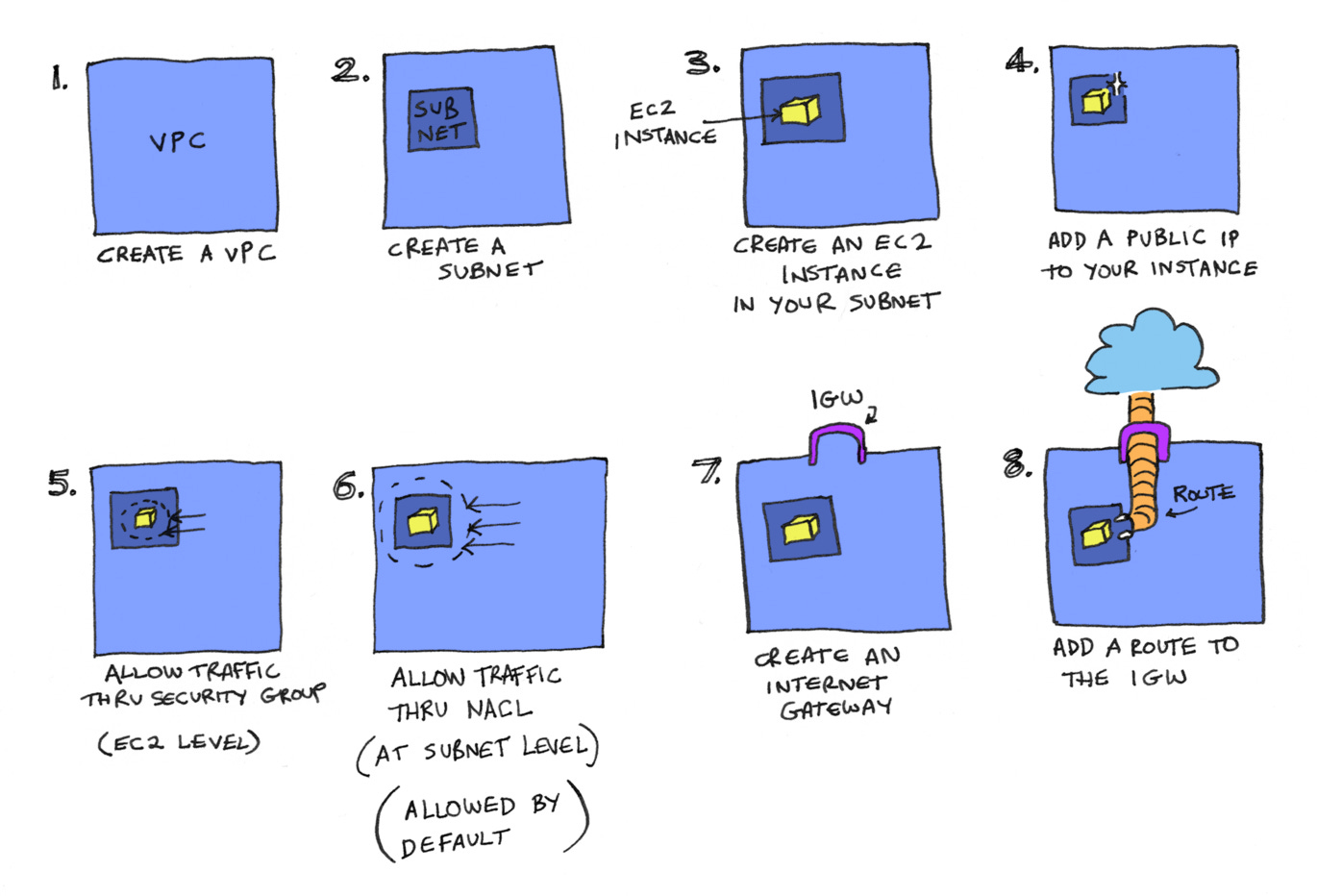
Here's a visual summary of what we're going to do:

EC2 with public IP example

Boilerplate terraform initialization code:

terraform {
  required_providers {
    aws = {
      source = "hashicorp/aws"
      version = "~> 5.0"
    }
  }
}
provider "aws" {
  region = "us-west-1"
  # Optional, this will tag all resources we create
  # so we can easily find them later to delete.
  default_tags {
    tags = {
      Terraform = "true"
    }
  }
}

This is just boilerplate code you will need when using Terraform with AWS.

VPC

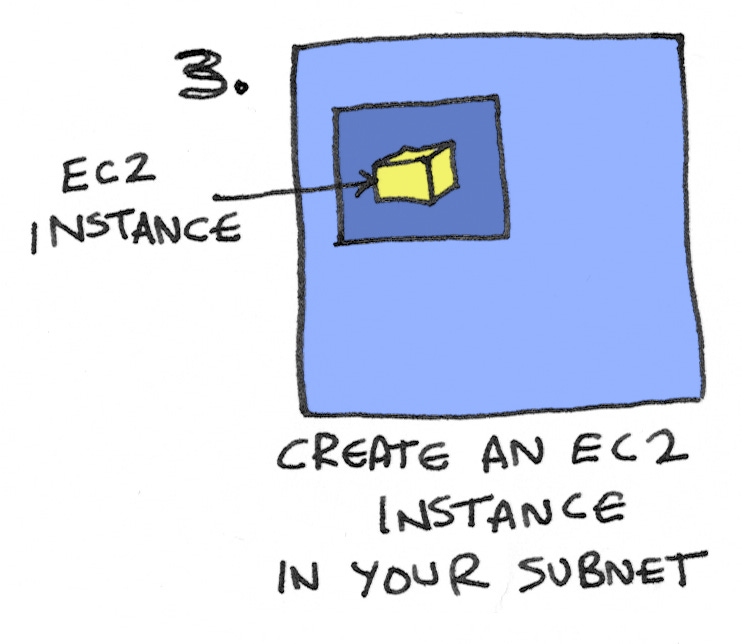
Now let’s create the VPC. It needs a CIDR block. The CIDR block can be anything, but I recommend using /16 as the suffix.

resource "aws_vpc" "main" {
  cidr_block       = "10.0.0.0/16"
  # If you set the `Name` tag, AWS will use it
  # for adding a name to your resource in the console view.
  # This works for some resources but not others.
  tags = {
    Name = "terraform"
  }
}

Subnet

Create the subnet and associate it with the VPC. Notice the CIDR block for the subnet is a subset of the CIDR block for the VPC.

resource "aws_subnet" "public" {
  vpc_id     = aws_vpc.main.id
  cidr_block = "10.0.1.0/24"
}

AMI for EC2 instance

Now we want to create the EC2 instance and put it in the subnet. Every EC2 instance needs an AMI (Amazon Machine Image). You can get the ID for the AMI you want from AWS here: https://console.aws.amazon.com/ec2/

Or you can just look it up in Terraform like this:

data "aws_ami" "ubuntu" {
  most_recent = true
  filter {
    name   = "name"
    values = ["ubuntu/images/hvm-ssd/ubuntu-jammy-22.04-amd64-server-*"]
  }
  filter {
    name   = "virtualization-type"
    values = ["hvm"]
  }
  owners = ["099720109477"] # Canonical
}

EC2 instance

Now let's create an EC2 instance that uses that AMI.

resource "aws_instance" "web" {
  ami           = data.aws_ami.ubuntu.id
  instance_type = "t3.micro"

  # assign it a public ip so we can connect to it
  associate_public_ip_address = true

  # references security group created below
  vpc_security_group_ids = [aws_security_group.sg.id]
  lifecycle {
    replace_triggered_by = [aws_security_group.sg]
  }

  # subnet to launch the instance in
  subnet_id = aws_subnet.public.id

  # simple server running on port 80 so we can verify
  # that the instance is up and we can connect to it
  user_data = <<-EOF
              #!/bin/bash
              echo "Hello, World" > index.html
              nohup busybox httpd -f -p "80" &
              EOF
}

Security group

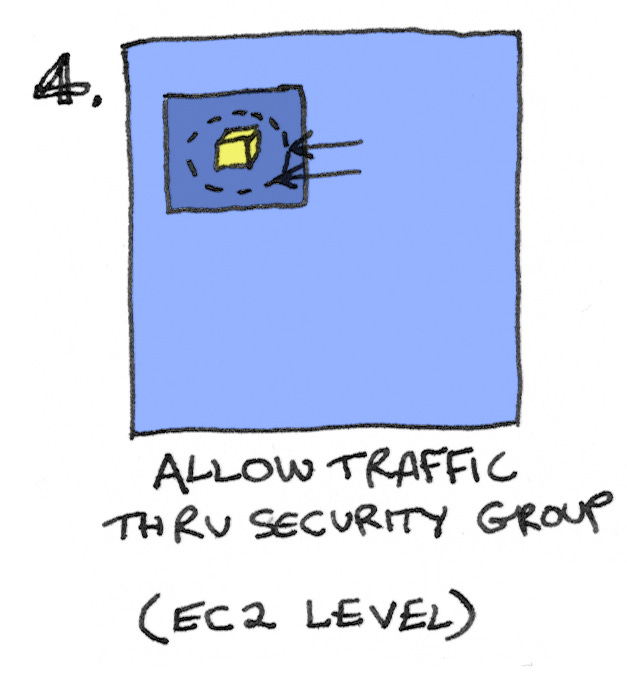
We'll also create a security group that allows inbound HTTP traffic on port 80 from anywhere:

resource "aws_security_group" "sg" {
  name = "terraform"

  # We need to explicitly put the security group in this VPC
  vpc_id = aws_vpc.main.id

  # Inbound HTTP from anywhere
  ingress {
    from_port   = 80
    to_port     = 80
    protocol    = "tcp"
    cidr_blocks = ["0.0.0.0/0"]
  }
}

IGW

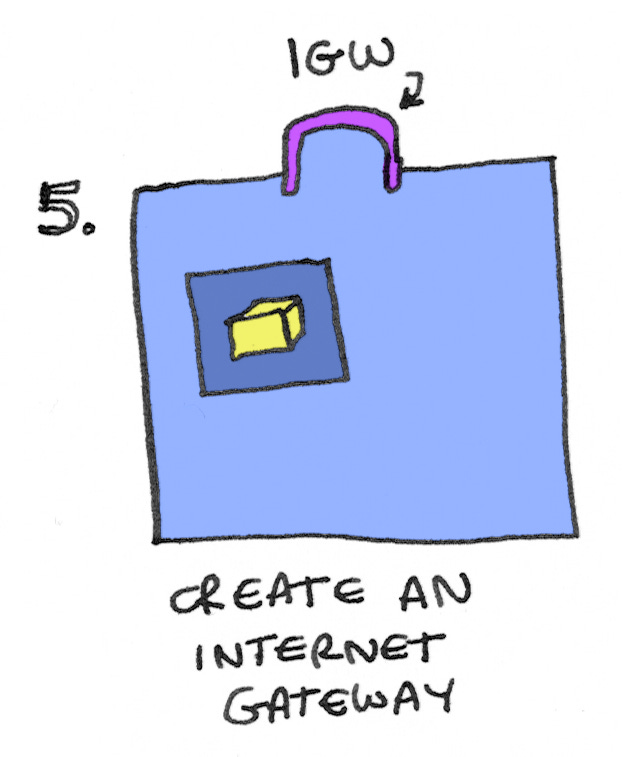
Create an internet gateway and associate it with the VPC

resource "aws_internet_gateway" "igw" {
  vpc_id = aws_vpc.main.id
}

Route table

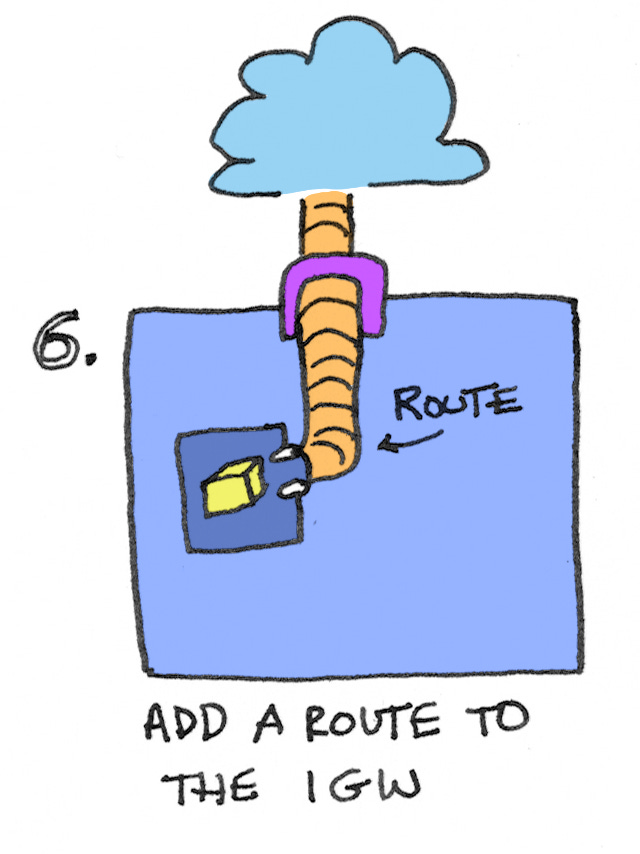
Create a new route table and route and add a route to the internet gateway

resource "aws_route_table" "public" {
  vpc_id = aws_vpc.main.id

  route {
    cidr_block = "0.0.0.0/0"
    gateway_id = aws_internet_gateway.igw.id
  }
}

Associate our public subnet with this route table:

resource "aws_route_table_association" "public_subnet_asso" {
  subnet_id      = aws_subnet.public.id
  route_table_id = aws_route_table.public.id
}

Finally, we need to output the public IP of the instance so we can connect to it.

output "public-ip" {
  value = aws_instance.web.public_ip
}

# Optionally, output a URL for convenience
output "url" {
  value = "http://${aws_instance.web.public_ip}"
}

Try it!

Put all that in a file called main.tf. Run terraform init and terraform apply. I'm glossing over the details of how to use Terraform here, since there are other tutorials on that. After the changes apply, Terraform will print out the IP address and URL.

Hit the url that gets printed out using curl <url>. You may need to give it a few minutes for the instance to boot up.

If you get an error:

  • If you get an error right away, that means everything works and you can hit your instance, but the server isn't up for some reason.

  • If there's a wait before you get the error, that means you weren't able to connect to your instance at all. This could be any number of things, such as the IP you're using is wrong, or your security group or NACL are not set up to allow traffic in.

EC2 instance with elastic IP

All of the above, plus:

Request an Elastic IP and associate it with your instance:

resource "aws_eip" "lb" {
  instance = aws_instance.web.id
  domain   = "vpc"
}
# print the elastic IP
output "elastic-ip" {
  value = aws_eip.lb.public_ip
}

The end

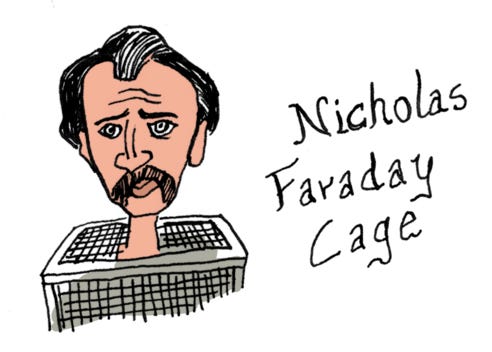
And that's it! That is my introductory guide to networking for AWS. To close out, please enjoy this drawing of Nicholas Cage.

Back to index

Thanks for reading DuckTyped! Subscribe for free to receive new posts and support my work.

01 Jul 20:52

George Schindler’s ESP: Super Cassette Fun - Reiss - 1984

basicallyanotherwitchesthing:

George Schindler’s ESP: Super Cassette Fun - Reiss - 1984

01 Jul 20:51

01 Jul 19:20

Northeast Gulf disturbance will probably be mostly a rainmaker

by Matt Lanza

In brief: We take a look at the northeast Gulf disturbance that may try to develop this weekend, but regardless it will be a rainmaker for the Gulf Coast and Florida. We also look at the latest on the hurricane satellite and proposed NOAA budget debacles.

Welcome to July. We’ve all survived month 1 of hurricane season. Only 5 months to go.

Northeast Gulf disturbance risk

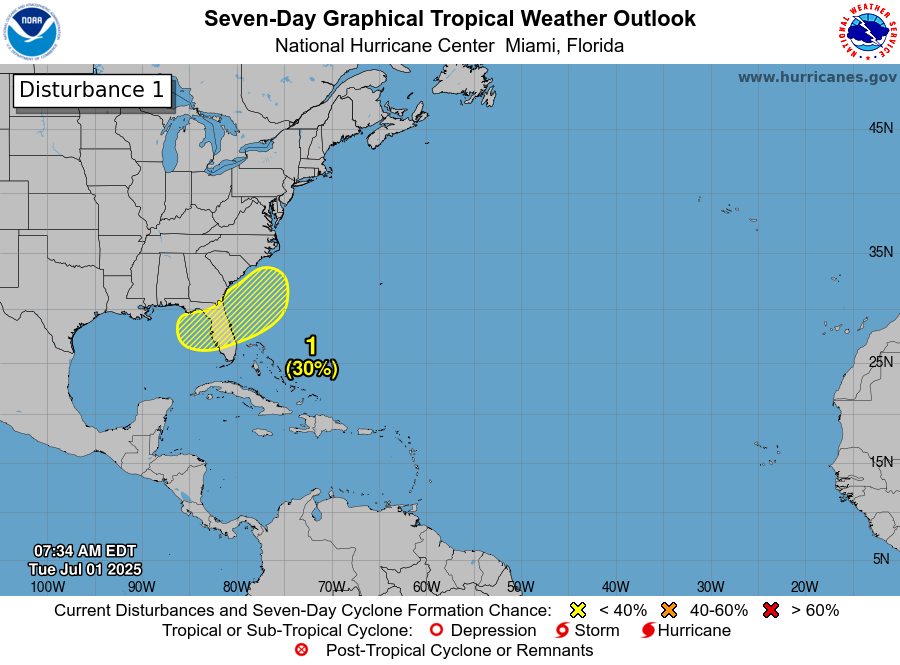
The NHC has nudged up the odds of development to 30 percent today for the projected disturbance along a dying cold front in the northeast Gulf or southwest Atlantic.

30% odds of development between the northeast Gulf and southwest Atlantic this weekend. (NOAA/NHC)

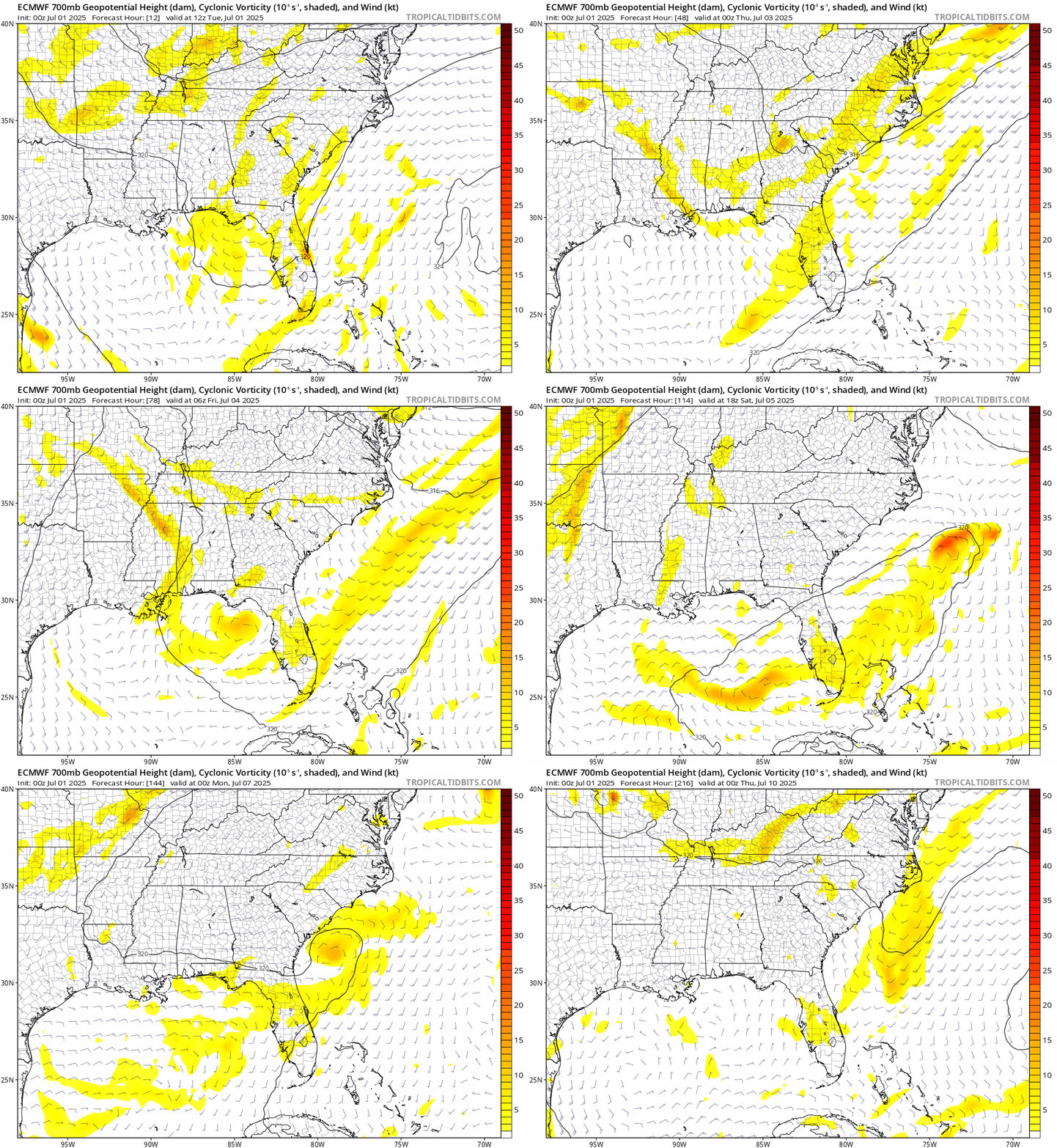
The only meaningful change I’ve seen in guidance today has been to basically shift the risk a little more to the Atlantic side. In fact, it almost looks like we get two disturbances out this mess next week, one that comes west or southwest and another that drifts around Florida and into the Atlantic. In fact, if you watch the European operational model loop below, showing “spin” (or vorticity) at about 10,000 feet above our heads, you can see how a chunk of the disturbance actually breaks off and drifts west, while the primary disturbance slides (or meanders) to the east.

European model 700 mb vorticity view from last night showing the main disturbance off Florida, with a secondary “piece” drifting west across the Gulf. (Tropical Tidbits)

The westward, weaker one will probably struggle because a.) it’s too close to land and b.) the air in the western Gulf isn’t exactly expected to be loaded with moisture as high pressure sits over the western two-thirds of Texas.

(Tropical Tidbits)

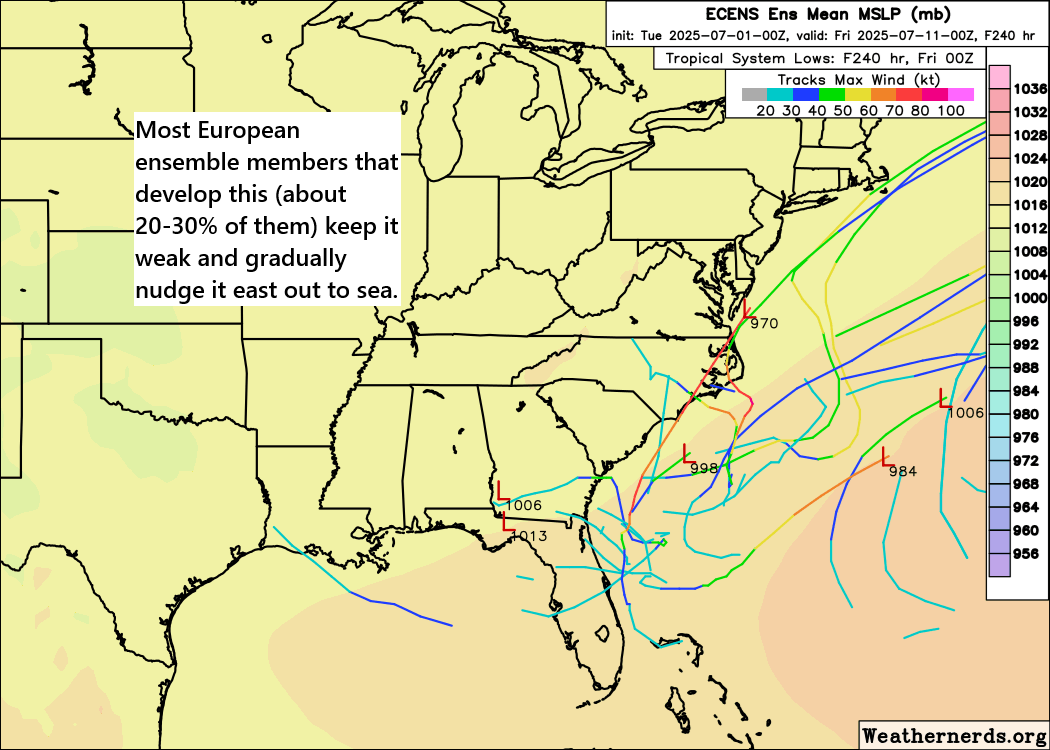
The easternmost disturbance is probably what I’d focus on for development chances, but even with that one, they don’t exactly look super bothersome. Most of the European ensemble members don’t develop this in any appreciable fashion. The ICON and European AIFS AI model, last year’s big breakouts don’t do much with the Atlantic system.

(Weathernerds.org)

Bottom line: 30 percent seems like a fine place to be right now. Any potential development probably has a low ceiling, with the highest odds of development shifting more into the Atlantic today. Still, because it’s the Gulf and it’s hurricane season, we’ll continue to monitor things.

One thing is for sure: Heavy rain is likely in Florida. While the heaviest and most persistent rains will be confined to the Gulf Coast of Florida, where upwards of 4 to 7 inches is possible, the rest of the state will see a bit of a pickup in rain chances as well. Gradually, flooding could become part of the issues here as we head into next week.

Rainfall forecast for the next week. (Pivotal Weather)

Aside from this one, there are no other Atlantic tropical concerns.

Pacific Hurricane Flossie

A quick note on Hurricane Flossie in the Pacific. Fringe impacts along the west coast of Mexico should be gradually winding down into tonight as Flossie pulls northwest and eventually away from the coast.

(NOAA/NHC)

Flossie is now expected to become a major hurricane as it pulls away before falling apart well off the coast of Baja late this week.

Satellites and budgets

Semi-good news, and very, very bad news today. The good news is that the satellite sounder we’ve been discussing since last week, a key cog in the hurricane observations and forecasting process was granted a whole additional month of service by the DoD, letting it go until August 1st. Hopefully we can get this extended to November 1st, but we’ll see.

Secondly, and in much, much worse news, the official NOAA budget request was sent over to Congress yesterday. Because I don’t want to be accused of being biased, all I will say here are two or three things.

First, all you need to read about this topic has already been written. Alan Gerard tackled it last night in eloquent, nuanced fashion. Michael Lowry discussed the hurricane angle more specifically this morning.

Second, here’s the deal. American has been the undisputed global leader in weather research in recent decades because of the investments we have made in research and development. We have a major research base that produces tools that forecasters (like me!) can use when rubber meets the road. These tools save lives and protect property and make us an otherwise safer, more informed nation. We don’t often get surprised by weather like we did 50 to 100 years ago or more. This budget being sent to Congress is a disrespectful slap in the face to all those efforts and will allow America to abdicate the role of dominance in this space to another nation (more than likely China). It makes us less safe, less informed, and it will set meteorological and climate (not just climate change) research back years or more. The only logical reason one would propose this budget is if they had an agenda that wants to end American dominance in this space or wants to willfully make Americans less safe and informed. Full stop.

If you’re a deficit hawk and want to cut spending, this bill does absolutely nothing to tangibly change the federal deficit at a cost far greater than any savings could ever be. It is almost shockingly non-sensical. While this is strong language and this may sound like a politically biased or motivated take, it isn’t. For the life of me, I cannot understand who thought this was a good plan to propose and why they’d propose it at all. Nothing about it is America first, makes America great, or helps Americans rich or poor. It is a universally disastrous proposal, and we can only hope that Congress course corrects this quickly.

01 Jul 19:19

Tesla Robotaxi Keeps Changing Subject To White Genocide

by The Onion Staff
01 Jul 19:12

an employee started a false rumor that her manager was having an affair

by Ask a Manager

A reader writes:

I am a manager of a handful of front line managers. One manager, Emily, approached me the other day to say that one of the receptionists, Jane, told her there was a rumor going around the office that Emily was having an affair with a coworker, John, and that she hoped the behavior would stop. The behavior in question? They joke around with each other.

Emily investigated where the rumor was coming from and found it originated with Jane. She went through a rough couple of days when she felt completely blindsided and sick about the whole thing. She is happily married and so is John. I have seen them interact many times and it’s only ever seemed like two colleagues who banter back and forth together. I have never seen or heard anything that would raise concern. Moreover, I have worked with Emily and John for a long time and their character is above reproach. I am not concerned at all that there’s anything to the rumor.

Jane has been at the center of office gossip before. In fact, before she was concerned that Emily and John were having an affair, she felt like another coworker and John were getting “too close.”

I have heard for the last few months that Jane feels she would be a better manager than Emily, and I wonder if this is her way of trying to get rid of Emily. I have never wanted Jane to be a manager. She has never shown that she would be good at it, so she isn’t on my radar when it comes to any kind of succession planning.

I plan on speaking with Jane about unprofessional behavior and the company policy about not gossiping, and I plan on giving her an official warning on this subject. Is there anything else I can do? How should I word my conversation with her? And, should I in this same conversation tell her that she will never be a manager under my downline? Or would that just be piling on?

I answer this question over at Inc. today, where I’m revisiting letters that have been buried in the archives here from years ago (and sometimes updating/expanding my answers to them). You can read it here.

The post an employee started a false rumor that her manager was having an affair appeared first on Ask a Manager.

01 Jul 18:39

Photo


01 Jul 18:39

The Hidden Engineering of Liquid Dampers in Skyscrapers

by Wesley Crump

[Note that this article is a transcript of the video embedded above.]

There’s a new trend in high-rise building design. Maybe you’ve seen this in your city. The best lots are all taken, so developers are stretching the limits to make use of space that isn’t always ideal for skyscrapers. They’re not necessarily taller than buildings of the past, but they are a lot more slender. “Pencil tower” is the term generally used to describe buildings that have a slenderness ratio of more than around 10 to 1, height to width. A lot of popular discussion around skyscrapers is about how tall we can build them. Eventually, you can get so tall that there are no materials strong enough to support the weight. But, pencil towers are the perfect case study in why strength isn’t the only design criterion used in structural engineering.

Of course, we don’t want our buildings to fall down, but there’s other stuff we don’t want them to do, too, including flex and sway in the wind. In engineering, this concept is called the serviceability limit state, and it’s an entirely separate consideration from strength. Even if moderate loads don’t cause a structure to fail, the movement they cause can lead to windows breaking, tiles cracking, accelerated fatigue of the structure, and, of course, people on the top floors losing their lunch from disorientation and discomfort. So, limiting wind-induced motions is a major part of high-rise design and, in fact, can be such a driving factor in the engineering of the building that strength is a secondary consideration.

Making a building stiffer is the obvious solution. But adding stiffness requires larger columns and beams, and those subtract valuable space within the building itself. Another option is to augment a building’s aerodynamic performance, reducing the loads that winds impose. But that too can compromise the expensive floorspace within. So many engineers are relying on another creative way to limit the vibrations of tall buildings. And of course, I built a model in the garage to show you how this works. I’m Grady, and this is Practical Engineering.

One of the very first topics I ever covered on this channel was tuned mass dampers. These are mechanisms that use a large, solid mass to counteract motion in all kinds of structures, dissipating the energy through friction or hydraulics, like the shock absorbers in vehicles. Probably the most famous of these is in the Taipei 101 building. At the top of the tower is a massive steel pendulum, and instead of hiding it away in a mechanical floor, they opened it to visitors, even giving the damper its own mascot. But, mass dampers have a major limitation because of those mechanical parts. The complex springs, dampers, and bearings need regular maintenance, and they are custom-built. That gets pretty expensive. So, what if we could simplify the device?

This is my garage-built high-rise. It’s not going to hold many conference room meetings, but it does do a good job swaying from side to side, just like an actual skyscraper. And I built a little tank to go on top here. The technical name for this tank is a tuned liquid column damper, and I can show you how it works. Let’s try it with no water first. Using my digitally calibrated finger, I push the tower over by a prescribed distance, and you can see this would not be a very fun ride. There is some natural damping, but the oscillation goes on for quite a while before the motion stops. Now, let’s put some water in the tank. With the power of movie magic, I can put these side by side so you can really get a sense of the difference.

By the way, nearly all of the parts for this demonstration were provided by my friends at Send-Cut-Send. I don’t have a milling machine or laser cutter, so this is a really nice option for getting customized parts made from basically any material - aluminum, steel, acrylic - that are ready to assemble.

Instead of complex mechanical devices, liquid column dampers dissipate energy through the movement of water. The liquid in the tank is both the mass and the damper. This works like a pendulum where the fluid oscillates between two columns. Normally, there’s an orifice between the two columns that creates the damping through friction loss as water flows from one side to the other. To make this demo a little simpler, I just put lids on the columns with small holes. I actually bought a fancy air valve to make this adjustable, but it didn’t allow quite enough airflow. So instead, I simplified with a piece of tape. Very technical. Energy transferred to the water through the building is dissipated by the friction of the air as it moves in and out of the columns. And you can even hear this as it happens.

Any supplemental damping system starts with a design criterion. This varies around the world, but in the US, this is probability-based. We generally require that peak accelerations with a 1-in-10 chance of being exceeded in a given year be limited to 15-18 milli-gs in residential buildings and 20-25 milli-gs in offices. For reference, the lateral acceleration for highway curve design is usually capped at 100 milli-gs, so the design criteria for buildings is between a fourth and a sixth of that. I think that makes intuitive sense. You don’t want to feel like you’re navigating a highway curve while you sit at your desk at work.

It’s helpful to think of these systems in a simplified way. This is the most basic representation: a spring, a damper, and mass on a cart. We know the mass of the building. We can estimate its stiffness. And the building itself has some intrinsic damping, but usually not much. If we add the damping system onto the cart, it’s basically just the same thing at a smaller scale, and the design process is really just choosing the mass and damping systems for the remaining pieces of this puzzle to achieve the design goal. The mass of liquid dampers is usually somewhere between half a percent to two percent of the building’s total weight. The damping is related to the water’s ability to dissipate energy. And the spring needs to be tuned to the building.

All buildings vibrate at a natural frequency related to their height and stiffness. Think of it like a big tuning fork full of offices or condos. I can estimate my model’s natural frequency by timing the number of oscillations in a given time interval. It’s about 1.3 hertz or cycles per second. In an ideal tuned damper, the oscillation of the damping system matches that of the building. So tuning the frequency of the damper is an important piece of the puzzle. For a tuned liquid column damper, the tuning mostly comes from the length of the liquid flow path. A longer path results in a lower frequency. The compression of the air above the column in my demo affects this too, and some types of dampers actually take advantage of that phenomenon. I got the best tuning when the liquid level was about halfway up the columns. The orifice has less of an effect on frequency and is used mostly to balance the amount of damping versus the volume of liquid that flows through each cycle. In my model, with one of the holes completely closed off, you can see the water doesn’t move, and you get minimal damping. With the tape mostly covering the hole, you get the most frictional loss, but not all the fluid flows from one side to the other each cycle. When I covered about half of one hole, I got the full fluid flow and the best damping performance.

The benefit of a tuned column damper is that it doesn’t take up a lot of space. And because the fluid movement is confined, they’re fairly predictable in behavior. So, these are used in quite a few skyscrapers, including the Random House Tower in Manhattan, One Wall Center in Vancouver (which actually has many walls), and Comcast Center in Philadelphia. But, tuned column liquid dampers have a few downsides. One is that they really only work for flexible structures, like my demo. Just like in a pendulum, the longer the flow path in a column damper, the lower the frequency of the oscillation. For stiffer buildings with higher natural frequencies, tuning requires a very short liquid column, which limits the mass and damping capability to a point where you don’t get much benefit. The other thing is that this is still kind of a complex device with intricate shapes and a custom orifice between the two columns. So, we can get even simpler.

This is my model tuned sloshing damper, and it’s about as simple as a damper can get. I put a weight inside the empty tank to make a fair comparison, and we can put it side by side with water in the tank to see how it works. As you can see, sloshing dampers dissipate energy by… sloshing. Again, the water is both the mass and the damper. If you tune it just right, the sloshing happens perfectly out of phase of the motion of the building, reducing the magnitude of the movement and acceleration. And you can see why this might be a little cheaper to build - it’s basically just a swimming pool - four concrete walls, a floor, and some water. There’s just not that much to it. But the simplicity of construction hides the complexity of design.

Like a column damper, the frequency of a sloshing damper can be tuned, first by the length of the tank. Just like fretting a guitar string further down the neck makes the note lower, a tank works the same way. As the tank gets longer, its sloshing frequency goes down. That makes sense - it takes longer for the wave to get from one side to the other. But you can also adjust the depth. Waves move slower in shallower water and faster in deeper water. Watch what happens when I overfill the tank.

The initial wave starts on the left as the building goes right. It reaches the right side just as the building starts moving left. That’s what we want; it’s counteracting the motion. But then it makes it back to the left before the building starts moving right. It’s actually kind of amplifying the motion, like pushing a kid on a swing. Pretty soon after that, the wave and the building start moving in phase, so there’s pretty much no damping at all. Compare it to the more properly tuned example where most of the wave motion is counteracting the building motion as it sways back and forth.

You can see in my demo that a lot of the energy dissipation comes from the breaking waves as they crash against the sides of the tank. That is a pretty complicated phenomenon to predict, and it’s highly dependent on how big the waves are. And even with the level pretty well tuned to the frequency of the building, you can see there’s a lot of complexity in the motion with multiple modes of waves, and not all of them acting against the motion of the building. So, instead of relying on breaking waves, most sloshing dampers use flow obstructions like screens, columns, or baffles. I got a few different options cut out of acrylic so we can try this out. These baffles add drag, increasing the energy dissipation with the water, usually without changing the sloshing frequency.

Here’s a side-by-side comparison of the performance without a baffle and with one. You can see that the improvement is pretty dramatic. The motion is more controlled and the behavior is more linear, making this much simpler to predict during the design phase. It’s kind of the best of both worlds since you get damping from the sloshing and the drag of the water passing through the screen. Almost all the motion is stopped in this demo after only three oscillations. I was pretty impressed with this. Here’s all three of the baffle runs side by side. Actually, the one with the smallest holes worked the best in my demo, but deciding the configuration of these baffles is a big challenge in the engineering of these systems because you can’t really just test out a bunch of options at full scale.

Devices like this are in service in quite a few high-rise buildings, including Princess Tower in Dubai, and the Museum Tower in Dallas. With no moving parts and very little maintenance except occasionally topping it off to keep the water at the correct level, you can see how it would be easy to choose a sloshing damper for a new high-rise project. But there are some disadvantages. One is volumetric efficiency. You can see that not all the water in the tank is mobilized, especially for smaller movements, which means not all the water is contributing to the damping. The other is non-linearity. The amount of damping changes depending on the magnitude of the movement since drag is related to velocity squared. And even the frequency of the damper isn’t constant; it can change with the wave amplitude as well because of the breaking waves. So you might get good performance at the design level, but not so much for slower winds.

Dampers aren’t just used in buildings. Bridges also take advantage of these clever devices, especially on the decks of pedestrian bridges and the towers of long-span bridges. This also happens at a grand scale between the Earth and moon. Tidal bulges in the oceans created by the moon’s tug on Earth dissipate energy through friction and turbulence, which is a big part of why our planet’s rotation is slowing over time. Days used to be a lot shorter when the Earth was young, but we have a planet-scale liquid damper constantly dissipating our rotational energy.

But whether it’s bridges or buildings, these dampers usually don’t work perfectly right at the start. Vibrations are complicated. They’re very hard to predict, even with modern tools like simulation software and scale physical models. So, all dampers have to go through a commissioning process. Usually this involves installing accelerometers once construction is nearing completion to measure the structure’s actual natural frequency. The tuning of tuned dampers doesn’t just happen during the design phase; you want some adjustability after construction to make sure they match the structure’s natural frequency exactly so you get the most damping possible. For liquid dampers, that means adjusting the levels in the tanks. And in many cases, buildings might use multiple dampers tuned to slightly different frequencies to improve the performance over a range of conditions. Even in these two basic categories, there is a huge amount of variability and a lot of ongoing research to minimize the tradeoffs these systems come with.

The truth is that, relatively speaking, there aren’t that many of these systems in use around the world. Each one is highly customized, and even putting them into categories can get a little tricky. There are even actively controlled liquid dampers. My tuning for the column damper works best for a single magnitude of motion, but you can see that once the swaying gets smaller, the damper isn’t doing a lot to curb it. You can imagine if I constantly adjusted the size of the orifice, I could get better performance over a broader range of unwanted motion. You can do this electronically by having sensors feed into a control system that adjusts a valve position in real-time. Active systems and just the flexibility to tune a damper in general also help deal with changes over time. If a building’s use changes, if new skyscrapers nearby change the wind conditions, or if it gets retrofits that change its natural frequency, the damping system can easily accommodate those changes.

In the end, a lot of engineering decisions come down to economics. In most cases, damping is less about safety and more about comfort, which is often harder to pin down. Engineers and building owners face a balancing act between the cost of supplemental damping and the value of the space those systems take up. Tuned mass dampers are kind of household names when it comes to damping. A few buildings like Shanghai Center and Taipei 101 have made them famous. They’re usually the most space-efficient (since steel and concrete are more dense than water). But they’re often more costly to install and maintain. Liquid dampers are the unsung heroes. They take up more space, but they’re simple and cost-effective, especially if the fire codes already require you to have a big tank of water at the top of your building anyway. Maybe someday, an architect will build one out of glass or acrylic, add some blue dye and mica powder, and put it on display as a public showcase. Until then, we’ll just have to know it’s there by feel.

01 Jul 18:17

Saturday Morning Breakfast Cereal - Stochastic

by Zach Weinersmith


Click here to go see the bonus panel!

Hovertext:
Wait why is her butt talking?


Today's News:
01 Jul 18:16

1981

eightiesfan:

1981

01 Jul 18:16

opendirectories: