By David Taylor / Managing Editor HOUSTON — A used 2020 Nissan Kicks became a rolling canvas this spring after the East Aldine Management District purchased the vehicle and ...
1. Employees don’t participate in our community outreach activities
I’m a part of the “good will” committee for my office location, as well as the large committee for the whole company. Lately I’ve been feeling a struggle of getting other employees actively involved in our initiatives. Good will is a named tenet of our company, and we have a pretty healthy annual budget to go along with it.
We try and have one or two initiatives per month that have varying degrees of involvement. Sometimes it involved volunteering onsite (during work hours or directly after). Sometimes it’s asking for donations (gently used books or unexpired canned goods/shelf stable foods). We’re not asking people to go and spend their own money on things. The most successful ones are in-office, during office hours, but there’s only so many opportunities for those.
We also try and cover a variety of different areas — unhoused people, kids/schools, food scarcity, women, LGBTQIA+, community gardens and book depositories, animals, BIPOCs groups. We also ask employees about groups they would like to see us support.
I just feel like it’s been a struggle lately to get people involved. People never seem to have issues finding time for sporting events or happy hours, but no one seems to want to do a shift at the food bank. Shocking, I know. Any ideas on how to get people motivated?
They may not want to. Some people want to spend their limited downtime relaxing, and that’s okay. I’’m not sure it’s appropriate for an employer to try to change that.
People are exhausted right now, and they’re at work to earn money, not to volunteer. A lot of people who are charity-minded do their charity work on their own time, and don’t feel their employer needs to claim the credit for those efforts. If your company wants to do good in the community, that should mean it’s coming from your company’s resources — its money and its time (meaning that this should all happen on work time, not after hours, and other work needs to be moved aside to create space for it; the expectation shouldn’t be that people’s regular workloads don’t change at all to make room for it). If the company isn’t willing to do that, then this is just a value they’ve stuck on a list, not a genuine value they hold.
All that said, I think you have the answer when you say, “The most successful ones are in-office, during office hours, but there’s only so many opportunities for those.” If people aren’t interested in ones outside of that category, that’s feedback worth listening to! And if there are only so many opportunities for those, then maybe you stick to those because that’s what employees are up for.
Beyond that, talk to people! Survey employees on what they are and aren’t interested in participating in — both in terms of specific activities and general categories of activities (during work hours, 5-7 pm, drives where you bring items from home, etc.), and also ask how they’d like to see the company live out this value. That’s what ultimately should shape it.
2. Should I tell my manager about a recurring issue with a coworker?
I’m a receptionist at a small healthcare-adjacent company and would appreciate your advice on a recurring issue with a remote customer service representative, “Donna.”
Callers frequently report being hung up on a few minutes after I forward them to the customer service line. Almost every caller who tells me this has mentioned they were speaking with Donna when it happened, which is a problem I don’t encounter with any other representatives.
Because our work involves urgent health-related matters and long wait times, these disconnections can be pretty significant for our clients. Sometimes they’re sitting in the queue listening to hold music for 20 or 30 minutes before having to start over again because upon being transferred to Donna, they get disconnected.
Thing is, I’m hesitant to report this to our supervisor because the guy is a severe micromanager, and I want to avoid subjecting anybody to having to deal with him. I’ve been the subject of his ire before, and it’s not fun when his laser beams get trained on you. However, I’m growing concerned that Donna may be intentionally disconnecting calls, or has an unstable remote connection. How would you suggest I handle this situation?
You need to tell your manager about it. It’s a significant issue, and it’s got to be incredibly frustrating for your callers — and your position means you’re probably the only person (other than Donna) who’s aware of it. Your position does give you standing to raise it, because you’re partly responsible for the experience that callers have when they contact your company. (That doesn’t mean you’re responsible for whatever is happening once you transfer them, of course — just that when you have info about their experience that no one else has, you do need to make someone higher up aware.)
If that mean Donna gets micromanaged … well, some closer management might be needed here, because either Donna is intentionally disconnecting callers or is aware she’s frequently losing her connection and not bothering to ask for help to get that fixed. Or maybe she has, in which case she’ll presumably explain that to her boss — but either way, this is something you should escalate.
The subject line of your email to me was, “Is it appropriate to snitch on my coworker for this?” and this is not snitching. This is letting your manager know about a work issue that’s highly relevant to how well your organization is serving clients.
3. Disabled and losing access to parking
I work at a university that recently announced a major campus construction project that will eliminate a significant amount of central parking, including areas closest to my building. The announcement framed this as an exciting improvement to campus life, but for some of us, it creates a serious accessibility problem.
I have a disability that affects my mobility. Even now, I arrive over an hour early just to secure one of the limited nearby parking spots, and I still face a several-minute walk to my building, which can be difficult depending on the day. I am not the only one who does this in my building. There’s several of us who do this daily. With these lots closing, we are all extremely concerned that we simply won’t be able to access my workplace in a reliable or sustainable way.
This is the second time in a few years that staff parking has been reduced. In this case, the project will also remove several accessible parking spaces across campus, and they are not being replaced.
The university’s suggestion is to contact parking services for alternatives, but based on past experience, those alternatives are not workable for me. They typically recommend using a shuttle system, which is difficult for me to physically navigate, or parking farther away. Factoring in wait times and travel, that could add close to an hour to my commute each day. I also have religious commitments after work on Fridays, and this added time would make it difficult or impossible to attend. The shuttle isn’t always the most reliable. It’s also small and with more people probably needing to use this, it could add in well over an hour to my commute daily.
Another option is purchasing access to parking at a nearby institution, but that requires an upfront cost of over $700 annually, which is not financially feasible for most people.
My job could be performed remotely, but remote work is not currently offered as an option, and I worry that pushing too hard on that could negatively affect my job security.
I have not reached out to parking services, as I am not optimistic about the response they will give. Historically, the university has been resistant to feedback on parking and accessibility concerns or they ignore emails totally. Another colleague reached out to them with these exact concerns, but she’s certain she’ll not receive a response or they will not care as they have when there were issues with parking spots blocked off earlier last year.
At what point does this become an ADA issue? What are my options for advocating for reasonable accommodations in a situation like this? Would requesting remote work on days when I cannot access parking be reasonable, or am I better off pursuing a formal accommodation through HR or another route such as an anonymous ADA complaint?
It’s an ADA issue now. Under the ADA, employers with 15 or more employees are required to provide accessible parking as a reasonable accommodation for workers with disabilities, and they must engage in an interactive process to find solutions if spots are unavailable.
You should submit a request in writing to HR with the subject line, “official request for accommodations under the Americans with Disabilities Act.” Don’t go through parking services since they’ve been unresponsive; approach it as a legally required medical accommodation with HR.
4. Independent contractor vs. employee
I have a question regarding W2 vs 1099 contractor definitions. I understand one key legal difference is a contractor sets their own hours. Does that mean that no employment where I commit to showing up at a certain time can be a 1099? Like, let’s say I am a tutor. I choose my students and can let them go. But let’s say I sign on to tutor someone intensively for two hours once a week for a semester at a specific time slot, and I sign a contract to that effect, do they now have to give me a W2?
The IRS doesn’t use a black and white test for contractors where if you don’t set your own hours, you can’t be a contractor. Rather, they look at the totality of the circumstances. They look at three factors: (1) behavioral — does the company control or have the right to control what the worker does and how the worker does their job? (2) financial — are the business aspects of the job (like how the worker is paid, whether expenses are reimbursed, and who provides tools/supplies) controlled by the company? (3) type of relationship — are there written contracts or employee-type benefits (insurance, vacation pay, etc.) and is the work a key aspect of the business? The law says, “Businesses must weigh all these factors when determining whether a worker is an employee or independent contractor. Some factors may indicate that the worker is an employee, while other factors indicate that the worker is an independent contractor. There is no ‘magic’ or set number of factors that makes the worker an employee or an independent contractor and no one factor stands alone in making this determination. Also, factors which are relevant in one situation may not be relevant in another. The keys are to look at the entire relationship and consider the extent of the right to direct and control the worker.”
There are independent contractors who commit to working set hours. Doing that doesn’t on its own make you an employee.
The mystery boys are hard cases, Glenn. They’re turbocharged nutters. Sonny once made a daisy chain and Linton has been known to watch three or four unboxing videos in a row. As for Jack…
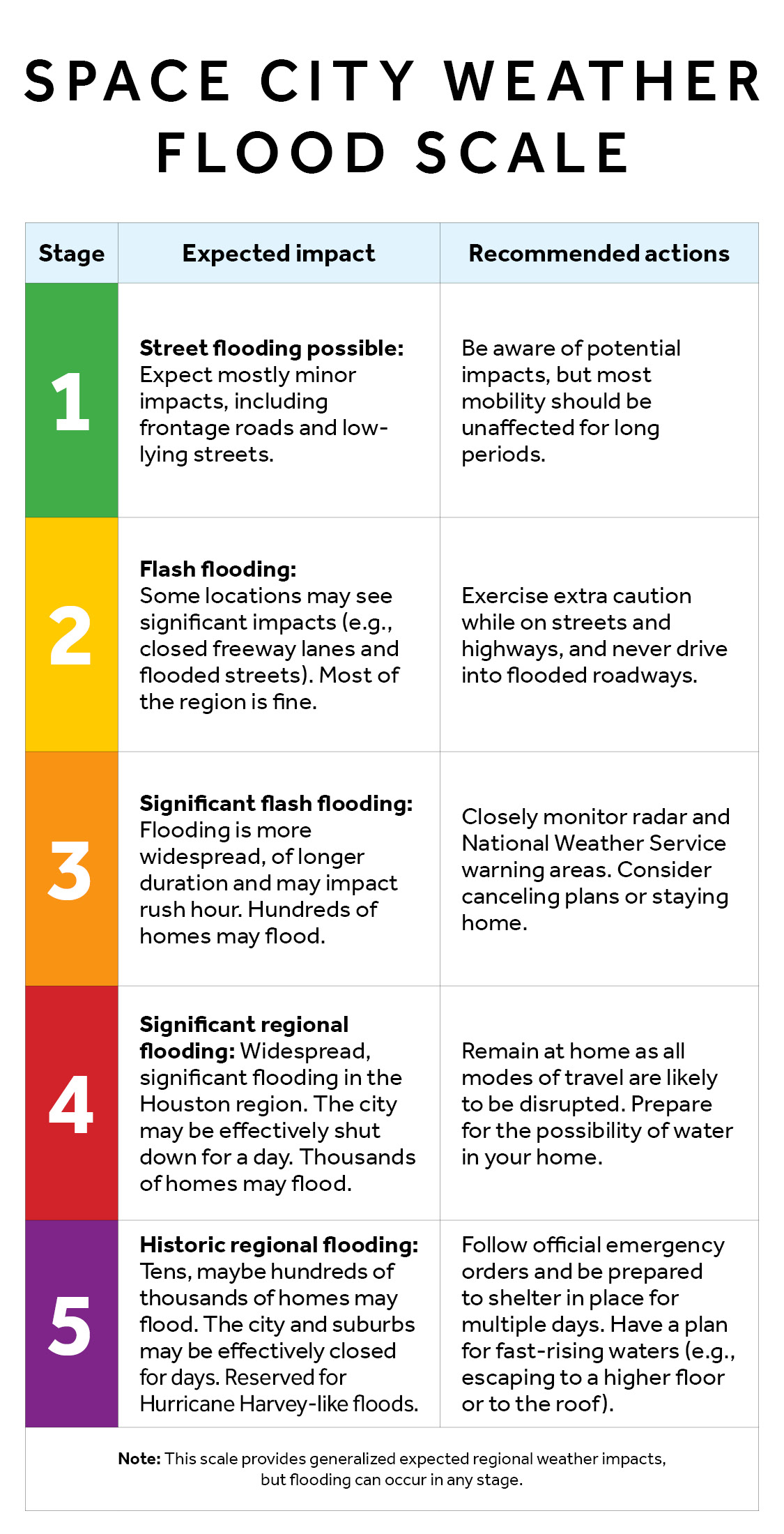
In brief: With today’s update we are issuing a Stage 1 flood alert for Friday in the Houston area. This means mostly minor impacts, but we cannot rule out some street flooding. The weekend looks much cooler, with sunny skies and generally very pleasant weather.
Stage 1 flood alert
We are not expecting widespread flooding issues on Friday, but there is clearly the potential for heavy rainfall across the Houston metro area. In terms of timing, the most likely period will be from late Thursday evening through late Friday evening. There is the potential for impacts both during the morning and evening commute on Friday, not to mention school pickups and after-school activities. Most of Houston should pick up 1 to 3 inches over the course of the 24-hour period, which is totally manageable. However there are likely to be spots that pick up more than this, with the potential for isolated totals of 3 to 5 inches. For this reason we are instituting a Stage 1 flood alert for all of Friday. We expect rainfall potential to fall off quickly by Friday night, midnight. Saturday looks fine, with clearing skies.
Thursday
Houston reached 88 degrees on Wednesday, but I believe we’re done with the very warm weather for now. Skies today will be mostly cloudy and this should help limit high temperatures for most locations in the mid-80s. An initial push of slightly drier air should arrive this afternoon, allowing low temperatures tonight to fall into the 60. In terms of rainfall, we will see the potential for scattered showers, and perhaps a few thunderstorms today and into this early evening. However, there won’t be anything too special about this activity. We’ll start to see increasing chances for rainfall after sunset on Thursday and into the overnight hours.
NOAA rain accumulation forecast for now through Friday night. (Weather Bell)
Friday
The much discussed cold front will essentially stall over the Houston metro area on Friday, and this will serve as a focus for showers and heavy rainfall. (There is a very slight chance for severe weather, such as damaging winds and hail). There remains some uncertainty as to where the heaviest band of rainfall will set up, it could be along the Highway 59/I-69 corridor, or a little north or south. But we do feel like somewhere is going to see 2 to 4 inches, with higher amounts possible. Generally we expect most of the region to pick up 1 to 3 inches. This potential for rainfall will persist into the evening Friday before the front finally pushes off the coast.
In terms of temperatures, I expect everyone to be in the 60s on Friday morning, with inland areas remaining there while coastal areas may warm into the mid-70s. By early Saturday the entire area will be in the 50s.
Low temperature forecast for Sunday morning in the Houston area. (Weather Bell)
Saturday and Sunday
Although some clouds may linger on Saturday morning, we now pretty much expect wall-to-wall sunshine for the weekend. Saturday’s highs may peak around 70 degrees, whereas Sunday reaches the mid-70s. Friday night and much of Saturday will be quite breezy, with southerly gusts reaching 25 or even 30 mph (especially along the coast). These winds should die down by Saturday afternoon or evening, so Sunday looks placid in this regard. Lows on Saturday night should again drop into the 50s, with the potential for upper 40s for far inland areas. Both Saturday and Sunday will enjoy low humidity. This is a really nice cold blast for early May, so enjoy it before summer arrives!
Next week
We’ll warm back up to the mid-80s by the middle of next week before a weaker front may push into the region and bring some rain chances and slightly cooler conditions. We’ll see.
Now former colleagues are texting me to ask questions. I don’t feel obligated to answer. What are some response options when I want to politely say no?
You’re not obligated to answer questions when you’re no longer working there. That said, it’s also true that if you want to keep good relationships with these colleagues and might need them for job leads or references (informal or otherwise) in the future, you might not want to take a completely black-and-white line on this.
You definitely shouldn’t do work of any real substance when you’re no longer getting paid — like a detailed update on the history of a project or a rundown of the best way to approach a client — but if it’s a very simple question like “where is the key for the X filing cabinet?” that you could answer in a single sentence, it can be to your benefit to answer, because you want to maintain those relationships. Even then, there are limits; if you’re getting multiple questions like that, it’s reasonable to stop helping. But one or two very simple questions? Those are usually in your best interests to answer.
If you’re being asked for more then that, though, then any of these are reasonable to say:
* “I don’t think I can help since I’m no longer working there — I’m sorry about that!”
* “I don’t have access to that anymore now that I’ve left.”
* “I’m not sure off the top of my head — sorry!”
* “I’m not sure off the top of my head, but check the files I left behind.”
* “I can’t keep answering questions now that I’m gone, but try checking the manual.”
If it’s a colleague you particularly like or have good rapport with, you could say, “I know you’re in a tough spot since you’re trying to get this done, but since I’m not being paid anymore, I’m not comfortable continuing to help with the work.”
And if it’s a really large number of questions on substantive things and you’d be willing to help if they paid you, you could say, “I’m getting a lot of requests for help with things like this. I’d be willing to set up a consulting arrangement for a set number of hours of time over the next month or two if you want to do that.” (I’ve noticed people like to suggest quoting an outrageously fee for that, but that’s not in your interests either. A fair rate, yes, but not an obscene one just because you want to stick it to them; that’ll just make your judgment look really off. If you want stick it to them, you’re better off skipping this altogether.)
But if you’re not particularly interested in maintaining these relationships and don’t think you’ll want to call on them for any sort of help in the future, you can also just ignore the messages. You’re not obligated to respond.
The Justice Department indicted former FBI director James Comey a second time for posting a photo of seashells arranged in the shape of “86 47,” which Trump and his allies insisted was a threat to get rid of the 47th president. What do you think?
“If nothing else, he’s radicalized several hermit crabs.”
Thalia Knox, Buffet Overseer
“If he wants to kill political opponents then he should just run for president.”
Gordon Frazier, Chief Banjoist
“It’s about time the feds cracked down on cringe Instagram posts.”
TORONTO – In the latest in a string of branding acquisitions, telecom giant Rogers has secured all naming rights over Bell Canada. “When I think of Bell Canada, I think of a heartless, megalithic, amoral corporation with a blue logo,” said Mike Jeffries, a Sudbury resident. “Now when I see them, all I’ll be able […]
Los Angeles, CA – Recent interviews with famous people who have benefitted from their familiar relations have gone sour as interviewers correctly described them as nepo babies. “I am not a nepo baby,” said famous nepo baby Zooey Deschanel. “My father was a director of photography and my mom was in some tiny show called […]
AKRON, OH—Saying the expectations he had set for himself were completely unrealistic, friends of local man James Chao expressed skepticism this morning after the 25-year-old announced plans to get two different things done today. “When I heard James say he was going to pick up some groceries, that was one thing, but when he told me he also wanted to do his laundry, I realized he was pushing himself way too hard,” said roommate Aaron Steiner, adding that Chao was apparently oblivious to how much sustained focus and effort would be required to complete not just one, but two tasks in a single 24-hour period. “At a certain point, you’re only setting yourself up for failure. If you get one thing done, you’ve already gone way past any reasonable person’s expectations. Try for a second thing and, I mean, there’s just no way. That guy really needs to slow down and give himself a moment to put this whole thing into perspective.” At press time, Chao’s friends were reportedly urging him to stop and take it easy after they found him in the kitchen wearing a clean shirt and preparing a meal for himself.
HONOLULU—Cackling wildly as He willed the barnyard fowl into existence, a drunk God Almighty, Supreme Leader of the Universe, reportedly made a few dozen roosters materialize Thursday over a random point in the Pacific Ocean. “Yo, Gabriel, check this shit out!” the wasted Creator of All Things said while jostling the archangel on the shoulder and pointing at the birds struggling in the waves below. “Look at all these fucking birds I got. Can’t fly to shore, so what you gonna do? Come on, look at this shit. Look, they’re all splashing and squawking like motherfuckers. Should I put ’em in a volcano or something? Maybe I’ll materialize a couple orcas for good measure. Or wait—what about a whirlpool? Damn, I don’t think I’ve had this much fun since the flood!” At press time, reports confirmed God was throwing down an extra large rooster to make as big of a splash as possible.
Influencer Braden Peters, better known as Clavicular, has generated controversy for his “looksmaxxing” content. The Onion sat down with the streamer to discuss his views, methods, and aspirations.
The Onion : Do you consider your methods to be extreme?
Clavicular: I get called extreme, but no one blinks an eye when Ms. Rachel tells kids to smash their jaws with a hammer.
Is there anything you wouldn’t do in the name of looksmaxxing?
I’m never getting rid of my tail.
Is the looksmaxxing community racist?
Absolutely not, but the racemaxxing community I’m part of definitely is.
How much testosterone have you taken today?
Well, I currently have six more testicles than I woke up with this morning.
Are you okay?
I’m actually pretty well-adjusted compared to most 20-year-old men.
What are some of the biggest problems facing today’s young men?
When I was trying to think what the tourism video would be like, I had to think what Shelley Winters would commission (back in her days in the mayor’s office), and I was certain that it would be almost exactly like one of Telly Savalas’ 5-minute films on British cities. The best one is, for my money, Birmingham. The degree to which it unexpectedly kicks off in this video is magnificent.
As numerous posts on this blog have emphasised, the underlying idea of open access (OA) – allowing anyone to read and share published academic research for free – is great in principle, but in practice has failed in important ways. That’s because traditional academic publishers have subverted the open access model to such an extent that the costs for research institutions of publishing in OA journals have barely changed at all. And yet one of the other key aims of open access was to save money while widening availability. Against that background, a natural question to ask is: if open access has failed to deliver savings, why bother supporting it? Cancer Research UK, the world’s leading cancer charity, has evidently asked itself that question and come up with an answer, which it explains in a post entitled “Why we won’t be funding open access publishing any more”:
We need efficient scholarly communications to spread scientific ideas via a fair economic model. We currently don’t have that. The open access movement was bold and promising, but ultimately disappointing. Now is the time to stop and call for a new way to make publishing work…
…
Ceasing to fund open access in the way we currently do will save us £5.2m of donors’ money over the next three years. That’s a substantial amount which can be put towards cancer research.
The post by Dan Burkwood, Director of Research Operations and Communications at Cancer Research UK, explains what exactly the problem is:
We currently fund open access publishing for our researchers in a number of ways. Despite hopes that this would enable a flourishing of open access dissemination of science, most of the growth has occurred in hybrid journals. These are publications that combine OA articles with those behind a paywall – this means the publishers will still charge for university and institute libraries to access them, even though researchers have paid for their work to be published. For us, this means we currently use donated money to fund our researchers, institutes and centres to publish OA research articles, yet they still have to pay to access the majority of journals in which those articles appear. The publishers are – so to speak – having their cake whilst also eating it.
These so-called “hybrid models” are discussed at length in Chapter 3 of Walled Culture the book (free digital versions available). They were presented as a transitional approach towards journals that were fully open access, but in many cases that transition hasn’t happened, not least because the hybrid model is so profitable for publishers, who therefore have little incentive to move to fully open access titles. Burkwood rightly points to a key reason why academic publishers continue to wield such power: the academic world’s insistence on using published articles in prestigious titles as a metric of success.
Cancer Research UK are working to widen the way we evaluate research in order to mitigate the heavy focus on publication outputs. It’s clear to us that a broader view of an applicant’s career is vital to gauge potential success. By signing up to DORA (San Francisco Declaration on Research Assessment), we encourage our reviewers to assess the quality and impact of research through means other than just journal impact factor. Additionally, we invite applicants to submit a narrative CV, allowing a more holistic view of their track record, research outputs and career progression.
But as he acknowledges, “Despite our, and others, attempts to limit the emphasis of the ‘publish-or-perish’ mindset, it will take time for the culture to change.” In the meantime, he suggests:
If researchers have no access to publishing funds they can publish their work for open access at no cost, but the publication will sit behind a paywall for 6 months (under embargo) before being deposited on Europe PMC open access – this is known as green open access.
Green open access provides full and free access to papers, but only after an embargo period, typically six months, but sometimes longer (gold open access provides instant access, but requires payment by researchers’ institutions.) That makes green OA a poor substitute for real, immediate open access.
The problem here is that such embargo periods have long been accepted as the norm, but that is only because a terrible blunder was made over two decades ago by the Research Councils UK (RCUK). In 2005, the RCUK stipulated that the work it funded would require open access publication. However, when the final version of the RCUK’s policy appeared in June 2006, it had a significant flaw, expressed in the following provision: ‘Full implementation of these requirements must be undertaken such that current copyright and licensing policies, for example embargo periods or provisions limiting the use of deposited content to non-commercial purposes, are respected by authors.’ As the leading open access scholar Peter Suber wrote at the time, this was a completely unnecessary concession:
Researchers sign funding contracts with the research councils long before they sign copyright transfer agreements with publishers. Funders have a right to dictate terms, such as mandated open access, precisely because they are upstream from publishers. If one condition of the funding contract is that the grantee will deposit the peer-reviewed version of any resulting publication in an open-access repository [immediately], then publishers have no right to intervene.
At the root of the issue of embargoes lies copyright. If researchers retained full control of the copyright of their articles, rather than assigning it to publishers, they could prevent any embargoes being applied to them.
Cancer Research UK’s decision is regrettable but understandable. The fear has to be that others will follow suit. While the hybrid model is not universal, it is widespread enough to undermine the open access idea. Until researchers refuse to publish in such hybrid titles, publishers will continue to profit from them. Given the unnecessary embargoes imposed on articles released under green open access, that leaves alternatives such as diamond open access, where there are no charges for anyone, an approach that has long been espoused on this blog.
I worked with a lot of field biologists who were unsuited, mostly because they went into the field since they loved being outdoors and then were shocked to find that the job consisted of very boring and monotonous walking off trail and meticulous record keeping. But my favorite not-suited coworker was fine with all that! Except what she really wanted to be doing was surveying for turtles. Sadly, not a lot of our projects involved turtles. She still did a great job, but all her field reports would include lines like, “There were no turtles,” “One turtle seen on my lunch break when I hiked a mile to a waterway,” “Absolutely no habitat for turtles in this area, but I found some likely areas along the drive to this site,” and my favorite, “Thought I saw a turtle, but it was rock.”
Loved her, stopped by her house once to meet her 20something turtles and had a blast. She eventually found a better paying job, sadly not turtle centered though.
2. The honesty
HR and I were interviewing my replacement. It was an admin position supporting a sales team and a few managers. It was going well until the interviewee said, “I hate being constantly interrupted by people needing things.”
3. The wrong choice
There was the internal applicant from a different department who stated in the cover letter that they were trying to move away from a supervisor they weren’t meshing with well. The supervisor who was central to my department’s work. Who was on the search committee. And who would be working more closely with my new hire than most of their own direct reports. Also, the cover letter was emailed to me separately instead of included with the rest of the application materials. I immediately touched base with HR to make sure we got that cover letter on file in case there was any pushback from the candidate (who we’d already scheduled for a panel interview).
4. The computers
I once was in an interview where an applicant spent a lot of time talking about how much he hated computers and working on computers. We literally work entirely on computers and were part of a public paperless initiative so…
5. The veterinary assistant
Applicant to a veterinarian’s office who was a) afraid of cats and b) squeamish about both blood and poop. This was for a kennel-to-veterinary assistant position, not receptionist. I’m not sure what she thought she’d be doing, exactly.
6. The junior reporter
One of the reasons I was a hit as a junior reporter at a rural newspaper was because of the contrast between me and my predecessor. Instead of having an interest in court stories, local events, and making contacts, she was working at the paper because she thought it would be a springboard towards becoming an actress in a local soap. The newspaper didn’t even have a showbiz or entertainment section, we had no connections with the soap opera, and we weren’t even based in the same town as them. I asked my new colleagues how she had planned to pull this transition off and the response was, “Well, obviously it was just pretty misguided and maybe she gave up after realiing that; most of the time she was either making very noisy smoothies while we were busy talking on the phone, or she was napping in her car.”
7. The would-be librarian
A couple of years ago, a retiring teacher called the library reference desk to ask about jobs in the youth section. She went on and on about how, after so many years of teaching, she really needed a job with peace and quiet. I don’t know if any of you have been in a library in recent years, but the youth department is NOT quiet – it is a hub of activity and lovely children and teens making lots of joyful noise! It is not for the faint of heart! Or for anyone looking for peace and quiet!
I did not tell the retiring teacher any of that; I figured it was better she say that if she made it to an interview. No retired teacher showed up in the job.
8. The honey bees
I research honey bees. Every year my group hires one or two field assistants, usually undergraduate students who don’t typically have a lot of research experience. The number of people who make it clear in the interviews that they do not want to work around honey bees is always surprising, given that we are very clear on the job ad that responsibilities largely involve working with honey bees. Special props to the guy who very earnestly tried to convince us to hire him to do his own research on stingrays (???) — my best guess is that he somehow thought it was a grant and not a job.
9. The teacher
My brother’s Leaving Cert Irish teacher had 16-18-year-olds making badges and learning songs, which she then had them sing for the principal when he came in. This was a higher level class and the higher level Leaving Cert Irish exam includes things like writing a short essay in Irish on topics like climate change or unemployment or drug addiction and questions on Irish novels and drama and poetry and back then had a section on the history of the Irish language, which included questions like explaining, in Irish, how the placenames of the country came to be. But yeah, making badges and singing for the principal!
She would have made a brilliant primary school teacher.
10. The anime fan
I work for a large financial institution and a couple of years ago interviewed a candidate for a compliance internship who had apparently confused my company with a cable TV channel and spent the entire interview talking about how much he loved anime.
Very sweet kid, but apparently he was like that in all five of his super day interviews. I still don’t fully understand how you get to the interview stage of a highly competitive finance internship without realizing you’ve applied to the wrong company for the wrong job entirely, but it sure made things easy when we rejected him for a lack of attention to detail.
11. The surprising choice
I was hiring positions for the student package center at a small college. One of the people I interviewed told me she didn’t like “packages, answering the phone, or dealing with people.” Which was literally the core functions of the job, and stated very clearly in the job description. She was so matter of fact about it, I almost thought she had to be pranking me because why on earth would you apply to a job where the job duties were entirely the things you claimed to dislike.
She was not.
I often wonder if she was surprised when she didn’t get hired.
12. The whales
I had to drop an undergrad class I’d been really excited about because of this. Week one of Intro to Creative Memoir, every single minute was spent by my professor talking about whales, showing us videos of whales, telling us what products we needed to boycott to save the whales. Every supposed memoir on our reading list was actually a book about … you guessed it. On day two I started a tally. She used the word “whale” nearly 100 times in an 80-minute class, “write” or “writing” less than a dozen, and “memoir” not at all.
A University of Wisconsin lab employee admitted to poisoning a coworker’s water bottle with chloroform after the coworker received a promotion. What do you think?
“That’s just how you determine who’s hearty enough for more responsibility.”
Don Anderson, Haiku Publisher
“Rookie move not poisoning yourself and blaming it on them.”
Jesse Marlin, Grain Scooper
“There’s still so much we don’t know about chloroform’s effect on coworkers.”
The DistroWatch news feed is brought to you by TUXEDO COMPUTERS. Francesco Caracciolo has announced the release of Nyarch Linux 26.04, the latest update of the project's Arch-based Linux distribution designed for "weebs" (non-Japanese persons interested in anime, manga, cosplay and other aspects of the Japanese culture). This version brings a new edition, with a themed KDE Plasma desktop:....
My coworker, Chuckie, has concerns. A lot of concerns. They aren’t necessarily unfounded — I would say about 50% are completely justified, 40% have some foundation but are overblown, either mildly or significantly, and 10% are ridiculous — but he tends to bring them up with the attitude of a beleaguered martyr airing grievances rather than a professional colleague addressing work issues. He often talks at length about his own stress and frustration and implies (or even outright states) that no one outside of our department cares about the work we do or the people we serve.
My main problem is that sometimes Chuckie raises issues in a way that implies he is speaking on behalf of me and our other five coworkers as well. Often, I agree with some of what he says — like, say Chuckie asks if I think that the bells on the new llama harnesses jangle too loudly (made-up example for anonymity’s sake), and I agree that they’re pretty annoying. But he thinks they’re loud enough that no one in the audience of the afternoon llama show will be able to hear the handler speaking. He also thinks the fact that the handling team didn’t consult our team indicates a serious communication breakdown between the two departments and has written up a 1,000-word email detailing “our” concerns and sent it to everyone in my department and both managers.
I try to be more solutions-oriented at work, and when I can, I’ll steer Chuckie’s complaints in that direction, which seems to be taken positively by our manager. But sometimes I don’t think there’s anything we can/should do. Sure, I would have liked the handling team to have consulted us before they made the purchase and would have brought up the bell issue, but I don’t think it’s my place to argue a fait accompli unless I have evidence of a serious problem in my area of expertise — like that the llamas are experiencing acute distress.
He’ll use “our concerns” and “we feel” pretty consistently both in writing and in person, but when it’s in person the problems are usually smaller, and he’ll turn to us at some point for confirmation, at which point I can pivot to solutions and use softer language. It is still very awkward and I would love to not have to do it, but it’s a low-level tension. (I often feel particular pressure to respond because Chuckie and I have more experience and are generally more proactive than our other colleagues, who tend to be quiet in meetings. I am probably the person who brings the second-highest number of concerns to the table, and I couldn’t swear that my tone or word choice has been 100% perfect, either. I think my lapses are milder and rarer than Chuckie’s but I’m wary of being lumped in as The Two Who Complain.)
His snippy emails only happen a few times a year but I typically find them harder to respond to, both due to the medium and due to the fact that the problems either have no easy solutions or aren’t ours to solve. (I think he saves the tough problems for email so he can plan out the language he wants to use.) Sometimes he will raise an issue with me first, sort of taking my temperature, and I’ll express mild agreement, only to be taken by surprise when an email goes out soon after. I usually just don’t reply, if I think I can get away with it, and mostly a manager will respond to the substance of the email without commenting on the tone. Chuckie might grumble a bit to me and our coworkers in person, but not for very long, until the next problem arises.
I should also mention that, due to some internal reorganization, our day-to-day supervision has changed hands a couple of times in the five years we’ve been working together, so this pattern is probably more obvious to me than some of our supervisors.
What do I do? If I keep silent, that feels like I’m endorsing Chuckie’s overreaction, which reflects poorly on me. If I say “I don’t agree with his concerns at all,” that feels dishonest — and I don’t want to endorse the handing team’s decision either, because I do think it was a bad call, just not a disastrous one. What I really want is a professional way to say, “I basically agree with Chuckie but without all the histrionics.” Does that even exist?
It does exist!
When it happens in person and Chuckie is using “our concerns” and “we feel,” you can correct that! For example:
* “I agree the new harness bells are annoying, but I don’t feel that strongly about it. I’m okay with deferring to the llama handling team on this.”
* “I hear the concern, but I don’t think Chuckie is speaking for the whole group on this. I don’t disagree in principle, but I also don’t feel that strongly about it.”
* “I hear the concern, but I also don’t think Chuckie is speaking for the group on this. I don’t disagree in principle — and I told him I agreed the bells were annoying when we talked about it — but I should have made it clearer that I don’t feel that strongly about it.”
* “Eh, I agree the bells are annoying and I wish they would have consulted us, but I don’t think there’s anything we need to do about it now.”
You can also talk to him after the next meeting where he does this and say something like, “You’ve been presenting things as ‘our concerns’ and ‘we feel’ but I would rather you not speak on behalf of the group without our explicit agreement beforehand. Sometimes it ends up not accurately representing my stance — often because I don’t feel as strongly as you do — and I don’t want to end up distracting from what you’re saying if I have to interject to clarify that.” Or even just, “Hey, you made it sound like I fully agreed with you on this, but I don’t actually share your take in the way you explained it. I would rather you just speak for yourself when you’re raising this stuff, and I will speak for myself as well.”
With the emails, you might be able to use a similar format — “I understand where Chuckie is coming from, but now that they’ve ordered the bells, it’s probably easiest to just live with it. We could talk to them about checking with us before they place their next order though.” In other words, a mild correction about where you stand, and a pivot to a solution.
You can also try warding all of this off more preemptively, when Chuckie first raises issues with you. You know from experience that if you express mild agreement, there’s a good chance he’ll relay that as strong agreement later. So instead, you could try changing the responses you’re giving him — leaning more on things like, “Eh, I don’t feel that strongly about it” or “I think it’s probably fine/not worth the capital/something we shouldn’t bother pursuing.”
Also, though, if you have a decent relationship with your current manager, you might just address it directly with her: “I’ve noticed Chuckie will sometimes word things as if he’s speaking for the group when he raises concerns, but I don’t always agree with him or at least don’t feel as strongly, so I wanted to clarify that. I’ll always speak up myself if I do feel strongly about something.”