Cowboy Who?
Shared posts

Floodplains Belong to the Rivers
I’ve had it with hearing the same story over and over again—another 100-year-plus rainfall event, another tragic result from people occupying the floodplain without an adequate warning system. More pain. More loss.
The bottom line is—we Texans keep doing the same thing over and over and expecting a different result. We are not going to change this narrative until we change our view of climate change and of living and developing in the floodplain.
The storm that hit Kerrville was similar to prior rainfall events from 1987 and 2002 that led to flooding on the Guadalupe River. (As well as more historic floods, like one from 1932.) Those risks were known, though perhaps the rainfall intensity and rate of the river’s rise were a bit more extreme than in the past.
The intensity of the storm in Kerrville and its failure to move was similar to what Houston saw with Tropical Storm Allison in 2001 and Hurricane Harvey in 2017. Texans are experiencing larger storm events over shorter time periods.
Our climate is changing and our rainfall patterns—and drought patterns—are proving it repeatedly.
After Harvey, the National Oceanic And Atmospheric Administration (NOAA) redid the historic rainfall analysis in NOAA Atlas 14. In the process, the standard for what is defined as a 100-year flood was updated for Houston from about 13 inches of rainfall in about 24 hours to about 17 inches in 24 hours, an increase of more than 30 percent. However, Dr. Phil Bedient of the Severe Storm Prediction, Education and Evacuation from Disaster Center (SSPEED Center) at Rice University is of the opinion that that is an underestimate, given that Houston has experienced five storms since 1995 that exceeded even that new 100-year rainfall amount.
The science is clear. The Earth’s atmosphere is getting hotter with global temperatures rising about 1 degree Celsius on average from 1900 to 2000. A hotter atmosphere can hold more water than a cooler one, and hotter temperatures lead to more evaporation. And with tropical systems such as Barry that hit Tampico five days before the Hill Country flood, massive amounts of tropical rain arrived further inland.
But rather than raining out over the mountains of Mexico as predicted, much of Barry’s atmospheric moisture made its way to Central Texas where it fell in a concentrated area. A low-pressure system just sat over the Hill Country, flooding not only the Guadalupe River area but also the Llano, San Saba, and San Gabriel Rivers north and west of Austin where people also died.
What this tells me is that our Texas rivers, bayous, creeks, and streams are more flood-prone today than ever. Although Texans have been doing flood-prevention planning, most of those analyses are based on the statistics from past storms without attempts being made to better define the current reality. More importantly, we don’t treat floodplains with the respect they deserve and demand.
I was around when the first floodplain maps were developed in Harris County in the late 1970s. I watched these maps being treated like political footballs since land-use controls affected areas designated as floodways or 100-year floodplains under federal law.
State and local leaders treated this new regulatory effort with contempt, with some calling it a federal intrusion that interfered with private land-use decisions. Due to controversy over the initial maps, Harris County became the first county in the United States given permission to do its own floodplain mapping. Over time, I watched the mapped floodplain on some of our bayous changing from larger to smaller and back again throughout the 1980s and into the ’90s.
When Allison hit in 2001, we remapped Harris County floodplains to update for new development that had added more concrete and more drainage channels—changes that had increased the flooding downstream. But the estimated rainfall amounts were not adjusted at that time. Instead, Allison was treated as a freak event, way beyond a 100-year storm. Then Hurricane Harvey came along—a storm that some said was a multi-thousand-year storm. And then Imelda arrived in northeastern Harris County, once again breaking records.
After NOAA adjusted its rain estimates, Harris County and the City of Houston adopted the 500-year floodplain for regulatory purposes and new floodplain maps were commissioned in 2019. But we’ve been waiting for them to be issued for six years now.
I do not know why we have reached mid-way in 2025 without new maps. I know that they will be painful when published. I know that as much as 30 to 40 percent of Harris County may end up in the 100-year floodplain. And I know that as many as 150,000 or more homes will be inside these floodplains. I also know that these areas are much more dangerous now with more intense rain events.
Houston and Texas need to get smart about floodplains. The rainfall flooding we experience in Houston is typically gentler than the raging wall of water that came down the Guadalupe River, but it is no less damaging. You may avoid death, but your property will be damaged, and first responders could be put at risk trying to rescue you.
We need changes. First, we need to make a commitment to understand our changing climate and address it honestly. We need to fully fund NOAA and the National Weather Service and the Federal Emergency Management Agency (FEMA). We need to develop comprehensive flood warning systems that can better alert potential flood victims. We need floodplain maps that are accurate and dependable. We need an engineering community that understands and honestly conveys what science is telling us. And we need to evacuate floodplains as efficiently and as soon as we can.
Floodplains belong to the rivers. For too long, we have tried to make them part of the property of humans and a place for human habitation. That simply cannot continue—not without more tragedies like those we have just witnessed on the Guadalupe and in Houston.
The post Floodplains Belong to the Rivers appeared first on The Texas Observer.
Trump bickers with Powell over Fed renovation costs

Texas hospitals, clinics spared the worst of GOP Medicaid cuts. An expected rise in the uninsured rate could change that.

/https://static.texastribune.org/media/files/4c033f670e479d8ea76276a6ce6e42b7/Ralls%20Clinic%20MR%20TT%2015.jpg)
‘The House Will Take A Short Recess,’ Declares Mike Johnson Dousing Capitol In Gasoline
WASHINGTON—Saying he hoped the break would keep his party focused on the America First agenda, Speaker Mike Johnson (R-LA) announced plans Thursday for the House of Representatives to take a short recess as he doused the U.S. Capitol in gasoline. “We know that the American people are best served by putting an end to these Democratic sideshows on Jeffrey Epstein, and that’s exactly what we’re doing,” said Johnson as he splashed gasoline onto the rugs of the lower chamber, doused the curtains of the Rotunda, and drew a trail of the combustible liquid outside onto the Capitol steps. “With all due respect to my colleagues, we’re not going to let them use this Epstein stuff as a political battering ram. So we’ll be adjourning until September. There won’t be any votes on these resolutions until then.” At press time, Johnson could be heard reiterating his pride in what his party had accomplished over the past session before lighting a safety match, setting the box aflame, and pitching the entire package towards the Capitol.
The post ‘The House Will Take A Short Recess,’ Declares Mike Johnson Dousing Capitol In Gasoline appeared first on The Onion.
All The Changes Kristi Noem Is Making To TSA
Homeland Security Secretary Kristi Noem has hinted that more changes are coming to TSA following the end of the agency’s shoe removal policy. Here is a selection of the new security rules coming to the nation’s airports:
Agents will personally thank white couples traveling with white children.
Mandatory ridiculing of bad driver’s license photos
Any quantity of unpasteurized milk is okay to bring through.
Muslim travelers must be placed in separate bins.
Quart-sized Ziploc bag limit for carry-on guns
Rather than walk through a body scanner, travelers may elect to simply describe their nipples in detail.
No wheelchairs.
Flotation devices injected directly into lips
Free family separation for international travelers
The post All The Changes Kristi Noem Is Making To TSA appeared first on The Onion.
Trump: ‘We Could Argue All Day About Who Is Or Isn’t A Child Rapist’
The post Trump: ‘We Could Argue All Day About Who Is Or Isn’t A Child Rapist’ appeared first on The Onion.
Internet Archive Designated as a Federal Depository Library

Announced today, the Internet Archive has been designated as a federal depository library by Senator Alex Padilla. The designation was made via letter to Scott Matheson, Superintendent of Documents at the U.S. Government Publishing Office.
Senator Padilla explained the designation in a statement to KQED:
“The Archive’s digital-first approach makes it the perfect fit for a modern federal depository library, expanding access to federal government publications amid an increasingly digital landscape,” Padilla said in a statement to KQED. “The Internet Archive has broken down countless barriers to accessing information, and it is my honor to provide this designation to help further their mission of providing ‘Universal Access to All Knowledge.’”
Internet Archive’s founder and digital librarian Brewster Kahle remarked on the designation:
“ I think there is a great deal of excitement to have an organization such as the Internet Archive, which has physical collections of materials, but is really known mostly for being accessible as part of the internet,” Kahle said. “And helping integrate these materials into things like Wikipedia, so that the whole internet ecosystem gets stronger as digital learners get closer access into the government materials.”
Read the letter: https://archive.org/details/padilla-designation-letter-to-gpo-7.24.2025
Learn more about the designation: “SF-Based Internet Archive Is Now a Federal Depository Library. What Does That Mean?” (KQED)
Have you ever danced with the devil in the pale moonlight?

Have you ever danced with the devil in the pale moonlight?
Texans will pay higher power bills as clean energy development slows because of tax credit cuts, economists say

/https://static.texastribune.org/media/files/33969d744520660b68279346baf0bfbd/0416%20Solarcycle%20EH%20TT%2027.jpg)
what’s the worst case of FAFO you’ve seen at work?
Today’s “ask the readers” question: what’s the worst case of FAFO (fuck around and find out) that you’ve seen at work?
Some examples shared here in the past include the manager whose best employee quit on the spot after not being allowed to attend her own college graduation … the person who quit with two hours of notice the week before a big project was due, exactly the same way they treated him when he’d been demoted four months prior … and the person who got revenge on an incompetent program manager by following his instructions to a tee.
Let’s hear your own FAFO stories.
The post what’s the worst case of FAFO you’ve seen at work? appeared first on Ask a Manager.
Gulf tropical disturbance struggling, while we check up on Midwest, Plains, and Southwest flooding risks today
In brief: No development is expected from the Gulf tropical disturbance, and while heavy rain is possible on the Gulf Coast, no serious flooding is expected either. There is a fairly healthy chance of at least some flash flooding today from New Mexico through Kansas and into the Chicago metro.
Gulf tropical update, participation award edition
The Gulf tropical disturbance is maintaining about a 10% chance of development, and based on satellite this morning, even that may be somewhat generous.
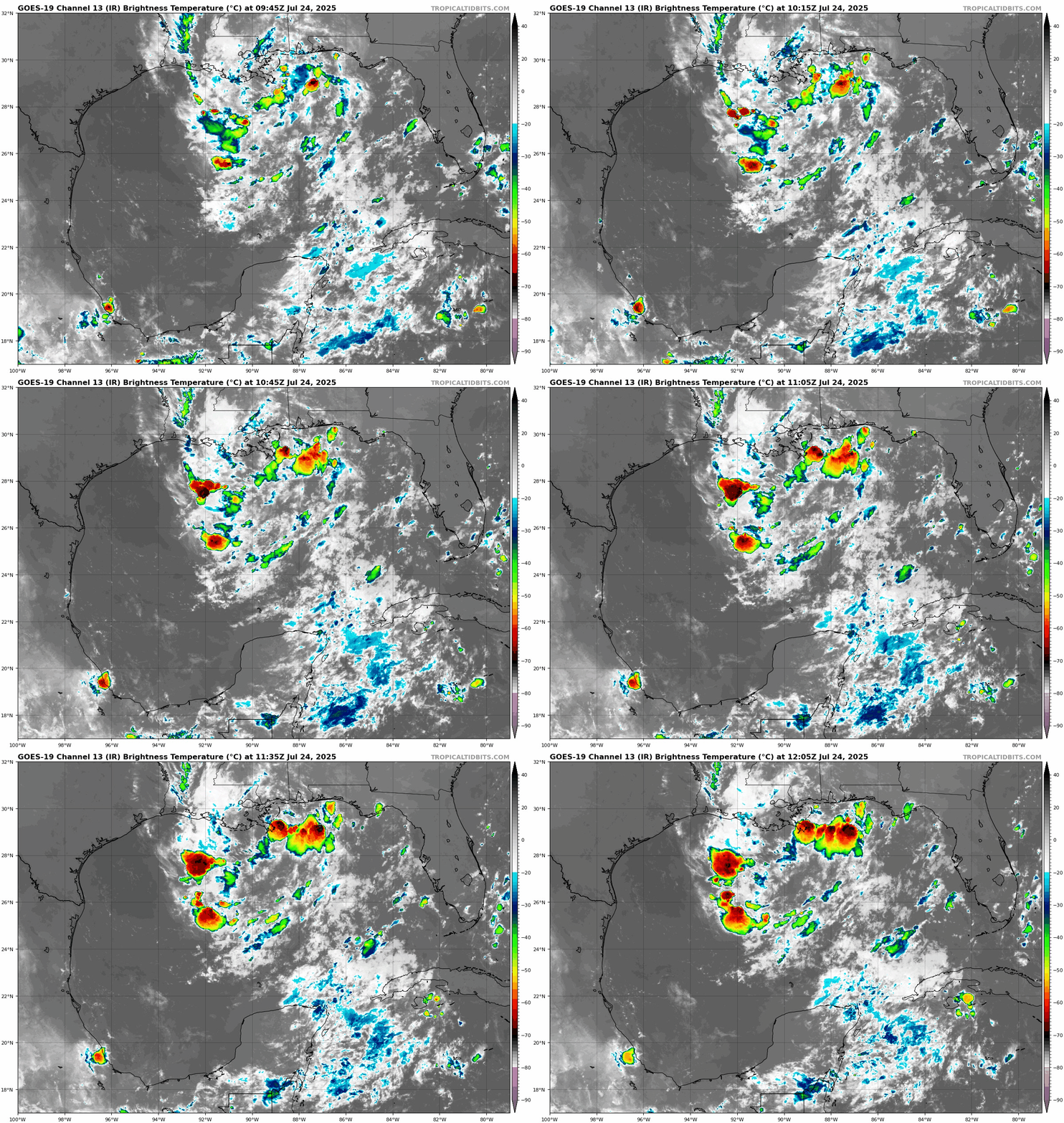
So, I don’t think this will be what gets us a tropical depression and/or Dexter. However, this will still bring some locally heavy rainfall to the Gulf Coast from Florida to Texas. At this point, the rain looks manageable in most places, and there are currently no Flood Watches posted. Still, we could see 1 to 3 inches of rain on the Gulf Coast from this.
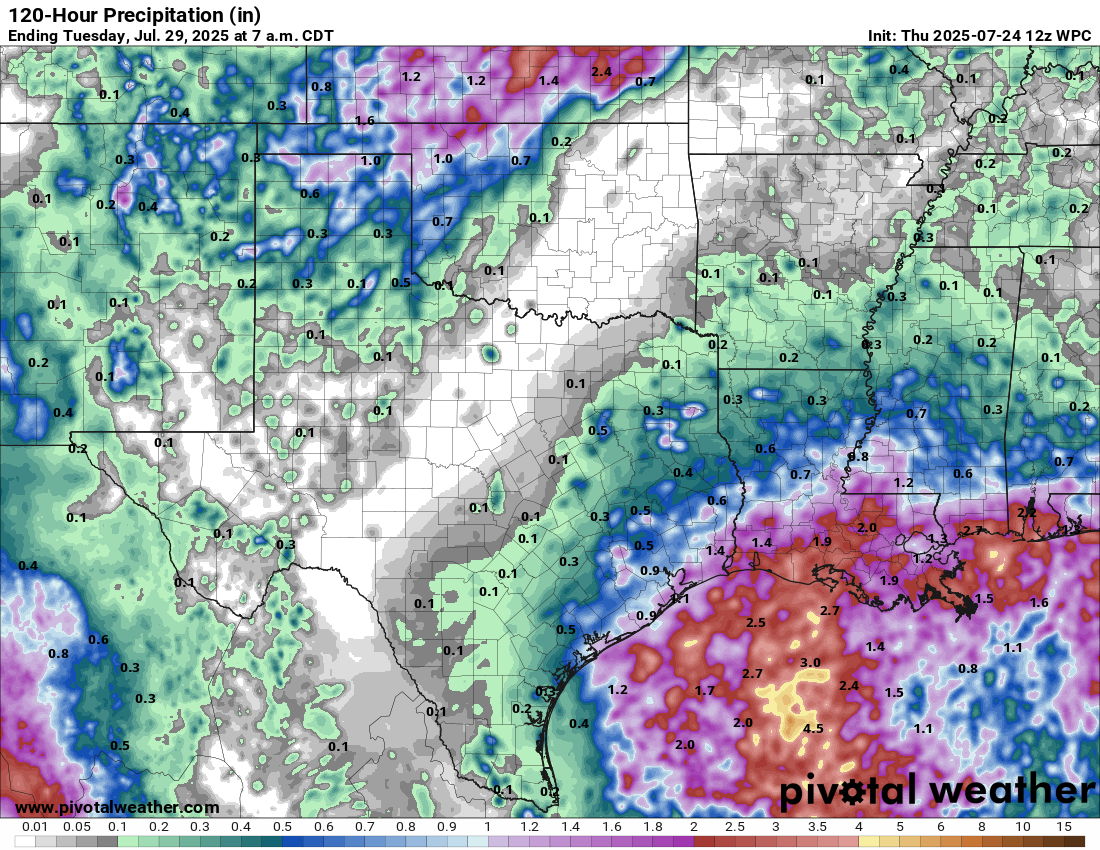
This should probably be a mostly positive outcome for the coast, with the exception of perhaps a few places in Louisiana that have seen enough rain for a bit.
Flooding risk in the Midwest and Southwest
A place where there are flood watches? Eastern Kansas and Northern Missouri.
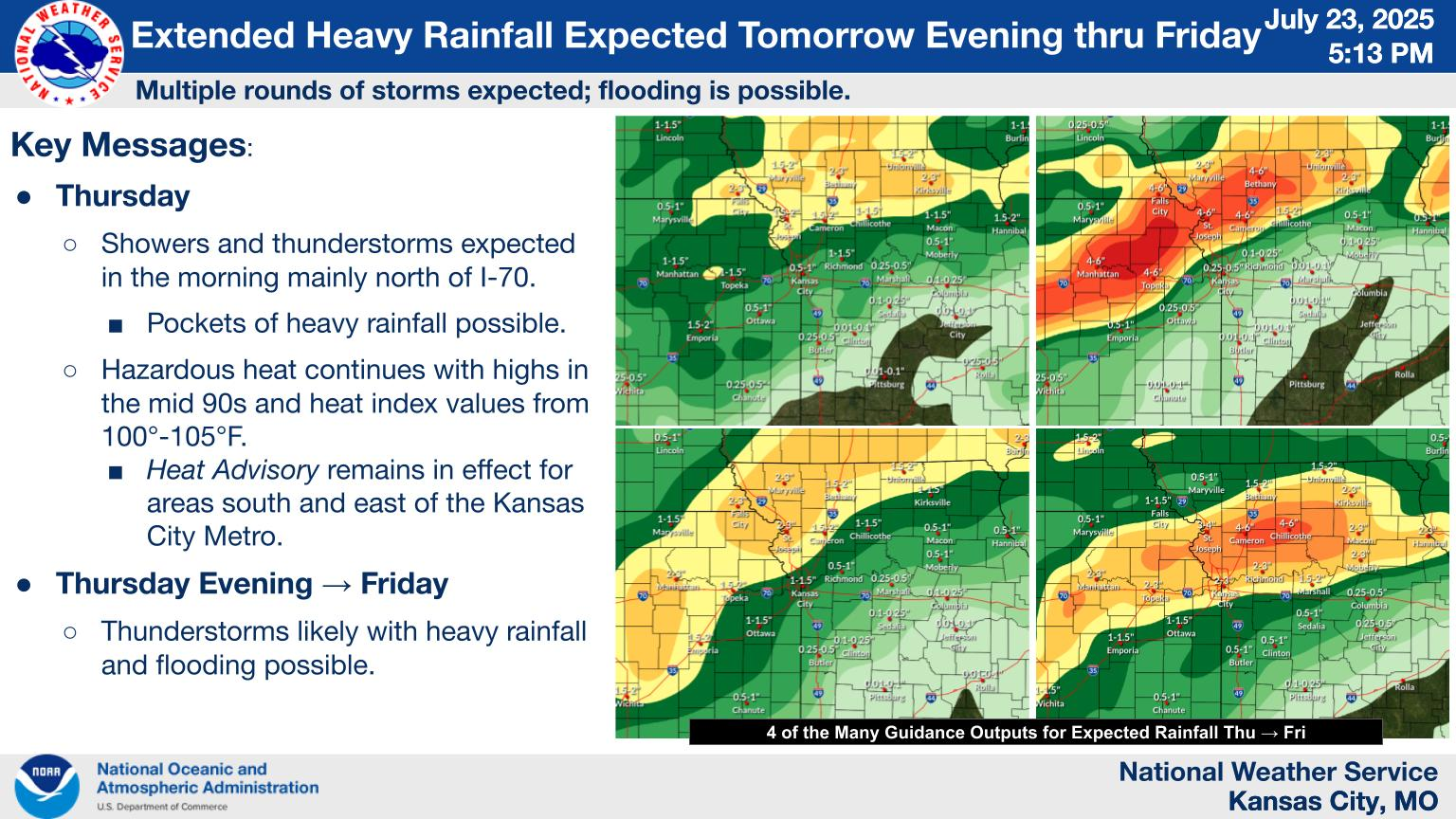
Thunderstorms tonight into tomorrow could produce some impressive rain totals. You can see from yesterday evening how there was a good bit of spread in potential rainfall there near and north/west of Kansas City. That spread continues today, with pockets of the HRRR model suggesting north of 5 inches of rain south of Topeka and the HREF model showing potential of 3 to 5 inches in those spots.
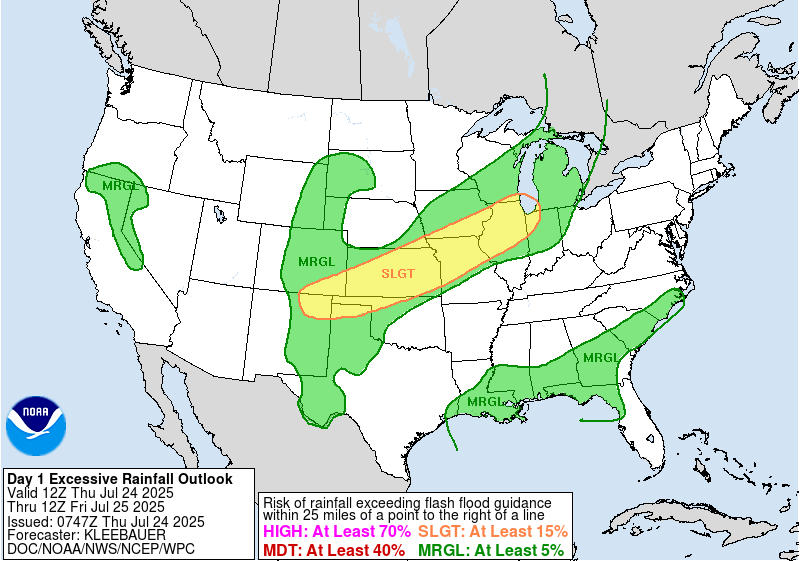
A slight risk (2/4) of excessive rain and flooding is in place for the Kansas City area and most of Kansas today. Another area with a flood watch is northeast New Mexico, where some flash flooding is possible near burn scars and in typically flood prone places like cities and arroyos.
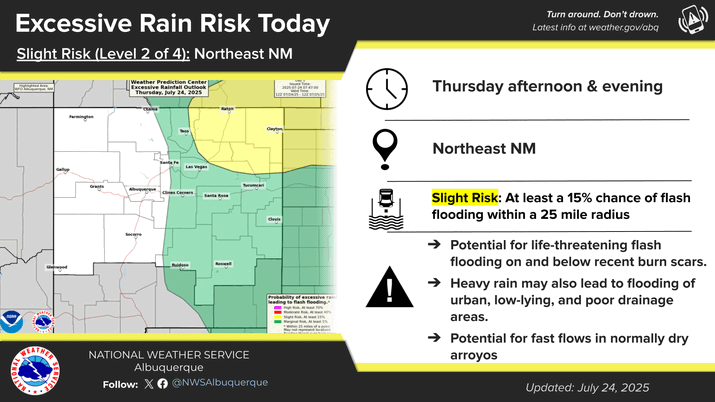
The flooding risk will not move a whole heck of a lot tomorrow, mainly focused on Kansas, Missouri, Iowa, and Illinois.
This and That: Patricia Johanson and Javier Senosiain
“This and That” is an occasional series of paired observations. See past “This and That” posts here. – Ed.
Today: Serpentine dinosaurs in lakes

Patricia Johanson, “Fair Park Lagoon,” 1981-86. Photo: Trey Burns / Southwest Contemporary

Javier Senosiain, “Coata III”
*************
No matter how original, innovative or crazy your idea, someone else is also working on that idea. Furthermore, they are using notation very similar to yours. – Bruce J. MacLennan
The post This and That: Patricia Johanson and Javier Senosiain appeared first on Glasstire.
South Korea Plans to Build a Base on the Moon
A power utility is reporting suspected pot growers to cops. EFF says that’s illegal.
In May 2020, Sacramento, California, resident Alfonso Nguyen was alarmed to find two Sacramento County Sheriff’s deputies at his door, accusing him of illegally growing cannabis and demanding entry into his home. When Nguyen refused the search and denied the allegation, one deputy allegedly called him a liar and threatened to arrest him.
That same year, deputies from the same department, with their guns drawn and bullhorns and sirens sounding, fanned out around the home of Brian Decker, another Sacramento resident. The officers forced Decker to walk backward out of his home in only his underwear around 7 am while his neighbors watched. The deputies said that he, too, was under suspicion of illegally growing cannabis.
Invasion of the privacy snatchers
According to a motion the Electronic Frontier Foundation filed in Sacramento Superior Court last week, Nguyen and Decker are only two of more than 33,000 Sacramento-area people who have been flagged to the sheriff’s department by the Sacramento Municipal Utility District, the electricity provider for the region. SMUD called the customers out for using what it and department investigators said were suspiciously high amounts of electricity indicative of illegal cannabis farming.

HHS Advises Low-Income Seniors To Wallow In Mud To Stay Cool
WASHINGTON—Following federal cuts to utility bill assistance programs, the Department of Health and Human Services released guidance Thursday advising low-income seniors to stay cool by wallowing in the mud. “With summer temperatures soaring, it’s more important than ever that older Americans are taking the time to lower their bodies into slop,” said Health Secretary Robert F. Kennedy Jr., who shared an illustrated diagram demonstrating how seniors could protect themselves by wading into, rolling around in, and slathering themselves from head to toe in mud. “Mud is effective, and most importantly, free. Who needs air conditioning when you can make mud right there in your own backyard? Even if you’re not a senior on a fixed income, I highly encourage you to check on your elderly neighbors and make sure they’re neck-deep in sludge.” At press time, Kennedy added that if seniors did succumb to the heat, the best part was they would have already fashioned themselves a makeshift grave.
The post HHS Advises Low-Income Seniors To Wallow In Mud To Stay Cool appeared first on The Onion.
Manhattan On Alert Following Sunrise Unaccompanied By Languid Clarinet Music
NEW YORK—Instinctively lowering themselves into a defensive crouch while awaiting the return of the eerily absent audio cue, Manhattan residents reportedly remained on alert Thursday after a sunrise unaccompanied by languid clarinet music. “Every day, as long as I can remember, I would roll out of bed to a soulful clarinet solo scoring the sun’s ascent over the Hudson, but today there’s only silence,” said longtime Hell’s Kitchen resident Robin Saunders, one of 1.6 million baffled Manhattanites who remained locked down at home as authorities investigated the music’s mysterious absence, only briefly peering out of their apartment windows in the hope of catching a single trill or sustained seventh note to mark the return to bluesy normalcy. “It didn’t matter whether I was waking up from a long bender in the West Village or getting ready for my workaday job in Midtown: Hearing those reeds blow out a long, sleepy note, watching the sunlight dapple off the Flatiron, and Woolworth buildings—that’s how you knew you were in New York. Now, though? It’s like I’m in some strange, alien world devoid of anything approaching syncopation.” At press time, the city had declared a state of emergency after Brooklyn residents reported being unable to hear the sultry saxophone solo that typically soundtracks their lonely evening walks under neon signs.
The post Manhattan On Alert Following Sunrise Unaccompanied By Languid Clarinet Music appeared first on The Onion.
Brian King and Sylvia Rinaldi
This wedding took a bizarre turn Saturday after the groom willingly engaged in a perverted family tradition in which he slow-danced with his own mother.
The post Brian King and Sylvia Rinaldi appeared first on The Onion.
Hot weather, rain chances return to Houston on Friday, and the curious case of IAH
In brief: The Gulf tropical disturbance is unlikely to develop, but it will bring some rain to the area tomorrow and Saturday. We have one more shot at 100 today before a brief break. More 100 chances return next week. Today we also dive into Bush Airport and talk about why it seemed to be such an outlier on Tuesday.
First, the tropics
Let’s start quickly this morning with the tropics and on this disturbance we have moving across the Gulf today and into our region tomorrow. There continues to be little to no chance of development with this. For Greater Houston, that means an increase in rain chances tomorrow and Saturday. And even that should be manageable.
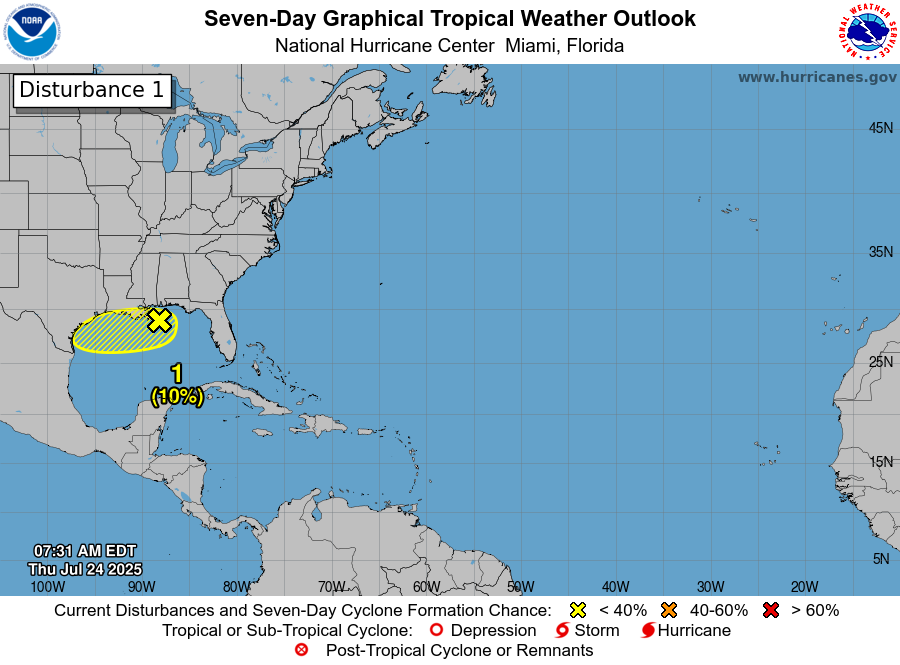
Now, how much rain? Well, Friday will be interesting. It could go one of two ways I think. The first way? The disturbance approaches Texas and we get a solid rain shield offshore, so coastal areas see a fair bit of rain in the morning, with inland areas seeing just a few scattered afternoon thunderstorms. Alternatively, we see a small bit of rain in the morning at the coast and then more numerous showers and afternoon thunderstorms moving southeast to northwest across the region. I am leaning heavily toward the coastal rain outcome, where inland areas see some scattered storms but nothing too widespread. This means folks in Galveston could easily see a couple inches of rain, and more numerous showers and storms may push across Brazoria, Galveston, and Chambers Counties.
On Saturday, we’ll probably see a repeat, except I think storms could be more numerous across the entire region. As we’ve been saying, it should not be a total washout, but you’ll want to have some rain plans in place on both Friday and Saturday if you’re planning outdoor activities.
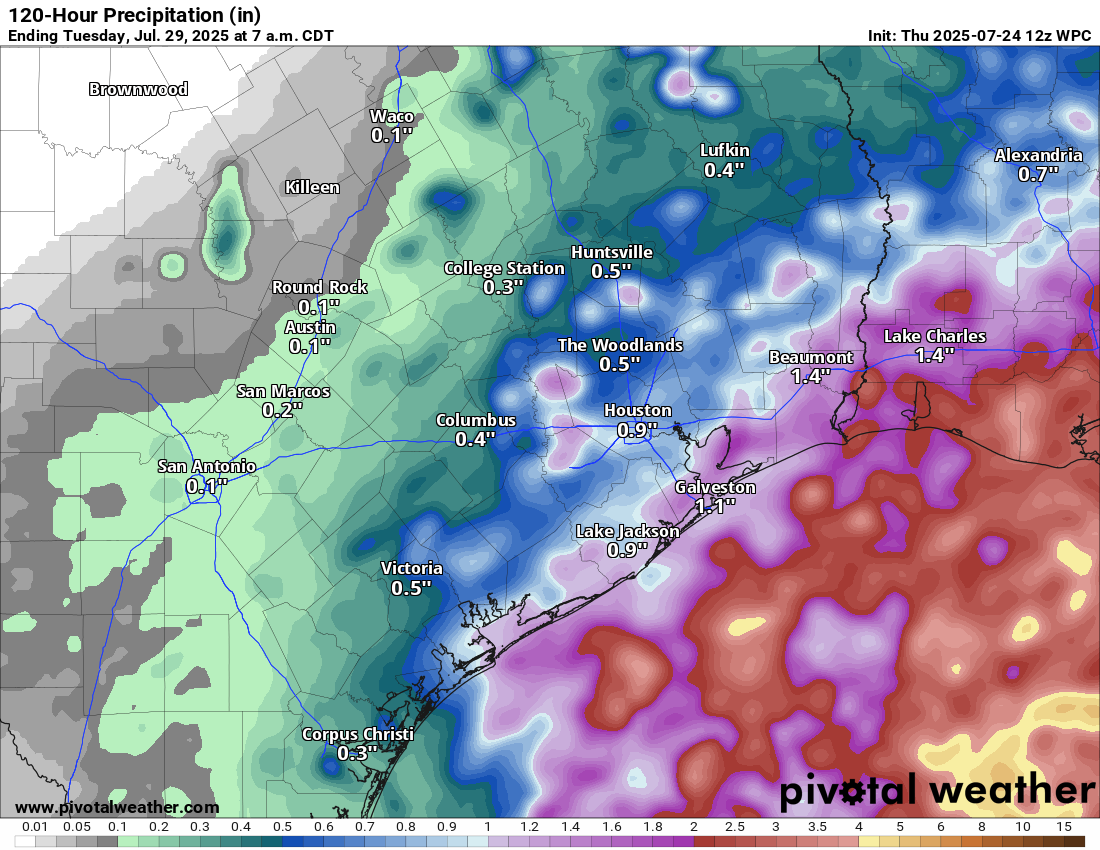
Rain totals will be on the order of probably 1 to 2 inches at the coast and a gradual trailing off of rain inland down to about a half-inch to inch inside the 610 Loop and less than that farther inland on average. Some areas may see little to no rain. Other isolated pockets, especially south and east of Houston could see 3 to 4 inches of rain.
Next, the heat
We hit 99 degrees yesterday, and we will make another run for 99 or 100 today probably. With clouds and showers around, Friday and Saturday should be substantially less hot. But look for the heat to return Sunday or Monday, and we will be making another run at 100 degrees by Tuesday or Wednesday.
Is the IAH thermometer rigged?
The fun thing about weather is that no matter where you live, if something looks the slightest bit suspicious, people start weighing in with lukewarm and hot takes about why there’s something wrong with a temperature sensor, someone has an agenda and is purposefully fudging data, and on and on. One of my favorites is when Washington, DC gets snow, virtually the entire city gets mad at whoever measures the snow at Reagan Airport because it is obviously too low. In Philadelphia, you get the opposite, the snow totals almost always get yelled at by people for being inflated.
Well, we’ve got ourselves a fun game of this happening in Houston now. On Tuesday, when IAH hit 100 degrees, many people were convinced it made no sense.
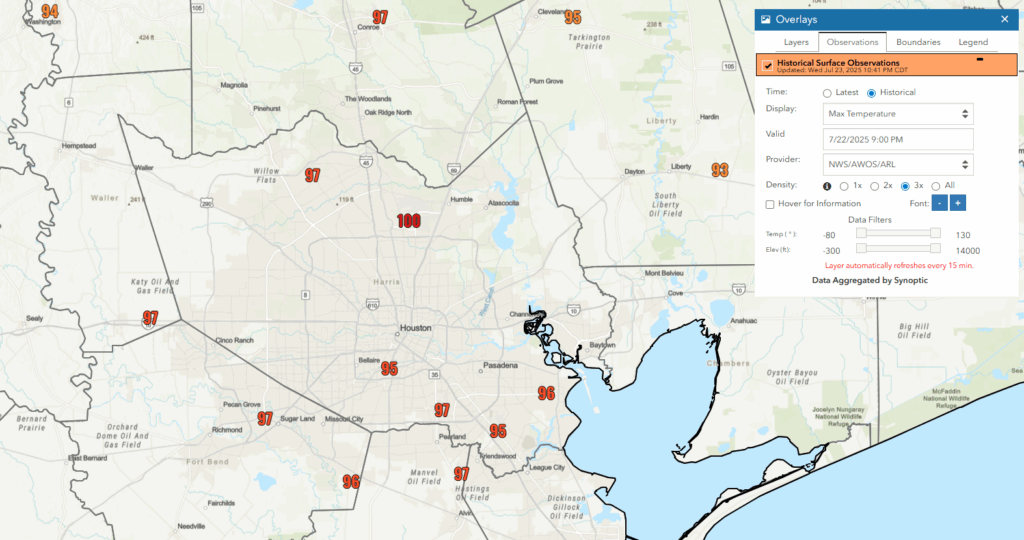
And, honestly, looking at that map above, I get it. IAH does stand out. Out of an abundance of caution, the NWS sent their electronics technician out to look at the thermometer at IAH. It was fine. It was reading where it should have been, and there have not been any recent changes near the thermometer. Turns out, it’s just hot at IAH. If you look at the high temperatures on Tuesday from a number of additional weather stations, filtered for most of the clearly bogus values (50s, 110s), you’ll see multiple spots hit 100 degrees.
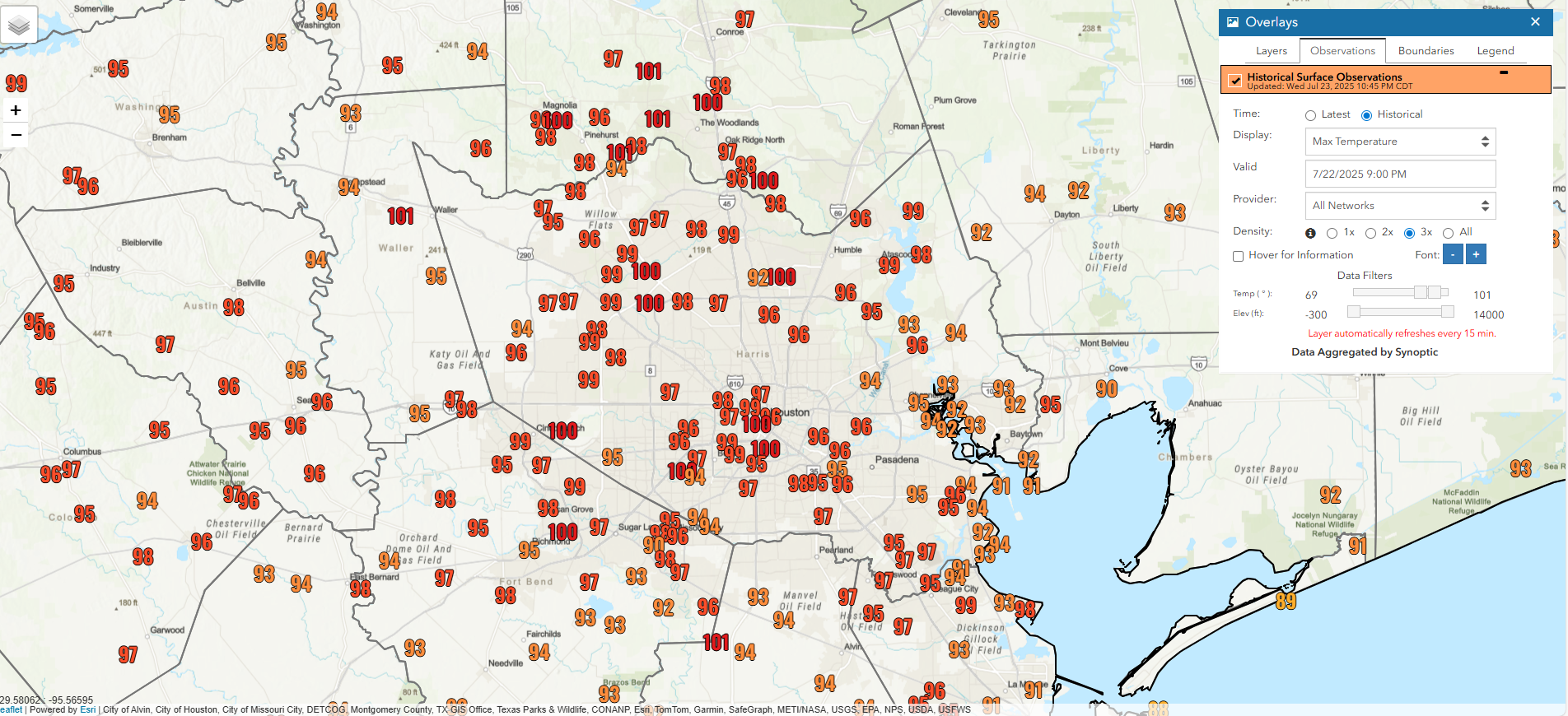
I’m not going to say that each of these weather sensors is sited perfectly or calibrated perfectly, but based on what I saw from sensors that I trust on Tuesday, I would have expected IAH to top off around 98-99 degrees. So, 100 doesn’t exactly shock me. But it’s definitely at the top end of temps for our area.
So, what is the deal with IAH, and can we trust it as a long-term indicator of our climate? It’s a complex and complicated question to answer. In most cities, historical data did move from essentially the center of town “back in the day” to airports. Official readings are now almost always taken at airports, where no one actually lives, of course.
A few places are unique or have complexities: Think Central Park in New York City; not an airport and a good, long historical data record. In Austin, you get to choose from Bergstrom Airport or Camp Mabry, two locations that can be very, very different during certain events. Downtown Los Angeles has also had a checkered history, with a weather station that has now moved 8 times. The linked article is from 2014, when USC housed the official Downtown L.A. sensor. It now sits on the south side of Dodger Stadium. The next time I visit SoCal, I intend to wear an Altuve jersey, go stand by it, and boo it. When stations like this move, there’s a process called “threading” that occurs. This process is by no means perfect, but it does a fairly good job of ensuring that station discontinuities are accounted for and the extremes we’re measuring against historically are as unified and realistic as possible.
Is IAH a reliable indicator of Houston’s weather history? Ten people will have ten opinions on this, but the reality is that it’s not really any worse than any other spot in the area. Houston is constantly evolving, growing, and changing. IAH isn’t perfect, but I think the important takeaway would be that there’s a difference between being representative of where people live versus being representative of reality at a given point. IAH isn’t a reliable indicator of every neighborhood’s weather history in Houston. But it is reliable as a location for our climatology today. In other words, compare IAH to IAH, not IAH to elsewhere. IAH hit 100 on Tuesday. Compared to previous records at IAH, it was one degree shy of a record high. That doesn’t mean that Sunnyside was 1 degree shy of a record. Or Sheldon was 1 degree shy of a record. IAH was. And since our official records are kept there, “Houston” was. You could make a similar argument about DFW Airport, which keeps Dallas’s official records or O’Hare in Chicago or Logan Airport in Boston.
Going back to the 100 on Tuesday, one of the key reasons for it may have been the lower humidity we saw that bubbled up in a pocket of the city. We can assess that with dewpoint values, as seen below. Also, IAH had 42% relative humidity at 3 PM, right around when it hit 100 degrees, which was one of the lowest relative humidity values in the city at that time.
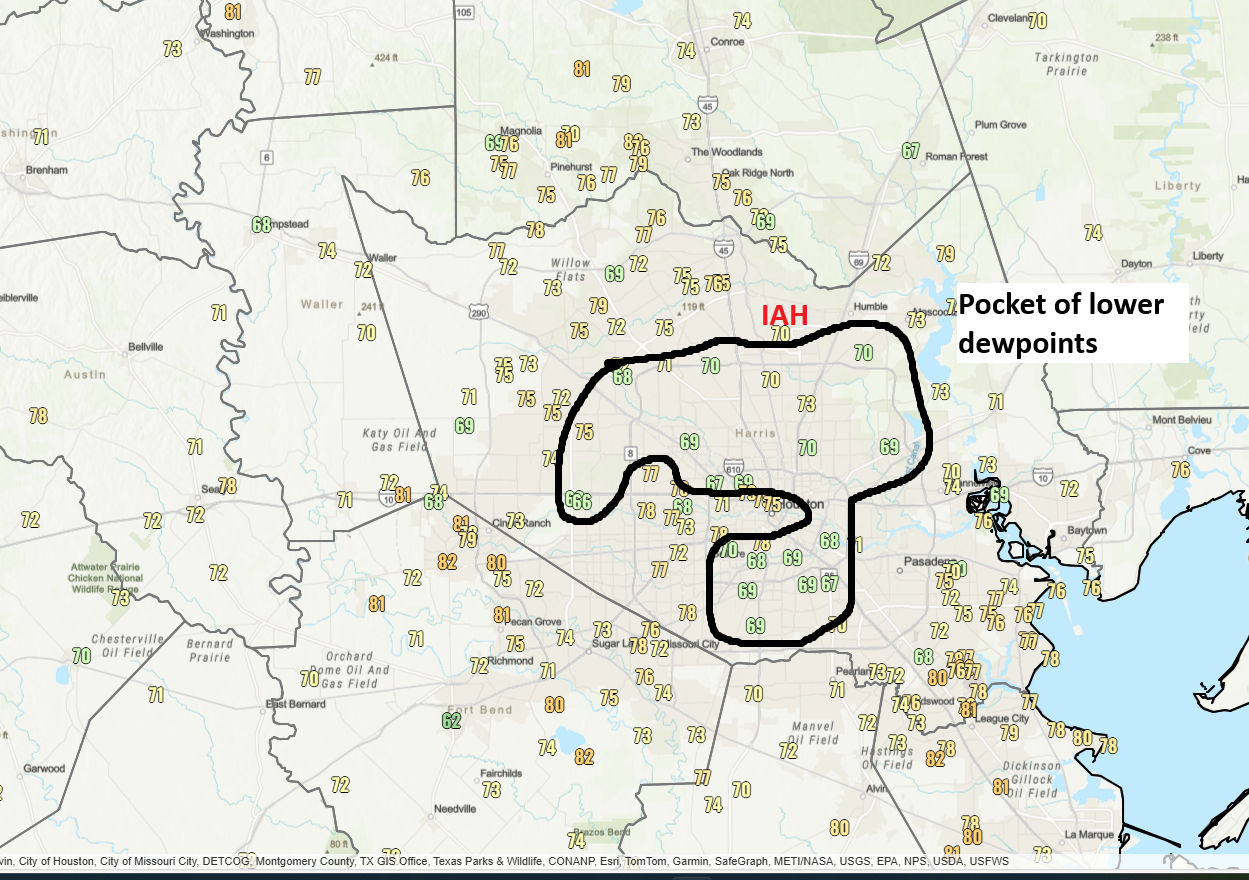
Drier air heats up more efficiently than more humid air, and when you have an air mass this hot, it doesn’t take a massive change in humidity to lead to a somewhat outsized change in temperature. Bottom line? It seems that a localized pocket of low humidity impacted the area near the airport. When combined with the already generally hot location of IAH, it led to a bump to 100 degrees on Tuesday, when most other locations were more like 96 to 98 degrees.
Does this settle the debate? Never. Everyone will still have opinions on this. Weather is a bit like sports in that regard, I guess. But when thinking of IAH, it’s a microcosm of all the things influencing our history here: Urban heat island, sprawl, a warming Gulf, and climate change all playing roles. But we wanted to share some of the plausible reasons why it happened, as well as add some color on IAH. Not perfect, but it’s what we’ve got.

For one Kerrville vineyard, a season’s harvest washed away in the flood
Authoritarian CDC Handwashing Guidelines
Under the Trump administration, and the direction of Health Secretary Robert F. Kennedy Jr., the Centers for Disease Control have updated their previous handwashing guidelines. In keeping with our new commitment to truth and personal freedom, the CDC recommends the following steps:
1. Wet hands under faucet.
2. Lather with warm, soapy water for at least twenty seconds.
3. Wait a sec—hold off on the soap. We don’t know enough about its long-term effects.
4. To be clear, we’re not anti-soap. But given the skyrocketing rate of chronic illness in this country, isn’t it worth investigating if soap plays a role?
5. We just investigated. Turns out soap causes neurodivergence. Authenticity and passion are like cancer for capitalism, which means they’re like cancer for you too. Evacuate the restroom immediately.
6. We’re not making this up, you know. Ever heard of a thing called science? We do it here. And not just any science—Gold Standard science. Gold. The most serious of the shiny metals. We can’t stop you from using the soap, but you can’t say we didn’t warn you.
7. So, you used the soap, despite all our warnings. You need help. We’re sending you to an organic wellness farm where you can work until you’re no longer addicted to surfactants. This is for your own good.
8. Till the soil. Work the plow. What an honor it is to make America healthy again. May the toil of servitude liberate your soul from the shackles of worldly imperfection.
9. Dry hands with a clean paper towel.
The Texas GOP’s ‘Unprecedented,’ Risky Gerrymandering Scheme
In 2021, the Republican-dominated Texas Legislature redrew the state’s political maps that determine the lines of power in the Texas House, the Texas Senate, and the representatives in U.S. Congress. Thanks to a decade’s worth of population growth fueled by Latinos, Asian Americans, and African Americans, Texas gained two new congressional seats—bringing the state’s total to 38, second only to California.
From a partisan perspective, the maps were primarily about incumbent protection—one new seat went to Republicans in the Houston area, and one went to Democrats in Austin, while the rest of the existing seats were all made either redder or bluer
From the perspective of racial representation, it was a further continuation of the Texas tradition of maximizing the power of conservative Anglo voters at the expense of communities of color—especially in Houston and Dallas-Fort Worth.
Timing-wise, that re-mapping was done as it typically is: after the decennial federal census. Yet, just four years later, Republicans are—upon receiving orders from their supreme leader President Donald Trump—coming back to Austin for a second bite at the gerrymandering apple as Team MAGA hopes to shore up its razor-thin majority in the U.S. House in 2026.
Governor Greg Abbott has put redistricting on his call for the current special legislative session, which convened Monday, citing the need to address constitutional concerns around a few specific racially gerrymandered congressional districts in Houston and DFW (something Trump’s Department of Justice quite conveniently chose to criticize and about which the Texas GOP has never before cared).
There are reports that Republicans will try to redraw as many as five currently Democratic districts—from South Texas and Houston to Dallas and possibly Austin—to favor the GOP to flip in the upcoming midterms.
That’s a tall task and a politically dicey maneuver—and one we saw 20 years ago. The Texas Observer spoke with Michael Li, a Texas native and longtime redistricting expert at the Brennan Center, about Tom Delay, dummymanders, and the long history of racial gerrymandering in the state.
TO: Texas was sued in 2021 for violating the Voting Rights Act by racially gerrymandering its new maps. Can you give a brief overview of what’s transpired since then?
The trial on the challenges to the 2021 map just concluded in June. … The briefing on that will continue into the fall and at some point in the coming months the court will rule. But of course, in the interim, some of those claims could be mooted out with respect to the congressional maps. So the [state] legislative map claims could still go on, but the congressional could become moot if the state draws new maps. So it’s this sort of bizarro world—this is the world without Section 5 of the [Voting Rights Act], where we had preclearance.
And we’re at the point now in 2025 where the state’s maps have kind of been under litigation for decades now.
Well, every map since the 1970s has been challenged or redrawn in part because they were racially discriminatory or violated the Voting Rights Act. This is nothing new for Texas. Whether Democrats drew the maps or Republicans drew the maps, Texas has struggled for decades to draw maps that fairly represented communities of color.
And in this decade, the map, I think to most objective observers, underrepresents communities of color—who are 95 percent of the population growth [of the] last decade. So you already under-represent those communities, and by redrawing this map you could make a bad map even worse, as hard as that is to believe.
So there were rumblings over the past month of the Trump administration pressuring Republicans in Texas to redraw the maps again, to expand their numbers in the U.S. House. Obviously that has now become a concrete thing. But, you know, we saw this DOJ letter that, right before Abbott put out his special session agenda, specifically lists racially gerrymandered districts in Houston and the DFW area that the state needs to correct. What do you make of that? Was this just a blatant way to create a pretext for Texas Republicans to open up the maps again?
Well, the letter feels very pretexual. It’s hard to make sense of the letter from a legal perspective. Just because you have districts with a lot of minorities and different minority groups doesn’t make it a racial gerrymander. What you have to do for a racial gerrymander is that race has to dominate in how you decided to draw the map. Texas has insisted throughout the [El Paso] litigation that it couldn’t be a racial gerrymander because they didn’t consider race. Race could not predominate if you didn’t consider it.
The letter doesn’t make any sense legally, it doesn’t actually make sense factually, and the fact that the state is using that letter to reopen up the map-drawing process I think is very pretextual.
Because if it was true that, as the state has claimed, there was no racial component to the drawing of the maps, then they could ignore the letter and say “Sue us.”
Right, and in fact Ken Paxton’s office even responded to the letter saying, “No, no, no, we didn’t consider race at all. We did this for partisanship.” Well, that’s fine. If you did it for partisan gerrymandering and you didn’t consider race at all, there is no constitutional problem with these districts. But the fact that Governor Abbott has said [in his special session call], we need to have constitutionally drawn maps—certainly their grasping onto the letter feels like a convenient excuse to do something that [they] already wanted to do for other reasons.
We’re hearing that Republicans want to add as many as five more districts, but that does not necessarily mean that they’re going to target the ones that are named in the DOJ letter. It gets messy very quickly, there’s all these cascading effects with changing lines and stuff, but they can kind of just open up the maps entirely and just start changing everything.
Yeah, I don’t think they’re bound by those districts alone. If you actually redraw the districts that are named in the letter, that’s just buying like a Texas-sized legal fight. You’re just inviting the argument that you’re intentionally discriminating against communities of color because these are in many cases long-standing districts that have been represented by Black and Latino members.
And it’s worth mentioning that, last decade, Texas was found by a three-judge panel in Washington [to have] intentionally discriminated when it drew its maps. The court in the preclearance case said, like, there’s more evidence of intention to discriminate than we have room or need to discuss. So there’s a lot of danger in attacking these districts.
Reports have said the GOP’s tentative plan to draw new Republican seats would be to target districts in South Texas, Henry Cuellar’s district and Vicente Gonzalez’s, Julie Johnson’s district in the Dallas area. The Houston area, and potentially in Austin. In terms of just the partisan gerrymandering aspect of this, does that strike you as especially aggressive?
From both a partisan perspective and a racial perspective, many of those are majority non-white districts—with the exception of Lloyd Doggett’s district in Austin. So you’re talking about targeting the political power of communities of color in a pretty aggressive way. But it’s also aggressive politically. Republicans in Texas already hold two-thirds of the congressional seats. If they add another five, they end up with 80 percent of the seats—in a state where they get around 55-56 percent of the vote at best.
This has “dummymander” written all over it. And again, last decade is a cautionary tale. [Republicans] drew the maps very aggressively last decade and it looked pretty good for them. And then [in 2018] they lost the Dallas seat that Colin Allred won and the Houston seat that Lizzie Fletcher won, and they almost lost a bunch of seats around the Austin area. Texas is growing so fast, it’s changing so fast, it’s becoming more diverse so fast. So it’s really hard to predict what the future electorate of Texas looks like. Because when you gerrymander, you’re making a bet that you know what the politics of a place are going to be.
And in many places, that’s true because, you know, they’re not changing that much. In Texas, it’s just the opposite of that. You can easily be too smart for your own good..
Right. And in 2021 with the current set of maps the consensus was it was a Republican-favored map where they expanded their numbers a bit but it was fairly tempered compared to past maps and was more about protecting the current status quo for incumbents. And then they saw 2022 and 2024 where Republicans won at big levels statewide and saw specific gains in South Texas in the Valley and some backsliding in the suburbs like Fort Bend and Collin counties. So it feels like they’re kind of looking back and being like, “Damn, we should have been more aggressive.” And they’re at risk of short-term political gain right now based on potentially over-reading or over-interpreting what could be some electoral aberrations.
Yeah, that’s absolutely right. If you talked to a lot of Democrats after 2018, they thought they knew what the future of the state was going to look like. They were wrong.
They were pretty confident that they were going to flip the Texas House in 2020. And that didn’t happen.
Right, and 2022 and 2024 were certainly good for Republicans, but things have changed. One being Joe Biden is no longer President and Donald trump is. And if you were trying to be in a good position for the rest of the decade, you might not want to be so aggressive.
But maybe they’re thinking this will be good enough for 2026 and we may lose seats in ’28 or ’30, but oh well. That is the world that the Supreme Court left us in because they said: partisan gerrymandering, we’re not gonna police it.
So the last time, infamously, that something like this happened was back in was in 2003 with Tom Delay in the mid-decade redistricting where they came to Austin and redid the congressional maps with explicit intentions of packing and cracking Democratic districts, really gutting the entire base of the existing conservative rural Democratic members, and also breaking up Austin into seven different pieces or whatever. What do you see as key similarities and differences with the situation now?
A key difference is when they redrew the maps in the 2000s, it was to replace a court-drawn map. The Legislature had deadlocked in 2001 because the Democrats still controlled the Texas House and they couldn’t agree on a map and so a court drew a map. And the court took a conservative approach in terms of not making a lot of changes based on the 1991 maps. … And the 1991 map was a fairly infamous and aggressive Democratic gerrymander, because Democrats controlled the process in 1991, and so by the early 2000s Republicans were winning the majority of the state vote but Democrats still controlled a majority of congressional seats. Republicans thought well that seems unfair. … Whether you agree with how aggressive they were or not, they did sort of have a case. This decade it’s different right, because Republicans drew this map. They got what they wanted and now they’re redrawing it. I can’t think of another example in the country where a party redraws the map that it drew. … That’s really unprecedented.
And also, going back to the point, if you accept the premise of the 2000s that seat share and vote share should kind of be alike, well Republicans have 67 percent of the seats. They don’t win 67 percent of the vote—and they certainly don’t win 80 percent. If you accept the arguments from the Tom Delay cycle, well gosh you actually should have more Democratic seats.
This interview has been edited for length and clarity.
The post The Texas GOP’s ‘Unprecedented,’ Risky Gerrymandering Scheme appeared first on The Texas Observer.
Plans for flood warning system floundered before Hill Country floods, witnesses tell legislative flood committee

/https://static.texastribune.org/media/files/1a46ce01ea5cf4395435c9c93e9db32d/0723%20Kerr%20Floods%20Committee%20RB%20TT%2001.jpg)

coworker threw a tantrum at an event he was managing, telling people to stop submitting AI-written slop, and more
It’s five answers to five questions. Here we go…
1. My coworker threw a tantrum at an event he was managing
I am one of two program managers for a nonprofit. We recently hosted a four-day conference for over 300 attendees. My fellow program manager, Alex, was tasked with leading the planning, which included creating a run of show (a detailed timeline for the event). Despite weeks of planning, it became apparent key elements were missing — set-up and clean-up weren’t assigned, roles were unclear, and some activities lacked preparation. I was responsible for planning the overall training and supervision of the volunteers for the conference, but feel like I should have looked at the run of show with a more fine tooth comb.
Throughout the event, Alex became increasingly irritable. When it emerged that attendees with dietary restrictions hadn’t been properly accommodated, I calmly raised the concern so we could do better for another meal taking place that night. No one blamed Alex, but he became loud, defensive, and at one point threatened to leave. Our supervisor, Jerry, had to de-escalate the situation in front of staff and attendees. Alex also refused to help unload supplies, leaving me, Jerry, and a volunteer to handle it. His partner, John (who was volunteering), made snide and dismissive comments toward me throughout the event.
Did I mention Jerry let Alex go home early? Meanwhile, I was managing a chronic illness and still remained professional, stepping in to cover gaps, including hosting a late-night conference event and a next day tour that Alex did not attend or leave plans for.
Alex has thrown a mini tantrum (which isn’t acceptable) once before with Jerry, but this is the first during an event. Event planning is a large portion of his job. I understand it can be stressful (I also plan events). I’ve shared my concerns with Jerry and expressed that this behavior is unacceptable and cannot happen again (or I might have a tantrum, just kidding). An apology (or acknowledgement of the bad behavior) would be nice from Alex but I don’t expect it. Our relationship was good beforehand but now I have no desire to engage unless necessary.
Jerry has indicated he will talk with Alex but he also says Alex needs to hear from me. How can I best address this directly with Alex?
I’m not at all a fan of Jerry saying Alex needs to hear from you. Jerry is Alex’s manager; he is the one with the standing and the obligation to address everything that happened with Alex and to make it clear it can’t happen again.
Is Jerry normally a passive, conflict-averse manager or does he tend to address problems forthrightly? (Relatedly, did he send Alex home as a way to appease him / make the problem go away, or as more of a disciplinary measure? And how did he handle the previous tantrum? You may not know the answers to those things, of course.) If he’s a decent manager who generally doesn’t let issues fester, then great. But if he’s not, he’s actually the bigger problem (and his assertion that Alex needs to hear from you is making me worry that may be the case).
Can you go back to Jerry and say that you’ve thought it over and don’t feel well-positioned to address what happened with Alex and that it’s a managerial conversation, not one for a peer? If he disagrees, ask specifically what it is that he thinks you should broach with Alex … because from where I’m standing, this is Alex messing up and needing to work through that with his boss, not you.
2. Telling people to stop submitting AI-written proposals
I work at an organization that accepts proposals from the general public for programming. These can be fairly informal; I am fine with just a few sentences and a link to a website if a presenter is experienced. It’s the less established ones I struggle working with. Recently, someone reached out about wanting to do a program related to “hope,” a very vague statement. I asked for some specific and basic details, like a written description, the format of the event, the length, and who would be involved. I told this person to take several weeks to get back to me with these specifics, but instead a few days later they sent back seven pages of what I suspect to be AI-generated slop that did not clarify any my specific questions.
I don’t need people to send me perfect or “correct” proposals, I want to hear from them directly about what they want to do and why. Can you suggest a polite script on how to push back against the suspect AI-use? I think this will happen more frequently in my field and I want to discourage it whenever it happens as it is at odds with our mission and detracts from the part of my job I like most, working with people who have interesting ideas.
Can you try to head it off before it happens? When you ask for the proposal and explain what it should contain, say something like, “We strongly recommend against using ChatGPT or other AI programs to create this proposal; in our experience, the proposals most likely to be accepted will explain what you’re envisioning in your own words.”
If you still get back what looks like AI slop even after spelling that out, I’d assume their program is likely to be in the same vein and reject it. If you really want to give someone another chance, though, you could respond and say, “We’re not able to accept this as written since it doesn’t answer the specific questions from my previous email. You’re welcome to resubmit it if you’d like. Again, the strongest proposals will be ones written in plain language and in your own words, even if imperfect.”
3. Should I not include pay rate in a job ad?
I’m creating a job posting for a new role in our company. We’ve opted to post the job on LinkedIn and Indeed. I’ve noticed on LinkedIn that many job postings do not include any salary information (unlike on Indeed). I find that so odd. From reading your blog, I know it’s better for employers and prospective employees to be up-front about a very key piece of information like pay. I figure if I’m transparent, then it will just weed out any candidates who are not interested in us and vice versa. What is the logic behind employers not including it, and should I be following suit if that’s the status quo?
For employers who don’t include pay, the logic is that they’re hoping to underpay people.
But it’s increasingly not the status quo, and there are a lot of people who won’t respond to ads that don’t list pay. You know what your range is; share it so that people who won’t accept it can self-select out before wasting your time evaluating them.
Related:
should I ignore job postings that don’t list the salary?
4. Asking to cut my hours and go fully remote
I’ll be 30 years into my current job next year, and my person is retired. I love my job, but we want to travel and adventure before we’re both too old to do so.
I reiterate that I love my job and would totally keep on as a remote worker in a 3/4 capacity. I currently only have to be in office a couple hours a week and that could be handled by someone else.
I’m ready to quit — my spouse is far more important to me than my job — but I could do 98% of my job while remote or traveling. The things that are needed in office are literally five hours a month and could be done by anyone. What do I do? How do I approach this? My boss truly values me but will be gutted by this ask.
I will choose spouse over job, hands down.
You’re in a pretty perfect position: you’re ready to walk away and you’re very clear on that fact! You’re willing to stay if they’ll meet your requests, but otherwise you’ll happily move on.
That positions you extremely well to have a straightforward conversation with your boss: “I’m looking at the next stage of my life and thinking about what I want. My biggest priority currently is to be able to travel with Bob now that’s he’s retired. That said, I love my job and would love to stay on if there’s a way for those two things to coexist. Would you be open to me going down to 75% time, fully remote? If that doesn’t work for the team, I of course understand, but I wanted to run that by you before I make other firm plans.”
5. Asked to submit timesheets early
I’m a salaried employee at a nonprofit. This week our operations team has been trying to close out outstanding tasks as we reach mid-year (credit card submissions, timesheets, etc). I get that! But today our head of compliance is messaging the entire org (about 80 folks) telling us to submit our timesheets for 6/15-6/30 by 6/30 at the latest and also sent a spreadsheet in our general Slack listing everyone who hasn’t submitted the 6/15-6/30 timesheet as “missing.”
I find this a bit weird! Our timesheets require us to code in 20-minute increments, and codes correspond directly with various types of work we engage in, including lobbying. Most people engage in multiple kinds of work every day, requiring different codes. Right now I/many teams are engaging in significantly more lobbying than normal. But I cannot predict exactly how much time I will spend over the next few days on that (or any other work) because it’s an ongoing project with ongoing changes from the legislative body. Isn’t it a bit odd they’re requesting timesheets early? Shouldn’t we be prioritizing accuracy, especially where lobbying is concerned?
Some people have jobs where they can easily and accurately predict what categories their time will be charged to over the next two weeks. If you don’t, then you don’t — and in that case, you’re someone who will wait to submit your timesheet on the last day of the pay period. (And yes, lobbying allocation in particular matters for nonprofits, because your org may be subject to limits on how much lobbying it can do.) But for people in different types of jobs, where their days are consistently 30% admin and 60% fundraising (or whatever) and where their categories of work don’t have legal implications, it’s not that weird to ask them to ask them to submit early if they can.
I think you’re reading too much into the list of whose timesheets were “missing.” Based on the context, that doesn’t mean “you’ve messed up; remedy this immediately.” It just means “these are currently outstanding.” They told you to submit it by the last day of the pay period, and that’s what you can do.
The post coworker threw a tantrum at an event he was managing, telling people to stop submitting AI-written slop, and more appeared first on Ask a Manager.
Top 10 ideas Danielle Smith has to promote “Alberta’s sovereignty within Canada”
Danielle Smith is in the process of touring her ‘Alberta Next’ panels, investigating ways in which Alberta could finally get a fair deal from Confederation. Smith believes it important to renegotiate some matters with the federal government in order to limit the Separatist Movement in the Wildrose Province, a movement she in no way supports […]
The post Top 10 ideas Danielle Smith has to promote “Alberta’s sovereignty within Canada” appeared first on The Beaverton.
Self-described “grill master” skills limited to hot dogs and frozen burgers
Rogersville, NB – After spending over $6,000 on a propane grill and accessories, Robert Arsenault has to date grilled only hot dogs and hamburgers. Arsenault, 39, recently renovated the patio of his family home to include space for what he calls, “The Fortress of Grillitude.” Arsenault says his grill master plans took root years ago […]
The post Self-described “grill master” skills limited to hot dogs and frozen burgers appeared first on The Beaverton.