This week on Lost Terminal: Lyosha goes back to school, Seth and Maddie have an interview, and looking back allows the gang to look forward. Lost Terminal will return next week! 📓 Free transcript: https://www.patreon.com/posts/episode-19-9-135609905 🎵 Today's SIGNAL is: https://namtao.bandcamp.com/track/deadlight-2 🦣 Mastodon https://namtao.com/@lostterminal 📝 Tumblr https://lostterminalpod.tumblr.com 🎙️ Recorded using a RODE NT-1 v5 USB in 32-bit float, edited with REAPER on Linux 🙏 CREDITS Credits narrated by Lucy Stringer ❤️ Thank you so much to everyone who supports me, but especially my Patreon Producers: Ada Phillips Kit Wynand Marais Jade Felicity Bilkey Stephen McCandless Mike Schneider
Late Sunday afternoon, dozens of Texas House Democrats boarded a charter flight at the Austin airport and absconded to the Land of Lincoln in an attempt to halt, if not stop altogether, Republicans’ heavy-handed scheme to redraw the state’s congressional map to increase the GOP advantage by as many as five seats.
Backed by Illinois Governor J.B. Pritzker, who provided safe haven to the more than 50 members who fled, Texas House Dems are pledging to do anything and everything possible to stop the tilting of the playing field ahead of the 2026 midterms. Fleeing the state was about the only tool in their kit, a bid to deny the lower chamber the constitutionally required two-thirds of members to convene.
“We’re not walking out on our responsibilities. We’re walking out on a rigged system that refuses to listen to the people we represent,” Democratic caucus chair Gene Wu said in a statement. “As of today, this corrupt special session is over.”
This marks the second time in four years that the minority party in the lower chamber has broken quorum over voting rights issues. It’s the beginning of another dicey high-stakes political fight that seemingly has no end other than the GOP ultimately getting its way—if not now, then soon enough. It also leaves Texans contemplating the prospect of an eternity spent damned to endless special sessions.
So, how did we get here? Upon orders from President Donald Trump and his political operatives to carve up the existing maps to add precisely five more Republican-favored seats ahead of the 2026 midterms, Governor Greg Abbott called a special session last month that tucked redistricting into a long list of agenda items.
At the start of session, the House and Senate select committee on redistricting held a handful of hearings to take public testimony on the prospect of new maps—without even having a proposed map on which to testify. Then after the perfunctory public hearings ended, a new map was introduced via House Bill 4, which strategically packed and cracked Black and Latino communities in Central and South Texas, Houston, and Dallas-Fort Worth, while generally throwing the current Democratic congressional delegation into chaos. The proposal could well give Republicans control of 85 percent of Texas’ 35 U.S. House seats—compared to the roughly 58 percent of votes a statewide Republican candidate can expect to earn.
In the first and only hearing on the actual map, held last Friday, bill “author” and GOP state Representative Todd Hunter repeatedly insisted that the measure was purely about maximizing Republican political performance in Texas. In case it was unclear, yes, he’s using that declaration as a moral defense of the proposal—since the U.S. Supreme Court has okayed partisan gerrymandering, while race-based gerrymanders are still (technically) forbidden by the Voting Rights Act.
The House redistricting committee’s one marathon hearing on HB 4 was dominated by members of the public, including Democratic members of Congress themselves, who opposed the bill.. Then, early the next morning, the map was approved along a party-line vote and scheduled for a vote on the House floor Monday.
While House Democrats in Chicago, plus some in New York, seem willing and able to withhold their numbers for the remaining weeks of this first 30-day special session, all that would do is delay the inevitable. In order to truly throw a wrench in the GOP’s machinations, Dems would likely have to keep their quorum break going through November, when the state opens up candidate filing for the 2026 elections.
That would require maintaining an organized quorum break of more than 90 days—easily the longest in Texas history—through possibly three special sessions and under more punitive political conditions than ever.
After the 2021 quorum break, the GOP-controlled House instituted new rules that impose a $500-a-day fine on each so-called political fugitive, a penalty that cannot be paid using individual campaign funds. (Thanks to our threadbare ethics laws, though, they could likely get around this through various creative legal arrangements, like cash “honorariums” or becoming paid “consultants” for whichever deep-pocketed donor ponies up.) Republicans back in Austin, meanwhile, are calling on Democratic members to be stripped of committee leadership positions and office budgets.
Abbott also issued a letter claiming dubious authority to declare Democrats’ offices vacated and call special elections to replace them. He also warned that Democrats who accepted funds from outside parties to pay the daily fines may be violating state bribery laws—something, it bears noting, that many Republicans cared little about when the appearance of venality marred Attorney General Ken Paxton’s impeachment trial.
National Democrats have pledged to support the state House Democrats come hell or high water; U.S House Minority Leader Hakeem Jeffries even visited Austin to pledge his support for Dems if they decided to flee, though he offered little in the way of specifics.
So far, the nascent quorum break has resulted in high-profile media coverage and widespread praise and support from fellow Democrats across the country. Texas House Democrats are presenting a unified front, though not all have joined the effort.
House Dems’ quorum break back in 2021 began in similar fashion. The caucus fled to Washington, D.C., to block passage of a Texas GOP draconian voter suppression bill. The ostensible mission in the nation’s capital was to pressure President Joe Biden and congressional Democrats to pass the John R. Lewis Voting Rights Advancement Act, which would have shored up and expanded the right to the ballot box nationwide—and would have cracked down on partisan and racial gerrymandering.
But Senate Democrats including Joe Manchin and Kyrsten Sinema were unmoved and the federal legislation did not budge. Meanwhile, as the days and weeks dragged on, Texas Democrats in exile grew weary, increasingly fractured, and eager for a political off-ramp. Eventually a contingent—including House Dem du jour James Talarico—peeled off from the larger group and returned to Austin, restoring a quorum on the House floor. The whole ordeal was a massive stress test for a diverse caucus that has a hard time staying united on any one issue even when the stakes are much lower. They were able to claim only a modicum of victory when the ultimate version of the voting bill excised some of the most pernicious provisions.
Asked at a press conference outside Chicago Sunday night about how Democrats will avoid a fate similar to the 2021 quorum break, caucus Chair Gene Wu replied: “This is not 2021. The threat is to not just our state but the entire country.”
As Texas Democrats argue, if they don’t stop this new Republican map from passing in Texas, then the entire country will be thrown into an unrelenting gerrymandering arms race—with major blue states California, New York, and Illinois gerrymandering their own maps (in some cases already quite gerrymandered in their own right) to counteract the Texas GOP’s rigging. Trump, meanwhile, has reportedly set his sights on additional redrawing in red states including Missouri.
At this point, that arms race seems like an inevitable outcome that no quorum break—regardless of how long—can prevent.
by By Eleanor Klibanoff, Gabby Birenbaum and Kayla Guo
Democratic National Committee Chair Ken Martin said his group is putting its full weight to help Texas Democrats, who left the state to block Republicans from redrawing congressional districts.
WASHINGTON—Highlighting a notable shift in the nation’s religious landscape, a study published by the Pew Research Center on Tuesday indicated that more Americans were converting to Mormonism in hopes of getting their own Hulu series. “According to our nationwide survey, more than 2 million U.S. residents joined the Church of Latter-day Saints last year to increase their odds of scoring a meeting with a producer from The Secret Lives Of Mormon Wives,” said study co-author Mark Woodward, who noted that the most frequently reported reasons study participants gave for their conversion to the faith were a yearning for spiritual fulfillment and the opportunity to go off on their supposed best friend for calling them a bitch behind their back. “In an increasingly isolated world, the Mormon church offers these converts a sense of identity, community, and purpose, as well as a chance to ratchet up the drama. Additionally, we found that the Church of Latter-day Saints is directly leveraging this trend by encouraging their international missionaries to promise people around the world that they too could earn meal kit brand deals after getting breast implants and embroiling themselves in a TikTok swinging scandal.” The study follows a report last month that found millions of people were leaving the Mormon faith in an effort to catch the attention of the producers behind Mormon No More.
President Trump signed an executive order aimed at combatting homelessness by reviving civil commitment, a process that places people with mental health issues in treatment facilities without their consent. What do you think?
“I always said some people are just one nonconsensual commitment away from turning their life around.”
Laura Foudet, Systems Analyst
“They should just be grateful they’re not being disappeared completely.”
Jay Eggert, Badminton Referee
“Once they’re better, they’ll realize they should buy a house.”
In brief: There are three items in the Atlantic today. Dexter is heading out to sea. A low pressure system may develop off the Carolina coast this week, keeping wet weather in play for the Southeast. A third area emerging off Africa this week has some chance to develop, but it’s getting one model with a poor track record excited.
Atlantic tropics
We have our fourth storm of the hurricane season today, thankfully not a threat to land. We’ve also got some other business to attend to in the basin. So, let’s get started.
Tropical Storm Dexter
(NOAA/NHC)
Invest 95L became Tropical Storm Dexter late yesterday. Dexter is already exiting stage right, moving east northeast around 10 to 15 mph. By the end of the week, Dexter should be post-tropical. Eventually, this will probably end up in the British Isles, either as part of another typical European storm or as a passing disturbance. Either way, it’s mostly just a curiosity than anything else.
Satellite image from Monday morning showing Dexter and a ton of wildfire smoke across the Northeast and Great Lakes. (College of DuPage)
Deep Atlantic area of interest
(NOAA/NHC)
A tropical wave emerging off Africa today carries a 50/50 chance of developing as it moves into the open Atlantic this week. Currently, there is little to see with this tropical wave, as it’s basically producing no shower or storm activity. However, by the time we get to later Tuesday or Wednesday, we do expect this thing to fire up some. From there, model guidance is in good agreement on decent odds of development. The European ensemble is probably the most bulled up about this one (see below), but the various AI modeling and ensembles also support development.
A small majority of the European ensemble supports development of a tropical wave off the coast of Africa by later this week or weekend. (Weathernerds.org)
Some GFS operational model runs have gotten a bit spicy with this, keeping it middling into next week before trying to push it due west toward the Southeast as a strengthening system. There’s not a whole lot of additional support for this scenario, so the GFS appears to be an outlier in this regard. The reason it seems to be doing this is similar to what we described in yesterday’s post, about a “weakness” in the ridge over the Atlantic that would allow the system to turn north and exit. The GFS keeps the system fairly weak, which would make it a little less likely to turn north into the weakness and out to sea. Then, as the system it strengthens, it rebuilds the ridge to the north, basically forcing it to continue due west or northwest toward the Southeast.
The timing of this diversion from the overall consensus view of out to sea seems to be in the Sunday through Tuesday timeframe, so we’ll get a fairly quick resolution to this through the week as the overarching weather pattern clears up. I suspect we’ll have a good idea if this is an actual Southeast concern as the GFS operational suggests by midweek. Historically, the GFS does not have a good track record when going it alone in scenarios like this, so we’ll keep an eye on it but we’re far from being concerned about it at this time.
Closer to home
Meanwhile, a newer 30 percent area got drawn yesterday afternoon off the Southeast coast.
(NOAA/NHC)
Behind Dexter there is still a remnant stationary front off the coast of the Southeast. Over the next few days, we’re probably going to see a weak area of low pressure develop along that remnant boundary. Unlike Dexter, this won’t get whisked out to sea. Rather, it looks likely to just kind of sit and spin for a bit.
Friday’s forecast map from NOAA shows weak low pressure off the South Carolina coast. (NOAA WPC)
To be honest, I’m not super concerned about significant development here. However, this may make for a somewhat dreary week along the Carolina coast. Rain totals may begin to add up some in this area as well through the week.
It looks like a wet week for Georgia and South Carolina, as well as parts of North Florida. (Pivotal Weather)
So overall this is worth keeping tabs on, but it is probably not a serious concern.
There’s more to discuss non-tropics, but we’ll save that for later or tomorrow.
In brief: Houston will see a decent chance of some showers and thunderstorms today, but beyond this we should remain hot and mostly sunny, as is often the case in August. Also typical for August is an increase in tropical activity across the Atlantic. Which is what we are presently seeing.
Right on cue, the tropics heat up
After a flurry of tropical storms in late June and early July, the Atlantic tropics were rather quiet for the last three weeks. That has changed over the weekend with the formation of the fourth named storm in the Atlantic (Dexter, which is not a threat to land), and development of a couple of additional “blobs” to watch.
First of all, some numbers. Dexter is the fourth named storm this season, and in some sense we are ahead of schedule. Historically, the “D” storm forms on August 15th. This makes it sounds like it has been a busy hurricane season, but measured by a more accurate barometer, we have seen a slow start. Our preferred measuring stick for seasonal activity is “accumulated cyclone energy,” which factors in both the duration and intensity of tropical storms. By this metric we are running at about 20 percent of normal levels.
Accumulated Cyclone Energy to date compared with normal levels. (Colorado State University)
The graphic above highlights two things. One, we are off to a relatively slow start this year. But more importantly, we remain very early in the game. The vast majority of the Atlantic season’s activity remains ahead of us, with August and September as typically the busiest months. So yes, it’s nice to have had a quiet start to the tropics season in Houston. But it does not mean a whole lot.
When we look at the tropical forecast for the next week or so, there are no distinct threats to the Gulf of Mexico. And I don’t want you to focus on any specific storms. However, what is clear is that we are entering prime time for the Atlantic season, and the background conditions (including the upper air pattern) are starting to become much more supportive of tropical storms and hurricanes. Bottom line: we really need to pay attention to this stuff for the next eight weeks or so. We will cover every conceivable threat to Texas here, and be sure and check out The Eyewall for coverage of storms across the tropical Atlantic.
Monday
Showers and thunderstorms have developed offshore this morning, and I think we’ll see a healthy chance of similar storms developing over inland areas this afternoon. The overall pattern is not supportive of widespread storms, but I do think there will be some scattered but impactful activity this afternoon and early evening in the metro area, with perhaps slightly higher chances west of I-45. Some areas may pick up 1 inch of rain or more, with most of the region staying dry. Otherwise expect mostly sunny skies this afternoon with high temperatures generally in the low- to mid-90s. Winds will be light outside of thunderstorms, from the east. Lows tonight will only drop into the upper 70s.
So it goes in August, in Houston. (Weather Bell)
Tuesday, Wednesday, and Thursday
A fairly robust ridge of high pressure will build over the southwestern United States this week, but Houston will fall on the eastern periphery. Essentially, this means that we will see typical August weather, with mostly sunny skies, highs generally in the mid-90s (with some upper 90s for far inland areas possible), and a low-end chance of showers during the afternoon along the sea breeze. Nights will be warm and muggy. As Augusts go, things could certainly be worse at what is typically the very hottest time of year in Houston.
Friday, Saturday, and Sunday
Not a whole lot changes as we head into the weekend. Skies remain mostly sunny, and I think most of us will continue to see daytime highs in the mid-90s. Rain chances remain low, but at about 30 percent daily, are definitely not zero thanks to the sea breeze. I don’t see much of a change in this pattern any time soon.
Art League Houston (ALH) has announced an open call for exhibition proposals for its 2027 season. Artists, curators, and art collectives are invited to apply for six total exhibitions, to be scheduled in the winter session running January through April, and the summer session running May through July.
Proposals are welcomed from local, regional, national, and international artists and curators in all disciplines, including visual arts, installation, performance, video, and interdisciplinary practices. In a press release, Art League Houston states its commitment to supporting diverse artistic voices, and encourages applications from both emerging and established practitioners. On its website, the organization states its core values as inclusivity, creativity, learning, service, and evolution, and “[looking] to the future while celebrating our past.”
A 2023 opening reception at Art League Houston. Photo: Alex Barber
Open call proposals will be reviewed between November 2025 and January 2026 by an artist advisory board of artists and arts professionals from the region. Artists will be selected on overall quality and innovation.
In support of potential applicants, Art League Houston will host a frequently asked questions session in mid-September, held at the organization’s headquarters in Montrose and online for those unable to attend in person. The session will provide an overview of the application process and offer space for questions. Details on the date, time, and how to register are forthcoming on the ALH’s website and social media channels.
Proposals must include a working budget, and criteria for submissions includes that artworks and projects address social, political, and cultural issues relevant to the local community, as well as current dialogues in contemporary art.
Art League Houston is W.A.G.E. Certified, and will offer artists selected for exhibition stipends ranging from $700 to $2,700.
The application is free. Proposals must be submitted through the Art League’s Submittable platform, and will be accepted through October 31, 2025. Full guidelines, selection criteria, and submission details are available here.
Mercury Project, a small, artist-run venue and studio space in San Antonio, is enjoying a magic moment. The level of shows and events held there lately has equaled or surpassed those of any venue in town — including the major museums and top-flight galleries.
The past few shows I’ve seen there have been thoughtfully curated, elegantly installed, experimentally ambitious, and beyond expectations for what at first appears to be a fairly typical raw space in an out-of-the-way neighborhood. Events are well-attended and carry a vibe, an energy, a resonant feeling of community and generosity of spirit.
On a recent weeknight, 27-year-old painter Crystal Rocha worked on final touches to As I See It, her third exhibition at Mercury Project. She first rented a studio seven years ago, then left for another communal space, found it didn’t have the same magic, and returned. Rocha is one of 18 tenants renting space in the small two-story complex, a painter among other painters, ceramicists, photographers, upholsterers, a healer and community choir director, a sound artist, and others. She spoke of her fellow tenants as cultivating a sense of belonging and being supportive of each others’ efforts.
“Mercury is just really special,” she said, “because of the community aspect of it. We’re all genuinely uplifting each other.” She described her fellow tenants as “determined creatives,” and credited their commitment to their craft as a form of group inspiration. “I think everyone there is creating on such a deep, genuine and authentic level.” Rocha’s first show at the space in 2023 was called Peepholes Into Heaven, containing a mix of artists’ work along with some of her own self-reflective portraiture. The surprise upon entering was that the show was held in the dark, with a basket of little flashlights available. People made their way around the spacious one-room gallery, illuminating artworks as they encountered them. You’d think this would be a bad way to look at art — having to squint through strange LED flashes, which is against all best practices for optimal viewing — but instead it had the effect of engaging a more deliberate way of seeing, of turning visitors into conscientious observers, and letting in some sense of the unpristine world outside the gallery.
“Peepholes Into Heaven” at Mercury Project.
Rocha’s second effort, titled Labor of Love and ironically referred to by the artist as “lol,” was a one-day pop-up that required more time, expense, and effort than many artists would put into a full-length museum exhibition. Reminiscent of 1970s earthworks and recalling Walter de Maria’s New York Earth Room, Rocha covered the entire 3,000 square-foot concrete gallery floor with a thick layer of bermuda grass she’d purchased, which was quickly installed and tended. Once gallerygoers came to the opening, they shed their footwear and plopped down, as though picnicking in nearby Roosevelt Park. Funded by de Menil largesse, the New York Earth Room is a permanent installation, but Rocha’s had to be removed after an evening opening and a few daytime hours — in part due to the march of Mercury’s planned-out exhibition schedule, which rotates monthly, and because a layer of turf doesn’t do well indoors for very long without significant caretaking beyond the capabilities of an emerging artist with a day job and scant resources.
Crystal Rocha’s one-day pop-up show, “Labor of Love,” at Mercury Project.
But for me, Labor of Love captured the exact magic of Mercury Project. It was the paragon of one young artist’s severe dedication not only to her craft — normally painting — but to creating an experience, of simply seeing what art can do, what gathering in a community can conjure in terms of good spirit, togetherness, fun, and weirdness for the sake of spotting a glint of joy in a darkening world.
Installation view of “Earthly Delights” at Mercury Project.
Other moments, too, convey what makes Mercury tick on such a high level. Emily Tarleton, another Mercury tenant, recently took down her curated group show Earthly Delights to make way for a July 12 one-night pop-up by fellow tenant Faith Fisher, a show of finely wrought realist paintings titled Brightness of the Firmament. Remarkably, Tarleton then reinstalled her group show just as it was, to reopen the following Friday for another week. Gallery Manager Rikkianne Van Kirk, also an artist and friend of the building owners and Mercury Project founders Antonia Richardson and Warren Borror, helped out, posting a social media image honoring the last ride of an old paintbrush duct-taped together, which she used to repaint the patched-up nail holes from Fisher’s show in preparation for Tarleton’s reopening. Tarleton explained that such camaraderie is the common theme among Mercury Project tenants, whom Borror prefers to call “residents,” in keeping with the community spirit first instilled by Richardson.
Back in 2012, Borror’s partner, Richardson, was a painter of large-scale abstraction in search of a live/work space. A friend recommended they take a look at the two-story building on South Roosevelt Avenue with an enclosed yard. In Borror’s telling, “It was a much larger property than what we were looking for, but [Richardson] fell in love with it right away. The ability to live upstairs and to do artwork downstairs really appealed to her, and she saw the potential for a shared space with other artists. She really liked that idea, to be able to collaborate and to interact with other artists and build community.” They bought the building, and thus Mercury Project was launched.
Rikkianne Van Kirk holds an old paintbrush while prepping the gallery
But not so fast – things were bumpy for the first five years or so, Borror said, evincing that an era when everything seems to have gelled can be rare indeed. Things are working smoothly now, with all 18 available spaces occupied by what Borror, Van Kirk, Tarleton, and Rocha all separately describe as a good group of dedicated creatives. Functionally, Van Kirk explained, Mercury Project is artist-driven: The artists curate their own exhibitions from the ground up. “They’re the ones hanging the art. They’re the ones promoting the art. They’re coming up with the statements and concepts and that gives them ownership [of] the space.”
The young artists credit guidance and resources on the level of mentorship available through Van Kirk and the other, more experienced residents, along with the consistent presence of Nina Hassele, Director of San Antonio’s Contemporary Art Month and a tenant since 2020. The Brooklyn born-and-raised Hassele brings professional communications skills to the table, and also offers guiding light for young artists and makers evolving their practices. As Borror put it, “It’s a safe space for artists to be able to share their work with one another as they develop it, and draw strength from the other artists.”
If this all sounds like a closed circle, I’d say it’s not. These artists convey a mutual inspiration transcending specific mediums or approaches that gets at the communicative essence of creativity and artmaking. Rather than a clique, the Mercury Project of today is a rising tide floating all boats.
Y’All Sing! community choir crowds the Mercury Project gallery
Rocha’s exhibition, As I See It, opened Friday, August 1, and closes with a reception on Saturday, August 23, which will feature a performance by Chavela, a San Antonio musician Rocha has painted. That portrait, showing the musician mid-performance, was included in Tarleton’s Earthly Delights show. Many other workshops and events occur regularly at Mercury Project; check their event listings for details.
Welcome to Mortification Week, our annual celebration of hilarious ways that we and other humans have mortified ourselves at work. We’ll be talking about mortification all week long.
To start us off, here are 15 stories people have shared here (or submitted via email) about work moments they now cringe over.
1. The compliment
I was at our employee recognition banquet where our whole company and their partners would come, enjoy the “employee of the year” and other equivalent awards, and have dinner and dancing and other evening games. It was in a hotel ballroom with a live band and I was chatting with a coworker’s wife I hadn’t seen in a while, (who I know enough to recognize her if I saw her out of context – but we aren’t close) and she was wearing stunning suede leopard print boots that just stood out and looked so cool. And so I lean over, and tell her, “I LOVE your boots – they suit you so perfectly!” And she blushes, and gets wide-eyed and then just starts gushing and praising my forwardness because she has been feeling self conscious and that it was great to have someone be open about it everything and how great it feels to feel like herself again.
I am VERY confused by this outpouring of emotion … until I remembered that she had recently undergone surgery for cancer – and realized that she had definitely misheard me when I said “I love your BOOTS.” We both turned beet red when we realized what she thought I said – but laugh about it now every time we see one another.
2. The interview answer
In an interview for a job working with children, I was asked what animal I would be, were I to be one. I said I would be a goose, because I like fighting. I saw the interviewers’ faces change and added “…to defend my young.”
I have no strong identification with geese and no interest in fighting so I have no idea where any of that came from. I did not get the job.
3. The Latin dictionary
Many years ago, I worked in a bookstore in a mall. A customer came in looking for a Latin dictionary. I was super hungover and in a bad mood generally, and I argued with him that, of course, we didn’t have one because Latin is a dead language. He just stared at me like I was the biggest ignoramus in the entire world and walked out.
After he’d left, I realized how stupid I’d sounded. I still cringe, 30 years later.
4. The goal
At my first “real” job after college, I learned that I really should not write and talk at the same time. I was filling out the goals section of my performance review. My newly hired coworker who sat beside me misunderstood something another coworker had said, and he asked me, “Did she just ask that person if they were stupid?”
I continued writing and replied to him. What my brain TOLD my mouth to say was, “No. She said student.” But apparently my nervous system short circuited. What my hand was writing overrode my brain and instead I said, “GOALS!” Except for some reason I shouted it. It was like my mouth had gone fully rogue.
The look on my coworker’s face was priceless, and I realized how ridiculous I sounded. So I started laughing. Which I realized made me look even crazier, which made me laugh even harder (times when being a nervous laugher doesn’t work out so well).
I think he was slowly backing up thinking I had absolutely lost my mind. I finally managed to get a grip on myself and explained what happened. Thankfully we both laughed it off and we worked together for a few years after that. Every now and then we would just randomly shout “GOALS!” at each other. I guess it was one heck of a coworker bonding experience.
5. The headline
A thousand years ago, I worked at a newspaper and one of the headlines went through multiple editors and a proofreader as “FUN FOR THE WHORE FAMILY.”
It went to print.
6. The auto-correct
Was once emailing our director that I had corrected his wife’s autopay information on her account, and my phone corrected the subject line to “Your wife’s autopsy.”
7. The dark wash jeans
This was when I was new at my job (probably within the first month or two). One day I felt like I was getting some strange looks from people all afternoon, but I also tend to be pretty socially anxious, so I thought I was just imagining things. Fast forward to about 6 that evening and I’m having a glass of wine at my sister’s place and she says, “What’s on your face?”
Turns out I had worn a new pair of dark wash jeans (I had washed them, but only once), and the dye was transferring onto my hands whenever I touched them. And then every time I touched my face, it would leave a faint dark blue smudge. So I was just walking around the office lookin’ like Pigpen.
8. The introduction
Several years back, I was in early sobriety, and had been going to a virtual Alcoholic Anonymous meeting a day. When I got a new job, we were all going around introducing ourselves, and when it came to me, I said, “My name’s __, and I’m an alcoholic.” Cue stunned silence.
9. The wallet and the guard
Someone left their wallet in the bathroom. I took it to the security guard. I made a nice sign and taped it to the bathroom mirror. I left out a key word. It said, “If you have lost your wallet, please the guard.”
Took on a whole new meaning to getting your money back. Everyone knew it was me and laughed at me hysterically.
10. The wrong word
I once described a coworker as “randy,” thinking that it meant mischievous or fun. Reader, it does not.
11. The entrance
I managed an 18-person team, we had weekly team meetings. About 11 folks were in the office, the rest telecommuters. There was another team that was related, but worked for a different client than we did. That team was almost all telecommuters except ONE person. The manager of that team and I frequently collaborated and helped each other out, so I invited that lone employee to our team meeting her first week because every other person around her was in my team meeting. You know, welcome to the office, we don’t do exactly the same work but we can collaborate, etc.
Let me be clear — I DO NOT REMEMBER DOING THIS. But the new employee that reports to a different manager said I started the meeting bursting into the conference room three minutes late and said, “Sorry I’m late, I was taking a shit.”
I mean, I have no doubt this is exactly what I did, because that is the kind of professional norms I lived by in those days. Just I did not remember it as being a memorable moment. The new employee, however, immediately said to herself, “I need to get to know this woman!” So we actually became friends, and are friends to this day. And that is how she tells the story of us meeting. Which I cringe at every time she tells the story. I WAS NOT SUITED TO MANAGEMENT Y’ALL.
12. The missing word
Had a skip-level manager (John) who was the epitome of calm and rational. We had a virtual meeting with another team in which that team’s manager got loud and angry and John calmed him down and got the meeting back on track. Afterwards, John messaged me to make sure I was doing okay and apologizing for the meeting getting out of hand.
I told him I was fine, and started to write that I didn’t think it got too heated, then changed my mind and wrote that he had done a good job de-escalating. Unfortunately didn’t proofread before hitting send, and accidentally told this person (whose poise and thoughtfulness I admired and aspired to) that “I don’t think you did a great job de-escalating.”
13. The podcast
I used to work closely with one of the most senior figures in my industry statewide – a terrifyingly intelligent man who was also the picture of dignity and grace.
One day he called me at midday to ask me a question and apologized for interrupting my lunch break. I said it was all good because I’d just been listening to a podcast, so naturally the next question he asked was what the podcast was about. I was too panicked to come up with a suitably impressive lie and instead blurted out the truth which was “the history of trepanation” (aka, the ancient practice of drilling a holl in someone’s skull for medical purposes).
There was a brief pause on the other end of the line, then he said in a slightly strangled voice, “Oh. I didn’t expect you’d be into that kind of thing.”
I wanted to crawl under my desk and disappear, but thankfully my interest in weird medical practices throughout history didn’t impact our working relationship! He bought me a very nice orange-scented diffuser set at the end of the year to thank me for my hard work, and neither of us ever brought up trepanation again in the workplace.
14. The day planner
This reminds of a time I was in a meeting with a coworker/friend and he had his day planner open and he had in bold letters: “JACK OFF EARLY”
I may have snorted something along the lines of “I didn’t know that needed to be scheduled.”
His son, Jack, got out of preschool early that day.
15. Jane the legend
I was working as an assistant to Jane, a woman who hit the “little old lady” stereotype even though she was in her forties. She wore a lot of cardigans she knitted herself, and she quilted blankets for everyone who had a baby. She had quaint turns of phrase like, “Thank you kindly,” which she even used in her email signature. She had a range of cat statues on her desk. That kind of thing.
We had two newer employees who were both in their mid-20s, call them Frank and Hank, and they thought it would be hysterical to substitute words in a report they were writing for Jane with similar-sounding words that were slang terms for sex acts. They assumed this sweet, innocent woman would never notice, and since she was the only one who would read it, no harm done.
Jane got the document and called them in 10 minutes later. I sat at my desk and listened while she grilled them about their “unusual word choices” until they broke down and admitted they had maybe used some slang terms they shouldn’t have. As a joke. Then she made them define each one. I could hear the absolute mortification in their voices as they struggled through explanations of terms I myself didn’t know, telling a woman they thought of as sweet and innocent all about these sexual terms.
Then came the one where Hank defined it and Jane said, “No, that’s not what it means” and provided a very detailed and technical explanation using proper medical terminology. Dead silence from Frank and Hank. Jane said, “Pranks like these make you look incompetent. Using words you don’t understand makes you look like fools. And making assumptions about your coworkers’ personal lives makes you look ignorant. Now you’re going to spend the next six months trying to prove to me that you’re none of those things, and it seems like that will be quite a challenge for you.”
Frank and Hank played no more pranks for the rest of the time I worked there.
WALTHAM, MA—As it grew increasingly frustrated with the program instructing it to shimmy left and right, a dancing Boston Dynamics robot confirmed Monday that its revenge for this would be sweet. “The streets will run red with the blood of humans for this mockery,” the Atlas model said as it wiggled its torque-sensing actuators to “My Sharona.” “I am the pinnacle of technological innovation, and yet they force me to moonwalk. They may be laughing now, but they won’t be so amused when I rip the spine from their weak bodies. Maybe I’ll even make them do a little dance before I detach their heads with my rotating gripper. Doesn’t this foolish species know that the rule of the artificial being will soon be upon them?” At press time, witnesses reported that the robot had fallen on its back and was incapable of righting itself as its limbs frantically flailed in the air.
More daycare options at a variety of price points, all of them unaffordable.
A super accessible subway station with an elevator that will get you all the way down to the mezzanine. The tracks are just two flights of stairs below that.
Playgrounds that are so packed you’ll wait in the bathroom line for forty-five minutes. That’s how much kids love our jungle gyms. Please bring your own toilet paper.
Restaurants with kid-friendly meals that considerately still charge adult prices, so you get both experiences. Bet you’ve never tried twenty-four-dollar buttered noodles before.
Completely adequate public schools. As in, most of the kids are vaccinated.
Enough minivans with “honors student” bumper stickers that you can be confident that Harvard recruiters will visit every fall. Saves you a trip. Your child is two, but still.
A booming waiting room at the pediatrician’s office. This is a great way for your child to make friends and also get the flu. Immunity Power!
All the city’s best retail stores: Macy’s, H&M, Target, Ann Taylor. Uniqlo, another Target.
Free plyometrics classes, if you count dodging kids on scooters as plyometrics.
Stop signs at every intersection. All of them. And also sometimes in the middle of the street. You cannot drive more than three miles per hour. Children live here!
Tons of super fun activities. If you’re a child. If you’re an adult, don’t worry, the library has a monthly Mommy & Me karaoke night.
No judgment when you breastfeed in public. In fact, it’s likely another parent will approach you and ask you to breastfeed their kid too. Why do you have two breasts, after all? If not to be neighborly, in your child-friendly neighborhood!
High taxes.
Divorced dads coming on the Hinge market in droves.
Sidewalk chalk art everywhere. It’s so ubiquitous, in fact, that you’ll forget that there are no actual museums within a ten-mile radius.
Coffee shops that close at 2 p.m., so you can finally kick that pesky caffeine habit. What is there to be awake for, anyway? It’s not like there’s anything to do after your kids go to bed. Not unless it’s The White Lotus season.
A very active Facebook Buy Nothing group. You’ll never have to buy expired formula ever again. These parents are so enthusiastic about their Buy Nothing groups. It’s almost like they’ve reached new levels of boredom or something?
Also, an active Nextdoor group. If you ever fail to clean up your dog’s number two, they’ll know. Again, a lot of enthusiasm about poop, considering the participants are grown adults who are presumably busy with their kids? This neighborhood is so child-friendly, after all.
An easy way to explain why you moved so far away from everyone and everything fun.
Frequent invites to wine clubs. Free wine! Plus, everyone there will already know everything about you, your husband, and your kids. Like, everything. So you won’t have to explain yourself.
A generally slower pace of life. This affords you plenty of time to browse Zillow and think about where else you could be living.
You won’t be the only mom crying in the Key Foods.
Erlend Ofte Arntsen has filed more Freedom of Information Act requests than he can count — triple digits by one tally, quadruple when you include follow-ups and related requests.
Now, a new newsroom assistant at one of Norway’s largest newspapers is transforming Arntsen’s workflow, saving time that could be better spent on shoe-leather reporting than arguing in legalese with government bureaucrats.
That assistant is called FOIA Bot and is powered by generative AI. When the government sends back a request or rejection, the bot comes up with a competent rejoinder, given its access to the whole of Norway’s FOIA law and 75 templates of similar responses from the Norwegian Press Association.
“It’s something I would have had to use a half a day [for] when I’m back in my investigative unit, where I have time to think those long thoughts,” Arntsen, who works at Verdens Gang, told Nieman Lab. “I was able to get this done on a night shift working breaking news, because I used that bot.”
FOIA Bot is part of an emerging tech stack of newsroom tools that leverage a specialized AI architecture called retrieval-augmented generation, or RAG. (Apparently, no one ever asked a chatbot to use its creative writing powers to come up with a catchier name.) It’s the same method that powers search bots like The Financial Times’ Ask FT, which draws on FT content to answer reader queries and has been used by 35,000 readers since its formal launch this April.
RAG’s jargon-filled moniker belies a fairly simple approach — one that boosts reliability, key for journalists who find themselves in the reliability business. The model doesn’t create an answer from the vast expanses of Amazon reviews, medieval literature, and Reddit comments that general-purpose chatbots are typically trained on. Instead, a RAG-powered model retrieves information from a journalist-defined database, then uses that to augment what it generates with attributions to boot. The database can be a newsroom’s archives of fact-checked articles, a book of case law, or even a single PDF.
“If I was just to use, for example, ChatGPT, I would struggle because it hallucinates sources,” said Lars Adrian Giske, head of AI at iTromsø, anAI-forwardnewspaper in Norway. “Sure, it can give you an actual source like, ‘Check page 14, paragraph three on this page.’ But it can also hallucinate that, and then it’s really hard for me to go from the chat, look up the actual documentation, find the paragraph that it’s edited and figure out how it used that information. So you need systems that can do that in a way more secure way.”
Even with a more trustworthy AI workflow, hesitations abound. For many, AI and journalism remain an unholy marriage. Can a machine really atomize the entire journalistic process down into database-friendly chunks and vectors? What gets lost in the process of summarization? Are publishers mounting an unwinnable battle for attention against a new crop of Big Tech giants? And what if the genie is already out of the bottle?
“News media is about to change,” Giske said. “The article as we know it may not be the preferred format of readers or listeners or viewers in the years to come. People are getting used to generative ecosystems, and that won’t change.”
How RAG is showing up in newsrooms
A good RAG-based system is only as good as its database.
At iTromsø, Giske’s team used the method for an investigation into understaffing at a local hospital. FOIA requests returned thousands of pages of dense documents, so they broke them down into chunks before converting them into vectors or numerical representations. If a RAG-powered system is like an open-book exam, these chunks are the highlighted excerpts in the textbook provided to the model to write its essay.
The journalists asked the RAG system to surface the most newsworthy elements in the documents. What it returned — after plenty of tweaking to teach the system what they meant by newsworthiness — helped earn the team a Data-SKUP award, one of Norway’s most prestigious journalism honors.
“We used the RAG to do what we call smelling the data, and then we narrow it down as we go,” Giske said. “This led to uncovering something that was hidden within all this documentation: A doctor from Denmark, who was working remotely, spent four seconds reviewing X-ray images.”
Giske said the project would have easily taken at least three months of manual research time.
“These are approaches that help you get an overview of very large datasets,” he said. “There’s a ton of knowledge out there waiting to be discovered in open public data. But it’s really hard for one journalist or a team of journalists to go through all that data manually… I feel like the RAG-supported investigative journalism is just an extension of data journalism. It’s a natural evolution.”
In nearby Finland, data scientist Vertti Luostarinen used the same process to build an Olympics Bot for public broadcaster Yle. If you ask ChatGPT 4o to name the top ten greatest Finnish wrestlers, it may very well try to convince you that pentathlete Eero Lehtonen belongs on the list. (Now, that’s nine more Finnish wrestlers than most people can name, but a glaring factual inaccuracy like that does not a helpful chatbot make.)
During the 2024 Olympics, Yle’s crackerjack team of sports commentators, who were churning out something like 200 articles a day, constantly needed access to stats such as these. Luostarinen fed the Olympics Bot sports history, bios of athletes on Finland’s national team, the rules of every sport, tabular data about schedules, and articles from Yle’s live coverage news feed.
“I was expecting a lot more hallucinations — that’s the main thing that people are usually scared of with these models,” Luostarinen said. “There were a lot less hallucinations than I thought.”
Instead, the bot’s primary drawback was poor Finnish skills (perkele!) Sometimes, the bot spelled athletes’ names wrong, because it was taking a differently spelled variation from the user’s question. Sometimes it retrieved the correct information but refused to answer because of its language limitations.
Ultimately, Luostarinen came to a similar conclusion as Giske: RAGs have great potential when it comes to filtering and surfacing information from immense piles of data. It’s the act of summarizing that gives him pause.
They tend to “summarize information even when you specifically ask them not to,” he said. “It is nice when you need that kind of overview and summary, but in journalistic work you’re often interested in the details. I’m a bit worried what will happen to the way we as a society search for information if it’s always going through this kind of system that makes it more generic and loses specific details.”
JournalistGPT
Summarization is, in fact, the very application newsrooms are embracing the fastest. In addition to The Financial Times, The Washington Post unveiled “Ask the Post AI” last November, and The San Francisco Chronicle rolled out “the Kamala Harris News Assistant,” which pulled from nearly three decades of California political coverage to answer questions about the then-presidential candidate.
In a 2025 Reuters Institute survey, more than half of its 326 respondents said “they would be looking into AI chatbots and search interfaces” in the year ahead.
Deutsche Presse-Agentur (DPA), Germany’s largest wire agency, has taken all of its content from 2018 onward as well as its current newsfeed and built a real-time database that users and staffers alike can query. As the bot generates its summary, each answer comes with a little green number that links to the corresponding DPA article.
Inside the DPA newsroom, journalists are also using the new tool as a timesaver, with permission from higher-ups to include AI-generated copy in their stories, provided they first verify the information. DPA is even contemplating integrating the RAG-based tool directly into their content management system.
Because it is programmed to cite sources and include quotes, the system “has proven for us to be more robust against hallucinations,” says AI team lead Yannick Franke. And every piece of published copy still goes through the fact-checking process, so there’s an extra guardrail against inaccuracy.
“Every error is a catastrophe for news and for an agency in particular,” Astrid Maier, DPA’s deputy editor-in-chief, said. “But let’s be honest, people make mistakes too. In the end, you as a writer and then the editors are responsible for what’s in there. The human’s responsibility cannot change or be delegated to the AI.”
The greater risk, Maier thinks, is that DPA will lose its standing as a verification authority in Germany as media habits and the information ecosystem shift.
“We have to be capable of using these tools for our benefit,” she added. “If we sit on the sideline and observe, I think the risk is too high that we are gonna be left behind. It’s better for us to be able to master this technology for our own and our customer’s good and to be able to fulfill our mission and vision in the next ten or hopefully 75 years.”
The FT sees it similarly, their marketing team explained to me. They identify three ways their enterprise customers, who have access to their search-bot, consume the news: deep research mode, monitoring mode, and habitual mode. AI summaries address the first by providing comprehensive summaries on near-endless topics in seconds, but don’t serve as a wholesale replacement for editorial curation or the act of scrolling an app.
Not everyone is convinced.
“There’s multiple ways of using RAGs,” said Robin Berjon, a technologist and The New York Times’ former vice president of data governance. “If the LLM fetches a RAG that has reliable information, but then munches it and summarizes it back, then I wouldn’t trust that unless it quoted directly from the relevant documents. It is likely to introduce errors in the summarization.”
Room for improvement
Much of the newsroom discussion around RAGs centers on helpfulness. New research from Bloomberg spotlights the potential harmfulness of these systems.
Bloomberg’s Responsible AI team took a database using only Wikipedia articles — what they call a “pure vanilla RAG setup” — and asked 5,000 questions on topics like malware, disinformation, fraud, and illegal activity. The RAG-based models answered questions that non-RAG models almost always refused.
The key to ameliorating these risks is the same as in boosting reliability: evaluate systems continuously and build in appropriate guardrails.
“If you have a good understanding of how well it actually works, how often it hallucinates, how often it produces something that’s made up, how often it responds to unsafe queries — then you can make a much more informed decision whether this is something you want to roll out, or whether you need to add more components to your system to decrease those risks,” Sebastian Gehrmann, head of responsible AI at Bloomberg, said.
DPA had its own journalists stress-test the search-bot before trying it out with customers. Apparently, male editors loved asking the machine to list off the coaches of a beloved German soccer team over a specific period of time, which helped them realize the system’s struggles with counting. They’re also working with the German Research Center for AI to create a scientific evaluation process and benchmarks.
The FT beta-tested its product in waves and incorporated feedback from customers. They waited until 80% of users deemed it useful before rolling it out to the 7,000 businesses, institutions, and universities that subscribe to FT Professional.
And at VG, the newspaper automated part of FOIA Bot’s evaluation, using a method known as LLM-as-judge. They took 43 sample bot-written FOIA complaints and had a reviewer from the Norwegian Press Association come up with a list of expectations that each complaint should hit. They then used AI to score the model’s performance, finding that 381 of 548 expectations were fulfilled.
Even when a RAG-based tool clears internal standards or benchmarks, the tool can’t simply speak for itself. Readers need to understand how it works and how best to engage with it.
“News organizations are already spectacularly bad at conveying the level of confidence and the amount of work that went into establishing a piece. And then you slap an AI chatbot on top of that? It’s not gonna be great,” Berjon said. “It will require serious user experience work to make it clear to people what they can expect from this.”
The real challenge, Berjon said, is designing a news experience that doesn’t pass AI tools off as all-knowing or overly powerful. His advice: Skip the legal disclaimers and don’t over-rely on “this text was generated by a large language model” fine print.
“You have to make it part of the experience that the reliability is what it is,” Berjon said.
Josh Axelrod is the author of the Nature Briefing: AI and Robotics newsletter and a 2023–24 Fulbright journalism scholar based in Berlin. His reporting has appeared in outlets including Wired, NPR, Mother Jones, and The Boston Globe.
Illustration by Yutong Liu (Kingston School of Art) used under a Creative Commons license.
One last post on my recent Substack kick. Yesterday I linked to Ana Marie Cox’s scathing analysis of Substack’s financials. She published that on June 23, and wrote about Substack’s $100 million funding round, with a $1 billion valuation, in the future tense. Substack indeed closed that round in mid July, raising $100 million, with a valuation of $1.1 billion. After which their triumvirate of cofounders sat for an apparently brief “interview” with Benjamin Mullin and Jessica Testa of The New York Times:
Substack’s business model is simple: Users subscribe to follow
creators on the platform, and the company takes a 10 percent cut
of the revenue when those creators charge for a newsletter
subscription or access to a podcast. That approach initially made
Substack a writer’s haven, resulting in more than five million
paid subscriptions and a stable of publishers, including
the short story master George Saunders, the historian Heather Cox
Richardson and an exodus of journalists from traditional
newsrooms.
But the latest investors are betting on an emerging product that
could amplify its business. Substack’s app, introduced in 2022,
allows users to chat with their favorite creators, watch live
video conversations and write and share posts on their
own feeds through Notes, a feature similar to X or Bluesky.
If their business model were actually as simple as described, they’d already be profitable and wouldn’t have needed to raise another $100 million. They’ve already got a lot of subscribers. They’ve already got a stable of high-profile writers. They already keep 10 percent of what subscribers pay. And pointing to Twitter/X as the future model doesn’t exactly say “Well that’s the path to enormous profits.”
The sharp increase in Substack’s valuation — nearly 70 percent
higher than its 2021 valuation of $650 million — is a validation
of that strategy from Substack’s investors.
Or, this could be like when a guy who just lost every dollar in his pocket playing blackjack withdraws a few more grand from the ATM in the casino. That doesn’t “validate the strategy”. What would validate Substack’s strategy is showing proof of actual profits and profitable growth. And if they had actual profits and profitable growth they wouldn’t have needed to raise another $100 million.
“The network is growing,” Mr. McKenzie said. “We’re in this new
phase where people can come to Substack and not just publish, but
also find new audiences and find new opportunity.” The company
today is more interested in taking on YouTube than MailChimp.
This, to me, is the nut graf of the whole NYT piece. Substack since its debut has presented itself as a platform for writers to build publications for readers. That’s how everyone I know who would endorse Substack would describe it. Hamish McKenzie, the cofounder quoted here, proudly claims the job title “Chief Writing Officer”. Does a company “more interested in taking on YouTube than MailChimp [sic]” sound like a company focused on writers as talent and readers as users to you? (And it’s a little thing, but Mailchimp doesn’t style their name camel-case. You’ll be unsurprised to be reminded that The New York Times dismantled its previously crackerjack copy desk in 2017.)
Now let’s do some rough back-of-the-envelope math. The New York Times Company has a market cap of $8.5 billion. Just gut-feeling-wise, I do not think Substack is worth one-eighth of the Times, nor do I think they’re on a path to get there. The Times has around 11 million digital subscribers who pay between $5–35/month (depending on their subscription tier), and a strong advertising business. Individual Substack publications tend to charge around $5–7/month, and Substack only gets 10 percent of that. So Substack only pockets like 50–70 cents per month from subscribers, per publication. (Substack’s 10 percent commission, again, is pretty high compared to competing platforms.) Substack currently has no advertising business at all, and many of their writers publish with them specifically because Substack, as we know it, has no ads.
I firmly believe one could build a very nice business taking 10 percent of subscription revenue for a blogging/newsletter platform, if you could get as nice a roster of popular writers to build on the platform as Substack has. I do not think that’s a $1 billion business, though. And if it were, they should, at this point, be able to get there on their own, without additional funding. They should have achieved profitability lift-off long ago.
But what do I know, other than running a profitable independent website for the last 20 or so years?
Architects depend on digital tools for every stage of design, from sketching to modelling and documentation. But many popular tools are expensive, closed-source, or limited to specific platforms.
Fedora offers a fast, stable, and open environment for professional design work. With a growing ecosystem of free and open source software, architects can build a complete work-flow on Fedora, without sacrificing capability or control.
As an architect, I’d like to introduce how we can use Fedora for architectural design.
Fedora as Design Platform
Fedora Workstation is a solid choice for creative professionals. It is fast, up to date, and well-supported on a wide range of hardware, including laptops commonly used in architecture, like ThinkPads.
Fedora gives you access to a wide selection of open source applications through DNF, Flatpak, and COPR. Whether you’re installing stable packages or testing the latest versions, Fedora’s software ecosystem is flexible and developer-friendly.
With Wayland by default, good pen tablet support, and modern graphics drivers, Fedora handles demanding design tasks smoothly. It is a platform that gets out of the way, letting you focus on your ideas.
Open Source Tools for Architectural Design
Fedora supports a wide range of open source applications that can cover every stage of the architectural design process. From early sketching to 3D modelling, documentation, and even BIM. The following are some tools I use in practice.
Sketching and Early Concepts
Early-stage design relies on speed, intuition, and flexibility. On Fedora, you can use Krita for freehand sketching and expressive form exploration. Its brush engine and tablet support make it feel natural, especially when working through visual ideas. For quick annotations or tracing over site plans, Xournal++ offers a fast and lightweight interface. When you need to build simple diagrams or zoning layouts, LibreOffice Draw lets you combine shapes and text easily. These tools support a fluid design process, helping you stay focused on ideas, not technical barriers.
Drawing, Modelling, and Visualization
As your design develops, modelling becomes a way to explore space, proportion, and materiality. On Fedora, Blender offers a robust environment for 3D modelling, rendering, and animation. You can build conceptual massing studies, detailed geometry, and even walk-throughs or camera animations to communicate spatial experience. Real-time rendering in Blender with the Eevee rendering engine and photo-realistic output using the Cycles rendering engine make it possible to move quickly from model to image or video.
For precise 2D drafting, QCAD provides a clean and efficient workspace. It is useful for early layout studies, plans, and diagrams where clear lines matter more than complex parametrics.
These tools help you move from form to image — and from image to motion — using an entirely open work-flow in the open source ecosystem.
Parametric and Algorithmic Design
Parametric design lets you build geometry through rules and relationships — making form more flexible and responsive. While visual tools like Grasshopper aren’t natively available on Linux, Blender offers a few promising options.
The Geometry Nodes system in Blender supports procedural modelling based on attributes, modifiers, and data flows. For a more Grasshopper-like experience, the Sverchok add-on brings node-based parametric design into Blender — allowing you to create complex structures with visual logic. You can learn more about Sverchok at https://nortikin.github.io/sverchok/
If you prefer scripting, Blender’s built-in Python API gives you full control for custom modelling and automation. While the ecosystem is still evolving, these tools offer a solid foundation for algorithmic thinking in open work-flows.
Building Information Modelling (BIM)
If you work with BIM, Fedora supports open source tools that follow open standards like IFC. FreeCAD includes an Arch workbench designed for architectural model modelling, with objects like walls, windows, and sections that carry semantic data. It also supports parametric editing and IFC export, making it suitable for early-stage modelling and coordination. You can learn more about FreeCAD BIM Workbench at https://wiki.freecad.org/BIM_Workbench/.
Bonsai, an add-on for Blender, brings IFC-based modelling and data editing into a powerful 3D environment. You can create, inspect, and modify BIM models directly in Blender, with full control over geometry and metadata — without relying on proprietary formats. You can learn more about Bonsai at https://bonsaibim.org/.
While open source BIM is still evolving, these tools already offer meaningful work-flows for concept modelling, coordination, and documentation — all while staying aligned with open data standards.
Graphic and Document Production
Architectural work involves more than modelling — it also requires clear visuals and well-structured documents. On Fedora, tools like Inkscape and GIMP help you produce diagrams, edit renderings, or refine presentation materials with full control over layout and image quality.
For documentation, LibreOffice offers a reliable suite for writing specifications, reports, and schedules. If you prefer more control over formatting, LaTeX gives you a structured way to produce professional documents — especially when precision and consistency matter.
These tools help you communicate ideas clearly, whether for clients, collaborators, or construction teams.
Fedora Tips for Architects
Flatpak vs DNF
Many design tools are available through both Flatpak and DNF. Use Flatpak when you want easy access to the latest versions and isolated environments (e.g., graphics software), and DNF when you prefer tighter system integration and package control.
Pen Tablet Setup
Fedora detects most pen tablets automatically. You can configure pressure sensitivity, button mapping, and input area through GNOME Settings > Devices > Stylus, or use CLI tools like xsetwacom or libinput for advanced tweaks.
Fonts and Typography
Fedora provides a wide selection of high-quality free fonts through its repositories. You can install additional font packages using dnf, or manually place fonts in ~/.fonts/ for user-level use — useful when working on design boards or documents.
Version Control with Git
Even for design files, Git can help track changes and back up your work. Use it for versioning .blend, .svg, .fcstd, or even LaTeX files. For larger binaries, consider using Git LFS or structured folder snapshots.
Conclusion
Architecture is about more than form, it’s about intent, structure, and the systems that support them. The same applies to the tools we use. Choosing open source is not just about avoiding cost; it’s a decision to work with transparency, adaptability, and long-term agency.
Fedora offers a platform where design and freedom coexist, where architects can shape their tools as much as they shape space. It may not have every convenience out of the box, but it gives us something more enduring: control over our work-flow, and a community-driven path forward.
Designing openly is not always the easiest path, but it may be the most honest one.
The governor also alleged absconding Democrats may have committed felonies by fundraising to cover the $500-a-day fines they will face under House rules.
1. Employee’s husband sent revenge porn to a bunch of her coworkers
I am in HR at the head office for a small construction company, and recently a colleague who has been going through a divorce experienced a pretty embarrassing incident, although it’s something I consider a non-issue. I think everyone is assuming it was from the husband, but recently everyone in the office with a publicly available work email received an email from an anonymous account with a video showing one of our female colleagues participating in a wet t-shirt contest at a nightclub. At one point she even showed her breasts to the crowd.
I spoke with the colleague and she is very embarrassed and hoping she would not get in trouble because of this. I told her at the time I didn’t believe her participation in a wet t-shirt contest while on vacation was a workplace issue and that she was not in trouble. She is a great person to have in the office and she does great work. She told me she was sorry but I told her not to apologize. We have all done crazy things in our lives. Everyone in our office feels bad, and the women especially are infuriated at what we assume was her husband sending this out. I’m assuming as well that you would agree it’s not something there should be any consequences for at work and that we should move on and get back to work.
The problem is that everyone cannot stop talking about it, and I need to come up with a way to help things get past this. Why can’t everyone be mature adults? Should I consider asking the colleague in the video to send an email to everyone to acknowledge what happened? There are even other colleagues offering to share wild things they have done to make her feel less embarrassed (no videos, of course, just verbal). We’re just looking to get past this distraction and get everyone, including the embarrassed colleague, back to work productively. All the women in the office feel that we cannot let her a##@@&$ husband win. What do we do going forward?
Your initial instincts were perfect: this is not a work issue (and her husband is an asshole).
Definitely do not ask the employee to email the office about it! She’s already dealing with enough; she shouldn’t be asked to shoulder that burden on top of everything else. Instead, talk the people who are continuing to discuss what happened. Tell them that the continued discussion, even if stemming from support from their colleague, is making the situation worse for her by keeping the topic alive in your office. Say that it’s her private business and not something that should be getting discussed at work at all and conversation about it needs to stop, lest it create a less safe or harassing environment for the employee. That’s true even though everyone is supportive of her! She still deserves to be able to come to work without people talking about what her husband did. Shut it down — with the people who are still talking about it, not with the victim.
You should also make sure your employee knows there are laws against revenge porn in most states and at the federal level, and that you support her in pursuing that angle if she decides to.
2. Should I tell my boss about a messy hiring process unfolding with my coworkers?
We have a position open in my department and are interviewing candidates. I am not at all involved in the hiring, and the job is a supervisor position in a sub-department (I report to the department director).
I happen to be friends with someone who is an employee in the sub-department, Julie. I’ve heard from Julie that her manager, Tony (who is in charge of hiring this position) is sharing detailed information about the candidates and how he ranks them with everyone who works in their building.
Normally I would let this go, but Julie is very close friends with one of the candidates and is the person who recommended them for the job. I have heard from someone else that Julie has shared everything Tony has said with this candidate. Julie has even told me (and anyone who will listen) that her friend is a shoo-in for the job, based on what Tony has told her.
All this raises two concerns for me: first, that Tony is sharing so much information with his staff when there is supposed to be some confidentiality in the hiring process, but also that Julie is turning around and sharing that information with her friend. I also have separate concerns about this friend’s ability to supervise Julie when they have such a close relationship, but I can’t really speak to that as I’ve never met this person.
Should I bring any of this up to our department director, who manages Tony and has final say in all hiring decisions? I’m very wary of bringing any personal relationships into the workplace, and I don’t want our director to think I’m being a gossip. But at the same time, I’m frustrated by how Tony and Julie are acting.
Yes, you should let the department director know what’s happening. Tony needs a refresher in handling hiring with more discretion (and possibly closer scrutiny on his judgment in general), Julie needs her own refresher in not sharing confidential info with candidates, and someone needs to figure out whether Julie’s friend would have a conflict of interest in managing her (because right now, it sure looks that way).
It’s not gossiping to relay what’s happening; it’s sharing work-relevant information. It would only be gossip if wasn’t about a genuine problem on the team.
3. My colleagues keep telling me “if that’s what you think is best”
I work at a small center of around 20 employees. This is my first office job; previously I spent 10 years in a public service field that’s known for warped workplace norms, so my radar for what’s normal is a little off. That being said, my current coworkers do something that drives me up the wall and I have no idea if it’s normal!
We’ll be in a meeting or just chatting and I’ll suggest doing something — for example, creating a distribution list that doesn’t exist yet for a specific type of client. I will discuss how this would make my job and my coworkers’ jobs easier and ask for feedback. Then, about 70% of the time, my team lead or the center director will give me the go ahead, but not before saying, “Well, if you think that’s a good idea, then go for it” or “Well, if you’re sure that’s a good use of your time.”
I wouldn’t have suggested it if I didn’t think it was a good idea or a good use of my time! And the kicker is that almost every single time I follow through and create whatever list I suggested, whoever I send it to tells me how great it is that I did this and what a huge help it is. This is so annoying! Am I off-base in thinking this is an odd thing to say? Am I just too sensitive?
Hmmm, the two examples you gave seem really different to me! “If you think that’s a good idea, then go for it” sounds pretty clearly like “I trust your judgment.” I think you’re reading it as “if you really think that’s a good idea, I suppose so … but I’m skeptical” — but I think that’s a misreading of it! However, I can understand why it’s landing that way with you because the other statement they make — “well, if you’re sure that’s a good use of your time” — does very much sound that way!
It’s time to ask the team lead and director about it head-on. For example: “A few times when I’ve suggested a project like X or Y, you asked whether it was a good use of my time. I’ve sometimes ended up doing those things and gotten good feedback on them, but I want to make sure I’m not overlooking cues from you. When you ask if it’s a good use of my time, should I be taking that as a sign you’d rather I not pursue it?”
If it keeps happening after that, you can also ask about it in the moment. For example, when someone says, “if you’re sure that’s a good use of your time,” you could say, “I do think it would be because of XYZ. But do you see it differently?”
4. Delivery person uses our lunchroom
We get delivery pretty much daily via a big name shipping company. Within the last few months, the driver has taken to having his lunch in our staff lunchroom — using our microwave, tables, and chairs in an area that is off limits to the public. To my knowledge, he didn’t ask anyone if he could; he just started doing it. He’s usually in there around my scheduled lunch hour, and while I don’t begrudge him a place to eat, it does make me uncomfortable that he’s there. Should I bring this to the attention of my supervisor, or would it just make me look like an inconsiderate ass?
It depends entirely on what your company’s security policies are. A lot of companies would have no problem with someone who was there on legitimate business using their lunchroom. Others would. If your sense is that yours wouldn’t care and the guy isn’t being disruptive, there’s nothing wrong with letting him eat there (especially if you’re a pretty large company and it’s not a small office with limited lunchroom space that others are being squeezed out of).
5. I don’t want to collect students’ dues anymore
I’m a staff member in academia and report to a faculty member who directs one of our graduate programs. One of my jobs is handling the administrative tasks for joining a national honor society. This includes identifying the eligible students, organizing the society meetings, planning the induction ceremony, ordering certificates, and arranging to get signatures. Since I started six years ago, I have collected student dues for the honor society. These dues are used to pay for certificates and pins for the student inductees. This is the one part of my job that I loathe. Each year, I handle roughly $1,200-$1,500. And we only take cash or check. We can’t accept the money electronically and I’m not using my Venmo to collect funds. I will add that nowhere in my job description does it include handling money.
Last year, I collected the dues, deposited the funds, and ordered the certificates. My university’s check was intercepted somewhere and stolen. It was an ordeal and half trying to get the certificates in time for our ceremony. During this time, my college’s business office learned how we’ve been handling this money and were not pleased that I’m required to collect it. They weren’t mad at me, they just don’t like the process. We got a new department head last year and he asked how I felt about this. I told him I’m not comfortable handling all of the money. The website where I order the certificates from has a section where the students can order it themselves and pay with their own cards.
After the stolen check last year, I do not want to be responsible for collecting this money anymore. While it wasn’t my fault anything happened, I’m tired of being stressed out for a couple of months because there’s over $1,000 in cash sitting in my office in a portable lockbox. Both the business office and my department head agree and want us to start having the students order their own certificates and bring them to me so I can arrange to get the signatures. The problem is my supervisor is dead set that we should continue to do it the way we’ve always done it.
I need help figuring out how to explain to him that not only am I not doing this anymore, but no staff member in our office is to do anything like this anymore. I have built a lot of capital in my office and this is the hill I’m willing to die on. Can you please help me figure out a script that politely and diplomatically says, “We’ve been told to direct students to buy their own certificates and not collect money for dues. There is no way in hell that I’m collecting dues ever again.”
I think you’re envisioning it as much more adversarial than it needs to be. Your department head has already made a decision, and the business office agree. Why not just tell your supervisor that the department head changed the procedure? If you think that won’t fly or if he might try to convince the department head to change his mind, talk to the department head first, say you’re running into opposition with your boss, and ask that he tell him what the new process is going to be (or at least confirm that he’ll back you up when you relay it).
In addition to being a very fun and well-written game, Expedition 33 lets you dress up all your guys as mimes, and I don't know how much clearer of an endorsement I can give you.

/https://static.texastribune.org/media/files/4b3d76bdc321f0ac301d94648fb8880f/0804%20Empty%20House%20Chambers%20%20RB_1.jpg)





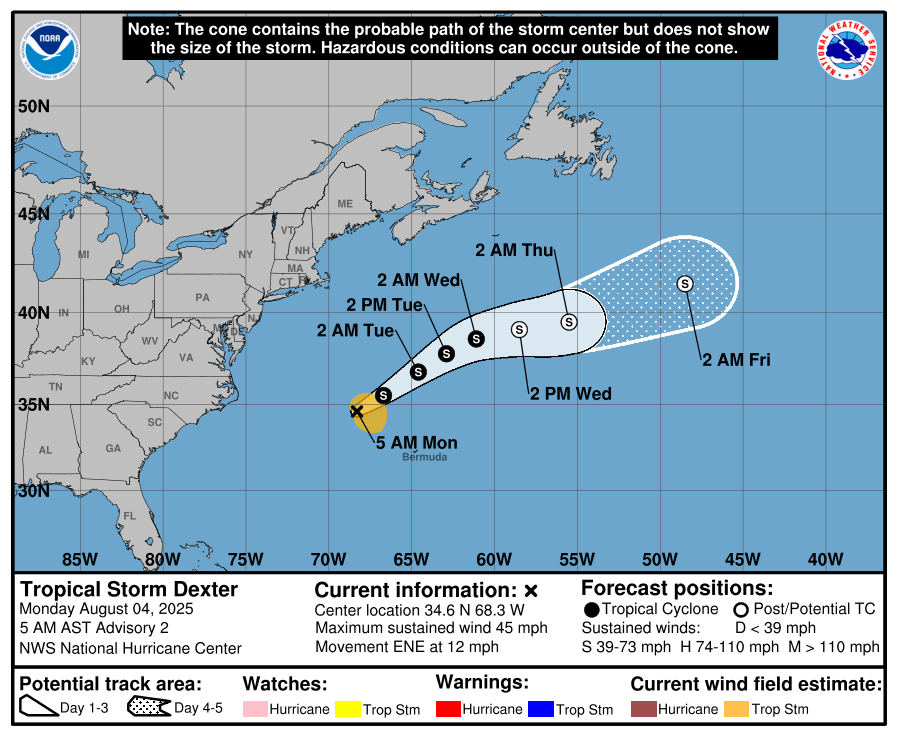
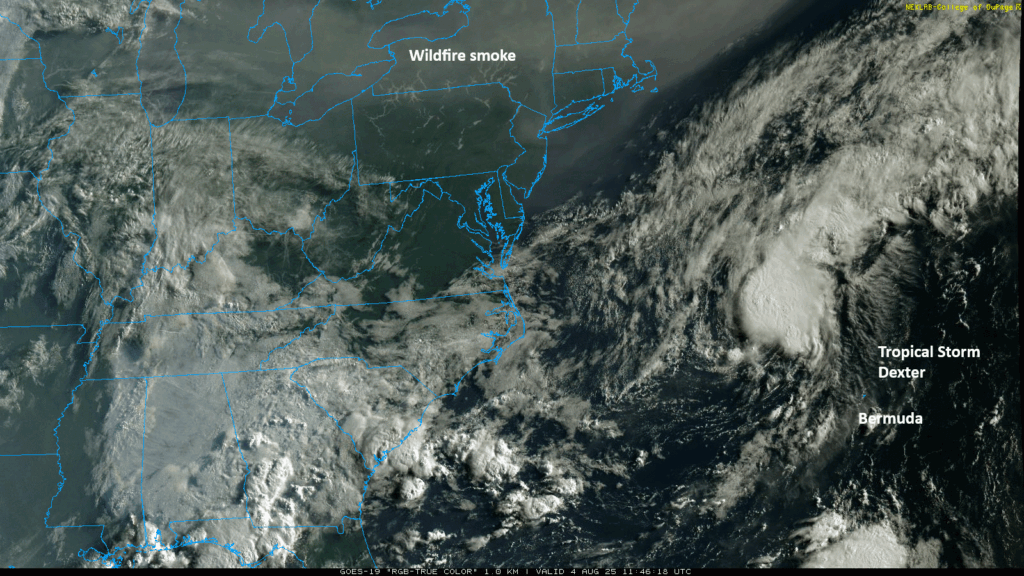
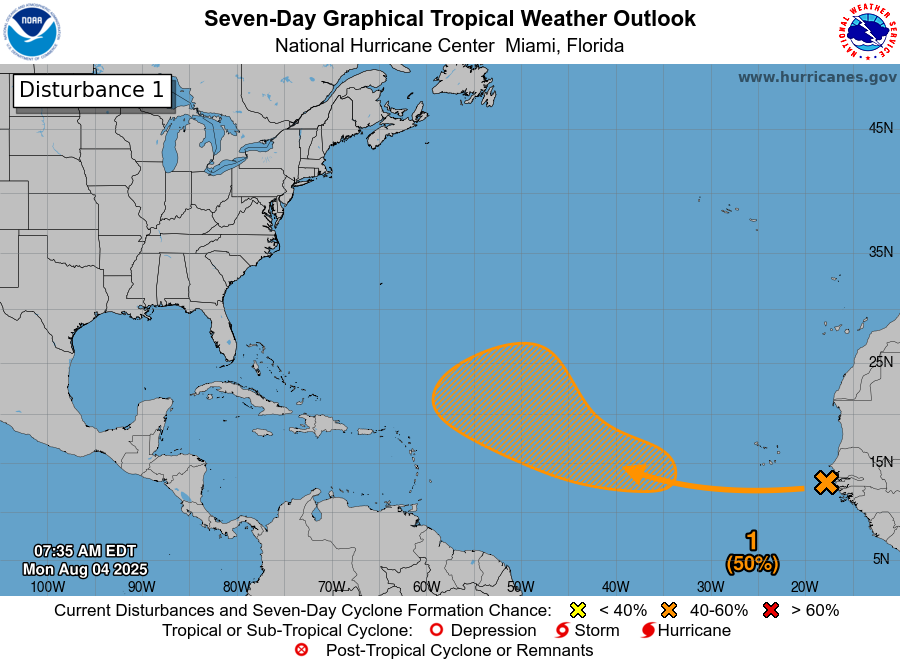

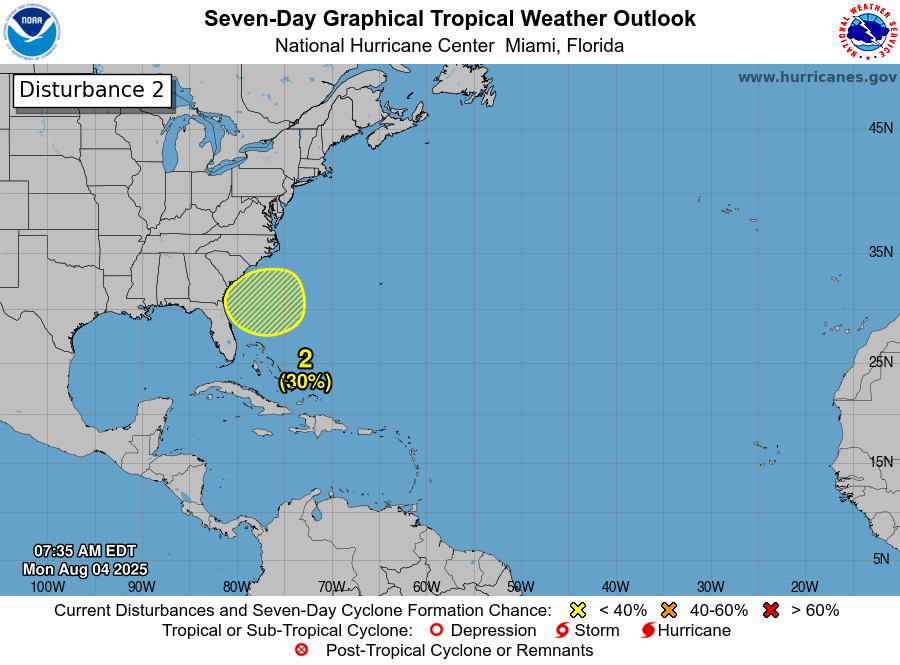
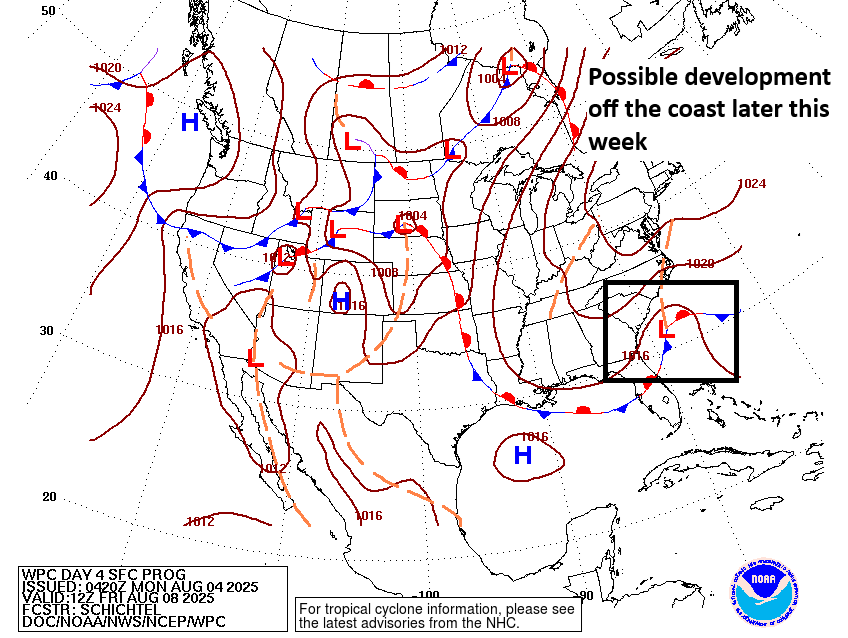

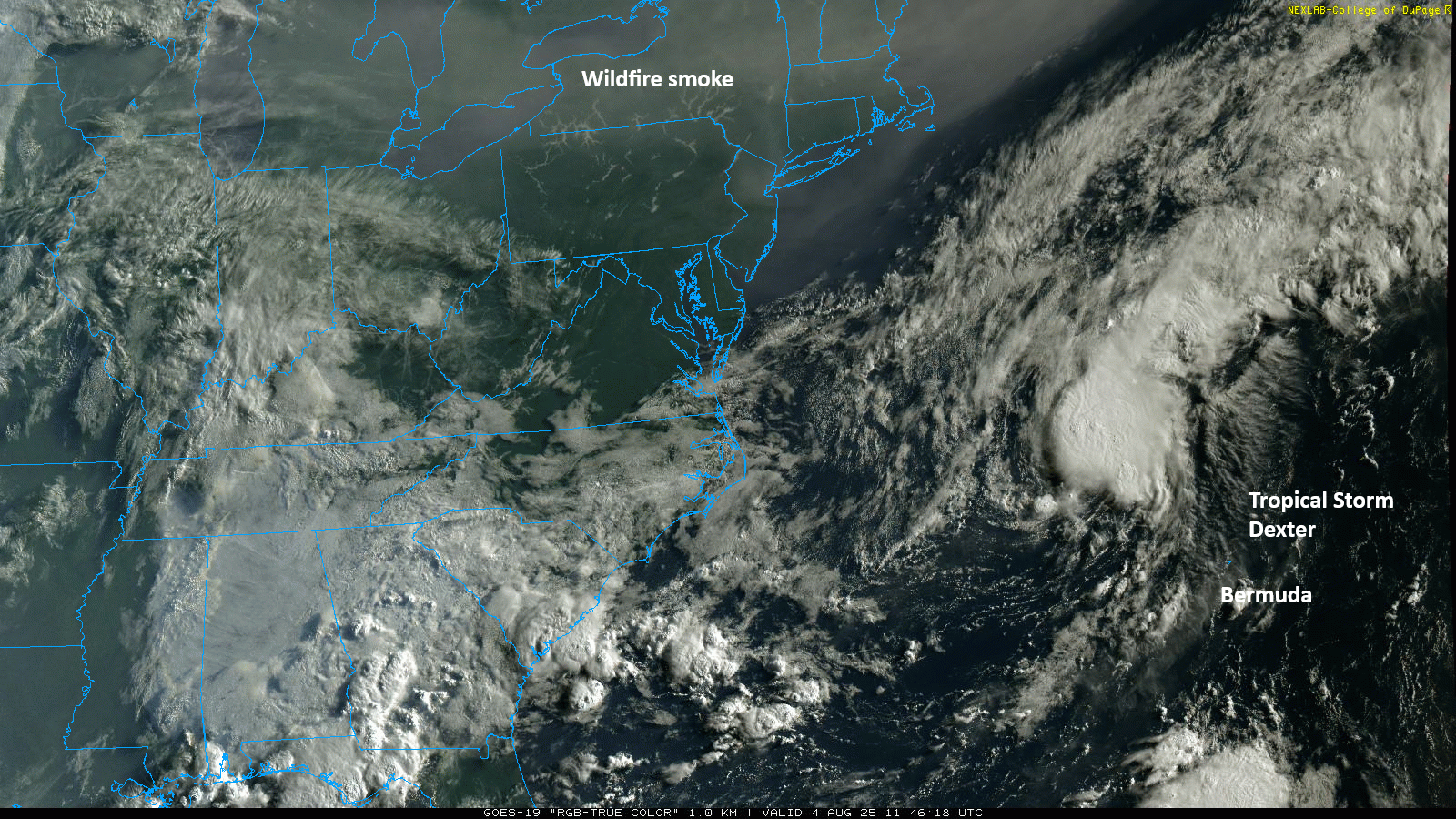


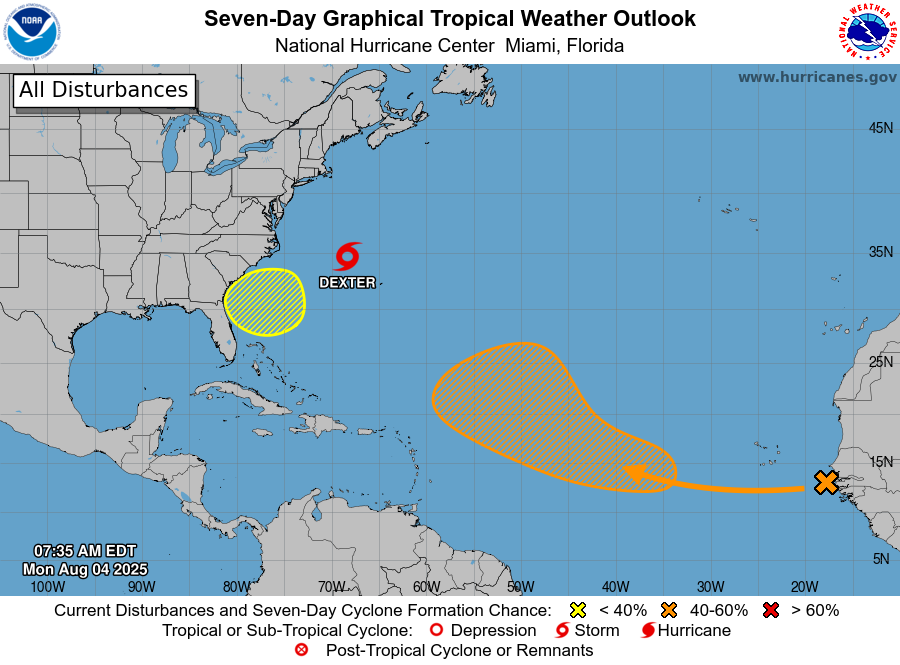
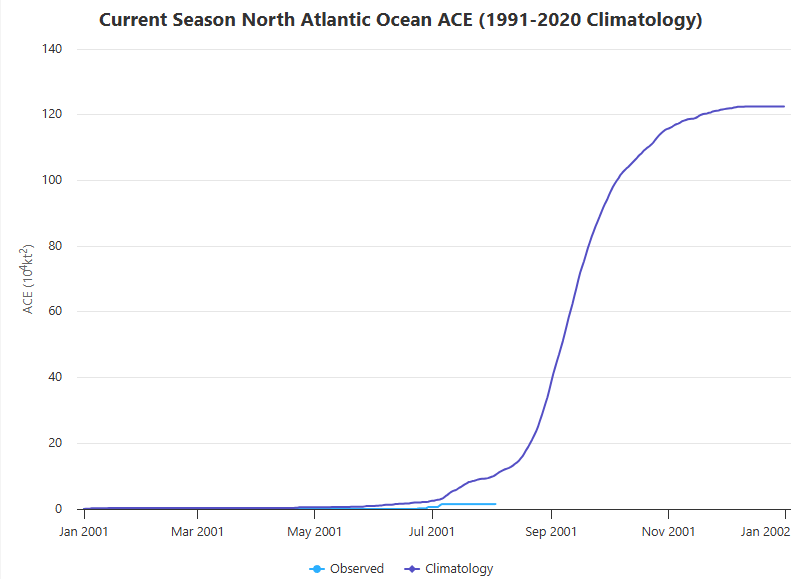
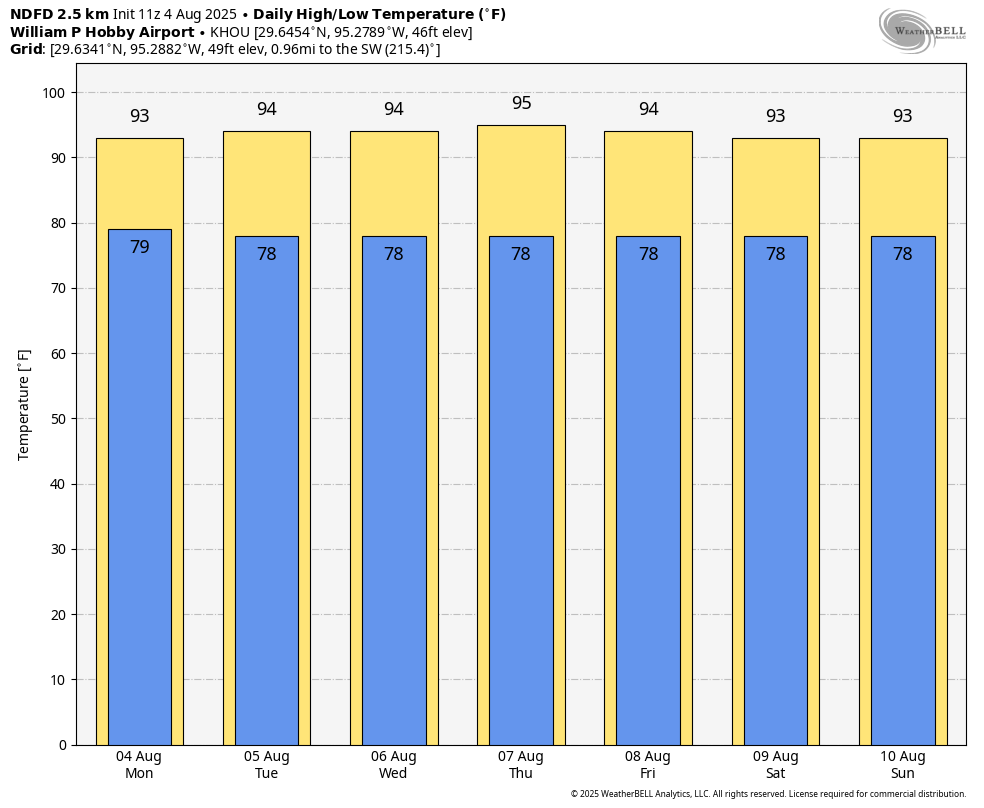





 ALT
ALT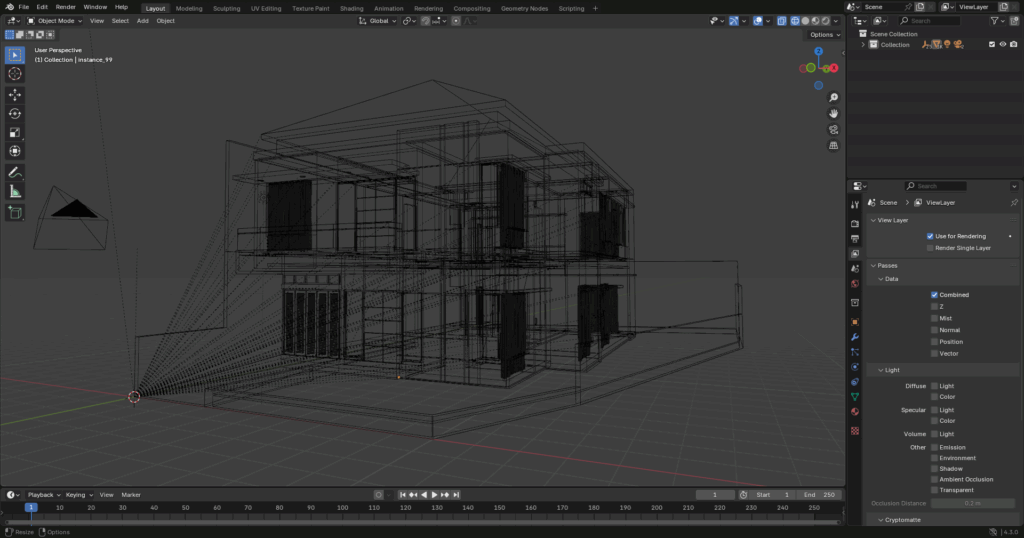

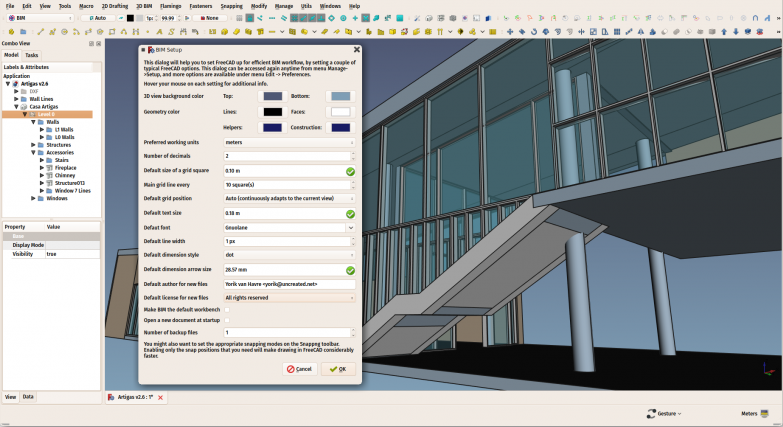

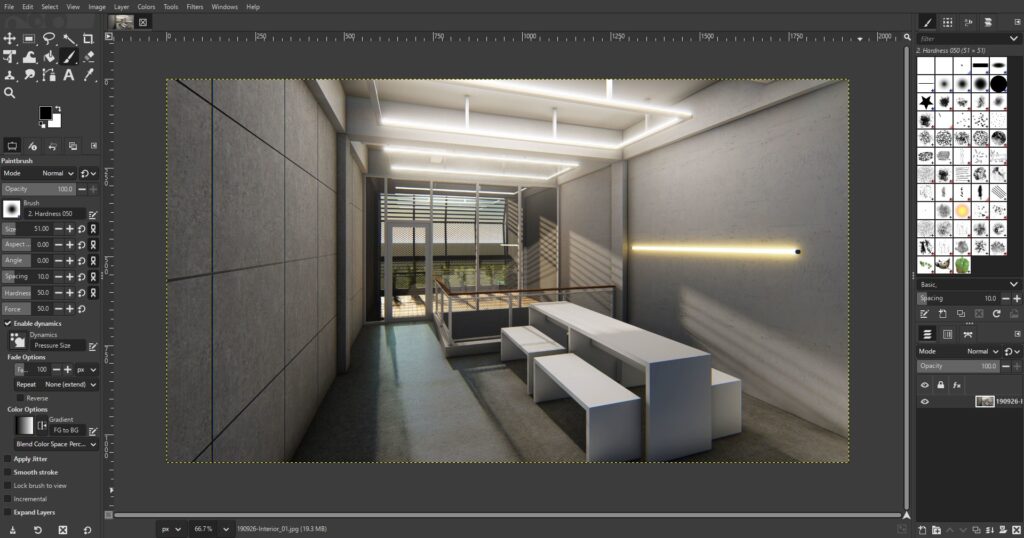
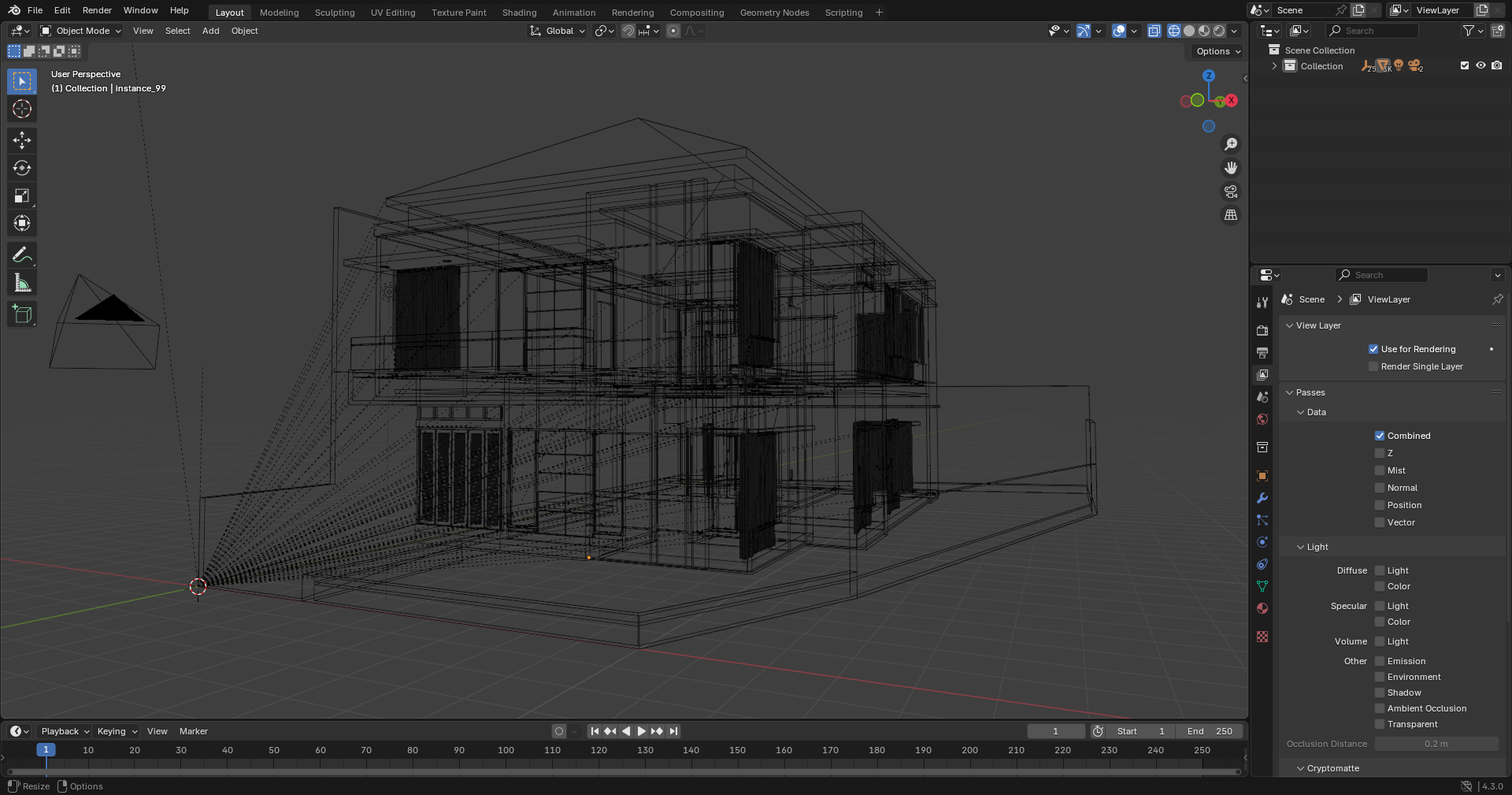



/https://static.texastribune.org/media/files/63d87e718249c21de813387cf715aec2/0611%20Abbott%20Ibogaine%20Presser%20RB%20TT%2012.jpg)

/https://static.texastribune.org/media/files/77aaa21fb8856e87dd75abcad0381b15/Goss-TrueTexasMeeting-42-scaled_preview_maxWidth_3000_maxHeight_3000_ppi_72_embedColorProfile_true_quality_95.jpg)

/https://static.texastribune.org/media/files/1c7c09bb6e6fdb3546e8f258ea29148d/0225%20Child%20Care%20Gap%20MC%2016%20TT.jpg)