Cowboy Who?
Shared posts

Now ... this brings me to something very dear t...
Now ... this brings me to something very dear to my heart. A particular segment in all television show that warms my body, tingling toes to tingling top of head, and that is, of course, you guessed it, the television commercial. #CowboyWho

Obscure Resolutions: Arthur Fields & the Paradox of Sight
I was 13 years old when I joined Facebook. I remember not having a full grasp of how the website worked; I had only the vague sense that it was supposed to help me connect virtually with my classmates. In those early days, the platform felt like a digital extension of real life — the same people, conversations, and inside jokes. But over time, the virtual world became its own distinct entity. My connections evolved from a few personal close friends and family, to friends of family and family of friends, and eventually complete strangers, until I found myself disclosing important life updates to an audience I no longer recognized. What began as a desire to connect evolved into a yearning for anonymity.
Like many others in contemporary society, I feel an ambivalence toward the notion of visibility. We are more connected than ever before, yet we sense a collective hollowness. We long to be seen without being exposed; to be witnessed without being surveilled; and to share our humanity without being cannibalized. To quote author Tim Kreider, we are burdened by the dilemma of deciding whether the promise of love is worth the “mortifying ordeal of being known.” If we are to survive, what face must we show? What face must we conceal? These are the key questions behind Arthur Fields’ debut solo exhibition, Transitional Self, at Pencil on Paper Gallery in Dallas.

Artist Arthur Fields with works on view in his exhibition “Transitional Self” at Pencil on Paper Gallery. Photo: Shauna Benoit
Fields is a multidisciplinary artist whose practice explores the complexities of self-representation in the digital age. He works across digital and alternative photographic media, blending curation with image-making. His current focus is on abstraction, materiality, and experimental process photography. Fields was raised in Killeen, Texas, and earned his BFA in Digital Imaging and Photography from Washington University in St. Louis. He later completed his MFA in Photography at Texas Woman’s University. He has taught extensively, including a seven-year stint as Associate Professor of Art at Vincennes University in Indiana, where he also directed the Shircliff Gallery of Art. He currently teaches photography and design at Dallas College and remains active in both local and national arts communities, serving on boards for The Cedars Union and the Society for Photographic Education.
In our conversations, Fields often returns to uncertainty and self-doubt, both as existential concerns and as the main drivers of his creative practice. He reflects on the uncertainty of choosing a life in art, having grown up with a military father who never entirely approved of that path, and under the weight of stereotypes imposed on him as a man of color. Transitional Self becomes Fields’ attempt at wrestling with — if not resolving — the tensions of his personal and political identities: as a Black man, as an artist, as a son, as an educator. The collection presents a series of self-portraits captured over the past decade, offering a layered and abstracted glimpse into Fields’ evolving sense of self. The images explore his journey through a complex interior landscape marked by external expectations, crises of identity, and, ultimately, a movement toward self-love and acceptance.

Arthur Fields, “Transitionalself03”
Transitionalself03 features a blurred male figure, illegible in detail, yet unmistakably human. The subject, positioned slightly off-center and leaning to the right, is composed of soft, brown gradients and muted grays set against a shadowy background. The figure’s shoulder, chest, and the side of the head are highlighted, creating gentle focal points amidst the blur. These illuminated zones become compositional anchors, guiding the viewer’s eye across the image. The cloudy background and commanding posture imbue the figure with a near-deific quality: an image that feels intimate and distant all at once. A body laid bare, but protected by a veil — vulnerable, yet ultimately inscrutable.

An installation view of “Arthur Fields: Transitional Self” at Pencil on Paper Gallery. Photo: Shauna Benoit
The blurred qualities Fields employs in his images are not added in post-production. Instead, they are created by photographing the subject through frosted plexiglass screens, an idea Fields says was inspired by a visit to the dentist. He creates barriers to visibility in his portraits as a metaphor for the dialectics of being seen: what Jacques Derrida, in Memoirs of the Blind, calls “the visible haunted by its conditions of emergence.”
Fields tells me that “the experiences of Black men are not fixed but continuously evolving. I use myself as the subject because my journey embodies this fluidity, and in presenting my image, I hope to open a dialogue about visibility and authenticity.” Ironically, the distance Fields’ images create between subject and viewer does not narrow our vision, but expands it. He forces us to confront what we do with our gaze, what we expect to see, what we fail to notice, what we’re too impatient to feel. In Transitional Self, we are reminded that the truth of a person may not be in their sharpest outline, but in their softest contradiction.

Arthur Fields, “Transitionalself10”
Though Field’s work tackles important themes, his process is rooted in play; both the lighthearted kind and the curious, inquisitive kind. His penchant for experimentation is evident in the evolution of his self portrait photographs. His earliest works are monochrome, stark, minimal. Later came color — vivid reds and oranges, hues that pierce through the haze and create emotional resonance. In Transitionalself10, the blurred figure is captured mid-movement, arms outstretched in a wide “V” formation. The gesture evokes a range of associations: surrender, celebration, invocation. It is theatrical, almost ecstatic. The backdrop is a muted gradient of grey, off-white, and soft light, which contrasts sharply with the golden glow of what appears to be a cape hanging from the figure’s chest and torso, suggesting internal light, vitality, and even spiritual transfiguration. In contrast to the cool tones of the surroundings, the honeyed yellows bleeding from the core of the body signal an inner warmth, a burst of energy, albeit contained.

An installation view of “Arthur Fields: Transitional Self” at Pencil on Paper Gallery. Photo: Shauna Benoit
In many ways, Arthur Fields’ Transitional Self mirrors the tensions of my early experiences with social media at 13. His portraits offer a commentary on how earnest attempts to see and be seen can, over time, distort into performance, surveillance, and alienation. Fields asks us to reconsider what it means to be visible in an age when visibility can feel both empowering and perilous, and in leaning into uncertainty, Fields offers a new kind of resolution — one neither about perfection nor full exposure, but about choosing how, when, and to whom we reveal our truth.
Arthur Fields: Transitional Self is on view at Pencil on Paper Gallery in Dallas through September 19, 2025.
The post Obscure Resolutions: Arthur Fields & the Paradox of Sight appeared first on Glasstire.
Dorothy Antoinette LaSelle Travel Fellowship Accepting Applications
Texas artists are invited to apply for the Dorothy Antoinette LaSelle Travel Fellowship, a $5,000 award.
Last year, the Dorothy Antoinette LaSelle Foundation launched its inaugural granting program to support research-related travel for artists working and residing in the state. The initiative was inspired by Texas Modernist Dorothy Antoinette “Toni” LaSelle’s formative travel experiences. In 1927-28, with the support of a “study fund” from the Renaissance Society, the artist traveled to Europe, exploring art in England, Italy, and France.
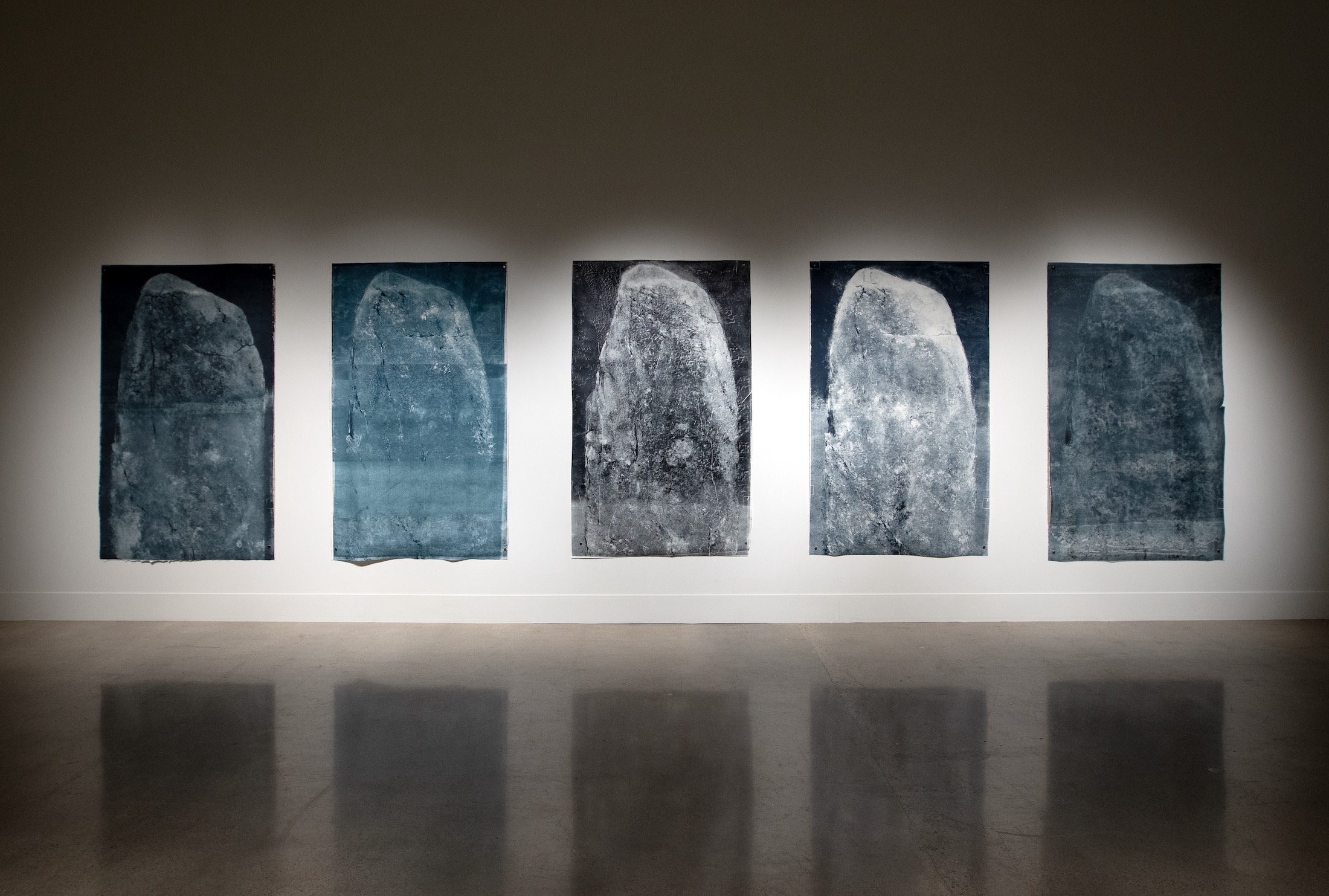
Colleen Blackard, “Memory of Stone”
Colleen Blackard and Cat Rigdon, the inaugural recipients of the grant, were selected by guest juror Dr. Erika Doss, a Distinguished Professor in the Edith O’Donnell Institute of Art History at the University of Texas at Dallas.
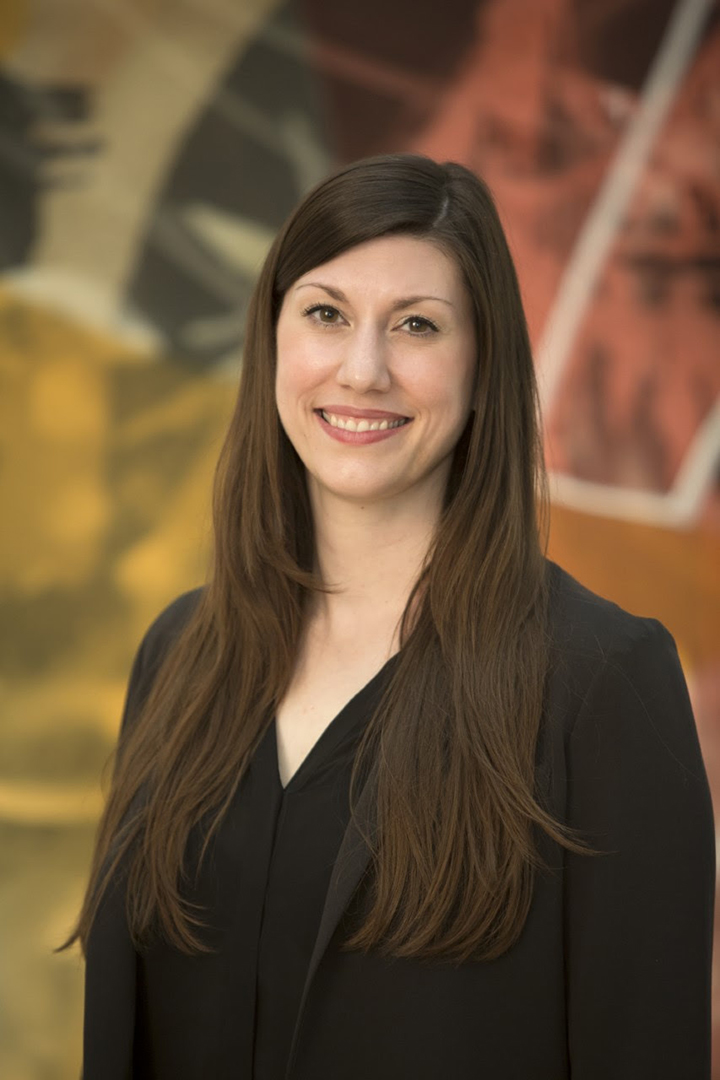
Hannah Klemm. Image courtesy of the Blanton Museum of Art
Hannah Klemm, the Curator of Modern and Contemporary Art at the Blanton Museum of Art, will serve as this year’s juror. Recently, Ms. Klemm co-curated In Creative Harmony: Three Artistic Partnerships, working closely with artists Nora and Eliza Naranjo Morse. During her tenure at the Blanton, Ms. Klemm has also organized exhibitions of works by Marie Watt and Tavares Strachan. Prior to coming to Texas, Ms. Klemm served as the Curator of Modern and Contemporary Art at the Saint Louis Art Museum. In that role, she organized the museum’s Currents exhibitions, solo shows featuring contemporary artists, and New Media series.
To be eligible, applicants must currently reside in Texas and have lived in the state for the past year. Additionally, artists must hold a degree in the arts and be a practicing professional with a minimum of three solo or group shows in the past three years. Two awardees will be selected.
Applications are due by Tuesday, September 30 at 11:59 p.m. (MDT). Learn more and submit an application via the LaSelle Foundation’s website.
The post Dorothy Antoinette LaSelle Travel Fellowship Accepting Applications appeared first on Glasstire.
Man found dead at Burning Man festival
Could a new Texas law make some types of anime illegal? Fans worry it’s possible under SB 20
Pluralistic: Darth Android (01 Sep 2025)

Today's links
- Darth Android: Pray I don't alter it further.
- Hey look at this: Delights to delectate.
- Object permanence: We don't know why you don't want to have public sex; Hard Wired; Koko Be Good.
- Upcoming appearances: Where to find me.
- Recent appearances: Where I've been.
- Latest books: You keep readin' em, I'll keep writin' 'em.
- Upcoming books: Like I said, I'll keep writin' 'em.
- Colophon: All the rest.

Darth Android (permalink)
William Gibson famously said that "Cyberpunk was a warning, not a suggestion." But for every tech leader fantasizing about lobotomizing their enemies with Black Ice, there are ten who wish they could be Darth Vader, force-choking you while grating out, "I'm altering the deal. Pray I don't alter it any further."
I call this business philosophy the "Darth Vader MBA." The fact that tech products are permanently tethered to their manufacturers – by cloud connections backstopped by IP restrictions that stop you from disabling them – means that your devices can have features removed or altered on a corporate whim, and it's literally a felony for you to restore the functionality you've had removed:
https://pluralistic.net/2023/10/26/hit-with-a-brick/#graceful-failure
That presents an irresistible temptation to tech bosses. It means that you can spy on your users, figure out which features they rely on most heavily, disable those features, and then charge money to restore them:
https://restofworld.org/2021/loans-that-hijack-your-phone-are-coming-to-india/
It means that you can decide to stop paying a supplier the license fee for a critical feature that your customers rely on, take that feature away, and stick your customers with a monthly charge, forever, to go on using the product they already paid for:
https://pluralistic.net/2022/10/28/fade-to-black/#trust-the-process
It means that you can push "security updates" to devices in the field that take away your customers' ability to use third-party apps, so they're forced to use your shitty, expensive apps:
Or you can take away third-party app support and force your customers to use your shitty app that's crammed full of ads, so they have to look at an ad every time they want to open their garage-doors:
https://pluralistic.net/2023/11/09/lead-me-not-into-temptation/#chamberlain
Or you can break compatibility with generic consumables, like ink, and force your customers to buy the consumables you sell, at (literal) ten billion percent markups:
Combine the "agreements" we must click through after we hand over our money, wherein we "consent" to having the terms altered at any time, in any way, forever, and surrender our right to sue:
With the fact that billions of digital tools can be neutered at a distance with a single mouse-click:
https://pluralistic.net/2023/02/19/twiddler/
With the fact that IP law makes it a literal felony to undo these changes or add legal features to your own property that the manufacturer doesn't want you to have:
https://pluralistic.net/2024/05/24/record-scratch/#autoenshittification
And you've created the conditions for a perfect Darth Vader MBA dystopia.
Tech bosses are fundamentally at war with the idea that our digital devices contain "general purpose computers." The general-purposeness of computers – the fact that they are all Turing-complete, universal von Neumann machines – has created tech bosses' fortunes, but now that these fortunes have been attained, the tech sector would like to abolish that general-purposeness; specifically, they would like to make it impossible to run programs that erode their profits or frustrate their attempts at rent-seeking.
This has been a growing trend in computing since the mid-2000s, when tech bosses realized that the "digital rights management" that the entertainment industry had fallen in love with could provide even bigger dividends for tech companies themselves.
Since the Napster era, media companies have demanded that tech platforms figure out how to limit the use and copying of media files after they were delivered to our computers. They believed that there was some practical way to make a computer that would refuse to take orders from its owner, such that you could (for example) "stream" a movie to a user without that being a "download." The truth, of course is that all streams are downloads, because the only way to cause my screen to display a video file that is on your server is for your server to send that file to my computer.
"Streaming" is a consensus hallucination, and when a company claims to be giving you a "stream" that's not a "download," they really mean that they believe that the program that's rendering the file on your screen doesn't have a "save as" button.
But of course, even if the program doesn't have a "save as" button, someone could easily make a "save as" plugin that adds that functionality to your streaming program. So "streaming" isn't just "a video playback program without a 'save as' button," it's also "a video playback program that no one can add a 'save as' button to."
At the turn of the millennium, tech companies selling this stuff hoodwinked media companies by claiming that they used technical means to prevent someone from adding the "save as" button after the fact. But tech companies knew that there was no technical means to prevent this, because computers are general purpose, and can run every program, which means that every 10-foot fence you build around a program immediately summons up an 11-foot ladder.
When a tech company says "it's impossible to change the programs and devices we ship to our users," they mean, "it's illegal to change the programs and devices we ship to our users." That's thanks to a cluster of laws we colloquially call "IP law"; a label we apply to any law that lets a firm exert control on the conduct of users, critics and competitors:
https://locusmag.com/2020/09/cory-doctorow-ip/
Law, not technology, is the true battlefield in the War on General Purpose Computing, a subject I've been raising the alarm about for decades now:
https://memex.craphound.com/2012/01/10/lockdown-the-coming-war-on-general-purpose-computing/
When I say that this is a legal fight and not a technical one, I mean that, but for the legal restrictions on reverse-engineering and "adversarial interoperability," none of these extractive tactics would be viable. Every time a company enshittified its products, it would create an opportunity for a rival to swoop in, disenshittify the enshittification, and steal your customers out from under you.
The fact that there's no technical way to enforce these restrictions means that the companies that benefit from them have to pitch their arguments to lawmakers, not customers. If you have something that works, you use it in your sales pitch, like Signal, whose actual, working security is a big part of its appeal to users.
If you have something that doesn't work, you use it in your lobbying pitch, like Apple, who justify their 30% ripoff app tax – which they can only charge because it's a felony to reverse-engineer your iPhone so you can use a different app store – by telling lawmakers that locking down their platform is essential to the security and privacy of iPhone owners:
https://pluralistic.net/2024/01/12/youre-holding-it-wrong/#if-dishwashers-were-iphones
Apple and Google have a duopoly over mobile computing. Both companies use legal tactics to lock users into getting their apps from the companies' own app stores, where they take 30 cents out of every dollar you spend, and where it's against the rules to include any payment methods other than Google/Apple's own payment systems.
This is a massive racket. It lets the companies extract hundreds of billions of dollars in rents. This drives up costs for their users and drives down profits for their suppliers. It lets the duopoly structure the entire mobile economy, acting as de facto market regulators. For example, the fact that Apple/Google exempt Uber and Lyft from the 30% app tax means that they – and they alone – can provide competitive ride-hailing services.
But though both companies extract the 30% app tax, they use very different mechanisms to maintain their lock on their users and on app makers. Apple uses digital locks, which lets it invoke IP law to criminalize anyone who reverse-engineers its systems and provides an easy way to install a better app store.
Google, on the other hand, uses a wide variety of contractual tactics to maintain its control, arm-twisting Android device makers and carriers into bundling its app store with every device, often with a locked bootloader that prevents users from adding new app stores after they pay for their devices.
But despite this, Google has always claimed that Android is the "open" alternative to the Apple "ecosystem," principally on the strength that you can "sideload" an app. "Sideload" is a weird euphemism that the mobile duopoly came up with; it means "installing software without our permission," which we used to just call "installing software" (because you don't need a manufacturer's permission to install software on your computer).
Now, Google has pulled a Darth Vader, changing the deal after the fact. They've announced that henceforth, you will only be able to sideload apps that come from developers who pay to be validated by Google and certified as good eggs. This has got people really angry, and justifiably so.
Last week, the repair hero Louis Rossmann posted a scorching video excoriating Google for the change:
https://www.youtube.com/watch?v=QBEKlIV_70E
In the video, Rossmann – who is now running an anti-enshittification group called Fulu – reminds us that our mobile devices aren't phones, they're computers and urges us not to use the term "sideloading," because that's conceding that there's something about the fact that this computer can fit in your pocket that means that you shouldn't be able to, you know, just install software.
Rossmann thinks that this is a cash grab, and he's right – partially. He thinks that this is a way for Google to make money from forcing developers to join its certification program.
But that's just small potatoes. The real cash grab is the hundreds of billions of dollars that Google stands to lose if we switch to third-party app stores and choke off the app tax.
That is an issue that is very much on Google's mind right now, because Google lost a brutal antitrust case brought by Epic Games, makers of Fortnite:
https://pluralistic.net/2023/12/12/im-feeling-lucky/#hugger-mugger
Epic's suit contended that Google had violated antitrust law by creating exclusivity deals with carriers and device makers that locked Android users into Google's app store, which meant that Epic had to surrender 30% of its mobile earnings to Google.
Google lost that case – badly. It turns out that judges don't like it when you deliberately destroy evidence:
They say that when you find yourself in a hole, you should stop digging, but Google can't put down the shovel. After the court ordered Google to open up its app store, the company just ignored the order, which is a thing that judges hate even more than destroying evidence:
https://www.justice.gov/atr/case/epic-games-inc-v-google-llc
So it was that last month, Google found itself with just two weeks to comply with the open app store order, or else:
https://www.theverge.com/news/717440/google-epic-open-play-store-emergency-stay
Google was ordered to make it possible to install new app stores as apps, so you could go into Google Play, search for a different app store, and, with a single click, install it on your phone, and switch to getting your apps from that store, rather than Google's.
That's what's behind Google's new ban on "sideloading": this is a form of malicious compliance with the court orders stemming from its losses to Epic Games. In fact, it's not even malicious compliance – it's malicious noncompliance, a move that so obviously fails to satisfy the court order that I think it's only a matter of time until Google gets hit with fines so large that they'll actually affect Google's operations.
In the meantime, Google's story that this move is motivated by security it obviously bullshit. First of all, the argument that preventing users from installing software of their choosing is the only way to safeguard their privacy and security is bullshit when Apple uses it, and it's bullshit when Google trots it out:
https://www.eff.org/document/letter-bruce-schneier-senate-judiciary-regarding-app-store-security
But even if you stipulate that Google is doing this to keep you safe, the story falls apart. After all, Google isn't certifying apps, they're certifying developers. This implies that the company can somehow predict whether a developer will do something malicious in the future.
This is obviously wrong. Indeed, Google itself is proof that this doesn't work: the fact that a company has a "don't be evil" motto at its outset is no guarantee that it won't turn evil in the future.
There's a long track record of merchants behaving in innocuous and beneficial ways to amass reputation capital, before blitzing the people who trust them with depraved criminality. This is a well-understood problem with reputation scores, dating back to the early days of eBay, when crooked sellers invented the tactic of listing and delivering a series of low-value items in order to amass a high reputation score, only to post a bunch of high-ticket scams, like dozens of laptops at $1,000 each, which are never delivered, even as the seller walks away with tens of thousands of dollars.
More recently, we've seen this in supply chain attacks on open source software, where malicious actors spend a long time serving as helpful contributors, pushing out a string of minor, high-quality patches before one day pushing a backdoor or a ransomware package into widely used code:
So the idea that Google can improve Android's safety by certifying developers, rather than code, is obvious bullshit. No, this is just a pretext, a way to avoid complying with the court order in Epic and milking a few more billions of dollars in app taxes.
Google is no friend of the general purpose computer. They keep coming up with ways to invoke the law to punish people who install code that makes their Android devices serve their owners' interests, at the expense of Google's shareholders. It was just a couple years ago that we had to bully Google out of a plan to lock down browsers so they'd be as enshittified as apps, something Google sold as "feature parity":
https://pluralistic.net/2023/08/02/self-incrimination/
Epic Games didn't just sue Google, either. They also sued Apple – but Apple won, because it didn't destroy evidence and make the judge angry at it. But Apple didn't walk away unscathed – they were also ordered to loosen up control over their App Store, and they also failed to do so, with the effect that last spring, a federal judge threatened to imprison Apple executives:
https://pluralistic.net/2025/05/01/its-not-the-crime/#its-the-coverup
Neither Apple nor Google would exist without the modern miracle that is the general purpose computer. Both companies want to make sure no one else ever reaps the benefit of the Turing complete, universal von Neumann machine. Both companies are capable of coming up with endless narratives about how Turing completeness is incompatible with your privacy and security.
But it's Google and Apple that stand in the way of our security and privacy. Though they may sometimes protect us against external threats, neither Google nor Apple will ever protect us from their own predatory instincts.
(Image: Ashwin Kumar, CC BY-SA 2.0, modified)
Hey look at this (permalink)

- ‘We’re living our Yiddish’: How a New York camp is keeping culture – and joy – alive https://www.csmonitor.com/The-Culture/2025/0829/yiddish-new-york-preservation-workers-circle
-
AI is ummasking ICE officers. Can Washington do anything about it? https://www.politico.com/news/2025/08/29/ai-unmasking-ice-officers-00519478
-
Customer loyalty is a sham https://www.businessinsider.com/consumer-loyalty-dead-airline-miles-internet-company-car-insurance-prices-2025-8?utm_source=firefox-newtab-en-us
-
The crash of 2026: a fiction https://crookedtimber.org/2025/08/31/the-crash-of-2026-a-fiction/
-
A Stain on Judaism Itself https://peterbeinart.substack.com/p/a-stain-on-judaism-itself

Object permanence (permalink)
#20yrsago Microsoft abandons its customers AND copyright to kiss up to Hollywood https://memex.craphound.com/2005/08/30/microsoft-abandons-its-customers-and-copyright-to-kiss-up-to-hollywood/
#15yrsago Koko Be Good: complex and satisfying graphic novel about finding meaning in life https://memex.craphound.com/2010/08/31/koko-be-good-complex-and-satisfying-graphic-novel-about-finding-meaning-in-life/
#15yrsago Frankenmascot: all the cereal mascots in one https://web.archive.org/web/20100904072945/http://citycyclops.com/8.31.10.php
#5yrsago Bayer-Monsanto is in deep trouble https://pluralistic.net/2020/08/31/ai-rights-now/#gotterdammerung
#5yrsago Hard Wired https://pluralistic.net/2020/08/31/ai-rights-now/#len-vlahos
#5yrsago Big Tech welcomes (some) regulation https://pluralistic.net/2020/08/30/arabian-babblers/#bezos-bell-system
#5yrsago We don't know why you don't want to have public sex https://pluralistic.net/2020/08/30/arabian-babblers/#evopsych
Upcoming appearances (permalink)

- Ithaca: AD White keynote (Cornell), Sep 12
https://deanoffaculty.cornell.edu/events/keynote-cory-doctorow-professor-at-large/ -
DC: Enshittification at Politics and Prose, Oct 8
https://politics-prose.com/cory-doctorow-10825 -
NYC: Enshittification with Lina Khan (Brooklyn Public Library), Oct 9
https://www.bklynlibrary.org/calendar/cory-doctorow-discusses-central-library-dweck-20251009-0700pm -
New Orleans: DeepSouthCon63, Oct 10-12
http://www.contraflowscifi.org/ -
Chicago: Enshittification with Anand Giridharadas (Chicago Humanities), Oct 15
https://www.oldtownschool.org/concerts/2025/10-15-2025-kara-swisher-and-cory-doctorow-on-enshittification/ -
San Francisco: Enshittification at Public Works (The Booksmith), Oct 20
https://app.gopassage.com/events/doctorow25 -
Miami: Enshittification at Books & Books, Nov 5
https://www.eventbrite.com/e/an-evening-with-cory-doctorow-tickets-1504647263469

Recent appearances (permalink)
- Cory Doctorow DESTROYS Enshittification (QAA Podcast)
https://soundcloud.com/qanonanonymous/cory-doctorow-destroys-enshitification-e338 -
Divesting from Amazon’s Audible and the Fight for Digital Rights (Libro.fm)
https://pocketcasts.com/podcasts/9349e8d0-a87f-013a-d8af-0acc26574db2/00e6cbcf-7f27-4589-a11e-93e4ab59c04b -
The Utopias Podcast
https://www.buzzsprout.com/2272465/episodes/17650124

Latest books (permalink)
- "Picks and Shovels": a sequel to "Red Team Blues," about the heroic era of the PC, Tor Books (US), Head of Zeus (UK), February 2025 (https://us.macmillan.com/books/9781250865908/picksandshovels).
-
"The Bezzle": a sequel to "Red Team Blues," about prison-tech and other grifts, Tor Books (US), Head of Zeus (UK), February 2024 (the-bezzle.org).
-
"The Lost Cause:" a solarpunk novel of hope in the climate emergency, Tor Books (US), Head of Zeus (UK), November 2023 (http://lost-cause.org).
-
"The Internet Con": A nonfiction book about interoperability and Big Tech (Verso) September 2023 (http://seizethemeansofcomputation.org). Signed copies at Book Soup (https://www.booksoup.com/book/9781804291245).
-
"Red Team Blues": "A grabby, compulsive thriller that will leave you knowing more about how the world works than you did before." Tor Books http://redteamblues.com.
-
"Chokepoint Capitalism: How to Beat Big Tech, Tame Big Content, and Get Artists Paid, with Rebecca Giblin", on how to unrig the markets for creative labor, Beacon Press/Scribe 2022 https://chokepointcapitalism.com

Upcoming books (permalink)
- "Canny Valley": A limited edition collection of the collages I create for Pluralistic, self-published, September 2025
-
"Enshittification: Why Everything Suddenly Got Worse and What to Do About It," Farrar, Straus, Giroux, October 7 2025
https://us.macmillan.com/books/9780374619329/enshittification/ -
"Unauthorized Bread": a middle-grades graphic novel adapted from my novella about refugees, toasters and DRM, FirstSecond, 2026
-
"Enshittification, Why Everything Suddenly Got Worse and What to Do About It" (the graphic novel), Firstsecond, 2026
-
"The Memex Method," Farrar, Straus, Giroux, 2026
-
"The Reverse-Centaur's Guide to AI," a short book about being a better AI critic, Farrar, Straus and Giroux, 2026

Colophon (permalink)
Today's top sources:
Currently writing:
- "The Reverse Centaur's Guide to AI," a short book for Farrar, Straus and Giroux about being an effective AI critic. (1022 words yesterday, 11212 words total).
-
A Little Brother short story about DIY insulin PLANNING

This work – excluding any serialized fiction – is licensed under a Creative Commons Attribution 4.0 license. That means you can use it any way you like, including commercially, provided that you attribute it to me, Cory Doctorow, and include a link to pluralistic.net.
https://creativecommons.org/licenses/by/4.0/
Quotations and images are not included in this license; they are included either under a limitation or exception to copyright, or on the basis of a separate license. Please exercise caution.
How to get Pluralistic:
Blog (no ads, tracking, or data-collection):
Newsletter (no ads, tracking, or data-collection):
https://pluralistic.net/plura-list
Mastodon (no ads, tracking, or data-collection):
Medium (no ads, paywalled):
Twitter (mass-scale, unrestricted, third-party surveillance and advertising):
Tumblr (mass-scale, unrestricted, third-party surveillance and advertising):
https://mostlysignssomeportents.tumblr.com/tagged/pluralistic
"When life gives you SARS, you make sarsaparilla" -Joey "Accordion Guy" DeVilla
READ CAREFULLY: By reading this, you agree, on behalf of your employer, to release me from all obligations and waivers arising from any and all NON-NEGOTIATED agreements, licenses, terms-of-service, shrinkwrap, clickwrap, browsewrap, confidentiality, non-disclosure, non-compete and acceptable use policies ("BOGUS AGREEMENTS") that I have entered into with your employer, its partners, licensors, agents and assigns, in perpetuity, without prejudice to my ongoing rights and privileges. You further represent that you have the authority to release me from any BOGUS AGREEMENTS on behalf of your employer.
ISSN: 3066-764X
Judge says Trump’s use of National Guard during Los Angeles immigration protests is illegal

It's time for rock palace with some really wild...
It's time for rock palace with some really wild air guitar!? #CowboyWho

Bernie Sanders: Kennedy Must Resign
Bernie Sanders, in a NYT op-ed:
Robert F. Kennedy Jr., the secretary of health and human services, is endangering the health of the American people now and into the future. He must resign.
Mr. Kennedy and the rest of the Trump administration tell us, over and over, that they want to Make America Healthy Again. That’s a great slogan. I agree with it. The problem is that since coming into office President Trump and Mr. Kennedy have done exactly the opposite.
Powerful and to the point. Sanders, unlike the nine former CDC directors whose joint op-ed ran the next day, doesn’t pull punches. But there’s no point demanding Kennedy resign, because he won’t. Sanders, and the rest of us, should call on Trump to fire him. The buck stops with Trump. Trump fires his appointees all the time. Almost no one lasted long in the Trump 1.0 administration, and it’s unlikely anyone will last long in the Trump 2.0 administration. (Including, perhaps, Trump himself, who is clearly unwell.) Kennedy ought to be the first to go.
Trump smells it too, hence this “both sides” post on his blog this morning. Public opinion is strongly against this abject vaccine quackery.
Couple So Wealthy They Have Own Live-In Children
WESTFIELD, MA—Saying they had never seen such an ostentatious display, friends attending a barbecue yesterday at the home of Pete and Emily Brooks told reporters they were shocked to learn the couple were wealthy enough to have their own live-in children. “They weren’t even self-conscious about it—they just said, ‘These are our kids,’ as if it were completely normal,” said neighbor Christine Powell, who was reportedly speechless upon realizing the children had their own private quarters for sleeping and leisure on a separate floor of the house. “When you go over, the kids are just there, walking around, as though you’ve stepped back in time to the Victorian era. The children are with Emily and Pete day and night, and also accompany them on vacations. Could you imagine having the means to live like that? I heard a rumor they provide the kids with all of their meals as part of the arrangement, and cell phones too.” According to sources, Powell was also aghast upon discovering that the couple had a live-in golden retriever.
The post Couple So Wealthy They Have Own Live-In Children appeared first on The Onion.
Exhibitions Coming to the Panhandle and West Texas this Fall
Museums and art centers throughout West Texas and the Texas Panhandle have announced recently opened and upcoming exhibitions for the fall season, featuring shows by Texas teachers, a World War II-era modernist artist, and inventive, interdisciplinary contemporary artists.
El Paso

Hector Romero, “Dejavu”
The 2025 UTEP Department of Art Faculty Biennial opens Thursday, September 4 at the University of Texas at El Paso Stanlee and Gerald Rubin Center for the Visual Arts. The exhibition celebrates the diverse creative practices of 27 artists who teach and work in UTEP’s Department of Art, featuring work in a wide range of media from drawing and sculpture to ceramics and large-scale murals. The biennial exhibition will run through Thursday, December 11.
Midland/Odessa
Cultural Currency: Contemporary Art from the Riemer Collection opens Thursday, September 4 at the Ellen Noël Art Museum in Odessa. The group show investigates preconceived definitions of monetary value, through artworks meticulously repurposing bills and coins into exquisite, precise artworks. The exhibition will remain on view through Sunday, November 2.

Penelope Gottleib, “Hemerocallis Fulva”
At the Museum of the Southwest in Midland, Invasive: By Penelope Gottlieb will open Friday, September 5 and remain on view through January 4, 2026. In her realist paintings, California artist Penelope Gottlieb appropriates and alters bird-focused illustrations from the John James Audubon archive with tightly woven images of invasive plant species.
Also at the Museum of the Southwest, opening Thursday, October 2 and running through January 20, 2026, Austin artist Bill Tavis will present Between the Lines. The exhibition features eye-popping artwork in a style the artist calls “Halftonism,” referring to a commercial printing process for translating photographs into dot matrices.
Lubbock

Terry Maker, “Foretelling Crystal Ball,” 2024
The 5&J Gallery in Lubbock will open Dust Divine, a solo exhibition by Colorado artist Terry Maker, on Friday, September 5. Ms. Maker’s sculptures and mixed media works showcase her interest in finding the sacred in the discarded, in materials such as shredded documents, scraps of paper, and other everyday detritus. The exhibition will run through Monday, September 29.
Alpine

Tim Oliver, “Rich Lake Roundup”
The 39th Annual Trappings of Texas at the Museum of the Big Bend in Alpine, celebrating the work of Western artists and gear makers, will open Thursday, September 18 and run through Saturday, November 1. The gala opening weekend of events will include a preview party, an opening reception and sale, artist demonstrations, and recognition of watercolorist Tim Oliver as the 2025 Trappings of Texas Premier Artist.
Albany

A 1946 painting by Dickson Reeder
The Old Jail Art Center (OJAC) in Albany will open three exhibitions with a members’ reception on Saturday, September 27.
Texas Moderns: Dickson Reeder is the latest installment in a series of exhibitions providing insight into inventive and experimental mid-20th century visual artists working in Texas. After a stint in New York, Fort Worth native Dickson Reeder established a portrait studio in his hometown, becoming part of a group known as the Fort Worth Circle.
Curious: Short Films from the Blanton Museum of Art will present a series of short films by Argentinian artist Liliana Porter and British artist Lenka Clayton. According to the OJAC website, though these artists approach filmmaking differently, both use what’s at hand to make curious works that incite a gamut of emotions ranging from angst to joy.
Timothy Harding: Strange Expanses will present work by Fort Worth artist Timothy Harding, who merges the gestural nature of Abstract Expressionism with the flatness of Minimalist painting.
The exhibitions will run through January 10, 2026.
Amarillo

AMOA biennial logo
The Amarillo Museum of Art will showcase artists living within a 600-mile radius of its home city in the 2025 AMoA BIENNIAL-600, the 11th iteration of an ongoing series of juried biennial exhibitions. While previous exhibitions focused on specific media, the 2025 show will be open to all materials and genres, juried by Rachel Zebro, Associate Curator of Collections at the Phoenix Art Museum. The exhibition will be on view from Saturday, October 4, 2025 through January 4, 2026.
Marfa

Haroon Mirza, “Stone Circle.” Photo: Rowdy Dugan
On Sunday, September 7 at Ballroom Marfa, catch the full moon activation of stone circle, a large-scale outdoor sculpture by Haroon Mirza. Inspired by ancient megaliths, the sculpture is situated in the high desert grasslands just east of Marfa. Each full moon, the piece comes to life through sound and light, playing an electronic sound composition translated from energy generated by the sun.
Ballroom Marfa’s recently reactivated music program will feature concerts by Pavel Kolesnikov & Samson Tsoy in September, Stereolab in October, and Hayden Pedigo in November. For more information, check the organization’s website.
Chinati Weekend 2025 will run Friday, October 10 through Sunday, October 12 with a full slate of events, including two exhibition openings on Saturday, October 11 at the Chinati Foundation in Marfa. Fred Sandback: Sculpture will feature works by Fred Sandback, the renowned minimalist sculptor known for outlining planes and volumes in space with elastic cord and acrylic yarn. Oscar Hagerman: Sillas de México will display woven and slatted chairs by the Spanish architect notable for his 1969 Arrullo chair design, based on traditional Mexican techniques.
Abilene

Gail Norfleet, “Mirage,” 2019
The Grace Museum in Abilene will open three exhibitions on Saturday, October 18. Gail Norfleet: Connecting Faraway Places will feature Gail Norfleet’s paintings on layers of transparent Lucite, inspired by her recent travels to Morocco and New Mexico. The exhibition runs through Saturday, February 21, 2026. Cindi Holt: Little Mouse on the Prairie will focus on Cindi Holt’s paintings of the flora and fauna of the Texas prairie. The exhibition runs through Saturday, February 7, 2026. The Grace Museum will highlight its growing photography collection in Focus on Photography: Selections from the Permanent Collection, running through Saturday, February 7, 2026.
San Angelo

A plein air painting by Kirsten Anderson
The San Angelo Museum of Fine Arts will open its Spirit of the Ranch: The Ranch Fellowship Exhibit on Thursday, October 23, presenting a curated selection of works by 2025 EnPleinAir TEXAS Ranch Fellowship Artists. Program participants Kirsten Anderson, Zufar Bikbov, Lon Brauer, Durre Waseem, and Jeff Williams each spent three weeks painting on West Texas ranches.
Spirit of the Ranch will run through February 8, 2026.
The post Exhibitions Coming to the Panhandle and West Texas this Fall appeared first on Glasstire.
Outsider Art & Quirky Collections: Talking with Terry Lee Maker
I first fell in love with Terry Lee Maker’s artwork after seeing her massive Cowgirl Hat Ball, a giant sphere made from 500 cowboy hats that was shown at the Longmont Museum of Art in Colorado.
Maker was born and raised in Abilene, Texas, to parents who built, from the ground up, three mom-and-pop motels in the 1950s. The Sweeney family spent a great deal of time on road trips throughout the Southwest, so there’s a warm spot in my memory for these accommodations, with their neon signs and kidney-shaped pools, that dotted the landscape along Route 66. Maker went on to earn her MFA at the University of Colorado, Boulder, and Denver has been her home base ever since. During her more than 50-year artist career, her work has been exhibited extensively in museums and galleries both nationally and internationally.
It’s hard to imagine the struggle that women artists had to endure in order to get even the smallest slice of the art world pie during the 1970s. Terry Lee Maker has been creating fresh, innovative, process-heavy work for over a half-century, and her work has never stopped progressing. Maker assembles construction materials, cardboard, paper, and texts from both religious and scientific essays, then drills, grinds, presses, and scrapes them into exquisite precious stones, universes, and objects of beauty. Her current sculptures and wall pieces spotlight the circle, “A shape that,” she says, “is both a conceptual building block and a formalist end in itself.”
I was able to catch up with the energetic Terry Lee Maker (perfect art name, don’t you think?) while she was preparing for her solo show, Dust Divine, at Charles Adams Studio Project’s 5&J Gallery in Lubbock.

Terry Lee Maker, “Cowgirl Hat Ball,” 2023, diameter: 10 feet
Gary Sweeney (GS): What was your first experience with art?
Terry Lee Maker (TLM): As a youngster I liked working with scraps of discarded wood and paint as my father worked in the garage on his projects. I once created a miniature city, with gas stations, cafes, etc., in which I would place my pet turtles into this world just to watch from above as I made up stories about their travels turning into this place and that. I guess this might have been one of my first explorations into making art.
GS: What were you like in high school?
TLM: It took me a long time to adjust to the unwritten rules of how to be cool and fit in. I was always a bit of a loner and awkward. Although I had a few buddies, I spent a lot of time alone making art and hanging out with my menagerie of lots of pets: chickens, horny toads, frogs, turtles, and one dog.
GS: Did you have a group that you hung with?
TLM: I was pretty shy, but I found my best friends tended to be pretty weird and eccentric like me. My tribe was always my buddies that loved art and animals like I did.
GS: Is there a specific artist that influenced your style?
TLM: Early on, and continuing to this day, I have been drawn to outsider or art brut artists who, like me, often suffered from some kind of alternate mental world or outright mental illness. But their sense of trust in their internal thoughts and dreams and their freedom to make art from their visions is in some way likened to taking dictation from God. The type of art that I’m particularly drawn to has a primitive originality. My other art heroes are Hilma af Klint, Agnes Pelton (of the transcendental painting group), Lee Bontecou, Eva Hesse, and Gordon Matta-Clark (who was known for cutting circles out of abandoned buildings).
GS: Did you have a mentor?
TLM: I did not. But later in life I met the Los Angeles artist Tim Hawkinson. His use of materials and process and sense of humor became and continues to be a big influence on my work. His ability to look at seemingly small and insignificant matters in life and pull them into often profound statements and insights continues to open both my internal and actual eyes, teaching me a very necessary element of being an artist — seeing deeply and clearly.
GS: What was your early work like?
TLM: My early work was abstract painting that had deep and thick encrusted paint and other alternative additives and materials like plastic roof cement, which I would trowel onto the canvas. Even as I saw myself as a 2D painter, I continued to push the boundaries and limits of how much media one could apply to a canvas or support surface. My art hero of that period was Jay DeFeo, particularly her 9-by-7-foot heavy relief piece called The Rose, to which she would apply thick paint and chisel it away. It eventually weighed a ton. She worked on it for seven years. As it got heavier and more monumental, I was struck with and inspired by the kind of obsession and dedication, which I believe is ultimately the true life of an artist — to be absolutely in love and determined to be true to one’s vision and follow it to the end.

Terry Lee Maker, “Arched Painting,” 2003, canvas and paint, 26 x 26 x 5 inches
GS: How would you describe your artwork to someone who has never seen it?
TLM: Loamy, rough-hewn, raw, honest. Conceptually considered paper, glue, and shredded documents and various detritus, amalgamated and compacted into a large crate for curing and drying…only to be unearthed, sawed, sliced, and revealed creating my own semblance of an archeological dig in which I seek to dig and scrape until I get at the very guts of the matter. Ultimately producing a block of chunky material from which I sculpt and shape into dense wall sculptures, often with inscribed circles. The sculpture’s revealed cuts and marks speak of its long history of manipulation and ultimate resurrection. These sculptures often become the source material for rubbings or drawings as I trace and track the sculptures surface texture, lines, and fissures.

Terry Lee Maker, “Drawn from Dust,” 2022, color lithograph, 30 1/2 x 30 1/4 inches
GS: Circles have been used throughout history to represent mystical and religious iconography. Is that why you’re drawn to them?
TLM: As an artist of Christian faith (not right wing!), my faith does in fact draw me to the formal and conceptual use of the circle as a symbol of spirituality and the Godhead. Though this symbol is one of perfection, I also invite the broken and fractured circle into the imagery and the discussion. Through my forming and then breaking, cutting and carving, I sometimes eviscerate the form only to find it resurrected and reformed in all its perfect imperfection. Here I am inspired by the work of the artist Lee Bontecou, who also worked with the circle with her deep seemingly endless black voids — portals to mystical and meditative contemplation — and Hilma af Klint, who often used circles and Christian iconography.

Terry Lee Maker, “Foreknowing (Crystal Ball),” 2024, mixed media, 14 x 14.5 x 12 inches
GS: Your artwork is so wonderful and appears to be very labor-intensive. Can you walk us through the process?
TLM: Yes, my work is very labor intensive. For some reason, I am drawn to this kind of physical involvement. The muscle and sweat involved become a significant element in the works’ ultimate success. The viewer is presented with the revealed cuts, mark making, and gashes, which I believe is necessary for one to truly experience the honesty and various steps taken toward the art pieces’ resolution. One of my favorite questions to myself is: “Is the work honest, and does it encourage questions and even mystery and wonder? Or does it just hang there on the wall expressing obvious and boring decoration or design?”
GS: Do you know what the art will look like before you start, or does it develop as you go along?
TLM: I start with a vision that surprisingly often comes from my dreams. If I wake up from the unconscious world of sleep only to be surprised and delighted by what God has brought me, I definitely explore and often act on it. I then do some reading and research into the subject or image. I consider myself a conceptual artist that is fascinated and led by ideas and linguistics. I get a pretty good picture and idea about what work I’d like to make but I also hold it very lightly, letting the piece evolve and speak for itself. Sometimes the work will take dramatically different directions only to return to its eventual being and purpose, but I have to remain open to this dance or it’s just a formulaic activity.

Terry Lee Maker, “Spiral Dust Devil Galaxies Composite,” 2025, mixed media, 59 1/2 x 36 x 3 1/4 inches
GS: Do your ideas come to you easily, or do you agonize over them?
TLM: I think the most exciting thing about being an artist is the challenge of wrestling with ideas and how to bring them into fruition. I love to muse on the question: “What if I…?” I have found this kind of puzzling activity immensely engaging and often thrilling. But I do admit to very bad and disappointing days in the studio in which the work is agonizingly upsetting. But, after a good night’s sleep I’m often fresh and ready to take on the challenge once again.
GS: I doubt that many people realize the roadblocks women artists faced in the ’60s and ’70s. Do you think things are improving?
TLM: It’s hard to say it is better, but I do see exciting inroads being taken by adventurous female artists and curators. And now many exhibitions seem more careful and sensitive to present more women artists, people of color, and a range of age groups. As a 72-year-old female artist, I am particularly pleased to see many 80-year-old women and older (previously disregarded) finally being recognized and acknowledged when in their time they had to watch the rise of men of their period become household names.
GS: If you could change the gallery system, how would you improve it?
TLM: I would make the gallery system responsible for not only placing and selling the work but actually supporting the artists they represent. Other countries have this as a part of their support of artists…acknowledging them thereby as necessary and important participants of our cultural world. Maybe with not only some kind of stipend but an actual part of the contract and mandate to promote and secure more museum exhibitions for the artist. It seems too often the gallery system focuses on the selling part and neglects the true representation and promoting part to other institutions.
GS: If you could be frozen in a period of your life, would you? If so, what period would that be?
TLM: I’d choose not to be frozen in a certain period of life, because I have come to understand that all the stages of my long life have been equally important. I’ve suffered, survived, and had periods of triumph, but all the while I know that my life is in the hands of a higher power and I can rest and trust that in all the adventures, high and low, my life has been a gift. That being said, I am particularly thankful for this very life and period in which I live right now. As I age, I, more and more, grow into my own skin and learn to enjoy the way God made me — quirks, weirdness, and all!
GS: If you could own any piece of art, what would it be?
TLM: That is a totally crazy and unfair curveball question! I refuse to pick one. But here are three: The Annunciation by Far Angelico, The Bottle Paintings by Giorgio Morandi, The Paintings for the Temple (all of them) by Hilma af Klint.

An inside view of Terry Lee Maker’s “Cowgirl Hat Ball,” 2023
GS: Tell me something about yourself that would surprise me.
TLM: I am very much into what I call my own Cabinet of Wonders. My house is full of very odd and wonderful (at least to me) objects and collected oddities. I’ve got a cow hair ball, a fully intact toenail displayed in a small vitrine, a taxidermied armadillo, a perfectly preserved bat skeleton and flying lizard, a collection of 15 identified and labeled duck bills, an unwrapped and preserved “Break Resistant, Escape Proof” Ant Farm in its original box, a glass eyeball given to me by a staff member whose old one needed updating at MCA Denver when I had a show there, and…. more treasures than I can actually list!
Dust Divine is on view through September 29, 2025 at 5&J Gallery in Lubbock.
The post Outsider Art & Quirky Collections: Talking with Terry Lee Maker appeared first on Glasstire.
HR says our horrible coworker is unfireable, employee is getting credit for work I had to completely redo, and more
It’s five answers to five questions. Here we go…
1. HR says our horrible coworker is “unfireable”
My coworker was hired just over a year ago, and since then he has managed to piss off and/or alienate every single person in our department. He is rude and dismissive, especially toward his female colleagues (honestly, his behavior smacks of misogyny). He went to HR about a conversation on Teams, and the resulting investigation ended with our department director being reprimanded, which was completely ridiculous. Things have only gotten worse; just yesterday he tried to accuse other people on the team of not doing their jobs, and in the process said something to me that was way out of line.
I am considering going to HR, but there are two problems: he sued a previous employer for wrongful termination, so we know he’s litigious, and he apparently has some sort of disability; these two things, according to our HR department, essentially make him un-fireable. This situation is unsustainable and I have no idea where to turn at this point. We can’t all quit.
If your HR department really thinks he’s unfireable, they’re incompetent. People with disabilities aren’t unfireable; employers just need to be able to show that the reason the person was fired wasn’t because of the disability. That would require HR to do their job and ensure that this guy is given clear feedback, time to improve, and warnings about the consequences if he doesn’t, and that they document all those conversations and exactly what the problems were. They either don’t want to bother doing that, which would be negligent of them, or they don’t understand the basics of employment law enough to be in their jobs. Either way, they suck.
As for what you can do, your and your coworkers should keep bringing the problems to your manager and to HR. Make it more of a pain for them to ignore you all than to it is to ignore the problems with your coworker, and it’s possible (although not guaranteed) that you could eventually get traction.
2. My employee is getting credit for work I had to completely redo
I have a fairly new (not yet a year) employee who was hired, in part, to do some basic design and layout work. She recently embarked on her first bigger project, and when I reviewed the drafts, I ended up completely redoing them because they weren’t up to par with what we would typically produce. I sent them over to her, and she sent them along.
The team that received the designs is now emailing both of us to share what an amazing job she did, how she exceeded expectations, they’re so beautiful, etc. It’s clear that she didn’t note then or now how the files were built. It’s not necessarily about the credit — I recognize that I get compensated in other ways and it’s more important that credit, like gifts, flow downward. Yet, the lack of acknowledgement still bothers me — it feels dishonest, somehow. I try to always give credit where credit is due to the team, collaborators, even freelance vendor partners.
I’m trying to let it go but each new email sets off another wave of discomfort. Is this a red flag or am I being overly sensitive about meaningless “credit”? Does being the boss in this situation mean that I just should be pleased that a stakeholder is happy with the work that got done? She’s struggling in other ways so that may also be coloring my perception in this situation.
I don’t think it’s a problem that the other team is crediting her, but I’m curious about whether she realizes that you completely redid the work — less because she shouldn’t be accepting credit for work she didn’t do and more because she’s much less likely to learn and improve if she doesn’t pay attention to the changes you made and why. And if she didn’t pay attention to that and now she’s hearing glowing praise, that’s going to make it harder for you to coach her.
So: did you highlight to her the changes you made and is she aware that you ended up completely redoing the work? If not, that’s something you should do differently in the future, since she won’t learn otherwise. If you did do that and she knows the final work was a lot more yours than hers, it’s possible she’s not saying anything in response to the other team’s praise because she feels awkward about it. But the question of what you’ve ensured she knows is a lot more important than what the team receiving the work knows.
3. Will I be fired for saying a coworker wasn’t choosing their battles well?
Last year, I said to someone that a coworker’s unexpected rudeness felt like they weren’t choosing their fights very efficiently. I was light-hearted and meant it more about how some people don’t choose their battles well. Well, one year later, it turns out some ex-coworkers overheard this and told HR I threatened to fight this person. I actually didn’t even remember saying it until I was contacted asking if I threatened violence to my coworker.
I will be more careful about the type of language I use at work in the future, but is this something the average person would get fired for if no prior complaints exist? I denied that I’d ever threaten a coworker and said that this feels very out of character for me, and I’m happy to cooperate with an investigation to confirm it. I understand if I end up with a warning, but my coworkers reporting this as violence really feels like a stretch when this isn’t an uncommon phrase. I’ve never raised my voice or yelled or been aggressive at work at all. I distanced myself from those three coworkers because I wanted to keep things professional, and suspect this is retaliation for that decision. I’ve never been an investigation subject, and my performance reviews assert my professionalism.
Any advice on how to calmly defend myself and/or perspective on if you’d fire an employee for this sort of thing would be appreciated. I’m probably overthinking it but I’m honestly really disheartened that my coworkers would go after my livelihood over a misunderstanding from over a year ago.
It’s extraordinarily unlikely that you’ll be fired over this. Your company has to investigate it because of what they were told, but you can simply explain: you used the very, very common phrase “choose their battles” and it had nothing to do with violence or threats. You can also tell HR that you suspect the report may be retaliation after you distanced yourself from the colleagues who reported it. Assuming you’re known to be reasonably level-headed (and it sounds like you are) and your manager and others know this would be out of character for you, it isn’t likely to turn into a big deal.
4. My employer says we don’t need to pay unauthorized overtime
I just had an argument with my boss (director level) and our payroll manager about paying employees overtime. There was recently a directive that “overtime is not approved.” I completely understand that and notified my team that they should arrive and depart at their scheduled times and take their lunch breaks.
My hourly employees are scheduled to work an eight-hour day. Their schedule is built into our timekeeping software. If someone clocks in early or late, I have to approve the punch in order for them to be paid for the extra time (or to acknowledge that they were late). The problem is that if, for example, someone clocks in five minutes early or leaves 10 minutes late even a couple times a week, that puts them in to overtime. My boss and payroll manager don’t want me to approve these punches, which would result in the employee not getting paid for the overtime they work. My understanding of the law is that they must be paid. The Department of Labor website specifically says that if someone stays late to finish up a project, that time must be paid. But my payroll manager says that because we said overtime wasn’t approved, then it’s on the employee to not work overtime and we aren’t going to pay it. My boss told me that I’m “the only one” who does this. “No one else” approves punches that don’t align with their employees’ schedules.
I’m not comfortable not paying hourly employees for all the time they work. I know the solution is to make sure my employees are not going over 40 hours per week, even by a few minutes. But I feel gaslit and could use some reassurance that an employer can’t just choose to not pay overtime when someone has earned it.
There’s not even a little bit of grey here. The law is very, very clear: employers must pay non-exempt employees for all time they work, even unapproved overtime. They can discipline them for working unapproved overtime, or even fire them, but the law strictly requires that they be paid for it.
If you do see someone clocked in early or late, one option you have is to send them home early by an equivalent amount of time within the same pay period, thereby keeping them out of overtime status. You also should make it really, really clear to your employees that they need to stop doing this. But if they work overtime anyway, the law doesn’t give your company the option of not paying it.
5. When can I announce my new job?
I have had a long job search and finally scored a great job! But with a delayed start date in November, when can I share it on my socials? I am a tiny bit paranoid with The World Happening that something may delay it/cause it to go away (just sheer paranoia, not in any specific field), but also can’t wait to share I am finally Done Searching.
I did share with my references and have signed the offer letter, passed the background check, and have had the manager connect with me on Linkedin to say hi, but I am dying to let my field know I am back, baby!
When you’re considering sharing any news that could potentially fall through at some point, a good rule is to decide based on how bothered you’d be to have to go back and update people later (or to field questions about how the job is going when in fact the job fell through, etc.). If you like the idea of announcing it now more than you dislike the idea of potentially having to share a disappointing update later, then go ahead and announce it. And that’s the most cautious approach, since chances are better than not that it won’t fall through.
That said, there’s potentially some upside to waiting a month or two before you announce: if you’ve been talking to other employers and there’s any chance one of them might come back to you with an offer, or someone in your network might have a perfect job lead that you’d want to pursue despite the job waiting for you in November, there’s an argument for waiting a little longer (on the theory that if they see you announce it now, they might assume you’re not interested in those other things).
The post HR says our horrible coworker is unfireable, employee is getting credit for work I had to completely redo, and more appeared first on Ask a Manager.


They are real! And only 5 days before the end of the campaign.

They are real! And only 5 days before the end of the campaign.
There are the link if you are interested! (you can find both in it)
Will it reach 100%? I don’t know but I hope :)
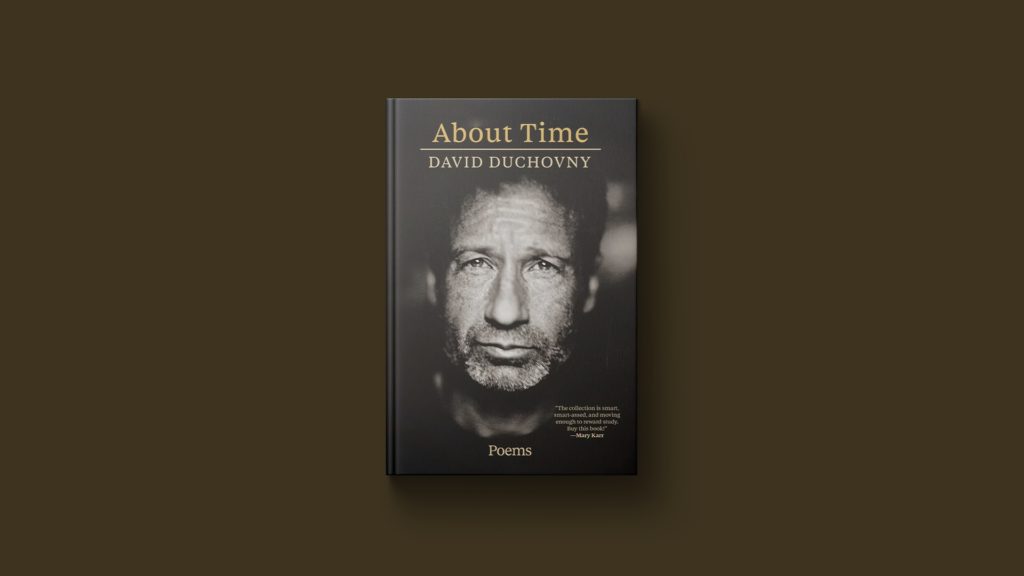
David Duchovny on his new book of poetry influenced by his life and career
Mark Carney celebrates Labour Day by ordering labourers back to work
OTTAWA – Employees of Whiteston Manufacturing who were told they were receiving a special Labour Day surprise at the factory today were delighted when that surprise turned out to be Prime Minister Mark Carney, who delivered a passionate speech about the importance of labour to Canada and then ordered them to get to work. Until […]
The post Mark Carney celebrates Labour Day by ordering labourers back to work appeared first on The Beaverton.

We Deserve Way, Way More Time Off
There is much more to life than work. We all have families, friends, and a beautiful world to enjoy. We need more time off to enjoy it.

This Labor Day weekend, I’m savoring the last days of summer but also feeling that I did not spend enough of it in the right way. I spent too much time working.
I know I’m not alone. Nearly one in four Americans get no paid vacation at all and no paid holidays. Many who do get paid time off are reluctant to take it because of workplace pressures.
I was more fortunate than many, however. Over the last two weeks, I did almost no work for nine days. I read two novels. I dropped my son off at college, took long car trips with my husband, saw friends, hung out with elderly relatives. At my father’s house, I had time to help with house tasks: putting up fences to protect fruit trees from marauding deer, moving a bookshelf off the porch. I spent time watching a pond that was, at different times, both lively as hundreds of hopping frogs and still as ramrod-straight little blue herons. I noticed that if you’re quiet enough, the buzzing of a tiny hummingbird’s wings can be surprisingly loud, like a motor, and that it’s funny how a woodpecker thinks everything is a tree. I got lost in mossy forests and admired the surf off the rocky coast. I listened to coyotes at night. I had an incredible Hawaiian massage from my niece.
When I got back home to New York City, I did not immediately catch up on work, email, or chores; instead, I went with friends to take in the public joy that is the Bronx’s Orchard Beach — the cleanest beach on Long Island Sound — where we swam, enjoyed the weekly Sunday salsa party, and saw a great egret.
All this enjoyment was justified, but not because I’m especially deserving. Nor was it merited because now, rejuvenated, I’m more productive. I’m probably just the same as I was before: same periodic flickers of intelligence, same woolgathering, same laziness. But the break mattered because there is more to life than work. We all have families, friends, and a beautiful world to enjoy.
This is not even an insight in most rich countries, but it’s one we’re discouraged from exploring in hypercapitalist America. Earlier this summer, the media was buzzing with a concept absurdly called “micro-retirement,” which Fast Company called “the latest Gen Z trend.” These cutting-edge young people apparently take a two-week break from work every six months or so. These breaks help them “avoid burnout . . . and enhance their overall well-being.” Whoa, what will they think of next?
No weird new jargon is needed. This is called a “vacation.” Perhaps the young are unfamiliar with this custom because American employers, almost uniquely among rich countries, aren’t obligated to provide any, even unpaid. Europeans, by contrast, thanks to left-wing initiatives of the 1930s like the French Popular Front’s “holiday movement,” enjoy weeks of paid time off even to this day. If you go to Paris in August, few actual residents of the city will be there, and most businesses will be closed.
In the early days of the Soviet Union, before the rise of Stalinism, authorities viewed vacation as a way to help workers be more productive on the job, but they came to embrace it as a way for humans to explore capacities and interests beyond work and to bond with their families. While the human capital arguments are legitimate (vacation does help us avoid burnout and work better), historian Gary Cross quotes the British Trade Union Council of the 1930s arguing that the worker is not “merely a machine to be kept in working order but a human being with a life of his own to be lived and enjoyed.” We all have elders, children, and ponds full of hopping frogs to appreciate.
We deserve more vacation, for sure. But we also deserve more free time all year round. Americans work hundreds of hours a year more than Europeans. Imagine if we had more time for our families, friends, the natural world, and our own minds every week.
One appealing and highly practical approach is the four-day work week, whose implementation Boston College scholar Juliet Schor has been studying in over thirty companies. She’s finding widespread satisfaction among both employees and employers. On Jacobin Radio, Schor told my husband Doug Henwood that workers described huge improvements in their well-being, calling the move to a four-day week, “life-changing, transformational, best thing that ever happened to me.” A UK study found similar satisfaction, with most participating companies saying they would continue, citing decline in workforce turnover and no loss of revenue.
As usual, when it comes to moving this idea forward, socialists are the ones leading the way. Bernie Sanders recently talked about it on the Joe Rogan Experience. Phara Souffrant Forrest, the socialist New York State assemblywoman representing my Brooklyn district, has introduced several bills to advance the four-day week, through both public- and private-sector pilot programs, establishing a tax credit for participating private employers.
Forrest told Newsweek in June that the research showed that “workers thrive when given more time to care for themselves, their families and their communities.” She hoped New York’s experiment would become a model, “not just for our state but for the whole country.”
Socialism holds the potential to end some of the worst exploitation, bloodshed, and suffering in the world, but it can also help us to live better, fuller lives. With so much else to do, and our time on earth so limited, there’s no reason for us to work as much as we do.
I’m still thinking about my vacation and how much better I feel after having had some free time. As the long weekend approaches, I probably have to catch up on work. But I’m also looking forward to getting outside, reading, watching birds, and yearning for a world abundant in the leisure we all deserve.
Texas Blocks Law That Would Ban Gun Stores From Operating Inside Psych Wards
AUSTIN, TX—Touting the party-line vote as a major victory for the Second Amendment, the Texas House of Representatives successfully blocked a bill last week that would have prevented gun stores from operating inside of hospital psychiatric wards. “The government has no place infringing on the rights of honest business owners trying to sell semiautomatic handguns and rifles to people experiencing symptoms of acute mental illness, nor should it prevent the mentally unstable from acquiring those weapons,” said Texas House Speaker Dustin Burrows, gesturing to his pocket Constitution to explain that the United States was founded on the principle that violent, psychotic, and paranoid citizens should never be denied their basic right to bear arms. “Whether voluntarily admitted or involuntarily committed to a psych ward out of a fear they might hurt themselves or others, these patients have the same right to access legal firearms as any other American. If this plainly unconstitutional law had been passed, it would have left entire unhinged communities without the weapons they need to defend themselves against the cabal of powerful people they believe are disguising themselves as their friends, family, and grocery store baggers. In fact, these people often have a greater immediate need for firearms than most, as they are convinced they must take vengeance upon whomever the voices in their heads are telling them to shoot.” At press time, Burrows introduced a new bill that would permit gun stores to operate inside state forensic psychiatric institutions for those ruled criminally insane.
The post Texas Blocks Law That Would Ban Gun Stores From Operating Inside Psych Wards appeared first on The Onion.
South Korea To Ban Mobile Phones In Classrooms
Despite objections from student rights groups, South Korea enacted a law to combat smartphone youth addiction by banning mobile phones and digital devices in school classrooms. What do you think?

“That’s why I always carry a landline.”
Laura Barron, Registrar Overseer

“What else are they supposed to do during class?”
Peter Lopez, Rumor Publisher

“It’s better to record fights as an epic poem anyway.”
Omar Chatman, Seed Packager
The post South Korea To Ban Mobile Phones In Classrooms appeared first on The Onion.
I never realized the 70’s were so crowded.

I never realized the 70’s were so crowded.
Awkward Zombie - Structural Corruption
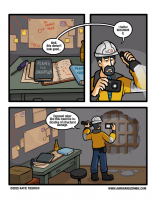
New comic!
Today's News:
INFRA is a game about being an engineer and doing the things that engineers do, such as saying "that doesn't look safe" and falling down elevator shafts. Come for the municipal intrigue; stay for the charming way the protagonist pronounces kemerabetteries.
The sour toil

Now, I wrote this story, and I’m not entirely sure what “fun” Susan is referring to here. She may have a book of crosswords tucked under the pillow.
The post The sour toil appeared first on Bad Machinery.

