Shared posts
‘Comfort Woman’ Statue Reinstated Near Japan Consulate in South Korea
Comic for November 29, 2016
Under the (Linux) Hood
We’ve often heard that you don’t need to know how an engine works to drive a car, but you can bet that professional race car drivers know. By analogy, you can build lots of systems with off-the-shelf boards like Raspberry Pis and program that using Python or some other high-level abstraction. The most competent hackers, though, know what’s going on inside that Pi and what Python is doing under the hood down to some low level.
If you’ve been using Linux “under the hood” often means understanding what happens inside the kernel–the heart of the Linux OS that manages and controls everything. It can be a bit daunting; the kernel is simple in concept, but has grown over the years and is now a big chunk of software to approach.
Your first embedded system project probably shouldn’t be a real time 3D gamma ray scanner. A blinking LED is a better start. If you are approaching the kernel, you need a similar entry level project. [Stephen Brennan] has just the project for you: add your own system call to a custom Linux kernel.
Like a blinking LED, the system call isn’t all that exciting in itself. But learning how to set up the kernel source tree, configure it, and build it can be educational. Of course, you might already know how to do the steps to configure and build since it isn’t uncommon to build custom kernels. However, adding your own code and making it work is educational.
There was a time when experimenting with a kernel almost required you to have a spare machine or a strong constitution. These days, you just do your build in a virtual machine and you can mess up all you like.
You might not get excited over a little thing like a custom system call, but it is a gateway to bigger things. Using GPU acceleration for a screaming fast kernel, for example. If you don’t want to bother with a virtual machine, maybe you can work on an 8-bit AVR instead.
Photo credit: [Shmuel Csaba Otto Traian] CC BY-SA 4.0
Filed under: linux hacks


Women’s Olympic Soccer Preview: Is There A Threat To The U.S. Reign?
RIO DE JANEIRO — The 2016 Olympic Games start Wednesday — not with Friday’s opening ceremony — with group play in the women’s soccer tournament. The reigning World Cup champions and four-time Olympic gold medalists, the U.S. women’s national team, play New Zealand in Belo Horizonte, but I’m hundreds of miles away in Rio de Janeiro, the epicenter of the Olympic Games and the city where the host nation’s team will begin its Olympic run against China this afternoon. It seemed like a good chance to catch a Brazil game among local fans. So far, I can’t even find a place to watch the game.
“Rio is made of bars, but I’m not sure many people will be watching the women’s game,” Patricia “Patchy” Toledo, a former professional women’s soccer player in Brazil, told me when I asked if there are any places where Brazilian fans will be watching their team play. Cíntia Barlem, a journalist covering women’s soccer in Brazil for Globo Esporte, one of the largest sports news sites in Brazil, said she didn’t think most Brazilians would be paying attention. I told her that in the U.S., everyone will be watching the U.S. women’s national team play. “I would like it if the Brazilians do the same here, but it is not the reality.”
Reality has been a trip for the U.S. women. Just over a year ago I sat in a stadium with 53,000 people and watched Carli Lloyd rocket a shot from half-field, sailing the ball over Japan’s backtracking keeper and scoring her third goal in the first 20 minutes of the Women’s World Cup final. Since then, the USWNT — which has won four of the five gold medals handed out in the history of women’s soccer at the Olympics, including three in a row since 2004 — has lost only one game in the past year. It has also added fresh, young talent — Mallory Pugh, Crystal Dunn and Lindsey Horan — to a roster of World Cup champions. All of this makes them heavily favored to win a fifth gold medal this year: They have a 38 percent chance of doing so — almost double the odds of Germany, the next-best team — according to our forecasting model. If they get the fifth gold, they’d be the first team in history to win the World Cup and Olympics in consecutive years.
Our projections are based on the Women’s Soccer Power Index (WSPI) we created last year, which uses game-based offensive and defensive ratings to estimate a team’s overall skill level. The 12-team Olympic tournament is much smaller than the Women’s World Cup (which fields 24 teams) which means some of the world’s best teams, such as Japan and Norway, did not qualify while some, like England, have their own reasons not to compete in the Olympics. Instead, the field is stocked with teams like Zimbabwe, ranked 93rd in the world by FIFA and making their international tournament debut.
This isn’t to say the Olympics will be inferior to the World Cup. In fact, the overall average WSPI of the teams at the Olympics is greater than it those that were at the World Cup (86 compared to 84) but the tournament is much more stratified with great teams at the top of the table — Germany, France and Brazil — and much weaker teams at the bottom like South Africa and Zimbabwe. Below, we take a closer look at the 2016 Olympic tournament, breaking down each team’s chances of advancing from the group stage to the knockout rounds. At the Olympics, the top two teams (as well as the top two third-place finishers) advance from each of the three four-team groups to the single-elimination knockout rounds: the quarterfinals, semifinals and the championship game.
| CHANCE OF FINISHING GROUP | CHANCE OF REACHING ROUND | ||||||||||
|---|---|---|---|---|---|---|---|---|---|---|---|
| TEAM | WSPI | OFF | DEF | GRP. | 1ST | 2ND | 3RD | QTR. | SEMI | FINAL | WIN |
| USA | 96.3 | 3.6 | 0.4 | G | 71% | 23% | 5% | 98% | 77% | 56% | 38% |
| Germany | 94.5 | 3.2 | 0.5 | F | 58 | 28 | 13 | 97 | 63 | 41 | 21 |
| Brazil | 91.0 | 2.7 | 0.6 | E | 55 | 28 | 13 | 94 | 60 | 28 | 14 |
| France | 91.5 | 2.7 | 0.4 | G | 23 | 48 | 21 | 86 | 43 | 22 | 8 |
| Australia | 90.5 | 2.7 | 0.7 | F | 27 | 38 | 29 | 88 | 44 | 18 | 7 |
| Sweden | 89.5 | 2.6 | 0.8 | E | 28 | 37 | 25 | 83 | 39 | 15 | 5 |
| Canada | 87.4 | 2.2 | 0.5 | F | 15 | 30 | 44 | 77 | 30 | 10 | 3 |
| China | 85.0 | 2.0 | 0.7 | E | 13 | 26 | 38 | 65 | 21 | 6 | 1 |
| New Zealand | 83.8 | 2.0 | 0.9 | G | 5 | 20 | 44 | 51 | 14 | 4 | 1 |
| Colombia | 77.2 | 1.6 | 1.1 | G | 1 | 9 | 29 | 24 | 4 | 1 | <1 |
| South Africa | 75.7 | 1.4 | 1.1 | E | 3 | 9 | 24 | 26 | 4 | 1 | <1 |
| Zimbabwe | 69.5 | 1.3 | 1.6 | F | <1 | 3 | 14 | 11 | 1 | <1 | <1 |
Group E: Brazil, Sweden, China, South Africa
Brazil sits atop Group E, the weakest of the groups with an average WSPI of 85.3, and with home field advantage adding a boost of about 0.35 goals per game they are very likely to medal this tournament — they’ve got a 94 percent chance to make the knockout stage and a 60 percent chance of making it to the semifinals. If five-time FIFA World Player of the Year Marta has any hat-trick surprises left at age 30, the Brazilians could go even further. Sweden is the next-best team in group E and has a 83 percent chance of advancing to the knockout rounds. They tied the U.S. in group play last year at the World Cup and are known to match up well against the Americans thanks to the former U.S. head coach Pia Sundhage. China exited the World Cup early last year in the quarterfinals, losing to the U.S. 1-0, but they’ve got a 65 percent chance of making it back to the knockout rounds this year as one of the two third-place teams that will advance. South Africa, despite holding the U.S. to only one goal last month, has only an 11 percent chance of advancing from the group stage.
Group F: Germany, Australia, Canada, Zimbabwe
The second-ranked team in the world, Germany, will be the biggest challenge for the Americans at the Olympics. The U.S. defeated the Germans in the semifinals of the World Cup 2-0 and 2-1 at the SheBelieves tournament in March, but Germany remains the next most-likely team to win gold, with a 21 percent chance. Australia, despite having only a 7 percent chance of winning the Olympics, is a sleeper pick from Group F; they beat Japan, 3-1, in the Asian Qualifiers in February to eliminate the World Cup runners-up from the Olympics. Canada will likely feel snubbed by their third-place rank in Group F, but an early exit at last year’s World Cup quarterfinals and a loss to France just a few weeks ago moved them further down in our ratings. Zimbabwe upset Cameroon on aggregate goals in last year’s Confederation of African Football (CAF) qualifiers to make it to their first major national tournament, but it’s unlikely they’ll see anything past the group games.
Group G: U.S., France, New Zealand, Colombia
The group that features the American women will usually be the de facto “Group Of Death,” but this tournament’s version earns the title with the largest average WSPI of all of the groups, 87.2. France will give the U.S. it’s most difficult group game, especially if injuries continue to nag the U.S. midfield — the area of the field where France excels. Les Bleues have a 22 percent chance of making the final game and an 8 percent chance of winning it all. New Zealand’s scrappiness can be effective — they held Canada to a draw at the World Cup last year — and they’ve got a 44 percent chance of squeezing into the knockout rounds as the third-place team from Group G. As for Colombia, I’m still waiting for the breakout performance of Yoreli Rincón, but there’s a 61 percent chance the Colombians go out in the group stage.
CORRECTON (Aug. 3, 5:23 p.m.): An earlier version of this article misidentified the French women’s national soccer team. The team’s name is Les Bleues, not Les Bleus.

Dallas Gunman’s Plans for Bombing Remain a Worry for Police
Owner of a Modigliani Portrait Is Adamant the Work Isn’t Nazi Loot
Pong on Industrial Controllers
Programmable Logic Controllers (PLCs) are a staple of control automation. Sometime in the 60s or 70s, they replaced a box full of relays to implement the kind of “if-this-then-that” logic that turns thermostats on or directs machinery. Sometime in the 90s or 2000s, some more computing power was added, giving us the Programmable Automation Controller (PAC). And if reading Hackaday has taught us anything, it’s that if you give people a little bit of computing power, they’ll implement Pong (or Snake or Doom!).
We were sent a link where [AbsolutelyAutomation] does just that: implements a remotely-playable Pong on a bit of industrial control. Even if you don’t have a PAC sitting around, the details are interesting.
The first step is to get graphics out of the thing. The PAC in question is already able to speak Ethernet, so it’s “just” a matter of sending the right packets. Perhaps the simplest way to go is to implement the remote framebuffer (RFB) protocol from VNC, and then use a VNC client on the PC to send the graphics. (As they point out [CNLohr] has done this quite nicely on the ESP8266 (YouTube) as well.) So an RFB library was written. [AbsolutelyAutomation] points out that this could be used to make boring things like user-friendly configuration and monitoring screens. (Yawn!)
Graphics done, it’s easy to add a Pong layer over the top, using the flowchart-based programming interface that makes homage to the PLC/PAC’s usual function as an industrial controller. (Oddly enough, it seems to compile to a Forth dialect to run on the PAC.) And then you’re playing. There’s code and a (PDF) writeup available if you want more info. If you don’t have a PAC to run it on, the manufacturers have a simulator for you.
We’ve never worked with a PLC/PAC, but we know the hacker spirit when we see it. And making something that’s usually located in the boiler room play video games is aces in our book. This sparks a memory of an industrial control hacking room at DEF CON a few years back. Maybe this is the inspiration needed to spend some time in that venue this year.
We know we’ve got controls engineers out there. What’s the strangest thing you’ve programmed into a PLC?
Filed under: Featured, misc hacks


Turkish Gov't Retaliates After Hackers Release Police Data Via Twitter


Read more of this story at Slashdot.
Recently Bought a Windows Computer? Microsoft Probably Has Your Encryption Key
ONE OF THE EXCELLENT FEATURES of new Windows devices is that disk encryption is built-in and turned on by default, protecting your data in case your device is lost or stolen. But what is less well-known is that, if you are like most users and login to Windows 10 using your Microsoft account, your computer automatically uploaded a copy of your recovery key — which can be used to unlock your encrypted disk — to Microsoft’s servers, probably without your knowledge and without an option to opt out.
During the “crypto wars” of the ’90s, the National Security Agency developed an encryption backdoor technology — endorsed and promoted by the Clinton administration — called the Clipper chip, which it hoped telecom companies would use to sell backdoored crypto phones. Essentially, every phone with a Clipper chip would come with an encryption key, but the government would also get a copy of that key — this is known as key escrow — with the promise to only use it in response to a valid warrant. But due to public outcry and the availability of encryption tools like PGP, which the government didn’t control, the Clipper chip program ceased to be relevant by 1996. (Today, most phone calls still aren’t encrypted. You can use the free, open source, backdoorless Signal app to make encrypted calls.)
The fact that new Windows devices require users to backup their recovery key on Microsoft’s servers is remarkably similar to a key escrow system, but with an important difference. Users can choose to delete recovery keys from their Microsoft accounts (you can skip to the bottom of this article to learn how) — something that people never had the option to do with the Clipper chip system. But they can only delete it after they’ve already uploaded it to the cloud.
“The gold standard in disk encryption is end-to-end encryption, where only you can unlock your disk. This is what most companies use, and it seems to work well,” says Matthew Green, professor of cryptography at Johns Hopkins University. “There are certainly cases where it’s helpful to have a backup of your key or password. In those cases you might opt in to have a company store that information. But handing your keys to a company like Microsoft fundamentally changes the security properties of a disk encryption system.”
As soon as your recovery key leaves your computer, you have no way of knowing its fate. A hacker could have already hacked your Microsoft account and can make a copy of your recovery key before you have time to delete it. Or Microsoft itself could get hacked, or could have hired a rogue employee with access to user data. Or a law enforcement or spy agency could send Microsoft a request for all data in your account, which would legally compel it to hand over your recovery key, which it could do even if the first thing you do after setting up your computer is delete it.
As Green puts it, “Your computer is now only as secure as that database of keys held by Microsoft, which means it may be vulnerable to hackers, foreign governments, and people who can extort Microsoft employees.”
Of course, keeping a backup of your recovery key in your Microsoft account is genuinely useful for probably the majority of Windows users, which is why Microsoft designed the encryption scheme, known as “device encryption,” this way. If something goes wrong and your encrypted Windows computer breaks, you’re going to need this recovery key to gain access to any of your files. Microsoft would rather give their customers crippled disk encryption than risk their data.
“When a device goes into recovery mode, and the user doesn’t have access to the recovery key, the data on the drive will become permanently inaccessible. Based on the possibility of this outcome and a broad survey of customer feedback we chose to automatically backup the user recovery key,” a Microsoft spokesperson told me. “The recovery key requires physical access to the user device and is not useful without it.”
After you finish setting up your Windows computer, you can login to your Microsoft account and delete the recovery key. Is this secure enough? “If Microsoft doesn’t keep backups, maybe,” says Green. “But it’s hard to guarantee that. And for people who aren’t aware of the risk, opt-out seems risky.”
This policy is in stark contrast to Microsoft’s major competitor, Apple. New Macs also ship with built-in and default disk encryption: a technology known as FileVault. Like Microsoft, Apple lets you store a backup of your recovery key in your iCloud account. But in Apple’s case, it’s an option. When you set up a Mac for the first time, you can uncheck a box if you don’t want to send your key to Apple’s servers.
This policy is also in contrast to Microsoft’s premium disk encryption product called BitLocker, which isn’t the same thing as what Microsoft refers to as device encryption. When you turn on BitLocker you’re forced to make a backup of your recovery key, but you get three options: Save it in your Microsoft account, save it to a USB stick, or print it.
To fully understand the different disk encryption features that Windows offers, you need to know some Microsoft jargon. Windows comes in different editions: Home (the cheapest), Pro, and Enterprise (more expensive). Windows Home includes device encryption, which started to become available during Windows 8, and requires your computer to have a tamper-resistant chip that stores encryption keys, something all new PCs come with. Pro and Enterprise both include device encryption, and they also include BitLocker, which started to become available during Windows Vista, but only for the premium editions. Under the hood, device encryption and BitLocker are the same thing. The difference is there’s only one way to use device encryption, but BitLocker is configurable.
If you’re using a recent version of Windows, and your computer has the encryption chip, and if you have a Microsoft account, your disk will automatically get encrypted, and your recovery key will get sent to Microsoft. If you login to Windows using your company’s or university’s Windows domain, then your recovery key will get sent to a server controlled by your company or university instead of Microsoft — but still, you can’t prevent device encryption from sending your recovery key. If you choose to not use a Microsoft or a domain account at all and instead create a “local only” account, then you don’t get disk encryption.
BitLocker, on the other hand, gives you more control. When you turn on BitLocker you get the choice to store your recovery key locally, among other options. But if you buy a new Windows device, even if it supports BitLocker, you’ll be using device encryption when you first set it up, and you’ll automatically send your recovery key to Microsoft.
In short, there is no way to prevent a new Windows device from uploading your recovery key the first time you log in to your Microsoft account, even if you have a Pro or Enterprise edition of Windows. And this is worse than just Microsoft choosing an insecure default option. Windows Home users don’t get the choice to not upload their recovery key at all. And while Windows Pro and Enterprise users do get the choice (because they can use BitLocker), they can’t exercise that choice until after they’ve already uploaded their recovery key to Microsoft’s servers.
How to delete your recovery key from your Microsoft account
Go to this website and log in to your Microsoft account — this will be the same username and password that you use to log in to your Windows device. Once you’re in, it will show you a list of recovery keys backed up to your account.
If any of your Windows devices are listed, this means that Microsoft, or anyone who manages to access data in your Microsoft account, is technically able to unlock your encrypted disk, without your consent, as long as they physically have your computer. You can go ahead and delete your recovery key on this page — but you may want to back it up locally first, for example by writing it down on a piece of paper that you keep somewhere safe.
If you don’t see any recovery keys, then you either don’t have an encrypted disk, or Microsoft doesn’t have a copy of your recovery key. This might be the case if you’re using BitLocker and didn’t upload your recovery key when you first turned it on.
When you delete your recovery key from your account on this website, Microsoft promises that it gets deleted immediately, and that copies stored on its backup drives get deleted shortly thereafter as well. “The recovery key password is deleted right away from the customer’s online profile. As the drives that are used for failover and backup are sync’d up with the latest data the keys are removed,” a Microsoft spokesperson assured me.
If you have sensitive data that’s stored on your laptop, in some cases it might be safer to completely stop using your old encryption key and generate a new one that you never send to Microsoft. This way you can be entirely sure that the copy that used to be on Microsoft’s server hasn’t already been compromised.
Generate a new encryption key without giving a copy to Microsoft
Update: After this article was published, Ars Technica wrote about a method for preventing the recovery key you sent to Microsoft from being able to unlock your disk that doesn’t require upgrading from Windows Home to Pro or Enterprise. However if you already have a Pro or Enterprise edition, following the rest of the steps in this article might be simpler.
In order to generate a new disk encryption key, this time without giving a copy to Microsoft, you need decrypt your whole hard disk and then re-encrypt it, but this time in such a way that you’ll actually get asked how you want to backup your recovery key.
This is only possible if you have Windows Pro or Enterprise. Unfortunately, the only thing you can do if you have the Home edition is upgrade to a more expensive edition or use non-Microsoft disk encryption software, such as BestCrypt, which you have to pay for. You may also be able to get open source encryption software like VeraCrypt working, but sadly the open source options for full disk encryption in Windows don’t currently work well with modern PC hardware (as touched on here).
Go to Start, type “bitlocker,” and click “Manage BitLocker” to open BitLocker Drive Encryption settings.

From here, click “Turn off BitLocker.” It will warn you that your disk will get decrypted and that it may take some time. Go ahead and continue. You can use your computer while it’s decrypting.

After your disk is finished decrypting, you need to turn BitLocker back on. Back in the BitLocker Drive Encryption settings, click “Turn on BitLocker.”

It will check to see if your computer supports BitLocker, and then it will ask you how you want to backup your recovery key. It sure would be nice if it asked you this when you first set up your computer.

If you choose to save it to a file, it will make you save it onto a disk that you’re not currently encrypting, such as a USB stick. Or you can choose to print it and keep a hard copy. You must choose one of them to continue, but make sure you don’t choose “Save to your Microsoft account.”
On the next page it will ask you if you want to encrypt used disk space only (faster) or encrypt your entire disk including empty space (slower). If you want to be on the safe side, choose the latter. Then on the next page it will ask you if you wish to run the BitLocker system check, which you should probably do.
Finally, it will make you reboot your computer.
When you boot back up your hard disk will be encrypting in the background. At this point you can check your Microsoft account again to see if Windows uploaded your recovery key – it shouldn’t have.

Now just wait for your disk to finish encrypting. Congratulations: Your disk is encrypted and Microsoft no longer has the ability to unlock it.
The post Recently Bought a Windows Computer? Microsoft Probably Has Your Encryption Key appeared first on The Intercept.
Use your Apple Pencil to alter photos, make music and weigh things
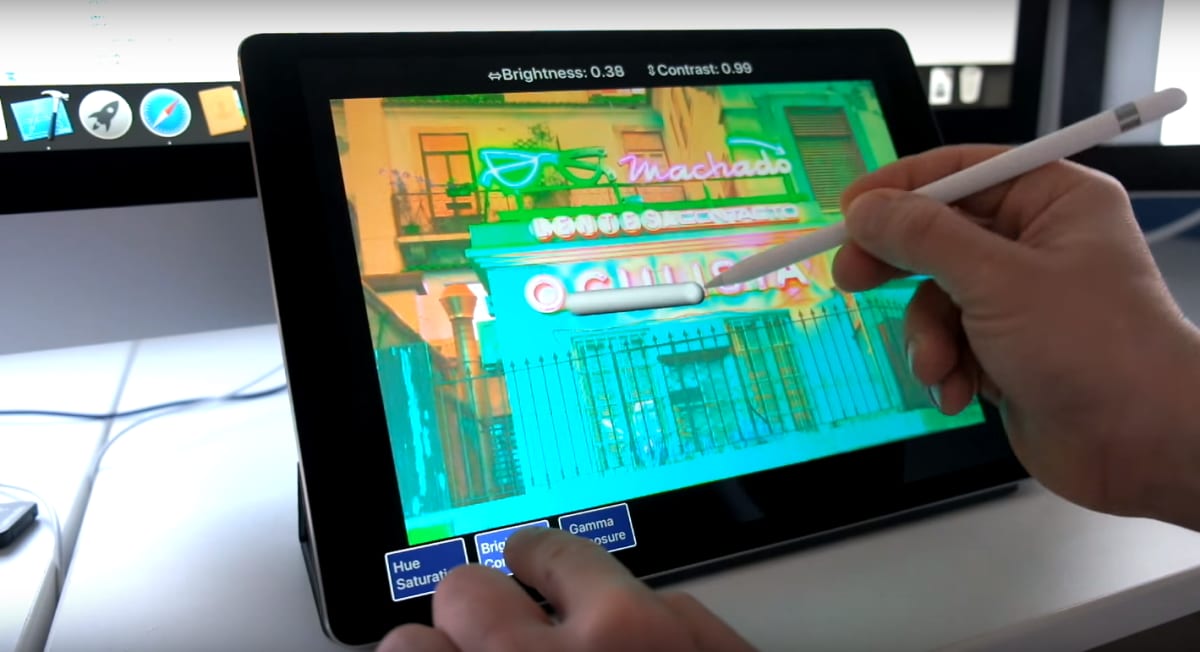 The Apple Pencil is aimed at professional artists who want to use the iPad Pro as a fancy creation tablet, but Simon Gladman has other uses in mind for the stylus. He made three Swift apps that use the Apple Pencil in new ways: as a synthesizer power...
In Rebuke to Kirchner, Argentines Elect Opposition Leader Mauricio Macri as President

Comic: The Wolf, Part Two By Tavis Maiden
Illinois District Violated Transgender Student’s Rights, U.S. Says

The Specialized Stumpjumper, 35 Years in the Making

Specialized's new S-Works Stumpjumper FSR 650b is the result of cutting-edge innovation. Could it be the best Stumpy yet?
...Read More »
Chapter 54: Page 5
Calling All Fishermen: Here’s What to Do with Your Bycatch

So long as there are nets, longlines and even single hooks, there will be bycatch–that is, the unintentional catching of un-targeted species. Most animals captured by commercial fishing vessels die, either before they’re brought aboard, or afterwards due to the trauma of being dragged and handled. It’s a part of fishing that will remain until more sustainable fishing methods are instated, but the fact is that we’re not there yet. Still, there are ways in which we can benefit from the unfortunate deaths of these animals, and in turn, work toward protecting them. Photo: Melbourne Museum.
Victoria, Australia commercial fisherman James Owen and his crew pulled up this 6.5-meter (21.3-foot) basking shark, but rather than cash in on the haul, he chose to alert scientists, and donate the fish’s remains to research.

James Owen, not looking terribly thrilled with his catch, kneels beside the 21-foot basking shark, which weighed over 3 tons. Photo: Bob McPherson/Twitter.
Among these animals are birds, turtles and other fish, but whales and sharks also fall victim to bycatch.
What’s a fisherman to do? Well, more sustainable fishing methods would be preferable, but evidently, the industry isn’t there yet.
Some bycatch, while mistakenly captured, can prove to be lucrative, and whales, sharks, and an array of legally protected species can even fetch small fortunes, especially on the black market.
For many, it’s a conundrum. The animal is already dead, and there’s not much that can be done. Fishermen in most countries have but a few choices: dump the animal back into the sea, stow it and hope they’re not caught by authorities or consume it right then and there at sea and dispose of any evidence. Donating bycatch to science is a relatively novel concept, especially for such delicacies as whale and shark, but it’s taking off in the developed world, especially in the United States.

Basking sharks are harmless to humans, but they do bear these strange, gummy-looking teeth. Photo: Melbourne Museum.
As for this basking shark, scientists know very little about the species, which happens to be the second largest fish in the sea behind the whale shark. So, when Owen declared his intentions to give the remains to the Melbourne Museum, senior collections co-ordinator Dianne Bray was, considering the circumstances, elated:
“We would rather see something in the ocean, everyone would rather see it in the ocean, but this way it is preserved so that we and future generations can learn more about them.”
Too big to be transported, scientists on behalf of the Melbourne Museum traveled to the Portland dock where this fish was landed to begin dissecting it on Monday.
Read more at News.com.au -OJB

A U.S. Concession to Reality in the Battle Against Islamic State

#1549: Crumpets are also acceptable.

And here you have the rare and elusive triple bypass twist-about where the plot thread I indicated was going to be left off for a bit in fact gets left in! And the crowd goes wild! ~Aahhhhhhhh~
09/08/14 PHD comic: 'Your Secret Chocolate Stashes'
| Piled Higher & Deeper by Jorge Cham |
www.phdcomics.com
|
|
 |
||
|
title:
"Your Secret Chocolate Stashes" - originally published
9/8/2014
For the latest news in PHD Comics, CLICK HERE! |
||

Behind Ivy Walls: Americans Think We Have the World’s Best Colleges. We Don’t.

How to Disappear (almost) Completely: a practical guide
 Maybe you've seen Into the Wild, or (gasp) have actually read it. It's the true story of an ordinary person who, one day, decided to abandon society, pack some rice and a rifle into a bag and head off into the wilderness never to return. It's the...
“Sharing is caring”
Here’s a line from President Obama’s West Point talk on May 28th:
That’s why we’re putting in place new restrictions on how America collects and uses intelligence — because we will have fewer partners and be less effective if a perception takes hold that we’re conducting surveillance against ordinary citizens.
When it comes to conducting surveillance on Americans, there’s more to look at than government.
The same day the President spoke to the army cadets, Leo Mirani and Max Nisen at Quartz wrote about the “The nine companies that know more about you than Google or Facebook”.
The companies, called “data brokers” are: Acxiom, Corelogic, Datalogix, eBureau, ID Analytics, Intelius, PeekYou, Rapleaf, and Recorded Future. I’ve never heard of them.
Their business - and there are more companies in the business than these nine – is “collecting and selling personal data—typically without your knowledge or consent—that are used to verify identity, help marketers, detect fraud and help perform detailed “people searches.”
You might want to check out http://www.spokeo.com/ to get an idea what data brokers can already “share” about you.
The Quartz story is in response to a Federal Trade Commission report (available at this link) titled “Data Brokers: A Call for Transparency and Accountability.”
One finding from the FTC report:
Data brokers combine and analyze data about consumers to make inferences about them, including potentially sensitive inferences such as those related to ethnicity, income, religion, political leanings, age, and health conditions. Potentially sensitive categories from the study are “Urban Scramble” and “Mobile Mixers,” both of which include a high concentration of Latinos and African-Americans with low incomes. The category “Rural Everlasting” includes single men and women over age 66 with “low educational attainment and low net worths.” Other potentially sensitive categories include health-related topics or conditions, such as pregnancy, diabetes, and high cholesterol.
Commenting on the recent European Court of Justice decision that people have [a]“right to be forgotten” on the internet, Evgeny Morozov gives an example of how consumer data can be used in ways more operationally harmful to regular people than NSA MetaDataCrunching (a term I shamelessly made up):
… the knowledge that you drink coffee rather than kale juice in the morning would surely improve [a bank or insurance company's] ability to predict whether you might suffer a heart attack in the next five years—an extremely relevant bit of information for deciding whether to give you a loan or insurance and at what rates. … As Douglas Merrill, the former chief information officer of Google and the founder of ZestFinance, a start-up that looks at more than 80,000 data points to assess your suitability for credit, puts it: “All data is credit data.”
So, what data are these data brokers collecting? No one knows with certainty because the companies do not have to tell people what they are gathering.
Appendix B in the FTC report provides something called an “Illustrative list of Data Elements and Segments,” information someone can buy to help figure out what and how to sell — or not to sell – to you. I suspect there are other uses for the data. I’m guessing there also are more Elements and Segments than are in the FTC appendix.
Identifying Data
• Name
• Previously Used Names
• Address
• Address History
• Longitude and Latitude
• Phone Numbers
• Email AddressSensitive Identifying Data
• Social Security Number
• Driver’s License Number
• Birth Date
• Birth Dates of Each Child in Household
• Birth Date of Family Members inHousehold Demographic Data
• Age
• Height
• Weight
• Gender
• Race & Ethnicity
• Country of Origin
• Religion (by Surname at the Household Level)
• Language
• Marital Status
• Presence of Elderly Parent
• Presence of Children in Household
• Education Level
• Occupation
• Family Ties
• Demographic Characteristics of Family Members in Household
• Number of Surnames in Household
• Veteran in Household
• Grandparent in House
• Spanish Speaker
• Foreign Language Household (e.g., Russian, Hindi, Tagalog, Cantonese)
• Households with a Householder who is Hispanic Origin or Latino
• Employed – White Collar Occupation
• Employed – Blue Collar Occupation
• Work at Home Flag
• Length of Residence
• Household Size
• Congressional District
• Single Parent with Children
• Ethnic and Religious AffiliationsCourt and Public Record Data
• Bankruptcies
• Criminal Offenses and Convictions
• Judgments
• Liens
• Marriage Licenses
• State Licenses and Registrations (e.g., Hunting, Fishing, Professional)
• Voting Registration and Party IdentificationSocial Media and Technology Data
• Electronics Purchases
• Friend Connections
• Internet Connection Type
• Internet Provider
• Level of Usage
• Heavy Facebook User
• Heavy Twitter User
• Twitter User with 250+ Friends
• Is a Member of over 5 Social Networks
• Online Influence
• Operating System
• Software Purchases
• Type of Media Posted
• Uploaded Pictures
• Use of Long Distance Calling Services
• Presence of Computer Owner
• Use of Mobile Devices
• Social Media and Internet Accounts including: Digg, Facebook, Flickr, Flixster, Friendster, hi5, Hotmail, LinkedIn, Live Journal, MySpace, Twitter, Amazon, Bebo, CafeMom, DailyMotion, Match, myYearbook, NBA.com, Pandora, Photobucket, WordPress, and YahooHome and Neighborhood Data
• Census Tract Data
• Address Coded as Public/Government Housing
• Dwelling Type
• Heating and Cooling
• Home Equity
• Home Loan Amount and Interest Rate
• Home Size
• Lender Type
• Length of Residence
• Listing Price
• Market Value
• Move Date
• Neighborhood Criminal, Demographic, and Business Data
• Number of Baths
• Number of Rooms
• Number of Units
• Presence of Fireplace
• Presence of Garage
• Presence of Home Pool
• Rent Price
• Type of Owner
• Type of Roof
• Year BuiltGeneral Interest Data
• Apparel Preferences
• Attendance at Sporting Events
• Charitable Giving
• Gambling – Casinos
• Gambling – State Lotteries
• Thrifty Elders
• Life Events (e.g., Retirement, Newlywed, Expectant Parent)
• Magazine and Catalog Subscriptions
• Media Channels Used
• Participation in Outdoor Activities (e.g., Golf, Motorcycling, Skiing, Camping)
• Participation in Sweepstakes or Contests
• Pets
• Dog Owner
• Political Leanings
• Assimilation Code
• Preferred Celebrities
• Preferred Movie Genres
• Preferred Music Genres
• Reading and Listening Preferences
• Donor (e.g., Religious, Political, Health Causes)
• Financial Newsletter Subscriber
• Upscale Retail Card Holder
• Affluent Baby Boomer
• Working-Class Moms
• Working Woman
• African-American Professional
• Membership Clubs – Self-Help
• Membership Clubs – Wines
• Exercise – Sporty Living
• Winter Activity Enthusiast
• Participant – Motorcycling
• Outdoor/Hunting & Shooting
• Biker/Hell’s Angels
• Santa Fe/Native American Lifestyle
• New Age/Organic Lifestyle
• Is a Member of over 5 Shopping Sites
• Media Channel Usage – Daytime TV
• Bible Lifestyle
• Leans Left
• Political Conservative
• Political Liberal
• Activism & Social IssuesFinancial Data
• Ability to Afford Products
• Credit Card User
• Presence of Gold or Platinum Card
• Credit Worthiness
• Recent Mortgage Borrower
• Pennywise Mortgagee
• Financially Challenged
• Owns Stocks or Bonds
• Investment Interests
• Discretionary Income Level
• Credit Active
• Credit Relationship with Financial or Loan Company
• Credit Relationship with Low-End Standalone Department Store
• Number of Investment Properties Owned
• Estimated Income
• Life Insurance
• Loans
• Net Worth Indicator
• Underbanked Indicator
• Tax Return Transcripts
• Type of Credit CardsVehicle Data
• Brand Preferences
• Insurance Renewal
• Make & Model
• Vehicles Owned
• Vehicle Identification Numbers
• Vehicle Value Index
• Propensity to Purchase a New or Used Vehicle
• Propensity to Purchase a Particular Vehicle Type (e.g., SUV, Coupe, Sedan)
• Motor Cycle Owner (e.g., Harley, Off-Road Trail Bike)
• Motor Cycle Purchased 0-6 Months Ago
• Boat Owner
• Purchase Date
• Purchase Information
• Intend to Purchase – VehicleTravel Data
• Read Books or Magazines About Travel
• Travel Purchase – Highest Price Paid
• Date of Last Travel Purchase
• Air Services – Frequent Flyer
• Vacation Property
• Vacation Type (e.g., Casino, Time Share, Cruises, RV)
• Cruises Booked
• Preferred Vacation Destination
• Preferred AirlinePurchase Behavior Data
• Amount Spent on Goods
• Buying Activity
• Method of Payment
• Number of Orders
• Buying Channel Preference (e.g., Internet, Mail, Phone)
• Types of Purchases
• Military Memorabilia/Weaponry
• Shooting Games
• Guns and Ammunition
• Christian Religious Products
• Jewish Holidays/Judaica Gifts
• Kwanzaa/African-Americana Gifts
• Type of Entertainment Purchased
• Type of Food Purchased
• Average Days Between Orders
• Last Online Order Date
• Last Offline Order Date
• Online Orders $500-$999.99 Range
• Offline Orders $1000+ Range
• Number of Orders – Low-Scale Catalogs
• Number of Orders – High-Scale Catalogs
• Retail Purchases – Most Frequent Category
• Mail Order Responder – Insurance
• Mailability Score
• Dollars – Apparel – Women’s Plus Sizes
• Dollars – Apparel – Men’s Big & Tall
• Books – Mind & Body/Self-Help
• Internet Shopper
• Novelty ElvisHealth Data
• Ailment and Prescription Online Search Propensity
• Propensity to Order Prescriptions by Mail
• Smoker in Household
• Tobacco Usage
• Over the Counter Drug Purchases
• Geriatric Supplies
• Use of Corrective Lenses or Contacts
• Allergy Sufferer
• Have Individual Health Insurance Plan
• Buy Disability Insurance
• Buy Supplemental to Medicare/Medicaid Individual Insurance
• Brand Name Medicine Preference
• Magazines – Health
• Weight Loss & Supplements
• Purchase History or Reported Interest in Health Topics including: Allergies, Arthritis, Medicine Preferences, Cholesterol, Diabetes, Dieting, Body Shaping, Alternative Medicine, Beauty/Physical Enhancement, Disabilities, Homeopathic Remedies, Organic Focus, Orthopedics, and Senior Needs
Imagine if government collected and used Elements and Segments data on Americans — all in the name of providing more effective and more efficient services, of course. The Nation might long for the good old days when it was only NSA peeking through the windows.
Somehow it’s different when the private sector collects and uses this information. I wonder why that is.
Maybe David Eggers got it right in his book, The Circle:
“Secrets are lies. Caring is sharing. Privacy is theft.”

Using State Machines In Your Projects

[Tony] has developed a method of using a state machine to validate keypad inputs. His method checks the commands character by character as they are entered in by a 16 button keypad. State machines are often used to break down complex problems into sequential tasks, making code development easier. While [Tony's] example uses the keypad, Arduino Uno, and a character LCD, the theory can be applied to numerous projects, such as this Dahlander motor switch.
As you see, state machines can be very versatile. Stick around after the break as we take a look at [Tony's] state machine and provide a brief explanation of how it all works.
The goal is to ensure a command is entered in to a system correctly – in this case it is being validated character by character with each key press. A state machine is used to achieve this goal. The command is:
XX@HH:MM#
Where:
XX = 1-99
HH = 0-24
MM = 00-59
# = Execute
Each value is considered a state. When the value is entered, it moves to the next state. So:

Be sure to check out [Tony's] project for more details and learn how he implements the above state machine in code.
Filed under: Arduino Hacks


Two weeks with Sol's solar-powered laptop
 When I showed Sol to my family, they all got a bit confused. My dad asked why I was testing a toolbox for Engadget, while my sister took one look at it and said "Bumblebee." If you peek at the images below, you'll understand why: This solar-powered...
Dev Call Recap
Another fun call! Lots of interesting developments. Worth watching to see the ROV that Ben has been building! (~11:00 mark.)
Horizon for iOS records landscape video no matter how you hold your phone
 On Vine and Instagram, square-sharing is the name of the game. But when it comes to YouTube or TV, you're going to insult viewers if you present them with a vertical video. Despite six years of smartphone innovation, Apple hasn't really solved what's ...
A Simple (and Dirty) Bill of Materials and Stock Management Utility

As many readers may already know, when I’m not featuring your projects or working on the mooltipass I try to make simple things that may be useful to electronics enthusiasts. My latest creation is a simple bill of materials generation tool, which can also do simple stock management. Unfortunately for Linux users, this utility is made using Visual Basic functions in an Excel file.
It works fairly simply: just enter your schematics’ components references in the excel sheet, along with the corresponding Digikey webpage address. Click on the “fetch” button and the script will automatically get all your component characteristics from the internet and tell you the component costs depending on the number of prototypes you want to make. Then click the “sort BoM” button and your BoM will automatically be sorted by component type and value. Another functionality allows you to check that all the components present in your BoM are also present on the (very simple) Kicad generated one. Finally, using another Excel sheet containing your current stock, the Bill of Materials will let you know if you have enough components for the assembly stage. A video of the tool in action is embedded after the break, and you can download the BoM template here (.XLSM file) and the corresponding stock file there (.XLSM file).
Filed under: internet hacks, tool hacks

