
Journal of the American Chemical Society
DOI: 10.1021/jacs.7b05788
 Open Access
   This article is licensed under a Creative Commons Attribution 3.0 Unported Licence.

A journey into the nano-world: The ability to design, use and control motor-like functions at the molecular level sets the stage for numerous dynamic molecular systems. In his Nobel lecture, B. L. Feringa describes the evolution of the field of molecular motors and explains how to program and control molecules by incorporating responsive and adaptive properties.


Stretching polymer chains accelerates dissociation of a variety of internal covalent bonds, to an extent that correlates well with the force experienced by the scissile bond. Recent theory has also predicted scenarios in which applied force accelerates dissociation of unloaded bonds and kinetically strengthens strained bonds. We report here unambiguous experimental validation of this hypothesis: Detailed kinetic measurements demonstrate that stretching phosphotriesters accelerates dissociation of the unloaded phosphorus-oxygen bond orthogonal to the pulling axis, whereas stretching organosiloxanes inhibits dissociation of the aligned loaded silicon-oxygen bonds. Qualitatively, the outcome is determined by phosphoester elongation and siloxane contraction along the pulling axis in the respective rate-determining transition states. Quantitatively, the results agree with a simple mechanochemical kinetics model.
An unprecedented crystal-packing arrangement of a tetramethoxy-bay-substituted perylene bisimide (PBI) consists of three crystallographically independent molecules, that is, an achiral (AC) PBI of saddle-shaped geometry along with two pairs of propeller-like twisted (P)- and (M)-enantiomeric PBI frameworks. All these five conformations are observed within a single π-stack revealing an intriguing packing sequence with an inversion of chirality from P to M via AC. Nudged elastic band calculations for the isolated molecule show that AC is a local minimum of the P to M interconversion path. In addition, two minor conformations were observed in the crystal, one of which resembles a transition-state molecule. Theoretical studies of dimeric and trimeric stacks reveal that the coexistence of all these structures in the crystal lattice is aided by the strong dispersion interactions between PBI cores and perfectly interdigitated dodecyl chains which stabilize energetically higher conformations.

From hand to hand: A unique crystal-packing arrangement of bay-substituted perylene bisimide consists of propeller-like twisted and achiral stereoisomers. All the conformations are assembled in a single regular π-stack showing an inversion of chirality from P to M via an achiral molecule. Coexistence of these conformations in the crystal lattice is attributed to the strong dispersion forces.
Open Access  This article is licensed under a Creative Commons Attribution 3.0 Unported Licence.
In the last five years, we have developed synthetic methods towards encapsulation of single-walled carbon nanotubes (SWNTs) into organic macrocycles, to form rotaxane-type molecules. These are the first examples of mechanically interlocked SWNT derivatives (MINTs). In this article, the motivation to continue developing the chemistry of SWNTs at a time well past their hype is discussed and our synthetic strategy and characterization methodology is explained in detail, stressing the general aspects. In particular, special emphasis is placed on the importance of adequate control experiments and bulk spectroscopic and analytical data to determine the structure of SWNT derivatives, as opposed to relying only (or mostly) on microscopy. Also our experimental results are used as pretext to reflect on more general/conceptual issues pertaining to the chemistry of SWNTs and mechanically interlocked molecules.

If you liked'em then you should've put a ring on them! In this Concept paper it is discussed why it is interesting to make rotaxane-type derivatives of single-walled carbon nanotubes (SWNTs), how to do it, and what they might be useful for.


Cryptophanes are receptors consisting of two bridging concave cyclotribenzylene (CTB) subunits. The formation of cryptophanes in basic aqueous solutions (0.1 m MOD; M = Li, Na, K, and Cs) by disulfide bridge formation has been investigated. Two original CTBs, 1H6 and 2H6, derived from cyclotriphenolene through the introduction of mercaptomethyl and mercapto substituents, respectively, were synthesized. Cryptophane formation by slow oxygenation of 16– was observed only in the presence of Me4N+ as template, which yielded the diastereomeric forms in a ratio of around 82:18. By contrast, the rigid CTB 2H6 yielded a cryptophane stereoselectively without a template. Interestingly, air oxidation of a 1:1 mixture of 16– and 26– in the presence of Me4N+ (0.5–1 equiv./16–) in 0.1 m LiOD led to the exclusive formation of the cryptophane complex [(1·1)6–⊃+NMe4], (2·2)6– being formed only in very minor amounts. No mixed species were detected in the reaction mixtures. The stabilities of the diastereomers of the protonated cryptophanes were calculated in the gas phase by DFT at the ωB97XD 6-311G(d,p) level of theory.

Cryptophanes, formed in basic aqueous solutions by triple disulfide bridge formation between cyclotribenzylenes (CTBs) bearing SH groups, have been studied by NMR spectroscopy and ESI-HRMS. Dimerization of rigid 26– readily led to a cryptophane, whereas less preorganized 16– required Me4N+ as template. Dimerizations involving both CTBs led to either cryptophane, depending on the presence or absence of Me4N+.


An artificial molecular motor has been studied by chirped-pulse Fourier transform microwave spectroscopy. In their Communication (DOI: 10.1002/anie.201704221), M. Schnell et al. combine high-resolution spectroscopy with supersonic jets to capture a snapshot of the functional nanomachine in the gas phase. In the cover picture, a cold molecular beam of the molecular motors is probed using microwave fields with aligned dipole moments. The spectral film shows highly resolved rotational transitions, which led to an unambiguous structural assignment.


Abstract
In this review we discuss systems of self-replicating molecules in the context of the origin of life and the synthesis of de novo life. One of the important aspects of life is the ability to reproduce and evolve continuously. In this review we consider some of the prerequisites for obtaining unbounded evolution of self-replicating molecules and describe some recent advances in this field. While evolution experiments involving self-replicating molecules have shown promising results, true open-ended evolution has not been realized so far. A full understanding of the requirements for open-ended evolution would provide a better understanding of how life could have emerged from molecular building blocks and what is needed to create a minimal form of life in the laboratory.
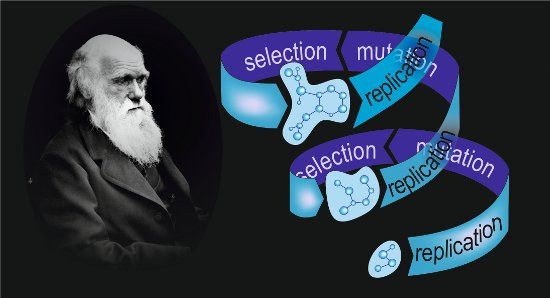
Beilstein J. Org. Chem. 2017, 13, 1189–1203. doi:10.3762/bjoc.13.118


In our search to cluster as many phenylene units as possible in a given space, we have proceeded to the three-dimensional world of benzene-based molecules by employing covalently interlocked cyclohexa-m-phenylenes, as present in the unique paddlewheel-shaped polyphenylene 10. A precursor was conceived, in which freely rotating m-chlorophenylene units provide sufficient solubility along with the necessary proximity for the final ring closure to give 10. Monitoring the assembly of solubilized tert-butyl derivatives of 10 into supramolecular carbon nanostructures by dynamic light scattering (DLS) and Brillouin light scattering (BLS) revealed the dimensions of the initially formed aggregates as well as the amorphous character of the solid state.

Essentially strain-free and thermally stable paddlewheel polyphenylenes consisting of two covalently interlocked cyclohexa-m-phenylenes have been synthesized. Tuning of the solubility allowed the hierarchical formation of three-dimensional carbon nanostructures to be monitored.


