Shared posts

04 Dec 02:46

Hofmeister XIX Database, Crafted in Mexico, re:Invent Fortnite, More: Wednesday ResearchBuzz, December 3, 2025

by ResearchBuzz

NEW RESOURCES

Répertoire International de Littérature Musicale (RILM): RILM Acquires and Relaunches the Hofmeister XIX Database. “The Hofmeister XIX database provides comprehensive, searchable access to over 330,000 bibliographic records from the Hofmeister Monatsberichte, published between 1829 and 1900. These records represent a vital primary source for the study of music publishing, repertoire, and taste in the nineteenth century, and include bibliographic records for music scores, music-related books, periodicals, portraits, and other ephemera.”

Google Blog: Discover the living heritage of Mexican crafts. “We’re excited to share the latest edition of Crafted in Mexico on Google Arts & Culture, showcasing Mexico’s vibrant creative landscape. It brings 32 new stories to life, celebrating the artistry of eight new communities across the country. Each narrative opens a window into the depth and diversity of Mexican craftsmanship.”

EVENTS

The Register: AWS: How do you do, fellow kids? Please watch our keynotes in Fortnite. “Amazon Web Services has decided to stream all five keynotes from its re:Invent conference in the hit multiplayer game Fortnite, which is more than a little bit bonkers.”

TWEAKS AND UPDATES

Reuters: OpenAI plans to improve ChatGPT and delay initiatives, such as advertising, The Information reports. “OpenAI CEO Sam ‌Altman told employees he was declaring ‌a ‘code red’ to improve ChatGPT and is planning ⁠to delay ‌other initiatives, such as advertising, ‍The Information reported on Monday, citing an internal ​memo.”

Mezha: Kremlin to Intensify Disinformation Campaigns Targeting Ukraine-US Talks in December. “In early December, the Kremlin is likely to ramp up a disinformation campaign around negotiations for a diplomatic settlement of the war against Ukraine, focusing its main efforts on discrediting the negotiating process between Ukraine and the United States. Such conclusions are contained in the forecast of the Center for Countering Disinformation at the National Security and Defense Council of Ukraine on information threats.”

9to5 Mac: Opera rolls out Gemini-powered AI features across its Neon, One, and GX browsers. “Opera announced today an expansion of its partnership with Google to integrate the latest Gemini models more deeply in its products.”

AROUND THE SEARCH AND SOCIAL MEDIA WORLD

ABC News: An archaeologist is racing to preserve Sudan’s heritage as war threatens to erase its cultural past. “As the war between the Rapid Support Forces (RSF) and the Sudanese Armed Forces (SAF) rages on, [Shadia Abdrabo] from Sudan’s National Corporation for Antiquities and Museums (NCAM) is on a yearlong research grant in France with one mission: to build an online database of the African nation’s archaeological sites, museum collections and historical archives.”

BBC: No, your favourite influencer hasn’t got a dozen dachshund dogs. It’s just AI. “Both social media users and content creators say they’re worried that AI slop flooding feeds is leading to a less authentic online experience – and is drowning out real posts. But a new trend, which sees people adding AI-generated animals to original photographs, has encouraged some content creators to embrace AI.”

SECURITY & LEGAL

NBC News: Megan Thee Stallion wins defamation suit against blogger. “A federal jury sided with Megan Thee Stallion on Monday and agreed that a blogger defamed and harassed the rapper — but limited damages to less than six figures. The federal panel of five men and four women came down in favor of Megan, the artist born Megan Pete, in her lawsuit against blogger Milagro Gramz, whose real name is Milagro Cooper.”

CyberScoop: Underground AI models promise to be hackers ‘cyber pentesting waifu’ . “Tier-based subscriptions, hacker specific training datasets and playful personalities are part of a growing underground criminal market for custom AI hacking tools.”

RESEARCH & OPINION

The Conversation: Learning with AI falls short compared to old-fashioned web search. “When people rely on large language models to summarize information on a topic for them, they tend to develop shallower knowledge about it compared to learning through a standard Google search.”

OTHER THINGS I THINK ARE COOL

Marketplace: The photographer keeping the art of analog photo booths alive. “When photographer Breanna Conley Saxon found an analog photo booth at her local thrift store, she decided she’d stop at nothing to figure out how to get it working. Fifteen years and lots of tinkering later, analog photo booths have become her career; Conley Saxon owns more than 20 booths in seven states.” Good morning, Internet…

This newsletter is free but most of the things that go into making it aren’t! Help me afford new socks and fancier bean stew by supporting ResearchBuzz on Patreon. Not interested in commitment? Perhaps you’d buy me an iced tea. Don’t have any money but still want to support? I know how that feels. Nobody reads my nonsense. Shall I tell you a thing or two? Share this newsletter or tell a friend about it. I live at Calishat. See my other nonsense at SearchTweaksRSS GizmosLocal Search America, WikiTwister, and MiniGladys.
14 Sep 03:22

Google’s $500M effort to wreck Microsoft EU cloud deal failed, report says

by Ashley Belanger
Google’s $500M effort to wreck Microsoft EU cloud deal failed, report says

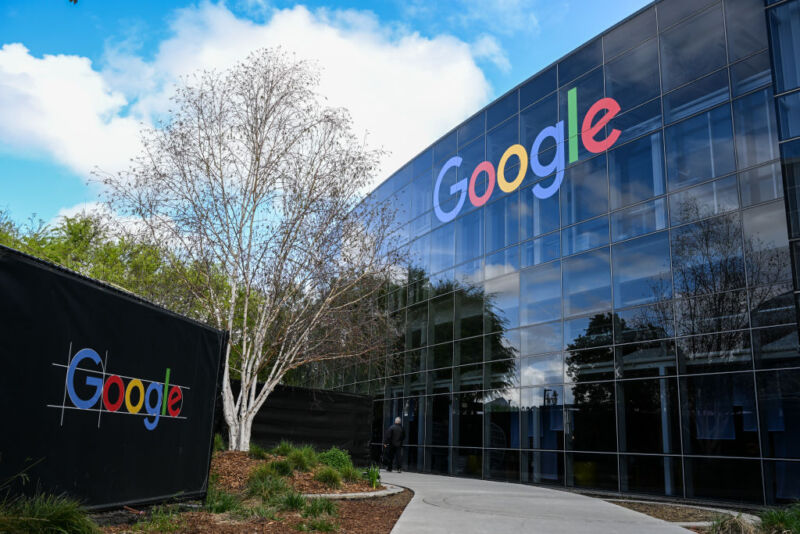
Enlarge (credit: Anadolu / Contributor | Anadolu)

Google tried to derail a Microsoft antitrust settlement over anticompetitive software licensing in the European Union by offering a $500 million alternative deal to the group of cloud providers behind the EU complaint, Bloomberg reported.

According to Bloomberg, Google's offer to the Cloud Infrastructure Services Providers in Europe (CISPE) required that the group maintain its EU antitrust complaint. It came "just days" before CISPE settled with Microsoft, and it was apparently not compelling enough to stop CISPE from inking a deal with the software giant that TechCrunch noted forced CISPE to accept several compromises.

Bloomberg uncovered Google's attempted counteroffer after reviewing confidential documents and speaking to "people familiar with the matter." Apparently, Google sought to sway CISPE with a package worth nearly $500 million for more than five years of software licenses and about $15 million in cash.

Read 18 remaining paragraphs | Comments

22 Jun 03:35

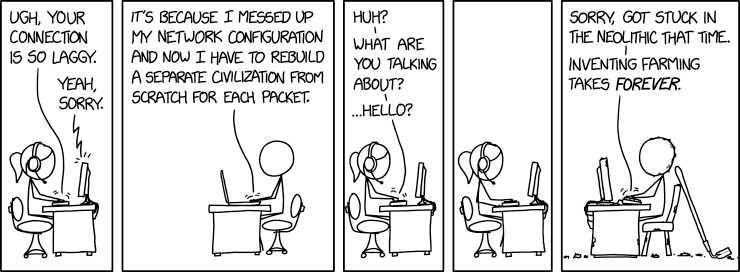
Network Configuration

If you repeatedly rerun the development of technological civilization, it turns out that for some reason the only constant is that there is always a networking utility called 'netcat', though it does a different thing in each one.
06 Mar 15:31

DuckDuckGo’s browser adds encrypted, privacy-minded syncing and backup

by Kevin Purdy
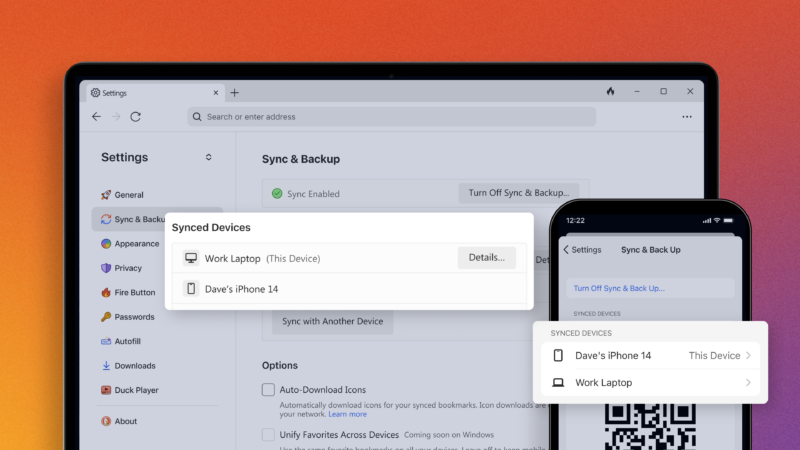
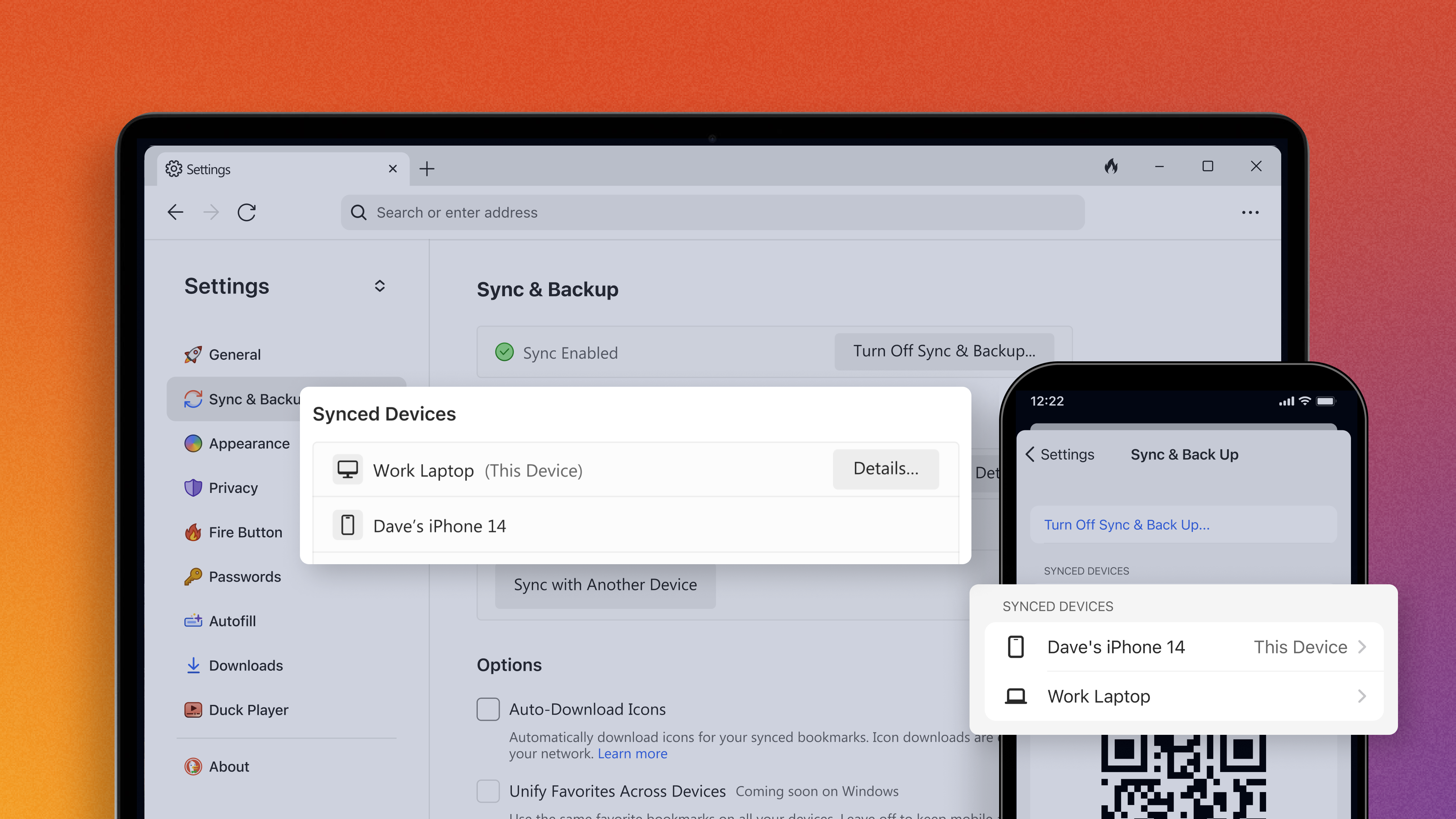
Devices shown as synced between DuckDuckGo browsers

Enlarge (credit: DuckDuckGo)

DuckDuckGo keeps adding new features to its browser; and while these features are common in other browsers, DuckDuckGo is giving them a privacy-minded twist. The latest is a private, end-to-end encrypted syncing service. There's no account needed, no sign-in, and the company says it never sees what you're syncing.

Using QR codes and shortcodes, and a lengthy backup code you store somewhere safe, DuckDuckGo's browser can keep your bookmarks, passwords, "favorites" (i.e., new tab page shortcuts), and settings for its email protection service synced between devices and browsers.

DuckDuckGo points to Google's privacy policy for using its signed-in sync service on Chrome, which uses "aggregated and anonymized synchronized browsing data to improve other Google products and services." DuckDuckGo states that the encryption key for browser sync is stored only locally on your devices and that it lacks any access to your passwords or other data.

Read 4 remaining paragraphs | Comments

15 Jan 13:51

New hospital price lists are massive spreadsheets full of gibberish

by Beth Mole
A man sits frustrated at a laptop computer.

Enlarge (credit: Getty | Karen Hatch)

At Massachusetts General Hospital in Boston, an “HC BYP FEM-ANT TIBL PST TIBL PRONEAL ART/OTH DSTL” will run you $35,014.00. If you go to Vanderbilt University Medical Center in Nashville, an “HC ECMO/ECLS INIT VENO-VENOUS” costs $51,384.00. And at Bellevue Hospital Center in New York City, a “TRLUML PERIP ATHRC ILIAC ART” goes for $22,689.83.

These mysterious prices—and tens of thousands of others—are all on the hospitals’ respective new price lists, available in beastly spreadsheets downloadable from the hospitals’ websites. As of January 1, hospitals around the country are now federally required to list all standard charges for common treatments and care. The goal is to make hospital billing more transparent, allowing patients to comparison shop and anticipate medical expenses.

“This is about empowering patients,” Seema Verma, the administrator of the Centers for Medicare and Medicaid Services, said last week in a conference call with reporters.

Read 11 remaining paragraphs | Comments

12 Nov 21:24

strip for October / 26 / 2018 - Anatomy of Winston Churchill

19 Oct 01:54

Breast Implants, UC Berkeley, Facebook, More: Sunday Buzz, September 30, 2018

by ResearchBuzz

NEW RESOURCES

The Plastic Surgery Foundation: NBIR Now Open Register Today. “The Plastic Surgery Foundation has collaborated with the FDA and breast implant device manufacturers to develop the National Breast Implant Registry (NBIR) to strengthen the post-marketing surveillance infrastructure for current and future breast implant devices. The NBIR is a prospective, non-interventional, population-based, outcomes and safety surveillance registry and quality improvement initiative. The NBIR collects clinical, procedural and outcomes data at the time of operation and any subsequent reoperations for all US patients receiving breast implants. Plastic Surgeons that enter data into the NBIR will be able to compare their practice performance and outcomes to the registry aggregate.”

TWEAKS AND UPDATES

UC Berkeley Library: UC Berkeley Library takes key step to expand digital access to its collections . “The UC Berkeley Library took an important step forward today in improving widespread digital access to its vast collections. Along with the UC Davis and UCSF libraries and the California Digital Library, the Library became an early signatory to a newly released position statement supporting rights for libraries to digitize in-copyright works in their collections, then lend them according to the same lending terms as the original print copies. The position statement, developed by copyright scholars from multiple institutions, as well as policy counsel for the Internet Archive, is accompanied by a white paper that outlines legal rationale for how controlled digital lending can be implemented to enable electronic access to certain library collections.”

USEFUL STUFF

CNET: How to remove your phone number from Facebook (and prevent targeted ads) . “If you use two-factor authentication (2FA) to secure your Facebook account, you likely, at some point, gave Facebook your phone number. 2FA adds an almost impenetrable layer of security to your Facebook account, since it requires you to enter a code sent via text message before logging in. What you likely didn’t know was that Facebook would use that data — your phone number — to target you with ads.”

MakeUseOf: 5 WhatsApp Apps and Extensions You Didn’t Know You Need. “WhatsApp is a fantastic instant messenger, but that doesn’t mean it couldn’t be better. Whether it’s hiding media from snooping eyes on WhatsApp Web or using two WhatsApp accounts on the same phone, a few apps and extensions can make anything possible.”

AROUND THE SEARCH AND SOCIAL MEDIA WORLD

TechCrunch: Facebook poisons the acquisition well. “Who should you sell your startup to? Facebook and the founders of its former acquisitions are making a strong case against getting bought by Mark Zuckerberg and Co. After a half-decade of being seen as one of the most respectful and desired acquirers, a series of scandals has destroyed the image of Facebook’s M&A division. That could make it tougher to convince entrepreneurs to sell to Facebook, or force it to pay higher prices and put contractual guarantees of autonomy into the deals.”

University of Virginia: UVA Receives Mellon Grant to Advance The HistoryMakers Digital Archive. “The University of Virginia (UVA) Library has launched a project to advance The HistoryMakers, the nation’s largest African American video oral history archive. UVA Library’s collaboration with the HistoryMakers, as well as with Carnegie Mellon University, is funded by a two-year $1,000,000 grant from The Andrew W. Mellon Foundation to the University of Virginia. This effort will help to ensure that The HistoryMakers Digital Archive becomes a canonical research tool in the academic community.”

Mashable: Facebook briefly blocked breaking news stories about its security breach — and that’s a problem. “Word of the Facebook hack was quickly covered by several major news outlets and spread throughout social media. Naturally, Facebook users wanted to share the story to warn their friends of the exploit. But for a brief period Friday afternoon, many users found that they could not share stories from several legitimate news outlets. Facebook was reportedly blocking people from posting stories about the hack published by The Guardian, Sacramento Bee, and Associated Press.”

SECURITY & LEGAL

Neowin: Google is being sued by the Belgian government for not blurring out military sites . “Google Maps provides a very useful service thanks in no small part to the amount of data and information it can provide, including real-life imagery for almost every location around the planet. That level of detail may make pose a threat in specific situations, which has prompted the Belgian government to take legal action against the company, according to a report from Reuters.”

The Daily Beast: QAnon Fan Arrested for Threatening Massacre at YouTube Headquarters. “A YouTuber who racked up hundreds of thousands of views pushing extreme conspiracy theories like QAnon, Pizzagate, and Flat Eartherism was arrested last week for allegedly threatening to massacre YouTube employees.”

That was quick. From The Verge: Facebook faces class-action lawsuit over massive new hack. “Facebook is already facing immense fallout from revelations this morning that a hacker exploited a security flaw in a popular feature of the social network to steal account credentials of as many as 50 million users. The company is now facing a class-action complaint filed on behalf of one California resident, Carla Echavarria, and one Virginia resident, Derick Walker. Both allege that Facebook’s lack of proper security has exposed them and additional potential class members to a significantly increased chance of identity theft as a result of the breach.”

RESEARCH & OPINION

Poynter: Here’s what the spread of misinformation on Twitter looks like. “How much misinformation made the rounds on Twitter during the French presidential election last year? Possibly not a lot. That’s according to a study conducted by the Politoscope project at the Institute of Complex Systems of Paris Île-de-France, which analyzed the interaction between Twitter accounts. The report looked at 60 million exchanges from more than 2.4 million users by collecting data related to French politicians and political keywords in real time using an automated visualization platform.”

Pew (PEW PEW PEW PEW PEW PEW PEW!): Internet, social media use and device ownership in U.S. have plateaued after years of growth. “The use of digital technology has had a long stretch of rapid growth in the United States, but the share of Americans who go online, use social media or own key devices has remained stable the past two years, according to a new analysis of Pew Research Center data.” Good morning, Internet…

Do you like ResearchBuzz? Does it help you out? Please consider supporting it on Patreon. Not interested in commitment? Perhaps you’d buy me an iced tea. I love your comments, I love your site suggestions, and I love you. Feel free to comment on the blog, or @ResearchBuzz on Twitter. Thanks!

01 Sep 19:58

Square confirms: People really don’t like those chip credit cards

by Hayley Tsukayama

When it comes to mixing convenience and security at the cash register, we still have a long way to go. Credit cards with security chips have more or less become the norm over the past several months. But that doesn't mean that people are happy about it.

While transactions made with the chip-enabled cards are more secure than those made with an old-fashioned swipe, a survey from the mobile payments firm Square has found that 91 percent of debit card users and 87 percent of credit card users are frustrated with the new cards. The top reason? The extra security checks for chip cards means they take a while at the register — as anyone who has one can tell you.

In a company blog post Thursday, Square said that about 75 percent of shoppers at its merchants are now using chip cards, up from 40 percent of shoppers at this time last year.

[Using your chip card at some stores and not at others? Here’s why.]

The Square survey, which asked 1,000 people about their top payment gripes, found that 37 percent said that complaints about slow lines were the most common.

So what's the solution? Square, in an infographic, heavily pushes the idea that NFC — near-field communication technology that enables wireless payments — is the answer to shoppers' woes.

NFC is the underlying technology for Apple Pay and Android Pay and can be quicker than inserting your chip-enabled card into a reader, since you just tap your phone against a card reader to pay. Square asserts that NFC is the safest payment technology out there, though it must be said that NFC payments have also had their security woes.

The problem is that people don't trust the security of NFC payments. (Security checks are, of course, the very thing that makes chip card transactions take so long.) The survey found that 77 percent of the 1,000 respondents hadn't used NFC payments at all, with more than half citing security concerns as their main reason to stay away. Among adults over 35, just 26 percent had used the technology at all.

NFC adoption is higher among millennials: 45 percent of shoppers younger than 34 said they had used the smartphone-tapping technology.

You can see the full infographic from Square below:

(Courtesy of Square)

(Courtesy of Square)

09 Apr 20:43

Koyannistocksi

"Koyannisqatsi reconstructed shot-by-shot with modern, watermarked stock footage"  
25 Jan 16:19

Snow, Settlements, and Sales Taxes

by Renu Zaretsky

On the Hill, aside from snow… Washington’s blizzard has done in the House, which will be out of session all this week in the wake of the weekend’s winter storm. The House Ways and Means Committee’s first hearing of the year, on pro-growth policy, has been delayed to February 2.  The Senate will be back in session on Wednesday night and the Finance Committee’s hearing on savings and retirement has been rescheduled for Thursday. Tomorrow, the Senate Budget Committee’s will hold a hearing on CBO’s budget outlook, due to be released today. So is the Senate tougher than the House?

Search “big UK tax bill” on Google. A top result? Google. Its parent company, Alphabet Inc. will pay $185 million in its tax settlement with British authorities. The amount is supposed to cover back taxes due on UK sales since 2005. Chancellor of the Exchequer George Osborne referred to the deal as a victory, but Shadow Chancellor John McDonald called the settlement a “sweetheart deal.”

Utah’s governor is not pleased with online sales tax cheats. “We would not tolerate anybody cheating on their income taxes, we should not tolerate people cheating on the sales tax portion of their obligation,” said Republican Governor Gary Herbert. He’d like the federal government to do something about online sales tax collection, as its absence costs Utah about $180 million a year. If the feds don’t act, Utah’s legislature will consider requiring online retailers to collect Utah’s sales tax at the time of purchase. And in Utah, they won’t be slowed by two feet of snow.

In Oregon: Maybe a different tax on liquor. Oregon allows sales of hard liquor in state-owned stores, but in November, that could change. Voters will decide whether hard liquor can be sold alongside beer and wine at grocery stores. If the ballot measure passes, the state legislature would have to make up the lost revenue from state stores. They have already drafted a bill that would tax the wholesale price at a rate aimed at making up the lost revenue.

Interested in subscribing to the Daily Deduction, the Urban-Brookings Tax Policy Center summary of the day’s tax news? Sign-up here to get the Daily Deduction delivered to your inbox every morning. If you’d like to tell us about a new research paper or have any comments about our feature, write us at dailydeduction “at” taxpolicycenter “dot” org.

The post Snow, Settlements, and Sales Taxes appeared first on TaxVox.

15 Oct 11:46

Tesla cars gain self-driving sentience overnight

by Drew Harwell
The dashboard of a Tesla Motors Inc. Model S car, equipped with Autopilot, is seen during a test drive in Palo Alto, California, U.S., on Wednesday, Oct. 14, 2015. Tesla Motors Inc. will begin rolling out the first version of its highly anticipated "autopilot" features to owners of its all-electric Model S sedan Thursday. Autopilot is a step toward the vision of autonomous or self-driving cars, and includes features like automatic lane changing and the ability of the Model S to parallel park for you. Photographer: David Paul Morris/Bloomberg

The dashboard of a Tesla Model S, equipped with "Autopilot," during a test drive on Wednesday. (Photographer: David Paul Morris/Bloomberg)

With one over-the-air update Wednesday night, Tesla Motors has brought a new breed of self-driving car to American roads.

Tens of thousands of Tesla's all-electric sedan, the Model S, bought in the U.S. over the last year have already started downloading or installing "Autopilot" mode, one of the first great breakthroughs for making the kind of driverless magic seen mostly in Google-car demos.

With "Autopilot," the Tesla S can steer, change lanes and drive at highway speeds with little to no help from the human behind the wheel. It can parallel park, using its banks of cameras and sensors, and slow to a stop if the driver happens to drift asleep. In the next update, it may even be able to rouse itself from its parking space and pick the driver up.

It's called "Autopilot" for a reason: Like airplane pilots with takeoffs and landings, the driver will still be expected to handle much of the subtle and strange ballet that is modern driving. The human will still have to keep her hands on the wheel every few seconds, as a safety measure, and to meet state laws that demand a hand on the wheel. No naps in the driver seat.

[Tesla Model S P90D: A normal person drives the ‘best car’ ever made]

But the features it brings — as a software update, no less! — mark an incredible turning point for driverless technology, which could dramatically reduce the 33,000 deaths on U.S. highways every year, advocates of the technology say.

"It will get more and more refined over time," Tesla chief executive Elon Musk said Wednesday at a press event. "Eventually, we want it to automatically have your car put itself to bed in your garage."

When the Model S now is, say, cruising on the highway, its cameras, sensors and radar are already gulping in data on lane markers, the speed and location of other cars, and other important information. Before the update, the car could automatically slow down when, say, it sensed the car ahead hit the brakes, and it would also vibrate the steering wheel when the car seemed to drift out of its lane.

Turning on "Autopilot" instructs the car to take an even greater level of control, steering into curves and maintaining its speed. To change lanes, the driver can hit her turn-signal bar, called a stalk, and the car will speed up a little and drift over. The driver still has to check her blind spots before hitting the signal; if the car senses interlopers, it will keep going straight.

[Elon Musk vents about California’s lane markings confusing Tesla’s autopilot]

Parking also gets an upgrade. The car will now be able to, as Tesla says, "scan for a parking space, alert you when one is available, and parallel park on command." The car's back-up camera and sensors say exactly how many inches the car is away from the curb.

The Model S will give back control to the driver if she grabs or turns the wheel. Alternatively, it will sound a series of increasingly annoying beeps if the driver doesn't seem to be paying attention to the wheel.

If the driver doesn't snap to attention? The car flashes a warning for the driver to grab hold of the steering wheel and eventually slow to a stop where it's driving, firing off the hazard lights. (Other carmakers have similar backup plans but differing ideas on how best to jolt drivers awake.)

Consider it something like a diet driverless car. It's meant for the relatively predictable expanse of highway driving, and won't work below 18 mph. It won't always be able to navigate darting pedestrians and the many other confusing obstructions on the road, which for now will remain the human's domain.

Of course, that also means, as Tesla said, any accident when the car is in or out of "Autopilot" remains the liability of the driver. That may change as the cars become smarter and more assertive, but for now, driver beware.


28 Feb 15:57

Hong Kong fact and projection of the day

by Tyler Cowen

Hong Kong is a tough marriage market for women because of the city’s skewed gender ratio — 876 males for every 1,000 females, a gap predicted to worsen to 712 to 1,000 by 2041.

That is from Julie Zhu at the FT.

14 Mar 21:50

Valve replaces Steam Controller touchscreen with new analog face buttons

by Kyle Orland

When we briefly got our hands on Valve's prototype Steam Controller earlier this year, we found the face buttons placed right up against the lip of the circular touch pads more than a little awkward to use. Now, Valve is showing images of a new version of the controller that replaces those buttons and the planned touchscreen on the face of the controller with new analog directional and action buttons that resemble the layout of many other gaming controllers.

Valve first announced a redesigned version of the controller back at the invite-only Steam Dev Days conference in January and even showed the developers there a very rough mockup image for the new controller. Today, the company released a much more detailed photo of the new design, shown above, with four separate directional buttons on the left side and four face buttons labeled X, Y, A, and B on the right, in an arrangement and color scheme similar to that of Microsoft's Xbox 360 pad. The top-center area of the controller, which previously was devoted to a dynamic touchscreen, now features two buttons labeled with the universal "stop" and "play" symbols, as well as a light up button that resembles a Steam logo.

"The latest version refines ergonomic aspects of the Controller by adding two diamond-patterned button layouts in the area previously designated for a touch screen display," Valve said in an e-mailed statement. "These analog buttons are offered in addition to the touch pads featured in the original prototypes."

Read 2 remaining paragraphs | Comments

25 Aug 21:53

Travel Photo: Gen Con

by Rachel


We returned to Gen Con this year to play lots of board games, and other fun things. David Malki had a Machine of Death and was giving out death predictions (if you're not familiar, check out the book, it's pretty cool). Jeff's prediction was “got too extreme.”

Travel Photo: Gen Con is a post from World Flavor

21 Aug 21:09

Perl as a better …

by John

Today I ran across Minimal Perl: For UNIX and Linux People. The book was published a few years ago but I hadn’t heard of it because I haven’t kept up with the Perl world. The following chapters from the table of contents jumped out at me because I’ve been doing a fair amount of awk and sed lately.:


3. Perl as a (better) grep command
4. Perl as a (better) sed command
5. Perl as a (better) awk command
6. Perl as a (better) find command

These chapters can be read a couple ways. The most obvious reading would be “Learn a few features of Perl and use it as a replacement for a handful of separate tools.”

But if you find these tools familiar and are not looking to replace them, you could read the book as saying “Here’s an introduction to Perl that teaches you the language by comparing it to things you already know well.”

The book suggests learning one tool instead of several, and in the bargain getting more powerful features, such as more expressive pattern matching. It also suggests not necessarily committing to learn the entire enormous Perl language, and not necessarily committing to use Perl for every programming task.

Regarding Perl’s pattern matching, I could relate to the following quip from the book.

What the only thing worse than not having a particular metacharacter … in a pattern-matching utility? Thinking you do, when you don’t! Unfortunately, that’s a common problem when using Unix utilities for pattern matching.

That was my experience just yesterday. I wrote a regular expression containing \d for a digit and couldn’t understand why it wasn’t matching.

Most of the examples rely on giving Perl command line options such as -e so that it acts more like command line utility. The book gives numerous examples carrying out common tasks in grep etc. and with Perl one-liners. The latter tend to be a little more verbose. If a task falls in the sweet spot of a common tool, that tool’s syntax will be more succinct. But when a task falls outside that sweet spot, such as matching a pattern that cannot be easily expressed with traditional regular expressions, the Perl solution will be shorter.


Related posts:

A little awk
Learn one sed command
Learn one Perl command

04 Aug 23:52

Holy sh*t! Smart toilet hack attack!

by Sean Gallagher

Information security firm Trustwave has reported a potential cyber-attack vector to a device you may have never expected the phrase "security vulnerability" would be applied (other than in reference to the end of a toilet paper roll, that is). In an advisory issued August 1, Trustwave warned of a Bluetooth security vulnerability in Inax's Satis automatic toilet.

Functions of the Satis—including the raising and lowering of its lid and operation of its bidet and flushing nozzles—can be remotely controlled from an Android application called "My Satis" over a Bluetooth connection. But the Bluetooth PIN to pair with the toilet—"0000"—is hard-coded into the app. "As such, any person using the 'My Satis' application can control any Satis toilet," the security advisory noted. "An attacker could simply download the 'My Satis' application and use it to cause the toilet to repeatedly flush, raising the water usage and therefore utility cost to its owner. Attackers could cause the unit to unexpectedly open/close the lid, [or] activate bidet or air-dry functions, causing discomfort or distress to user."

And you thought the only thing you had to worry about was dropping your phone into the toilet.

Read 2 remaining paragraphs | Comments


26 Jul 14:36

If we could see Wi-Fi

by Paul

Some visualizations from around D.C., along with some edifying science, created by an artist-blogger in collaboration with an astrobiologist/former NASA Ames scientist.

5c37d443cae74f46344f6cc1781b57d9

4e3e2ad78afd6c6e2fc4d812cd16f402