Shared posts

05 Mar 17:29

What's the Best Time Your Family Has Ever Trolled You?: The Answers

by Jazmine Hughes
by Jazmine Hughes

Yesterday, I told you guys the latest in Hughes family trolling: my dumb sister sent me a dumb Valentine's Day card that's just a dumb picture of her dumb face. Rude, but also NOTHING compared to the stories you guys told me. Check the comments on yesterday's article for some gold, but here are a few of my faves from Twitter. Feel free to send me more stories!!!!!!! Or pictures of dogs. Or tacos???? I'm pretty much open to anything.

@thehairpin once my mom woke me up at dawn, told me the rapture was happening, & took me to church in my pjs. It was a youth group retreat.

— jessie (@ex_liontamer) February 18, 2015

@jazzedloon every time we went to the zoo dad reminded my sister that if she misbehaved we were allowed to leave her with a monkey family

— tropical sturm (@mynameismiles) February 18, 2015

@thehairpin Parents convinced me I had unknowingly accepted admission to all-women military college & would face jail time if I backed out.

— Georgia Cowley (@hellogeorgia) February 18, 2015

@jazzedloon When my sister asked my dad why he was bald, he told her ants ate his hair. She was scared of ants for YEARS.

— Daisy Razor (@daisy_razor) February 18, 2015

@jazzedloon When I was 7 or 8 he told me ice cream was made of whale blubber. I told all the neighbor kids. "He's a teacher so he KNOWS."

— Fig (@figwiggin) February 18, 2015

@jazzedloon my third-grade teacher's name was Mrs. Berger & my mom successfully convinced me that her first name was "Ham." I told everyone

— Jia Tolentino (@jiatolentino) February 18, 2015

@jazzedloon my fisherman-dad's favorite activity is to tell us, without fail, how nice the weather was before we all woke up

— Alanna Okun (@Alannabean) February 18, 2015

@jazzedloon when I was younger, my uncle convinced me the capital of Somalia was named after me – MogaDISHu

— Disha Jani (@DishaKJani) February 18, 2015

@thehairpin my brilliant sister hid a "mailbox" in the attic where my real alien family sent me letters and homework assignments from space.

— Catherine DeGennaro (@cdegennaro) February 18, 2015

@thehairpin Did you know the TV remote doesn't shock you if you tune to MTV? Did you?!?!?!

— Madison M Kircher (@4evrmalone) February 18, 2015

@thehairpin & once 1 of my sisters told another that clothes didn't exist in precolonial times, so she drew naked ppl for her homework

— MaríaJosé E.H. (@majos_eh) February 18, 2015

@jazzedloon the morning of my 8th birthday when I was supposed to go horseback riding my parents told me all the horses died in a barn fire.

— Britt Embry (@seriffed) February 18, 2015

@thehairpin my dad told us that if we didn’t grill on labor day, memorial day, and the 4th of july the barbecue police would arrest us

— Julie Beck (@julieebeck) February 18, 2015

@thehairpin My Dad got his friend to call me after I got accepted into college pretending to be the dean, saying they'd made a mistake.

— Anne T. Donahue (@annetdonahue) February 18, 2015

@thehairpin Gave me car keys on 16th bday for car that was coming "2 weeks later," 2 weeks later told me I could use dad's car when needed.

— Rachelle Dragani (@RachelleDragani) February 18, 2015

There's a lesson here: Troll or be trolled. Take notes.

10 Comments
03 Mar 14:13

You Can Have it All: Chickpea-Almond Muffins

by Natalie Eve Garrett

NEGmuffins
For those of you who don’t know that chickpeas can do everything, fear not:

lemon-contemplation

These are some damn good muffins. As an avid second breakfast eater, I’ve made/eaten a lot of tasty muffins in my day. And, for almost a year now, I’ve been honing/hoarding this recipe. I’m thrilled to finally share it. No, really!!

Inspired by incredible muffins from the Culinary Institute of America, these suckers are sweet but not cupcake-sweet, healthy-ish but not dry or boring. And hello, chickpeas! In the muffins! And nuts, and grain! Basically they are a complete meal unto themselves. (Also, they require just one mixer instead of multiple mixing bowls, and who isn’t a fan of less clean-up?)

All three of these are moist and nutty and cake-like. The blueberry ones are gorgeous and end-of-summer-y, the zucchini-apple ones smell like fall, and the chocolate-beet, ohhhh my god, they’re like gorgeous, delicious valentines. The color is reminiscent of red velvet cupcakes—it gets me every time. I hope you try one!

Just kidding. Obviously try them all.

Ingredients
1 ½ cup chickpeas (or one 15 oz can/container), drained and rinsed
½ cup ground almonds
½ cup flour (I used whole wheat flour in the blueberry and brown rice flour in the other two, which is why those have a smooshed top/less of a rise. I’ve also tried millet flour and spelt, as well as just adding more almond meal because I didn’t want to bother measuring another half cup of flour. Also, that would be a great gluten free option. Really, you can’t go wrong!)
½ cup sugar (I usually use light brown sugar or turbinado, or coconut sugar if I’m feeling fancy.)
2 eggs
¼ cup extra virgin olive oil
1 teaspoon vanilla extract
½ teaspoon salt
1 teaspoon cinnamon
2 teaspoons baking powder

For the Sour-Cream-Blueberry muffins:
½ cup sour cream
1 cup blueberries (fresh or frozen)

For the Zucchini-Apple-Spice muffins:
¾ cup shredded zucchini
½ cup apple puree
½ teaspoon nutmeg
¼ teaspoon cloves
¼ teaspoon ginger
Extra tablespoon of sugar mixed with ½ teaspoon cinnamon for topping

For the Dark-Chocolate-Beet muffins:
½ cup beet puree
1/3 cup unsweetened cocoa powder
1/4 cup dark chocolate chips

Directions
Preheat oven to 325.
Olive-oil spray or butter up your muffin tin.
In a food processor, puree your chickpeas til smooth.
Add in the rest of the ingredients and puree.
Add in the additional ingredients, depending on which muffins you’re making, and mix just until combined.
Scoop batter into the prepared muffin tins.
Cook for ~45 minutes, and let me know what you think!

Natalie Eve Garrett is an artist and writer, and the editor of The Artists' and Writers' Cookbook. Prints of her paintings are for sale here.

2 Comments
23 Feb 16:45

Martial Artist of the Day: 3-Year-Old Karate Kid Recites Student Creed

by TDW

Meet Sophie Wong, the most badass 3-year-old karate kid ever.

Watch as she recites the student creed in the cutest possible way during the Tiny Champions class at Premier Martial Arts Leeds in the U.K.

She may not know all the words, but she’s determined to do what it takes to one day become a black belt.

Her mom told the Yorkshire Evening Post that she was inspired by her older brother who practices a lot at home.

As soon as she could start speaking, she says, she started asking her mom if she could take classes.

The post Martial Artist of the Day: 3-Year-Old Karate Kid Recites Student Creed appeared first on The Daily What.

23 Feb 03:22

OCD Is Not a Quirk

by Fatima Tipu
Sarah Laval/Flickr

While shuffling through a Washington, D.C.-area metro station recently, I noticed a large ad for the technology company Brocade plastered on the wall:

Obsessive Compulsive Reorder (n.): The need to buy expensive IP networking gear again and again.

This is, of course, an attempt at a cheeky play on obsessive-compulsive disorder, in which sufferers have compulsions to do the same things over and over. Companies and people alike frequently evoke the mental disorder with lighthearted puns or references just like that one. Misuse of the term “OCD” has become popular, leading to misunderstandings revolving around the disorder itself.

The examples are endless: Obsessive Compulsive Cosmetics offers high-end makeup; Buzzfeed routinely publishes articles like "33 Meticulous Cleaning Tricks for the OCD Person Inside You" and "19 Things That Will Drive Your OCD Self Insane;" searching “OCD” on Pinterest yields few results on the actual disorder; and social media is littered with countless hashtags like #ObsessiveChristmasDisorder, #ObsessiveCastleDisorder, and #ObsessiveCrossFitDisorder.

“When people have this common usage or knowledge of the term; it creates what we call a 'cultural script,' a commonly used way that identifies what something is, what kind of steps are involved, or if it is harmful or not,” says Yulia Chentsova-Dutton, a cultural psychologist and a professor at Georgetown University.

For many, “OCD” has become synonymous with words like “clean” or “organized”—qualities most would say are good. When OCD is seen as something “good” rather than as a devastating illness, it’s stripped of its reality.

“Whenever it’s kind of a ‘positive’ thing, like with OCD, it means we are encouraging these symptoms, overlooking them, or encouraging people and their family members to overlook them, potentially,” Chentsova-Dutton continued.

People may just be trying to relate. When someone first comes into contact with the term, maybe she focuses on a perceived commonality. The “obsessive” part sticks in her memory and the “compulsive” part and the “disorder” part lose their meaning. So anything that she can remotely obsess over becomes equated with OCD.

“‘Obsessive’ is a personality trait. It doesn’t get in the way of your functioning, it’s something you prefer. What people are meaning to say is, ‘I am obsessive rather than OCD,’ ” says Jeff Szymanski, executive director of the International OCD Foundation. “You’re now mixing a distressing psychological disorder with a personality preference, and when you mix them, you lose the severity of the disorder.”

Nearly one in 100 people suffer from OCD in the United States. Approximately 51 percent of those cases are severe.

"Your life becomes consumed with a fear and your preoccupation with getting rid of the fear … it becomes a vicious cycle," Alison Dotson, author of Being Me With OCD, told me in an email. “It’s scary to feel like you can’t even control your own thoughts.”

Alison’s experience with OCD is also one that stresses the effects of misguided portrayals of the disorder: “I started obsessing when I was a child, and I wasn't diagnosed with OCD until I was two months shy of my 27th birthday. I suffered in silence for years and years because all I knew about OCD was that people wash their hands too much and always check to make sure the stove is off.”

With OCD, there are obsessions (unwanted thoughts, impulses, or images that repeat in a person’s mind) and compulsions (acts that a person repeats in order to “get rid” of these obsessions). These compulsions are often done in a desperate attempt to protect oneself from the wave of anxiety the obsessions bring, not because the person actually wants engage in the compulsion. The cleaning and checking that Alison mentioned are just two examples of the many kinds of OCD compulsions people can have.

In my teen years, I had a close friend who suffered from OCD. She told me about a time when she sat on the floor of her kitchen crying, deranged with anxiety as she tried for an hour to correctly pronounce the word “now.” Once she said the word “now” correctly, it kickstarted a stream of mental compulsions which she then could end by pronouncing the word “now” again. Once she said “now” the second time, she was able to allow herself to get off of the floor, as long as she was applying more pressure on her right foot than her left. By doing these things, she thought she would prevent her parents from dying. They weren’t in any danger, but the thought was inescapable, and she felt the only way to keep it at bay was by performing her compulsions.

“I would think, ‘What type of person thinks things like this?’” Alison asks. “Even though I knew—or thought I knew—deep down that I was a good person, it certainly didn't feel that way when I couldn't stop obsessing about religion and offending God and illegal or immoral sexual acts.”

The International OCD Foundation lists approximately 10 different types of obsessions and compulsions, the majority of which, including religious obsessions and mental compulsions (mentally reviewing events to prevent harm, for example) rarely appear in public interpretations of OCD. Using the term “OCD” correctly, only in reference to the disorder itself, and understanding the diversity of the disorder, would help people begin to acknowledge its seriousness and complexity. After all, casual use of other mental-illness terms has become increasingly frowned upon, Alison points out.

“I don't often hear people say, ‘I'm so schizo!’ or, ‘I'm so psycho!' On some level people seem to know that's wrong and offensive,” she says. “OCD isn’t cute.”

This article was originally published at http://www.theatlantic.com/health/archive/2015/02/ocd-is-a-disorder-not-a-quirk/385562/


20 Feb 17:53

How to Move Past the Superficial and Build Deeper Friendships

by Heather Yamada-Hosley
A.N

That black and white sure is a handsome devil

Having supportive, honest people in your life can make a huge difference in your overall happiness (and theirs). But fostering friendships that go beyond the surface can be a challenge—they take a lot of time and energy, and it can feel awkward at first. If you want to build deeper connections with your friends, here's how to get started.

Read more...


17 Feb 21:07

London Gathering, 21 February

by JenniferP

Organizer Kate has sent the news:

February London meetup as follows:

Royal Festival Hall, Southbank Centre, SE1 8XX near Waterloo station, 21st February, 11am onwards.

Time for another colouring in meetup. Please bring stuff to colour in, or colouring pens and pencils, if you can. Or come anyway, we’re not fussy!

This venue is working out really well.

They sell food in a cafe (standard sandwiches etc.), but they also don’t mind people bringing food in from outside. There are several other local places where you can buy stuff as well. The excellent food market outside has loads of different food options, which can fit most food requirements, or you can also bring a packed lunch.
Meet on the fourth floor, outside the Blue Bar (go up in the JCB lift, lift 7, which is bright yellow and quite musical).

Here is the internal map of the Royal Festival Hall: http://www.southbankcentre.co.uk/sites/default/files/documents/RFH_map.pdf

I will have my Cthulhu with me, which looks like this: http://forbiddenplanet.com/3950-cthulhu-baby-plush/ One time I forgot it but I will do my best this time, however if I forget again I will put up a sign. I have long brown hair and glasses.

The venue is accessible via a lift, and has accessible toilets.

The London Awkward group has a Facebook page, which is here: https://www.facebook.com/groups/549571375087294/. There is also a thread in the new forums for saying hello.

My email is Kate DOT Towner AT Gmail DOT com

(March meetup will be on the 21st.)

Cheers,
Kate

Have fun, London! If you are interested in planning a meeting of Awkward Army folks where you are, there’s guidance here.


13 Feb 10:48

Why Teen Girls Aren't Using IUDs

by Shefali Luthra
Flocu/Shutterstock

When Wendy Sue Swanson started out as a pediatrician eight years ago, it never crossed her mind to bring up the option of intrauterine devices—an insertable form of long-acting contraception—when she had her regular birth-control discussions with teenage patients who were sexually active.

“The patch had been the thing,” she said, referring to a small, band-aid-like plastic patch that transmits hormones through the skin to prevent unwanted pregnancies.

But Swanson’s approach changed after a casual conversation with her sister-in-law. This relative wasn’t a doctor, but she worked at the Adolescent Pregnancy Prevention Campaign of North Carolina, and she told Swanson that the devices could be used as a first choice of contraception for teenagers. Now Swanson regularly discusses IUDs, which are more than 99 percent effective, in her Seattle practice.

“I thought, ‘I can’t believe I don’t know this and no one else in my office knew’” that IUDs could be a good choice for some patients, she said.

Yet some pediatricians and other doctors worry they aren’t properly prepared to make this form of birth control available, because their training did not cover insertion of the devices. Experts say this has to change, starting during medical residencies, especially among pediatricians who will treat teenagers.

Serious medical problems reported with the use of the Dalkon Shield in the 1970s frightened many women away from IUDs, and the extra cost associated with their insertion often stopped women from using them. But the devices have become increasingly popular. IUDs, which use copper or hormones to block sperm from fertilizing eggs, are considered safe in part because they do not use the problematic strings that were part of the Dalkon Shield, and a number of physician groups recommend them. And under the 2010 health law, women with insurance are eligible for IUDs without paying out-of-pocket costs.

Almost 12 percent of women who used birth control between 2011 and 2013 chose IUDs, a rate surpassed only by contraceptive pills and condoms, according to a recent analysis by the Guttmacher Institute.

Last fall, the American Academy of Pediatrics for the first time recommended IUDs as a first-line form of contraception for adolescents who have sex, though condoms and the pill are also accepted options. This recommendation builds on support from the American College of Obstetricians and Gynecologists, which in 2011 termed it the most effective form of birth control and noted that it posed minimal risks. A year later, the group recommended it specifically for teens. Rare problems reported include disruption of menstrual cycles and, in rarer instances, perforation of the uterus. The IUD also can occasionally be expelled by a woman’s body, meaning it no longer prevents pregnancy.

Once inserted, IUDs—which last for years before they need to be removed or replaced—don’t require daily attention. This makes them easier to manage than options such as condoms or daily birth-control pills, which teenagers must remember to use or, in the pill’s case, take on a daily basis. Unlike condoms but like the pill, the IUD doesn’t prevent sexually transmitted diseases. Though the patch is about as effective as an IUD, it requires weekly maintenance and has attracted scrutiny in recent years for potential side effects such as strokes and blood clots.

“So many kids never pick up the pills, or pick up the pills and don’t take them right,” said Melanie Gold, the medical director of Columbia University’s School-Based Health Centers. “Clearly, an IUD is a better choice.”

But even with this relatively recent buzz, a December editorial in the Journal of the American Medical Association Pediatrics asserted that pediatricians often aren’t trained in the procedure—making it, experts said, harder for teenage girls to access this form of birth control, unlike adult women, who are more likely to see a gynecologist.

Pediatric residents typically spend only a month studying “adolescent medicine,” which includes contraception.

Julia Potter, a doctor based in New York-Presbyterian Hospital’s pediatric department and a co-author of the editorial, said the instructors who teach the adolescent medicine often aren’t themselves trained in IUD-insertion procedure. Medical residents then may not pick up the skills they would need to provide this birth-control option once they start practicing.

If residents are exposed to the procedure—something that depends heavily on the patients they happen to see during that month-long rotation—that time frame is “certainly not enough time to learn how to put in an IUD,” said Jane McGrath, the chief of adolescent medicine at the University of New Mexico.

Doctors offered different thoughts on how many times would be enough to become competent in inserting IUDs, but Gold suggested it might take 10 insertions before a physician would feel comfortable administering it.

Pediatricians also may be less comfortable offering IUDs to patients than are other doctors, suggests a 2013 survey published in the Journal of Adolescent Health. The study found that 26 percent of doctors practicing pediatrics or internal medicine provided IUDs or other long-acting contraception—compared with 88 percent of those identified as OB/GYNs or family-medicine providers.

Those who do bring it up often refer patients interested in IUDs to other providers, such as gynecologists, said Annie Hoopes, a pediatrician and adolescent-medicine fellow at Seattle’s Children’s Hospital. But for teens, such referrals can get complicated.

Privacy can be an issue, said Swanson, who doesn’t do the insertion procedure in her office. A teenager may not want her parents to know she’s receiving the birth control, but “if she goes in and sees a gynecologist and the visit is billed,” it’s impossible for the pediatrician to guarantee that won’t appear on an insurance statement.

In those situations, Swanson said, she will send patients to Planned Parenthood or a similar provider, where the visit doesn’t get billed to a parent’s insurance plan.

Teens also don’t always act on the referral, said Marissa Raymond-Flesch, a fellow of adolescent and young-adult medicine at the University of California at San Francisco.

“They may have limited control over their time—particularly if they’re trying to come to receive services confidentially,” she said. That fear of attrition, she added, is a reason her practice has moved to offer IUD insertions in-house. Otherwise, “adolescents could be lost to follow-up.”

And in places where a provider is harder to reach, geography could pose another barrier to teens who don’t get the IUD from their regular doctor.

Meanwhile, conversations with patients and their parents have changed “dramatically” since she began discussing IUDs, Swanson said. Initially, parents would be nervous about IUDs—suggesting, for instance, that they might cause infertility for their daughters. Now, by contrast, both teens and parents seem “very open to” long-acting contraception, she said, and teenage girls are more likely to ask about IUDs without prompting.

Swanson added that, though parents sometimes bring up birth-control issues, she personally waits to raise the subject until the one-on-one portion of a teenager’s visit, when parents are required to leave the room.

It’s still unclear whether and how residency curricula might change to incorporate IUDs and similar forms of contraception. If they become more popular, residents—especially those with an emphasis on adolescent medicine—might come to demand such training in medical school.

But it’s hard to know when or how this might happen, said Mandy Coles, another co-author of the JAMA editorial and an adolescent-medicine physician and assistant professor of pediatrics at Boston University School of Medicine.

“The bottom line is this is going to take more time and advocacy and research to improve training,” she said.


This article appears courtesy of Kaiser Health News.

This article was originally published at http://www.theatlantic.com/health/archive/2015/02/why-teen-girls-arent-using-iuds/385412/


11 Feb 17:48

Making Peg Dolls & More, and a Give-Away!!!

by BenBirdy1
What? Just because she looks like a person more likely to forge a pole axe and come after you with it than make a little peg doll? #watchyourback
I am participating in a Blog Tour! I know! And it's because I am just in love with this book, and when Margaret Bloom asked me to write about it here, I couldn't resist.

This is the first book.
Making Peg Dolls & More is her follow-up to the lovely Making Peg Dolls, and it's so deliciously gorgeous and inspiring that it is currently in rotation here as a coffee table book. [cough *Waldorf coffee table* cough *drink your Sereni-Tea*] Birdy and I pretty much compulsively leaf through it, all the time, and every page shows something we want to make: dreamy-perfect little dolls and toys and ornaments, everything so appealingly wool and wood, so pretty and gentle. Plus, the instructions are super-clear.


We got the book a little before the holidays, and Birdy immediately decided on the project she wanted to make for gifts: these little Herbal Comfort Friends, which are sewn from felt, completed with wooden beads, and filled with sweet-smelling herbs. She designed her own medallions: a sprig of lavender for her grandmother's lavender-filled friend, a little campfire for her friend Harry's that's filled with mint, and a little wind storm for her test doll, that she kept for herself. She loved making them. They are just the sweetest things and, I'm imagining, double nicely as drawer-scenting sachets.

I wish I had a scan of Harry's thank-you note. I think it says, "Thank you for that mint thingy." True, he might not have been the ideal recipient of this particular gift, but it's the thought that etc. 
Birdy was making a diorama for her Underground Railroad report, and she painted this little figure for it. Not a Making Peg Dolls project exactly, but certainly inspired by it. I love the way Margaret paints all the dolls with watercolors so the wood shows through. 

If there were 40 doll bodies in your house, then you could make a few yourself, and your kids wouldn't even miss them!
Making Peg Dolls & More, plus this set of 40 wooden doll bodies (pictured above), would make the world's most perfect gift for a crafty kid. It only gives me a little pang because I feel like my days of giving that kind of gift are truly numbered. Sigh. And then what? Mani-Pedi gift certificates? A Meth-Lab Kit?
I lifted this photo from the Wee Folk Studio post, because this is my very favorite project in the book. 
Anyways, thanks to Margaret's generosity, as well as that of Hawthorn Press, I am lucky enough to be hosting a give-away here. Just leave your name in the comments here if you'd like to be entered (!), and I will announce a winner a week hence. February 18th, 11:00 am EST. Or thereabouts. And for more chances to read about it and win, feel free to visit the other blogs that are hosting reviews and give-aways of this tender, optimistic world-view-as-book:

February 2nd :: The Crafty Crow 
February 3rd :: Clean 
February 4th :: Castle in the Air
February 7th :: A Child's Dream
February 9th :: Forest Fairy Crafts
February 10th :: Bella Luna Toys
February 12th :: Twig & Toadstool
February 13th :: Wee Wonderfuls


Good luck! And lots of love. xo
11 Feb 12:59

Thinking About Parenting

by Maggeh

This useful NYT article came out a while ago Raising Successful Children. Some excerpts:

“In a typical experiment, Dr. Dweck takes young children into a room and asks them to solve a simple puzzle. Most do so with little difficulty. But then Dr. Dweck tells some, but not all, of the kids how very bright and capable they are. As it turns out, the children who are not told they’re smart are more motivated to tackle increasingly difficult puzzles. They also exhibit higher levels of confidence and show greater overall progress in puzzle-solving.”

“…children thrive best in an environment that is reliable, available, consistent, and noninterfering.”

So let your kid walk to the Dairy Queen by themselves, just follow at a discreet stalking distance so you can be at hand when the police intervene.

The post Thinking About Parenting appeared first on Mighty Girl.

10 Feb 21:23

Watching Downton Abbey with an Historian: Queer Downton!

by Mo Moulton

Previous installments can be found here. There will be spoilers. “An historian” is a perfectly acceptable Commonwealth convention, haters to the left [side of the road].

My heart constricts whenever Thomas Barrow comes onscreen. He’s manipulative, scheming, and consistently creepy, but he’s the only recurring gay character. I wouldn’t like him if I knew him in person, but I have to root for him; that’s what limited representation means. And I hate the show a little bit more each time he’s made to enact homophobic tropes even while he ostensibly shores up Downton’s tolerant, liberal reputation.

In the last few episodes, we’ve seen Thomas growing ever sicker, while injecting a mysterious substance in his room on the sly. He answered an advertisement and went to London, under the pretense of an ill father. This week, we learned that he went to receive electrotherapy to make him attracted to women instead of men; the injection and pills, apparently placebos, were supposed to further the "treatment." His illness is the result of non-sterile equipment causing infection. After breaking down and asking Baxter for help, he’s treated compassionately by Dr. Clarkson, who reveals that he’s been the victim of quackery and urges him to bear his burden bravely rather than seek, hopelessly, to change his nature.

Read more Watching Downton Abbey with an Historian: Queer Downton! at The Toast.

10 Feb 16:25

Yes, Obama Was Lying About Opposing Same-Sex Marriage

by David A. Graham
Demonstrators celebrate in Seattle in May 2012, one day after President Obama announced he supported same-sex marriage. (Kevin P. Casey/AP)

Even in 2008, Barack Obama sharply divided Democrats and Republicans. It wasn't just a matter of policy disputes; it was a question of whether he was acting in good faith. (Prominent conservatives remain convinced that he hates America.) On one point, though, both liberals and conservatives agreed. Both sides were pretty sure Obama was lying when he said he opposed gay marriage.

Now there's evidence they were right. In his new book, former Obama strategist David Axelrod says candidate Obama took that position in 2008 at the behest of his political advisers. “Opposition to gay marriage was particularly strong in the black church, and as he ran for higher office, he grudgingly accepted the counsel of more pragmatic folks like me, and modified his position to support civil unions rather than marriage, which he would term a ‘sacred union,’” Axelrod wrote, as Time reports.

“I’m just not very good at bullshitting,” Obama told Axelrod after announcing the stand.

There were good reasons to believe Obama was bullshitting, to use his term. In 1996, while running for Illinois state senate, he answered a question from a gay newspaper, saying, "I favor legalizing same-sex marriages, and would fight efforts to prohibit such marriages.” (In a classic political we're-stupid-not-dishonest maneuver, Obama communications director Dan Pfeiffer tried to claim Obama hadn't actually filled out the survey.) While running for reelection two years later, he said he was undecided. By 2006, he was citing his Christian beliefs as a reason for opposing gay marriage but adding that he was willing to consider the idea that his stance was "misguided."

That made political, if not moral, sense in the 2008 Democratic primary, where only fringe candidates Dennis Kucinich and Mike Gravel clearly supported gay marriage. Gallup polling showed that only 40 percent of Americans supported gay marriage. It's tempting to imagine what might have happened if Obama had announced his support earlier, but it still seems likely that he would have been penalized for it politically, perhaps dooming his chances.

So by 2008, Obama's supposed opposition was a fiction, but it was a politically effective one. The press could and did report that Obama had previously felt otherwise, but no one could prove he was lying. Liberals remained convinced that in his heart of hearts, he was lying and would eventually publicly back marriage equality. Conservatives remained convinced that in his heart of hearts, he was lying and was just waiting to announce his backing for marriage equality. (The one group that was unwilling to abide this situation, understandably, was gay activists, who insisted that rights couldn't be a matter of patience and pressured Obama to speak out at every turn.)

Meanwhile, Obama claimed he was "evolving," a rather pernicious torturing of language: Can one evolve back to a position that one held already? (Darwin spins in his grave.) So as president, he announced he opposed the Defense of Marriage Act; then said all Americans deserved to be treated equally; and finally, in May 2012, called Robin Roberts of ABC to the White House for an interview in which he announced that—as everyone had feared or hoped—he backed gay marriage.

That dissembling arguably laid the groundwork for the huge transformation in public opinion on gay marriage over the last seven years. Today, a small but solid majority of the country favors gay marriage. Most citizens live in jurisdictions that allow gay marriage. It's even legal in Alabama, despite the best efforts of some conservative jurists and officials. Public opinion—which can be said to evolve in the way Obama's personal opinion clearly did not—gradually moved toward gay rights. By cloaking his own views, the president didn't polarize the issue, as he has shown he can do quite effectively, until the die was cast. Once he did announce his stand, it seems to have helped bring new supporters with him, particularly black Americans. By fall of 2012, what might have been a fatal liability in the 2008 campaign was one of Obama's top talking points during the 2012 campaign—which successfully won him another four years. It's unthinkable that any future Democratic nominee would oppose gay marriage, and even Republicans are said to be "evolving" on it, realizing the utility of that slick term.

The Supreme Court will hear cases on gay marriage this term. (The Court expanded gay rights in 2013 with United States v. Windsor, but declined to make a more sweeping ruling.) Predicting what the justices will do is dangerous, but it's widely expected that they will rule that gay marriage is a constitutional right. Even Justice Clarence Thomas, a staunch opponent, seems to agree. On Monday, dissenting from the decision not to block marriages in Alabama, Thomas objected that the Court had effectively made its decision. "This acquiescence may well be seen as a signal of the Court’s intended resolution of that question," he wrote. "This is not the proper way to discharge our Article III responsibilities. And, it is indecorous for this Court to pretend that it is." Justice Antonin Scalia, meanwhile, raged in his dissent in Windsor that the Court was effectively paving the way for gay marriage.

Thomas and Scalia seem to have a point: Will the justices really offer a decision that invalidates hundreds or thousands of legally valid marriages? The other justices seem to have learned a lesson from Obama. By holding their cards close to their robes and delaying the imperative to follow their logic to its conclusion, they can let politics catch up. Sometimes, lying does pay.

This article was originally published at http://www.theatlantic.com/politics/archive/2015/02/yes-obama-was-lying-about-opposing-same-sex-marriage/385333/


10 Feb 16:15

Black bean sweet potato burgers

by noreply@blogger.com (Kitchen Ninja)
You won't miss the meat in this flavorful, hearty veggie burger, loaded with healthy sweet potato, black beans and sharp cheddar cheese.

black bean sweet potato burgers

In your efforts to eat healthier, have you embraced more meatless meals?

We try to, but it's hard when you love bacon and sausage -- and only half-jokingly refer to yourself as The Meatasaurus.

One way we've successfully enjoyed more meatless dinners is with veggie burgers. If your only experience with veggie burgers are those frozen, cardboard-like discs that come four-to-a-box in your grocer's freezer, it's time to put down the processed food and make your own.

A good, homemade veggie burger can truly be a delicious substitute for a traditional grilled burger (not all the time, mind you -- clearly I'm not that cray cray). I love to make big batches of them to keep on hand in the freezer for times when I need a quick lunch or I'm at a loss as to what to make for dinner. They can go from freezer to table in less than 15 minutes.

To keep the freezer back-up meals interesting, I've added this new black bean and sweet potato burger to the stash. It was inspired by a recipe from the brand-new Cabot Creamery Cookbook, which is officially available online or at your favorite bookstore as of today! If you're a fan of cheese (lordy, I do not want to meet the person who isn't a fan of cheese), do yourself a favor and pick up a copy of this cookbook. The recipes -- for everything from entrees to desserts -- are delish, the photos are gorgeous: it's a real treat.

Continue reading >>
10 Feb 11:24

New York Times - Tabbing reveals accessibility options.


New York Times - Tabbing reveals accessibility options.

09 Feb 19:58

The Best Technology for Fighting Climate Change? Trees

by Robinson Meyer
Michie.ru/Flickr

When people talk about technologies that might offset climate change, they often evoke not-yet-invented marvels, like planes spraying chemicals into the atmosphere or enormous skyscrapers gulping carbon dioxide from the clouds.

But in a new report, Oxford University researchers say that our best hopes might not be so complex.

In fact, they are two things we already know how to do: plant trees and improve the soil.

Both techniques, said the report, are “no regrets.” They’ll help the atmosphere no matter what, they’re comparatively low-cost, and they carry little additional risk. Specifically, the two techniques it recommends are afforestation—planting trees where there were none before—and biochar—improving the soil by burying a layer of dense charcoal.

Between now and 2050, trees and charcoal are the “most promising” technologies out there, it said.

It also cautioned, however, that these so-called “Negative Emissions Technologies” or NETs should only be seen as a way to stave off the worst of climate change.

“NETs should not be seen as a deus ex machina that will ‘save the day,’” its authors wrote. NETs should instead be seen as one of several tools to meet the international goal of avoiding climate change greater than 2 degrees Celsius. Another crucial tool is reducing emissions.

It’s a solution that makes sense, as forest management is one of the oldest ways that humans have shaped their environment. Before the arrival of Europeans, Native communities in the Americas had been burning forest fires for millennia to support the growth of desirable plants like blueberries and to manage ecosystems. British communities have long practiced coppicing, a tree-cutting technique that keeps forests full of younger trees.

In other words, humanity has been “geoengineering” with trees for a very long time. The authors of the Oxford report add that afforestation will need global support in order to be successful.

“It is clear that attaining negative emissions is in no sense an easier option than reducing current emissions,” it says (emphasis mine). “To remove CO2 on a comparable scale to the rate it is being emitted inevitably requires effort and infrastructure on a comparable scale to global energy or agricultural systems.”

This article was originally published at http://www.theatlantic.com/technology/archive/2015/02/the-best-technology-for-fighting-climate-change-trees/385304/


09 Feb 18:45

Slack - Reminds you that you might be waking up people in other...


Slack - Reminds you that you might be waking up people in other timezones if you send a group notificaiton message.

/via Edial

09 Feb 13:55

Kanye Should Have Taken the Mic From Beck at the Grammys

by Spencer Kornhaber
Lucy Nicholson/Reuters

Last night, Kanye West gave us one of the best awards-show moments of all time. Of all time! Right as Beck was about to accept his award over Beyoncé and Sam Smith for Album of the Year, West walked on stage, extended his hand towards the microphone—and then smiled and returned to his seat. It was a cheeky remix of the time when West interrupted Taylor Swift’s VMAs acceptance speech to plug Beyoncé six years ago; it also came off like an older, wiser West speaking for all awards-show viewers by getting momentarily enraged about a baffling upset and then shrugging to say “who cares?”

After the ceremony, though, West made it clear that he actually cares a lot. “The Grammys, if they want real artists to come back, they need to stop playing with us,” West told E! News. “... Beck needs to respect artistry, and he should have given his award to Beyoncé. And at this point, we tired of it because what happens is, when you keep on diminishing art, and not respecting the craft, and smacking people in the face after they deliver monumental feats of music, you're disrespectful to inspiration.”

Setting aside the unlikely notion of one artist giving his award to another one (though, interestingly, Sam Smith had said he'd do just that if he beat Beyoncé), the most fascinating thing about West’s statement is the use of the word “respect.” Because the Grammys are, in fact, obsessed with respect—a certain kind of respect, at least. It’s the respect one pays at a funeral: solemn, formal, a performance of sacred awe. It’s also the respect that one affords an athlete, or a child prodigy: amazed at raw technical talent, rather than at, yes, “inspiration.”

Unfortunately for viewers, in the Grammy universe, the quickest way to shore up one’s respectability is to perform a ballad. And so in addition to hushed sets from modern hymn singers like Hozier and Smith (who won four awards), artists known for upbeat radio hits enlisted string sections and elder crooners (Tom Jones, Tony Bennett, Paul McCartney) to show that they could slowly emote as well as anyone. It’s occasionally refreshing to see an act like Rihanna sing for a dinner party rather than a dance floor; at the point when you have Ariana Grande, Maroon 5, Gwen Stefani, Katy Perry, Lady Gaga, Beyoncé, Jessie J, and even West attempting the same thing, though, you begin to suspect that there’s a gas leak in the building.

The evening's snooziness did make Beck’s upset fitting, at least. For his 12th album, Morning Phase, he ditched the strange wit, hip-hop flourishes, and sonic adventuring that made him famous in favor of a series of achingly pretty acoustic songs. It's a nice record, but as the journalist Chris Molanphy pointed out on Twitter, it probably won Album of the Year in large part because it was the only rock album nominated.

Folks, when calling AotY, *always look if "rock" album has that lane to itself*. Beck win=vote-splitting in other genres. #GRAMMYs

— Chris Molanphy (@cmolanphy) February 9, 2015

For anyone who, like West, thinks that Beyoncé's boundary-pushing self-titled album—a diverse set of songs that shocked the music industry and became ubiquitous while sounding like little else on the radio—deserved the win over an indie guitarist’s midlife chill-out record, the idea of vote-splitting and a bias towards rock might be comforting. Beyoncé probably never really had a chance; the system was rigged.

But then you think about the overwhelming sameness, and whiteness, of the general-field Grammy winners historically. You think about the fact that a hip-hop release hasn’t won Album of the Year in more than a decade; the closest thing to an R&B victory recently was for Adele’s 21. The Grammys invite Beyoncé, West, and co. every year, but voters clearly think the music that makes those stars successful is an inferior sort. That's probably unfair, and it definitely leads to a pretty boring ceremony. It's enough to make you wish Kanye had gone all the way this year and grabbed the mic, to make the night's one moment of great TV even better, and to pay the Grammys the disrespect it deserves.

This article was originally published at http://www.theatlantic.com/entertainment/archive/2015/02/kanye-should-have-stormed-the-stage-at-the-grammys/385288/


08 Feb 23:57

Serial's Second Act

by Matt Schiavenza
Prison artwork created by Adnan Syed sits near family photos in his mother's home in Baltimore. (Patrick Semansky/AP)

Perhaps the most surprising aspect of Serial, the true-crime podcast that became a major pop-culture phenomenon last year, was that the show had no practical effect on the murder case it covered. But that might be about to change. A Maryland court has granted Adnan Syed, whose conviction for murdering Hae Min Lee in 2000 served as the centerpiece of the show, the right to file for an appeal to be heard by a panel of three judges in June. The odds that the appeal will work are by no means high. But a successful appeal raises the possibility that Maryland will retry Syed in a court of law—and that the fame of Serial may have something to do with it.

The basis for the appeal is Syed's contention that his defense attorney, Cristina Gutierrez, provided ineffective counsel by neglecting to use a witness who served as a possible alibi. The witness, Asia McClain, wrote to Syed in the aftermath of the crime saying that she saw him in the school library at the moment Hae died, and was willing to testify in his defense. But Gutierrez did not contact her.

During the appeal, the state will likely argue that Gutierrez's decision to ignore McClain was strategic rather than neglectful—for instance, the attorney may have determined for some reason that McClain could not provide credible testimony. The state usually wins these arguments. University of South Carolina law professor Colin Miller, who has written extensively about Serial, told Vox that between one and eight percent of claims of ineffective counsel are successful.

Nevertheless, there is a chance that, following the appeal procedure, Syed's murder conviction will be overturned. Should that happen, the state may decide to throw the case out—or it might re-prosecute. And that's where the fame of Serial—which has been downloaded 68 million times—may come into play.

Asia McClain, whose 1999 letters to Syed appeared to give him an alibi, filed an affidavit last month in which she said Serial renewed her desire to participate in the case.

After I learned about the podcast, I learned more about [Serial producer and host Sarah] Koenig’s reporting, and more about the Syed case. I was shocked by the testimony of [lead prosecutor] Kevin Urick and the podcast itself; however I came to understand my importance to the case. I realized I needed to step forward and make my story known to the court system.

Then there's Jay Wilds, the prosecution's star witness, who refused to participate in Serial. But after his address and photographs of his house were published on Reddit, Wilds granted a wide-ranging interview to the Intercept, which was published in three parts in December. Wilds again maintained that he saw Lee's body and assisted Syed in burying her in Baltimore's Leakin Park. But in recounting the story, Wilds changed enough details from his original testimony that Rabia Chaudry, an attorney and family friend of Syed's, believes he is no longer credible.

"If what he’s reporting is the truth right now," she told Vox's Ezra Klein, "then what he’s saying is that when he took the stand under oath at trial one, he lied, and when he took the stand under oath at trial two, he lied … If there was a third trial, that could be used to impeach his credibility."

Syed and his attorney, C. Justin Brown, will not be able to mention Jay's testimony during their appeal process this June. And should Syed's appeal be denied, McClain's affidavit and Wilds's comments will be mere historical footnotes. But in the event that Syed is tried again in the court of law, evidence surfaced by Serial's celebrity may yet have influence, according to Miller.

"The judiciary should make the decision objectively—but it’d be pretty hard for the judges and the clerks to avoid the publicity going on, and that potentially could have some impact on the decision-making."

This article was originally published at http://www.theatlantic.com/national/archive/2015/02/serials-second-act/385287/


06 Feb 20:06

Scott McCloud's The Sculptor Proves How Much Graphic Novels Can Do

by Kriston Capps
A.N

want.
Also, apparently I'm sharey today.

First Second Books

David Smith has just 124 days to live when he meets Mira Bhatti, his competition, an emerging sculptor from Queens. Mira is still trying to make it in the art world: She’s 36, a mother to a 7-year-old, finally pursuing her degree, and looking to land a big show. She has time; David doesn’t. David thinks she’s the better sculptor. But the reality is that he's more likely to get everything he wants as an artist. And not just because he’s made a deal with Death.

The Sculptor, a new graphic novel by the cartoonist Scott McCloud, follows this artist, David Smith—no, not that David Smith, but a young artist living in New York today who very much aspires to his namesake's success. So much so, in fact, that in a moment of despair, drunk and broke, totally out of options, he makes a deal with the Grim Reaper, who here takes the form of his Great Uncle Harry. Would David give his life for his artwork? Yes, the sculptor says, unmoved by the alternative vision that Death outlines for his life: a house upstate, a wife (and maybe a second wife), kids and grandkids, a modest career at the community college.

Such a humdrum destiny is a fate worse than death, in David’s estimation. Maybe it isn't so far from the path followed by middle-aged Mira, the superior sculptor whose work he winds up stealing, albeit unconsciously—but no matter. David wants to live forever, and on his 26th birthday, he accepts Death's deal: He gets unlimited power to make artwork with his literal bare hands, but just 200 days to do what he will with it. Given control over matter itself, the brash young artist sets out to solve life’s big riddle: Is greatness worth the ultimate price?

The Sculptor is McCloud’s first major graphic novel since Zot!, the 36-issue, mostly black-and-white superhero series that served as a lighthearted alternative to the dark-and-gritty world of comics during its six-year run in the '80s. McCloud has been celebrated for many other graphic and comic-related efforts since then, most notably his three meta-graphic nonfiction books: Understanding Comics (1993), Reinventing Comics (2000), and Making Comics (2006). Yet, the world of graphic storytelling is much changed today. Some of the difference shows up as strain in The Sculptor—a sprawling, sweet, superb achievement that nevertheless suffers from some severe blindspots.

Central to the story is David’s counterpart and romantic interest, Meg, a bike messenger and sometime-actress. Meg appears to David as an angel when they first meet; he falls in love with her instantly, and after things fall apart with another man, she quickly reciprocates. While he's supposed to be using the precious time he has left to secure his place in eternity—or at least in some Saudi oil baron’s loft along Billionaire’s Row—the artist instead devotes much of his time to wooing Meg, despite himself.

A name for a stock character like Meg didn’t exist back when McCloud set out to explain the mechanics of comics. But she is a manic pixie dream girl, a force every bit as supernatural as Death. She rides hard and fast on her bike, she takes in homeless people off the street (David included) despite the risks, she talks about her boobs a lot. Carefully she poaches his virginity. “I might try to push you away,” Meg tells David at one point, as she sets the message from a fortune cookie alight over a candle. “Don’t let me, okay?”

When Meg turns from manic pixie to manic depressive, David finds the strength to stay by her side through a dark spell. (It’s cast as a revelation for him, a moment of development.) At least her character grows a little fuller through her ordeal; and the scenes from a big gathering of friends and family she hosts for Hanukkah smack of real, remembered details. Still, The Sculptor wouldn’t pass the famous feminist litmus test for fiction set out by Alison Bechdel, another great comics gatekeeper. The only woman Meg ever interacts with is her roommate; the only thing we know about their relationship is that one time they fooled around. (For balance, Meg schools David whenever the conversation turns to art, cutting through the name dropping to something more insightful.)

But it would go too far to say that The Sculptor fails as a feminist text. The story boils down to a magical dilemma about weighing the urge for a family down the road against the desire for professional validation today. Only this time—thanks to a deal with Death—it’s a man whose clock is ticking. I might’ve just as soon read the story about how Mira Bhatti balanced life and death and fate and art. She explains her formal innovation as a sculptor, only for David to echo her creation in a major overture to Meg. (And to her credit, Meg isn’t all that impressed.)

If there’s more than a story about family in The Sculptor, it’s undercooked. It’s no coincidence that Great Uncle Harry bears a striking resemblance to former Marvel Comics impresario Stan Lee. Or that Death-as-Harry(-as-Stan-Lee) shows up to seal the deal with the young artist just after he plunges his hands into a block of granite, realizing for the first time his scope and potential. At over 400 pages, the book illuminates the scope of what a graphic novel can do; in dwelling on subjects like creative stagnation and familial obligation, McCloud reveals the potential for what comics can be.

These days, though, McCloud isn’t alone. Even as Marvel sends a workhorse like Wolverine off to the glue factory (and conscripts the rest of its heroes to endless sequels)—and even as DC Comics prepares us for a cinematic universe anchored by Batfleck—the creators who actually write many of these print titles all do their best work outside the Big Two. Books like Southern Bastards, East of West, Sex Criminals, Pretty Deadly, and above all, The Walking Dead are paving the way for independent creators working in a superhero-ish format. Which is to say nothing of the indie stuff that doesn't involve capes, such as Richard McGuire's astonishing Here.

What’s most compelling about The Sculptor is the artist’s hand. Panel by panel, McCloud conducts a clinic: His decisions about pacing and line are unimpeachable. The simplest choices about when to let a panel fall off the page, when to tighten the camera, when to go for a big splash—these are as instructive as anything he wrote in Making Comics. None of the sculptures he depicts work; but the elegant way he captures an early brush with death? The light falling from a doorway into an unlit room where Meg crouches deep in depression? Every moment when McCloud drops the inks, letting pencils stand alone, is perfectly tuned. Clearly it’s McCloud who is the Sculptor here. Forgive the master if his politics have grown rusty; his artistry is still as sharp as the scythe.

This article was originally published at http://www.theatlantic.com/entertainment/archive/2015/02/the-sculptor-scott-mccloud/385181/


06 Feb 19:51

Would You Rather Die Sooner Than Take a Daily Pill?

by Cari Romm
Derek Gavey/Flickr

There are diagnoses for some people who can’t or won’t take pills. There’s dysphagia, or difficulty swallowing. There’s emetophobia, the fear of gagging or vomiting. There’s pharmacophobia, the fear of taking any medicine at all.

And then there are people who have none of these conditions, but really, really hate to do it anyway. Hate it so much, in fact, that when a recent survey asked people if they’d prefer to risk immediate death or swallow a daily pill for the rest of their lives, more than a third chose the former.

In a study published earlier this week in Circulation: Cardiovascular Quality and Outcomes, a journal of the American Heart Association, researchers from the University of North Carolina and the University of California, San Francisco, surveyed 1,000 people on what they would be willing to give up to avoid taking a daily pill—one without any cost or side effects—to protect heart health.

Here’s what people were willing to trade:

  • More than 20 percent said they would pay $1,000 or more; around 3 percent said they’d pay up to $25,000.
  • Around 38 percent of respondents said they’d be willing to gamble some risk of immediate death; around 29 percent of the people surveyed said they’d accept a small (lower than 1 percent) risk, while 9 percent of them said they’d accept a one-in-10 chance of immediate death.
  • When the question changed from risk of death to certain death, around 30 percent said they would trade at least a week off their lives, and 8 percent were willing to give up a full two years.

The researchers aren’t sure why the survey respondents were so averse to the idea of taking a pill each day, but they have some educated guesses. Beyond the simple hassle of remembering a daily chore, “We think that part of the opposition is the stigma of ‘being sick’ or needing to be treated,” Robert Hutchins, a physician at UCSF and the study’s lead author, said in an email.

Because the study asked about specifically about a pill as prevention rather than treatment, there’s also the possibility that people simply didn’t see much benefit to taking it, or much risk to skipping it. “The problem with many of the pills that people take for their whole life is that they don’t necessarily make them feel better—they are medications like aspirin and statins that prevent an adverse outcome,” Hutchins said. “If that outcome is prevented, the person doesn’t know how bad the alternative to taking the pill actually is. If someone is taking a pill for back pain, they should get relief from that pill and don’t mind taking it, because the alternative, pain, is worse.”

The American Heart Association recommends a daily aspirin as heart-attack prevention in people at higher risk, though the Food and Drug Administration is less sure: In May, the agency revised its guidelines on the subject, declaring that while aspirin should be taken as a preventive measure by people with a history of heart attacks or strokes, the risks outweigh the benefits for everyone else.

Either way, the Circulation study adds a little more nuance to what’s already been identified as a major problem: Not only do people dislike taking pills, but they’re also pretty bad at it. A study published in the Annals of Internal Medicine in 2012 found that patients’ failure to follow their prescriptions—either by not taking medication correctly or by not taking it at all—causes around 125,000 deaths and 10 percent of all hospital visits each year, and costs the U.S. somewhere between $100 billion and $289 billion annually.

Hutchins added that among the respondents in his study, the three-quarters who who said they already took daily pills were even more vehemently opposed to the hypothetical one the survey described. “Maybe those people know what it's like to take pills and know how much of a hassle it is,” he said. In a follow-up study, he and his colleagues are examining which physical qualities of a pill—taste, size, texture—make the most difference in a person’s attitude towards taking it.

But much of people’s resistance, the researchers believe, stems less from the properties of the pill that’s being swallowed and more from the act itself. Even when side effects are discounted, “The act of having to take a daily pill can have a large effect on an individual's quality of life,” Hutchins said in a statement. “That effect multiplied across millions of people can have very large effects on the cost-effectiveness of that drug for a population.”

This article was originally published at http://www.theatlantic.com/health/archive/2015/02/would-you-rather-die-sooner-than-take-a-daily-pill/385251/


06 Feb 19:22

Flicks: Mobile Speaker and Projector

by swissmiss

Flicks is a Bluetooth speaker and LED projector – all in one. This is awesome. I want one.

06 Feb 16:55

A School District That Was Never Desegregated

by Sharon Lerner
A.N

Simply combining both high schools would result in a student body that’s about 30 percent white, which would push the racial balance past a tipping point of comfort for many white families who "don’t want to be in a small minority," says Jim Tims, a former school board member.

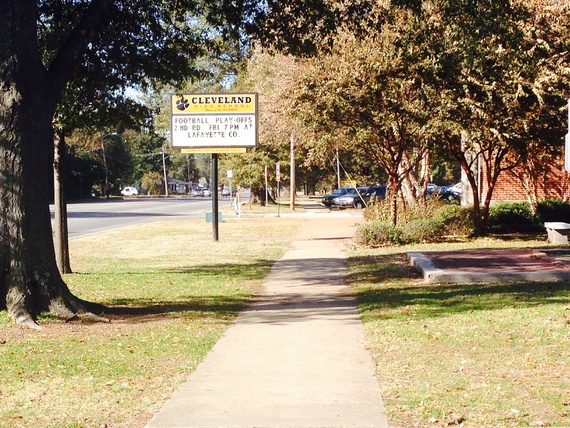
Cleveland High School was founded in 1906 exclusively for whites. Today, it has an almost even mix of black and white students. (Sharon Lerner)

CLEVELAND, Miss.—The wheels of justice have been said to turn slowly. And few things move quickly here in Cleveland, Mississippi, a town of 12,000 people with no movie theater and a quaint commercial district that’s shuttered on Sunday. But when a deadline on a school desegregation suit—originally filed in 1965—came and went last month with opposing sides still unable to agree on a resolution, some locals admitted frustration.

"If you fight for something for 50-some-odd years and it don’t work out? Good gravy, that’s a long time," said Leroy Byars, 67, who is known around town simply as "Coach." Coach led East Side High School’s football team, the Trojans, from 1972 to 1987 and served as the school’s principal from 1988 to 1997. Back then, East Side High was all black—as it had been back when it was called Cleveland Colored Consolidated High and officially served only black students.

The problem, as the civil rights division of the U.S. Department of Justice sees it, is that East Side High is still virtually all black: 359 of 360 students are African American. The racial mix is pretty much the same at D. M. Smith Junior High School, one of the two middle schools in this Delta town. In June, a federal judge asked the school district and the justice department to try to come up with a joint plan to desegregate the district’s schools. But the two sides were unable to agree by the January deadline and, late last month, unveiled separate visions for Cleveland. This spring, a federal judge will likely decide how the district should move forward—more than 40 years after most of the country desegregated public schools.

Cleveland is one of 179 school districts in the country involved in active desegregation cases. Mississippi has 44 of these cases—more than any other state. But Cleveland’s case is unusual. Nationally, there’s been a trend of "resegregation" in recent years, as school districts released from court oversight revert to the racial divisions common before school desegregation was mandated by the Supreme Court’s 1954 decision in Brown v. Board of Education.

But, in Cleveland, full desegregation never happened in the first place.

"You’re starting from scratch," says Wendy Scott, dean of Mississippi College School of Law and an expert in school desegregation. "There are only a handful of cases like that."

Though extreme, the still-unresolved Cleveland case highlights the remarkable persistence of school segregation, despite decades of efforts to address it. As Scott notes, this isn’t just a problem of the Deep South or small towns. "The very same issues can be found in any school district in America."

Cleveland’s epic legal case began in 1965, when a group of black parents sued to stop the district from maintaining segregated schools. In the summer of 1969, the court ordered Cleveland to cease discriminating on the basis of race and eliminate the effects of the "dual school system." Though the plaintiffs won the legal victory—and black students were allowed to enroll in the all-white Cleveland High for the first time that September—roughly 1,000 white locals gathered in the streets to show their opposition to integration, and local leaders vowed to fight it.

Cleveland Mississippi, population 12,000, has no movie theater, but two high schools, and two middle schools. (Sharon Lerner)

Fight they have: For the past half-century Cleveland has carried on with two sets of schools with wildly different demographics. While East Side and D.M. Smith are almost uniformly black, Cleveland High and Margaret Green Junior High, the historically white high school and middle school, have nearly even black-white splits. As a result, Cleveland has some of the most integrated —and some of the most segregated—public schools in the region.

Over the years, the district has, for the most part, waged its end of the legal battle with half-hearted tweaks designed to encourage white enrollment. In 1990, Cleveland created a magnet program that used enriched math and science instruction to entice white students to attend classes at a mostly black elementary school.A few years later, after that didn’t work, the district added more magnet programs, this time at East Side High. But that effort wasn't successful—at least when it came to getting whites to enroll in black schools.

Then there was the "freedom of choice" plan, which allowed students from either side of the old railroad tracks that divide the mostly black side of town from the white side to enroll in any of the town’s high schools or middle schools. More than 200 black students enrolled at Cleveland through the program, but white students uniformly passed on enrolling at East Side. And, in 2012, Cleveland introduced popular International Baccalaureate programs based on well-respected curricula at two of its all-black schools, including East Side High. These were meant to draw white students into the schools. By one measure, the program succeeded: 49 white Cleveland High students now come over to East Side to take the classes. But, still, none have enrolled at the school.

The justice department is hoping to finally bring an end to this 50-year-long string of incremental reforms. "The children and families of Cleveland have waited far too long for desegregated schools that provide equal educational opportunities for all students," Vanita Gupta, the acting assistant attorney general for the Civil Rights Division, said in a statement.

The federal agency’s desegregation plan calls for combining Cleveland’s two middle schools and high schools starting in the 2016-17 school year. At the same time, the school district submitted two plans. Although one calls for merging the two middle schools in the 2017-18 school year, the proposals mostly rely on the unsuccessful, decades-old approach to the problem: using magnet programs to draw white students to black schools.

Supporters of merging the schools maintain that it’s the only way to ensure equality in education, noting that Cleveland’s overwhelmingly black schools still get the short end of the stick.

"Some of our teachers, I don’t call what they’re doing teaching," says Muave Sanders, a black senior at East Side High, who is a plaintiff in the case against the district.

Sanders didn’t receive preparation for the ACT test. No one at East Side does. Nor do East Side students have science textbooks to bring home at night; there aren’t enough to go around. They don’t have lockers, either. Sanders and his classmates carry their books around in their backpacks all day. Though he is a strong and athletic, "it gets heavy," says Sanders.

A mile away, students at the racially mixed Cleveland High have these basics, even though the school receives more than $3,000 less per student each year than East Side does, according to the school district. And Cleveland has some amenities East Side does not, including a softball field and a weight-room "that makes ours look like a baby weight room," as Sanders puts it. An investigator hired by the Justice Department in 2009 found that the quality of Cleveland’s all black—or mostly black—schools was "not comparable to [the quality at] those with majority white enrollments," noting lighting that failed to meet minimum standards and buildings that were of "substantially poorer quality."

* * *

Despite the glaring inequities, members of both the town’s black and white communities remain divided over the prospect of change.

Part of the resistance stems from a fondness for the current incarnation of Cleveland High. "It’s a big eclectic mix where everyone has a spot," parent Margaret Swartzfager says of the school. Swartzfager, who is white, has four children in Cleveland public schools, including a 15-year-old daughter who goes to Cleveland High. While Swartzfager says her children would likely remain in public schools if the district has to merge them, other families would likely leave the public system.

Simply combining both high schools would result in a student body that’s about 30 percent white, which would push the racial balance past a tipping point of comfort for many white families who "don’t want to be in a small minority," says Jim Tims, a former school board member.

"If they feel threatened or for some reason race bothers them, then they have an option and they’re going to leave the schools," says Tims. There are mostly-white private schools nearby, such as the local Presbyterian Day School, which was founded in 1965, and Bayou Academy, founded the year before. As Tims sees it, "The question is: Do you want to have ‘integration’? Or do you want to have white flight?"

For the African American families who feel East Side has been stigmatized and under-resourced, that’s an easy question. "To integrate these schools is the law," says Claude Boddie, 76, whose five children went to Cleveland public schools. "My thing is the law part of it."

Though the district has used concern about white flight to argue against consolidating the schools in court, Jamie Jacks, a lawyer for the school district, also cited greater opportunity for participation in extracurricular activities—like band and student government—as an advantage of maintaining two high schools. With fewer schools, fewer spots would be available in these programs.

Some black families do indeed choose East Side because they think their children will have a greater shot of making a club or a team there. Tonya Short, whose son is a ninth grader at East Side, says she sent him there because of his love for baseball; she feared that, as a black student, he wouldn’t be allowed to play or excel in the sport at the racially mixed school. "In the history of that program, they only have one or two blacks on the senior team," says Short. "He’s a good student but we didn’t want to take the sports away from him."

Nevertheless, Short supports the idea of consolidating the schools. "I’d like to see each child have an equal opportunity to participate instead of being selected based on color or who their parents may be," she says. "I think that could happen if the schools were combined."

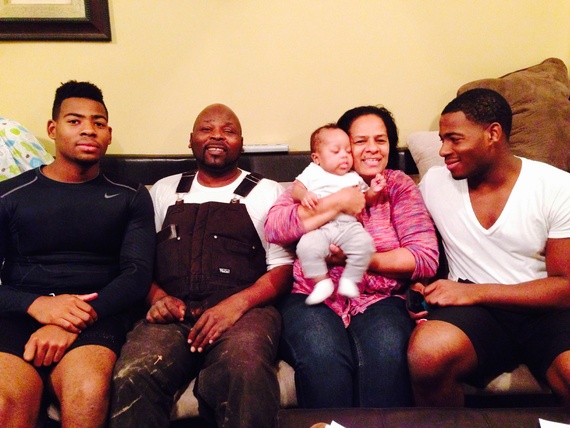
The Sanders Family (Sharon Lerner)

But Tims, the former school board member, said he wished those urging school consolidation would "just leave us alone. Maybe that’s because I’m a sentimental fool, but I love Cleveland High School and I don’t want it to go away." And Maurice Lucas, president of the Cleveland School Board, who is black, testified that he thought a majority of black East Side alums would also object to consolidation out of loyalty to their alma mater.

Sanders’ parents, Mack and Lenden, who both graduated from East Side, don’t agree with that interpretation. They sent their children to East Side not because they feel it’s a better school—they don’t—but because they fear their children won’t be treated fairly at Cleveland High. Lenden Sanders believes that Muave, who was voted "Mr. East Side High" at the last homecoming and is likely to be East Side’s valedictorian this year, wouldn’t have a shot at that distinction at Cleveland High "no matter how good his grades are." Cleveland High has never had a black valedictorian.

Still, Lenden Sanders is dubious anything will change soon and was not at all surprised by the inability of the school district and the feds to agree on a desegregation plan. "The people over there, they’re not ready for a change," she says.

Maybe it’s because of his youth, but Muave Sanders is still optimistic, despite the lack of progress. "I thought it would happen before I got to high school," said the senior, who is planning to attend the University of Southern Mississippi. Despite this latest delay, Sanders is confident that one day all students will be together in a single high school in Cleveland. And when that true integration happens, he believes it will help students, whatever their color.

"Cooperating with other races is something you have to do when you get in the real world and go to work, he reasons. "So why not do that in high school?"
This story was produced in collaboration with The Hechinger Report.

This article was originally published at http://www.theatlantic.com/education/archive/2015/02/a-school-district-that-was-never-desegregated/385184/


06 Feb 15:40

No, We Won’t Sandwich the Bride: On Handling Gay Tokenism

by Tom Vellner
A.N

unitarians in rural places do this to lesbians

My boyfriend Danny and I were dancing at a bar in downtown Boston on a recent Saturday night — my hands on his waist, his draped over my shoulders — when I noticed a woman, a 20-something brunette, approaching us. Judging by the giddy look on her face, I knew what was coming.

“I just wanted to say that you guys are so cute,” she shouted over the loud music, out of breath after pushing her way through a sea of straight couples to reach us.

She placed her hand on Danny’s shoulder and grinned. I wasn’t sure if this was part of the act, or if she actually needed to steady herself. She was tipsy and struggling to walk in her black stilettos. We thanked her for the compliment and smiled awkwardly until she scurried back to her friends, looking pleased with herself, as if she had fulfilled her good deed for the month. Her group of seven was a rowdy bachelorette party, decked out in cocktail dresses, feather boas, and tiaras.

I had just finished telling a friend beside me about our newest fan when I noticed she had already returned and was leaning in to Danny’s ear. He looked wildly uncomfortable. “My friend is getting married and we’re having a bachelorette party,” she said, pointing across the dance floor. “Would you guys sandwich the bride?”

Read more No, We Won’t Sandwich the Bride: On Handling Gay Tokenism at The Toast.

06 Feb 14:28

Marshawn Lynch and the Theater of Disobedience

by jsmooth@hiphopmusic.com (Jay Smooth)
06 Feb 12:48

The Brian Williams Story as Emblem of the Chickenhawk Era

by James Fallows
Brian Williams interviewing General David Petraeus at our First Draft of History conference in 2009 (Reuters)

I know Brian Williams slightly; have always liked his on-air presence; am glad he has participated in Atlantic events, like the one shown above; and am sorry for his current "our helicopter was hit" difficulties.

I don't mean to compound them, but I want to explain why I find the episode mystifying when it comes to human nature, and revealing about our current politics.

Mystifying: Memory is tricky. So is presentation-of-self—as David Graham explains in an item just now.

But with all such allowances, I still find it just about incomprehensible that someone: (a) whose professional background involves observing and reporting events, (b) who holds one of the handful of jobs in the world most reliant on trustworthiness, and (c) who knew he was talking to an audience of millions of people that would (d) include others with first-hand knowledge of the incident, would nonetheless (e) "misremember" what must have been one of the most dramatic and traumatic moments of his life, after (f) accurately reporting the event for the first few years after it took place, and (g) when the whole thing is only a dozen years in the past, not somewhere in the fog of distant childhood memory.

Again, narrative and recollection are strange. I think I clearly recall vivid or traumatic episodes in my life, starting with the time a pickup truck rammed the car in which I was riding with my mom as a pre-schooler in Jackson, Mississippi. I believe I'm sure that I was sitting in the front seat, in that era before seat belts or child safety-seats, and just missed hitting the windshield, being stopped by the padded dash. But maybe, this many years later, I'm fooling myself. There is no one else around who was there. Three or four times in the past 20 years, I've been in uncomfortable situations while flying an airplane. I think I could recount those episodes in second-by-second slo-mo detail. But I can't be absolutely sure.

What I find hard to imagine is telling a story I wasn't 100 percent sure of, in public, with the detail, drama, and certainty Williams used in his famous session with David Letterman less than two years ago. The relevant part starts at around time 3:40. It is worth watching the few minutes that follow, knowing what we do now. (This video has the bonus of Italian subtitles.)

I try to put myself in this situation, and I can't. Like every person I have misremembered things, and like many people I often exaggerate them. But in circumstances like this? Where you know that other witnesses could be listening in? (To spell it out: Everything that appears in our magazine is super-fact-checked, and any residual errors are despite our best efforts. Things I put on this web site are not checked the same way, but I know that anything I write is subject to someone writing in and reporting, "Hey, I also know about that episode, and it didn't happen the way you say.")

* * *

Revealing. Of the various commentaries on this issue I particularly recommend today's note by Andrew Tyndall, at his Tyndall Report. He says, as I would, that the misremembering is strange but not of huge consequence in itself, especially after Williams's apology. Then he makes the political point. He mentions my Chickenhawk article, but I would agree with him even if he hadn't. I've added the emphasis:

This particular fib that Williams chose to tell—to identify himself all the more closely with the perils soldiers face in battle—derives from his underlying editorial judgment to offer instinctive support to the members of the uniformed armed forces ... And it is not only journalists that exhibit such "instinctive support," which is in truth a mere euphemism for "kneejerk adulation." Anyone who attends a major league baseball game observes the same unquestioning endorsement of the uniform and those who wear it.

Jim Fallows of The Atlantic recently observed that such "reverent" solidarity with our troops acts as a ring-fence that protects the entire military-industrial complex from the scrutiny it deserves. So the editorial importance of the fib Williams told is not only that it displays a reflexive desire toward identification with the military; it also represents his own newscast's self-disqualification as a dispassionate journalistic observer of the Pentagon's role in the domestic body politic and the nation's foreign policy.

I don't know what more Brian Williams can or will say about his own re-rendering of history. I do think, with Tyndall, that the particular way he re-presented himself says something about our times.

This article was originally published at http://www.theatlantic.com/politics/archive/2015/02/the-brian-williams-story-in-the-chickenhawk-era/385218/


05 Feb 21:09

#657: Asshole-to-English Translator: “You just like leading guys on” = “I am a creepy asshole who doesn’t think you are allowed to say ‘no.'”

by JenniferP

Hello Captain!

Something has been bothering me for a long time – I have been accused of “leading guys on.” When this happened in college and grad school, I shrugged it off because the guys who would accuse me of this were always ones that took any female attention as romantic interest in them or they had a crush on me, but I had told them, usually several times, that I was not interested in them romantically, only as friends.

I am a friendly, smiley person who is easy to talk to/confide in (which is good since I am a healthcare provider now), so I am guessing that helps lend to their idea that I am romantically interested in them. But if they paid attention, they would see that I am like that with everyone! However, I do make a point of not flirting at all, not touching them in any way, and only meeting with them in groups to avoid any accidental messages going through to guys that I suspect have interest in me. 

But I feel like it keeps happening! And it is really starting to make me angry because I am trying to make professional connections (and hopefully friends!) and I am so tired of guys coming onto me out of nowhere or when it is clearly inappropriate.

For example, I went to a business lunch with two professionals. The second person never showed up, so we had some drinks and chatted. We talked about our relationships a bit (me = my boyfriend is awesome, him = having a child completely changed his life and marriage). We went back to his office to talk more (business, I thought), when he said, “if I was younger, I would have thought that you coming back to my office meant you wanted to sleep with me.” I was shocked. I wrapped up the conversation and ran.

Something similar happened with another healthcare provider. We were exchanging treatments, and because he was so easy to talk to, I ended up confiding much more in him than I usually would with someone. He ended up confiding his marriage problems to me and a few sessions later, he stated that he “could not be alone with me” because he was “afraid something he would regret would happen.” I assured him that I would never cheat on my boyfriend, so he had nothing to worry about from me, but I respected his wish to stop our exchanges. I was upset about this for a few weeks because I thought I had finally found a new friend to talk about our practices and daydreamed about double dates with him and his wife.

There is a third guy with the same basic thing of us hanging out, him coming onto me when I thought we were just friends, me having to leave ASAP, and then never talking to him again AND actively avoiding seeing him (which means I have to skip professional events I would like to attend but not enough to risk seeing him).

Both times, these guys were married AND we had talked about my wonderful boyfriend. I know they are unhappy with their marriages, but I am clearly happy with my relationship, and even if I wasn’t, I would never cheat and I really resent the implied accusation that I would do so. With the unmarried third guy, the same still stands because he knew about my boyfriend.

My boyfriend only knows about what happened with the third guy because I was so distraught over it (it was actually the first event). He said that I am too nice and naive. I know I can be pretty oblivious when reading signals that are related to me (it’s so much easier to observe what’s happening with other people!), but I am actively doing everything I can think of to avoid sending misleading signals and avoiding “compromising” situations.

What am I doing wrong? I can’t possibly be leading every guy on, can I?

Thank you for reading (and thank you for all of your previous posts!),
Not Leading Them On (On Purpose Anyway)

Dear Not Leading Them:

“You just like to lead guys on” is something pushy assholes say when their boners of wishful thinking meet the fact that you are an actual person who is separate from them, a person with choices and boundaries. They want to transfer their embarrassment and disappointment at being rejected to you and make you think that everything is your fault somehow.

That’s it. That’s what it means. If someone says that to you (or anyone reading this), I want you to stop and think, “What is this person trying to get from me? Why is this person trying to manipulate me?” and tread very carefully, like, check where you are for exits, get out of the same room as them as quickly as possible, and start psyching yourself up to possibly have to make a scene. Get in touch with your anger, let the Dark Side of the Force fill you. I am not saying anything bad will happen, necessarily, or that you should be afraid of all men. But this phrase and the concept of women leading men on (by ignoring and/or rejecting them? How? What?) is SUCH a Shibboleth for me for identifying a sexist and manipulative person that you don’t want in your life.

You have a “series of pushy assholes” problem and not a “anything you are doing wrong” problem. You are friendly, and young, and probably very likely nice to look at, and above all female, and they are choosing to take that to mean something that it does not.

Your “wonderful, awesome” boyfriend is being a douche about this also, by making it a “you are too nice and naive” problem rather than a “gross dudes be creepin'” problem. It is not your fault, and by implying that it is, he is tacitly endorsing how these men see and treat you.

It sucks, I am so sorry. Next time someone says “If I was younger, I would have thought that you coming back to my office meant you wanted to sleep with me,” you are cleared to say “Ew. Why would you think that, and why would you say that out loud?” And next time your boyfriend says the thing about being naive, say “Wow, that is insulting, and not helpful at all.”

See also: “That’s inappropriate.” “Your wishful thinking does not make it so.” “I have no interest in that.” “That makes me very uncomfortable.”

You are not responsible for these dudes or their feelings. You did not cause these interactions and you are handling them just fine by shutting it down getting out of there.

Unfortunately, solving the “Too Nice” problem just replaces it with the old “Women Who Don’t Love Being Objects Are Mean Bitches” double-bind, because assertiveness from women is punished – you become “abrasive,” “touchy,” “no sense of humor,” etc. Sexist men will put friction and social costs around you not playing the role they wanted you to play to try to get you to stay in that role. Sometimes they put violent costs around it (harrowing stuff at that link, so dive in only if you are in the right headspace).

Story:

When I was 22 I worked at a very crunchy non-profit organization for a while. We brought on a new 45+ year old finance manager who had a dorky, Ned Flanders-y aspect. I noticed that whenever I made copies in the copy room he would stare at me from his office or make a reason to come chitchat with me. I mentioned to my coworkers that he was sorta creepy. He hadn’t done anything I could put my finger on, but something was off about our interactions. They laughed and told me I was imagining it, that the dude was nice and just trying to fit in and be friendly. He would often buy everyone lunch, or bring in baked goods from home – he definitely went out of his way to be liked by everyone.

When he started to offer me rides home after work, and I said “No thanks, I like to walk” and he said “I know, I’ve seen you. You’re right on my way, though, are you sure I can’t give you a ride?” I told my other coworkers about it, like wasn’t it kind of weird that he knew where I lived? They made fun of me for being so suspicious of a nice guy and for having a big ego to think that he would be into me. “He processes your paychecks, right? They have your address on it. Stop reading into everything.

When I started seeing his car following me as I walked home, I told them about it, and they laughed and told me I was imagining it. Plus, didn’t he have a wife? They were pretty sure he had a wife. When I started to have dreams where he was literally Satan, that was also a funny joke, like, hahaha, the nicest person in the world, and Jennifer thinks he’s the Devil!

When he started pulling up alongside me on rainy days, asking me to get into the car, I walked faster. I took weird routes through alleys and yards so he could not follow. One day I screamed at him to leave me the fuck alone and took off running. When I got home his car was parked across the way, watching, waiting, wanting me to know that he knew where I lived. When I looked out the window to see if he was still there, he smiled and gave me a jaunty wave. My coworkers found this all very hard to believe. Surely he was just trying to be nice? It was raining! He wanted to make sure I got home okay!

I avoided him at work and started changing the times I arrived and left to make them not match up with his patterns.

Then my direct deposits started failing, due to some “bank error,” so, surprise!, I would have to come pick up my checks from him, personally, which always meant a bout of leering or him asking me what he’d done to make me not like him, but with authority behind it, like, “Jennifer, don’t you think it’s unprofessional to treat me so rudely, sit down, let’s talk through this like reasonable people.” He’d force me, in the office, into the position of looking cold and rude when he would try to make a bunch of small talk and  I would say “Can I have my check please? Can I have it now, thanks? My check, give it to me.” Poor dude, he’s so professional and nice, and that crazy bitch we hired is so rude to him! I guess they never taught her professional behavior at Georgetown, what do you want, hiring kids right out of college, etc. etc.

Some coworkers made fun of me for my “crush” on this dude. After all, wasn’t I always in his office chatting? He was always so smooth and unruffled, and yet whenever I had to interact with him I was hostile and “crazy.” In a romantic comedy isn’t “violent hate” always a sign of “secret lust”? Hilarious, right? He would join right in on this, “Aw, everyone knows Jennifer has a little crush on me, but let’s not embarrass her, she’s so young.”

Then I got another job and left, THANKFULLY. After I left, he embezzled a ton of money from the organization and disappeared. That was a problem that they could wrap their minds around. But months of leering and following me? All in my head, I was leading him on, I was the one with the crush, etc. He was so good at keeping everything he did at work on just this side of the line of plausible deniability, and the following, and weird stuff he did was carefully orchestrated to make me sound unreasonable and crazy. I don’t know if he would have assaulted me, but I do know that he got off on making me uncomfortable and getting away with it and making it seem like it was all in my head.

I’m friends with one person from that job to this day, the one person who, after things escalated to the point where he was following me in his car, believed me. Fuck the rest of them, and fuck that entire place forever.

Letter Writer, find some other women where you work, and hang out with them, and find a place (a journal, trusted friends, etc.) where you can get really angry about the way these dudes are treating you. Look out for opportunities to professionally network with women in your field, and if you can, find a fellow woman to go to those professional events with – it’s not fair that you should have to give those up just because your rejected suitor is sulking. It’s great to be a kind, friendly person, but you do not have to be nice to people who disrespect you at work and then try to make it your fault for being female. If a networking bridge gets burned by someone expressing attraction to you and you saying “No thank you!,” it’s not you who burned it.

If I could offer you one slightly more concrete piece of advice, it seems that some of these recent stories have one element in common, in that the dudes start discussing their marriage with you as a prelude to hitting on you. If you started treating “older dude at work starts telling me his marital stuff,” as a red flag, and change the subject back to work stuff as soon as possible, it *might* unfairly cut you off from deepening a good friendship, but also you *might* be able to derail some of the hitting on stuff a bit sooner. To be clear, you didn’t cause anything that happened by not doing this in the past, you weren’t leading them on by not shutting this down, and it’s not a guarantee of anything. But when I hear an older man open up about his marital problems to a younger woman that he knows from work, my suspicious & humorless bitch-senses start tingling because in my experience he is spinning a justification for himself and for you about why it won’t be wrong when he propositions you later. You think you’re getting to know each other as friends, he thinks he’s laying the groundwork. See what happens if you NOPE-out of these conversations, like, interrupt him with “Well, that’s sad to hear, so, about WORK TOPIC OF WORK-WORK-WORK-Y-NESS” and DON’T share anything about your own relationship in return. The man who goes with the work-y subject change with the least amount of resistance is the person who in the long run is most likely to be good friend and colleague material, because he understands boundaries.

TL;dr Sexism: It sucks.

Comments closed on Feb. 8.


05 Feb 16:34

The 21-Mile Walk to Work

by David A. Graham
Steven Senne/AP

America needs more people like James Robertson. Every place needs more people like James Robertson. But that doesn't mean his story isn't disturbing.

The 56-year-old Detroiter was the subject of a profile in the Free Press over the weekend. He walks 21 miles every day, part of a 23-mile commute from his home in the city to his factory job in Rochester Hills, a suburb. He's been doing it five days every week, ever since his old Honda bit the dust. His route takes him through rough neighborhoods and he leaves work well in the middle of the night. This being Detroit, he also reckons with snow drifts and sub-freezing temperatures regularly during the winter.

But Robertson is impressively upbeat about it:

"I sleep a lot on the weekend, yes I do," he says, sounding a little amazed at his schedule. He also catches zzz's on his bus rides. Whatever it takes to get to his job, Robertson does it.

"I can't imagine not working," he says.

There are some fringe benefits. Robertson's boss' wife feeds him delicious home-cooked Southern meals. Still: pretty grueling.

The reaction has been appropriately positive. Robertson was already something of a role model for his co-workers, and readers responded to the story generously, donating $70,000 and counting to help him get a new car. That's great for Robertson. But this isn't a feel-good story—it's a story about policy failures, structural economic obstacles, and about what it takes to keep working despite those challenges. Robertson is no doubt deserving, but it'll take larger changes to help other people who face similar struggles.

Transportation

Let's start with the obvious problem here: lack of mass-transit options. Robertson used to drive to his job, but his 1988 Accord gave out 10 years ago. In car-obsessed Motor City, that's bad news. Robertson's $10.55 per hour pay is more than a buck-fifty higher than the living wage in Wayne County, but it's still not enough for him to get a new car and insure and maintain it. The Freep's Bill Laitner reports:

Robertson's 23-mile commute from home takes four hours. It's so time-consuming because he must traverse the no-bus land of rolling Rochester Hills. It's one of scores of tri-county communities (nearly 40 in Oakland County alone) where voters opted not to pay the SMART transit millage. So it has no fixed-route bus service.

Once he gets to Troy and Detroit, Robertson is back in bus country. But even there, the bus schedules are thin in a region that is relentlessly auto-centric.

Detroit has never been big on mass transit—car companies helped hasten the demise of streetcars—but it's gotten worse over the last five years. Even as the city shrinks and people struggle, there are fewer options for transportation. But with unemployment rates inside the city at nearly 25 percent, workers have to leave the city limits for work. The Detroit area overall has a much rosier 7 percent unemployment rate. (A transportation official told the paper that Robertson might qualify for a special service for low-income workers.)

Mobility

That, in turn, points to one of the big problems in the economic recovery: While there were often jobs available in the United States, they weren't where workers needed them. It's all well and good to say that people should move, but of course it's not that easy. People are tethered by underwater mortgages, family ties, and the high costs of relocations. The Detroit metropolitan area is a microcosm of geographic inequality. Even as the city suffers a shrinking population, limited services, water shutoffs, and high crime, adjoining Oakland County, where Robertson works, is booming.

The county has been run for more than two decades by L. Brooks Patterson, a flamboyant and effective executive. As The New Yorker chronicled, Patterson has gone out of his way to cut the county off from Detroit, stopping regional infrastructure projects and generally bashing the city. Oakland County is pricey to live in, but it's where the jobs are, so workers like Robertson have to go through heroic measures to get to them. The alternative is essentially not working.

Crime

And what of the dangers Robertson encounters? "I have to go through Highland Park, and you never know what you're going to run into," he said. "It's pretty dangerous. Really, it is (dangerous) from 8 Mile on down. They're not the type of people you want to run into. But I've never had any trouble." That's not actually true—the stoic Robertson didn't want to discuss it, but his boss told the reporter he'd been mugged. It's especially dodgy since Robertson gets there after 1 a.m. Detroit has the highest murder and violent-crime rates of any major city.

Health

Robertson's trek is saintly, but like many saints who practiced bodily mortification, it can't be good for him. "He comes in here looking real tired—his legs, his knees," a coworker said. He also doesn't get enough sleep, for which he compensates by drinking 2-liter bottles of Mountain Dew or cans of Coca-Cola, filled with unhealthy sugar—although given his walk, the calories maybe aren't a big factor. What happens if Robertson's knees or some other part of his body give out prematurely? Presumably he'd end up relying on disability benefits.

* * *

Detroit's citizens have fallen victim to an impressive nexus of forces, and no single agenda can fix all of the problems they face. But Robertson's travails offer a good window into the sorts of pressures someone faces if they want to maintain employment doing an honest day's work. Workforce participation in the United States has seen a steep, consistent downward drop over the last few years.


Workforce Participation, Ages 16 and Older

BLS

This chart isn't as simple as it looks—people aging out of the workforce are a major factor. Still, one of the things that makes Robertson's story so stunning is the context of fewer Americans going to work.

This isn't just a threat to poor Americans or poor Detroiters. It's a threat to the American economy. The more workers there are, the better off the nation is. But not everyone can do what James Robertson does every day; he's clearly a rare breed. The problem isn't just that people who don't work aren't contributing to that; it's that there's also the cost of more and more people drawing federal disability benefits. Some are skeptical that the ballooning number of recipients are really disabled. Setting that question aside, however, it's a drag on the nation to have a huge number of Americans who might be able to work but are unable to find employment nearby, drawing assistance instead.

It's no surprise that James Robertson has become a viral story. But the amount of effort required to punch a clock shouldn't be so unbelievable it earns national headlines.

This article was originally published at http://www.theatlantic.com/politics/archive/2015/02/james-robertson-detroit-daily-commute/385098/


05 Feb 15:04

NomNom Cat Bowl

by swissmiss

hepper cat bowl

I am not even a cat person but yet I am getting excited over this smartly designed cat bowl by Hepper. The tray forms a moat around the bowls that catches whatever falls to the side.

04 Feb 15:53

Who Wouldn't Want to Marry a Jew?

by Olga Khazan
Members of the Jewish People's Committee protest outside the German Consul General's offices in New York City on June 24, 1938. (Murray Becker/AP)

A few months ago, for some reason, an old Atlantic story called "I Married a Jew" resurfaced and went viral, prompting much laughter and chagrin (so much so that we had to append an editors’ note calling attention to the year it was published: 1939). So much has changed since this was written that it’s now basically an after-midnight SNL sketch in magazine-article form, from the bizarre headline on down. Why would anyone not want to marry a Jew? (Say I, a half-Jew.) Seventy-five years later, the “nice Jewish boy” is already a stale joke about marriage.

The woman, who is blessedly “Anonymous,” writes that she is an American of German descent who frequently finds herself “trying to see things from the Nazis' point of view,” much to the “confusion of my husband.” Kind of understandable, since he’s Jewish.

Lest we forget, though, this was a time when Jews in America couldn’t join certain fraternities or buy houses in specific zip codes.

What’s astonishing about this piece is how the author manages to be wrong about almost every single thing she mentions. Einstein had his “windy theories”; Picasso is “not great.” The writer, possibly the world’s first-ever Shiksplainer, as Jonathan Chait calls her, is also shockingly prejudiced, her “progressive” life-choice notwithstanding. She calls hers an “interracial marriage” and accuses her husband of “lapsing into his Jewish ways” (??) around his family. Her mother thinks “the Jews are essentially an Oriental race” ... to which a Reddit user quipped “this does explain the stereotype about us loving Chinese food.”

Let’s just say it was a bad year to cast sunny predictions about the future of Jewish-Christian relations. The author tries to convince her husband, Ben, that “a hundred years hence the world will no more call Hitler a swine for expelling the Jews than it does Edward I of England,” but Ben refuses “to take the long view.” The long view would turn out to be much more horrific than either of them imagined.

For all its cringeworthiness, this story accomplishes a lot: It’s a good cautionary tale about sensitivity and judgment calls for modern journalists, a powerful remembrance of how much more hateful our world was just a few generations ago, and yet it still contains a plus ça change element.

It’s striking, for example, the way this section echoes current conversations about European Muslim identity in the wake of the Charlie Hebdo tragedy: “The Jews must come off the fence and make up their minds whether they want to be primarily citizens of, say, France or England or primarily citizens of Jewry. They cannot be Jewish in their homes and French or English outside. They cannot pledge their pride and loyalty to Israel and expect Frenchmen and Englishmen to treat them exactly like other Frenchmen and Englishmen.”

Few in the U.S. would bat an eye at the kind of marriage described in this article today, but both anti-Semitism and Islamophobia continue to be strong forces in Europe. It will be interesting if, “a hundred years hence,” we will wonder why France ever debated whether Muslim women should be allowed to wear burqas or why people the world over found photos of Jews and Arabs kissing to be unusual.

This article was originally published at http://www.theatlantic.com/international/archive/2015/02/who-wouldnt-want-to-marry-a-jew/385097/


04 Feb 15:42

Questions I Have About The Harper Lee Editor Interview

by Mallory Ortberg

You have probably heard, by this point, the news that Harper Lee is finally releasing a companion novel for To Kill A Mockingbird after over 50 years. Pretty exciting news, right? Her publisher has probably had a lot of time to figure out their publicity rollout and has also definitely made sure that she wants them to publish said companion novel, yes? Especially since Harper Lee has always made it very clear that she would not release another book, and since Harper Lee is currently in a nursing home, and since her sister and lawyer died last year, and several third parties have begun suing one another for the right to use Harper Lee's name...you would definitely think they would be sure to have all their ducks appropriately rowed before making such a significant announcement, right?

At the very least, they would have talked to Harper Lee about it, right? To get her, you know, permission?

Who knows! Yesterday Vulture ran one of the most confusing interviews I've ever seen from Harper Lee's editor, Hugh Van Dusen, who doesn't seem to know what room he's in at the moment:

Why is this book finally showing up now, after all these years?
The version I was told was that the book was in either a safe deposit box or a bank vault, and it was wrapped in a manuscript of To Kill a Mockingbird and nobody noticed it for all these years. I don’t know this for a fact, but one must imagine that Harper Lee — we call her Nelle — just never told anybody about the book and then forgot it existed.

Read more Questions I Have About The Harper Lee Editor Interview at The Toast.

04 Feb 12:54

What I Learned From Following a Different Dating Guide Every Month

by Melissa Pimentel
A.N

Let your relations with men leave memories of seething fury and hatred rather than embarrassment.”

by Melissa Pimentel

LBTB_IMAGE

A few years ago, frustrated by my inability to meet a normal, non-psychopathic man with whom to have regular sex, I decided to turn my love life into a sociological experiment. Every month, I followed a different dating guide and recorded the effect it had on my test subjects (i.e., guys I was dating). The experiment, which started as a blog and became the basis for my first novel, was enlightening and distressing in equal measures. Here’s what I learned during my time as a low-rent Margaret Meade:

1. Following The Rules is basically like getting into a time machine and traveling back to the 1950s, but without the easy access to Valium. No eye contact, phone calls, loud voices, or strong opinions allowed for ladies, thanks. It works on exactly the kind of guy you’d expect: douchebags.

2. A diet of canned pineapple and cottage cheese is not conducive to an active sex life. Or even a dormant one. Most of the other advice in Sex and the Single Girl, a 1960s guide for swinging gals-about-town, was surprisingly sound, but it was nutritionally suspect.

3. If you’re looking to get laid, look no further than The Flappers. The bestselling guide of the 1920s encouraged women to have several lovers at once and to flirt with everyone, always. The best piece of advice? “Let your relations with men leave memories of seething fury and hatred rather than embarrassment.” YES.​

0 Comments