Halliday Glasses have boarded the smart spectacles hype train, featuring “proactive” AI assistance and a near-eye display that shows information directly in the user’s field of view. Wearable technology startup Halliday says its flagship eyewear will be available sometime after CES. Shipping is expected to start “by the end of Q1 2025,” and pricing will be set somewhere between $399 and $499 — pricier than display-free competitors like the $299 Meta Ray-Bans and Solos AirGo Vision.
Halliday says the “DigiWindow” located in the upper right of the frame is the world’s smallest and lightest near-eye display module and can display information to the wearer “regardless of whether they have perfect eyesight or require vision correction.” The display appears as a 3.5-inch screen in the upper-right corner of the user’s view with minimal obstruction, according to Halliday, and remains visible in bright sunlight.
Image: Halliday
The near-eye display is located in the upper-right frame. Checking messages or notes might look a little odd to other people if you need to keep glancing up.
The glasses’ built-in display works alongside an AI assistant that can anticipate what users need by analyzing conversations, answering questions, and providing additional insights without requiring a prompt. “For instance, during a meeting, it can proactively answer complex questions, summarize key discussion points, and generate summarized meeting notes afterward,” Halliday said in its announcement.
The AI features require the glasses to be connected to a smartphone via Bluetooth, according to Halliday, but the company hasn’t mentioned what AI model it uses or if there are additional costs involved. Features include real-time AI translation in up to 40 languages, live navigation for directions, voice-to-text notes transcription, and the display of synchronized lyrics when listening to music. Users can also discreetly view and reply to messages, create audio memos, and display notes like a teleprompter.
The near-eye display is supported on both prescription lenses and if no lens is used at all. The displayed information isn’t visible to other people and can be controlled using either voice commands, frame interface controls, or a ring that features a built-in trackpad.
Image: Halliday
The Halliday Glasses are available in either black or tortoiseshell.
Image: Halliday
Information about the trackpad ring is limited, but it seems like a neat way to control the display features without messing with the actual glasses.
Halliday says the glasses weigh 35 grams (about 1.2 ounces), provide up to eight hours of battery life, and come in two color options: matte black or tortoiseshell. We’ve asked Halliday for more information about the trackpad ring, such as how / if it’s charged and any potential options for color and sizing.
Pour les besoins d’un projet au boulot, j’ai récemment dû me pencher sur le format DICOM. Mon rôle était de comprendre comment se structure un fichier DICOM afin de le vulgariser aux collègues qui bossent sur le projet pour qu’ils puissent générer des fichiers DICOM valides, lisibles par les logiciels d’imagerie existants.
Generative AI models have reached a baseline capability of producing at least a passable video from a single image or short sentence. Companies building products around these models are claiming that anyone can make a snazzy promo video if they have some images or recordings — and videos usually perform better than static images or […]
Artificial intelligence harms, problematic social media content, data privacy violations—the issues are the same, but the policymakers and regulators who deal with them are about to change.
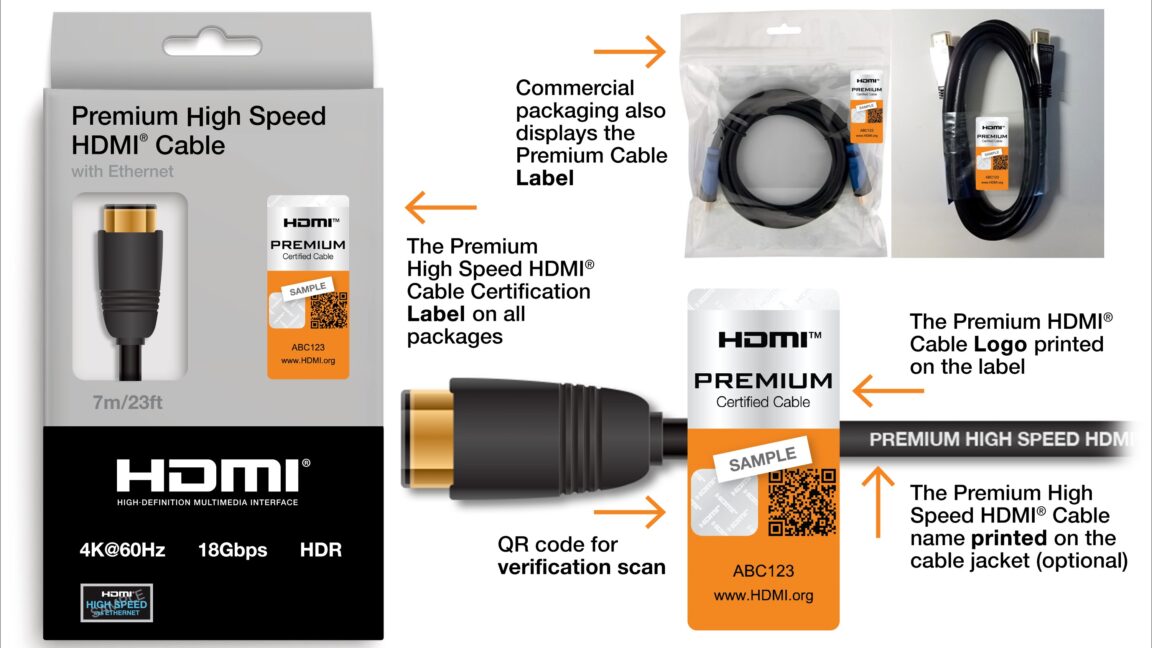
We've all had a good seven years to figure out why our interconnected devices refused to work properly with the HDMI 2.1 specification. The HDMI Forum announced at CES today that it's time to start considering new headaches. HDMI 2.2 will require new cables for full compatibility, but it has the same physical connectors. Tiny QR codes are suggested to help with that, however.
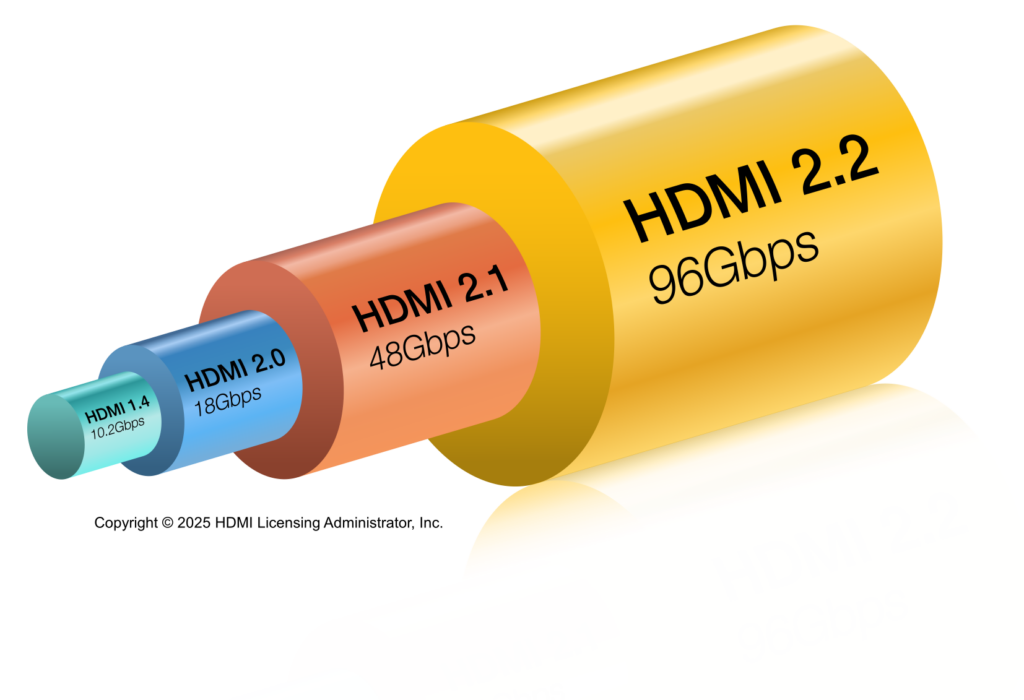
The new specification is named HDMI 2.2, but compatible cables will carry an "Ultra96" marker to indicate that they can carry 96GBps, double the 48 of HDMI 2.1b. The Forum anticipates this will result in higher resolutions and refresh rates and a "next-gen HDMI Fixed Rate Link." The Forum cited "AR/VR/MR, spatial reality, and light field displays" as benefiting from increased bandwidth, along with medical imaging and machine vision.
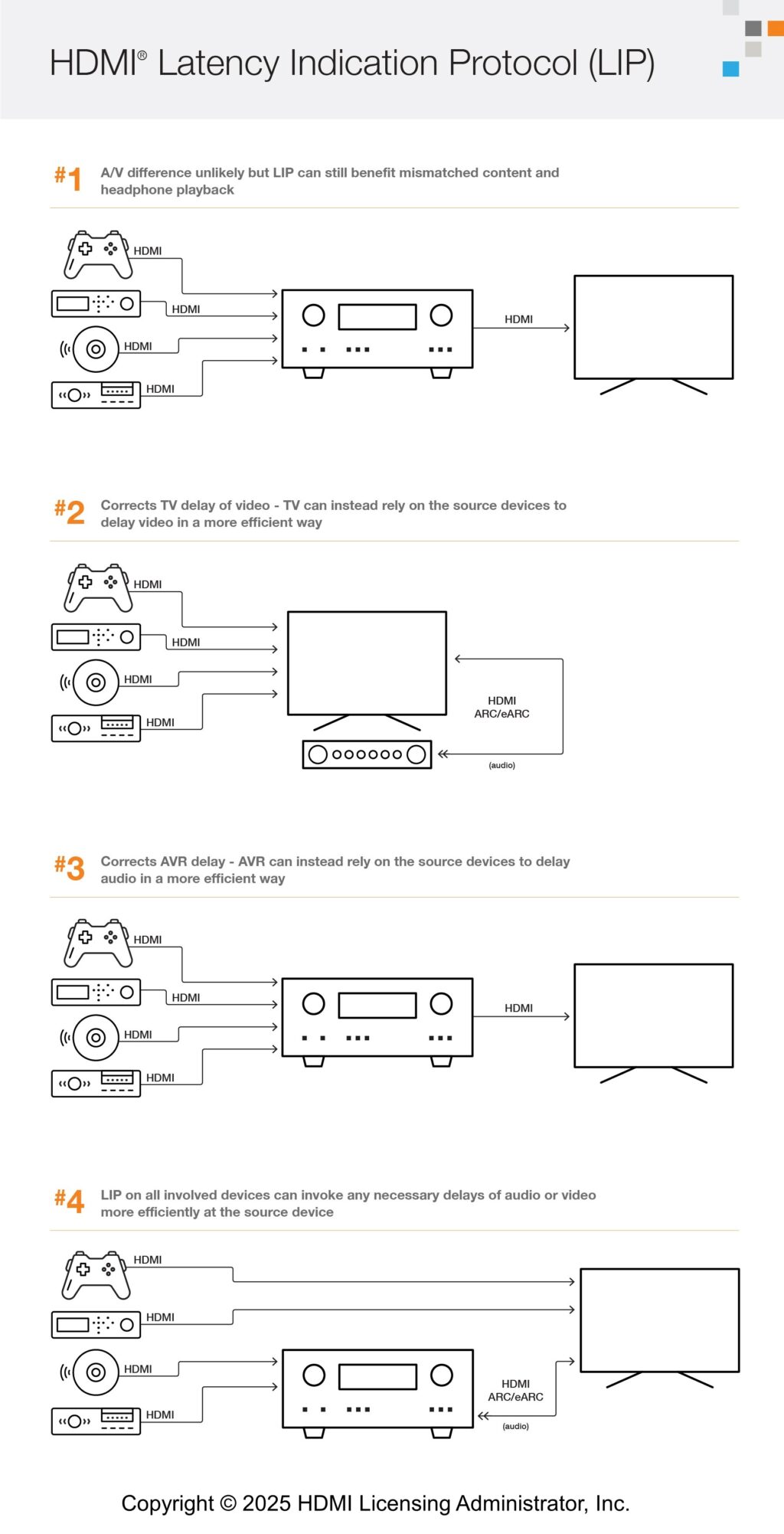
Examples of how HDMI 2.2's synchronization abilities will benefit home theaters.
A visualization of how far HDMI has come in bandwidth, from 1.0 to 2.2.
A bit closer to home, the HDMI 2.2 specification also includes "Latency Indication Protocol" (LIP), which can help improve audio and video synchronization. This should matter most in "multi-hop" systems, such as home theater setups with soundbars or receivers. Illustrations offered by the Forum show LIP working to correct delays on headphones, soundbars connected through ARC or eARC, and mixed systems where some components may be connected to a TV, while others go straight into the receiver.
The next time you pass a farm tractor tilling a field, check to make sure there’s somebody in the cab. Chances are, there won’t be.
Today at CES, John Deere announced a host of new fully autonomous vehicles that it says will revolutionize farming, landscaping, and construction. Among the new vehicles the company will have to show off are an autonomous tractor, a robot lawn mower, a crewless dump truck, and another driverless tractor, but this one designed specifically for orchards.
“We’re taking our tech stack, which is nearly three decades in the making, and we’re extending it to more of our machines to safely run autonomously in these unique and complex environments that our customers work in every day,” said Jahmy Hindman, chief technology officer at John Deere.
“When we talk about autonomy, we mean full autonomy,” he added. “No one’s in the machine.”
It’s been three years since John Deere unveiled its first autonomous tractor. Commercial deliveries began in 2022, and now Hindman says that many farms have put the company’s robot equipment to work. “Those tractors are already being used by farmers to prepare the soil for planting in the next year,” he said.
Now the company is doubling down on autonomy, at a time when other vehicle manufacturers are cutting their losses. John Deere says its autonomous machines can help farmers address labor shortages, while also meeting the growing demand for food, infrastructure, and housing.
Tractor or computer?
The company’s second-generation tractor is designed for large-scale agricultural operations. And in order to ensure a full, 360-degree view of the world, John Deere added 16 cameras all around the cab of the tractor that provide for triple overlapping feeds.
The images are then sent for processing to an onboard Nvidia GPU because John Deere wanted to be sure the tractor’s edge AI system was doing all of its predictions and planning on the vehicle itself, and not up in the cloud.
“This ensures that the machine is running safe and reliable,” said Willy Pell, CEO of John Deere subsidiary Blue River Technology, which designs machine learning systems for agricultural operations.
John Deere’s first-generation tractors were designed specifically for the slowest and easiest works, which is fall tillage with a chisel file. The second-generation system will be for a broader set of operations, with John Deere setting the goal for a fully autonomous farming system for corn and soybeans in the US by 2030.
Dusty the dump truck
John Deere’s next robot vehicle is the company’s first for construction sites: an articulated dump truck (ADT). The heavy-duty truck is 34 feet long, 12 feet tall, and can carry over 92,000 pounds of construction materials — the equivalent of seven African elephants — in its front bucket. John Deere’s executives have given it the nickname “Dusty.”
The job of a dump truck operator in quarries and other sites is tough but also repetitive and boring. By removing the driver, John Deere hopes to improve safety while also helping improve productivity.
The ADT can carry the weight equivalent of seven African elephants in its front bucket
The ADT operates using the same tech stack as its farming siblings, with the added ability to dynamically change its routing information to get around people and other vehicles on narrow roads through construction sites. The truck can also receive directions from remote operators about location and timing — but that doesn’t make it remote-controlled.
“It’s unsupervised, it’s capable of making decisions and operating safely on its own,” said Maya Sripadam, senior product manager at Blue River Technology. “So it’s segmenting the world into different classes, it’s using StarFire GPS to localize itself on the road, and it’s navigating between a load zone and a haul zone.”
In the orchard
John Deere also revealed another autonomous tractor, this one designed to run on diesel for pulling air blast sprayers through nut orchards. Sprayers are used to apply pesticides, growth regulators, and nutrients to ensure a healthy crop.
Nuts are a huge business in the US, especially in California. And with 80 percent of the world’s almond crop grown in the Golden State, labor shortages have proven to be a perennial problem.
Workers typically drive up and down endless rows of orchards up to 10 hours a day at 2.5 mph. Every single tree needs to be sprayed six to eight times per year, with work starting in February and going through July or August — right into the hottest times of the year.
Nuts are a huge business in the US, especially in California
“The work is exhausting and it’s repetitive,” said Igino Cafiero, director of High Value Crop Autonomy, “but it’s also absolutely essential to protect the trees from pests and disease.”
But nut orchards, with their dense canopies of trees, are a much different environment than corn or soybean fields. John Deere had to add lidar laser sensors to help improve the tractor’s sensing and guidance capabilities because GPS is often obstructed. Aside from that, the tractor uses the same second-generation technology stack as its tractors for field tillage.
Robo-scaping
The last machine John Deere revealed was an autonomous lawn mower for large-scale commercial landscaping jobs.
The all-electric mower features four pairs of stereo cameras, one in the front, one in the back, and one on each side. They’re positioned as high as possible on the machine to give a complete 360-degree view around the mower. That’s fewer cameras than the tractor or dump truck, but enough for the size of the machine.
A large office park or campus yard is very similar to a field or construction, in that it’s a “constrained environment” with much less chance for unpredictable behavior, Blue River’s Pell said.
“The use cases we have, the tech just really fits these environments so well,” he added. “And it’s combined with this deep customer pain around labor availability and quality that just makes all this the perfect time for everything.”
John Deere didn’t announce pricing for any of its autonomous vehicles, but past reports have noted that the premium over non-robotic equipment would be “significant” — perhaps as much as 10 percent. A regular 8R tractor and the 2430 chisel plow can cost as much as $500,000, which suggests an added $50,000 for an autonomous version.
That could irk some farmers, especially those at odds with John Deere over the company’s recalcitrance over self-repairs. The Federal Trade Commission is currently investigating whether John Deere used unfair practices related to the repair of its agricultural equipment.
“Pricing will vary based on specific products and configurations and will be shared at a later date,” John Deere spokesperson Diego Rivera said.
Doublepoint Technologies, une startup pionnière dans le contrôle par gestes, a lancé l’année dernière une application innovante pour smartwatch, permettant de contrôler divers appareils, tels que smartphones, tablettes, casques et téléviseurs. Cette semaine, lors du CES 2025, la société a dévoilé WowMouse, une application dédiée à l’Apple Watch qui permet de contrôler des Mac et […]
Dreame’s newest robot vacuum can climb up a step. It’s a start! | Image: Dreame
First, they sprouted arms; now, robot vacuums are getting legs. The latest bot from Dreame has two small legs that can push it up and over a step as high as 6cm (about 2.5 inches).
The Dreame X50 Ultra robot vacuum uses a system called ProLeap, which the company first demoed at the IFA tech show in Berlin, Germany, last year. Dreame calls the device’s appendage a “motorized swing arm” that “enables step navigation up to 6 cm in height.” But they’re clearly legs.
Image: Dreame
Don’t try and tell me those aren’t legs.
While this isn’t quite the stair climbing we’ve all been hoping for, it could be very useful for helping a robot vacuum reach more areas of your home without manual intervention.
Several current robot vacuums have a lifting capability that can help them get over high room transitions or bulky rugs; Roborock’s Qrevo Curv can handle 3cm, and Shark’s latest can go up to 2cm. Six centimeters is a big leap.
The Dreame X50 Ultra is the next generation of the company’s flagship X40 Ultra (which is our current pick for the best robot vacuum / mop hybrid). A robot vacuum with oscillating mopping pads, the X50 has advanced obstacle recognition and lidar navigation. It comes with a multifunction charging dock that can empty its bin and wash its mops with hot water and heated air. It can also automatically remove and reattach its mops. It will be available for $1,699.99 starting on February 14th. A presale featuring discounts starts on January 7th on Dreame’s website.
Is Samsung’s round robot finally ready to roll out of CES demos and into actual homes?
Ballie, the rolling robot that reemerged at CES last year, will be shipping to consumers as an actual product sometime in 2025. That’s what Samsung is saying at the moment, anyway. We were first introduced to Ballie at CES five years ago. Since then, the robot has undergone a more practical redesign, so maybe it’s really going to happen — but I’m still more skeptical than not.
Am I the only one who thinks those wheels look a bit flimsy? Maybe Samsung is intentionally building in a weak spot and planning ahead for whenever Ballie secretly amasses an army and turns against us.
Either way, Ballie is putting in yet another CES appearance here in Las Vegas. During Samsung’s First Look event last night, I watched the latest canned demo of the round bot. Its operator asked for information about a nearby attraction, The Sphere, which Ballie first projected onto the ground. But when more details and driving directions were requested, Ballie automatically turned around and beamed its image onto a nearby wall instead so that it would have more room to work with.
You can interact with Ballie using your voice and also by stepping on buttons projected onto the floor.
Ballie is smart enough to use the wall when you need a larger view.
From there, Ballie was asked to show a movie. It brought up Sony’s Uncharted, and when commanded to make the picture bigger, Ballie was smart enough to look for a wall that could accommodate the enlarged projection. The image wasn’t particularly bright; Ballie does better in that regard when beaming onto the floor immediately in front of itself. Don’t expect any ANSI lumen miracles from this rather small gadget. The built-in speakers were plenty loud, at least, and didn’t sound tinny.
Ballie looks to be an adequate, if average portable projector. But this one’s got wheels!
In another interaction, the person demoing Ballie held up a pair of wine bottles and asked the robot which would make a better pairing for his dinner, showing that Ballie has some visual AI powers at its disposal. Responses to most queries came within a couple of seconds without any hiccups. But again, I only saw a very controlled demo, and for all I know, it’s possible that this Ballie already had these answers programmed in. I trust absolutely nothing at this show.
Ballie did not advise its human of the Surgeon General’s recent warning about alcohol’s link to cancer. Pretty suspicious, if you ask me.
You communicate with Ballie through voice, and at times, the robot also projects virtual buttons onto the floor that can be stepped on to make a selection. (I’m curious as to what its accessibility features might entail.) Samsung has also given Ballie plenty of power over the smart home; you can tell it to control your lights and various routines.
It’s not quite Samsung’s original vision, but Ballie still has some charm.
And yes, it can control your smart home gadgets.
Samsung told outlets including CNET and TechCrunch, that Ballie is indeed rolling out this year. TechRadar got an even more specific “first half of 2025” timeframe. It’s possible Samsung could share more details during its CES keynote later today. As for price, your guess is as good as mine. What’s a fair amount to pay for a robot you’ll insist on showing everyone you know for a few weeks? That is, until you grow to resent Ballie for paling in comparison to the expectations set by BB-8 and WALL-E.
I can’t wait to find out how much Ballie will cost.
Nvidia CEO Jensen Huang holding the Project Digits computer on stage at Nvidia’s CES 2025 press conference. | Image: Nvidia
If you were looking for your own personal AI supercomputer, Nvidia has you covered.
The chipmaker announced at CES it’s launching a personal AI supercomputer called Project Digits in May. The heart of Project Digits is the new GB10 Grace Blackwell Superchip, which packs enough processing power to run sophisticated AI models while being compact enough to fit on a desk and run from a standard power outlet (this kind of processing power used to require much larger, more power-hungry systems). This desktop-sized system can handle AI models with up to 200 billion parameters, and has a starting price of $3,000. The product itself looks a lot like a Mac Mini.
“AI will be mainstream in every application for every industry. With Project Digits, the Grace Blackwell Superchip comes to millions of developers,” Nvidia CEO Jensen Huang said in a press release. “Placing an AI supercomputer on the desks of every data scientist, AI researcher and student empowers them to engage and shape the age of AI.”
Image: Nvidia
Project Digits looks like a mini PC.
Each Project Digits system comes equipped with 128GB of unified, coherent memory (by comparison, a good laptop might...
NVIDIA vient de remettre une couche lors du CES 2025 sur son système ACE (Avatar Cloud Engine), dont je vous avais déjà parlé et croyez-moi, ça va vous faire totalement oublier les PNJ scriptés de Skyrim (personnages non joueur) qui répètent toujours la même phrase !
Vous lancez une partie de PUBG, vous êtes en solo et vous aimeriez bien avoir un peu de soutien… Et bien, très bientôt, vous pourrez faire équipe avec un coéquipier propulsé par l’IA qui comprendra parfaitement vos instructions vocales et agira comme un vrai joueur.
Qualcomm continue de faire évoluer son écosystème ARM avec l’introduction d’une nouvelle puce Snapdragon X, pensée pour les ordinateurs portables grand public et abordables. Cette annonce vient enrichir la gamme Snapdragon X, qui comprend déjà les variantes plus performantes Snapdragon X Plus et X Elite. Disponible dans les prochains mois, cette nouvelle puce alimentera des […]
Hisense a marqué un grand coup au CES 2025 avec la présentation de deux nouveaux téléviseurs hors normes : le TriChroma LED TV 116UX de 116 pouces et le MicroLED 136MX de 136 pouces. Ces modèles incarnent les dernières avancées technologiques en matière d’affichage, repoussant les limites de la couleur, de la luminosité et de […]
Les robots aspirateurs franchissent un nouveau cap : après les bras articulés, voici les jambes mécaniques. Lors du CES 2025, Dreame a dévoilé son dernier modèle, le Dreame X50 Ultra, équipé de deux petites “jambes” qui lui permettent de franchir des obstacles de 6 cm de haut. Ce système, baptisé ProLeap, a été présenté pour […]
Withings has made a name for itself by making clinical-grade health technologies accessible to consumers. This week at CES 2025, the firm revealed two new products that fit the description nicely, one hardware and one software. BPM Vision is the more notable. It’s a travel-size home blood pressure monitor, complete with interchangeable arm cuffs. The […]
At CES 2025, German Bionic announced the Apogee Ultra, a new robotic exoskeleton it claims is the “world’s most powerful.” What did the system do to earn such a lofty title? It offers up to 80 pounds of dynamic lift assistance. That means a payload of 70 pounds feels more like nine to 11 pounds […]
Flic continue d’innover avec l’annonce au CES 2024 du Flic Duo, un bouton intelligent qui peut être monté au mur ou utilisé en main pour contrôler une variété d’appareils grâce à des gestes personnalisables. Ce nouveau modèle, présenté lundi, pousse encore plus loin l’intégration et la polyvalence dans l’univers des maisons connectées. Le Flic Duo […]
Lors du CES 2025, Withings a présenté deux nouveautés majeures dans son écosystème santé connecté : Cardio Check-Up, un service de télémédecine orienté vers la santé cardiovasculaire, et le BPM Vision, un tensiomètre à domicile doté d’un écran intelligent. Ces deux innovations s’inscrivent dans l’objectif de Withings de fournir des solutions complètes et utiles pour […]
Hello everyone! This is the first article directly from CES of my life. Yesterday it was the second press day before the big opening of the event, and the only big company explicitly talking about VR in its keynote was Sony that announced the XYN headset. Let me tell you about that announcement, and let me tell you about the hands-on I had… not directly with the XYN headset, but with its sibling model!
XYN announcement
Yesterday, Sony announced XYN, an ecosystem that lets creators bring real-world elements into immersive realities. This is the official announcement, that I recorded myself:
The part of the Sony keynote with the announcement of XYN
If you are a bit confused about what this means, you are not the only one. It is clear that there is an XYN headset, and it is clear that there is some framework that lets you record animations with Mocopi and bring them into XR or that lets you scan objects with your phone and put them into XR… but what exactly it is XYN is not fully clear. And I think this is made on purpose because when we “press” people started asking questions to Sony people on the show floor, they reiterated that this is still a work in progress, that the headset is still a prototype, and that even the XYN name is not a confirmed name for the device, but just a codename. Even the launch date of the headset and its specifications are currently undisclosed.
I can so summarize the announcement of XYN with “Sony will launch a headset and also facilities that help creators in bringing real world elements into XR, but it’s all still a big work in progress. The keyword for all of this is XYN“.
The XYN headset
Me hugging the mannequin with the XYN headset on
If you follow the XR news, you may have noticed that the XYN headset in the video looks very familiar: it is almost identical to the B2B-oriented device that Sony and Qualcomm announced last year, the one powered by the Snapdragon XR2+ Gen2 chipset.
The thing is: this new headset is actually a variant of that previous one. But while the previous model was dedicated to industrial use cases, especially in collaboration with Siemens, the new one will actually be targeted at prosumers and creators. Be careful that XYN won’t be dedicated to gaming, that is more a prerogative of PSVR 2, but to creators, or entertainment in general. Considering it features the Snadpragon XR2+ Gen2 and a 4K micro OLED per eye, I guess it will be quite expensive (my guess is a price between $1000 and $2000). And that’s why it can’t be for gaming: it can’t compete with the cheap price of the Quest 3. As for the launch date, it has not been revealed, but we have been hinted it is not very distant in time (it is not in 3-5 years, but much closer to now).
Sony XYN headset in a box and on a mannequin
Sony was very tightlipped about any specifications, so we only know about the chipset, the resolution, the fact that the display is flip-up, and that it supports mixed reality. We asked for other specifications, but we have been told that they can not be shared, also because the headset is still a work in progress. The only thing we have been hinted at is that the control scheme for this device will be different than the one of the industrial model (and I would say that it is a great piece of news, considering that the controllers of the industrial model are pretty bad as we’ll see in a while).
The only sheet of paper with the specifications we could find. There is not much written…
I have recorded a short video framing the headset from all sides, as much as I could. You can see it here:
The XYN headset showcased on the CES showfloor
Together with the above booth showcasing the headset (that no one could try), there was another booth showing the digitalization of a physical object into its 3D version, and then the third one of a guy wearing Mocopi and having its full-body movements translated to the 3D movements of a 3D avatar. This was to reiterate the concept of XYN being a solution for creators who want to work with immersive realities and bring physical elements into mixed reality.
Hands-on Sony industrial headset
Me trying the Sony industrial headset
There was a fourth booth that showcased the previous edition of the headset, the sibling of XYN, which is the industrial headset that Sony made for a collaboration with Siemens. And I have been able to go hands-on with it for the second time in my life after I had a first run with it at AWE US last year. This hands-on was not exactly what I was hoping for (I wanted to try XYN), but at least can give us some ideas about the pros and the cons of the device at this stage of development. Notice that I had just like 10 minutes with the device, so I can only report to you some quick first impressions and nothing more.
Design-wise, the industrial headset by Sony is not the sexiest ever, but being a device dedicated to B2B, it has not to be, since it is just important that is functional. I hope that the XYN version, since it is targeted at creators, will be a bit more good-looking. The choice of the black color in XYN instead of the gray of the industrial version is a good step in this sense. These are a few pictures I’ve taken of a device, to give you an idea about its appearance from all sides:
The headset was pretty comfortable, and the halo-fitting band made it rest pretty well on my face and my head. What I didn’t like much was that if I rotated my head quickly, the headset wobbled a bit, as if it was not very firm on my face. This is ok for industrial use cases, that do not require quick movements, but if this headset has to be used for other use cases, it had better feel more stable on the head.
I enjoyed the flip-up display, which I think is very good when you have to take a break from XR to have a discussion with your colleagues around you.
Visuals
The lenses of the Sony headset
The visuals of this Sony industrial headset reflect all the pros and cons of the use of 4K micro OLED displays (one per eye). The huge pro is that the quality of the image is fantastic: the resolution, pixel density, and definition are simply amazing. Forget any screen door effect: the image is super crisp, and also with bright colors.
The huge con is that the FOV is limited: I can not make a comparison, but it was very noticeably inferior to the one of my Quest 3.
The headset was open on the sides, a la Quest Pro, so I guess its main use should be mixed reality: the OLED screens provide you great mixed reality, and the peripheral vision of the MR world is given by the eyes that can actually see the real world because the headset has no lateral blinders. But having the periphery of my vision visible while in VR was a bit immersion-breaking.
Controllers
Sony headset and its two controllers (Image by Sony)
The controller scheme of this headset is given by a ring to wear on your non-dominant hand (the left for me) and a controller to use with your dominant hand.
The ring is basically a clicker: you wear into on your index finger and you can click on it with the thumb of your same hand. It has no 6DOF tracking, so it relies on the hand tracking of the headset to know its position. The ring is functional for its job (to click), but it is very limited in what it can do (it can just click, plus it has a capacity area upon it). We asked if there are multiple sizes of the controller to cope with the different hand sizes, and we have weirdly been told that there are not. Tyriell Wood reports this ring reminds a lot the one of the Rayneo XR2.
The ring installed on my hand
The right controller, instead, has a very weird shape, on top of which you put your index finger. It is basically another clicker, but this time with 6DOF tracking, so you can actually point and grab objects with it. I don’t even know how to describe it, so let me publish some pictures about it to make you understand it better:
The two controllers of the Sony industrial headset (Image by John Kim/CNET)The controller in its charging box
This controller has the worst shape I’ve ever found in a VR controller. It is absolutely anti-ergonomic and clicking with it requires stretching the index finger which is already stretched, and that is very uncomfortable.
This control scheme is very bad and I’m been very happy to hear that XYN is not going to use it.
Tracking and PCVR usage
The headset is a standalone one but was connected with a cable to a laptop for PCVR usage. There were clearly problems with the overall system: the demo we could try was super choppy and also every time I moved the right controller, I could see its virtual counterpart moving with a lag. Not a small lag, an “Internet Explorer”-like lag.
We have been told that much of this system is still a work in progress, so I’m not going to judge it... but this means I could also not evaluate many of the features of the headset, tracking quality included, because of the faulty software.
Final considerations
The announcement of the XYN headset has been a pretty vague one, but the fact that Sony is committed to launching a second headset of its own (after PSVR), targeted at creators, is a very good sign for the future of technology. The more companies commits to XR, the more the ecosystem will grow better and faster.
The headset also showed potential: if only they manage to find a good control scheme and add the right set of facilities with it, it may even find success in the niche it is targeting. Of course, considering the expected price, this is not something that may sell many millions of units, but it can be a first step that makes Sony more positive about the XR market.
[PS Big thanks to Tyriel Wood for having helped me recording the videos of this article! Subscribe to his Youtube channel because he’s amazing]
Vous pensiez que l’invasion des projecteurs Lifestyle avait atteint son apogée en 2024 ? Eh bien, détrompez-vous, 2025 s’annonce encore plus envahissante ! Et c’est Dangbei qui ouvre les hostilités au CES de Las Vegas avec son nouveau modèle hybride LED-Laser, le MP1 Max. Si Xgimi avait dégainé son Horizon S Max hybride l’année dernière, Dangbei semble bien décidé à relever le défi avec un modèle qui coche toutes les cases de l’élégance et de la technologie.
Dangbei MP1 Max
Le MP1 Max, c’est un peu comme si Dangbei avait décidé d’aller chercher l’Oscar des projecteurs Lifestyle. Avec sa source lumineuse hybride LED et tri-laser, il promet une luminosité de 3100 lumens ISO. Pour les sceptiques du laser, Dangbei a trouvé la parade : adieu les speckles et les franges de couleur disgracieuses des modèles RGB traditionnels. Résultat ? Une image nette, des couleurs réalistes couvrant 110 % du BT.2020, et un mode calibré D65 avec un ∆E<1 (données constructeur).
Dangbei MP1 Max
Côté ergonomie, c’est un petit bijou : un support inclinable à 135° et rotatif à 360°, parfait pour projeter sur n’importe quelle surface – mur, plafond, ou même le sol, si ça vous amuse. Et comme la paresse est un art de vivre, le système InstanPro AI 2.0 s’occupe de tout : mise au point et correction en temps réel, vous n’aurez même pas à lever le petit doigt.
Ajoutez à cela une connectivité moderne (Wi-Fi 6, Bluetooth 5.2, HDMI eARC, etc.) et un système audio musclé avec des basses à 45 Hz, et vous obtenez un projecteur qui sait aussi bien charmer les yeux que les oreilles. Le tout sera disponible au premier semestre 2025, avec Google TV pour la version internationale, histoire de ne pas se sentir mis de côté.
Alors, prêt à sacrifier encore un peu de votre salon au dieu du Lifestyle ? Parce que Dangbei a clairement l’intention de marquer 2025 de son empreinte lumineuse.
The Saros Z70 from Roborock is the first robot vacuum with an articulating arm that can clear clutter out of its way. | Photo by Owen Grove / The Verge
Roborock has added an arm to its latest flagship robot vacuum. And this is no tiny appendage like the one the company debuted on its S8 MaxV Ultra at CES last year; it’s an actual articulating robotic arm. The arm rises from the middle of Roborock’s latest flagship bot — the Saros Z70 — and can extend out to pick up items such as socks and tissues while cleaning your floors. While it’s mildly terrifying and currently extremely slow — I can certainly see the potential in a robot vacuum that can clean up ahead of itself.
The Verge got a sneak peek at the Saros Z70 in action ahead of its launch at CES 2025 and can confirm the arm works as advertised, although, as mentioned, it’s laboriously slow. During our demo, it took about a minute to pick up and move each sock in its path. It’s also limited to socks, tissues, small towels, and sandals that weigh under 300 grams. Roborock says more items will be added over time but hasn’t promised increased weight capability. No pricing has been released, but the company says the vacuum will ship by June 2025.
The Verge saw this demo last month of the Saros Z70. Roborock says its capabilities have improved since then. We’ll be checking it out at CES this week. Video by Owen Grove / The Verge
The Saros Z70’s arm is “the first-of-its-kind mass-produced foldable robotic arm with five axis,” according to Roborock. Called the OmniGrip, it can unfold, extend, and twist horizontally and vertically to pick up items and move them out of the way. It includes a camera and LED light in the arm to see objects and has sensors that allow it to detect an object’s weight and know its positioning — including if there’s anything above it, so the arm doesn’t hit anything when it raises.
Roborock says that during its first cleaning run, the Z70 will detect and mark any objects it can lift. It then returns to deploy its arm, moving items to the area it has already cleaned and cleaning the areas those items were blocking. Finally, it can be programmed to go out a third time to pick up the items and put them away in a place you designate on the map in Roborock’s app, such as near a closet or in a basket.
Photo by Owen Grove / The Verge
When not in use, the arm tucks into the robot’s chassis.
Yes, this whole process will take a long time. Yes, it would be quicker (and quieter) to pick up the socks yourself (assuming you’re at home). But also, it’s a robot that picks up your socks! We are truly living in the future.
One intriguing feature Roborock says will come to the Saros Z70 via an OTA upgrade doesn’t involve the arm. Instead, it leverages the robot’s new navigation and obstacle recognition, called StarSight Autonomous System 2.0, to let you train the robot to recognize specific objects — say, a favorite teddy bear or your purse. According to Roborock, you'll be able to use its app to see where the robot last spotted that item, which could be handy for locating lost things.
StarSight launched on the Qrevo Slim and uses 3D time-of-flight sensors, RGB cameras, and machine learning to navigate and identify obstacles. The AI-powered machine learning allows the Z70 to detect and navigate up to 108 preprogrammed objects, according to Roborock. It also uses a new laser-powered obstacle avoidance technology called VertiBeam, which Roborock says can more accurately clean around extended cables and irregularly shaped walls and furniture.
Photo by Owen Grove / The Verge
The Saros Z70 will pair with a new auto-empty dock.
Other Saros Z70 features include an impressive 22,000Pa of suction power, a dual anti-tangle system for the robot’s roller brushes, and dual spinning mops that can not only lift 2.2cm to avoid carpet but also automatically detach at the base station when mopping isn’t necessary.
The Saros Z70 is just under 8cm high, which should allow it to get under those low sofas, and has the AdaptLift chassis first seen on the Qrevo Curv. This helps the robot climb high room transitions and maneuver over high-pile carpets.
The flagship robot pairs with Roborock’s new Multifunctional Dock 4.0 to charge, auto-empty, refill and drain its water tanks, and maintain the mops with hot water washing and hot air drying; this model also introduces a 2.5-hour fast-charge feature.
Image: Roborock
The Saros 10R has most of the features of the Z70, just with fewer appendages.
Realistically, as cool as the arm is, it’s clearly more of a proof-of-concept product (although Roborock assures me it will ship this year). So, alongside the Saros Z70, Roborock debuted two other flagship robot vacuums at CES. The Saros 10R and the Saros 10 will ship on February 10th and cost $1,599.99 each. Both feature a similar slimline body and the same AdaptLift chassis as the Z70, and they can both automatically detach their mop pads when not needed.
The main differences between the two are in mopping and navigation tech. The Saros 10R has the same StarSight 2.0 navigation and obstacle recognition tech, the same mopping tech, and the same dock as the Z70. However, it has slightly lower suction power (19,000Pa).
By contrast, the Saros 10 is an upgrade to Roborock’s current flagship model, the S8 MaxV Ultra (our top pick for the best robot vacuum). With 22,000Pa of suction power, it uses the lidar navigation found on most Roborocks but can retract its lidar tower to fit under low spaces, bringing it to the same height as the other two Saros models.
Image: Roborock
The S10 works with Roborock’s RockDock Ultra 2.0, which features a new design and a tempered glass finish.
Instead of the oscillating mops on the Z70 and the 10R, the Saros 10 has a new version of Roborock’s excellent VibraRise mopping feature. This uses a flat mopping pad that vibrates 4,000 times a minute to simulate scrubbing and can now soak dry stains before attempting to remove them.
The 10 also comes with an improved version of Roborock’s Reactive AI Obstacle Avoidance (version 3.0) and gets the new VertiBeam cable avoidance tech. It has Roborock’s new DuoDivide anti-tangle roller brush, first seen on the Qrevo Curv, and pairs with the company’s new Ultra 2.0 Dock.
Roborock says all three new models will be updated to support Matter 1.4, allowing the vacuums to work with any Matter-enabled smart home platform. It looks like Apple is bringing support with iOS 18.3, and Amazon Alexa and Samsung SmartThings already support robot vacuums through Matter. Out of the box, the robots are compatible with Alexa, Siri Shortcuts, Google Home, and Roborock’s own Hey Rocky voice assistant.
Les deepfakes (visages, corps et voix générés par IA) ont déjà servi à tromper des cadres et des collègues pour leur soutirer des informations sensibles. La nécessité de se trouver un mot de passe commun lors des appels au bureau ou avec la famille n'est plus si insolite.
Although SpaceX founder Elon Musk is known for outspokenness and controversial comments on his social media site X, he has been relatively restrained when it comes to US space policy in recent years.
For example, he has rarely criticized NASA or its overall goal to return humans to the Moon through the Artemis Program. Rather, Musk, who has long preferred Mars as a destination for humans, has more or less been a team player when it comes to the space agency's lunar-focused plans.
This is understandable from a financial perspective, as SpaceX has contracts worth billions of dollars to not only build a Human Landing System as part of NASA's Artemis Program but also to supply food, cargo, and other logistics services to a planned Lunar Gateway in orbit around the Moon.
Cette semaine, on fête le début de l'année 2025 et de la cinquième saison du podcast Monde Numérique, avec un épisode spécial CES de Las Vegas à l'horizon !
Bienvenue à l'écoute de Monde Numérique "L'Hebdo", votre émission 100% tech chaque samedi sur toutes les plateformes de podcast !
-----------
L'ACTU DE LA SEMAINE - Mystérieuse explosion d'un cybertruck Tesla à Las Vegas, à quelques jours de l'ouverture du CES. (03:46) - Collision insolite entre un taxi autonome et un robot livreur à Los Angeles. Un aperçu de l'avenir des interactions robots ? - L'assistant Siri accusé d'écouter des conversations privées, Apple propose un arrangement financier. (07:18) - L'Europe impose l'USB-C comme connecteur universel, une avancée vers moins de déchets électroniques. (09:50)
L'INNOVATION DE LA SEMAINE - Focus sur DeepSeek, une intelligence artificielle chinoise doté de capacités spectaculaires. (12:17)
LES INTERVIEWS DE LA SEMAINE - Mathieu Deboeuf-Rouchon et Lionel Tardy, co-auteurs du Guide de Survie du CES, qui partagent leurs conseils pour naviguer dans le plus grand salon high-tech et évoquent les tendances pour 2025. Au programme : santé connectée, intelligence artificielle et expériences utilisateur immersives. (16:45)
Merci pour votre fidélité et restez avec nous chaque lundi pour une couverture quotidienne du CES, ainsi qu'un best-of à la fin de la semaine !
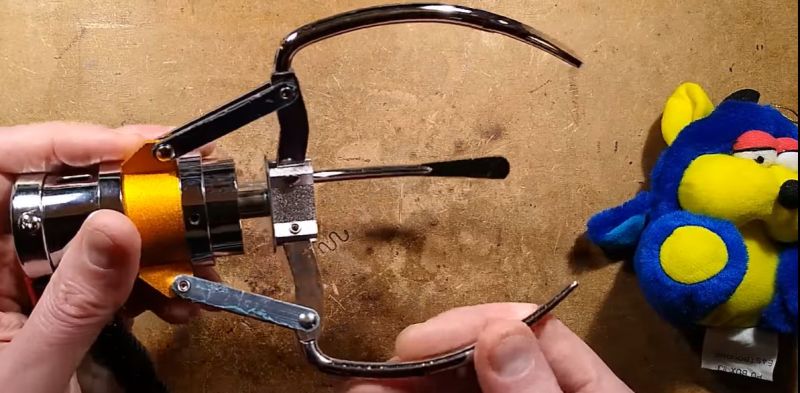
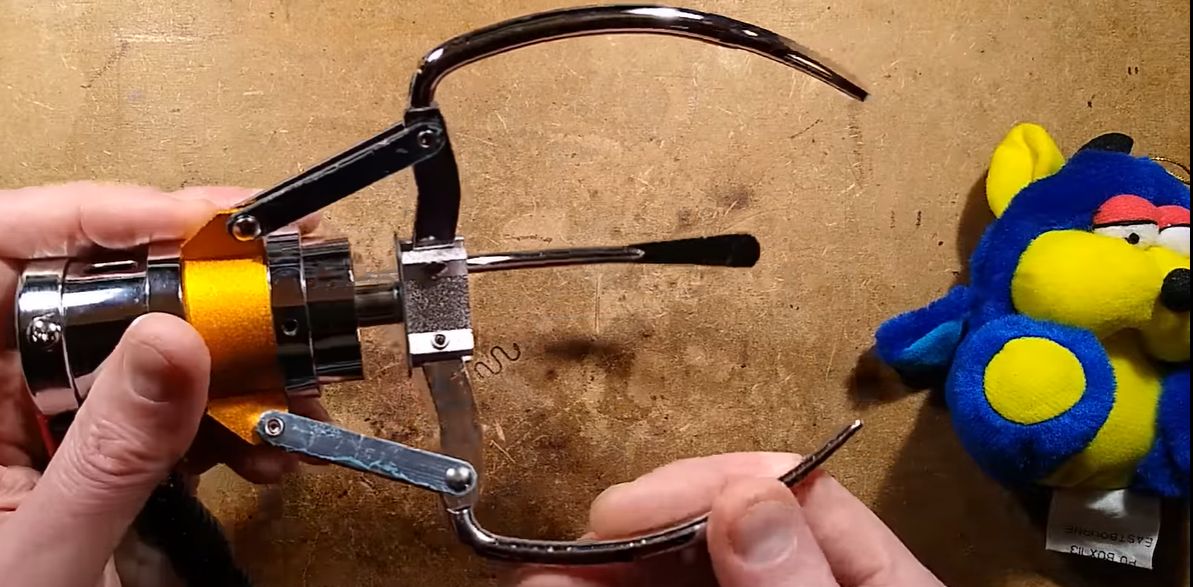
Fresh from AliExpress, [Big Clive] got another fascinating item to tear down: a crane claw, as used in those all too familiar carnival games. These games feature a claw the player moves into position above a pile of toys or other items. Lower the claw gently down in the hopes that it grabs the target item. In a perfect world, the claw will move your prize and deposit it, via a chute, into your waiting hands. Of course, everyone knows that these games are rigged and rely less on skill or luck than the way that they are programmed, but the way that this works is quite subtle, as you can see in the video below.
Despite how complex these crane claws may appear, they are simply solenoids, with the metal rod inside providing the claw action. The weight of the rod and claw section opens the claw via gravity. The strength of the claw is thus fully dependent on how strongly the solenoid is being driven, which, as [Clive] demonstrates, depends on the voltage and the duty cycle. At only 12V, the target plushie will easily slip away again as the claw barely has any strength, while at 24V, it’s pretty solid.
The basic way these crane games are programmed is to use a voltage and/or duty cycle that depends on the amount of money spent (in credits) and the monetary value of the items you can ‘win.’ If you’re very lucky you’ll get a solid catch even with a floppy claw. Most of the time you’ll have to wait until you get a solid claw. While a simple concept, it seems more designed to game the player. As [Clive] duly notes, just buying the item will probably save you a lot of money and frustration.
There are people who prefer to say "Yes," and there are people who prefer to say "No." Those who say "Yes" are rewarded by the adventures they have, and those who say "No" are rewarded by the safety they attain. There are far more "No" sayers around than "Yes" sayers, but you can train one type to behave like the other.
I can't help but put pressure on myself to be a yes-sayer. Perhaps it's the vague belief that saying yes will lead to a fuller life and range of experiences and that saying "no" is the easy option. And somehow, the easy option in my mind can seem like the wrong option. That's why I liked Keith Johnstone's framing for yes-sayers and no-sayers, as it clearly shows the rewards for taking either route in a decision, not just one.
If you are improvising, saying yes and accepting offers takes you to situations that may not feel comfortable but give you new experiences.
Saying no keeps you where you are. Your situation is known and safe, and you feel good for that reason.
In life, we never have to be exclusively yes or exclusively no. And it doesn't have to be white-water kayaking for yes-sayers and reading books at home for no-sayers. But certainly, there are different joys in each path. I love both: the nerves and excitement of new experiences and the comfort and safety of the known and predictable. We needn't bucket ourselves into one or the other.
An adventure, even a microadventure, almost by definition, is the result of saying yes. And, like Type II fun, it can be rewarding and fulfilling. But balancing adventure with the safety and calm of staying in one's comfort zone at times feels nice to me.
"One can choose to go back toward safety or forward toward growth. Growth must be chosen again and again; fear must be overcome again and again."
The quote is from Keith Johnstone's book Impro: Improvisation and the Theatre, Theatre Arts Books, 1979, as quoted in Improv Wisdom by Patricia Ryan Madson.

/cdn.vox-cdn.com/uploads/chorus_asset/file/25813515/Halliday_27.jpeg) Image: Halliday
Image: Halliday
/cdn.vox-cdn.com/uploads/chorus_asset/file/25813518/Halliday_28.jpeg) Image: Halliday
Image: Halliday
/cdn.vox-cdn.com/uploads/chorus_asset/file/25813519/Halliday_29.jpeg) Image: Halliday
Image: Halliday





/cdn.vox-cdn.com/uploads/chorus_asset/file/25819382/Screenshot_2025_01_02_at_1.07.37_PM.png) Image: Dreame
Image: Dreame

/cdn.vox-cdn.com/uploads/chorus_asset/file/25819908/DSCF4341.jpg)
/cdn.vox-cdn.com/uploads/chorus_asset/file/25819909/DSCF4344.jpg)
/cdn.vox-cdn.com/uploads/chorus_asset/file/25819924/DSCF4348_Enhanced_NR.jpg)
/cdn.vox-cdn.com/uploads/chorus_asset/file/25819936/DSCF4356_Enhanced_NR.jpg)
/cdn.vox-cdn.com/uploads/chorus_asset/file/25819937/DSCF4357.jpg)
/cdn.vox-cdn.com/uploads/chorus_asset/file/25819938/DSCF4353.jpg)
/cdn.vox-cdn.com/uploads/chorus_asset/file/25820037/DSCF4358_Enhanced_NR.jpg)


/cdn.vox-cdn.com/uploads/chorus_asset/file/25813925/DSC00473.JPG) Photo by Owen Grove / The Verge
Photo by Owen Grove / The Verge
/cdn.vox-cdn.com/uploads/chorus_asset/file/25813926/DSC00442.JPG) Photo by Owen Grove / The Verge
Photo by Owen Grove / The Verge
/cdn.vox-cdn.com/uploads/chorus_asset/file/25812182/Saros_10R_3.jpg) Image: Roborock
Image: Roborock
/cdn.vox-cdn.com/uploads/chorus_asset/file/25812189/w6.png) Image: Roborock
Image: Roborock