It’s 2025! It’s the future. We have wearables and in-home medical care now like the Jetsons. But, what do patients think about these things?
The health care landscape is experiencing a dramatic transformation through the increasing adoption of wearable medical technologies. These sophisticated devices, worn directly on or close to the body, represent a paradigm shift in how we monitor, prevent, and manage health conditions. From simple activity trackers to advanced cardiac monitoring systems, wearables are revolutionizing patient care through continuous, real-time data collection and analysis.
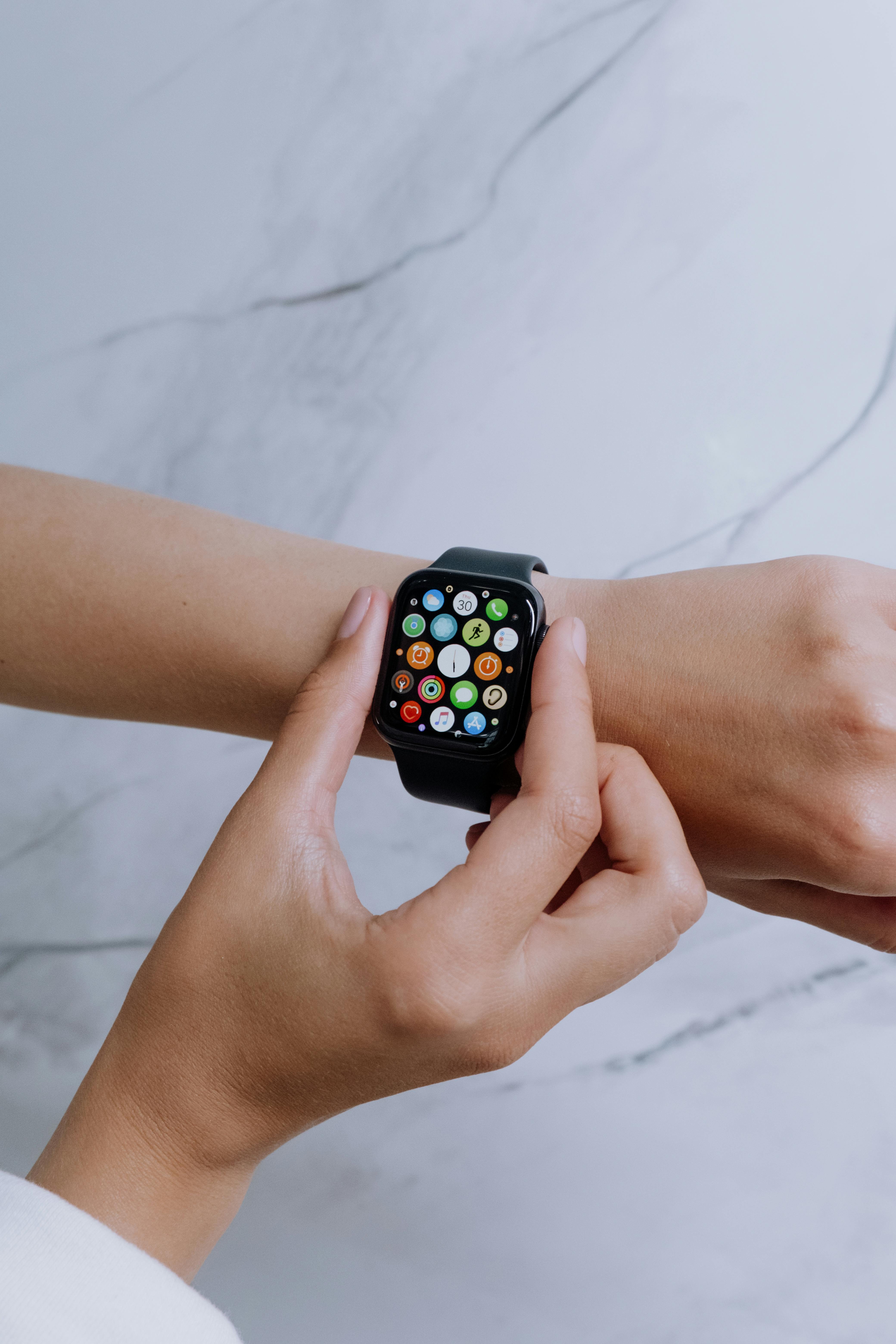
It is important to note that the wearable market is largely divided into consumer health products and medical-grade wearables. There is some overlap in this space related to how, in the US, the Food and Drug Administration classifies technologies and how companies adapt. For example, the Apple Watch should fall under a consumer-health technology, but Apple has, in fact, incorporated certain validated, medical grade technologies into it.
But, while the industry and tech companies tout these technologies as transformative, what do patients think about them and their incorporation into clinical care services?
Wearable Medical Device Technologies
Modern wearable medical devices incorporate various sensor technologies that enable comprehensive physiological monitoring. Typical sensors include photoplethysmography (PPG) for heart rate monitoring, accelerometers and gyroscopes for movement and position detection, electrodes for electrocardiogram (ECG) measurements, and biosensors for tracking metrics like blood oxygen saturation, glucose levels, and skin temperature. These sensors work in concert to collect a wide array of health metrics, including vital signs, activity levels, sleep patterns, and specific disease markers. The systems that use these sensors then leverage internet of things (IoT) technologies to transmit their data via short-distance Bluetooth technologies or cellular technologies on common cellular networks (e.g., AT&T, Verizon, T-Mobile).
Medical grade wearables are frequently divided into invasive and non-invasive technologies. Invasive technologies are implanted within or otherwise penetrate the human body (e.g., continuous glucose meters and central blood pressure catheters). Non-invasive technologies include wrist blood pressure cuffs, heart rate monitors, watches, patches, and other technologies. Some of these technologies are worn continuously whereas others are worn or used periodically. Non-wearable medical devices technologies that remotely collect physiological or health information (e.g., blood pressure cuff units, tradition glucose meters) can be classified as connected medical devices.
The growth in the wearable medical device market has been remarkable. Market research indicates exponential expansion, driven by increasing consumer health consciousness, aging populations, and the rise of chronic diseases. The global wearable medical device market, valued at approximately $21.3 billion in 2021, is projected to reach over $110 billion by 2030, representing a compound annual growth rate exceeding 19%. Almost all of the medical device start-ups and larger manufacturers I encounter are adding IoT technologies to their medical devices to transmit data to care teams and patient smart phones.
A Growing Clinical Interest in Medical Grade Wearables
Health care providers and organizations are increasingly interested in wearable technologies for several compelling reasons. These devices enable continuous monitoring outside traditional clinical settings, allowing for early detection of health deterioration and more timely interventions. They support preventive care approaches by tracking daily health patterns and identifying potential risks before they become serious issues. Additionally, wearables empower patients to take a more active role in their health management through real-time feedback and improved health literacy.
In the inpatient setting, wearables are touted as time-savers for nursing staff. Instead of using the bedside monitors to take vital signs each two hours, wearables like watches that can transmit vitals to the nursing station allows for better time management for nurses.
Remote Physiological Monitoring as a Catalyst
A significant catalyst for the adoption of wearable medical technologies in the United States has been Medicare's expansion of reimbursement policies. The Centers for Medicare & Medicaid Services (CMS) has introduced coverage for Remote Physiological Monitoring (RPM) and Remote Therapeutic Monitoring (RTM) services. These policies, implemented through CPT codes, provide reimbursement for the collection and interpretation of physiologic data from wearable devices, as well as the time health care providers spend reviewing and responding to this information. This financial framework has encouraged health care organizations to integrate wearable technologies into their care delivery models.
However, the success of wearable medical technologies ultimately depends on patient acceptance and sustained use. Reimbursement models like RPM require 16 days of each 30 days of data transmission to receive payment. That means patients must wear their wearable or otherwise collect data every other day, so patient engagement is critical to success.
Understanding Patient Perceptions of Wearable Technologies in Clinical Services
A systematic review by Ferguson et al. (2021) provides crucial insights into the barriers and facilitators affecting the adoption of wearable cardiac monitoring technologies, particularly among older adults. Their meta-synthesis of seven qualitative studies revealed four key interrelated themes* that influence adoption:
-
Trust (including safety and confidence)
Early detection of conditions, communication and interaction, and learning and health promotion
-
Functionality and Affordability
Design, Costs, and Usefulness
-
Risks
Medical Compliance, Stress and Anxiety, and Self-Management
-
Assurance
Unforeseen technical issues, assurance of data quality, and timely feedback from providers
*These are pulled from the study and I am not so sure I would have made the same groupings of the underlying themes into the four over arching categories, but you get a sense of the patient experience.
The review highlighted several critical findings. First, while wearable devices can enhance patient engagement and self-management, their effectiveness is limited by various barriers. Design considerations are paramount - devices must be user-friendly, comfortable, and adaptable to individual needs. The study found that older adults often struggle with technical aspects and may experience anxiety about using the technology correctly. In my experience operating an RPM program, this is critical, but if a program is properly designed, patients can access and use the program with ease.
Cost emerged as a significant barrier, particularly for individuals on fixed incomes1. In the U.S. patients on Medicare may also use social security as their primary means of income, so costs are a major consideration. In some circumstances, care programs may provide devices to patients, but in others, it is important to note that many patients cannot afford to purchase an Apple Watch for atrial fibrillation monitoring.
The review also emphasized the importance of appropriate training and technical support, noting that family members and health care providers play crucial roles in supporting successful adoption. Interestingly, while some patients valued the reduction in face-to-face medical visits and corresponding travel, others worried about losing personal connections with their health care providers.
Health care providers expressed mixed views about wearable technologies. While acknowledging their potential for improving patient monitoring and early intervention, they raised concerns about increased workload, legal liability, and the risk of creating dependency rather than promoting self-management.
Patient Experiences with Remote Patient Monitoring Programs
A similar, yet different question to ask about patient perceptions with wearables is how they feel about programs that are actively using the wearables to manage their care. Another study, conducted by Walker et al., assessed this question and analyzed 16 qualitative studies involving 307 patients with various chronic conditions including COPD, heart failure, diabetes, hypertension, and end-stage kidney disease across eight countries. The review's methodology involved searching multiple medical databases through July 2017 and using a rigorous thematic synthesis approach to analyze the findings.
Through their thematic synthesis, the researchers identified four major themes (which I think are better groupings) in patients' experiences with remote monitoring:
Gaining knowledge and triggering actions (patients report better understanding of how to manage their conditions and what do to)
Reassurance and security (patients like health care providers reviewing their data as it provides peace-of-mind)
Concern about additional burden (patients worry about the complexity and need for technical support)
Jeopardizing interpersonal connections (patients worry about whether it will reduce their time with their providers2)
The findings revealed that remote monitoring generally enhanced patients' understanding of their conditions and supported better self-management. Patients reported that the technology helped them track changes in their health status, enabled earlier clinical interventions, and increased their confidence in making health-related decisions. Many patients, particularly those living alone or older adults, felt an increased sense of safety and peace of mind knowing they were being monitored.
The study also uncovered several challenges and barriers to remote monitoring adoption. Some patients, especially older adults, expressed reluctance to learn new technology and worried about their ability to use it correctly. There were concerns about the potential costs of the technology and skepticism about its reliability. Perhaps most significantly, some patients worried that remote monitoring might reduce their face-to-face interactions with health care providers, potentially compromising the personal aspect of their care. The researchers concluded that while remote monitoring offers significant benefits for chronic disease management, its implementation should carefully consider these patient concerns, particularly regarding the maintenance of personal care relationships and the need for adequate training and support.
Looking to the Future of Health Wearables
Looking ahead, the successful implementation of wearable medical technologies requires a balanced approach that addresses both technical and human factors. The review suggests that future development should focus on user-centric design processes, incorporating input from end-users early in development. Additionally, health care systems need to consider comprehensive support structures, including training programs and clear protocols for managing the data generated by these devices. However, the largest barrier to widespread adoption is cost and reimbursement models that must change to incorporate these technologies at scale. This must be balanced with the clinical effectiveness of these programs so as to ensure additional payments are resulting in better health outcomes.
I don’t really understand how this term is so frequently used. The vast majority of people are on fixed-incomes (i.e. a salary or hourly wage).
Interestingly, one thing I have learned over the last five years is that many patients do experience loneliness and a periodic and relatively frequent outing to their health care providers is a much appreciated opportunity to interact with people.




/cdn.vox-cdn.com/uploads/chorus_asset/file/25813626/JMGO___N3_Ultra_Max___11.gif) Image: JMGO
Image: JMGO
/cdn.vox-cdn.com/uploads/chorus_asset/file/25813781/jmgo2.jpg) Image: JMGO
Image: JMGO







 Le Gouvernement Bayrou/Macron a été annoncé le 24 décembre 2024, composé de ministres dont plusieurs traînent des casseroles : condamnations, suspicions, enquêtes… des dossiers lourds, surtout pour des fonctions régaliennes censées être exercées au plus haut niveau de l’État.