Shared posts

18 Jun 12:06

Trailer for Backyard Blockbusters: doc about fan-films

by Cory Doctorow

John sez, "Last fall, you guys ran a story about 'Backyard Blockbusters,' my feature documentary on fan films (such as 'Troops', 'Hardware Wars', 'Star Trek: Phase II", or the 'Raiders of the Lost Ark" adaptation) and fan filmmakers. At the time, the focus was on helping the film get into the Arclight Documentary Film Festival, which was successful - we got in and screened there, and the film has been playing festivals and conventions since. While the film doesn't have a distribution deal yet (backup plans for self-distribution are still being considered), I've put the first 12 minutes of the film online to give people a taste of what the film is, and hopefully generate some interest."

Backyard Blockbusters - First 12 minutes (Thanks, John!)


17 Jun 19:11

Digg previews its Google Reader replacement, set to roll out next week

by Adrianne Jeffries
Digg_reader_large

The new Digg team just announced a launch date for its highly anticipated RSS reader, which should be here in plenty of time to catch all the Google Reader refugees. The first version of the Digg Reader, which was built in just under three months, looks extremely similar to Google Reader but is missing some key functionality such as search, which Digg says will be added in future iterations. "Our aim has been to nail the basics: a web and mobile reading experience that is clean, simple, functional, and fast," Digg said in a blog post.

The Digg Reader will roll out first to the 17,000 users who gave Digg feedback on what they wanted to see in an RSS reader, then to anyone who signs up. Digg says the reader will be available to everyone...

Continue reading…

17 Jun 19:11

Microsoft killing off Outlook.com linked accounts feature in favor of aliases

by Tom Warren
Outlookwebmailfinal_1020_large

Microsoft has long supported a linked accounts feature for its Hotmail and Outlook.com service, allowing users to simply switch between Microsoft Accounts without having to enter passwords. The feature was originally introduced in 2006, but Microsoft says it plans to stop supporting it over the next couple of months.

Security fears led to feature change

Microsoft blames security for the change of heart, noting that users would often keep their primary account password up-to-date, but failed to regularly change the password on associated accounts. The software maker found that malicious users have been compromising secondary accounts to get access to a full primary account.

The decision to axe linked accounts comes shortly after the...

Continue reading…

17 Jun 19:10

Skype takes video messaging out of 'preview' status

by Phil Nickinson

Skype Video Messaging

Skype this morning announced that it's taking its video messaging feature out of "preview" status and keeping it as a free feature on its desktop, Android, iOS and BlackBerry apps. (Windows Phone, oddly, is omitted.)

The feature records up to 3 minutes of video that then gets sent to a specific contact's Skype account either directly, or as soon as they're back online. 

read more


17 Jun 15:36

Demonstrating "a load of cock" to censorship-crazed UK MP Claire Perry

by Cory Doctorow


The British Government is determined to be seen to be doing something (anything, really) about pornography online. The current incarnation of "something must be done; there, we did something!" is based on blaming "Internet companies" for not doing enough to prevent children from seeing porn, and demanding an expansion of the existing program of blocking a secret and unaccountable blacklists.

They're monumentally unsympathetic to the argument that these lists don't work ("something must be done; we are doing something"), and even less interested in the fact that these lists end up catching stuff that isn't porn. The Conservative MP Claire Perry said that overblocking is "a load of cock."

What sort of cock is in that load, though? Jim from the Open Rights Group writes, "After UK MP Claire Perry helpfully described problems with blocking as a load of cock the Open Rights Group have listed some recent blocking reports, including, startlingly, YouTube on Orange. These sites are blocked by 'default' and users may need take a passport to their mobile shop and ask to have the 'porn' switched on in order to read the Jargon File or watch YouTube."

Jargon File blocked by O2, YouTube by Orange (Thanks, Jim!)

(Image: Cocks, a Creative Commons Attribution Share-Alike (2.0) image from 18261299@N00's photostream)


17 Jun 15:23

How to Decode "Menuspeak" and Navigate Any Restaurant Menu

by Tessa Miller

How to Decode "Menuspeak" and Navigate Any Restaurant Menu

Eating healthy is particularly tricky at restaurants, since even healthy sounding dishes can harbor ingredients that add hundreds more calories than you'd expect. This effect is known as the health halo. Of course, if you want to splurge every now and then I more than encourage it. The trick is making sure you know when you are or aren’t making healthy choices, and doing so intentionally.

Below is an excerpt from my new book, Foodist: Using Real Food and Real Science to Lose Weight Without Dieting, on how to decode the secret language of restaurant menus to avoid unnecessary healthstyle pitfalls.

Decoding “Menuspeak”

Deciphering what is healthy on a menu is not always straightforward. Restaurants have made an art of luring you in with their words and making dishes sound absolutely irresistible, regardless of how they actually taste. Another problem is that dishes that should be healthy, for instance, a Thai chicken salad, are often loaded with secret ingredients (usually extra sugar, salt, and processed oils) that actually cause them to clock in at way over the number of calories you’d expect (according to the nutrition facts, the Thai chicken salad at California Pizza Kitchen has 1,160 calories). To avoid these traps you need to first learn to decipher menuspeak, and then tailor your ordering and special requests to remove the worst offenders.

You already know to avoid foods that are obviously very processed, focus on whole foods, and make sure there is something green on your plate. Once you’ve gotten that far, the biggest issues are usually sauces and toppings. Sugar, oil, and salt make foods taste better, and when restaurants use low-quality (i.e., bad-tasting) ingredients, they aren’t shy about compensating for this by using as many sweet or creamy sauces as possible. Think of these ingredients—the flavor trifecta of sugar, fat, and salt—as makeup for your food. A small amount of the good stuff (e.g., butter or cheese), used tastefully and with restraint, can enhance and beautify a dish. But too much of it is a sign that people are covering up something they don’t want you to see.

Words to Watch Out For

How do you know if a restaurant is trying to mask its food with shameless flavor enhancers? Several code words and descriptions can tip you off to this sort of culinary cover-up. Sugar, for example, tends to be sticky, so words like “glaze” and even “sticky” itself are a good sign there is extra sweetener around. Similarly, anything that’s “crispy” or “crusted” has likely been covered in a batter made from processed wheat or corn and soaked in oil at high temperatures. Fortunately, there are also words that signify more healthily prepared dishes. “Roasted,” “grilled,” or “spiced” foods have extra flavor without extra calories.

How to Decode "Menuspeak" and Navigate Any Restaurant Menu

Sometimes it’s hard to find something on a menu that isn’t smothered in sugar or dredged in bread crumbs. At this point try to simply find the dish that sounds the best and ask your server to leave off the crispy wontons and bring you a side of spinach instead. Once you know what to look for, making the right call will start to come naturally.

Decoding Menuspeak: Navigating the Perilous World of Restaurant Menus | Summer Tomato


Darya Rose is a neuroscientist and the creator of the popular blog Summer Tomato, which provides the ultimate guide to hacking our brains to achieve real and lasting weight loss. Her new book FOODIST: Using Real Food and Real Science to Lose Weight Without Dieting, teaches you how to stop dieting, build healthy habits, and make life awesome.

Want to see your work on Lifehacker? Email Tessa.

17 Jun 15:22

Instagram to get Vine-like video sharing on June 20th, says TechCrunch

by Aaron Souppouris
Instagram_photos_of_you_large

Techcrunch reports that Instagram will launch video sharing on June 20th. According to the site's anonymous source, the feature will be unveiled at Facebook's "big idea" event on Thursday. Details are pretty scant on how the feature will work, but Reuters' former deputy social media editor, Matthew Keys, reported that Facebook was testing Vine-like video sharing for Instagram a few weeks ago, noting that it would allow users to share videos between five and 10 seconds long.

Twitter launched its video-sharing app, Vine, back in January. Since then, the service has gone from strength to strength. Many social media campaigns now utilize Vine, and recently the service surpassed Instagram in daily shares. Instagram adding videos to its apps...

Continue reading…

17 Jun 11:52

Snowden leak: How UK spies attacked delegations to the 2009 G20

by Cory Doctorow


On the eve of the G8 summit (taking place in a specially prepared Potemkin village in N. Ireland), the Guardian has published another Edward Snowden leak, this one describing how the UK spying agency GCHQ aggressively spied upon delegates to the G20 summit in 2009. According to the documents, UK spies attacked foreign delegates by "reading their email before they do" intercepting their BlackBerry messages and calls in real-time; capturing logins at special Internet cafes so as to spy on delegations after the event; getting NSA reports on attempts to crack Russian PM Dmitry Medvedev's satellite calls; and continuously logging and analyzing who was calling whom.

The report suggests that British delegation was briefed throughout, and that the operation was "sanctioned in principle at a senior level in the government of the then prime minister, Gordon Brown.


A briefing paper dated 20 January 2009 records advice given by GCHQ officials to their director, Sir Iain Lobban, who was planning to meet the then foreign secretary, David Miliband. The officials summarised Brown's aims for the meeting of G20 heads of state due to begin on 2 April, which was attempting to deal with the economic aftermath of the 2008 banking crisis. The briefing paper added: "The GCHQ intent is to ensure that intelligence relevant to HMG's desired outcomes for its presidency of the G20 reaches customers at the right time and in a form which allows them to make full use of it." Two documents explicitly refer to the intelligence product being passed to "ministers".

According to the material seen by the Guardian, GCHQ generated this product by attacking both the computers and the telephones of delegates.

One document refers to a tactic which was "used a lot in recent UK conference, eg G20". The tactic, which is identified by an internal codeword which the Guardian is not revealing, is defined in an internal glossary as "active collection against an email account that acquires mail messages without removing them from the remote server". A PowerPoint slide explains that this means "reading people's email before/as they do".

The same document also refers to GCHQ, MI6 and others setting up internet cafes which "were able to extract key logging info, providing creds for delegates, meaning we have sustained intelligence options against them even after conference has finished". This appears to be a reference to acquiring delegates' online login details.

Another document summarises a sustained campaign to penetrate South African computers, recording that they gained access to the network of their foreign ministry, "investigated phone lines used by High Commission in London" and "retrieved documents including briefings for South African delegates to G20 and G8 meetings". (South Africa is a member of the G20 group and has observer status at G8 meetings.)

I love that BlackBerrys are singled out as especially easy to intercept, something that is widely rumored. The entire piece is amazing, with specific revelations of spying. I'd love to know what the G8 delegations are making of all this as they head to NI. Perhaps GCHQ could tell us?

GCHQ intercepted foreign politicians' communications at G20 summits [Ewen MacAskill, Nick Davies, Nick Hopkins, Julian Borger and James Ball/The Guardian]


16 Jun 22:52

NSA admits it listens in on US phone calls and reads US emails without a warrant

by Cory Doctorow


It's a pity that so many senators skipped the NSA's classified briefing on its secret spying program, because if they'd attended, they'd have heard something shocking: the NSA can and does access the content of emails and phone calls of Americans on US soil without a warrant. It's an important insight into the President's secret interpretation of FISA, one of America's most notorious spying laws.

Rep. Jerrold Nadler, a New York Democrat, disclosed this week that during a secret briefing to members of Congress, he was told that the contents of a phone call could be accessed "simply based on an analyst deciding that."

If the NSA wants "to listen to the phone," an analyst's decision is sufficient, without any other legal authorization required, Nadler said he learned. "I was rather startled," said Nadler, an attorney and congressman who serves on the House Judiciary committee.

Not only does this disclosure shed more light on how the NSA's formidable eavesdropping apparatus works domestically, it also suggests the Justice Department has secretly interpreted federal surveillance law to permit thousands of low-ranking analysts to eavesdrop on phone calls.

Because the same legal standards that apply to phone calls also apply to e-mail messages, text messages, and instant messages, Nadler's disclosure indicates the NSA analysts could also access the contents of Internet communications without going before a court and seeking approval.

The NSA is supposed to only spy on us dirty foreigners. As sketchy as it is to divide the world into the spied-upon and the un-spied-upon, it is nevertheless the law, and should be comforting to those the latter category. This revelation confirms that the Obama administration has doubled down on GW Bush's project of lawless, authoritarian surveillance, treating the Constitution and Congress's laws as mere formalities. So much for "the most transparent administration in history."

NSA admits listening to U.S. phone calls without warrants [Declan McCullagh/Cnet]


16 Jun 22:49

Hey Hadopi, You’re Breaking The Law. We Made “Three Strikes” Illegal Across All Europe.

by Rick Falkvinge

hadopilogoIn 2009, the ugly French authority Hadopi – with the mission of cutting people off from the internet for the good deed of sharing culture and knowledge – reared its head.

This was in the middle of the copyright industry’s “mass disconnection” strategy, where they saw it fit to legislate mass disconnections to protect their obsolete industry.

Fortunately for everybody else, an election interrupted the otherwise-prepared legislative process, and a new European Parliament got to finalize the bills that would have made such disconnections possible throughout Europe. It was obvious that the bill was intended to pass without discussion.

Unfortunately for the copyright industry, the Pirate Party got a seat on the final negotiating committee in the European Parliament, and we were able to – with the help of brilliant activists like Monica Horten – educate everybody else on the parliamentary committee as to what was actually happening. It stopped being a matter of having Parliament steamrolled into just passing the bill without question, and escalated into a matter of Parliament’s dignity. “We’re the Parliament, not a doormat”, as some legislators made very clear.

That derailed the intended process of enabling “Three Strikes” disconnections across Europe. The very opposite became law, in no small part thanks to the footwork of the Pirate Party in the European Parliament and that negotiation committee.

The civil rights violations that the French Hadopi agency intended to carry out – disenfranchising people from most of their civil liberties – was specifically targeted when writing the language for the Telecoms Package bills. The language of the bills was not good enough until it made super clear that disconnecting anybody from the net without a prior fair and full adversarial court proceeding – exactly the thing the copyright industry had intended to bypass and cut citizens off en masse – was completely illegal across all of the European Union, and by extension, through the European Economic Area.

The text in the Telecoms Package bill had to pass the “Hadopi Test”, as it was actually called in the European Parliament – making it absolutely clear that what Hadopi intended to do was to be made completely illegal.

For today, we exercise all our fundamental liberties – freedom of speech, freedom of assembly, freedom of the press, freedom of expression – through the net. Therefore, the net has itself become just as fundamental a liberty as all the other fundamental liberties we exercise through it.

It shouldn’t even be a matter of discussion that you can’t cut anybody off from the net, not any more than you can order them to not read newspapers, not meet anybody, or not speak.

But alas, the copyright industry is infamous for ignoring the law completely when they don’t like what it says, and throwing loud tantrums when anybody else doesn’t do what they demand (sometimes regardless of law). They seem to be stuck in the “mine, mine, mine, waaaaaah” mindset of a three-year-old, and what’s worse, they’re completely oblivious to the concept of equality before the law.

The Hadopi bureaucrats who made the decision of cutting somebody off from the net and their fundamental rights this week deserve to go to jail for a considerable time, so they can contemplate the concept of being equal before the law; how the law isn’t intended to protect the copyright industry against the people but never the other way around. Unfortunately, that will not happen under French law, but the Hadopi can and should still be sued for ridiculously punitive amounts in European courts for this deed. There is no way they can claim ignorance of the law in this matter, and even if they are arguably ignorant, that’s still not a defense.

As a final note, it seems copyright monopoly lobbyists think they can get this disconnection scheme in Britain now, too. I would encourage anybody in the affected countries – France and Britain – to sue the shirt off their backs. What they’re attempting to do is illegal. Not “maybe illegal”, not “possibly in a grey area”, but “deliberately targeted behavior written into law as specifically illegal”.

Update: In response to the opinion above some commenters rightfully point out that the disconnection order comes from a judge. These and other issues are discussed below, feel free to add yours.

About The Author

Rick Falkvinge is a regular columnist on TorrentFreak, sharing his thoughts every other week. He is the founder of the Swedish and first Pirate Party, a whisky aficionado, and a low-altitude motorcycle pilot. His blog at falkvinge.net focuses on information policy.

Book Falkvinge as speaker?

Follow @Falkvinge

Source: Hey Hadopi, You’re Breaking The Law. We Made “Three Strikes” Illegal Across All Europe.

16 Jun 18:25

Our continued commitment to combating child exploitation online

by Emily Wood
The Internet has been a tremendous force for good—increasing access to information, improving people’s ability to communicate and driving economic growth. But like the physical world, there are dark corners on the web where criminal behavior exists.

In 2011, the National Center for Missing & Exploited Children’s (NCMEC’s) Cybertipline Child Victim Identification Program reviewed 17.3 million images and videos of suspected child sexual abuse. This is four times more than what their Exploited Children's Division (ECD) saw in 2007. And the number is still growing. Behind these images are real, vulnerable kids who are sexually victimized and victimized further through the distribution of their images.

It is critical that we take action as a community—as concerned parents, guardians, teachers and companies—to help combat this problem.

Child sexual exploitation is a global problem that needs a global solution. More than half of the images and videos sent to NCMEC for analysis are found to have been uploaded to U.S. servers from outside the country. With this in mind, we need to sustain and encourage borderless communication between organizations fighting this problem on the ground. For example, NCMEC’s CyberTipline is able to refer reports regarding online child sexual exploitation to 66 countries, helping local law enforcement agencies effectively execute their investigations.

Google has been working on fighting child exploitation since as early as 2006 when we joined the Technology Coalition, teaming up with other tech industry companies to develop technical solutions. Since then, we’ve been providing software and hardware to helping organizations all around the world to fight child abuse images on the web and help locate missing children.

There is much more that can be done, and Google is taking our commitment another step further through a $5 million effort to eradicate child abuse imagery online. Part of this commitment will go to global child protection partners like the National Center for Missing & Exploited Children and the Internet Watch Foundation. We’re providing additional support to similar heroic organizations in the U.S., Canada, Europe, Australia and Latin America.

Since 2008, we’ve used “hashing” technology to tag known child sexual abuse images, allowing us to identify duplicate images which may exist elsewhere. Each offending image in effect gets a unique ID that our computers can recognize without humans having to view them again. Recently, we’ve started working to incorporate encrypted “fingerprints” of child sexual abuse images into a cross-industry database. This will enable companies, law enforcement and charities to better collaborate on detecting and removing these images, and to take action against the criminals. Today we’ve also announced a $2 million Child Protection Technology Fund to encourage the development of ever more effective tools.

We’re in the business of making information widely available, but there’s certain “information” that should never be created or found. We can do a lot to ensure it’s not available online—and that when people try to share this disgusting content they are caught and prosecuted.

Update June 17: Clarified language around NCMEC's Child Victim Identification Program and CyberTipline.

Posted by Jacquelline Fuller, Director, Google Giving
16 Jun 18:23

Exclusive: Joss Whedon Confirms There'll Be No Loki In Avengers 2

Joss Whedon Confirms There'll Be No Loki In Avengers 2

Sorry Hiddlestoners, it just ain't happening...

The way Joss Whedon snuck the word 'quim' into Avengers Assemble - apparently without anyone minding that Loki called Black Widow a... well, you know - was nothing short of masterful. During our recent podcast interview with the geek god, we had to ask if he was planning something similar for Avengers 2, and his response revealed an interesting detail: Loki isn't in the Avengers sequel, not even as a brotherly buddy for Thor.

"Everyone is going to be looking for the Loki-Hulk smash moment and you'll be looking for [a quim moment]. First of all, imitating what I did before is the surest way to do it not as well. Second of all, Loki's not there to say those terrible things. Although I do think we should bring the word back, not as an insult, it's just a nice word."

The whole interview (which starts 19 minutes into the podcast) sees Mr. Whedon on very good form, discussing everything from newcomers Scarlet Witch and Quicksilver and how they'll fit into proceedings to the current state of the first draft, but you'll have to listen to it in full yourself - see the SoundCloud embed below, as well as these iTunes and RSS feed links for details - to get the whole skinny. Trust us, you won't be disappointed. Unless, of course, you were hoping for an extra helping of 'Reindeer Games', in which case we hope that some time spent perusing the endless Loki gifs on Tumblr will assuage your pain.

P.S. Don't forget to check out our podcast photo gallery here and subscribe to the Empire Podcast via our iTunes page or this handy RSS feed.


15 Jun 22:23

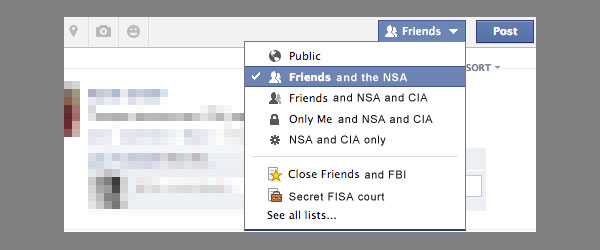
Facebook releases new post-NSA-Prism-leak privacy settings

by Xeni Jardin


Parody, obviously. 'shoop: XJ


15 Jun 21:42

UK Police Torrent Site Threats Explained

by Andy

For the operators of torrent and other file-sharing sites, receiving emails from sometimes angry rightsholders is a regular event.

Most will simply want torrents or links to torrents removed from an index but some will flex their muscles and demand a full shutdown. With the first option much more likely to achieve its aims than the second, rightsholders are now developing their ties with law enforcement in the hope that a word from the police will achieve more sustainable results.

Police, FACT and the BPI team up

Earlier this month TorrentFreak revealed that one such partnership between FACT (Federation Against Copyright Theft), BPI (British Recorded Music Industry), The PA (The Publishers Association) and the police had just been launched.

The National Fraud Intelligence Bureau (NFIB) confirmed it had begun sending out letters to file-sharing site operators warning them that their activities are now being treated as criminal acts.

To find out what this means on the ground, TorrentFreak spoke with Darren Meale, an intellectual property expert at the international law firm Dentons.

Civil vs Criminal infringement

“What the police are doing here is accusing the operators of these websites of committing criminal copyright infringement. We tend to think of copyright infringement as a civil wrong, meaning an unlawful activity which it is up to the person who has been wronged – the copyright owner – to take his or her own action against in the English civil courts,” Meale begins.

“As we’ve seen from the more recent, and successful, attempts by the music industry to force UK ISPs to block the likes of The Pirate Bay, Fenopy, H33T and KAT, the English civil courts are now fairly easily persuaded that BitTorrent trackers – and their users – are indeed committing civil infringements of copyright in a number of ways, including by the unauthorized ‘communicating to the public’ of the material in question.”

So with the ‘civil’ element defined, how do the police then make the leap to a full-scale crime punishable not only by fines, but imprisonment?

“In these cases, the police are accusing the websites of criminal unauthorized communication to the public. This is identical to the equivalent civil wrong, but the infringer has to be doing it ‘in the course of business’ and he has to know or have reason to believe that he is infringing copyright,” Meale explains.

Therefore, it could be argued that if a site displays advertising, solicits donations, or generates revenue by other means, its owner could be seen by the police as operating a business. Couple that with knowledge that infringement is occurring and Meale believes the authorities could have “a pretty strong” case to pursue.

The Serious Crime Act 2007

Thus far we’ve only touched on police claims that site owners are suspected of criminal breaches of the Copyright, Designs & Patents Act 1988. The NFIB actually go on to warn of further offenses committed under the Serious Crime Act 2007. So what do these entail?

“The Serious Crime Act makes it a crime to intentionally encourage or assist someone else committing a crime, in the same way as it used to be a crime to ‘incite’ someone to commit a crime,” says Meale.

“So the references to that are just the police’s way of saying that, even if the operators are not for some reason the ones doing the ‘communicating to the public’, they still suspect they are guilty because they are encouraging those other people to do so.”

UK based torrent sites versus sites based overseas

A question raised by some in respect of the recent police threats concern the complex issue of jurisdictions. For example, can a UK site owner be held accountable by UK police if his equipment is located elsewhere?

“Some operators may feel they are safe from the British police because their servers are based overseas. But if the criminal offence of ‘communicating to the public’ is treated in the same way as the civil version, this won’t necessarily help. This is because the European Court of Justice has decided that when data is streamed from a server outside of the UK into it, that is enough for an infringement of copyright in the UK provided that the operator was targeting the public in the UK,” says Meale.

TorrentFreak is aware that site operators in Europe and indeed on the other side of the world have received letters from NFIB warning them that they are breaching UK laws. With that in mind, should a foreign operator of an overseas website really fear police in another country?

“Individuals living outside of the UK might still be committing offenses, but they are in a better position from a practical point of view – they are not in the country for the police to come and arrest them. In theory they might be extradited, or if in Europe perhaps find themselves the subject of a European Arrest Warrant, but going after them will require a lot more effort on the part of the police,” Meale concludes.

Thus far at least one site has shutdown on receipt of a police letter but the majority appear to be staying open. Questions are being asked behind the scenes whether the campaign is just another industry scare tactic or something that really has teeth. Of course, only the police have the answers so it’s up to each individual site operator to weigh the risks against the benefits.

Source: UK Police Torrent Site Threats Explained

15 Jun 10:39

BMI sues Pandora over terrestrial radio station purchase

by Dan Graziano
Pandora Royalty Rates BMI LawsuitPandora has been on a mission over the past couple of years to lower the royalty rates it pays music labels. The company argues that it should pay the same rates as traditional over-the-air radio stations and not be subjected to higher fees because it operates on the Internet. Despite numerous campaigns, nothing has changed and roughly 50% of the company's revenue goes to paying licensing fees. In a last-ditch effort, Pandora this week purchased a terrestrial radio station in South Dakota. The move will theoretically give the company the same preferential licensing terms offered to services such as Clear Channel's iHeartRadio and others. It won't be that easy for Pandora, however. The company's purchase is being challenged by BMI, which claims the purchase is a "stunt" that "makes a mockery of the performing rights licenses and the rate court process." The group filed suit in the U.S. Southern District Federal Court in New York and is asking the court to set "reasonable, market driven" royalty fees for Pandora.
15 Jun 10:28

Introducing Project Loon: Balloon-powered Internet access

by Emily Wood
The Internet is one of the most transformative technologies of our lifetimes. But for 2 out of every 3 people on earth, a fast, affordable Internet connection is still out of reach. And this is far from being a solved problem.

There are many terrestrial challenges to Internet connectivity—jungles, archipelagos, mountains. There are also major cost challenges. Right now, for example, in most of the countries in the southern hemisphere, the cost of an Internet connection is more than a month’s income.

Solving these problems isn’t simply a question of time: it requires looking at the problem of access from new angles. So today we’re unveiling our latest moonshot from Google[x]: balloon-powered Internet access.


We believe that it might actually be possible to build a ring of balloons, flying around the globe on the stratospheric winds, that provides Internet access to the earth below. It’s very early days, but we’ve built a system that uses balloons, carried by the wind at altitudes twice as high as commercial planes, to beam Internet access to the ground at speeds similar to today’s 3G networks or faster. As a result, we hope balloons could become an option for connecting rural, remote, and underserved areas, and for helping with communications after natural disasters. The idea may sound a bit crazy—and that’s part of the reason we’re calling it Project Loon—but there’s solid science behind it.


Balloons, with all their effortless elegance, present some challenges. Many projects have looked at high-altitude platforms to provide Internet access to fixed areas on the ground, but trying to stay in one place like this requires a system with major cost and complexity. So the idea we pursued was based on freeing the balloons and letting them sail freely on the winds. All we had to do was figure out how to control their path through the sky. We’ve now found a way to do that, using just wind and solar power: we can move the balloons up or down to catch the winds we want them to travel in. That solution then led us to a new problem: how to manage a fleet of balloons sailing around the world so that each balloon is in the area you want it right when you need it. We’re solving this with some complex algorithms and lots of computing power.

Now we need some help—this experiment is going to take way more than our team alone. This week we started a pilot program in the Canterbury area of New Zealand with 50 testers trying to connect to our balloons. This is the first time we’ve launched this many balloons (30 this week, in fact) and tried to connect to this many receivers on the ground, and we’re going to learn a lot that will help us improve our technology and balloon design.

Over time, we’d like to set up pilots in countries at the same latitude as New Zealand. We also want to find partners for the next phase of our project—we can’t wait to hear feedback and ideas from people who’ve been working for far longer than we have on this enormous problem of providing Internet access to rural and remote areas. We imagine someday you'll be able to use your cell phone with your existing service provider to connect to the balloons and get connectivity where there is none today.

This is still highly experimental technology and we have a long way to go—we’d love your support as we keep trying and keep flying! Follow our Google+ page to keep up with Project Loon’s progress.

Onward and upward.

Posted by Mike Cassidy, Project Lead

15 Jun 10:27

Google opts out of FISA disclosure deal made by Facebook and Microsoft, calls it 'a step back for users;' Twitter agrees

by Dieter Bohn
Googlenow_exterior_large

Google is unsatisfied with the deal that Microsoft and Facebook have made with the US government with regard to publishing how many requests for user information they both receive. Facebook and Microsoft released reports tonight detailing how many requests got from US government agencies in the second half of 2012 — including FISA requests. The deal, however, comes with strings that Google apparently doesn't want to be tied to.

There were restrictions put on the Facebook and Microsoft's disclosures that make them fairly useless if you're interested in determining how many FISA requests have come in. As Microsoft says, it can only include the number of FISA requests is receives so long as it is "aggregated with law enforcement requests...

Continue reading…

14 Jun 22:01

Joss Whedon Much Ado About Nothing Podcast Special

Joss Whedon Much Ado About Nothing Podcast Special

Much ado about Avengers 2

Joss Whedon - The Empire Podcast

Joss Whedon is the director of Serenity, Avengers and now Much Ado About Nothing, a black and white Shakespeare adaptation that he shot in just 12 days with a group of friends and a very small film crew.

In this very special podcast, you can hear him - as well as the stars of the film, Alexis Denisof and Amy Acker - talk about the project, as well as details on Avengers 2, Quicksilver and, as they say, much, much more...

P.S. This special interview podcast kicks off with a chat with Acker and Denisof, with Joss only appearing come around about the 18.00 mark, so jump there if you'd rather just hear his dulcet tones. 

P.P.S. Don't forget to check out our podcast photo gallery here and subscribe to the Empire Podcast via our iTunes page or this handy RSS feed.

    
14 Jun 22:00

Spotify to unlock Pink Floyd's entire catalog once 'Wish You Were Here' hits 1 million plays

by Chris Welch
Screen_shot_2013-06-14_at_11

In one of the more interesting promotional efforts we've seen come from Spotify, the company is promising to unlock Pink Floyd's entire album catalog once fans stream the band's iconic song "Wish You Were Here" 1 million times. The track — and presumably the discography that will follow once the milestone is reached — is pulled from the remastered Pink Floyd albums released in 2011. There's no counter visible, so it's difficult to assess the progress being made so far, but Spotify is telling listeners to keep watching its Twitter feed for the latest. It's also taken to Instagram to get the word out.

Continue reading…

14 Jun 21:53

New Nexus 7 Shows Its Face In Bluetooth Filing Photo, FCC Filings Confirm Identity

by Ryan Whitwam

nexusae0_n7-2We have all been anxiously awaiting news of a successor to the Nexus 7, which is now a year old. Google I/O came and went with no announcement, leaving everyone a bit deflated. Now some regulatory filings appear to offer the first peek at what Google and Asus have up theirs sleeves for a new Nexus 7.

n7 2

The Bluetooth SIG includes a small image of what is apparently the new Asus-made N7, but from the front it's just a generic black rectangle. The product description is interesting, though.


This tablet features a 7” LED-backlit capacitive multitouch screen for easy carrying and fantastic multi-media experience everywhere.

Done With This Post? You Might Also Like These:

New Nexus 7 Shows Its Face In Bluetooth Filing Photo, FCC Filings Confirm Identity was written by the awesome team at Android Police.


14 Jun 21:53

European Union To End Roaming Fees In Summer 2014 For EU Carriers

by Bertel King, Jr.

EUStating in July 2014, Europeans will be free of burdensome roaming charges as they travel across the European Union's 27 member states. This comes after officials voted to terminate such fees for voice calls, text messages, and internet access as part of a move to create a single European telecoms market. This is great news for French citizens hopping across the border to Germany, but it will have no impact on tourists from outside of the continent. Americans, for example, will still have their roaming fees determined by their carriers back home.

Roaming

Officials hope that this change will allow Europe to begin consolidating mobile network operators in order to improve the quality of service among member states.

Done With This Post? You Might Also Like These:

European Union To End Roaming Fees In Summer 2014 For EU Carriers was written by the awesome team at Android Police.


14 Jun 21:50

UK: Edward Snowden not welcome here

by Cory Doctorow
The UK Home Office has sent letters to the world's airlines, warning them not to let NSA whistleblower Edward Snowden board a plane for the UK, because "the individual is highly likely to be refused entry to the UK."


14 Jun 11:33

EU investigating Google over Android licensing

by Dan Graziano
Android Licensing DisputeEuropean officials are investigating Google over allegations that it has anti-competitive deals in place with various smartphone vendors, the Financial Times reported. Microsoft and Nokia reportedly claim that Google is forcing Android vendors to delay the launch of smartphones based on competing operating systems. The commission will also investigate whether the company has agreements in place that require its manufacturing partners to preload Google's services on their devices. A Google spokesperson denied the allegations, citing the open source philosophy of Android. A company spokesperson explained to the Financial Times that "handset makers, carriers and consumers can decide how to use Android, including which applications they want to use."
14 Jun 11:33

‘Hands-free’ texting found to be more dangerous than making phone calls while driving

by Dan Graziano
Connected Cars Risk Hands-FreeA study from the American Automobile Association (AAA) has found that using hands-free texting features is actually more dangerous for drivers than making handheld phone calls. The group notes that even while texting through systems such as Ford Sync and Toyota Entune, drivers were found to be more distracted than while listening to music, talking with a passenger and making a phone call. Drivers who used hands-free technology were found to have a slower reaction time and compromised brain functions, which could potentially result in drivers not seeing items right in front of them such as stop signs and pedestrians. As cars become smarter and more connected, the AAA is calling for the government to set limitations on "new and potentially dangerous mental distractions built into cars."

Continue reading...
14 Jun 11:31

He Was Only Doing What The WH Said To Do

by Uncle Dave


Found on reddit

14 Jun 11:29

Why Americans should be worried about state surveillance

by Cory Doctorow

As the Prism/NSA leaks story unfolds, many Americans are left with a cynical "are you surprised?" response that rather misses the point. Recent American history is full of stories of spies using surveillance to target civil rights heroes like Martin Luther King, who was heavily surveilled during the Kennedy administration, culminating with the FBI sending him an anonymous package with evidence of his adultery and a note telling him to kill himself.

Here's a video and transcript of an excellent Chris Hayes editorial on MSNBC in which Hayes reminds us that America's spooks can and do use intelligence to attack causes that are later seen as being on the side of justice:

In 1964, after Hoover called King the most "notorious liar in the country" in a press conference, a package was sent to King in the mail, a package the House select committee ultimately traced back to the FBI. Inside this package, one of the most remarkable artifacts in American history was an anonymous letter addressed to Martin Luther King and a copy of an electronic surveillance tape apparently to lend credence to threats of exposure of derogatory personal information made in the letter. We don't know to this day for sure what was on that tape. The heavy speculation throughout the years it was of personal and sexual nature recorded by a device planted in Dr. King's hotel room.

The letter that came with the tape read in part, "you know you are complete fraud and a great liability to all of us negroes. The American public will know you for what you are, an evil abnormal beast. King, there is only one thing left for you to do. You know what it is. You are done. There is but one way out for you. You better take it before your filthy, abnormal fraudulent self is bared to the nation." The committee considered it highly likely that Director Hoover had before the fact knowledge of the action.

So that's a letter encouraging Dr. Martin Luther King Jr. to kill himself, sent to King from the FBI. This happened in American history. It's just one example out of many of how the full weight of the surveillance state constructed to fight the cold war was used against the people working for racial equality. It may have been constructed to defeat the Russians and the genuine threat of global communism, but it was deployed on people like Carmichael and Dr. Martin Luther King Jr.

Chris Hayes: "It's not some Orwellian abstraction. It's America's history" (via Making Light)


14 Jun 11:28

Lawsuit: "Happy Birthday" is not in copyright, and Warner owes the world hundreds of millions for improperly collected royalties

by Cory Doctorow


Copyright scholars have long been pretty certain that "Happy Birthday to You" is in the public domain, despite the fact that Warner/Chappell claims copyright on it and charges impressive licensing fees to use it in public performances. Those fees, however, are much lower than a copyright lawsuit would be, so everyone shrugs and pays them. Until now.

A documentary film company working on a movie about "Happy Birthday" has assembled a huge body of evidence showing that the song has been in the public domain since the 1920s, and is suing Warner to get them to return the hundreds of millions they've improperly charged in licensing since. This is gonna be great.

The full lawsuit, embedded below, goes through a detailed history of the song and any possible copyright claims around it. It covers the basic history of "Good Morning to You," but also notes that the "happy birthday" lyrics appeared by 1901 at the latest, citing a January 1901 edition of Inland Educator and Indiana School Journal which describes children singing a song called "happy birthday to you." They also point to a 1907 book that uses a similar structure for a song called "good-bye to you" which also notes that you can sing "happy birthday to you" using the same music. In 1911, the full "lyrics" to Happy Birthday to You were published, with a notation that it's "sung to the same tune as 'Good Morning.'" There's much more in the history basically showing that the eventual copyright that Warner/Chappell holds is almost entirely unrelated to the song Happy Birthday to You.

The detail in the filing is impressive, and I can't wait to see how Warner/Chappell replies. As the filing notes, there are a variety of copyright claims around the song, but all are invalid or expired, and the very, very narrow copyright that Warner/Chappell might hold is not on the song itself. In other words, Warner/Chappell is almost certainly guilty of massive copyfraud -- perhaps the most massive in history -- in claiming a copyright it clearly has no right to.

Lawsuit Filed To Prove Happy Birthday Is In The Public Domain; Demands Warner Pay Back Millions Of License Fees [Mike Masnick/Techdirt]

(Image: 53/365 - 02/22/11 - Happy Birthday, a Creative Commons Attribution (2.0) image from shardayyy's photostream)


14 Jun 11:26

KickassTorrents Domain Seized After Music Industry Complaint

by Ernesto

kickassWith millions of visitors every day KickassTorrents (KAT) is one of the largest torrent sites on the Internet, trailing only behind The Pirate Bay.

This status has put the site on the radar of the U.S. Government and a wide variety of entertainment industry groups around the world.

Yesterday the torrent site ran into trouble with its KAT.ph domain, and there were signs suggesting the domain was no longer in control of the original owners. Over the past few hours more details have emerged, and the Government of the Philippines has now confirmed that the domain name has been seized on copyright grounds.

The seizure is the result of a complaint filed by the Philippine Association of the Recording Industry and several individual music labels. The complaint stated that KickassTorrents was causing “irreparable damages” to the music industry, and a local court agreed to suspend the site’s domain.

“The complaint alleges that the registrant of KAT.ph is violating intellectual property rights by making copyrighted music available for download to its users,” the dotPH registry informed TorrentFreak.

Early this week the Philippine Intellectual Property Office issued a temporary restraining Order directing the dotPH registry to suspend the KAT.ph domain for 72 hours. The order, signed by the IPO Bureau of Legal Affairs, will become final if the domain owners don’t appeal.

According to dotPH, the company that maintains the database of PH domain names, the music industry first complained about KickassTorrents in 2011. However, the company said at the time that it would only take action following a court order.

“dotPH was initially contacted by the complainants’ lawyers in December of 2011 with a demand to take down the domain, and dotPH agreed to cooperate if provided with an order from a court or appropriate authority,” TorrentFreak was informed.

“dotPH received the restraining order earlier this week and subsequently suspended kat.ph in compliance with IPO’s directive,” the registry adds.

While the case is presented as a local action aimed at preventing piracy of original Filipino music, it wouldn’t be much of a surprise if U.S. forces have also been applying pressure. In its latest Special 301 Report the U.S. Government listed the Philippines on its copyright “watch list,” demanding further action against so-called rogue sites.

“The United States looks to the Philippines to take important steps to address piracy over the Internet, in particular with respect to notorious online markets,” the Office of the United States Trade Representative wrote in its report.

TorrentFreak reached out to the KickassTorrents team for a comment on the domain seizure, but we have yet to hear back.

Whether the seizure will have much of an effect has yet to be seen. After the domain name was taken away KickassTorrents quickly moved to a new one, and the site continues to operate under the new Kickass.to domain.

Source: KickassTorrents Domain Seized After Music Industry Complaint

13 Jun 23:02

Why Google never needs to make a dime from Android device sales

by Brad Reed
Google Mobile Advertising Revenue Analysis

Much as he dismissed the significance of the iPhone when it first released, Microsoft CEO Steve Ballmer also dismissed Google's free-to-use Android platform when it launched because Google wasn't charging any money for OEMs to use it. In the five years since launching Android, however, it's clear that making money from the direct sales of Android devices was never part of Google's plan. To understand why this is, take a look at eMarketer's new report on mobile advertising showing that Google took home $4.61 billion in mobile advertising revenues in 2012, or more than half of all mobile advertising revenues in the world.

Continue reading...

13 Jun 23:01

Senators Say No Evidence NSA Spying Prevented Attacks

by Gregory Ferenstein
i_love_certainty_sticker

I just got flashbacks of seeing congressmen debate on C-SPAN whether there were, in fact, any weapons of mass destruction in Iraq. Only a decade ago, Members of select intelligence committees saw identical pieces of evidence and came to vastly different conclusions. Now, it’s happening again with the National Security Agency: Senator Mark Udall has written, “We have not yet seen any evidence showing that the NSA’s dragnet collection of Americans’ phone records has produced any uniquely valuable intelligence.”

Udall, a member of the Senate Intelligence Committee, and his tech-savvy, privacy-happy counterpart, Senator Ron Wyden (CrunchGov Grade: A), have come out swinging against claims that the NSA’s Internet and phone snooping have actually had any of the alleged benefits.

“As far as we can see, all of the useful information that it has provided appears to have also been available through other collection methods that do not violate the privacy of law-abiding Americans in the way that the Patriot Act collection does. We hope that President Obama will probe the basis for these assertions, as we have,” the two wrote.

The strongly-worded letter is in response to the NSA director claiming that its sweeping programs have prevented dozens of terrorist attacks. Of course, the evidence will only be disclosed to members of congress behind closed doors. Most leading members of congress, such as Democratic California Senator Diane Feinstein, came out in support of the NSA’s projects soon after they were revealed. So, for citizens, that means you need to pick which Senator you believe–on blind faith–and start cheering them on.

Let’s hope that we’re not reliving the weapons of mass destruction debate and that there’s some facts that everyone can agree on.

[Image Credit]