Shared posts

21 Aug 14:33

Piracy Doesn’t Harm eBook Sales, Publisher Says

by Ernesto

booksWith a growing demand for digital books, the publishing industry is increasingly confronted with the issue of online piracy.

Boasting a collection of tens of thousands of eBooks, Springer is one of the larger publishers dealing with this emerging threat.

To show what they’re doing to prevent the unauthorized distribution of eBooks, the company has recently updated its anti-piracy strategy. Like most other copyright holders, Springer is mainly focused on sending takedown requests.

“In order to protect our authors´ rights and interests, Springer proactively screens websites for illegal download links of Springer eBooks and subsequently requires hosts of such download sites to remove and delete the files or links in question,” they write.

The sentence that follows, however, is perhaps of even more interest. While the company admits that piracy is a serious issue, they have yet to see any evidence that it hurts their business (emphasis added).

“While we have not yet seen harmful effects of eBook piracy and file sharing on our eBook portfolio, these are nevertheless considered serious topics,” Springer notes.

In addition to the revelation above, the publisher later notes that torrent sites and other forms of file-sharing “rarely present a threat to eBook content.

It’s interesting to see that one of the largest book publishers in the industry doesn’t see piracy as a direct threat to its revenues. While Springer doesn’t go into details to explain the absence of a harmful effect, we have to assume that they have some data to back up this claim.

Despite the lack of a concrete threat, the publisher does target central download hubs and commercial sites that sell their content. Springer says that during the summer these anti-piracy efforts have resulted in the shutdown of several ‘unnamed’ illegal sites.

Springer further writes that concerned authors send in 100 notifications about illegal copies every month. Interestingly, half of these notifications don’t really point to infringing material, but spam.

It appears that many authors are falling for fake download advertisements, and the publisher recommends that its authors should ignore these.

“As a rule of thumb links with names like ‘fast download,’ ‘direct download’ or similar frequently turn out to be spam and are not critical in terms of piracy,” Springer explains, adding that the real threat comes from books that can be downloaded “without any barriers such as installations or payments.”

Finally, while P2P file-sharing isn’t seen as a priority for Springer, the company warns its authors away from downloading their own books, or even installing a BitTorrent client as that may result in legal trouble.

“Don’t install sharing clients such as ‘utorrent’ or others,” they warn.

Springer’s final recommendation is a bit over the top. After all, there are several book authors who use BitTorrent to share and promote their work. This includes best-selling author Paulo Coelho who says that piracy increased his sales tremendously.

But perhaps that’s a bridge too far for Springer.


Springer’s anti-piracy communique

Source: Piracy Doesn’t Harm eBook Sales, Publisher Says

21 Aug 13:30

Firefox phones may have a future after all

by Brad Reed
Mozilla Firefox Phone SalesExpectations for Firefox OS smartphones have been decidedly low, especially since the new platform is entering an extremely crowded market that already includes iOS, Android, Windows Phone and BlackBerry. But The Telegraph reports that ZTE's budget Firefox Open phone has done surprisingly well so far, as the Chinese company said that it has already sold out of its initial stock of devices on both its United States and United Kingdom eBay pages. The secret to selling the devices, it seems, is to offer them at ridiculously low prices: The Telegraph says that the Open is selling for just $80 off-contract in the U.S. So while Firefox devices certainly won't appeal to high-end users who love the iPhone 5 or the Galaxy S4, they may yet find a market for people who want a very basic dirt-cheap smartphone.
21 Aug 13:28

UK officials justify Guardian airport detention, destruction of disk drives

by Jeff Blagdon

Following the UK government’s decision to detain Guardian journalist Glenn Greenwald’s partner at Heathrow Airport under the auspices of a counterterrorism law, the country’s Home Office is ramping up the rhetoric, saying that he had "highly sensitive stolen information" and suggesting journalists and critics do some soul searching before pointing fingers at law enforcement. The news follows an earlier Guardian report that a UK intelligence agency ordered it to destroy disk drives and flash storage containing leaked NSA files, the reason behind which ostensibly being that China or Russia could hack into the Guardian’s network and steal the data.

Continue reading…

21 Aug 13:27

Facebook And 6 Phone Companies Launch Internet.org To Bring Affordable Access To Everyone

by Josh Constine
Screen Shot 2013-08-20 at 8.30.12 PM

Facebook has just announced a partnership with Samsung, Ericsson, MediaTek, Nokia, Opera and Qualcomm to launch Internet.org, a project aimed at bringing affordable Internet access to the 5 billion people without it. The companies will work together on data-compression technologies and cheap, high-quality smartphones to make the web cheaper.

While it might seem like the whole world is connected, just one-third of the globe’s population has Internet access, and adoption is only growing at 9 percent. Internet.org aims to speed up that rate.

Zuckerberg writes “There are huge barriers in developing countries to connecting and joining the knowledge economy. Internet.org brings together a global partnership that will work to overcome these challenges, including making internet access available to those who cannot currently afford it.” Zuckerberg has laid out his thoughts on accessibility in a paper called “Is Connectivity A Human Right?

The three major initiatives of the partnership are:

Making access affordable through cheaper smartphones, and working with mobile operators to extend Internet access to underserved communities.

Using data more efficiently so people don’t run up high costs. Internet.org partners may look to build data-compression tools, bolster network efficiency, and improve data caching.

Helping businesses drive access to grow mobile businesses sustainably. Partners will aim to create mutually beneficial incentives for app developers, device OEMs, and operators that will get more people online. The companies will also work together to help mobile devices support more languages to demolish barriers to usage.

The push is rooted in altruism and global community, but may eventually serve to boost the businesses of all mobile companies. By enlarging the pie — getting more people online — everyone in the mobile business could benefit. That includes Facebook and the device manufacturers spearheading this project, but also the carriers, app developers, e-commerce companies, advertisers, and even artists who distribute their work via mobile.

Google has long been a pioneer in accessibility projects. Its latest, Project Loon, aims to bring Internet to disconnected community by beaming them a 3G signal from giant balloons. In the past Google has offered free Gmail access over SMS in Africa, while Twitter has worked with international carriers to let people tweet without paying for data.

Zuckerberg says Facebook has invested $1 billion into accessibility initiatives over the last few years, though they’ve mostly focused on connecting people to its own service. The Facebook Zero program provides free access to a stripped-down feature phone version of the social network through carriers in the developing world. The idea is that if Facebook can get low-tech mobile users hooked early, they’ll stick with it and stay connected to their social graph as they move on to smartphones.

Zuck Says Connectivity Is A Human Right

Cynics will assume Facebook wants to promote accessibility for one reason: eyeballs to advertise to. But whether or not you believe it, Facebook is truly trying to achieve its mission of connecting the world. There might be positive business side effects to that, but they’re not the driving force.

In fact, Facebook admits that helping businesses, including itself, is one of the three core components of Internet.org. That way this can be a sustainable initiative, not just some temporary flag waving.

In his whitepaper, Zuckerberg explains:

“I’m focused on this because I believe it is one of the greatest challenges of our generation. The unfair economic reality is that those already on Facebook have way more money than the rest of the world combined, so it may not actually be profitable for us to serve the next few billion people for a very long time, if ever. But we believe everyone deserves to be connected.”

Zuckerberg goes on to note that, while everyone might soon have a smartphone, much of the world can’t afford data access. “There is no guarantee that most people will ever have access to the internet. It isn’t going to happen by itself. But I believe connectivity is a human right.”

It’s also good for the world economy. Zuckerberg cites a McKinsey study illustrating that the Internet accounts for 21 percent of GDP growth in developed nations over the last five years, and only one job is lost for every 2.6 jobs created by the Internet. “The knowledge economy is the future,” he writes, echoing the logic behind his founding immigration reform group FWD.us.

In his road map for accessibility, Zuckerberg says that data access needs to be roughly 100x cheaper for companies to be able to offer basic, text-based services, such as search, messaging, social networking, and knowledge bases for free. Steps toward this goal include:

  • Increasing efficiency of mobile networks, data centers, data transmission, and spectrum allocation
  • Reducing the amount of data apps have to pull from networks through caching, compression, and futuristic technologies like peer-to-peer data transfer
  • Making investments in accessibility profitable by educating people about the uses of data, creating business models that thrive when free data access is offered initially, and building out credit card infrastructure so carriers can move from pre-paid to post-paid models that facilitate investment

If the plan works, mobile operators will gain more customers and invest more in accessibility; phone makers will see people wanting better devices; Internet providers will get to connect more people; and people will receive affordable Internet so they can join the knowledge economy and connect with the people they care about.

Zuckerberg concludes his paper saying “I think that connecting the world will be one of the most important things we all do in our lifetimes, and I’m thankful every day to have the opportunity to work with all of you to make this a reality.”

Nestled in the highly wired Bay Area, Facebook’s team members have felt the joy of growing closer to their friends and family through the Internet. Many of us have, too, but it’s bittersweet knowing there are people who can’t afford that opportunity. Internet.org could help share the experience of connection with the whole planet.


21 Aug 13:11

Google Quietly Announces Helpouts, A Video Chat Service Where Experts Can Sell Their Assistance

by Ryan Whitwam

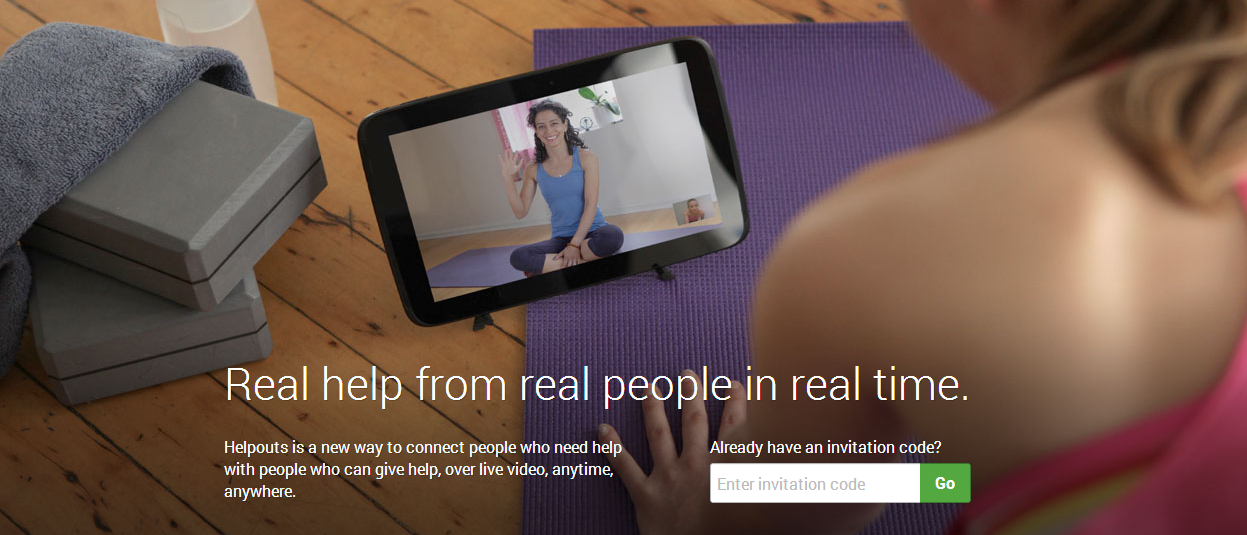
2013-08-21 00_08_40-Helpouts by GoogleHave you ever been stumped by a problem that's clearly outside your wheelhouse? Perhaps you've even fantasized about being able to just dial up an expert to pick their big meaty brain about the problem. That's exactly what Google has just announced with Helpouts. It's a cunning play on words, you see. It's like a Hangout, but it's used to help people. Google is clever.

2013-08-21 00_04_46-Helpouts by Google

The idea behind Helpouts is that folks with a certain area of expertise will set up an account with their skills, qualifications, availability, and rate.

Done With This Post? You Might Also Like These:

Google Quietly Announces Helpouts, A Video Chat Service Where Experts Can Sell Their Assistance was written by the awesome team at Android Police.


20 Aug 22:06

Top 10 Android apps from last week

by Steve Raycraft

Every week we cover new Android apps with Fresh Meat on Wednesday, followed by Android Gaming on Thursday and Top 10 app updates on Friday. On Mondays we look back to see which ones were the most crowd-pleasing among our audience. Read on for the 10 most popular Android apps among your peers from last week.

1. Klyph for Facebook

Klyph

Klyph is a great card-style app to replace the standard Facebook application.

2. Twisty Launcher

Twisty Launcher

If you are looking to try a new stock launcher replacement, download and install Twisty Launcher.

3. ActiveNotifications

ActiveNotifications

ActiveNotifications provide the ability to access your notifications without needing to unlock your screen first.

4. All-in-One Agenda

All-in-One Agenda

All-in-One Agenda is a great tool to manage your calendar and Facebook events using one application.

5.  CallHeads

Callheads

CallHeads notifies you of an incoming call without taking over your full screen with the notification.

6. Homestyler

Homestyler

Homestyler lets you snap a picture of your room and start designing it to your satisfaction.

7. 1 Second Everyday

1second

Catalog your life in 1 second increments using the 1 Second Everyday application.

8. Samsung Wallet

Samsung Wallet

Consolidating coupons, boarding passes and tickets to events is made simple using Samsung Wallet.

9. Office Mobile for Office 365

Office Mobile

Office 365 users can now view and edit documents while on the go.

10. Taskbar – Windows 8 Style

Taskbar - Windows 8 Style

Taskbar brings the familiar Windows style interface to your Android device.

20 Aug 20:05

Chrome Gets a New Settings Reset Button, Improved Omnibox

by Eric Ravenscraft

Chrome Gets a New Settings Reset Button, Improved Omnibox

Today, Google rolled out an update for Chrome that allows you to clear out all extensions and revert your installation back to its initial state without messing up your themes, bookmarks, or apps.

To get to the new option, go to your settings via the menu and select "Show advanced settings." At the bottom of the page, click "Reset browser settings" (as shown above) and Chrome will clean out your installation and make it just like new. The new update also brings some improvements to the omnibox.

Smarter omnibox suggestions for all | Google Chrome Blog

20 Aug 17:08

Amazon 'All Access' bundles physical and digital subscriptions for Wired, Vogue, and more

by Jacob Kastrenakes

Amazon is starting to combine physical and digital copies of magazines into a single subscription for a new payment model that it's calling "All Access." Condé Nast — home to some of the best known magazines around — is the first publisher on board, and it's launching with bundled subscriptions to seven titles, including Vogue, Wired, and Vanity Fair, while the rest of the publisher's catalogue is said to be coming by the end of the year. Bundled subscriptions aren't new — even Condé Nast's own New Yorker magazine offers such a deal — but in the past they haven't been available through Amazon or presented to such a broad audience of shoppers on credit card-equipped accounts. Even if it's a move focused on putting the magazines...

Continue reading…

20 Aug 15:56

Elmore Leonard, R. I. P.

by Bill Crider
TMZ.com: Elmore Leonard -- the legendary writer behind "Get Shorty," "3:10 to Yuma" and "Justified" -- has died, three weeks after suffering a stroke ... TMZ has learned.
20 Aug 15:53

Barnes & Noble clarifies Nook hardware isn't dead: more, lower cost e-readers are coming

by Carl Franzen

Barnes & Noble posted its latest quarterly earnings statement today, and the results were even worse than expected, with the company posting an $87 million cumulative loss compared to a $40 million loss a year ago. But the bigger news came in the form of the bookstore chain's future business moves: the company's chairman, Leonard Riggio, said he was "suspending" his bid to buy the company's physical retail stores and separate them from its Nook Media digital devices and content. And the company sought to clarify a June announcement that it was giving up on making its own Nook tablets, saying it had been widely "misinterpreted."

Continue reading…

20 Aug 15:50

Google Maps Adds Real Time Incident Reporting Courtesy Of Waze

by Ryan Whitwam

wazeOne of the advantages of using Waze for navigation has long been its real time traffic reporting by way of a committed user base. Now Google's acquisition of the company is bearing fruit as that live-updated data is being piped into Google Maps.

waze_incident

Google Maps can already estimate traffic conditions based on the movement of Android devices, but this new source of data is more exact. It will tell Maps users about accidents, road closures, construction, and other general traffic frustrations.

Done With This Post? You Might Also Like These:

Google Maps Adds Real Time Incident Reporting Courtesy Of Waze was written by the awesome team at Android Police.


20 Aug 12:52

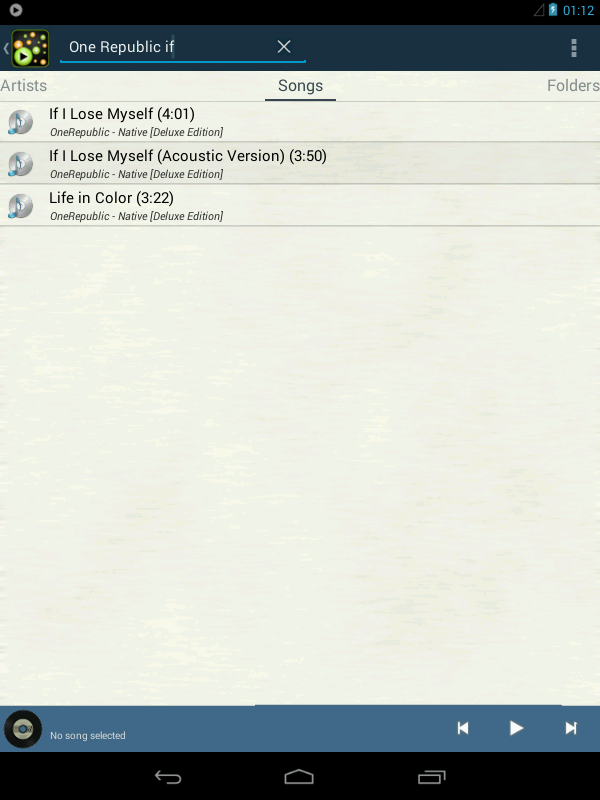
[New App] SoundSeeder Streams Music From One Android Device To Others Over WiFi Like A Poor Man's Sonos

by Jeremiah Rice

unnamed (8)I really like the Sonos system of wireless music servers and speakers. I also can't afford it due to a wretched and unshakeable habit of collecting novelty egg cups. But my job does give me a paper-thin excuse for buying tons of Android devices, and it just so happens that a new app will let me cobble those together to make a vague approximation of a connected music system.

unnamed (9) unnamed (10) unnamed (11)

SoundSeeder is more or less a straight-up copy of Samsung's Group Play, with the obvious addition that you don't need Samsung hardware at either end to use it.

Done With This Post? You Might Also Like These:

[New App] SoundSeeder Streams Music From One Android Device To Others Over WiFi Like A Poor Man's Sonos was written by the awesome team at Android Police.


20 Aug 12:51

26 Best New Android Games From The Last 2 Weeks (8/8/13 - 8/19/13)

by Jeremiah Rice

gameroundup_icon_largeWelcome to the roundup of the best new Android applications, games, and live wallpapers that went live in the Play Store or were spotted by us in the previous 2 weeks or so.

This edition focuses only on new games. The app roundup is coming up soon.

Please wait for this page to load in full in order to see the AppBrain widgets, which include ratings and pricing info.

Looking for the previous roundup editions?

Done With This Post? You Might Also Like These:

26 Best New Android Games From The Last 2 Weeks (8/8/13 - 8/19/13) was written by the awesome team at Android Police.


20 Aug 12:51

UK supermarket Tesco reportedly working on cheap tablet

by Alex Dobie

Tesco

British supermarket chain Tesco is reportedly reportedly working on its own-branded tablet computer, which will compete with the likes of the Nexus 7 and Amazon Kindle Fire. The news comes from UK-based newspaper The Sunday Times, which says the tablet will retail around the £100 mark -- significantly cheaper than most Android tablets -- and come with built-in support for Blinkbox, the streaming service acquired by Tesco in 2011.

Though not specifically mentioned in the report, the low retail price and streaming focus suggests that the tablet will likely run Android in some form or other.

The move could be seen as way for Tesco to claw back revenue lost through declining physical media sales, while also expanding into a potentially lucrative market. The supermarket's prominence in the UK would present it with ample opportunity to get its new tablet in front of shoppers.

Source: The Times (Paywall); via: The Independent; Thanks for the tip, John!


20 Aug 12:50

Samsung Galaxy NX now available in the UK

by Alex Dobie

Galaxy NX

Android-powered 4G LTE mirrorless camera retails for £1,299

Around a month after we first got wind of the Samsung Galaxy NX's UK pricing, the Android-powered mirrorless camera is now available to purchase in the UK. Brits can pick up the Galaxy NX from outlets including Jessops, PC World and Currys, where it's available with an 18-55mm OIS kit lens for a whopping £1,299 ($2,033). Of course, the Galaxy NX is no ordinary interchangeable-lens camera -- it's also packing 4G LTE connectivity, a 4.8-inch HD display and a software suite including Android 4.2.2 Jelly Bean and Samsung's TouchWiz UI.

If you want a professional-class Android-powered camera, this is where it's at for the moment -- but it's not going to come cheap.

More: Samsung Galaxy NX video walkthrough

Source: Currys, Jessops; via: TNW


20 Aug 12:38

Debating the Great Firewall of Cameron in the NYT

by Cory Doctorow

The NYT's "Room for Debate" section asked a variety of people for positions on the UK's Great Firewall of Cameron -- a new rule whereby ISPs must slap an "adult content" filter on every Internet connection in the land, which is meant to stop everything from porn to gambling sites to "esoteric material" (whatever that is). I wrote one of the pieces, as did many others.

The companies that supply networked censorware turn a profit selling to dictatorships, like the United Arab Emirates, where network filters from American companies were used to suppress footage of a member of the royal family torturing a man and then running him over with a luxury car (the software also handily compiled a list of everyone who was trying to look at that video, which must have been useful for the secret police, whose boss was, coincidentally, the royal torturer caught in the video).

The companies repackage this software for use by Fortune 100 companies, libraries and schools, which must censor according to the terms of the Communications Decency Act – and now, for use by all of Britain's Internet service providers. In practice, the British law means shipping the nation's Internet traffic offshore for processing and surveillance by criminal regimes and their allies.

No one seriously pretends that this will stop kids who want to look at porn from finding it. But a regime of total, national surveillance in the name of protecting children serves an important political purpose. It satisfies the security syllogism: “Something must be done! I have done something. There now, something has been done.”

Can Free Speech and Internet Filters Co-Exist?


20 Aug 12:34

YouTube For Android Gets Major Makeover, Lets You Minimize Videos While Browsing And Searching

by Frederic Lardinois
youtube-logo

Google today started rolling out a major new version of YouTube for Android. This update is one of the most significant for the service in a long time and introduces a cool in-app multitasking feature that lets you minimize the screen while you browse channels or perform searches. It also features Google’s standard “card” interface.

Until now, viewers had to stop the video. In this new version, the video will just move to the bottom-right corner of the screen and continue playing. From there, you can always get back to full-screen mode or just swipe right or left to dismiss the video.

This new “picture-in-picture” feature is the highlight of today’s release, but the YouTube team also added a bunch of other new features. You can now, for example, more easily search for and browse channels for playlists to watch collections of videos back-to-back.

With the recent launch Google Chromecast, it’s no surprise that the company has added deeper integration with the new YouTube app. This means you will now see a preview screen on your device while a video is playing on Chromecast or other smart TV that supports this feature. This should make it easier to queue up the next video.

It’s not clear when this update will hit iOS, but a Google rep told me it will come to all platforms soon.

The update should start rolling out to all Android devices soon. If you can’t wait, the good folks at Android Police have links to the APK for your downloading pleasure.


20 Aug 12:30

Google preparing parental controls for Chrome browser

by Jacob Kastrenakes

Google is building parental controls for a future Chrome release, coming as part of a new feature that would allow users to set up multiple accounts on the same machine. Basic aspects of the features are already available in the Chrome developer build, though they aren't fully working just yet. Through the tool, Chrome users can set up multiple accounts on one machine — none of which need to be connected to a Google profile. The accounts each have distinct bookmarks and histories, and some accounts can be set up to oversee the others, allowing them to choose what websites others can and can't visit.

When using profiles, Chrome will display one of several playful account icons — from secret agents to hamburgers and kittens — in...

Continue reading…

20 Aug 12:30

Integrated Skype calling now available for all Outlook.com users in North America and UK

by Chris Welch

After testing the waters with a preview back in April, Microsoft is today rolling out Skype video calling and messaging to all Outlook.com users across the United States, Canada, United Kingdom, Germany, Brazil, and France. Your Skype contacts should now appear grouped within Outlook's contact list, though you'll need to install a plugin before you can chat face-to-face via video calling. And don't fret if you've somehow never signed up for Skype until now; your Microsoft account works just like a Skype ID for messaging and video chat. Supported browsers include Internet Explorer, Chrome, and Firefox. To take advantage of the new feature, start a message conversation as you normally would, and then click on the video or audio icon to...

Continue reading…

20 Aug 12:30

UK officials destroy Guardian hard drives in misguided effort to stop Snowden stories

by Casey Newton

Officials from the British intelligence agency GCHQ raided The Guardian's offices to destroy hard drives related to the newspaper's stories about National Security Agency leaker Edward Snowden — despite the fact that the information had already been disseminated to other sites around the world. In a chilling post today, Guardian editor Alan Rusbridger said the British government has put increasing pressure on editors to surrender all of the information that Snowden provided to the newspaper and its chief reporter on the stories, Glenn Greenwald. Prior to the destruction, an official reportedly told the paper, "You've had your fun. Now we want the stuff back." News of the raid comes a day after Greenwald's partner was detained for...

Continue reading…

20 Aug 12:29

Instagram tells third party apps to cease using 'insta' and 'gram' in their name

by Dieter Bohn

Instagram has sent an email to an app developer who utilizes its APIs, telling Luxogram that it will need to change its brand name so that it does not include either "insta" or "gram." There are many such apps that use the hooks that Instagram provides to build things like gallery viewers and other tools, including Webstagram and Luxogram. According to TechCrunch, which posted a portion of Instagram's message, these developers will need to reply within 48 hours and will have a "reasonable period" in which to change their apps' names. For developers to maintain continued access to Instagram's APIs, they'll presumably need to adhere to the new, stricter standard.

Instagram's new brand guidelines are a shift from its earlier terms of use,...

Continue reading…

19 Aug 18:53

Diigo, A Tool For Highlighting And Adding Sticky Notes To The Web, Gets A Facelift

by Jon Orlin
logo256x256

The social bookmarking, web annotation and research tool Diigo is launching a redesign and refresh today. The site has 7 million registered users, but the boot-strapped company is seeking a path to profitability. The founder tells TechCrunch the simple fact Diigo is alive and kicking, while many players in the space have failed, reveals some important lessons.

Diigo (pronounced Dee’go) launched in 2005 as an online bookmarking site. It soon added the ability to annotate and collect the web by highlighting and adding sticky notes to webpages. At the time, TechCrunch Founder Michael Arrington wrote that he liked Diigo but questioned how many of these sites “can make the cut”.

Eight years later, we have the answer. Not many. A survey by Hypothes.is shows that of 56 companies that tried to build annotation tools, most are either Defunct, Living Dead, or have Limited Use. The five that remain in wide usage are Diigo, Mendeley, DocumentCloud, RapGenius, and Goodreader. Both Mendeley and Goodreader are only tangentially related to annotations. While Rapgenius annotates its own sites, Diigo lets users annotate the whole web.

Wade Ren, the Executive Chairman and a founder at Diigo, says the reasons Diigo and VC-funded Rapgenius became the only survivors in the annotation space is they “both make annotation part of something bigger. Rapgenius uses annotation to build destination sites. Diigo makes annotation a part of a rich tool for personal knowledge management.” Ren says he’s learned that annotation alone can’t be a success. That’s why Diigo has added social bookmarking, collaborative research, screenshot and picture saving, page caching and other information management tools.

Google’s Goal To Annotate The Web

Few people realize it, but the concept of annotating the web helped Google to its path to success. In a 2003 talk by Google Founder Larry Page, a note taker captured this quote (highlighted on a Diigo page, which demonstrates a key Diigo sharing feature):

“It wasn’t that we intended to build a search engine. We built a ranking system to deal with annotations. We wanted to annotate the web–build a system so that after you’d viewed a page you could click and see what smart comments other people had about it.”

The system they built was called PageRank, and Page said “only later did we realize that PageRank was much more useful for search than for annotation.”

Diigo’s New Features

Diigo’s new website makes it easier to use and looks cleaner. Search has been vastly improved and now includes full text search for the pages that are bookmarked. They also introduced a new logo and a redesign of the Diigo Web Collector, a Chrome browser extension.

With this tool, you can add a sticky note or highlight text on a webpage. If you visit that page in the future, those notes and highlights will appear on the page. The Diigo extension icon gets a red bookmark symbol added when you visit a bookmarked page, and yellow dots next to the scroll bar jump you to the location of your annotations.

One great use for Diigo is its integration with Google search. Similar to the tool from Evernote, if you turn the option on in the extension, a Google search will also search your Diigo library and display a box linking you to those results. If a web search leads you to a site you want to remember, just save it in Diigo, and the next time you search Google, you will be able to find it again right away. You don’t need to remember that you saved the page to Diigo, since the Google search will find it. No need to remember to visit Diigo’s site either.

Diigo is also coming out soon with an update to its browser on iOS for iPad and iPhone when it gets Apple approval’s.

Diigo operates on the freemium model. You can use it for free and save an unlimited number of bookmarks. Unlimited cached pages and screen captures cost $40 a year.

The Competition

In addition to all the failed companies in the annotation space, Diigo overlaps with many popular companies doing other parts of what Diigo does.

Pocket and Instapaper do a great job offering the ability to read something later, also a feature of Diigo. Adding a link to Pocket or Instapaper can be done with very little friction. Just one click. Adding a link to Diigo to read it later takes 2 clicks (one on the extension, and the next to Read Later.) Adding an annotation takes a bit more work. It’s still pretty quick but does take a little more effort to become a habit.

Evernote, another freemium business model, allows you to capture anything and save it. But Evernote stores it in a digital notebook. While Diigo stores your list of bookmarks and can cache pages, it also offers the overlay of your highlights and notes when you view the saved page in your browser.

Delicious was once the king of social bookmarking. The site was acquired by Yahoo in 2005, but appeared on a list of Yahoo projects to be sunsetted in 2010. This helped Diigo gain some new users, including myself. Yahoo sold Delicious to Chad Hurley and Steve Chen and its been re-launched. While you can bookmark sites and add tags and notes, it doesn’t offer the robust features of Diigo, including annotation.

Diigo has gained a stronghold with teachers and students, who make up 20 percent of its active user base. Highlighting, adding notes, and sharing them are a natural fit for education.

The team at Diigo knows that annotating webpages is not for everyone. But they believe there is a need for it. While they don’t claim to know how big the market is, this refresh is designed to prove that their tool is going to be the one that survives.


19 Aug 17:23

Bullshit jobs: why we're not all working 4h days

by Cory Doctorow


David Graeber, who wrote last year's incredible Debt: The First 5,000 Years, has an extraordinary essay up called "On the Phenomenon of Bullshit Jobs," which explores the phenomenon of people in productive industries (nursing, teaching, etc) being relentlessly ground down on wages, job stability and working conditions; while all the big money aggregates to the finance industry and a layer of "bullshit jobs" like corporate attorneys, administrators, etc -- who do jobs that produce no tangible benefit.

Even more perverse, there seems to be a broad sense that this is the way things should be. This is one of the secret strengths of right-wing populism. You can see it when tabloids whip up resentment against tube workers for paralysing London during contract disputes: the very fact that tube workers can paralyse London shows that their work is actually necessary, but this seems to be precisely what annoys people. It’s even clearer in the US, where Republicans have had remarkable success mobilizing resentment against school teachers, or auto workers (and not, significantly, against the school administrators or auto industry managers who actually cause the problems) for their supposedly bloated wages and benefits. It’s as if they are being told “but you get to teach children! Or make cars! You get to have real jobs! And on top of that you have the nerve to also expect middle-class pensions and health care?”

If someone had designed a work regime perfectly suited to maintaining the power of finance capital, it’s hard to see how they could have done a better job. Real, productive workers are relentlessly squeezed and exploited. The remainder are divided between a terrorised stratum of the, universally reviled, unemployed and a larger stratum who are basically paid to do nothing, in positions designed to make them identify with the perspectives and sensibilities of the ruling class (managers, administrators, etc) – and particularly it’s financial avatars – but, at the same time, foster a simmering resentment against anyone whose work has clear and undeniable social value. Clearly, the system was never consciously designed. It emerged from almost a century of trial and error. But it is the only explanation for why, despite our technological capacities, we are not all working 3-4 hour days.

On the Phenomenon of Bullshit Jobs (via Hacker News)


19 Aug 17:21

Painting on utility box presents an alternate universe

by Mark Frauenfelder

Matthew says: "Artist Mona Caron has painted Manifestation Station, a mural on a utility box in San Francisco. When viewed from a specific vantage point, the mural replaces the unsightly box with a utopian scene.


19 Aug 16:12

How to Fix Annoying Multi-Page Articles All Over the Web

by Whitson Gordon

How to Fix Annoying Multi-Page Articles All Over the Web

We all know that feeling: You've found an interesting article online, only to discover it wants you to click through 10 pages of a slideshow just to read the darn thing. Here are a few tricks to banishing multi-page articles forever.

Read more...

19 Aug 16:09

Germany's ruling on Bitcoin paves the way for its legitimacy in the EU

by Adrianne Jeffries

The German Ministry of Finance has issued an official statement recognizing the virtual currency Bitcoin as "Rechnungseinheiten," a legal designation that translates to "units of account" — more than Monopoly money, but not quite currency. This type of accounting unit, which also covers regional currencies, is also referred to as "artificial currency" or "side payments." (Think barter clubs or Disney dollars.)

The announcement came in response to a direct question from a member of the German parliament Bundestag. But contrary to press reports, this is not a new position. It is an affirmation of a previous ruling by the Federal Financial Supervisory Authority, also known as BaFin, a body within the Ministry of Finance.

The designation...

Continue reading…

19 Aug 16:09

Barnes & Noble Expands Nook Video To iOS, Android & Roku

by Sarah Perez
nook-video

Barnes & Noble released new Nook Video apps for iOS, Android and Roku today, which brings its TV and movie-watching service to other manufacturers’ devices and tablets, including, of course, the unnamed third-party that will be producing Nook-branded tablets in the future, via the licensing deal announced in June.

It’s been a tough year for B&N, which lost its CEO William Lynch last month, and has been in the middle of a series of strategic changes for its business, including the promotion of finance guy and former CFO Michael Huseby to CEO of Nook Media and President of B&N, Inc. He now reports to Exec Chairman Leonard Riggio, head honcho following Lynch’s departure. The company had also previously killed off its Nook desktop apps for Mac and PC, and made major changes to its tablet business.

The Nook tablets had been struggling in the shadow of competitors like iPad and Android-based devices, including the Amazon Kindle Fire, leading the company to exit the business of designing and manufacturing its own color tablets in-house. But B&N is still trying to figure out how to make the Nook brand work, even if that means supporting its services on rival tablets. (Previously, the store was only available on Nook devices.)

With the new mobile applications and Roku apps, Nook Video will now run on mobile, tablet and TVs, including B&N’s still supported Nook Tablet and Nook Color devices, which will receive the new app today. There, it will automatically show up in customers’ lockers, the company says.  The apps provide access to “thousands” of titles which can be rented or purchased from the Nook Store. The lineup includes new releases, HD fare, as well as TV shows and classics, and viewing can be stopped and started as users move between their different devices.

Nook Video is also integrated with UltraViolet, the initiative which lets customers view their purchased DVD and Blu-ray titles on mobile devices.

The company had been fairly quiet after the CEO shuffle until yesterday, when it announced it would undercut Amazon by dropping its pricing on Nook Simple Touch GlowLight to $99, a move that hints new Nook e-reader models are on the way for the back-to-school season.


19 Aug 14:10

Supreme Court Orders RapidShare to Police the Internet

by Ernesto

rapidshareIn the aftermath of the Megaupload shutdown the legality of many file-hosting services was called into doubt, RapidShare included.

During the past several years RapidShare has made tremendous efforts to cooperate with copyright holders and limit copyright infringements. But this hasn’t prevented the company from getting involved in a handful of lawsuits against rightsholders.

Last year a regional High Court in Germany confirmed two separate verdicts by a lower court, in cases that were initiated by book publishers and a music rights group.

The court clarified that RapidShare has no obligation to proactively monitor files that are uploaded by its users. However, the company is required to monitor external sites that link to copyrighted files on RapidShare, and ensure these files become inaccessible to the public.

In addition, the ruling noted that when these measures prove not to be effective enough, the file-hosting site should restrict the opportunity for people to use the site anonymously. RapidShare already logs IP-addresses but to decrease anonymity customers may also have to show proof of identity.

Arguing that this decision went too far RapidShare took the case to the Supreme Court, but that appeal has now been rejected. The full decision is yet to be published but it is clear that the court affirmed the earlier judgment.

Copyright holders are happy with the Supreme Court confirmation. According to them it proves that service providers have an obligation to actively address piracy, and do more than simply responding to takedown notices.

“The confirmation of the judgment is groundbreaking because it clarifies that it’s a fundamental responsibility of online storage services towards rightsholders, whose works are shared en masse through their platforms,” music rights group GEMA comments.

TorrentFreak asked RapidShare for a comment on the Supreme Court decision but we have yet to receive a response.

Initially, not much is expected to change for the file-hosting service as they have already been “policing” the Internet for quite a while.

“That is exactly what RapidShare has already been doing for many years. If the Anti-Abuse Team identifies a download link on such pages which results in a file that has clearly been published illegally being on the company’s servers, the file in question is immediately blocked,” the company told us previously.

However, RapidShare believed that making this policy mandatory goes too far. “We believe that being obliged to carry out such actions is questionable from a legal perspective,” RapidShare said.

Aside from monitoring forums and linking sites for infringing links, over the past few years RapidShare has made several other adjustments to its service to decrease unlawful use. Most recently the company restricted the ability of all users to share files in public, hoping that would drive away pirates.

These measures resulted in an exodus of users and as a result RapidShare fired 75% of its employees earlier this year.

It is expected that the Supreme Court decision will have massive implications. Not only for RapidShare, but also for many other file-hosting services that operate in Germany. More on what will change exactly for RapidShare and its users will become apparent when the full verdict is released a few weeks from now.

Source: Supreme Court Orders RapidShare to Police the Internet

19 Aug 14:08

[New App] Timely Is A Gorgeous Alarm Clock And Timer With Cloud Syncing, A Customizable UI, And More

by Ryan Whitwam

unnamedAlarm clock apps are not usually described as lovely, but this one is. Scratch that – Timely is devastatingly beautiful. The numbers morph gracefully from one to the next, there are a ton of themes, and the subtle movement in the background looks great. It's not just a pretty face, though. Timely has some really useful features.

Timely uses an interesting tap-and-drag gesture to set alarm times. If you prefer to use Google Now voice input, Timely works with that too.

Done With This Post? You Might Also Like These:

[New App] Timely Is A Gorgeous Alarm Clock And Timer With Cloud Syncing, A Customizable UI, And More was written by the awesome team at Android Police.


19 Aug 14:06

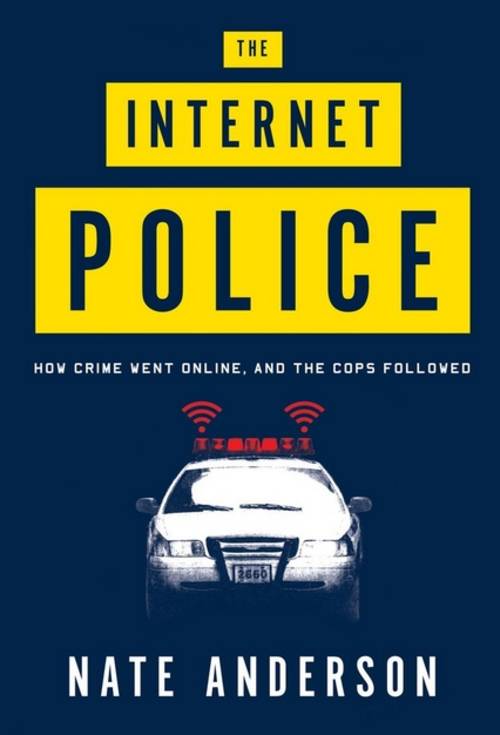
The Internet Police: How Crime Went Online, and the Cops Followed

by Cory Doctorow


Nate Anderson is one of my favorite Ars Technica writers -- always thorough and always evenhanded, but never shrinking from venturing an opinion or trying to put individual incidents in the context of the wider Internet. His new book, The Internet Police: How Crime Went Online, and the Cops Followed, is a brisk, eminently readable, and important history of the relationship between law, law enforcement, and the net, and as you'd expect, it's excellent.

Crime books are inherently interesting. All that salacious detail, all those ill-gotten gains, all that breathless chasing and courtroom drama. Internet Police is no exception. Anderson's reporting career has exposed him to innumerable cases of fascinating and horrifying networked shenanigans, and he cherry-picks the most interesting stories to tell, and tells them well, and uses each one to paint a broader picture of how the attempt to impose law and lawfulness on the Internet has unfolded at every turn.

Anderson does good work on drawing the connection between certain policing measures -- censorship, surveillance, private copyright enforcement, campaigns to control devices and features -- and the overall health of the Internet and the safety of its users. This is the most important and least understood element of the theory of networked policing: when you set the rules so that the police have an easy time of removing material from the Internet, or listening in, or disabling devices, or hijacking computers, you create a broad vulnerability that is available to everyone, not just the "good guys." He shows how poorly thought-through efforts to make it easier to enforce the rules just let the bad guys do worse -- whether those bad guys are crooks, totalitarian governments, or bad cops.

For all that, Anderson's book is profoundly empathic. Even when he's showing you where the cops got it badly wrong, or where the entertainment industry's policy objectives were self-destructive and terrible for the net, he goes to some lengths to try to understand why the people who enacted these rules failed. He doesn't assume that mistakes spring from mere stupidity, and looks for the "reasonable" case for each mistake. He doesn't let the rich and powerful off the hook for their mistakes, but knowing how the mistakes got made is key to understanding how to prevent them in future.

I follow a lot of the same issues as Anderson, and in my view, he really understands this subject and brings a lot of insight to it. I did disagree with him in a few places -- his description of the defeat of SOPA repeats the pernicious myth that it was killed because Google stood up to Congress; the truth is that there was a massive grassroots uprising that Google and other big players rode along for once it was clear that to do otherwise was to be on the wrong side of history. I suspect that Anderson was employing shorthand here, but this shorthand has an unfortunate coincidence with the story that power-players in DC tell each other about a world where big companies call all the shots and the little people don't matter.

That's a quibble, though. For the most part, I vigorously agreed with Anderson's analysis, and enjoyed the way he made connections I hadn't seen and filled in backstory I hadn't known about. All in all, this is a great choice for someone wanting to understand the way that law and code interact with each other.

The Internet Police: How Crime Went Online, and the Cops Followed