Shared posts

03 Dec 13:39

Fifth Bourne Film Set For August 2015 Release

Fifth Bourne Film Set For August 2015 Release

Year apparently still not quite crowded enough

Just when you thought 2015 couldn't get even more crammed, the studios surprise us all by adding another film to the teetering crowd stuck on top of the box-office Buckaroo that is the year’s release slate. You can now count the fifth Bourne movie among those vying for your attention and your hard-earned currency at the cinema.

August 14 is the day when, in the States at least, audiences will see how a new team takes on the franchise, with Fast & Furious veteran director Justin Lin calling the shots and Sherlock Holmes writer Anthony Peckham on script duty. According to the most recent reports, Jeremy Renner’s Aaron Cross is still the focus for this adventure, so it’ll likely follow on from The Bourne Legacy’s reveal of another super-spy program and the fallout after Cross goes up against those trying to wipe him out.

One other release of note (though one not elbowing its way into the busy 2015 calendar) is Luc Besson’s latest, the Scarlett Johansson-starring Lucy, set to arrive on August 8 next year. The film finds Johansson as an unwitting drug mule who becomes a powerhouse fighter when one of the designer narcotics she's carrying leaks into her system, leaving her able to suppress pain and avoid emotion, while starting a ticking clock that's killing her. At least she won't have to battle for attention during cinema-geddon the following year...


03 Dec 13:39

TV Teaser For Guillermo Del Toro's Strain Show

TV Teaser For Guillermo Del Toro's Strain Show

Rats all, folks...

We’ve had very little in the way of visuals from the new TV series based on Guillermo del Toro and Chuck Hogan’s vampire novel trilogy The Strain. And indeed, this new teaser won’t scratch any itch you have to see actual footage from the show; it’s strictly a found footage teaser aired during The Walking Dead. Still, it surely means that a proper trailer can’t be far away.

The Strain finds Dr. Ephraim Goodweather (Corey Stoll) and his team battling a mysterious viral outbreak that bears all the hallmarks of an ancient strain of vampirism. The condition spreads, and soon Ephraim and a group of ordinary New Yorkers are battling for the fate of humankind.

The cast also features the likes of Kevin Durand, Mia Maestro, Sean Astin, Robert Maillet, John Hurt (though he’s only in the pilot, and David Bradley will take over his role in the series) and del Toro regular Doug Jones.

Following a positive reaction to the pilot directed by del Toro, the show scored a full 13-episode first series at the US FX network, and is currently shooting in Toronto, overseen by Lost and Bates Motel executive producer Carlton Cuse. There remains no word on when or where it will air in the UK.


03 Dec 13:37

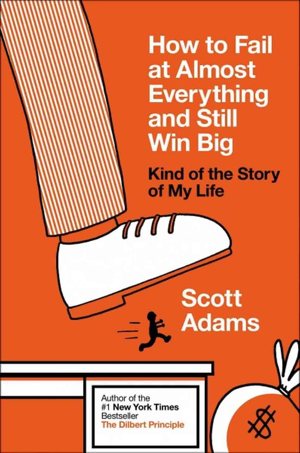
Simplifiers and Optimizers, by Dilbert creator Scott Adams

by Scott Adams

Some people are what I call simplifiers and some are optimizers. A simplifier will prefer the easy way to accomplish a task, while knowing that some amount of extra effort might have produced a better outcome. An optimizer looks for the very best solution even if the extra complexity increases the odds of unexpected problems. I have a bias for simplification, but surely there are situations in which optimizing is the better play. So how do you know which approach works best in a given situation?

If the situation involves communication with others, simplification is almost always the right answer. If the task is something you can do all by yourself, or with a partner who is on your wavelength, optimizing might be a better path if you can control most variables in the situation. And realistically, sometimes you simply have to get three hours of tasks completed in two hours, so we don’t always have the luxury of being able to choose simple paths.

I prefer simplicity whenever I’m choosing a system to use. People can follow simple systems better than complicated ones. I’ll give you some examples of that in later chapters about fitness and diet. The most optimized diet plan or fitness plan will also be the most complicated. But few people have enough willpower in reserve to follow complicated plans.

If you can’t tell whether a simple plan or a complicated one will be the best, choose the simple one. If it’s a coin toss, you might as well do whatever is easiest.

If the cost of failure is high, simple tasks are the best because they are easier to manage and control. Missing a dinner reservation isn’t the end of the world, so doing some optimizing in that case is defensible. But if you are driving to an important business meeting, you don’t want to pile on some errands that are “on the way,” because that introduces unwanted stress and uncertainty.

In my career I’ve always felt that my knack for simplicity was a sort of superpower. For example, when I draw Dilbert I include little or no background art in most panels, and when I do, it’s usually simple. That’s a gigantic time-saver.

I assume that other cartoonists retire early at least in part because they are optimizers, and that level of energy can be hard to sustain in the long run. No one reads Dilbert comics for the artwork. I have the luxury of being able to do simple drawings directly on the computer using a Wacom Cintiq device (a computer screen on which you can draw). I type the dialogue using a special font I created of my handwriting. Over the years I have streamlined the system to the point where I can bang out a comic in about an hour if I need to, although I usually take longer. Dilbert was designed from the start to be simple to create, and I continue to streamline the process. That simplicity has paid off big-time because it frees me to blog, write books, do interesting side projects, and still enjoy life.

Optimizing is often the strategy of people who have specific goals and feel the need to do everything in their power to achieve them. Simplifying is generally the strategy of people who view the world in terms of systems. The best systems are simple, and for good reason. Complicated systems have more opportunities for failure. Human nature is such that we’re good at following simple systems and not so good at following complicated systems.

Excerpt adapted from How to Fail at Almost Everything and Still Win Big: Kind of the Story of My Life by Scott Adams, in agreement with Portfolio, an imprint of Penguin Random House. Copyright (c) Scott Adams, 2013.

Simple systems are probably the best way to achieve success. Once you have success, optimizing begins to have more value. Successful people and successful businesses have the luxury of being able to op- timize toward perfection over time. Start-ups often do better by slapping together something that is 80 percent good and seeing how the public responds. There’s time to improve things later if the market cares about the product.

Another big advantage of simplification is that it frees up time, and time is one of your most valuable resources in the world. If you give an ant infinite time, he can move a mountain all by himself. In my case, I can run the equivalent of three separate careers (cartoonist, author, entrepreneur) in the same forty-hour week that would normally accommodate one job.

Simplification frees up energy, making everything else you do just a little bit easier. That’s a huge deal. You don’t want your job interview to go poorly because on the way to the interview you completed four complicated errands that turned you into a ball of stress. When you are trying to decide between optimizing and simplifying, think of your entire day, not the handful of tasks in question. In other words, maximize your personal energy, not the number of tasks. As I mentioned earlier, we don’t always have the option of choosing simplicity, especially if we have a thousand things to complete in a day. But it’s a good idea to have an overarching plan to move toward simple systems as opportunities allow. You can chip away at the complexity of your life over time. Simplicity is a worthy long-term goal. That’s how you will free your personal energy so you can concentrate it where you need it.

[Listen to Mark's interview with Scott Adams about his book, How to Fail at Almost Everything and Still Win Big: Kind of the Story of My Life.]


03 Dec 13:34

17 Best New Android Apps And Live Wallpapers From The Last 2 Weeks (11/19/13 - 12/2/13)

by Jeremiah Rice

roundup_icon_largeWelcome to the roundup of the best new Android applications, games, and live wallpapers that went live in the Play Store or were spotted by us in the previous 2 weeks or so.

Please wait for this page to load in full in order to see the widgets, which include ratings and pricing info.

Looking for the previous roundup editions? Find them here.

Featured App

Bills Reminder

Today's roundup is presented by Bills Reminder from HandyApps.

Done With This Post? You Might Also Like These:

17 Best New Android Apps And Live Wallpapers From The Last 2 Weeks (11/19/13 - 12/2/13) was written by the awesome team at Android Police.


03 Dec 13:31

UK operators to introduce bill caps for stolen phones

by Alex Dobie

Big Ben

Cap on bills for phones reported lost or stolen, plus action to protect consumers from mid-contract price rises

The UK government has reached an agreement with some of the major British mobile operators to protect consumers from the cost of unexpected mobile bills, it has announced.

The Guardian reports that agreement between the government and EE, Three, Virgin Media and Vodafone will see a cap placed on bills from phones reported lost or stolen, in addition to measures designed to protect customers from mid-contract price hikes. Operators will inform customers when these price rises will take place, and give them the option of ending the contract without any penalty if these occur.

Operators including BT, Sky and Talk Talk have also agreed to work towards an EU target of eliminating international roaming fees by 2016. Meanwhile the bill cap for stolen phones is expected to be in place by next spring.

Source: The Guardian


03 Dec 13:27

Nvidia could give Shield the power of a gaming PC with Grid streaming technology

by Sean Hollister

About a year and a half ago, the excitement around cloud gaming all but disappeared. Sony bought GaikaiOnLive collapsed, and Nvidia's GeForce Grid partners failed to materialize in the United States. The idea was that you could give any old smartphone or tablet limitless gaming power by actually running the games on server farms, then stream them like a YouTube video. It seemed like an idea ahead of its time, but it actually worked — and now, Nvidia appears to be testing the waters of cloud gaming once more.

Today, the company launched an extremely limited beta of Nvidia Grid, a new cloud gaming service exclusively for the Shield. It only works if you live close enough to the company's single data center in San Jose, California....

Continue reading…

03 Dec 13:26

'Cuddle hormone' oxytocin can stimulate brain activity in autistic children

by Sean Hollister

Could there be an inhaler for autism? That's a legitimate question. For years, researchers have studied the possibility that a hormone called oxytocin could help autistic people better understand social interactions. Often known as the "love hormone" or "cuddle hormone" for its ability to bring out feelings of empathy and trust in individuals — not to mention its roles in orgasm and childbirth — scientists discovered that autistic adults who took a few puffs of oxytocin could better identify emotions in others.

Now, it appears that oxytocin might be effective in autistic children, too. The Yale Child Study Center conducted an experiment with 17 children suffering from autism spectrum disorder, and found that oxytocin made a...

Continue reading…

02 Dec 21:51

Top Android apps from last week: App Ops, Spendee, Flipagram

by Steve Raycraft

Every week we cover new Android apps with Fresh Meat on Wednesday, followed by Android Gaming on Thursday and Top 10 app updates on Friday. On Mondays we look back to see which ones were the most crowd-pleasing among our audience. Read on for the 10 most popular Android apps among your peers from last week.

1. App Ops 4.3/4.4 KitKat

App Ops

App info: Use this app to control permissions on a per app basis.

2. Spendee

Spendee

App info: Spendee is a beautiful app to manage your personal spending.

3. Sonic Dash

Sonic Dash

App info: Sega brings us a new Sonic endless runner game in Sonic Dash.

4. Branches for Twitter

Branches for Twitter

App info: A unique Twitter client that groups tweets by author.

5. Q4 Keyboard

Q4 Keyboard

App info: Q4 Keyboard introduces a unique floating color QWERTY keyboard that can be reduced to 4 keys for increased typing performance. Q4 predicts what you want to type and will learn how YOU type to develop your personal dictionary.

6. SOULCALIBUR

SoulCalibur

App info: SOULCALIBUR is a classic 3D fighting game from the ’90s.

7. Student Budget

Student Budget

App info: Students can easily manage their finances using this new app. Set up a weekly balance to make sure you have enough money for the week.

8. Courses123

Courses123

App info: If you are looking to learn a new language this is a great app to assist in that process. Languages included are: English, Spanish, German, Italian, and French.

9. Flipagram

Flipagram

App info: Take your Instagram photos and create a unique video story.

10. 500 Firepaper

500 Firepaper

App info: 500 Firepaper is a live wallpaper showing popular images from 500px.

Note:  To ensure apps receive a fair chance to make the list, we will retire any app that has made the list for 3 consecutive weeks and will place it in our Android and Me App Hall of Fame. We will post this Hall of Fame list in a dedicated series.

02 Dec 21:50

United Nations counterterrorism official launches investigation into NSA surveillance

by Jacob Kastrenakes

The United Nations senior counterterrorism official is launching an investigation into the surveillance activities of both the United States' and the United Kingdom's intelligence agencies. UN special rapporteur Ben Emmerson said that he would be initiating an investigation into both the NSA and GCHQ in an op-ed published in the Guardian today. Emmerson writes that he's identified five areas of contention worth considering: whether Snowden should be given the legal protections of a whistleblower, whether his leaks damaged US or UK national security, whether his leaks show the need for surveillance overhaul, whether British parliament was misled about the intrusiveness of surveillance, and whether British parliament's current...

Continue reading…

02 Dec 21:50

VSCO Cam making its way to Android tomorrow

by Andrew Martonik

App will be free with additional presets and tools available for purchase

One of the more popular camera and photo editing apps out there, VSCO Cam, will be available in Google Play starting tomorrow. On its blog VSCO Cam says that its app will offer the highest quality of photo presets and tools available for Android photographers out there, and given its popularity on iOS we tend to think they're doing something right.

VSCO Cam has been in private beta for Android users since the end of July, but there was no real indication of when it would finally debut for the general public. Now we know it'll be hitting the Play Store tomorrow, and it will be free to download and use with 10 presets and various editing tools. VSCO Cam will monetize with in-app purchases for better preset packs and tools, but it's good to see a basic feature set come out for free.

The app will be available for "most" devices running Android 4.0 and above, so be on the lookout tomorrow for the official release.

Source: VSCO Cam Blog


02 Dec 20:19

How big corporations and government spy agencies surveil and sabotage activist groups

by Cory Doctorow

In Spooky Business: Corporate Espionage Against Nonprofit Organizations [PDF] a November 2013 report from a DC thinktank called The Center for Corporate Policy, researcher Gary Ruskin documents the scary, corrupt relationship between major corporations, private security firms, and secret police agencies like the FBI. These entities engage in highly militarized spying and sabotage campaigns against activist organizations from Greenpeace to the Camp for Climate Action, to Occupy and more; planting spies and provocateurs in their midst, compiling dossiers on organizers, and going through their trash for evidence of plans. Included in the opposition are active-duty CIA agents, who are allowed to moonlight for private clients in their off-hours, and the FBI, whose involvement in corporate anti-activist espionage was condemned in a 2010 report from the Office of the Inspector General in the US Justice Department.

The FBI's involvement in corporate espionage has been institutionalised through 'InfraGard', "a little-known partnership between private industry, the FBI and the Department of Homeland Security." The partnership involves the participation of "more than 23,000 representatives of private industry," including 350 of the Fortune 500 companies.

But it's not just the FBI. According to the new report, "active-duty CIA operatives are allowed to sell their expertise to the highest bidder", a policy that gives "financial firms and hedge funds access to the nation's top-level intelligence talent. Little is known about the CIA's moonlighting policy, or which corporations have hired current CIA operatives."

The report concludes that, due to an extreme lack of oversight, government effectively tends to simply "rubber stamp" such intelligence outsourcing:

"In effect, corporations are now able to replicate in miniature the services of a private CIA, employing active-duty and retired officers from intelligence and/or law enforcement. Lawlessness committed by this private intelligence and law enforcement capacity, which appears to enjoy near impunity, is a threat to democracy and the rule of law. In essence, corporations are now able to hire a private law enforcement capacity - which is barely constrained by legal and ethical norms - and use it to subvert or destroy civic groups. This greatly erodes the capacity of the civic sector to countervail the tremendous power of corporate and wealthy elites."

The war on democracy [Nafeez Ahmed/The Guardian]

(via Reddit)


02 Dec 18:04

U.S. Department Of Justice Approves Microsoft's Purchase Of Nokia

by Dan Rowinski

Nokia's first tablet, the Lumia 2520Nokia's first tablet, the Lumia 2520

The United States Department of Justice has approved the sale of Finnish smartphone maker to U.S. software giant Microsoft. Microsoft announced its intent to purchase Nokia for $7.2 billion on September 3 this year with the expectation that the deal would clear regulatory hurdles in the first quarter of 2014.

The approval from governing bodies and shareholders that must sign off on the deal appears to be a bit ahead of schedule. The U.S. DOJ made its decision on Nov. 29 (Black Friday last week in the U.S.) and was announced today according to the Federal Trade Commission. Nokia shareholders already approved the deal in a vote last month. Officials in India have also approved the deal. The final step for the merger to be finalized is for the European Commission (a governing body within the European Union) to give final approval which is expected later this week.

Microsoft is buying Nokia's devices and services division that include nearly 33,000 employees worldwide. Microsoft will be able to use the Nokia name for several years on the smartphones the merger will produce. Nokia will remain a separate company in Finland and produce the HERE Maps product (which it will license to Microsoft) as well as retain its entire patent portfolio. 

Photo: Nokia Lumia 2520 tablet running Windows 8.1 RT

02 Dec 18:02

5 Things Successful People Do Before 8 AM

by Jennifer Cohen

5 Things Successful People Do Before 8 AM

Rise and shine! Morning time just became your new best friend. Love it or hate it, utilizing the morning hours before work may be the key to a successful and healthy lifestyle. That's right, early rising is a common trait found in many CEOs, government officials, and other influential people.

This post originally appeared on Forbes.

Margaret Thatcher was up every day at 5 am, Frank Lloyd Wright at 4am, and Robert Iger, the CEO of Disney, wakes at 4:30am (just to name a few).

I know what you're thinking—you do your best work at night. Not so fast. According to Inc. Magazine, morning people have been found to be more proactive and more productive. In addition, the health benefits for those with a life before work go on and on. Let's explore five of the things successful people do before 8am.

Exercise

I've said it once, I'll say it again. Most people that work out daily, work out in the morning. Whether it's a morning yoga session or a trip to the gym, exercising before work gives you a boost of energy for the day and that deserved sense of accomplishment. Anyone can tackle a pile of paperwork after 200 ab reps! Morning workouts also eliminate the possibility of flaking out on your cardio after a long day at work. Even if you aren't bright eyed and bushy tailed at the thought of a 5am jog, try waking up 15 minutes early for a quick bedside set of pushups or stretching. It'll help wake up your body, and prep you for your day.

Map Out Your Day

Maximize your potential by mapping out your schedule for the day, as well as your goals and to dos. The morning is a good time for this as it is often one of the only quiet times a person gets throughout the day. The early hours foster easier reflection that helps when prioritizing your activities. They also allow for uninterrupted problem solving when trying to fit everything into your timetable. While scheduling, don't forget about your mental health. Plan a 10 minute break after that stressful meeting for a quick walk around the block or a moment of meditation at your desk. Trying to eat healthy? Schedule a small window in the evening to pack a few nutritious snacks to bring to work the next day.

Eat a Healthy Breakfast

We all know that rush out the door with a cup of coffee and an empty stomach feeling. You sit down at your desk, and you're already wondering how early that taco truck sets up camp outside your office. No good. Take that extra time in the morning to fuel your body for the tasks ahead of it. It will help keep your mind on what's at hand and not your growling stomach. Not only is breakfast good for your physical health, it is also a good time to connect socially. Even five minutes of talking with your kids or spouse while eating a quick bowl of oatmeal can boost your spirits before heading out the door.

Visualization

These days we talk about our physical health ad nauseam, but sometimes our mental health gets overlooked. The morning is the perfect time to spend some quiet time inside your mind meditating or visualizing. Take a moment to visualize your day ahead of you, focusing on the successes you will have. Even just a minute of visualization and positive thinking can help improve your mood and outlook on your work load for the day.

Make Your Day Top Heavy

We all have that one item on our to do list that we dread. It looms over you all day (or week) until you finally suck it up and do it after much procrastination. Here's an easy tip to save yourself the stress—do that least desirable task on your list first. Instead of anticipating the unpleasantness of it from first coffee through your lunch break, get it out of the way. The morning is the time when you are (generally) more well rested and your energy level is up. Therefore, you are more well equipped to handle more difficult projects. And look at it this way, your day will get progressively easier, not the other way around. By the time your work day is ending, you're winding down with easier to dos and heading into your free time more relaxed. Success!

5 Things Super Successful People Do Before 8 AM | Forbes


Jennifer Cohen is a fitness and health expert who delivers a savvy, straight-talking approach to wellness and produces sustainable and dramatic results for her clients. She has appears regularly on The Today Show, and has contributed to many other media outlets such as Good Morning America and Extra. Jennifer is continually featured in People Magazine, Glamour, Woman's Health, and the Los Angeles Times on a regular basis.

Image via iQoncept and Svetlana Foote (Shutterstock).

Want to see your work on Lifehacker? Email Tessa.

02 Dec 13:02

Google Play has 100 bestselling books up to 75% off

by Andrew Martonik

Google Play Books sales

Bulk up your digital book library on the cheap

Google Play is kicking off a big sale of books, putting over 100 bestselling titles on sale up to 75 percent off. Usually you expect to see lesser-known or old titles on sale at this time of year trying to capitalize on folks who are in the buying mood, but putting some of the best books out the right now at deep discounts is great to see.

Popular titles like the Hunger Games trilogy, Ender's Game and more are all here, and they're at some pretty amazing prices — some as low as $1.99. If you're looking to pick up digital copies of some of the hottest books out there right now, or just want to build up your Google Play Books library for the future, hit the link below.

100 bestsellers on sale at Google Play

Source: +Google Play


01 Dec 22:28

'Fast & Furious 7' production will proceed despite Paul Walker's death, report says

by Adi Robertson

The seventh installment of the Fast & Furious series may not have been entirely derailed by star Paul Walker's sudden death yesterday. Sources have apparently told The Hollywood Reporter that although production has been delayed, Universal executives and director James Wan met this morning to discuss how to proceed with the film while being respectful of Walker's death. The film was set for a release date of July 11th, but TMZ has reported that Walker was supposed to film several "key scenes" this week, and that other cast members are too distraught to return to the set any time soon. The Hollywood Reporter's sources also say that Walker and others were scheduled to shoot more scenes, though they say that a large part of the film...

Continue reading…

01 Dec 22:20

Presenting political argument on Twitter, and the "prestige economy"

by Cory Doctorow


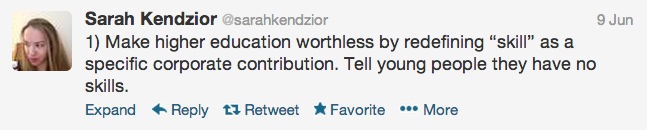
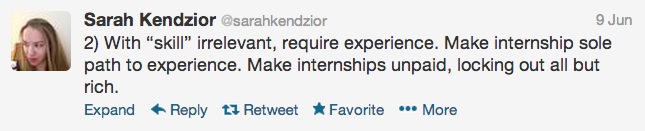
Here's a fabulous interview with activist Sarah Kendzior, a journalist and researcher who made a great, concise argument against unpaid internship as a series of four tweets last June. Policymic talks with Kendzior about her work on the "prestige economy" and the widening wealth-gap, and also talks about the theory of presenting arguments over Twitter, a subject on which Kendzior is every bit as smart as she is on matters economic and political.

Twitter is as effective as a blog for making concise, multipoint arguments. I am careful when I write these to make each Tweet stand alone as well as contribute to a broader point. It is tough to pull off. Umair Haque (@umairh) is the master of this style, but I see others embracing it too.

Twitter forces you to think aphoristically. Some say the character limit inhibits creativity, but I see it as a challenge that pushes you to carefully consider every word. It is a good exercise for any writer...

... In one generation, working for free for people who can pay you went from something laughable, to something wealthy people were doing in a few fields, to something everyone was recommended to do, to something almost everyone has to do. Entry-level jobs were replaced with unpaid internships. That same monopoly on opportunity reshaped lower-skill labor. Jobs that once offered on-site training now require college degrees. In response, universities ramp up tuition, knowing that students have little choice but to pay to compete. Instead of options, there is one path to professional success — one exorbitantly expensive path.

The values of the wealthy elite became the rules that everyone had to live by.

At the same time, the rising cost of living made it “normal” to pay a lot of money for basic things. Ordinary life has been redefined as a luxury good. Health care and home ownership are unaffordable for most young people. This makes them feel desperate, particularly when they begin adult life saddled with stratospheric debt. They feel they have no options but to play along, even if that means being party to their own exploitation.

What they have discovered is that even playing by the rules will destroy you in a prestige economy. Institutional affiliation is promoted as a way to advance professionally by building personal prestige, which is why people are paying to intern at prestigious companies or going into debt for prestigious schools. But these are hollow victories, designed to suck you dry and leave you even more desperate. Prestige decreed by institution means nothing when institutions are rotting.

Why You Should Never Have Taken That Prestigious Internship [Sam Bakkila/Policymic]

(via Making Light)


01 Dec 22:18

Soak Gold & Diamond Jewelry in Dishwashing Liquid to Make it Sparkle

by Mihir Patkar

Soak Gold & Diamond Jewelry in Dishwashing Liquid to Make it Sparkle

If you want your jewelry to glitter, you could take it to the jeweler and get it cleaned, spending a lot in the process. Or you could just soak it in a bowl of dishwashing liquid and water for a quick, DIY sparkle, Consumer Reports suggests.


For plain gold jewelry and diamonds, you can soak them in warm dishwashing liquid and water. Use a toothbrush to clean the settings. Dry with a soft shammy cloth.

If you want to regain the original shine of your silverware, Consumer Reports resorts to an old trick for polishing silver: toothpaste—ideally, tartar control toothpaste.

Get a great deal at jewelry stores and learn how to avoid costly rip-offs | Consumer Reports

01 Dec 21:45

Amazon Kindle Fire commercial mocks the iPad Air with a Jony Ive parody

by Adi Robertson

Amazon is the latest company to take on Apple's distinctive advertising style in its own commercials, this time by pitting the iPad Air against Amazon's 8.9-inch Kindle Fire HDX using what seems like a thinly veiled parody of Apple's Jony Ive, who frequently appears in the company's promotional videos. "This is the magical new iPad Air," says "Apple's" British narrator, only to have his vague pronouncements rebutted by a twangy American Kindle proponent at every turn. The Kindle Fire, he explains, has a million more pixels (2560 x 1600 vs. the Air's 2048 x 1536). It weighs 20 percent less (0.83 pounds vs. 1 pound, though its screen is also around an inch smaller). And — the killing stroke — it's $379 for a 16GB model, compared to...

Continue reading…

01 Dec 21:44

Our top 5 apps: Ask the AC Editors

by Jerry Hildenbrand

Best Apps

The first applications we install on every phone

As editors and writers for a place like AC, we look at a lot of apps. Some are good, some are bad, and to be honest — most are somewhere right in the middle. That's bound to happen with so many applications in the platform's store, and like all things the average is, well, average. We try to share ones we think are worth looking at every Saturday, but each of us has a core set of apps that get installed on every phone we have. And at certain times of the year, that's a lot of phones.

Apps are important. You don't really need them, as the essentials  — things like messaging, calendar or a calculator —come pre-installed on your phone. But our phones are a lot more capable and fun with them. Hit the break and see the five must-have apps from Phil, Alex, Andrew and myself.

read more


01 Dec 21:43

Copyright Monopoly Disintegration Inevitable As It Only Takes A Single Country

by Rick Falkvinge

copyright-brandedI believe in competition. I believe in experimentation to see what works best and what can be predictably repeated – call it the scientific method applied to society, if you like. This has been a problem geopolitically, as the United States has guaranteed its global rent-seeking by bullying other countries into so-called “free trade” agreements that are, in the best kind of newspeak, the exact opposite: they are agreements to prevent free trade in favor of incumbent monopoly holders.

But a monopoly only lasts as long as all involved countries respect it. In particular, a monopoly that touches the Internet – one such as the copyright monopoly – requires the cooperation of every single country connected to the Internet to live yet another day. The first country to defect from this oppressive monopoly construct will cause the floodgates of culture and knowledge to open – imagine The Pirate Bay located in a country where it is declared 100% legal, and where it is rightly illegal to harass its enormous library.

Three geopolitical zones stand to threaten the US dominance on this rent-seeking and the monopolies we know as the copyright and patent monopolies:

We have Europe, which has strength in its civil liberties tradition and its sheer economic strength – it is the world’s largest economic power, and so, any monopoly Europe doesn’t like just ceases to exist for all intents and purposes. Regrettably, European political leaders are perennially starstruck by anything the United States does, and won’t be challenging them any time soon, unless challenged in turn on the matter by something like the Pirate Party. (When it happens anyway, like with the ACTA defeat last year, it is due to citizen outrage – not because of any kind of political will.)

We have China, which has a different cultural and idealistic tradition than Europe and the Americas – Asia works on a timescale of generations and centuries, rather than one of weeks and months. There is patience to a degree unheard of in the West. The Chinese have economic clout comparable to the US and Europe, and are anything but stupid. They are copying the Intellectual Protectionism (IP) regimes of the United States, seeing how they can benefit the Chinese once China has taken the lead: protectionism works to preserve incumbence, and the Chinese understand this perfectly. So while the mechanisms may be preserved, their initial purpose may be subverted to a new geopolitical power than the one they were constructed to maintain.

Lastly, there is Latin America, which holds no love for the United States on any level after the interventionism of the past 50 years. Economically, they have half the GDP of the US or Europe, and so, they can’t compete on brute strength. However, they can compete with raw competition of the framework, and this appears to be one of the most exciting geopolitical developments in a long time.

Yesterday, it became clear that legally autonomous startup zones (plural) will be established in Honduras and other locations, with Panama and Guatemala watching the developments with great interest. A legally autonomous zone is a small location that gets to write its own experimental laws, in order to compete on a small-scale with country-level laws to find out at a laboratory scale if something works immensely better.

As many of these are planned in Latin America, and Latin America is rightly and royally sick of the copyright monopoly, I’m hopeful that one, just one, of them will ditch that monopoly concept in favor of real free trade and actual ownership rights. On an international network, it only takes one single country to declare the copyright monopoly obsolete for the entire planet to lose any and all copyright monopoly function. Now, we’ve arrived at the point where it only takes a single autonomous Internet-friendly startup zone to do so.

To illustrate, the book 1984 by George Orwell is still under copyright monopoly in the United States and Europe, but not in Australia, where it is published as public domain. This is something that is thoroughly illegal to distribute in Europe and the United States, but you can access it from there just fine, because it is legal to distribute in Australia, and Australia is connected to this thing we know as the Internet.

Now, imagine if one country – or one autonomous zone – desired to do this for all of humanity’s knowledge and culture, as part of free trade and free judicial competition.

The future looks immensely bright, and there is no copyright monopoly there at all. It only takes one single jurisdiction to topple the entire oppressive construct worldwide.

About The Author

Rick Falkvinge is a regular columnist on TorrentFreak, sharing his thoughts every other week. He is the founder of the Swedish and first Pirate Party, a whisky aficionado, and a low-altitude motorcycle pilot. His blog at falkvinge.net focuses on information policy.

Book Falkvinge as speaker?

Follow @Falkvinge

Source: TorrentFreak, for the latest info on copyright, file-sharing and VPN services.

01 Dec 15:43

New water-repellant surface destroys drops that hit it

by Aaron Souppouris

Water-repellant materials are everywhere. Inspired by structures found in nature, these materials excel at staying dry by making water "bounce" off their surface. Now, a new structure detailed in the scientific journal Nature improves water-resistance even more by shortening the time fluid makes contact with its surface.

Continue reading…

01 Dec 15:38

Paul Walker Dies

Paul Walker Dies

Fast & Furious star was 40

Paul Walker

Obituaries are never pleasant to write. It’s tough enough when you have to say goodbye to someone who has lived a good, full life and enjoyed a long career. But  to write a story memorialising someone you were chatting to on a film set just over a month ago, and who was passionately talking about his work and his family, is that much harder. So it is with deep regret and shock that we must report that Fast & Furious veteran Paul Walker has died at the age of 40.

Walker died in a car crash while being driven home from a charity event for Reach Out Worldwide that he had attended in Los Angeles. The driver of the Porsche – a friend of the actor's, Roger Rodas – was also killed. 

Walker, a native of Glendale, just north of Los Angeles in California, got his start early, appearing in a Pampers commercial when he was a toddler. He began a modelling career at two and moved to television in 1985, scoring roles on shows including Highway To Heaven and The Young And The Restless.

Cinema beckoned, with his first substantial job in Meet The Deedles, which he followed with supporting parts in such movies as Pleasantville, Varsity Blues, She’s All That and a bigger role in The Skulls. His big break – and the start of the franchise that has largely defined his career – came in 2001 with The Fast And The Furious, which saw him star for the first time as Brian O’Conner alongside Vin Diesel.

Between future Fast entries, he appeared in films including Joy Ride, Running Scared and Takers. Hurricane Katrina drama Hours was the next film scheduled to arrive, and he’d also worked on the District B13 remake Brick Mansions, where he’d expressed a desire to find more time to travel and spend time with his teenage daughter, Meadow.

He was in the middle of shooting Fast & Furious 7, and with a chunk of the film still to be completed, his death will leave a serious hole in the movie as well as the hearts of those who knew him.

“All of us at Universal are heartbroken,” the Fast studio said in a statement issued Saturday night. “Paul was truly one of the most beloved and respected members of our studio family for 14 years, and this loss is devastating to us, to everyone involved with the Fast And Furious films, and to countless fans. We send our deepest and most sincere condolences to Paul’s family.”

Diesel – a co-star of Walker's in five Fast & Furious films – said in a statement on Instagram: "Brother I will miss you very much. I am absolutely speechless. Heaven has gained a new Angel. Rest in Peace."

The Rock, who starred with Walker in Fast 5, Fast & Furious 6 and the currently-shooting Fast & Furious 7 tweeted, "All my strength, love and faith to the Walker family during this heartbreaking time. We find our strength... in his light. Love you brother."

Our thoughts are with Walker's family and friends at this tragic time.


30 Nov 23:52

Get Email Alerts for Free Kindle Ebooks in Favorite Genres with IFTTT

by Mihir Patkar

If you want to build up a collection of great ebooks on your Kindle without spending a dime, Red Ferret has a simple but neat trick to using Amazon's individual RSS feeds and our favorite web automator, IFTTT.

It's basically all about finding the right RSS subscription link based on the genre you like and then creating an IFTTT recipe to send alerts to your inbox when a new recipe is added to it. The alert is crucial, since many times, these ebooks are free only for a day or a short period, and you'd be kicking yourself if you missed it because you didn't check your RSS feed that day.

Go to Amazon.com (or .co.uk) and choose your favorite book genre:

1. Go here – http://www.amazon.com/Best-Sellers-K... (substitute amazon.co.uk for the UK store)

2. Click on Kindle eBooks in sidebar (or Books in UK)

3. Click on your favorite genre – e.g. Romance

4. Select sub topic if wanted (optional) (e.g. romance – vampires)

5. Scroll to the bottom of the page and copy the Subscribe to: Top Free > [Your genre] link

[Optionally you can click on the link, and then copy it into your clipboard from the address bar]

It will look something like this, with a different number depending on genre chosen:

http://www.amazon.com/gp/rss/top-fre...

Once you have the link, set up an IFTTT recipe for it as instructed in the video above and you'll be all set to get notified of free ebooks. Yup, IFTTT is fantastic to ensure you never miss a deal.

Amazon Hack: how to get free Amazon eBooks in your favorite genre delivered to your inbox every week | Red Ferret

30 Nov 22:04

What Piracy? Removing DRM Boosts Music Sales by 10 Percent

by Ernesto

drm-noFor more than a decade the music industry has been struggling with online piracy.

To prevent music from spreading like wildfire all the major labels have experimented extensively by adding DRM to digital music files. While this did little to stop piracy, the restrictions did hurt legitimate consumers.

It turns out that consumers find music with DRM less attractive than the pirated alternative, and some people have argued that it could actually hurt sales. A new working paper published by University of Toronto researcher Laurina Zhang confirms this.

For her research Zhang took a sample of 5,864 albums from 634 artists and compared the sales figures before and after the labels decided to drop DRM.

“I exploit a natural experiment where the four major record companies – EMI, Sony, Universal, and Warner – remove DRM on their catalogue of music at different times to examine whether relaxing an album’s sharing restrictions impacts the level and distribution of sales,” she explains.

This is the first real-world experiment of its kind, and Zhang’s findings show that sales actually increased after the labels decided to remove DRM restrictions. “I find that the removal of DRM increases digital sales by 10%,” Zhang notes.

This effect holds up after controlling for factors such as album release dates, music genre and regular sales variations over time.

Interestingly, not all albums are affected equally by the decision to remove DRM. Older albums selling less than 25,000 copies see their sales increase by 41% and overall lower-selling albums get a 30% sales boost. The top selling work, on the other hand, doesn’t benefit from less restrictions.

“Relaxing sharing restrictions does not impact all albums equally; it increases the sales of lower-selling albums (the “long tail”) significantly by 30% but does not benefit top-selling albums. My results are consistent with theory that shows lowering search costs can facilitate the discovery of niche products.”

According to Zhang, the 30% sales increase for lower-selling albums can be explained by the fact that DRM-free music makes it easier for consumers to share files and discover new music. The finding that removing DRM from top-selling albums has no effect on sales makes sense in this regard, since the discovery element is less important for well promoted musicians.

While DRM is still prevalent in the book industry and elsewhere, most of the major labels are now in agreement that it’s not a good fit for music.

Those who look around will find that there’s hardly any music being sold with classic DRM in place. Even the RIAA admitted that DRM is an endangered species, probably because what the researchers report today is rather accurate.

The late Steve Jobs already knew this a long time ago. “DRMs haven’t worked, and may never work, to halt music piracy,” he said back in 2007.

Source: TorrentFreak, for the latest info on copyright, file-sharing and VPN services.

30 Nov 12:43

ISPs Say They Will Block KickassTorrents Without a Court Order

by Andy

kickassIn countries all around the world the music and movies industries are increasingly looking to web blockades to solve their piracy woes. The belief is that by blocking file-sharing sites at the ISP level, subscribers will eventually get frustrated enough to start testing out some of the legal offerings available.

Ireland was one of the first countries in the world to have an ISP blockade of The Pirate Bay. ISP Eircom backed out of a court battle with the major labels represented by the Irish Recorded Music Association (IRMA) and in 2009 blocked the site voluntarily.

Progress on having The Pirate Bay blocked by other ISPs then slowed due to legal issues, but once Ireland’s signing into law of the European Union (Copyright and Related Rights) Regulations 2012 had been completed, the ball was rolling again.

Following an action initiated by EMI, Sony, Warner and Universal against the ISPs UPC, Imagine, Vodafone, Digiweb, Hutchison 3G and Telefonica O2, in June 2013 the High Court gave the service providers just 30 days to block The Pirate Bay.

Now, just as expected, the labels are back. In their crosshairs this time is KickassTorrents, the second most popular torrent site in the world. The early signs suggest that achieving success will be a walk in the park.

On Monday, Sony, Universal and Warner Music will head off to the High Court with demands that Ireland’s largest ISPs – Vodafone, UPC, O2, Digiweb and Hutchison 3G Ireland – block subscriber access to the site.

Speaking with the Irish Times, UPC – one of the few ISPs worldwide to aggressively contest blocking demands – confirmed it had been served with legal papers.

“UPC declined Irma’s request in pre-litigation correspondence to voluntarily block Kat. Our position is that ISPs should not, on a voluntary basis, choose what can or should be consumed by internet users. Such matters are for the government or the courts to decide,” the ISP said.

However, not all ISPs are taking such a strong line. Imagine, an ISP that was listed among the defendants in The Pirate Bay case, says it has informed the labels it will block KickassTorrents voluntarily if the defending ISPs lose their case.

IRMA chief Dick Doyle also confirmed that his group had reached agreements with several other ISPs in Ireland to block Kickass, even though they are not involved in the case. Aside from Eircom’s position against The Pirate Bay, this appears to be the first time that ISPs have agreed in bulk to block a file-sharing site voluntarily.

Success in this case for the labels, which appears to be almost guaranteed, will open up the possibility of even wider blockades in Ireland such as the ones across the water in the UK. And with ISPs now offering voluntary blocking if the conditions are right, the way seems smoother than ever before.

Source: TorrentFreak, for the latest info on copyright, file-sharing and VPN services.

30 Nov 10:47

Google, Microsoft ordered to remove pirate sites from search results

by Chris Smith
Google Microsoft Piracy WebsitesA French court on Thursday ordered Google, Microsoft, and Yahoo to remove from search results 16 websites that host pirated media, in a case started in December 2011 by various French organizations and groups that protect the interests of entertainment companies such as Paramount and Sony. Local ISPs including Orange, Free, Bouygues Telecom, SFR, Numericable and Darty Telecom are also ordered to “implement all appropriate means including blocking” these websites, TorrentFreak reports.

Continue reading...
29 Nov 22:52

Agent Makes Your Smartphone A Little Bit Smarter

by Greg Kumparak

You can't teach an old phone new tricks.

Hah! Just kidding. Of course you can. This isn't 1998.

Agent is an app that aims to make your Android smartphone just a little bit smarter, using all of your phone's sensors to detect what you're up to and tweak your settings automatically. Driving? It'll automatically respond to texts to let people know you're busy, and remember where you parked your car. Sleeping? It'll only let the most important calls through.

Agent is a spin-off, of sorts, of another Egomotion product called "Trigger" (or, as it was once known, "NFC Task Launcher"). With Trigger, Egomotion sells packs of programmable NFC tags which can fire off actions on your phone. Want your phone to silence itself and set an alarm when you go to bed? You'd stick one of their NFC tags on your nightstand, then set up a series of tasks to fire whenever that tag is detected. Want it to automatically launch your favorite music app when you get in the car? Tuck one of the tags into your cup holder.

agents

In time, however, the team realized that many of the most popular use cases didn't really require NFC. Instead of an NFC tag on your nightstand, why not just auto-silence the phone during certain hours? Instead of hiding a tag in a cupholder, why not just detect when the user is connected to their car's Bluetooth? Thus, Agent was born.

Agent takes the core concept of Trigger and boils it down to its essence. Gone is any mention of NFC tags, instead relying on the handset's built-in capabilities - things like its accelerometer, clock, or WiFi/Bluetooth. Gone is the relatively complicated task setup process, with Egomotion instead providing a small set of pre-built actions that they call "Agents".

At the moment, the app's got five different built-in agents:

  • Battery Agent: When your battery starts to fade, the battery agent kicks in to irk a bit more life out of your phone. You can tell it to automatically dim your screen, turn off automatic data syncing, or turn off Bluetooth. Once you're plugged in, it'll automatically flip everything back on.
  • Sleep Agent: Automatically silences your phone between specified hours, but with a clever white-listing system. You can specify which contacts are allowed to wake you, and allow for repeat (and thus likely urgent) calls to ring through. It can auto-reply to texts, telling the user to reply "urgent" if it's an emergency (at which point, your phone will ring loudly to wake you up). You can tell this agent to only start if your handset is plugged in. That way, it probably won't silence your phone during a night out at the club.
  • Parking Agent: Attempts to automatically remember where you've parked your car. By default, it works by detecting your speed; once you've stopped moving over a certain speed for more than a few minutes, it figures that you've parked your car and marks the location accordingly. Of course, doing things like riding the BART might fire off a false positive, so you can tell the Agent to base its logic off Bluetooth connectivity if it's an option in your car.
  • Meeting Agent: Silences your phone during meetings. Uses your Google Calendar to determine your meeting schedule.
  • Drive Agent: Uses bluetooth to detect when you're in your car. Can automatically silence your phone, read your texts aloud, and respond to incoming texts to let them know you're driving.

The company says that they've got more agents in the works, potentially offering add-on agent "suites" tailored to certain use cases - one set that'd be good for school, one set that'd be good for work, etc. That way they can keep adding more functionality without complicating the core application.

If you're a battle-tested Android expert, Agent's tricks might not raise an eyebrow. "Pft, I've got Tasker!" you say. "And I rooted my imported HTC J One and flashed it with a custom rom that does all this ages ago."

For the less intense folks (read: most people) out there, though, Agent should hit a sweet spot. It's simple, it does exactly what it promises to do, and the setup is very straightforward and well thought out.

My one hesitation: while I normally hate when people say "But what if company X just decides to do this", it's a pretty valid concern here. With all of the data that Google gobbles up and pipes into Google Now, it's almost certain that they're tinkering away with similar concepts right this second.

battery

Actually, it's not almost certain. It is certain. Google-owned Motorola has already released an app that they call Assist, which aims to do much of the same stuff that Agent does. As Egomotion co-founder Kulveer Taggar pointed out to me, Assist only works with a handful of Motorola phones, whereas Agent works on many, many Android phones. But Moto's handsets tend to be a test bed for Google (See: the always-listening "Okay Google" voice command debuting on the Moto X months before being integrated into Android 4.4). If the concept proves popular, how long will it be before Google starts tying such functionality right into the core of Android itself?

In the mean time, though, it seems like Egomotion is on to something: according to the company's stats, 95% of agents that get turned on, stay on.

The app, normally $1.99, is on sale for $0.99 for the Thanksgiving weekend.


29 Nov 20:29

Dead Zebra's Android Figurines Series 4 Now On Sale, Android Socks Are Available Too

by Jeremiah Rice

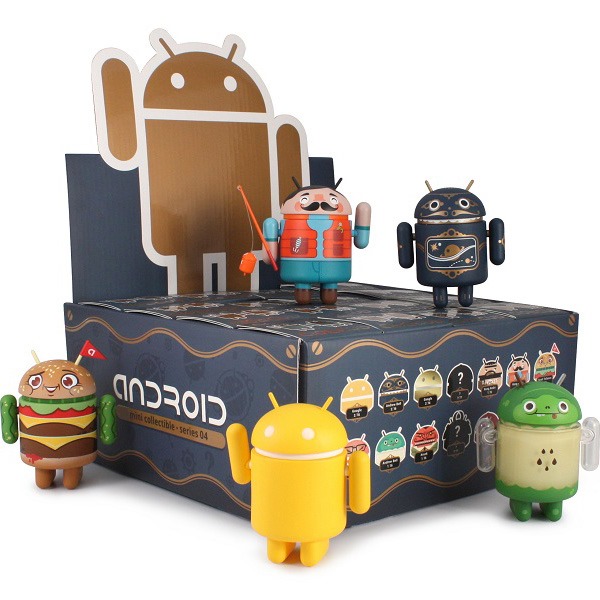
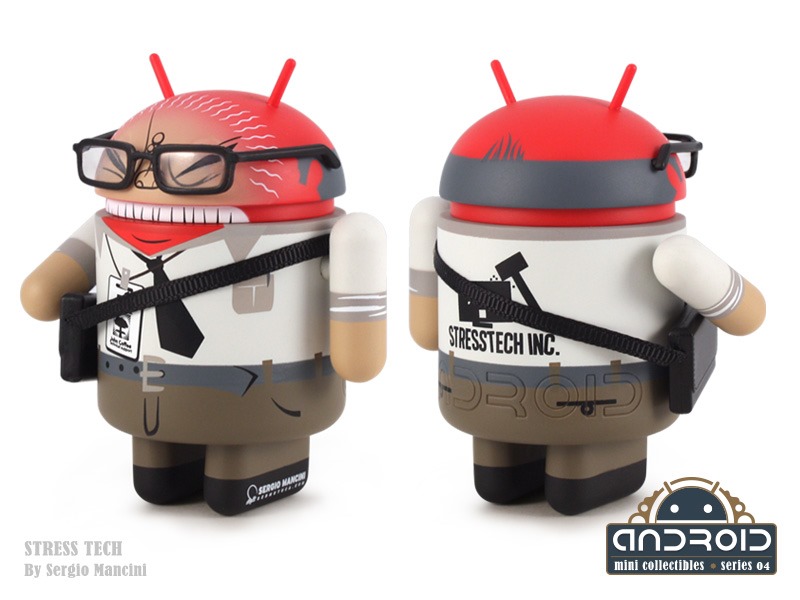
FIGURETHUMBGet those browsers warmed up, collectors: the fourth series of Dead Zebra's increasingly zany selection of Android figures is now on sale. You can pick up the new toys from the Dead Zebra web store, and hurry, since they tend to run out of initial stock in less than one day. There are 14 new figures, including ninjas, fishermen, a gold-plated Bugdroid, and more.

Android_S4_gold-34A Android_S4_Astronomiton-FrontA Android_S4_WeeNinja-34A

Android_S4_2x2-34A Android_S4_caveman-34A Android_S4_coredump-34A

Android_S4_dicktator-FrontA Android_S4_Fisherman-34A Android_S4_flipmode-34A

Android_S4_Stresstech-34A Android_S4_trackstar-34A Android_S4_yellow-34A

Individual blind boxes are $8.50, and cases of 16 cost $132.

Done With This Post? You Might Also Like These:

Dead Zebra's Android Figurines Series 4 Now On Sale, Android Socks Are Available Too was written by the awesome team at Android Police.


29 Nov 20:27

MPAA Banned From Using Piracy and Theft Terms in Hotfile Trial

by Ernesto

piracy-crimeThe ongoing legal battle between Hotfile and the MPAA is nearing its climax.

In August the movie studios won summary judgment on the issues of DMCA defense and vicarious liability, while the file-hosting site was cleared of direct copyright infringement. The remaining issues, including the damages amount, will be decided during a trial early next month.

In preparation for the trial both parties have submitted motions to the court in recent weeks. Hotfile, for example, asked the court to prevent the MPAA from using “pejorative” terms including piracy, theft and stealing as these could misguide the jury.

District Court Judge Kathleen Williams has now ruled on these motions, with the file-hosting service scoring several important victories.

The Judge granted Hotfile’s “pejorative” terms motion, which means that the movie studios and its witnesses are not allowed to use words including “piracy,” “theft” and “stealing” during the trial.

“Defendants’ Motion in Limine to Preclude Use of Pejorative Terms is GRANTED IN PART. The parties may not use pejorative terms but may use terms of art,” the order reads.

pejor

The file-hosting service previously argued that since piracy and theft-related terms are derogatory, their use could mislead the jury and possibly influence their judgment. According to Hotfile there is no ground to substantiate the use of such terms.

“In the present case, there is no evidence that the Defendants (or Hotfile’s founders) are ‘pirates’ or ‘thieves,’ nor is there evidence that they were ‘stealing’ or engaged in ‘piracy’ or ‘theft.’ Even if the Defendants had been found to have directly infringed on the Plaintiffs’ copyrights, such derogatory terms would add nothing to the Plaintiffs’ case, but would serve to improperly inflame the jury.”

The MPAA countered that there is absolutely no reason to exclude words that are commonly used in cases related to copyright infringement. Banning the terms would make it hard for MPAA’s lawyers and the witnesses to describe the events that took place, according to the movie studios.

“Terms like ‘piracy’ and ‘theft’ are commonplace terms often used in court decisions, statutes, and everyday speech to describe the conduct in which Hotfile and its users engaged, and for which the Court has already found Defendants liable,” MPAA’s legal team wrote.

With her ruling Judge Williams clearly sides with Hotfile’s argument that the jury could be misled by piracy and theft-related descriptions. This is a clear win for the file-hosting service, but it also leads to the awkward situation that several witnesses can’t name their job titles, such as Warner’s head of Global Corporate Anti-Piracy.

Additionally, the MPAA can no longer quote Vice President Joe Biden’s famous comment: “Piracy is theft, clean and simple.”

The full list of motions Judge Williams ruled on includes more good news for Hotfile. For example, with regard to Hotfile’s countersuit over alleged DMCA abuse by the movie studio, Warner’s motions to exclude the term “perjury” and the studio’s audit of its anti-piracy system from trial were both denied.

On the downside, Hotfile’s request to prevent the MPAA from bringing up the criminal indictment against “Megaupload” was denied. This means that in describing the Megaupload case the movie studios can’t quote passages that reference piracy or theft.

It will be interesting to see how the MPAA tackles Hotfile now that they are restricted in the language they can use. It probably means that the term “copyright infringement” will be used more often than they had hoped.

To be continued.

Source: TorrentFreak, for the latest info on copyright, file-sharing and VPN services.

29 Nov 20:26

NSA and Canadian spooks illegally spied on diplomats at Toronto G20 summit

by Cory Doctorow

A new Snowden leak reveals that the NSA worked with the Canadian spy agency CSEC to illegally spy on diplomats attending the G20 summit in Toronto in 2010 (an earlier leak revealed that the NSA also spied on the 2009 G20 summit in London).

The leak is significant for many reasons, but especially because it adds to the evidence that the NSA's's bulk surveillance capabilities are an instrument of US trade policy, used to spy on diplomats from friendly countries in order to cheat on trade negotiations, winning tactical advantages through unethical and illegal means. It's the sort of state-sponsored industrial espionage that the US and Canada frequently accuse China of -- takes one to know one, I suppose.

Also noteworthy is the fact that CSEC is not allowed to spy on Canadians, nor on visitors to Canada. It may be that they circumvented the law by assisting the NSA to spy in Canada. Similar allegations have been made about the NSA and the British spy agency GCHQ; they are rumored to have an established process of asking one-another to spy on their own citizens in order to stay in technical compliance with the rules that prohibit domestic spying: "We didn't spy on our own people; we asked these foreign spooks to spy on them and give the information to us. It's totally different."

The NSA and its Canadian "partner," the Communications Security Establishment Canada, gather foreign intelligence for their respective governments by covertly intercepting phone calls and hacking into computer systems around the world.

The secret documents do not reveal the precise targets of so much espionage by the NSA — and possibly its Canadian partner — during the Toronto summit.

But both the U.S. and Canadian intelligence agencies have been implicated with their British counterpart in hacking the phone calls and emails of foreign politicians and diplomats attending the G20 summit in London in 2009 — a scant few months before the Toronto gathering of the same world leaders.

Notably, the secret NSA briefing document describes part of the U.S. eavesdropping agency's mandate at the Toronto summit as "providing support to policymakers."

New Snowden docs show U.S. spied during G20 in Toronto [Greg Weston, Glenn Greenwald, Ryan Gallagher/CBC News]