Shared posts

29 Jan 21:59

AT&T Develops Credits System to Limit File-Sharing Bandwidth

by Andy

When a consumer subscribes to an Internet package, either at home or on a cellphone, it’s generally accepted that he can use it for whatever applications he likes, whether that’s web browsing, sending or receiving emails, watching video, or listening to music.

Of course, bandwidth is a finite resource so it is fairly common for service providers to put a cap on data transfers in order to manage their services. For example, a user with a 3GB per month limit on a cellphone contract might use it all in the first couple of weeks watching YouTube, and as a result might need to consider upgrading to a more spacious package.

Fair enough, but what if a service provider started to dictate what types of data could be accessed each month on a particular package? What if emails and web browsing were acceptable kinds of traffic but others, such as video downloading and file-sharing, resulted in subscribers being subjected to penalties? A new system developed at telecoms giant AT&T appears to envision just that kind of scenario.

The system is revealed in a patent filed by AT&T Mobility in September 2013 and published this month. Its stated aim is to stop customers from “abusing a telecommunications system” by consuming too much bandwidth.

Titled “Prevention Of Bandwidth Abuse Of A Communications System”, the patent is likely to get net neutrality advocates hot under the collar as rather than targeting bandwidth consumption overall, it seeks to penalize the transfer of certain kinds of data linked to “excessive” consumption.

“When a user communicates over a channel, the type of communication is checked to determine if it is of a type that will use an excessive amount of bandwidth,” the patent reads.

The system works by awarding the subscriber with “credits” and subtracting from those when monitored traffic is deemed to have been consumed in potentially bandwidth-hungry fashion.

“The user is provided an initial number of credits. As the user consumes the credits, the data being downloaded is checked to determine if it is permissible or non-permissible. Non-permissible data includes file-sharing files and movie downloads if user subscription does not permit such activity,” the patent application reads.

“If the data is permissible, the user is provided another allotment of credits equal to the initial allotment. If the data is non-permissible, the user is provided an allotment of credits less than the initial allotment,” it continues.

By marking some traffic type usages as acceptable and others not, the system described by the patent application can develop in a couple of directions. The subscriber can remain in “credit” and continue about his Internet activity as usual, or find that his “credits” are diminishing towards zero. At this point he can be asked to pay more money, be subjected to sanctions that affect his ability to communicate (such as by blocking movie downloading), or be incentivized to maintain preferred consumption habits.

“Various restriction policies also can be applied, such as levying additional fees and/or terminating the user’s access to the channel. Also, incentives can be provided to entice the user [to] curb the misuse,” the patent filed by AT&T Mobility Ii Llc adds.

Earlier this month a federal appeals court in Washington struck down the Federal Communications Commission’s net neutrality rules. Shortly after AT&T CEO Randall Stephenson offered reassurances that his company was committed to an open Internet.

Where legitimate traffic management ends and the open Internet begins will become apparent in the months and years to come.

Source: TorrentFreak, for the latest info on copyright, file-sharing and VPN services.

29 Jan 21:52

Android Device Manager Update Adds Account Password Challenge When Opened [APK Download]

by Ryan Whitwam

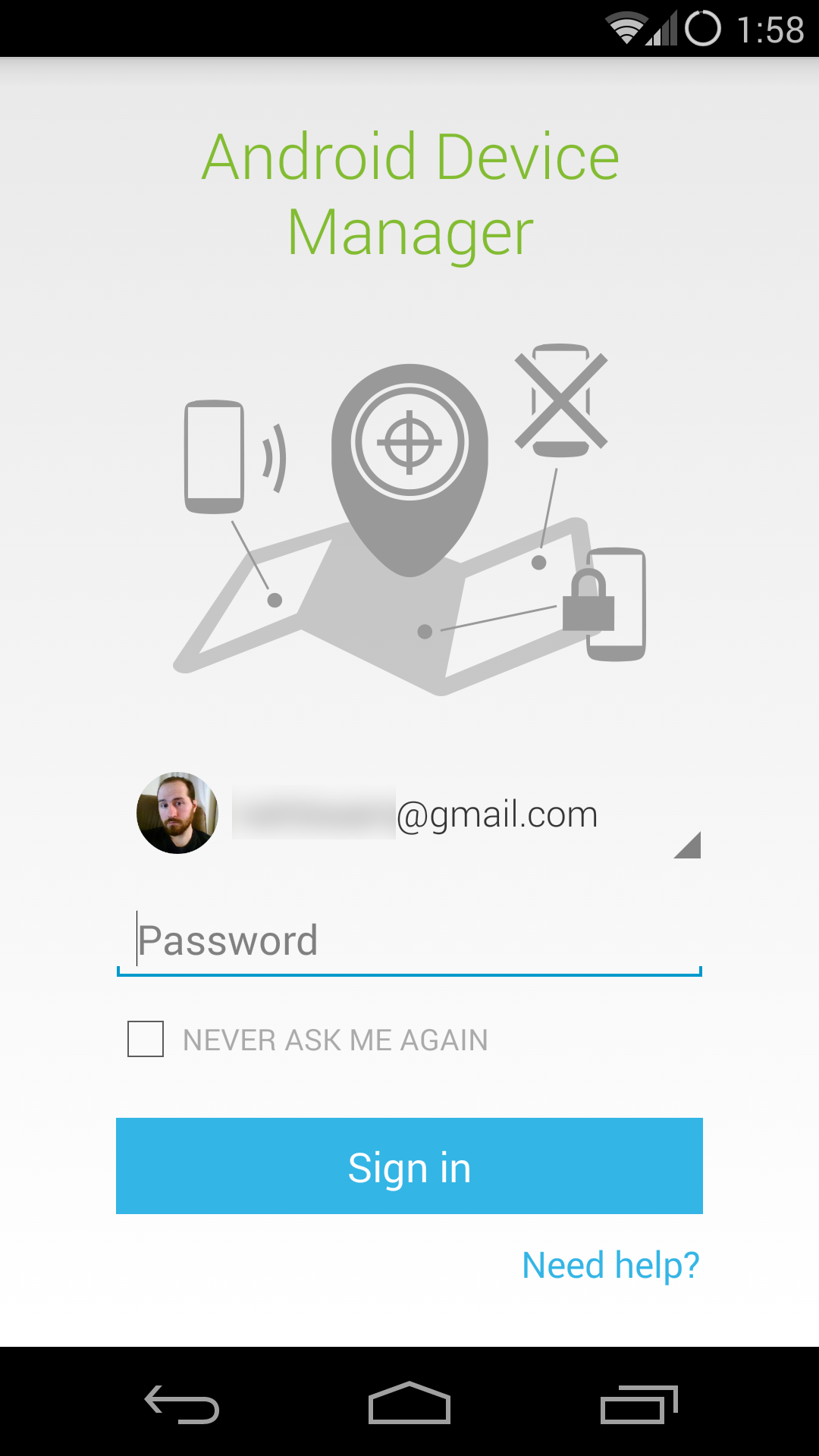
gThe Android Device Manager app could really save your bacon if you misplace a device, but it could also be a serious pain if someone else opens it. An update is rolling out right now that adds a password challenge when you open the app or switch accounts that makes sure no one but the account holder can track, lock, or wipe devices.

2014-01-29 19.58.04 2014-01-29 20.14.16 2014-01-29 20.14.56

After the update, ADM will prompt for a password each time it starts up.

Done With This Post? You Might Also Like These:

Android Device Manager Update Adds Account Password Challenge When Opened [APK Download] was written by the awesome team at Android Police.


29 Jan 21:47

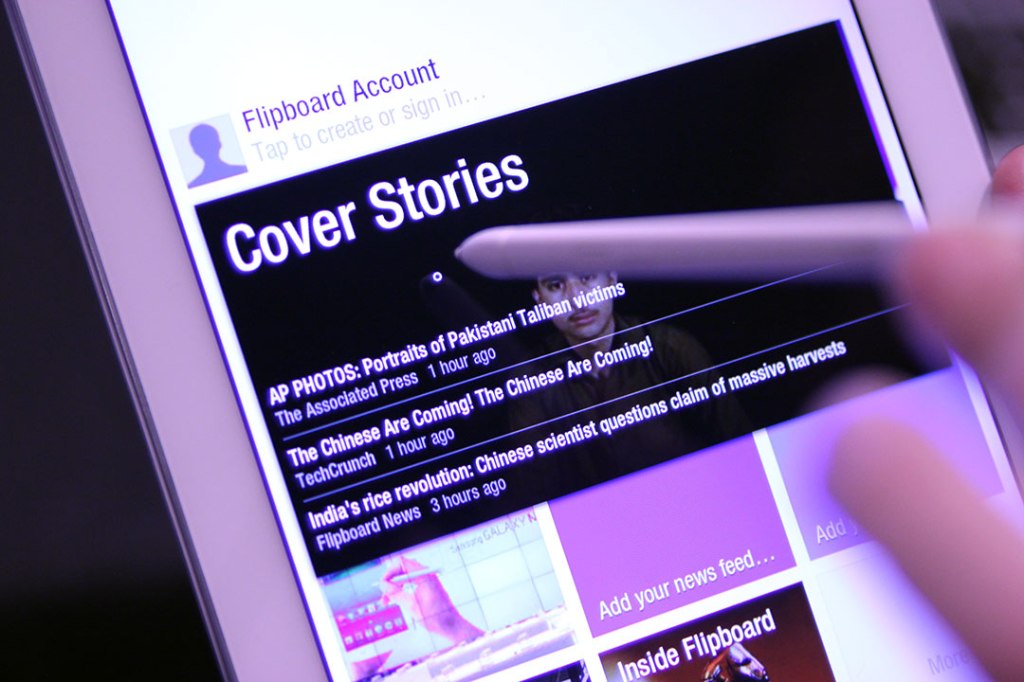
Flipboard Mimics Magazines Further With A Shift To Structured Content, Revamped “Cover Stories”

by Sarah Perez
note8-flipboard

Social magazine Flipboard is rethinking how it organizes content for readers. Today the company is revamping “Cover Stories,” the section within Flipboard that highlights the best and most popular content from across your subscriptions.

This feature was initially developed using technology Flipboard acquired several years ago from Ellerdale, an early semantic web startup. The system is designed to surface not just the trending content that others are sharing or clicking on, but also content that’s most relevant to you based on your own interactions (separate from general popularity).

Before today, Cover Stories would offer a mix of articles and social updates from your subscriptions and networks, but the selection could come across, at best, as an eclectic gathering of news and, at worst, as something of a chaotic mess. Now, that changes.

flipboard-coverstories-nav

“In the early days, we did a great job at presenting content in a way that’s magazine-like, but what we haven’t done yet is structure that content in a way that feels like a magazine. That’s what we’re starting to do now,” explains Flipboard co-founder and CEO Mike McCue.

With the revamped Cover Stories section, you’re still able to flip through the section as usual, but the content is more ordered. Navigation on the right side of the screen shows you a list of “sections” based on your favorite sources. This list is led by “Flipboard Picks,” the service’s own recommended content.

For example, you might have the top stories from The New York Times, followed by a couple of blogs you frequent, then sections dedicated to the trending activity on social networks like Facebook, Twitter, or Instagram. Over time, Flipboard will learn what sections you engage with the most and will feature those more prominently here, the company tells us.

Flipboard is also starting to think about how it can better organize articles by something other than just source (i.e. publisher). It wants to smartly group articles by subject matter, too. You’ll start seeing this roll out now, beginning with Flipboard’s editorially curated magazine “The Weekend.” Here, articles will be grouped into sections like ”Now in Theaters,” “What’s on TV,” “Sports Weekend,” “Sunday Reads” and more.

flipboard-theweekend

This idea of structuring Flipboard content more like a real magazine, the company explained to us last week while demoing the beta, will eventually roll out to all of Flipboard’s editorial content over time. Today, the company curates a number of editorial sections ranging across categories like News, Business, Tech, Sports, Shopping, Photos, Arts & Culture, Travel, Food & Dining, Style, Music, Books, and much more.

The challenge for Flipboard going forward is to make sure its users continue to explore their larger collection of subscriptions, where their activity can help inform the “Cover Stories” algorithm as to their interests.

Most users subscribe to around a dozen sources of content, but some users have hundreds, we’re told. These more voracious news readers could end up relying on “Cover Stories” to get their mix of news, but having to work their way through the section source by source could mean they might miss those sources they only occasionally visit since they’ll now be down at the bottom of the navigation, instead of serendipitously mixed in with other articles from top sources.

That, however, will change in time. The company promises that the Cover Stories section will become more adaptive over time, and it will figure out how to throw “a few surprises” in there, too. It will also begin to group sections more topically, similar to how magazines like “The Weekend” are now being structured. But Flipboard isn’t prepared to go into much detail about those future changes because nothing is yet set in stone.

The new “Cover Stories” section is not going live immediately for all users, but will be a gradual rollout over the next week or two, the company says.

29 Jan 21:46

Twitter adds filters to let you search videos, photos, and news

by Casey Newton

Twitter today rolled out new search features on the web to help users sort through tweets more efficiently. After entering a query in the search bar that appears on Twitter.com, you can now filter results by people, photos, videos, and news. You can also filter results to include tweets only from people you follow, or tweets that are near your current location.

The filters help make Twitter searches more useful at a time when the company is putting increased emphasis on images, videos, and the news. Video search contains an additional toggle that allows you to browse only Vines that contain your keyword. "As you see more photos in the product, you think of Twitter as a photo product," said Michael Sippey, Twitter's former head of...

Continue reading…

29 Jan 21:38

Google and Samsung may finally agree on what Android should look like

by Chris Welch

Samsung may be planning to cut back on its oft-criticized Android customizations. A new report from Recode claims that the company recently met with Google to begin working out an agreement that could see Samsung's software move closer to Google's vision of Android. Discussions reportedly began after Samsung unveiled its Galaxy TabPro at CES. Google executives were apparently so displeased with the major changes in the tablet's Magazine UX — which has been compared to Flipboard and Windows 8 — that they felt compelled to open a dialogue with the number one Android manufacturer.

It's unclear what the exact outcome of those talks will be, but Recode's sources say Samsung may consider dumping Magazine UX entirely in future hardware. It...

Continue reading…

29 Jan 18:46

Last.fm can now play music through Spotify

by Jacob Kastrenakes

Last.fm's site is getting a lot more musical thanks to Spotify. Starting today, Last.fm is building in an option to listen to any track on its site through Spotify, so long it's in the service's catalog. Though music will still play through Spotify itself, playback controls will appear on the bottom of Last.fm, letting listeners continue to browse without leaving the site to pause or skip around. While Last.fm already offers links to listen to tracks through popular streaming services — including Rdio, Deezer, and even Spotify — this new integration gives Spotify a far greater presence on Last.fm by effectively turning it into the site's default player.

Spotify's integration is a big and useful addition for Last.fm, which never...

Continue reading…

29 Jan 18:45

10 Legendary Apollo Theater Performances You Can Watch Online

by Bill Crider
29 Jan 18:33

Edward Snowden nominated for Nobel Peace Prize

by Adrianne Jeffries

Edward Snowden has been nominated for the Nobel Peace Prize by a group of Norwegian lawmakers who say his revelations about the US global surveillance program have contributed to transparency and global stability.

"The public debate and changes in policy that have followed in the wake of Snowden’s whistleblowing have contributed to a more stable and peaceful world order," the politicians said in their nomination letter.

Snowden was also nominated last year

The Nobel Foundation allows for nominations from members of national assemblies, governments, and international courts; university rectors and professors; and directors of peace research institutes and foreign policy institutes. Nominations can also come from previous...

Continue reading…

29 Jan 18:32

CNN announces partnership with Twitter to 'revolutionize' news gathering

by Ben Popper

Twitter's new head of news, Vivian Schiller, announced her first project today: a partnership with CNN and the New York startup Dataminr. The initiative will help journalists cover breaking news by making sense of the flood of public information on Twitter. Dataminr uses machine learning algorithms to analyze the Twitter firehose of data and highlight the needle in the haystack so CNN reporters can find the most important, relevant, and reliable facts and images from around the world.

Continue reading…

29 Jan 15:01

The Science Behind Why Diets Just Don't Work, and What To Do Instead

by Alan Henry

Losing weight for healthy living is difficult, but that's not new. What's interesting is the role our brain plays in regulating our weight—any weight—and why that makes it so difficult to lose weight when we want to. Neuroscientist Sandra Aamodt explains in this TED talk, and discusses how eating mindfully can help.

The talk is a little long, about 12 minutes, but it really is worth a watch if you're struggling with your own diet or weight loss goals. Ultimately, she describes the intersection of human nature and our modern, drive-through world—where the brain is hard-wired to accept food and build energy reserves when food is available, but resist efforts to burn those reserve, largely because food scarcity has been a problem for much longer in human history than food abundance. She goes on to explain how the brain will, usually after a short period, determine what the body's "set point" weight is, kind of an unconscious "ideal weight" that has nothing to do with our health, but everything to do with food availability and lifestyle. She even explains how thinner people will burn fewer calories, thanks to the brain's interference, which makes it even harder to shed pounds.

All of those factors combined add up to why it's so difficult to lose weight when we want to, and why diets are so dysfunctional—our brain is now wired to send us powerful signals to keep us at the weight that it has deemed appropriate, even if our conscious mind wants something completely different. Instead, we get hungry, we overeat, we make poor dietary choices, and we're back to square one, feeling miserable about the whole endeavor. That's why "just put down the fork" is never a real path to weight loss.

Instead, the key is focusing on a healthy lifestyle instead—exercise, activity, healthy habits—and mindful eating (eating when you're hungry and stopping when you're full, strictly), as in eating when you're hungry or when you need to, and being aware of what you're eating and how long you're eating while you dine. She gets into the importance of healthy habits at about 7:40, and what she means by "mindful eating" at 9:28. Skip there to go to the punchline, but the rest of the talk is interesting—and informative, if you've struggled with healthy eating (or know someone who's trying to losing weight) as well.

Sandra Aamodt: Why Dieting Doesn't Usually Work | TED

29 Jan 13:16

Tablet maker goes bust after row with retailer over Google services

by Alex Dobie

Argos MyTablet

'MyTablet' maker enters liquidation after Argos withholds £3.2m over lack of GMS license, The Guardian reports

Penryth, Wales-based hardware maker KMS has entered liquidation after a row with high street retailer Argos over use of Google Mobile Services on tablets without the proper license, according to The Guardian. KMS manufactured Argos' £99 "MyTablet" slate — released late last year along with a flurry of other low-priced Android tablets from UK retailers — as well as other low-cost Android tablets.

The newspaper reports that Argos withheld payments of £3.2 million ($5.3 million) from KMS after it discovered the company had loaded Google Mobile Services — the package including Maps, Gmail and the Play Store — onto its tablets without a license from Google. While the core Android OS is free and open-source, Google's proprietary services and apps are not, and manufacturers must obtain a GMS license in order to legally load them onto devices.

read more


29 Jan 13:09

Top lawyer finds GCHQ spying is illegal & UK spies who help US drone strike may be accessories to murder

by Cory Doctorow


UK Labour Member of Parliament Tom Watson writes, "I thought you might be interested to read the latest developments on the drones and data collection front. I've asked privacy expert Jemima Stratford QC for her legal opinion on aspects of the Snowden revelations. Contrary to reassurance from the Foreign Secretary and Chair of the ISC she finds [PDF]:


1. interception of 'internal' contents data of British citizens in the UK is unlawful under RIPA [ed: the Regulation of Investigatory Powers Act 2000; the UK's controversial spying bill]

2. the RIPA framework is outdated and not fit for purpose, leaving British citizens exposed to unlawful interference

3. transfer of data to NSA, which shares data with CIA, leaves GCHQ officials exposed to charges of aiding murder in the UK where the government knows that data is available for use to direct drone strikes against non-combatants

Further, she argues:

4. the government should agree and publish a new memorandum of understanding with the US specifying how data from UK can be stored and used by foreign agents.

Watson doesn't do the report justice, really -- Stratford's opinion includes that UK participation in US drone strikes opens up individual UK intelligence operatives to being charged as accessories to murder. Watson sent copies of the report to all the members of the all-party parliamentary drone group, which of which he is chair. He's also sending it to the parliamentary intelligence and security committee for their own hearings on surveillance.

The Guardian has a great summary of the memo here, but really, you should read it yourself [PDF] -- it's a very quick and easy read. Stratford is a leading public law barrister, and she argues beautifully.

The advice warns that Britain's principal surveillance law is too vague and is almost certainly being interpreted to allow the agency to conduct surveillance that flouts privacy safeguards set out in the European convention on human rights (ECHR).

The inadequacies, it says, have created a situation where GCHQ staff are potentially able to rely "on the gaps in the current statutory framework to commit serious crime with impunity".

At its most extreme, the advice raises issues about the possible vulnerability of staff at GCHQ if it could be proved that intelligence used for US drone strikes against "non-combatants" had been passed on or supplied by the British before being used in a missile attack.

"An individual involved in passing that information is likely to be an accessory to murder. It is well arguable, on a variety of different bases, that the government is obliged to take reasonable steps to investigate that possibility," the advice says.

The opinion suggests the UK should consider publishing a memorandum of understanding with any country with which it intends to share intelligence.

This would clarify what the intelligence can be used for under British law, and how the data will be stored and destroyed.

Huge swath of GCHQ mass surveillance is illegal, says top lawyer (Thanks, Tom!)


29 Jan 13:03

Samsung devours over 60 Carphone Warehouse stores in major European push

by Vlad Savov

60 Carphone Warehouse stores across Western Europe will be converted into dedicated Samsung outlets, according to a company press release and spokesperson. The European phone retailer, which has some 1,400 stores across the continent, will continue to operate the shops in question, but they'll sell only Samsung gear, spanning "products across Samsung's full range of mobiles, tablets, laptops and wearables."

The planned overhaul will take place over the next three months and follows the successful pilot operation of three such Samsung stores in Spain. It adds significantly to Samsung's retail footprint in Europe. The UK, Ireland, Germany, Spain, Portugal, Sweden, and the Netherlands will all see familiar Carphone Warehouse locations...

Continue reading…

28 Jan 23:20

Vin Diesel Says Universal Wants Another Riddick

Vin Diesel Says Universal Wants Another Riddick

During a particularly musical Facebook entry...

We know that Vin Diesel likes to offer entertaining Facebook updates, particularly when he’s got good news for his fans. For his latest, he’s added a musical accompaniment and shown off his moves even as he reports that, thanks to solid DVD sales for Riddick, Universal is interested in developing another film for the character. Check out Vin in all his singing/dancing glory below.


Of course, there has been no official statement from Universal yet, but Diesel does like to drop little nuggets like these to shove the conversation on and drum up some additional demand. Not every project he talks about comes to fruition (he’s still trying to make his Hannibal film), but others, such as his mentions of talks with Marvel, have proved pointers to jobs like voicing Groot in Guardians Of The Galaxy.

Riddick didn’t exactly enjoy glowing reviews when it arrived last year, but it has clearly managed to earn enough that early discussions, at least, are under way about another entry in the franchise. Diesel is, of course, still involved with Fast And The Furious 7, which is being overhauled in the wake of co-star Paul Walker’s tragic death.


28 Jan 23:19

Sochi: the most corrupt Olympic Games in history

by Cory Doctorow


Russian opposition member Alexei Navalny created a website to document the rampant corruption at the Sochi Olympics. The site is a map with clickable regions showing how illegal dumping, graft, inside dealing, and general sleaze caused billions of dollars to disappear into the pockets of Russian political elites and their mafiyeh buddies. The site was translated to English by the Interpreter, which notes:

As Navalny describes on his blog, the Fund designed the site because they were “sick of looking at how the numbers of Olympic construction projects were being juggled” by Russian officials. In particular, he referred to a statement by Vice Premier Dmitry Kozak that a total of 214 billion rubles was spent on the Olympics.

The main page of “Encyclopedia of Expenses” shows the calculation by which the overall expenditures on the Olympic Games came to 1.5 trillion rubles. This figure was obtained by combining the expenditures fro the federal budget on the sports facilities and infrastructure (822 billion rubles), the expenditures of state companies (343 billions), the loans provided by Vneshekonombank (249 billion), private investments (53 billion), and the budget expenditures of Krasnodar Territory (33 billion rubles).

The authors of the research further included in the total sum all the loans from Vneshekonombank (VEB), which the Olympic investors received, expecting that they would not be returned. This contradicts the statements of the bank itself that there are only loans totaling 190 billion rubles that possibly have to be restructured.

Navalny Presents Sochi Corruption Map


28 Jan 23:16

Chrome Apps are coming to iOS and Android

by Kwame Opam

News broke last month that Google was working on bringing Chrome webapps to mobile devices, with a plan to have something ready in beta form by January. Google has delivered; the company has today released a toolset for developers to port their apps to iOS and Android.

Continue reading…

28 Jan 20:25

Google now lets you play with Lego in your browser anywhere in the world

by Andrew Webster

In 2012 Google unveiled an experiment called Build with Chrome, a virtual Lego tool that let you play with tiny plastic bricks in your browser — and two years later the project is finally open to everyone. Originally users had to stake out a plot of land in Australia and publish their creations to that location, but now the tool lets you do the same anywhere in the world. The geographical features make it possible to browse user creations by location, and a new addition also lets you see what your Google+ buddies have built with the tool. You can also filter by specific kinds of creations like buildings.


The WebGL tool works in Chrome, and according to Google you should be able to play with virtual bricks using the Android version...

Continue reading…

28 Jan 20:24

Svbtle opens its simple and stylish blogs up to everyone

by Jacob Kastrenakes

The blogging platform Svbtle is opening up to everyone. For nearly two years now, Svbtle has garnered attention for its simple and beautiful blog designs, but membership has been quite exclusive, at times requiring interested members to actually apply for access. Svbtle creator Dustin Curtis says he originally limited the platform's users in order to both ensure that the site was primed with strong content and to test that the platform actually worked. Now that he's confident that both have been accomplished, he says it's finally time for Svbtle to open up.

Continue reading…

28 Jan 15:31

Why Carole King Is The Greatest Artist Of All Time

by Bill Crider
28 Jan 13:39

22 Best (And 2 WTF) New Android Apps And Live Wallpapers From The Last 2 Weeks (1/14/14 - 1/27/14)

by Michael Crider

roundup_icon_largeWelcome to the roundup of the best new Android applications, games, and live wallpapers that went live in the Play Store or were spotted by us in the previous 2 weeks or so.

Please wait for this page to load in full in order to see the widgets, which include ratings and pricing info.

Looking for the previous roundup editions? Find them here.

Featured App

DigiCal Calendar & Widgets

Today's roundup is presented by DigiCal Calendar & Widgets from Digibites.

Done With This Post? You Might Also Like These:

22 Best (And 2 WTF) New Android Apps And Live Wallpapers From The Last 2 Weeks (1/14/14 - 1/27/14) was written by the awesome team at Android Police.


28 Jan 13:37

890 word Daily Mail immigrant panic story contains 13 vile lies

by Cory Doctorow


The Daily Mail is an awful, racist, hard-right UK newspaper, notorious for scare stories (see, for example, this exhaustive index of things that the Fail claims will give you cancer) and generally terrible reporting.

But even in amidst all that notorious history of deceit and hate, the Mail attained something of a new low recently, with its "reporting" on the supposed wave of Bulgarian and Romanian immigrants. According to the Mail, these people were poised to invade the UK on January 1, 2014, when those countries' EU membership would entitle their citizens travel throughout the EU and seek work without visas.

Jon Danzig, an investigative BBC journalist, plucked one of the many such stories out of the paper's pages, a mere 890 words' worth, and, with the help of a colleague in Romania, found 13 lies. He pressed the Mail to substantiate its story, and, failing to receive a satisfactory reply, he filed a formal complaint with the Press Complaints Commission.

The Mail's xenophobic campaign against Bulgarians and Romanians has been instrumental in shifting both Labour and the Tories to adopting inhumane policies, in order to pander to people who've been terrorised into a false belief that somehow migrants are coming to both take away British jobs and collect benefits (that is, to work and not work simultaneously).

Claim 5: When controls imposed in 2005 are lifted tomorrow, 29 million from the two countries will gain the right to work in Britain

Apart from the fact that it simply isn’t possible, let alone likely, that the entire populations of Bulgaria and Romania would all move to the UK, the Daily Mail’s claim that 29 million from both countries have ‘the right to work in Britain’ from 1 January cannot be correct. Romania has 3.5 million children under the age of 15; many of them are babies. Is the Mail claiming they have ‘the right to work in Britain’? There are also almost 1.2 million children in Bulgaria, and a combined elderly population of Bulgaria and Romania of over 4.5 million. Are they all coming to work in the UK too?

Also, the Daily Mail was incorrect to state that ‘controls’ were imposed on Romanians and Bulgarians in 2005. The ‘transitional controls’ were imposed by some EU member states – including the UK – in 2007 when Romania and Bulgaria first joined the European Union. During the transitional period, Romanians and Bulgarians could only work in the UK with a work permit, although students could work for 20 hours a week during term time and full time during holidays. From 1 January 2014, Romanians and Bulgarians are able to come to work in the UK, or to look for work, on the same basis as other European Union nationals.

Claim 6: One user of a popular website wrote: “My husband and I want to have a child in the UK. We want to know what kind of benefits we can apply for. We are interested in receiving a council house.”

The Daily Mail claimed that messages on internet forums in Bulgaria and Romania asked how to claim benefits in the UK. No details of the website forums were given in The Mail story. The Mail declined to let me have the addresses of the websites they referred to, so that I could check them. Of course that doesn’t mean such forums don’t exist; but it does seem odd, and not best journalistic practice, for the Mail not be open about this.

13 reasons why I am taking the Daily Mail to the Press Complaints Commission [Jon Danzig/British Influence]

(via Metafilter)


28 Jan 13:35

Meth offered 'as casually as a cup of tea' in North Korea

by Xeni Jardin

There's not much stigma attached to meth use in harsh North Korea, writes Los Angeles Times reporter Barbara Demick, interviewing North Koreans in China.

Some take it to treat colds or boost their energy; students take it to work late. The drug also helps curb appetites in a country where food is scarce. It is offered up as casually as a cup of tea, North Koreans say. "If you go to somebody's house it is a polite way to greet somebody by offering them a sniff," said Lee Saera, 43, of Hoeryong, also interviewed in China. "It is like drinking coffee when you're sleepy, but ice is so much better."

More: LA Times.


28 Jan 13:34

RIP, Pete Seeger

by Cory Doctorow

Folk singer and icon of hope Pete Seeger has died at 94. I saw Seeger perform three times, and will never forget those performance. Rest in peace.


28 Jan 13:33

Audible Books, Google Wallet Cards, and Netflix Lists

by Walter Glenn

Audible Books, Google Wallet Cards, and Netflix Lists

Readers offer their best tips for saving money on Audible books, using your Google wallet card for emergencies, and hiding movies from your Netflix lists.

Every day we receive boatloads of great reader tips in our inbox, but for various reasons—maybe they're a bit too niche, maybe we couldn't find a good way to present it, or maybe we just couldn't fit it in—the tip didn't make the front page. From the Tips Box is where we round up some of our favorites for your buffet-style consumption. Got a tip of your own to share? Add it in the comments, email it to tips at lifehacker.com, or share it over at our user-run blog, Hackerspace.

Save Money on Audible Books by Buying the eBook First

Audible Books, Google Wallet Cards, and Netflix Lists

Noah shares a tip for saving money on Audible books:

A lot of audiobooks from Audible are steeply discounted if you buy the Kindle eBook first. For example The Hobbit is $28 without an Audible subscription or 1 credit ($15) with a subscription. But you buy the Kindle eBook for $7, you can then get the audiobook for only $3.50. So, for only $10.50 you get the eBook and the audiobook without having to have a subscription. It's hit or miss, but it's cheaper for a lot of books.

Stash Your Google Wallet Card for Emergencies

Audible Books, Google Wallet Cards, and Netflix Lists

Peter shares a tip for using your Google Wallet Card:

After receiving a Google Wallet Card, I realized it would be perfect to leave in my car in case of emergencies. If I ever lost my wallet, I could use my iPhone to load up the card from one of my linked bank accounts. Conversely, If my car was ever broken into and the card was stolen I could use my iPhone to deactivate the card before it was ever used.

Hide Movies from Your Netflix Lists

Audible Books, Google Wallet Cards, and Netflix Lists

Eldo shares a Chrome extension that can hide movies from your Netflix lists:

I wrote the Better Flix extension to solve a problem that was bugging me on Netflix. I was sick of seeing movies that I had already watched show up in my suggested titles in different categories. This extension gives you a hide button next to every movie poster. Since different profiles have different data sets, each profile can have its own hidden movies. Note that the movies do still show up if you search for the title.

As a bonus, the extension also lets you turn off the slider on recommendations and just see the whole list at once.

Build a Secret IKEA Shelf Safe

Guy shares his Instructable for a secret IKEA shelf safe:

This is a little hack I put together myself which might be a good fit for Lifehacker. It turns the hollow space on an IKEA Lack Shelf into a hidden compartment accessible via a magnetic switch.

28 Jan 13:28

Dutch ISPs drop Pirate Bay blocks after court rules them 'ineffective'

by Vlad Savov

The Netherlands has been at the forefront of battling online piracy through the enforcement of banning orders on internet service providers, and now the country's also leading the way in admitting that the strategy is not as effective as had been hoped. As Tweakers reports, a court in The Hague has ruled that blocks on The Pirate Bay have proven ineffectual in curbing P2P traffic and permitted local ISPs XS4ALL and Ziggo to lift their ban on the file-sharing website. A spokesperson for XS4ALL has told Tweakers that the block has now been removed, though it will take some time for the DNS changes to propagate fully.

Today's judgment marks a successful appeal from the Dutch ISPs against a lower court ruling in 2012 instructing them to...

Continue reading…

28 Jan 13:27

Jason Calacanis’ Mahalo Is Reborn As Mobile News App Inside

by Anthony Ha
inside_update

Jason Calacanis is getting back into the news business with a new app called Inside, which highlights and summarizes the top news stories.

Although Calacanis has been involved in several startups and startup events (including the TechCrunch50 conferences, prior to an acrimonious split), he may still be best known as the founder of Silicon Alley Reporter and especially of Weblogs, Inc., a group of blogs that includes Engadget and was acquired to AOL (which owns TechCrunch). More recently, he was the founder of Mahalo — in fact, Inside is technically the same company.

For Inside, Calacanis hired Gabriel Snyder, formerly editor of The Wire at The Atlantic, to be his chief content officer.

“The idea behind it is that the world is heading to mobile, but there still isn’t a solution in the new space,” Snyder told me. “I feel like the transition, in terms of news and mobile, is sort of where news and the web was in 2002. Everyone knew the web was going to be huge, but there still wasn’t a grammar to the form.”

Naturally, Snyder hopes that Inside is going to reinvent that “grammar” on mobile. The “atomic units,” he said, are brief updates created by a global team of curators who find and summarize important news stories. The idea is to give you the basic facts of the news if you’re just browsing or you’re in a hurry, but if you’re interested in digging in, you can read the original article or swipe left to read the previous updates on the same topic — Snyder described it as an attempt to “marry what humans are good at and what technology is good at” in one product.

The idea has similarities to Circa and to what Calacanis was already doing on a smaller scale for tech news with the Launch Ticker. Snyder and Calacanis aren’t pitching this as a replacement for original news coverage (“The news story isn’t broken,” Snyder insisted) and they emphasized their goal of linking to high-quality journalism, not just someone who has reblogged another publication’s stories.

Snyder also said Inside’s curators are focused on making the headlines and updates as fact-based as possible, with a limit of 300 characters for each update — so the entire headline, image, and update text will fit on your smartphone screen without any scrolling. (My sense from browsing the app is that the updates tended to consist of terse declarations of a story’s main ideas divided by semicolons.) He added that over time, he’s interested in experimenting with what an update can do — for example, he suggested that it could become a new way to share live coverage of an event.

Initially, you just browse the Inside app based on the top stories and on different news categories, but as you read, you can indicate the kinds of articles you want to see more and less of, and Inside will create a personalized news feed.

And even though Snyder said the team is focused on the mobile experience, there’s a browser-based version too, which will be particularly important when people link to the updates on social networks.

As for making money, the obvious plan would be advertising, but Inside doesn’t have any ads at launch, and Snyder said, “I don’t think anyone is really thinking about that right now.”

As I mentioned, from a corporate perspective, this is actually latest iteration of Mahalo, with the same investors (including Sequoia Capital, Elon Musk, News Corp, CBS, and Mark Cuban). The company started out as a “human-powered search engine” and pivoted several times. We last wrote about Calacanis, Mahalo, and Inside.com in the fall of 2012, when it seemed like the site was going to launch as a “knowledge community.”

Calacanis told me today via email that a knowledge community was never the plan for Inside.com — he said that after he realized that Mahalo’s efforts to create YouTube content were a “suckers game”, the team has been “focused 100%” on developing the current product, and it still has enough money to continue running for two years. (The team has “sunset” Mahalo itself, which Calacanis said “is a fancy way of saying it makes 7 figures so we’re not shutting it off but we are not investing in it.”)

I also asked how the news business has changed since Calacanis sold Weblogs, and he told me:

In a way, what I’ve learned as a consumer is that the big problem today is not that there isn’t great journalism going on — it’s that there is so much “other” and “bad” stuff going on.

You have massive link-baiting and reblogging going on, and the news organizations who do the best social media optimization are winning over the folks who ware doing the best journalism. I’m hoping that Inside highlighting the best journalism the product creates a “healthier media diet” for our consumers. Sort of like Whole Foods, where they don’t let any of the bad stuff [in].

Inside’s iPhone App can be downloaded here, its BlackBerry app can be downloaded here, and the mobile web version can be accessed here.

28 Jan 13:20

Google Glass Gets Prescription Options With Four Titanium Frame Styles And Shades

by Darrell Etherington
modularity-mosaic

Google has taken the step that many asked for regarding its Google Glass head-mounted computer – it introduced prescription frames for the device, via an update to the Google Glass website. Google has created four different varieties of frames that should fit the fashion tastes of a number of different shoppers, and a pair will add $225 to the existing $1,500 cost of Glass for Explorer program participants.

Explorers who already have Glass can just pick up a pair of the new glasses themselves, and then simply attach their existing device to them. The frames come in a Split version with a thinner lower frame and a sudden change in thickness, a Thin version that tapers at the bottom, a Bold model that are essentially squared thick-frame glasses, and the Curve which is similar but rounded.

They can work with either transparent or shaded lenses (additional $150 for the tinted shades, which also comes in three styles) and Google currently offers custom fitting by optometrists at locations in SF, LA and NYC, with plans to seed the program in more cities worldwide. There are only 200 doctors currently versed in the fitting system, but Google tells CNET it hopes to increase that number to 6,000 by year’s end. Google is working with eye care insurer VSP VisionCare to get the training done, and the insurance partnership should help with adoption, too.

Just introducing a prescription option should widen the appeal of Glass considerably, but a big goal of the program is to set an example for existing eyeware makers, Google told CNET. Much like its Nexus program, the company is viewing this effort as a means of setting a baseline for what prescription Glass can be.

  1. homepage_lightbox_prescription_01

  2. homepage_lightbox_prescription_02

  3. homepage_lightbox_prescription_03

  4. homepage_lightbox_prescription_04

  5. homepage_lightbox_shades_01

  6. homepage_lightbox_shades_02

  7. homepage_lightbox_shades04

  8. modularity-mosaic

  9. shades-hero

  10. prescription-frames

The new Glass glasses can hold lenses with up to either a +4 or -4 corrective factor, and they can also be bought with clear lenses with no corrective element at all, if you’re strictly in it for the fashion. These are admittedly good-looking lenses, but the point isn’t the fashion – it’s the fact that Glass is being built-in to something used by a huge percentage of the population every day already. There’s no behavior conditioning required to get people to use Glass once it’s attached to glasses, since it’s already on your face to begin with. It still looks a little awkward thanks to the bulky computing/screen module, but this is a step in the right direction towards mass market appeal.

Google is targeting late 2014 for a Glass consumer launch, and this was a key piece of the puzzle toward them getting there, so hopefully we’ll see them arrive before next holiday season.

27 Jan 23:30

Netflix now lets you disable Post-Play to avoid binge watching entire TV seasons

by Chris Welch

If you've binged on a season of House of Cards or Breaking Bad, you're likely familiar with what Netflix calls Post-Play. It's the feature that queues up and automatically plays the next episode of whatever TV series you're currently watching. Netflix does take some measures to ensure viewers haven't nodded off; after two episodes, viewers must confirm they're still watching before streaming continues. And now the company is letting subscribers turn the feature off entirely if they so choose. Disabling post-play is as easy as visiting your account settings and unchecking the "Play next episode automatically" box. Netflix notes that "other Post-Play features will still be enabled," so you may still see details about the next episode...

Continue reading…

27 Jan 23:29

Streamus Turns Chrome Into a YouTube Powered Music Player

by Thorin Klosowski

Streamus Turns Chrome Into a YouTube Powered Music Player

Chrome: Using YouTube for music is great because it's free, has pretty much every song out there, and it works everywhere. The problem is that it's pretty easy to accidentally close a tab in YouTube and it's not easy to queue up songs without creating an account. Streamus is an extension for Chrome that makes that all easy.

With Streamus, you can type Streamus: "song you want" into Chrome's URL bar and it'll instantly start playing the song from YouTube. You can also add new songs to a playlist, or create a radio station based on an artist. It's a pretty simple idea, but it makes it so you can leverage all that music on YouTube into a pretty decent little music player without keeping a tab open all day long.

Streamus | via TechCrunch

27 Jan 23:28

HSBC settlement approved: no criminal charges, 5 weeks' profit in fines, deferred bonuses for laundering billions for narco-terrorists

by Cory Doctorow


Remember when HSBC got caught laundering billions for Mexican narco-terror cartels? Remember how they offered to pay five weeks' profits in fines and to defer their executive bonuses to escape criminal charges?

The crime-fighting legal eagles at the Department of Justice approved the settlement last week. Remember, though, if you are suspected of laundering money or selling drugs, the DoJ will take your house away and put you in jail for the rest of your life. Nice to be "too big to jail." Still, deferring multimillion-dollar bonuses has gotta hurt, huh?

HSBC's struggles with its correspondent banking controls have been a long-standing issue for the bank. A 2010 OCC order flagged the issue as the bank's primary anti-money laundering problem and said HSBC had failed to properly police some high-risk cash transactions of its affiliates.

HSBC operates hundreds of affiliates around the world and its US arm acts as the gateway into the U.S. financial system for this network by processing US dollar-denominated payments.

A US Senate report released in mid-2012 said HSBC failed to assess the money laundering risks associated with affiliates before opening correspondent accounts for them.

The interaction between HSBC's US arm and HSBC affiliates around the world continues to be a concern for the OCC, the sources said. In response, the bank has begun advising units that those that fail to implement full anti-money laundering regimes could have their correspondent accounts closed, one of the sources said.

HSBC is paying $2 billion, or 5 weeks' worth of its profit, to avoid criminal charges in drug cartel laundering case [Brett Wolf and Aruna Viswanatha/Thomson Reuters]

(via Reddit)

(Image: HSBC_valentinesdemo_DSC_0163, a Creative Commons Attribution Share-Alike (2.0) image from fleshmanpix's photostream)