Shared posts

21 Jun 17:15

Ella, 33

Sarah

CLEANING DAY!

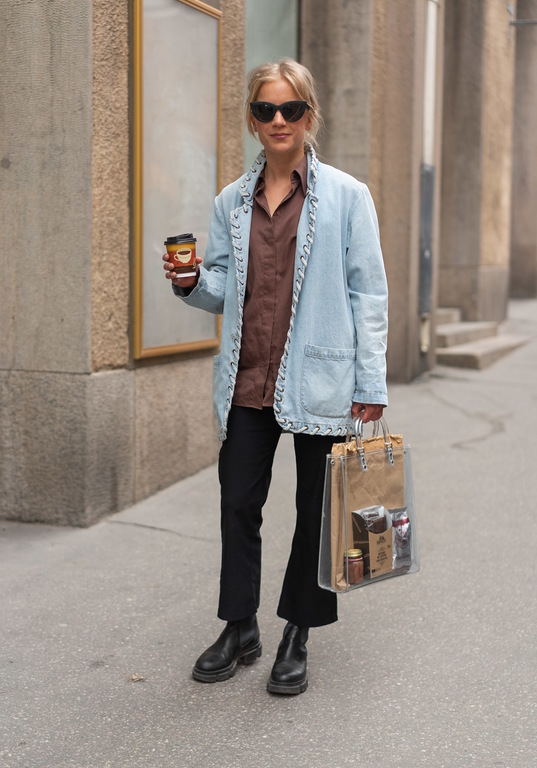
“My sunglasses are from a charity shop in Whitechapel, London, jacket likely from Blitz Vintage in London, blouse Massimo Dutti, trousers secondhand, bag bought from a 7-year-old girl on Cleaning Day in Helsinki. The paper bag inside – from a magazine delivery – is two years old. It covers my laptop – or whatever needs censoring. Lately, I have been inspired by Mrs. America's costume design and mise-en-scènes, such as the office gear.”

1 June 2020, Eerikinkatu

19 Jun 22:22

Walpole finally ditches Rebels as name of high-school teams

by adamg
Sarah

My high school mascot was a Rebel and they said it was for Roncalli, the 'rebel pope' but then why was the mascot a Confederate soldier? Why didn't they just call themselves the Fightin' Popes? The Confederate flag wasn't banned at games until 1998

WBZ reports the Walpole School Committee voted to come up with a new name, years after some residents began pressing for a name that didn't sound like the high school was home to a bunch of secession supporters, an idea that a neighbor of the high-school field bolstered by putting up a large Confederate battle flag.

09 Jun 22:27

You Should Be Feeling Miserable

by Jason Kottke

WNYC editor and critic Rebecca Carroll on what she wants white people to do for Black Americans (besides stop killing them):

The other day, a childhood friend of mine who now lives abroad called me out of the blue in tears: “How can this be happening? I’m so sorry about what’s happening in America, but more so what’s happening to black people in America. I don’t know what to do. I just feel miserable and I can’t stop crying.”

“Lean into that,” I said. “That’s the appropriate response.” Miserable is exactly how the white people who want to help should be feeling right now, and then they should sit with that misery until something breaks in their brain, the narrative changes in their psyche, and the legacy of emotional paralysis lifts entirely. I don’t mean self-serving sadness or performative tears, but rather a bone-deep sense of agony and grief that forces the humanization of black people. We can’t matter unless we are seen as human beings first.

Tags: Rebecca Carroll
06 Jun 02:07

A Powerful Lesson in Discrimination

by Jason Kottke
Sarah

My school ran this program with us in the third grade. We switched half way in the middle and they never ran it agian.

Calling it one of their most requested videos, PBS’s Frontline has uploaded to YouTube their 1985 program on schoolteacher Jane Elliott’s powerful lesson in discrimination. The video shows how, in the wake of Martin Luther King Jr.’s assassination, Elliott divided her third-grade class into those with blue eyes and those with non-blue eyes and then instructed the non-blue-eyed group to treat the blue-eyed group as inferior. The resulting behavior is fascinating, upsetting, and illuminating.

Elliott went on to become a noted antiracism activist and has done blue eyes/brown eyes workshops with groups of adults and teens. And she goes hard at them — see this video and this video for instance.

I’m trying to get the people who participate in this exercise the opportunity to find out how it feels like to be something other than white in this society. ‘Alright people, I’m Jane Elliott and I’m your resident bitch for the day and make no mistake about that, that is exactly what this is about.’ I do this in a mean, nasty way because racism, sexism, ageism, homophobia, ethnocentrism are mean and nasty.

I would also highly recommend watching this brief clip of a talk by Elliott. In less than a minute, she deftly skewers the idea that racial discrimination doesn’t exist in America and calls out White Americans’ complicity in allowing it to persist.

I want every white person in this room who would be happy to be treated as this society in general treats our black citizens — if you as a white person would be happy to receive the same treatment that our black citizens do in this society, please stand.

[Nobody stands.]

You didn’t understand the directions. If you white folks want to be treated the way blacks are in this society, stand. Nobody’s standing here. That says very plainly that you know what’s happening, you know you don’t want it for you. I want to know why you’re so willing to accept it or to allow it to happen for others.

Freedom for some is not freedom.

Tags: education   Jane Elliott   racism   video
06 Jun 02:00

Instagram “Activism” and a Most Surreal Week

by Jen
Sarah

Things to keep in mind. I never feel I have the right to reach out to any creator on social media except to like a post or leave a heart message. Why do people feel like they are owed something?

One Line, digital drawing

NOTE: This is a repost of my June 2020 newsletter, which was sent on June 5, 2020.

Wednesday morning, I received a text from my friend, the art director, illustrator, and writer (and Black Brunch Club founder) George McCalman.

“Jennifer,” he asked, “what is happening?”

For the past few days, George and I and hundreds – if not thousands – of other Black artists on Instagram have been deluged with new followers, as (largely) white folks have been reposting our work and adding us to lists of Black artists to follow and tagging us in posts. On its surface, this “amplification of Black voices” (in quotes because I’ve seen this phrase repeatedly on social media) is a response to the recent murders of George Floyd and Breonna Taylor by the police.

But what and whom does it actually serve? And why does it make a lot of us who are on the receiving end of this strange new form of social media activism very, very uneasy?

I’ll start with that first question. It’s not serving me. Don’t get me wrong – I’m happy for the new followers, and grateful for the orders that have come flooding in from new customers this week. I will gladly take the extended reach and the cash. I make beautiful things that I’m very proud of, I have worked hard to build this business, and I have bills to pay. I’m glad that more people are buying my work. But I’m not sure that the satisfaction I get from making more money than I’d projected this week is equal to the satisfaction that the people who are sharing my work appear to be getting. I have had loyal customers for years and, as those of you who read this newsletter know, my work tends to sell out more quickly than I can produce it. To put it bluntly, I didn’t need the “discovery” as much as many of the posters needed to feel they were doing something.

And these new followers, many of whom claim to be allies, come with the same old questions and new demands for my time. Complete strangers are flooding my DMs asking me if I’m okay (hi, this is a conversation I’d prefer to have/am already having with my friends), how they can help me, how they can be better allies. Companies I have no relationships with are asking if they can feature me. People are getting upset when I don’t respond to their DMs or comments. New followers are leaving comments that, while well-intentioned, are intrusive, or even racist.  Old followers I’ve never heard from are now letting me know that they’ve been following me for a long time, and not just because following Black folks is now a fad, as if I’m handing out awards.

Y’all. This is EXHAUSTING. I’m still sheltering in place because of the coronavirus pandemic. I don’t know when I’ll be able to visit my parents again. I’m working through some really tough emotions because of the repeated violence directed at Black people. I’m still running a business and writing a book. I don’t have the time, or the space, or the inclination to manage other people’s emotions.

Which brings me to the second question: why does this social media “activism” make me and other Black artists very uneasy? It really comes down to that idea of “discovery.” For many of us, the language of discovery smacks of colonialism – the colonialism that has enriched much of the Western world over the last few centuries, and always to the detriment of the colonized. Black artists have always been here. We may not always have the opportunities or capital that our white counterparts do, but there are a lot of us, many of us have strong communities, and a good number of us are thriving. We didn’t need to be “discovered” — especially not in this form. Many of us are seeing our work being co-opted and appropriated for other people’s benefit – maybe not always for profit, but so that non-Black people and brands who hadn’t done anything to highlight or work with Black makers until this week can now feel good about themselves for “helping” Black folks, and signal their own wokeness to themselves, their followers, and their customers. It is crushing to work so hard to build something, only to watch what you’ve built become a tool for someone else’s gain without your permission.

I’ve given you a lot to reflect on. You may need some time to process all that I’ve said, so I’ll end here. If you’ve made it this far, thank you for reading. The next newsletter will drop in a couple of weeks, when I will have new postcards and scarves (both Scarf Club scarves and block printed ones) available. Until then, be well, be listening, be active.

-Jen

p.s. I realize that this newsletter will rub a few people the wrong way. It’s completely your right to unsubscribe. I get a notification when you unsubscribe, so there’s no need to let me know you’re going. If this newsletter no longer provides you with what you need, I hope you do find something that does.

The post Instagram “Activism” and a Most Surreal Week appeared first on Jen Hewett.

01 Jun 20:04

I Need To Do Better

by swissmiss

Thank you for this gentle yet powerful call to action, Anisa Makhoul. I have to do better.

Black Lives Matter.

30 May 13:31

Thousands In Boston Protest George Floyd's Murder By Minneapolis Police

by Greg Cook

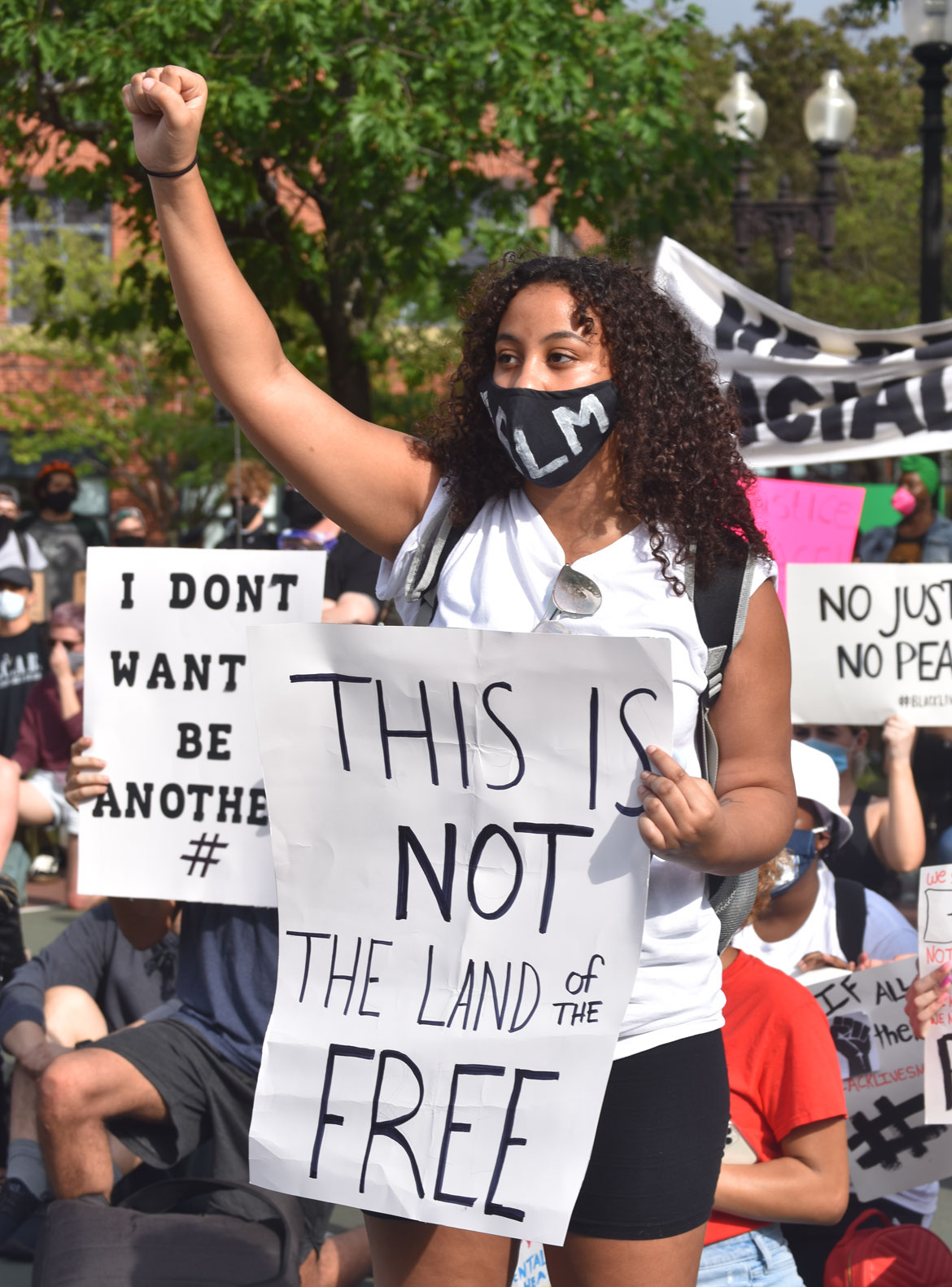
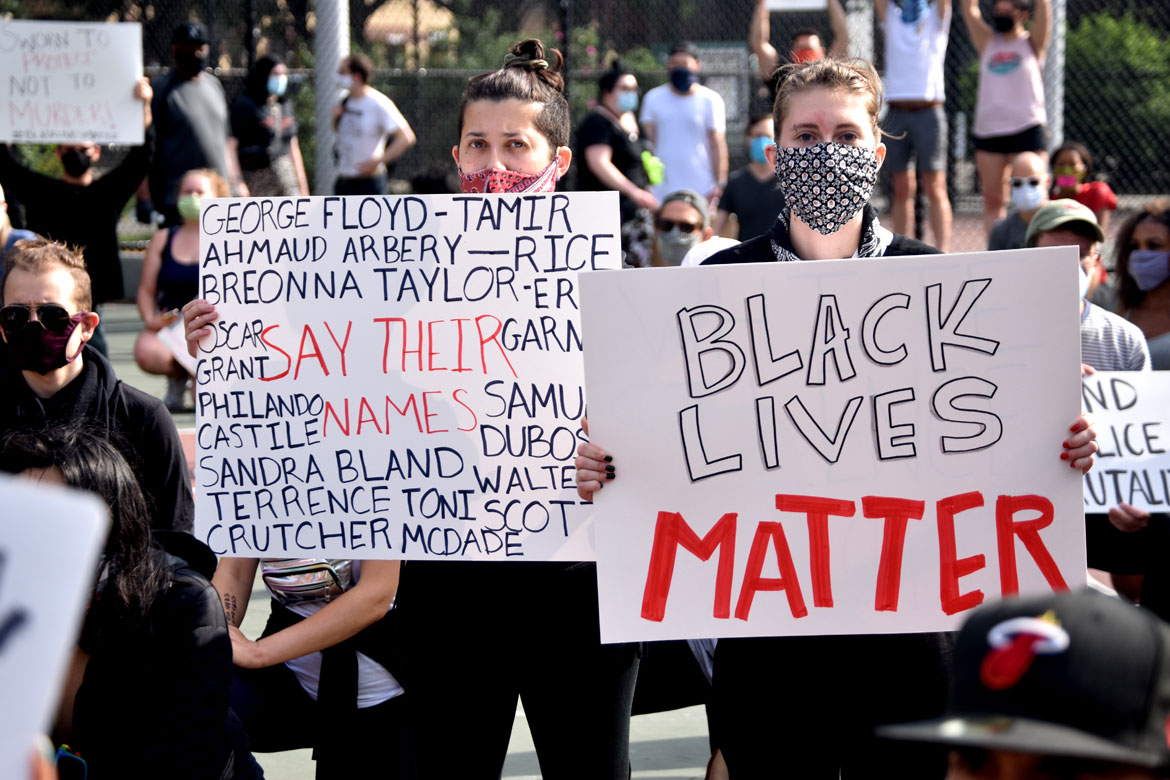
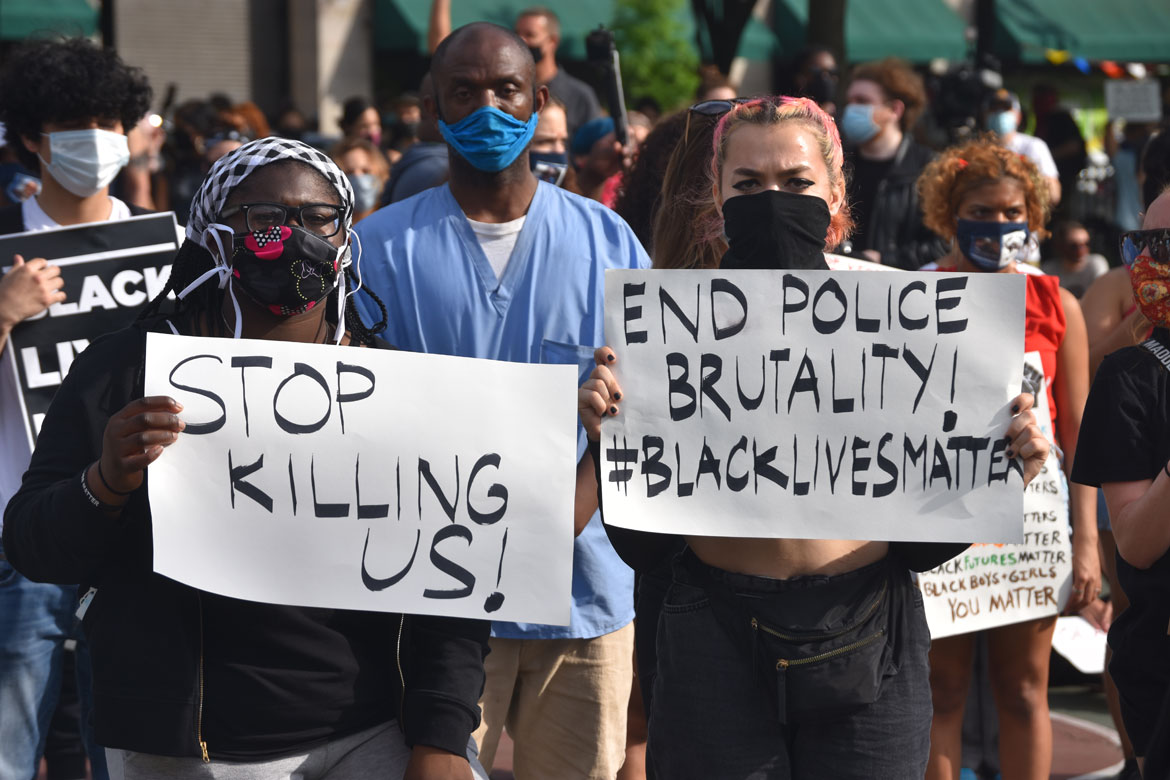
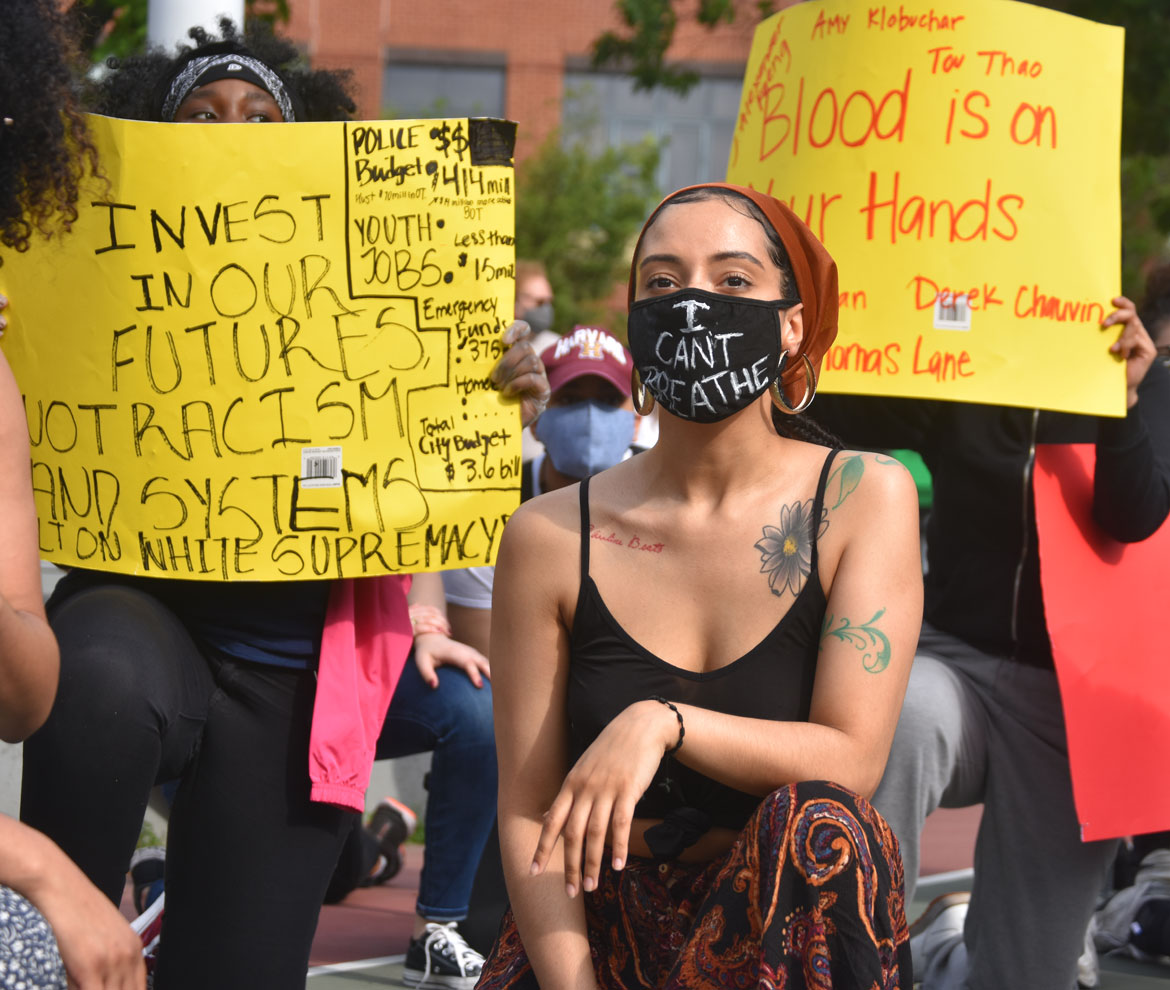
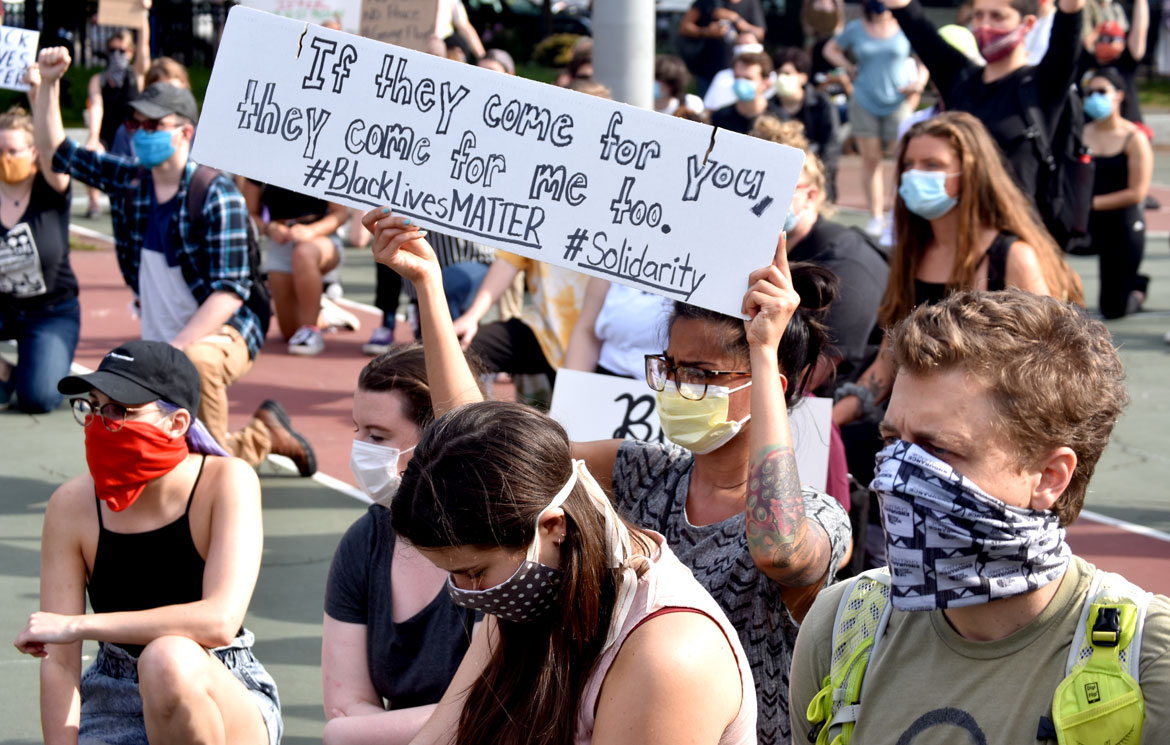
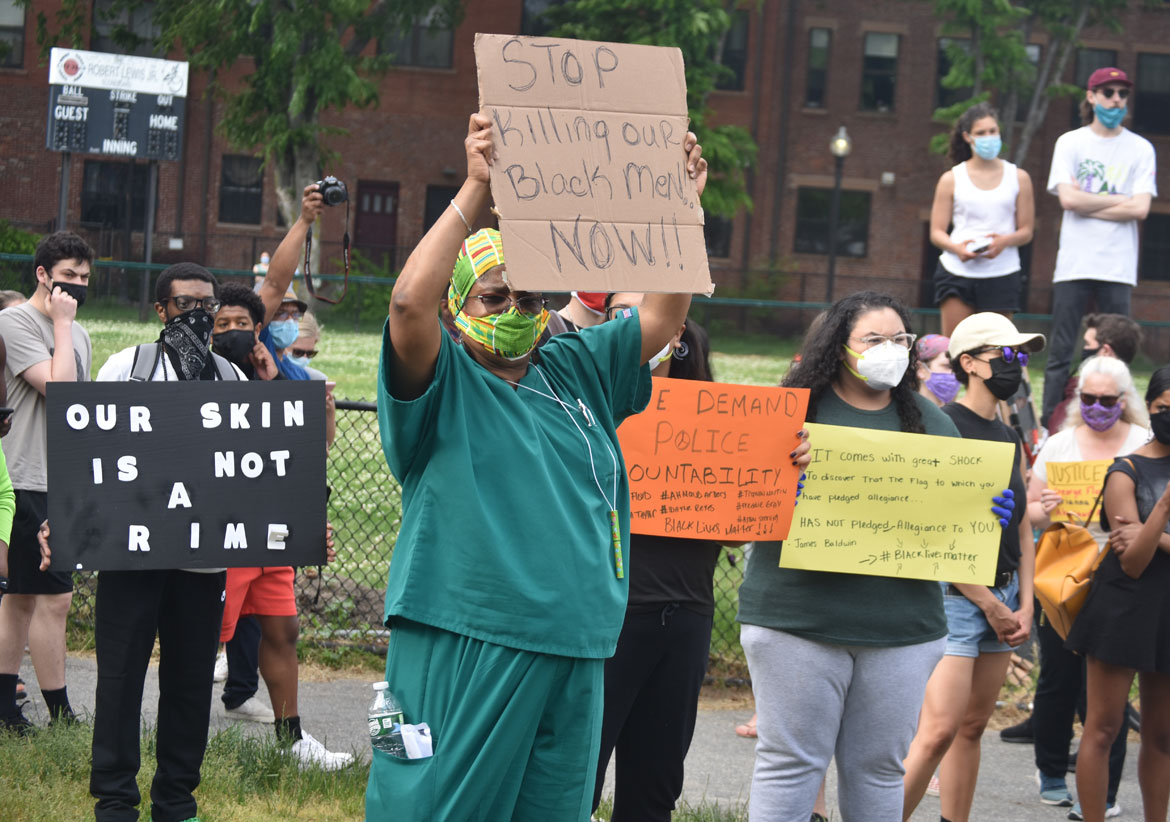
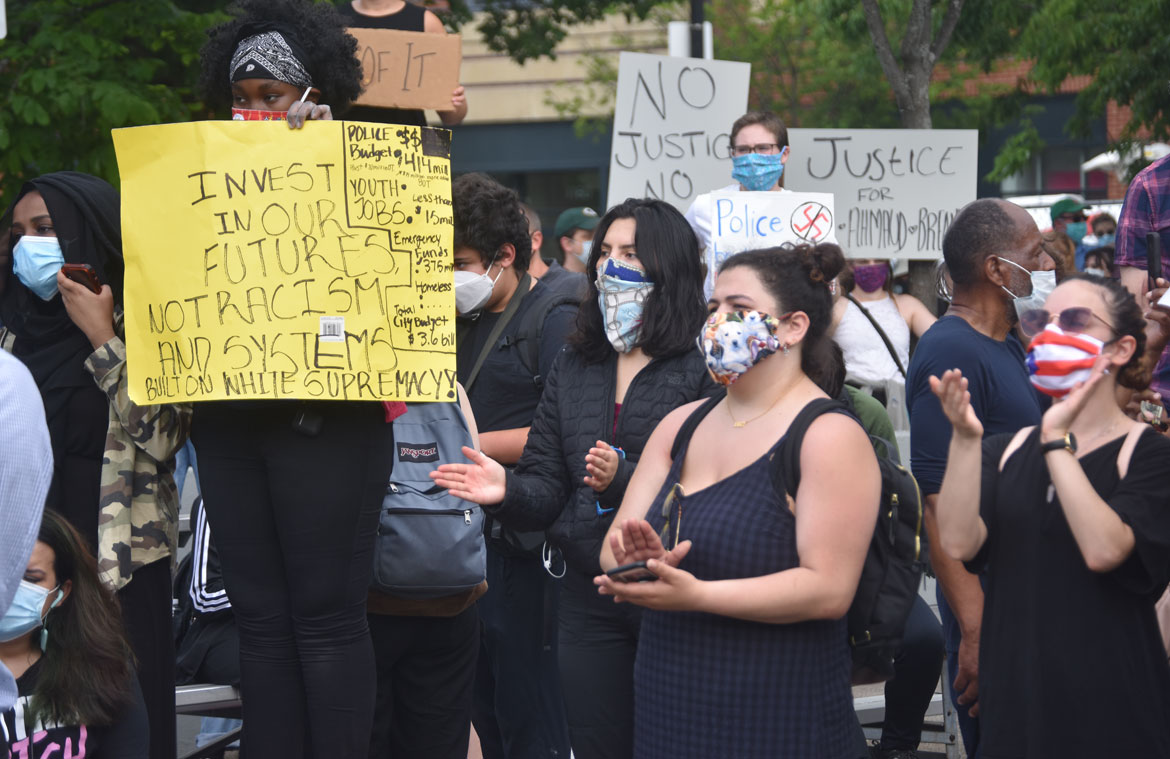
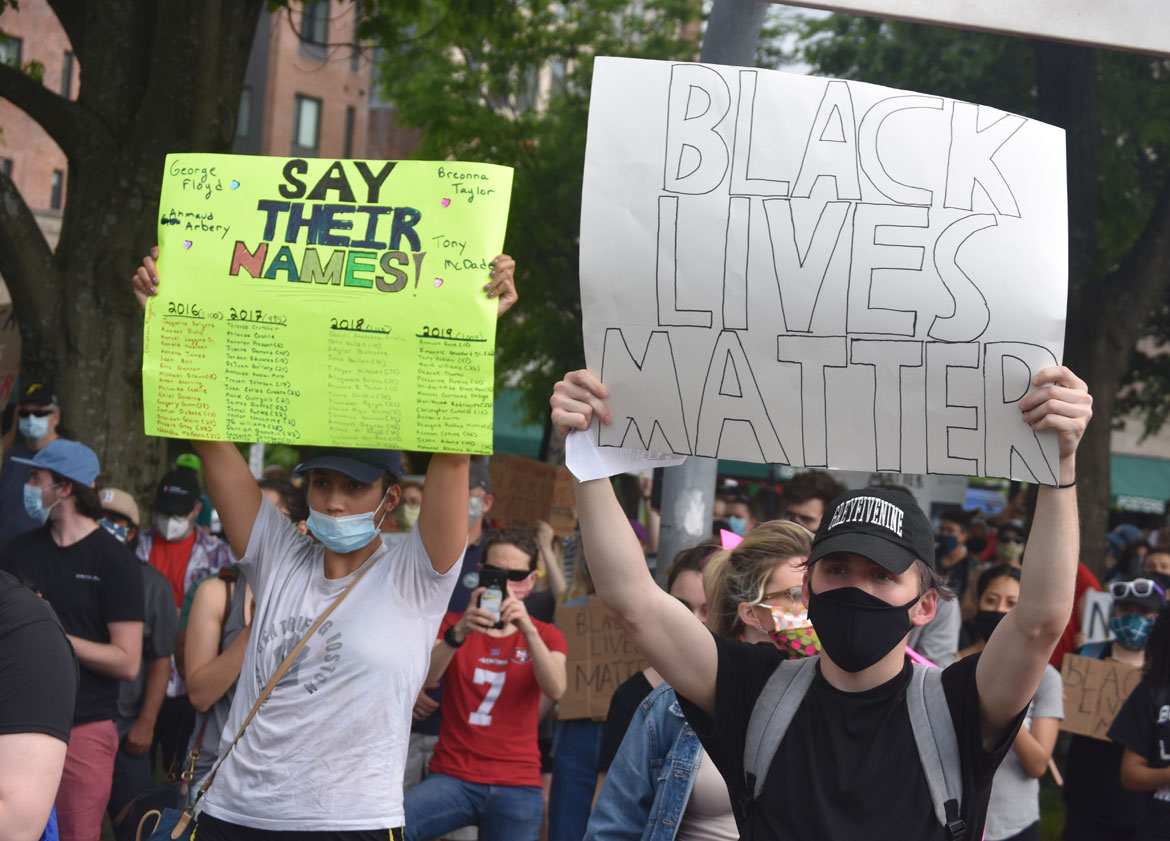
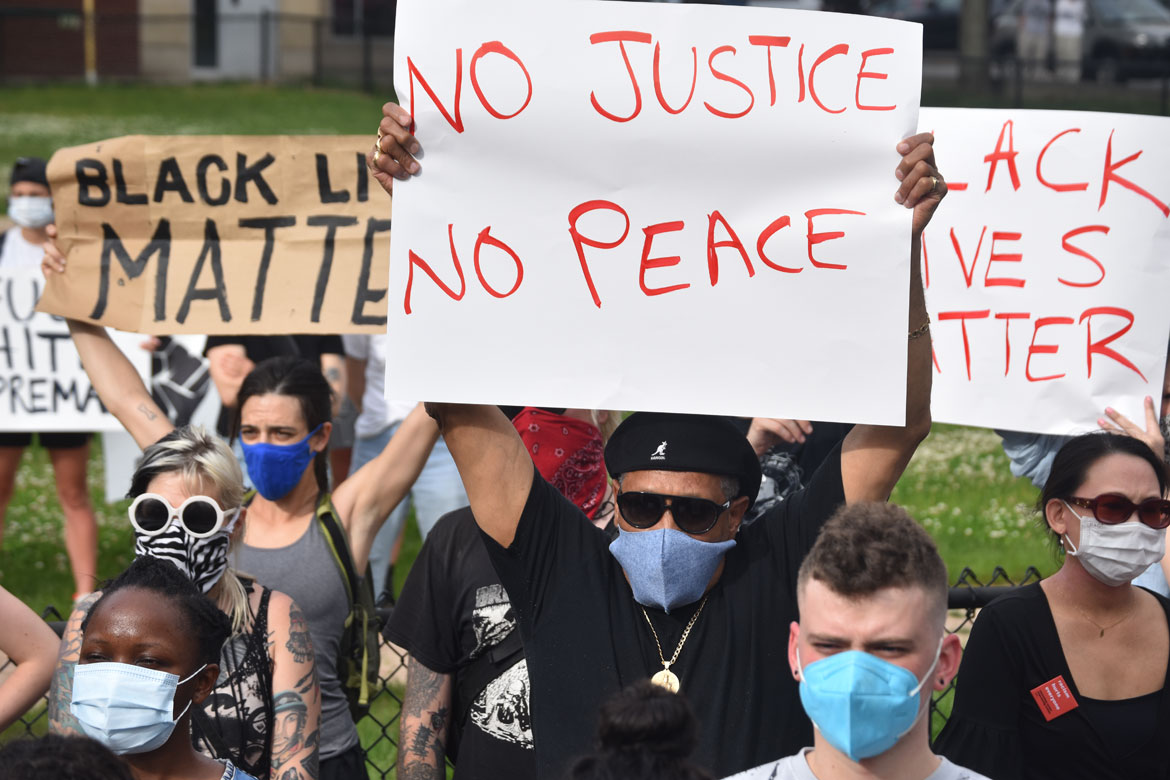
The murder of George Floyd by Minneapolis police promoted thousands to gather in protest at Peters Park in Boston’s South End this evening.

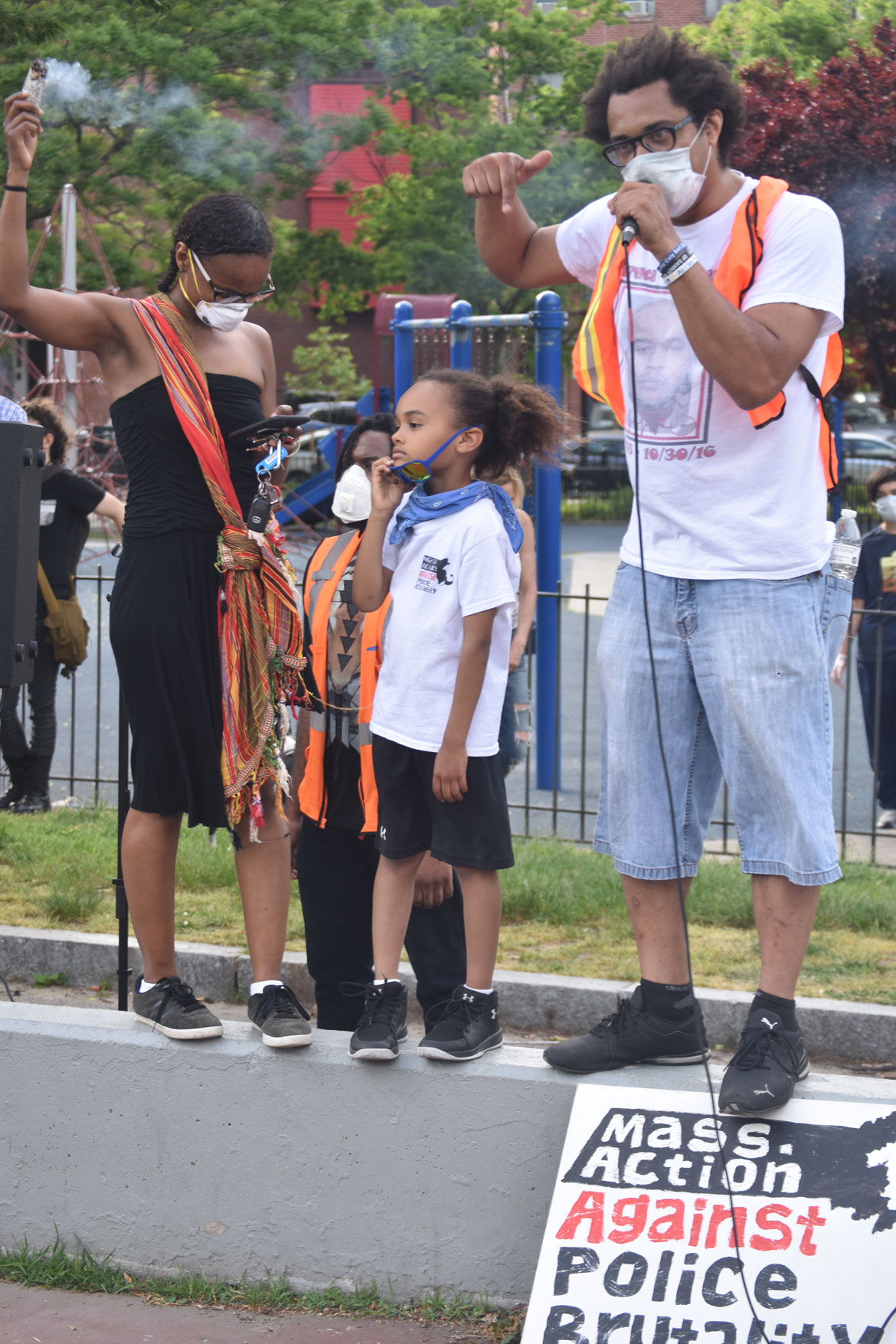
“The first police officer was arrested and charged today,” Brock Satter of Mass Action Against Police Brutality, which organized the rally, told the crowd. “That was a result of our protests around the country.”

Derek Chauvin–the Minneapolis police officer caught on video Monday killing Floyd by pressing his knee against Floyd’s throat for minutes as the handcuffed 46-year-old pleaded “I can’t breathe”–was charged today with third-degree murder and second-degree manslaughter.

“We should demand that the three other officers involved in the arrest and death of George Floyd should be arrested and charged,” Satter said.

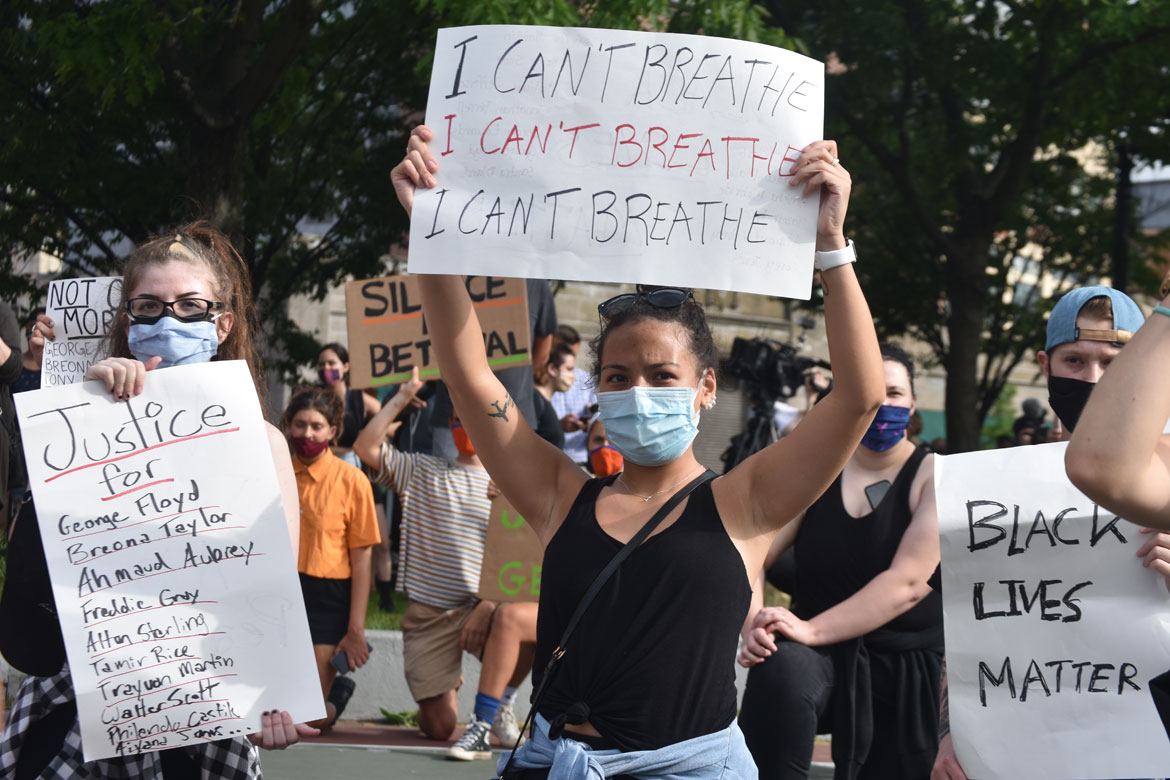
Thousands gathered in Boston's Peters Park to protest the murder of George Floyd by Minneapolis police. May 29, 2020. (Greg Cook photo)
Thousands gathered in Boston’s Peters Park to protest the murder of George Floyd by Minneapolis police. May 29, 2020. (Greg Cook photo)

“We simply demand that they prosecute the police. When they break the law, they go to jail,” Satter told the crowd at the “STOP the Pandemic of Police Brutality: Justice 4 George, Ahmaud and Breonna” rally. “The reason they keep killing people is they get away with it.”

“When the government itself doesn’t respect the rule of law, how can you expect anyone else to?” Satter asked, then urged the people gathered to remain peaceful.

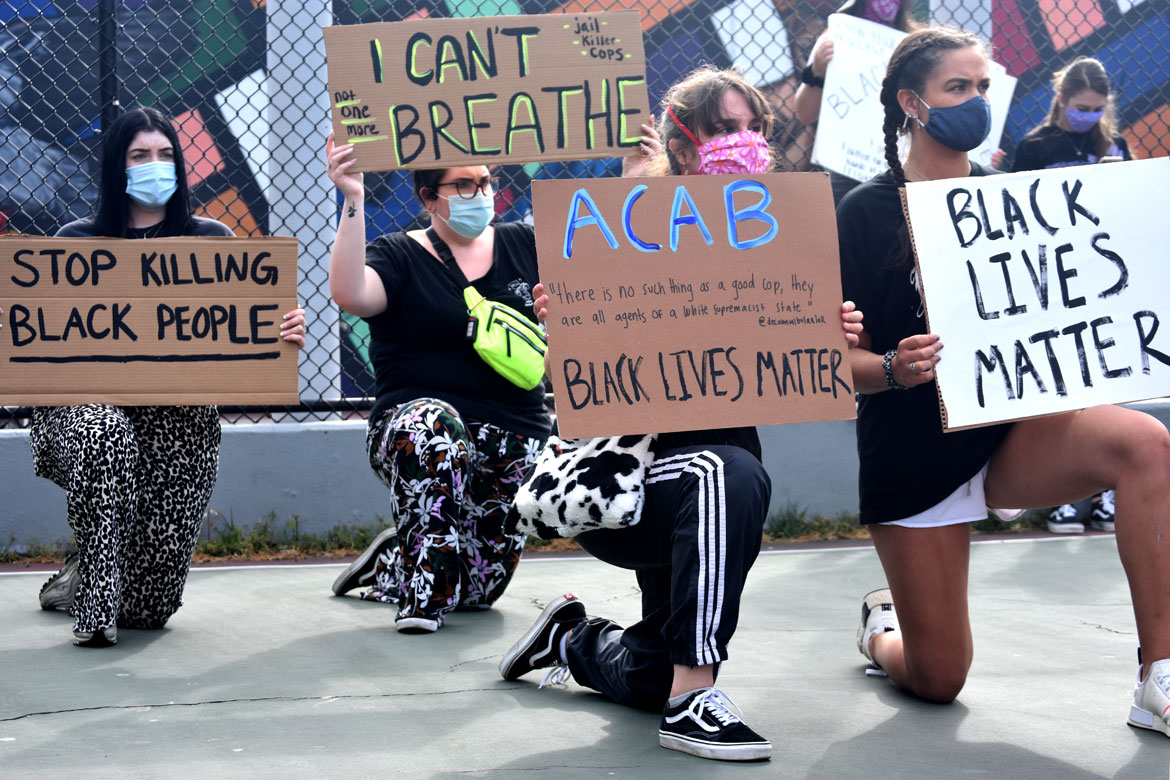
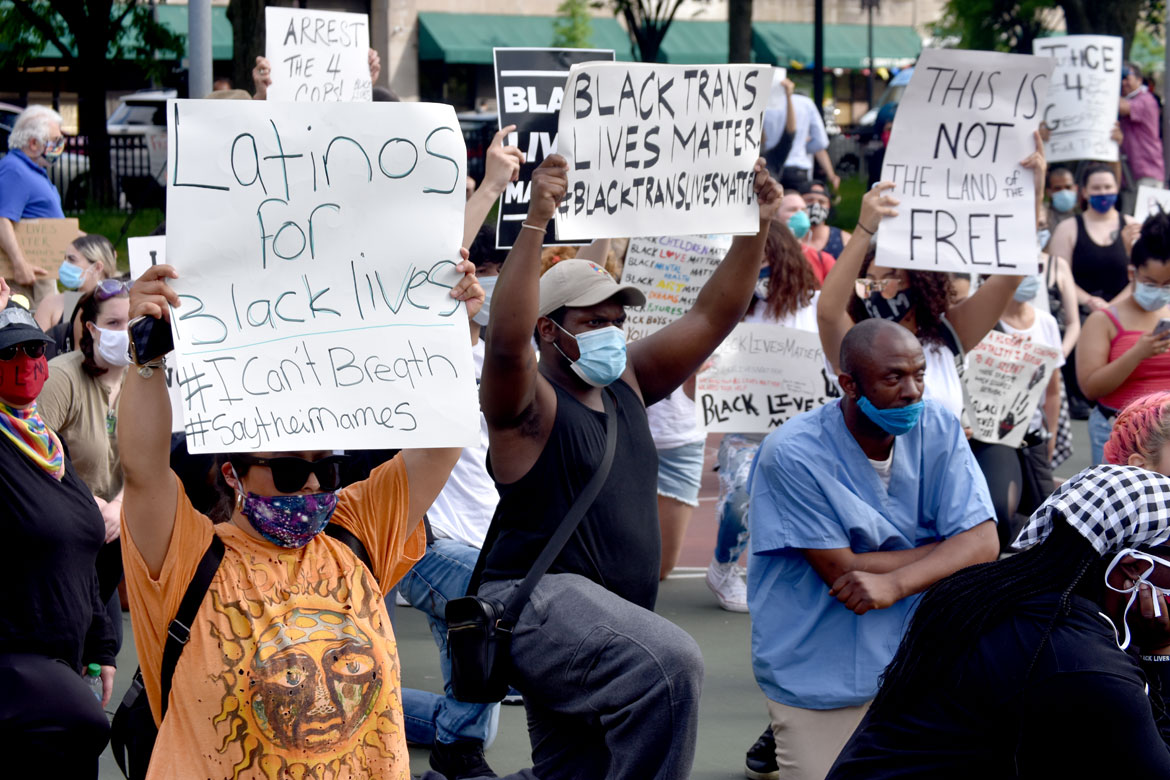
The crowd, most wearing coronavirus masks, packed the park. Many knelt on the basketball court.

Thousands gathered in Boston's Peters Park to protest the murder of George Floyd by Minneapolis police. May 29, 2020. (Greg Cook photo)
Thousands gathered in Boston’s Peters Park to protest the murder of George Floyd by Minneapolis police. May 29, 2020. (Greg Cook photo)

“This is important in Boston because the same thing is happening in Boston, it just hasn’t been getting attention,” Satter said before the rally.

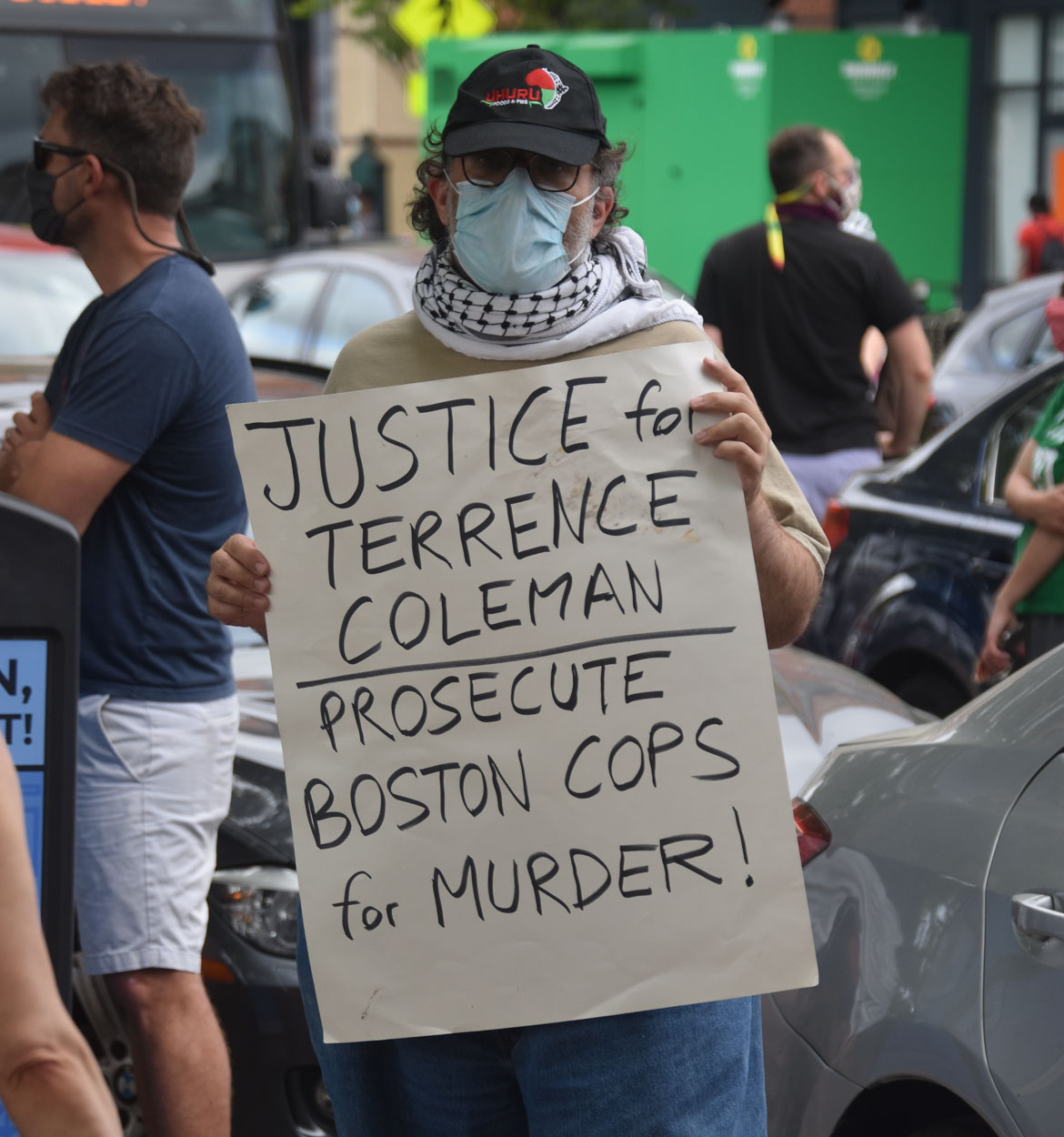
Satter called for charges against Boston police who shot dead Terrence Coleman, a mentally ill, 31-year-old man, in 2016. He called for justice for Burrell Ramsey-White, who was shot dead by Boston police in 2012, and Denis Reynoso who was shot dead by Lynn police in 2013.

Related:
Jan. 16, 2017: ‘I Called For Help And They Killed Him’: Mass Action Against Police Brutality March


If this is the kind of coverage of arts, cultures and activisms you appreciate, please support Wonderland by contributing to Wonderland on Patreon. And sign up for our free, weekly newsletter so that you don’t miss any of our reporting.


All content copyright by Greg Cook or its original creators.


Thousands gathered in Boston's Peters Park to protest the murder of George Floyd by Minneapolis police. May 29, 2020. (Greg Cook photo)
Thousands gathered in Boston’s Peters Park to protest the murder of George Floyd by Minneapolis police. May 29, 2020. (Greg Cook photo)
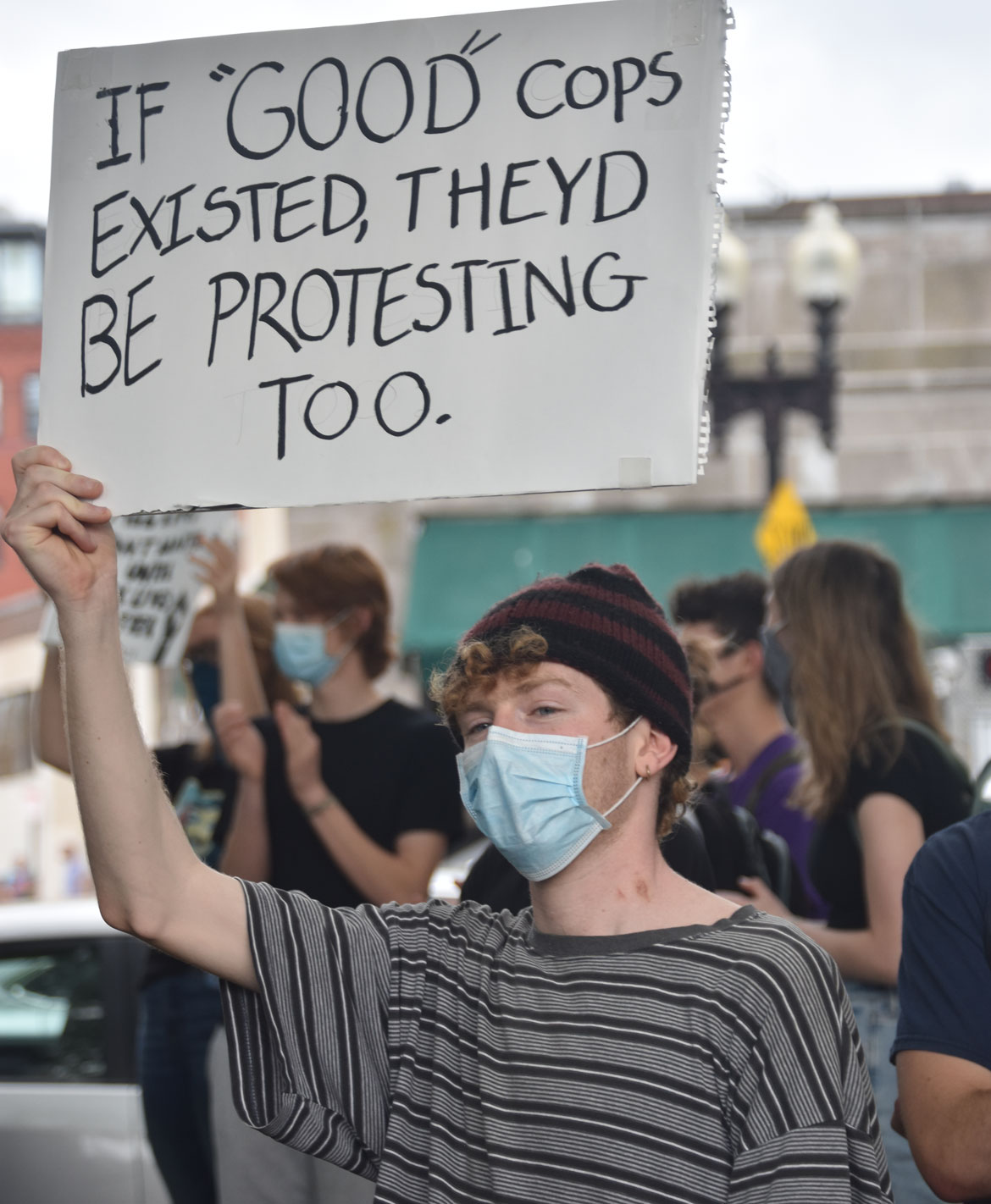
Thousands gathered in Boston's Peters Park to protest the murder of George Floyd by Minneapolis police. May 29, 2020. (Greg Cook photo)
Thousands gathered in Boston’s Peters Park to protest the murder of George Floyd by Minneapolis police. May 29, 2020. (Greg Cook photo)
Brock Satter (right) of Mass Action Against Police Brutality spoke to the thousands gathered in Boston's Peters Park to protest the murder of George Floyd by Minneapolis police. May 29, 2020. (Greg Cook photo)
Brock Satter (right) of Mass Action Against Police Brutality spoke to the thousands gathered in Boston’s Peters Park to protest the murder of George Floyd by Minneapolis police. May 29, 2020. (Greg Cook photo)
Thousands gathered in Boston's Peters Park to protest the murder of George Floyd by Minneapolis police. May 29, 2020. (Greg Cook photo)
Thousands gathered in Boston’s Peters Park to protest the murder of George Floyd by Minneapolis police. May 29, 2020. (Greg Cook photo)
Thousands gathered in Boston's Peters Park to protest the murder of George Floyd by Minneapolis police. May 29, 2020. (Greg Cook photo)
Thousands gathered in Boston’s Peters Park to protest the murder of George Floyd by Minneapolis police. May 29, 2020. (Greg Cook photo)
Thousands gathered in Boston's Peters Park to protest the murder of George Floyd by Minneapolis police. May 29, 2020. (Greg Cook photo)
Thousands gathered in Boston’s Peters Park to protest the murder of George Floyd by Minneapolis police. May 29, 2020. (Greg Cook photo)
Thousands gathered in Boston's Peters Park to protest the murder of George Floyd by Minneapolis police. May 29, 2020. (Greg Cook photo)
Thousands gathered in Boston’s Peters Park to protest the murder of George Floyd by Minneapolis police. May 29, 2020. (Greg Cook photo)
Thousands gathered in Boston's Peters Park to protest the murder of George Floyd by Minneapolis police. May 29, 2020. (Greg Cook photo)
Thousands gathered in Boston’s Peters Park to protest the murder of George Floyd by Minneapolis police. May 29, 2020. (Greg Cook photo)
Thousands gathered in Boston's Peters Park to protest the murder of George Floyd by Minneapolis police. May 29, 2020. (Greg Cook photo)
Thousands gathered in Boston’s Peters Park to protest the murder of George Floyd by Minneapolis police. May 29, 2020. (Greg Cook photo)
Thousands gathered in Boston's Peters Park to protest the murder of George Floyd by Minneapolis police. May 29, 2020. (Greg Cook photo)
Thousands gathered in Boston’s Peters Park to protest the murder of George Floyd by Minneapolis police. May 29, 2020. (Greg Cook photo)
Thousands gathered in Boston's Peters Park to protest the murder of George Floyd by Minneapolis police. May 29, 2020. (Greg Cook photo)
Thousands gathered in Boston’s Peters Park to protest the murder of George Floyd by Minneapolis police. May 29, 2020. (Greg Cook photo)
Thousands gathered in Boston's Peters Park to protest the murder of George Floyd by Minneapolis police. May 29, 2020. (Greg Cook photo)
Thousands gathered in Boston’s Peters Park to protest the murder of George Floyd by Minneapolis police. May 29, 2020. (Greg Cook photo)
Thousands gathered in Boston's Peters Park to protest the murder of George Floyd by Minneapolis police. May 29, 2020. (Greg Cook photo)
Thousands gathered in Boston’s Peters Park to protest the murder of George Floyd by Minneapolis police. May 29, 2020. (Greg Cook photo)
Thousands gathered in Boston's Peters Park to protest the murder of George Floyd by Minneapolis police. May 29, 2020. (Greg Cook photo)
Thousands gathered in Boston’s Peters Park to protest the murder of George Floyd by Minneapolis police. May 29, 2020. (Greg Cook photo)
Thousands gathered in Boston's Peters Park to protest the murder of George Floyd by Minneapolis police. May 29, 2020. (Greg Cook photo)
Thousands gathered in Boston’s Peters Park to protest the murder of George Floyd by Minneapolis police. May 29, 2020. (Greg Cook photo)
Thousands gathered in Boston's Peters Park to protest the murder of George Floyd by Minneapolis police. May 29, 2020. (Greg Cook photo)
Thousands gathered in Boston’s Peters Park to protest the murder of George Floyd by Minneapolis police. May 29, 2020. (Greg Cook photo)
Thousands gathered in Boston's Peters Park to protest the murder of George Floyd by Minneapolis police. May 29, 2020. (Greg Cook photo)
Thousands gathered in Boston’s Peters Park to protest the murder of George Floyd by Minneapolis police. May 29, 2020. (Greg Cook photo)
Thousands gathered in Boston's Peters Park to protest the murder of George Floyd by Minneapolis police. May 29, 2020. (Greg Cook photo)
Thousands gathered in Boston’s Peters Park to protest the murder of George Floyd by Minneapolis police. May 29, 2020. (Greg Cook photo)

If this is the kind of coverage of arts, cultures and activisms you appreciate, please support Wonderland by contributing to Wonderland on Patreon. And sign up for our free, weekly newsletter so that you don’t miss any of our reporting.


28 May 17:56

The side hustle in your closet

by Taylore Scarabelli
Sarah

I don't play video games because I prefer updating my RealReal like list.


Robert Capa, Gen X girl, Colette Laurent, in her closet, Paris, 1952.

I didn’t really understand the value of eBay until a friend showed me her Watch List. She scrolled through an archive of Junya, Comme and Dior as if she were sifting through her own closet of carefully curated finds. Now, when I’m tired or stoned or just thirsty for something new, I’ll hunt through streams of blurry images in search of Cavalli animal prints and vintage Galliano. I fav a $40,000 rhinestone encrusted Tom Ford for Gucci jacket and stilettos that won’t fit. It doesn’t matter. I’m not going to buy them anyway.

Once the domain of savvy collectors and aspirational housewives in search of affordable monogram, resale shopping apps like eBay and Poshmark have since become a two billion dollar industry catering to everyone from millennials seeking to tap into the growing gig economy, to Supreme junkies in search of the latest drop.

Across the web, the joys of recommerce are sold through creative copy in apps and on news sites like Forbes, who peddle the promise of neoliberalism with headlines like ‘Do You Have a Hidden Side-Hustle in Your Closet?’1 For the eco-conscious and Kondo-savvy, repurposing used goods is only natural, and so is making money online. But for the fashion-obsessed, resale apps offer more than discount designer. Aspiring stylists and archivists use sites like eBay to uncover lesser-known brands or rare items from established designers, utilising their discovery mechanisms as portals into more in-depth explorations of old trends or runway shows.

Curated apps, like Grailed and The RealReal, help buyers and collectors gauge the value of goods — like this season’s ‘must-have’ Margiela tabis2 — encouraging users to participate in circular economies of style: the incessant buying and selling of used goods as a means to consume more. But within these regenerative shopping networks there’s another, arguably more democratic, trend emerging, one that often eliminates the need to buy things altogether. It’s the practice of saving items to likes, carts, and online wish lists — what I like to call ‘virtual shopping.’

Like Instagram and Pinterest, resale apps can be used as mood boards, enabling users to virtually collect goods as a means to generate new identities on and offline. According to a 2013 study by consumer culture scholars Mike Molesworth and Janice Denegri-Knott titled Digital Virtual Consumption as Transformative Space, these temporary states of ownership, like saving a pair of Dr Martens on Depop, enable users to ‘initiate a journey of self-knowing through object knowing.’3 In other words, we no longer have to buy things to feel their impact on our sense of self; we can just save them to our wish lists instead.

For today’s shoppers, discovery is half the fun of online shopping, especially when it comes to searching for used items — things not everyone can find in stores. But just like vintage shopping IRL, virtual shopping can simulate longing, anxiety and a feeling of missed opportunity. But according to Denegri-Knott, it can also help enhance our self-esteem, promote ethical consumption and deliver new modes of enjoyment and pleasure.4 If we can participate in fashion in the same way that we play video games, then our opportunities for personal exploration via resale apps should be as vast as the sandbox worlds that mirror them.

In the world of recommerce, virtual shopping is the new consumerism that everyone can afford. But do resale apps really change the way we shop? Can they free us from our physical enslavement to consumerism? Or do they compel us to dive deeper into a cycle of buying and selling goods, rendering every image, object and aspiration in our lives as something to be consumed and resold?

Virtual shopping exists within a liminoid space, what cultural theorist Rob Shields defines as a meeting point of the imaginary and the material.5 Like window shopping, this in-between mode of consumption encourages fantasy and play, but it can also simulate aspirational desires, like the need to consume above your means. In his book The Empire of Things, historian Frank Trentmann describes how social innovation at the turn of the twentieth century resulted in the development of advanced technologies that triggered new modes of consumption, similar to the effects of online shopping today.6 In fin de siècle Paris, he says, newly constructed grand boulevards facilitated the orderly flow of goods and people, blurring commercial and public space with brightly lit storefronts that acted as extensions of main traffic arteries.7 For the first time, luxury items were on display for the masses, expanding desires for previously unattainable goods. Household objects, priced cheaper to encourage accelerated turnover, were no longer purchased solely for their utility, but also for their ability to signal wealth and status.

This surge in consumerism, defined as ‘conspicuous consumption’ by Thorstein Veblen in 1899, put new pressures on women, who were then responsible not only for the cooking and cleaning, but also for purchasing clothing and housewares that reflected familial status and smarts. For the average consumer, this included silk dresses, tapestries, and newly available knick knacks from overseas. For the elite, this meant sourcing antiques and hard to find collectables, luxury goods that weren’t yet available to the masses.

Today’s shoppers similarly perform mental and physical labour in order to achieve idealised luxury lifestyles both online and IRL. Buyers and sellers on resale apps act as entrepreneurial subjects, sifting through blogs, Pinterest boards, and influencer accounts in order to uncover the most compelling trends and the looks that mirror them. This neoliberal encroachment of production onto all facets of consumer behaviour has resulted in the proliferation of what scholar Elizabeth Wissinger refers to as glamour labour, ‘the body work to manage appearance in person and the online image work to create and maintain one’s “cool” quotient — how hooked up, tuned in, and “in the know” one is.’8

As our real-life identities become blurred with those of our online avatars, so do our notions of work and play, and nowhere is this more apparent than within social networks like Instagram and on the resale platforms that mimic them. In a recent blog post, Poshmark CEO Manish Chandra hailed ‘social commerce’ as the way of the future, citing community building as the key to driving engagement, building trust, and selling goods online.9 To Chandra, influencer markets are essential to selling clothes, and the best way to tap into them is by making shopping networks feel more like social media. But beyond likes, shares and friendly copy inspiring users to ‘join the community,’ social commerce isn’t really all that social.

Instead, shopping platforms mimic social media in other ways. On Depop, sellers are offered a handbook of tips to help them set up their own ‘bedroom empire,’ what amounts to a brightly coloured pitch deck that might also be used to explain how to get popular on Instagram.10 According to the handbook, the best way to make money is by taking ‘model shots’ — well-lit, full-body photos that show the item you are trying to sell styled into a look. But for sellers, listing items on Depop involves more than doing your makeup and setting up a selfie timer. Like an aspiring influencer you need to create a brand identity, grow your followers, and stay up-to-date with the latest trends — immaterial forms of work or ‘glamour labour’ that may seem stressful but for many, are actually fun.

‘The time I spend on the app is definitely worth it,’ one Depop seller told me on Reddit. ‘Every time I’m active it’s an opportunity to make money for myself doing what I enjoy.’

Virtual shopping can be social, though not necessarily in the way platform developers intended. Endless messaging boards and Instagram accounts dedicated to weird eBay finds and vintage collections act as alternative malls, offering thrifters new ways to share their hauls with larger audiences, sometimes without even shopping at all. For example, Instagram user Vivian Xe shares her watchlisted eBay items to a dedicated account called @lucky_jewel_iwanttt.11 Followers heart matching Miu Miu cowhide sets and third eye prosthetics, commenting their praise under pictures of vintage platforms or asking for links so they can buy them for themselves. ‘It’s like blurring the line between physically consuming something and just having it in some entangled web on the internet,’ Xe told me over the phone. ‘I’m getting rid of the potential energy that I’m holding.’12

Almost everyone I spoke to while researching this essay had some kind of relationship to virtual shopping. Like me, many of my friends confessed that scrolling through eBay or Amazon was for them a soothing distraction. But unlike the shameful confession of someone whose Instagram screen time exceeds two hours a day, my shopping-addicted peers seem to take pride in their practice, as if sourcing cheap Giorgio Armani is in itself an artform. I can’t help but agree. Surely snooping through a random Las Vegas stripper’s simulated closet on Poshmark is a better use of time than scrolling through pictures of skinny girls wearing I.AM.GIA on Instagram. Especially if you’re not buying anything.

In an era where trends proliferate faster than the seasonal shows that once spawned them, recommerce apps have the power to both dictate trend cycles and undermine them too. When fangirls buying out used Saddlebags leads to their re-issue at Dior, it’s easy to see how secondary markets can manipulate the fashion industry. But what happens when shoppers sit out trends altogether? If buyers can get gratification from simply browsing online, there’s no need to splurge on conspicuous consumption goods. If you keep that Balenciaga City bag in your RealReal wishlist for long enough, you might forget why you even wanted it, especially if you couldn’t really afford it in the first place.

Like giving up fast fashion, opting out of IRL shopping can feel like a radical act, but Janice Denegri-Knott, the co-author of Digital Virtual Consumption as Transformative Space, isn’t so sure. If collecting designer clothing in digital baskets contributes to a sense of ownership that causes one to abandon online shopping altogether, she tells me, virtual consumption could be considered radical. ‘But because our attention is the ultimate commodity in the digital economy, escaping market forces altogether is unlikely.’13

Like the streets of Paris at the turn of the century, resale applications are constructed to capture our attention and maximise the time we spend shopping. Auctions, push notifications, and emails announcing price drops get users to open their apps while explore pages and likes encourage them to stay and play. But in the age of big data, it’s not only our dollars that corporations are after. In The Age of Surveillance Capitalism, Shoshanna Zubkoff argues that it’s not goods, but people and the data they generate that are the most valuable resources online.14 Not only can platforms use our data to sell ads to corporations, but they can also use it to modify our behaviour IRL.

If that’s the case, it’s no wonder that apps like Poshmark and eBay promote the virtual consumption and collection of goods. The more time we spend online, the more apps know about how and what we consume. For example, if you make a purchase in the early evening on a Wednesday night, the next time you’re feeling tired and stressed at the end of a work day, you might find an email in your inbox announcing a discount on an item you previously liked. These small modes of behaviour modification might seem trivial, but when we take into account all the ways in which our actions are tracked throughout the day, like at the coffee shop when you use your debit card, or when the Instagram app overhears you saying you need new underwear, the opportunities for targeting become unlimited, increasing the pressures to buy.

But virtual consumption has its benefits, too. For example, ‘If we see consumption as enabling us to achieve goals that are important to us, searching for collectables on eBay shouldn’t be seen as detrimental,’ says Denegri-Knott. ‘Collecting may be something that we enjoy with our loved ones, or be an activity that allows us develop skills and knowledge.’15

Those that hit the ‘buy now’ button produce value too. Real people make real money selling on apps like Poshmark and eBay, and buying used clothes frees woke consumers from the guilt of buying new. What’s more, alternative economies have emerged from ‘sharing’ platforms. On Depop, users have found innovative ways to trade items with those who have similar tastes, while virtual communities like @lucky_jewel_i_wanttt have turned into pop ups IRL. And while extensive packaging and air shipping might not scream sustainability, the growth of resale platforms has made buying used the norm for a whole new generation of people who thought thrifting was just for hipsters. ‘I was that weirdo whose parents couldn’t afford to buy trendy name-brand stuff,’ one Depop user told me on Reddit. ‘To have people buy and wear my thrift selections and handmade pieces is very validating, like… I knew I had good taste!’

For those who can manage to save up enough money for a pair of Yeezys from Goat.com, the question then becomes whether or not buying them is worth it. In the 2018 essay Kinky Labour Supply and the Attention Tax, Venmo co-founder Andrew Kortina and designer Namrata Patel speculate that for young men in America, buying conspicuous consumption goods isn’t worth the trade-off.16 Most people shop to show off their goods online, and while it’s easier to find like-minded people on the internet, like in the case of Vivian Xe, standing out among the noise is harder than ever. Instead of working more to buy expensive goods, Kortina and Patel argue, young men are more likely to spend time consuming the content available to them for free online. Put simply, unless you’re already rich and famous, the amount of likes you get for posting a photo in a ‘GUCCY’ sweater isn’t worth the cost. Investing in a new Fortnite skin is a better payoff.

Of course, not everyone is keen on making avatars and scrolling through eBay. For those with IRL jobs, how we dress is often as important as our physical and mental abilities, especially for women. Still, it’s not hard to imagine a future wherein our daily lives are lived in uniform and our consumer identities are fulfilled online. Social media already allow us to create fantasy worlds where we can post pictures of places we never went, photoshop our waists to be smaller, and even pretend to be someone else altogether, so why not do the same with clothes?

Whether or not we will consume digital goods in the future isn’t really up for debate, but just how we’ll pay for the use of these objects is yet to be seen. It’s easy to envision a future dominated by monopolistic platforms that keep us confined to algorithmic content tunnels, but we can also consider a less sinister one wherein people can exchange their data in fair, transparent ways for the use of online goods and services. This might include subscription networks or blockchain-based tokens that can be used to represent virtual garments or artworks that can grow in value and scarcity over time. Whatever the method, the future is virtual, and if people want to create new realities as a means to escape the mundanity of their real life ones, so be it. After all, fashion is a creative endeavour and if we want to express it online, we should be able to, especially when everything else feels like it’s outside of our control.


Taylore Scarabelli is a New York-based writer whose work focuses on fashion, feminism and technology. She is fond of Ed Hardy and fist-size hoops.

This article was originally published in Vestoj On Capital, available for purchase here.


  1. https://www.forbes.com/sites/lorihil/2018/01/26/do-you-have-a-hidden-side-hustle-in-your-closet/#37049f591c34 

  2. https://www.businessoffashion.com/articles/intelligence/why-fashion-loves-the-margiela-tabi-boot 

  3. R W. Belk and R Llamas, The Routledge Companion to Digital Consumption. Abingdon, Oxon: Routledge, 2013, p.230. 

  4. Email interview with Janice Denegri-Knott 

  5. R W. Belk and R Llamas, The Routledge Companion to Digital Consumption. Abingdon, Oxon: Routledge, 2013, p.225. 

  6. F Trentmann, The Empire of Things. New York, NY: Harper, 2016 

  7. Ibid. p.455. 

  8. E Wissinger. ‘#NoFilter: Models, Glamour Labor, and the Age of the Blink,’ Theorizing the Web, Vol 1, Issue 1: 2014 

  9. https://blog.poshmark.com/2019/01/31/a-year-in-social-commerce-a-report-by-poshmark/ 

  10. https://sellers.depop.com/Seller_Handbook_Final_US.pdf 

  11. https://www.instagram.com/lucky_jewel_iwanttt/ 

  12. Phone interview with Vivian Xe 

  13. Email interview with Janice Denegri Knott 

  14. S Zubkoff, The Age of Surveillance Capitalism, New York, NY: Public Affairs, 2019 

  15. Email interview with Janice Denegri-Knott 

  16. https://kortina.nyc/essays/kinky-labor-supply-and-the-attention-tax/ 

19 May 18:19

How Are You Doing?

by swissmiss

Friends asking: How are you doing?
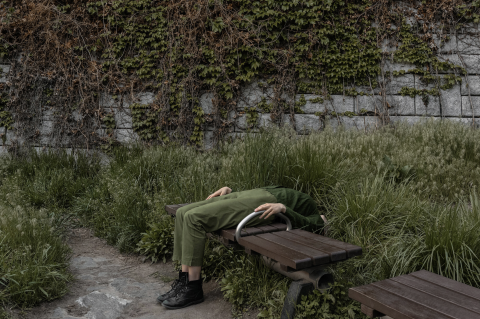
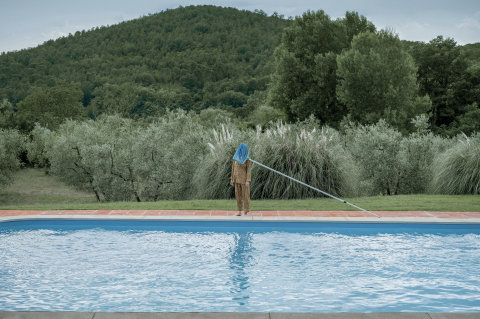
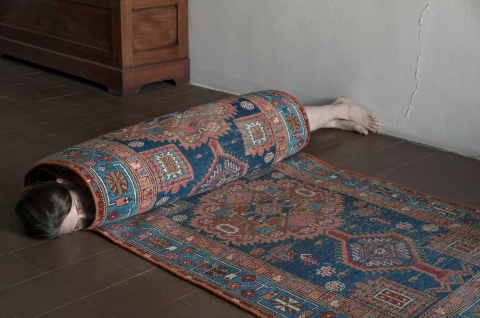
Me: Sending them one of these photos by Brooke DiDonato.

13 May 15:23

Prince and the Revolution Live Show from 1985 Will Be Shown on YouTube for a Limited Time

by Jason Kottke
Sarah

ANDY!

As part of a benefit for Covid-19 relief, The Prince Estate will be broadcasting a classic concert by Prince & the Revolution from 1985’s Purple Rain tour on YouTube. The stream (embedded above) will begin on Thursday, May 14 at 8pm ET and will only be available through Sunday, May 17.

The concert was recorded in Syracuse, NY on March 30, 1985 and is considered a classic, a show that found Prince at the crest of his pop culture stardom. Laurie Gwen Shapiro recounted going to the show in college — a friend of hers camped out in the ticket line to get front row seats.

In the past decade it has been very difficult to find this legendary concert film in the United States that was later released in the 1991 as “Prince and the Revolution Live!” on VHS only. If you watch the film — and I swear this is true — I am the person the cameras flashes on first in a venue that holds 40,000 plus, and I am making a rather ridiculous orgiastic face for the ages. To understand how I was the beneficiary of such dumb luck, and the greatness of Prince’s performance, let’s go back to 1985 when the internet was yet to come.

The setlist includes many of his most popular songs — Let’s Go Crazy, When Doves Cry, 1999, Little Red Corvette — and the show ended with a 20-minute rendition of Purple Rain (10 minutes of which is a Prince guitar solo).

By the time they finished a towering 20 minute rendition of “Purple Rain,” featuring what is probably the best single guitar solo I’ve ever witnessed in the flesh, most of the crowd would have let Prince do anything with them that he wished. What Prince did to us, and for us, was the best gift of all.

The show is also available on DVD as part of this remastered edition of Purple Rain. The remastered audio from the concert will also be released to streaming services on Friday.

Update: The live album is now available on streaming music platforms: Spotify, Apple Music, Amazon, Pandora.

The Purple Rain closer clocks in at 19 minutes 26 seconds.

Update: Prince superfan Anil Dash wrote up some notes about this show.

Finally, we come to Prince’s scorching final guitar coda to “Let’s Go Crazy” where he brings out his entire palette of Guitar Face expressions, from playful smirk to full Mustachioed Telecaster Orgasm.

Tags: Anil Dash   music   Prince   video
12 May 22:34

Across the staid South End, one rowhouse stands out

by adamg
Sarah

I love this house!

Greg Cook educates us on the history of the poodles, owls and other sculptures permanently affixed to the exterior of 9 Dwight St. How did this whimsy ever get approved in a neighborhood with a historic commission? Well, it went up in the 1960s and 1970s, when the architectural standards in the South End were not what they are today.

12 May 01:15

Give yourself a little present

by Austin Kleon

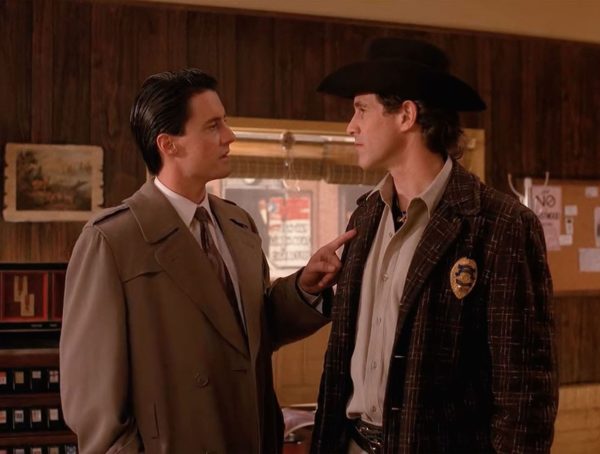
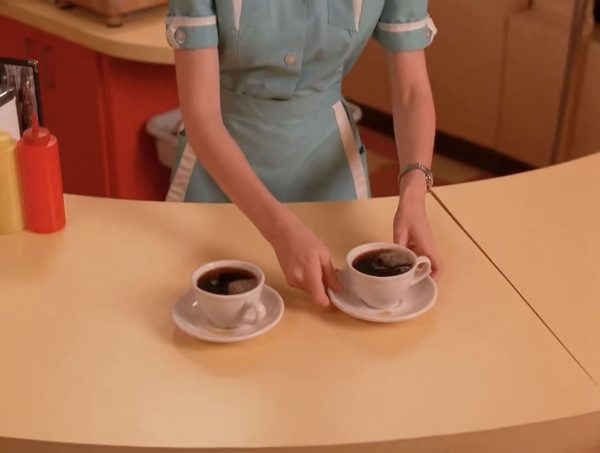
Some wisdom from F.B.I Special Agent Dale Cooper in Twin Peaks:

I’m going to let you in on a little secret. Everyday, once a day, give yourself a present. Don’t plan it, don’t wait for it. Just let it happen. It could be a new shirt at the Men’s store. A catnap in your office chair. Or two cups of good, hot black coffee.

Filed under: routine

10 May 22:12

Mommy Queerest

by Rachel Matlow

“Don’t bother me, I’m meditating!”

Growing up, I knew that if Mom was lying upside down, I was not to disturb her. She would strap her feet under a belt at the top of a black vinyl reclining board and lie back at a forty-five-degree slant. This was her version of meditating.

Mom first dipped her toes into spiritual waters in the early ’80s, after I was born. While working on her master’s of education, she signed up for a Transcendental Meditation class. She would leave the house with fruit and flowers (offerings for some deity) and come home with a secret mantra. Mom said she became interested in meditation because her fight-or-flight signals were constantly spiking. “I was always on the defensive. I needed to slow down,” she told me. But she was soon turned off by TM’s hierarchical structure, so she moved on to Zen meditation—and then found it too restrictive. “They made me sit cross-legged on the floor!” she complained. Mom eventually settled on Vipassanā, which is all about seeing things as they really are: “I took to it like an anxious duck to clear water.”

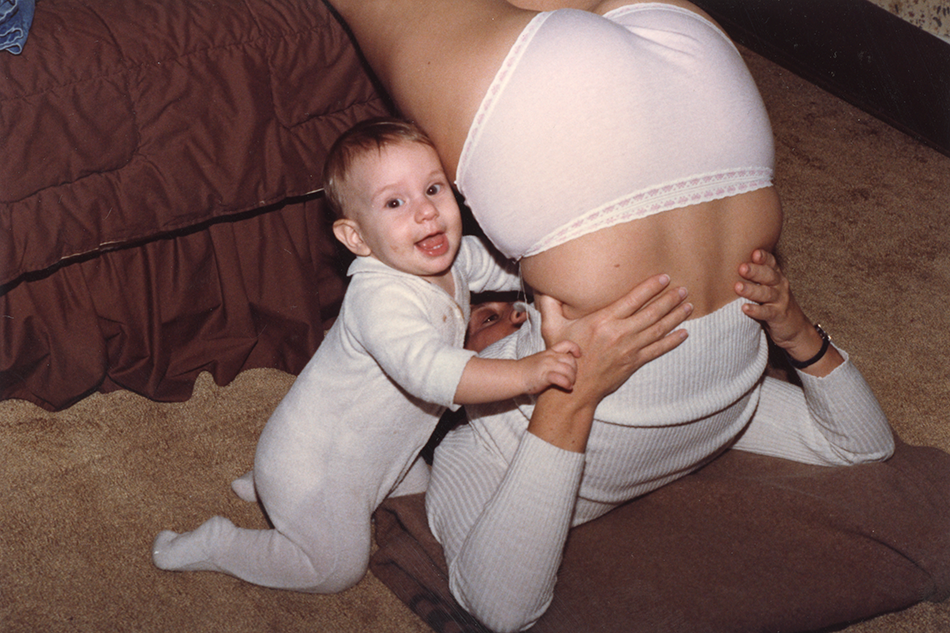
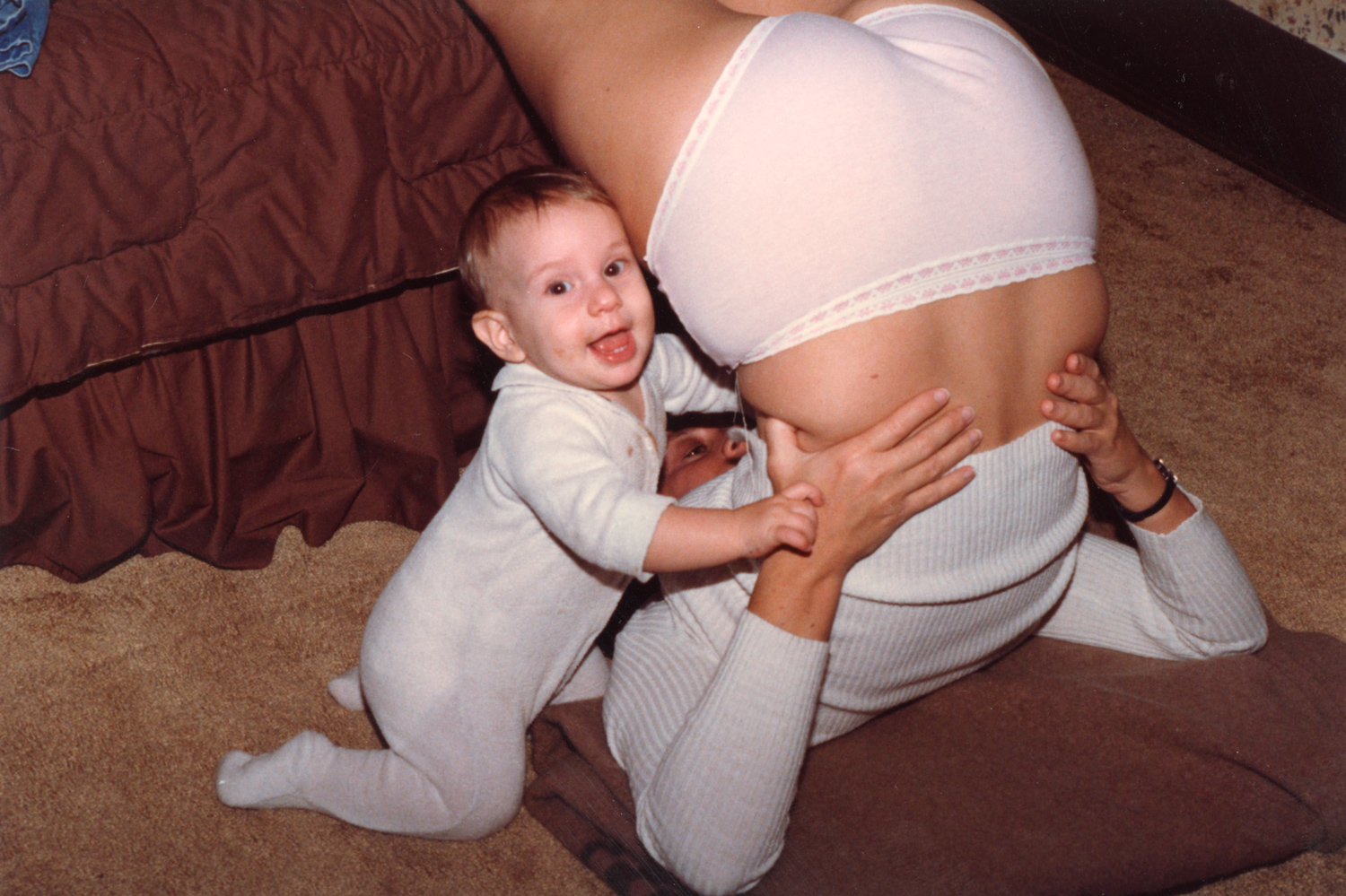
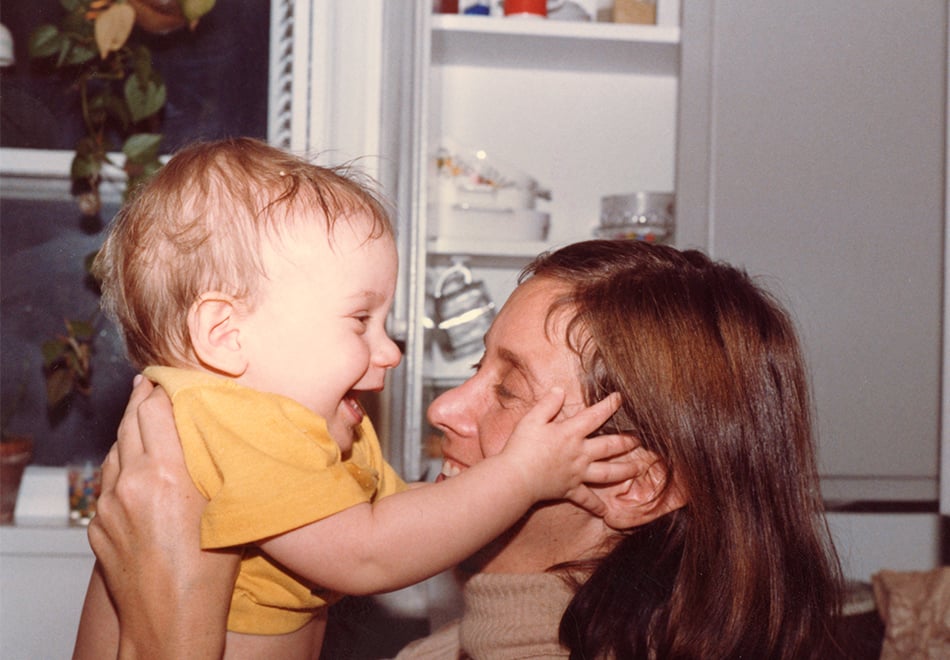
She was also into Iyengar yoga when I was little. Mom was always folding herself into various poses around the house—doing a more comfortable version of downward dog, for example, where she’d bend forward and rest her outstretched hands on the kitchen table. Or she’d drop down on the living room carpet and kick her legs up into a shoulder stand. There are baby pictures of me climbing up on her, mid-pose, as if she were a human jungle gym.

Mom’s proclivity for meditation and yoga was considered odd back then. We lived in the mostly Jewish, upper-middle-class Cedarvale neighbourhood, where head-to-toe Lululemon and an over-the-shoulder yoga mat were still decades away from becoming de rigueur. Mom was a teacher. We lived in a nice house with a pool. We certainly passed as normal. But I always had a feeling that Mom wasn’t like other moms.

Case in point: I remember in senior kindergarten coming home and announcing that I needed a Halloween costume for school the next day. After a few minutes of scrounging, Mom’s face lit up with an idea. “You’ll be garbage!” she proclaimed. She got a black garbage bag from under the kitchen sink, threw it over my five-year-old body, and used her hands to tear holes for my arms and head. It was her next move that was really inspired, though. She started fishing through the actual garbage bin for dry pieces of authentic trash that we then threaded together with string before festooning me from top to bottom. As a Jewish kid, it was as close as I ever got to trimming a Christmas tree.

The next day, I couldn’t have been more embarrassed, surrounded by My Little Ponies, He-Men, witches, and ghosts. How on earth did Mom think this was a good idea? There I was, with an empty box of our dog’s Milk-Bones dangling around my neck. My teacher, Mrs. Winemaker, looked me up and down before making a concerted decision to declare—a little too enthusiastically—that next year she wanted to be garbage for Halloween. Goddess bless.

Mom was very caring and loving in her own inimitable way, but she wasn’t much of a capital M Mommy. As a joke, she would sometimes refer to herself as “Mommy” when she’d catch herself performing something quintessentially motherly. But it was always said in self-reflexive jest. She didn’t bake cookies. She didn’t brush my hair. She didn’t put sweet notes in my lunch box. In fact, Mom never even packed my lunches. I distinctly remember when she said to me, “You’re in senior kindergarten now. It’s time you made your own lunch.” We were standing in front of the fridge. I looked up at the towering shelves of food with utter confusion.

“What should I bring?” I asked.

“Your cousin Sarah brings a yogurt,” Mom replied.

For much of elementary school I’d pack a cappuccino yogurt and a box of Smarties; when lunchtime came I’d pour the latter into the former and stir until the dye bled into a colourful swirl. Sometimes I’d bring mini pitas stuffed with Nutella. I usually rounded things off with a Mini Babybel, a Coke, and a Caramilk bar (for dessert). I was very popular in the lunchroom.

But even more than I enjoyed my signature concoction, I loved going to my friend Alimah’s for lunch. Her mom, Barbara, was a stay-at-home mother, so Alimah could go home every day for chicken noodle soup, tuna sandwiches, and sliced-up carrot and celery sticks. Seeing Barbara in action was fascinating. She was more like the moms on TV: aware of Alimah’s school assignments, making sure she did her homework, limiting how much TV she could watch. Their home was an oasis of routine and predictability. Barbara even assigned meals to days of the week. Wednesday was spaghetti night. Friday was pizza. 

There wasn’t much cooking going on at our house. Much later Mom would insist she’d been “chained to a stove for eighteen years,” but the rest of us remember differently. For dinner we’d usually go out to restaurants, order in, or Mom would pick something up on her way home from work. Every so often Mom would courageously attempt to concoct something interesting, like Greek fish or chocolate pasta. But it would be more of a performance than a bona fide meal. “Mommy made supper!” she’d sing.


She certainly wasn’t interested in being the type of mother—or wife—who put her own life on the back burner, but she’d also made a conscious decision to not be “too overinvolved.” She’d felt smothered by her mother growing up and was afraid of even coming close with me. Literally. Sometimes she’d look over at me lovingly and pet the top of my head. “Pat, pat,” she’d say, careful to never intrude on my physical space.

Mom had had a list of things she’d do differently when she had a daughter one day. She would never tell me what to do with my hair. She would never make me feel guilty for choosing to do my own thing. Above all, she would never lean on me. “I never want you to feel like you have to take care of me,” she’d say.

Mom believed it was important to teach me things. She explained how her mother always wanted to do everything for her when she was little, which she interpreted as a power play to make her extra dependent. With me, the pendulum swung. Mom wanted me to be independent. Ultra independent. I was often left at home alone, and was the only seven-year-old allowed to walk up to Eglinton—one of Toronto’s major arteries—on my own.

I routinely made that six-block trip to do my errands. I’d go to my favourite candy store, The Wiz, and fill up a large bowl with Pop Rocks, Fun Dip, and Bonkers, and then head across the street to Videoflicks to rent a comedy like Heathers or Ruthless People. On the way home I’d stop off at China House for a bowl of wonton soup. At first the waiters were a little weirded out by a child dining solo, but they soon came to recognize me as a regular—who paid in quarters and dimes from her piggy bank.

When I inquired about Mom’s free-range approach to parenting years later, she happily defended herself. “I taught you how to look both ways and cross the street, and you were very good at it. So I let you go off on your own!”

I was allowed to eat as much Häagen-Dazs, watch as much TV, and stay up as late as I liked (I even had a TV in my room). Mom treated me like a mini adult. When I wasn’t in school, I could do whatever I wanted with my time.

I relished my freedom—I wouldn’t have had it any other way—but there were times when I’d fantasize about having some authority at home. Time to take your medicine, I’d say to myself as I popped my daily Flintstone vitamin, imagining an adult was forcing me. To fit in with the other kids at school, when I’d get grass stains or rips in my pants I’d pretend to be afraid of Mom’s wrath. “Man, my mom’s going to kill me!” I’d say, mimicking what I’d heard on the field. I knew Mom couldn’t care less. (If anything she was proud of me getting rough and dirty.)

I loved Mom so much, but I’d sometimes wish she was more like Barbara. Once when I was sick and she didn’t offer to bring me anything, I admonished her: “When other kids are sick, their moms bring them orange juice!” (“You don’t want one of those other moms,” she’d snap back. “I’m more fun!”) 

Mom may not have been like other moms, but the truth was I wasn’t like other daughters. As I grew up, people mistook me for a boy. I was a tomboy—or what Larry David would later call “pre-gay.” I had short moppy hair, wore only jeans and T-shirts, and felt a profound sense of disappointment with the girls’ shoe section. I was pretty happy in general—I had friends and did well at school—but I always had a feeling of being on the outside. I didn’t feel like one of the girls, and I knew I wasn’t really one of the boys. The only other kid who reflected my gender was Casey from Mr. Dressup. And Casey was a puppet.

Once, when I was six, Mom attempted to put me in a dress for shul. I resisted. We struggled. She even tried to sit on me. “Please, Rachel! It’s the High Holidays!” she begged. “I don’t want to!” I yelled back, squirming my way out from beneath her. Back then Mom still cared a little about what people thought and didn’t get that it was actually humiliating for me to wear feminine clothes. Thankfully, she quickly gave up, and I emerged triumphant in ripped jeans and high-tops as we left the house. Staying true to the list of things she would do differently from her mother, it was the last time Mom ever tried to dictate my sartorial choices (or any of my choices for that matter).

When I was seven, I told my parents that I wanted to join the local Forest Hill hockey league. Back then there were only boys in the league, so the organizers were apprehensive. But no one said no.

Even when I got two penalties in one game, Mom was so proud of me for being the only girl in the league. Her little girl being called a “goon”? She couldn’t have been more pleased. She loved it when the other mothers would tell her that their sons were intimidated by me. “Way to knock ’em dead, sweetie!” she’d cheer.

Mom was an out and proud feminist, and she wanted me to be one too. She’d order children’s books from the Toronto Women’s Bookstore featuring strong female characters. (There were only a handful at the time; my favourite was Molly Whuppie, about a clever girl who fearlessly outwits a giant.) I was fully on board with being a baby feminist. I remember Mom teaching me the word “assertive,” although I didn’t need lessons in how to embody it. Mom recalled how, when I was three years old, she tried to scare me into submission. “I’m counting to three!” she warned. “One … two … three …” Apparently I just stood there, unimpressed. “What are you going to do?” I asked. Mom laughed and gave up after that. “I learned I had to go at things slant with you,” she explained yearsl ater. “I couldn’t go head to head. You’d win.”

When I was eight, I decided to switch schools. I was bored at my neighbourhood elementary school. I was already able to multiply in parts and do long division, so grade two math just wasn’t doing it for me. “I’m sick of counting animals!” I complained. One day I went to checkout an alternative school called Cherrywood with Barbara and Alimah, who was considering transferring there. What I saw amazed me. There were no walls, teachers were called by their first names, and students could work at their own grade level. Their system made perfect sense to me. That day I came home having made my decision: “I’ve found a better school and I’m going there,” I declared. Mom was totally supportive. She didn’t want me to feel held back, and besides, she was an alternative school teacher herself.

On PD days Mom would bring me along to City School, where she taught English and drama. There were posters on the walls with slogans like stop racism and being gay is not a crime, bashing is. I’d stare wide-eyed at the older students with their rainbow mohawks, lip piercings, and knee-high Doc Martens. Teenagers didn’t look like that in Cedarvale. They fascinated me. And they all loved my mom, their rebellious role model.

Elaine was an unconventional teacher, even by alternative school standards. She taught a course called “Nature Writing as a Spiritual Path” and got her students to meditate and hug trees. She’d take her writer’s craft class out to cafés to work and encourage them to write freely about whatever was going on in their lives, pushing them to go further than they thought they could go as writers. Mom thought it was important for students to own their education, to be involved, and to have a lot demanded of them. She was incredibly supportive of her students and treated them with more respect than adults usually did. “I wish your mom was my mom,” they’d say to me. I’d roll my eyes, even though deep down I knew how lucky I was.

To Mom’s credit, whenever I seriously asked her to change her behaviour, she listened. Unlike her mother, she wanted to be able to hear us. She stopped reading books during my hockey games after I told her I wanted her to watch; she refrained from gossiping about me to her friends when I asked her not to; and she even started bringing me juice when I got sick. “Mommy brought you orange juice!” she’d sing. 

But the learning curve sometimes seemed like a gentle slope. I didn’t always feel heard. When I was really upset with Mom, I had to find creative ways of getting her attention. On one occasion when I was about seven, angry about who knows what, I took a pad of paper and wrote “Fuck” on every single sheet. Then, while Mom was out, I went around the house taping up my expletive art—on the walls and furniture, inside drawers and cupboards. There must have been a hundred sheets. I didn’t want to be cruel—I considerately used masking tape so as not to peel paint off the walls—but I did want to get my message across. She’ll see how mad I am, I thought. She’d open the front door and be greeted with “Fuck.” She’d walk into the hallway and see “Fuck.” She’d open the fridge, “Fuck” again.

I didn’t get the response I was imagining. I sat at the top of the stairs and watched as she stopped in her tracks, gazed around with wide eyes, and burst out laughing. “Get the camera!” Mom shouted. I came downstairs and joined in the laughter, cheekily posing next to my “Fucks.” I was satisfied to at least get her attention. Like goys finding Easter eggs well into May, mom continued to discover my four-letter treasures for weeks. “I found a ‘Fuck’!” Mom yelled out as she opened the china cabinet to get the Shabbat candles.  

My parents weren’t religious, but we still lit candles on Friday night and kept kosher in the house. I resented not being allowed to have Lucky Charms—the marshmallows were considered treif. When Mom actually did make rules, they seemed so arbitrary. I can eat all the sugary cereals I want except the one that’s magically delicious? 

By the same lazy logic, I was sent to Hebrew school every Sunday: apparently it was “what Jewish kids do.” I hated it. The idea of God was preposterous to me, the stories were way too far-fetched, and I definitely wasn’t into all the male pronouns. Mom would bribe us with a bacon-fuelled pit stop at McDonald’s on the way (she wasn’t one to care for Commandments of any kind).

Mom went along with the kosher thing at home. But when we were out of the house, it was a different story. She’d sometimes buy delicate slices of prosciutto before picking me up from one of my extracurriculars, and on the way home we’d park the car and dangle the mouth-watering strips of meat into our mouths, laughing like criminals.


In an effort to get my parents to allow me to quit Hebrew School, I emerged from my bedroom one Sunday morning having taped crucifixes all over my clothes (I was crafty with the masking tape).

I walked up to Mom and said, “If you don’t let me quit, I’ll marry a Christian!”

“So what?” she said, unfazed.

“Okay, well then I’ll marry a Nazi!” I shouted.

Mom burst out laughing. I’d won her over!

They eventually acquiesced, but not without warning me that I wouldn’t be allowed to have a Bat Mitzvah. That was more than fine by me. I wasn’t interested in selling out for some gold bling with my initials on it. And I certainly wasn’t interested in becoming a woman.

Although Mom exposed me to sophisticated culture—art galleries, museums, libraries, and culinary adventures—my interests veered more toward puzzles, riddles, and logic games. My teachers thought I might even become a mathematician. But if there was one game that defined me, it was chess. (One of the best parts about going to Cherrywood was that playing chess counted as math.) I started competing in tournaments when I was ten, and would regularly spend my weekends in hotel conference rooms playing with nerdy boys. I was consistently ranked fourth in Ontario in my age group.

What I liked most about chess was that chance had nothing to do with it. No need for lucky cards or dice or troll dolls. It was up to me to use everything in my arsenal—logic, calculation, memory, even psychology. Mom would remark on how I never got flustered when I was down. “You don’t give up. You become even more focused,” she’d say with great admiration. I learned to rely on my strategic-thinking skills on and off the board, believing I could think my way out of any problem. In our family, if I argued my case well enough, I could get whatever I wanted. I remember saying to my parents, “If you guys can have coffee in the morning for your caffeine, I can have a Coke.” For some reason, that one worked. “You’re going to make a fine lawyer one day” was a familiar refrain.

Mom spent most of her time at home reading. I can still picture her sitting in the living room by the fireplace, a book in one hand and a pink Nat Sherman Fantasia in the other. She wouldn’t even inhale—the thin, pastel-coloured cigarettes with gold filters were just props in her one-woman performance of “I am a Parisian.” She’d put on one ofher French records—Serge Gainsbourg or Edith Piaf—and escape into her French fantasy world. I can still hear Georges Moustaki singing “Ma Liberté.” She played that one a lot. 

***

When I was thirteen, my parents divorced, and Mom moved into a bachelor pad she’d inherited from a fellow divorcé. It had one tiny spare room, which became my room.

When I stayed with Mom, it was just us. She was now living on only her teacher’s salary, but we’d still go out to restaurants in the neighbourhood. At home we did ear-candling treatments for each other and played a card game that featured feminist writers like Louisa May Alcott, Phillis Wheatley, and Emily Dickinson (Gertrude Stein was the wild card). While I’d be focused on collecting sets of four, Mom would tell me about her literary heroines: “Little Women is really the story of Louisa and her family. Louisa was Jo …” Often we’d just talk. More than anything else, talking was our thing. To this day there’s no one in the world I’ve ever had an easier time talking to.

What I liked most about Mom’s new place was that we didn’t have to keep kosher. For breakfast I’d often heat up a can of Chunky clam chowder, although most mornings Mom would go out to the corner and bring me back McDonald’s Hotcakes. She’d plop the golden Styrofoam container down on the kitchen table and sing “Mommy made breakfast!”

To most people’s surprise, the divorce wasn’t initially that distressing for me. It only really started to hit me once my parents began dating. Just as I was entering adolescence, the two of them began behaving like full-blown teenagers. Mom fell madly in love with a man who was about to move to Albany to be the director of the New York State Museum. She took a sabbatical to study holistic ways of teaching and began a long-distance relationship with him, regularly leaving town for weeks at a time.

I missed Mom like crazy when she was gone. It was hard being without her. I would often call her crying, pleading with her to come home. She’d listen to me and lovingly calm me down, but she wasn’t about to get in the car and drive back. She explained to me how important it was for her to have a full life of her own. “I’m not just a mother,” she would tell me. “I need passionate love too.”

As gross as it was to hear her say that, I understood that Mom had her own needs. I tried my best to respect her wishes, but there were times when I needed her to be there for me and she wasn’t. 

***

It was during those three and a half years while Mom lived part-time in Albany that her journey of self-discovery really took off. The northeastern United States is a hotbed of spiritual retreat centres. Mom began frequenting New Age havens like Kripalu, Omega Center, Zen Mountain Monastery, Insight Meditation Society, and Elat Chayyim, a Jewish renewal retreat in the Catskills. (There, she told me, they’d sit in a circle, with their index fingers touching their thumbs, and chant “Shal-Ommm, Shal-Ommm.”) She often slept in dorm rooms and chopped vegetables alongside college students in exchange for what would otherwise be a thousand-dollar yoga vacation. Mom didn’t need a large income in order to have a large life.

Her retreats gave her time and space to work out her issues. She still had a lot of childhood resentment, even though by then she was getting along well enough with her own mother. She was proud that she’d taught her mother to treat her more respectfully. “It’s important to set boundaries,” Mom told me. Before her father died, he’d apologized to her in his Polish-Jewish accent for having not acknowledged her feelings enough. I know that meant a lot to her. But still, Mom was desperate to free herself from her family patterns. She would write unsent letters to her parents as well as responses from the perspective of her ideal mother or father.

I was happy that Mom was working out her shit, but sometimes I felt like I had to compete with her inner child. My heart would break every time she drove off in her cappuccino-coloured Honda with its one nuclear bomb can ruin your whole day bumper sticker. I spent a lot of time crying on my own, until one day I decided I wouldn’t cry anymore. I’m not sure if it was due to my natural temperament, my gender identity, or my parents not being fully attuned to my emotional world, but I resolved to toughen up and be a little man. Throughout junior high, I kept a busy schedule with sports and chess. I was on all my school’s sports teams, including the boys’ hockey team, and played competitive hockey, soccer, and softball on the side. I was the city’s school chess champion two years running.


It was also in junior high that I experimented with being a girl, albeit only part-time. I was invited to friends’ Bar and Bat Mitzvahs almost every weekend and could no longer get away with wearing pants to shul. When Saturday rolled around, I’d trade in my jeans and T-shirts for pantyhose and a dress. My friend Jane helped me pick out girl party attire at the mall and taught me about shaving my legs. My friend Sarah gave me a nudge when she’d catch me manspreading in a skirt in synagogue. Being a girl didn’t come naturally to me, but I passed well enough. Boys liked me, and I even had crushes on them. Though, looking back, I think my attraction was probably more about me wanting to be one of them (or because at that age they looked like cute little baby dykes, with their short hair and smooth cheeks, like little Justin Biebers).

Mom brought me along with her to Albany a couple of times. On our last trip there she took me hiking in the Adirondacks. We climbed a steep, rocky trail up Crane Mountain, scrambling our way to the summit. We both felt a great sense of accomplishment as we looked out over the forest-covered mountains below. Mom was proud that she’d taken me, at thirteen, hiking up a three-thousand-plus-foot mountain. “When I was thirteen my mother took me discount shopping for our bonding time,” she told me. On the way down we came to a large pristine pond where we decided to take a break, sitting next to each other on a giant boulder in the shade. Mom pulled out a watercolour set along with some paper. Together, both painting quietly, we stared out at the glistening water and tall beech trees in the distance. It was a serene moment we would often look back on fondly. 

A couple of days later Mom broke up with her boyfriend. She’d felt increasingly torn between being with him and being with me in Toronto. I vividly remember seeing her break down in tears as we got in the car to drive home. She was always so conscious never to lean on me that she rarely showed any vulnerability around me at all. Years later, Mom would admit that although she’d wanted a great love, she was scared. “I had a strong feeling that if I married him, I would be happy for a year and miserable for the rest of my life.”

When I was fourteen, I decided to live with Mom full-time. By then Mom had moved into the Hemingway. She made a concerted effort to make me feel welcome. This time, she gave me the bigger room.

It was during this period, in the mid-’90s, that Mom’s alternative lifestyle began to rub off on me. I went to yoga classes with her and wore a crystal aromatherapy necklace she’d given me as a gift. She took me on road trips to Buddhist monasteries and silent meditation retreats. In the car, we’d take turns listening to her folk music (Joni Mitchell, Phil Ochs, the Stone Poneys with Linda Ronstadt) and my Ani DiFranco, Tracy Chapman, and Indigo Girls tapes. We visited the Kushi Institute for Macrobiotics in Massachusetts, where we sipped twig tea and learned how to cut a carrot properly (from tip to stem) so as not to kill its life force. My teenage curiosity and idealism latched onto these alternative doctrines. I was drawn to the rules and guidance they provided.

But for Mom, soul searching was more than just a teenage phase. She was always trying out something new. Trance dancing, magnets, meridian tapping, past-life regression therapy, colour therapy, cranial sacral therapy, chakras, crystals, rolfing, reiki—she would embrace each fad with the same enthusiastic yet noncommittal curiosity every time. Her perspective was, Why not try everything? It doesn’t hurt, and it might lead to unexpected wisdom. And hey, if they kept her looking younger, all the better! She regularly did these Tibetan exercises called “The Fountain of Youth,” where she’d spin around with her arms outstretched. (Mom said that when she first saw “spinning” classes pop up in New York City, she mistakenly thought her exercises were taking off.) I saw the marvel in her New Age dalliances, but I definitely took them with a big grain of Himalayan salt.

For Mom, spirituality was like a buffet where she was free to pick and choose what she wanted—she could create her own narrative blend that suited her personality and her needs. It was all about knowing herself better, being able to laugh more about her frailties, and becoming as real as possible. As a feminist, she wanted to own her spirituality without giving herself over to dogmatic ideas or practices.

Mom was a badass Buddhist. Of course, she believed that rules were optional, even the ones the yogis wrote. Her Four Noble Truths were coffee, wine, reading, and talking, or what Buddha might call “contraband.” When she was supposed to be staying silent on her meditation retreats, she’d leave me hushed, long-winded voicemail messages: “Hi darling, I’m not supposedto be talking, but I just wanted to let you know I’m okay. Um, it’s so weird to be speaking…” She would smuggle in novels and escape to nearby villages to get The New York Times and a cappuccino. When she did a work exchange at Thich Nhat Hanh’s monastery in the south of France, she led a group of fellow volunteers through the surrounding vineyards on a wine-tasting tour. “I was like the pied piper,” she told me. “They all followed!”  

***

On my seventeenth birthday I set out on my own journey of self-discovery. My best friend Syd had lent me her copy of The Teenage Liberation Handbook: How to Quit School and Get a Real Life and Education. Essentially a recipe for teenage anarchy, the book became our bible. The Good News? Rather than being confined to classroom walls, teens could reclaim their natural ability to teach themselves by following their own curiosity and having real-world experiences. I had seen the light! After reading a few more books on “unschooling,” I knew what I had to do.

That January, I finished my last exam of the semester and flew to San Francisco. There, Syd and I hung out with an older anarchist couple we’d met who took us around to protests with their giant papier-mâché puppets. Like Mom, I learned to live large on not much. We couch-surfed at intentional communities in Santa Cruz and Palo Alto and travelled up the west coast of the U.S. on a backpacker bus called the Green Tortoise. We hitchhiked across B.C., working on organic farms in return for accommodation and three wholesome meals a day. As a city kid, it blew my mind to see what broccoli looked like in its natural habitat.

To say that I was self-righteous about my decision would be the understatement of the decade. If anyone ever said I was “dropping out of school,” I’d diligently correct them. “I’m not dropping out,” I’d say. “I’m rising out.”

I’d always gotten good grades, but I didn’t want to learn that way. I wanted to see the world and have adventures. Mom was a little anxious, but she understood where I was coming from. She was ultimately very supportive, even seeing me off at the airport. “You have guts,” she told me.

For the next two and a half years I travelled around the world to hippie hotspots with Syd and some of our other “unschooled” friends. I took silver jewellery–making lessons in Mexico, learned Spanish and taught English in Guatemala, trekked the twenty-day Annapurna Circuit in Nepal, and attended talks by the Dalai Lama at his temple in Dharamsala, India. I was living the teenage dream. I would come home in between my long excursions and stay with Mom just long enough to make the money to go back out again. I worked at a bohemian gift store in Kensington Market that specialized in Ecuadorian sweaters and Circle of Friends pottery.

Sure, I’d quit school. But it wasn’t like I was doing drugs—I was mainlining brown rice and Spirulina Sunrise bars. My form of teenage rebellion was being a hippie fundamentalist. I was a strict vegetarian. I used only “natural” body products. I refused to take any pharmaceuticals (not even Tylenol). I hung out at the health-food store as if it were the mall. My uniform consisted of second-hand jeans with colourful patches, striped Guatemalan shirts, and hiking boots—even in the city. And, if that wasn’t bad enough, the surest sign of my hippie cult status? Dreadlocks. It hurts to admit it, but I had ’em. In my meagre defence, it was the late ‘90s, when they were “in style” (and before I learned about cultural appropriation). I also theorize that my Manic Panic–dyed dreads were an expression of my dormant queerness—a gateway to the short dyke-y haircut I subconsciously knew I was moving toward. 

*** 

One of the biggest perks to ditching high school was that I didn’t have to deal with normal teenage things, like dating. I could totally avoid it. And I did, even if I couldn’t avoid the subject altogether. The first spring after I quit school, Syd and I found ourselves pitching in at a women-only community near Nelson, B.C. This lesbian idyll was on a mountainside, up an old logging road, entirely off the grid. Even their bathtub was wood-fired.

One evening a bunch of short-haired wimmin arrived in their trucks, giddy with excitement. One of them had a VHS tape in her hands that she was cradling like some sort of Holy Grail. Our host let us in on the commotion: they were congregating to watch the “Coming Out” episode of Ellen. It was essentially the lesbian moon landing of 1997.

They all rushed into action. One of them peeled back a macramé tapestry to reveal a hidden TV in the corner of the livingroom. Another got the generator going. Everyone gathered around for the momentous—if pre-recorded—occasion. For one night only, we would plug back into civilization for the sake of Ellen DeGeneres.

I watched as Ellen finally got up the courage to say to Laura Dern’s character “I’m gay,” only to accidentally blurt the words into the airport P.A. system. I laughed out loud, but on the inside I was freaking out. It was the first time I remember seriously thinking, I think that’s what I am. I was a vegetarian who played competitive hockey and softball, who in that moment “happened” to find herself in a room full of lesbian separatists. How many more hints did I need?  

***

After many months on the road, bouncing from place to place, the idea of staying put and going to university started to seem appealing—an exciting new adventure in itself. I had some older hippie friends who went to Trent, a lefty liberal arts university just over an hour’s drive from Toronto, and would sometimes visit them there. Their courses in feminist philosophy and alternative media sounded way more interesting than high school.

Emboldened by my “bible,” I booked a meeting with the dean and presented my case for why my self-education was just as valuable, if not more, than a high school diploma. He listened to my arguments and asked, “What if we said that if you go back to high school and get your senior year English credit, we will then consider your application?”

I shook my head. “I’m not going back,” I said. “It would be compromising my beliefs.” 

I was cocky, stubborn, and defiant. I told him that if he wanted to know whether I could read and write I’d be happy to provide some samples of my work. He agreed, and a couple of months later, in the spring after my nineteenth birthday, I received a letter of acceptance. Mom was impressed with how I’d subverted the system, but she was even more in awe of my steadfast—if not insufferable—confidence in myself. “You have a strong centre,” she told me.  

***

In stereotypical Sapphic fashion, I met my first girlfriend in my freshman women’s studies class. Anya had short red hair and a wallet chain, and she rode a skateboard. I liked that she was five years older and didn’t seem to give a shit what anyone thought of her. We flirted for several weeks before we finally kissed.

I was building up the nerve to tell Mom about Anya when I was home one weekend in December. I knew she’d be accepting, but I was still terrified to come out to her. I was only just starting to come to terms with my sexuality. Besides Ellen and k.d. lang, there weren’t many celesbian role models back then. This was pre–L Word; it wasn’t yet cool to be gay. Same-sex marriage hadn’t been legalized. Matthew Shepard had just been beaten to death. As good as I had it, I was still scared. Mom and I talked about a lot of things, but we’d never spoken about my dating life, or lack thereof. Afraid of prying, she never asked me overtly personal questions, and I never offered up what was actually going on inside my head.

At one point that weekend, we were sitting in her sunroom when I finally blurted out, “I’m dating someone.” Before I could even mention Anya’s name, or her pronoun, Mom replied, “Wonderful! Invite her to Solstice!” She didn’t even flinch. Sometimes Mom was too cool.   

***

Mom had been planning an intergenerational women’s winter solstice party, which that year happened to fall on a full moon. It would be the first time I’d be introducing my new girlfriend—essentially announcing “Yep, I’m gay!”—to twenty of our closest friends. I didn’t think it would come as a big surprise to anyone, but I still felt nervous and self-conscious. In any case, it soon became clear that I needn’t have worried about being the odd one.

When our guests arrived, Mom led everyone through a series of activities. First she got us each to light a candle and share our intentions for the next year. Then she got us all to hold hands, walk around in a circle, and chant, over and over, “Freedom comes from not hanging on, you gotta let go, let go-oh-oh!” (She explained that a witch named Sophia had taught her the chant.) Next she got us all to stand in a circle and make a human web by tossing balls of yarn to one another. We ended up tangled in a big stringy mess. Anya couldn’t stop giggling. Mom thought she was high. I imagine Anya thought the same about Mom.

For the pièce de résistance, Mom ushered us all outside into the back parking lot. “It’s time to howl at the full moon,” she announced. We huddled around in our parkas and stared up at the night sky. “Aaah- woooooh, aah-woooooh!” Mom led the group in a series of loud howls.

A neighbour soon yelled down: “Shut the fuck up!”

“It’s just me! Elaine!” Mom reassured him cheerfully.

Anya and I stood on the sidelines howling with laughter. I could see, from Anya’s point of view, how this party, and my mom, might seem a little bizarre. I’d always written Mom off as quirky or eccentric—until I came to realize that she was just as queer as me, if not more. Considering the word’s traditional meaning—“strange, peculiar, off-centre”—I’d say Mom managed to outqueer me at what was ostensibly my own coming-out party. 

When I look back on everything now, as someone who’s more comfortable in their genderqueer skin, I remember feeling confident and self-assured about so many things and yet totally strange and unknown to myself. I didn’t quite fit in with either gender or in a world where people just followed the script handed down to them. But Mom’s out-there-ness made it okay for me to be myself and to live life on my own terms, just as she did. I’m immensely grateful to her for that. But in the end, the pendulum may have swung too far—in her approach to me, and more consequentially, to herself.    

Excerpted from Dead Mom Walking by Rachel Matlow, available now from Viking. 
04 May 01:12

Saturday Morning Breakfast Cereal - Can

by tech@thehiveworks.com
Sarah

wooo


Click here to go see the bonus panel!

Hovertext:
Dad, you have never appreciated my conditional probabilities!


Today's News:
01 May 21:15

Four Quick Links for Friday Noonish

by Jason Kottke
Sarah

all of these are good

29 Apr 11:42

Get Fat, Don't Die

by Jonathan Kauffman

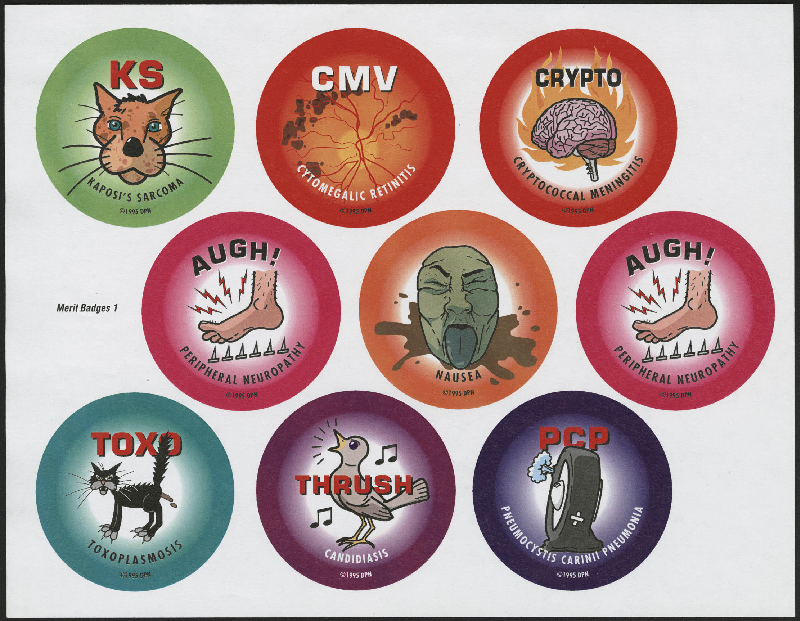
In his inaugural food column, Beowulf Thorne included recipes for gingerbread pudding, Thai chicken curry, and vanilla poached pears, plus a photo of a naked blond man spread-eagled in a pan of paella. Eat your cereal with whipping cream, he advised readers, and ladle extra gravy onto your dinner plate. “Not only does being undernourished reduce your chances of getting lucky at that next orgy, it can make you much more susceptible to illness, and we’ll have none of that,” Wulf wrote. 

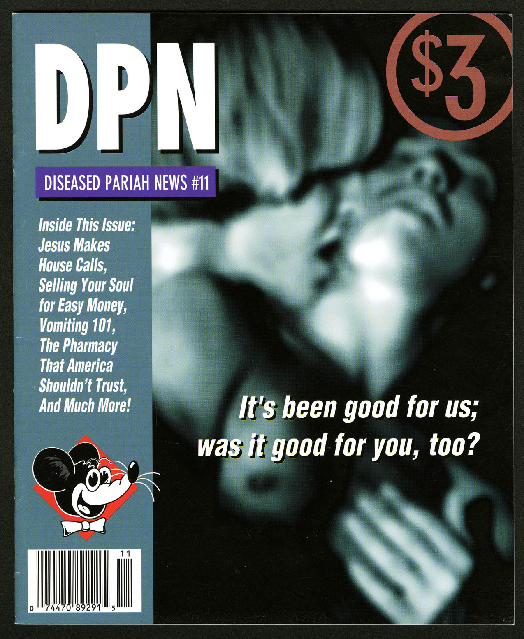
“Get Fat, Don’t Die,” the first cooking column for people with AIDS, ran in every issue of Diseased Pariah News, the AIDS humor zine that Wulf started and edited from 1990 to 1999. Under the byline “Biffy Mae,” he passed along reader recipes, mocked nutritional supplements marketed to people with AIDS, and leaned into Bisquick, his tastes alternately cosmopolitan and straight-from-the-box comforting.

Telling readers with T-cell counts in the double digits to lard their food with Paula Deen-ian levels of cream sounds like nutritional heresy. Yet Wulf’s advice echoed the recommendations that doctors and nutritionists were giving patients with AIDS wasting syndrome. “The famous expression ‘You can’t be too thin or too rich’ was obviously coined before the AIDS epidemic,” Wulf wrote. As the paella nude signaled, his column claimed the right to pleasure, but in each recipe was embedded an urgent appeal that recipe writing of the 1990s had dispensed with: Eat so you can survive.

I came across “Get Fat, Don’t Die” in a queer library in Minnesota in 1991, the summer after my sophomore year in college, and its raw, punk camp electrified me. The memory erupted out of some dark pool several years ago, and I eventually traced the column to the archives of the GLBT Historical Society in San Francisco, which had accepted Wulf’s papers as he was dying. The organization had digitized all eleven issues of Diseased Pariah News, they told me, and emailed the link. It electrified me all over again.

 *** 

According to his friends, Jack Foster’s arrival in the Bay Area in 1983 was as much an escape as a pilgrimage to the West Coast’s gay sanctuary. Escape from the denunciations of his father, a military contractor in Southern California. But also escape from the older gay men who’d taken him in several years before as their underage sex pet. He moved to Palo Alto and began attending the Stanford Gay and Lesbian Alliance, which was open to nonstudents. He was eighteen, and already infected.

Jack soon moved into a household whose inhabitants and visitors—Stanford grad students, activists, budding software engineers—called it “Listing Shambles.” Birth names at Listing Shambles were shucked as readily as the sheets at their toga sex parties. Jack Foster re-christened himself Beowulf Johan Heinrich Thorne, or when the camp flared particularly hot, Biffy Mae.

Tall and lean, striking or anonymous depending on the angle, Wulf had a slim face whose stern, L-shaped nose fought against the sensuousness of his bottom lip. He wore round wire-rim glasses with lenses thick enough to form a white ring and moussed his blond bangs into a studied flop. He considered himself a perennial twink. Or, really, a nerd, his friend Kira Od said, whose big feet always seemed to be in his way. And yet, she added, he was naughty.

Paper merit badges for DPN buttons, Thorne (Beowulf) Papers, Courtesy of Gay, Lesbian, Bisexual, Transgender Historical Society.

“He had a deep and abiding sense of black humor,” agreed Arion Stone, his roommate at Listing Shambles. Friends remembered that Wulf gardened masterfully, but only toxic plants, and burrowed into esoterica like tillandsias or Russian noun declensions. He cooked and cartooned and wrote and gardened with what Arion called a “sublime self-assurance about his abilities.”

After a year or two in Palo Alto, Wulf earned a scholarship to study bioscience at UC Santa Cruz, working on safe-sex education causes with the Stanford crew in his spare time. But as his senior year approached, the virus began making sorties in his system, and Wulf realized he wasn’t going to live long enough to earn an advanced degree. He dropped out of school and took up graphic design, just as desktop publishing software supplanted pasteup boards and typesetters. A job at Addison Wesley designing scientific textbooks allowed him to move to San Francisco in the late 1980s. There, his roommate was Tom Shearer, a technical writer with an acerbic wit and a lower T-cell count.

Inspired by ACT UP but too introverted to join its protests, the two came up with their own way to fight the stigmatization and mawkishness of the epidemic: humor. 

*** 

Twenty-four years after protease inhibitors and combination antiretroviral therapy (the “cocktail”) brought the immune systems of millions of HIV-positive people back into healthy ranges, it’s hard not to read Diseased Pariah News without straining for a happy ending. Hang in there for a few more years! the brain shouts at each page. The same thinking that collapses World War II into a moral victory and the Civil Rights Movement into a triumph has recast the plague years as a self-contained tragedy. 

Yet to laugh at Wulf and Tom’s jokes—to take in the full spectrum of the rage and grief coded into each shocked laugh he drags up from your chest—requires you to strip away the safety of history.

In 1990, the cocktail was an untested theory; on the market was nothing but death and toxic drugs. Despite the rising numbers of infected women and children, and the devastation the plague wreaked on the trans community (with little mention in the press), AIDS in North America was twisted up with gay identities. When U.S. scientists first observed a cluster of strange illnesses and deaths they dubbed Gay-Related Immune Deficiency in 1981, the LGBT movement had only asserted itself publicly for a decade or so. It was still so fragile, so niche, that most people outside major cities had never encountered LGBT people before they saw photos of young queer men with sunken faces, covered in purple lesions, in the news. It confirmed to some that God was punishing this aberration the moment it denied its sinfulness.

For many older gay men and trans folks, AIDS snatched away everything they’d made of their lives and poisoned the raucous liberation of the 1970s. To children like me, only ten when GRID appeared, coming out into the plague meant love and rejection and sex and hideous death would knot themselves up so tightly we could never tease the strands apart. 

By the time DPN published its first issue in 1990, four people were dying of AIDS every hour, and the U.S. death count was rocketing up to 100,000. According to David France’s How to Survive a Plague, by then at least 20 U.S. states had considered quarantining people with HIV in camps, arresting them for having sex, or even tattooing their status on their bodies. Hate crimes spiked across the country, to the indifference of many police departments.

For all the services—hospital wards, pet care, volunteer housecleaning, support groups, hotlines, meals—that community groups constructed in the absence of government support, the first generation of helpers were burning out and the death rate wasn’t slowing down.

That year, many say, marked the darkest period of the epidemic. For Wulf and Tom, turning the plague into a sick joke was a radical act of self-love.  

*** 

“A few years before I had seen a bitter little cartoon,” Tom wrote in the introduction to the first issue. “An airline had refused passage to a person with AIDS, and there was a big stink about it. The cartoon showed a man at an airline counter, and the clerk was saying ‘And would you like the smoking, non-smoking, or diseased pariah section?’ Mr. Tom was much impressed by this terminology and began to refer to himself as a diseased pariah, to much dismayed fluttering from his friends. At the time, remember, the only acceptable role for an infected person was Languishing Saint and Hug Object.”

Tom wrote half of the text, Wulf the other half, under such pseudonyms as “Serene Editor” (Tom) and “Cranky Editor” (Wulf). Wulf repurposed the “Captain Condom” comic he had invented in the course of his safe-sex education work and laid out the issue on legal paper, folded in half and stapled. They filled Diseased Pariah News with stunts, porn reviews, comics, naked centerfolds, erotic anecdotes from a well-known sex worker titled “How I Got AIDS,” and personals.

# 11, Thorne (Beowulf) Papers, Courtesy of Gay, Lesbian, Bisexual, Transgender Historical Society.

The recipes in the second issue, printed alongside recommendations for eating when you had diarrhea, ranged from the ambitious to gluttonous convenience: Biffy Mae’s Totally Amazing Gumbo. Marcus Mae’s Roast Chicken of the Ages. Danny Mae’s Fat Boy Shake, which combined Ovaltine and instant breakfast powder and could be powered up with two scoops of ice cream. Wulf tested every recipe, nudging them into shape. He took the column’s blunt title in earnest. The jokey names and camp flourishes kept his earnestness at a safe distance; too close, and the fear and physical discomfort and bitterness could smother.

***

As Biffy Mae wrote in that second issue, “One of the most exciting aspects of the HIV Early Retirement Plan is what it may do to your innards.”

Wasting syndrome, which one third of all people with AIDS experienced then, wasn’t just one of the most common effects of HIV. It was the look of AIDS: Arms devoid of muscle and fat, the humerus, radius, and ulna so exposed that you could read the knobby topography of the joints that connected them. Hips that were no longer hips, legs no more fleshy than a water bird’s. Faces whose skin draped lightly over bones and hollows, faces made unrecognizable by the obliteration of fat and muscle. You could go back to work after a case of pneumocystis pneumonia (PCP) and pretend it was a regular illness, or cover Kaposi’s sarcoma (KS) lesions with clothing if they were in the right places. There was no disguise for wasting.

And yet the most prominent memoirists and fiction writers who chronicled the plague years—Harold Brodkey, Larry Kramer, Paul Monette, Hervé Guibert, David Wojnarowicz, Adam Mars-Jones, Allen Barnett—barely invoked its horrors. So many of the narratives of the time circled around two themes: memorializing the terror and adulterated sweetness of being alive as everyone they knew was dying, and shearing through the cordon of dehumanizing indifference that the public had erected around plague-struck communities. The experience of daily diarrhea or constant nausea may have been too visceral, too private, or simply too grinding to fit into the arc of a plot. And so, for all the poignancy that lingers in the public’s understanding of the plague era, the lived experience of wasting has faded out, vivid only in the memories of survivors and medical researchers who had tried to halt its progress.

Wasting only appeared when the body’s CD4, or T-cell, count dropped from over 600 per cubic microliter of blood to under 200, Mark Jacobson, a physician and researcher who worked at San Francisco General Hospital in the 1980s and 1990s, told me. People weren’t only dying of opportunistic infections. They were dying of sheer malnutrition. “Loss of lean body mass was one of the most powerful predictors of when people were going to die,” he said.

As the body’s immunological systems shut down, bizarre symptoms seemed to pile up. Diarrhea could last months, the intestines gleaning whatever nutrients they could catch as the food luged through them. The diarrhea could be caused by mycobacterium avium-intracellulare or by parasitic infections like cryptosporidium and microsporidia that wouldn’t respond to drugs. HIV alone could cause the entire gut to become inflamed.

But diarrhea was only one of the factors that caused wasting, said Kathleen Mulligan, a retired faculty member in the UC San Francisco endocrinology department who studied wasting in the 1990s. “It turns out the main factor contributing to wasting was the inability to eat enough food to cover their energy needs,” she said.

Even people never given a formal diagnosis of wasting syndrome struggled to eat. “It’s striking how rapidly eating becomes a chore when it ceases to be pleasurable,” she explained. “The drugs made the food taste bad or different. People had painful ulcers or sores in their mouths, so it was difficult to tolerate food. Couple that with stress and depression, nausea from both the disease and the drugs to treat the disease—it was easy to tell people to eat more, but not that easy to find a way to motivate people to get the food they needed.”

Any relief was worth trying. Anabolic steroids. Human growth hormone. Testosterone. Megace, a drug that exchanged weight gain for sexual desire. Heaps of vitamins. Wheatgrass juice. Kombucha. Pau d’Arco. Synthetic THC. Homeopathic drugs. Macrobiotics. 

If the scientific consensus was that high-calorie food was the best treatment, sometimes improbable measures brought relief. Vince Cristostomo, who now leads the San Francisco AIDS Foundation’s network of long-term survivors, was diagnosed with wasting in 1989, when his weight plummeted from 145 to 119 pounds. He felt as if his body was eating itself alive. He wore baggy clothes to cover his too-thin limbs, but his skin turned gray. 

With an immune system so dysfunctional, everything made him sick. “I learned that if I ate certain processed foods I’d get chemical burns in my mouth,” he said. “I drank white rice and it turned to alcohol in my stomach.” Hosts of food allergies appeared.

A friend helped him attend an “instinctive eating” program in Europe that put him on a raw-foods diet, and that infusion of nutrients, he said, made a massive difference. For months at a time all he could eat was macrobiotic broccoli and brown rice. He had grown up in Guam, where the food was highly flavorful, and he thought to himself, well, if this is how I have to eat for the rest of my life, I will do it. The weight returned, and stayed with him long enough for the cocktail to come along.

***

Between the publication of issue two and three of Diseased Pariah News, two significant events occurred.

Surprising its editors, the zine got famous. In 1991 SF Weekly, New Republic, Los Angeles Times, and Newsweek all wrote about the shocking notion that people could make fun of the disease killing them. In the contact sheet from DPN’s first publicity shoot, which provided photos for some of these articles, a healthy Wulf and a cavernous Tom posed on Tom’s hospital bed. They played it straight for a few frames, then Tom lolled on his bed like a 1930s pinup girl, two wrist-thick thighs emerging from his gown. Wulf joined for another frame to strangle Tom with his oxygen tube. 

Tom, whose dementia had made a begrudging caregiver of his roommate, died a few weeks afterward. Before, though, he used his credit cards to charge thousands of dollars of equipment for Wulf to use on the magazine. With Tom’s creditors harassing him daily and more symptoms appearing, Wulf left San Francisco to return to Listing Shambles in Palo Alto.

“Darn! One of our editors is dead!” Wulf titled Tom’s obituary, and promoted him to “Deaditor.” Daniel Bao, one of Wulf’s best friends who took charge of the magazine’s operations, said their circle of friends sprinkled some of Tom’s ashes into plastic resin to make nightlights.

A newcomer named Tom Ace, a computer engineer who had first encountered Wulf through his personal ads, stepped in as the publication’s Humpy Editor. What drew him to DPN, Ace says, was a stance no other publication dared take on. “No denial,” Ace said. “No pretending it isn’t the way it is.” No spiritual balms, no stigma, no shame, no sentimental bravery. They were people dealing with an illness, not the victim-perpetrators the media made them out to be. They were still having sex, and watching porn, and posing for nude centerfolds that ran with their T-cell counts and list of meds. 

“We think that if you’re going to croak sooner than you’d like, at least you can live while you’re alive,” Wulf told the LA Times.

*** 

Ned: Why are you eating this shit? Twinkies, potato chips … You know how important it is to watch your nutrition. You’re supposed to eat right.

Felix: I have a life expectancy of ten more minutes. I’m going to eat what I want to eat.

— Larry Kramer, The Normal Heart

***

Paul Monette wrote in Borrowed Time, a memoir about his partner’s 1985 death, “It turns out a home-cooked meal offers a double dose of magic. At the same time you’re making somebody strong again—eat, eat—you are providing an anchor and a forum for the everyday.”

Sometimes cooking, like black humor, could save the life of the cook, too.

Fernando Castillo, whose recipes formed the culinary backbone of Project Open Hand in San Francisco, said that cooking for the organization in the 1990s was the only thing that assuaged the pain of a decade of horror. 

After his lover died of AIDS in the very first wave, Fernando had moved into a large Victorian flat in the Mission, San Francisco’s Latino neighborhood, with his closest friends. But death chased him. One by one, his “babies”—his brothers, his sisters, his chosen family—got sick. So did the landlord upstairs. The Polk Street Mexican restaurant where he was chef closed in 1986, and he was too busy caring for his babies to look for another job.

He became the building’s main caregiver, bringing in more friends after others died. He would go from one bedroom, where one of his babies was vomiting, to the next, where another’s fever was spiking. He would take them in taxi cabs to the hospital so frequently the nurses knew his name. And, from morning to night, he cooked.
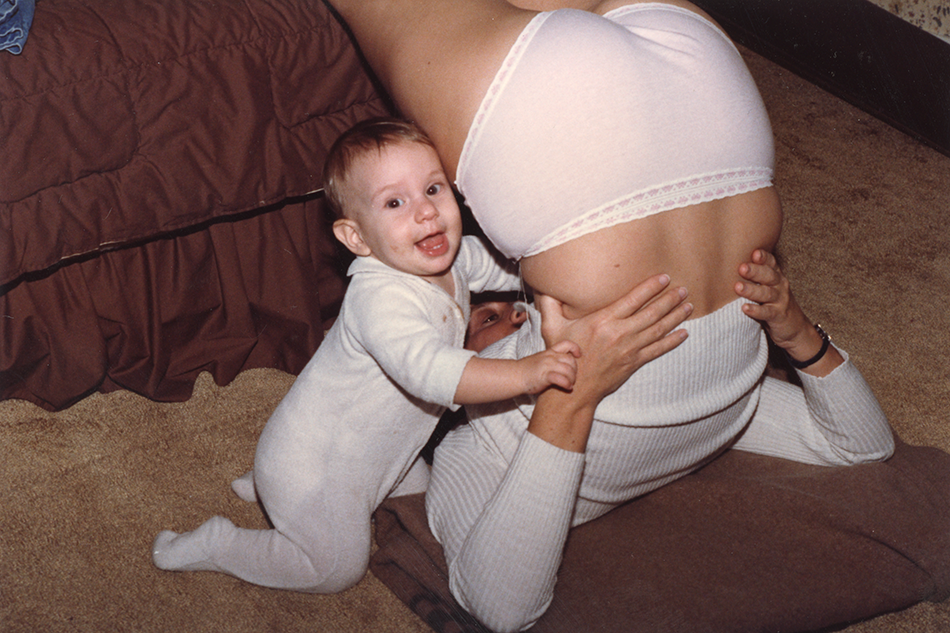
“I learned that I had to give them something not too heavy, but at the same time nutritious,” Fernando said. That meant chicken soup loaded with vegetables, stews made with the best meat he could afford, rich stocks with bones or fish heads. A lot of rice, and a lot of beans.

Some of his babies had such bad cases of thrush—an overgrowth of yeast that coated throats and tongues in irritated white fur—that he had to puree the stews. Others, who were taking AZT by the fistful, developed weird allergies or lost the ability to digest dairy or beans. There were few social services for people with AIDS in those days, but people in the Mission found out about what he was doing. They would pass along some money. Markets would slip in extra meat, or charge him less. He took care of his seven friends until they died.
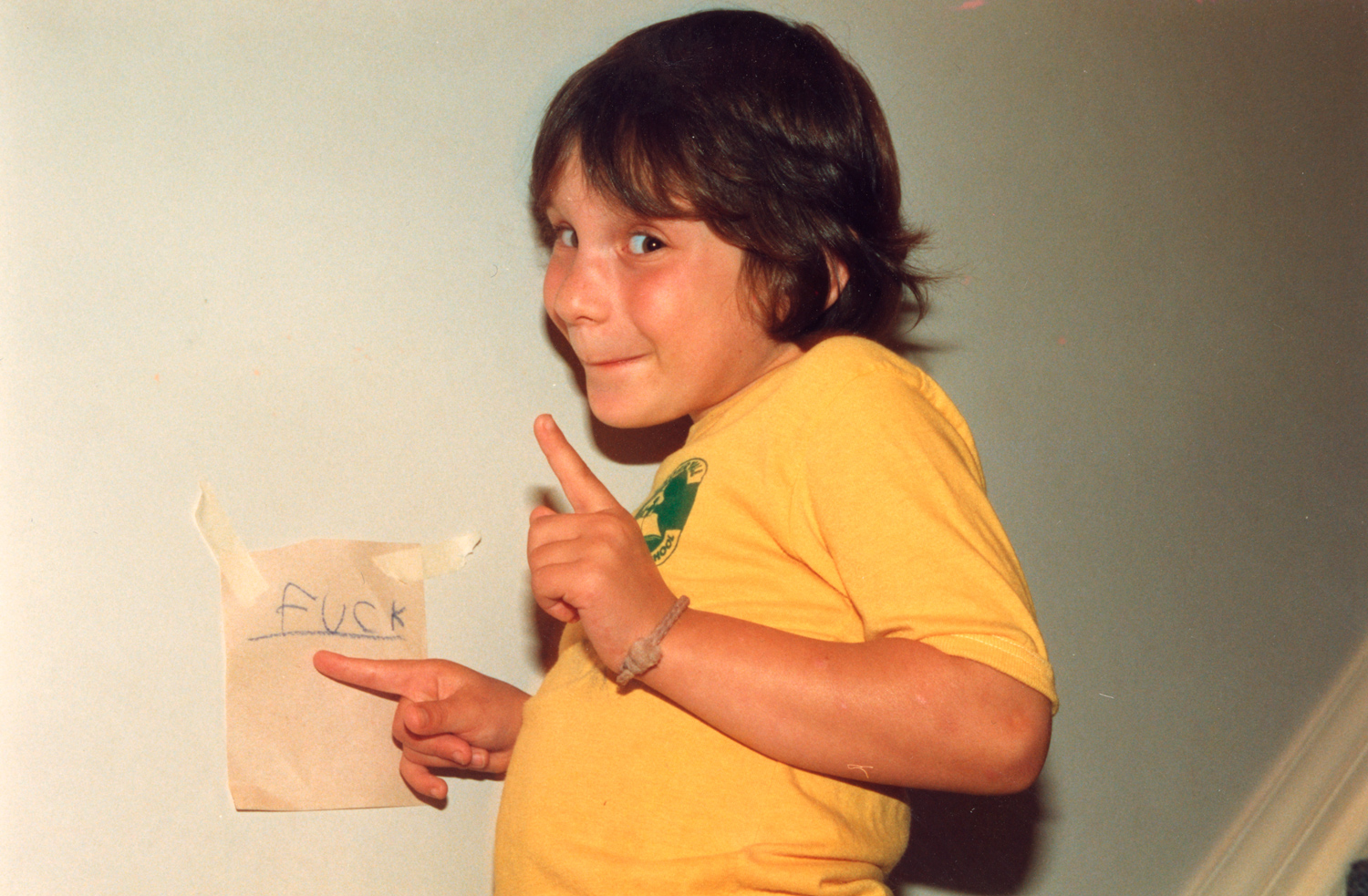
In 1991, the last of his babies gone, he was considering whether to accept his sister’s offer of a plane ticket back to their hometown in Mexico. Then Ruth Brinker, the founder of a San Francisco meal service called Project Open Hand, asked him to come in to the kitchen help her out. “Instead of being in mourning in an empty apartment, I joined Project Open Hand,” he said. He adapted all the dishes he had written down in a tiny booklet so they fed thousands of people a day.

***

In the middle years of Diseased Pariah News’s run, Wulf and Tom Ace were joined by a Sleazy Editor, Michael Botkin, a journalist famous in the Bay Area LGBT community for his “AIDS Dispatches” column and equally dark sense of humor (“dead meat specials,” he once called people with AIDS). The zine’s circulation rose to three thousand, sold at LGBT bookstores and Tower Records around the country. Tom now recalls that people would stumble across an issue, write to the editors, and order the entire back run.

The editors always intended to publish four issues a year, but only managed two or three. They’d call in their friends for assembly parties, Wulf fretting over the placement of each “Not Sanitized for Your Protection” paper band they wrapped around the zine, scaring off casual browsers.

Any idea that would double the editors over with laughter made it into the magazine. They recorded parody songs on a flexible vinyl single and stapled it into the zine. Wulf devoted a number of spreads to AIDS Barbie and KS Ken, wasting away so attractively, their lesions courtesy of a blowtorch. “Kiss me, I’m a diseased pariah!” T-shirts and buttons sold by the hundreds, helping to cover the production costs. They also marketed “AIDS Merit Badges,” each depicting an opportunistic infection or alarming T-cell count (achievement unlocked!), for people to wear on a sash to their medical appointments.

Readers sent in poetry and essays they hoped DPN would run, not to mention dozens of recipes, each of which Wulf would retest: Calorie-Packer Hash. Mysterious Cheese and Nut Loaf. Hard-Hearted Hannah’s Pecan Buttercrunch. It was food for when you weren’t sure you wanted to eat, food that might just keep you alive. But Wulf wanted it to offer pleasure, too—and whether the appeal was trashy or refined didn’t matter. Larding a zine about AIDS with recipes didn’t just add a note of domestic camp that Biffy Mae, toxic-plant aficionado, clearly delighted in, the recipes interrupted the zine’s dark humor, visually as well as psychically. You may be dying. Fuck. Buy yourself a box of Bisquick and make this berry dessert.
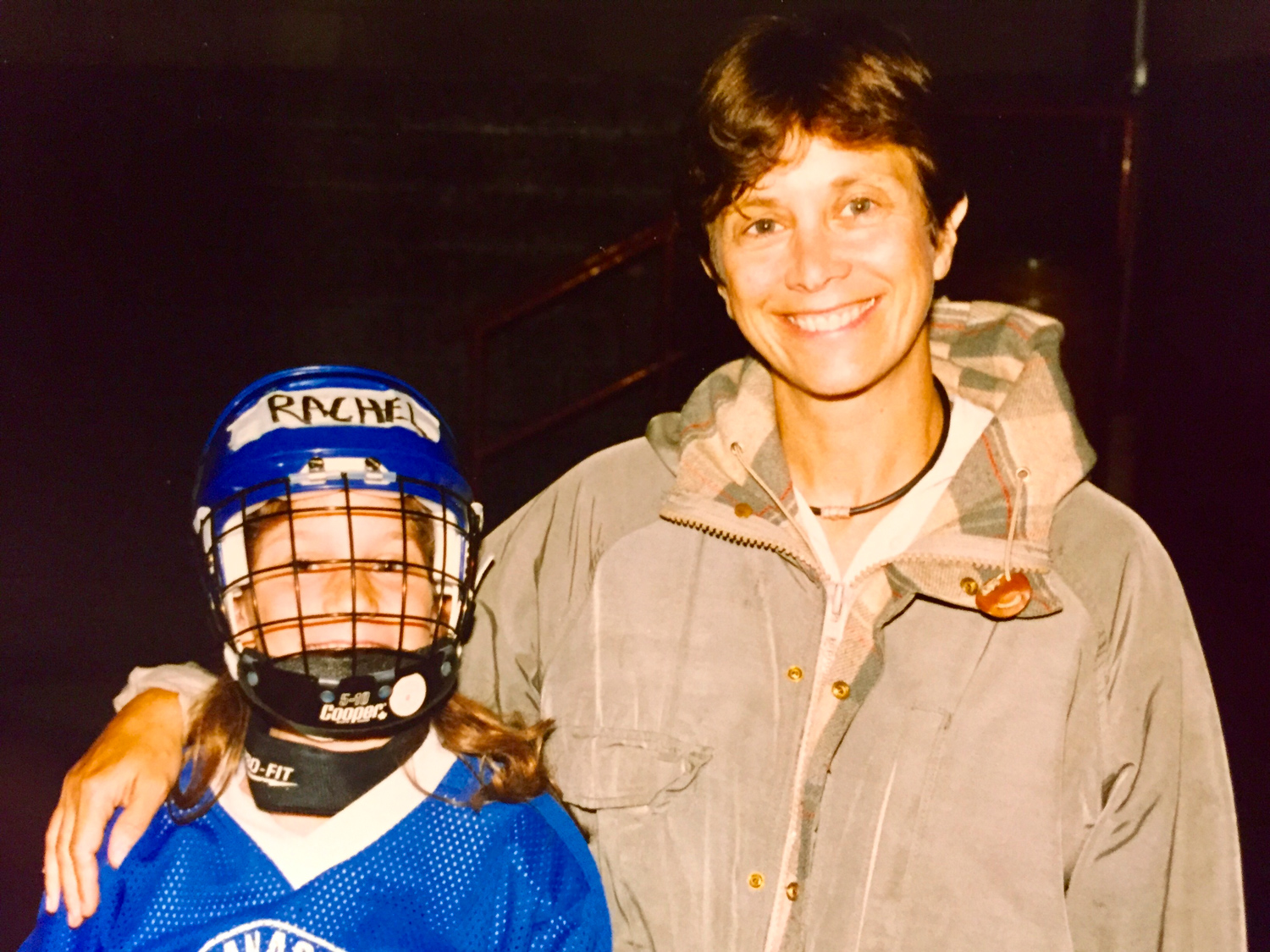
Alongside the recipes, “Get Fat, Don’t Die!” covered avoiding possible parasites in sushi, eating when you had nausea, shopping on food stamps, and compensating for the taste perversions caused by drugs like AZT. (“Some liken it to a metallic taste, sort of like having a bloody nose all the time,” Wulf wrote.) DPN may have been the first AIDS-related publication to instruct readers on making pot butter to bake into brownies to combat nausea and lack of appetite. The medical marijuana movement took off in San Francisco in the early 1990s, when Brownie Mary delivered edibles to AIDS wards and activists set up smoking lounges for the chronically ill.  

In my favorite column, Michael and Wulf, who had “AZT butt” themselves, tasted every chocolate dietary-supplement shake doctors were pushing people with wasting to drink. Every one of them was chalky and tasteless, they concluded, and ran a recipe for mole poblano alongside. 

These were the issues I must have encountered in Minnesota, and I remember flipping through them with a mix of awe and shame. Was it worry that someone might see me reading an AIDS zine and think I was HIV-positive? The sense that I had stepped into a room that wasn’t built for me? The constant guilt I felt, as a healthy 20-year-old, as if I was skipping across my elders’ graveyard? All of those, most likely. 

Now that I am decades older than Wulf was then, the gall of the magazine—to mock death, and shame, and governmental neglect, and all the squeamish attempts at empathy AIDS occasioned —strikes me as a form of redemption. And to snicker at Wulf’s jokes, each laugh tinged with the grief and horror I thought long buried, feels like the best way to honor him.

*** 

As neuropathy—probably from the fistfuls of AZT—made walking harder and cytomegalovirus retinitis ate away his field of vision, Wulf secured disability leave from his day job in the mid-1990s and retreated to a house he shared with Arion. DPN remained one of his main pursuits, along with gardening and fighting with his insurance company, but it took longer and longer to put out a new issue. Six months. A year. Two. Michael Botkin, the Sleazy Editor, died in 1996. Tom Ace, Humpy Editor, left the Bay Area for the California desert. Protease inhibitors appeared, but Wulf’s body was too worn out by then to benefit from them.

When Wulf died in 1999, at the age of thirty-four, he had readied the eleventh and last issue of Diseased Pariah News, complete with a years-old obituary for Michael (“He had looked like death warmed over for so long, we never thought he’d really die!”) and a parody ad for AZT Lite. Tom Ace and Wulf’s friends added a tribute to Wulf and sent it out, secretly sprinkling Michael’s ashes into a few copies. 

They played around with the idea of turning Wulf into a snow globe, but they couldn’t figure out how to make cremains float in a viscous mix of Astroglide lube and water, and they didn’t want to offend his mother, who had come up from Southern California to tend him in his last few weeks. At the “celebration of his extinction,” she surprised them by wrapping the box of her son in shiny gold paper. “I think he might appreciate it,” she said.

19 Apr 19:03

Philip, The Last Sweet Potato

by swissmiss
Sarah

what i needed today

Philip, the Last Sweet Potato: A Non-Binary Quarantine Love Story from Beloved Children’s Book Author and Illustrator Sophie Blackall

19 Apr 13:01

Springfield hospitals tried hiding a much needed mask shipment in trucks made to look like they were carrying food; then the FBI showed up

by adamg
Sarah

this is fucked

Dr. Andrew Artenstein, chief physician executive at Baystate Health - which runs four hospitals in the Springfield area - describes the lengths he and his staff had to go to to secure some much needed respirator masks recently, in a a letter to the New England Journal of Medcine posted yesterday.

Artenstein reports he and his staff found a distributor with a supply of K95 masks - similar to N95 masks - and surgical masks.

Three members of the supply-chain team and a fit tester were flown to a small airport near an industrial warehouse in the mid-Atlantic region. I arrived by car to make the final call on whether to execute the deal. Two semi-trailer trucks, cleverly marked as food-service vehicles, met us at the warehouse. When fully loaded, the trucks would take two distinct routes back to Massachusetts to minimize the chances that their contents would be detained or redirected.

Artenstein and his staffers opened one package, the masks seemed to be good and, hoping the rest of the shipment would be similarly fine, he was about to order a wire transfer to the distributor when two FBI agents walked in - and started questioning him:

No, this shipment was not headed for resale or the black market. The agents checked my credentials, and I tried to convince them that the shipment of PPE was bound for hospitals. After receiving my assurances and hearing about our health system’s urgent needs, the agents let the boxes of equipment be released and loaded into the trucks. But I was soon shocked to learn that the Department of Homeland Security was still considering redirecting our PPE. Only some quick calls leading to intervention by our congressional representative prevented its seizure. I remained nervous and worried on the long drive back, feelings that did not abate until midnight, when I received the call that the PPE shipment was secured at our warehouse.

Via MassLive.com.

17 Apr 00:20

Self-Inflating Airplane Slide

by swissmiss
Sarah

This is funnier than it has any right to be

Watching an airplane recycling company employee having to activate a detached emergency slide was surprisingly amusing.
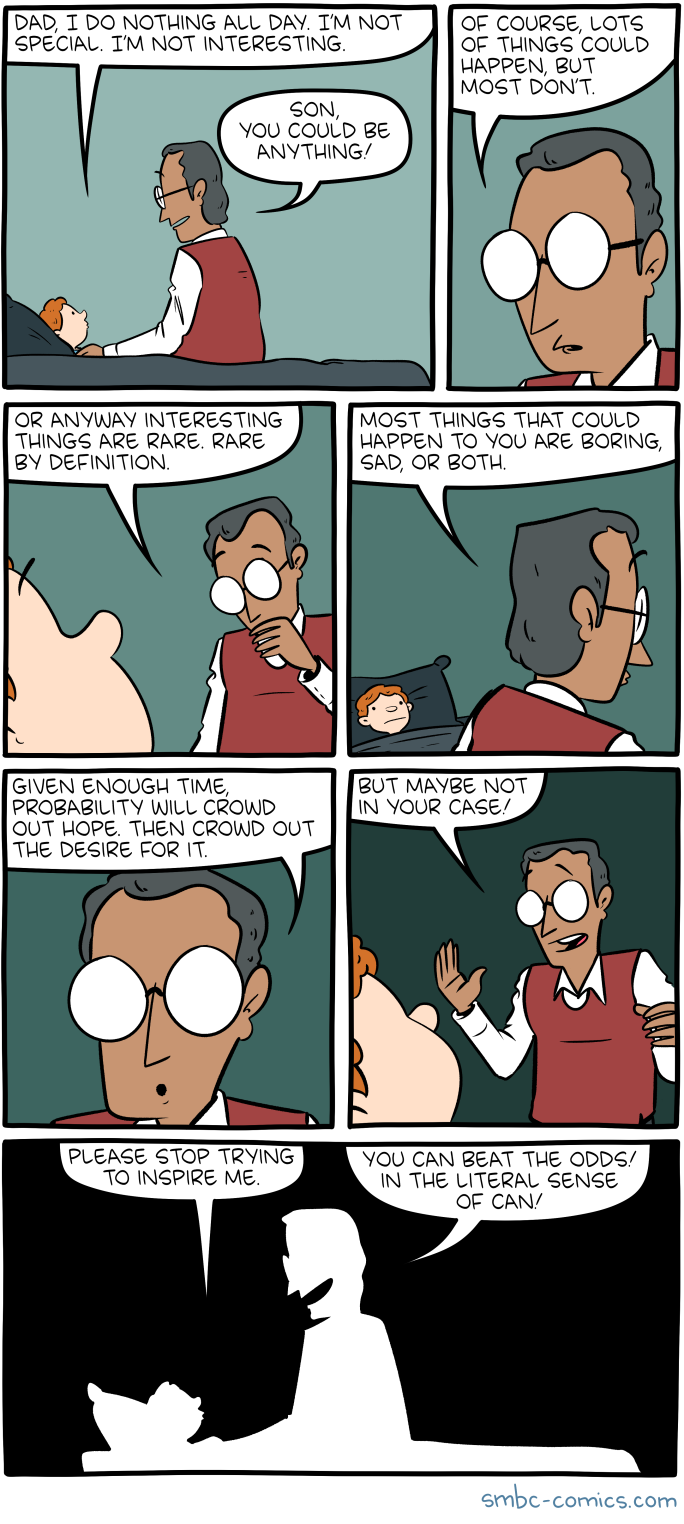
Here’s a video of an airplane slide inflating while still attached to a plane.
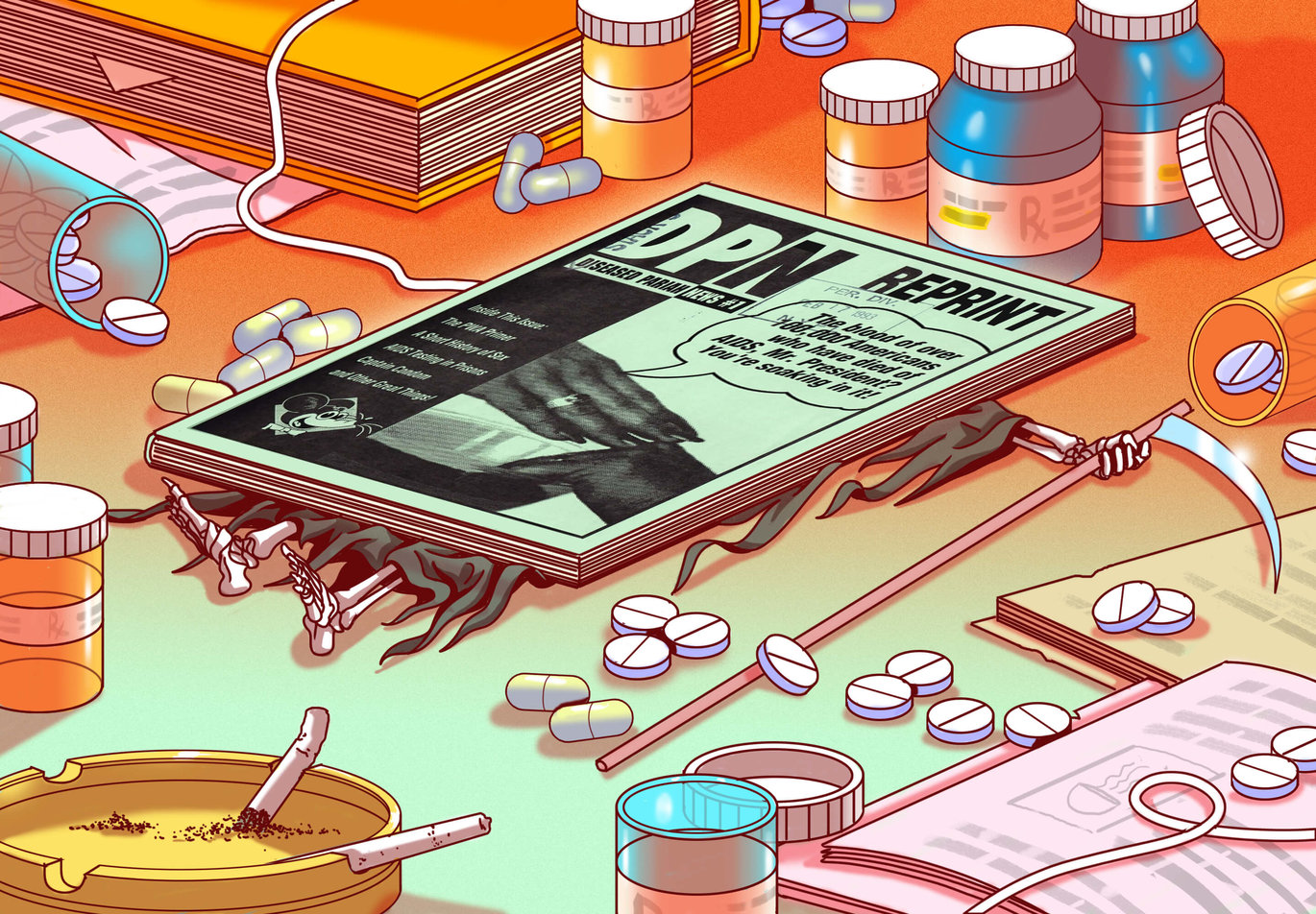
12 Apr 15:15

Sticky note collages

by Austin Kleon
Sarah

ideas! That would mean I was making collages but whatever!

In my never-ending borderline-OCD quest to never waste anything and make something of my by-products, I’ve started keeping a pad of sticky notes on my desk and when I have unused scraps from my collages I add them to a note. Eventually the note becomes its own collage, sometimes more interesting than the “real” collage I was working on. (The note above was made while tidying my desk and talking to the friend on the phone.)

07 Apr 18:16

Must Read: Telfar Clemens on How He Built His Brand, Gap Cancels Summer and Fall Orders

by Yusra Siddiqui
Sarah

Holy shit, the GAP is cancelling summer and fall orders?!?!

These are the stories making headlines in fashion on Tuesday. Telfar Clemens on how he built his brand Coronavirus has put many American designers' ventures to a halt, and Telfar Clemens was on a path to heightened success with his brand before the pandemic came. Clemens ...

Continue reading

24 Mar 18:48

On routines

by Dayna Evans
Sarah

Maybe I'll make sourdough again! I have all these ideas of stuff I want to do (finish my quilt! Rearrange house decor! Fucking get rid of all my clothes!) but no energy to do it. If I was to make a lil conversational newsletter like this, what would I do it about? Thrifting? Just textures? IDK

Have you seen these posts circulating lately that encourage you to maintain a routine during these uncertain times? I’ve seen some people share their routines, so I thought I’d share mine. Every single day at 5pm, I grab a tiny glass cup from my cupboard, set it on the counter, and pour one-third of a can of Kronenbourg beer into it. I drink that third, refill my cup, drink the second third, refill it again, and drink the final third until there is no more beer in the can. This ritual typically takes me from 5pm to 5:30pm, and I make sure to keep the standing appointment every day because I’ve been told that routine is important.

Besides that, over here in Paris, my internal monologue is mostly just one unending drone, punctuated at disconcerting intervals with the Pasta Grannies theme song.

It’s funny that in the last edition of this newsletter, I wrote that pretty soon we’d all emerge from our winter shells and out into the sunshine, into a world waiting for us as it bloomed into spring. A lot has changed since I wrote that, all of 31 days ago. Pretty much the entire world changed in less than three weeks, then kept changing every day, every hour, and every minute since. I know that I will not have anything smart or eloquent to say that hasn’t already been said by far smarter and more eloquent people, so I won’t try to capture in words the traumatic catastrophe of this moment, nor the equal number of terrifying and tender circumstances it has surfaced. I trust that you have ingested a lot of the same news and social media as me. Though, if for some reason you haven’t yet seen the guy cheers-ing himself in the mirror, I’m going to have to ask you to stop what you’re doing and watch that now.

Instead, I can share two things, one practical and one frivolous. I’ll start with the frivolous first.

I’ve never been good at rationalizing or dulling heavy emotions, both external and internal—again, see my last newsletter if you want to hear more about that ha ha ha—and right now, there are more than enough heavy emotions to go around. Today, for the ??th time, I found myself feeling flattened and overwhelmed. The news alerts from America were coming in at the same time as those from France; I had forgotten to respond to some text messages while I was on other phone calls; I felt that no matter who or what I gave money or a hand to, it was never going to be enough. And on top of it all, I received an email with the subject, “A message from 7-Eleven about Covid-19” that began—I shit you not—“Dear Valued 7-Eleven Customer.” I don’t know at what point in my life I gave 7-Eleven my e-mail address, but I can say with clarity that those were simpler times.

I know you probably think I’m going to say, “So I made bread and then I felt better” but—PRANK—I didn’t and I don’t. Instead, I channeled a behavior from my teen years, one that I call up to adult life in times of scary uncertainty. I put on my gigantic, noise-canceling headphones, lay flat on my back, and listened to a very long album from start to finish. Sometimes I closed my eyes, but most of the time, I just stared at the ceiling. I did not look at the clock, nor my phone. I turned the record up very loud because this mechanism is quite literally meant to drown out the voices in your head. Through the twenty tracks of Father John Misty’s live in Hamburg album, I hardly thought even one thought. It felt amazing. If you feel overwhelmed and have 45 minutes or an hour to spare, I recommend doing this.

Now, the practical. This one is bread-related, but this is a bread newsletter after all, so I’d look like a real chump if wrote this newsletter just to recommend a Father John Misty album. This weekend, I made a video that shows you how to make sourdough bread. It took me basically the entire weekend, so if the album-listening thing doesn’t work to distract you, maybe direct a short film in your kitchen instead? The video is below, if you’re trying to incorporate bread-making into your new daily or weekly routine, whatever that may be. It’s a variation on a recipe that I put in this folder. And if you want to make your own sourdough starter, I recommend this one. Please get in touch if you have any questions, no matter how small.

Lastly, if you’re reading this and want to tell me how you’re dealing right now and what works to make you feel at least somewhat sane, please share. If one of those things happens to be making a favorite recipe, I made a Google spreadsheet for links so we can cook each other’s comfort foods. Feel free to add yours.

23 Mar 14:01

Mummenschanz Exotic Mime

by swissmiss
Sarah

This is very strange and I approve

I was reminded of this gem today. Mummenschanz is pure delight.

18 Mar 01:52

Be well, be safe, be kind to one another

by Jen
Sarah

This is a textile printmaker I follow

A reporter recently asked her Twitter followers how they’ve been able to convince their Boomer parents to take COVID-19 seriously. I responded that I didn’t need to; when she was very young, my mom had had to flee into the Philippine jungle with her family during the Japanese occupation of the Philippines (which, okay, makes her just a couple years too old to be a Boomer), and then she left the Philippines in the 70s, when Marcos declared martial law in the country. Early trauma imprinted on her the need to always be prepared for disaster. With refrigerators (yes, plural) full of food, and a garage stocked with every toiletry she and my dad (who *is* a Boomer) will need for the next year, my mom has been preparing for this her entire life.

I, however, am the opposite. I only buy enough groceries to last me a week. I replace toiletries right before they run out (or, um, sometimes after). I have lived my entire life taking it for granted that I’ll be able to find what I need when I need it. And that, I’m realizing now, is a huge privilege.

When I hear reports of Americans lining up outside Costco, or hoarding supplies, I get it. Many of us have just assumed that we’ll always be able to get what we want when we want it, that our systems will work for us in the event of a crisis. The US is a rich, developed country; we’ll be okay, right? But the response to this pandemic has shown us just how frail our system is. As one of my Filipina cousins who now lives in Belgium remarked last week, it’s becoming clear to the rest of the world that the US actually has the safety net of a developing country. The affluent will likely be able to weather the storm. It’s the many who live on the edge, with no financial cushion, limited access to paid sick leave, and poor or no health insurance who will suffer – indeed, who are already suffering.

I’ve been reflecting on this a lot, as I think about my own family history of migration (from the American South) and immigration (from Southeast Asia). Many Americans believe that what’s happening here now are things that happen in “other” places, to “other” people. But as it becomes clear that that the US is one of those “other” places, and we are those “other” people, I hope we can find a way to have empathy for each other, both locally and globally. This means empathy for the refugees and immigrants who are fleeing the places where things have long been worse than they are here. This means empathy for hourly wage earners and tipped employees whose financial well-being is precarious as businesses close. This means empathy for the homeless who have few ways to manage their health, let alone their shelter. This means empathy for the poor, who are already just barely making ends meet with very low wages and few services. This means empathy for the people who still have to report into offices, stores, and restaurants, as well as empathy for the owners of those businesses who continue to have to make daily, difficult decisions about whether or not to stay open or to close. We are all in this together. Not all of us will make it through this – my grandfather didn’t survive WWII, and there are countless people who will die from this virus – but I hope that we’ll all seize on this opportunity to evaluate how we view our roles as citizens of the world, and then act.

The post Be well, be safe, be kind to one another appeared first on Jen Hewett.

12 Mar 14:47

from the wardrobetales rundholz repository (no. 20 01 28 & 02 27 20)

by wardrobetales
Sarah

this is basically what I want to go for as often as possible


the best pinstripes i have had ... to date. and an awesome puffy jacket.

i am wearing rundholz mainline a/w 2019 (top, jacket, trousers, puffy jacket, shoes and boots) and rundholz mainline s/s 2018 (hand bracelet).
09 Mar 22:27

Locally Born Pickle Brand Grillo’s Will Soon Sell Pickle Drinks

by Rachel Leah Blumenthal
Sarah

look, i love pickles but this is too much (although if you haven't tried those english muffins, they are the best)

Lineup of Grillo’s Pickles brand pickle products, isolated on a white background Grillo’s Pickles will transform into Grillo’s Fresh, adding pickle-based beverages and salsa soon | Grillo’s Pickles/Facebook
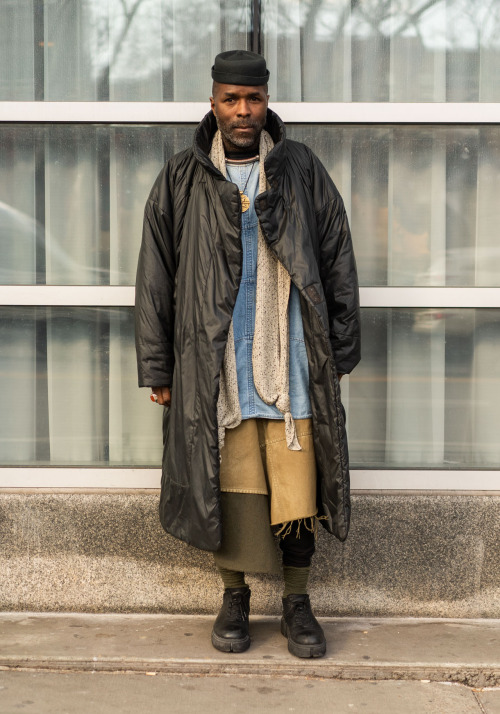
Plus, Stone & Skillet is selling gift boxes packed with New England flavors, and more news

Welcome back to AM Intel, a Monday morning round-up of mini news bites to kick off the week.

Here Come Pickle Drinks

Grillo’s Pickles is a familiar brand for local pickle lovers: Founded over a decade ago by Travis Grillo, it has grown from a downtown Boston pickle cart to a major wholesale operation, with pickles available in thousands of stores around the country.

Coming up next for the company is a transformation into Grillo’s Fresh and the launch of several new products, including cold-pressed pickle vinegar drinks and salsa. Grillo told BevNET that he’s positioning the electrolyte-packed drinks as sports drink alternatives or health beverages, and they come in two flavors — pickle and lemon. They’ll be available in several Whole Foods regions, including the Northeast, this month before spreading nationwide.

Grillo’s pickle-based salsa brand, Pickle de Gallo, will launch in April in sweet, mild, and hot varieties, along with single-serve cups of pickle chips.

“I just want to prove that Grillo’s is more than a pickle and we were always more than a pickle,” Grillo told BevNET. “But as a creative it’s been hard for 10 years to only sell pickles and finally I have the opportunity and this is me saying to the world I’m more than a pickle company and here it is.”

In addition to edible and drinkable products, Grillo’s has been expanding its lifestyle push with clothing collaborations with brands like Urban Outfitters and, coming soon, Nickelodeon. The latter collaboration will center around Rugrats; ’90s kids will recall that one of the main characters is Tommy Pickles. (And yep, Rugrats is being revived.)

English Muffin Gift Boxes

In other local brand news, Boston’s Stone & Skillet English muffin brand is now offering a gift box packed with tastes of New England: four packs of Stone & Skillet’s English muffins (in different flavors), a sampler of Somerville-based Taza chocolate, Cask Force maple syrup and Cabot cheddar from Vermont, North Country Smokehouse bacon from New Hampshire, stickers and coasters, and a coupon for a dozen Pete & Gerry’s eggs from New Hampshire.

Stone & Skillet has been baking English muffins since 2013, and the products can now be found at numerous Whole Foods, Wegmans, and other shops around the northeast.

In Other News...

Got a news tip for the Eater Boston team? Email boston@eater.com.

09 Mar 22:25

Boston cancels St. Patrick's Day parade

by adamg
Sarah

hot damn i didn't think they'd do it

Mayor Walsh made the announcement this afternoon:

In collaboration with Congressman Lynch, Councilors Flaherty and Flynn, Senator Collins, Representative Biele, and David Falvey from the South Boston Allied War Veterans Council, the St. Patrick's Day Parade is being cancelled. This decision is being made out of an abundance of caution to ensure that we are doing what is needed to keep the residents of Boston safe and healthy.

"While the risk in Boston remains low, this situation is changing very quickly and we are closely monitoring any local cases. Our top priority is preventing any new cases, to the best of our ability, and we are paying close attention to guidance from public health officials. We encourage all residents to follow preventive measures to avoid illness, such as washing hands and staying home if you are feeling sick, and we will continue to make public any information as this situation develops in Boston.

Also canceled: The annual St. Patrick's Day breakfast. State Sen. Nick Collins said in a statement:

As Mayor Walsh and the city of Boston continue to take steps to stop the spread of coronavirus, the decision has been made to cancel this year’s St. Patrick’s Day Breakfast. While I am disappointed we won’t be able to celebrate with the annual St Patrick’s Day Breakfast this year, it is clear that this is the proper decision based on the advice of experts and public health officials. Although the threat in Massachusetts remains low, the situation is changing rapidly. Public health and safety must be our top priority.

07 Mar 00:36

Hear How Choral Music Sounded in the Hagia Sophia More Than 500 Years Ago

by Jason Kottke
Sarah

This is amazing even on my laptop

When the Ottomans invaded and conquered Constantinople in 1453, the Orthodox Christian church Hagia Sophia was converted into a mosque. As a result, the Christian choral music that had reverberated in this acoustical masterpiece for centuries was not allowed. But thanks to a digital filter developed by a pair of Stanford researchers, one an art historian (Bissera Pentcheva) and the other an acoustics expert (Jonathan Abel), we are now able to hear what a choir might have sounded like in the Hagia Sophia before the mid 15th century.

When they met, Pentcheva started telling Abel about the Hagia Sophia — how we couldn’t really understand the experience of worshipers there unless we could hear the music the way they did. And as she talked, Abel started to feel a prickling of excitement. They could recreate what that music would sound like. If only they could get in the Hagia Sophia and pop a balloon.

When a balloon pops, it makes an impulse, a sharp, quick sound that takes on the character of whatever space it’s in. So when a balloon pops, you’re really hearing the acoustics of the space itself, says Abel.

In this clip from 2013, the Cappella Romana choir sings a hymn passed through an early version of the Hagia Sophia filter:

The marble interior of Hagia Sophia was 70 meters long, while in height it reached 56 meters at the apex of the great dome. The vast chamber and its reflective surfaces of marble and gold resulted in unprecedented acoustics of over ten seconds reverberation time. As a museum Hagia Sophia today has lost its voice, no performances could take place in it. Using new digital technology developed at CCRMA, the second portion of Cappella Romana’s concert at Bing aims to recreate sound of what singing in Hagia Sophia must have been like. Each singer caries a microphone that records the sound transforming it into a digital signal, which is then imprinted with the reverberant response of Hagia Sophia. What you hear as a wet sound is the product of a digitally produced signal transmitted through loudspeakers placed strategically to create an enveloping soundfield. This digital signal may shock you with the way it relativizes speech, transforming its content into a chiaroscuro of indistinct but immersive sound. For the Byzantines, this sonic experience was associated with the water: the waves of the sea.

Last year, the Cappella Romana released an entire album of choral music recorded with the filter — you can listen on Spotify, Apple Music, Amazon, Tidal, or Pandora.

Needless to say, the album sounds better with the best pair of headphones you can muster. You can find out more information about the filter and the acoustics of the Hagia Sophia at Icons of Sound.

See also this online Gregorian chant generator.

Tags: audio   Bissera Pentcheva   Hagia Sophia   Jonathan Abel   music   religion
05 Mar 00:20

Kamau, 47“I’m wearing Norma Kamali sleeping bag coat, 69 top,...


Kamau, 47

“I’m wearing Norma Kamali sleeping bag coat, 69 top, Comme des Garçons pants, and John Fluevog shoes. My style philosophy: Clothes are for living. Life is a special occasion. Wear what you love. Lately I’ve been inspired by my plants – the Aeschynanthus radicans has been doing well, healthy and flowering.”

Feb 8, 2020 ∙ Lower East Side
21 Feb 00:08

Face ID Compatible Respirator Masks

by Jason Kottke
Sarah

We should get these and wear eachothers faces

Face ID Respirator Masks

This site is making N95 respirator masks that work with facial recognition software, so that, for example, you can unlock your phone while still wearing a mask.

After uploading your face, we use computational mapping to convert your facial features into an image printed onto the surface of N95 surgical masks without distortion.

Our printer uses inks made of natural dyes. It’s non-toxic and doesn’t affect breathability.

You can use your mask for everyday life as a barrier for airborne particle droplets.

Face ID Respirator Masks

Face ID Respirator Masks

It is unclear whether these will actually ship or not — “Q: Is this a joke? A: Yes. No. We’re not sure.” — but they’re definitely not planning to make them while there are mask shortages related to COVID-19. And it appears the masks will work with iPhones…you just add a new face (while wearing the mask) to your phone’s face database.

Tags: design   medicine   telephony