Jo Walton’s new book What Makes This Book So Great (U.S. / U.K.), is a collection of some of her best Tor.com posts honoring, analyzing, and reassessing science fiction and fantasy. The full collection, featuring over 130 essays, is out on January 21st and includes great opinion pieces like this, originally published in September of 2009.
Re-reading these books right now is a mistake. Before I picked up A Game of Thrones again, I had only a calm interest in Jon Snow’s true parentage, I’d forgotten who Jeyne Poole was, and best of all, I only mildly wanted A Dance With Dragons. I sagely nodded when I read that George R. R. Martin is not my bitch. I have every sympathy for this position. All the same, I know that by the time I get to the end of A Feast for Crows I’ll be desperate, desperate, desperate, so desperate for my fix that I’ll be barely able to control myself. I will be A Dance with Dragons–seeky, and is it out? Is it even finished? Like heck it is. And I know I’m not entitled to it but I waaaaaaaaaant it! If I were a sensible person, I’d have waited to re-read until it was ready and I could have had a new installment to go with the old. But now it’s too late.
So what is it about these books that makes me talk about them in terms of a two-year-old snatching at sweets in a supermarket?
[Read more, no spoilers]
Firstly, they have a very high “I-want-to-read-it” quotient. This “IWantToReadItosity” is hard to explain, is utterly subjective and is entirely separate from whether a book is actually good. Who can say why Robert Heinlein and Georgette Heyer and Zenna Henderson have it for me and Herman Hesse and Aldous Huxley don’t, despite the fact that Hesse and Huxley are major world writers? I’ll happily acknowledge that The Glass Bead Game is a better book than Job: A Comedy of Justice, but nevertheless, Job has that IWantToReadItosity, and if you left me in a room with both books and nothing else, it would be Job I’d start first.
Now, even within genre this is something that varies a lot between people. The Wheel of Time books don’t have it for me. I’ve read The Eye of the World and I didn’t care enough to pick up the others. Ditto Harry Potter, where I’ve read the first three. These are books that have IWantToReadItosity for millions of people, but not for me. The Song of Ice and Fire books do, though, they grab me by the throat. This isn’t to say they’re gripping in the conventional sense—though they are—because IWantToReadItosity isn’t necessarily to do with plot or characters or any of the ways we conventionally divide up literature. It’s got to do with whether and how much you want to read it. You know the question, “Would you rather read your book or go out with your friends?” Books have IWantToReadItosity if you’d rather read them. There are books I enjoy that I can still happily put down to do something else. A Game of Thrones is eight hundred pages long, and I’ve read it six times, but even so, every time I put the bookmark in, I put it in reluctantly.
These books are often described as epic fantasy, but they’re cleverer than that. Most epic fantasies are quests. This is a different kind of variation on a theme from Tolkien. In those terms, it’s as if when Sauron started to rise again in Middle-earth, Gondor was in the middle of the Wars of the Roses. They’re about human-scale dynastic squabbles on the edge of something wider and darker and inhumanly dangerous. The world is wonderful, with a convincing history leading to the present situation. It has good names (Winterfell, Greyjoy, Tyrion, Eddard), great characters who are very different from each other and are never cliches—and Martin isn’t afraid to kill them, nobody is safe in this world because of being the author’s darling. There are mysteries that you can trust will be resolved, everything fits together, everything feels real and solid and full of detail.
But the thing that really lifts them above the ordinary is the constant balance at the edge of the abyss, the army marching off south to win a kingdom when the real (supernatural) danger is north. There are human problems on a human scale, tragedy, betrayal, honour, injustice, and always the creeping reminder underneath of something . . . colder.
If you like history, and if you like fantasy, and if you like books where one page leads you on to the next and you can’t believe it’s that time already, you should definitely read these. Also, if you haven’t read them you’re lucky, because you have four eight hundred-page volumes to go before you’re reduced to a slavering hunk of waaaaaaaant.
Jo Walton won the John W. Campbell Award for Best New Writer in 2002, and the World Fantasy Award for her novel Tooth and Claw in 2004. Her several other novels include the acclaimed “Small Change” alternate-history trilogy, comprising Farthing, Ha’penny, and Half a Crown. Her novel Among Others won the Hugo and Nebula Awards in 2012.
Hola, del no te conozco al quiero ser tu novianovia hay tan solo tres tardes de risas con orgasmos incluidos, porque todo el mundo sabe que el orgasmo es la risa del coño.
Para todos aquellos que decís que las tías somos complicadas y que no hay quién nos entienda, ahí va la respuesta: reir y ser bien folladas es la base de nuestra felicidad, decid no a los tíos coñazo, os lo suplico.
Luego está ese pequeño detalle de hacernos sentir únicas, claro. Mirad machotes, que no es tan complicada la cosa como la pintáis.
Sabemos que vuestra placa base es muy base. Y sacándoos del GTA , las cervezas y los colegas, todo lo demás os supone un esfuerzo y un hacer sí, pero con desgana EVER. Pero si esperáis que seamos detallistas, atentas y sexualmente activas o bien os lo curráis o os lo curráis.
Que ponernos de rodillas para comeros el rabo y tragarnos vuestros espermatozoides calentitos mola mucho más A AMBOS cuando nos tenéis contentas. Y no es tan complicado detectar a una mujer enfurecida, de verdad, hacer una pizza en el micro y que quede crujiente sí que es complicado por ejemplo, pero saber que la estáis cagando no, no lo es.
Que cuando le preguntas que le pasa y ella contesta “no me pasa nada” lo que tenéis que asimilar es que pasa y pasa TODO.
Pasa que no preguntáis que tal en el curro.
Pasa que no sabéis el nombre de ninguna amiga ( salvo que exista una amiga con super tetes, que de esa siempre recordáis el nombre, casualidad? No lo creo)
Pasa que hace un mes que no me dices, me ponga lo que me ponga o lo que me quite, que estoy guapa.
Pasa que no os habéis acordado de esa fecha (nota: en el ipad/iphone hay agenda con alarma, majos)
Pasa que cada vez dais menos besos y regaláis mas flatulencias.
Pasa que nunca sale de vosotros sorprender positivamente. Que si nos gustan los huevos kínder o la cerveza Alhambra y ya lo sabes, pues chico, párate en el Lidl y pilla un pack de cada y esa noche te la maman hasta dejarte seco!!!
Que del me quiero casar contigo al ojalá no te hubiera conocido nunca hay 2 años de monotonía, PlayStation, Liga, Copa del Rey, Champions, cervezas siempre con colegas y nunca conmigo y eso al final acaba en: me tiro a otro y te pongo cara de bienbien y a dormir ambos en modo cucharil forevah con bragas desgastadas de lavarlas y no del frotamientochuscamiento , sin depilar y en pijama anti morbo, BOOM!!!
Si os lo currais bien, somos vuestras: anal, cocinarte un chuletón de buey en tacones, lencería y con liguero, comerte los huevos como desayuno y así. El agradecimiento de una tía bien corrida no conoce límites, pero currároslo capullos, currároslo!!!!
Moraleja: Cerders, el sexo nunca se trata solo de sexo, por lo menos el bueno. Interés, la palabra clave es interés.
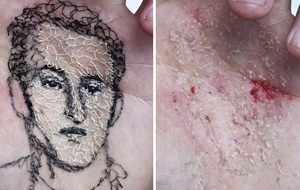
David Catá es un artista gallego de 26 años que últimamente está ganando popularidad en internet gracias a una serie de fotografías que ha titulado muy ingeniosamente A flor de piel. En ellas aparecen retratos de su familia y allegados bordados a mano en la palma de sus propias manos, y luego arrancando los hilos para que podamos ver las marcas que esas personas importantes de su vida han dejado en él. «Sus vidas se han entretejido con la mía para construir mi historia», explica, «que finalizará cuando me quede sin hojas donde dibujar.»
La escritora feminista Andrea Dworkin ha señalado las distintas estrategias que un hombre usa para obtener sexo de una mujer (es decir, de intercambiar segmentos de ADN): Puede robarlo (violación), convencerla de que se lo regale (seducción), alquilarlo (prostitución), contratarlo a largo plazo (el matrimonio en la mayoría de las sociedades).
La mayoría de estas estrategias las despliegan los hombres sencillamente porque el sexo femenino tiene una mayor y más lenta participación en las consecuencias del sexo: el hombre puede eyacular a menudo y dejar embarazadas a muchas mujeres, pero las mujeres, de quedarse embarazadas, deben invertir nueve meses de su biología. Esto sucede en muchas especies, por eso entre gorilas, orangutanes o chimpancés, por ejemplo, encontramos casos de intimidación y cópula forzada.
Alrededor del 5 % de las violaciones se traducen en embarazos, de modo que la violación puede constituir una ventaja evolutiva para el violador. De ello no se desprende que el sexo masculino haya nacido para violar o que los violadores no pueden evitar su pulsión o que la violación sea natural, en el sentido de inevitable o disculpable.
Lo que explica es su condición de universal, y que se perpetúa porque resulta rentable evolutivamente para el sexo masculino, tal y como señala Steven Pinker en su libro Los ángeles que llevamos dentro:
Entre los seres humanos, puede que, para tener relaciones sexuales, el hombre utilice la coacción cuando se dan cierto factores de riesgo; si es violento, cruel e insensato por temperamento; si es un fracasado incapaz de atraer a parejas sexuales por otros medios; si es un marginado y no teme demasiado el oprobio de la sociedad; o cuando percibe que la posibilidad de castigo es baja, como en las conquistas y los pogromos.
Estas predisposiciones evolutivas no se traducen directamente en prácticas sociales, pero pueden empujar, y de hecho lo hacen, a que la gente presione a favor de leyes y costumbres que protejan los intereses evolutivos. Ante tal panorama, por ejemplo, las culturas han fomentado la idea de que la mujer es una propiedad sexual del hombre, de este modo el hombre que está dispuesto a procrear con una mujer puede controlar que su embarazo no proceda de otro hombre, ya sea en forma de infidelidad, violación, etc. Es significativo, pues, que en las sociedades no se obsesionen por la virginidad del hombre tanto como el de la mujer, porque de nuevo la inversión biológica es distinta: los hombres pueden embarazar y desvincularse del embarazo, si no les interesa, para que sea la mujer y su respectiva pareja la que se encargue de la crianza del hijo. Los celos de la mujer hacia el hombre, sin embargo, se desarrollan evolutivamente para evitar que embarace a otras mujeres que eventualmente precisen de los recursos del hombre para la crianza.
Según la psicología evolutiva, la pureza sexual de la mujer, pues, es una garantía para el hombre que está dispuesto a invertir parentalmente en la crianza de los hijos. Por eso preocupa tanto a al cónyuge como al padre o a la familia. El machismo subyacente en muchos casos de violación (te han violado porque eres una fresca, por ejemplo) también nace de estos intereses evolutivos:
Puede que los hombres también protejan su inversión haciendo que la mujer sea totalmente responsable de cualquier robo o perjuicio de su valor sexual. Culpar a la víctima excluye cualquier posibilidad de que ella convenza a alguien de que el sexo consensuado ha sido una violación, lo que la incentiva a alejarse de situaciones arriesgadas y a oponer resistencia a un violador al margen de los costes para su libertad y su seguridad.
No importa que las leyes hayan evolucionado y que la mujer ya no se considere propiedad del hombre actualmente en las sociedades modernas. Tales impulsos evolutivos se desahogan de otros modos, como a través de las emociones o las costumbres. Por ejemplo, los anillos de compromiso se pueden indicar para indicar que tales mujeres “están cogidas”. El cambio de apellido de la mujer, adoptando el del hombre, también responde a los mismos intereses. Obviamente, preferimos una sociedad donde se usen estos marcadores sutiles antes que una donde las mujeres sean legalmente propiedad de un hombre, o que en la década de 1970 fuera aún legal la violación conyugal en todos los estados de EEUU.
La víctima
Hasta ahora hemos hablado de los intereses del violador y del presunto esposo de la mujer, pero no hemos de olvidar a la víctima, la mujer. ¿Qué papel juega evolutivamente en contexto de una violación?
Las mujeres, como los hombres, quieren escoger con quien intercambiar su ADN. De hecho, deben hacerlo con más cuidado que los hombres, porque si se equivocan les resultará más difícil emocionalmente desvincularse del error. Por ello la violación, para la víctima, resulta tan profundamente aborrecible.
Afortunadamente, las sociedades modernas han empezado a asumir empática y legalmente este sufrimiento de la víctima, hasta el punto de que se sobrepone al interés de los demás implicados en la violación: lo único que cuenta es que la mujer sea dueña de su cuerpo. Un modo de interpretar las cosas que, con sus evoluciones progresivas a lo largo de la historia, no cristalizó totalmente hasta la década de 1970, sobre todo a raíz de la segunda oleada de feminismo y al superventas de 1975 Contra nuestra voluntad: hombres, mujeres y violación, de Susan Browmiller.
Gracias a estos cambios graduales, el índice medio anual de violaciones en los últimos cuarenta años se ha reducido un 80%, según datos del National Crime Victimization Survey realizado por la Oficina de Estadística Judicial de Estados Unidos. De 250 violaciones por cada 100.000 personas mayores de 12 años en 1973 hasta 50 en 2008.
De hecho, puede que el descenso sea aún mayor, pues casi con toda seguridad las mujeres han estado más dispuestas a denunciar la violación en los últimos años, cuando ésta ha sido reconocida como un delito grave, que en épocas anteriores, cuando se solía ocultar y trivializar.
Paralelamente, también han ido descendiendo los homicidios y otras clases de violencia, así que es difícil establecer si fueron las políticas feministas las que redujeron principalmente los índices de violación, o las políticas feministas nacieron propulsadas por las condiciones de reducción de crímenes (ya sabéis, correlación no es caus; según las siglas en inglés de CINAC (Correlation is not a cause).
Aunque la agitación feminista merece todo nuestro reconocimiento por impulsar las medidas que dieron lugar a la disminución de las violaciones en América, el país estaba sin duda preparado para recibirlas. Nadie defendía que las mujeres tuvieran que ser humilladas en las comisarías de policía y las salas de juicios, que los hombres tuvieran derecho a violar a sus esposas, o que los violadores pudieran aprovecharse de las mujeres en huecos de escaleras o aparcamientos. Las victorias llegaron enseguida, no hicieron falta mártires ni boicots, y no aparecieron escenas de multitudes furiosas ni policías con perros. Las feministas ganaron la batalla contra las violaciones porque, en parte, había más mujeres en puestos de influencia (…) Pero también vencieron porque ambos sexos eran cada vez más feministas.
A while back, I was trying to describe my outfit for the day to my best friend, and I used the word “hipster-y” to describe it. Without missing a beat, my friend replied, “Oh that totally makes sense, you’re kind of a hipster.” And my face twisted up in the ugliest face of all faces. “I’m a hipster?” I asked her while staring at myself in the mirror. She went on to explain that someone she’d been out with the other night had described me as a hipster, and that she realized they were kind of right. So why did it leave such a bad taste in my mouth?
I’m 26 years old, so naturally the first thing I did post Hip-pocalypse, was head to the Internet. Go ahead and Google “Am I A Hipster?” and you’ll see a handful of the quizzes I immediately went to town on trying to figure out if I was a hipster or not. They all asked similar questions. What do you like to drink at the bar? What pants are you wearing right now? What are your plans for the weekend? What kind of music do you like to listen to? What kind of phone do you have? What kind of sunglasses do you wear? My answers looked like this: pitchers of PBR, skinny jeans, going to the farmer’s market, I have very eclectic taste in music, an iPhone 5, Ray-Bans. My eyes went wide as not just one or two, but six of the online quizzes I took told me that I was a hipster. SIX. Six different quizzes told me I was a hipster.
None of the quiz results were too offensive. One of them said a few things I actually appreciated. What follows are the results verbatim, with my reactions in parentheses. “You are a hipster. (Yikes.) You consider yourself a progressive, independent thinker that stands out in a crowd. (Okay, not so bad.) You enjoy being part of a counter-culture that appreciates art and music outside of the mainstream. (True. When I heard Sweater Weather on the Top 40 station, I threw my shoe at the radio and yelled something about knowing that song for two years.) You might not like being called a hipster (Also true.) because they are often associated with an elitist attitude (Yes.) and a somewhat privileged lifestyle (? I thought hipsters were poor college students.), but at your core your unique perspective makes you a hipster. (Having a unique perspective isn’t terrible.)”
Being a hipster doesn’t sound too bad when you phrase it like that, but why do I still have such a negative connotation of the word hipster in my mind? When I think of hipsters, I think of kids in chunky framed glasses that take a lot of artistic Instagram photos and carry themselves with a general sense of elitism. Often seen in skinny jeans, Chucks, and cardigans listening to music you’ve probably never heard of. They drink their coffee black and have a very distinct opinion on the effect Lena Dunham has on our generation. Rarely caught rain or shine without their Ray-Bans. Hate to be pigeonholed. Hate to be called hipsters. Yes, I realize these are fairly bold generalizations. I also realize, after writing those out that I fit into just about every single one of those categories.
I felt kind of like a kid who had just been told for the very first time that they were adopted. Who am I, and how did I get here? In my teen years, I went through several phases. The I-Love-Something-Corporate-Phase, the Front-Row-At-Warped-Tour-Phase, the I’m-Gonna-Be-On-Broadway-Phase, the Wearing-Pajamas-To-School-Phase, the Young-Professional-Phase, the Preppy-Phase. I pretty much ran the gamut. So color me shocked when I wound up a sort of jumble of all of them, and the rest of the world (and my friends, go fig) called me a hipster. Maybe this, too, was just another phase.
Waylon Lewis, founder of Elephant Magazine, pretty much nailed it when he said, “Everybody loves to hate today’s hipsters: they’re too-cool-for-school, they’re jerkfaces, they’re memes, they’re insecure wannabe sheeple wearing skinny jeans bought from department stores using mommy’s AmEx.” He goes onto rebuff the myth of the hipster in today’s media, and remind us that the true hipsters are artists, entrepreneurs, oddballs that can’t be classified. And the real definition of hipster? It goes back to before Kerouac and Ginsberg put their crew together in the 50s. It dates back to the jazz age, and to the people who felt alive because of it. Those who felt the spark, who felt the jazz, who felt hip. Hip-sters.
The seventh quiz I took told me I was in the clear, and congratulated me on being normal. To which I wrinkled my nose again. Normal? Who wants to be normal? What even is normal? I’d rather be a hipster.
AVANT DE COMMENCER LA PLAYLIST DE L’ANNÉE, JE VOULAIS VOUS PARLER DE L’ANIMATEUR DE CE BLOG, « ME & MY SHADOW », MY SOUL BROTHER.
A LA FIN DE L’ ANNEE 2013, NOUS AVONS FAILLI LE PERDRE.
LA VIE EST PARFOIS CRUELLE, MAIS ELLE PEUT ETRE AUSSI UNE SOURCE DE JOIE TELLE QUE DE REVOIR UN AMI EN VIE.
SON CŒUR EST SI GROS QU’IL ETAIT A DEUX DOIGTS DE S’ARRETE. PAR CHANCE, IL ETAIT AU BON ENDROIT ET AU BON MOMENT.
SON INSTINCT DE SURVIE A PERMIS AUX SECOURS D’ARRIVER A TEMPS.
JE NE SUIS PAS RELIGIEUX, NI SUPERSTICIEUX. J’AI PLUS TENDANCE A CROIRE AUX PERSONNES ET A LEUR INTERGRITES. MAIS LA , JE REMERCIE LA VIE QU’IL SOIT TOUJOURS LA.
IL SE REMET PETIT A PETIT ET LA PREMIERE CHOSE QU’ IL AIT FAITE EST DE CONTINUER CE BLOG , PEUT ETRE QUE POUR LUI C’EST AUSSI CA , SE SENTIR EN VIE, CONTINUER COUTE QUE COUTE A TRANSMETTRE, POUR LUI, POUR MOI, POUR VOUS….
ALORS EN CE DEBUT D’ANNEE 2014, MONTRONS LUI QU’ON L’AIME, QUE CE BLOG EST IMPORTANT POUR NOUS, QUE NOUS SOMMES HEUREUX QU’IL CONTINUE, QUE LA VIE CONTINUE AVEC LUI, AVEC NOUS, TOUS ENSEMBLES, COMME UNE FAMILLE, COMME DES FRERES ET SŒURS.
DONNONS LUI DE NOTRE FORCE, DE NOTRE AMOUR. ENVOYER DES MESSAGES D’AMITIES, VOUS A TRAVERS LE MONDE.
COME ON FUCKERS , SAY IT : WE LOVE YOU “ ME & MY SHADOW”, WE WANT YOU FOR THE REST OF OUR LIFE. YOUR ALIVE & US TOO, COME ON LEAVE MESSAGES, FOR THE LIFE OF MY SOUL BROTHER.
MINE IS SIMPLE : THANKS FOR ALL YOUR WORK, I LOVE YOU..
ZETTO (PS : TU M’AS FAIT PEUR, NE T’AVISES PAS DE RECOMMENCER…)
Nous y voilà, le très célèbre « albums de l’année 2013 », comme d’habitude, ce fut compliqué, de part la foison de groupes, et surtout de productions D’une rare qualité. En choisir 10 aurait été une infamie et une idiotie, pourquoi que 10 ? Vous constaterez par vous-même, au travers de cette compilation accompagnant le classement, que je ne me suis pas trompé. L’ordre importe peu, c’est juste pour le plaisir, sachez, toutefois, que tous les albums répertoriés ici, s’écoutent du début à la fin, sans aucune faiblesse. Ceci est mon point de vue et n’engage que moi. La musique est avant tout un plaisir, pas une polémique. Le travail accompli par tous ces groupes et artistes divers est remarquable. Ce classement en est un hommage. Surtout n’hésitez pas à aller sur le net pour vous informez. Et si ça vous plait, n’hésitez pas à les acheter chez vos disquaires préférés.
01. NIGHTMARE BOYZZZ - Bad patterns (Slovenly) 2013 The next big thing. Ce devait etre surement le 2eme album des Exploding Hearts, à part qu’ils viennent de Huntsville au Texas.
Incroyable album de powerpop/garage. Album de l’année !!!
02. JOHN WESLEY COLEMAN III - Trans am summer blues (Tic tac totally) 2013 Ce mec est une machine, l’an dernier, entre son groupe, les golden boys, ses album solos et participations, 4 à 5 albums étaient sortis. Souvent dur à suivre (beaucoup de petits labels difficiles à dénicher), il n’n est pas moins un des plus grands songwriter de sa génération. Il nous livre ici l’album de rock ultime, du blues au garage, enlevé façon JWC III. Le son de l’Amérique, c’est lui.
03. EZRA FURMAN - Day of the dog (Bar none rec) 2013 Erza est énervé, sa voix éraillée pousse les morceaux, soutenue par le rajout d’un saxo. Des ballades de haut vol, manière d’alterné avec des morceaux rock nerveux. Pour son cinquième album, ce mec n’a pas fait une seule merde.
04. KING SALAMI & THE CUMBERLAND 3 - cookin'up a party (dirty water) 2013 Pour son 2eme album, le king, a rajouter un 4 à ses Cumberland, en l’occurrence, un saxo. Et là, il passe au niveau supérieur, un ouragan de morceaux (originaux et reprises) Rock 'n' Soul, Dirty Blues, crazy beats incandescents. Du début à la fin, comme l’indique le titre, sa cuisine nous donne la bougeotte, chaque titre fait mouche. Ces mecs sont fous et j’adore.
05. DUM DUM BOYS - Alive in the echo chamber (Mono-Tone Rec) 2013 Plus les années passent, plus ils se bonifient, comme si le temps n’avait pas d’emprise sur eux.
C’est l’exemple parfait du groupe de rock ultime, toujours inventif, toujours surprenant (reprise de « bang bang » tendue), sans jamais trahir l’esprit. Cet album est l’histoire des DUM DUM. Un chef d’œuvre.
06. MAVIS STAPLES- One true vine (Anti) 2013 En 2010, une première collaboration avec jeff Tweedy (wilco) avait donné lieu à « you are not alone ». La production de jeff (façon americana) avait gaché, ce qui devait etre un chef d’œuvre. Hors sujet complet malgré la flamboyance vocale de Mavis. Rectification faite pour celui-ci, remise en question de jeff (chapeau bas), recadrage musical, la voix de Mavis en avant, et ce qui devait arrivé, arriva, L’album gospel des vingts dernières années.
07. SHE & HIM - Volume 3 (Double six rec) 2013 L’album parfait, tout droit sorti des studios de Phil Spector, duo parfait, Zooey Deschanel et M. Ward. Magnifique.
08. THE SPOOK SCHOOL - Dress up (Fortuna pop) 2013 Quattuor d’ Édimbourg, en Ecosse, guitares en avant accompagnées de mélodies pop, Voix tremblotante (Anna Cory) ou assurée (Nye Todd), 13 perles tubesques. Voir la vidéo http://www.youtube.com/watch?v=ehfFxiPhC9Y
09. DOG PARTY - Lost control (Asian man rec) 2013 A moins de 18 ans, c’est déja le 3eme album de ces 2 sœurs de Sacramento. Attention elles ne plaisantent pas, entre Ramones et Spazzys, les mrceaux s’enchainent avec une maitrise Impressionante. (en plus elles reprennent « los angeles » de X) Coup de cœur.
10. BARRENCE WHITFIELD & THE SAVAGES - Dig thy savage soul (Bloodshot) 2013 2 ans aprés la reformation des Savages, avec Peter Greenberg (ex Lyres) et Phil Lenker, 1 album sauvage « savage kings », Revoici mon shooter préféré avec une nouvelle production dont le titre se suffit à lui-même. Savage dancing time baby.
11. MIKAL CRONIN - MC II (Merge) 2013 2eme album solo de Mikal, entre power et pop, pas tout à fait powerpop, bref, un joyau intemporel. Attention Mikal, le syndrome de l’artiste culte commence à te coller au cul.
12. NATURAL CHILD - Hard in heaven (Bachelor) 2013 Un de mes groupes préférés, jamais décevant, toujours à la hauteur. Une fois encore, le trio de Nashville, nous balance du southern/blues rock’n’roll, façon stones (exile on main street) Mais avec ce coté musicalement sale. That’s rock’n’roll & i love it.
13. THE WOGGLES - The big beat (Wicked cool rec) 2013 Mais comment font-ils pour etre toujours au top et nous surprendre à chaque albums ?. Indéniablement l’album de garage/R&B de l’année.
14. NICOLE WILLIS & THE SOUL INVESTIGATORS - tortured soul (timmion) 2013 Il y a dans cet album, une intensité incroyable, entre soul/funk/psyché, genre concept album. Musicalement, c’est un grand cru (que l’on redécouvre à chaque écoute), sans véritable tube, mais chaque morceau a son propre univers. De la soul torturée, mais avec classe.
15. JOAN JETT & THE BLACKHEARTS - Unvarnished (Blackheart rec) 2013 Le retour de “I love rock’n’roll”, et c’est vrai. Malgré des albums en dent de scie, entre varitoche et rock, elle signe ici, sa meilleure production. Entre rock’n’roll et power pop, chaque morceau fait mouche. Une vraie bombe.
16. STARETZ - Panettone boogie (Bang rec) 2013 Formé par des vétérans de la scène rock toulousaine, cet album est un condensé d’influences acquises au fil du temps, digérées et retranscrites dans ce Brulot. Serge vit chaque morceaux comme si c’était le dernier, chaque morceau est maitrisé et les compos sont remarquables. La marque des grands groupes.
17. BLACK JOE LEWIS - Electric slave (Vagrant) 2013 Toujours crescendo, devrait être la devise de JOE, tant ce 3eme album est une merveille. Il mélange funk, rock, blues, trash avec une aisance telle que chaque morceau est une décharge électrique. Le tout accompagné par un combo de desperados sauvages n’ayant aucune pitié pour le oreilles sensibles, Surchauffés par la voix de JOE portée par un saxo omniprésent. Take no prisoners .
18. THE YUM YUMS - play good music! (Screaming apple) 2013 De retour aux affaires, les legendes Norvegienes, nous pondent une des tueries powerpop de l’année!!!
19. SHANNON & THE CLAMS - Dreams in the rat house (Hardly art) 2013 Encore une fois le disque parfait de garage/rhythm & blues, enregistré en mono, sortant des studios sixties de LA. La voix (cassée) de Shannon est exceptionnelle, en cœur avec celle de Cody Blanchard (guitare), donne une intensité supérieure à ce groupe unique. 20. LADY - Lady (Truth & soul) 2013 La surprise de l’année, sans aucun doute. Un duo de soul sisters, Terri walker, l’anglaise, Nicole wray, l’américaine, deux voix complémentaires, qui ont bourlinguées, chacune de leur coté. De la scène hip hop, à la soul, il n’y a qu’un pas et il a été franchi. Un album sortit tout droit du meilleur Motown, avec un son contemporain, du groove chanté par des anges. Chaud et Jouissif.
21. ENDLESS BOOGIE - Long island (No Quarter) 2013 Les new yorkais, avec ce 3eme album (double), nous hypnotisent une fois de plus avec des compos de plus de 6mn, de blues, rock, boogie incandéscent. Dés les premières notes de chaque compos, on part avec eux, sans jamais se lasser, avec toujours des montées rythmiques incandescentes. A passer en boucle.
22. THE FUZZ - The fuzz (Munster) 2013 Heavy garage rock de Memphis, groupe du frère d’Harlan T-Bobo, Hector. 11 morceaux tubesques, une énorme découverte. Malheureusement éclipsé médiatiquement par le groupe du meme nom de Ty Seagal. Que justice soit rendue.
23. THEE SPIVS - The crowds & the sounds (Damaged goods) 2013 Les Buzzcocks ont eu des rejetons et personne ne le savait. 3eme album tubesque.
24. NEW SWEARS - Funny Isn't Real (Bachelor) 2013 Le Groupe d’Ottawa, signent un album entre les Back Lips de bonne facture et les Reigning sons, puissant, sale et méchant.
25. LA LA BROOKS - All or nothing (Norton) 2013 Lead singer des Crystals (da doo ron ron) à 14 ans, voici son 1er album solo, produit par Mick « dirtbomb » Collins, façon girl group/garage. Elle n’a rien perdue. Réjouissant.
26. KING KHAN & THE SHRINES - Idle no more (Merge) 2013 De retour après 6 ans d’absences (pas mal de projets parallèles), le khan et ses shrines, reviennent aux affaires. Et c’est du lourd, toujours avec une base rythm & blues, saxo en avant, et une dose de pop. Moins garage qu’à son habitude, un son plus clair, tirant sur les sixties, et des compos à tomber. Groove time.
27. CHARLES BRADLEY - Victim of love (Dunham) 2013 Bon là, je crois que ça va etre sans commentaire. A part que la production est parfaite, les compos pour la pluspart sont mid tempo, et la voix … On a la chance d’etre les contemporins d’un des plus grand chanteurs de soul de tous les temps. Merci Charles d’exsister.
28. THE STRYPES - Snapshot (Virgin) 2013 La relève du pub rock. Quator Irlandais pas encore majeur, mais qui maitrisent chaque morceaux, malgré leur jeune age. Lee Brillaux doit etre heureux de la haut, la relève est assurée. Remarquable.
29. THE PIGNOSE WILLY'S - Who do you love (Suburban rec) 2013 Du garage blues sale et féroce joué par deux shakin crazys. Qui dit mieux ? Fabuleux
30. PARQUET COURTS - Light up gold (What's your rupture) 2013 Ils sont presses et ça s’entend. Morceaux de deux minutes. Fraicheur pop/punk, un peu entre les talking heads et les modern lovers en plus rapide. The Brooklyn punk sound. A suivre.
31. BLEACHED - ride your heart (dead oceans) 2013 Trio de Los Angeles emmené par les soeurs Calvin. Rythme façon RAMONES, alternant avec un son pop girls group sixties Le tout produit à la Phil Spector (version mono et sans le cordes). Des compos de belles factures. Le paradis.
32. CYANIDE PILLS - Still Bored (damaged good) 2013 Dans la plus pure tradition des groupes anglais punk rock (buzzcocks, undertones) les petits gars de Leeds enchainent 17 pépites pour leur second album. De la bombe. 33. THE LAST KILLERS - Wolf inside! (Go down rec) 2013 L’album de garage rock par excellence, sur chaque morceau ils sont déchainés. L’état d’urgence a été déclaré en Italie.
34. BAD SPORTS - Bras (Alien snatch) 2013 3eme albums du trio de DENTON au TEXAS et coup de maitre. Moins rentre dedans que les 2 précédents, plus pop, rappelant parfois les Real Kids. De bout en bout l’album n’a aucune faiblesse. Vivement le prochain. 35. THE EXCITEMENTS - Sometimes too much ain't enough (Penniman) 2013 Leur 1er album nous avait laisser sur notre fin, malgré la superbe voix de Koko-Jean Davis. Le niveau superieur vient d’etre franchi, et c’est du régal, on est direct dans du Ike & Tina. Koko est déchénée et derrière ça suit.Soul revue, baby.
36. A GIANT DOG - Bone (Tic tac totally) 2013 Le groupe d’Austin nous gratifie, une fois de plus, d’un album X ien, pure rock’n’roll/punk énergie. On your face.
37. SUSPICIOUS BEASTS - Never bloom (alien snatch) 2013 2eme album du groupe japonais de garage/pop/psyche mélancoliques. Entre les Golden Boys et les Goodnight Loving. Découverte.
38. GIUDA - Let's do it again (Damaged goods) 2013 Les romains sont de retour avec leur garage/glam/rock’n’roll. Une fois de plus, c’est dans le mille, grâce à leur énergie communiquante. Belle réussite.
39. SHOCKED MINDS - Shocked minds (Hozac) 2013 Quattor d’Atlanta, members des carbonas, gentleman jesse , rompus au punk rock/powerpop, qu’ils retranscrivent parfaitement. Du déjà entendu, déjà vu, mais ils le font bien et ça marche à tous les coups, morceaux rapides et urgents. Du grand art maitrisé. Parfait.
40. KROKUS - Dirty Dynamite (Sony) 2013 Et pour finir, je ne résiste pas à vous faire partager mon coup de cœur de blues rock, l’album qu’ ACDC ne fera plus. Du rock direct on your face, au chant Marc Storace (voix à la Bon Scott). C’est le 17eme album du groupe Suisse, eh oui. Putain que c’est bon.
Though the title hints at on the obscure horror-obsessed subgenre of punk, the new compilation series on the ever-savvy Sacred Bones takes after the Killed By Death series of compilations. Those storied records focused around obscure music from the late 70s punk explosion, and they’re a clear precursor for the Brooklyn label’s newest venture. It’s the fruit of a search for weird and hard-to-find music from the same space that founder Caleb Braaten has been undertaking since 2007. The result does for post-punk what Nuggets did for late 60s garage rock, unearthing bizarre bands who produce oddities and competent facsimiles of more popular bands in equal measure. But also like Nuggets, what makes Killed By Deathrock so invigorating is that’s simply so fun — just put…
…it on, let it rip, and make sure you play it loud.
Whatever idea “deathrock” might bring to mind, throw it away—from the opening moments of Your Funeral’s “I Wanna Be You,” it’s a surprisingly sprightly, even bouncy album that’s more hi-fidelity than you’d expect. The jangly guitars on the first track practically pop-out in 3D, and most of the others follow suit, underlining what was either a careful search for the master tapes or simply some remastering wizardry. The compilation’s best moments are these buoyant ones—Afterimage’s “Satellite Of Love” (not a Lou Reed cover) is a meaty anthem with a stellar vocal performance, while fellow Americans Screaming For Emily steal the spotlight with “The Love”, whose sly vocal performance could be a precursor for Britpop were it not for the excited drumming and wonderfully cheesy choral synth work.
As with so many post-punk also-rans, the spectre of Joy Division hangs heavy over the compilation (try not to hear “Transmission” in the central riff of “Satellite Of Love”). Peter Hook basslines are the order of the day. Sometimes it’s bald-faced, as with Italian obscurities Move, and sometimes it’s a bit more clever, like Frenchmen Bunker (later Bunker Strasse), who take the production style of Unknown Pleasures and give it a good coat of fuzz. The undeniable pilfering is an artifact of the compilation’s nature—it’s a collection of pleasing offcuts rather than long lost gems.
Not that there aren’t some of those. Germany’s Taste Of Decay are more punk than post, and their cheap entry-level distortion feels viscerally satisfying next to the other bands’ chillier styles of production. The aptly-named Kitchen & The Plastic Spoons (a short-lived Swedish “goof band”) sound like Magazine gone mad with wriggly synths and hilariously affected vocals. The latter are an especially weird inclusion, and it highlights the best part of Killed By Deathrock—discovering these strange little bands that time forgot. Not all of them are worth exploring, certainly, but bands like Screaming For Emily (and their 1987 album Scriptures) and Bunker Strasse bear further investigation.
None of that would matter if the compilation weren’t well-executed. But from the clever artwork to the sound quality, Sacred Bones have outdone themselves, and the urge of so many compilation curators to pack a CD within in an inch of its life is forgone in favour of a highly listenable 40-minute album. Considering it spans almost a whole decade, it’s remarkably well-sequenced too—you might not guess that Screaming For Emily came a whole seven years later than Kitchen & The Plastic Spoons. Killed By Deathrock is clearly a well-researched labour of love. It might seem a bit slight for seven years in the making, but hopefully that just means there’ll be more down the line.
This morning, while browsing some headlines online, I discovered the town of Cumming, Georgia. It is my new favorite place in the world.
In addition to being home to the Cumming School—where children learn to cum—and the Cumming Baptist Church—a church for ejaculating baptists—Cumming generates incredible headlines like, "Cumming Baby Left Locked in 95-Degree Car."
Click one of the images above to launch a gallery of some of my faves.
Yours sincerely, a grown man who has been sitting at his desk laughing at these for over an hour now.
Deadline is reporting that Amazon is producing an as-yet-unnamed series based on the glorious and perfect 1968 film “Barbarella.” Why? Because apparently we can’t have nice things and nothing is sacred. According to unnamed sources whom we hope are dirty liars, Gaumont International Television–which produces “Hannibal” for NBC and “Hemlock Grove” for Netflix–is all set to produce a pilot for the series at Amazon Studios.
Now, technically, the series could be also be based on the “adult graphic novels” by Jean-Claude Forest, which would provide additional material outside of the movie plot. The fact that there is actual source material does make it a bit less horrifying, but not by much. However, the comic was largely influenced by France’s sexual revolution, and doesn’t make a ton of sense outside of that context. We’re all pretty liberated now.
“Barbarella” is a product of its time. It’s one of my all-time favorite things ever. However, I can’t help but feel that any series based on it would either be trying to go the super-serious route, or be trying to imitate late ’60s camp, and neither of those things are particularly appealing. I mean, I love late ’60s camp, but I’m not sure I’m into late ’60s camp as interpreted by the year 2014. Unless Barbarella is played by a drag queen. That is really the only situation in which I can imagine this being an acceptable thing to do.
However, I’m guessing from the studios other ventures–not a lot of comedies there–that they’ll be going the serious route. And a Barbarella that takes itself seriously is a Barbarella I don’t want to know.
Along with gastroenterologists and colorectal surgeons, proctologists are often the butt of jokes. If you know what I mean. But you better be nice to yours -you never known when the tables will be turned. After all, they gotta have a sense of humor just to get through the day!
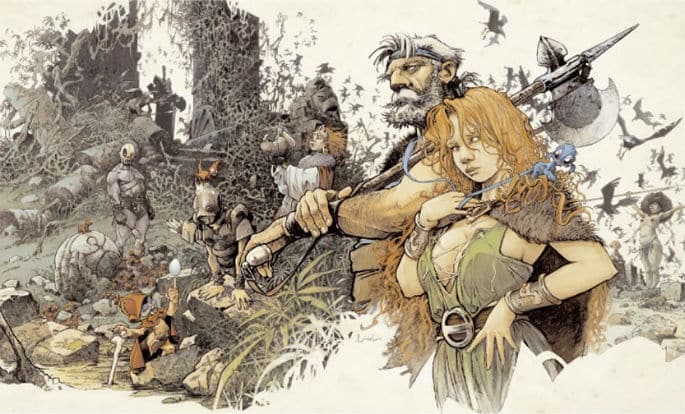
Como coleccionista, hubo un tiempo ya pasado en que autor que descubría, autor que tenía que completar a toda costa. Poco importaba en ese proceso la calidad de lo que el dibujante de turno (porque siempre eran dibujantes los objetos de mis ansias completistas) hubiera hecho o lo mucho que fuera necesario invertir en la adquisición de aquél número perdido que sólo eBay o, con el tiempo, Todocolección, tenía disponible a un precio muchas veces tan desorbitado que aún hoy me escandaliza pensar los dineros que malgasté en la adquisición de algún que otro “incunable”.
En la natural evolución de la ansiedad gracias a la madurez que da la edad, se terminaron quedando atrás ciertas espinitas clavadas en la forma de varios álbumes, tomos o incluso grapas (cuando todavía las compraba) que no hubo forma humana de encontrar o que, si ese era el caso, estaba a un precio prohibitivo incluso para lo que muchas veces estaba dispuesto a desembolsar. Una de estas espinitas era, obviamente, ‘La búsqueda del pájaro del tiempo’.
Para cuando descubrí la existencia de este trabajo de Loisel, ya había consumido con voracidad su ‘Peter Pan’ y, cual adicto con mono, necesitaba como fuera más dosis de la genialidad que el artista francés demostraba en las páginas de la que sin duda es su obra maestra. Una búsqueda en internet y los muchos comentarios de voces entendidas en este mundillo de los cómics no hacía más que devolver el mismo título, ‘La búsqueda del pájaro del tiempo’, una serie de cuatro álbumes de la colección Pandora que, publicados por Norma a mediados de los ochenta, eran objeto de adoración.
Ante la firme negativa de gastar lo que mucho aprovechado pretendía conseguir con su venta, abandoné toda esperanza de poder algún día leer la obra guionizada por Le Tendre, y así habría seguido, mitificando a este relato de fantasía, sino hubiera sido por la intercesión de la editorial barcelonesa y la providencial publicación de un lujoso volumen integral llamado, en principio, a llenar ese hueco en mi tebeoteca.
Y si digo en principio es porque, como suele pasar con esas películas que viste de pequeño y que, revisadas una vez siendo adulto, han perdido todo su encanto y dejan desnudas sus muchas vergüenzas, ‘La búsqueda del pájaro del tiempo’ ha demostrado, para mi apenar, no estar a la altura de lo que ella esperaban mis exacerbadas expectativas.
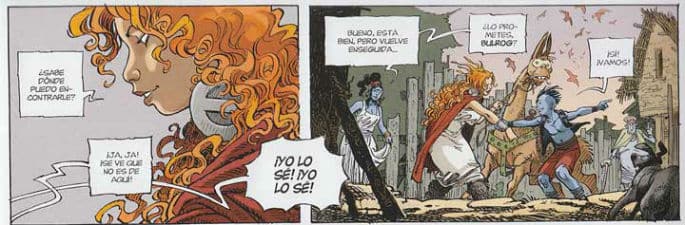
No me malinterpreten, no soy yo el que afirmará que la historia aquí contenida sea “mala” (un término que creo que pocas veces he llegado a aplicar a una lectura) o “infumable”, pero lo que es cierto es que, si bien el arte de Loisel, aunque en un estadio algo primitivo comparado con ‘Peter Pan’, responde a lo que había atisbado aquí y allá a lo largo de mis pesquisas sobre la obra, no ocurre así con la historia que teje Le Tendre, de una complejidad innecesaria que muchas veces se contradice con el espíritu ligero y el sentido del humor que impregna muchos pasajes del relato.
Queda así pues un regusto amargo aumentado, qué duda cabe, por unas expectativas que el paso de los años habían llevado al paroxismo. Quizás dentro de unos años, sabiendo lo que me voy a encontrar, vuelva a aproximarme a la lectura de ‘La búsqueda del pájaro del tiempo’, pero es más una posibilidad lejana que una certeza. Sólo el tiempo dirá.
Hai uns anos parecía algo impensable (polo menos aquí). Compartir coche con alguén que non coñeces de nada para aforrar gastos, deixar que un estraño entre e durma na túa casa, esteas ou non, ou incluso durmir ti no fogar dalgún descoñecido cando estás de viaxe por outro país. Pensaríamos na inseguridade, en que a xente é mala, en todos os perigos e a pouca necesidade de compartir cando hai para todos. Agora é todo diferente. Na era de Internet e das tecnoloxías, na que a conexión permanente leva a un estado de desconexión espiritual algo deprimente, o contacto persoal volve a estar no máis alto da lista. E se é con descoñecidos que nos poidan abrir a mente a novos mundos, moito mellor. Xa tiñamos Couchsurfing ou Airbnb para durmir e todas as plataformas tipo Blablacar para compartir coche. Pero iso non é todo. Tamén podes comer na casa de alguén ou recibir a algún descoñecido para o que cociñas con EatWith ou Feastly.
Ambas plataformas (non son as únicas deste tipo, cada vez hai máis) funcionan de forma similar. Se o que queres é comer na casa dalguén (pagando, tampouco hai que pasarse), non tes máis que buscar na cidade que queres que opcións hai, escoller chef e reservar. O día indicado á hora indicada, vas a esa casa e tes a cea esperando por ti. Ademais de comer comida caseira nun entorno diferente (é como cear fóra, pero sen a impersonalidade dun restaurante), coñecerás xente: aos anfitrións e quizais a outros comensais que tamén reservaran para ese día. E esta parte social é unha das máis valoradas polos usuarios.
Para os cociñeiros a cousa é similar, pero ao revés. Crean un perfil nas plataformas explicando que tipo de comidas ofrecen e a que prezos, e cando teñen dispoñibilidade. Cando alguén reserve para cear (ou comer) na súa casa, poden falar con eles e ver o seu perfil para ver se encaixan. Se os aceptan, non teñen máis que prepararse para o gran día e desfrutar de invitar a xente ao seu fogar e facerlles de comer. Como saber, como comensal, que a comida vai a estar ben? En EatWith, por exemplo, para poder ofrecer comidas tes que pasar a “proba” dalgún traballador da plataforma, que visitará o teu fogar e probará o que queres ofrecer para ver se está á altura.
A pregunta de sempre, neste mundo de desconfianza no que vivimos, é se este tipo de plataformas son seguras. Hai sempre un pequeno elemento de risco, claro, ao fin e ao cabo estás a entrar na casa dun descoñecido (ou a recibir a estraños no teu fogar), pero as plataformas funcionan con certas garantías de que, se fas as cousas ben, a experiencia será agradable. Os perfís dos usuarios, a entrevista previa, a proba á que someten aos potenciais anfitrións, etc. funcionan como, por poñer un exemplo, o sistema de referencias en Couchsurfing. Ben usado, o risco é case cero.
Queres probalo? O máis sinxelo é probar con EatWith, que levan xa un ano en España. No mapa da web non aparece que haxa ninguén ofrecendo comidas en Galicia, pero si hai outros lugares nos que parece que a idea está a ter éxito (en Barcelona, por exemplo, hai moita xente). Estaría ben que por aquí a cousa empezase a emerxer, non? Queridos lectores que sempre quixestes ser chefs ou que amades facer de anfitrións nos vosos fogares, xa sabes o que tedes que facer.
Marvel ha logrado, por fin, los derechos para reeditar el tan traido MarvelMan, perdón, MiracleMan. El Barbas sigue desconfiando pero mientras no le metan de por medio ha dicho que hagan lo que les de la gana. Y, efectivamente, eso han hecho. En lo primero que han tenido opción de meter mano;
Este cambio podría parecer innecesario, pacato e inútil. Pero todos sabemos que se hace por el impacto que podrái tener en los más jóvenes. Al fin y al cabo el resto de materiales de la Marvel están pensados con el mismo criterio de no ofrecer algo que pueda resultarles desagradable.
Y, como todo el mundo sabe, los niños no están preparados para aceptar la visión de algo tan inesperado, antinatural y complejo como es un culo.
En absoluto
Así que no podemos más que felicitar a Glycon, perdón, a Marvel y decirles dónde pueden meter la reedición arreglada, con absoluta coherencia.
Gilda Radner’s (almost) 1979 one-woman Broadway show “Gilda Radner: Live from New York” ran for 52 performances at the Winter Garden Theatre, the venue which would later host both Cats and Mama Mia. Don Novello (“Father Guido Sarducci”) and Paul Shaffer were also featured in the show.
Although Radner’s live show was a hit with New York audiences, Mike Nichols’ cinematic document of her performance, released as Gilda Live in theaters and on record didn’t fare as well. I had the album when I was a kid and to this day I think I still have most of it memorized. Here’s one of Gilda Live‘s highlights, “Let’s Talk Dirty to the Animals”:
Hey there, late twenty-somethings! Looking for a way to spend your wide-open weekend nights? Nothing else to do besides hit up that tired old bar scene that apparently none of your responsible, newly career-driven friends are into anymore? Then it's time for Late Twenties Game Night, the hot new craze of staying in and playing an unending series of board and card games that's sweeping every tastefully decorated townhouse in the nation!
That's right: fucking board and card games! That profoundly unsatisfying diversion you used to resort to at your grandmother's house because there was nothing else to do is now something in which your friends appear to take authentic joy! Not really your cup of tea? You don't get a vote! It's time to grow up! So pull up a chair and get ready for a lengthy evening of dice rolling, amassing little plastic tokens, and waiting your turn. It's Late Twenties Game Night! It's what you're doing from now on.
YOU WILL NEED:
• A bunch of fucking board and card games
• Four (4) friends, two (2) of whom are a married couple and the other two (2) of whom are an engaged couple
• That tepid, restless drunk that comes after drinking three (3) glasses of red wine over the course of four (4) hours
• The ability to lightheartedly reminisce about those "crazy times" that evidently drew to a close at the commencement of Late Twenties Game Night without plunging into an irretrievable depression [optional]
• One (1) of the hostess' purportedly "gorgeous" work friends, who said she might stop by later [highly optional]
INSTRUCTIONS:
• Late Twenties Game Night is recommended for ages 27+, or 24+ if you're really up the creek.
• Whenever there's a lull in "the action," meekly ask if anyone feels like going out after the next round of whatever it is that's happening.
• Be aware that your friends will almost certainly discuss how you "seem" after the evening breaks up and you go home.
• At all times during a given game, you should determine the scenario through which someone will win in the least amount of time possible and then silently root for that outcome.
SCORING:
• Every time you find yourself playing board and card games as a source of entertainment and social stimulation, subtract one evening from your finite life.
VARIATIONS
APPLES TO APPLES
The object of this game is to win "green apple" adjective cards by playing the "red apple" noun card that is the best match. For example, to win a green apple card labeled, "Tedious," you might play a red apple card labeled, "Apples to Apples."
CRANIUM
Remember when you were 17 and you saved up enough money from your landscaping job to buy that old 4×4? Remember that first long drive you took by yourself, the radio low and the warm night air sweeping in through the windows? Back then, you felt like you do could do everything. Not "anything"—everything. Anyway, you play this board game by rolling dice and answering questions and stuff.
SOME COMPLICATED FUCKING THING WITH A SACKFUL OF DICE AND CARDS AND TOKENS THAT TAKES TWO FUCKING HOURS TO EXPLAIN
Though your friends will be well-acquainted with this vast, labyrinthine board-card game combo, speaking in an argot that confuses and frustrates you, the rules can be a little tricky at first. Just give your undivided attention and you'll be up to speed before you know it in two fucking hours. In the meantime, you may notice that both bottles of wine have been drained; feel free to help yourself to the only beer in the host's fridge. It's been in there since that potluck they had in August and it's a Heineken.
UNO
You've got to be fucking kidding me.
THE GAME OF LIFE
During one of your recuperative trips to the restroom, you may realize that you have neither sent nor received a text message in eight days. A shelf above the toilet holds two $15 candles and a framed black-and-white photograph of a bathtub in a cornfield. See the bathroom mirror? Look at your life. Look at it.
Django Gold is a staff writer for The Onion. Following him on Twitter might just be the answer.
The Humor Section features a piece of original humor writing each week. To submit, send an email to Brian Boone.
En un mundo en que los tatuajes abundantes siguen teniendo tantos defensores como detractores, Bonnie Rotten se proclamó ayer mejor pornstar del año en los premios AVN 2014, los Oscars del porno. Lo cierto es que su físico podrá gustar o no, pero es indiscutible que le ha echado muchas ganas. En otras categorías, sin sorpresas: Manuel Ferrara vuelve a su trono (y ya van 6 galardones como mejor actor), Axel Braun repite como mejor director y Lisa Ann vuelve a erigirse como mejor MILF en detrimento de Veronica Avluv que, creemos, hizo más méritos.
Se da la circunstancia de que la mejor mamada de 2013 resulta que se hizo en 2012, igual que ha sucedido con el mejor gol del año (y probablemente de la historia), la chilena absurda de Ibrahimovic, pero desde luego ambos logros tienen una dificultad técnica enorme. La escena que se ha llevado el premio a la mejor escena de sexo oral en los AVN Awards 2014 es este primer tramo de Skin, el monográfico de Elegant Angel para Skin Diamond, donde la mulata se come hasta cinco pollas con una fruición y un sacrificio que rozan lo conmovedor.
The signature Stoya Fleshlight at the company's warehouse
Steve Shubin wants us to talk more about touching ourselves. The inventor of the world’s most successful sex toy, the Fleshlight, a polymer vagina housed inside something that looks a bit like a fat torch, said that it's a man's duty to masturbate frequently. As such, he's baffled as to why dildos have become an acceptable brunch conversation topic while male sex toys remain taboo.
But Steve hasn't always been so concerned with the ins and outs of sensual self-flagellation. One of jerking-off's wealthiest advocates was raised in a blue-collar house with 13 siblings. Football took him to college, which he followed with a brief stint in the Army before seven years with the Los Angeles SWAT team.
"Police work’s a great career, but it doesn’t pay much; you can’t look forward to buying anything significant, and I’ve always wanted to do that," he told me. "I’m one of 14 kids and I grew up having nothing. I was obsessed with having everything." So, aged 32, Steve left the force to open his own small business.
It wasn't until he was in his 40s that his tennis-pro wife's pregnancy pushed him toward the industry he now dominates.
"The doctor said that, because we were 40 years old, we had to be very careful and should probably not have intercourse for the duration of the pregnancy," he explained. "And we were at the beginning of the pregnancy. So, for me, that was a problem. Tell me I can’t get laid for nine months; that’s a problem for me."
While out to dinner to celebrate the pregnancy, Steve turned to his wife Kathy and asked, "Tell me, would you think I was a total pervert if I told you that, in your sexual absence, I would use something to replace you sexually? Would you think I’d be a total creep?"
Steve Shubin, founder of Fleshlight
Initially, they both laughed at the image of a six-foot-three, 14-stone tree trunk of a man getting intimate with a blow-up doll. But, on the drive home, they expanded on the idea. "We kind of thought, 'Well, wait a minute. What if we had a problem that doesn’t go away? Whether it’s a physical handicap or a psychological handicap—things that would never afford me a normal sex life,'" Steve recounted. "And we started thinking this way because there was a much bigger opportunity than my current, very narrow, issue."
With a primary investment of $50,000, they quickly founded the company that would eventually become Fleshlight. Kathy’s one requirement was that whatever they produced had to be tasteful ("Something artistic that wasn’t some disgusting-looking, adultish garbage product"). A little research showed that there was nothing on the market resembling competition.
By 1995, they had come up with something worth patenting. The first patent application was for sexually useable body portions, referred to, romantically, as "mannequins with sexual application." The original patented mannequins, according to Steve, were "perfectly anatomically sculpted, with probably a better body than you could get if you lived in a gym".
Fleshlight is a family business, and Steve's teenage sons were drafted in for the initial brainstorming session. The Shubins gathered around the dinner table for a week, cutting out their favorite body parts from skin mags, until they came up with the prototype.
Bent over doggy style—cutting out extraneous filler, like torsos and faces—the mannequins covered everything between the knees and ribs. The "orifice" was removable for easy cleaning and was manufactured out of a patented mix of thermo-plastics and oils designed to recreate the sensation of human skin.
A cross-section of the Fleshlight Vstroker
In his own words, Shubin was a "mad scientist" in his pursuit of the ultimate synthetic fuck buddy, "Because – as a man, you know this: if something doesn’t feel real, we’re not going to be excited about the physical contact with it. So that was a first priority."
Two years and more than a quarter of a million dollars into the project, not a single mannequin had been sold. It was around this time that an old friend and successful businessman, Bob, came to visit Steve and Kathy’s office in California. He was impressed with what he saw. As Steve dropped him off at the airport, Bob asked if Steve could send one of the vagina inserts to his house. Shubin offered to ship him an entire body, but Bob was reluctant: "Oh, no, no, no. Please don’t do that. I’ve got children," he said. "I could never bring something like that into my house."
"Driving back from the airport, I thought, My gosh, if I can’t give a product away to a friend, how can I ever expect to sell one of these?" Steve recalled. It was then he realized that perhaps size was a much larger issue than he'd first assumed.
Between the airport and his office, he began to redesign the product in his mind. "I knew that it would have to be portable; it had to be small; it had to be able to fit easily into the hand so that it could facilitate the use of the product. I thought, Guys are into tools. And what I had settled on was a flashlight, so I decided to call it Fleshlight.
"As soon as I got back to my office I had my guys working on that different concept," Steve told me. "I immediately contacted my attorney and began working on the copyright stuff and the protections on the name. I bought the URL immediately and started the business end of it right away as we were developing the product."
Now that he had a viable product, the next challenge was figuring out how to get it into consumers’ homes. It was 1997 and the internet was still in its relative infancy. "It wasn’t secure; nobody trusted it. We were intrigued by it, but never would anybody use their credit card to make a purchase on it," Steve said.
The Fleshlight warehouse
Regardless of the challenges, Steve was sure that the Fleshlight would be "a rockstar instant success", and the production line was knocking out 1,200 units a day to cope with the expected demand. The Shubins were $2 million into the Fleshlight before a single unit had been shipped.
Four years later and lot of lessons learned, their original investment had been recouped. Fleshlight went on to become a multi-million dollar company and the best-selling sex toy on the market.
However, there are still obstacles to overcome: society isn't willing to normalize the Fleshlight in the same way it has the dildo. Steve said that, 15 years ago, shows like Sex and the City and Oprah opened a conversation about vibrators that has failed to materialize around male masturbation.
Perhaps the problem is that, for all our liberal pretences, talking about touching yourself is still taboo. We may have moved on from the 1940s, when sexologist Alfred Kinsey discovered that 40 percent of young Americans believed that masturbation caused insanity, but you're not gonna see Phillip Schofield and Richard Bacon discussing the relative merits of various fake vaginas on This Morning any time soon.
When Fleshlight approached Maxim in search of a mainstream publication to carry their ads, they were told their money was no good: no one wants their brand to be associated with jerking off. However, Shubin reckons this was a gender-based issue; that women are never too thrilled to hear that, partnered or otherwise, men enjoy and need to masturbate. Meaning one of the reasons Maxim refused to carry Fleshlight's ads, according to Steve, was out of the fear that any hint of male masturbation may upset female readers.
He continued, reasoning that men just need more orgasms than women, and suggested women can sometimes view a man's right hand as competition. "If you tell your wife, 'Oh, by the way, sweetheart, we were together eight times last month, but I actually had 30 orgasms,' women feel cheated," he said. "They feel like you don’t love them. They feel like they’re losing you."
The first time Steve brought a Fleshlight prototype home, he said that his sex life improved vastly. "What’s going on?" he asked Kathy. "You’re just hitting this new wave of sexuality. I mean, you’re killing me." To which she replied, "I just don’t want you to have enough energy to use that Fleshlight."
A Fleshlight shower mount, so you can use your vagina-in-a-can in the shower
Shubin’s solution is education of both sexes. Men need to be taught to be unashamed of their need to "maintain their biology, their civility" through masturbation. Women need to understand that "sexual gratification for men is not an emotional thing; it has nothing to do with love and it has nothing to do with the wife. It is immediate and spontaneous, and once I’m done with whatever I’m doing, I don’t think about it any more, because I’m gone that quickly."
However, education isn't just important to boost sales; Shubin’s on a mission to help men behave better in a society that he says is incompatible with their biology, "The domestication of man, while it’s been great for civility, has not been kind to the biological need to function as a man," he said. "Society doesn’t allow us to do what we might have done a million years ago. We cannot chase and take the sexual things that we may have done hundreds of thousands of years ago, and that’s an awesome thing. But we still need to function as biological men."
He continued: "But the responsibility to do that is not on women. They’re not on this planet to satisfy our sexual needs; responsible men do this themselves. And I know that if I don’t manage my sexuality, I would find myself becoming angry with my wife because she wasn’t as sexually active as I needed her to be. And I had to grow up and learn to function. She is not my escort; she is not my sexual tool. My sexual relation with my wife is based on two people being intimate and developing a life together. Any sexual needs I have beyond that are my responsibility to maintain."
And this re-education isn't only targeting personal relationships; Shubin has much grander plans, hoping to introduce Fleshlight to the Indian market. "In India right now, we know they have a big problem with sexuality and male performance and the abuse of women," he said. "And I certainly hope it’s a very small percentage of people, but there is an education process that needs to happen there, and they have a desperate need for an alternative product and the psychology that would allow them to use a sexual product."
The Asian market has proven particularly hard for Fleshlight to crack. "They don't like you to ship anything into their countries with the likeness of a human orifice," Steve explained. So, to get around that minor hiccup, the company has started creating products that don't have a likeness to any piece of human anatomy. They’re marketed as marital aids and shipped as "biological maintenance," which is the other half of Steve’s crusade.
The trouble with penises, Steve explained, is that, unlike most muscles, they’re not attached to a bone, meaning they receive little casual exercise. As a result, "If you’re not filling it up with blood and stretching it out and using it, it will atrophy," he cautioned. "They do shrink." Of course, a clogged prostate—and the risk of cancer that comes with it—is the other danger for men who refuse to regularly clean their pipes.
Asia may not have been kind to Fleshlight financially—on top of the import restrictions, there is the Japanese patenting process that pushed their vagina-in-a-can design into the public domain—but that hasn't deterred them. Somewhat surprisingly, they're using the vast financial and technical resources at their disposal to help the continent’s elephant population, which is plagued by land mines left over from decades of tension and conflict in countries like Thailand and Burma.
The front entrance to the Fleshlight offices
"It’s very common to find elephants that have a portion of their leg blown off," Steve told me. "And the need for prosthetics is what we’re working on right now. We have an R&D lab in New Mexico that’s managed by one of my sons, and professional sculptors are working on the mechanics of giving the elephants new legs as we speak."
Other philanthropic ventures have included providing prosthetic breasts for mastectomy patients and modernizing the antiquated methods currently used for extracting semen from stud racehorses.
While this is all highly commendable, it doesn't mean the company hasn't come in for criticism in the past. And Shubin understands that you don’t get to be a multi-million dollar sex-toy manufacturer without making a few enemies along the way.
For example, it doesn’t take much googling before you start coming across disgruntled ex-employees complaining of capricious or flat-out incompetent management. "Utter and total lack of management with more between their ears than pocket lint" is one example I put to Steve. His response, "If anyone was let go, I can promise you this: they were not good at their jobs—they sucked."
Some criticism has been less vicious. Professionally, Shubin has always been careful not to court conversations with religion, and the only one he’s consciously been party to resembled a piece of performance art more than a legitimate dispute. In the company’s early days, an employee noticed someone burying something in the ground in front of the office. As he got closer he realized the stranger was planting a row of tiny crosses. When he asked the stranger what he was doing, the reply was simply, "We’re bringing Christ to you." With that, the stranger fled.
The company knew exactly which church the man had come from, but chose not to make a big deal of it. Shubin explained, "We weren’t offended. We didn’t argue with them, and it’s really never been a problem because I never broach the subjects of sexuality and religion." He may be on a crusade to bring masturbation to the mainstream, but he’s not interested in getting into a knife fight with the church.
For now, Steve and his family are going to keep encouraging us all to talk about our physical relationships with ourselves. They’ve already invested in a web TV sitcom, The Fleshlife, and the heart of the company's manifesto now revolves around the duty to normalize male masturbation. But they're aware it will take more than just a sex toy manufacturer talking about it to change the public’s attitude. "It’s something that we don’t talk about," Steve started, "but it’s a needed discussion, because people need to understand that, in order for us to be civil, we need to maintain our bodies."
Hace unos días me crucé con una entrevista al co-fundador de Periodismo Humano, Juanlu Sánchez, en la que hacía referencia a que, a la hora de leer noticias en los diarios, el lector debe hacerlo con espíritu crítico, hambre por saber más sobre el tema y conciencia de que debe contrastar la información. En un mundo ideal, salvando las distancias, los oyentes deberían acercarse a los mecanismos que existen ahora para descubrir música de una forma parecida.
Entre lo mecánico y frío de las radios temáticas o las etiquetas y algo tan tradicional como leer sobre música, se coloca una aplicación web que ha creado el mismo equipo que puso en marcha Every Noise At Once: Genre A Day. Con los 800 estilos que tienen registrados, aquí presentan uno al día con una breve descripción sacada de la wikipedia, artistas destacados y una lista de doce canciones representativas con reproductor de Rdio, que puedes guardar si eres usuario.
Es lo suficientemente esquemático para que funcione como llamada de atención para los pocos dados a detenerse en los detalles sobre lo que escuchan. Y, al mismo tiempo, contiene lo justo para que los que estamos todo el rato devorando y leyendo sobre todo tipo de música descubramos cosas con ella. Cada día ponen en su portada un nuevo estilo, pero puedes navegar por su calendario y ver los pasados y los que sacarán en los próximos meses.
Fox News outdid itself this month — by informally declaring war on feminism.
Australian author, Nick Adams was the guest for this segment and he basically said that feminism (and for some reason, the government) is purposely emasculating men. And apparently, this isn’t happening in just the United States!
Even in Australia, we’ve gone from wrestling with crocodiles to wrestling with lattes.
Really. Play up your national stereotype, buddy.
And Elisabeth Hasselbeck (why is she there?) asked this incredibly ridiculous question:
Do you see this affecting national security? How a nation operates in terms of being a strong presence globally?
Adams’ answer?
Absolutely, without a doubt. I think it has wide-ranging implications. Weeps and wussies deliver mediocrity. And men win. And what America’s always been about is winning. So I think it’s pivotal to the health of the country.
2004-2014: 10 anos de associativismo cultural, 10 anos de Gentalha.
Vem celebrá-lo!
O nosso programa de celebraçons será:
quinta 30 janeiro
21h00
Noite de Magia com o Mago Teto
Apresentaçom do Baralho Suevo
sexta 31 de janeiro
FOLIADA DÉZIMO ANIVERSÁRIO DA GENTALHA
Sexta feira 31 de xaneiro a partir das 21h30
No ano 2004 pugemos a andar um projeto cultural que, entre outras cousas, queria espalhar e pôr em valor a música tradicional. Queremos celebrá-lo lembrando estes 10 anos com a música de 10 grupos que nalgum momento da andaina estivérom connosco!!
Quarteto da Gentalha
Triroliro Regueifeiros
Os Fondãos do Pìfaro
Os Estalotes
Os de Abaixo
As Bouba
Carapaus
Ariel Ninas
A Requinta da Amaia
Verdegaios
e como sempre… contigo! Trai o teu instrumento e soma-te à festa!!!!
President Obama gave an interview to The New Yorker for editor David Remnick’s monster profile in the January 27 issue. If you’ve got nothing else to do today you can read the whole thing here—he talks about all manner of life in the second term, but Remnick drew out a particularly juicy answer on marijuana legalization.
“I don’t think it is more dangerous than alcohol,” the president says. “As has been well documented, I smoked pot as a kid, and I view it as a bad habit and a vice, not very different from the cigarettes that I smoked as a young person up through a big chunk of my adult life.”
A recent poll found the majority of Americans think pot is less dangerous than alcohol. Obama concurs.
“Is it less dangerous?” Remnick asks.
“Less dangerous, he said, ‘in terms of its impact on the individual consumer.’”
Obama continues to discuss the recent state laws to legalize marijuana for recreational use:
He said, “we should not be locking up kids or individual users for long stretches of jail time when some of the folks who are writing those laws have probably done the same thing.” Accordingly, he said of the legalization of marijuana in Colorado and Washington that “it’s important for it to go forward because it’s important for society not to have a situation in which a large portion of people have at one time or another broken the law and only a select few get punished.”
Remnick describes Obama as “less eager to evolve with any dispatch” than he was on marriage equality, and no wonder—in his first term the Obama Administration proved more aggressive in its war on marijuana than the Bush Administration. But with just two states having legalized marijuana recreationally and Washington DC now considering it, Obama does seem willing to point out the hypocrisy of sending the underprivileged to jail en masse for using a substance that nearly everyone, including our legislators, has used. Especially one which has been proven no more harmful than the alcohol—less harmful if you ask the president.
Or maybe he just sees the writing on the wall—once momentum starts building on an issue state by state, you don’t want to be on the wrong side of history. The president seems to be coming out as a hesitant advocate for legalization. It’s times like these that the wisdom of states’ rights shows itself loud and clear.

 These books are often described as epic fantasy, but they’re cleverer than that. Most epic fantasies are quests. This is a different kind of variation on a theme from Tolkien. In those terms, it’s as if when Sauron started to rise again in Middle-earth, Gondor was in the middle of the Wars of the Roses. They’re about human-scale dynastic squabbles on the edge of something wider and darker and inhumanly dangerous. The world is wonderful, with a convincing history leading to the present situation. It has good names (Winterfell, Greyjoy, Tyrion, Eddard), great characters who are very different from each other and are never cliches—and Martin isn’t afraid to kill them, nobody is safe in this world because of being the author’s darling. There are mysteries that you can trust will be resolved, everything fits together, everything feels real and solid and full of detail.


 La escritora feminista Andrea Dworkin ha señalado las distintas estrategias que un hombre usa para obtener sexo de una mujer (es decir, de intercambiar segmentos de ADN): Puede robarlo (violación), convencerla de que se lo regale (seducción), alquilarlo (prostitución), contratarlo a largo plazo (el matrimonio en la mayoría de las sociedades).
  Hasta ahora hemos hablado de los intereses del violador y del presunto esposo de la mujer, pero no hemos de olvidar a la víctima, la mujer. ¿Qué papel juega evolutivamente en contexto de una violación?



































 ‘s highlights, “Let’s Talk Dirty to the Animals”:
 Hey there, late twenty-somethings! Looking for a way to spend your wide-open weekend nights? Nothing else to do besides hit up that tired old bar scene that apparently none of your responsible, newly career-driven friends are into anymore? Then it's time for Late Twenties Game Night, the hot new craze of staying in and playing an unending series of board and card games that's sweeping every tastefully decorated townhouse in the nation!



+11.46.02.png)