


Photo by Rick


Getting people into your favorite TV show can be a nightmare — there's often so much history there, and if they see the wrong episode, they'll be turned off for years. So what's the absolute best episode of your favorite TV show to show people and get them hooked?


We previously told you that a lot of popular characters from the Game of Thrones novels were being dropped from the show and would never make an appearance - since then, more information has come out about how exactly the upcoming season 5 of Game of Thrones will differ from the books. While a lot of plotlines are remaining mostly the same, several are going to differ in pretty major ways - here are just a few (that we know of):
Spoiler alert for...well, if you read the books, these are kind of spoilers because they're different...but you still know the basic beats the story will be going through. And if you haven't read the books, these are...well, they're still spoiler-y, because they indicate what the plotlines of the upcoming season will be, but the article's mostly about how these future plotlines different from the equivalent plotlines in the books, which you haven't read, and thus won't really understand. Hmmm.
Well, let's just say, spoilers ahead.

North Korean leader Kim Jong-un and some of his generals. Photo via Flickr user Michael Donovan
As soon as Kim Jong-un re-emerged from wherever he was this month—plump, smiling, with added cane—the question was raised whether it was all real. Certainly, images of Kim limping around the Wisong Scientists Residential District like a freshly neutered puppy were plentiful, and he apparently looked 22 pounds lighter than he did in May.
There were suggestions, even, that the Jong-un on screen was a political decoy, a doppelganger rolled out during times of crisis like when the Dear Leader is so heavy he fractures his ankles. That sort of delicious conspiracy that seems to go hand-in-hand with North Korea, like aliens in Area 51 or groups of wealthy, hooded lizard men at the Bilderberg Conference.
Adam Cathcart’s North Korea Misinformation Bingo sums up the great clusterfuck of assumptions regarding North Korea in a series of over 20 bulletpoints, as well as parodying the nature of the West’s obsession with the country. Without any facts—or any way to legitimately fact check—someone writing about North Korea can spin whatever shit they want.
Cathcart gets at a very crucial argument concerning how the Western media machine profligates (and encourages) hilarious memes and misdirection about North Korea without ever engaging with the country itself. This is why Jong-un’s recent disappearance has served only to increase the rate of stories about him, because without our great star, how can the show go on?
Quirky narratives aside, the country's reality is grim. The UN has pulled the plug on food aid and China. practically the North’s sole trade partner, is extorting them for its own goods while underpaying for the DPRK’s. Even the nation's greatest (or only) ally is fucking them over.
But such is the slippery nature of North Korea (an idea fostered both by the country and the international press) that fiction can be quite easily passed off as fact. Back in 2008, Waseda University professor Toshimitsu Shigemura published The True Character of Kim Jong-il, arguing that the Beloved Father died in 2003 and, to ensure political stability, was replaced by a doppelganger. Satellite imagery, he argues, reveals this new Kim was at least 2.5 centimeters taller than the Supreme Leader.
This is where the doppelganger theory really began: Eager to profligate the idea of North Korea being the loony bin of nations, media outlets like the Telegraph gave Shigemura a nice platform from which to preach his theories.
He later argued at the World Economic Forum in Tianjin, China, that computer analysis of Kim Jong-il’s voice revealed it was a different man (not, of course, the same man simply hungover or suffering from a cold). The logical culmination of all this was that Bill Clinton met a double while trying to negotiate the release of three American prisoners.

A wall painting of Kim II-sung and Kim Jong-iI. Photo via Flickr user yeowatzup
We're told that Kim Jong-il maybe had a stroke in 2008 but then completed 122 separate visits to field sites the following year. We are to assume that either the stroke was a lie or the visits were; or, perhaps more salaciously, that Kim had body doubles doing his resplendent inspections for him. It's all strangely close to some speculative celebrity gossip column.
Shigemura’s argument is not where it gets messy, it’s his sources. It's certainly feasible that Kim Jong-il felt the necessity to have doubles for safety—there have been a few reports of assassination attempts, after all. It's the fact that Shigemura was told by a North Korean agent (who obviously could not be named or traced) that Kim Jong-il had "at least four" doubles—and that, whenever they're rolled out, a high-ranking Pyongyang official is seen behind him, metaphorically pulling the strings—that's an issue.
There's a high degree of gullibility where North Korea is concerned. The same stories are circulated as new again and again. Eight years ago, for instance, "an official" told the Yonhap News Agency that Kim Jong-il had at least two identical decoys who stood in for him during public events. They apparently underwent plastic surgery, were trained how to speak like him and, crucially, were sent out when his health was bad. "They are the spitting image of Kim—the same age, same height and with the same bouffant hairstyle and pot belly," the official said.
But where were these doubles Kim Jong-il disappeared in 2003? Where were they when he disappeared again in 2008? When Kim Jong-un disappeared for a month this year?
It doesn’t take a genius to realize that this is almost certainly bullshit, designed to undermine the country's leadership rather than tackle the realities of its political system. It’s not obstinate to suggest that—if the rumors were true—times of ill health are exactly when a body double should be rolled out. Instead, we got absolutely none because they probably don’t exist. But we still believe.
Rumors about body doubles have abounded throughout history. Hitler had Gustav Weler. Winston Churchill employed Norman Shelley to read his speeches on the radio. Except neither did, really—it’s all unconfirmed conjecture. Joe R. Reeder reckoned Osama bin Laden had a cave's worth of fake Osamas ready to go.
Back in 2008, when Kim Jong-il had suffered a stroke and disappeared from view, Barbara Demick—author of Nothing to Envy—wrote about the state of Pyongyang on the ground. Nobody, she reported, had heard of the Dear Leader’s health issues. The preservation of a healthy ruler is fundamental to smooth operations in Pyongyang, after all.
I spoke to Demick about the possibility of political decoys in North Korea, and she said that she "wasn’t sure" if they were used.
"At least not widely used," she continued. "I believe if there were, Kim Jong-un may not have disappeared for 40 days. The North Korean government most likely didn't like the optics of a limping leader, especially such a young one. There were, by the way, a number of Kim Jong-il impersonators in South Korea. It was a popular party trick."

Photo via Flickr user petersnoopy
With the nature of North Korea being what it is, it’s no surprise that one of the best pieces of writing on the country is Adam Johnson’s novel The Orphan Master’s Son. The book focuses entirely on the shifting nature of North Korea’s government, with characters changing identities and names simply because of the clothes they wear. It’s the perfect facsimile of our perception of the country, but not the country itself.
When I spoke to Johnson about the possibility of his novel being close to truth, he agreed with Demick. "I’m not aware of any leadership lookalikes for leadership figures, as they were for Saddam [Hussein]," he said.
It all comes from a misunderstanding of what a political decoy is used for—to take bullets, mostly, and to foster the idea of omnipresence. In 2009, Barack Obama was reported to be considering the use of a body double due to the sheer number of threats he received on his life. Weirdly, Ilham Anas, the preeminent lookalike, didn’t want the job because of the whole potentially getting shot thing.
Say what you will about North Korea’s policy towards food, nuclear weapons, or waterslides, but its citizens don’t often shoot their leader. The same wasn't true in Iraq, where Hussein certainly had legitimate reason to be worried. In September of 2002, Dr. Dieter Buhmann of Homberg University announced on German television that he'd studied hundreds of photographs of Saddam Hussein and concluded that the former-president employed at least three political decoys.
This neatly cohered with the pervading opinion that Saddam was a nutcase tyrant who was destabilizing the region. Saddam, eager to profligate the idea of his omnipresence in Iraq, was reported to have bragged about how many doubles he had. Later, his ex-physician claimed that the reports were untrue. But Saddam's use of political decoys is widely believed to be true, and it is certainly the most likely modern scenario.
For a country not unfamiliar with using “fake villages”—like Kijong-dong in the DMZ, reportedly placed there to attract South Korean defectors with visions of economic success—the idea of North Korea’s leaders having casts of doppelgangers to keep up appearances is exciting. But North Korea isn’t exciting. It’s dreadful.
The Leader (be he Dear, Supreme or even Almighty) is broadcast everywhere, all the time; the state doesn’t need physical dummies when the idea of its leadership is more permanent than any physical presence. The government is relatively stable, with few insurgent groups of any real strength.
There is a reason, at least, that the only certified, 100-percent-confirmed political decoys in history were British soldiers M.E. Clifton James and Tex Banwell, who both pretended to be General Montgomery during World War II for Operation Copperhead. That was over 60 years ago, before facial recognition software and satellite imagery could tell whether a man's eyes look slightly further apart than usual from over 20,000 miles away.
The aim of Operation Copperhead was to convince German troops that an invasion of Southern France was incoming, but even then it was fundamentally flawed, as Banwell was far taller than Montgomery and James was a drunk. Banwell was captured and sent to Auschwitz, while James was packaged off to a hotel for the remainder of the war with nothing but the drink for company.

Charlie Chaplin in 1916. Photo via Wikimedia Commons
There’s a great story involving Charlie Chaplin that's reminiscent of how we treat North Korea now. It began in August of 1920, when Lord Desborough, drunk and filled with good humor, decided to tell an anecdote about Charlie Chaplin. Chaplin, Desborough maintained, had entered into a Charlie Chaplin lookalike competition and come in 20th, "a most frightful failure."
This story—like practically every tale involving doubles and doppelgangers—is complete hearsay, but it didn't stop the British, Singaporean, American, and Australian press reporting it as true. Nowadays, it’s essential to the Chaplin mythos, just as creepy theme parks, murdered pop stars, and landing a man on the sun are crucial to the DPRK’s.
Attempting to tackle the source of misinformation around North Korea brings you up against South Korea’s media, whose information and intent about their neighbor is not necessarily always that truthful. There's a decent body of evidence to suggest their press is ruled by authoritarian policies, with the latest fall-out involving Japanese journalist Tatsuya Kato being banned from leaving South Korea for defaming Park Guen-hye. The rules are simple: Do not offend the leader of South Korea, and anything that makes North Korea look bad makes South Korea look good.
The media has a track record of falling for sexy stories about North Korea originating from the region. Two years ago, everyone thought Kim Jong-un was killed in Beijing thanks to a rumor on Chinese social media site Weibo. The ridiculous story of the 120 dogs that were fed the remains of Kim Jong-un’s uncle originated from Hong Kong paper Wen Wei Po and is about as true as the bit about Kim Jong-il once hitting 11 holes in one on the golf course. The rumors that an old guard of political figures founded by Kim Jong-il and led by Pyong So had stopped taking orders from Kim Jong-un is contradicted by the evidence of Kim Jong-il’s personal bodyguard now protecting his son. And so on and so forth.
James Hoare, who served as British Chargé d’Affairs in Pyongyang while Kim Jong-il was in power, describes the possibility of political decoys existing in North Korea as "conspiracy stuff."
"The only lookalike I heard of was an actor who played Kim Il-sung back in the guerrilla days," he said. "I'd imagine, actually, that’s still around for film and TV purposes. I’ve never heard of a Kim Jong-il lookalike. Since he made relatively few public appearances compared to his father and appeared in no films, I would imagine there was no need. But he would have been pretty easy to do—his hairstyle could be seen on many men in the country. Add dark glasses and an anorak and you'd be there."
Reading reports on Kim Jong-il’s last high-profile disappearance is an uncanny adventure into the familiar, like Groundhog Day, will Bill Murray playing whichever Kim is in power at whatever time. According to the South Korean press, Kim Jong-un and Kim Jong-il suffered from precisely the same issues before their disappearances in 2014 and 2003, respectively: diabetes, gout, and obesity. They also disappeared from view in September for almost exactly the same amount of time (40 days for the Dear Leader, 42 for the Supreme).
It’s time to move on from the regime and assess the systems in place, and time to approach the realities of life in North Korea rather than the fiction. It's time, in other words, to get some new material.
Follow David Whelan on Twitter.
This week author Ian McEwan expressed his love of short novels, saying "very few [long] novels earn their length." Certainly it seems like a novel has to be a minimum of 500 pages to win a major literary award these days, and many genre novels have ballooned to absurd sizes.
I love a good tome, but like McEwan many of my favorite novels are sharpened little gems. It's immensely satisfying to finish a book in a single day, so in the spirit of celebrating quick reads here are some of my favorite short novels. I've tried to avoid the most obvious titles that are regularly assigned in school (The Stranger, Heart of Darkness, Mrs Dalloway, Of Mice and Men, Frankenstein, The Crying of Lot 49, etc.). Hopefully you'll find some titles here you haven't read before.

Con un título como éste cualquiera diría que vas provocando.
Naturalmente es algo premeditado. Una de las principales características del hipster consiste precisamente en etiquetar a todo el mundo: “mira ese piesnegros, ese bakala, esa choni…”. Así que pensé en hacerles probar su propia medicina y ver qué les parece. El germen de todo ese rollo condescendiente arraigó con Ruta Destroy, Don Julio y Los Chocolas o Mi novio es bakala de Meteosat; pero tiene una requetevuelta. No es lo mismo ir al Sònar que al Monegros, al Razzmataz que a la Fabrik. Aunque los DJs sean los mismos: se trata de una cuestión de estatus, de etiquetas.
¿Te ha sorprendido que la gente se sintiera tan ofendida incluso antes de leer el libro?
La reacción está siendo más o menos la que me esperaba. Vivimos en una sociedad muy individualista y cuando se plantea un debate a nivel colectivo lo normal es que haya gente que se ponga a la defensiva. Solo tienes que ver la que se lió con Resituación de Nacho Vegas y con el artículo sobre Machismo Gafapasta en Diagonal. O la polémica del concierto de No Age en la sala Apolo de Barcelona, cuando aprovecharon un evento patrocinado por Converse para denunciar las condiciones de explotación laboral en el Tercer Mundo.
Simpatizo con el gesto, pero la actitud de No Age me parece cada vez más contradictoria. Para promocionar su último disco, Sub Pop ofertaba un “pack veraniego” que incluía un balón de playa y una camiseta imitando la portada del Bleach de Nirvana.
Todos los hipsters que hemos tirado a la izquierda tenemos ese tipo de contradicciones. Yo las tengo, Nacho Vegas las tiene y Javier Gallego de Carne Cruda, que empezó siendo un programa cultural y ahora tiene una carga mucho más política. Pero lo importante es que los problemas que No Age están denunciando son reales y nos afectan a todos en nuestra vida diaria…

¿Andamos más escasos de autocrítica o posicionamiento?
Lo único que resulta evidente es la incomodidad que todavía nos genera el enfoque político. Al ponernos un problema político delante como la explotación laboral o el racismo, nos damos cuenta de que realmente no somos tan modernos como aparentamos. Cuando les pedí su opinión sobre el artículo del machismo, muchas personas relacionadas con el indie me contestaron: “es que odio que me obliguen a posicionarme”. Lo que tememos es darnos cuenta de que en el fondo somos bastante rancios, porque supondría dejar de vernos a nosotros mismos como personas vanguardistas y tolerantes.
La mayoría de comentarios que he leído en las redes sociales parten de declaraciones tuyas, en algunos casos malinterpretadas o sacadas fuera de contexto.
Hace poco leí uno que decía que es lógico que la gente se enfade, porque a nadie le gusta que le digan que su vida es una farsa. Pero esa no es mi intención con este libro. Me parece preocupante que confundamos nuestros gustos con nuestra vida, cuando son dos cosas completamente diferentes. En ese sentido el indie es muy endogámico: si alguien ataca la música que me gusta me está atacando a mí.
Es como el hincha que identifica emocionalmente con su equipo por lo que éste representa: su barrio, su ciudad… En el caso del indie, ¿se trata de un conflicto de identidad o de sentido de pertenencia?
Muchos indies de mi generación nos fuimos de viaje de estudios y volvimos de Londres chapurreando inglés, con las últimas novedades discográficas y el NME debajo del brazo. Te sentías el más molón de la clase y eso te proporcionaba una sensación de autoestima que a la larga resultó muy dañina. Cuando mis compañeros me ponían a Kortatu o Eskorbuto me gustaban, pero formaban parte de una realidad, completamente ajena a la mí, que no me terminaba de enganchar. Esa aspiración de España, que había sido un país muy asilado, a conectarse con Londres, con Nueva York… Con esto no quiero decir que te vuelvas un idiota por escuchar indie, sino señalar la existencia de ciertas dinámicas sociales que te arrastran y que si no pones de tu parte puedes caer en unos valores que con la edad interpreto que son muy de derechas.
Tiene gracia que lo menciones, porque en Facebook dicen que lo último que necesita la música española es que alguien como tú se convierta en el Vestrynge del indie.
¡Me encanta la metáfora de Vestrynge! Es como reconocer que el indie es Alianza Popular (risas).
Yo creo que todos albergamos un hipster en nuestro interior. Nuestra necesidad de reafirmarnos es lo que lo hace aflorar más de la cuenta, pero a nadie le gusta reconocerlo. Es mejor pensar que el hipster es el otro.
Totalmente de acuerdo. Durante muchos años yo fui un hipster, por dentro y por fuera. Pero con el tiempo me estoy intentando desintoxicar…
Otros periodistas como Xavi Sancho y Óscar Broc, han tratado el mismo tema sin generar tantos reproches. Tal vez sea porque generan una mayor complicidad con el lector…
Yo me río con los cómics de Moderna de pueblo, pero su sentido del humor funciona a partir de cierto distanciamiento. Los artículos de Xavi Sancho y Óscar Broc tienen cosas muy valiosas, que te hacen pensar; pero no creo que lo que busquen sea hacer una crítica de fondo. El hipsterismo suele abordarse como un problema de madurez, cuando en realidad se trata de algo más complejo. Lleva implícito una serie de prejuicios que vamos asumiendo inconscientemente.
Entonces, ¿es ironía o hipocresía? ¿Crees que la reflexión se ha visto afectada por un exceso de condescendencia?
Lo que yo creo es que se ha producido un cambio de valores muy significativo. El cinismo nos ha ido erosionando poco a poco y ahora mismo no hay ninguna disonancia con los valores de mercado. En los noventa “venderse” tenía unas connotaciones muy negativas, pero en la actualidad lo vemos como algo natural. Ya no es algo que haya que evitar, sino a lo que todos debemos aspirar.
Si das un paseo por Madrid te encontrarás el Teatro Häagen-Dazs (antiguo Teatro Calderón) el Cofidis (Teatro Alcázar). ¿Ocupa la publicidad un espacio predominante en la crisis cultural?
Lo preocupante no es que esté todo patrocinado, si no que parece que no existan otras alternativa. En los años de la contracultura y el hippismo la gente hizo experimentos con las comunas pero, por ejemplo, una revista de tendencias nunca será una cooperativa. Ya ni siquiera existe la clásica tensión entre el jefe que gana mucho y los redactores que ganan poco. La modernidad los pone a todos en el mismo bando, contra la gente que no es moderna. A día de hoy yo tengo más problemas en común con un reponedor de supermercado que con mi jefe que, en cierta manera y por el sistema, me está explotando. La modernidad disuelve los conflictos políticos de una manera muy artificial.
El último concierto de Morrissey en el Palacio de los Deportes de Madrid (y que ahora se llama Barclays Card Center) coincidió con el sacrificio del perro Excalibur. Mucha gente estaba esperando a que se pronunciase al respecto…
El único pronunciamiento de Morrissey fue sacar a sus músicos al escenario vistiendo una camiseta en contra de su discográfica. Es decir, la clase de reivindicación narcisista a la que nos tiene acostumbrados. Desde el primer concierto de la gira española que dio en Málaga, empezó a meterse con BMG porque su disco no estaba en lo más alto. Lo único que de verdad le preocupa es su estatus como icono del pop mediático.

Joaquín Sabina actuará en el mismo recinto en diciembre. Agotó 13.000 entradas en apenas dos horas y ya ha anunciado una segunda fecha en Madrid y otra tercera en Barcelona. Por cierto, que los conciertos se anuncian bajo el lema de “Una noche y 500 crisis”. Menuda paradoja, ¿eh?
Lo que más me llama la atención de Sabina es que, desde el estallido de la crisis en 2008, su combatividad se ha evaporado. Su último posicionamiento fue a favor de la reelección de Zapatero con el famoso video de la ceja y todo eso. Pero en cuanto el país entra en barrena, prefiere callarse la boca y hacer chistecitos sobre lo macarra que es, lo mucho que sale y su marichalazo con la cocaína… Aunque es un referente anti-hipster y cuenta con el rechazo visceral de los indies, su comportamiento es similar al de Nick Cave, Tom Waits o Leonard Cohen. Estamos hablando de artistas que generan una adhesión incondicional, incluso entre quienes no pueden permitirse el pagarse la entrada. El otro día una chica se quejaba por twitter del precio desorbitado por ver a Nick Cave: “este tío sigue en su burbuja de heroína, nos ha abandonado y no sabe ni en qué país está”. Pero siempre habrá quien lo justifique por su excepcionalidad.
Leyendo el capítulo sobre David Lynch y las Nancys Rubias me acordé de la cena homenaje que le rindieron en la última edición del Rizoma Fest. Por 150 euros el cubierto podías compartir mesa con el cineasta, David Delfín, Alaska y Mario Vaquerizo y rentabilizar la noche con barra libre de selfies.
La mitomanía es otro rasgo indisoluble al hipster. Basta con echar un vistazo a las publicaciones para modernos. Son todo primeros planos, todos están de promoción: son catálogos de consumo. Y si no puedes costearte la supermitomanía siempre te quedará el recurso de la broma irónica para criticarlo. Una cultura tan basada en en el ego tiene que ser muy estéril.
¿Es por eso que aceptamos la precariedad laboral de nuestras profesiones liberales? ¿Por sentirnos un poquito más especiales?
El indie se parece a la publicidad en el sentido de que un anuncio te dice que si consumes un producto determinado destacarás de entre el resto. Hará de ti alguien diferente, especial: te separará de la masa. Seguramente escucharía más música que de verdad me gustara si en lugar de crítico musical hubiese sido cartero. Se supone que este trabajo te proporciona un mayor acceso a la música, pero solo aquella que la industria quiere vender. Como cartero, es probable que hubiese tenido un contacto más personal y variado con la música, sin ceñirme a los cincuenta envíos que te llegan cada mes y que no te dejan tiempo para escuchar nada más. Con esto quiero decir que a veces la posición de un crítico musical no es la mejor para enterarse de lo que está pasando a su alrededor.

Este mes Mondosonoro reunía a un puñado de rostros conocidos de la escena nacional independiente para celebrar su 20 aniversario. He rescatado un par de citas que acompañaban las fotos, porque tocan varios temas del libro. La primera dice: “la independencia solo sufre de carencia afectiva y seguridad en sí misma” (Marc Ros, Sidonie).
¿Y por qué tiene que ser un valor la independencia? ¿Por qué no puede ser un valor tu relación con los demás? Ese es el lema del Patio Maravillas: “nos quieren en soledad, nos tendrán en común”. En el prólogo del libro, Nacho Vegas cuenta que él entendía el indie como apócope de independencia y acabó descubriendo que indie viene de individualismo. Entre uno y otro hay muy poca diferencia.
La segunda: “lo que sobran son opinadores enteradillos y snobs. Hay mucho arrogante que suelta sarcasmo y bilis mezclado en un puré vomitivo de léxico universitario. Emplean un discurso demasiado intelectual y poco emocional, la antítesis de todo el tinglado” (Santi Balmes, Love of Lesbian).
Es probable que sobre opinión, pero está claro que lo que falta es debate colectivo. El libro no es una sentencia, lo que plantea es una pregunta abierta. ¿Realmente el indie nos hace tan felices? Yo pienso que no. Por eso he abierto un blog donde cada lector puede compartir su opinión al respecto.
* Victor Lenore presenta su libro “Indies, Hipsters y Gafapastas: Crónica de una dominación cultural” (Capitán Swing, 2014) en el Patio Maravillas (c/Pez, 21).
La nave del español en el mundo también se hunde. Tal y como descubre el BOE, el Instituto Cervantes ha tenido unas pérdidas de 19,1 millones de euros en 2013. Las pérdidas de la entidad dirigida por Víctor García de la Concha se han multiplicado por cuatro sólo en un año, en 2012 el saldo en negativo era de 4,5 millones de euros.
Las cifras tienen un origen: el recorte de las subvenciones y transferencias que recibía y la falta de capacidad de aumentar los ingresos propios de la casa. La principal fuente de financiación de la entidad son las transferencias recibidas de la Administración General del Estado, que suponen el 58% del presupuesto de ingresos.
En 2012 recibía 79,5 millones de euros de subvenciones y en 2013 pasó a 51,4 millones de euros, un recorte del Ministerio de Asuntos Exteriores y Cooperación del 35,3%. Para 2015, el Ministerio ha aumentado la partida destinada a la institución, en los Presupuestos Generales, casi hasta las 115 millones de euros. En 2013 se le asignaron casi 87 millones de euros.
Recursos propios insuficientes
El Instituto Cervantes sólo aporta a sus arcas, con sus operaciones comerciales, 18 millones de euros, es decir, apenas un 21%. Los más significativos proceden de los cursos de español y de la organización y gestión de los diplomas de español como lengua extranjera. En menor medida, la venta de licencias del curso de español por internet. Las ventas netas no han crecido, a pesar de los recortes previstos en las transferencias: de 1,6 millones han crecido a 1,7 millones de ventas.
Los patrocinios también son nimios, Telefónica aportó la cantidad 300.000 euros, la Fundación Repsol 15.000 euros, Fundación Iberdrola 70.000 euros y el Grupo Mahou 12.500 euros. En las cuentas, el instituto refleja la tramitación de 130.128 matrículas (8.000 menos de las previstas), la impartición de 10.791 cursos (900 menos de los estimados). Sin embargo, las candidaturas inscritas al examen DELE fueron superiores a las previstas (64.163 frente a las 62.300 estimadas).

Whenever people are asked to name the greatest atrocities of the 20th century—while making small-talk at a dinner party, say, or on Family Feud—the usual suspects will invariably be trotted out: Nazism, the Stalinist pogroms, the Khmer Rouge, sundry African dictators, and Latin American juntas. All fine, of course, but somewhat missing the mark. No, the single greatest atrocity of the 20th century was without question the Virgin Film Guide’s decision to award the Coen Brothers’ comic masterpiece The Big Lebowski a one and a half star rating out of five.
Only four movies—four—of the hundreds and thousands in that rainforest-devouring tome were given a lower score: Pokémon: The First Movie, Babe: Pig in the City, Attack of the Killer Tomatoes, and Howard Hughes’s The Outlaw. Films considered to be Lebowski’s equals include such cinematic high points as Smokey and the Bandit, Showgirls, and The Blob. “What a reversal of fortune,” begins the wisely anonymous critic, “two years after Fargo, the film that will probably stand as Joel and Ethan Coen’s finest moment, they followed up with what is, without question, their worst.”
Well, Virgin Film Guide, you are wrong.
The story—which, I think you'll agree, ticks most of the boxes of classic Aristotelian Poetics—is set into motion when our protagonist, a happily unemployed stoner and keen amateur bowler, Jeff Lebowski (Jeff Bridges), a.k.a. the Dude (or El Duderino, if you’re not into the whole brevity thing), has his valued rug peed upon by debt-collecting thugs in a case of mistaken identity. After inveigling reparations from his millionaire namesake, he’s subsequently embroiled in a ransom handoff for the return of the eponymous Lebowski’s trophy wife and part-time porno starlet, Bunny (Tara Reid), who may or may not have been abducted by some techno-pop purveying German nihilists. Anyhow, Dude’s somewhat volatile Vietnam vet bowling compadre, Walter Sobchak (John Goodman), hatches a plan to keep the dough that backfires more than Dude’s soon-to-be-stolen banger, forcing these two unlikely detectives to track down the whereabouts of Bunny, money, and car. It’s a very complicated case.

Not to worry, for the plot of Lebowski—much as with life, despite our vain search for the safe anchorage of meaning—is entirely secondary to the ride, a fact that seems to have escaped our establishment-development-resolution of a reviewer, for whom “the Coens’ vision of LA’s kooky underbelly is simply convoluted, and desperately so.” Ludicrously, this human traffic cone finds no leavening humor in the shaggy-dog-stoner-farce-hardboiled-detective-noir-pastiche, dismissing its nod to Raymond Chandler’s The Big Sleep as the film’s “one and only joke.” Fuck you talking about?
Lebowski’s comedy froths from every pitch-perfect moment in a script as taut as catgut. Scarcely can two dramatis personae (three, if you include Steve Buscemi’s hapless Donny, the other member of a bowling team built on short fuses and cross purposes) have been so well rendered through such absurdly fatuous dialogue. And, at bottom, this is a buddy movie, with Walter and the Dude—hothead and pothead—forming a symbiotic yin-yang of calmness and rage in the face of the workaday intrusions of the world.
While first (and second and third) viewing was a symphonic hoot of curveball narrative twists, screwball set-pieces, and oddball characters—Julianne Moore’s glacial conceptual artist, Maude Lebowski, rasping “coitus” at an imperturbable Dude; John Turturro’s pedophile bowling artist, Jesus Quintana; Philip Seymour Hoffmann’s button-down factotum, Brandt—this was only the courtship in my relationship with Lebowski.
Later, when watching with popcorn rather than pot, the belly laughs rippled out to a less visceral, more cerebral response, and I came to appreciate the film’s hidden depths, its oblique sociopolitical satire, its allegorical richness. Or perhaps I projected all this. Anyway, I wasn’t alone—the film’s cultic status can be averred from its having spawned a fan site, dudeism.com, where you can be ordained as a Dudeist priest (who may or may not have a fatwa out on the Virgin Film Guide’s publishers) while perusing esoteric essays untangling the movie’s homespun wisdom. For instance, the film’s Taoist lessons, its complex use of the F-word, or what it teaches us about cricket (disclosure: by yours truly).

What had not occurred to me, I came to realize, was its subtle skewering, its soft subversion, of the American Dream, the greatest control mechanism yet devised. Keep working, keep striving, and you will ascend the social strata. Zero to hero. We can all win! Of course, Dude eschews the stress-inducing hamster wheel of aspirationalism, happy to drive around, bowl a little, have the odd acid flashback. Indeed, he rejects the very idea of social hierarchy, showing no uneasiness in pornographer Jackie Treehorn’s palatial Malibu pad and no deference to the Chief of Police (“fuckin’ fascist”), while remaining blithely unimpressed by the other Lebowski’s “various awards, commendations, honorary degrees," to the extent that, when forced to endure Brandt’s parroted commentary, he repeatedly touches what he’s been asked to leave alone, transgressing those invisible yet real social barriers. And it turns out that the film’s model achiever, its self-made man, is a sham, embezzling money from the charity he’s been appointed to manage. Behind the meritocratic mythos of the American imaginary lie corruption and cynicism.
At the time of figuring all this out, I was doing a Master’s or PhD—to tell you the truth, I don’t remember a lot of it—and sinking slowly into a personal crisis, an unhappy tumbleweed drifting toward a future I didn’t particularly want or couldn’t ever see being useful. Motivation was an issue—where others merely procrastinated, I meta-procrastinated: I was always working on working on working—and I’m sure the Virgin Film Guide would tell you that without motivation you have no character development. Yet Lebowski was teaching me to “just take it easy, man,” to live life enjoying the journey, not fixating on the goals. Even so, such lessons were only the nuptials. The lifelong bonds, the film’s absorption into my very being—my "becoming-Dude," if you will—would only be sealed a few years later.
In July 2006, a few weeks after my laptop was burgled—and with it, 65,000 words (that is, 100 percent) of my PhD thesis, as well as all backup copies—three months before a deadline I was never going to make, I found myself in Turkey selling advertising to real estate companies on the website of a cable TV channel under the amateur tutelage of a best friend teetering on the edge of a break-up-induced breakdown who had taken a sabbatical from his job in video production after making $2,730 commission on his first day in sales. As you sometimes do. I was in a deep funk, pretty sure the goddamn plane had crashed into the mountain, yet "Mr. Sling" (not the handle his loving parents gave him) airlifted me from my three-match-a-day, wake-and-bake World Cup vigil with the promise of either making some clams or, at worst, having a free vacation on him. Nothing is fucked.

As with Dude’s reinvention as a sleuth, I was distinctly out of my element—what salesman “flown out from London to solve an urgent problem” does so in $16 Matalan strides and George by Asda shirt?—and yet, despite this, I "earned" $5,940 in eight days, no mean windfall considering I’d spent the previous 12 months, my "writing-up" year, collecting a fortnightly $175 from the state in return for the charade of job-seeking so as to maximize the time available for getting further behind with my work. Next thing I know, I was in Altinkum, selling the sizzle (not the steak).
Both Sling and I were staunch Lebowskites, and, despite our affectionately chipper interactions, lived out a cathartic buddy movie there on the Aegean coast. There was, it seemed, a line (verbatim or tweaked) from Lebowski to fit almost every scenario: a sarcastic “that’s fucking interesting, man” (our "paddle of rebuke," if you will); “new shit has come to light,” when a stalling client registered interest; “who’s in charge of scheduling?” or “do you have any promising, uh, leads?” when the day’s appointments came through; and, when we thought we’d be taking 25 percent commission from a $160,500 TV ad deal ($2,000, man!): “our fucking troubles are over.”
See, Lebowski’s quotability is unlike the geekery you get with many other cult movies, where the banal repetition of circle-jerking fanboys is designed only to out-aficionado other devotees, to be the alpha male of the omegas, akin to catching butterflies and pinning them to a cork board. Essentially dead and deadening. Here, the lines emerged from, and enhanced, a new context, putting the butterflies to flight.
Anyway, one of Sling’s first deals was with a waiter-turned-property developer called Deniz, in which he’d bartered us up from the boxy, apologetic, coarse-toweled functionality of our package-holiday twin room at the Seabird Hotel into a spacious duplex apartment. Trouble was, the washing machine didn’t work—that, and the fact that Deniz was being evasive about writing out the check. So, after six days hand-washing shirts, six days being fobbed off, six days wheelin’ and dealin’, we swaggered into his office and asked: What the fuck? Sling went the full Walter Sobchak, dropping a few F-bombs, at which point Deniz lost his shit, turfing us out of "our" pad, threatening to notify the police that we didn’t have work visas, and informing us he’d be complaining to the TV channel.
We skulked out of there in a reduced, sick-stomached quiet, a little vexed that the party was over, the consequences of our frankly unnecessary bravado slowly sinking in. After a long beat, I broke the silence: “I dig the way you do business, Jackie.” Back he flashed: “Fuck it, let’s go bowling.” And that was it: the hardest laughter I ever knew. We made our way back to the Seabird, abiding.
That day I understood that it’s not what happens to you that counts; it’s how you perceive and process life’s strikes and gutters. Having a nervous breakdown? Lost 15 months’ work? Nothing is fucked…
Follow Scott Oliver on Twitter.

No sé si Mofos responde a la contracción de motherfuckers (hijos de puta), pero si es así encaja perfectamente con su filosofía de hacer porno...


bugs bunny – penis rubber originally appeared on MyConfinedSpace NSFW on October 23, 2014.
Todos sospechamos que leer nos hace más sensibles, nos permite introducirnos mejor en otras vidas, lo cual incrementa nuestra capacidad de empatizar con el prójimo.
Sin embargo, no todo es tan bonito como parece. Existen diversas teorías contrapuestas sobre la lectura y el incremento de la empatía, y vale la pena echar un vistazo a las más representativas a fin de responder con más criterios a preguntas como:
¿Los que leen son más sensibles y buenas personas porque leen o leen porque son más sensibles y buenas personas? ¿También leer podría ser una manera de incrementar nuestra negatividad hacia ciertos colectivos o de disfrutar con sus desgracias? ¿Leer, en definitiva, nos hace mejores en lo tocante a la moral o solo es una ilusión cognitiva?
El bien
Los psicólogos Raymond Mar y Keith Oatley tienen claro que la lectura potencia la empatía y el progreso humanitario, como explican ampliamente en su estudio publicado en Journal of Research in Personality, ‘Bookworms versus nerds: Exposure to Fiction, versus non-fiction, divergent associations with social ability, and the simulation of fictional social worlds‘.
Libros como los de la historiadora Lynn Hunt o la filósofa Martha Nussbaum apoyan esta tesis. Hunt, por ejemplo, sostiene que a finales del siglo XVIII hubo un apogeo de humanismo que coincidió con la pujanza de la novela epistolar, un género en el que el relato se desarrolla a través de las propias palabras de un personaje. Más tarde, por ejemplo, encontramos ejemplos muy concretos.
El sentimiento abolicionista en Estados Unidos coincidió con la publicación de La cabaña del Tío Tom, de Harriet Beecher Stowe. Y los malos tratos infantiles en orfanatos empezaron a combatirse justo después de la publicación de novelas como Oliver Twist (1838) y La leyenda de Nicholas Nickleby (1839), ambas de Charles Dickens. Tal y como lo explica el psicólogo Steven Pinker en su libro Los ángeles que llevamos dentro:
Cuando sabemos cómo piensa otra persona, observamos el mundo desde la posición estratégica de esa persona. No solo captamos visiones y sonidos que no podríamos experimentar directamente, sino que entramos en esa mente ajena y compartimos temporalmente sus actitudes y reacciones. (…) Es fácil suponer que el hábito de leer las palabras de otras personas nos puede habituar a entrar en su mente, con todos sus placeres y aflicciones. Introducirse siquiera por un instante en la perspectiva de alguien que se está poniendo negro en la picota, apartando desesperado leños ardientes o retorciéndose bajo doscientos latigazos podría hacer que la persona reflexionara sobre si alguien debe jamás sufrir tales crueldades.
De hecho, la ficción puede conmover más que la no ficción, hasta el punto de que podría ser un vehículo más eficaz para fabricar buenas personas. Un ejemplo lo encontramos en el experimento literario del que habla Jèmeljan Hakemulder en su libro The Moral Laboratory.
En él, se analizan dos obras que hablan de lo mismo: la situación de la mujer argelina. Las dos hablan desde el punto de vista de una mujer argelina. Pero la primera, The Displaced, de Malike Mokkeddem, es de ficción; la segunda, Price of Honor, de Jan Goodwin, es de no ficción. Los participantes que leyeron la novela se mostraron más solidarios con las mujeres argelinas que quienes leyeron el relato real.
El mal
La experta en cómo la literatura ha influido en el feminismo Suzanne Keen contradice la idea de que, en general, leer nos haga mejores personas. Esa idea, a su juicio, resulta demasiado bonita, y superficial, propia de un aforismo de Pablo Coelho. En su obra Empathy and the Novel, Keen señala que la ficción es capaz de cultivar la empatía, en efecto, pero también de todo lo contrario. Todo depende de la ficción que consumamos y de nuestra personalidad. A fin de cuentas, todos cultivamos nuestro sadismo al reírnos de Mr. Bean.
Disfrutar de la desgracia ajena es un sentimiento particularmente ubicuo, un sentimiento que en alemán tiene hasta su propia terminología: Schadenfreude. En un estudio publicado en Science que buscaba este efecto, se sometió a una serie de estudiantes japoneses varones a una máquina de resonancia magnética mientras se ponían en el lugar de un tipo sin suerte que busca trabajo en una multinacional. El tipo es verdaderamente mediocre en todas las parcelas de su vida.
Los estudiantes, una vez asumido el papel de perdedores, tienen que imaginar que se encuentran con dos compañeros de clase. Uno ha triunfado en la vida y el otro ha fracasado como él. Tras leer una serie de desgracias que le habrían sucedido presuntamente al triunfador (por ejemplo, que tenía problemas financieros o que debió cancelar sus últimas vacaciones a causa de un huracán), la máquina de RM revelaba cómo sus cerebros se regodeaban en el placer.
Lo relevante es que esta constelación cerebral no se activaba cuando los supuestos compañeros de clase que se encuentran eran mujeres (porque no son competidores directos; lo mismo sucedía si los participantes eran mujeres que se topaban con hombres, en vez de otras mujeres).
Imaginemos que un libro actúa de la misma forma. Leemos sobre alguien que nos cae antipático (quizá porque él ha triunfado y nosotros no), y entonces la historia empieza a narrar toda clase de desgracias. Sentiremos un placer malsano, muy alejado de la empatía, cada vez que leamos acerca de sus tribulaciones.
Leer ficción te hace puntuar más alto en pruebas de empatía y perspicacia social, pero no sabemos si esto es causa de ello, es decir, si los lectores se vuelven empáticos o son los empáticos los que se vuelven lectores. Además, leer de verdad, introduciéndonos en la trama, comprendiéndola y asimilándola, es una habilidad relativamente reciente. Hace apenas un siglo, leer no solo era cosa de unos pocos, sino que de esos pocos, solo unos poquísimos leían comprendiendo de verdad lo que leían. Como ha observado el investigador educativo Richard Rothstein:
Muchos reclutas de la Primera Guerra Mundial fallaban en un test escrito de inteligencia básica porque, aunque hubieran asistido a la escuela varios años y aprendido a leer en voz alta, el ejército les pedía que entendieran e interpretaran lo leído, destreza que para muchos era desconocida.
Tampoco hay que olvidar el ramillete gigantesco de escritores que fueron profundamente inmorales, egocéntricos, ciegos empáticos y fomentadores de la autodestrucción. Lancelot y otros relatos de la caballería medieval, ambientados en el siglo VI y escritos entre los siglos XI y XIII son obras tan gore que hoy en día nos resultan indigestas. Thomas de Quincey describe metódicamente los asesinatos cometidos por un tal John Williams en 1812. James A. Harden-Hickey, en 1894, incitó a la muerte a muchos lectores con Euthanasia: The Aesthetics of Suicide (Eutanasia: la estética del suicidio). Y, de hecho, el efecto Werther, empleado en sociología para explicar extrañas oleadas de suicidios debido a la influencia de los medios de comunicación, procede de la obra de Las penas del joven Werther, de Goethe, una novela muy leída en su día por la juventud, que empezó a suicidarse de formas que parecían imitar la del protagonista. Los propios autores, de hecho, tienen el doble de probabilidad de suicidarse según una estudio llevado a cabo por investigadores del Instituto Karolinska (Suecia), que establece que existe un vínculo entre enfermedades mentales y la llamada vocación artística. Recordemos a David Foster Wallace, Yukio Mishima, John Kennedy Toole, Sylvia Plath, Ernest Hemingway, Virginia Woolf, Emilio Salgari o Mariano José de Larra.
De modo que quién sabe. Quizás deberíamos seguir leyendo por otros motivos. Porque disfrutamos, porque nos permite vivir otras vidas, porque comprendemos otras emociones. No sabemos si eso nos hace mejores o peores personas, pero sin duda nos convierte en personas mucho más interesantes.
The post ¿Leer novelas te hace mejor persona? appeared first on Yorokobu.

 Yo vengo de esta clase media, o media alta, y pese a que iba a Inglaterra y USA, ni sentí deseos de desmarcarme (entonces, a lo mejor luego sí, pero por otras razones) ni nunca me gustaron los 90, culturalmente hablando -algo que remarcas bastante en tu "panfleto"-... ¿Soy un caso raro?


SnobY TE LO CUENTA PLAYGROUNDMAG. :_D

Thought Catalog amasa millones de visitas con historias hiper-personales escritas por y para millenials. Pero su historia de éxito también esconde lunares.
Hola a todo el mundo.
Os lo juro, no es broma; el otro día en una reunión de trabajo seria una chica me reconoció por el nombre y me dijo ¿tú eres el que escribía de Granjero y QQCCMH? La gente me miró raro pero yo asentí entusiasmado, como el expatriado que se encuentra a alguien de su pueblo en un exótico país extranjero. Le dije orgulloso que sí. Me preguntó que porque no seguía haciendo esas crónicas eternas sobre programas estúpidos. Le contesté que nada me inspiraba lo suficiente. Antes de ayer, un día después de la pregunta, todo cambió. Tropecé de una forma milagrosa con el programa #AdányEva y como muchos de vosotros entré en un shock extremo, fue verlo y una sacudida visual y sensorial muy violenta estremeció mi cuerpo, reconozco que la sensación me gustó. ¿Qué fue eso? ¿una basura? ¿una soberana mierda? ¿una sensacional ida de olla? ¿un atentado? ¿Lo vieron ustedes? Yo sí y volví a sentir sensaciones, escalofríos y ataques violentos de vergüenza ajena que echaba de menos. Entendí las risas y reacciones violentas en Twitter, incluso las encendidas críticas contra sus participantes, me reí, destrocé yo mismo a los Adanes y Evas y al terminar el programa sentí una estupenda sensación, como cuando uno termina de hacer ejercicio. Pensarán que estoy enfermo o que soy idiota pero me siento feliz por haber hallado una mierda de programa que satisfaga mi sed realytstica, todo indica que puedo haber encontrado mi programa revelación de la temporada. Repasemos alguno de sus momentos claves y veamos juntos qué se puede mejorar, destripemos el atentado catódico más devastador de los últimos tiempos, esos que provocan rechazo a raudales y amor incomprensible por igual. Intentemos hoy descifrar su difícil estructura, su inexistente objetivo. Veamos y riamos todos con él.
Sonia: “Busco un hombre con dinero, que tenga un buen coche”

Sonia tiene 21 años muy mal llevados. De personalidad anárquica. Acude a un programa en el que se tiene que despelotar en una isla para encontrar al hombre de su vida, un semental con dinero. Busca sin tapujos a un hombre que la mantenga, “con economía”, que tenga “dineritos”, y repito, lo busca en una isla nudista en un show de televisión. Este tipo de afirmaciones me suelen dar pena pero en ella no, parecía tan convencida que hasta me lo creí. Desnuda era un poco raruna, tenía más negro el culo que las piernas y unas extrañísimas marcas en la cara que no adiviné con exactitud pero sospecho que, o bien era un maquillaje traicionero o una enfermedad exótica de la piel. Su paso por el show fue una putada máxima, me imagino que lleva en el baño de su casa encerrada desde el Martes y ya se habrá hecho un cambio de look radical para que nadie la reconozca. Llegó, le tiró los trastos a Alejandro, éste se fue con Estela, apareció el pecoso, dijo que su padre tenía un concesionario de coches de lujo y se le giró el coco. Ambos, el posible heredero y ella que no pegaban en absoluto acabaron yaciendo en la salvaje playa y gincando como conejos. Al día siguiente, sin apenas tiempo para comentar la jugada fue expulsada y enviada en una barca a su pueblo natal. Derrota y ridículo histórico. Por cierto, en el minuto 3 del programa tuvo su primer ataque de celos y eso es maravilloso. Creo fervientemente que esta mujer bien explotada en un show tipo Gran Hermano acabaría teniendo legiones de fans. Por favor, que algún demoníaco productor la recupere, queremos más.
Alejandro: “Me gusta que las chicas huelan bien porque yo huelo a hombre”

Alejandro fue el primer macho en pisar la isla. Cuerpo escultural y cabeza minimal. Lo siento pero tengo una debilidad extrema por este tipo de hombres. Su simpleza existencial, su facilidad para soltar piropos a la primera de turno (brillante ese “A tí tu madre ¿te ha parido o te ha pintao?”), su innato sentido competitivo y sobre todo su capacidad de adaptación al medio (parecía que se había criado cual Mogli rodeado de cámaras) me fascinó. Cayó en las redes de las mujeres, provocó celos, tuvo celos, se tomó una cosa tan absurda como algo muy serio, puso caritas acero azul y, ¿qué me dicen ustedes de su repentino miedo al compromiso sentimental? Todos estos ingredientes me volaron la cabeza. Hay un tipología masculina en la fauna ibérica creada por y para la televisión de encefalograma plano, es gente como Alejandro; fáciles, simpáticos, con la misma cintura para un so que para un arre, una joya que pulida acaba siendo un hombre de provecho y un triunfador de nuestro tiempo, un Rafa Mora de la vida. Ojalá lo tengamos en platós televisivos en loop hasta que muera. Pensarán ustedes que seres así no dan juego pero luego son los mejores.
Luis: “Estoy orgulloso de mi miembro”.

Otro hitáceo de ser humano. Joven resuelto con inquietudes artísticas y sensibilidad social. Hombre polivalente que desea cuidar perros, niños con problemas y además es amante del arte y en concreto del pop-art. Dijera o no esto para cautivar a las féminas su historia coló. Luis exprimió a las dos chicas, a una físicamente y a la otra intelectualmente, esto último se lo agradeceremos de por vida. Luis es joven, fue al programa para echarse unas risas y desapareció, una opción que fijo que le divirtió y seguro que no le deja ninguna secuela sicológica.
Estela: “Maquillo cadáveres, pero me ducho y me quito la peste a muerto”

Si esta vida es justa Estela será reciclada en MHyV, QQCCMH, Supervivientes y algún que otro show y lo aplaudiré. Estela, joven y descarada, trabaja maquillando cadáveres. Como dice ella sabiamente, en su sector no hay paro y cuando llega a casa se pega una duchita y adiós olor a muerto. Su suma practicidad, su extraño tono de voz, como de pija con gargajo fosilizado en la garganta, y esa desmelenada actitud (como la peor de las tronistas) me cautivaron. Voto un Interviú aunque ya le hayamos visto hasta el gaznate. Se ligó a uno, luego al otro y ganó el primer programa, que por cierto, no se sabe ni qué ganas ni en qué queda la cosa pero eso es lo de menos. Eché de menos que no la tuvieran beoda todo el show, sobria fue un hit de mujer sin discusión pero beoda… ¡madre mía! ¡cómo creció bolinga! Ahí, entre dos cuerpos serranos y un ejército de vodkas con naranja, que por cierto, quedaban muy raros en la selva, nos regaló los highlights de la noche y probablemente de la temporada. Si se hizo la tonta bravo por ella, si es así de tonta entonces ovación y fichaje eterno de Telecinco. Una copa y disfrutamos del momento mononeuronal de la temporada, atención: confundió alambrada con la Alhambra, dijo que Manzanares le sonaba a fruta y afirmó la existencia de los fascículos de la Biblia, preguntándose en cual saldría Adan y Eva, pensando que al ser el génesis de toda la movida fijo que saldría en el quiosco de su barrio en Septiembre. Pensándolo bien, y después de dos días de reflexión lo de los fascículos bíblicos tiene una coherencia y lógica aplastante, ¿porque versículo? siempre fascículo. Vosotros os metistéis con ella a lo bestia pero estos deslices tan irrepetibles en mi casa la convirtieron en la justa heroína de la noche. Yo por si acaso y mientras rezo por su reciclaje en algún show mamón de Mediaset ya la sigo en Twitter. Ha nacido una estrella, ojalá que televisiva.
Y esto es lo que vimos, una vuelta de tuerca violenta al mundo reality, un paso certero en el camino hacía el modelo televisivo americano donde hasta el nicho más gilipollesco tiene reality propio. Ese debería ser el objetivo, llegar al límite yanqui pero a la española, el éxtasis de los adictos a la tele. Echaros las manos a la cabeza, quejaros y clamad al cielo con consignas manidas tipo “¡hasta donde va a llegar la televisión!”, “qué vergüenza de país”… En serio, lanzo una pregunta al aire ¿acaso no habíamos rebasado ya ese límite?, ¿acaso pagar a una procesada y a su sospechoso hijo DJ un caché millonario por acudir a un programa de la televisión pública no es más grave? ¿acaso televisar una fiesta nacional como los toros no es más sangrante? ¿en qué se diferencia Adán y Eva de otros actos vandálicos como los polígrafos o los invitados de Sálvame? En fin, si la televisión tiene por objetivo entretener aplaudo el radical show de Cuatro. Para terminar dos observaciones, hubo dos cosas que me parecieron una soberana metedura de pata, la primera, que el formato no sea continuado en el tiempo como Supervivientes o Gran Hermano, no volver a ver a Estela me reconcome y segundo y más sangrante, que Cuatro se cascara un debate serio hablando de lo que acabábamos de ver, eso sí que me pareció una vergüenza.
Nada más por hoy. Cuídense.
B.P.
PD: Stay tunned porque mi admirado compañero de Cuore, el inmenso y grandioso Enric Bayón (el mismo que fotografió el Piquetón) me cuenta en el Cuore de esta semana (Página 43) que estemos atentos a un tal Kike, concursante de Adan y Eva próximo, que viene con ganas de pertenecer a la farándula porque ya se filtra que tuvo un romance con imágenes tórridas con una popular gimnasta… ahí dejo eso. Más carnaza para un despropósito de show. ¡Viva!
Q: What do you get when you combine a pencil, a mint julep, and a man dissatisfied with the status quo?
A: The modern-day drinking straw.
Besides being a joke that will never take off, that’s an accurate description of the birth of straws as we know them today. Since then, straws have been downright radicalized.
“There are inventions all the time,” says Lynn Dyer, president of the Food Service Packaging Institute, which represents a number of drinking straw manufacturers. Take the Slurpee straw, a thick straw whose bottom was designed for scooping up the slushy drink: “Somebody was out there thinking, ‘Oh, you know what, I’d like a spoon—no, I want a straw! Hey, let’s make something that’s both.’”
When Straws Were Actually Straw
Decades before the Slurpee was even a twinkle in Omar Knedlik’s eye—back in the 1880s, in fact—Marvin Stone, a Washington, D.C., resident, was drinking a mint julep with what was then the standard of straws: a stalk of rye grass. Stone hated the gritty residue the straw left in his drink as it broke down, according to the Smithsonian Institution’s Lemelson Center for the Study of Invention and Innovation. So he made his own drinking device by wrapping strips of paper around a pencil. After removing the writing implement, he glued the paper strips together. And thus was born the modern drinking straw.

Straw patents.
Stone subsequently used paraffin-coated manila paper to improve durability, and patented his design in 1888.
The next major improvement to drinking straws took place over 40 years later in San Francisco. Joseph B. Friedman, inspired by watching his young daughter struggle to drink a tall milkshake through a straight drinking straw, inserted a screw into a straight straw, wrapped dental floss around the ridges, and removed the screw, says the Smithsonian, which houses his papers. This straw of the future, the flexible or “bendy”straw, was patented in 1937.
Paper or Plastic?
Until the early 1960s, paper straws ruled the market. But plastic straws, offering a more durable drinking experience, were hot on their heels.
“The paper straw had a slow death throughout the 1960s and into the 1970s,” says David Rhodes, manager of Aardvark Paper Drinking Straws, a paper-straw manufacturer that traces its roots to Stone’s original product. “By the mid-seventies, [they] were all gone.”
The new plastic-straw era brought with it the possibility of fresh straw innovations—and an American icon: the Krazy Straw.

The original Krazy Straw: “Fun for parties, gifts, etc.”
Pre-Internet records are shady on the exact timeline of the invention, but as far as Fun-Time International, the current manufacturer of Krazy Straws, knows, the straws were first mass-produced by 1961. The original was an accident, a glassblower’s mistake, most likely made in Ohio during or before the 1940s. Kids who got a hold of the balled-up tube of glass saw its potential. “[They] thought it was neat and started drinking out of it,” says Erik Lipson, owner of Fun-Time International. For obvious safety reasons, the company opted to use plastic, not glass, when bringing these to market.
Lipson came to Krazy Straws as a result of his own drinking-straw innovation: Crazy Glasses drinking straws, a sipping system you could wear on your face (“You could probably call them Krazier Straws,” he says). Lipson, a math major at Vassar College, had a vision for a new straw experience, but no engineering background. In the weeks after he graduated in 1984, he experimented in his parent’s home with different ways to bend a plastic rod around a handmade jig to create the eyeglasses shape. He ultimately got it to work using a slow siphon of boiling water.

Hey Mikey! You’ve got a name straw!
His straw glasses were a huge hit. But Lipson, who now owns the company, didn’t stop. He estimates that he has filed over 100 patents for drinking-straw designs over the past three decades. Not all of his straw-based ideas took off. The “mixinator,” which involves a shot glass attached to the Krazy Straw, and a wine-aeration straw are among those that didn’t suck in consumers.
“My patent lawyer has told me I have the third highest amount of patents in the U.S. issued to an individual—behind Thomas Edison,” he says.
Today, Lipson is most excited by the customized name straws his company offers. The biggest challenge are letters with points, like the letters “m,” “w,” and “i.”
“Once you can do name straws, you can do any straws,” he says. “[They're] a testament to our bending skills.”
It’s What’s Inside That Counts
Other straw innovators have focused not on the shape of the straw but what goes inside it. The Magic Straw, launched in 2010, contains “flavor beads” that dissolve as liquid passes through, creating a chocolate, strawberry, or even banana-cream-flavored drink (milk is the suggested liquid). It’s actually a modern spin on one of the earlier novelty straws, the Flav-R Straw, which was sold in the 1950s and contained a filter that flavored milk as it passed through.
“They just really weren’t able to get the product to work very well,” says Paul Henson, the CEO of Diversified Flavor, which oversees the manufacturing of Got Milk?-branded flavored Milk Straws (the original Magic Straw lineup is currently splitting into the Got Milk? straws and a separate line of Milk Magic flavored straws). “But everybody loved the concept. So starting back in the 1950s, somebody knew that if you could put flavor in a straw, kids would probably enjoy it.”
Next up, according to Henson, is a focus on making the straws more functional and appealing to parents, with the addition of things like multivitamins.

Kids drinking from flavored straws.
But why change the liquid when you can change the straw? Kellogg’s introduced a line of cereal straws in 2007. The idea was to drink milk through one large, tubular Froot Loop, Apple Jack, or Cocoa Krispie. Reviews were unkind, and the products no longer appear to be available.
“Sadly, the cereal straws live in a paradoxical existence; humans cannot eat and drink at the same time,” notes The Impulsive Buy, a website that reviews consumer goods.
The Paper Straw’s Comeback
Paper straws, on the other hand, aren’t ready to enter the straw graveyard yet. Eight years ago, Aardvark Paper Drinking Straws decided to design a “modern-age” paper straw superior to its predecessors. (“This is NOT your grandfather’s paper straw” the website says.) Aardvark spent over a year working with materials scientists, suppliers, and even a paper chemist to improve the combination of paper and glue to increase the straw’s durability in liquid—but still allow the straw to break down in a landfill. This modern paper straw bears little resemblance to its predecessors of the mid-20th century.
“These paper and glues didn’t even exist back then,” Rhodes says. “They really came about in the late ’90s.”
The resurgent national interest in eco-friendliness paved the way for a paper-straw revival, but it was one technological development in particular that returned paper straws to the limelight, Rhodes says.
“The catalyst that really took it off was when we found the ability to print on to the paper straw—to make it a fun, vibrant item,” he says.
The journey was not an easy one: Inks that don’t bleed aren’t easy to come by—and neither is FDA approval. But paper straws finally had an advantage over their plastic successors: “It’s very difficult to print onto a plastic straw,” Rhodes says.
They still have a way to go before achieving dominance in the $3 billion global drinking-straw market. Plastic straws are 99 percent of that market, Rhodes says, with paper, glass, and metal making up the other one percent. Paper straws have grown from nearly zero percent of the market to nearly one percent over the past five years.
Price remains an obstacle to market domination by anything other than plastic straws, though. Americans go through 500 million drinking straws each day, and the cost of supplying that adds up.
“Any time you’ve got a high-volume item like that, it tends to be very price-sensitive,” Rhodes says. “So one of the challenges that paper straws have is paper will always be more expensive than plastic.”
A diner like Blueplate Lunch Counter & Soda Fountain, a small, weekday-only lunch spot in Portland, Ore., is responsible for 100 of those straws each day, Jeffery Reiter, the chef and owner, estimates. That’s $10 worth of straws. Reiter has considered upgrading from the basic eight-inch, cherry-red food-service fat straw to the more retro-looking—and more expensive—striped waxed-paper straws, but says in an email that keeping the cost of drinks down is the priority for now.

Paper straws, striped like candy canes and ready for the holidays.
Straws aren’t all fun and games these days; they’re being used to address pressing global problems, too. Vestergaard Frandsen, a Swiss company, introduced the pollutant-filtering LifeStraw in 2005 with the intention of providing a means to safe drinking water all over the world. And sometimes they’re used to try to solve issues closer to home: Boston-based DrinkSavvy launched a crowdfunding campaign in 2012 to fund the creation of a drinking straw that would change color to indicate the presence of date-rape drugs in a drink.
What’s next for the humble straw?
“I don’t see the world that I live in ever being without straws,” Diversified Flavor’s Henson says. “If we can continue to do things fun with straws, that’s great. And I think somebody will always come up with an idea.”
The post A Brief History of the Straw appeared first on Bon Appétit.
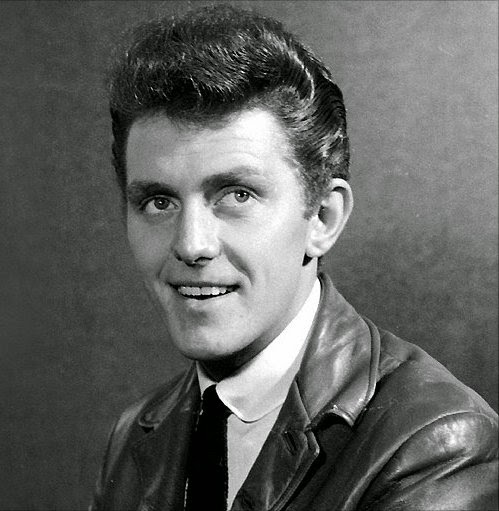 Bernard Williams Jewry más conocido primero como Shane Fenton y después por Alvin Stardust , nació en Muswell Hill, North London el 27 de septiembre de 1942, y falleció el 23 de octubre de 2014, en su casa rodeado de su esposa Julie y el resto de familia. Padecía un cáncer que le acababan de diagnosticar. El cantante, compositor y guitarrista estaba a punto de sacar un nuevo álbum el 3 de noviembre después de treinta años sin editar nuevo disco. Será recordado por canciones de éxito de Glam rock de los setenta como "My Coo Ca Choo", “Jealous Mind", o "I Feel Like Buddy Holly".
 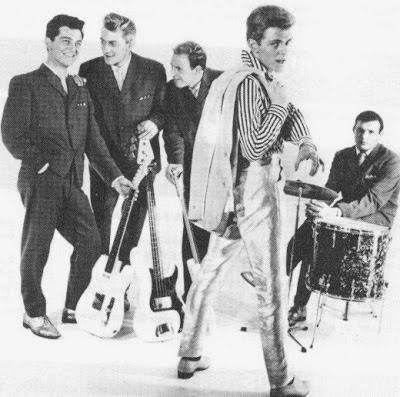 un colegio y empezó a actuar en teatro, otra de sus habilidades artísticas, y a tocar la guitarra. A principios de los sesenta formó parte de la banda Shane Fenton and the Fentones y mandaron una demo a la BBC para optar a salir en la televisión. Mientras esperaban una respuesta, el cantante llamado Shane Fenton murió a los 17 años a consecuencia de una fiebre reumática que habría padecido en la niñez. El resto de la banda, los guitarristas Jerry Wilcox y Mick Eyre, más el bajista William "Bonny" Oliver y el baterista Tony Hinchcliffe decidieron abandonar el proyecto. Y entonces llegó la carta de la BBC invitándoles a hacer una prueba. La madre de Fenton les pidió que se presentaran en su recuerdo y para sustituir a su hijo pusieron a Jewry que por entonces era un roadie de la banda. Como homenaje a ese joven fallecido, adoptó su nombre. Con el sonido de los Shadows como principal influencia, sacaron varios temas con Parlophone como "I'm A Moody Guy", "Walk Away", "It's All Over Now" y su major éxito "Cindy's Birthday". Jewry apareció también en la película de Billy Fury, “Play It Cool” (1962).
 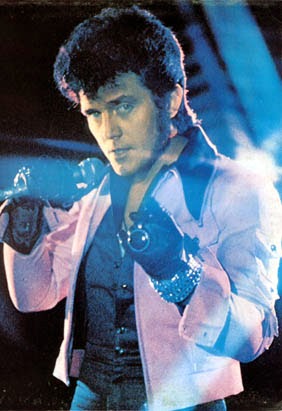 Tras separarse los Fentones, Jewry y su esposa Iris Caldwell, hermana de Rory Storm de los Hurricanes, estuvieron actuando en los setenta por locales mientras él realizaba trabajos de manager. Durante esa década adoptó el nombre de Alvin Stardust en plena efervescencia del Glam Rock. El nombre se lo propuso Michael Levy (después Lord Levy) capo del sello Magnet Records. Debutó con la canción "My Coo Ca Choo" en 1973 a la que siguió "Jealous Mind", "You, You, You", "Red Dress" o "Good Love Can Never Die". En total, puso siete temas entre los diez primeros de las listas durante su más de 25 años de trayectoria.
 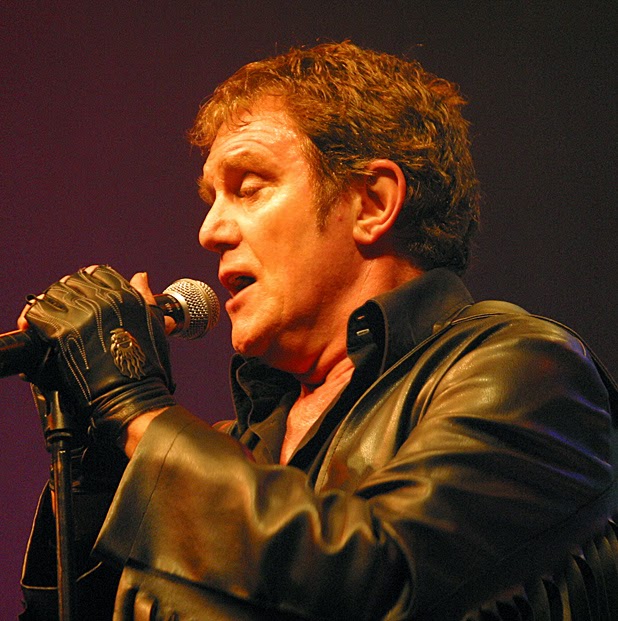 presentó a las previas de Eurovision por su país en 1985 y cantó en dúo "I Hope and I Pray" con Sheila Walsh. A finales de los ochenta tuvo su propia serie de televisión, apareció en musicales como Godspell, El Fantasma de la Opera o Chitty Chitty Bang Bang. En 1994 le explotó en la cara un artefacto pirotécnico del espectáculo mientras cantaba pero se recuperó al día siguiente. En 2011 volvió a los escenarios y estaba preparando su próximo álbum cuando le diagnosticaron el cáncer que ha acabado con su vida. El gran Jewry aka Fenton aka Stardust se casó tres veces y su segunda esposa fue la actriz Liza Goddard.
 SnobAndan a hostias os de Podemos e os Upegallos?

Rúa da Senra en Santiago de Compostela a comezos do século XX
O alcalde da Coruña asegura que o seu partido non foi financiado polas empresas de Gerardo Crespo, que en 2010 defendeu a limpeza dos seus cursos despois de que o alcalde de Oleiros o levase á Fiscalía. A investigación da Operación Zeta detecta anotacións de achegas de Crespo aos conservadores e a cargos da Xunta.

This article is part of a series about the past, present, and future of commuting in America.
For people who are constantly stuck in traffic jams during their commutes, there seems to be an obvious solution: just widen the roads.
This makes intuitive sense. Building new lanes (or new highways entirely) adds capacity to road systems. And traffic, at its root, is a volume problem — there are too many cars trying to use not enough road.
But there's a fundamental problem with this idea. Decades of traffic data across the United States shows that adding new road capacity doesn't actually improve congestion. The latest example of this is the widening of Los Angeles' I-405 freeway, which was completed last May after five years of construction and a cost of over $1 billion. "The data shows that traffic is moving slightly slower now on 405 than before the widening," says Matthew Turner, a Brown University economist.
The main reason, Turner has found, is simple — adding road capacity spurs people to drive more miles, either by taking more trips by car or taking longer trips than they otherwise would have. He and University of Pennsylvania economist Gilles Duranton call this the "fundamental rule" of road congestion: adding road capacity just increases the total number of miles traveled by all vehicles.
This is because, for the most part, drivers aren't charged for using roads. So it's not surprising that a valuable resource, given away for free, leads people to use more of it. Economists see this phenomenon in a lot of places, and call it induced demand.
If you really want to cut down on traffic, Turner says, there's only one option: charge people to use roads when they're crowded, a policy known as congestion pricing.
(David McNew/Getty Images)
In the United States, city planners and traffic engineers have long acted on the belief that adding road capacity will reduce traffic. But no one had ever tested this idea empirically. One reason is that it's a difficult thing to analyze. Researchers can't exactly conduct a controlled study, giving randomly selected cities different amounts of road space simply for the purpose of an experiment.
So Turner and Duranton did their best to get around this by using a few novel methods. In an influential 2011 paper, they looked at the total capacity of highways in each metropolitan area in the US and compared it with the total number of vehicle miles traveled.
They found a one-to-one correlation: the more highway capacity a metro area had, the more miles its vehicles traveled on them. A 10 percent increase in capacity, for instance, meant a 10 percent increase in vehicle miles, on average. But that, on its own, wasn't conclusive. "This could just be telling you that urban planners are smart, and are building roads in places that people want to use them," Turner says.
So, to try to isolate the effect of building roads, the economists then compared changes in highway capacity between 1983 and 2003 to the changes in vehicle miles traveled. "Again, we saw a direct one-to-one correlation across all cities," Turner says. This correlation also held up when the economists compared roads within cities: added road capacity consistently led to more driving. Still, even this wasn't conclusive. It could, after all, simply be a function of planners making good decisions — perfectly anticipating unmet driving demand.
As a final step, then, the economists tried to isolate a few different sets of roads that were planned with no regard to current driving patterns — newly built roads that were part of the original 1947 interstate highway plan (which was based on 1940s population levels, not 80s and 90s), and those that followed 19th century railroad rights-of-way, or 18th and 19th century routes taken by explorers. "We saw exactly the same effect here too," Turner says.
This finding has since been replicated with Japanese and British data. It doesn't seem to be an effect of optimized planning. Again and again, more roads lead to more driving — with no reduction in congestion.
Turner and Duranton have also found that public transportation doesn't really help alleviate congestion either — even if it takes some people out of cars and puts them on buses or trains, the empty road space will be quickly filled up by new vehicle-miles. Other researchers have found exceptions to this rule (say, when a transit route parallels heavy commuting corridors) but it doesn't seem to be a large-scale traffic solution, at least given the way US cities are currently built. (Note that transit can have other beneficial effects, like making a city more affordable. But it doesn't seem to have much effect on congestion.)
(Scott Olson/Getty Images)
So why does traffic increase when new road capacity is added? Turner and Duranton attribute about half of the effect to people's driving decisions. "Think of it as if you made a bunch of hamburgers and then gave them all away," Turner says. "If you make hamburgers free, people will eat more of them."
By way of illustration, consider the following situation: there's a store where you know you can save $10 on something you need to buy, but it's 10 miles away. If you assume there will be terrible traffic and it'll take 30 minutes to get there, you'll just buy the product at a closer store. However, if a new lane gets added to a highway that will speed your journey there, you'll decide it's worth it.
Over time, thousands of people will make this calculation — along with similar ones, like deciding to drive a few blocks rather than walk, because it'll be faster, or choosing to move farther from work, in exchange for a bigger house, because they assume the distance can be covered quickly. Eventually, they increased miles they drive will go a long way towards filling up the new, expensive roads that municipalities went to so much trouble to build. (As a navigation device company's billboard once told drivers, "You are not stuck in traffic. You are traffic.") Some people might then opt not to drive, but ultimately, the roads will reach the same equilibrium of traffic they had before.
A model showing how induced demand works. Typically, traffic volume levels off and reaches an equilibrium over tine, but when new capacity gets added, the volume increases to fill it, before reaching a new equilibrium. (Victoria Transport Policy Institute)
A few other factors also contribute to induced demand. The economists noticed increased truck traffic in the areas with more new road building — partly an effect of long-haul trucking companies optimizing their routes to take advantage of newly built roads, and partly an effect of industries that rely heavily on transportation moving in to an area to do the same.
Lastly, the researchers attribute some of the effect to individual people moving to an area to follow new road capacity as well.
London's congestion pricing scheme. (Oli Scarff/Getty Images)
Turner notes that traffic isn't necessarily a bad thing: it's a sign that lots of people want to use the roads in a certain area. If you want transport-heavy industry and new residents to move to your city, then new roads are an infrastructure investment that appear to attract them.
However, if your goal is reducing traffic congestion, this research shows that adding road capacity won't do it. But there is a way: congestion pricing.
"Essentially, you charge people for access to roads at the times they're congested," Turner says. At rush hour, using a road costs more than in the middle of the night. Only a few cities — like London and Singapore — have tried this sort of scheme so far, but research shows that it has appreciably reduced traffic by shifting behavior. People opt out of making some trips, or shift them to times when the roads won't be so busy, ultimately cutting down on traffic.
One criticism of these sorts of schemes is that they're regressive: they impact the poor much more than the wealthy, and effectively ease the commutes of people who can pay the tolls.
There's certainly some truth to this. But at the same time, the current system (which is relying less and less on gas taxes, which roughly correlate with usage) also has enormous costs, they're just less visible.
The mechanisms we use to currently pay for new roads might be less regressive, but they decouple road usage from payment, a huge long-term problem. "If you have something valuable that you're giving away, and you don't have enough of it, you can either just build more and more and keep giving it away and never have enough, or you can start charging people for access," Turner says.
There are now all sorts of high-tech ways to toll cars based on the distance they drive; perhaps you could create a system that also takes a person's income into account, which would let you make a progressive form of congestion pricing. "Consider the alternatives: congested travel, with tons of money spent on expansion projects," Turner says, "or congestion pricing, which'll really bother us at first, but change our behavior and actually solve the problem."

A visual representation of hate-following someone online
Finally, science has proven that all those dumb-dumbs you're friends with on Facebook have a purpose. That high school acquaintance who's always inviting you to play a social media game based off of Storage Wars, that miserable couple who now mostly spend their statuses bitching about the price of ammo at Walmart, that one girl who's inexplicably just qualified as a nurse, even though you remember, vividly, her sitting on a sofa at college bemoaning her period, saying, "Honestly, Joel, it’s like a tap," which makes you think she should be seeking urgent medical help rather than providing it.
All these people have a function. And that function is making you feel better about your own dumb-dumb awful life. Because this month, an Ohio State University study into social networks found that when people are in a bad mood, they're more likely to linger on the social media profiles of people who are worse off than them: the poor, the damaged, the trainee nurses with unconventional vaginal discharges.
They found this by taking a group of 168 students, dividing them into two, putting one group in a bad mood (they asked them to do a test and then told them all they did "terribly") and one lot in a good mood (ditto, but said they did "excellently"—who knew mood manipulation was so easy?) then asked them to look at some fake social media profiles they'd made up on a thing called "SocialLink."

A selection of profiles on "SocialLink"
I love shit like this. I love that grocery-store brands of soda all have names like "Arnold's Good Cola." I love on sitcoms when the characters go to the bar and say, "I'll have a brew, please," because they’re not allowed to say brand names. This is what this is: academics, clearly not allowed to use actual Facebook profiles for actual academic reasons, having to invent an entire social network just for the purpose of their study.
And it’s a ridiculous one: "SocialLink" has names like "Raymond Doty" and "Phillip Mulkey," with pixilated-like-the-dude-in-Doom user profiles and a five-point rating for wealth (signified by a dollar sign) and hotness (signified by a heart). I like to imagine the design meeting for that: "Yo, can we make this mangled face slightly less hot? Make those—no, Brian, you’re not listening—make those distorted pixels look a bit sloppier."
But the point is the findings of the study, which were as follows: Overall, people spent more time on the profiles of those rated richer and more attractive, but those in the negative mood group spent more time wallowing on the profiles of the poor and the ugly. In conclusion, as the study’s co-author Benjamin Johnson says, “Generally, most of us look for the positive on social media sites. But if you’re feeling vulnerable, you’ll look for people on Facebook who are having a bad day or who aren’t as good at presenting themselves positively, just to make yourself feel better.”
This is brilliant, because it fully endorses my own not-proven-by-a-fake-social-media-platform-and-a-university-study theory—that following someone on social media just because you hate them is important for the heart, soul, and everything in between. There is, of course, a whole gamut of emotions between pity and hate, and looking at the profile of someone who's desperately trying to sell a race-car bed on the Facebook group page for his alma mater ("$40 only!! Mattress barely soiled!!!") is completely different from poring over the tweets of someone you hate from afar. But I think they scratch the same itch. I think they tingle the same knot of synapses in the brain that only light up at the social-media wailing of others. Digital schadenfreude, if you want.
Tiny impulses of delight garnered from social media is a definite Thing. Earlier this year, a Frontiers of Human Neuroscience study found that gaining Facebook "likes" or Instagram "likes" or retweets, or whatever—getting those #numbers, basically—lit up the reward center in your brain. Scientists from Berlin's Freie Universitat scanned the brains of 31 Facebook users as they looked at pictures of themselves accompanied by positive captions—and yeah, essentially we’re all big dumb parakeets enamored with our phones instead of tiny mirrors.
But it proves social media has the ability to alter our mood and our well-being. And it works the other way: When I see someone publicly sounding off about an airline mis-booking them on a 5 AM flight, I'm delighted. When I see someone sincerely say the words, “Really, Twitter?” I get mad in a way that gives me energy. And god, when I see someone doing a manual retweet of that picture of some-pigeons-about-to-drop-the-most-fire-album and adding "BRILLIANT" or "TWEET OF THE DAY," I feel a foot taller, like I can shoot fire from my very fingertips. Everyone is awful and it’s brilliant to watch.
I’m not alone; I can’t be alone. I know someone who has an entire alternate Twitter account, locked down like Alcatraz, which they use to follow purely the people who infuriate them with their bad opinions. I know several other people who check in on people they don’t follow just to see if they are still being wrong. "Yes," they will say, in email or over WhatsApp, linking me to a deeply buried tweet of theirs, a screenshotted glimmer of someone else’s outrage. "They are still being wrong."
So there it is: A bit of hate (or at least "aggressively enjoying the fact that you are not someone else") can be good for you.
Follow Joel Golby on Twitter.


