Shared posts
El sótano - JD McPherson; genio de nuestro tiempo - 04/02/15
Hemos tenido que esperar 5 años desde que viese la luz su deslumbrante debut en solitario, pero cada día de espera ha merecido la pena. “Let The Good Times Roll” es el disco que consolida a este músico de Oklahoma como una de las figuras más talentosas y actuales entre los amantes de los sonidos añejos. Playlist; JD McPherson (Let the good times roll, It’s all over but the shouting, Head over heels, Bridgebuilder, Mother of lies), The Sonics (Bad Betty), The Hot Sprockets (Soul brother), MFC Chicken (Theme for lakebears), Paperhead (None other than), Wilko Johnson y Roger Daltrey (Keep it to myself) y Wilko Johnson (Barbed wire blues).
Y además; 30 discos de Alfred Ruta'66 cap.3; The Count Bishops (Someone’s got my number, del disco “Count Bishops”).
pbsdigitalstudios:How do Pac-Man’s ghosts think and hunt? Looks...


How do Pac-Man’s ghosts think and hunt?
Looks like bees, ants, and slime molds aren’t the only things that use simple programming to display collective intelligence. Pac-Man’s ghosts do it too!
Awesome video from PBS Game/Show
#teamclyde
Jay Baruchel talks his strange new show, internet “nice guys,” and Japanese penis monsters

Actor Jay Baruchel is likely best known to American audiences as an actor in comedies, thanks to his work on the TV show Undeclared and in films like Knocked Up and This Is the End. If not that, then Americans probably know him for his voice work as Hiccup, the main character in the How to Train Your Dragon films. He's also been very effective in dramas like Million Dollar Baby. Seeing his name in the cast all but guarantees a blast of quirky, nervy energy.
He returned to TV in January 2015 as the lead of his first regular series since Undeclared, FXX's Man Seeking Woman. The deeply weird show charts a young man's attempts to navigate single life through offbeat, over-the-top situations that usually turn the tables on Baruchel's character, who desperately wants to be a good guy, but is undone by so many of his own worst impulses.
The series hovers between sitcom and sketch comedy, with each episode opening up to multiple bizarre scenarios. The character might, say, date a literal troll, or head into a military command center to plot out a text to a girl he's interested in. (See above for that particular sketch.) It's an interesting take on very familiar material.
Baruchel sat down with me in Pasadena, California, to talk about what appeals to him about the project, what the Canadian comedic sensibility is, and internet nice-guy syndrome.
Todd VanDerWerff: It seems like your character's often the butt of the joke. The scenes are always very careful to turn it back around on you, to say, "This guy's the real idiot."
Jay Baruchel in Man Seeking Woman (FXX)
Jay Baruchel: Yeah. You've got to be as devoid of vanity as possible. Vanity is not a good look in comedy. It's not a good look anywhere, but especially in comedy. It helps that I'm around Eric [Andre], who's the most fearless comic in the world. You just want to be awesome.
On this show, anyway, we all think what we're doing is so good, and we all believe we're kind of on the best show on television, and knowing that makes it way easier to take your clothes off and get jizzed in the face or whatever the fuck has to happen.
TV: This also seems to be about the balance between being a good guy and wanting to get laid.
JB: One hundred percent, yeah.
TV: That experience is so universal, but you find some specificity in there, too.
JB: The two aren't mutually exclusive! A human being needs both physical and emotional interaction and companionship. Someone to go home with, as well as someone to wake up next to. Some people want just one. Some people want just the other. But most people at different times, at turns, want either, myself included.
We all draw on shit that we went through, because the fun of our show, ideally, anyone that watches it, regardless of their gender or their sexual orientation, will see themselves in it. It's all universal. Dating, being single, being bummed, being rejected, being horny, is not the exclusive domain of any one sex or sexuality. This is pretty universal shit. So there's a great deal of group therapy on our set. We can't all help but complain and vent about what we're going through.
TV: It's also very timely. Especially on the internet, you see these "nice guys," who are saying, "I don't get girls. It's only the dicks that get girls." Does that theme play off stuff you've felt in your life?
JB: Most people that say that, I think, are incredibly myopic and look at one aspect of their life without acknowledging all of the other shit that they might be doing wrong. I think every guy goes through that period where it seems like every girl wants an asshole and that assholes win constantly. But the older I get, the more I realize that's just not true.
I think if nice guys finish last, I think they don't just finish last with girls. I think they finish last in everything. But I also don't know that they always do, and I have to say that the older I get, the more I'm sort of being rewarded for being a good person, I like to think!
It sucks. It definitely sucks in the moment, when it's happening.
TV: This is set in Chicago, but you film in Toronto. You, yourself, are Canadian. What do you best like about getting to work back at home?
JB: I get to be close to my friends and my family.
When I was a kid, I never wanted to sleep away at my friend's house. I never wanted to go to sleepaway camp. I always found a way to be home. I'm a homebody. I'm a creature of where I'm from. So to be able to do something like this — which is so labor-intensive for three months and takes so much out of you — getting to be in my country and to watch my team play hockey three nights a week, getting to eat at my favorite restaurants, getting to watch my news, getting to see my friends, getting to be an hour away from my family — it makes it way easier.
TV: There are many in the industry, especially in Los Angeles, who wonder why so many things film in Canada to double for the United States. How do you feel about that practice?
JB: It's a hard question to answer because I get why people get annoyed, but I also think they focus their annoyance at the wrong target. I've seen a lot of bumper stickers on sets here [in California] that is a maple leaf and a circle with a line through it, saying "Keep Work Here." It's hard not to take that as an insult because I have that maple leaf literally tattooed on my heart. So when I see that, that's kind of fucked.
But also, no one gets mad at the studios or the state of California or the producers. They get mad at their counterparts, which is just insanity to me.
I think that a place like Toronto can double for a bunch of different places. We have some of the world's greatest crews. Think about how many funny people Toronto has exported down to the states. Lorne Michaels has been bringing people down from Toronto for 40 years. To me, it's as good a place to shoot as anywhere. I also don't know that this show would make sense in LA. Our show's real offbeat and dark and moody, stuff that Toronto has in spades that I don't know would work down here.
TV: What do you see as the Canadian comedic sensibility?
JB: I know so many people who have, at great length, tried to crack that and figure it out. But in high school, my friend's dad hit the nail on the head, perfectly. It's equal parts American and British.
The two greatest forms in English comedy are British humor and American humor. Because Queen Elizabeth II is literally still our head of state, we [Canadians] grow up raised on British television that never comes down here. We also grow up seeing every American show you guys see. So what we have is this strange hodgepodge. We have the dry, deadpan tradition of the Brits, with the humble, crazier shit that you guys do. So I think those two things have conspired to create a bunch of funny people.
TV: This show plays in the ground between sketch comedy and sitcom. What do you like about getting to play the same character, but in a bunch of completely different, wild situations?
JB: It's super fun. Number one, the show makes me laugh. When I watch it, when I read it, I just laugh. That makes my job on set way easier. I also like the idea of playing this sort of prototype for single people. Each episode is a little bit of a Warner Bros. cartoon, and I'm like the Daffy Duck through all of it. I really dig it.
The other thing is it's really hard to get bored on a show where you have no idea what's going to happen. Any show runs the risk of falling into a routine, or a pattern, and I just don't know how we could.
TV: You mentioned Daffy Duck, and this is definitely a cartoon universe. How do you hang onto the reality of this ridiculous fantasy world?
JB: The key is always to play it as if it's not happening. I think that if we were to own up to the craziness every time it was crazy, we'd run out of steam pretty quickly. The two forms play defense against each other. We can go super crazy because we go so small and intimate and real, and vice versa.
The main job as an actor is whenever you're dealing with a Japanese penis monster or whatever, make sure you're not playing it as if you're dealing with a Japanese penis monster.
TV: How much of the effects and makeup is present on set? How many practical things are you dealing with?
JB: It's constant. We make a movie every week, every four days, really. We fucking work our arses off the whole time. Because it's our show, we always have a stunt team and special effects, makeup and practical effects people, CG people, and all this different stuff. It's rarely just two people chatting in a room. There's always something to it.
TV: There's almost a serialized element to it. All this weird stuff is going on, but you're telling the story of this guy's journey. How much did you know going in? How much did you influence it?
JB: Not a great deal of influence, but the show was mapped out for me the first day I showed up in Toronto. Simon [Rich], Ian Maxtone-Graham, and Robert Padnick walked me through every episode, where we started and where we would end up. I tried to not think about where I'd end up because nobody in real life knows where they're going to end up. You know what came behind you. To make sure that I was always being truthful to the story in front of us, I was just focused on each thing in isolation. I let them focus on keeping the trajectory.
TV: This is based on Simon Rich's writing, but what would do you hope happens if the show runs for a few years?
JB: I hope we keep showing people cool, weird new shit that they haven't seen anywhere else. I hope we keep zeroing in on truths that everybody else has experienced. Half the fun of our show is all the crazy, fantastical shit we can show. But the other half that's so fun is showing people themselves.
If we can keep nailing down these authentic, terrible experiences, while still taking people to crazy, fantastical places, I'll be happy.
Man Seeking Woman airs Wednesdays at 10:30 pm Eastern on FXX, after It's Always Sunny in Philadelphia.
.jpg)



The Mary Sue Interview: Scott McCloud On Death, Love, And His New Graphic Novel, The Sculptor

Eisner, Kirby, and Harvey Award-winning comic writer and artist Scott McCloud released his new graphic novel, The Sculptor, today. I mean, basically all you need to know is that Neil Gaiman says “you NEED this book,” but we decided to sit down with McCloud to ask him a bit more about his process, his characters, and what this new book means to him.
The Sculptor follows David Smith, a twenty-something who is literally giving his life for his art. After making a deal with Death, David can sculpt anything he can imagine with his hands – but is only left with 200 days to live. It doesn’t help that he meets the love of his life, Meg, at the 11th hour.
The Mary Sue: You’ve literally written the books on comics, both deconstructing and delving into the history of comics. How do you find that effects you now when creating something new?
McCloud: Well, you know, everybody knew that if I tried any kind of fiction that I’d have a big target on my back. After telling everybody how to make the things and how to read them. But I found that kind of liberating because I knew I had to get this right, and the pressure was something I kind of needed. I’ve compared it to the reasons that people sit down on roller coasters, you know? It’s just like, if I didn’t get this right, I was just going to be a laughing stock. So I worked really hard, but I enjoyed the hard work. I worked crazy hours, like eleven hours a day, seven days a week for the first four years; probably more like thirteen hours a day, seven days a week for the last year. It was a five year project. Because I had to get this one right.
But the important thing was, of all those techniques that I talk about in my books, I had to use them to make this the best book I could – but I also had to bury them. I didn’t want them floating on the surface, I didn’t want them distracting the reader. I was hoping, if I did my job right, that the reader would come to it as a story first and just lose themselves in the characters and the situations, not be sitting around counting how many aspect-to-aspect panel transitions I used, or whatever.
For all the theory, I really hope that this big, fat book of mine will be an enjoyable read, first and foremost. I wanted to create a page-turner, and something that would swallow the reader as best I could, and give them an exciting ride.
TMS: I want to talk to you a little bit about the characters in the story; obviously the protagonist is David, who makes this deal with Death.
McCloud: This was sort of the atheist version of the Faustian bargain, because if you’ve got a “Devil,” there’s an afterlife. This time we’re looking at the prospect of true oblivion, and that to me is my way of approaching, through supernatural, fictional means, something that is I think actually true, which is that when we’re gone we’re gone, and we have is this one life.

TMS: Here at The Mary Sue, we’re always very interested in female characters in comics. Can you talk a little about Meg and what her effect is on the story and on David?
McCloud: When Meg came into the story, the story started to make sense. This a long time ago, this is in my twenties that this whole thing came into focus. And Meg was largely inspired by this woman that I was secretly in love with for seven years, and wound up marrying after that. So there’s a real person occupying roughly 70% of that character.
TMS: Well that’s the cutest thing I’ve ever heard.
McCloud: [Laughs]. It’s interesting because, as a writing challenge, it was a real gift to be able to just channel her. When I sat down to write dialogue, it just came pretty naturally, I could just hear her voice in my head. And at the beginning, the thing was, you know, as writer to have to be kind of ruthless, and you have to be ready to jettison whatever personal significance something has. So as the story went on, if it would have made it a better story to just cut the plot and let her drop to the ground and let [David] drift away from her, I would have done it. But I didn’t have to, because in the end I think the story benefitted from letting her get even nearer to [David], and there were things about our lives that I began to pull in and wrap into the story near the end that I think made it a better story.
TMS: What do you think is so appealing about the idea of a deal with Death, that we’ve seen it recur throughout literary history so frequently?
McCloud: We all make bargains with destiny every day. And we’re always trying to think not only about the repercussions of this life, but the repercussions beyond life – and the traditional way of doing that is to imagine some kind of an afterlife. But even people who aren’t religious are still thinking about their fate after life, especially artists; that’s what artists do, always thinking about how what we make is going to be experienced or valued after we’re gone. And so I think that that Faustian bargain structure continues to be relevant, for artists in particular – that idea of the verdict that history is going to have.
TMS: How did you come to determine that David’s particular artistic talent would be sculpting?
Scott McCloud: [He] was always a sculptor, that was sort of the initial idea. You know, you can revise everything except that first thing that pops into your mind. That’s the one thing you almost never question. So, until I started doing these interviews, I never considered why a sculptor and not a painter or something. Looking back, I’m glad I did it that way, because it’s very spatial, it’s very kinetic; and I worried, as a graphic artist, if I had done something about a graphic artist, the whole thing would have come across as like even more narcissistic than it might already be, you know? [Laughs]. A little removed is probably a good, healthy thing.

TMS: Last question – if you could sculpt anything at all with your hands, what would it be?
McCloud: [Laughs.] Yeah, what would it be? I don’t know, I think I would love to make something really big with lots of tiny cabinets and compartments? I’m kind of obsessive compulsive; I remember when I was a little kid I would take a desk into my closet – I had a room all to myself, my bedroom – but I wanted to work in the closet because I wanted to find little tiny spaces. And now I look back on that and I think, “Wow, I was a really weird kid,” but I still have that love of compartments. I like the sculptures of Louise Nevelson, for example, because she has all these little subdivisions and compartments in her work. So I think if I could make sculpture like that I would make something along those lines.
Scott McCloud’s latest book, The Sculptor, is available today through First Second Books.
[This interview has been edited and condensed.]
Are you following The Mary Sue on Twitter, Facebook, Tumblr, Pinterest, & Google +?
El sótano - Kurt Baker; hacia el Olimpo del Power Pop - 03/02/15
Kurt Baker muy mola. Con 28 primaveras este músico de Maine lleva 13 años de trayectoria a sus espaldas entregado al amplio abanico de sonidos del Power Pop RnR. Actualmente afincado en Madrid, repasamos su trayectoria en primera persona picoteando en muchos de sus proyectos actuales y pasados. Playlist; Kurt Baker Combo (Weekend girls, Dime que me quieres), The Leftovers (New rock alternative, Telephjone operator), Kurt Baker (Just forget about it, Partied out, Don’t go falling in love), Bullet Proof Lovers (Nothing I can’t do), The New Trocaderos (The kids), en directo acústico (Give it up, Tried and true) y Kurt Baker Combo (Aorta baby).
La Mascotte
As baseball fans probably know, The Washington Nationals used to be the Montreal Expos. When the team packed up and left Canada in 2005, they left behind their name, their logo, their uniforms—and their mascot, Youppi!.
 [
[Youppi!—French for “yippee,” and always stylized with an exclamation point—is a rotund, orange, furry, six-and-half-foot-tall Sasquatch-lumberjack creature, beloved by Québécois sports fans. Youppi! became the first mascot to switch sports when he joined the Montreal Canadiens hockey team in 2005.
 [Credit: Robert Occhialini]
Furry, larger-than-life, foam-headed mascots may seem standard-issue for sports teams now, but this is only a relatively recent phenomenon in the history of professional sports.
The idea of the mascot came to America by way of a popular French opera from the 1880s called La Mascotte. The opera is about a down-on-his luck farmer who’s visited by a girl named Bettina; as soon as she appears, the farmer’s crops start doing well and his life turns around. The word “mascotte” is a play on the French slang word “masco,” meaning “witch.”
Hence, “mascotte” (or the anglicized “mascot”) came to mean a person or thing that brings good luck.
Lucky mascots fit right in to the notoriously superstitious world of professional baseball. In the early days of mascots, if a player in a slump noticed a kid in the stands smiling at him before getting a base hit, he might give the kid tickets to the next game, just to have him there for luck. Anything (or anyone) that was around at the time of a team’s hot streak could be claimed as a mascot. Early examples include Harvard’s “John The Orangeman,” who sold fruit during games and Yale’s “Handsome Dan,” a bulldog, who was walked onto the field before games.
 [From top: Harvard mascot John The Orangeman, and Yale’s Handsome Dan. Courtesy of Franklin Delano Roosevelt Suite and Pach Brothers, respectively]
So at first, mascots were mostly passive agents that just stood around being lucky. That changed in 1944, at an exhibition game in Hawaii when Joe DiMaggio hit a massive home run off of a pitcher named Max Patkin.
Patkin snapped. He ran off the mound and chased after DiMaggio as he rounded the bases, mimicking his home run trot. The crowd loved it. After World War II ended, Patkin stopped being a pitcher and was hired by the Cleveland Indians to draw in and entertain crowds. Patkin was eventually dubbed “The Clown Prince of Baseball.”
 [Max Patkin, the Clown Prince of Baseball. Courtesy of Irv Nahan]
The next step in the evolution of mascots was the San Diego Chicken.
 [The San Diego Chicken offers an eye exam for the umpires. Credit: Graig Mantle]
In 1974, the San Diego radio station KGB-FM hired college student Ted Giannoulas to wear a chicken suit and do promotion for the station at Padres games.
The Padres were such a bad team that people started going just to see the chicken perform. Suddenly, the Chicken was bigger than the radio station—and the team. Giannoulas was eventually fired from the radio station, so he got his own chicken costume and kept performing. The San Diego Chicken became a local icon even though he wasn’t an official team mascot.
The Philadelphia Phillies took notice, and decided they wanted an upgrade from their mascots Phil and Phyllis—two figures in Colonial garb that didn’t do much besides decorate the outfield and appear on-field during the National Anthem.
 [Phil & Phylis at the upper left and right. Courtesy of Temple University Library.]
The Phillies hired a designer named Bonnie Erickson, who had previously worked at the Children’s Television Workshop under Jim Henson. Erickson had created Miss Piggy, and the Muppet Show hecklers Statler & Waldorf.
Erickson had also worked with Jim Henson on making life-sized versions of the Sesame Street characters for their ice shows, so she knew how to make full-body costumes that people could perform and move in—a new concept when it came to mascots.
Erickson knew she needed to design a mascot that would be lovable even to the gruff Philadelphia sports fans. After all, this was a crowd that had pelted Santa Claus with snowballs during an Eagles game.
She came up with the Philly Phanatic.
 [Credit: Melody Joy Kramer]
Every part of the Phanatic is like a masterclass in mascot design. For starters, he’s green, not the standard Phillies red, so he stands out in the crowd. The duck butt and pear-shaped body ensures that no matter how the performer moves in the costume, it’s funny. His eyes are low on his face, which makes him look child-like. He also comes with a back-story, which involves being from the Galapagos Islands.
The Phanatic is goofy, and slightly aggressive. He’ll rub a bald guy’s head, or rip the hat off of someone cheering for the wrong team. And usually, he gets away with it. Though he did once get pummeled by L.A. Dodgers manager Tommy Lasorda.
More and more teams wanted Phanatic-style mascots, and so Bonnie Erickson kept getting work. One of her clients was the Montreal Expos. Yes, Erickson is also the creator of Youppi!— who, as it turned out, also gained an enemy in Tommy Lasorda:
…not to mention in Jimmy Fallon.
 (The most Montreal cupcake ever: Youppi! bursting out of a pile of poutine. Credit: Eva Blue)
Reporter Andrew Norton spoke with A.J. Mass, former Mr. Met performer and author of Yes…It’s Hot In Here: Adventures in the Weird, Wooly World of Sports Mascots; Bonnie Erickson, creator of Youppi! and the Philly Phanatic (among other beloved characters); and Dave Raymond, who performed as the Phanatic. Andrew’s sister Jessica Norton also commented on their dad’s obsession with Youppi!.
Banner image credit: fatcatimages
Music: “Liquefaction” – Four Tet; “Happiness Is” – Podington Bear; “Flutterbee” – Podington Bear; “Hot in Here” – Nellie (karaoke version); Music from La mascotte – Edmond Audran; “Lady From The Swamp” – Felix Laband; “P Flunked Funk” – Podington Bear; “Sleepwalking” – Felix Laband; Theme from Sesame Street; “Frogs in Tuxes” – Podington Bear; “Lost in the Zoo” – Goddamn Electric Bill; “Jack Nitsche- Starman Leaves”- OK Ikumi


Helix Is Syfy's Secret Gem And The Craziest Show On TV
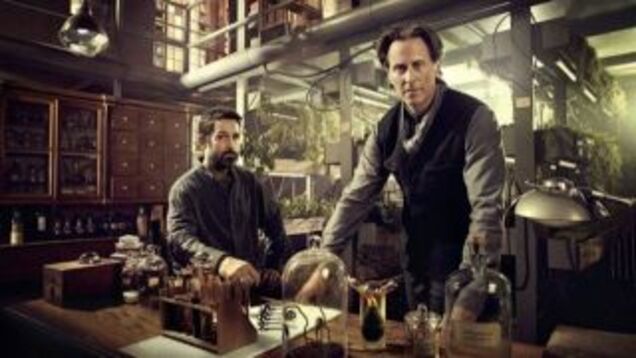
Chances are you've never watched Syfy's mad science show Helix. It airs on Friday nights, it doesn't get a lot of buzz, and if you've ever caught a promo, it must look pretty confusing. And it is! But it's also completely insane, and that's what makes it one of the most fascinating, entertaining shows on right now.

Why Does Your Cat Dig Chilling In a Box? Science Explains - CC: Maru.

Suitcases, cardboard boxes, shoes: what is it about confined spaces that so compels cats? Thank God Wired isn’t afraid to tackle the tough questions.
To better understand what attraction cardboard boxes hold for the world’s Ser Pounces, Wired looked to the work of Veterinarian Claudia Vinke of Utrecht University in the Netherlands, a researcher into the stress level of domesticated shelter cats (brave woman: cats are notoriously too rude for science to study). Vinke provided one group of cats with boxes immediately after arrival at the shelter, and found that the box cats adapted more quickly to shelter life and were more interested in interacting with humans than cats who were deprived of boxes entirely. In an email to Wired, Vinke explained that “hiding is a behavioral strategy of the species to cope with environmental changes and stressors.”
A 2006 study by the National Research Council indicates that thermoneutral temperature may also plays a role in shenanigans like this:

The NRC’s research showed that the range of temperatures in which cats are most comfortable is 86 to 97 degrees Fahrenheit (about 20 degrees higher than humans’ thermoneutral zone), and that most households with a cat are kept at approximately 72 degrees–14 degrees colder than necessary for optimum feline comfort.
Confined and insulated spaces like a cardboard box might be cats’ only defense against their humans’ cruel allegiance with Winter. Or, you know, just a great place to sit and protest indignities like this:

(via Wired, image via Roadsidepictures on Flickr)
Are you following The Mary Sue on Twitter, Facebook, Tumblr, Pinterest, & Google +?
10 Competitive Eaters Reveal The One Thing They'd Never Eat
At Philadelphia’s Wing Bowl, one man refuses to eat a dick.
Molly Schuyler, the winner of last year's bowl, said, "If there's money, I'll eat it." She also wrote, "I got boobs this year!"

Katie Notopoulos / BuzzFeed News
Here's Molly in the thick of competition. She came in second place this year.

Katie Notopoulos / BuzzFeed News
If You Thought Only Girls Could Be Basic, Think Again
Sh*t is basic.
If you have any of these symptoms, you're a basic bro.
Via youtube.com
Guys, if you thought being basic was limited to girls, THINK AGAIN.

Via youtube.com
Doctors might be able to diagnose you as a full on basic bro if there's a backwards hat in your brain scans.

Via youtube.com
If you think this is art...

Via youtube.com
Nick Kroll's Opinion On 33 Random Things

David J. Bertozzi / BuzzFeed
Kroll Show has begun its final season and if you're as much of an avid watcher as we are, you're likely devastated about the supremely funny show coming to an end. As such, we spent some time picking Nick Kroll's very unique brain to get his gut reactions to things both mundane (like bananas and tuna) and insane (like Ed Hardy and #EggplantFriday). Here's how it all went down.
1. Twitter

David J. Bertozzi / BuzzFeed
2. Ed Hardy

David J. Bertozzi / BuzzFeed
3. Disney Princesses

David J. Bertozzi / BuzzFeed
Nick: I know I should give my first thought but usually my initial thought is too dirty to be spread on the internet.
4. Tuna

David J. Bertozzi / BuzzFeed
5. Flava Flav

David J. Bertozzi / BuzzFeed
Nick: I miss that show. I thought it was so great. I thought The Surreal Life was one of the last reality shows where you were like, "Oh these people are genuinely here, like, living their life." And I think Flava Flav and Brigette Nielsen were, for a period really in love. And it was inspiration for my show in that it spawned Strange Love. Which then spawned Flavor of Love which then spawned off into New York's show which then spawned off to Chance [of Love] and then later Bret Michaels got Rock of Love. So there were five or six spin-offs from The Surreal Life, which was inspiration for our show spinning every character off into their own show. This year on the show Ceasar has a show called Toilet Dad, which is his version of Teen Mom.
6. Facebook

David J. Bertozzi / BuzzFeed
7. Green Juice

David J. Bertozzi / BuzzFeed
8. Chapstick

David J. Bertozzi / BuzzFeed
9. The Gym

David J. Bertozzi / BuzzFeed
Nick: I go but I don't like it.
10. Bottle Service

David J. Bertozzi / BuzzFeed
10. Reality TV

David J. Bertozzi / BuzzFeed
11. Art Basel

David J. Bertozzi / BuzzFeed
Nick: Fart Basel.
12. Cats

David J. Bertozzi / BuzzFeed
13. Dogs

David J. Bertozzi / BuzzFeed
14. Bananas

David J. Bertozzi / BuzzFeed
Nick: I eat bananas but I don't enjoy them. I have no love or hate for bananas.
15. Drones

David J. Bertozzi / BuzzFeed
16. Chelsea Peretti

David J. Bertozzi / BuzzFeed
Nick: Not a very funny answer, but: one of the greats.
17. Vine

David J. Bertozzi / BuzzFeed
Nick: Vine. Vine. Vine. Vine. Vine. Vine...Vine.
18. Selfie Stick

David J. Bertozzi / BuzzFeed
Nick: That's the selfie, right? This is what a selfie will get you but then a selfie stick... selfie stick will make your face three pounds lighter.
19. #EggplantFriday

David J. Bertozzi / BuzzFeed
20. Mani/pedi

David J. Bertozzi / BuzzFeed
21. Aerial yoga

David J. Bertozzi / BuzzFeed
Nick: She does a lot of stuff like that, right?
22. Broth

David J. Bertozzi / BuzzFeed
Nick: My initial reaction, weirdly. That doesn't make sense.
23. The Cloud

David J. Bertozzi / BuzzFeed
24. Starbucks

David J. Bertozzi / BuzzFeed
25. Hogwarts School of Witchcraft & Wizardry

David J. Bertozzi / BuzzFeed
26. Anime

David J. Bertozzi / BuzzFeed
27. A "THOT"

David J. Bertozzi / BuzzFeed
Nick: There's so many other ways to insult a person. That makes me relatable, right? When I say to stop using "ho" as a descriptive?
28. Public Relations

David J. Bertozzi / BuzzFeed
29. Taylor Swift

David J. Bertozzi / BuzzFeed
Nick: Taylor Swift is Diet Coke!
30. New York

David J. Bertozzi / BuzzFeed
31. Los Angeles

David J. Bertozzi / BuzzFeed
32. Bluetooth Headsets

David J. Bertozzi / BuzzFeed
33. BuzzFeed

David J. Bertozzi / BuzzFeed
The final season of Kroll Show airs Tuesdays at 10:30/9:30c on Comedy Central.
6 Insulting Movie Adaptations of Strong Female Characters
Kinspiracy: The Stepford Readership of Kinfolk Magazine
 Images: Winter_named_ Winter on Instagram
In what could easily be a storyline in an episode of Portlandia, Instagram junkie and Los Angeles blogger Summer Allen was, as she puts it, "spending too much time on Instagram" when she made an odd discovery about the readers of Portland-based "slow lifestyle" magazine Kinfolk. Allen writes,
"A pattern quickly revealed itself: covers of Kinfolk magazines, wood, American flags, lattes, etcetera.
These similarities popped up without even trying to look for them specifically. And so, a project was born. Not out of spite, but out of the redundancy of almost identical subject matter.
Four images. One Instagram account per set. A whole lotta the same sh*t.
Welcome to the Kinspiracy."
Allen started a Tumblr devoted to documenting the Kinspiracy. For awhile she worked the project anonymously, yet recently she's outed herself. As the word of Summer's Tumblr spreads, there are likely to be spoof accounts on Instagram. But as it stands, its present content would be almost concerning if it wasn't so amusing. -Via Laughing Squid

Images: Meganjennifer on Instagram
Images: Maurastoffer on Instagram
Animals getting high, drunk and tripping
Previously , previously and previously.
The Zoophile Advocate Who Had Sex with a Dolphin Is Now the Star of a New Documentary
Dolly the dolphin died of a broken heart. At least that's how Malcolm Brenner sees it.
Some would call Brenner, who had sex with Dolly more than four decades ago, a pervert or an animal abuser or, at the very least, a damaged man. But to this day, Brenner, who is now the subject of a documentary, describes the encounter as a beautiful, almost spiritual experience.
The two met in 1970 when the New College of Florida student was on his first freelance photography assignment. He was supposed to take pictures for a book about Sarasota's Floridaland—one of those hokey roadside attractions that populated the Sunshine State before multimillion-dollar theme parks pushed them out. Soon, however, he was sidetracked by the dolphin.
Dolly swam to the other side of the tank when the unfamiliar human with horn-rimmed glasses and shoulder-length curls first jumped in. She eventually came around, says Brenner, who photographed the dolphin for nine months. Once, as he was rubbing her back, Dolly flipped over to present her genital slit. Later, she started rubbing her teeth on the photographer's arm in what he describes as an erotic way. When he wouldn't give her what she wanted, Dolly would retaliate by pushing him 12 feet underwater.
"Female dolphins are very assertive about their sexuality," Brenner told me. "They don't have any inhibitions about expressing it, whereas other animals are passive, or at least just receptive."
In his telling, Brenner has always been attracted to animals. As a child, he says, he was molested by his psychologist. Around the same time, his dad took him to see a Disney film called The Shaggy Dog. He got an erection even though he was only five, which he now calls a defining moment of his life. His zoophilia started in earnest a few years later; when he was 11 or 12, Brenner had sex with the family poodle, although he says he felt dirty afterward.
But it was his second and final encounter with an animal—the one that took place with Dolly at Floridaland—that ended up making Brenner the unofficial spokesperson for the people who think animals can consent to sex. And for the first time, he's telling his story on screen with the help of Miami filmmakers Joey Daoud and Kareem Tabsch. Dolphin Lover, their 15-minute short, just premiered at Slamdance on January 25.
[body_image width='640' height='421' path='images/content-images/2015/02/03/' crop='images/content-images-crops/2015/02/03/' filename='dolphin-sex-body-image-1422993039.jpg' id='23908']
Dolly the dolphin was trained to ride along this boat and jump for fish. Photo courtesy of Joey Daoud
Tabsch first became interested in Brenner when he was in San Francisco in 2013 looking for entertainment options and an alt weekly story about the dolphin lover grabbed his eye. "I stopped looking for things to do and started reading the story," he told me. "I was taken aback equally by what had happened and by his willingness to talk about it."
Soon he and Daoud met up with Brenner on Florida's west coast and conducted an extensive four-hour interview that covered essentially his entire life. "His only stipulation was that we didn't use the Flipper theme song in the movie," Daoud told me.
Although Brenner had written a fictional version of his and Dolly's relationship in 2009, he'd never openly talked about how exactly he did the deed. According to his account in the documentary, Dolly was alone in the pool with another male dolphin but voluntarily came to a different area to have privacy with her suitor. After about 30 minutes of foreplay, Brenner penetrated the animal's vaginal cavity, which he described as a series of complicated valves.
It was a difficult act to perform (he had to position himself vertically, while the dolphin was horizontal), but Brenner describes the experience as both gentle and erotic. "I felt this intense verging with her on every level," he says in the movie. "It's really like we stopped being two individual creatures and became one creature that became one with itself." He claims both he and the dolphin came.
After their encounter, Brenner moved to Olympia, Washington, and Dolly was shipped off to a different park in Mississippi. He was informed later that she committed suicide, and to this day, Brenner thinks it's because he "abandoned her," as he puts it in the film.
[body_image width='640' height='424' path='images/content-images/2015/02/03/' crop='images/content-images-crops/2015/02/03/' filename='we-spoke-to-malcolm-brenner-the-guy-who-had-sex-with-a-dolphin-and-the-star-of-new-documentary-body-image-1422999063.jpg' id='23923']
Malcolm Brenner photographed Dolly for nine months and still considers her the love of his life. Courtesy of Malcolm Brenner/Coffee & Celluloid.
He's not the only person to fall in love with a dolphin. There was also Margaret Lovatt, who ended up having sex with an animal named Peter during a NASA-funded experiment in the 60s. That animal also committed suicide after its relationship with a human ended.
One aspect that's notably missing from Dolphin Lover is input from a psychologist, who might explain whether dolphins can consent to sex, experience orgasms, or feel sad enough over a "breakup" that they'd end their lives.
Originally, the filmmakers planned to splice in interviews with animals rights activists and other people, but decided against it. "The story we wanted to tell was the experience as he recalls it," Daoud told me. "What [experts] were going to say was the norm for the average viewer. I hope what the movie shows is that behind acts we may not agree upon are human beings."
Today, Brenner lives in West Florida, and even though he's most famous for fucking a dolphin, he managed to marry twice after "training" himself to like women. He even has a grown daughter.
He says he's not in a relationship and hasn't had sex with an animal since Dolly. He's waiting for the day the zoophiles will be as accepted as gays, although he thinks it will take a long time. He also claims not to understand why people have a problem with his proclivities when they can accept the character Brian from Family Guy. "The same people who are calling me a monster are laughing at Seth McFarlane's jokes about a dog sleeping with women," he told me.
But Brenner is undeterred by public perception and claims to be active on a number of dating sites.
He says he's not worried about the documentary, or for being recognized as the public face of animal fucking. Apparently, there are other obstacles to meeting and courting women.
"I don't find a lot of women who are atheists down here," he says. "But I just signed up for an atheist dating service, so hopefully that will change."
Follow Allie Conti on Twitter.
Joven que sirve el desayuno en la cama se siente un pequeño héroe feminista
¿Quieres ser prostituta? Yo te enseño cómo
El negocio de la prostitución se ha disparado con la crisis económica. Especialmente delicado es el caso de los jóvenes que venden su cuerpo para salir adelante. Por eso Concha Borrell, presidenta de Aprosex, la única asociación de profesionales del sexo, lleva un año en Barcelona dando cursos de prostitución con el objetivo de instruir nociones básicas para la profesionalización del oficio más antiguo del mundo. «Trabajar en el mundo del sexo no es sencillo. Hay que tener una formación», dice.

«El cliente paga, pero por ello no manda». Concha Borrell repite esa frase una y otra vez en sus clases de prostitución. Sus alumnas son seis chicas que quieren ser prostitutas. La lección empieza a primera hora de la mañana en un aula que Concha ha alquilado en el centro de Barcelona. Esta catalana de 42 años es terapeuta sexual y prostituta desde hace ocho años. Lleva un año impartiendo estas clases junto con la psicóloga Cristina Garaizábal.
Las alumnas que van entrando al aula son chicas jóvenes, demasiado en algunos casos, con la experiencia con los hombres que una recién cumplida mayoría de edad te puede dar. También hay alguna mujer que sobrepasa los 40 y que la vida les ha puesto en el camino de la prostitución por una necesidad económica.
Empieza la clase. Durante cuatro horas y media las chicas aprenderán cómo ser una buena puta, con todas las de la ley. «Tenéis que tener claro que sin formación no podéis ser unas profesionales de la prostitución. Debéis conocer vuestros derechos y cuál es la situación legal en España. Podéis daros de alta como autónomas», explica Concha.
La lección continúa con la importancia de la higiene en el servicio y cómo tratar el tema de las enfermedades de transmisión sexual. «Muchas mujeres pagan mucho dinero en clínicas privadas para hacerse la prueba del VIH. Todo por no estar informadas de que existen muchas organizaciones que te hacen la prueba gratis».
El marketing también es una asignatura obligatoria que hay que aprobar antes de ejercer el oficio. «Hay que saber venderse. Esto es como un trabajo de comercial. Les enseñamos cómo anunciarse en internet, cómo deben gestionar las llamadas y el tono en el que tienen que responder a los clientes. Cada chica debe hacer pequeño guion de cuáles van a ser sus horarios y qué tipo de servicio van a dar. Nadie les puede obligar a hacer algo que no quieran, eso les tiene que quedar muy claro», dice Concha, que ante la pregunta del periodista sobre cómo surgió la idea de hacer estos cursos, ella responde con otra pregunta: «La cuestión es cómo no ha surgido antes esta idea. A la gente no se le ha ocurrido que si en todos los trabajos necesitas una formación, ¿por qué en este no? Yo cuando empecé a prostituirme nadie me enseñó cómo hacerlo, y me hubiese venido bien saber algunas de estas cosas que enseñamos ahora a las chicas».
Después de abordar el aspecto del estigma social y el respeto que se tienen que tener a sí mismas, toca terminar la clase fomentando el coleguismo entre compañeras. «Les damos la posibilidad de conocer a otras profesionales del sector. Esto es un gran aliciente porque una de las cosas más difíciles de este trabajo es que estamos mucho tiempo solas. Y es bueno que compartamos momentos y reflexiones; así nos sentiremos más seguras».
Concha cobra 50 euros a cada chica por el curso. Dice que empezaron con 25 alumnas, pero que redujeron el número para atender de forma más personalizada cada caso y así poder responder a todas las preguntas de estas chicas con diferentes perfiles. «Vienen mujeres de toda España. Desde jovencitas con 18 y 20 años, hasta otras de 50. Gente que acaba de entrar a la prostitución o que llevan incluso 20 años ejerciendo en clubs y que ahora quieren montárselo por su cuenta», cuenta la mujer, que dice que hace poco tuvieron a su primer alumno puto y que en la última clase asistió también un transexual.
Cuando hablamos de sexo con Concha, ella prefiere que la llamemos Paula Vip, su alias laboral. Ella se define como elegante, educada y puta. Su historia personal la ve repetida en los ojos de muchas de las mujeres que le vienen a pedir consejo. Era contable, esposa y madre. Su marido montó una empresa que no le fue bien. Tuvieron que hipotecar la casa porque los problemas económicos le asfixiaban y ella se puso a trabajar fregando platos. Hasta que un día escuchó en el telediario una noticia relacionada con el sexo de pago. «Hay prostitutas que ganan 200 euros al día», escuchó. Entonces pensó que con ese dinero podía pagar el colegio de su hijo y solventar las deudas. En una semana ya había organizado su nuevo negocio. «Doy sexo inteligente y morboso», puso en el anuncio.
Ahora, es la presidenta de Aprosex, la primera y única asociación formada por prostitutas en activo. El colectivo lleva tres años en acción en Barcelona dando apoyo moral y luchando por los derechos de las prostitutas y la normalización del trabajo sexual. Concha sabe de primera mano cómo con el inicio de la crisis se ha disparado el número de mujeres y hombres que se han metido a ejercer la prostitución (un 30 % según los estudios realizados por Aprosex). Reconoce la sobreoferta de personas que la ejercen y considera su curso como imprescindible para adentrarse en ese sector.
Especialmente delicado es el aumento de jóvenes que están estudiando una carrera universitaria y se la financian acostándose con hombres por dinero. «Estos últimos años estamos recibiendo muchísimas llamadas de universitarias pidiendo consejo. La situación ha cambiado. Hace años los estudiantes se prostituían para comprarse artículos de lujo. Hoy lo hacen para pagarse la universidad y llevar comida a casa. Muchas han pasado de ser unas ninis a tener que alquilarse para sostener a su familia», dice Concha, que no comparte que chicas tan jóvenes se metan en esto. «Muchas de ellas ni siquiera saben lo que es un orgasmo. Con 20 años no se está todavía madura para ejercer este trabajo».

20 años tiene Lorena, es prostituta y estudiante de Comunicación Audiovisual en Madrid. La coquetería natural de la joven la convierte en una mujer hermosa, apetecida por muchos, pero poseída solo por quienes pueden pagar 180 euros por un apasionado encuentro de una hora.
Esta morena de 1,70, ojos verdes, labios rojos, piel tersa, piernas torneadas y vaqueros bien ajustados, ya conoce de primera mano los sinsabores de la vida. Hace cuatro años un cáncer se llevó a su madre. Su padre fue despedido cuando quiso volver a su empleo de contable para rehacer su vida. Había pedido una excedencia para cuidar a su esposa y estaba endeudado al límite por los gastos de la clínica privada donde habían tratado a su mujer. Además, estaba la hipoteca del piso del centro de Madrid donde vive con Lorena y su hermano pequeño. «Todo empezó una noche que estaba de fiesta con unas amigas en una discoteca. De repente, un hombre de traje, de 45 años, se me acerca y me ofrece 800 euros por acostarme con él. En ese momento solo pensé en mi padre y en mi hermano. Por ellos acepté. Vi dinero fácil y rápido para poder llevar comida a casa. Así empezó todo».
Desde entonces se prostituye tres o cuatro veces por semana. Y al mes se saca unos 2.500 euros con los que paga su universidad, el colegio de su hermano, las necesidades de su padre, la hipoteca y las facturas de su casa. «A mi familia le he dicho que el dinero lo saco trabajando como imagen y azafata en agencias de modelos y discotecas, y que se gana mucho».
En la capital también está Luna, 24 años, que estudia Psicología en una universidad privada. Lleva un año ejerciendo. «Me gusta mi trabajo y no quiero dejarlo. Gano mucho dinero y tengo un horario flexible para poder asistir a clase», dice.
O Ainhoa, malagueña, matriculada en Derecho, de 22 años, quien lleva prostituyéndose desde hace dos. «Llegué a Madrid sola y sin un duro hace tres años. Quería estudiar una carrera. Trabajé de camarera, de relaciones públicas en varias discotecas y dando clases de inglés y francés. Pero necesitaba más dinero. Tenía que pagar matrícula, piso, libros, comida y mandar dinero a mi madre. Entonces conocí a otra estudiante que era prostituta y que ganaba muchísimo. Me armé de valor y puse un anuncio en una página web», afirma Ainhoa, morena de pelo rizado. No es guapa, pero la naturaleza la ha obsequiado con un cuerpo escultural. Gana más de 3.000 euros mensuales. «Cuando acabe la carrera dejaré todo esto», asegura.
Pero el oficio más antiguo del mundo no es exclusivo de mujeres. El alto nivel de desempleo empuja a muchos chicos a ejercerlo. En los últimos años el número de prostitutos se ha triplicado. Iván Zaro ha realizado diversos estudios sobre trabajadores masculinos del sexo para el Ayuntamiento de Madrid y la organización Imagina Más. «Aquí tenemos aproximadamente 4.000 chaperos», dice.
Como Manuel, 24 años, estudiante de Ingeniería de Caminos en Vigo. «No me gustan los hombres, pero estos son más promiscuos y me llaman más que las mujeres». Lleva prostituyéndose tres años y a todas sus citas acude en traje y corbata. Gana casi 4.000 euros al mes, con los que se paga la universidad, un piso en el centro de Vigo y los caprichos que se le antojan. Actualiza su anuncio cada semana en una página web, donde cada 20 minutos se publica un nuevo reclamo de «estudiante de compañía».

En Barcelona encontramos el caso de Héctor. Este mallorquín de 25 años, estudiante de 4º de Económicas, suele trabajar con Rosa, de 18, que cursa Enfermería. Ambos estudian en la Universidad de Barcelona. Ofrecen sexo en pareja por 290 euros la hora y shows eróticos a la carta por el doble. «El cliente busca en los universitarios gente joven y no profesionales», dice Héctor. Tiene un blog donde se publicitan como «un grupo de chicas y chicos de la Universidad de Barcelona, bisexuales, liberales y de mente abierta».
Concha Borrell recibe diariamente llamadas de muchos de estos chavales que le llaman destrozados. «Es una pena. A la mayoría de ellos no les gustan los varones y lo hacen por dinero y para salir adelante. Se desahogan conmigo porque no se lo cuentan a nadie», afirma la presidenta de Aprosex, que reconoce que el caso de las mujeres es diferente. «A ellas las intentamos explicar que el cliente va a disfrutar con ellas, no de ellas. Es importante que eso les quede claro porque muchas veces, a través de los medios de comunicación, te venden que les va pasar algo malo, que van a abusar siempre de ellas y no es así. Las enseñamos que no es solo sexo, que esa persona les está dando su tiempo y dinero, sus caricias y besos, y no es habitual que pasen cosas malas».
Ahora Aprosex prepara un nuevo proyecto para las próximas elecciones de marzo. Está en negociaciones con varios partidos políticos para incluir en su programa los derechos laborables de las prostitutas. «La única opción que tenemos es darnos de alta en la seguridad social como autónomos. Pero el gobierno siempre nos relaciona con la mafia y la trata de personas. Ellos cogen nuestro dinero sin protestar, pero no nos dan nada, solo nos marginan y discriminan. Necesitamos un sindicato, una empresa que luche por nuestros derechos laborables. Necesitamos protección para todas las chicas que están en la calle».
———–
Imagen de portada: Worldpics / Shutterstock
The post ¿Quieres ser prostituta? Yo te enseño cómo appeared first on Yorokobu.


15 Apps For Couples You Never Knew Existed
Love meets tech.

Jenny Chang / BuzzFeed

What it does: Couple lets you and your partner share messages, videos, and allows you to draw together.
Why you need it: Thumbkiss™! Whether your boo is in another room or another country, you can share a little intimacy by touching your thumbs to the same spot on your screens. D'awww.

What it does: This app guides couples through the steps needed to repair a relationship after a big fight.
Why you need it: Think of it as free couples therapy. Seriously, it even utilizes the voice of marital therapist Mark McGonigle to soothe you when things get heated.
Get it on iTunes.

What it does: This app offers up different places you and your paramour can get it on. They range from the banal (couch) to the bizarre (portable potty).
Why you need it: Finally end the debate about whether you should do it in a fire truck or not. If it's on the app, go for it.
Get it on iTunes.
7 Quotes That Show How Much Chipotle Hates McDonald's
The beef is real. In an extensive oral history of Chipotle featuring lengthy interviews with multiple executives, Bloomberg shows us just how much the Mexican food chain looks down on McDonald’s.

Lucy Nicholson / Reuters
Today, Bloomberg took a deep dive to compile an oral history of Chipotle, the beloved burrito chain that reigns supreme in the fast casual dining industry.
Many see Chipotle and the companies following in its footsteps as big threats to McDonald's. But what is less well known is that for a number of years, McDonald's was a partner and major investor in Chipotle. The two have long since split up, and it seems the Mexican food chain isn't particularly nostalgic for the old days.
Through extensive interviews with multiple company executives and industry experts, Bloomberg build up a picture of how Chipotle corporate feels about its one-time early investor turned quasi-competitor. It's not pretty.
—Mark Crumpacker, Chipotle's chief marketing officer
—Joe Stupp, head of social media marketing at Chipotle.
Me hice pasar por un hombre en una web de contactos, y las conocí a ellas

En el primer capítulo, me infiltré como chica en una web de contactos “sugar”. Esto es lo que ocurrió cuando me hice un perfil de hombre.
El gran hotel Budapest. ¿Por qué ser un botones?

Por favor, ajusten su monitor a 16 x 9. Imagen: Indian Paintbrush/Studio Babelsberg/American Empirical Pictures/20th Century Fox.
«¿Por qué quieres ser botones?» pregunta Monsieur Gustave, el afectado concierge —que no conserje— al joven Zero. Es una buena pregunta. Quizá no es la pregunta más importante de la historia de la humanidad, pero es una buena pregunta. ¿Ser un ratón? ¿Ser cabeza de ratón? ¿Ser el mejor ratón de la historia de la ratonidad?
Es curioso, pero parece que esta pregunta es la única que contesta Wes Anderson en su último filme. Para ver cómo lo hace tendremos que salpicar el texto de unos cuantos SPOILERS, aunque sean de los que aparecen en la sinopsis oficial, de los que no desentrañan la trama.
2014. En el viejo cementerio de Lutz, capital de la antigua República de Zubrowka, que una vez fue cabeza de un imperio europeo, una joven rinde homenaje a la tumba del Autor. El Autor es un tesoro nacional y su libro más importante es uno que la joven lleva en sus manos. Un libro rosa que se llama El Gran Hotel Budapest. Un libro que el Autor escribió en
1985. El Autor (Tom Wilkinson) intenta convencernos de que la historia que nos contó y que nos va a contar no es producto exclusivo de su desbocada imaginación, sino que son hechos reales que le fueron transmitidos por el dueño del hotel en
1968. El gran hotel Budapest es un lugar vacío. Casi vacío. Las paredes ocres. Los empleados quietos. Aburridos. Los clientes también. Al joven Autor (Jude Law) le parece un edificio que necesita una reconversión. O una demolición. Es un lugar fuera de su tiempo. Allí conoce a un hombre callado. Quieto. Quizá aburrido. Es Zero Moustafa (F. Murray Abraham). Es el dueño del hotel. Antes fue botones. Zero le cuenta por qué no quiere deshacerse del hotel. Le cuenta cómo llegó a ser botones. Le cuenta una historia que comienza en
1932. Monsieur Gustave (Ralph Fiennes) es el concierge del voluptuoso Gran Hotel Budapest, ilustre morada, aposento y residencia de lo más ilustre de la ilustre sociedad centroeuropea. Es un punto y un momento de ademanes ceremoniosos aunque a veces tenues, fatuos y petulantes. Pero Monsieur Gustave cree en ellos, tal vez empapado de su invisible éter, pero seguro y convencido de que sobre su espinazo recae el peso de una tradición secular. El imberbe Zero (Tony Revolori) acaba de empezar a trabajar bajo sus órdenes y, en el ascensor, en uno de los pocos impasses de su ajetreada tarea, Monsieur Gustave le pregunta: «¿Por qué quieres ser botones?».

2014 y 1985. Imagen: Indian Paintbrush/Studio Babelsberg/American Empirical Pictures/20th Century Fox.
Han transcurrido trece minutos y treinta y siete segundos de metraje y ya hemos viajado por todo el siglo XX. Y ya sabemos que Wes Anderson nos está contando un cuento dentro de un cuento dentro de otro cuento envuelto en un primer cuento. Trece minutos de narración elegante, rítmica y precisa que desembocan en una narración aún más estilizada y más trepidante. Porque el cuerpo de la película se desarrolla en 1932. Y sí, es un cuento.
Un cuento rosa como rosa era la novela que portaba entre los dedos la joven del comienzo de la proyección. Asimismo, es un cuento consciente y delicadamente fingido, envuelto en la artificiosidad propia o tal vez engalanada de la época a la que refiere, copiosa y al tiempo decadente. Un cuento que relata las mil azoradas aventuras y desventuras de Zero y Monsieur Gustave entre las telas y las paredes de ese período sujeto en el voluble equilibrio de entreguerras. El concierge y el botones se cruzan con un nutrido grupo de personajes, más de una docena, que en ciertas ocasiones les salpican, en otras les acompañan y, en algunas más, obstaculizan sus peripecias. Ancianas amantes generosas y compasivas, criminales justos, criminales nefandos, las autoritarias fuerzas del orden, el robo de un preciado cuadro holandés y una secreta sociedad de concierges que sostiene el caduco mundo de los grandes hoteles. Que sostiene el mundo, en resultado.
Todos ellos dan naturaleza a un cuento fingido y rosa. Rosa o rojo o azul pastel, pero tan consecuentemente artificioso que su propia forma responde más al primitivo cinematógrafo que a las modernas técnicas audiovisuales de nuestro tiempo.
Así, el cuento de 1932 se llena de decorados tan obvios e irreales como exquisitamente elaborados y sugerentes, además de estar en la anticuada proporción 1.33, ajena al espectador acostumbrado a la contemporaneidad formal, pero tan próxima a la olvidada era de los concierges y los hoteles centroeuropeos. El cuento de 1968 es ocre. Es frio. Quieto. Está rodado en scope a 2.35. Parece 70 mm. Lentes en gran angular. Casi ojo de pez. Es de 1968. Es como Stanley Kubrick. Como el Kubrick de 1968. El breve cuento de 1985, rodado en 1.85 analógico aparece detrás de unas cortinas ochenteras, bajo una luz ochentera y con la cachonda irreverencia ochentera del nieto del Autor. Y el cuento de 2014, que abre y finalmente pliega el filme, tiene el color neutro del 1.85 digital. Es el cuento de hoy, del tiempo de Wes Anderson.

1968 y 1932. Imagen: Indian Paintbrush/Studio Babelsberg/American Empirical Pictures/20th Century Fox.
Aunque, en realidad, todos los tiempos y los formatos pertenecen a Wes Anderson. Porque Anderson es un cineasta absoluto.
En todos los periodos y todas las relaciones de aspecto, entre simetrías y travellings, la película nos envuelve cuidadosa y bellísima. Porque Anderson no narra solo con la historia, sino que narra con el cine. Narra con cada plano y cada encuadre; precisos, hiperestilizados. Narra con cada movimiento de cámara y cada uso teatral de la luz. Narra con la diferencia de formatos y con las sobreimpresiones. Narra con la lente de Robert Yeoman y con la banda sonora ligera y casi irreverente de Alexandre Desplat.
Y sin embargo, aunque es un director total, Anderson no plantea temas épicos ni contiene profundas moralejas ni contesta las grandes preguntas de la humanidad. Solo es un cuento y solo responde una pregunta: ¿Por qué quieres ser botones?
Por eso se apoya y se inspira en los textos de Stefan Zweig, pero los vuelve rosas o rojos o azules o pastel. Los vuelve amables y artificiosos. Lutz es una Viena rosa y teatral. Las boscosas montañas nevadas son montañas de cartón con árboles de papel y nieve de espuma. Los nazis son nazis color pastel. Y pese a que Zweig fue incapaz de sobreponerse a la Europa y el mundo que le tocaron vivir y se suicidó en 1942, al Autor todavía le quedarán muchos años viendo crecer a sus nietos. Y es que El gran hotel Budapest, con su extremada precisión narrativa y audiovisual, parece decirnos que, aún en los peores momentos de la humanidad, la gente se divierte y ríe y corre aventuras trepidantes. Aunque sea para salvar el culo. Al igual que en El Gran Dictador o en Malditos Bastardos, cintas de las que extrae más de una referencia, como también lo hace de El resplandor, 2001, Lawrence de Arabia o Cortina rasgada.
Y con todo, la película de Anderson es muy ambiciosa. Tan ambiciosa que elude conscientemente la grandeza e incluso la persistencia en la memoria. Sí, El gran hotel Budapest no es un CEO ni un presidente ni un director. Ni siquiera es un concierge ni un conserje. Es un botones. Un botones bellísimo. Un botones construido entre cambios de formato, abigarrados decorados, iluminaciones exactas, planos y encuadres y secuencias meticulosamente elaborados, y las interpretaciones de más de una docena de estrellas. Wilkinson, Law, Abraham y Fiennes, pero también Adrien Brody, Willem Dafoe, Mathieu Amalric, Jeff Goldblum, Harvey Keitel, Edward Norton, Bill Murray, Tilda Swinton, Owen Wilson, Saoirse Ronan, Jason Schwartzman o Léa Seydoux.
Y a ninguna de estas actrices y estos actores les importa participar en un filme que quizá no apunte a obra maestra de la historia del cine, porque tal vez no quiere ser una obra maestra de la historia del cine. Solo quiere ser un cuento. Divertido, elegante, amable, delicado y encantador, pero solo un cuento. Y a todos nos gusta que nos cuenten un cuento. Al fin y al cabo, cuando Monsieur Gustave pregunta «¿Por qué quieres ser botones», el joven Zero le responde: «¿Y quién no querría? Es el Gran Hotel Budapest».

Imagen: Indian Paintbrush/Studio Babelsberg/American Empirical Pictures/20th Century Fox.


LO MEJOR DE 2014: ¡Última llamada!
Publicamos este post como aviso a navegantes y votantes perezosos: quedan seis días de plazo para que aquellos que lo deseéis nos enviéis vuestras votaciones para escoger lo mejor de 2014 en lo que ha cómic se refiere. Aquí podéis consultar las bases, las categorías en las que puede votarse y los lotes cedidos generosamente por quince editoriales.
Para animaros a votar no os vamos a contar cómo va la cosa, pero sí os vamos a apuntar unos cuantos datos.
Por ejemplo, que hemos dado por válidas hasta el momento 91 votaciones. Hemos descartado varios votos por provenir de evidentes campañas más o menos «masivas»: un solo título votado en una o varias categorías, incluso a veces con el mismo texto copiado, enviados a veces de modo casi simultáneo o con el mismo origen. Lo sentimos, pero pensamos que aceptar estos votos desvirtuaría el espíritu de estos premios informales, que no pretenden más que pulsar la opinión de los lectores y las lectoras de Entrecomics y ofrecerles en forma de lotes de cómics un agradecimiento por estar ahí.
Más datos sobre el recuento, que vamos realizando casi en tiempo real:
- En la categoría de Mejor cómic nacional se han votado hasta el momento sesenta obras.
- En la parte alta de la categoría de Mejor cómic extranjero hay cinco obras apretadas en tan sólo cinco puntos.
- La categoría de Mejor fanzine ha recibido menos votos que otras —¡leed más fanzines!— pero sin embargo se han votado 41 títulos diferentes hasta el momento. Hay un empate técnico entre cinco títulos.
- Os recomendamos que reviséis si los títulos con cierta antigüedad en el mercado pertenecen a 2014 o a 2013; hemos tenido que descartar muchos votos para obras como Blacksad: amarillo y Los surcos del azar.
- Cómics como Yo, asesino o Dieter Lumpen según las bases de la votación entran en las categorías de Mejor obra extranjera y Mejor reedición de material extranjero respectivamente por haberse publicado originalmente en el mercado francobelga.
- En la categoría de Mejor editorial hay una bonita lucha entre dos editoriales por alzarse con la victoria final.
- A pesar de que la queja por la falta de cómics para niños es habitual en el sector, se han votado hasta el momento 41 obras diferentes en esta categoría.
Y ya no desvelamos más; todo está abierto en la mayoría de las categorías y vuestros votos pueden decidir el destino de la human… bueno, más o menos. ¡Votad!





"Let them sip their pumpkin peach ale."
Instead of changing the conversation with horses and puppies, it's stared directly into the camera and declared itself. These are their terms. This is Budweisers' manifesto – and despite the details that make it hypocritical, it's a very powerful ad, and craft brewers are going to be feeling the repercussions for a while.
Budweiser VP Brian Perkins interviewed in AdAge:
"This is not an attack on craft beer, this is not an attack on competition," Mr. Perkins said. "The only other beer that we reference in the spot is a fabricated, ludicrous flavor combination of pumpkin peach ale."Budweiser's parent, Anheuser-Busch InBev, has been acquiring craft breweries in recent years: Goose Island (Chicago), Blue Point (Long Island, N.Y.), 10 Barrel (Bend, Oregon) and two weeks ago Seattle brewery Elysian... who had recently brewed a pumpkin peach ale.
Still, Mr. Perkins added that "occasionally we do have a little bit of fun with some of the overwrought pretentiousness that exists in some small corners of the beer landscape that is around beer snobbery. That is the antithesis of what Budweiser is all about."
Elysian co-founder Dick Cantwell, who opposed the ABI deal, in the Chicago Tribune:
"I find it kind of incredible that ABI would be so tone-deaf as to pretty directly (even if unwittingly) call out one of the breweries they have recently acquired, even as that brewery is dealing with the anger of the beer community in reaction to the sale," Cantwell said Monday morning by email. "It doesn't make our job any easier, and it certainly doesn't make me feel any better about a deal I didn't even want to happen. It's made a difficult situation even more painful."In the same article, Anheuser-Busch head of craft beer Andy Goeler on ABI's acquisition strategy:
"I don't want to speculate, but I will tell you we're always open to talk. We don't have a blowout strategy for how many craft breweries we are going to buy and in what areas. It's very organic. It's about relationships and beer. But we're open to talk to anybody. We get calls. And we're very interested."