Rambling about toponyms and ethnonyms in various languages. Branko Milanovic has revived interest in an older post of mine about the Polish language. From Twitter it appears that the tidbit from that post which has been most remarked about is the fact that the Polish … Continue reading →
The Question is the Question:Dilip D'Souza on the competitive sport of 'Quizzing' in India.
"Quizzers branch out like fractals, into the minutiae, looking for questions in the interstices of knowledge."
BQC:
D'Souza, elsewhere in the essay, says: "Quizzing in India has a history that goes back decades. It got widespread attention across the country with the Bournvita Quiz Contest (BQC), a face-off among schools that kicked off in 1972. We of that vintage spent years listening to it on static-ridden medium-wave." You can relive that nostalgia here, right down to the static and ads for Intel's cutting-edge Pentium II.
Every woman comes prepackaged with her own unique grab bag of fears. Maybe you fear being murdered, or raped, or even killed! There’s nothing better than coming back from a night out on the town, feeling frightened by the footsteps behind you, and then turning on Netflix to watch your favorite shows and see other women getting followed and killed instead. Here are the best ones to keep your heart racing while being aurally pleasured by sexy British accents.
If you fear being kidnapped/raped/murdered…
The Bletchley Circle
This series is light-hearted and fun and because of the costumes and upbeat background music. But the terror sneaks up on you like a real rapist or murderer might, when the four 1940s lady coder friends start investigating a brutal kidnapping/murder/rape. When you get to see the graphic but beautiful image of the lipsticked dead woman, you’ll be scared, but not that scared. The old-timeyness of the WWII-era costumes makes it seem like it could never happen to you.
If you fear the mundanity of evil…
Happy Valley
The greatest part about this show is how well we get to know the rapist as one of our main characters. No mysterious man jumping out of the bushes here! He is just a free citizen of the world living among us after raping and then impregnating the 15-year-old daughter of a lady cop. If you like to imagine your friends and coworkers as violent psychopaths, this show is for you!
If you fear being a woman, even in a country with a very low murder rate…
Wallander
In this BBC remake of Wallander, we get to watch hunky 50-something Kenneth Branagh to play a Swedish police detective with an overarching narrative that focuses on his own tortured soul. This is a nice juxtaposition against the physical torture of all of the women who are routinely slaughtered in his small Scandinavian town. The male savior trope is strong here and reminds you that as a woman you are helpless and will probably die at a young age, but at least have a ruddy middle-aged man who will solve your murder after you’re gone. Smell that seaside air!
If you fear being attracted to a killer…
The Fall
Gillian Anderson plays the ice queen detective in this thrilling series. Like Happy Valley, it also focuses on a sadistic serial killer of beautiful young women – women just like you! It’s set up so that you feel strangely attracted to this sick man and so you can feel increased shame alongside your abject fear – a combination that is sure to make you stress-eat an entire box of Cheez-Its while weeping on the couch. The creepy babysitter storyline is sure to give you complicated sexual feelings. A great way to end a day!
If you fear being murdered with no legal recourse…
Copper
This show is one of those great reminders that being a sex worker was and still can be a bad idea. You’ll get killed and raped UNLESS you have a hot cop who has your back. Civil War-era New York City was a dirty messy place to be! Here we have brothels, prostitutes and killers all in the same weird story and the cops are also sort of sleeping with the prostitutes so we don’t really know what’s going on. Meanwhile, young girls are being sold to the brothels and we get to see old men kiss them sort of? You should go with Copper, especially if you have vivid dreams and are currently taking a vacay from therapy.
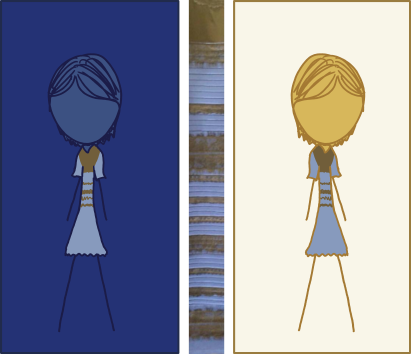
By now, everyone on the internet has seen — and fought bitterly over — this stupid dress. Some people will swear up and down that the dress is blue and black. Others insist, without any doubt, that it's white and gold.
As it turns out, the dress is blue and black in reality. But then why do so many people see it so differently in the photo?
Visual scientists can mostly explain what's going on here: We interpret the color of objects based on how we interpret the light around those objects. Different people are interpreting the ambiguous lighting in the dress photo in different ways, so their brains are essentially tricking them into seeing the dress as different colors. (A more detailed explanation is below.)
The problem is that this only partly solves the mystery. Why are different people's brains tricking them in such radically different ways? One visual scientist calls this "one of the biggest individual differences I've ever seen" in color perception. Is it purely random? Or is there some variation in how our brains work? Here's a rundown of everything we know so far about the dress question.
How we see color is a function of how we interpret light
Preparations for a hot air balloon ride near Ottawa: Recognizing that the colors in the sunlight and in the shade are the same is an example of color constancy. (Shanta/Flickr)
First, scientists who study vision agree there's a very basic phenomenon at play here. The colors that we think we see are always determined by how we interpret the light around us. That is, our eyes and brains are always trying to adjust for different types of light in order to make judgments about what color things are.
Normally this is a very, very useful skill to have. If you look at a gray building during a sunset, it will be bathed in a much redder light than it is during midday. But our brains are very good at correcting for the effects of that light and seeing the building as the exact same color at all times — gray.
"The brain always faces the problem of figuring out how much of the light arriving at the eye from an object is due to how brightly illuminated the object is and how much is due to how highly reflective the object is," says David Williams, Allyn Professor of Medical Optics and director of the Center for Visual Science. "We are usually extremely good at making this judgment, a perceptual skill known as lightness constancy."
But optical illusions can trick the brain
Occasionally, though, this system breaks down. Vision scientists have exploited this feature of our brains to create optical illusions that fool us about colors. Here's a famous one:
The squares labeled "A" and "B" are the exact same shade of gray. But our eyes see them as different colors because we're making assumptions about the light around the squares. We assume that square "B" is being bathed in shadow, so our brains tell us it must be a lighter shade of gray in reality.
Indeed, if we connect the two squares, it becomes clear that the squares are identical shades:
Below is another optical illusion based on color, as pointed out by New Scientist (which has an excellent dress explainer). Here are two squares on the Rubik's cube. Both are actually the exact same shade of gray. But we see them as wildly different colors because we're adjusting for the light around them:
The key feature of the photo is that it's very hard to tell how the dress is being lit. Is the light in the room bright or dim? Blue or yellow? There aren't many unambiguous visual clues. So people's brains are fumbling around, making assumptions.
"The photograph does not have a lot of information about the nature of the illumination, and some people may see it as brightly illuminated and others less so," Williams says. "Hence the large variation in their reports of the colors of the dress."
"For example, if your brain decides that the dress is brightly illuminated, then it will also conclude that it must be made of darker fabrics such as blue and black. But if it decides the dress is only dimly illuminated, then it will also reach the conclusion that the dress reflects back a lot of the light falling on it. In that case, the dress must be made of more reflective fabrics light white and gold."
Randall Munroe of XKCD had a vivid illustration of this. If you change the color of the background, the dress looks entirely different (even though it's the exact same dress):
(XKCD)
Williams notes that the best way to tell the true color of the dress would be to photograph it against "a rich background of objects illuminated in the same way as the dress."
But this dress explanation still leaves a huge mystery
The problem is that we still haven't explained a key mystery of this dress business. Why are different people's brains making vastly different assumptions about what's going on? After all, with most optical illusions, we're all fooled in the exact same way. But not here.
Early on in the dress controversy, a number of writers suggested that it's because different people have different numbers of color-sensitive cones in their eyes. But Williams is skeptical that this is the reason.
"Unlikely," he says. "Aside from some folks, mostly male, who are color blind, people have remarkably similar visual systems." Indeed, his research has found that, while people do have wildly varying numbers of cones in their eyes, they still tend to see color in the same way.
Instead, he argues it has to do with differences in how our brains our working. "My guess," Williams says, "is that the dress photo changes in color and lightness from person to person because their brains are making different unconscious assumptions about how the dress is illuminated."
But that just moves the mystery back a step. Whyare different people's brains making different assumptions about how the dress is illuminated?
One possibility is that it's all random. Upon first encountering the photo, our eyes happen to randomly fall on a particular contextual clue in the photo — we look at a small part of the photo suggesting that the dress is dimly lit or bathed in blue light and then interpret the color of the dress based on that clue. The clues we ended up detecting at first are almost pure happenstance.
But then, once we see the dress as one color, it's hard to "unsee" it and view it the other way. That is, it's a bit like the famous duck-rabbit illusion — although people can easily flip back and forth between the duck and the rabbit, whereas far fewer people have reported seeing the dress as both colors.
Alternatively, perhaps there are actually subtle differences in how different people's brains are working — and that's why we have two radically opposed factions of dress viewers. Whatever the cause, the dress is proving endlessly fascinating to color researchers. Here's what Jay Neitz, a neuroscientist at the University of Washington who'd fielded endless phone calls about this, told Wired: "I've studied individual differences in color vision for 30 years, and this is one of the biggest individual differences I've ever seen."
Pioneering Spirit is the world's largest platform installation/decommissioning and pipelay vessel built for the Allseas company.[1] The ship is also by far the world's largest vessel overall ever constructed in terms of its gross tonnage of 403,342 gt, as well as its breadth (123.75 m/406 ft) and displacement (900,000 metric tons).[2] The main construction was done at Daewoo shipyard, Korea and final completion will be in the Netherlands. Main diesel power comprises eight MAN 11.5 MW engines and one 4 MW harbour engine with two engines each in four separate engine rooms[3] with 12 Rolls Royce 5.5 MW thrusters.[4] The vessel was designed by a Finnish engineering company Deltamarin. Allseas¹ has committed to build Pioneering Spirit at a cost of US$1.7 billion. In an interview with De Telegraaf"[5] chairman Heerema named a price of €2.4 billion for the 382 metres (1,253 ft) long vessel. AllSeas has committed to building an even larger version of the same design, which will be operational in 2020.[6]
We caught wind of a few sales on some rad games the other day, with a whole batch dropping all at once. Usually, if there's a whole bunch of sales at once, that means that some kind of coordinated promotion or feature is afoot. And so it was, as Apple launched an "Amazing Indie Games" feature on the App Store front page, featuring just that. There's some notable titles to check out. We wrote up some things on some of the indivudal titles:
And for your perusal, here's a list of all the games in the sale in alphabetical order. This sale likely goes until next Thursday when the App Store refreshes again, so get on this while you can.
Everybody knows by now that Jihadi John, that masked man with the bowie knife and the London accent, is actually Mohammed Emwazi, a rich boy from Maida Vale, one of the poshest neighborhoods in one of the most expensive cities in the world.
Why, oh why, would a rich boy from a nice home go on to make snuff movies? That’s the whine you hear from the press. As always, first thing to do is question the question; why wouldn’t he? He’s famous, isn’t he? The hero of his own movie, “and the papers want to know whose shirts he wears,” as the feller said. It’s a classic male fantasy, and gore is a classic feature of those fantasies. What astonishes me is that so few middle- and upper-class Muslim kids are succumbing to it.
True, Mr. Emwazi is unlikely to spend his thirtieth birthday aboveground, but that idea probably doesn’t register with him. It usually doesn’t, with young males who catch Protagonism. And Emwazi has a bad case. According to Islamic State defectors, he gets the full velvet rope treatment, second only to the self-crowned caliph, Al Baghdadi, on IS’s A List, which features pretty much the same stuff you get on the Western A-List: Blacked-out SUVs, an endless supply of concubines, and a camera crew following your every move.
In other words—and it’s laughable, mang, that I even have to say this—in other words, Emwazi isn’t a victim. There are lots of victims in his rise to stardom, Kurds and Shia and Yazidii, but this vain fool isn’t a victim.
And yet the first attempt to spin the story on Jihadi John’s identity came from a ridiculous British Muslim self-pity group calling itself CAGE, which handed out a weepy, silly version of his bio. According to CAGE, Emwazi was forced into sawing people’s heads off because of harassment from the British cops. You really have to hear some of this maudlin shit to believe it, like these samples from the CAGE press conference featuring Asim Qureshi, as live-reported in The Telegraph:
Qureshi just caught his voice and sounded like he was crying when he called Emwazi “a beautiful young man.”
15.26 At a press conference in London, Qureshi says he has known Emwazi since summer 2009 and that the terrorist nicknamed Jihadi John, who is wanted for beheading several British and American hostages, was “extremely kind, extremely gentle…most humble young person I ever knew”.
“I wish things could have turned out differently for him.”
And what made things go so wrong for Emwazi? Harassment by the security services, which even cost him money on those pesky nonrefundable tickets:
As a result of Mohammed’s refusal to work for the MI5, they have caused him to lose much money on tickets for flights, two potential marriages, a good job (and given the current economic conditions he hadn’t been able to find a new one), and since August 2010 he was unable to return to his country of birth. Furthermore, he and his family had been greatly distressed by the unnecessary harassment and intimidation they suffered from British intelligence agents.
Considering that Emwazi’s last known UK address was a three-bedroom flat in Maida Vale, it’s hard to imagine that a few flights to East Africa bankrupted the family. And why were these flights unsuccessful? Well, CAGE’s story doesn’t mention it, but Mohammed had a big crush on Al Shabaab, the Somali jihadi group. His Salafist friends from Ladbrook Grove had trained with Al Shabaab in Somali, and it was when Emwazi tried to go there to do the same that he got grabbed by Tanzanian security at Dar es Salaam airport, in May 2009, and sent home. After that, the “unnecessary harassment” started…for no reason at all, except that he was doing everything but wearing a big balloon tied to his neck saying “Future Islamic State Executioner.”
So the victim-narrative is comically wrong, and Emwazi’s choice (as it were) isn’t as unusual as the media are playing it. But there’s still a reasonable question: Why this guy, out of all the Muslim rich boys in Greater London? There are a lot of young men in that group, after all, and only a few of them have joined Islamic State. Why Mohammed Emwazi?
This gets us down to the accursed business of profiling. Like I’ve said before, it’s very hard to make anything like a “foreign-fighter” profile, because the variations, country to country and even city to city, are huge. There are contingents like the guys from Derna in Libya who are classic poor, tough, rebel kids, and then there are the Saudis, who tend to be pampered rich kids raised on Wahaabi bigotry.
There are bored Belgians, sick of living in a world where everything is permitted and eager for some macho authoritarianism, and Tunisian men who’ve never had a decent job and are happy to make some money carrying a gun and scaring the rich, snotty, cosmopolitan, bikini-wearing, beachfront French-speaking elite back in Tunis.
There are, believe it or not, ex-cops from North Carolina with an interest in bodybuilding, and rich kids from Egypt, also with an interest in bodybuilding; there are Australian pimps and thugs, and a lot of ordinary young men, quasi-jocks, the middle of the curve. Almost the only common feature of all these profiles is that they hark back to a day when men ruled and women obeyed; beyond that, it’s impossible to get much of a fix on the whole miscellany of dreams and grudges pouring into Syria.
If we narrow it down to UK volunteers going to Islamic State, you get a more manageable sample, but not one that helps understand Jihadi John much. Most UK volunteers are from Pakistani or Bangladeshi families, rather than Kuwaiti like Emwazi.
Kuwait is a strange place, and it’s given its share of jihadis to the cause. I had the unique experience of being fired, half an hour after starting work, by a room full of Kuwaiti Army officers, one American “revert” (convert to Islam), and a screaming Mauritian midget, because I allegedly showed a pro-Hindu bias in a column I wrote on Kashmir long ago. So yes, I’m familiar with the somewhat tender sensibilities of Kuwaitis. (Though to my total non-surprise, it was my fellow American who snitched on me, photocopied an old War Nerd column and started the inquisition. Americans are the world’s leading snitches, in my rather considerable experience.)
Kuwait is in an odd little eddy of the tide sweeping the Gulf principalities. Kuwait is basically one of the Gulf countries, the little countries that make up the UAE, though of course Kuwait is independent and not part of the UAE. It’s still a small coastal enclave that got swamped with oil and money in the early 20th century, and it’s gone through the same wrenching shifts all the Gulf (Khaleej) countries have.
Each of these little places has adapted, or tried to, in its own way. Dubai is the obvious example of a place that’s grabbed the changes with both hands. Quick way to summarize that: You can buy booze in Dubai. Legally. In Abu Dhabi too, more or less. In Sharjah, no.
And that’s a recent change, only enacted in 1982. Because Kuwait has pulled in the opposite direction, back from the huge changes, unlike Dubai. A Kuwaiti who took us to the airport stopped in traffic, looking at the hijabs and dishdashes shuffling across the zebra crossing, and said out of nowhere, “Kuwait used to be very western.”
What dragged Kuwait back from the brink of Western-ness was democracy. The proverbial will of the people. Of course, “people” in Kuwait means only the real Kuwaitis, the citizens, who are only a third of the population. The rest of us were foreign labor, replaceable work units, housed in high-rise slums, gritting their teeth, being harassed by crooked Kuwaiti police, taking buses while the real Kuwaitis roar by in this year’s SUVs.
For the real Kuwaitis, life is sweet, or ought to be. But not Hollywood macho, which is why Kuwait is full of bodybuilding gyms, giant glass boxes you have to approach very carefully, because the gravel outside those gyms is scattered with hypodermic needles that have been tossed away by the steroid cases pumping away inside. They inject right in the open, like they’re proud of it. Viagra and steroids are the drugs of choice there.
You might say, like they do in the Gender Studies biz, that there’s a crisis of masculinity in the Gulf. For some, not all. If you like what’s on offer over the border in Bahrain, and it’s all on offer there, there’s no crisis at all; like that cliché says, “Crisis means opportunity in Chinese,” and in some dialects of Arabic as well. Some Kuwaiti men are living very large, drawing salaries as colonels in the Kuwaiti Army while running fashion-knockoff factories in Guangzhou, zipping over to Bahrain for wet weekends and to Germany (they love Germany) for more family-oriented fun.
Adapting to this new dazzle is a lot harder for people who come to the Gulf from a harsher, more authoritarian country like Yemen. And one of the few things we know about Emwazi’s family is that it’s originally Yemeni. Jihadi John himself chose to accentuate the Yemeni background in his nom de guerre, calling himself “Abu Muharib al-Yemeni” rather than the “al-Britani” favored by most British IS fighters.
Does that mean something bad happened to him in Britain? In a sense, yeah, but if you’re doing the reflexive move of imagining he got beat up by skinheads, just drop it. Maida Vale is not skinhead territory, and the University of Westminster, his last known UK school, is home turf for Islamist preachers, not the UKIP.
The bad thing that happened to this very ordinary young man was too many jumps for his very ordinary brain to handle. Yemen to Kuwait is a huge jump for any family to make, but Yemen to Kuwait to West London is too many quantam leaps for a weak mind to make.
It starts with Yemen. Emwazi’s background as a rich young man from the Arab Peninsula but from a hardscrabble Yemeni family bears an obvious resemblance to the background of another guy who kicked up some dust in the jihad biz a while back, a tall drink of water named Osama. The bin Ladens were Yemeni too, nouveau-riche Yemeni who came to Saudi and got rich bidding on government contracts.
And if you’ll remember, a few months ago, when we were living in Kuwait, I wrote about a weird murder where a woman in full hijab and niqab butchered an American woman in the women’s toilet at an Abu Dhabi mall.
She turned out to be a rich lady “of Yemeni origin, who had traveled back and forth to Yemen ‘multiple times.’”
So what’s going on with the Yemen link? Yemen is poor, tough, desperate, “unspoiled” in the very worst sense of the word. It’s the Old Testament, where girls are given away at an early age and clan hatred is law—which is why it would do America’s Christians a world o’ good to spend some time there, especially as a village girl. Atheism would be rampant the very moment they stepped outside the security zone in Oklahoma City.
So to go from the hills of Yemen, where men rule completely, to Kuwait, where women stroll around the malls in various stages of undress, from full pious black swathe to short shorts (and they do), windowshopping $250,000 watches, often without a male guardian in sight—that’s a stretch, for a Yemeni family.
So that’s one huge culture-jump already, but a bigger one was coming. Emwazi’s family left Kuwait when he was only six years old, so any memories of Kuwait would have been held by his elders, passed on to him. His most vivid memories would have been life in a rich Muslim-Arab family that “kept to itself” in the posh neighborhoods of West London. He was “quiet,” he “loved his football,” and didn’t stand out much in any way.
You see that so often in these jihadi profiles, “he loved his football.” It’s so banal that you tend to ignore it, but it actually means a lot. It’s an attempt to find a common denominator, some shared ground that can allow you to be a grudge-holding pious Yemeni loyal son and a West London rich boy at the same time, something you can discuss with people who don’t share your particular—very, very particular—view of what is halal and what is haram.
Football is on TV all the time, even in Riyadh. You have to go very far into jihadi circles to meet people who accept Islamic State’s view that football is solidly in the “haram” category.
Only if you’ve got a massive grudge, of the sort a Yemeni/Kuwaiti/British kid with enough money to brood on it can generate, do you go that far. It takes money, leisure, humorlessness, and an overdose of culture-jumps. Jihadi John, or Mohammed Emwazi, or Abu Muharib al-Yemeni, or whatever he’s calling himself these days, was one of the weak ones, too weak to handle all those quantum leaps. He’s not a victim, he’s not a hero, he’s just an ordinary dumb young man who translated his family history into a religious grudge—a common move—and rode it to cheap stardom making snuff videos, with a cheap dime-novel death coming up any day now.
What is really remarkable, really worthy of celebration, is that there are so few of them. No human group of this size has ever had to handle culture-jumps as wrenching as the ones that kids from this kind of background handle now, all over the world, every day. The people we should be celebrating are the tens of millions of them who are bumping along in their weird, unprecedented 21st century lives, making it up as they go along, riding the wave.
Una nueva columna de opinión que plantea el mismo problema de fondo que la última, pero analizada más en detalle, y aportando estremecedores testimonios. Un mismo problema que no por cotidiano, debe ser olvidado. Las mismas viejas preguntas que planean sobre las mentes inquietas ¿Cuando llegará el día que los principales afectados se unan y encuentren una solución colectiva?¿Existe realmente ese colectivo o cada grupo pelea solo?¿Tenemos miedo a perder amigos y contactos?¿Se toleran abusos porque tu banda no es algo tan importante, en realidad?¿Hasta dónde estamos dispuestos a implicarnos para buscar alternativas?¿Estamos esperando a un mesías que no saque del atolladero?
Hola soy Mugretone y posiblemente me conoces por otras columnas de opinión como “El pescado azul no es realmente azul” o “Tapacubos cromados, ese gran imán para los rateros”. Hechas las presentaciones, hoy voy a hablaros de la gran estafa del Rock and Roll.
The Great Rock and Roll Swindle.
Poco se imaginaría el difunto Malcolm McLaren que su visión del Punk iba a ser tan profética. Y es que, a día de hoy, se puede hablar de la gran estafa del Rock and Roll largo y tendido. Pero dándole la vuelta a la tortilla, eso sí. Ya no es el Punk lo que es un timo, ahora son los punks los estafados. Timar a las discográficas pasándose por el forro los contratos y engañar al público con cuatro tipos que no saben ni enchufar el instrumento al amplificador ha pasado a la historia. Desde que se institucionalizó el Punk, esos son detalles que forman parte de la industria. De hecho, la gente quiere ser estafada una y otra vez. Hasta tal punto, que se sienten estafados si no se les estafa. Pero ahora es al revés, son los miembros de los grupos, los que supuestamente deben timar al engranaje musical, los que son timados por la implacable maquinaria del sistema.
No nos engañemos, estafadores ha habido siempre en el mundo de la música, pero me da la sensación de que hoy son demasiados. Ya no se conforman con estafar a los grupos grandes que llenan estadios, ni a los indies que tocan en el festival de verano de turno, ahora los estafados también somos nosotros, los grupos de mierda que tenemos entre 2 y 150 fans como mucho. Y es que me da la impresión de que en cada rincón, te sale un timador, navaja en mano. Puede que el tema no sea tan rimbombante como creías, pero espero haber llamado tu atención para que sigas leyendo.
Un día cualquier en Texas.
“Un día cualquiera, no sabes qué hora es…” que cantaba aquel idiota, o mucho mejor: “Un día cualquiera en Texas”. Porque realmente esto es un “matadero, viejo y chirriante”. Pues eso, un día cualquiera en Texas tienes que comprar cuerdas nuevas para la guitarra, esa que tanto te ha costado conseguir y que te ha salido por un ojo de la cara. Y el cable del bajo hay que ir pensando en cambiarlo, que ya hace unos ruidos muy raros. No hablemos de los parches de la batería o las baquetas carcomidas por los golpes. Y, por supuesto, el local de ensayo tampoco es gratis…
Bueno, es un hobby, todos los hobbies cuestan dinero. Mira el aeromodelismo o el Windsurf. Vale, ya nadie hace Windsurf, cámbialo por Kitesurf. Y como es un hobby, cuando llega el momento de dar un concierto, pues no te resulta chocante que los tíos de la sala te pidan un alquiler de 200 euros mínimo. Sumado a la gasolina y al parking ya suma un pico… Pero, joder, es como irse a esquiar, hay que pagar el telesilla ese de los cojones, el alquiler de los skies, el alojamiento ¿no?
La sala es suya. Es su negocio. Viven de eso. Gracias a ellos podemos tocar. Vale que hay que estar un poco detrás de ellos, e incluso chuparles el culo, para conseguir una fecha, pero son unos mecenas del Punk. ¿Dónde íbamos a tocar si no?
Estás encima del escenario. No hay una sensación igual. Te encanta. Tienes el mundo a tus pies. Miras todas esas caras. Están aquí para verte a ti. Vale, aquella es tu hermana y aquel tu novio y sus amigotes. Pero esos de la derecha parecen nuevos. Y parece que les está gustando el show. ¿Habrán venido a ver a tu grupo? ¿O habrán venido a ver la sala? No, no puede ser. Nadie paga la entrada de un concierto si no quiere ver un concierto. Podrían ir a otro garito en el que no tuviesen que pagar entrada. Y, de pronto, ¡ZAS! Estás encima del escenario, y te das cuenta de todo.
Esa gente, tu hermana, los amigos de tu novio, los tipos que no conoces… han pagado una entrada para ver a tu grupo tocar. Porque tú estás ofreciendo un espectáculo, uno que la gente paga por ver. Un hobby que genera dinero, vaya. Igual no es solo un hobby cualquiera…
Career Opportunities.
Luego miras un poco más allá. Hacia la barra. Hace calor. La gente bebe una cerveza tras otra. Los de la sala no se pueden quejar. Hoy la gente está consumiendo bastante. Con eso podrán pagar a los camareros. Porque claro, a los camareros hay que pagarles, están trabajando, ofreciendo un servicio. Allí está también apoyado el D.J. Qué tío más impresentable. Ha estado poniendo canciones de Reincidentes justo antes del concierto. Claro, como era un concierto Punk, jajaja. Aún así, también hay que pagarle a él. Está también ofreciendo un servicio para entretener a los asistentes. ¡Que es exactamente lo que estás haciendo tú!
De repente, te ves allí, sobre las tablas, descubriendo que en ese garito todo el mundo cobra por ofrecer un servicio menos tú. Cuando sois tú y el resto de tu grupo los que habéis traído a la peña. Esa sala estaría vacía a esa hora si no llega a ser porque estáis dando un concierto que os cuesta 200 euros como mínimo. Fallas una nota o dos.
De hecho, el D.J. impresentable está cobrando por poner canciones de otros grupos. Puede que hasta en algún momento ponga una canción de TU disco. Está cobrando por poner música de otra gente, y tú, que estás tocando tu propia música en directo, con todos los gastos que eso conlleva, tienes que soltar pasta.
Vale. Un momento de relax. Estás siendo injusta. Tú si vas a cobrar. El dinero de la taquilla es para ti. Después de descontar el alquiler que tienes que pagar a la sala. Pero, ¿qué ocurre si viene poca gente y no puedes pagar el alquiler? Que lo tenéis que poner de vuestro bolsillo. Que perdéis dinero por tocar, por ofrecer un espectáculo a los asistentes y por llevar gente al garito.
La verdad es que si viene poca gente, la sala también pierde dinero. Es justo compartir las pérdidas. Pero, ¿por qué? Si el D.J., que está cobrando por poner temas de otra gente, va a cobrar lo mismo haya más o menos público. También el técnico de sonido va a cobrar su parte. Si ellos cobran por ofrecer su espectáculo, su servicio, ¿por qué tú no? ¿por qué a ti te cuesta dinero y a ellos no? Tú también estás trabajando para la sala. De hecho, tu grupo es el espectáculo principal. ¿Cuántas personas ha traído el pinchadiscos? ¿A su novia? Además ni siquiera ha pagado la entrada. ¿Y el técnico?
What’s behind the mask?
Entiendo perfectamente que una sala de conciertos es un negocio y, que planteado como tal, tiene que cobrar un alquiler por su uso. Pero también entiendo que los grupos que van a tocar allí, están ofreciendo un espectáculo, un trabajo y que no es justo que tengan que pagar por ello. Cuando además, como hemos visto, el resto de la gente que está trabajando en la sala cobra por su trabajo. ¿Por qué el trabajo del grupo vale menos que el del D.J., el del de la puerta o el del camarero?
“Porque son los grupos los que han alquilado la sala”, dirán algunos. Sí, claro, pero porque ese alquiler lo ha impuesto por la sala y no tienen opción de hacerlo de otra manera. Y además, es el programador de la sala, en última instancia el que decide “contratar” a esos grupos. Es la sala, como empresaria, la que debe arriesgar, y de hecho arriesga, programando a esas bandas.
Me parece justo que si estamos hablando de un concierto en una sala grande, con un grupo grande y un promotor de por medio, la sala cobre alquiler y se lleve su tajada del pastel. Pero, pasando por alto el tipo de ave de rapiña que pueden ser muchos promotores de conciertos (algunos roban sin ninguna piedad), el caso que nos ocupa no es ese.
Estamos hablando de grupos pequeños que tocan en salas pequeñas. No se mueve la pasta que se mueve en las otras salas. De acuerdo en que no hay intermediarios poniendo el cazo de por medio, pero coincidiremos en que desde luego no es lo mismo meter en un garito a 50/80 personas que llenar una sala con aforo para 2.000 almas. Ya no digamos un palacio de los deportes o un Vicente Calderón…
Puede que el problema esté ahí, en que las salas pequeñas quieran funcionar igual que La Riviera. Y no se puede. No se puede tratar a estos grupos que van buscando dar un concierto para su colegas como si fuesen promotores de conciertos y cobrarles un alquiler.
Bueno, estamos viendo que sí se puede. Pero creo que es un abuso. O un error, si lo preferís.
Y no hablemos ya del caso de los grupos, pequeños, siempre pequeños, que son profesionales y que se ganan la vida como músicos o al menos lo intentan. Para ellos, todo esto de tener que pagar el alquiler es mucho más serio y más injusto que para los que, al fin y al cabo, estamos en un grupo solo para divertirnos.
How Could Hell Be Any Worse?
¿Cómo podría empeorar la situación? Pues no solo es una pregunta en condicional lanzada al aire, sino que muchas veces el infierno empeora. Sí.
Muchas salas, o más bien la mayoría, además de alquilarte su espacio te obligan a traer el equipo. Yo no soy de esos a los que les gusta tocar siempre con su ampli y “su sonido”. Soy más bien de los que piensan que cuanto menos haya que llevar a un concierto, mejor. Y también creo que es del todo ridículo que, ya que la sala encima te está cobrando un alquiler, no incluya en ese precio también el backline. El no hacerlo conlleva que el grupo además tenga que dejarse las pelas en un taxi o en gasolina, en un parking…
Sinceramente, llegados a este punto, es inevitable sentir que te están utilizando y se están riendo de ti. Utilizan las ilusiones y las ganas de tocar de los grupos para sacarles no ya solo sus energías y su “talento”o sus canciones, también los pocos euros que tienen en el bolsillo. Así es difícil sacar pasta para grabar una maqueta. Lo poco que se saca llega para pagar el local de ensayo y comprar cuerdas nuevas cuando se rompen las viejas. Y eso cuando se saca algo. La mayoría de los grupos pequeños perdemos pasta, aún durmiendo en el suelo de algún buen samaritano cuando sales fuera y llenando muchas veces la sala. Es lo que tiene un hobby, ¿no? Que hay que echarle billetes. Aunque ese hobby genere un dinero en taquilla y en la barra. Je.
“Vete a una okupa, si no te gusta la política de las salas. Allí no cobran alquiler.” Bueno, esto daría para escribir otro artículo entero. Pero, en resumen, no a todos los grupos les gusta tener que pasar un filtro “político” para poder tocar. Por no hablar de a dónde va a parar el dinero de las entradas en muchos casos… que es otra forma de alquiler. Pero bueno, ese no es el tema de hoy.
Sigamos. ¿Sabéis qué es lo peor de todo? Lo peor es que, además de tener que lidiar con los impedimentos y excusas que te ponen las salas para darte una fecha, con tener que poner dinero para pagar el alquiler, con las ocasionales mordidas de los promotores/tiburones, con las marcas que usan a los grupos para vender zapatillas a costa del “Underground” (que tiene tela este asunto), también hay que tener mucho cuidado con los otros grupos.
Y me entristece tener que escribir esto. Yo pensaba, que después de todo, en el fondo, pese a rencillas tontas y envidias de tonos verdiazulados, los grupos estaríamos unidos en esto. Unidos contra la tiranía de los que se empeñan en seguir engrasando esta maquinaria caduca del mundo de los conciertos y que no dudan en utilizar nuestro potencial para hacer negocio. Dan ganas de entonar la internacional, ¿eh?
Pero una experiencia desagradable reciente ha hecho que recuerde otras similares que ya me pasaron hace tiempo, y pensé que eran parte de la historia. Y es que puede que sean los mismos grupos, tus compañeros de cartel, los que te estafen y se queden con la pasta, dándote únicamente las gracias (o ni eso) por haber traído parte del equipo, parte del público y por haber publicitado el concierto.
Mucho ojo con este tipo de gente, que van de legales, y puede que hasta en las letras de sus canciones critiquen a los banqueros estafadores o a los políticos ladrones, pero luego se quedan con tu dinero con cualquier excusa tonta. O sin ella.
There is a light that never goes out
Pero siempre hay una luz al final del túnel. No todo van a ser quejas. Sería injusto no comentar aquí lo mucho que agradecemos a una sala que ponga el equipo. La gratitud que sentimos a las salas que no cobran alquiler o te lo perdonan cuando el público no ha respondido bien. Las hay incluso que además te ofrecen un porcentaje de lo recaudado en barra!!! Bueno, solo conozco una, pero menos da una piedra.
Creo que por ahora, dentro de lo injusto que me parece lo del alquiler, aquellas salas que ofrecen la opción de que elijas tú el precio de taquilla, mientras ofrecen una cerveza con cada entrada a cambio de tres euros, son las más justas. En el fondo, con ese impuesto revolucionario de tres euros, están cobrando una especie de alquiler que se descuenta de la pasta del grupo recaudada en taquilla, pero al menos no palmas pasta si va poca gente. Y además están dando una cerveza al público. Es una forma de obligarles a consumir, vale, pero están ofreciendo un valor añadido a los asistentes. Las otras salas no ofrecen nada con la entrada.
¿Qué sería lo más justo para mí? Pues lo ideal sería que los grupos cobrasen un mínimo siempre por tocar. Están trabajando para la sala ese día, para llenarla. Igual que se paga al D.J. o al técnico de sonido, se debe pagar a los grupos. Y luego, si en taquilla se ha superado ese mínimo que debe cobrar el grupo, me parece justo que si la sala no ha sacado suficiente dinero en la barra para cubrir sus gastos y expectativas, el dinero sobrante se reparta entre la sala y los grupos.
Por otro lado habrá grupos de mucho éxito que prefieran pagar un alquiler y quedarse el resto, pues seguro que sacan más beneficio así. ¿Ofreceríamos entonces distintas opciones? ¿Se podría pactar cada caso en concreto antes de cada concierto?
No sé, pueden establecerse mil fórmulas que sean un poquito más justas para los auténticos protagonistas, que son las bandas. Es cuestión de hablarlo y llegar a un acuerdo.
En cualquier caso, la situación es bastante penosa y seguimos tragando y chupando pollas para conseguir conciertos. Pensad una cosa, sin grupos no hay conciertos. Tenemos la sartén por el mango, pero hemos dejado que nos arrebaten otros el control.
“Sin salas tampoco hay conciertos” dirán esos otros. Pues no, chatines, eso no es así. Mientras haya un enchufe y electricidad habrá conciertos, ni siquiera hacen faltan paredes. Ni promotores, ni marcas, ni leches en vinagre.
We women must suffer the indignities of menstruation 12 times a year, so we might as well “fun it up” a little bit! Luckily, there are several slang terms to throw into everyday vernacular, because hey, tampons can be just as cool as things like skateboards and computer tablets!
10. Tamp
A simple abbreviation that originated in Southern California in the early 2000’s. Its purest Cali pronunciation is “tomp.” Variations include “super tamp,” “supe tamp,” or “tampsies.”
“Gina goes through, like, a million tamps a day.”
9. Crammer
A term used in some late 1930s Tampax print advertisements. This was one of many attempts to popularize modern tampons. It didn’t work. The term was revived by a 1980’s South Florida hardcore band called Period Blood.
“Can I borrow a crammer?”
8. Steve Buscemi
This slang term for tampons originated shortly after the 1992 release of Reservoir Dogs in which Steve Buscemi played Mr. Pink. You don’t want Mr. Pink inside of you, but at the same time, you really do, in a weird kind of way. Also, Steve Buscemi looks like a tampon.
“My husband refuses to buy Steve Buscemis for me when he goes to CVS.”
7. String Peen
This fun tam-pun originated at Sunnydale high school in Scottsdale, Arizona when Cindy Carmona made a comment to her friend Amanda Davis that a tampon reminded her of a little penis, but with a string on it. After riffing for a few minutes they finally landed on “string peen.” It was hilarious.
”I switched to OB string peens because they’re better for the environment.”
6. Spirit Stick
This term derived from the Moon Unity Church of southwestern New Mexico, which held the belief that tampons allow women to connect their inner selves with the outside world.
“The vending machine is out of spirit sticks.”
5. Queen T TM
A term legally owned by Beyoncé that was born out of her attempt to launch a line of tampons in 2012. The slogan was, “A tampon you’ll worship.” The product failed, but the name lives on.
“My roommate keeps stealing my Queen Ts.”
4. Putter-inner
This term is believed to have been coined by an unnamed male gas station attendant in 1980s Adair, Oklahoma, where tampons were kept behind the counter. As the story goes, women would ask for a box of tampons, and he would reply with, “Oh, you want some putter-inners? You want the yella or the green?”
”I need to change my putter-inner.”
3. OB-wan Kenobi
Usually refers to the only tampon you have left in your bag to last you the whole day, because it’s your only hope.
“I didn’t use OB-wan Kenobis for a while because I thought it would mean I wasn’t a virgin.”
2. Crotch Swab
When tampons became more acceptable, mothers used this more polite term when talking to their daughters, often in public. It soon became useful as a verb as well, meaning to put in a tampon.
“Sweetie, you need to stop flushing your crotch swabs.”
1. Period Piece
Coined by Evangeline Scott in a 2013 Tumblr post entitled, “These 5 Shocking Tampon Facts will Change Your Life Forever.”
”We had to get a bathroom garbage with a lid because my cat pulls out our used period pieces and chews on them. It’s digusting.”
There you have it! Ten hip slang terms for tampons to brighten up your menses. Have fun out there!
A Feb 2105 paper published by North Carolina State and Cornell biologists finds seminal fluid to be way more than just a medium for sperm. It helps create an important "post-copulatory" environment because of "plasma proteins [that] play critical roles in modulating female reproductive physiology." The paper -- "On a Matter of Seminal Importance" -- earns bonus points for awesome graphics and puns.
Robert "Wolfman" Belfour nació el 11 de septiembre de 1940 en Red Banks (Mississippi) y falleció el 24 de febrero de 2015 en Memphis (Tennessee). Compositor, guitarrista y cantante de blues, su estilo deriva de la tradición del North Mississippi Hill Country blues. Empezó a tocar y cantar blues de muy joven pero las necesidades le obligaron a relegar la música a un segundo plano para llevar adelante su familia. A partir de los ochenta empezó a grabar canciones y tiene un par de magníficos discos editados.
Robert Belfour. Foto: Shein Die
Su padre, Grant Belfour, quien tocaba la resonadora como Charlie Patton, le enseñó a tocar la guitarra siendo muy joven y recibió influencias de los artistas del llamado North Mississippi Hill Country blues, con su cadencia hipnótica, con músicos como Fred McDowell, en lugar de los representantes del Delta. Su padre murió cuando tenía trece años, y la música fue relegada a un segundo plano teniendo que ayudar a su madre a llevar adelante la familia. En 1959 se casó con Noreen Norman y se trasladó a Memphis, Tennessee, en 1968 donde trabajó en la construcción durante los próximos 35 años.
Ya en la década de los ochenta, comenzó a tocar en Beale Street y en 1994, ocho de sus temas fueron recogidos en un álbum recopilatorio del prestigioso etnomusicólogo, David Evans, “The Spirit Lives On, Deep South Country Blues and Spirituals” que editó el sello alemán Hot Foz. Después firmó con los Fat Possum Records con los que editó su primer disco “What's Wrong With You” en el año 2000. Tres años después sacó un nuevo álbum con el título de “Pushin 'My Luck”.
Documento sonoro:
Robert Belfour intepreta "Done Got Old" de Junior Kimbrough incluida en su primer disco “What's Wrong With You”
"Hill Stomp", canción que abre su segundo trabajo “Pushin 'My Luck”
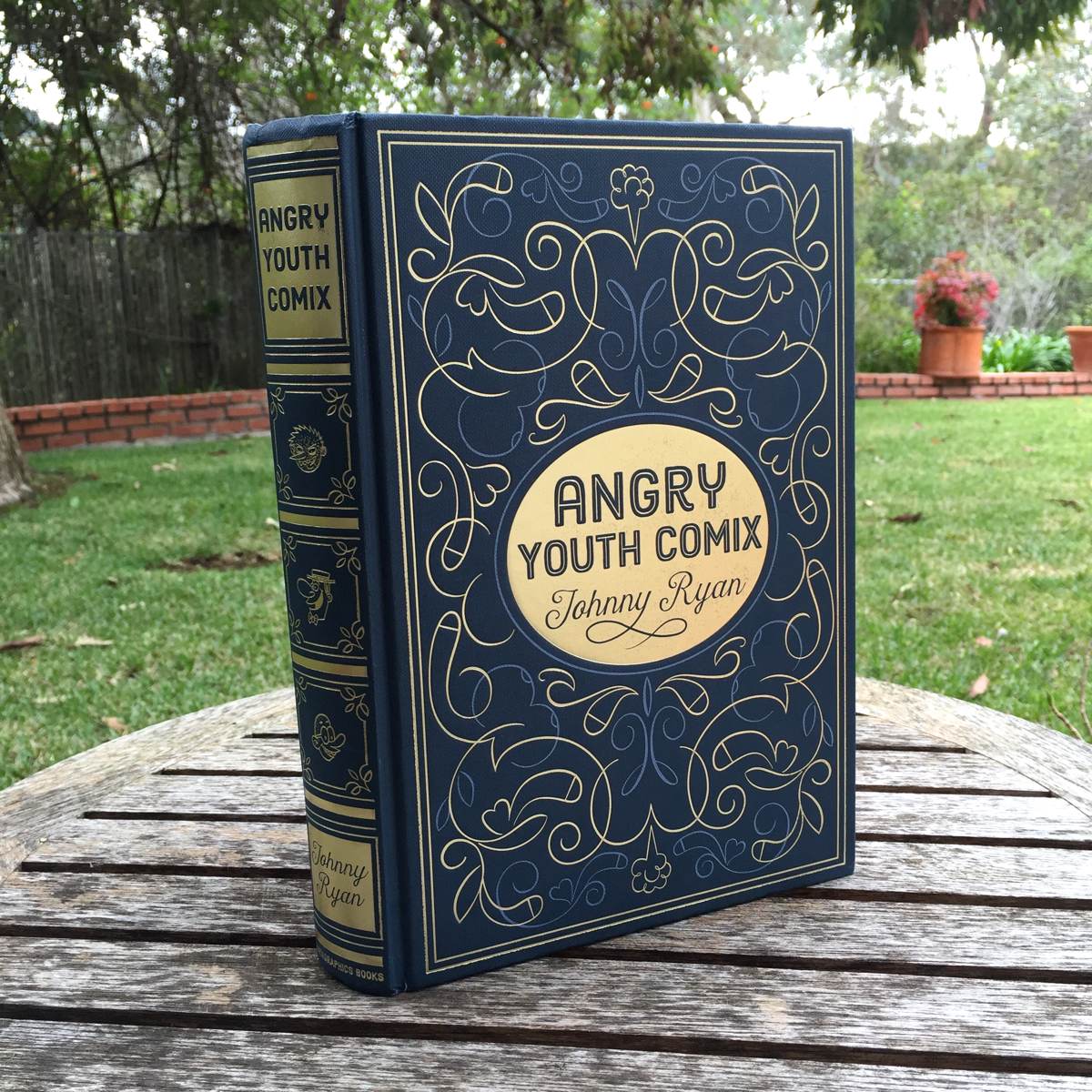
Angry Youth Comix is a beautifully designed and produced hardcover book containing the complete run of an infantile, ridiculous comic book called Angry Youth (published from 2000–2008).
Read the rest
What color is this dress? is a really strange phenomena currently seen taking over twitter, as people see a blue dress with black lace while others insist it is white with gold. So far, no one can tell why exactly it is happening, other than it is baffling for both sides.
Coca-Cola celebrated the 75th anniversary of Fanta with a video, in which they call Nazi Germany “good old times.” Now the company is disassociating itself from the video.
The video starts with an unassuming line: "75 years ago, resources for our beloved Coke in Germany were scarce."
But why exactly were resources scarce in Germany at that time? Coca-Cola doesn't mention that.
Fuse / Getty Images
Here's a hint: From 1939 on, Germany was waging war in Europe.
AFP / Getty Images
The workaround that Coca-Cola's German branch had to that resource scarcity was a "fantastic idea," as the video explains, hence why it's called "Fanta."
Pokemon. Back in the late 90s and early 00s, the mere mention of it sparked arguments, friendships, rivalries, and the imagination of millions of children. Now, two decades later, there’s well over 700 of these critters. Can you believe that? Since its creation, the Pokemon franchise has brought in $40.98 billion. That’s $56,995,827.54 per pokemon. This video takes you behind the scenes and explains the game mechanics and Satoshi Tajiri’s vision, which has since become an international sensation.
Hola esta vez os dejo una espectacular recopilacion de las aventuras de Sir Tim O`Theo. Creado por RAF, uno de los grandes historietistas del comic español. Tan solo deciros que estos comics estan claramente influenciados por el famoso detective Sherlock Holmes y supuso para su autor uno de sus mayores y mas reconocidos trabajos. Simplemente magistral... Disfrutarlo.
SINOPSISSir Tim O' Theo es una serie de historietas creada por Raf, que apareció por primera vez en 1970 en las revistas Mortadelo y Super Mortadelo, de la Editorial Bruguera. Algunos de los guiones de estas historias son obra del escritor Andreu Martín.
Sir Tim O'Theo es una parodia tanto de las novelas policíacas clásicas (especialmente las de Sherlock Holmes) como del carácter británico, ninguno de cuyos tópicos deja de explotar. La acción se sitúa en el pueblo ficticio y típicamente británico de Bellotha Village, en las proximidades de Londres. Las historietas son breves (la mayoría oscilan entre dos y seis páginas de extensión). En casi todas ellas, Sir Tim y Patson se enfrentan a un problema que parece insoluble, pero que al final se revela como banal.
Los personajes principales de esta historieta son Sir Tim O'Theo (Sir Timoteo Archibaldo O’Theo, de los O’Theo de Belfast), aristócrata inglés de edad avanzada que vive de rentas y dedica su ocio a la resolución de enigmas, y su mayordomo Patson (evidente deformación del nombre del doctor Watson, compañero de Sherlock Holmes). Sir Tim O'Theo es calvo, con espesas cejas y un gran bigote blanco y monóculo. Característicos del personaje son también la gorra escocesa, a cuadros, y la pipa. Viste con elegancia británica, a menudo traje de tweed. La indumentaria de Patson es la característica de los mayordomos en los tebeos: chaleco a rayas, levita y corbata roja; destacan también en su apariencia las largas patillas y el sombrero hongo.
AUTORRAF, (Juan Rafart Roldán) nacido en el año 1928, en la decada de los cincuenta comenzo a trabajar como dibujante colaborando en publicaciones como "Risa", "Paseo Infantil" o "Yumbo" e ideando a personajes e historietas como "La vida aborregada de borrego", "Sherlock Gomez", "Mr Cha Cha Cha, Director de cine" entre otros muchos...
En 1958 se incorporo a la Editorial Bruguera, en donde creo multiples personajes como "Rodolfito Mastecoso", "Doña Paca Cotillez", "Don Pelmazo", "Olegario", "Doña Tecla Bisturin", etc... Durante un corto periodo, Raf tambien trabajo en publicaciones inglesas.
En 1971 alcanzo uno de sus maximos logros al crear el aristocratico detective "Sir Tim O'Theo" quien estaba acompañado en sus aventuras policiacas por Patson y Blops. Mas tarde y firmando como "Dino" colaboro con otras revistas como "El Jueves".Raf, uno de los grandes historietistas españoles fallecio 2l 13 de Octubre de 1997 a la edad de 69 años.
Edicion "LA Paraeta" Tomando como inicio una de las mejores recopilaciones realizadas por EAGZA he creado una nueva edicion que cuenta basicamente con nuevas portadas, prologos, anexos y algunas correcciones de contraste y color en algunas de sus viñetas, de estas forma la coleccion pasa de sus 6 volumenes originales a 16 Tomos de aproximadamente 140 paginas cada uno... Eskerrik asko Emilio.
Idioma: Español. Editorial: Bruguera. Guion: Raf, Andreu Martin. Dibujo: Raf. Tradumaquetadores: Cantoseegla, Balrog, Jargimen, varios (CRG), EAGZA (TFH) y Txipi para (La Paraeta y HTAL) Archivos: 16 Tomos (140 pag c/u). Formato: CBR. Tamaño: 1.15 Gb.
Stompin' Shakin' Rhythm 'n' Beat 'n' Rock 'n' Roll!ALL (!!!) tracks that you have on the CD version, which means 20 tracks of which 4 weren't on the Larsen vinyl. This is their Debut LP with 20 songs of the best beat from Europe, that will make you dance all nite long ! Great vocals of Marcel Bontempi with the 2 sensual Montesitas on backing vocals. Is it The Shake, Is it the Watusi or is it The Twist! The MONTESAS do `em all!
trax:
01 Introduction & Link Rip Off 02 I Don't Love You 03 Tricky Dicky 04 Terry's Inferno 05 Black Boots 06 Blues N°1 07 Lie To Me 08 R.C. Cola 09 King Lonely The Blue 10 C'mon Babe 11 Southern Love 12 Can't Find The Doorknob 13 Agent X-Ray 3 14 Sunny 15 Kick You Out 16 Teen Crime Wave 17 Booze Party 18 Going South 19 Snake In Your Boot 20 Montesas Stomp
Tanto va el cántaro a la fuente. Tanto. Dice la contratapa de Las ganas que esta es la novela más tierna de Lorenzo. El miedo que me da la palabra tierna no lo sabe nadie. Me suena a bebé y a esos perversos anuncios que hacen en invierno las compañías energéticas para crujirnos con la siguiente factura. Me suena a ñoño y a sensible y a muchas cosas de esas por las que plantas un libro en el estante y te olvidas dónde. Pero ay Lorenzo. Santiago Lorenzo ya apuntaba muchas maneras en sus dos novelas anteriores, sobre todo en Los millones. Escritor de esos que parecen francotiradores, empeñado en generar hasta sus propias palabras (aquí hay unas cuantas) con tal de comunicar ¿Por qué puede hacerlo Cortázar y no este vasco peludo? Y con Las ganas no es que rice el rizo. Eso sonaría a hastío, casi a empeño grotesco, y va a ser que no, o va a ser que para nada. Porque a costa de hacerse el extemporáneo, Lorenzo me está pareciendo más moderno que muchos. No se obsesiona para que se le lean entre líneas todas las lecturas de novelas y visionados de películas y de series. No intenta imponer un lenguaje castizo a base de recaídas en lo chabacano o en el graciosismo. Sus personajes son entrañables hasta en su justa medida de patetismo. Pero no son entrañables de lloriquera. Son retratos de todos esos tipos que algunos podemos ver colgados de la barra del metro o esperando el autobús con la mirada perdida.
Benito Bernal lleva tres años sin echar un polvo. Sin retozar. Sin cópula. A pan y agua. Y encarna al perdedor anónimo en el que ninguno de los millones que retrata gustan de verse reflejados. Pero como lectores, cómo nos gusta pensar que esa semblanza no es la nuestra. Cómo nos gusta pensar que vemos por el ojo de la cerradura del vecino y nos reímos de sus miserias. Su impresentable entorno se empeña en poner remedio a esa situación. Porque lo aprecian y porque creen que es injusto. Así que sus empleados ponen su empeño en que Benito encuentre ya no una media naranja sino una especie de desahogo. Que no sea pagando, claro. Porque, encima, no tiene dinero. Pendiente de que una empresa en Bristol concrete en cifras el interés mostrado por el mocordo, producto químico capaz de obrar milagros en la madera, Benito arrastra por el barro a Terre, S.L., empresa de su propiedad, donde cuenta con tres empleados, que parecen ser los únicos tres seres más necesitados que él. La expectativa de que el mocordo actúe de espoleta de un eventual renacimiento de su existencia es otra baza que se adivina perdedora. Pero lo de sus tres años de sequía sexual, complicado de por sí, va a complicarse más. De una forma que ya no hay que desvelar aquí.
Habrá quién se enerve con el juego léxico de Lorenzo, que escribe de una forma florida y desinhibida pero a la vez cercana y asequible. Puede que ese costumbrismo actualizado, que bebe de Arniches o Jardiel Poncela pero también del deprimente panorama social de la actualidad, no parezca, con ese efecto tragicómico, lo más adecuado para seguidores de literatura intelectualizada como Pynchon o Franzen. Lorenzo tiene la suerte de no tomarse a sí mismo todo lo en serio que, con su chispeante talento, debería. No me hubieran importado treinta o cuarenta páginas más de resolución de la novela, que acaba de forma algo brusca y precipitada. Curioso: me hubiera gustado un final más reposado y elaborado, menos pendiente de cuadrarlo todo y más entregado a lo lírico, que es la gran fortaleza de su autor.
Puede que Las ganas cierre una trilogía dedicada a las bromas agridulces del azar o del destino o puede que lo siguiente de Lorenzo sea una novela de terror ambientada en un suburbio de Bielorrusia. Puede que quepa exigirle a su autor un cambio de registro o quedemos ávidos y hasta hipnotizados por ese estilo característico pero, cosa bastante difícil hoy en día, personal y original. De momento, Santiago Lorenzo ofrece en sus tres novelas bastante más de lo que muchos escritores son capaces de ofrecer.
TRAVESTI AFGANO es un grupo de Pontevedra formado por Rafa (guitarra, teclado y voz), Luismi (guitarra y voz), Marqui (bajo) y Camilo (batería).
Estos chicos con muy inquietos y son miembros de otras dos bandas, Rafa y Camilo militan en Metralletas Lecheras (ahora parado), Marqui y Luismi en Lobishome.
Su música mezcla el post punk con el garage rock y el noise, nos recuerdan a Bauhaus, Killing Joke, Joy Division, The Cramps, Ramones,…
Sus letras con mucho humor nos hablan de Perras locas, Veneno, era nuclear, Sexo débil, Alumizajes, Cuerpos Ciclados…
Tienen publicados una cassette en seara records, un split cassette junto a Monstruo en Discos Porno y están preparando lo que va a ser su puesta de largo con Mama Vynila.
DISCOGRAFÍA:
- Travesti afgano/Monstruo ep (Discos Porno 2014) - Yo se la chupé a Mark Smith (Seara records 2013)


/cdn0.vox-cdn.com/uploads/chorus_asset/file/3452634/checkershadow_illusionmod.0.jpg)


 Pioneering Spirit is the world's largest platform installation/decommissioning and pipelay vessel built for the Allseas company.[1] The ship is also by far the world's largest vessel overall ever constructed in terms of its gross tonnage of 403,342 gt, as well as its breadth (123.75 m/406 ft) and displacement (900,000 metric tons).[2] The main construction was done at Daewoo shipyard, Korea and final completion will be in the Netherlands. Main diesel power comprises eight MAN 11.5 MW engines and one 4 MW harbour engine with two engines each in four separate engine rooms[3] with 12 Rolls Royce 5.5 MW thrusters.[4] The vessel was designed by a Finnish engineering company Deltamarin. Allseas¹ has committed to build Pioneering Spirit at a cost of US$1.7 billion. In an interview with De Telegraaf"[5] chairman Heerema named a price of €2.4 billion for the 382 metres (1,253 ft) long vessel. AllSeas has committed to building an even larger version of the same design, which will be operational in 2020.[6]


 Gary Brecher is the War Nerd.







 ALL (!!!) tracks that you have on the CD version, which means 20 tracks of which 4 weren't on the Larsen vinyl. This is their Debut LP with 20 songs of the best beat from Europe, that will make you dance all nite long ! Great vocals of Marcel Bontempi with the 2 sensual Montesitas on backing vocals. Is it The Shake, Is it the Watusi or is it The Twist! The MONTESAS do `em all!
 ALL (!!!) tracks that you have on the CD version, which means 20 tracks of which 4 weren't on the Larsen vinyl. This is their Debut LP with 20 songs of the best beat from Europe, that will make you dance all nite long ! Great vocals of Marcel Bontempi with the 2 sensual Montesitas on backing vocals. Is it The Shake, Is it the Watusi or is it The Twist! The MONTESAS do `em all!


