 |
| Sandor Katz on how to get started with fermenting at home Sandor Katz explains why home fermentation is nothing to be afraid of. |
| Keep reading on TastingTable.com |
Shared posts
22 Apr 00:05
Fermentation for Dummies
by concierge@tastingtable.com (Tasting Table)
22 Apr 00:05
Hipnosis
by Antonio Martinez Ron
Conseguir programar a alguien para que haga lo que deseamos es un viejo sueño de la humanidad. Durante siglos, los más estrafalarios personajes han intentado dominar el pensamiento de la gente, convertirlos en sus esclavos o en simples juguetes con los que entretener a la audiencia. Pero, ¿se puede programar a un ‘candidato de Manchuria’? ¿Hay algo de verdad entre tanta parafernalia de péndulos, magos y espirales?
Con ayuda del psicólogo Eparquio Delgado nos adentramos en un terreno peligroso. En los siguientes minutos jugaremos con vuestra mente hasta conseguir que no distingáis entre realidad y ficción. Al despertar, algo habrá cambiado en vosotros. Pasad, pasad, amiguitos…
* Este capítulo ha sido patrocinado por el gran Berto Romero, a quien podéis ver en el teatro Borrás con su espectáculo “Berto Romero sigue con nosotros“. Si quieres patrocinar un capítulo, ponte en contacto con nosotros.
Para descargarte los audios directamente, puedes suscribirte al podcast a través de iVoox. Si quieres aparecer como patrocinador d eun capítulo, ponte en contacto con nosotros.
Agradecimientos: Eparquio Delgado, Berto Romero.
** Catástrofe Ultravioleta es un proyecto realizado por Javier Peláez (@Irreductible) y Antonio Martínez Ron (@aberron) con el patrocinio parcial de la Cátedra de Cultura Científica de la Universidad del País Vasco y la Fundación Euskampus. La edición, música y ambientación obra de Javi Álvarez y han sido compuestas expresamente para cada capítulo.
21 Apr 23:20


Apertura, velocidad de obturación, e ISO, explicados en una sola imagen
by Carlos Zahumenszky
Aprender fotografía puede ser una tarea complicada, sobre todo cuando llegamos a conceptos que son básicos pero un tanto abstractos a la hora de entenderlos o de explicarlos. Eso es lo que pasa precisamente con la apertura, la velocidad de obturación o los números ISO. Esta ingeniosa infografía lo explica de un vistazo.
21 Apr 23:14
 The Dice Tower released their 2014 Gaming Award nominee list. Here’s the official press release: April 21, 2014 The Dice Tower Network
Dice Tower 2014 Awards Announced
by Robert Searing
The Dice Tower released their 2014 Gaming Award nominee list. Here’s the official press release: April 21, 2014 The Dice Tower Network
21 Apr 23:13
Peach Kelli Pop – III (2015)
by exy
 There’s a line from the immortal 1996 Kids in the Hall film Brain Candy where the mega-smarmy pharmaceutical marketing guru Cisco (played by Bruce McCulloch) comes up with a tagline for a new antidepressant pill: “Gleemonex makes it feel 72 degrees in your head… all the time.”
The most recent album from Ottawa-born, L.A.-based Allie Hanlon, otherwise known as Peach Kelli Pop, has the exact same effect: after an initial spin of III, your brain will feel like a warm, sun-dappled sand dune.
III features cleaner production and sharper song structures than Hanlon’s previous two releases, and the songs are hookier, too. She’s written odes to childhood treats and the soft moments that buoy the hearts of tuff kids: washing away your…
320 kbps | 50 MB UL | HF | MC ** FLAC
…sins with shampoo; lovers that speak their minds; the joys of running naked into the ocean with your sweetheart. Highlights include current single “Plastic Love,” the beachiest heartbreak tune since Bleached’s “Searching Through the Past,” the surprisingly heartfelt “Princess Castle,” which pays loving homage to Super Mario Brothers and a completely faithful cover of the Sailor Moon theme song (yessss!).
Album closer “Please Come Home” embodies the best things about this record: it explores very real feelings of longing and desire with a chiming and irresistible purity. Clocking in at just barely 20 minutes, III is endlessly replayable and filled with garage-pop gems. There’s a new drug, and it’s called Peach Kelli Pop.
Jesse likes this
21 Apr 23:13


The King Khan & BBQ Show - Bad News Boys - 2015 - In The Red Rds
by MrNoon
...YES!!!!... le SULTAN,
Mark de son prénom,
a réussi à réapprivoiser THE SNAKE
aka ARISH KHAN au son du
DOOWOP/GARAGE/GOSPEL
qui les caractérisent depuis 2005....
...5 ans après leur dernière prise de tête,
qui avait mis fin à leur
divine et fusionnelle collaboration,
ils ont réussi à faire
une nouvelle fois table rase du passé,
d'où ce nouveau LP

où l'appellation "King Khan & BBQ Show"
disparait pour laissait place au
tout nouveau concept "Bad News Boys"...
...rassurons-nous, à part le nom, rien n'a changé....
!!!! ENJOY & COMMENT IN COMMENTS !!!!
...The Worst Is Yet To Come...
21 Apr 23:11

5 jokes that explain how Amy Schumer became the new queen of comedy
by Alex Abad-Santos
Amy Schumer has had a good year.
Fresh from hosting the MTV Movie Awards, the comedian is now celebrating the season premiere of her show Inside Amy Schumer, which airs Tuesdays on Comedy Central. And on Tuesday, April 21, the morning of the premiere, the network announced it has renewed the show for a fourth season.
If you haven't been keeping up with Schumer's meteoric rise and are curious as to how she got here, these five moments will help explain her genius:
1) Amy Schumer goes hard at the roast of Charlie Sheen
This roast changed Schumer's career and was the first time many people (aside from devoted fans of NBC's Last Comic Standing) had heard of her. Schumer was filthy, dressing down everyone from Kate Walsh to Mike Tyson. But it's what she said about Jackass cast members Steve-O and Ryan Dunn, the latter of whom died in a drunk driving accident, that became news.
"I truly am — no joke — sorry for the loss of your friend Ryan Dunn. I know you must have been thinking, 'It could've been me.' And I know we were all thinking, 'Why wasn't it?'" she told Steve-O.
2) Amy Schumer can't take a compliment
Because of her appearance at Charlie Sheen's roast, there was (and still is) a tendency to talk about Schumer in the same breath as Sarah Silverman, Chelsea Handler, and Whitney Cummings, the thought being: here are attractive women saying raunchy things.
That's not really fair to Schumer or to any of those comedians.
In Inside Amy Schumer, Schumer shows off her talent for writing great comedic sketches. She hones in on her subtle brand of feminism, one that tackles really big issues (such as the way women are taught to be self-effacing) by blowing them up in scale to hammer home their absurdity.
See above for a great example.
3) Amy Schumer plays a realistic military video game
Schumer released this skit during the national conversation about the increase of sexual assault in the military and lack of action to curb it. In the skit, Schumer creates a female character in a military-set video game. The character is immediately raped, forced to do endless amounts of paperwork, and is smeared at her hearing. It's much more on the nose than, say, Schumer's skit on women taking compliments, but it succeeds because Schumer knows exactly when boldness is needed to make a point.
4) Amy Schumer on Girls
This summer, Schumer will star in a romantic comedy she wrote called Trainwreck, directed by Judd Apatow. The movie debuted at South by Southwest, and the early reviews say it's pretty good. But Schumer's acting talent was evident from her guest spots on Girls as the best friend of Adam's short-lived girlfriend Natalia (Shiri Appleby). Schumer's appearances show off her razor-sharp timing.
5) Amy reminds us butts are where the poop comes from
2014 was the year of the butt. Everyone from the New York Times to Nicki Minaj and J.Lo told us this time and time again. Enter Amy Schumer, who skewers this cultural phenomenon and makes us feel all a little bit silly (okay, sillier) for liking butts.
21 Apr 22:59
If you are not paying for it et cetera
by no mind
"Do Not Track is a personalized web series about privacy and the web economy. If you share your data with us, we'll show you what the web knows about you."

James Kew likes this
21 Apr 22:57

Kurt Vonnegut's "Shapes of Stories" as an infographic poster
by Mark Frauenfelder

Graphic designer Maya Eilam has created a print of her infographic on The Shapes of Stories by Kurt Vonnegut. You can buy one in her Etsy shop. Read the rest
David Mulhern and -1 others like this
21 Apr 22:54
By Grabthar’s Hammer! Paramount Will Bring Galaxy Quest to TV!
by Teresa Jusino
 Television needs more sci-fi comedy, and thankfully, all of us making Galaxy Quest a cult hit has paid off! Paramount is currently putting together a television version of the 1999 Dreamworks film!
 Galaxy Quest is, of course the story of the cast members of a long-cancelled sci-fi TV series (very obviously parodying the original Star Trek) who accidentally gets transported onto a spaceship to help a real alien race and become reluctant heroes. Lest you worry the show won’t have the same charm as the original, rest assured that Robert Gordon, the film’s original writer, will be writing this adaptation, creating it along with Breaking Bad‘s Mark Johnson and director Dean Parisot through Gran Via Productions.

Hopefully, this show will be even better than the show in the film. Or not, and that will totally be its appeal! Whatever happens, today is an awesome day for sci-fi comedy fans everywhere. Paramount, we salute you.

What do you make of the news?
(via Deadline Hollywood)
—Please make note of The Mary Sue’s general comment policy.—
Do you follow The Mary Sue on Twitter, Facebook, Tumblr, Pinterest, & Google +?

21 Apr 22:46

Harlem Renaissance chorus dancer, 102 years old, sees self on film for the first time
by Xeni Jardin
“Alice Barker was a chorus line dancer during the Harlem Renaissance of the the 1930s and 40s. She danced at clubs such as The Apollo, Cotton Club, and Zanzibar Club, with legends including Frank Sinatra, Gene Kelly, and Bill "Bojangles" Robinson.” (more…)
21 Apr 17:28
Savor Flavor
by Nicola Twilley
Why does grape candy taste so fake? What on earth is blue raspberry, anyway? And what is the difference between natural and artificial, at least when it comes to flavor?
Join us as we taste the rainbow on this episode of Gastropod, from artificial flavoring’s public debut at the 1851 Crystal Palace exhibition, to the vanilla-burping yeasts of the future. We’ll experiment with Skittles, discover how invented flavors first appeared in our daily diets, and visit a synthetic biology lab, all in our quest to understand what artificial flavor is, was, and might be. Along the way, we’ll learn what exactly goes into designing the perfect pineapple from one of America’s top flavorists, investigate beaver butts, and discover the taste of an extinct banana. Listen now!
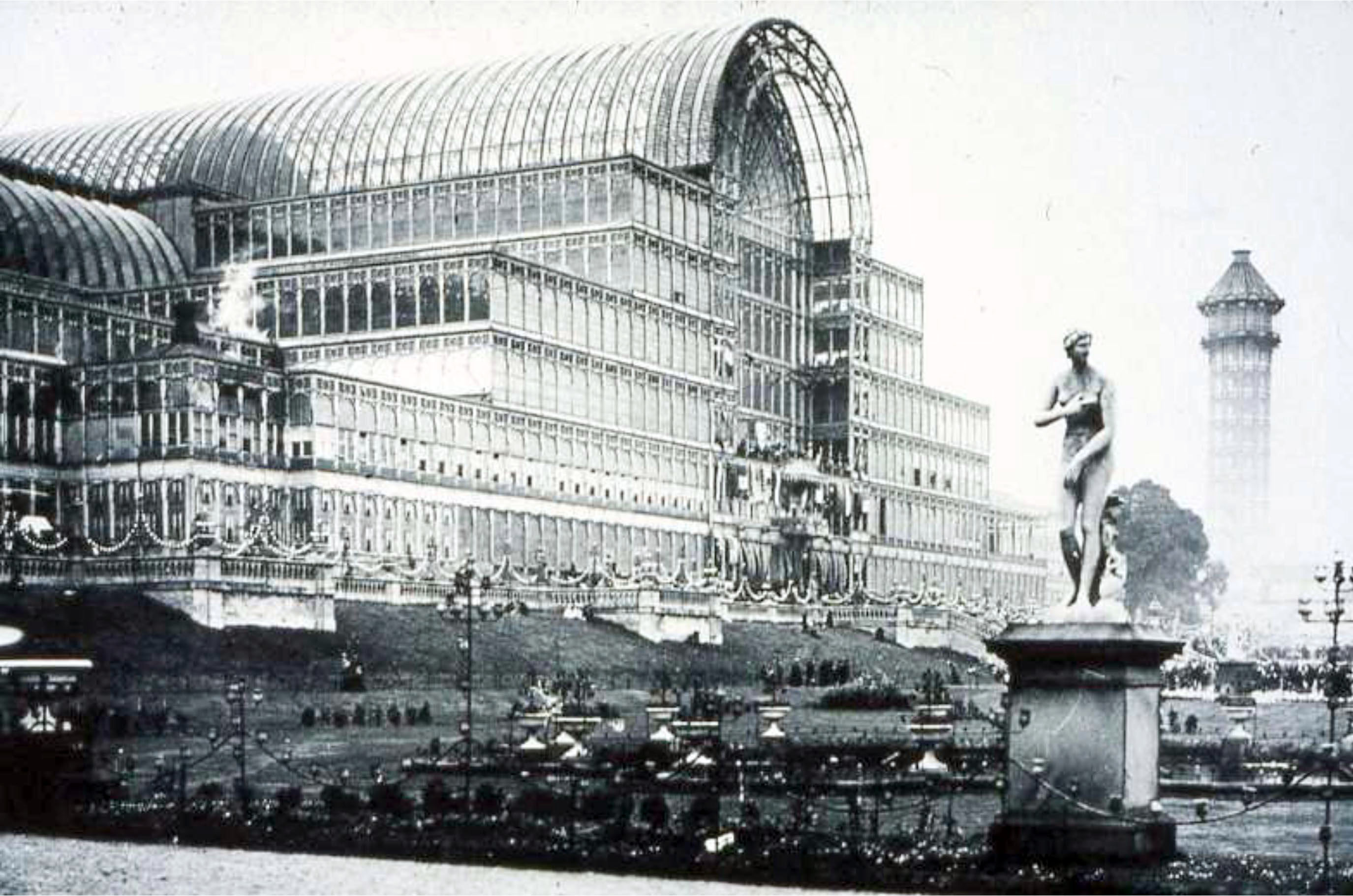
The Great Exhibition of 1851 was housed in Joseph Paxton’s extraordinary Crystal Palaces, and contained “the wonders of industry and manufacturing from around the modern world,” including folding pianos for yachtsmen, a couple of velocipedes (the early version of a bicycle), and, of course, some lozenges flavored with artificial fruit ethers.
Throughout human history, if you wanted to make a dish taste like strawberry, you had no choice but to add a strawberry. But in the 19th century, scientists began to understand how to synthesize flavor chemicals, whether from plants or from byproducts of coal processing, to evoke familiar flavors. While the technology to evaluate the flavor molecules of a particular food have become increasingly sophisticated in the past century, the basic concept of synthetic flavor has remained unchanged. Until now. In this episode of Gastropod, molecular biologists explain how they’re designing yeasts to ferment the tastes of the future.
Natural vs. Artificial
Let’s start with a graham cracker. Just like Sylvester Graham back in 1829, if you’re baking at home, you’d probably use coarse-ground whole-wheat flour, wheat bran, and wheat germ. These, along with some honey for sweetness, would give your graham crackers their distinctive toasty, malty, and slightly nutty flavor. If you’re making them by the billion, however, at a Nabisco or Keebler factory, the ingredients list looks a little different. That extra wheat germ and bran contain natural oils with a tendency to go rancid—but, when you cut them out to gain shelf-life, you lose the flavor.
Fortunately, there’s an easy solution: you can add all that flavor back with just a touch of a light yellow, crystalline powder called 2-acetylpyrazine. This is an aromatic, carbon-based chemical, known by flavorists as the “graham-cracker” flavor. It occurs naturally in nuts and toasted grains; as the vital ingredient giving factory-made graham crackers their signature flavor, it can either be extracted from a plant or synthesized using petrochemical derivatives.
The major difference is that 2-acetylpyrazine produced by performing chemical reactions on plant matter costs about $25 per lb—compared to the $5 or $6 per lb it costs to produce the kind whose raw ingredients come in a drum.
However, using the cheap version comes with another, increasingly significant cost: it means you have to include the words “artificial flavor” on your graham cracker ingredients list. Under FDA rules, if the raw material to make your flavor chemical comes from a plant, animal, or edible yeast, it’s “natural,” for the purposes of labeling. If it comes from anything else, it’s artificial. And consumers increasingly don’t want to buy things that are “artificial.” In fact, Michelle Hagen, a senior flavorist at Givaudan, the world’s largest fragrance and flavor company, told Gastropod that, despite the cost savings, she hasn’t used a single artificial chemical in her flavorings for the past four years—because the companies she mostly works with know that customers are turned off when they see that word on a label.
Enter the (Genetically Engineered) Yeast
Until recently, the natural flavors that Hagen uses would, for the most part, have been extracted from a plant; a handful of rarer ingredients, more often used in perfumery, would have come from animal sources. Today, advances in genetic engineering, combined with the growing consumer demand for natural flavors, are creating an intriguing new option for the world’s flavorists. In the past, the mention of “edible yeast” in the FDA definition of natural flavors typically referred to savory yeast extracts; now, designer yeasts are beginning to pump out vanilla, saffron, and even grapefruit flavors.
For this episode, Gastropod visited Ginkgo BioWorks, one of a new wave of companies redesigning yeasts to produce fragrance and flavor chemicals. As Christina Agapakis, a scientist, writer, and artist who recently joined Ginkgo’s staff, explained, the biology behind genetically modifying microbes to produce other, useful chemicals is not new. More than three decades ago, in 1978, biotech companies successfully inserted genes into bacteria to produce human insulin, meaning that diabetics need no longer depend on a close-enough version extracted from pig pancreases. In 1990, the FDA approved rennet made by inserting cow genes into E. coli bacteria; today, more than 90 percent of all cheese in the U.S. and U.K. is made using this bio-engineered product, rather than natural rennet found in the stomach linings of calves.
What is new, Agapakis told Gastropod, is “the ability to create flavors.” Rather than inserting the single gene that codes for the insulin protein, she explained, “to make a flavor, you might need five or ten different enzymes that are creating a whole pathway and are really shifting the metabolism of the yeast.” Fitting all those genes together so that what works in a plant to produce flavor also works in a yeast cell is challenging. Ginkgo has been developing its first yeast-fermented ingredient—a rose oil for the fragrance industry—for a couple of years now.
In fact, as organism designer Patrick Boyle explained, the main reason that the Ginkgo “foundry” is filled with liquid-handling robots and high-tech machines is to help him and his colleagues rapidly run through all the tweaked yeasts that don’t work. “Failure is usually not very dramatic,” he told Gastropod. “It’s just that we end up with a yeast that looks a lot like the yeast we started with.”
Still, a Swiss company called Evolva has recently brought the first of these “cultured flavors” to market: vanillin, the main ingredient in the world’s most popular flavor. Ginkgo’s rose oil smells pretty sweet, and the Boston-based company has half a dozen more flavor ingredients in the pipeline. And scientists in Austria just announced that they have successfully tweaked yeast to produce the key flavor chemical in grapefruit.
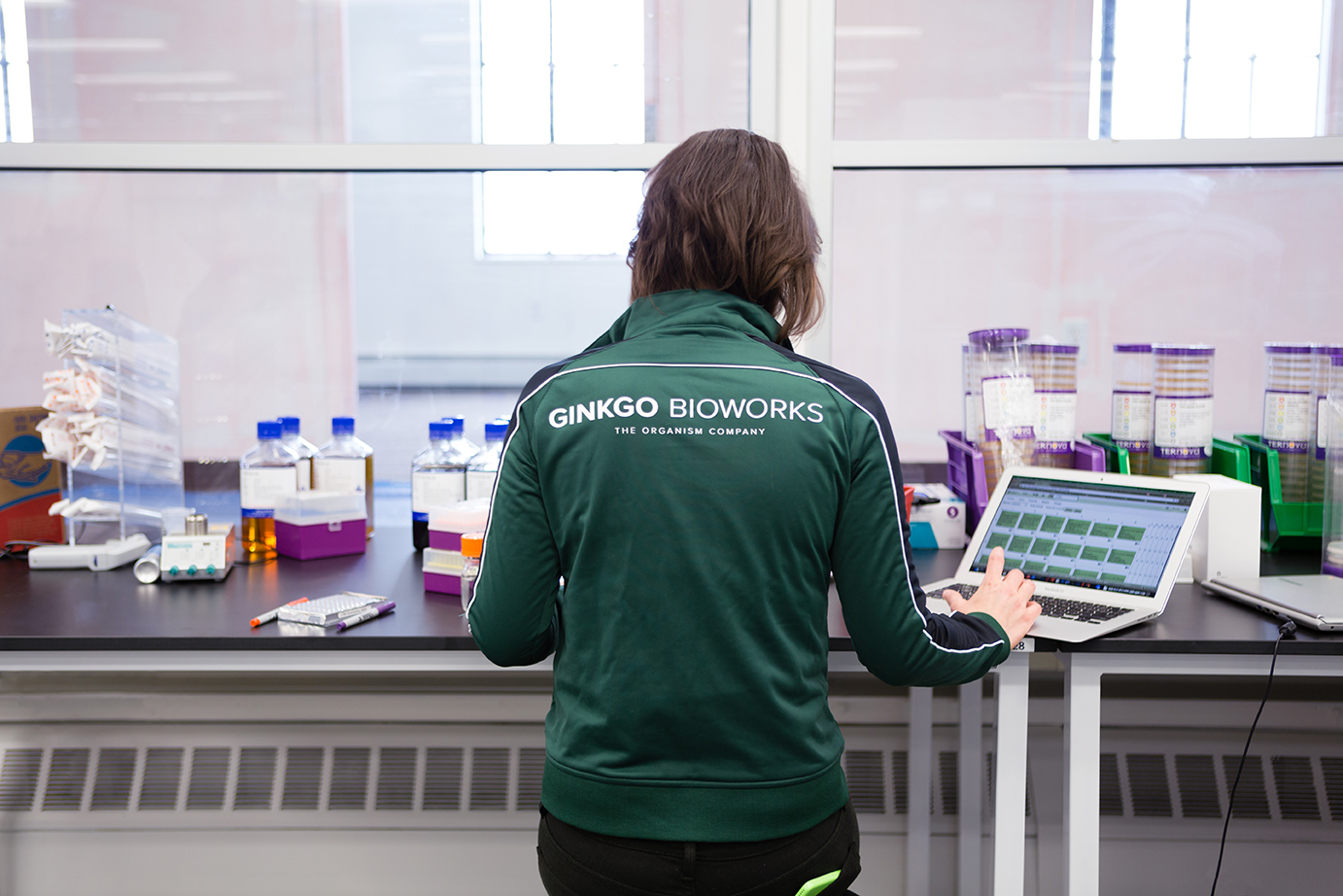
Photo courtesy Ginkgo BioWorks.
The Future of Flavor
Redesigning yeast to create flavor molecules offers some potential benefits. For starters, fermentation requires none of the harsh chemicals that are often used to extract essential oils from plants or react with petrochemical precursors. Engineered yeast also offers the possibility of democratizing rare, expensive flavors, like saffron, and, Patrick Boyle points out, it can “relieve some of the supply issues that come from using really rare plants.”
But the main attraction of this new technology for food companies is that the resulting flavors can legally be labelled as “natural”—they are produced by a yeast, after all. What’s more, because there is no yeast left in the final product, cultured flavors actually don’t contain genetically modified organisms.
Still, companies are nervous—Michelle Hagen at Givaudan told Gastropod that she hadn’t worked with any of these cultured flavors yet, and both Nestlé and General Mills responded to pressure from Friends of the Earth by pledging not to use cultured vanillin. In a press release, Friends of the Earth argued that using yeast to produce vanillin would threaten the livelihood of vanilla bean farmers in Madagascar, as well as the continued existence of the rainforest in which the vanilla orchid grows. But, as Patrick Boyle pointed out, the world demand for vanillin far outstrips the quantity of vanilla beans grown each year, and the synthetic and real vanilla industries have already managed to co-exist for more than a century.
Debates over natural vs. artificial aside, perhaps the most interesting aspect of these designer yeasts is the potential they offer for creating entirely new flavor experiences. For Christina Agapakis, the opportunity to learn more about the genes and pathways that plants use to express flavor will, she hopes, lead to productive collaborations with fruit and vegetable breeders—and increased deliciousness in the field as well as in the lab.
Listen to this episode to understand how the flavor industry got started and how designer yeasts could one day allow us to get closer to the taste of extinct, long-forgotten species—or even a Paleo flavor palette of pre-domestication plants and animals.
EPISODE NOTES
Retronasal Olfaction
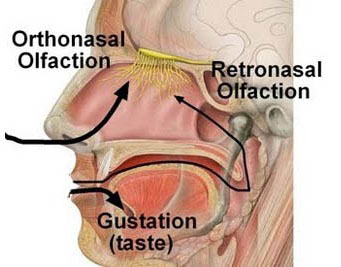 Flavor perception is largely based on a kind of smell that happens in the mouth: retronasal olfaction. This diagram shows that mysterious passage connecting the back of the mouth directly to the nose.
A Rather Embarrassing Wine Study
In a study published in 2001, Frédéric Brochet, a PhD student at the University of Bordeaux, France, ruffled feathers in the wine world by giving 54 oenology students two glasses of the same white wine, one of which had been dyed red. The students described the red-colored wine as if it was a red wine—demonstrating that our eyes play a much more important role in our flavor perception than most people had imagined. Brochet has apparently since gone on to become a wine-maker.
Nadia Berenstein
Nadia Berenstein, the flavor historian we spoke to in this episode, maintains a blog called Flavor Added that is one of Nicky’s favorite spots on the Internet. Go get lost in the archives, reading all about mystery flavor Dum-Dum lollipops, an edible meat packaging from the 30s known as Gelafinish, and the Crocker-Henderson system for classifying odors.
Artificial Flavors at the Crystal Palace
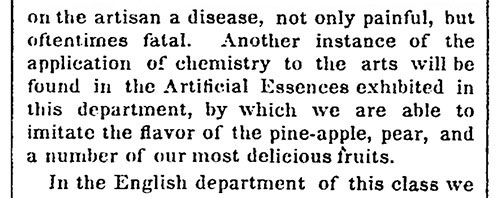 This short description, published in The New York Times on Friday, July 22, 1853, notes that Artificial Essences were on display at the Crystal Palace exhibition in the American section of the Chemical Department—alongside “fine mineral colors, pure spirits and medicinal articles.”
Kletzinksi’s Table of Artificial Fruit Essences
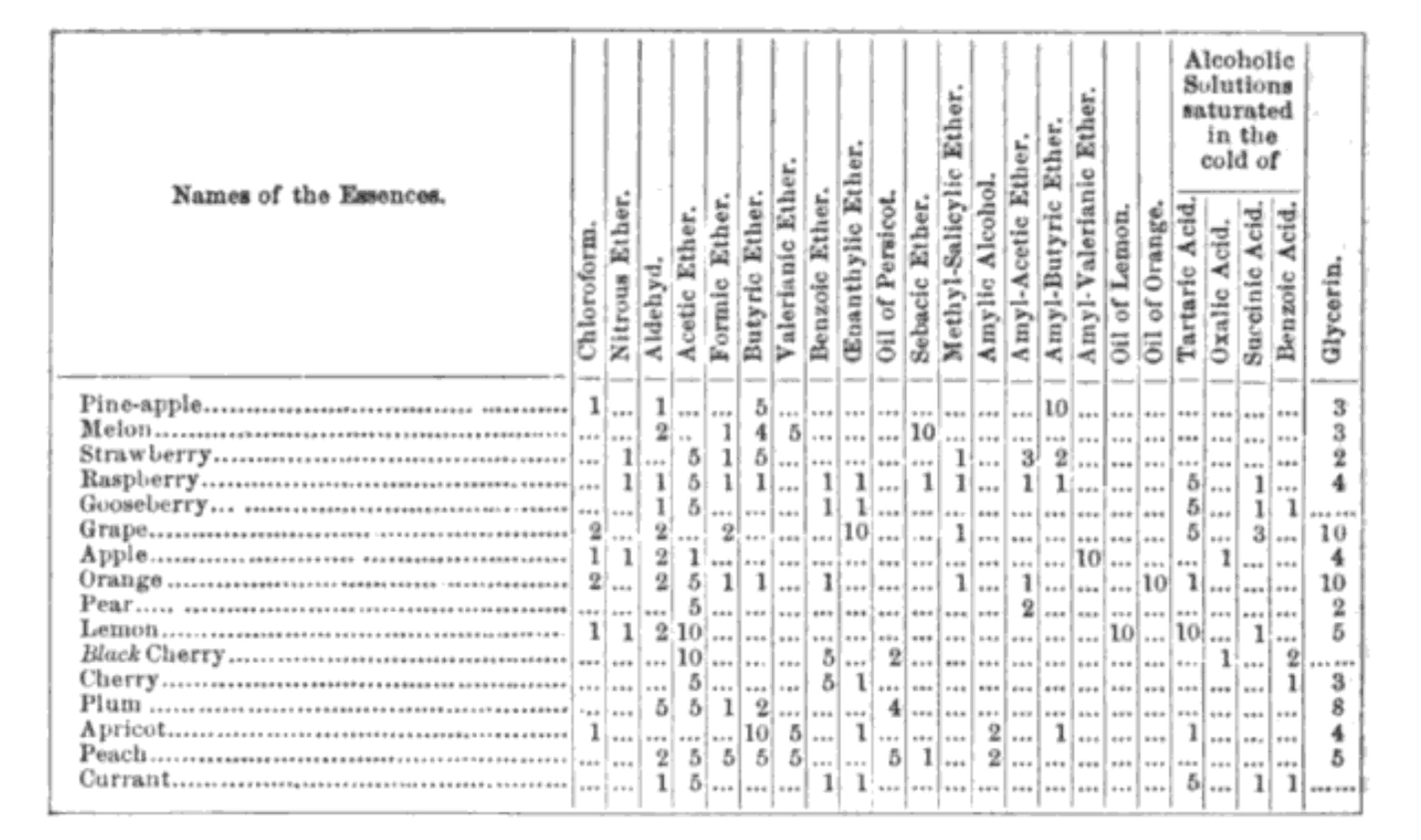
According to Nadia Berenstein, this table, published in 1866 in Dingler’s Polytechnisches Journal, was used as a standard formulary for artificial fruit essences in America for more than fifty years.
The Concord Grape Strikes Back
As Nadia Berenstein explains in the episode, fake grape flavor (a chemical called methyl anthranilate) actually tastes much more like native American grapes, rather than the seedless Californian or Chilean grapes we buy at the supermarket today. The Concord grape also provided the basis for the most American of Jewish traditions: Manischewitz wine. Read about the history of the Concord grape and its link to Passover in this great article by Yoni Appelbaum in The Atlantic.
Michelle Hagen and the Tastemakers
In 2009, Raffi Katchadourian wrote a wonderful New Yorker article about flavorists and flavoring, featuring none other than future Gastropod star Michelle Hagen. We owe a huge thanks to Jeff Peppet at Givaudan for helping set up our conversation.
Christina Agapakis
As we mention in the episode, Christina Agapakis recently launched a new online magazine about doing science, called Method. When you’ve finished reading that, check out her Oscillator blog, the cheeses she made with bacteria from people’s bellybuttons, armpits, and in between their toes, and pretty much everything else she’s ever done: it’s all fascinating!
Ginkgo BioWorks
For this episode, Patrick Boyle was kind enough to give Nicky a tour of Ginkgo BioWork‘s “foundry,” so she could see the processes of organism design and flavor fermentation in action. That kind of transparency in the food world, and particularly in the traditionally rather secretive biotech and flavor industries, is truly admirable. The company also has all sorts of other interesting projects in the works, including developing a line of advanced probiotics in collaboration with DARPA.
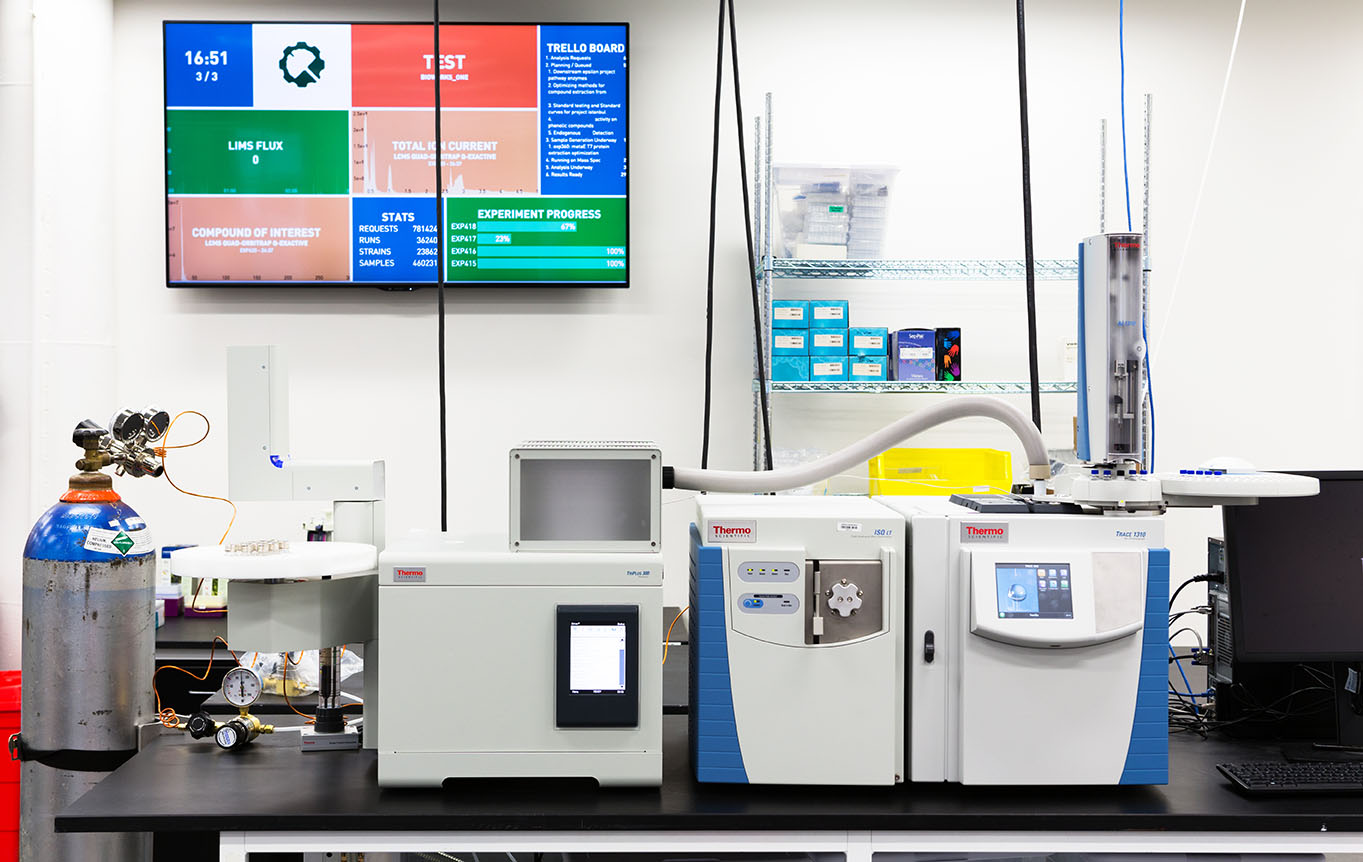
Photo courtesy Ginkgo BioWorks.
Mixed Taste at MCA Denver
Thanks to Adam Lerner and Sarah Baie of the Museum of Contemporary Art in Denver, at whose wonderful Mixed Taste lecture series Nicky attempted to explain, in public, what artificial flavor is and why it’s so interesting. Twice. Hopefully the third time’s the charm…
Like what you hear? Click here to donate and support our work!
The post Savor Flavor appeared first on Gastropod.
21 Apr 17:08

Uncovering sexual preferences by data-mining sex-toy sales [NSFW]
by Cory Doctorow

 UK sex-toy retailer Lovehoney allowed researcher Jon Millward to data-mine its huge database of over 1,000,000 sex-toy purchases and 45,000 reviews, in order to see what he could infer about Britons' sexual proclivities from the things they bought.
Read the rest
UK sex-toy retailer Lovehoney allowed researcher Jon Millward to data-mine its huge database of over 1,000,000 sex-toy purchases and 45,000 reviews, in order to see what he could infer about Britons' sexual proclivities from the things they bought.
Read the rest
21 Apr 16:16
Are You Ready To Argue About Having A Baby?
by Fiona Pearce
Before you embark on the fight about the commitment of a lifetime, it’s worth taking the time to consider whether you and your partner are truly ready to argue about having a baby together. Here’s how to know for sure:
He’s committed to the idea of arguing about a baby.
There’s no point even considering arguing about a baby if your partner’s not up for the late nights, emotional exhaustion, and domestic chaos that come with fighting about your hypothetical offspring. If you doubt his level of commitment, try asking his grandchild-hungry parents if they think you should have a baby, and see how quickly he threatens to leave you.
You’ve put your fighting-at-a-party years behind you.
If you want to start arguing about having babies, you need to be ready for your social life to take a hit. Once you’ve started fighting about whether it’s the right time to start a family, instinct will kick in and you’ll want to be home most nights, building a protective nest around yourself. And let’s face it: It’s hard to find the energy to go out when you’re busy finding new ways to be passive-aggressive!
You’re financially secure enough to argue for days on end, occasionally missing work.
There’s nothing quite like the first time a couple argues about getting pregnant, but in the excitement it’s easy to forget the long-term impact all that lingering resentment will have on your finances. Make sure you set some money aside each month so that you’re prepared for all the make-up meals and apology gifts you’ll need to buy each other when the time comes.
You’re surrounded by a network of arguing couples.
Spending time with couples who are already arguing about having a baby can be a great way of transitioning into fighting with your guy. A tense weekend away with a couple locked in a baby battle will give you an idea of what you’re in for — and it may be all the encouragement your future baby daddy needs!
You’re over 35.
If you’re over 35, your capacity to argue about having a baby is diminishing every day. Be honest with yourself about what you want, and then really lose your shit next time you’re alone with him. If it’s not possible for you any more, you can always consider arguing about having someone else’s baby.
There’s never a right time to start arguing about having a baby. Taking the leap can be daunting, but remember: No one ever regrets arguing about having a baby.
Are You Ready To Argue About Having A Baby? is a post from: Reductress

21 Apr 11:29
“Esta cultura nos ha secado el cerebro y el coño”
by Itziar Abad
Diana J. Torres nos cuenta cómo el patriarcado, el catolicismo y el capitalismo arremeten históricamente contra las mujeres acuáticas y reclama venganza para recuperar el placer y la autonomía sobre nuestros cuerpos.
21 Apr 00:43
Santiago vuelve a programar visitas guiadas al Castillo da Rocha
by Efe
Las visitas al castillo serán gratuitas con previa inscripción en la web rochaforte.info, reservando por teléfono o en la Oficina de la Ciudad Histórica

21 Apr 00:42
Estaremos na Feira da primavera com posto de material e roupa de segunda mao!! Recolhemos roupa usada!!
by Gentalha
O 2 de Maio a Gentalha do Pichel participará da Feira da Primavera do bairro de Sam Pedro. Alí estaremos com o nosso posto de material (camisolas, cd´s, baralhos, colantes, …) mas também venderemos roupa de segunda mao a preços espectáculares. Desde esta semana recolhemos a roupa que nom uses para dar-lhe umha nova vida. Podes deixá-la no local e passar a comprar pois estará exposta para a venda ao público no Pichel até o dia 2. Colabora!!!!!
21 Apr 00:41


Cuna, pañais, sonaxeiro
by @cequelinhos
Non son moi orixinal ao recordar que a liña máis feble do galego actual é a da súa transmisión familiar. Vouvos dar o exemplo da miña familia. Os meus avós da Maraña tiveron seis fillas e un fillo, loxicamente todos eles galegofalantes. De todos os curmáns, catorce en total, só tres falamos o tempo todo en galego; outros tres vano alternando e os oito restantes son castelanfalantes. Todos os meus curmáns segundos (teño cinco que xa falan) son monolingües.
Como símbolo desa perda, un dos campos léxicos máis danados da nosa lingua é o da infancia. Neste artigo explicamos como chamarlles a moitos obxectos relacionados cos bebés en galego.
A miña nai chámalle cunas ás que se compran e berces aos que se facían antigamente nas casas. Seguindo o clásico esquema de diferenciar as cousas modernas (en castelán) das vellas (en galego), moitas persoas perden o vínculo entre a palabra tradicional e o obxecto que mercan na tenda.
Amais de berce e berzo, en galego podemos usar rolo e barrelo cando no deseño da camiña do bebé se favorece que abanee con facilidade. De aí o verbo arrolar, que significa abanear o berce suavemente para facilitar que adormeza.
Por certo, en galego facer durmir exprésase a través do verbo adormentar ou adurmiñar: “Adormentei a nena; xa podemos cear”.
Pañal é un castelanismo, tan estendido que incluso hai quen o usa co plural propiamente galego (pañais) e practicamente desaparecido na fala popular. En galego debemos dicir cueiro. Ás veces úsase a palabra en plural porque antigamente os pequechos levaban máis dun cueiro. Agora, cando o 90% dos que se usan son dun só uso, é máis conveniente usar a forma en singular. “Ese cueiro garda un segredo ben fedorento”.
Outra palabra do vocabulario dos bebés pertencente á lingua española pero moi xeneralizada entre os galegofalantes é sonajero. De feito, a idea de facer este texto veume cando o outro día escoitei dicir sonaxeiro, durante unha conversa na que un pai primeirizo quería requintar o seu galego. En realidade, no noso idioma ese instrumento que fai barullo e distrae as crianzas debemos chamalo axóuxere ou ruxerruxe.
O cochecito en galego recibe o nome de carro ou carriño de bebé. A silla, loxicamente, debemos chamala cadeira.
Nalgúns outros casos, a palabra habitual en galego aínda que admitida substituíu a forma tradicional, que resiste en ámbitos reducidos. Eis o caso de biberón, galicismo admitido en galego pero de moi recente uso. Tanto a miña familia de Arbo coma a miña familia da Limia usan aínda mamadeira. “Esa botella váleme para facerlle unha mamadeira para os años”. “Ese reprís que ten teu fillo pasáchesllo ti pola mamadeira”. É unha palabra en perigo de extinción, así que se vos presta, usádea.
O dicionario da RAG admite chupete aínda que logo aplícalle á palabra chupeta algúns significados que obviamente derivaron do acto de chuchar esa bocadiña de goma. Dicionarios como o Estraviz recoñecen a palabra chupeta e non chupete. Eu penso igual. Sempre escoitei chupeta entre os galegofalantes e xa nos dicionarios históricos aparece chupeta como sinónimo de hábito de fumar, nunha clara ampliación do vicio de chuchar que teñen as crianzas.
Amamantar é un castelanismo. As formas galegas son amamentar e aleitar. “Non aleitei ningún dos fillos”. Tamén se pode usar a perífrase dar de mamar.
Seguro que coñecedes moito máis vocabulario do mundo dos bebeciños ou naipelos, que é outro nome que se lles pode dar aos meniños de peito ou lactantes. Xa sabedes que este blog sempre se enriquece coas vosas contribucións.
21 Apr 00:36
The Secret Food Emoji You’ve Never Used Before
by Elyssa Goldberg
When I was a kid, I looked up at the night sky hoping to find the man in the moon. I told a Japanese friend this story, and she found this creepy. The moon myth she learned as a kid didn’t include a man at all. She looked to the sky to find bunnies.
Japanese kids learn about the rabbit on the moon, a bunny equipped with a pestle he uses to chip away at mochi. According to legend, the craters on the moon may actually be formed by removing the sweet sticky rice balls.
Which brings us back to emoji. We’d like to consider ourselves well-versed in emoji (especially food ones), but there’s one we’ve never sent: the “moon-viewing ceremony emoji.” We just didn’t know what it meant or how to use it.

Japanese pampas grass, tsukimi dango (“moon-watching” mochi), and chestnuts set up for the Harvest Moon Festival. Photo: Wikimedia Commons
Turns out, it’s about the moon bunny. Every September or October in Japan (this year, on September 27), there’s a Harvest Moon Festival, or Tsukimi, which literally translates to “moon-watching.” It’s a holiday to express gratitude for the autumn harvest and the beauty of nature. People set aside time for good food, good drink, and good company. (It’s a holiday we can really get behind.)
During the festival, the Japanese eat mini-mochi called tsukimi dango, which they pile in pyramids. And they decorate altars with Japanese pampas grass. Children who celebrate are supposed to look up at the night sky with mochi in hand and think of little bunnies pounding away to free up more moon mochi. They sing songs about the rabbit, too. Which explains that emoji: the moon, the heap of mini-mochi, and the pampas grass.
We’ll been sending this emoji to say goodnight to loved ones, because we’d rather count bunnies and piles of mochi before we fall asleep than count sheep any day.
The post The Secret Food Emoji You’ve Never Used Before appeared first on Bon Appétit.
21 Apr 00:07
Is Late Night in Need of a "Severe Motherfucking Shakeup"?
by Megh Wright
by Megh Wright

 Late last week, Conan writer Andrés du Bouchet took to Twitter to blow off some steam regarding what he views as the less than impressive state of late night comedy today. Most of his tweets have since been deleted, but Uproxx posted the relevant ones before they disappeared. Here are du Bouchet's thoughts in full:
Comedy in 2015 needs a severe motherfucking shakeup. No celebrities, no parodies, no pranks, no mash-ups or hashtag wars. I’m fat.
and shove your lip-synching up your ass.
Prom King Comedy. That’s what I call all this shit. You’ve let the popular kids appropriate the very art form that helped you deal. Fuck.
None of the funniest stuff ever involved celebrity cameos.
Once again I’m a bonehead for tweeting as a fan of comedy instead of as a guy who earns a living doing it.
@guybranum thanks but now comes the inevitable dressing down at work for criticizing other talk shows!
add games and lip synching and nostalgia and karaoke to this list.
Sorry for being a bloviating elitist windbag last night. I know tons of talented people are making the stuff I enjoy shitting all over
Geez I wish this many people gave a crap about my opinions when I was THE leading oncological researcher in the world.
— Andrés du Bouchet (@dubouchet) April 19, 2015
Well now that that's all over (please?) I'd like to get back to my pitch for The Vroom. It's The Room but w/ Vin Diesel as Johnny.
— Andrés du Bouchet (@dubouchet) April 19, 2015
du Bouchet's boss eventually weighed in on the issue on Twitter as well, and he wasn't exactly a supporter:
I wish one of my writers would focus on making my show funnier instead of tweeting stupid things about the state of late night comedy.
— Conan O'Brien (@ConanOBrien) April 19, 2015
du Bouchet has been vocal about the desire for more creative late night writing for a while now — here's what he told us about the state of late night in our 2011 interview with him:
My solution is you guys just have to figure out how to synch your programming with the Daily Show’s so you’re on when they go to commercial and they’re on when you go to commercial. There’s so much overlap with those audiences.
I personally think that we need to just open the flood gates more and do crazier shit so that we’re not competing with anybody else in terms of addressing current events or politics. Frankly, people are going to go to Colbert and the Daily Show for that. We might as well be the people doing the insane stuff with sketches and characters and more absurd stuff. I’m hoping we can keep pushing back into that territory. We’ll see.
Are those your favorite things to write? The absurd sketches and characters?
Absolutely. The sillier and more absurd, the better. The old Late Night with Conan O’Brien show with all the characters is one of my favorite things ever, along with Monty Python and even Looney Toons cartoons. Anything that’s absurd.
Whether or not you view du Bouchet's choice to rant about late night on Twitter as unprofessional, any Late Night with Conan O'Brien fan can sympathize with his general complaint. Save for the occasional segment on Conan and Late Night with Seth Meyers, there's not a whole lot of room for truly absurd late night segments these days, especially when Jimmy Fallon, Jimmy Kimmel, and most recently James Corden have racked up tons of tweets, news headlines, and YouTube views with the kind of comedy du Bouchet is referring to — pranks, lip sync competitions, nostalgia-driven sketches and songs, dance compilations with celebrities, mash-ups, hashtag games, the list goes on and on. It's a complaint that's probably felt, but not expressed, by a lot more late night staffers out there; even frequent late night guests like Rob Lowe feel the same way:
Gone are the days when stars could be witty and well spoken on talk shows. Now they have to be jugglers, pranksters and plate spinners.
— Rob Lowe (@RobLowe) April 15, 2015
With the imminent departures of Jon Stewart and David Letterman, the late night talk show circuit is about to suffer from some severe growing pains, not to mention a dominance of mainstream, viral video-friendly comedy over the weirder and more inventive bits that cater to the comedy nerd crowd. Late night in 2015 is a constant battle for numbers and online acclaim, and the biggest numbers often come from segments that require little to no work from staff writers; Fallon's popular "Lip Sync Battle" segment has not only been turned into a full TV show over at Spike, but it scored the network its highest ratings ever for a series premiere with over 15 million viewers. Compare Fallon's YouTube views with The Late Late Show with James Corden, which has definitely made strides on the "weird and inventive" front since its premiere last month: On April 2nd, Corden's wildly bizarre episode from an LA stranger's home currently has just under 250,000 views, while Fallon's "Evolution of Mom Dancing Part 2" with Michelle Obama, posted on YouTube the same day, is about to hit the 6 million mark.
Ultimately, though, Conan O'Brien is right: If du Bouchet wants late night to be funnier, he can start by working to make sure Conan is as funny as possible every night. And if nothing else, du Bouchet's comments just amp up the pressure on Stephen Colbert's upcoming premiere as the new Late Show host later this year — only time will tell what kind of approach Colbert takes with his show, but his hiring of longtime Conan writer Brian Stack certainly paints a hopeful picture in terms of preserving a network late night space for weird, unique, and writer-driven comedy.
0 Comments
21 Apr 00:04
Realistic stock photos of people smoking marijuana

Darrin Harris Frisby/Drug Policy Alliance
In celebration of 4/20 today, the Drug Policy Alliance (DPA) is encouraging media outlets to use these stock images of people enjoying marijuana instead of the usual hippie–dippie photos we always see.
Media outlets continue to...
21 Apr 00:00
A Fan Art Tribute To Every Nerd's Meddling Spirit Animal: Velma Dinkley
1. Velma by KR0NPR1NZ
 ...
...
20 Apr 23:32
Meet the Guy Trying to Revolutionize Condoms
by Mark Hay
[body_image width='1200' height='800' path='images/content-images/2015/04/20/' crop='images/content-images-crops/2015/04/20/' filename='meet-the-guy-trying-to-revolutionize-condoms-139-body-image-1429566601.jpg' id='47932']
The man trying to change the way you have sex with strangers. Photos courtesy Robert Gorkin
Two years ago, in March 2013, Bill Gates announced a new project through the Bill and Melinda Gates Foundation to fund research into next generation condoms. Although cheap, simple to make, and widely available worldwide, Gates noted that there's still one massive barrier to seeing this disease- and pregnancy-preventing miracle of modern contraception used regularly and reliably: Most people think they feel like shit, robbing us of the sensation that makes fucking fun. So, Gates figured, perhaps if the Foundation offered $100,000 grants for research into new materials and designs (and up to $1 million for the development of successful concepts) they could incentivize a breakthrough in condom technology that'd finally make them feel good, increasing contraceptive usage worldwide and bettering global health and family planning in the process.
The world has responded to Gates's call with gusto. As of today, 52 research projects have received grants from the Foundation. Many of these projects focus on how we put on condoms, reducing psychological barriers to usage, innovative new materials, or lubricants and gels to make them more pleasurable.
But of all the fascinating new condoms in the works, one of the most interesting is the (as-of-yet theoretical) hydrogel condom. An initiative from a group of material scientists at Australia's University of Wollongong, who had little (research) experience with condoms until they got their Gates grant last June, "Project Geldom" hopes to use this ultra-strong and skin-like material, famous for recreating bodily tissues in prosthetics, to get closer than ever before to recreating the feel of unprotected sex while still offering protection—in the process displacing latex. But beyond just feeling natural, the Wollongong researchers believe that their hydrogels could actually improve on the feel of natural sex, building in automatically released internal lube and Viagra for instance, to make people not just accept condoms, but want to use them.
At the moment, the Wollongong team is still proving that their material can match the contraceptive power of latex and preparing for biometric tests to see exactly what effects on sensation their hydrogels can have. But while we wait for their new magic condoms to come onto the market, VICE caught up with project leader, Dr. Robert Gorkin, to talk about the origins of the idea, hydrogels, and improving on natural sex.
[body_image width='1200' height='1261' path='images/content-images/2015/04/20/' crop='images/content-images-crops/2015/04/20/' filename='meet-the-guy-trying-to-revolutionize-condoms-139-body-image-1429566678.jpg' id='47933']
VICE: Where did this idea come from? I know you were working with hydrogels before this project started, but how did that turn into... condoms? Robert Gorkin: Yeah [ laughs]. We were at an institute that was looking at materials for next generation 3-D printed implants and bionics, prosthetics, and whatnot. We were working in materials that were touted to be more tissue-like.
The idea really came when the Bill and Melinda Gates Foundation put out this call for a next generation condom that would have a more skin-like sensation or preserve sensation. I took that concept back to the team and at first they laughed at me. But then we started to say, our materials, although we haven't' been trying to look at those conditions, are actually quite like latex .
It was a lightning
bolt of inspiration?
You see Bill Gates wanting safer sex in these click-bait
articles, you know, so obviously I'm going to look at it. And if I hadn't seen
that link... yeah, it was just,
hey, let's
try it
.
When did you go from let's explore this to, yeah, we've got a condom on our hands?
I should clarify: we don't have condoms yet. We're still in the materials evaluation stage.
We've seen materials in our arsenal that sort of have the properties of latex. We came up with a plan for how to test them. This is what we proposed to the Foundation, and what we got our grant money for: Basically, there are hundreds of these variations to play around with. We need some that adhere to some specific mechanical and biological properties. It's got to be stretchy and tough and obviously not break, and we have to be able to prevent against the transfer of bacteria, viruses, and sperm.
There are standards to test condoms around the world, and we just used those same standards to try our new materials. By narrowing down the field, we found a few formulations that really, really work.
[body_image width='1288' height='1936' path='images/content-images/2015/04/20/' crop='images/content-images-crops/2015/04/20/' filename='meet-the-guy-trying-to-revolutionize-condoms-139-body-image-1429566438.jpg' id='47930']
Let's talk about
these hydrogels you settled on. What can they do?
I say hydrogels and people gloss over. You may be wearing a
type of hydrogel right now—you're wearing a contact lens? Well that's very
similar to some of the materials we're looking at.
Typically hydrogels are very brittle. These tough hydrogels are much tougher. You can stretch them, pull them, there are some videos online where you can drive trucks over some of these materials. They have the properties a bit like wet plastic, but they feel and act more like real skin.
The advantage of them is that hydrogels have been used for decades to do things like deliver drugs or help to regrow cells. What we're thinking we can do is invent lubrication inside the condom instead of putting a lubricant on the outside, which is necessary in latex. What if we can put it inside the condom and have it release when you need it? In the same way, you might be able to put drugs in them. Viagra is a good example. There are already condoms that are coated in Viagra, but to help with delivery. And not only those agents but things to fight against STIs—instead of putting a coating on, you could put them inside the condom itself. And with latex, if you put a glove on, you're always going to feel a glove, no matter what. But when you put these on, they're hardly perceptible. It's kind of amazing. And you wouldn't have latex allergies. They're perfectly clear so it might be a visual benefit. All of these things.
Related: Like sex? Watch this.
Are there any
downsides? Or is this a miracle material?
I wouldn't call it a miracle material. It's definitely very
new.
I think the biggest downside is that this class of hydrogels has only been around for the last ten years or so. When you're talking about attempting to disrupt a whole industry based on latex, the limitation is that they're not known, there's not the supply chain there to make them as cost effective as they could be down the line. And right now we're not exactly sure—we're growing more confident every day that the research is showing that they could be applicable materials—but we can't be sure right now.
I think if you make
something that feels like it's not there and delivers Viagra and lube mix-sex,
you just
might stand a chance of
finding a market share, though.
Absolutely. We're also exploring, what is feel. There's a lot about the perception that condoms limit
sensation that's not actually about the material itself, but about having to
put it on, or visual cues, or things like that. So some of these things about
condoms not feeling good may not be able to be overcome with just a material
change. But if we can make them feel better, we certainly have an idea we can
revolutionize with.
If you're working
with a new material, couldn't you change the form of condoms? Like the liquid
Band-Aid of condoms or something like that?
There was a spray-on condom at one point. But there were a
whole bunch of issues with those. I think with the spray-on condom the issue
was that nobody wanted to put their member in the box, where you couldn't see
what was going on.
Given the existence
of glory holes, I'm surprised that would hold people back.
Well, I mean they say, we're
going to spray your member with some kind of crazy thing
...
I don't know if we're going to change [the form] that much. But the material can be used in so many different ways. We could print these materials. It's very flexible in its ability to be formed and molded and make these different structures. And potentially there's someone out there with this crazy idea, wow, I'm going to reinvent the condom in a whole new way . This material could still be used for that.
[body_image width='1200' height='800' path='images/content-images/2015/04/20/' crop='images/content-images-crops/2015/04/20/' filename='meet-the-guy-trying-to-revolutionize-condoms-139-body-image-1429566751.jpg' id='47934']
What are your
thoughts on the other new condoms that the Gates Foundation is funding?
There's been a bit of press about graphene condoms. I'm a
founder of a grapheme start-up company. I know about grapheme, so there's an
interesting concept there.
A lot of the work I've seen is based more on different additives for enhancing sensation or Viagra substitutes and whatnot. Things that would encourage people to use them more. And even some designs that would make the application of them easier. There's an Origami Condom where it goes on in a second and it's got these ridges on it.
When the foundation put out the grant, there were about 1,700 applicants. Everyone's interested in new condom solutions because there's obviously a need. And if there are others that work on new compounds that give new sensations or new designs we may be able to take advantage of what they're doing but use a new material and maybe advance some of their work if our materials are more skin-like and more pleasurable.
What's your timeline?
When do you hope to see these things on the shelves?
We've spoken with several major manufacturers. This would be
around three to five years. That's a very early estimate.
The main considerations are obviously regulation and making sure that you're going through the right trials or whatever's necessary in the countries that you're going into to prove that you're effective, so just like latex condoms you have some credibility and assurance that they're going to work. Those are the real hold-ups for any new technology.
While we wait for
this project to come to fruition, you're now a condom expert. What's your
favorite? What should we be using until your condoms hit the shelves?
Have you ever heard of polyisoprene? These are the new
[thin] condoms.
Skyn is one of the brands. I can say
I've tried them and, yeah, they're pretty good. I don't think I'd say that I
have a favorite, but that's definitely one of the ones that I've tried and the
polyisoprene seems to feel a bit better.
Follow Mark Hay on Twitter.
Matt and -1 others like this
20 Apr 21:34


La ciencia lo confirma: lo mejor es ignorar a los trolls
by Carlos Rebato
Los trolls son, a estas alturas, una parte inherente de internet. Puedes amarlos o puedes odiarlos, o puedes ser uno de ellos, acechando estas líneas (¡Hola!). Un estudio de Stanford se ha dedicado a analizar 40 millones de comentarios para encontrar patrones entre los trolls y los resultados son bastante interesantes.
http://es.gizmodo.com/el-creador-de-...







20 Apr 20:41

 The 53-year-old show Sabado Gigante was to Latino American families what no other TV program was, but its ‘humor’ perpetuated outdated racial and gender divides. Read the rest
Latinos outgrew Sábado Gigante's racism and misogyny long before it ended
by Xeni Jardin
Mario Kreutzberger, aka Don Francisco, served as host of Sábado Gigante since the show's debut in 1962.
The first ad for an early episode of the show that would later become Sabado Gigante.