Shared posts
12 Apr 18:30
billy woods x kenny segal – FaceTime
by Chris
Shout outs to Blood Meridian, Playboi Carti, mezcal negronis, and "dudes who order everbody's drink"? Must be a mind-bending new gem from prolific god-tier rapper billy woods... Continue reading…
03 Apr 14:57
Paul Stanley Has Seven Days To Apologize For PISS Comment Or Ace Frehley Will Spill Some KISS Dirt “That Nobody Knows”
by Stereogum

The men of KISS are fighting. Earlier this month, around the time that the band announced their “final shows ever,” Paul Stanley went on The Howard Stern Show and was asked about why he and Gene Simmons didn’t perform when KISS was inducted into the Rock And Roll Hall Of Fame way back in 2014.
23 May 19:03


How We Track Down and Very Carefully Photograph Australia’s Elusive Snakes
by Chris Hay and Christina N. Zdenek

While most people go out of their way to avoid snakes, we’re the opposite. We’re crazy about snakes. As wildlife photographers, we’ve spent months in the Australian bush and in overseas jungles tracking down beautiful snakes.
16 Mar 20:01


8 People Describe How Unions Changed Their Lives
by Reina Sultan
As companies like Amazon, Facebook, and Google fight aggressively (and insidiously) against workers’ attempts to unionize, it’s a good time to get familiar with what unions can actually do for people. Because unions can help workers win more rights, companies sometimes take months before recognizing a union (like at BuzzFeed) or concluding negotiations—a process Gimlet leadership is accused of exploiting in the months before a Spotify acquisition. Even and especially when it’s met with resistance from companies, power of organized labor can and does better conditions and protect people against workplaces that would rather exploit them.
Through unions, workers are able to fight for protections and benefits they might not otherwise have because of collective bargaining power. There are very many reasons people might want to unionize, like watching colleagues get laid off without severance, paying high premiums for health insurance, and working in unsafe conditions. Union employees negotiate contracts with their employers that can guarantee them more money, better benefits, and fairer workplaces overall.
Union contracts have become even more important during the pandemic, when hundreds of thousands of workers have been laid off or furloughed, with many left without medical insurance. People in unions have been able to negotiate for protections like back pay, health care, and sanitary guidelines that remain in place even if they are waiting for their industries to open back up, granting them security and safety during the uncertainty of the COVID-19 pandemic.
For a more tangible idea of how an organized workplaces changes not only people’s experiences on the job, but impacts the rest of their lives—both during this pandemic and in general—VICE spoke to eight people about what difference it made for them when they became a part of a union.
Interviews have been edited for length and clarity. Some names have been changed for privacy and safety reasons.
Maria de Jesus Valdez, housekeeper, 49, San Antonio, TX
I’ve been working in a hotel for five years. When I started, it was already a union hotel. At first, I didn't know what that meant because I had never had a union job, but my colleagues explained to me that they had organized the union because of the injustices they faced, and that the union was about workers' rights. I decided to get involved.
During my first contract negotiation, we won a salary increase divided into three or four installments. We also won a bonus. Especially important to me is that we fought for affordable health insurance. I’m a breast cancer survivor, and the plan we won is more accessible to us. Health insurance is often very expensive, but with the plan we won I could also cover all my kids—and with dental and vision, too. The copays were affordable, like $25 or $40, so I was easily able to pay for all my prescriptions and visits with specialists.
Recently, we’ve been focused on protecting our jobs during the pandemic. In other hotels, they terminated all the workers with nothing—without retirement, without the right to return. Furloughed or laid off workers who don’t have those rehiring rights have to start over from nothing because companies may decide to hire new employees who they can pay less. With the union, we reached an agreement that we will give us the right to return to work with our seniority for 24 months. They have to call us furloughed workers back when business returns, not replace us.
The hotel has also tried to eliminate daily room cleaning, which makes cleaning very difficult, because the rooms get so dirty after days without disinfection. It also means that there are fewer jobs for all the women who work in housekeeping. As part of the agreement, we required daily room cleaning in order to keep the hotel rooms clean and safe for those still at work.
Because of the union, I can look forward to going back to a good job instead of having to start over from zero.
Priscilla Paras-Huerta, cook, 46, San Francisco, CA
Priscilla Paras-Huerta, second from right, with her family. Photo by Charlene Villareal
I became a stay-at-home mom when my daughter was born, and when I went back to work, I knew I needed a job with health care that would really let me take care of my family. I did my research and learned that the food service jobs at San Francisco International Airport were union, so I decided to apply for a job as a cook because I wanted that protection.
I was pretty new to the union when our contract expired and was up for re-negotiation in 2016, and we went out on a two-day strike. It was my first time on a picket line—I had never even chanted before. But we were fighting for free family health care and job security, and that was really important to me. I realized that our bosses were in the restaurant and couldn’t see us protesting outside the terminal, so I called out to one of my coworkers and told her we should go leaflet in front of our restaurant. I wanted my bosses to know that we as the workers were strong, supported the strike, and were fighting for what we needed. We stood there for hours, right in front of my bosses, handing leaflets to customers and asking them not to visit the establishment. The strike gave me a voice that I didn’t know I had.
That strike helped us win free family health care. We don’t have to pay anything to cover our spouse or kids, and the copays are so low that I never need to worry about money when I go to the doctor. We also won retention rights, which protect us when our restaurants shut down or close temporarily for renovations—which happens all the time at SFO! With these retention rights, we get put on a priority list to be rehired at one of the other restaurants in the airport. My union contract gives me a sense of security that I’m always going to be able to provide for my family. Before I started as a union cook at SFO, my husband was working a job where he had to pay a big premium for health insurance, and it didn’t even cover the whole family. Nothing beats having a good job that feels really secure.
Amanda Harris, field organizer, 28, Mesquite, TX
I worked for the Texas Democratic Party when we unionized in 2020. I was elected as our union representative to speak on behalf of employees during the negotiations. Our concerns over working conditions during COVID, as well as hours and wages, were the main reasons we decided to form a union. In campaign positions, it is common to relocate for the election cycle and stay in supporter housing, which is spare space provided in the private homes of campaign supporters. Our staff was rightfully concerned about the ability to safely relocate, ensure COVID protocols in supporter housing, and develop safe methods of traditionally face-to-face campaigning. Achieving protections against relocation was a major win for our union. Ensuring our staff would remain remote and not be asked to relocate for the campaign not only protected us during the onset of the pandemic, but also provided virtual working accommodations for our staff with disabilities and revolutionized the future of staffing for Democratic campaigns in Texas.
Our union contract won us an increased hourly wage and overtime pay, as well as scheduling protections for religious holidays, paid time off, and hour caps. By making a living wage after getting a 20 percent pay increase, I was able to afford repairs to the exterior of my house, an expense I did not realize would be lifesaving during Winter Storm Uri just a few months later.
I have a genetic disorder called Ehlers-Danlos syndrome, and unionizing had a direct and positive impact on my health—forming a union allowed me to continue working, period. I doubt I would have been able to maintain my career in politics without the hour cap and accessibility protections we achieved in our contract. We had several staff members with disabilities who mentioned that typical campaign work is commonly not accessible. Having a union to protect us allowed us to create an inclusive environment and accessible workplace for disabled people. Disabled people’s requests for remote and virtual work are not traditionally considered reasonable accommodations under the ADA—I've personally had to leave a previous job because my employer said they could not provide remote work options in my role at that time. The pandemic has proven what many disabled people have already known: Organizations are able to meet our requests for remote work, but many employers have simply chosen not to make accommodations for far too long. Through unionizing, our staff was able to obtain accommodations beyond what the ADA guarantees.
Our contract includes specific guarantees for gender neutrality in the workplace. Sadly, gender neutrality protections, like honoring people’s pronouns and allowing employees to use the restrooms in which they are most comfortable, are not yet commonplace in labor agreements or employee handbooks. Our staff should be proud of the contract they drafted and that gender neutrality will be a part of our legacy in future labor agreements with the Texas Democratic Party. Members of our union said they felt seen at work for the first time in their careers after our staff signed a contract with gender neutrality protections. Many said they had fear at previous jobs because they wouldn't be accepted if their coworkers knew their whole identity. Our staff knew that they could be their full selves in their roles because they had a union.
By unionizing, our staff has revolutionized the future of Democratic campaigns in Texas. Traditionally, it’s common for campaign staff to move around the country for work, a trend that leaves local communities neglected in electoral organizing, meaning the campaign staff may not know the specific needs of a community they were working in. Our contract requires that our staff live within 50 miles of their work and not be relocated. Our staff was able to ensure that future campaign staff in Texas will be from Texas and working to organize their own communities!
Felix Wale*, sales associate, 31, Brooklyn, NY
In 2016, I was working at Babeland, a feminist and sex-positive sex toy store with three locations in NYC. I had been there for about a year and a half when we began organizing, and our campaign lasted nine months before another nine months of contract negotiations.
I had heard complaints from other workers a few months after I was hired at Babeland. Much of it had to do with the relationship between sex educators/sales associates (the official name of the position, abbreviated as “SE/SA”) and upper management and ownership—which is to say that there was almost no relationship at all. The last straw came after a string of firings of SE/SAs, some who had been there for years. Upper management also fired Soho's manager and assistant manager within a span of about a week and a half, seemingly without any plan to replace them. For weeks, we were working without management, meaning everyone was picking up hours beyond their stated availability and asked to do tasks that were above our pay rate. There was a strong feeling of fear and frustration in all three stores. A great majority of workers were queer and/or trans people who may have had trouble finding work outside spaces like this.
Contract negotiations dragged on for about nine months. It was almost hard to believe that we could sit across the table from the people who owned our time and were able to assertively articulate grievances that we and our fellow workers faced without fear of retaliation. Totally unreal. You can't put that feeling back in a bottle once you release it. Contract negotiations finally ended in February 2016, shortly after we announced to ownership that workers had voted to strike on Valentine's Day weekend (our busiest time).
Even before the end of contract negotiations, workers had much more power than we had before. Two workers were fired, and many of the rest of us made a coordinated effort to earn them severance. We knew that we were all living paycheck to paycheck and that being jobless would have immediate consequences on things like housing and being able to eat. We were successful! One of them was even offered their job back. That was the moment I internalized that the union is, of course, an institution, but the union is as powerful as its members. We were able to look out for each other. Other wins were a $14 starting wage (up from $12), safety trainings (being a bunch of queer/trans people in a store that centered sex and sexuality draws even more harassment than your standard retail job), a requirement that no worker would go into a disciplinary hearing alone (usually the shop steward was present and taking notes), and financially accessible health care.
Sometimes people ask if they should stop shopping at Babeland, and I always tell them no! Definitely keep shopping there—you're supporting a union business.
Samantha “Sam” Spector, food services, 40, Philadelphia, PA
Stadiums in Philly have been union for many years, including Eagles Stadium, where I work. Every time we have to negotiate a new contract with Aramark, a food service company that has a contract with stadiums, we fight for new protections. A couple of years back, we pushed Aramark to give us language in our contract that would ensure that current workers be considered for higher-paying tipped positions, and/or shifts at other stadiums before the company offered those positions and hours to outside applicants. This language was extremely important for us to create more stable, year-round work and push for racial equity in hiring, because a large percentage of Black workers were being passed over for these positions time and time again.
We have language in our contract that protects our hours of work by specifying that management can’t do a bargaining unit members’ work: If a manager completes work that should have been assigned to a union worker (like preparing or serving food), the company must pay that person for their lost hours. During COVID, the stadiums were closed to fans; however, at the Lincoln Financial Field, Eagles management wanted to continue to be served food while watching the games. Due to NFL protocols, our members were not able to enter the stadium to work these games, and management served the food. Due to contract language, we won back pay for time worked by managers that should have gone to laid-off workers.
Organizing to take collective action with our union means victories in both contract negotiations and legislative efforts. Stadium workers were also very involved in a local legislative campaign to win recall rights in Philly for hospitality and food service workers across the industry, meaning we’d be rehired if we were laid off. Stadium workers testified at city council and did online actions to shine a light on the need for stronger laws to protect our jobs. Under a normal union contract, we had the standard one year to return to work after a layoff. We were able to negotiate that up to two years with Aramark due to COVID. The Recall Bill that was passed in Philly in December provides five years of recall protections, meaning our jobs are secure regardless of how long the pandemic lasts.
D'wanna Fondaw, server, 31, Boston, MA
I have worked at the Boston Park Plaza as a server for 13 years. The Boston Park Plaza hotel staff has been unionized for over 70 years, and I’m lucky to have had the union during my time here, especially during this challenging year, when I was furloughed. Over the years, Local 26, the chapter of our union that I’m part of, has grown as more and more hotel and food service workers join—which means more power and better contracts. With each contract, we are fighting for more money, better benefits, and more respect. We are united as a city in fighting for the best possible jobs in hospitality.
One of the most important benefits of being in the union is affordable health insurance. I just had knee surgery in October, and there’s a good chance I’ll need follow-up surgery. I go to physical therapy every week. My union has worked hard to extend our health insurance, even while the majority of us are not working—and it's allowed me to stay healthy through all of this without worrying about whether I can afford it.
We've negotiated 30 months of recall, meaning that the hotel will have to hire us back instead of hiring new people: When work picks back up, my job will be there. Because no one's going to hotels at the moment, lots of workers in Boston have been laid off. Many without a union have been fired permanently. It happened at the Marriott Copley, at the Revere Hotel, and many others. I knew that my union contract provided me and my coworkers with protections, but it's so clear now: If I wasn't union, I could have been fired after working 13 years. I could have been kicked to the curb during a pandemic.
Henry Smith*, electrical engineer, 33, Denver, CO,
Right out of college, I worked as a field engineer with technicians who were part of a union. I wasn’t, and I worked intense hours in the field and was on call 24/7. Since I was salaried, I did all of that extra work without overtime pay.
The union workers talked openly about their salary and benefits. I came to realize that everyone was making twice what I was making, with paid overtime and better health insurance. My manager at the time managed the union guys as well, so I went to him and asked for equal treatment to my union coworkers. He said he couldn’t give me the same benefits, but could raise my salary 40 percent. I took it happily. Almost a year later, that manager moved up, and I lost everything I’d gotten. I always heard from my union coworkers, “You are one bad boss away from ruining your life.”
I went looking for a union job, found one, and reached out to people who worked there and asking them about the culture and the contract. When I got that job, it changed my life significantly.My salary almost doubled. Overtime rules are not only fair, but they also set the tone that the time is yours. I’d never worked less than 50 hours a week in my old job, plus all the weekends and random boss requests to work extra. At my union job, I make 1.5 times my pay after eight hours of work, I get a paid meal after 10 hours, and I earn double time after 16 hours. If I work weekends or holidays, I also get 1.5 times or double time. If I get a call outside normal work hours, I’m immediately paid three hours of overtime, regardless how long the call is.
We are also entitled to eight hours of uninterrupted sleep. The clock starts when we report back home; if it gets interrupted by calls, it will reset to zero. If I have to show up to work the next day without eight hours of sleep, I charge the company double time until I get eight hours of rest.
When the pandemic started, the union negotiated pandemic pay with the company Since we are considered essential and we have to keep working in the field, if I or anyone I know or work with has COVID or suspicion of it, I’m entitled to take paid time off until it is safe to come back to work without touching any of my regular time off benefits.
Kenzo Shibata, teacher, 42, Chicago, IL
The Chicago teachers union was already unionized when I started teaching in 2003. What led me to become involved was the razing of public housing and the shutting down of neighborhood schools. I wanted my union to fight for our students.
We went on an 11-day strike in 2019 because the mayor of Chicago wasn't willing to bargain in good faith to improve our schools through the negotiations process. Mayor Lightfoot ran on decreasing class sizes, adding wraparound services to our schools, and increasing school funding over all. She fought us on including these provisions in the contract. The mayor threatened to cut off our insurance if our strike carried to day 12. We accepted an agreement that was historically rich in reforms, but still lacking what our students deserve. We did win a nurse, a counselor, and a social worker in every school, and additional funds for schools with high homeless populations, in addition to the social services that they very much need. The additional staff have made it possible for students to be better engaged in their lessons, students need their social emotional learning needs addressed before learning can take place. Unfortunately, the pandemic has made it abundantly clear that even these additional staff are not enough. The fight is always uphill, but we are capable organizers, and up for the challenges.
Fifteen months later, we nearly struck again against in-person learning during the pandemic. We ended up losing the fight to stay virtual, but through our fight, we were able to get agreements for real PPE for teachers and leaves of absence for teachers with immunocompromised family members. Though the leaves of absence are unpaid, they guarantee that a teacher’s job would be there when they got back.
Donna Kelly-Yu, hospitality worker, 57, Las Vegas, NV
Donna Kelly-Yu, far left, with her family. Photo courtesy of Donna Kelly-Yu
I am a furloughed butler dispatcher at Caesars Palace in Las Vegas, Nevada and I have been a Culinary Union member for over 20 years. I was laid off from my job in March 2020 due to COVID-19 shutdowns and did not receive unemployment for 11 weeks, which was a huge struggle. That same month, we started negotiations regarding the impact of COVID-19, even before there was a shutdown and casinos were closed for three months. I can’t imagine how I would have gotten through this pandemic without my union. Even in the midst of a really hard year, our union had a lot of victories and protected workers.
In the beginning of the shutdown, most Culinary Union members had never been on unemployment. Our union was really instrumental in helping thousands of workers sign up for unemployment benefits. My union supported me throughout every step, and when I finally got my unemployment and everything that was owed to me after 11 weeks of waiting, it was a huge relief. The Culinary Union’s Culinary Academy of Las Vegas also provided over 200,000 packages of food to furloughed workers. My husband and I go every other week to get groceries there. It’s quality groceries, like potatoes, chicken, rice, beans, tortillas, fruit, pork tenderloin, squash, and zucchini.
Our union protected our job security. Tens of thousands of workers like me, even though we are not working, have the right to return to their jobs as the economy recovers and business resumes. My health care for my family and me was also protected even though I wasn’t working. My union advocated for (and won) an eviction moratorium that helped so many Nevadans stay in their homes during a global health crisis. We worked really hard to pass the nation’s first and only COVID-19 worker safety statewide law. The Adolfo Fernandez Bill requires comprehensive measures to protect hospitality employees and customers against the spread of COVID-19 statewide.
Having a good contract has helped ensure workers like me, who work in the industry hit hardest during the pandemic, were protected. We kept our health insurance, our job security, and we will be recalled back to work. Workers like me are the reason people are getting through this pandemic.
Follow Reina Sultan on Twitter.

22 Jun 21:13
Boots Riley Announces New TV Series I’m a Virgo Starring Jharrel Jerome
by Sam Sodomsky
Following 2018’s Sorry to Bother You, his “dark, absurd, hilarious, and important” new show is about a “13-ft tall Black man who lives in Oakland”
08 Jun 14:28
The great economic data crisis
by Dion Rabouin
Economists have long been disparaged for inaccurate predictions, but Friday's jobs report laid bare a new problem for the world's largest economy: questionable data.
Why it matters: Economic data is a crucial element in the movement of asset prices that determine what Americans pay for just about everything.
- It's not just the stock market — the yield on U.S. Treasury bonds helps set rates for mortgages, student loans, credit cards and more.
- Market moves also determine the value of assets like oil and the dollar, based largely on economic data.
Driving the news: The government's jobs report on Friday wasn't just much better than expected — showing the U.S. added 2.5 million jobs in May, 10 million more than economists predicted — it was full of inexplicable holes and numbers that contradicted other government readings.
- To wit, as DRW Trading rates strategist Lou Brien points out, the Labor Department's unemployment insurance report showed that for the week ending May 16 there were 29,965,415 unemployed people receiving unemployment benefits.
- The Labor Department's jobs report — which surveys individuals and businesses during the week of May 16 — found there were 20,985,000 unemployed people.
- That would mean there were 9 million more people receiving unemployment benefits than there were unemployed people during the exact same survey week.
What they're saying: "Safe to say it is fair to be a bit skeptical of the numbers," Brien said in a note to clients.
Between the lines: The Labor Department also noted that only 35 states reported pandemic unemployment assistance numbers and just 22 reported claims for extended benefits during that week.
- The extended benefits data was missing from the nation's second and fourth most populous states — Texas and Florida — suggesting the number of unemployed people is likely higher than the unemployment insurance data show, not lower by 9 million.
The big picture: Economic data is often incorrect or incomplete in its initial iterations, as it is based on human reporting and techniques as simple as making phone calls and filling out questionnaires.
- What's different now is that the shock of the coronavirus pandemic is pushing the potential scale of error to previously unimaginable levels.
- However, as Friday's trading action showed, the reports can still move markets.
The Labor Department's Bureau of Labor Statistics offered a bit of explanation for some of the irregularities in its numbers, pointing out that data collection for the jobs report was "affected by the coronavirus (COVID-19) pandemic."
How so: "Although [BLS regional data collection centers] were closed, about three-quarters of the interviewers at these centers worked remotely to collect data by telephone," BLS said in its May jobs report, also noting that no in-person surveys were taken during the month.
- The pandemic led to a rate of responses to its survey of households that "was about 15 percentage points lower than in months prior to the pandemic."
There's more: The May nonfarm payrolls report included a “misclassification error” that would have made the unemployment rate "3 percentage points higher" than the reported 13.3%.
- BLS said it was "investigating why this misclassification error continues to occur" as it's happened in the last three jobs reports.
Go deeper: Unpacking a surprise jobs report

15 May 15:11
CDC posts revised reopening guidelines after White House intervention
by Orion Rummler
The Centers for Disease Control and Prevention posted six new one-page tools on Thursday that advise businesses, restaurants and bars, schools, camps, child care centers and mass transit systems on how to safely reopen during the coronavirus pandemic.
Why it matters: The White House coronavirus task force asked the CDC to revise a more extensive set of guidelines that the agency had prepared more than a month ago, believing it was "overly prescriptive," an administration official told Axios' Alayna Treene.
Early versions of the documents included detailed guidance for churches and religious institutions, which the White House requested to be taken out, according to AP.
- The episode underscores the political sensitivity of President Trump's push to reopen the country, which comes amid warnings from some health officials that opening up too soon could cause a resurgence in cases.
- Anthony Fauci, a key member of the task force, testified Wednesday that the "consequences could be really serious" for states and cities that reopen without meeting federal guidelines.
The big picture: An administration official told Axios that President Trump's guidelines for reopening, which were released last month, "made clear that each state should open up in a safe and responsible way based on the data and response efforts in those individual states."
- "Guidance in rural Tennessee shouldn’t be the same guidance for urban New York City," the official said.
Go deeper: White House coronavirus task force asked CDC to revise reopening guidelines
21 Dec 03:01
Travis Scott and Quavo’s New Album Art Made By Famed Illustrator Ralph Steadman
by Braudie Blais-Billie
The legendary Hunter S. Thompson collaborator illustrated their upcoming LP Huncho Jack, Jack Huncho
07 Oct 01:19
Westlake Pro Announces Plug In Wednesdays
by Lyndsay Meyer
Each Wednesday at Westlake Pro, they have Plug In Wednesdays. Plug In Wednesdays are demonstrations from different companies that present and discusses their plug ins. This is a great opportunity to learn about new plug ins or gain information on your favorite plug ins. Tomorrow at Westlake Pro, Wave Art’s product expert Johnny Rayborn will be in at 1pm to discuss […]
The post Westlake Pro Announces Plug In Wednesdays appeared first on ProToolerBlog.
05 Aug 17:29


Five-Year-Old Mayor Brutally Defeated By Big Kid in Minnesota Election
by Allie Jones
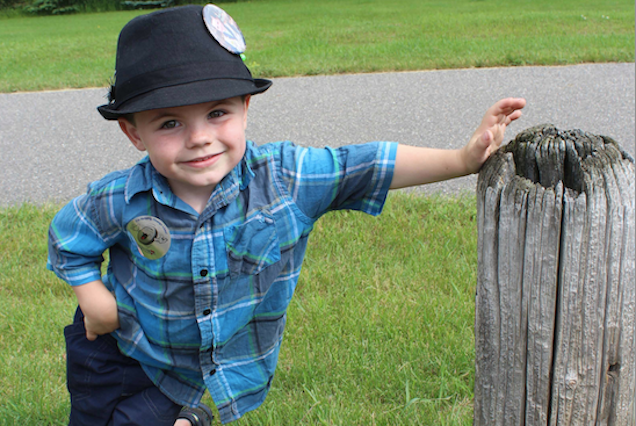
Bobby Tufts, America's most beloved five-year-old mayor, has been ousted. After serving two terms as mayor of the (very) small town Dorset, Minnesota, he was defeated by 16-year-old Eric Mueller. Bobby's mom announced the news in a Facebook post.
07 Feb 22:03
The Bookie After Football Season
by Ryan Bradley
by Ryan Bradley


 Jim is the name he uses as a bookie, not the name he uses at his other job, which is something he’d like to not talk about, because he’d like to keep that job. Jim is broad-chested and bearded and built like the kind of kid who’d have been a good linebacker in high school. Jim didn’t play football, though. Hockey was his sport. Still is. But hockey is terrible for betting. Football is basically perfect, Jim says. The week of the Super Bowl was going to be busy for him, but we aren't there yet. The Pro Bowl is playing on a television way back in the bar and some soccer is on up front, and Jim is sitting right in the middle, next to the kitchen, where the bar narrows and there’s a small window where the barkeeps pick up wings and fries mostly, and the line cooks tap a service bell when an order’s up. Sometimes the ring of the bell punctuates Jim’s sentences, and he pauses after the bell and sips from a glass of ale or a glass of water. Jim does not look like a cautious man but he acts like one. Overhead, over the drone of the kitchen and bar and even the games, a Buddy Holly record plays.
Jim started betting football seriously about five years ago. This was his own thing, he wasn’t running his book yet. But growing up Jim always had stupid little jobs, schemes he’d create for himself, like speakeasies run out of friends’ basements. That kind of thing. When he started betting more seriously he realized the big downside to the websites, and there are basically a million of them, is that it’s so hard to get your money out once you win—of course it’s hard to get your money out, Jim says, of course that’s how they keep you playing, and make money, the websites. Anyway he was like, "I’m just going to provide all my action through my own book. It started as a joke, really." So Jim started an account on a website, sportsbook.com, and told people they could bet through him, on this account, so they wouldn’t have to go through the bullshit of getting their money out, but if they won he’d take 10 percent of their winnings. And when they lost everything, they’d have to re-up the balance.
This went on for a little bit, more people, friends of friends, came along, and Jim did some loose math and figured if this many people were betting he could just be the house. That’s when it really started. "At this point, it was between seven and ten regular betters, like, every week they’d bet on a few games, at least a few hundred each, that was the magic number." Then the service bell goes ding.
All told today Jim has about 40 in his book—customers, friends of friends of friends. Half of those bet more than once a week, a hundred on this, a hundred on that. He pays out using PayPal but also "I have some people who are a little tin-foil-hat-y and just want cash." If you go down $250 to Jim, you have to pay it down, that is, you have to go back in to Jim. There’s some math here, and Jim threatens interest on late payments, 10 percent, but honestly almost everyone pays it down. He carries a little book with him, he pulls it out, a little black Moleskine where he keeps track of who’s in for what, flipping through the figures and tables quickly before slipping it back into his back pocket. People email their bets in, he writes it down. The only sort of client who is a pain are a few dudes who bet real heavily, a few grand a week, go up and down all the time, and are always floating between $300 up and $400 down. Unless they hit $500 down Jim’s not making anything off of that, and doing all kinds of calculations.
The ideal customers are the guys who are very fiscally responsible, bet a lot, and lose a lot. They never lose much, it's just, throughout the season, they’ll go down three times maybe. That’s $750 total. Each time they’re out $250 they just pay Jim back and start again. "There’s not really any amount of money someone can get into me for that’s worth me having someone beat them up. Like, I don’t care. In the worse case scenario someone goes down $500 and doesn’t pay me back. It’s not like I gave him a loan, in a weird way it’s money I didn’t even have. He got into me for it." Ding, sip, pause. "I try to be as friendly about it all as possible. It all is just through word of mouth. I’ve had a couple people just hit me up and I have no idea who they are but I have to check them out. I have to do a check, you know, that’s just good business. Certainly this is all illegal, but I’m just such small potatoes I don’t have any concerns about the cops coming after me, but, you know, it’s not my full-time business so I’d rather have fewer customers. It’s sort of like, there are the drug dealers who are really smart about it, who won’t talk to you unless they’ve met you, and there are others who’ll give their number to everybody. That’s just a bad business plan." Pause. Sip. "Not Fade Away" comes on.
"I had a few lunatics bet the Pro Bowl. Normally, the bets come during the week, starting Wednesday. You’re in your office, you’re bored, you start looking at the lines"—that’s the betting lines, the odds—"and sure on game day some people will bet on the coin flip and stupid little prop bets like that. Game day Sunday will be huge, a lot of last minute bets, live betting during quarters, halfs. Probably double what I do midseason, and midseason is probably $3,000 to $4,000 on a Sunday. But the funny thing about football, it’s so perfectly geared toward betting; the beginning of the season is more hectic than the end in a lot of ways. People are just hungry for it. There are more games, first of all, but also, it’s been hyped all summer.
"I had to pay out $2,500 once. A few guys love to bet on, like, college basketball, which makes it harder. I have to research the lines. Most of the guys are in their mid-20s, mid-30s, they’ve got some sort of full-time job, they chase that juice they get out of winning. I know some Teamsters who know some real bookies, and that’s not for me. If you recommended some dude to me who was 45 and had two kids and was, like, betting the mortgage I would just say no. I don’t need the money that badly. And I would feel too shitty if some dude lost his house because of me.
"I don’t have a particular endgame in mind but I know i can’t do this forever. It’s not even the time, really, which is like an hour a day, sometimes more. It’s more just like, I don’t have any serious long-term plans, but I do eventually hope to have something more like a normal life and not be out until four in the morning and doing drugs when I'm 45. And I never want to be like, I can’t read my imaginary kid a bedtime story because I’m staying up late looking at basketball scores because some dude made a bet."
Ryan Bradley is a writer and editor in New York. Photo by Alper Çuğun
The post The Bookie After Football Season appeared first on The Awl.
22 Nov 05:15


Mark McGuire – “The Instinct”
by Stereogum

Back in May we posted ex-Emeralds guitar wiz Mark McGuire’s “In Search Of The Miraculous,” a song from his concept album Along The Way that has so far only been available in Japan. The LP is the most ambitious and emotionally gripping thing McGuire has ever done and now it’s finally got an official U.S. release for 2014. He’s made up for the delay by dropping “The Instinct,” a twelve minute epic that hovers right in the middle of the album. McGuire is in full on world building mode with this one, increasing the tension for six minutes before the rhythm section comes in and he finally lets loose on his guitar. Check it out below along with a remix by Prins Thomas.
No more posts. Check out what's trending.