Shared posts

01 Jun 09:14

How do you know how to use the internet

What is this “internet” of which you speak? I write anything I have to say on slips of paper with quill pens I harvest from the local mynah birds (they are, I’m afraid, imported birds and thus pests) using ink I make from oak-galls and charcoal. I then fasten the replies to the legs of the mynah birds, who fly off, and who, some hours or days later, return and, awkwardly (for they are birds) recite the replies to me.

I trust your own mynah birds remain healthy.

28 May 05:50

OnePlus släpper levande bakgrunden WellPaper, tillgänglig för alla

by Lars A
OnePlus släpper levande bakgrunden WellPaper, tillgänglig för alla

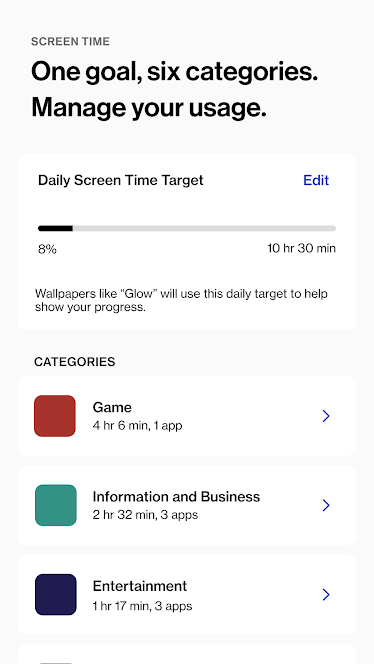
OnePlus har släppt en levande bakgrund kallad WellPaper med fokus på digital hälsa. Bakgrunden är inte bara tillgänglig för OnePlus-telefoner utan för alla enheter som kör Android 7 eller senare.

WellPaper delar in apparna på användares telefoner i sex kategorier, vilka representeras av färger. De olika färgerna i den levande bakgrunden växer därefter under dagen utifrån hur telefonen används. Färgerna visualiserar med andra ord app-användandet.

När WellPaper öppnas separat går det att se mer detaljerad information. Det går att välja mellan tre olika former för bakgrunden. Enligt OnePlus är WellPaper mycket strömsnål. Den uppdaterar sig bara när enheten låses upp och inte kontinuerligt.

I appens beskrivning i Play Store nämns att alla beräkningar görs lokalt, samt att en internetanslutning behövs för att kategorisera apparna. De som vill testa hittar WellPaper här i Play Store.

27 May 06:10

My wife and I just watched the episode of Babylon 5 that you wrote, "The Day of the Dead." Very enjoyable. Question: Did you know that Reebo and Zooty would be played by Penn & Teller when you wrote it?

I didn’t. They were cast after I wrote it.

23 May 12:28

wait wait wait you're here in nz and I didn't know???

I’ve been here since the 20th of December. I’m sorry. We’ve been keeping it from you. We didn’t think you were ready to know.

20 May 11:49

Mr. Gaiman, how did you come up with the idea of Dream as a character? Like, how did you create his personality, did you have any inspirations? Also, can you tell us about his personality from your point of view?

I think Sandman is 3,000 pages of me telling you about his personality from my point of view.

19 May 08:26

Varför glukos blockerar ditt immunförsvar

by Martina

Jag brukar nämna att näringsbehovet ser lite annorlunda ut om du följer en strikt lågkolhydratkost jämfört med “standardkost” och att du till exempel behöver mindre C-vitamin. Att du skulle få i dig för lite C-vitamin är annars en av de vanligaste invändningarna emot att inte äta frukt. Det är sant att vi människor behöver C-vitamin eftersom vi (till skillnad från många djur) inte kan tillverka det själva, men på en ketogen eller karnivorisk kost är behovet så litet att det räcker att äta lite lever och ostron så är behovet täckt.


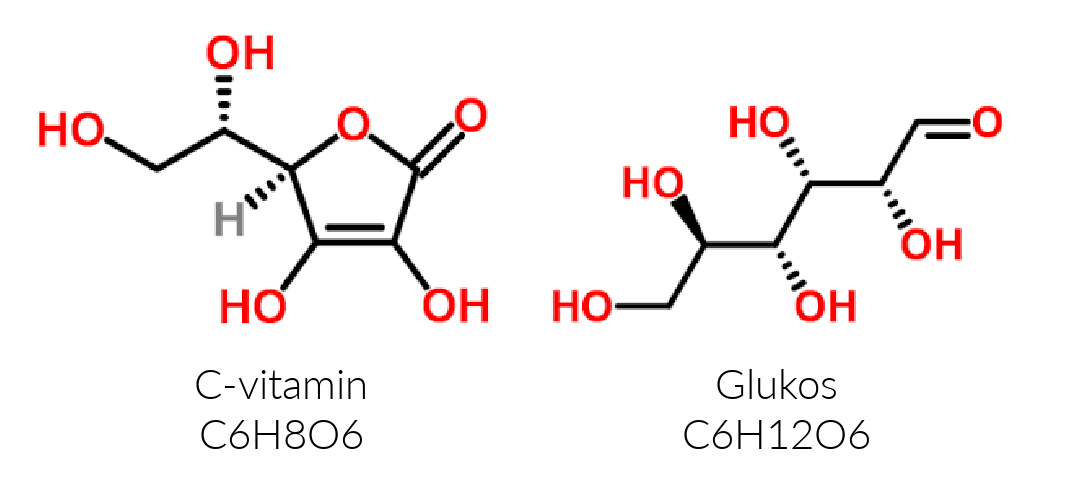
Ta en titt på molekylerna nedan. Det är C-vitamin och glukos. De är väldigt lika varandra och passar därför i samma receptorer. Det gör att glukos kan blockera upptaget av C-vitamin, och ju mer glukos som finns i blodet desto mindre C-vitamin kan därför tas upp.

C-vitamin neutraliserar makrofagerna

Varför är det ett problem? 

Det är ett problem för att C-vitamin är viktigt för immunförsvaret. Makrofagerna är immunförsvarets storätare som åker runt och mumsar i sig allt skräp (bakterier och virus) som de stöter på. Skräpet är ofta ganska reaktivt om det till exempel slitit loss en och annan elektron från sin omgivning. C-vitaminets roll är då att neutralisera dem genom att sno tillbaka överskottselektronerna. Annars blir makrofagerna förstörda med en gång och kan själva bli reaktiva partiklar som fortsätter att orsaka skada, i till exempel blodkärlen.

Bra C-vitaminkällor utan glukos

Om du vill C-vitaminboosta ska du därför inte inta C-vitaminet i närheten av kolhydraterna. För att vara säker på att C-vitaminet kommer till användning ska du inta det först på dagen, på fastande mage. Den bästa naturliga källan är citron, lime och paprika. Citron har lika mycket C-vitamin som apelsin (runt 50 mg) men mindre socker. Paprika har nästan 3 gånger mer C-vitamin (120 mg) och ännu mindre socker!


Animaliska källor till C-vitamin är fiskrom (16 mg), ostron (3,5 mg) och lever (25 mg)

Inlägget Varför glukos blockerar ditt immunförsvar dök först upp på Next Level Biohacking.

18 May 08:50

Charlie Photo: Deployed

by John Scalzi
Charlie in the yard, tongue out

Just in case anyone here could benefit from a photo of a happy pup in the yard with her tongue out. If you are that person, here you go. If you’re not, well, you still got a puppy photo out of it, and that’s not bad.

— JS

11 May 06:18

Har du fastnat i varför-loopen?

by Martina

Jag märker ett fenomen hos oss som försöker skapa lite mer utbildande innehåll, att vi har väldigt vetgiriga följare. Det är toppen, man ska vara vetgirig, men många har fastnat i en varför-loop som hindrar dem från handling.

Hur är bättre än varför

Det finns ganska tydliga system för att ta sig till vissa hälsomål och även om det är bra att veta varför någonting funkar eller inte, så är det ännu bättre att veta hur det funkar. För att skapa mer förståelse rekommenderar jag att släppa “varför-tänket” för en stund och ställ en “hur-fråga” istället. Det blir faktiskt skillnad. “Hur-frågor” öppnar upp för mer förståelse och mindre negativt ifrågasättande.


Exempel: “Hur kan jag komma in i en djupare ketos?” är bättre än “varför är jag inte i en djupare ketos?” eller “hur kan jag föryngra mig själv?” är bättre än “varför ser jag så mycket ålderstecken?” och “hur kan jag må bättre?” är bättre än “varför är jag sjuk?”

Varför-svar kan bli komplext medan hur-svaren är enkla!

Hur någonting ska utföras bör vara så enkelt som möjligt så att alla förstår. Det är vad jag siktar på i mina böcker, att försöka förklara saker steg för steg. Att besvara en varför-fråga kan dock bli otroligt komplext, och skapa mer förvirring om det vill sig illa. Det beror på att svaren blir så olika beroende på frågeställarens kunskapsnivå. Det kan vara svårt att veta om personen som frågar är väldigt insatt och faktiskt vill veta självaste mekanismen, eller om varför-frågan bara är prokrastinering.

Varför-loopen och prokrastinering

När man trasslar in sig i tusen varför är det lätt hänt att det som verkligen spelar roll: själva handlingen, prokrastineras. Om något inte funkar, är det verkligen det viktigaste att veta varför då? Eller är det viktigare att veta hur man kan lösa problemet och komma vidare?


Gillar du vad du läser? Donera gärna en slant och stötta mitt arbete med bloggen!Jag finns även på PatreonSwish: 0730651281

Inlägget Har du fastnat i varför-loopen? dök först upp på Next Level Biohacking.

10 May 06:50

Training to Be Relaxed in Stressful Situations

by zenhabits

By Leo Babauta

Many of us face things every day that stress us out: overwhelming number of tasks, a big meeting, a project that feels really tough, behind on paying bills, someone is upset at us, there’s a family crisis, the world feels chaotic.

Can we find a way to be relaxed in almost any stressful situation?

Absolutely. It just takes some training. And lots of practice.

Let’s imagine you’re feeling stressed right now, about whatever you need to do, about an interpersonal conflict, about something coming up in the near future …

What is it that’s stressing you out about this? You might start telling me all the details of the situation, or all the things the other person has done wrong … but that’s your narrative about it. The thing that’s stressing you out is the narrative, or how you view the situation or person.

What if you could let go of that view, and just be in this present moment, without the narrative? There can be a feeling of peace and openness. Try it right now.

This is the training. Relax the narrative, loosen your view, and drop into the openness of the present moment. Breathe deeply, and relax your body. Relax the jaw, relax the muscles in your torso. Feel the openness in this moment.

With training, you can do this as you go into a stressful meeting, or enter a chaotic scene, or have a difficult conversation. But start with the easier situations: when you’re on your laptop, or washing a dish. When you’re out for a walk, or talking with a friend.

Breathe, relax, let go of the view and narrative, and find the peaceful openness of the present moment.

The post Training to Be Relaxed in Stressful Situations appeared first on zen habits.

06 May 10:16

“För smal” | Viktuppgång för hälsa?

by Martina

Jag skrev ett inlägg om det här med att vara “för smal” på instagram, men kände att jag ville skriva en längre drapa. Det händer inte ofta men ibland får jag meddelande från personer som desperat vill gå upp i vikt, inte av estetiska skäl utan av hälsoskäl. Det kan ibland vara motiverat om vikten är låg på grund av ett ohälsosamt leverne (tex pga anorexi, missbruk etc) men om vikten inte är sjukligt låg, finns det inga hälsofördelar med att höja den. Det finns nämligen ingen “hälsosam vikt” och jag ska förklara vad jag menar med det.

Viktminskning pga keto/carnivore

Vissa som följer en strikt ketogen kost av medicinska skäl tappar för mycket i vikt och blir väldigt smala. De börjar då göra avsteg för att gå upp i vikt, trots att dieten funkar jättebra för att hålla deras sjukdom i schack.

Det senaste exemplet var en typ 2 diabetiker med cancer som blev ombedd att äta rikligt med kolhydrater och reglera blodsockret med insulin för att gå upp några kilon. Det här är vansinne! 😥 Det är sällan någon behöver gå upp i vikt. Man kan vilja öka i vikt av estetiska skäl, kanske bli mer muskulös och få lite mer former, men man måste absolut inte. På samma vis behöver man inte alltid minska i vikt av hälsoskäl heller. Det finns ingen hälsosam vikt som är att om du är si och så lång ska du väga si och så mycket. Nej! BMI är bara din vikt genom höjden i kvadrat.

Vad händer om man är “för smal”?

Absolut ingenting. Om du inte får i dig nog med mat kan du på sikt få lite näringsbrister, men det är för det första ingen katastrof och har för det andra inget med vikten att göra. Nu pratar jag inte om svåra fall av anorexi. Det är väldigt ovanligt att någon är så smal att kroppsfunktioner börjar stänga ned till följd av svår svält. Det är inte alls vad jag pratar om nu. Jag pratar om män och kvinnor som har blivit för smala för sitt eget tycke för att de av hälsoskäl följer en strikt lågkolhydratkost, ketogen kost, carnivore eller PKD.


Att vara väldigt smal innebär inte per automatik att man är svulten eller har näringsbrister. Det går utmärkt att vara överviktig med näringsbrister också och att lyckas gå upp eller ned i vikt betyder heller inte att man har fixat sin hälsa på något sätt. Många säger att de vill “gå ned i vikt för hälsans skull” men att det står minus på vågen eller finns mindre fett på kroppen betyder inte så mycket. Det som betyder något är att inflammationsmarkörerna är låga, att tarmslemhinnan och tarmfloran är i ett gott skick och att alla celler och membran mår bra. Detta kan uppnås nästan oavsett vikt. Även hög fertilitet är ganska viktoberoende om dessa faktorer är uppfyllda. Det mest extrema exemplet jag känner till är en tjej som blev gravid mitt i fitness-deffen inför en tävling i Athletic Fitness, och stod på scenen som gravid, tog hem en pokal och födde sitt barn 7.5 månad senare.

Lite extra att ta av?

Ibland är ens setpoint lägre än vad man önskar eller känner sig bekväm med. Eller högre. Det är inte direkt kopplat till hälsan eller att man tål mer med högre vikt. Nej inte det heller. Det blir sant först efter 70 års ålder. Då finns det en statistisk korrelation mellan högre vikt och bättre hälsa. Det här att det måste finnas “lite extra att ta av” om man skulle bli sjuk är en myt. Brukar du gå ned flera kilon när du är sjuk? De flesta får ingen förändrad vikt av sjukdom och de som får en viktändring går oftast upp i vikt för att de åt mer när de va sjuka.

Vad göra vid oönskad viktminskning?

Hälsa först, estetik sedan. Om du känner igen dig i den här texten eller känner någon som följer en lågkolhydratkost och viktminskar för mycket – ta det lugnt. Det är inte farligt. Vikten kommer att stabilisera sig och successivt öka igen när kroppen läker. Fokusera på optimerat näringsintag. För personer med mag- och tarmproblem krävs det att tarmen blir hel och kan ta upp näring innan viktförändring kan ske. Om kosten avbryts och börjar inkludera massa spannmål eller socker bara för att viktöka förtas alla läkande effekter och inflammationen kommer att återvända. Det är sällan något problem att viktöka eller viktnormalisera när kroppen är helt frisk! Att ha panik över vikten gör det bara ännu svårare att förändra den.


Berätta gärna vad du tycker om det här! Har du fallit för myten om att det finns en viss vikt som är hälsosam?


Gillar du vad du läser? Donera gärna en slant och stötta mitt arbete med bloggen!Jag finns även på PatreonSwish: 0730651281

Inlägget “För smal” | Viktuppgång för hälsa? dök först upp på Next Level Biohacking.

28 Apr 06:15

Winnipeg Joins the Race for the 2023 Worldcon

by Mike Glyer
The Winnipeg in 2023 Committee today announced their bid for the 81st World Science Fiction Convention. The bid has filed the required papers with the DisCon III committee inviting the Worldcon to return to Winnipeg for the first time since 1994. … Continue reading →
27 Apr 06:18

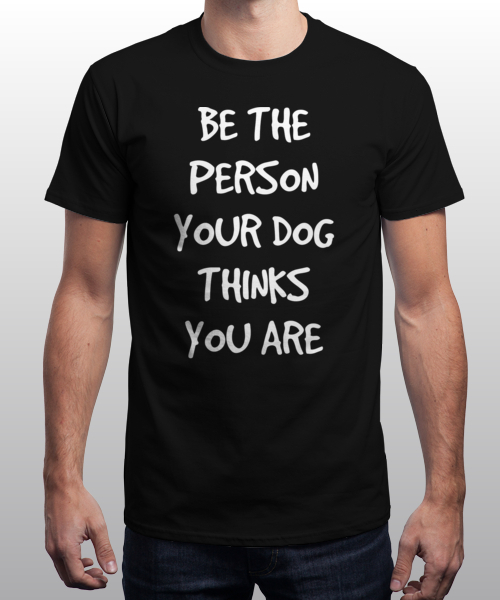
Be the person your dog thinks

By YiannisTees
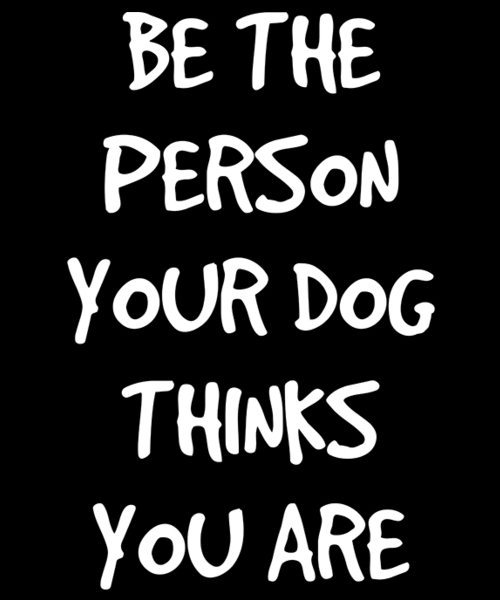
Be the person your dog thinks you are
23 Apr 09:45

Wanting More Time for Your Meaningful Work

by zenhabits

By Leo Babauta

A member of my Fearless Training Program has a full-time business that she loves, but isn’t the meaningful work she’d like to do in the world. She struggles with finding enough time for that meaningful work.

Can you relate to this? The rest of our life fills up all the space — how can we find enough time to focus on what’s really important?

This is a common problem for anyone who wants to launch a new venture, volunteer, create art, write a book, build an audience or a brand … how do we create the time when we’re already busy and overloaded?

I’m going to share some ideas in this article:

  1. Create structure for all the stuff in your life
  2. Create even more space
  3. Really pour yourself into it
  4. Bring some Zen to disruptions & frustrations
  5. Replenish yourself
  6. Bring freedom, joy & lit-upness to any activity

These are all meant to address various problems that we face when we’re making time for our meaningful work. You can decide which ones might apply to your life.

Let’s take a look!

Create Structure in Your Life

Our lives can feel overwhelming, with too many things to do! We have chores and small tasks and messages to answer, bills to pay, dishes to wash, people to contact, and much more. So how do we handle all of this?

First, it can feel overwhelming when it’s a huge pile of stuff and seemingly not enough time.

Second, the small stuff will overwhelm all the available space, because it always feels urgent when we’re feeling behind and overwhelmed.

So one good answer is to create structure. Create spaces to deal with all the things in your life:

  • Bill Pay Mondays
  • Inbox Zero Tuesdays
  • Admin Fridays
  • House Chore Party Saturdays
  • Email and messages Sacred Hour – daily at 4pm
  • Morning planning & intentions
  • Monthly taxes day
  • Meaningful Work Play Time at 10am daily
  • And so on

Not these specific spaces — your structure will be different than these. But if you have a space for all the stuff, you can relax and know that it will be taken care of.

What structure can you create to take care of everything important, while creating structured and intentional space for your meaningful work?

Create Even More Space

Let’s say you’re so busy that you can only find 30 minutes a week for your meaningful work — it’s a great start! But take it as a starting point.

Maybe you can create more time by bundling your emails and messages into a certain hour each day. Maybe you can free up some time by hiring a babysitter, a house cleaner, someone on Craigslist to haul away your junk for you. Someone to answer your customer service emails, or an admin asssitant to take care of routine tasks.

Or maybe you can eliminate or simplify some things to create more space. Get out of commitments. Tell people No. Ask for postponements.

Sometimes we can cut out distractions, like social media or video watching or news/website reading. If we’re honest, there’s a lot of wasted time in our days that can be streamlined for the sake of what’s truly important.

Get creative! Sometimes it takes a little time investment to simplify, but then it pays off in space in a week or two.

Really Pour Yourself Into It

Once you have the space, it can be hard to focus. All the other stuff is calling to you! Maybe you spend the first 20 minutes of the 40 minutes you’ve carved out just getting ready. Maybe the whole focus block gets pushed back until later because you feel something else is more urgent.

Create the structure to make the meaningful work happen. Sometimes it means doing it on a video call with someone else — each of you do your meaningful work on mute for an hour.

But when you’re in the focus block — pour yourself into it. Give it your full being. Be all in.

Don’t half ass it. Whole ass it.

Bring Some Zen to Disruptions

Sometimes, despite our best efforts, we get disrupted. Our kid interrupts wanting a snack. Our spouse interrupts with their latest frustration. A message comes in that sidetracks us.

And then we can get frustrated or angry. That’s normal! Give yourself a breath or two, and some compassion.

Then let it go. Relax, breathe, and accept the interruption as just a natural part of the chaos of life. It doesn’t have to derail you completely. See the gift in the interruption. Find the gratitude for having this person in your life.

Then simply return to the meaningful task, with your whole self.

Replenish Yourself

It can be hard to find focus when we’re drained, anxious, exhausted, feeling resigned & resentful. We just don’t have the focus or capacity to face anything.

So it can be a great act of leadership to recognize this, and take care of it. A great act of generosity to yourself and your meaningful work.

Recharge your batteries, give yourself nurturing and nourishment, replenish yourself so that you can return with full life force.

Some ideas:

  • Get more sleep — shut down earlier and let yourself relax into deep, nourishing sleep.
  • Get outdoors daily. Go for a walk or run, enjoy the quiet beauty of nature.
  • Take a hot bath. Drink some tea while doing nothing else. Take some space.
  • Any kind of self-care is helpful: a nap, yoga, a workout, therapy, talk with a friend, get a massage, meditate.

More space, more relaxing, more nourishing.

Bring Freedom, Joy & Lit-upness to Every Activity

We can feel trapped because we’re craving freedom, but our day job isn’t allowing for it. We can feel drained and discouraged because our day job feels draining, stressful, dull.

But it doesn’t have to be that way! We can bring joy and freedom to any activity, including our routine work.

What would it be like to do the activity you normally experience as suffocating … with a sense of freedom and joy?

What if you could do the dull routine activities with vitality? What if you could be lit up in any moment you liked?

This is a possibility few people allow themselves. I encourage you to explore it.

What could your life be like, bringing freedom and joy to anything you liked?

The post Wanting More Time for Your Meaningful Work appeared first on zen habits.

19 Apr 06:22

The Calm Before the Storm in The Falcon and the Winter Soldier’s “Truth”

by Keith R.A. DeCandido

The Falcon and the Winter Soldier "Truth"

When I saw that the title of the fifth episode of The Falcon and the Winter Soldier was going to be “Truth,” I may have fist-pumped a bit. That was the title of the 2003 comic book miniseries by Robert Morales & Kyle Baker that introduced Isaiah Bradley, subtitled Red, White, and Black, and I was hoping that we’d see more of Carl Lumbly’s MCU version of Bradley. I was not disappointed, as the scene with him and Sam Wilson was one of several excellent scenes in this take-a-breath episode that paused from the fight scenes to remind us of some of the themes that were introduced in the first couple of episodes that had fallen a bit by the wayside.

Let’s start with the least interesting part of the episode, which is the fallout from John Walker committing a murder in the middle of a public square. Not to say that isn’t interesting, but it’s less so than everything else that happens. Walker wanders off after his murder, muttering to himself. He’s stopped by Bucky Barnes and Sam in The Obligatory Action Scene at the top of the episode, with Nico’s blood still staining his shield. Falcon’s wings are trashed, but in the end, Walker is defeated, and Sam leaves with the shield.

For Walker’s part, he has his cufflinks snipped off, as it were, and is not only stripped of the title of Captain America, but also given an other than honorable discharge. While not as bad as a dishonorable discharge, it does cost him his rank and his pension, which is pretty harsh for a guy who’s won three medals of honor—and also not nearly harsh enough for a guy who committed murder. It’s an understandable decision by the committee, as it saves them the embarrassment of court-martialing and imprisoning their new Cap, but it also leaves him free. The final post-credits scene of the episode is Walker creating his own new shield…

The Falcon and the Winter Soldier "Truth"

Screenshot: Marvel / Disney

Prior to that, we see him visiting Lemar Hoskins’ parents, and he lies to them, and says the guy he murdered was the one who killed Lemar. (It was, in fact, Karli Morgenthau, as we’re reminded in the “previously on” segment.) What’s not at all clear is if the lie is also to himself. Walker is pretty clearly unhinged, between his mouthing off at the committee and his crazed rantings while fighting Sam and Bucky, but is it because of Lemar’s death? Is it because he took the Super Soldier Serum? (And even if it wasn’t obvious from how he was more than holding his own against Sam and Bucky, we’re explicitly told he took the serum this week.) Is it having an adverse effect on his sanity?

To bolster that last argument, we have Sam visiting Isaiah and getting his whole story. He was one of several African-American soldiers they experimented on after World War II to try to duplicate Dr. Erskine’s work. Isaiah was the only one who survived, and he also disobeyed orders so he could rescue his fellow soldiers. Sam comes to him while carrying the shield in a case to try to figure out what he should do with it, and Isaiah’s considered opinion is that no self-respecting black man should carry it. More to the point, he knows damn well that the government would never allow it—they want their blond-haired, blue-eyed Avenger like Steve Rogers or John Walker. They erased Isaiah’s existence, even though he fought for his country just like Rogers and Walker did.

But the serum didn’t work the same on all the black soldiers—Isaiah was the only it really took for without major side effects, and they experimented on him quite a bit to try to find out why. It’s possible that we’re seeing those side effects in Walker—and in the Flag Smashers.

As for Sam, he has a decision to make. Does he listen to Isaiah? Or does he do what Steve asked him to do?

The Falcon and the Winter Soldier "Truth"

Screenshot: Marvel / Disney

Back in July of 2019, when Marvel Studios announced their Phase 4 plans, I wrote the following on this very web site: “Why is The Falcon and the Winter Soldier still being called that when Sam Wilson is Captain America now? Seriously, calling it that when you first announced it is necessary due to not wanting to spoil Endgame, but now we know that the Falcon is the new Cap. So why isn’t this being called Captain America and the Winter Soldier? Particularly now, it’s important to acknowledge that the symbol of the U.S. is currently an African American.”

My opinion in the last sentence of that quote hasn’t changed—in fact, I feel even more strongly about it given the appalling number of incidents involving African-American citizens being targeted and killed by law-enforcement that keep fucking happening (not to mention increased vitriol directed at Asian Americans)—but I also get what they’re doing here. The history of people who aren’t white in this country is awful, and while things are better now than they were in the past, they’re still not by any stretch of the imagination good. The question for Sam is whether or not he will embody the ideals of America, which are often at odds with the reality of America—or will he be seen as capitulating to that reality in defiance of those ideals?

It’s not an easy question to answer, especially given how many parts of the world see America: as imperialist and stomping all over everything and very much my-way-or-the-highway. That particular perception of America is reinforced by Walker’s behavior.

Sam thinks about this while going back home and helping his sister Sarah fix up the family boat in order to be able to sell it. Right now, it’s in such awful shape they can’t even sell it—but Sarah can’t afford to fix it, either.

The Falcon and the Winter Soldier "Truth"

Screenshot: Marvel / Disney

Sarah also sends her two sons off with extra food to give to two of their classmates, whose father doesn’t get up early enough to prepare their lunch, and who are too proud to ask for help—so Sarah gives it to them, just like their mother did. And that inspires Sam, because the Wilson family has always given to the community, and now it’s time to call in those favors. Sure enough, people are willing to help out if you aren’t too proud to ask.

As much as the ass-covering of the committee that strips Walker of his Captain America-hood represents America, so also does what happens with the Wilsons. I saw it here in New York after the Twin Towers were destroyed, and again last year when the pandemic struck: in times of trouble, communities band together and help out. Especially communities that aren’t getting any help from outside.

Though there is one bit of outside help: Bucky shows up with a gift from Wakanda. The implication is that it’s a new set of wings, but while the episode ends with Sam opening the case, we aren’t going to see its contents until next Friday. But I’m fairly certain, since Bucky specifically asked Ayo for this gift, that it’s a version of the wings that is bedecked in red, white, and blue (much like the outfit Sam wore in the comics when he took over as Captain America).

Bucky asked for this after the Dora Milaje took Zemo away. Some may view the resolution of Zemo’s storyline as anticlimactic, but it actually makes perfect sense. Bucky and the Dora Milaje track Zemo down to the Sovokia memorial and take him in peacefully (though Bucky holds a gun to his head and fires, only afterward revealing that it was empty, mostly to show that he’s not a killer anymore). There was no other way for this to go. Zemo isn’t super-powered, and he can’t stand up to any one of the Dora Milaje or to Bucky, and while he might think he can still manipulate the latter, he’s helpless against the former. If he fights back, he’s dead meat; if he keeps running, the Dora Milaje won’t rest until he’s caught and he’ll be on the run, taxing his resources, forever; if he surrenders, he’s put in prison, and he can survive that. I honestly don’t get why more bad guys in fiction don’t do what Zemo does here…

The Falcon and the Winter Soldier "Truth"

Screenshot: Marvel / Disney

In addition, Bucky works with Sam on how to use the shield as a frisbee, and Sam returns the favor by once again playing counselor. Bucky’s method of making amends is attempting to give himself closure, but it isn’t working. What he needs to do is find a way to give his victims that he’s making amends to closure. Sam tells him to start with just one person, and it’s pretty obvious that it’s going to be the father of the innocent bystander he killed that we met back in the first episode. Especially since that guy is in New York, and that’s where the action will be next time.

We know that because the Flag Smashers’ next target is the Global Repatriation Council, which is headquartered in New York, and is in the midst of talks about a ruling involving refugees that is interrupted by a power outage caused by the Flag Smashers. The episode ends with that attack, with Sam being told by Torres that the Flag Smashers are in the Big Apple, with Bucky on a course to be back in NYC, and with Walker putting a new shield together.

All this sets up a slam-bang finale quite nicely. With the obvious exception of the opening fight among Sam, Bucky, and Walker, this is a very quiet, reflective episode, and it’s welcome. This is the type of thing that the movies don’t always have time for, and it’s good to see Marvel Studios taking advantage of the longer running time of a six-episode (or whatever) season to give the characters a chance to breathe and grow and think. I’m also really glad to see the themes of racism and family and community and friendship and moving on with your life back in the forefront, as it was mostly absent from the last couple of episodes.

The Falcon and the Winter Soldier "Truth"

Screenshot: Marvel / Disney

Odds and ends

  • Julia Louis-Dreyfuss shows up out of nowhere as Contessa Valentina Allegra de Fontaine, who is the latest candidate to be the Power Broker, though she’s not identified as such. In the comics, Fontaine was an agent of S.H.I.E.L.D. created by Jim Steranko on his historic run doing Nick Fury, Agent of S.H.I.E.L.D. stories in Strange Tales in the 1960s. In addition to being a top agent, she was also Fury’s love interest. More recently, in the Secret Warriors series written by Brian Michael Bendis and Jonathan Hickman, she was revealed to be a Russian sleeper agent, and she eventually turned herself in. (This irritated me, as Val was one of the few characters of Italian descent in the Marvel Universe who wasn’t a mobster or a psychopath or comic relief, and to have her be turned into a bad guy pissed me off something fierce. The character hasn’t been seen in the comics for over a decade, though I’m hoping her use here might inspire a comics creator to bring her back.) Who she’s supposed to be in the MCU is still up in the air. The business card she leaves with Walker is blank.
  • The theory that Sharon Carter is the Power Broker took a big hit, though her status as a friendly character is even more up in the air. We see her on the phone with a job for Georges Batroc, and then we see Batroc providing arms and aid and comfort to the Flag Smashers right before they attack the GRC. Batroc specifically wants to get back at the Falcon for screwing up his deal in the first episode, and Carter is the one who sent him on this particular mission of vengeance. Plus it’s unlikely that Carter would be helping the Flag Smashers if she was the Power Broker, since the PB has been after the Flag Smashers all along. Curiouser and curiouser…
  • The story Isaiah tells Sam about his own history tracks pretty closely to the story told in Truth: Red, White, and Black, which is fabulous.
  • However, I am more than a little peeved at how the billing works here. For some reason, Georges St-Pierre gets “opening” credits billing as Batroc, yet Carl Lumbly is reduced to just being listed with the rest of the cast in tiny print in the closing credits for his much more important role as Isaiah. I realize this probably mostly just means that St-Pierre has a better agent, but Lumbly—a superb actor who has had a spectacular career both in front of the camera and as a voice actor (among other things, he was J’onn J’onzz in the turn-of-the-millennium Justice League animated series)—deserves better billing.
  • The scene where Walker is ousted by the committee is a fun-house-mirror version of Steve Rogers appearing before the Commission in Captain America #332 by Mark Gruenwald & Tom Morgan in 1987, which ended with Rogers turning in the uniform and shield and renouncing the title of Captain America.
  • The Falcon didn’t have wings in the comics, initially, he was just a good hand-to-hand combatant and athlete. The wings he did get were a gift from the Black Panther in Captain America #170 by Steve Englehart, Mike Friedrich, & Sal Buscema in 1974. The MCU goes that route in this episode, as Walker trashes the wings Sam had been using, and Bucky asks Ayo to have Shuri (I assume it’s Shuri, because duh) make Sam a new set of wings.
  • THERE’S A TRAINING MONTAGE! Okay, as a martial artist of more than fifteen years’ standing, I intellectually understand that training montages are stupid and misleading and give you the impression that you can become super-duper-awesome in a ridiculously short time. (In my karate discipline, it’s a minimum of five years before you can be considered for a black belt promotion, and it’s only that short if you train several days a week for all five of those years.) But as a child of the 1980s, I LOVE THAT THERE’S A TRAINING MONTAGE. Especially because Anthony Mackie plays it so well, showing both his dedication and especially his frustration at not being able to catch the shield when he throws it around frisbee-like.

Keith R.A. DeCandido also does the Star Trek: Voyager Rewatch every Monday and Thursday. His takes on the MCU films can be found in his “4-Color to 35-Millimeter: The Great Superhero Movie Rewatch” that started on this site in 2017.

14 Apr 05:59

Anxious Spider

By TaylorRoss1
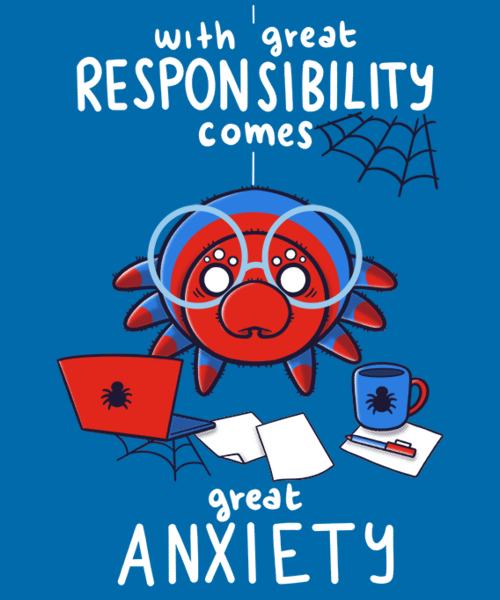
With great responsibility comes great anxiety
09 Apr 08:38

Orphan Black: The Next Chapter Is Now a Free Podcast

by Molly Templeton

Last week, the serial storytelling platform Serial Box became Realm, and with that change came the news that some of their series would be available as free podcasts. Now, you can listen to Orphan Black: The Next Chapter on your choice of streaming platforms. The Next Chapter is the official continuation of the BBC America show’s story, narrated by its star, the unbelievably talented Tatiana Maslany.

In The Next Chapter, Maslany is back playing all the sestras—Sarah, Alison, Cosima, Helena, and more—in a story set eight years after the events of the TV show. Everything changes (of course) when they find there are even more clones than they ever suspected.

The writing team for the first season of The Next Chapter includes Malka Older (Infomocracy), Madeline Ashby (Company Town), Mishell Baker (Borderline), Heli Kennedy (Orphan Black: Deviations), E. C. Myers (Fair Coin), and Lindsay Smith (Sekret).

In a (non-spoiler) review, Natalie Zutter wrote:

The best way to experience Orphan Black: The Next Chapter is in audio form, hands down. While the writing team picks up the TV series’ DNA and engineers a new genetically-centered conflict, Tatiana Maslany’s voice is the catalyst that brings back the spirit of the show. Lack of practice has not dimmed her incredible ability to infuse distinct inflections, accents, tones into the clones’ voices, even and especially in conversation with one another. Nor does the fact that she narrates the entire thing—internal monologues, familiar and new characters, action sequences—diminish the effect.

You can listen at Realm or via Apple Podcasts, Spotify Podcasts, Google Podcasts, and Stitcher.

Season two of Orphan Black: The Next Chapter is expected this fall.

06 Apr 09:15

Eastercon 2022 Announced

by Mike Glyer
Eastercon, the UK’s longest running science fiction convention, will be called Reclamation in 2022. The committee’s intention is to return Eastercon to an in-person event if possible. However, the announcement does not say where it would be held. The convention … Continue reading →
06 Apr 09:10

Loki's Latest Trailer Is a Timey Wimey Joyride Through the MCU

by Charles Pulliam-Moore

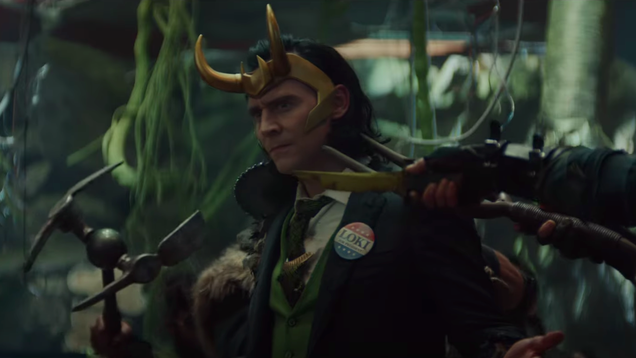
Loki, the Asgardian royal family’s resident enfant terrible, has broken many a law in his time traipsing across the universe in Marvel Studio’s films, and Disney+’s upcoming Loki series, it seems as if the mischief maker’s finally going to do the time for at least some of his crimes.

Read more...

03 Apr 15:53

I always get you and Garth Nix mixed up. Any suggestions on avoiding this?

You could paint one of us red. Garth, perhaps. And then, when you are wondering which one of us is which, you could examine us for red paint, and if you couldn’t see any it would be me, and if you could, it would be Garth.

30 Mar 09:20

The William Fucking Shatner story

by Wil

I’m working on a new book, and I had to go into my archives for some research. While I was there, I found a story I wrote when I was … 28? 29? Something like that. It’s entirely true, and I love it as much now as I did then.

This was originally published in my first book, Dancing Barefoot, and it appears here online in its entirety for the first time.

I first met William Shatner on the set of Star Trek V back in 1988. I was 16, and had been working on TNG for two years at the time. We were enjoying some success with our show, and I was very proud of the work I was doing. When I found out that the original series cast would be working next door to us for two months, I was beside myself.

Gene Roddenberry was still heavily involved with the production of TNG back then, and he and I were good friends. When I’d pass by his door, it was not uncommon for him to throw an executive out of his office and ask me in for a visit. He knew that I was a fan of the original series, and he knew that I was more than a little intimidated by these actors. He offered several times to make introductions, but I always declined. If I was going to meet these legends of Science Fiction, I was going to do it on my own.

For weeks, I tried to get up the nerve to introduce myself. When I would walk from the stage to my dressing room or school room, I would do it slowly, looking at their stage door, hoping to catch a glimpse of Mister Spock, or Doctor McCoy, or even the legendary Captain Kirk. The few times they did appear, though, I could never find the courage to approach them.

This went on for about six weeks.

Word got around our set that I was too chicken to introduce myself to the original series actors. It became something of a joke, and the crew began to give me some good-natured ribbing about my reluctance. Next Generation was immensely popular at the time, and I was still riding high on the success of Stand by Me. They couldn’t understand why I was so intimidated by these actors – my face was splashed across the cover of every teen magazine in print.

Why was I so intimidated? I was a 16 year-old geek, with a chance to meet The Big Three from Star Trek. You do the math.

One afternoon, while I was sitting outside stage 9 talking with Mandy, my costumer, they opened the huge stage door across the way, and I could see right into the set of Star Trek V. It was a large area, like a cargo bay, filled with extras and equipment. It was quite different from our set, but it was unmistakably The Enterprise. Standing in the middle of it all was William Shatner. He held a script open like it was a holy text. The way he gestured with his hands, I could tell that he was setting up a shot and discussing it with the camera crew.

I waited for the familiar rush of nerves, but it didn’t come. Seeing him as a director and not as Captain Kirk put me at ease. I knew that this was my moment. If I didn’t walk over and introduce myself right then, I would never do it.

I was wearing the grey “acting ensign” space suit, unzipped with the sleeves tied around my waist. That costume was quite uncomfortable, so I’d take the top half off whenever I got the chance. Because it was a jumpsuit, I would tie the sleeves around my waist, and wear a lightweight fleece jacket, zipped up to cover the embarrassing muscle suit the producers had me wear.

We all wore those muscle suits, but I think I was the most traumatized by it. I’ve always been a very slight person without much muscle mass (even now, at age 30, I weigh 145 pounds at 5’10”) and having to wear all that thick padding did little to improve my fragile teenage self esteem.

I turned to Mandy, and took off my fleece. I asked her to zip up my spacesuit, and fasten the collar. If I was going to meet William Shatner, I was going to do it looking as “Starfleet regulation” as I could.

She made sure my costume looked good enough for camera, and wished me good luck. I got a high-five from one of the teamsters as I confidently walked across the street and into the cargo bay of the Enterprise 1701-A.

It took about eight steps for my confidence to evaporate. Surrounded by extras in Starfleet dress, standing next to a shuttlecraft, William Shatner, director, was immediately transformed into Captain Kirk, intergalactic legend. I was transformed from Wil Wheaton, fellow actor and film industry professional, into Wil Wheaton, drooling fanboy and Star Trek geek.

I looked around. I guess I blended in well, because nobody had noticed me. I turned to make my escape, and bumped into a still photographer who had worked on TNG the first season.

“Hey, Wil. What are you doing here?” he asked.

I swallowed, and looked at the stage door.

“Oh, uh, I just came over to, um, look around, and, uh, stuff.” I said. I shuffled my feet, and began to move back    toward the familiarity of my own spaceship.

“Well, as long as you’re here, you should meet Mr. Shatner!”

Mr. Shatner? Who was Mr. Shatner? There’s no Mr. Shatner here, just Captain Kirk and several Starfleet officers.

He turned toward Captain Kirk, and called out, “Hey! Bill! Come here a second!”

My heart began to beat rapidly, as he turned toward us. Captain Kirk looked right at me. I froze. He gave his book to someone, and began to walk in our direction. I involuntarily straightened my back, and sucked in my stomach. My muscle suit felt tight and awkward around my arms and chest.

Within seconds he was standing next to us. He was about my height, and looked heavier than he did on television.

Captain James T. Kirk of the starship Enterprise said, “What can I do for you?”

“Well, Bill, this is Wil Wheaton. He’s part of the cast of The Next Generation, and he’d like to meet you.”

Captain Kirk looked at me for a long time.

“So, you’re the kid on that show?” He seemed annoyed.

My throat and mouth were dry, and my palms were sweating. My heart pounded in my ears, as I answered. “Uh, yes, sir. My name’s Wil.”


He continued to look at me. I carefully wiped my hand on the hip of my spacesuit, and extended it. “Nice to meet you,” I said.

He didn’t take my hand.

“What is that, your spacesuit?” He said, and made a sound that was somewhere between a laugh and a cough.

“Oh? This? Yeah. It’s not as cool as yours, but it’s what they tell me to wear.” I put my hand down. I really wanted to leave. I felt a little light headed. Why wouldn’t Captain Kirk shake my hand? And why didn’t he like my spacesuit? Could he see the fake muscles? Maybe he didn’t like the color. I became hyper-aware of the spandex, clinging to my body, and longed for the comfort of my fleece jacket.

“Well?” He asked.

Oh no. He’d asked me a question, and I’d missed it.

“Excuse me?” I replied.

“I said, what do you do over there?” he asked. There was a challenge in his voice.

“Oh, uh, well, I’m an acting ensign, and I sometimes pilot the ship.” Maybe he’d be impressed that I’d already logged several hours at the helm of the Enterprise D, all before the age of 16.

“Well, I’d never let a kid come onto my bridge.” He said, and walked away.

Captain James Tiberius Kirk, of the Starship Enterprise 1701, and Enterprise 1701-A, the only person in Starfleet to ever defeat the Kobiyashi Maru, the man behind the Corbomite Maneuver, the man who took the Enterprise to the Genesis planet to return Spock’s katra, the man who I had admired since I was eight years old, was immediately transformed into WILLIAM FUCKING SHATNER.

I bit my lip, and turned to say good-bye to the still photographer who had made the introduction, but he had vanished as well.

I walked back to my own stage with my head down, avoiding eye contact the entire way. When I got to the entrance, I found Mandy, and asked her to unzip my costume, so I could put my fleece back on.

As she unzipped the back, she said, “did you get to meet William Shatner?”

“Yeah.” I didn’t want to let on that I was upset.

“What’s wrong?” she asked, as she handed me my fleece jacket. There was concern in her eyes.

“Well . . .” I hesitated. Saying it out loud would make it real. “He was a dick to me.”

Her eyes widened, and she gasped. “What?! Why? What happened?!”

I fought back tears, and recounted our introduction.

“What an asshole!” She said, “Oh, Wil, I am so sorry!”

I nodded my head, and she gave me a hug. I drew a deep breath, shrugged my shoulders, and walked back to my trailer, where I sat down and cried. I had spent weeks getting up the courage to meet this man, and in less than five minutes he had insulted and humiliated me. He had reduced me from peer to peon. I had worn my stupid costume, thinking that it would matter to him, and he’d made fun of it.

15 minutes later, an assistant director knocked on my door, and told me that they were ready for me on the set. I stood up, wiped my face off, and told him that I’d need to make a quick stop at the makeup trailer on my way. He radioed this information to the 1st AD, and told me to hurry.

I walked to the makeup trailer, taking great pains to look at the ground, the walls, the sky . . . anything that would keep my head turned away from the Star Trek V stage.

I sat in the chair, and my makeup artist, Jana, began to touch me up. “I heard about what Shatner did to you.” she said. “Fuck him. He’s a jerk, and has been for years. He’s probably just jealous that you’re younger, better looking, and more famous than he is.”

I sighed. I didn’t want him to be a jerk, and I didn’t think that he was jealous of anything. I was certain that I’d done something wrong.

“I guess so.” I said, as noncommittally as I could.

She put down her makeup sponge, and turned the chair away from the mirror, so I was facing her. She looked me in the eye, and said, “Don’t let him upset you, Wil. He’s not worth it.”

“Okay,” I lied. I knew I was going to be upset about this for a long time.

“Okay,” she said, and dusted my nose with translucent powder.

I walked into the stage, and took my seat on the bridge of the Enterprise D, next to Brent Spiner.

“I heard about Shatner,” Brent said.

Jesus, was this on the news or something?

“Yeah,” I said.

“You know he wears a toupee, right?”

I giggled. “No, I didn’t know that.”

“Yep. He’s balder than old baldy up there.” He tossed a gold thumb over his shoulder at Patrick.

I giggled some more, as the stored up adrenaline coursed through my veins. “Boy, that’s pretty bald.”

“Yep.” Brent put his hands up on his console.

The first AD said, “This will be picture,” and we all focused.

“Picture is up! Very quiet please!” He shouted, “Roll camera!”

“25 apple, take 1,” the sound mixer said, “Sound has speed!”

The camera assistant clapped the slate.

“Action!” said the director.

Patrick entered from his Ready Room, and walked to the captain’s chair.

“Mister Crusher, take us out of orbit, and lay in a course for the Ramatis system, warp 6” He said.


“Aye sir,” my fingers danced over the CONN. “Course laid in, sir.”

“Make it so, Mister Crusher.”

The camera creaked back on the dolly track, as the Enterprise D went to warp speed.

“Cut! Great! New deal!” the director said.

“Wrong set! We are moving to the Observation lounge for scene 55!” said the 1st AD, “The actors can relax for about 10 minutes.”

On my way back to my trailer, the DGA trainee stopped me. “Gene Roddenberry would like you to call his office, Wil.”

“Okay.”

I changed direction, and walked to the stage phone. My heart began to beat hard in my chest. Had Gene heard too? WILLIAM FUCKING SHATNER had known Gene for over 20 years . . . if Gene knew that I’d upset him, maybe Gene would be upset at me, too!


I passed the craft service table, setup behind the starfield that hung next to the Ten-Forward set. Michael Dorn and Jonathan Frakes were pouring cups of coffee.

“To hell with him, W,” Jonathan said. I love it when he calls me “W.”

“To hell with who?” Michael asked.

“Shatner shit all over Teen Idol,” Jonathan told him.

Beneath his latex Klingon forehead, Michael rolled his eyes. “You want me to kick his ass, Wil?”

“No, that’s okay. Thanks, though.” I said.

“I’ve got your back, man,” Michael said.

I dialed Gene’s office, and told his secretary that I was returning Gene’s call.

“He’s expecting your call. Just a second, Wil.” There were two clicks, and Gene’s soft, gentle, friendly voice was in my ear.

“Hi Wil, how are you?”

“I’m okay. How are you?”

“Fine, fine. I understand that you had some words with Bill Shatner today.”

Oh my god. Was he going to be mad at me?

“Uh . . . yeah . . .” I said.

“Wil, Bill Shatner is an ass, don’t you worry about him, okay? I am proud to have you on my show. Don’t you ever forget that.”

Did Gene just call WILLIAM FUCKING SHATNER an ass? And then he said that he was proud of me?

“Gosh, Gene, thanks,” was the best I could do.

“Come by my office soon, okay?”

“Okay.”

“See you then.” He hung up.

I began to feel better. Although a childhood hero had kicked me in the nuts, a bunch of people who I cared about and respected had all made efforts to put it in perspective. I felt loved, and protected.

The next day, when I got to work, there was an envelope on my dressing room table. It was addressed “To Master Wil Wheaton” and was “From the Office of William Shatner.”

I dropped my backpack, and tore it open.

Inside, there was a single three by eight note card. The Paramount Pictures logo was stamped into the top in blue, and “William Shatner” was stamped into the bottom in gold.

There was a message typed on the card, which said,

Dear Wil,

You are a fine young actor, and I would be honored to have you on my bridge any day.

Sincerely yours,

Bill

He’d signed it in ink. Blue ink. My mouth hung open, and my hands trembled a bit. I held it up to the light, to make sure it was real. The phone rang.

“Hello?”

“Wil? It’s Gene,” I recognized his voice immediately.

“Good morning Gene,” I said.

“I spoke with Bill Shatner yesterday, and he should be dropping a note off for you today.”

“It’s already here,” I said. I read it to him.

“Good. You are a fine young actor,” he said. “See you later.”

I couldn’t believe it. Gene Roddenberry, creator of Star Trek and The Great Bird of the Galaxy, had called WILLIAM FUCKING SHATNER, Captain James T. Kirk and director of Star Trek V, and asked him to apologize to me, Wil Wheaton, 16 year-old acting ensign and drooling fan boy. Of all the wonderful gifts Gene gave me across the years, that is one of the most fondly remembered, because I know that without Gene’s intervention that note never would have been written.

In 2002, Bill and I played together on a special Star Trek edition of the game show Weakest Link. He was friendly and warm toward me the entire time. Several months later, I asked him on Slashdot, “Are we cool, or what? I mean, I always thought you didn’t like me, but I had a good time with you at Weakest Link watching the World Series. So are we cool, or was that just pre-game strategy?” He replied: “We are so cool, we’re beyond cool. We are in orbit man. I don’t do pre-game strategy. I look forward to some personal time with you.

Here I am, with Paul and Storm, performing this in 2011:

Here’s a comment I posted to my Facebook:

I’ve spent plenty of time with Bill in the years between when I wrote about this, and the last episode of BBT we did together. It’s been, like, maybe a dozen times, if that.
Every time, he’s been kind toward me, engaging once or twice, and never cruel or dismissive. We aren’t buddies, but we’re cordial. I’m okay with that.
I’m not okay with how he treats people on social media, and I’m deeply disappointed that he seems to have lost the central meaning of Star Trek at some point in his life. But that’s not what any of this is about. This is a story that I am going to go ahead and call “a good story” that’s entertaining, true, and fun to tell.
30 Mar 08:29

Identity Policing and “Own Voices”

by Jim C. Hines

4/6: I’m removing the Twitter links at the bottom of this post because 1) they’re not displaying right for a few readers and 2) Haynes has now apparently threatened to sue one of the individuals I linked to. (This may be a barn door/escaped horses situation, but still…)

#

There’s been a lot of discussion this past week about an April 2020 essay at Dark Matter Zine, “Defining ‘Own Voices’ Authors: you can’t have it both ways”.

Full disclosure: I published an essay by DMZ’s managing editor, Nalini Haynes, in 2014. “Evil Albino Trope is Evil” appeared both on my blog and in Invisible. I asked on Twitter whether DMZ would be responding to the conversation, or if their views had changed at all since 2020. I haven’t gotten a response yet, but will update when and if I do.

The essay at DMZ begins:

“Over the years I’ve had conflict with a number of authors about whether or not they are an “own voices” author and whether or not they’re appropriating (or misappropriating) others’ stories. Many authors claim identities when it’s convenient for them, when they stand to sell books or get a publishing opportunity. These same authors will not, at other times, identify as disabled. They won’t tick the “disabled” box when it might lose them a job. They won’t tick the “disabled” box when they might miss out on opportunities. They see the identity as a “treat” box they can dip in to at will but pass by when it’s inconvenient. And yet they want to use Dark Matter Zine, my platform, to wink at audiences, implying and claiming an identity that they will shed like a coat when the weather is warm.”

Identity isn’t as simple or straightforward as checking a box. If it was, I wouldn’t have struggled with whether or not to start out by saying, “Hey, I’m disabled.” As a type 1 diabetic, I need daily meds to live. I’m protected by the Americans with Disabilities Act. I’m pretty sure that puts me in the “disabled” pool. But with my pump and meter, I’ve been able to manage my diabetes for 22 years now. It’s well-controlled, and doesn’t cause me any major problems from day to day.

And that’s part of the problem: thinking I’m not really disabled because I’m not inconvenienced enough. Because I don’t suffer enough as a result of my disease. Because I’m not thinking about it 24/7. I end up policing my own identity, thinking I’m not disabled enough to claim the label. I’ve talked to plenty of other folks who’ve had similar struggles.

The essay continues:

“They want to claim to be an “own voices” author and they want to disavow that identity when owning that identity does not suit them. I use disability as an example, but this equally applies to being LGBTQIA (aka “queer”), Muslim, a person of color, and so on. If you’re “passing” as straight, or areligious or a conforming religion, or white, then you don’t get the full technicolor violent experience of the identity you’re claiming. You are NOT an “own voices” author if you don’t own that identity ALL THE DAMNED TIME.”

Hi, my name is Jim Hines, and I’m diabetic. I’ve had a long day… First, I worked on painting my kitchen, diabetically. Then I had to drive my dog to the vet for her shot, all the while being diabetic. Then I came home and found, to my diabetic dismay, a leak in the basement ceiling beneath the dishwasher. I swore a mighty diabetic curse, then got to work trying to fix the dishwasher with my own two diabetic hands. And so on, and so forth.

I’m pretty open about my disability, but I don’t announce it to everyone I meet. I’m not “out” as a diabetic with every coworker. I’ve been out to meals folks where I deliberately don’t say anything about the diabetes, because I don’t feel like dealing with people trying to police what I can and can’t eat.

But you know what? If I decided to write a story about a diabetic protagonist, it would damn well draw on my own personal experiences. It would be “Own Voices,” in that the story is written by someone with 22 years of dealing with this damn disease. The fact that I’m not actively owning that identity all the time doesn’t make my story any less authentic or real.

That’s a relatively light example. Haynes also claims that if you’re white-passing or straight-passing, you don’t get the “full…violent experience” of the identity you’re claiming.

As if there’s only one universal full experience.

As if persecution and violence are prerequisites for being queer or non-white or disabled.

As if “passing” is a whim, like deciding whether or not to wear a windbreaker when taking the dogs for a walk this afternoon.

People are killed every day for being LGBTQIA. There are places where coming out as queer will get you arrested and killed.

Let’s say someone chooses to keep their sexuality a secret, because they have a personal preference for not being murdered. Let’s say that person writes a book about being queer. They publish under a pseudonym (see: preference for not being murdered). Are you honestly going to tell me that book isn’t “Own Voices” because the author isn’t claiming the identity “all the damned time”?

The DMZ essay talks about authors co-opting the “Own Voices” label to sell books, claiming or implying that they’re disabled in order to get a little extra publicity, or a few more sales. No examples are given, but yeah, it can happen. Author Michael Derrick Hudson used a female-sounding Asian pseudonym to sell his poetry. Marvel Comics’ C. B. Cebulski wrote “Wolverine: Soultaker” and “Kitty Pryde – Shadow & Flame,” both of which are set in Japan, using the name “Akira Yoshida.”

It reminds me of voter fraud. We know there are very few legitimate cases of voter fraud. But the solution to that problem is not to suppress thousands or millions of legitimate voters!

“It’s a con game to make money. Under this banner, any author who’s ever found someone of their gender attractive could claim to be queer while never having had a same sex relationship, never having experienced coming out, never having experienced others’ reactions to being nontraditional, nonconformist. It’s a con.”

Oh, hell, no. This is outside of my personal experience as a straight man, but as far as I know, coming out is not a prerequisite for being queer. Nor is having a same-sex relationship.

If you’re uncertain about this, flip the script. I’ve known I was straight for most of my life. I was straight years before I ever had a girlfriend. What gives you the right to tell 15-year-old me I’m not straight, just because I haven’t dated yet?

I have loved ones who identify as pansexual. Are you going to tell them they’re not — that it’s just a con — unless they can prove they’ve had a relationship with someone of every gender? Do you have a checklist they have to complete? A sexual scavenger hunt to earn their Pansexuality merit badge?

“Far better to acknowledge that you’re writing another’s story than to falsely claim it as your own.”

In and of itself, I agree with this statement. The problem is that the author is making themself the judge of whose identities are true and valid, and whose are false. And they’re trying to dump a hell of a lot of people into the “false” basket. Basically, they’re claiming the role of identity police. They’re laying out The Rules, and claiming, “This applies to all minority identities.”

Nope.

Look, we already have too many people trying to tell others who they are isn’t real. Saying things like, “Oh, asexuality isn’t a thing” or “You’re just going through a phase” or “You’re not trans; you’re just confused.” They pounce at the chance to prove someone isn’t “really” disabled. “Aha, you walked from the handicap spot to the store, so you’re not really handicapped!” or “You stood up from your wheelchair to get something from the shelf, so you’re not really disabled!” And don’t get me started on mental illness. “Depression isn’t real; you just need exercise/sunshine/yoga/a jade egg/etc…”

And then we wonder why people are hesitant to come out. Why they’re reluctant to identify as disabled.

That essay may represent Dark Matter Zine’s “official position on this matter,” but DMZ is just one magazine. They’re not the world. It’s identity policing without a badge, and without any real authority.

My official position is that DMZ’s essay is misguided, misinformed, and cruel.

I believe who you are is valid and real. It’s enough. You are who you are, regardless of whether you’ve come out publicly, regardless of whether you’ve had all the same experiences as someone else.

The post Identity Policing and “Own Voices” first appeared on Jim C. Hines.

23 Mar 07:10

Overthinking

By returnsaph
Part of a set of relatable, meme-y progress bars.
23 Mar 07:03

My girlfriend has been told to read Sandman for one of her college courses. Is there anything in particular she should pay attention to in your opinion?

1) the words

2) the pictures

23 Mar 06:46

Go Behind the Scenes of WandaVision's Vision vs. Vision Fight

by Germain Lussier

What’s better than Paul Bettany? Two Paul Bettanys. And that’s exactly what fans got in the finale of WandaVision as two versions of Vision showed down in a massive battle all across Westview.

Read more...

22 Mar 07:19

Charlie Update, 3/21/21

by John Scalzi
Charlie, lying down in a such a way that it looks as if she is running.
John Scalzi

It’s been a full twenty-four hour since Charlie has been gotten, which is enough time for me to say that based on early observations, she is, indeed, a very good dog.

Yes, yes, all dogs are good dogs, I know, I know. But I mean that Charlie has shown herself to be a) quite intelligent, b) very even-tempered, c) socialized to an impressively significant degree, all of which we couldn’t necessarily hoped for right out of a box for any dog, much less a shelter dog whose previous home life and treatment were a mystery to us. But so far:

* She’s been great with the cats, who at this point want to avoid and/or murder her. Her response generally has been “Okay, you don’t like me, that’s cool, maybe you’ll come around later.”

* She hasn’t really looked at the standing bowls of cat food or the cat’s water bowl; she understands which bowls are hers and uses them exclusively. If this continues this will be the first dog we won’t have to yell at for eating the cat food.

* She has met and played with the neighbor dogs Buckley and Gus, and has also gotten along well with Roxy and Roscoe, my mother-in-law’s Shih Tzus. She’s personable and doesn’t seem to need to dominate other dogs.

* Is housetrained and lets us know when she needs to go out.

* Is calm when meeting people and looks to us to make sure they’re okay, and if we indicate they are, is good with them.

* Is able to bark, but doesn’t unless there is a reason, which is a thing I love so far.

* Is a snuggly loving cuddlepup.

On the flip side, she did have some immediate separation anxiety when Krissy left the house; Charlie went to the door she left from and started whining and pawing the door. We calmed her down and I took her for a walk to dissipate some of that nervous energy. Then Krissy came back, proving that she had not in fact abandoned Charlie, which was a happy moment for the dog. When Krissy left later in the evening, Charlie was rather less stressed about it. I suspect this is part of Charlie’s learning curve that this is her new home and we’re her new people, and that we will go, but we will come back. The sooner she learns this the better, because in usual times, we do of course leave the house and even travel.

Also she was disappointed to learn she’s not allowed up on furniture, but seems to be accepting that fact pretty well.

But that’s it for “negative” behavior, at least so far.

Charlie’s actually pretty remarkable degree of calmness and situational intelligence suggests to me that the story we received of the previous owners surrendering her because she got too big for the terms of their apartment lease might actually be true; this does not seem to be a dog who was neglected or hurt, and indeed seems to have been as least lightly trained. Our previous dog, Daisy, had neglect as part of her backstory and it was something we did have to work through a bit, especially at the beginning. So far, what we get from Charlie is pretty much, “Is this my new home? Is this my new squeaky pig? I love all of you!” Which, you know, is great.

As with our previous dogs, Charlie’s most immediate and obvious bond is with Krissy, who she happily follows all through the house and wants to be by most of the time. I mean, I get it; I feel the same way. But it’s amusing to me that, given that all three of us met Charlie at the same time and gave her equal amounts of love and attention, she imprinted on Krissy the quickest. She knew that Krissy was her human, just like the rest of the dogs knew. They always know. The irony is that she, like all the other dogs, will spend most of her time with me, because I’m the one who is always home. And that’s fine. She likes me! And is happy to be with me! But she clearly loves Krissy the most. Again, I totally get it.

As a family unit, we’ve had three dogs: Kodi, Daisy and now Charlie. All of these dogs have something in common, which was that they were someone else’s dog before they were ours. Kodi had been claimed by someone who had then changed their mind for whatever reason, so when we mentioned to a friend we were thinking about getting a dog, he said he knew of a puppy who needed a home. Daisy we got through a lab rescue organization. And Charlie, now, from a shelter. I’m not someone who feels it is an absolute moral imperative to get a shelter/rescue pup (there might be specific and reasonably ethical reasons to want a “purebreed” dog, mostly relating to allergies and temperament), but all things being equal, I do think it’s strongly preferable to do so when one can, and I do recommend doing it that way. We hadn’t gone wrong with secondhand dogs before this, and with Charlie, at least from the perspective of one day in, we seem to be going three-for-three.

— JS

22 Mar 06:43

Så här ser OnePlus smartklocka ut

by Lars A
Så här ser OnePlus smartklocka ut

Bilden ovan föreställer OnePlus första smartklocka, rätt och slätt kallad ”Watch”. Klockan har en rund urtavla och en design som påminner om Samsung Galaxy Watch Active.

OnePlus Watch kör inte Wear OS utan ett eget RTOS-baserat system. Att företaget valt bort Wear OS innebär att klockan får betydligt bättre batteritid men den blir samtidigt mer begränsad, i vilket fall gällande app-utbudet.

Enheten kan enligt rykten hålla reda på syremättnad, puls, stressnivåer och träning med en batteritid på minst en vecka.

22 Mar 06:42

This Newest Mandalorian VFX Reel Is Genuinely Going to Shock You

by Rob Bricken

No, there’s no electricity-based pun here, my friend. It’s just that things I saw in the second season of The Mandalorian that I was certain were VFX are not, and some of the things I thought I knew for a fact were real were completely VFX. Spend an immensely enjoyable three and a half minutes and see how much you…

Read more...

19 Mar 08:42

“Jag gör allting rätt, vad mer kan man göra?”

by Martina

Det är väldigt lätt att tro att man gör “allting rätt” och därför bli väldigt frustrerad när man fortfarande har problem. För att inte tala om när man har “testat allt” och ingenting fungerar.

Känner du igen dig? 

Jag får också den kommentaren “du som gör allting rätt…” problemet är ju bara att ingen vet vad som är exakt rätt. Det är bara en rad olika generaliseringar och antaganden. Vi antar att det är jättebra att träna – men är det det för alla? Är all träning bra? Vad händer om träningen sker helt fel tider, eller utan återhämtning?


Vi antar att rödvin är så hälsosamt. Ett glas rött för hjärta och kärl, för kolesterolet och för den dagliga dosen resveratrol. I vilka mängder då? Är det bra även vid fettlever? Är det bra även om sömnen påverkas? Eller om det aldrig blir ett glas utan tre eller fem?


Vi antar att “frukt och grönt” i generösa mängder är hälsosamt. Gäller det all frukt och allt grönt? Frukt innehåller i princip bara socker och vatten, och några vitaminer. Klarar alla den sockermängden? Grönt innehåller fibrer och antinutrienter som till exempel oxalater. Är det alltid bra med fibrer och oxalater? Även vid IBS eller läckande tarm?

Jag tror du förstår min poäng. Det är så lätt att tänka att man lever hälsosamt, byggt på dålig observation av sig själv, bristande självinventering och lösa antaganden. Faktum är att vid observationsundersökningar där folk blir tillfrågade att tycka till om sin egen livsstil eller sina egna kostvanor, så säger de allra flesta att de lever hälsosamt och att de äter varierat. Vi associerar “en varierad kost” till en bra kost utan att ha någon som helst definition för vad varierat innebär. De allra flesta äter inte alls varierat överhuvudtaget utan har kolhydrater från bröd, pasta, ris, chips, godis, bullar och kakor i klar majoritet ackompanjerat av mejeriprodukter som proteinpudding, kvarg, yoghurt, fil och smoothies.


Ej heller de som följer en mer nischad kost äter särskilt varierat egentligen. Det ligger helt enkelt inte i människans natur, och äter man bara näringstätt behövs inte mycket variation. Tanken bakom att variera är ju att få i sig alla näringsämnen, men det glöms lätt bort. Ta ett ägg till exempel, där finns nästan allting man behöver med undantag för någon enstaka mineral.

Med grundlig självinventering kan man se svart på vitt vilka resultat som ens livsstil faktiskt får. Jag började logga allting analogt för några månader sedan för att få en bättre överblick över hur mycket jag åt och vilka livsmedel, för att hitta obalanser. Bara observationen i sig förändrade ätmönstret till att bli mycket bättre, mer fokus på näringstäta livsmedel oftare (lever och märgben flera gånger i veckan) samt minskad skärmtid och mer dagsljus. Sådana saker.

“Jag gör allting rätt”

Jag tycker att resultaten får avgöra hur rätt man gör. Finns det obalanser eller negativa saker i hälsan (tex dålig sömn) så är livsstilen inte rätt nog. Det räcker inte att “äta nyttigt”, meditera, träna och allting sånt. Det är hur man gör det som är grejen: hur man äter nyttigt (vilka livsmedel? Måltidstajming? Fastefönster?) Hur man tränar (Balans? Rörlighet? Cardio? Styrka? Hur ofta? Varför?) Hur man mediterar (hur långa pass? Hur ofta? Varför? Resultat? Integration och anpassning till vardagen?) och så vidare.


Livet är så otroligt komplext. Det är fler parametrar som spelar in än vad vi kan hålla koll på samtidigt. Därför kör jag ofta multipla lösningsåtgärder samtidigt, vilket har nackdelen att jag inte riktigt vet vad som gör vad, men det brukar i alla fall ge resultat 🙂 Huruvida det är rätt eller inte, det vet jag inte. Det ska i alla fall bli intressant att se vad de kommande provsvaren har att säga!

Relaterade inlägg: 

Inlägget “Jag gör allting rätt, vad mer kan man göra?” dök först upp på Next Level Biohacking.

19 Mar 07:59

I saw a guy on TikTok who said all great writers drink while they write. What is your choice of liquid refreshment or stronger stuff to have while you are writing?

Tea.

18 Mar 07:19

Looks Like a Stargate Revival Might Include Daniel Jackson

by Andrew Liptak

Stargate SG-1, Daniel Jackson season 10, Unending

It’s been a decade since Stargate last appeared on television, and ever since, there’s been some low-level chatter about a revival of the science fiction franchise.

Now, it sounds as though that potential revival might include at least one familiar face: Daniel Jackson, played by Michael Shanks. The word comes from a podcast interview (via Syfy Wire) with the actor and series creator Brad Wright.

Ever since Stargate went off the air with the conclusion of Stargate Universe in 2011 (and following a mini-revival with the now-defunct Stargate streaming service and community hub Stargate Command), there have been calls for the series to return in some form, especially given the appetite for new shows on streaming services. Stargate SG-1 (but not Atlantis or Universe) recently moved over to stream on Netflix, which could introduce the franchise to another generation of viewers.

Over the years, Wright has said that he’s working on something for MGM, and last year, fellow Stargate producer Joseph Mallozzi noted on his blog that “long-suffering Stargate fans may finally be rewarded. Provided a few crucial pieces fall into place.”

Of course, that was before the COVID-19 pandemic threw Hollywood through a loop, but it sounds as though those efforts to bring back the franchise are still underway in some form.

Wright interviewed Shanks for his podcast on a site called The Companion in which they reminisced about filming the show and shared a couple of updates on the potential series, including the fact that he’s been writing lines for Daniel Jackson (at the 11:38 mark):

“Writing [Daniel Jackson] — and I have written you more recently, to tease that — I gotta say how easy it is when you’re writing a familiar character, when you’ve written 10,000 lines for. I can hear your voice very clearly when I’m typing.”

Daniel Jackson was a major character for much of Stargate SG-1. First introduced in the original Stargate movie (played by James Spader) as a brilliant archeologist who unlocks the secret to activating the Stargate ring, he later returns to Earth after his wife is kidnapped by the Goa’uld, a civilization of parasitic aliens, and joins a military unit tasked with exploring the vast network of planets connected by Stargates.

While the Stargate franchise moved on from SG-1 with two additional shows, Stargate: Atlantis and Stargate Universe, the character does appear in a handful of episodes in each.

It’s unclear what a revival of the franchise might look like: Universe ended on a cliffhanger, so there’s potential for some sort of conclusion there, but that series featured a new cast and largely stood on its own. Going by Wright’s statement, it seems as though Jackson could play a role in whatever project they’re working on. Hopefully, it won’t be too much longer before we see what they’re up to.