Hello Cookie V2
Oakfairy
Shared posts
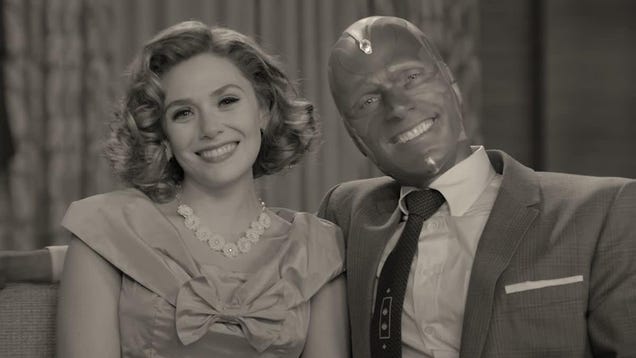
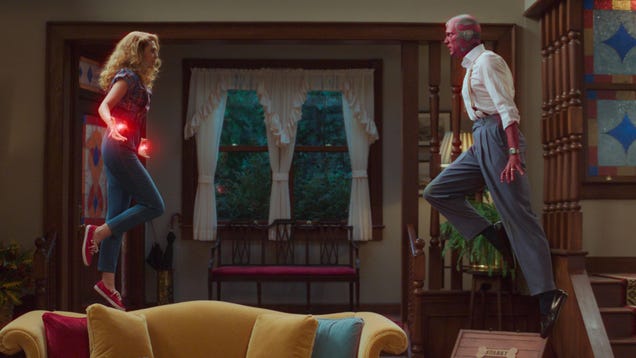
WandaVision Had 2 Very Different TV Show Homages Planned

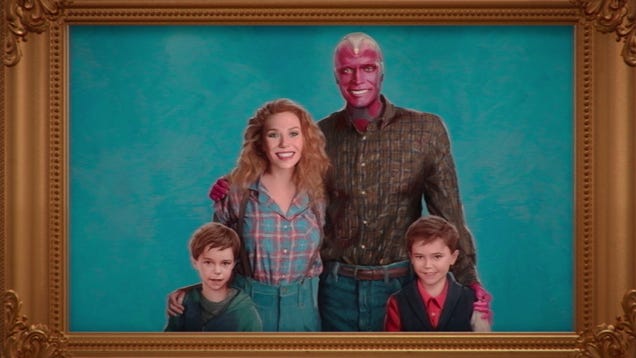
WandaVision spent the majority of its season referencing and revering 70 years of sitcom history, including Bewitched, Family Ties, and Full House, among others. But there were other classic TV series considered to serve as inspiration for Wanda’s magical reality—and one wasn’t a sitcom at all.
Two Tweet Threads About Copyright

Presented here for archival purposes, and also because I know not all of you go to the Twitters.
Background: Writer Matthew Yglesias, who should have known better but I guess needed the clicks, offered up the opinion that the term of copyright should be shortened to 30 years (currently in the US it’s Life+70 years). This naturally outraged other writers, because copyrights let them make money. This caused a writer by the name of Tim Lee to wonder why people were annoyed by Yglesias’ thought exercise, since he thought 30 years was more than enough time for people to benefit from their books (NB: Lee has not written a book himself), and anyway, as he said in a follow up tweet: “Nobody writes a book so that the royalties will support them in retirement decades later. They’re mostly thinking about the money they’ll make in the next few years.”
This is where I come in.
First Twitter Thread about Copyright, from yesterday:
The fuck we don't, pal
More fundamentally, the point of copyright is to give authors an incentive to write books. Nobody writes a book so that the royalties will support them in retirement decades later. They're mostly thinking about the money they'll make in the next few years.
— Timothy B. Lee (@binarybits) March 5, 2021
I write books as a fucking business, thank you very much, and part of my business is the long tail — creating a body of work that is saleable for many years. It's one reason I have that long contract with Tor: All my novels at one house, motivated to keep it *all* in print.
MOREOVER, a backlist I control means the ability to sell older novels as new in foreign markets and into other media formats years after the were originally published. Those additional publications/adaptations feed into backlist sales of the original work, and thus, royalties.
It is true that no one knows how well a book will sell in the long run — but then no one knows how well they will sell in the short run, either. Authors should have the opportunity to benefit from their work whenever (and if ever) it generates income, certainly in their life.
If you were to ask me the ideal copyright length for individuals: Life+25 (or 75 years, whichever is longer). This way I can profit from my work, and so can my spouse if I die before her. My grandkids can work for a living. Corporations: 75 years.
I get annoyed when people who clearly don't know my business opine about my fucking business, why I do it, and how I do it. I'm an "artist" but I tend to my career and I have built a business for a long haul. Which, yes, includes royalties as a potential long-term income stream.
Done with this nonsense now.
After this was was the usual back and forth by people who don’t seem to know much about copyright and/or have a pet idea they think is actually useful (but usually isn’t) and/or wanted to go a-trollin’. Dealing with all of these prompted a second thread about copyright, which I posted today:
1. So, as a follow-up to yesterday’s thread and comments about copyrights and lengths thereof, some additional thoughts about the practical and theoretical issues revolving copyrights, their length and copyrightable intellectual property in general. Ready? Here we go:
2. To begin, the pipe dream of a 30-year-term of copyright really is just that, a pipe dream. 179 countries including the US are signatories to the Berne Convention, a treaty tightly wound into the World Trade Organization. Here’s the actual text:
https://en.wikisource.org/wiki/Convention_for_the_Protection_of_Literary_and_Artistic_Works
3. Basically, the Berne Convention and its terms are the “floor” for copyrights; you can’t offer less protection than it offers and be a signatory. A copyright term of 30 years-and-out is, uhh, *less.* It is not seriously going to be considered any time soon. So, it’s Life+50, folks.
4. Now, and of course, you may rail, if your heart desires, about the injustice of this particular term of copyright; I myself would trim it back a bit to life+25. But unless you convince 179 national signatories to amend a highly standardized and *functional enough* treaty, meh.
5. Beyond that very practical issue, there’s the matter that you need to make a compelling moral, ethical AND economic argument to copyright holders that they should accede to your revised-but-certainly-less-than-current copyright term. Spoiler: Good luck with that!
6. The moral/ethical case is ironically the easiest to make: think of the public good! And indeed the public domain is a vital good, which should be celebrated and protected — no copyright should run forever. It should be tied to the benefit of the creator, then to the public.
7. Where you run into trouble is arguing to a creator that *their* copyright should be *less* than the term of their life (plus a little bit for family). It’s difficult enough to make money as a creator; arguing that tap should be stoppered in old age, is, well. *Unconvincing.*
8. Likewise, limiting that term limits a creator’s ability to earn from their work in less effable ways. If there’s a 30-year term of copyright and my work is at year 25, selling a movie/tv option is likely harder, not only because production takes a long time (trust me)…
9. …but also because after a certain point, it would make sense to just wait out the copyright and exclude the originator entirely. A too-short copyright term has an even *shorter* economic shelf-life than the term, basically. Why on earth would creators agree to that?
10. (Not to mention that if creators *do* want to offer their creations in a substantively freer fashion to the public before their copyright term expires, they already have options via Creative Commons and estate planning; for those folks, it’s a somewhat solved problem.)
11. But wait, you say, copyright terms used to be shorter! Yes! They were! And at one time they didn’t exist at all! But that’s not *now.* And *now* is what you have to work with. And *now,* it would be you who has to make a compelling argument to lower those term lengths.
12. Let me come at it from another direction: You want things in the public domain quicker. Okay! But what do I get for agreeing to this, that *replaces* my ability to control and benefit from my creations? Are you offering UBI? Universal health care? A robust safety net?
13. If the answer to the above questions is “no,” then fuck you, pal, I got no reason to play your silly game. I live in the US of fucking A, where we have shitty wages, shitty health care and a truly shitty safety net. My creations are how I eat, pay bills, and care for family.
14. “But you can just write other things!” Sure. OR, I can write other things AND still control the things I’ve written before. “But society benefits from public domain!” Sure! AND they’ll benefit even more if I can live comfortably to create more things to go into PD later.
15. Want to make a robustly moral AND economic argument for shorter copyright terms? You MUST start with building a society that does not punish creators for having those shorter terms. Until and unless you do, your words won’t convince creators whose lives depend on copyrights.
16. In sum: Practically, copyright terms are settled (and slightly too long), but even if they weren’t, we have not (in the US at least) created a society where shorter copyright terms make sense for many creators. Let’s create that society! I’d be happy to revisit this then.
17. Thanks for your attention. And now, as usual, a cat picture to close out the thread. Here’s Zeus, all casual.

Always close out on a cat.
— JS
Is WandaVision’s Paul Bettany Teasing What We Think He’s Teasing?

Earlier this month, WandaVision star Paul Bettany teased a cameo for the Disney+ Marvel series that would set our hearts, minds, and vibranium aflutter.
The (LGBT) Numbers Are In
THE RISE OF THE BIs pic.twitter.com/Wf5gzE1ECX
— Hank Green (@hankgreen) February 24, 2021

Polling company Gallup reports that the number of Americans identifying as LGBT is up to an all-time high, at 5.6%, and that this identification is especially high amongst the younger generations. Most surprisingly to a lot of people, I think, has been the rise in the number of (declared) bisexuals, which you can see from the numbers above has shot up considerably in recent generations. Likewise the number of (declared) trans folk is way up in younger generations than it is in previous generations. But in every case, the number of folks who are out in each generation is growing.
This will no doubt freak out some extremely conservative “family values” folks — the recruiting is working! — but I think the reason for the rise is pretty obvious: The number of LGBT people across all generations is almost certainly constant, what’s changed is the level of open social acceptance that comes with being LGBT. There’s a huge inflection point in identifying as LGBT that starts with Millennials, who are the demographic group who came of age when same-sex marriage started becoming legal in the US; Gen Z is the first group becoming adults in an era where it is completely legal.
Millennials and Gen Z are also the demographic groups who regularly see positive and varied LGBT representation in common culture, with, I think, trans representation being especially changed in recent years. As a Gen X person, nearly all my pop culture trans people were people with something to hide, played for comedy or disgust. Millennials and Gen Z get to see trans people in a far wider range of roles and situations, and sympathetically. And that matters. When you see yourself, you can be yourself.
Not that we live now live in a perfect world for LGBT folks, of course, particularly for trans folks. Transphobia is the new conservative hotness these days; having lost all the other culture wars, this is where they’ve decided to plant their flag. As someone who knows and cares for trans folk, it’s exasperating (to use the mildest possible term for it) to see the conservative outrage machine revving up on them. But that’s American conservatism for you, isn’t it. The American conservative prayer is Jesus Christ, let me have someone punch down on. Trans people are who they’re punching down on today.
Also, seeing the increase in the number of people identifying as bisexual, the thought I immediately had was I bet that’s driven by women. Anecdotally, the number of women I personally know who identify as bisexual is far higher than the number of men who do so. The Gallup poll seems to bear out that anecdotal observation of mine: “Women are more likely to identify as bisexual — 4.3% do, with 1.3% identifying as lesbian and 1.3% as something else. Among men, 2.5% identify as gay, 1.8% as bisexual and 0.6% as something else.” I personally don’t suspect women are actually more bisexual than men; I think men think they lose “man points” for coming out as bisexual. Patriarchy! It’s a hell of a drug.
(Also, not appearing in this poll: Non-binary, genderfluid and ace folks, who, again anecdotally, I see far more openly represented in Millennials and Gen Z than I do in older generations. I’d be curious to see the numbers there and how they interact with the other components of the queer spectrum, in terms of identity.)
We have more work to do before everyone feels free to be who they are. But it’s still nice to see more people feeling they can be so. If you feel more able to be who you are today, then I’m happy for you. And if you don’t well, I hope I can be part of making the world be a place where you feel you can.
— JS
Not to be rude but why the sandman live adaptation? Wouldn't it be better off as a book? I think the radio play is good enough. Why the sudden "I want my books to be adapted for live action" craze. Don't get me wrong what you have done so far with Good Omens and American Gods are great but the Sandman?
The first meeting I had with a studio (Warners) about doing a live action adaptation of Sandman was early 1990. I told them I didn’t want them to do it, because I was writing Sandman and it would be distracting, and they agreed.
The first Sandman movie scripts to be written were in 1996, by Ted Elliott and Terry Rossio – http://www.wordplayer.com/archives/SANDMAN.cover.html – their introduction to it, circa 1998, is at http://www.wordplayer.com/archives/SANDMAN.intro.html, and there are links there to the script as well.
There were other Sandman movie scripts written, some less good than others along the way, and I wasn’t involved. This was mostly because I had no power or authority, and I was the guy who wrote the original comics. Here’s a review of one of the less good versions: http://legacy.aintitcool.com/node/2571
There were attempts to get it made for TV – an HBO version that James Mangold wanted to make that foundered circa 2009 was the most interesting, and more movies: Jack Thorne wrote a wonderful script for a 2014 version that Joe Gordon-Levitt would have directed (and played the Corinthian in), that died when Warners moved it from Warners to New World, and so on.
The biggest thing that changed was, I wrote and showran Good Omens, and people loved it, and suddenly realised that I knew what I was talking about. That having me involved in Sandman would be a good thing. So I became an Executive Producer, as part of a creative triumvirate. (Allan Heinberg is the one on set doing all the work. I’m the one looking over his shoulder and saying “Good call,” or “I like the second version best” or “tell them I said no”.)
I think they’re doing a wonderful job of making something that feels a whole lot like Sandman, and that looks like Sandman too.
So where you’re seeing ‘a sudden “I want my books to be adapted for live action” craze’, I’m seeing a slow process that’s been grinding on for the last 31 years, and that, currently, is producing something wonderful, that I’m proud to be involved in.
And, fortunately, it’s not a zero sum game. You can have the Sandman graphic novels, the Audible series AND the TV series. One won’t stop the others from existing.
Captain Marvel 2 Will Deal With the Tension Between Monica Rambeau and Carol Danvers
sirfrogsworth:When you can destroy a false Republican talking...


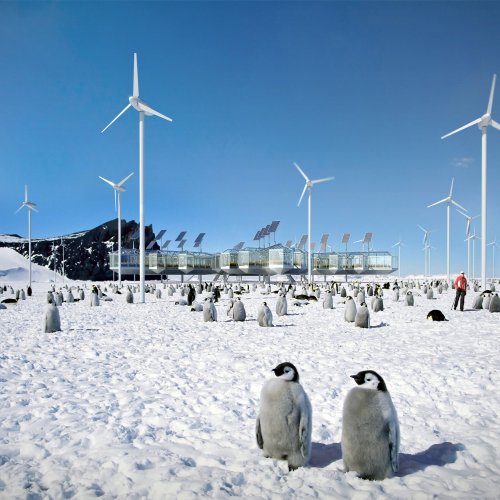
When you can destroy a false Republican talking point using fuzzy penguins that is a win-win in my book.
WandaVision's Twist May Not Reveal What You Think

Last week’s episode of WandaVision gave us a moment that rocked our world and Wanda Maximoff’s alike. Much to do has already been made about just what it might all mean for the Marvel Cinematic Universe at large—but maybe it’s not quite worth getting ahead of ourselves just yet.
Let's Break Down That WandaVision Opening Credits Sequence, Shall We?

As long as we got each other / We got the world spinnin’ right in our hands - Wanda Maximoff, basically.
A Nasal Spray for the Common Cold Is Closer to Reality

A bonafide treatment for the common cold has eluded scientists for decades. But recent animal research from a team in Australia suggests that their experimental drug—delivered via nasal spray—could help the immune system fend off all sorts of respiratory infections. The treatment is now set to be tested out in a…
Läsningen och arbetsmoralen
När romanläsningen slog igenom i delar av västvärlden i slutet av 1700-talet och tog verklig fart under 1800-talet förfasades folk. Här gick människor runt och levde sig in i fiktiva världar, alltid med näsan i en bok. Det var ett beteende på kant med arbetsmoralen. Läsningen förknippades med beteenden hos aristokratin och hovet som den allt mer dominerande medelklassen vände sig mot, lyx och sysslolöshet. Den som läste romaner förslappades till kropp och själ, ägnade sig inte åt någonting nyttigt och uppbyggligt. Här satt kvinnor och läste fiktion istället för att ta hand om hem och familj. Lite som debatten om datorspel i dag: de ägnar för mycket tid framför skärmen, rör inte på sig som de borde om de tog sitt ansvar för folkhälsan, missköter förmodligen sina läxor och lär sig inte att läsa ordentligt. En generation halvanalfabeter med dålig hållning bristande social förmåga och så vidare.
I jämförelsen mellan boken och datorspelet är det lätt att konstatera att det som är gammalt har status och det som är nytt och förknippat med ungdomen alltid betraktas med viss misstänksamhet, men att sätta punkt där blir en väldigt grund analys. Det finns en anledning till att folk oroar sig mer över att ungdomen läser så lite än att den inte går på opera: vi lever i ett samhälle där så mycket i livet och så många arbetsuppgifter kräver att vi hanterar stora mängder information, inte minst i text. Att läsa bok efter bok tränar mycket tydligt en färdighet vi vet att samhället behöver. Det är fortfarande arbetsmoralen som pekar med hela handen. Dess behov har ändrats, inte dess närvaro. Sedan kanske vi i framtiden kommer tycka samma sak om datorspelande, men än så länge är det inte fullt lika stor acceptans för argumenten om World of Warcraft-gillenas mellanchefsförberedande roll.
Läs poesi, barn. Arbetslinjen kräver det.
It Is a Good Day to Be a Babylon 5-Loving HBO Max Subscriber

Hey, you know that sweet remastered edition of the beloved ’90s sci-fi series Babylon 5 that came to Amazon and iTunes a few months ago? Well, the spruced-up titular space station has now docked over at HBO Max, too, meaning all 110 episodes of J. Michael Straczynski’s space opera-cum-political drama are finally…
Läsarbrev: Varifrån kommer energin?
Hej.
Vill först beklaga sorgen och hoppas att du ska börja må bra snart. Jag har en fundering: Om jag äter en kost med kolhydrater så får jag energi i form av glukos och äter jag ketogen kost får jag energi från ketoner? Har jag förstått rätt så långt?
jag äter ketogen kost men jag väger inte min mat så jag vet inte om mina måltider är 80E%. Mest troligt inte, men jag äter mycket protein och steker broccoli och vitkål i fett. Min fundering är vad jag får energi ifrån om det inte är glukos eller ketoner? För man måste äta viss mängd fett för att de ska bildas ketoner va? Eller är de stressande för kroppen att äta som jag gör om man inte får i sig rätt mängd av allt?
Ser även att du börjat lägga till kolhydrater och äter bär för att börja må bättre och få dina hormoner i balans? Jag blir fundersam då, är inte strikt keto de bästa för kroppen då?
Du skrev också om lazy keto och att man kan då gå ner i vikt och påverka ens muskler. Jag styrketränar och vill inte att allt slit ska vara förgäves på grund av att jag inte gör rätt och inte har koll på vad som gäller 
Svar: Alla former av lågkolhydratkost är fördelaktigt för metabol hälsa. Standardkost innehåller typ 300g kolhydrater per dag och kolhydratreducerat räknas från 100g. Bara att ta bort pasta, bröd, ris, fikabröd, saft, läsk och snacks ger en kraftigt kolhydratreducerad kost men oftast ersätter man dessa kolhydrater med andra, till exempel rotfrukter, frukt, nötter och bär. Det är dock svårt att komma upp till normalnivån på naturliga livsmedel.
Myter kring lågkolhydratkost
Av någon anledning cirkulerar det en del myter kring lågkolhydratkost, inte bara att det skulle vara superfarligt att äta kolhydratreducerat och vara i ketos utan att det dessutom är farligt att inte vara tillräckligt i ketos eller tillräckligt low carb high fat. Det stämmer inte.
Vad jämför vi med egentligen? Hur äter gemene man? Är det värre att rensa bort pasta, bröd och ris från sitt skafferi än att äta ballerinakakor och tacos varje vecka? Det är ett helt ologiskt resonemang för givetvis är bättre mat bättre. Bättre mat är mat som inte har någon innehållsförteckning! Jag får ofta frågor från människor som undrar om det är mer hälsosamt att bara strunta i lågkolhydratkost om de inte kan följa det hela tiden på grund av jobbet eller familjen. Om det på något vis är ännu värre att blanda low carb / keto med normiskost.
Nej!
Att äta mindre skräp en dag i veckan är bättre än noll dagar i veckan. Det är inte farligt att gå in och ur ketos heller för det är en helt normal metabol funktion som alla människor har inbyggt.
Var kommer energin ifrån?
Maten innehåller kalorier från protein, fett och kolhydrater. Dessa spjälkas och tas upp av tarmarna. Kolhydrater lagras in som glykogen och resten av nutrienterna används som byggstenar eller lagras in som fett. På en högfettkost blir det en mer omfattande fettförbränning som ger upphov till ketoner, som också är energi. Om du äter en lågkolhydratkost kommer du att vara i lätt ketos och blir det för lite fett för full fettdrift kommer du drivas på blodsocker och glykogen resten. Så kallad hybriddrift.
Bygga muskler i ketos
Muskelbygge styrs av cellsignalering och kan påverkas positivt av bland annat “time under tension”. Mer belastning ger mer muskler. Det är därför det är viktigt att träna tungt och ofta om man är seriös med sin styrketräning. Det gäller också att hålla sig anabol större delen av tiden. Träning är katabol (nedbrytande) och det behöver därför kompenseras för med bra sömn (anabolt) och bra mat (anabolt). Bästa byggarmaten är fett och protein. Före ägg och kolesterol fick dåligt rykte var det obligatoriskt med ett tjog ägg om dagen för alla som ville bli bodybuilders!
Nu när vi vet mer om hormoner så vet vi att mer kolesterol också ger mer könshormoner, och det var så den gamla tidens bodybuilders kunde manipulera sitt testo utan anabola steroider.
Näringsbrister i ketos
Det är väldigt svårt att veta vad människor menar när de säger “jag äter keto” för det kan betyda väldigt många olika saker. Min regel, som går som en röd tråd genom alla mina böcker är näringstät föda. Aldrig missunna kroppen näring! Ketogen kost för mig är inälvsmat, nöt, lamm, ostron, musslor, feta fiskar, korsblommiga växter, kål, bär, väl valda nötter (macademia och valnötter till exempel) och stabila fetter som kokos, talg, ister, vispgrädde och olivolja. Där fick jag nog med det mesta, och poängen är att det är den mest näringstäta maten som finns. Väldigt svårt att få näringsbrister med andra ord!
Sista frågan om varför jag har näringsbrister (jag har perniciös anemi) som för det första börjar bli ganska återställd även om jag räknar med att full återställning kommer ta ett år, men då räknar jag in alla parametrar som träning och muskler, emotionell hälsa, biologisk ålder (nytt test beställt förresten) och så vidare. Förra året var ett hårt år för mig och när jag mår dåligt så äter jag ingenting, och när jag väl äter är det oftast något litet eller halvseriöst. När jag säger ingenting, så menar jag inte en halv morot eller en köttbulle utan jag menar ingenting. Zero. För att återställa sig efter svält behövs regelbundna måltider och varierad näring från allsköns källor så jag har passat på att dricka råmjölk och äta oslungadhonung och experimentera med low carb snacks för att få upp aptiten och därigenom äta mer och oftare. Det går väldigt bra och har inte behövt tulla på ketosen hittills, min kolhydratgräns går vid 50g per dag och det rymmer en hel del variation inklusive bär och rotfrukter.
Hoppas att mitt svar gav lite mer klarhet!
För all information om ketogen kost som man någonsin kan tänkas behöva; läs min bok Keto – Den Kompletta Boken Om Ketogen Kost!
Inlägget Läsarbrev: Varifrån kommer energin? dök först upp på Next Level Biohacking.
Powder Mage!
In today's news…
‘Dark Matter’ Showrunner Joseph Mallozzi To Adapt Fantasy Novel ‘Powder Mage’ As TV Series With No Equal Entertainment & Frantic Films https://t.co/R12udOb19W via @Deadline— Joseph Mallozzi (@BaronDestructo) January 14, 2021
Well there it is, the promised announcement of that fantasy series adaptation I’ve been cryptically referring to for months now. Very much looking forward to collaborating with author Brian McLellan, Frantic Films, and the amazing J.B. Sugar on this one. As I told Brian, it’s going to be a blast!
A TV Adaptation of Brian McClellan’s Powder Mage Series Is in the Works
Start your reading engines!
https://www.brianmcclellan.com/powder-mage-universe
The post Powder Mage! appeared first on Joseph Mallozzi's Weblog.
De olika nivåerna av ketoadaptering

Känner du igen den här grafen?
Den har cirkulerat online sedan 2012. Jag publicerade och hänvisade till den här grafen många gånger när den kom (den är från The Art and Science of Low Carbohydrate Performance skriven av Jeff Volek och Stephen Phinney) men tyckte nu att det var dags för en uppdatering!
Olika nivåer av ketoadaptering
Jag håller en keto-kurs just nu där jag adapterar tillsammans med mina deltagare. Varför ska just jag adaptera kanske du tänker, jag som varit keto så länge? Det beror på att det finns (som jag ser det) tre nivåer av ketoadaptering: Lazy keto, Normal keto och Pro keto. För varje nivå krävs en ny adaptering men har du väl adapterat en gång kommer varje gång gå lättare tills du är fullkomligt adapterad. Går du ur ketos länge och lever carb life i flera år kommer du dock troligen behöva adaptera igen. Kroppen vänjer sig!
De senaste året (drygt) har jag kört på lazy keto och det gick utför före dess från att jag testade carnivore första gången 2018. Mitt första möte med carnivore (körde 4 veckor som ett test) funkade inte alls för mig. Jag kom ur ketos och upplevde ett kolhydratsug jag inte varit med om på flera år! Det gav en del insikter och hade sina lockelser, vilket gjorde att jag inte kom tillbaka till min vanliga diet på hur länge som helst, för jag fortsatte att gräva runt i carnivore-dieten och tro att den var för mig. Det var den inte. Istället för att gå tillbaka till min vanliga diet hamnade jag i något slags mellanläge av carnivore och fulketo, eller carnivore + jordnötssmör. Bekvämt, enkelt och fortfarande med en massa metabola fördelar.
Efter ett mer avancerat carnivore-experiment i somras (2020) insåg jag dock att den ultraketo-adapteringen jag hade skaffat mig inte var permanent utan som bortblåst. Jag försökte adaptera igen men orkade bara hänga i i tre veckor, sedan gled jag tillbaka in i lazy ketos bekvämlighet. Det är lätt att tro att lazy keto är “riktig keto” eftersom man har ketoner i blodet och blir väldigt bra på att fasta. Det är dock ganska stor skillnad!
Lazy keto
Blodketoner från 0.4 – 1 mmol/l
Blodsocker på 5-6.5 mmol/l
Inget hunger eller sug men det är tack vare lite ketoner plus en stabil glukoneogenes som pumpar ut blodsocker hela tiden. Om man inte äter ordentligt leder det till rejäl viktminskning på bekostnad av ens muskler.
Normal keto
Blodketoner från 1.2-2.5 mmol/l
Blodsocker på 4.0-5.5 mmol/l
Det som kallas för “optimal ketos” kallar jag för normal keto. Då har man lite mer ketoner och blodsockret har dippat lite. Det betyder att ketonerna får en lite större roll som bränsle. Detta är sweet spot för många keto entusiaster, även för mig. Här var jag i flera år non-stopp!
Pro keto
Blodketoner från 3-5.5 mmol/l
Blodsocker på 2.7-3.5 mmol/l
Det finns dock en nivå till och det är när man är helt och hållet ketondriven och blodsockret har den mindre rollen i sammanhanget. Då har man ett markant lägre blodsocker, lägre än vad som är normalt. Så lågt att sjukvården nog skulle reagera och kalla det för farligt och sjukligt. Det är ju så otroligt få individer som befinner sig här, så det finn inte mycket dokumenterat om hur kroppen fungerar på den här nivån. Dock kan man räkna ut, med hjälp av biokemiska och biologiska principer, att det är så många organ som faktiskt föredrar ketoner framför glukos, att glukoset kan vara väldigt lågt när det knappt används.
Komma in i ketos
Det finns många vägar in i ketos. För de flesta tar det några dagar att få ketoner i blodet, men att bli adapterad tar några veckor minst. Adapterad är man när blodsockret håller sig under 5 mmol/l och ketonerna är spårbara i blodet hela tiden, även fastande. För att uppnå det där tillståndet av att känna sig som en maskin, där orken aldrig tar slut, behöver man hänga i och det är vad de flesta inte klarar!
Nu är jag personligen väldigt motiverad av att just “hänga i”. 2020 blev ett år av svält och jordnötssmör som jag åt ikapp när jag hade svultit för länge. Så blir det när jag inte har någon aptit, vilken är den första som ryker för mig vid stress. Nu är stressen lägre och det känns som ett bra läge att lägga lite extra krut på en bra och stabil kost efter lång tid av försummelse 
Inlägget De olika nivåerna av ketoadaptering dök först upp på Next Level Biohacking.
TCL Nxtpaper är en Androidplatta utan bakbelysning, vill efterlikna e-papper

TCL har introducerat en ovanlig tablet vilken är tänkt att fungera som en slags hybrid mellan surfplatta och läsplatta. Enheten har en 8,88-tums färgskärm med 1440 x 1080 pixlar.
Inget ovanligt än så länge – men panelen saknar bakbelysning. Tanken är att det ska vara behagligare för ögonen att läsa på skärmen och att plattan ska ge en upplevelse som liknar e-papper. Istället för bakbelysning har skärmen en reflekterande design som lyser upp skärmens innehåll genom naturligt ljus från omgivningen.
Eftersom skärmen inte har någon egen belysning flimrar inte skärmen och den har inget blåljus. Enligt TCL gör tekniken panelen 65 procent mer energieffektiv än traditionella alternativ, samtidigt som kontrasten är högre än för e-papper.
Övrig hårdvara inkluderar MediaTek Helio MT8768, 4GB RAM, 64GB lagring, Wi-Fi, minneskortsplats, USB-C, hörlursutgång, Bluetooth 5.0, en FM-radio och ett 5500mAh-batteri. Enheten har två kameror: 8MP på bakstycket och 5MP framtill. Kartongen inkluderar ett tillbehör för läslampa.
TCL Nxtpaper släpps i Europa i april för 349 euro med Android 10 som OS.
Understanding Horses: Calculated (and Uncalculated) Risk

A few years ago, the horse community suffered a fairly strong shock. What had been viewed as a nuisance case in Connecticut was judged, not just once but again on appeal, against the horse owner and in favor of the plaintiff who wanted horses declared “inherently vicious.”
The facts of the case are complicated, and the ruling did not actually condemn all horses. The upshot of it all was that horses, if provoked, will bite (or kick or do other things that may damage a human), and held the horse owner responsible for what happens. There’s still strong feeling on both sides about this, and as a horse owner myself, I hope and pray that someone doesn’t wander into my horse turnout when I’m not there to stop them, and get kicked or stepped on (my lot are not biters as a rule).
Luckily I have sensible, horse-smart neighbors who know to stay outside the fence, and who check in with me before feeding anything. One good side effect of living in the American West, which has been horse country for a good long time.
It’s long been standard in horse facilities for owners to post signs along the lines of “Ride At Own Risk” and “Do Not Feed the Horses,” and to discourage strangers or passersby from wandering in and getting into the horses’ stalls and paddocks. The size and strength of the animal, the hardness of hooves and the tearing power of teeth, do add up to definite safety concerns when civilians, especially very young or inattentive ones, intersect with the equines.
But then again, what really is safe? Driving to work can get you crashed into and killed, taking the bus likewise; you can trip while walking and break your neck; you can choke on your breakfast scone and suffocate–life is dangerous. Right now, even going outside without a face mask can land you in the ICU (or the morgue) with a dangerous virus.
Anything can kill you. Just ask horror writers who devote whole careers to finding the deadliness in ordinary things. (Blenders, gas stoves, garbage disposals…)
In the end it’s about what a person considers to be an acceptable risk–whether of necessity or by choice. When it comes to horses, as with any other sport or avocation, the risks are a given, and the sensible horse person takes measures to minimize them as much as possible.
This means always being quietly alert, always paying attention to where the horse is and what signals they’re sending with their body language and attitude, and always having an escape route in case the horse abruptly goes splooie. And when that isn’t possible, knowing what to do and how to keep from getting killed. (Pro-tip: If you’re trapped in a corner and the horse wants to kick, don’t pull back—move in close and if possible in between the hindlegs, and let the horse kick past you. Then pray you can get out before they flatten you against the wall.)
One morning not long after the judgment appeared on the news, I wasn’t as attentive as I should have been. I was half asleep, I was putting the Really Big Mare in a stall and the Evil Gelding was next door making evil faces and I didn’t watch for flying hooves and Ow. She got me in the thigh.
Nothing broke, because she pulled her punch at the last instant. But oh, the colors! And the sheer extent of them. I was in close, too, but when the hoof is a good six inches across…well. Ow. I still, all these years later, have a slight dent where she pureed the muscle.
But was this an inherently vicious animal? She was not. What she was, was an animal that, with its size and strength, can be dangerous without meaning to. She was making a statement to the snot next door, and forgot to consider the tiny human in middle.
From the horse perspective, it was a light tap. Too bad for me that I was off my game and not watching for the quite natural interaction between that particular combination of personalities. That’s not viciousness. That’s Stupid Human Tricks.
Not long after that, I was introducing a stallion to the mare we were hoping to get bred that spring. Unlike the previous episode, which was unplanned and I got what I deserved, this was calculated. I rode him first, to establish calm and focus and to reinforce his respect for my authority. I had backup just in case—no going it alone, no. Then we set up the space, mapped out the exit routes, and chose equipment to control the testosterone bomb.
I’m told it was impressive. I was busy keeping myself out of the way but keeping the stallion from getting too aggressive with the young and inexperienced mare. Yes, he was on his hindlegs at times, and striking with his forelegs, and generally doing what came naturally. But these were expected things, planned for, and the weaknesses in the plan that became evident (not quite enough space after all—we used a different paddock the next time) were not fatal or even damaging. Seconds after being told that was enough, we were done for the day, he was back on all fours, calm and attentive, and happy to go and eat his lunch.
That was worth the risk for the result. But it took planning and foresight. Calculation, in short. And not being fearful or timid or anxious, but definitely being aware.
Which is why random toddlers wandering in can get into trouble—just as they can with your sweet and gentle dog or your couch-potato cat or your lawn mower or your box of matches or, god help you, your swimming pool. It’s not that any of these things is inherently vicious or inevitably deadly, it’s that sometimes, in the right or wrong circumstances, things can go wrong.
After my encounter with the Very Big Mare, I was much more alert in the mornings. Also, much more careful of where I was in relation to the large and sometimes cranky animals who make me and others so happy so much of the time. I had a literal wake-up call—and it made me that much more conscious of safety when we worked with the stallion, and with any other horse thereafter, both on and off the farm.
Thank you in whatever Otherworld you inhabit now, Very Big Mare who lived to a very great age. I needed that. (Ow.)
Judith Tarr’s first novel, The Isle of Glass, appeared in 1985. Since then she’s written novels and shorter works of historical fiction and historical fantasy and epic fantasy and space opera and contemporary fantasy, many of which have been reborn as ebooks. She has even written a primer for writers: Writing Horses: The Fine Art of Getting It Right. She has won the Crawford Award, and been a finalist for the World Fantasy Award and the Locus Award. She lives in Arizona with an assortment of cats, a blue-eyed dog, and a herd of Lipizzan horses.