Advertising Agency: Rothco, Dublin, ireland
Creative Director: Damian Hanley
Art Director: Stephen Rogers
Copywriter: Alan Kelly
Account Director: Roisin Field
Illustrator: Jesse Cambell Brown
Natalia Pokrovskaya#zplkl
Advertising Agency: Rothco, Dublin, ireland
Creative Director: Damian Hanley
Art Director: Stephen Rogers
Copywriter: Alan Kelly
Account Director: Roisin Field
Illustrator: Jesse Cambell Brown
Natalia Pokrovskaya"the problem of living together with other Americans — is as real to me as it is to anyone, and it is a concrete problem which is actually amenable to photographic investigation". Подставить Russians, и получится то же самое.

©Tomoko Kikuchi – via ‘Magnum Emergency Fund Announces 2013 Grantees’ [LightBox]
Thanks to everyone that tuned into the first episode of the podcast. I received som good feedback. There’s always room for improvement. I have a few more interviews scheduled so hopefully I can get the next couple episodes in the can soon.
We’re going to start laying out issue 6 in the next couple of weeks. That’s always stressful but I’m excited to get it out there on schedule.
BJP came out with a list of 20 photographers to watch in 2013. Good to see some people I’ve been following the last few years make the list. I’m not a big fan of this type of hype but whatever, it’s not really worth ranting about. Moving on…
1/125th wrote some “Some Largely Unrelated Thoughts on From Here to There: Alec Soth’s America:”
I tend to dislike accounts of the value of a body of photography based on its function in calling into question American mythology, self-confidence, etc. It’s just redundant, like a gripping photo essay revealing the conspiracy behind the myth of Santa Claus. Demythologization is not bad, but it is rarely interesting in itself, and if it’s treated as a priority in art (either by the artist or by curators or critics) it limits the scope of its relevance to audiences who partake in the mythology or who like to chuckle at the foolishness of those who do. (Also, in the case of the photographers who tend to crop up in this particular conversation, one has to ask: to what extent can American identity be “submitted to serious questioning” by all and only white men?)
But Salvesen’s “we must either find ourselves in these pictures or admit ourselves outside them,” does something different (or at least additional) for me. It focuses not on the relationship between the photographers and the idea of America, but on the relationship between viewers and subjects. And while I can be as jaded and bored as I like about national mythology, this problem all Americans face — the problem of living together with other Americans — is as real to me as it is to anyone, and it is a concrete problem which is actually amenable to photographic investigation.
It’s a particularly good way to approach Soth, whose work, while often as narrow and provocative and judgmental as that of any other photographer of America, is also consistently empathetic, and genuinely interested in people as such. (And not only for their iconic or representational utility.)
“If there was a picture in the newspaper from the block, it was always negative,” said Mr. Flores, who is now a staff photographer for The Journal News in Rockland County. “It was the image of the Puerto Rican wearing a bandanna with a knife in his pocket. But that wasn’t my experience. You know, my mom was a garment worker. She was very hard working, as were most people in my community.”
That sentiment guided his photography, which went from hobby to obsession. His images showed the full range of experience and emotion in Longwood — the same neighborhood that had been home decades earlier to Colin Powell. He shot the fires and those who fell to drugs, of course. But he also captured everyday images that often escaped others’ attention.
”A Conversation with CPC 2012 Winner Olivia Locher” on Conscientious:
I find myself making a lot of images on impulse. As soon as I get an idea that I like, I put it into motion very quickly. Making work in this way results in a lot of images (a lot of them which get put on the back burner for some time). Although I believe that whenever an individual makes images they will all somehow fit together because of the general ascetics being used. I spend a lot of time looking at and living with my work, and by doing so a clarity seems to form what to place together.

©Maxime Ballesteros via [Feature Shoot]
An interview with photographer Dirk Braeckman:
My way of working is very impulsive. I never know what I want before I actually start shooting. I don’t arrange the setting. The golden thread running through my work is the autobiographical aspect – but not in an obvious way. It is autobiographical in the sense that I photograph things close to me, what is around me. And in the end it matters more in which way I print it and how I photograph something than what.
Torbjørn Rødland - interviewed by Gil Blank in 2007:
I defend what I called “the pleasure of photography”, and I’m trying to make sense of the aspects of my life that have mythic aspirations, rather than, say, the unimpressive dirt under the kitchen sink. I suppose I’m involved with this circular logic where yesterday’s cliché becomes today’s abject. If you’re a white heterosexual male from a wealthy country, no one wants to hear about your personal problems. You’re swimming in banality. Maybe this is the reason I’m touched by unhappy fashion models: our culture laughs at their problems. It’s obvious, isn’t it: I identify with sad, pretty girls.
Sometimes I try to change allegories into symbols. That’s how romantic the project is. I don’t believe there are rational answers waiting. There isn’t a solid platform to view or criticize the world from, and there isn’t one correct way to decode the images.
The Christian church cannot fully realize what it means that its main mystics—people like Meister Eckhart (in Germany) or St. John of the Cross (in Spain)—were mainly experimental writers. They were brilliant poets. Ecstatically—by critically expanding and challenging their chosen medium—they met God: they created meaning. Poem after poem, their writing made new experience possible.

©Meg Griffiths via [LENSCRATCH]
Related Posts:
Natalia PokrovskayaХочу золотые мизуно!

The challenge was to disclose the Golden Mizuno Runners tennis shoes, a limited edition for the London Olympics 2012. And as in time of Olympics, nothing is more coveted and desired than gold, the idea was to transform the Mizuno Golden Runners boxes into golden bars. Besides storing the product, its main function, the boxes turned to be a POS material, a window dressing and an object of desire.
Advertising Agency: Talent, São Paulo, Brazil
Chief Creative Officer: João Livi
Creative Directors: Alexandre Nego Lee, Rodrigo Bombana
Art Director: Fabiano Pinel
Copywriter: Ricardo Dolla
Agency Producer: Mário Coelho
Account Manager: Rafael Barajas
Illustration: Gelmi
 As an artist, sculptor and photographer, Maximo Riera has used his eye and craft of creating dramatic works across disciplines in his most recent project, The Animal Chair Collection. The ever-growing series of biologically accurate animals covers mammals, reptiles and insects from the octopus and elephant to walrus and...
Natalia PokrovskayaЛеопардовые лосины. Вот что мне нужно.

Welcome to #ourlife @robinnyc @sammyjofruition @runlikeelle @mubi_ali…
@stumprunners x @rundemcrew x @bridgerunners by stumprunners http://instagr.am/p/U9T4lKMNR_/
Каждый вечер на улицах района Парк-Слоуп (западный Бруклин, Нью-Йорк) можно увидеть мужчин на велосипедах, одетых в жёлтую форму с надписью “Brooklyn Bike Patrol” («Бруклинский велопатруль»). Их маршруты заканчиваются в разных местах, но начинаются неизменно у станций метро, откуда они сопровождают припозднившихся местных жительниц, делая их дорогу до дома безопасной. Все они — волонтёры, крутящие педали за идею. Как и полагается истинным героям, они даже не думают принимать вознаграждение за свои добрые дела.

Основатель и руководитель бригады — опытный велосипедист Джей Руиз (Jay Ruiz), который и раньше накручивал каждый день не меньше десятка миль. Осенью 2011 года, когда в его районе произошла серия жестоких нападений на женщин, он принял решение в меру сил повлиять на ситуацию, сел на свой велосипед, сделал табличку “Brooklyn Bike Patrol” с указанием собственных телефона и адреса электронной почты, остановился у одной из станций метро и предложил сопровождение женщинам, возвращающимся домой в тёмное время суток.

Немного погодя Джей начал привлекать к делу волонтёров — чтобы его служба имела возможность работать сразу у нескольких станций подземки одновременно. «Поначалу, — говорит Руиз в одном из интервью, — люди думали, что мы сумасшедшие и никак не могли определиться, считать нас хорошими парнями или плохими». Тем не менее, добрая слава об инициативе быстро распространилась — благодаря молве и не без помощи журналистов.

Для того чтобы обеспечить себе велоэскорт, жительнице Бруклина достаточно позвонить по телефону, или отправить заявку по e-mail, или связаться со службой при помощи Facebook. И тогда один из этих людей в жёлтом окажется в нужное время в нужном месте. Доверять им можно — в команду принимают лишь тех, у кого никогда не было неприятностей с законом и в целом анкета, что называется, чистая.

Изначально Джей Руиз рассматривал свою затею как временную, но теперь — когда спрос на неё стал очевиден — просто не может бросить это дело. Да, также важно и то, что после появления Brooklyn Bike Patrol количество ночных нападений в Парк-Слоуп действительно сильно уменьшилось.
 by Laila Gohar During the day Stephanie D'Heygere can be spotted around the Maison Martin Margiela headquarters in Paris, where she works as part of the fashion house's extensive collaborative of designers. By night she runs Been by D'Heygere ("been" means "leg" in Flemish), a line of leggings featuring hyperrealistic...
Natalia PokrovskayaЭто для пирожка, хоть я и недолюбливаю женщину на фото.

Natalia Pokrovskaya4 przhk


twitter | facebook | tumblr | instagram | pinterest
Natalia PokrovskayaЦвета красивые, но мне гораздо больше нравится просто Flyknit, лунаровская подошва для него толстовата.


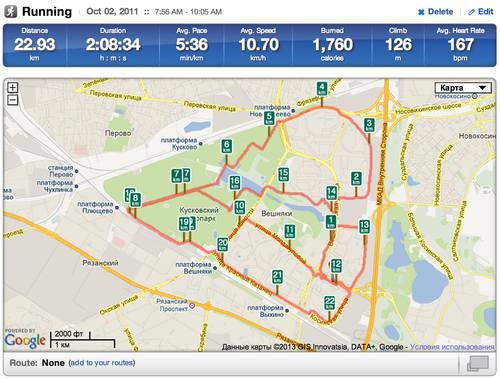
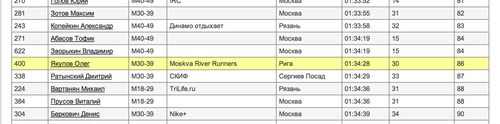
Собрал некоторые советы и обобщения из собственного опыта. Приведенное ниже не претендует на истину в последней инстации. Скажу лишь, что благодаря этим рекомендациям за 2012 год удалось улучшить полумарафон с 1:58 до 1:34.
Октябрь 2011
Октябрь 2012
Итак, улучшаем скорость
1. Длина шага
Ноги длиннее не сделаешь, но шаг — можно. Это ни в коем случае не значит, что вам надо выбрасывать ногу дальше — это может привести к травмам. Длину шага можно увеличить двумя простыми способами. Первый — наклон корпуса. Стоит немного наклонить корпус удерживая спину ровной, как длинна шага тут же увеличиться, это связано с тем что вы начинаете быстрее “падать”, задняя нога будет больше вытягиваться и расстояние между точками касания сразу увеличится. Вообще это все очень понятно и ясно описано в книге Chi-running. Все кто прочитал хотя бы ее треть отмечают прибавление в скорости без увеличения усталости и напряжения. Второй способ — увеличить амплитуду работы суставов и гибкость связок — чем легче и свободнее работают ноги и бедра тем длиннее шаг. Попробуйте во время бега сконцентрироваться на бедрах, добавьте им немного вращения. Представьте что локоть подходящий к боку немного тянет бедро вперед. Вы почувствуете что у вас в работу включится пресс и спина. Длинна шага мгновенно увеличится. Амплитуда складывается из двух факторов: гибкость связок и расслабленность. Значит больше йоги, пилатеса, растяжек и все получится.
2. Кол-во шагов за минуту
Тут все просто: медленно, но верно увеличивайте каденс. Чем больше шагов в минуту вы сделаете, тем дальше убежите :) Но только не надо геройства, измерьте текущий каденс и прибавляйте по 2-3 удара в месяц пока не доберетесь до 180 bpm. По мнению многих атлетов и исслеований это оптимальный каденс для длинных дистанций. Увеличение каденса повышает нагрузку на сердце и уменьшает нагрузку на мышцы, связки и суставы. Поэтому, если плавно наращивать каденс, сердце само подтянется)) А снижение нагрузки на все остальное плюс увеличение кол-ва шагов в минуту отразится на темпе.
3. Вес
Чем больше бесполезный вес, тем быстрее вы возвращаетесь на землю, чем лишний вес меньше тем длиннее расстояние между точками касания и дальше полет. Бесполезный вес это тяжелая одежда, плохие кроссовки и конечно жир:) С одеждой все ясно, берем легкие ткани, специализированные кроссовки и пару сотен граммов можно съэкономить. Но действительно серьезный потенциал для увеличения темпа хранится в наших жировых прослойках (если их у вас нет, то и потенциала нет, грустно) Итак, минимизируем животный и молочный жир, сладкое и и т. п. И наблюдаем как изменяется вес и пэйс :) Не забываем что жиры все же нужны, но лучше их получать из орехов, рыбы и растительного масла.
Удерживаем темп
Темп надо не только набрать, но и удерживать, для этого нам нужна выносливость — способность организма долго работать в режиме повышенной нагрузки.
1. Мышцы
У каждого свои проблемные мышцы в беге. Я для того чтобы обогнать запланированный Асиксом темп работал над икрами, бицепсами ног, спиной, прессом и плечами. Большой вес не нужен, напротив лучше делать 3-4 подхода по 15 повторений с небольшим весом. Уже через пару месяцев вы почувствуете, что можете держать новый пэйс гораздо дольше. Идите в ближайший зал, найдите вменяемого тренера, скажите ему “я увлекаюсь легкой атлетикой и хочу укрепить мышцы” (не нарастить, а укрепить — это важно) и будет вам хорошо. Не советую заниматься самостоятельно, если у вас нет опыта работы с залом и тренажерами. Я сам сделал кучу глупых ошибок, и теперь занимаюсь с тренером.
2. Сердце
Интервальные тренировки развивают не только сердце, но здесь речь пойдет именно о нем. Подробное воздействие интервальных тренировок описывать не буду, т.к. все это в нужных книгах описано. Расскажу только как тренировался. Важно сделать так чтобы приступать к интервальной тренировке хорошо отдохнувшим, хотя бы день-два. На следующий день можно очень медленно немного побегать чтобы разогнать кровь и вывести молочную кислоту. Потом еще пару дней отдохнуть до следующей серьезной тренировки. Я строил свои интервальные по самой простой схеме: 1км с пульсом 85-90 % от максимального, потом пару минут на нижнем аэробном пороге. И повторить 3-4 раза. Эффект потрясающий:) Есть более сложные схемы, но я до них еще не добрался.
3. Энергетические ресурсы
Прогресс будет очень слабым, либо его вообще не будет если постоянно медленно бегать и увеличивать только время или расстояние. Чтобы быстро развиваться надо строить план тренировок из разных типов нагрузок. У меня в этом году была такая база: вторник — интервальная, среда или четверг очень медленный джоггинг до 5к, пятница — быстрая, суббота — отдых или джоггинг, воскресение — длинная темповая. Т.о. организм не привыкает к одному и тому же режиму, нет перегрузки, в организме не задерживается молочная кислота, задействуются разные системы питания мышц. Все это в целом положительно влияет на прогресс. Для того чтобы бегать длинные с хорошим ровным темпом нужно научить организм запасаться энергией, для этого надо выстраивать тактику приема пищи вокруг программы тренировок. Вечером перед длинными много углеводов, сразу после — белок, чуть позже много медленных углеводов. Принимать пищу часто, но маленькими порциями. Пить достаточно воды.
Проверяем результат
Проверять прогресс очень просто, возьмем к примеру дистанцию в 10к и пробежим ее с пульсом в аэробной зоне (для себя я брал 150-155 ударов, чтобы рассчитать свои зоны гуглите heart rate zones calculator). Во время бега отключаем все уведомления о темпе и ориентируемся только на пульс. После пробежки смотрим на распределение темпа. Обратите внимание на средний темп и на кривую темпа. Возможно вы заметите, что после какого-то километра темп сильно ухудшается. Отметьте это километр. Бегайте эту тестовую дистанцию раз в месяц.
Если вы будете следовать рекомендациям выше, то вы заметите что средний темп будет расти, а момент ухудшения темпа будет сдвигаться к концу дистанции и со временем вообще исчезнет на 10к при заданом пульсе. Это значит что вы достигли достаточного уровня выносливости, чтобы в хорошем ровном темпе в аэробном режиме бежать 10к и момент усталости теперь лежит за его пределами :) Теперь можно бегать тестовую 15 или 20к, чтобы лучше мониторить свой прогресс. Со временем темп будет только улучшаться, а точка усталости уходить все дальше и дальше.
Легкого, быстрого бега!


If you have your 35mm film processed and printed at your local lab, have you ever wondered how it’s done? In this post, I’ll take you on a behind-the-scenes tour on the entire process.
To start, get your favourite old camera out. You know, that camera you found at an op shop or garage sale. The one that says Lomo on the side or Leica on the top?
Either way, it’s still around and you might as well put it to some use. Load your favourite film, and spend the morning or afternoon out photographing your favourite subject.
Once you have finished your shoot, the satisfying sound of the rewinding film should be music to your ears. With a smile, head into your local film lab to get your marvellous shots processed. At this point you should be smiling as you have captured images on the original camera sensor – film! ….and nothing beats the original, right?

So now your film has been dropped off. You can continue on your journey while the staff at the film lab go ahead and turn your art into memories. Your little favourite film’s journey is just about to begin.

The next part of this story is what happens when you leave. Enter the lab technician, in this case Derek from Fremantle Camera House.
The first step the lab technician will do is retrieve the end of the film out of the exposed canister using a film picker. This can sometimes be one of the hardest steps as some old cameras tend to bend the end of the film back on itself when rewinding.
At this point the film is still remains light sensitive so it’s not like the canister can be opened in daylight to overcome this bent film problem. The portable dark box was created for this very problem.
If the technician can’t get the end of the film out by using the film picker or special lab tape then the film is put in the dark box and the canister is opened by force to be rolled manually into a temporary 35mm canister. However, as you can see below, Derek had no trouble using the film picker.


Once the end has been removed the film canister is placed in a special holder which allows the end of the film to be cut square.

Once cut, the film is stuck to a leader card using special tape which won’t peel off during the developing process. As you can see in the below picture the leader card is made from a flexible transparent plastic.
Two films can be stuck to the outer sides of the leader card. It is important to apply tape to the both sides of the film and leader card to ensure no film falls off in the developing process. The leader card features small rectangle holes located down it’s centre. The holes catch onto sprockets which guide the leader card and film through the processing machine.

It’s very important that one customer’s films aren’t mixed with another customer’s. To stop this from happening a unique serial number called a twin check is stuck to the customer’s order and the corresponding film. The numbers can then be matched once the film has exited the processing machine.


Now the film is Ready for Processing.

The leader card is inserted centrally and the machine automatically moves the leader card forward. You can see here Derek has his hands under the film to stop them falling down and exposing the film to light.
At this point the door of the machine is open. Once the leader card is level with the horizontal silver metal plate the door can be shut and locked which will then make the machine light tight.

One of the scariest things that could happen at this point for any film lab is a power blackout. It’s happened to me countless times. During a power black out the machine shuts down and the undeveloped film gets stuck in one of the tanks/baths.
Fortunately, this Fujifilm machine has a manual crank winder on the side. So if a power blackout were to happen, all the technician would have to do is slowly wind the crank for the film to continue on its journey through the processor.

I should have mentioned this at the start… It is imperative that a well maintained photo lab run control strips at the start of every day or second day if they are a busy lab. This is VERY important. Once the control strip has been developed, it is measured by a densitometer. The results from the densitometer are then used to calibrate the the machines, ensuring that colour levels and chemistry are correct.

By now the film has well and truly entered the processing machine. The film will undergo a transformation from undeveloped to developed through a series of processing tanks (baths) found inside the machine (the inside of the processing machine is shown below).
The process is called a C-41 process. The steps the film will undergo as it travels through the machine are described below:
Process 1: Developer – The developer produces a silver image in the film emulsion layers from the latent image produced when the film is exposed. At the same time, the developer – which is locally oxidised by this reaction – combines with couplers incorporated in the emulsion and produces colour dyes. The quantity of dye produced is proportional to the amount of silver image produced.
Process 2: Bleaching – This bath converts the metallic silver image formed during development back into silver halide in order to make it possible for the fixer to remove the silver from the emulsion.
Process 3: Fixing – The fixer dissolves the bleached silver image and the unexposed and therefore undeveloped silver halide originally present in the film emulsion, which can then be washed out by the wash.
Process 4 and 5: Washing – A water wash as commonly found in larger processors, works by removing all processing chemicals and by-products from the film emulsion. Correct wash water rate and temperature are critical for long term dye stability.
Process 6: Stabilising – This contains a wetting agent and and other propriety chemicals featuring uniform drying of the film and long term stability.
Process 7: Drying – The film is heated to remove any water.

Once the film has finished going through the C-41 process, the technician then cuts the film off the leader cut and hangs them on a stand often referred to as a tree. The film is placed on the tree in time due order.


Once the lab technician has balanced a sample roll of photo paper (called a paper control strip) through the densitometer, then scanning and printing the roll of developed film can go ahead.

A roll of 6″ matte photo paper is loaded into the black paper cartridge. The light sensitive cartridge slides into the side of the Fujifilm Frontier 340 ready for printing.
Back when I worked for Fujifilm, a funny story happened (funny for me not the workers). A store (which will remain nameless) had a new warehouse worker. One day about 30 rolls of 6″ light-sensitive paper arrived in the store’s warehouse.
The new worker approached the photo lab and told the staff some boxes had arrived for them. The staff in the lab were terribly busy and asked the warehouse worker to bring the paper to them as they didn’t have a spare second to retrieve them.
Being keen to lend a hand the warehouse worker arrived with a full trolley of 30 rolls of paper. I was told the look on the lab managers face was priceless. You see, what had happened was the warehouse worker had keenly removed the paper from the boxes.
This normally wouldn’t have been a problem, but the worker went a little too far: he had removed the paper from the light sensitive bags, therefore exposing the 30 odd rolls of paper to light, making them exposed and unusable. It cost the store approximately another $6000 to replace the paper. To this day I still laugh, though I really shouldn’t!

The developed film then goes through the 35mm scanning mask on the Fujifilm Frontier which then turns the negatives into positives.

Once the film has been scanned at a high-resolution, the negatives will show as colour positives on a screen (good photo labs will use a calibrated screen to ensure the colour and exposure are correct).
It is at this point a good lab technician adjusts each picture using a unique keyboard. Different amounts of Cyan, Magenta and Yellow can be added or subtracted to each photo to ensure colour is correct. Adjustments are also made for exposure to each individual photo. Printing from negatives is a skill, which is why you should always ensure the lab technician you use is highly trained in this area.


The roll of film photographed in this story ended up being developed, scanned and burned to CD.
So now you know the life of a roll of film, from being shot to being printed. The process does take some time to master for the new worker and if procedures aren’t followed things can go terribly wrong. In my time I have heard of some disasters with some labs losing film, negatives being incorrectly cut, or, even worse, films going to the wrong people.
I suppose as time flies by film is becoming a niche market. Photographic stores like Fremantle Camera House have been in the same location for over 50 years (not under the same business name) and are happy to print from a variety of film types. I am glad a store like this one still exists.
It is so nice to see a teenager holding a film camera and wanting to buy film. After all, isn’t that were photography started?
Imagine a world without film. There is something about film which digital can’t reproduce. Hey, I’ve tried — it’s just not the same. So to all the film users out there, I salute you. You are the photographers, the snappers, the image makers and the niche – keep up the great work.

Thanks to Blair Gauld for letting me use your film for this story. As you can see that the film above also included an index print, which is great for knowing which images are on the CD.
Thanks also to Fremantle Camera House and Derek (great lab technician and film buff) for letting me photograph this story. If you have 35mm, 120, 110, E-6 or C41 film that needs to be developed, printed or scanned then contact Fremantle Camera House to see how they can help.
About the author: Leigh Diprose is a photographer based in Perth, Western Australia. Visit his website here. This article was originally published here.

Earlier today, an Australian court put an end to a year-old tussle between photographer George Ferris and newlyweds Jarrad and Sheree Mitchell over the quality of the wedding photos he took for them. Although neither side really won, the court did make an interesting statement that could serve as a precedent in the future.
One of the main pillars of the Mitchell’s argument was that Ferris had missed several key moments, including their wedding kiss. Ferris, on the other hand, called it “just a peck” and maintained that not all moments could be captured. The court sided with Ferris.

Here’s what Victorian Civil and Administrative Tribunal member Dr. Rebecca French had to say:
It was put to me that it was ‘just a peck’ and while it was not discussed at length in evidence, I accept that it is quite difficult to capture the moment of a kiss… Nor is it always possible to capture other precise moments and doing so can be problematic
In the end neither side really got what they wanted; Ferris was ordered to pay $710 in damages for the sub-par photos (of $6400 claimed), and the Mitchells paid out $60 for a meal the photog never got (of $5700 claimed). But at least in Australia, the precedent has been set: whether you’re the photographer or the client, be very specific about your expectations and the moments that are “must capture.”
(via The Age)

Went #running in the #arctic. Need googles. #ellesbellsruns #rundemcrew by broke_grove http://instagr.am/p/UErhqpKY6F/
Natalia PokrovskayaМне нужна твоя сумка.


 Front/rear lights for my bicycle that I never realized I had – I swear this bag belonged to Mary Poppins
 Cutler & Gross sunnies, window reflection sadly does not come with.
 LC-A+ camera because I’m too cool for school, or too poor for the Canon EOS M.
 3.1 Phillip Lim Pashli satchel in pine green, AKA our Christmas tree this year.
 Urbanears in ‘do-not-disturb’ tomato-red, and best noise cancelling headphones.
 Spare battery and memory card for the beast that bears the name of Canon + business cards for this enterprise.
 Samsung Galaxy SIII - another one of my horcruxes.
 House keys and oyster card, if I’m clumsy enough to lose this I should be put into jail.
 Fashionary planner 2013 (also featured in first image) and assortment of pens + portable watercolour kit
 Wallet from Chloé, red for ‘warning’ or ‘danger’, or would yellow wallet be a better reminder that I don’t have unlimited funds?
 Tapestry pouch, stolen from mummy who had it since we lived in Austria in the late 80′s.
 Leather gloves from ASOS with slits, for knuckle dusters, naturally.
 Not pictured, but the main culprit for carpal tunnel and all known diseases, Canon 5D Mark II + lens


Stella McCartney Falabella zip pouch as a thin wallet alternative.
YSL travel compact, bought at the airport under pressure of ‘duty free’
DVF Carolina lip bag, bumping strangers in the tube with the lips and being awkwardly intimate.
YSL Touche Eclat for lightening touchups, perfect for under-eye baggage.
Samsung Galaxy SIII - another one of my horcrux.
Chanel ‘Laser’ lipgloss for the impromptu jedi battle, naturally.
Balenciaga Eau de Parfum purse spray (mini vial), also can be pepperspray, depending on situation.

The post What’s in my bag appeared first on PARK & CUBE.
Natalia Pokrovskayaкартинка вернулась в одном из фидов, и в памяти Всколыхнулось. Дита что ты делаешь ахаха прекрати


Natalia PokrovskayaПеречитала, заменив "бег" на "Иисус", тоже получилось неплохо!

Это будет самая безумная запись в этом блоге, но с блогом пора что-то делать, и поэтому мне прийдется написать именно это. По-другому сейчас все равно бы не вышло. 1-ого ноября моя жизнь очень сильно изменилась - и писать про бег и про это отдельно не получится, потому что это одно целое, и это одна история - теперь я понимаю, что это и есть та история про бег, которую я хочу рассказать сама. Всем, кого я знаю и кто знает меня; всем, кого я не знаю, потому что мне важно, почему-то важно передать это.
В тот день я улетела в Нью-Йорк в рамках удивительной программы Bridge The Gap. Это серия встреч в городах мира, где проходят марафоны, полумарафоны и забеги; встречаются беговые команды - или банды - Nike. Это Paris Running Club из Парижа, это Patta из Амстердама; это Far East Athletics из Токио; это еще несколько городов - и Run Dem Crew из Лондона, и Bridge Runners из Нью-Йорка. Я бегала в Лондоне с Run Dem Crew и несколько раз даже меняла билеты, чтобы остаться на пробежку во вторник; Чарли Дарк, основатель этого движения - мой герой, кумир, ментор - сам он об этом толком не знал, но после знакомства с ним я приходила посмотреть на то, что он делает; послушать его, следила за их работой, читала про них и старалась узнать как можно больше. Чарли - музыкант, учитель и бегун; он основал Run Dem Crew и он - самый удивительный человек в мире бега. Это не беговой клуб - это скорее команда, где все участники работают вместе, стоят плечом к плечу; это отношения; это программа Youngers, в рамках которой они берут под крыло парней и девушек, тинейджеров, которые сидят попой на диване, и через полгода превращают их в Бегунов - те бегут полумарафон. Я говорила с Даркзом, таким как раз парнем - он художник и оооох как хорош собой - в Нью-Йорке. Он признал, что сначала не врубился, зачем ему это надо - а потом через пару недель поговорил с Чарли и Шамиком, еще одним участником, и его так вставило, что теперь он сам хочет остаться ментором. Конечно. Никто из ребят не исчезает. Это сложно описать словами - я попробую сделать это в другой раз.
В Нью-Йорк я попала именно из-за Чарли. Летом я прилетела в Лондон сказать ему “спасибо” лично - это было важно - за то, что получилось сделать с Беговым Клубом Nike+ в Парке Горького. За бег. За то, что он изменил мою жизнь - точнее, то, что было раньше, он направил в новое русло, поменял мой mindset так, что я была готова оказаться там, где оказалась 1-ого ноября. Ребята из Bridgerunners приглашали несколько человек со всего мира - перекидывать мосты любви и дружбы; Чарли почему-то написал им, что они должны позвать именно меня. Я рассказала про Nike+ в Парке Горького; рассказала про моих самых лучших ребят Gorky Park Runners - об этом чуть позже - рассказала про себя немного. Через неделю должен был быть самолет и марафон в НЙ. Вместо этого случился ураган; Bridge The Gap отменили - но билет на самолет у меня уже был, и я за четыре часа до вылета, узнав об этом, решила все равно лететь.
Кроме меня в Нью-Йорк прилетели только Чарли с невероятной девушкой Бэнгз и Шамик с Даркзом. В четверг 1-ого ноября я познакомилась с Ноксом и Джесс - Джесси главная заботница о клубе, а Нокс - бегун и, если можно так назвать, продюсер и менеджер ребят. В пятницу мы бежали Rebel Run - это был забег по тем районам Нью-Йорка, где только что прошел ураган; полностью обесточенные кварталы, без единого огонька. Мы бежали - человек 40+ - с налобными лампами, в этим самых крутых куртках Nike, которые полностью отражают свет и сияют в темноте; на всей одежде Nike есть светоотражающие элементы - god damn it, это очень круто выглядело в свете ламп, и при вспышках фотоаппаратов. Ребята умеют не только run mean and hard - среди них есть и девушки, которые бегут так же спокойно и с удовольствием, как и многие из вас - дело не в скорости, а в радости, и болтают на бегу. Я обычно оказываюсь между ними. Мне было смертельно интересно вообще все, что я слышала; все люди, что они говорят и делают.
Марафон все-таки отменили - в самый последний момент. Вместо него BridgeRunners решили устроить свой альтернативный полумарафон - да, были тысячи людей в городе, которые пошли бежать марафон в Central Park - но я уже поняла, что дело не в чистом беге; точнее, не только в нем. Это был невероятный дух, радость, энтузиазм всех, кого я видела на нашем маленьком забеге. Нас было человек 70-80; мы бежали мосты - как ясно из названия клуба - Бруклинский мост, Манхеттенский мост, набережные, улицы, Вильямсбургский мост и обратно в Nike Stadium. Я перепутала порядок мостов; заблудилась - это был мой по-настоящему первый раз в Нью-Йорке - но в какой-то момент увидела, что просто бегу в обратном порядке, и встретила Нокса. Он бежал первый - это человек, который делает марафон за 2:36. Ага. После забега ребята всегда идут веселиться - все вместе. Так как я бегала с ними уже несколько раз, то могу сказать - это не просто команда, это друзья. Они правда умудряются бегать 3-4 раза в неделю, все вместе, человек по 30; после этого они идут ужинать и выпивать. Звучит не самым здоровым образом - но меня потрясло, как после очередной бессонной ночи и излишеств мы с Ноксом пришли на съемку - про нее я расскажу, ок - в 7 утра; после чего - 4 дня без сна и с джет лагом, пробежки от 8 до 25 километров почти каждый день и много отличных коктейлей - пробежали километров 8 до High Line Park, который я мечтала увидеть, но он был закрыт из-за урагана. А мне нужно было улетать - через несколько часов, и другого шанса не было.
На этой пробежке все изменилось. Бег - это в любой момент; бегать можно когда и где угодно; погода, покрытие дороги, настроение, завтрак - это факторы, но их, как и любые факторы, можно просто слить. Это неважно. Важно - это то, что ты чувствуешь в этот момент; это то, с чем я начала свой путь в этот блог; то, про что я говорила, когда говорила про танцы и вино и пробежки. Бег - это то, что дает огромный новый мир, а не отнимает твою прошлую жизнь; бег расставляет приоритеты; делает важным то, что по-настоящему важно. Конечно, это работает не на всех. Но на большинство людей - да.
Мне кажется, что 1-ого ноября, когда я прилетела в Нью-Йорк, я наконец стала самой собой; той условно Сашей Боярской, которой я должна была стать. Я встретила самого удивительного и невозможного человека, который мне это показал; и сейчас у меня на запястье - свежая татуировка с его именем.
Я хотела сказать, что я никогда не верила ни во что сильнее, чем в зов сердца. Бег помогает его услышать. Я повторяюсь, но мне прийдется повториться: за эти полтора года, которые я бегаю, в моей жизни изменилось все, и мне не жалко ни секунды времени. У меня есть лучшие в мире друзья; это не только бегуны, конечно! У меня есть лучшая команда в мире - и даже две, если честно, но я про это расскажу. У меня в жизни есть невероятные люди, с которыми я буду работать, и сейчас начинаю работать. У меня лучшая семья в мире. Я не лучший человек в мире, о нет; я могу выключаться, забывать, быть невнимательной, обижаться и обижать; быть резкой. Но этот свет, который открылся внутри 1-ого ноября в тот момент, когда я вышла в зал прилета и встретила там ребят и Нокса - он копился все эти полтора года; он копился там благодаря всем прекрасным, волшебным, теплым людям, которые были рядом со мной все это время; которые бегали - и бегают, и будут бегать - с нами в Беговом Клубе Nike+ в Парке Горького; девочки из Girl & Sole; ребята из MRR; мои красавицы Rainbows & Unicorns Running Club - я уже сказала, что расскажу про это? Все те люди, которые работают в Nike - Аня (тут идет огромное сердце), Никита, Дима, Алена, Аня, Катя и все-все. Все, кто делают в Москве забеги; все, кто делают то же самое дело; наши тренеры из клубов и “Новая Атлетика”; все те, кто читает - по-прежнему? Неужели вы дочитали досюда? - мой блог и кто когда-то написал мне письмо про бег, спросил что-то или сказал “спасибо”.
Этот блог будет продолжать жить, но он все же сменит название и место; не прямо сейчас, но это произойдет.
А пока что я закругляюсь - я приземлилась в Москве полчаса назад и меня ждут великие дела, самая лучшая работа в мире, пробежка завтра утром в Беговом Клубе Nike+ в Парке Фили; много статей, работы, встреч. Моя жизнь прекрасна благодаря бегу, и мне нужно очень много успеть до следующего самолета. Потому что - я это уже сказала - бег помогает услышать зов сердца, и когда ты это слышишь - все становится возможно.
Спасибо.
photo by @The Sartorialist / Scott Shuman

For her project Sworn Virgins of Albania, photographer Jill Peters visited to the mountain villages of northern Albania to capture portraits of “burneshas,” or females who have lived their lives as men for reasons related to their culture and society.
Many of the women assumed their male identities from an early age as a way to avoid the old codes that governed the tribal clans, which stated that women were the property of their husbands. Peters explains,
The freedom to vote, drive, conduct business, earn money, drink, smoke, swear, own a gun or wear pants was traditionally the exclusive province of men. Young girls were commonly forced into arranged marriages, often with much older men in distant villages. As an alternative, becoming a Sworn Virgin, or ‘burnesha” elevated a woman to the status of a man and granted her all the rights and privileges of the male population. In order to manifest the transition such a woman cut her hair, donned male clothing and sometimes even changed her name. Male gestures and swaggers were practiced until they became second nature. Most importantly of all, she took a vow of celibacy to remain chaste for life. She became a “he”. This practice continues today but as modernization inches toward the small villages nestled in the Alps, this archaic tradition is increasingly seen as obsolete. Only a few aging Sworn Virgins remain.
Thus, Peters wanted to capture this fading tradition before it disappeared forever. She also writes that she learned a great deal from her interactions with her subjects and their communities:
I learned that the Burrnesha are well respected within their communities. They possess an indescribable amount of strength and pride, and value their family honor above all else. Their absolute transition is wholly accepted, posited and taken without question by the people among whom they live. But most surprising, is they have very few regrets for the great deal they have sacrificed.


Wikipedia has an entire article regarding Albanian sworn virgins, in case you’d like to learn more about this practice.
Sworn Virgins of Albania by Jill Peters (via Feature Shoot)
Image credits: Photographs by Jill Peters and used with permission

Photographer Michel Jones has one of the most unique photography-related tattoos we’ve seen yet. While most photography enthusiasts who get inked may choose designs that are easily recognizable by the general public (e.g. cameras, lenses, photos), Jones went with a design that is enigmatic to most people and even foreign to many photographers. His tattoo is based on the backing paper that comes with 120 film.
Here are a couple examples of what the backing paper looks like in case you’ve never seen it before:

Here’s what Wikipedia says about the long symbol-filled sheets:
The 120 format is typical of roll film [...] The film is [...] attached to a piece of backing paper longer and slightly wider than the film. The backing paper protects the film while it is wound on the spool, with enough extra length to allow loading and unloading the roll in daylight without exposing any of the film. Frame number markings for the three standard image formats are printed on the backing paper.


Bellamy Hunt writes that the tattoo is “almost like some kind of modern tribalism” (the tribe of analog enthusiasts?). Jones is certainly very involved with the world of film photography: he’s currently an ambassador for The Impossible Project’s instant films.
Image credits: Photographs by Bellamy Hunt and used with permission
Natalia PokrovskayaАхаха, я даже не знала, что 6D анонсировали.

The Canon 5D Mark II’s illustrious career is coming to an end. The DSLR, which Canon Rumors calls “Quite possibly the most popular and influential DSLR in history,” has been added to Canon’s official list of discontinued EOS products over in Japan.
Here’s a screenshot of a machine translated version of the page, showing the 5D Mark II listed in the Amateur Model section:

The 5D Mark II shook up the DSLR market when it was announced back in September 2008. The 21.1-megapixel full frame camera was the first in the Canon EOS line to offer video recording capabilities, pioneering the HDSLR movement that has exploded over the past few years.
The Nikon D90, announced one month earlier, was actually the first video-recording-enabled DSLR on the market, but it only captured footage at 720p. The 5D Mark II one-upped the D90 and saw much wider use due to the fact that it was the first DSLR to offer 1080p. Before long, photographers and videographers around the world were buzzing with excitement as the camera saw more and more acceptance as a serious filmmaking camera.

The Nikon D90 beat the 5D Mark II to the video recording game, but the 5D Mark II was first to 1080p
In its early days, we would often report on specific cases on which it was used for Hollywood purposes, whether in a successful indie film, in a big budget Hollywood action flick, or in the season finale of a popular TV show.
These days, it’s no longer newsworthy for DSLRs to be used for series movie or television purposes — everyone’s doing it.
The 5D Mark II was so popular that Canon took a different route in replacing it. When the 5D Mark III was announced back in March, Canon announced that it would continue producing and selling the Mark II instead of discontinuing it (albeit with a large price cut).

The Canon 6D will be taking the 5D Mark II’s place as Canon’s true entry-level full-frame camera
When the Canon 6D was announced in September, it was billed as Canon’s most affordable full-frame DSLR. However, consumers found themselves with a dilemma on their hands, as the 5D Mark II actually offered mostly the same features for hundreds of dollars less.
Now, by discontinuing the legendary 5D Mark II, Canon can finally sell the 6D as its official “entry-level” full frame offering.

“The Queen has enjoyed the full effect of her annual Christmas message, which will take on an extra dimension this year. Wearing 3D glasses, she watched part of the footage, to be broadcast on Christmas Day, as the final touches were made to the yuletide staple. But these were no ordinary glasses: her spectacles have been adorned with Swarovski crystals forming a letter Q on each side, a pair she first wore during a visit to a movie training centre in Toronto, Canada, in 2010.”