Shared posts

25 Mar 17:27

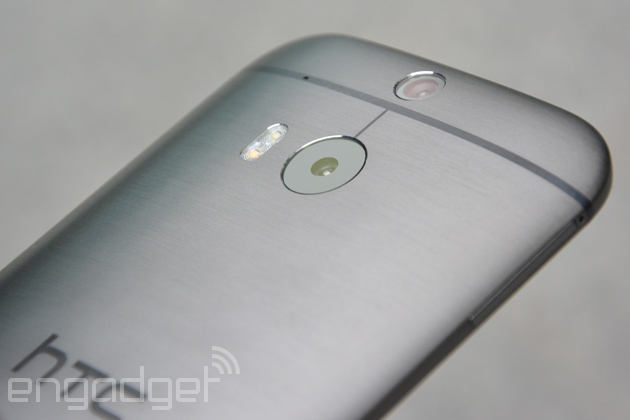
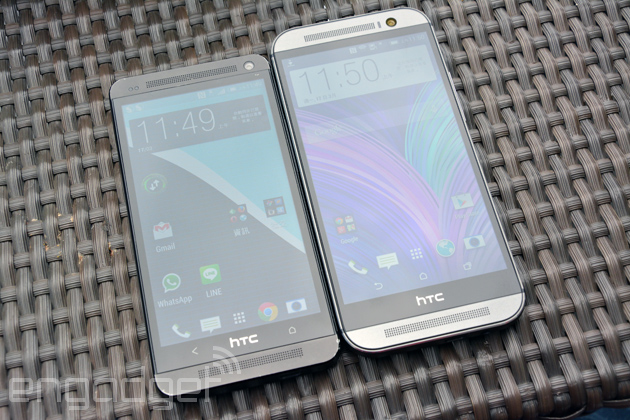
A closer look at the beautiful new HTC One

by David Pierce
Yousef Alnafjan

That brushed aluminum looks so futuristic

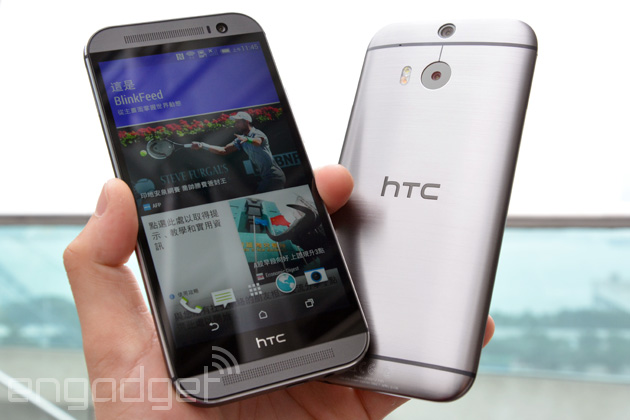
HTC's new One is a lot of things. It's big, it's powerful, it's long-lasting, it's full of weird features with weird names that let you airbrush your photos into oblivion. But above all, it's beautiful. HTC's goal all along was to build a different kind of phone, a higher-end device for people who appreciate what that really means. On that front, there's no debate: it worked.

For lots more, be sure and read our full review and our exclusive look at how the new One came to be.

Continue reading…

25 Mar 17:00

Can't stand your friends? Rumr lets you chat with them anonymously

by Ellis Hamburger

James Jerlecki can’t tell me exactly how his new app is going to be useful, but he thinks teens are gonna love it.

"My sister is a teacher and works a lot with teens," he says, "and they want her to respect them, but they are afraid about what they share." Jerlecki’s sister wishes there were an open forum where students could share thoughts and ask questions about things like drugs, sex, and "the popular kids" without worrying about their reputations.

This kind of space — which is anonymous, yet personal — doesn’t really exist outside Alcoholics Anonymous. So Jerlecki built Rumr, an app for iPhone and Android that lets you carry out anonymous group chats with friends. The idea sounds like an oxymoron, but is more nuanced than you might think. Each group chat has its own buddy list of who’s involved, but everybody inside the chat window itself remains nameless, designated only by different colored bubbles. In other words, you’ll know which ten friends are in your chat, but you won’t know who’s saying what. The more people there are in the chat, the less likely you’ll know who’s who.


"We’re in a world where most everything we do is public," says Jerlecki. "You can be more of yourself where you aren’t as concerned about crafting the right message," he repeats, echoing the mantra uttered by every ephemeral / anonymous app company that came before him including Whisper, Secret, Snapchat, and Confide. Rumr hopes to differentiate itself with its slogan, "turn off the lights," a phrase that evokes memories of sleepover parties and summer camp cabins. But just like in your friend’s basement, where you might speak more freely amongst friends as you gaze upwards at the ceiling, telling who’s who in Rumr isn’t as hard as you think. Rumr isn’t Secret, where a revealed identity could very likely cost somebody their job.

Despite its name, Jerlecki says that keeping groups small inside Rumr should keep things fun — instead of inciting panic like Ask.fm, where actual rumors run rampant. "I want to send this message to an audience that I can connect with and that cares about me," Jerlecki says. "It can solve real problems." What’s perhaps most interesting about the gamut of anonymous and ephemeral chat apps is that they create new behaviors amongst users, so it’s almost impossible to predict how people will use it. Rumr, for example, supports group chats of up to 100 people, which could elicit entirely new and bizarre scenarios for communication. Had someone pitched me Snapchat, an app that "let people be themselves with disappearing photos," I might not have seen a use for it beyond sexting.

"Use cases will present themselves as the network evolves."

"I think for something like this, use cases will present themselves as the network evolves," says MG Siegler, a partner at Google Ventures who invested in Secret, Confide, and Rumr. "I could rattle off some [use cases], but I think anything I say, the community will ultimately prove wiser than myself." And Rumr’s community isnt just about teens. Jerlecki says that his team has used the app internally to debate feature ideas, and his group of friends has used it to trash talk each other about March Madness. "We’ve found that the magic number where it really becomes anonymous is around four to five," Jerlecki says. "Then, the anonymity increases and the fun starts to happen." But he can’t come up with many fun stories about using the app. Rumr’s use case is as fuzzy as its panda mascot.

Rumr certainly looks like a bandwagon-jumper hoping to cash in on the anonymous app train, but if past successes in the space have been any indication, an app's users will be the true measure of its value as a tool. Or maybe the anonymous chat trend has simply jumped the shark, spewing out "apps teens want" when teens aren't really asking for anything.

25 Mar 16:59

HTC announces the new One with depth-sensing camera and larger screen

by Terrence O'Brien
Yousef Alnafjan

40% longer battery life, man. That the best new feature.

The "all new" HTC One has been one of the worst-kept secrets of 2014, but today it's a secret no more. The Taiwanese manufacturer has taken the wraps off its latest flagship and fans of last year's model (count us among them) won't be disappointed. The phone boasts the same aluminum unibody construction as last year's model, but with more pronounced curves and even more metal this time around. A full 90 percent of the body is made of aluminum, quite a bit more than the 70 percent on the previous model. That means it's about half an ounce heavier, but it seems like a small trade-off given the incredible design and spacious 5-inch screen. That panel is still a 1080p S-LCD3 one, which means you can count on the same bright colors and deep blacks. Plus the whole front is protected by a sheet of Gorilla Glass 3. Oh, and before we go any further -- the pair of capacitive buttons have been replaced with the standard trio of Android soft keys! (Phewww...)

Under the hood, you're looking at a 2.3GHz Snapdragon 801 and 2GB of RAM. Basically this phone will laugh in the face of almost any task you throw at it. Edit photos, put together video montages, play taxing 3D games -- this thing should churn through it all with ease. As far as storage goes, you've got two options: either 16GB or 32GB. But if you feel that's not enough, there's a microSD slot for adding up to 128GB more. Plus, Google is throwing in 50GB of storage on Drive for two years, replacing Dropbox. Unless you're truly abusive to your gadgets, there's no way you should run out of room to store stuff. A sizable 2,600mAh battery keeps the whole thing chugging along for an estimated 20 hours of talk time or, with the new Extreme power saving mode enabled, 40 days of standby. Regardless, it's a nice, but smallish boost from the 2,300mAh one found in last year's model. And, of course, the expected set of radios and sensors are on board, including Bluetooth 4.0, dual-band 802.11ac WiFi, AWS compatibility, LTE, NFC, an accelerometer, gyroscope and barometer.

Of course, the two big unique features from last year's model make a return here: the front-facing stereo speakers with BoomSound and the UltraPixel camera around back. But both have been given significant upgrades for 2014. The speakers are connected to a new dedicated amplifier and a more powerful DSP chip. They're also seated deeper in the phone's chassis, which should lead to richer, louder audio with better-defined low-end sound. The UltraPixel shooter around back is, for all intents and purposes, the same exact camera as last year. The sensor is the same 4-megapixel backside-illuminated one with giant 2µm pixels, but there's a new imaging processor attached and HTC has ditched the optical image stabilization tech. But, it's also added a second camera to the back in what it's calling a Duo Camera array. Truth be told, the second "camera" isn't actually a camera in the traditional sense; it's a depth sensor. It allows the One to perform all sorts of neat tricks especially in post processing, such as blurring backgrounds or changing the focus point like a Lytro.

No new flagship phone would be complete without a significant software update, and HTC isn't going to let you down. At its core, the One is running Android KitKat 4.4, which means it's got all of the latest enhancements straight from Google. On top of that, however, it's running Sense 6.0, which includes BlinkFeed and a heavy focus on themes. Several of its primary UI elements have been given subtle redesigns that bring a more modern and open look. Perhaps most exciting though, BlinkFeed has been opened up to developers, who will be able to push information to your feed. For example, Foursquare will be able to publish lunch recommendations or Fitbit can send you activity-tracking data. Interestingly, the company has also broken several of its proprietary apps free of its firmware, such as Zoe, which will find itself on the Play Store soon. That will make it much easier to push updates to users, which means features will be available much quicker.

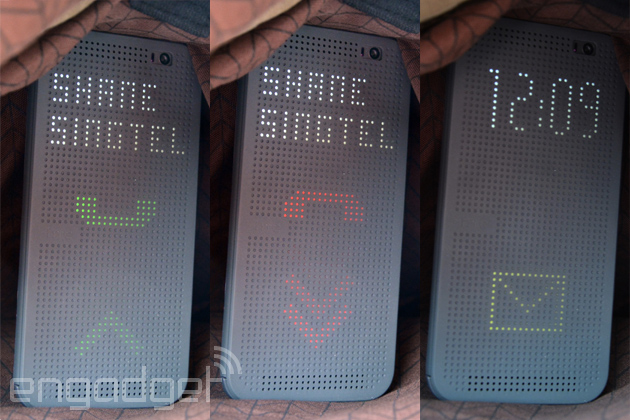
Most of the tweaks are relatively small, but Motion Launch is a pretty significant new feature. When the phone senses movement, it "listens" for prompts to launch particular apps or actions. For example, swiping right on the screen will take you straight to BlinkFeed; holding the volume rocker while turning the phone into landscape mode launches the camera; and you can answer a call simply by putting the phone to your ear -- all without unlocking it first. The Dot View case, seen above, extends those features, by allowing you to tap the case twice to receive notifications without turning on the phone's display.

The new HTC One will be available in three colors (gunmetal gray, glacial silver and amber gold) starting today, March 25th.

Richard Lai and Brad Molen contributed to this report.

Filed under: Cellphones, Mobile

Comments

25 Mar 16:58

One more time: can HTC thrive in a Samsung world?

by Dan Seifert
Yousef Alnafjan

Survive? Yes. Thrive? Doubtful.

“If it wasn’t for the One, HTC probably wouldn’t be here today,” says Scott Croyle, vice president of design at HTC. Croyle is giving me a tour of the company’s San Francisco studio, which was acquired when HTC bought the One & Co. design firm in 2008. “It’s the reason we’re still in the conversation.”

Four years ago, HTC was at the top of its game. It had successfully transitioned from a white label smartphone pioneer to a well-known brand. The EVO 4G was making waves on...

Continue reading…

25 Mar 08:08

Droplet robotic gardener waters your plants with precision (video)

by Mariella Moon

There's a new helper robot for homes called Droplet, but it has no intention of usurping Roomba's territory -- in fact, you can think of it as a Roomba for your garden. It's probably not capable of killing snakes like its badass indoor counterpart, but it can care for your plants without input. Technically, Droplet's a smart sprinkler, but it's actually more like an automated hose that aims only at plants (or anything you want) up to 30 feet away, since it was created as a means to conserve water. Of course, you'll have to configure it a bit beforehand: after adding your plants' names on Droplet's interface using a phone, laptop or tablet, you'll have to aim water at each of them, so the system can remember their locations. The robot then taps into various sources via WiFi to look up each plant's needs to determine how often and how much it should be watered. In the event that rain's coming your way, the device will hold off on doing its gardening duties, as it also gets real time data from thousands of weather stations.

Droplet's creators claim it can lower water sprinkler consumption by up to 90 percent, which is huge if true, as lawn sprinklers are one of the top water wasters. They also claim that it can save up to $265 a year on water bills, almost enough to recoup your investment should you choose to pre-order a unit from Amazon right now for $300. As for the remaining $35, well, let's just say that's just the price you'll have to pay for keeping R2D2's Mini-Me as a gardener.

Filed under: Misc

Comments

Source: Droplet (1), (2)

24 Mar 17:07

Barcelona and Real Madrid produce the clásico of the century | Sid Lowe

by Sid Lowe
Yousef Alnafjan

An absolutely wonderful advertisement for the game. Here's a great highlights video (bonus: the commentary is by certified madman Ray Hudson):

http://www.dailymotion.com/video/x1j82si_real-madrid-barcelona-highlights-hd-23-03-2014_sport

There have been 43 clásicos in the 21st century, a number of them classics. But this might have been the most fun of all

As one former Barcelona player puts it: "It is the game of the century, even if there are eight of them a year." It is a comment not just on the excellence and the expectation that comes with Real Madrid v Barcelona but also on their eclipse of all else, on the dominance and potential dilution of a rivalry in which they have played each other 19 times in the last four seasons and will meet at least once more this and in which they alone account for over 60% of Spanish football fans and millions more round the world; on the pressure, the power and the politics; on the way every meeting appears to end eras and close cycles, epochs defined in a day; and on the impossibility of ever living up to the hype.

Not because the matches are no good mostly they are but because everyone's watching. "Go to the moon: Madrid, Barcelona," laughs Hristo Stoichkov. Because Madrid and Barcelona have made more money than anyone else every year for four years; because this summer they signed the world's two most expensive players; because every one of the last 19 winners of the Fifa world player of the year award has played for them at some point and because they alone have won La Liga in the last decade, plus three European Cups each since 1998, more than anyone else; and because they have Lionel Messi and Cristiano Ronaldo. And how do you ever live up to that?

Continue reading...
24 Mar 15:50

Christian Bale may play Steve Jobs in upcoming David Fincher biopic

by Nathan Ingraham
Yousef Alnafjan

Now this is a more interesting choice than Ashton fucking Kutcher

We've heard little about the Steve Jobs biopic that Aaron Sorkin is writing, but now we're starting to get a better picture of what that film might look like. A few weeks after word spread that David Fincher was in talks to direct the projectThe Wrap is reporting that Oscar-winning actor Christian Bale (The Dark Knight trilogy, American Hustle) is Fincher's first and only choice to portray that Apple CEO. Indeed, Bale's involvement appears to be a critical factor in Fincher officially taking on the project — it sounds like he'll only direct the upcoming film if Bale agrees to take the lead role.

Of course, we're a ways off from this being a done deal — Bale reportedly has not been approached about the role yet, as he's currently taking a break from acting to spend time with his family. The film, based on Walter Isaacson's Steve Jobs biography, is slated to start production in early 2015 — which means we're still a ways off from seeing this film hit the screen. However, if this Steve Jobs film can get its director and star on board, it'll stand a good chance at recreating the success Sorkin and Fincher found making 2010's Facebook drama The Social Network.

24 Mar 15:01

4chan user devises a way to bank through GameStop

by Ellis Hamburger

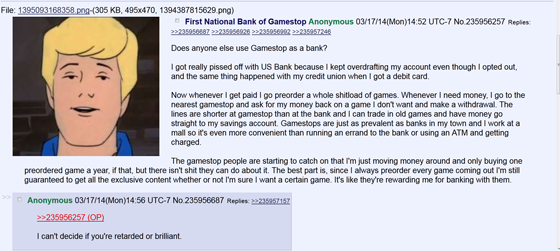
Forget Bitcoin banking. One intrepid 4chan user has found a newer, cooler way to bank: spending his entire paycheck on pre-ordering games from GameStop, and then "withdrawing" money when he needs to by canceling one of his pre-orders.

"GameStops are just as prevalent as banks in my town and I work at a mall so it's even more convenient than running an errand to the bank or using an ATM and getting charged," the anonymous poster writes. And in lieu of credit card or bank membership rewards, the poster has never missed exclusive launch content for any game he's been interested in. As with most things posted anonymously online, it's unclear if the poster's story is true or totally make-believe. But that doesn't make his scheme any less ingenious.


Gamestop_banking_560

24 Mar 11:23

First trailer shows next 'Assassin's Creed' will be set during the French Revolution

by Rich McCormick

Ubisoft has posted the first trailer for its upcoming next-gen Assassin's Creed game, Assassin's Creed: Unity. The game — expected to be released on PlayStation 4, Xbox One, and PC later this year — will be set in Paris during the French Revolution.

The short video focuses on the game's environments, opening inside a spotless mansion, before moving out to track through a smoky vision of Paris' 18th century streets. It closes on a wide panning shot that shows a maddened crowd surrounding a guillotine, overlooked by a mysterious new assassin — presumably the player character — dressed in a navy blue robe.


Ubisoft says it has been working on Unity for "more than three years," suggesting it had started to design the fifth full-fledged entry in the series shortly after releasing Assassin's Creed: Brotherhood. According to Kotaku, Unity will be joined by another Assassin's Creed game, designed for PlayStation 3 and Xbox 360, later this year. That game is reportedly called, or code-named, Comet.

The release of the video comes after early screenshots of the game were leaked, showing the French setting with landmarks such as Notre Dame cathedral and the Seine river. Ubisoft addressed the leak in the video's description, joking that although it wasn't quite ready to show Unity to the public yet, Assassin's Creed series antagonists Abstergo were trying to "force its hand."

24 Mar 11:23

Xposed 2.5 Exits Beta, Brings Rewritten Installer, Safe Mode, and Improved Compatibility with Sony, LG, and Meizu Devices

by Will Verduzco
Yousef Alnafjan

A nice explanation of what Xposed is (with the appropriate warnings about it):

http://www.tested.com/tech/android/460074-how-use-xposed-framework-android-extreme-customization/

It's probably the best thing to happen to Android modding in years.

Screenshot_2013-09-03-21-41-18

In just under two years since its initial debut, Recognized Developer rovo89‘s Xposed Framework has become a staple of development here at XDA. We’ve talked about modules of all sorts both here on the XDA Portal and on our YouTube channel. These modules have enabled us to modify our ROMs without editing a single APK or flashing any additional mods.

Nine days ago, Xposed 2.5 Beta was released. Now, Xposed 2.5 has exited beta, and brings various improvements to the Xposed-wielding masses. This release ushers in various new features such as a rewritten installer for improved compatibility, safe mode to disable Xposed in the event of bootloops, and improved ROM compatibility.

Safe mode, which was developed by Recognized Contributor Tungstwenty, allows you to disable Xposed at boot. This is useful if a particular module is causing you bootloops. Safe mode can be activated by repeatedly pressing any of your device’s hardware buttons during early startup. Your device will then vibrate twice after the first button press is detected, after which you have five seconds to press the same button an additional four times. Safe mode is then confirmed with a long vibration. And with regards to compatibility, Xposed now works with Android 4.3- and 4.4-based Sony and LG ROMs, as well as Android 4.4-based Meizu ROMs.

So what are you waiting for? Head over to the original thread to get the latest update!

23 Mar 08:21

Damasareta Taishou

by Chauncey Plantains
22 Mar 19:08

The NSA has reportedly been spying on Huawei's servers for years

by Nathan Ingraham
Yousef Alnafjan

How ironic

The US government has made definitive statements about Chinese telecommunications company Huawei — a 2012 report claimed that the company's networking equipment posed a national security risk, something that caused the company to largely retreat from operating in the US market. Somewhat ironically, however, the US government appears to be doing something very similar to what it accused Huawei of. The New York Times is reporting that the NSA has created its own "back doors" directly into Huawei's telecommunications networks for the purpose of collecting information on the vast array of hardware that the company claims connects a third of the global population.

The NSA also monitored communications of the company's top executives and also searched for links between Huawei and the People's Liberation Army (of which Huawei CEO Ren Zhengfei was a member). According to the documents obtained by The New York Times and Der Spiegel from Edward Snowden, the NSA even wanted to have access to networking equipment that Huawei was selling to other countries so that it could monitor and search through both computer and telephone networks as it saw fit.

"Many of our targets communicate over Huawei-produced products," the leaked NSA document reportedly says. "We want to make sure that we know how to exploit these products to gain access to networks of interest" — including networks of countries around the world. "The irony is that exactly what they are doing to us is what they have always charged that the Chinese are doing through us," a Huawei US senior executive told the Times. It's just the latest in an ongoing cybersecurity battle between the US and China at large — the Pentagon said last year that a large number of cyberattacks against US targets appeared to be originating from the Chinese government.

22 Mar 18:02

Turkey reportedly cuts off Twitter backdoor by blocking Google DNS

by Chris Welch

Turkey has reportedly blocked Google DNS inside its borders, eliminating a backdoor that briefly helped Turks stay connected to Twitter after the country banned access. Earlier this week, Turkey's prime minister promised to "eradicate" the popular service with the help of a court order. "I don't care what the international community says," Recep Tayyip Erdoğan said at a campaign rally. "Everyone will witness the power of the Turkish Republic." Twitter says it's looking into claims that the company failed to remove content deemed inflammatory by local courts, but has encouraged users to continue posting tweets via SMS in the meantime.

Typing in Google's Domain Name System addresses (8.8.8.8 and 8.8.4.4) into a computer's network settings offered a reliable way to circumvent the ban and helped ensure Turks could keep using the service. Some had even taken to spray-painting those addresses in visible outdoor locations, according to reports. Since Turkey has now shut down that pathway, according to the Hürriyet Daily News, Turkish internet users are continuing to share other DNS alternatives to maintain their link to Twitter.

Though Turkey's ban doesn't affect other social networking sites like Facebook, the country's government is still taking fierce criticism for the move. The White House issued an official statement yesterday, saying the US would "support the people of Turkey in their calls to restore full access to the blocked technologies." The State Department put out a separate statement, imploring Turkey to "unblock its citizens’ access to Twitter and ensure free access to all social media platforms." We've reached out to Google for a statement on the status of Google DNS in Turkey.

22 Mar 06:22

Crimea's Attorney General Spawns Anime Fan Art

by Brian Ashcraft

Crimea's Attorney General Spawns Anime Fan Art

With all the turmoil in Crimea, a press conference clip of the new Prosecutor of the Crimean republic, Natalia Poklonskaya, went viral in Japan, spawning anime-style fan art.

Read more...

22 Mar 06:08

The New Big Bang Evidence Explained With Just A Towel!

by Ria Misra

After reading about the ground-breaking new evidence for the Big Bang this week you may have been left with a question: Just what are gravitational waves anyway? This video, using just a towel, an apple, and a ping pong ball, explains.

Read more...


21 Mar 20:20

Answers

Yousef Alnafjan

Yeah, what's up with that?

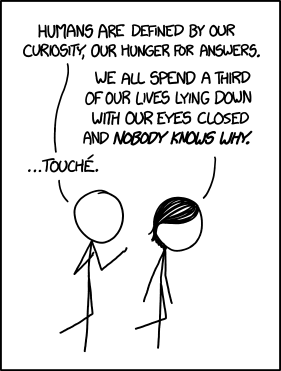
Stanford sleep researcher William Dement said that after 50 years of studying sleep, the only really solid explanation he knows for why we do it is 'because we get sleepy'.
21 Mar 20:17

The Riddler in Batman: Arkham Knight looks uncannily like Charlie Sheen

by no-reply@gamespot.com (Martin Gaston)
Yousef Alnafjan

He does?

Three new screenshots of Batman: Arkham Knight have been exhibited on Game Informer, showing a close-up look of three of the game's antagonists: The Riddler, Penguin, and Two-Face.

Does anyone else think The Riddler looks exactly like Charlie Sheen, or is it just me?

Art director David Hego also went into more detail about the new looks behind the characters, explaining how the studio wants to keep their presence fresh and exciting even though they've all featured in the series before.

The Riddler (pictured) will look different as Batman: Arkham Knight progresses.

"How can we make these guys exciting, even after seeing them again?" said Hego. "How can we improve the story behind them?"

Crime boss Penguin, described as a thug, has now shaved his head and sports a rolled-up shirt that's stained with food. Two Face has also rolled up his sleeves--it must be pretty muggy in Gotham City--and you can see that his left arm is burnt.

The Riddler's look will also change slightly as the game progresses, in a similar fashion to how Batman's outfit gets more torn and beaten as he goes on.

“It’s something we try to put in the characters,” said lead character artist Albert Feliu, explaining how The Riddler will look more distressed and unhinged every time Batman thwarts his schemes.

“If you had to work overtime, for example, you would start the night with your jumper on and everything, and as the time went by you’d probably take your jumper off, open your shirt, take your tie off, have a coffee. The Riddler is a character who has a cool framework, and we didn’t want to change it too much--we like his shirts with question marks and silly glasses and greasy hair.”

Batman: Arkham Knight will be released for PlayStation 4, Xbox One, and PC later this year.

Martin Gaston is a news editor at GameSpot, and you can follow him on Twitter @squidmania
Got a news tip or want to contact us directly? Email news@gamespot.com
21 Mar 19:25

[mrlovenstein]

Yousef Alnafjan

PEPSI IS NEVER OKAY

21 Mar 17:19

This is weird Nintendo

by Ross Miller

If we can glean anything from Nintendo's 124-year history, it's a willingness to experiment. The company, which originally sold playing cards, has at various points owned a taxi company, TV network, and even a love hotel chain. It wasn't until 1966, after over 75 years in business, that Nintendo released its first toy. The Ultra Hand was designed by Gunpei Yokoi, who would go on to make both the Game & Watch and Game Boy systems.

The Videogame History Museum is a traveling exhibit that...

Continue reading…

21 Mar 12:36

Turkish citizens use Google to fight Twitter ban

by Aaron Souppouris
Yousef Alnafjan

Google DNS is awesome

Turkish citizens have found a way to circumvent yesterday's reported block of Twitter: Google DNS.

After being implicated in a corruption scandal through recordings leaked via YouTube and other media sharing sites, Turkey's prime minister, Recep Erdoğan, has gone to great lengths to stem their spread online. Erdoğan vehemently denies the authenticity of the recordings, which purportedly reveal him telling his son to dispose of large sums of cash, and has alleged they are the work of Turkish cleric and political rival Fethullah Gulen. In the lead-up to local elections on March 30th, Erdoğan has stepped up his attempts to stop the recordings being spread with a nationwide ban of Twitter. However, it appears that, rather than the more complex system used to bar access to sites by countries like China, Turkey's Twitter ban was made possible by a simple DNS block, and citizens haven't take long to circumvent it.


Turkey's Twitter ban appears to be a simple DNS block

Everyone browsing the web uses DNS. It's a system that routes the domain name you type into your browser to the IP address of that site. Google provides a free DNS service that's open to all, and with knowledge of this some Turkish citizens have begun to spread the word that using Google DNS will avoid the Twitter ban. Graffiti has shown up bearing the Google DNS "8.8.8.8," and Twitter users have shared images showing the address with the hashtag #DirenTwitter. In addition, Oğuz Özgül, a supervisor at a web agency in Turkey, tells The Verge that "major media channels" have parroted the workaround, and many Facebook users have posted how-tos helping others to set up an alternative DNS.

Kadıköy'den mesaj var :) #direntwitter pic.twitter.com/JbzqfFwQZW

— Negatif Pollyanna (@FindikKahve) March 21, 2014

An image shared multiple times that purports to show graffiti of Google's DNS on the side of a building, alongside the slogan "let your bird sing."

"Reversing on liberties is out of the question in Turkey."

Although Twitter has been prohibited, other services like YouTube and Facebook remain unblocked. In a statement given to Reuters, a Turkish official said that the Twitter ban was made possible through an earlier court decision, and clarifies that "at the moment there is no such decision for other social media like Facebook." The statement implies that wider social media control isn't imminent, but leaves the door open for Erdoğan to pursue further bans. Should he seek wider restrictions, Erdoğan faces pressure from the nation's president Abdullah Gül, who has publicly spoken against blocking social media sites. "Things like YouTube and Facebook are accepted all around the world, and their closure cannot be of discussion," Gül said earlier this month. "Reversing on liberties is out of the question in Turkey. We always feel proud of reforms that enhance freedoms; they will always proceed further."

#TurkeyBlockedTwitter #direntwitter pic.twitter.com/qstmpUDDaH

— Işılay Urel (@idontcarebeyb) March 21, 2014

Despite the Twitter ban, Gül took to the site this morning to condemn the block, calling it "unacceptable." In a series of tweets, the president says that it's both technically impossible and unlawful to fully block an entire social media network. He explains that specific pages that are breaking the law can be blocked by courts, and adds that he hopes the current situation will not continue much longer. For the time being, Twitter is officially advising users in Turkey to send tweets via SMS.

21 Mar 04:26

Twitter outage hits Turkey as prime minister says he will 'eradicate' it

by Casey Newton

Turkey is blocking access to Twitter in the run-up to a heated election that has seen social media become a battleground for pro- and anti-government factions. The Hürriyet Daily News reports that Prime Minister Recep Tayyip Erdoğan pledged to eliminate access to the service entirely after tweets were published linking him to corruption. "We now have a court order. We'll eradicate Twitter," Erdoğan said at a campaign rally, according to the publication. "I don't care what the international community says. Everyone will witness the power of the Turkish Republic."


The prime minister's office subsequently released a statement saying Twitter had ignored court rulings requiring the company to take down posts deemed inflammatory. Twitter says it is "looking into" the issue. In the meantime, the company's policy team encouraged Turkish citizens (in both English and Turkish) to continue tweeting using SMS.

Turkish users: you can send Tweets using SMS. Avea and Vodafone text START to 2444. Turkcell text START to 2555.

— Policy (@policy) March 20, 2014

Turkey has frequently sought to block social media sites when they have been used to post criticism of the ruling party. Last year, Erdoğan referred to social media sites as "the worst menace to society." Those comments came in the wake of riots stemming from an urban redevelopment plan, which were powerfully documented across Facebook and Twitter. Those sites went down temporarily during the clashes, though it was unclear whether that had been orchestrated by the government.

Update: A Turkish official has clarified to Reuters that, for the time being, no action will be taken against other social media sites. "The path was taken to block access within the framework of a court decision because of the failure to overcome the problem with the management of Twitter," the official told Reuters. "At the moment there is no such decision for other social media like Facebook."

20 Mar 20:41

CNN considers whether a black hole swallowed the missing Malaysian plane

by Jacob Kastrenakes
Yousef Alnafjan

Did this stupid Twitter integration thing ever work? CNN has become a sad joke in the past few years.

A lot of people have floated theories about what may have happened to Malaysia Airlines missing jetliner. Terrorism. A fire. A remote landing. Even Courtney Love thought that she may have spotted its wreckage in the ocean.

But with the search largely at a standstill over the past few days, there isn't necessarily much more reasonable ground to cover. That may be why CNN chose to turn to more unreasonable ground yesterday, when it began posing theories that it received from Twitter to former US Transportation Department inspector general Mary Schiavo. "What if it was something fully that we don't really understand?" anchor Don Lemon asked, throwing out black holes, the Bermuda Triangle, The Twilight Zone, and "the movie Lost" as examples. "I know it's preposterous," Lemon says, "But is it preposterous, do you think, Mary?"


"But is it preposterous?"

Fortunately, we do have a good understanding of black holes and pop culture. "Well, it is," Schiavo says. She dismisses black holes and says that events chalked up to the Bermuda Triangle are often a matter of weather. She also points out that Lost is a TV show. "I always like things for which there's data, history — crunch the numbers," she says. The segment was spotted and captured by Talking Points Memo.

For now, the actual search for Malaysia Airlines Flight 370 has turned to the Indian Ocean, where Australian officials report that satellite imagery has shown two potential pieces of wreckage, according to The Wall Street Journal. A diverted commercial ship is reportedly now on site searching for debris but it yet to find anything.

20 Mar 11:02

Hands On: Sony’s PlayStation VR Isn’t Quite as Good as Oculus — Yet

by Chris Kohler

The author takes Sony's Project Morpheus for a test drive at GDC. Photo: Josh Valcarcel/WIRED

The author takes Sony’s Project Morpheus for a test drive at GDC. Photo: Josh Valcarcel/WIRED

Having tried both Sony’s new Project Morpheus virtual reality prototype for PlayStation 4 and the latest development kit from Oculus, I have to give the slight edge to the young upstart.

For now, I mean. It’s important to realize that neither of these machines, in their current forms, is going to be sold to consumers. In interviews, Oculus and Sony reps both stress that their virtual reality headsets are not ready for prime time — they just want developers to be able to work on content while the hardware is still being refined. So there is every reason to expect that both of these machines will change significantly before gamers are ever asked to buy one. Still, at the moment, the boxy, plain new Development Kit 2 from Oculus was a more refined experience than Sony’s slickly designed Morpheus set.

Both sets have high-resolution displays that look significantly prettier than the first Oculus dev kit that shipped last year. But the new Oculus had a larger field of view than Sony’s prototype. If you look far to the left and right on either headset, you’ll just see the blackness of the plastic casing. But I perceived it as being significantly more obvious on Morpheus. After the wider field of view offered by the Rift’s new devkit, Morpheus felt a bit like staring down a cardboard tube.

The first demo was EVE Valkyrie, an outer space dogfighting game. Sitting in the pilot’s seat of my fighter craft, waiting for the match to start, I noticed something else that was jarring about Morpheus. I looked down expecting to see the body of a guy in a flight suit. Instead I saw a guy in a hoodie wearing my GDC badge. You can see out the bottom of Morpheus. There’s a constant reminder that you are not really where you’re supposed to think you are.

What surprised me is that Sony said that this was actually by design. Apparently there are two kinds of virtual reality players — those who want to be totally cut off from the real world, and those who constantly want to be able to check that the real world is still there. Sony’s design teams are working on a way to accommodate both, representatives said.

Either way, all these things added up to leave me without that all-important sense of presence, of actually being there, that Sony stressed so much in its announcement of Morpheus on Tuesday. Playing EVE felt like watching Star Wars on a circular television. Going down into the ocean in a diving cage in Sony’s demo “The Deep” filled me with no sense of dread.

Storming the Castle

There was one demo that got a lot closer, though. Shockingly, Sony almost didn’t even have me play it, even though it was clearly the best proof of concept for its own implementation of VR.

Thankfully, some quick negotiation by a PR pro got me onto one of the demo stations, “The Castle,” a demo that uses the Morpheus in combination with two of Sony’s PlayStation Move motion controllers. Sony released this controller–basically a souped-up Wii remote for the PlayStation 3–back in 2010. It’s also compatible with PlayStation 4. The PlayStation Camera accessory for PlayStation 4 will be used to track the positioning of the Project Morpheus headset and the PlayStation Move and DualShock 4 controllers, simultaneously.

The Castle showed this in action. With Morpheus on my head, I was handed one Move controller for each hand, and instantly my two virtual hands sprung to life in front of me. Looking down, I could pick up a sword by moving my hand over it and squeezing any button on the Move. (Thinking back, it didn’t feel weird at all to hold the Move in my hands but have my hands empty in the virtual world, or have holding down a button with my thumb stand in for gripping something in my hand. It made sense, or at least it didn’t feel wrong.)

The demo dropped a training dummy into the castle courtyard I was standing in, and the Sony reps told me to slash at it with the sword. I responded that I had no idea why they were trying to force me to be so violent. Instead I attempted to make friends with the dummy. I reached out and shook his hand. I patted him on the back. We were getting along just fine. But it was also clear that I wouldn’t be allowed to proceed unless I sacrificed my new friend. I slashed at him with a sword. But I felt bad about it.

By now, I was pretty much fully committed. I actually had to stop myself at one point: I wanted to leave the confines of the little square I was standing in and go exploring the rest of the courtyard. I had to remind myself that in real actual life I was standing inside Sony’s booth in the Moscone Center and that I couldn’t just run over to the fountain behind me and jump in.

So there was that great sense of presence. I think using the two Move motion controllers to give myself hands in the real world was a major contributor to that. In “The Deep,” you could see your virtual hands, but they just stayed stock still even if you swung your arms. Actually, one of my “hands” was constantly pointed forward holding a flare gun, but owning to the general jankiness of the demo and the fact that I could see out the bottom of the glasses, it looked like that arm was approximately one foot long and came out of my ribcage.

But with two working hands, the illusion was much stronger. I guess it’ll be time to dust off the ol’ PlayStation Move controllers, if and when Morpheus approaches an actual release date for consumers. Until then, I’ll be keen to see what improvements both Sony and Oculus make to their respective works in progress.


20 Mar 09:18

Larry Page talks privacy, medical records, and machines mastering 8-bit video games

by Josh Lowensohn
Yousef Alnafjan

"the system had learned to play old 8-bit video games with superhuman performance, and without supervision."

The singularity will occur when the system plays GTA3 and learns that you can run over hookers to get your money back

Google co-founder and CEO Larry Page today said he was "disappointed" by the US government's role in recently-revealed security programs. In an interview with Charlie Rose on stage at the annual TED conference, which is taking place in Vancouver, Canada this week, Page said that the US government had done itself "a tremendous disservice" by keeping certain programs a secret from Google and other technology companies. "I don't think we can have a democracy if we have to protect you and our users from stuff that we've never had a conversation about," Page said, adding that he wished there has been more transparency about what kinds of security the government is doing, and why.


Some things should be less secret

However, Page touted the importance of making some things less private. Citing the time he outed his own medical condition, which involved losing his voice, Page said there could be "tremendous good" in providing more medical record information to doctors. "Wouldn't it be amazing if everyone's medical records were available anonymously to research doctors?" Page asked.

Along with privacy, Page also briefly addressed Deep Mind, an AI company Google acquired in January. Page kept the company's future plans close to his chest, short of noting that the system had learned to play old 8-bit video games with superhuman performance, and without supervision. "We haven't really been able to do things like that before," Page remarked. "For me, this is one of the most exciting things I've seen in a long time."

20 Mar 09:09

Prototype headset mirrors your phone screen in an awkward attempt at virtual reality

by Sean Buckley

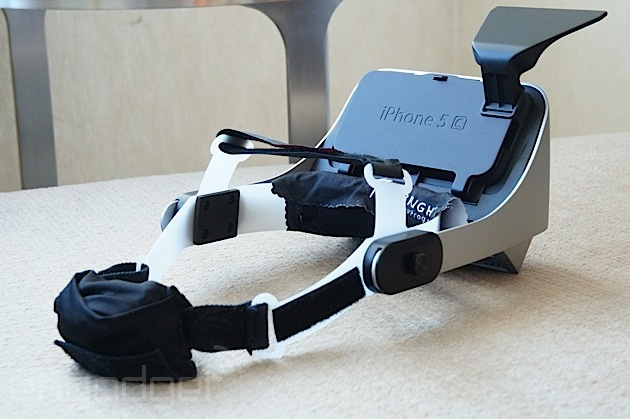
The verdict on virtual reality seems to be in: the future of the technology is in fully immersive, face bound ski-goggles that block out your physical perceptions in favor of digitally created wonderlands. Well, unless you're looking at Seebright's AR/VR head-mounted display prototype. The company brought an early version of its developing headgear to GDC and it's.. well, very different. Unlike the hardware we've seen from Sony, Oculus and GameFace, Seebright's headgear leaves the user's peripheral wide-open by suspending a smartphone above their field of view and reflecting it in front of them with a low-hanging mirror. To be honest, it's a little bizarre.

As a standard virtual reality headset, Seebright's HMD prototype is uncomfortable -- it's hard to feel immersed in a virtual world if your perception of reality remains intact. The mirror reflecting the headgear's host-smartphone's display only fills out center of the user's view, giving the their peripheral vision every opportunity to break their suspension of disbelief. We found this to be extremely distracting in gaming experiences: the dark asteroid fields of Starfighter 12 (an on-rails shooter demo) felt out of place floating in Seebright's well-lit hotel suite.

Company CEO John Murray told us that the prototype also had a partially transparent half-mirror, designed to convert the headgear into an augmented reality display. This idea has more promise, but unfortunately, the transparent screen wasn't available for testing just yet. It's just as well: the HMD prototype was particularly top heavy and fairly uncomfortable. A external battery pack lives on the back strap, acting as a counterbalance, but it isn't enough. Compared to lighter and more comfortable feeling (and fully-integrated) VR headsets, Seebright's prototype is just awkward.

That said, the company is aiming for a different demographic. The company told us it hopes to give the final device a price that will make it an "impulse purchase," something you can give as a gift without breaking the bank. It also says there are plenty of revisions on the way, which will hopefully iron out some of the comfort and balance issues. Got a strong neck? Stay tuned: the company says it will be launching a Kickstarter campaign next month.

Filed under: Misc, Gaming

Comments

20 Mar 09:06

Valve's free pro-gaming documentary hits iTunes, Steam and YouTube (video)

by Timothy J. Seppala

If you didn't make it to Free to Play's San Francisco premiere last night, Valve (yes, that Valve) has you covered. The Dota 2 tournament doc is now available on iTunes, Steam and YouTube for the very reasonable price of zero dollars. The Valve-produced documentary clocks in at a little over an hour, and, as SlashGear has noticed, the gaming giant has also released a few outtakes and behind the scenes clips as well. We've embedded everything after the break should you want to give it a peek for yourself. If you're in the dark about exactly why the game's so popular, maybe watching players from all over the world duke it out for a million-dollar top prize will clear a few things up.

Filed under: Gaming, Home Entertainment, Internet, HD

Comments

Via: SlashGear

Source: Valve (YouTube)

20 Mar 06:06

Why did the FBI kill an alleged friend of Boston bombing suspect?

by Jacob Kastrenakes
Yousef Alnafjan

Fascinating story.

Shortly after the Boston bombing, a disconcerting and seemingly conspiratorial story came out: chief suspect Tamerlan Tsarnaev, who had been killed in a shootout with police, was alleged to be linked to an unsolved triple homicide that occurred nearly two years earlier. But the story actually wasn't so conspiratorial. The FBI began investigating, and a month later a man linked to both Tsarnaev and the killings, Ibragim Todashev, was reportedly shot and killed in his apartment by the bureau. Not much conclusive evidence has shed light on the killings since then, but an exhaustive investigative report from Boston Magazine and This American Life now suggests why that might be.

19 Mar 15:28

GIF | 2d1.gif

2d1.gif
19 Mar 15:25

World-builders, rejoice: the final Oculus Rift VR dev kit is here

by Sean Hollister

One year ago today, Oculus introduced the first version of its prototype virtual reality headset that wasn't literally held together with duct tape and glue. The $300 Oculus Rift Development Kit showed the world that inexpensive VR headgear was capable of being mass produced. Now, at the 2014 Game Developers Conference, the company is introducing development kit number two.

Starting today, Oculus is taking pre-orders for the Oculus Rift DK2, a refined version of the Crystal Cove prototype that blew us away at the Consumer Electronics Show in January, taking home our award for Best in Show. It also just so happens to be the last developer kit before the company announces the long-awaited consumer version of its headgear. Sony may just have announced its own virtual reality headset for PlayStation 4, but as far as headgear is concerned it seems like Oculus is already on the home stretch.


How far has Oculus come in a year? For months now, I've been playing with the original developer kit, without ever trying newer Oculus prototypes like Crystal Cove. Like tens of thousands of developers, I struggled with the painfully low 720p resolution and blurry motion of the original screen, sometimes feeling too nauseous to play more than a few minutes at a go. But when I put on the so-called Oculus Rift DK2 this week, I easily retained my composure.

To 1080p, and beyond

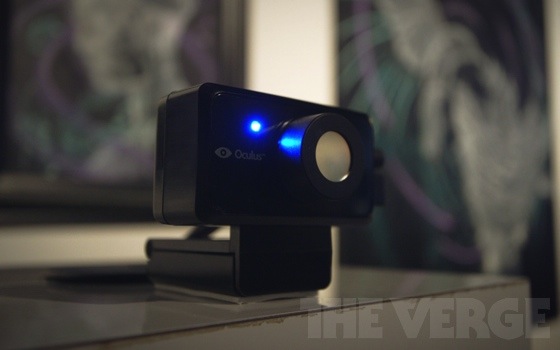
The 1080p OLED panel still isn't high enough a resolution to avoid jagged edges — Oculus says the consumer version will have even higher resolution — but combined with special techniques to reduce blurring and motion sickness, the difference was already night and day. Looking around in virtual reality felt far more glassy, more like looking through a window than through a fine mesh visor. The DK2 has been combined with a peripheral: a new, custom camera which tracks the position of 40 infrared LEDs now mounted invisibly beneath the Rift's translucent shell. Thanks to that tracking, I could lean over a virtual table or look up a chimney flue, because the camera tracks in 3D space. Most of that's the same as Crystal Cove, mind you, but Oculus founder Palmer Luckey says the tech has improved even since then, with lenses made of a more advanced resin that ensures higher image quality across more of your field of view instead of just the centers of your vision.

Vho_183_oculusdk2_v2

"We know what we need to ship."

I didn't find all of Oculus' choices completely welcome, though. Though the motion tracking camera makes games feel more fluid, it needs to be positioned in front of you, and the lack of LEDs on the rear of the new Rift developer kit means that you can't turn a full 180 degrees without breaking the line of sight from that camera and running into issues. Perhaps as a result, most of the demos on display were rather tame — if fun — diversions that presented you with a dollhouse-like 3D world to look into while seated, rather than an open 3D environment to explore. VR Knights by Epic Games is the new standout experience: two doll-like knights come to life and battle in a virtual living room, where you and another player actually appear in the virtual environment, while simultaneously controlling your interactive action figures by remote.

How far away is actual consumer virtual reality? Oculus still won't say, but Luckey says that it will be a complete redesign, without a single part — to his knowledge — carrying over from the development kits. "We're much closer," says Luckey. "The last year we've spent researching and developing what consumer VR needs to be... we didn't know before, and we do now."

"We know what we need to ship, we know what parts we need to do it, we know where we can get those parts, and now it's just a matter of playing the waiting game and putting it together."

The Oculus Rift Development Kit 2 will ship this July for $350. Later today, we'll see whether the company's new competition — Sony — has come far enough with its own virtual reality hardware to pose a serious challenge.

19 Mar 15:05

Sony reveals Project Morpheus, its VR headset for PlayStation 4

by Sam Byford
Yousef Alnafjan

I hope all these VR headset makers agree on a common standard with common and/or compatible APIs. Otherwise, it's going to become a very confusing market.

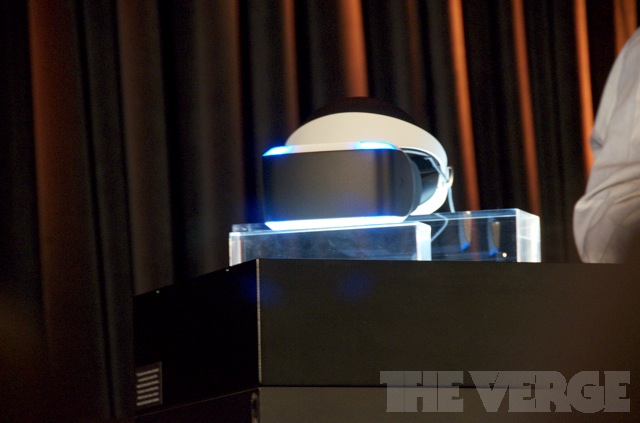
Sony has revealed its plans for virtual reality technology on the PlayStation 4. Shuhei Yoshida, president of Sony Worldwide Studios, showed off a prototype headset at a Game Developers Conference 2014 event entitled Driving the Future of Innovation. "Nothing delivers a feeling of immersion better than VR," said Yoshida. "VR has been a dream of many gamers since the computer was invented. Many of us at PlayStation have dreamed of VR and what it could mean to the gaming community."


"Nothing delivers a feeling of immersion better than VR."

The VR system is currently codenamed Project Morpheus, and will work with PlayStation 4. While still in prototype form, Yoshida says that Morpheus is the "culmination of our work over the last three years to realize our vision of VR for games, and to push the boundaries of play." The headset uses a 1080p LCD, offers a 90-degree field of view, and will integrate with the PlayStation Camera for tracking and PlayStation Move for motion control. It connects via HDMI and USB; while the current prototype uses a 5-meter cable, Sony would like to make it wireless. The company says the headset doesn't put weight on your nose or cheeks, and its design allows for airflow without the lenses fogging up.

Sony_gdc_0464_medium

"VR is going to be pervasive."

Sony Magic Lab's Richard Marks, who pioneered the EyeToy camera and PlayStation Move, joined Yoshida on stage to offer further details on Project Morpheus. "The thing that makes VR special is really the feeling of being in another place... there's no way to explain it to you that will make sense, but it's that feeling of presence," he said. "VR is going to be pervasive, and what I mean by that is it's going to be used for all sorts of things you might not think it would be used for." As one example, Marks says he's been working on a project with NASA and its Jet Propulsion Lab that will allow PS4 owners to feel like they're right with the space agency on Mars.

Marks has identified six areas that Sony needs to crack in order for VR to work: sight, sound, tracking, control, ease of use, and content. For sight, Marks refers to Sony's considerable weight in optics and imaging technology. For sound, the company is working on 3D binaural tech to aid presence and immersion. For tracking and control, Marks says the PlayStation Camera and PlayStation Move are ready-made solutions. For ease of use, Sony plans to make it a comfortable, plug-and-play experience. And for content, Marks showed a long list of software partners including Epic Games, Crytek, Autodesk, Unity, and more. Sony will be showing demos of Thief, EVE Valkryie, and more running on Project Morpheus at GDC.

Sony_gdc_0524_medium

Sony's VR philosophy

Although VR is yet to turn up a viable consumer product, the concept has been gaining momentum ever since Kickstarter-funded startup Oculus VR showed off its first headset, the Rift, in 2012. The company demonstrated a more refined Oculus Rift prototype, codenamed Crystal Cove, earlier this year, with more contenders set to join the fray. Valve is working on similar VR technology of its own, and Microsoft has explored augmented reality glasses, known as Project Fortaleza, that would work with the Xbox One's Kinect sensor.

Sony's announcement today, however, marks the first serious effort from a first-party platform holder, and could prove the most attractive option yet for VR developers. "We have seen passionate people at Oculus VR and Valve introduce VR prototypes and share their learnings," said Yoshida. "I have an enormous amount of respect for them. This shows how all of us as an industry can rally around a new medium like VR to push gaming forward." No release date is set for Project Morpheus, but Sony plans to make an SDK available to developers in the near future.