Shared posts

31 Mar 17:23

Google chooses you to become a Pokémon Master on April Fools'

by Matt Brian

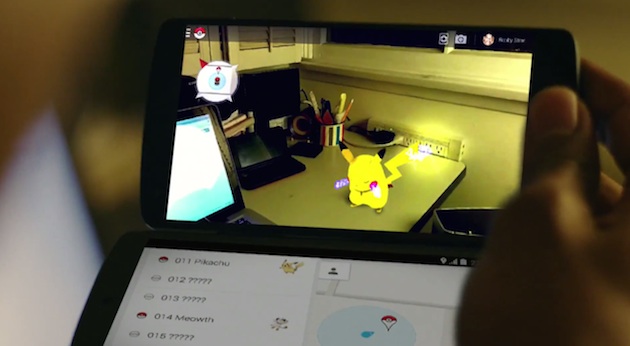
Google's known for its weird and wonderful April Fools' jokes, but this year's edition might be the best we've seen. Because it's already April 1st in Australia and Japan, Google has introduced its "latest" build of Google Maps, laying down a "Pokémon Challenge" that requires you, a budding Pokémon Master, to discover and capture all of manner of creatures to fill up your Pokédex, simply by navigating to different places on Google Maps. To start playing, make sure you have the latest version of Google Maps for iPhone or Android, hit the search bar and select "Press start." You'll have to be quick though, you've got until 2am PT on April 2nd to catch 'em all.

Filed under: Cellphones, Internet, Software, Mobile, Google

Comments

31 Mar 17:22

Star Citizen reaches $41 million in funding, now getting procedurally generated content

by no-reply@gamespot.com (Eddie Makuch)

Star Citizen, the upcoming PC space sim from Wing Commander creator Chris Roberts, continues to soar. The game has now pulled in an astonishing $41 million in lifetime funding.

That's up from $40 million less than a month ago. A total of 417,219 people have backed Star Citizen so far. According to Roberts, this proves that the PC space sim genre is not niche.

Now that funding has reached $41 million, Star Citizen developer Cloud Imperium Games will add procedurally generated content to the game. Should funding hit $42 million, the developer will add a "Galactapedia" to the game.

Star Citizen is already the most successful crowdfunded project in history from a dollars perspective, easily surpassing the next closest competitor: the Pebble Watch ($10 million).

To put Star Citizen's new funding milestone into context, Epic Games revealed in 2006 that development on the original Gears of War cost $10 million, while Tim Schafer's 2008 action game Brutal Legend had a budget of around $25 million.

Star Citizen is due to launch in full sometime in 2015.

Eddie Makuch is a news editor at GameSpot, and you can follow him on Twitter @EddieMakuch
Got a news tip or want to contact us directly? Email news@gamespot.com
31 Mar 04:46

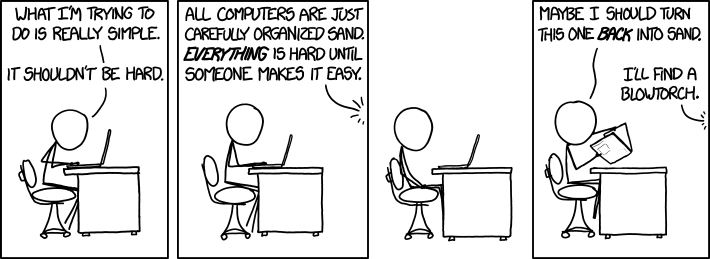
Shouldn't Be Hard

(six hours later) ARGH. How are these stupid microchips so durable?! All I want is to undo a massive industrial process with household tools!
30 Mar 04:41

Прогресс

by grimnir74
29 Mar 19:11

Attack on Titan x Titanfall

by noreply@blogger.com (Endless)


29 Mar 01:38

LastPass for Android can now fill your app logins in for you

by Jamie Rigg
Yousef Alnafjan

This kind of thing is just not possible on any other OS. "Link Bubble" is another useful app that's only possible on Android.
https://play.google.com/store/apps/details?id=com.linkbubble.playstore

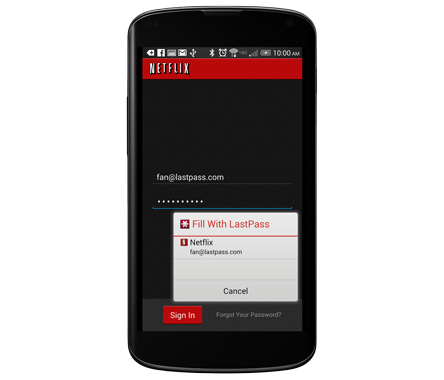
You may know LastPass, the cross-platform password manager, as a safe haven for website login details and common form info. Now, as well as playing nice with Chrome for mobile devices, the latest version of LastPass for Android can fill in app login data for you, too. Once it's updated and you've authorized this new feature, loading up an app with a username / password prompt will trigger a pop-up with suggested login credentials you can choose to inject. Chances are, however, you'll need to tell LastPass which of the logins stored in your vault the mobile app wants -- you can also share your selection if you'd like to help it learn common associations. Because apps are often mobile portals for services you'd load up inside a browser on your computer, it makes sense. Then again, we can't say we sign in and out of apps enough to justify $12 per year for the premium service LastPass' mobile apps require.

Filed under: Cellphones, Software, Mobile

Comments

Source: LastPass, Google Play (LastPass)

28 Mar 12:06

Want a free year of Office 365? Bring your iPad to a Microsoft Store

by Jon Fingas
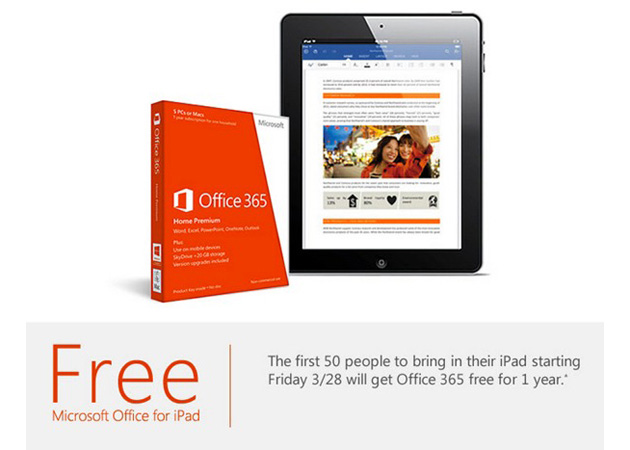
Microsoft's Office 365 iPad promotion

If you're enamored with Office for iPad but don't want to fork over $70-plus per year for the necessary Office 365 subscription, you'll want to make a beeline to your local Microsoft Store this weekend. Microsoft has launched a promo that will offer a free year of Office 365 to the first 50 people who bring an iPad to a given retail location from March 28th through March 30th. You'll undoubtedly have to hustle if you want to take advantage of the deal, but the trek could be worthwhile if you like the idea of giving Office an extra-long trial run.

Filed under: Tablets, Internet, Software, Microsoft

Comments

Via: ZDNet

Source: Microsoft (Facebook)

28 Mar 10:44

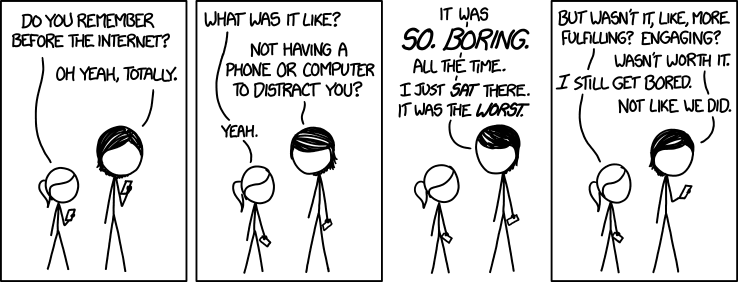
Before the Internet

We watched DAYTIME TV. Do you realize how soul-crushing it was? I'd rather eat an iPad than go back to watching daytime TV.
27 Mar 14:53

President Obama announces plan to dismantle NSA phone record database

by Adi Robertson

President Barack Obama has officially announced his plan to reform the National Security Agency's collection of phone records. Under his new proposal, the agency would no longer keep a database holding a large percentage of all American call records. Instead, phone companies like AT&T and Verizon would keep them for the same length of time they do now, and the government would submit requests for individual numbers after getting approval from the Foreign Intelligence Surveillance Court. Phone companies, for their part, would have to provide "technical assistance" in order to make sure that the government could easily search for and collect information, which could include the numbers that had been in communication with a particular subscriber, the duration of calls, and similar information from within two degrees of separation (or "hops") from a target.


The current program will continue for at least 90 days

The current program will continue for at least 90 days, albeit with some limits that were set early this year. In a statement, however, Obama said he was working with Congress in order to pass legislation for his proposal "as soon as possible." A fact sheet describes a few of the program's particulars. Except in cases of emergency, the court would need to approve each number before the government could search for it, using the criteria of "national security concerns." The law that currently enables collecting records limits searches to terrorism or "clandestine intelligence activities" specifically, but it's not clear whether this slightly broader wording will actually make it into the bill. If a number is approved, the government would have a "limited period of time" to search through its records, and it could continue to get new records from the same number as they came in. As always, these numbers cannot belong to American citizens, although data from citizens could be incidentally collected as part of other searches.

Details about Obama's proposal were first released on Monday by The New York Times, and members of Congress have long been debating their own alternatives to the database. Representatives Mike Rogers (R-MI) and C.A. Dutch Ruppersberger (D-MD) announced a draft bill that would keep records in the hands of phone companies, require the FISA court to create a framework for requesting data from them, and then review the validity of requests after the fact. The ACLU and EFF, two organizations that have been central to protest against bulk phone record collection, have both come out against the bill. Critics who have reviewed a draft of the text say it will broaden the range of data collection by allowing operatives to request information about anyone associated with a foreign power — not just people associated with a terrorist or national security investigation — and lift the requirement to get judicial review of every request beforehand. "The bill's modest improvements to the phone records program are not worth demolishing the important judicial role in overseeing these programs," says ACLU counsel Michelle Richardson.

Competing bills are already in Congress

Instead, these organizations support a previous proposal called the USA FREEDOM Act, brought by Senator Patrick Leahy (D-VT) and Representative Jim Sensenbrenner (R-WI). Yet another bill, widely criticized among privacy advocates, was proposed by Senator Diane Feinstein (D-CA) and passed the Intelligence Committee last year. Neither of these bills addresses the concerns of people outside the US, who have complained of overreaching surveillance through this and other programs. The EFF has also critiqued Obama for waiting on legislation instead of issuing an executive order.

The phone record database, first revealed by Edward Snowden in mid-2013, has become a focal point for proponents of surveillance reform. The number of records included is unclear, but the program is under siege from multiple lawsuits, and two Obama review panels have called its efficacy into question. Reports from an ad-hoc panel and the Privacy and Civil Liberties Oversight Board concluded that it had never provided breakthrough clues in a case, and that the benefits it did provide could be gotten through other programs. Intelligence agencies, however, have said that the program provides a way to quickly rule out areas where a plot could be brewing. President Obama ultimately called for the abolition of the program in its current form in January, granting two months to develop an alternative. His proposal comes one day before the March 28th deadline.

27 Mar 13:10

Cliff Bleszinski calls Notch a "pouty kid" for canceling Minecraft VR

by no-reply@gamespot.com (Eddie Makuch)
Yousef Alnafjan

"Bleszinski made clear upfront that he participated in an early round of venture capital funding for Oculus VR and said he stands to make a "very sizable chunk of money" from Facebook's buyout"

Industry veteran Cliff Bleszinski, who most notably worked at Epic Games for 20 years, has written a lengthy blog post addressing the $2 billion Oculus/Facebook deal wherein he also calls Minecraft creator Markus "Notch" Persson a "pouty kid" for canceling the virtual reality version of the sandbox game.

Bleszinski made clear upfront that he participated in an early round of venture capital funding for Oculus VR and said he stands to make a "very sizable chunk of money" from Facebook's buyout. With that out of the way, Bleszinski said he was a believer in VR when he first saw the tech and he remains one today.

"When that dust settles my heart says that I really, genuinely care about VR and I want to experience and enjoy it myself, and I have faith that it will still happen, and it will be better than ever," Bleszinski said.

Many have criticized Facebook in the past for being intrusive with regards to the private information it collects from users. Zuckerberg is not blind to this concern, but said the "Internet Outrage Machine loves to pile on something like this."

"Maybe Zuck sees what everyone else has seen--the future--and wants to make sure it's more than just great games and saw that it would add value to his business?" he said.

Oculus VR was already doing well on its own, but its sale to Facebook will accelerate the growth of the tech and help it build out an ecosystem, Bleszinski said.

"They needed an ecosystem. IF their system is going to be (hopefully) a dedicated system instead of a (ugh) peripheral they need their version of whatever the app store would be. Your device is only as good as the store and community around it," Bleszinski said. "If users can’t say shut up and take my money, if developers can't post their work then the device will ultimately flounder. Facebook can assist with this sort of thing, as well as having a multi billion user reach. That’s pretty damned important."

Overall, Bleszinski said if "programming god" John Carmack (a new hire at Oculus VR) and Oculus Rift creator Palmer Luckey believe a sale to Facebook is the right idea, then that "should tell you something."

"Palmer is the classic example of the old adage of 'do what you really love and the money will follow.' Know what? Palmer’s going to keep doing what he loves because he believes in VR. It's his dream. Once the dust settles, and maybe he buys a nicer home, or an Italian sports car, guess what he's going to do? Get right back to work."

Bleszinski further explained that when a company like Oculus VR raises money from venture capitalists, their end-game is often to one day get bought out. He said it might have been "interesting" for a dedicated gaming company like Microsoft to buy Oculus, but this would have limited the tech's potential to affect a myriad of other industries.

"I want games, but I also want virtual tourism. PTSD treatment. End of life quality comfort care improvements. Treatment for a variety of fears. Architectural visualization. Pilot training. Scuba training. The list simply goes on, and on, and on," Bleszinski said. "Start to imagine a VR experience that’s more social where you can sit, say, in a virtual IMAX with your best friends who all live in different cities and things start getting incredibly intriguing."

Also in the blog post, Bleszinski addressed the Kickstarter backer outrage over Oculus VR's sale to Facebook. Simply put, the crowdfunding site's terms say nothing about backers getting equity, he pointed out.

"Apparently some folks don’t understand that donating to a Kickstarter gets you whatever reward you’re told when you donate, you don't get equity, you don't get to participate in the fruits of a sale of a company like that," he said. "Crowdfunding can only take you so far, especially when you're doing something this ambitious. 'I donated money to add value to a company that was eventually sold!' Well, that’s kind of how business works, folks, hate to be the bearer of bad news."

Lastly, Bleszinski took a shot at Minecraft creator Markus "Notch" Persson, who canceled a VR version of the sandbox game in the wake of the sale.

"Notch, your cancelling Minecraft makes you look like a pouty kid who is taking his ball and going home. It's a bratty and petty move and it saddens me greatly," he said.

Eddie Makuch is a news editor at GameSpot, and you can follow him on Twitter @EddieMakuch
Got a news tip or want to contact us directly? Email news@gamespot.com
27 Mar 07:25

HTC One Google Play edition on sale now

by Aaron Souppouris

Following yesterday's launch, you can now order the all-new HTC One with stock Android from Google's Play Store. Unlike the model we reviewed, the Google Play edition (GPe) HTC One doesn't utilize the "Sense" skin or HTC's collection of software tweaks. Instead, it features software similar to Google's Nexus phones. The new model is priced at $699 and, at the time of writing, the store listing says phones will start shipping in two-to-three weeks.

Aside from the software modifications, GPe phones also benefit from faster updates to the latest version of Android. Although the Nexus 5 gets software upgrades slightly earlier, the GPe versions of the 2013 HTC One and Samsung Galaxy S5 have generally received updates faster than the carrier-sold models. The new HTC One GPe appears to only be available through the US version of the Play Store, where the old model has now dropped down to $499.

27 Mar 06:44

Turkey to lift Twitter ban after court order

by Jacob Kastrenakes

A Turkish court has ordered its government to lift the statewide block on Twitter that it imposed last week after tweets began spreading linking the prime minister to a corruption scandal, the AFP reports. Access to Twitter is reportedly expected to be restored later today; it's been blocked since March 20th, though many found ways around the ban even thereafter. The Associated Press reports that the court has only issued a temporary injunction against the ban, so it's unclear if Twitter access will remain restored, should the blockade be lifted.

Turkey's government initially placed the ban as protests rose and a corruption scandal began to embroil the government just days before an election. Blocking Twitter has only brought more negative attention since: the block was the subject of further acts of protest and was condemned by the United States and United Nations Human Rights office, among others. "As the General Assembly recently affirmed in November 2013, the same rights that people have offline must also be protected online," Human Rights office spokesperson Rupert Colville said at a press conference.

27 Mar 06:40

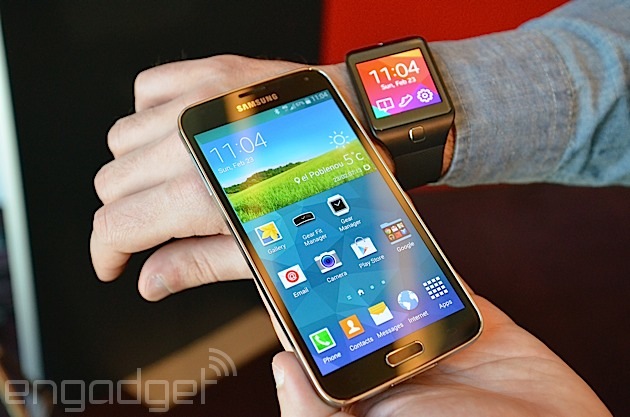
​Galaxy S5 hits stores early in Korea, as carriers try to dodge sales suspension

by Mat Smith
Yousef Alnafjan

Kind of understandable. They'd rather anger Samsung than face further government sanctions or lose thousands of potential customers.

South Korea's major carriers have pulled their Galaxy S5 launch date forward to, well, today, despite Samsung's efforts to keep the native networks in line with the global launch date on April 11. According to a statement received by Bloomberg, Samsung is "very puzzled." "SK strongly asked form an earlier release of the product by we delivered our stance that the global release date of April 11 remains unchanged." In South Korea, recent illegal discounts from carriers led to the government regulator slapping a 45-day ban on new customer sign-ups. Carriers apparently already have the GS5 in stock for both marketing activities and to cover their pre-orders on launch day.

SK Telecom said that it had decided to offer the GS5 "for a wider consumer choice of handsets before our suspension begins on April 5." On their network, the phone is priced at $808 and is available online and in-store starting today.

Filed under: Cellphones, Mobile, Samsung

Comments

Source: Bloomberg, AP

27 Mar 04:32

HTC's news reader and 'Zoe' camera apps will be made available for other Android phones

by Dan Seifert
Yousef Alnafjan

Ballsy move

HTC is planning to make BlinkFeed, its custom news-reader app installed on the One and other HTC smartphones, available for other Android devices in the near future, even those not made by HTC. The news was found by Android Central in a press release for the new BlinkFeed features debuting on the HTC One that was announced yesterday. HTC also tells The Verge that its Zoe camera app will be made available for non-HTC devices later this year.

HTC followed Motorola's lead by putting its own apps for the latest version of its Sense software in the Google Play Store, but it was implied that they would only be available for HTC devices. Making BlinkFeed and Zoe, two of HTC's signature pieces of software, available for other, non-HTC smartphones is a bold move, but it could help with brand awareness and let people "try out" HTC's software before buying a phone. Other HTC apps that are hardware dependent, such as Gallery and TV, are not expected to be made available for non-HTC devices.

The biggest challenge at this point for HTC is to get people to actually go in to stores and buy its phones, and letting them get a taste of its software is one way to accomplish that.

27 Mar 04:30

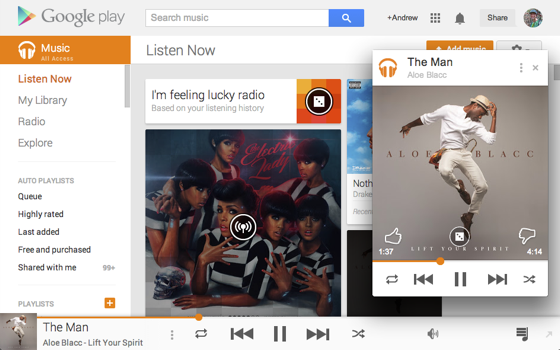
Google Play Music finally lets you upload songs through the browser

by Nathan Ingraham

Google Play Music has long been a solid option for uploading and accessing your music collection wherever you are, but using the Music Manager app to actually get your songs into the cloud wasn't always the smoothest or most intuitive process. However, a new feature tucked away in the experimental "labs" section of Play Music should make this process a lot easier — users can now upload whatever music they want straight through the browser using simple drag-and-drop. If the songs are matched with Google's vast music library, they'll be added automatically; otherwise they're simply uploaded.

In addition to uploading through the browser, users can also select a number of folders that the service will monitor and grab music from whenever it detects new songs are added to it. Your entire music library can also be downloaded through the web interface, as well, which essentially removes the need for the old Music Manager app.

Wave goodbye to that fiddly Music Manager app

Google says it built this new feature with the technology that powers its new Chrome Apps platform, which lets it build more complex, standalone apps compared to the older Chrome web apps. As such, there's a new Google Play Music mini-player app that shows up in your Chrome apps launcher (assuming you have it enabled). It lets you pause, skip forward or back, assign thumbs-up or thumbs down to songs, and displays the cover art — if you're listening to a playlist, its a pretty easy way to control your listening experience without having to flip back to your full browser window.

Google_play_music_update

All told, it's a good improvement to the Play Music service — it'll probably be most useful to those uploading and managing a collection of purchased music rather than using Google's All Access subscription option, though those customers will see the benefits of the mini-player as well as easier uploads for music that isn't in All Access. Google says that it'll roll these features out to all users soon, but you can turn it on now in the "labs" section of the settings menu if you don't want to wait.

Music isn't the only Google Play feature getting a tweak today. Google Play’s "info cards" feature — which lets those watching a movie pause playback to get additional information about the actor in a given scene — is coming to the first three seasons of Game of Thrones. The feature is already available for over a thousand movies on Google Play, but it’s the first time the company is offering it for a television show; all the better for those anxiously binge-watching Thrones in anticipation of the new season premiere on April 6th.

26 Mar 17:09

"Buy Oculus back from Facebook," Frog Fractions 2 sets new stretch goal

by no-reply@gamespot.com (Justin Haywald)

The Frog Fractions 2 developers are currently running a Kickstarter for their game, and they just added a timely (joking) stretch goal: if they raise $2 billion dollars, they'll "buy Oculus back from Facebook." In case you missed the massive news, earlier today Facebook announced that they're buying VR developer Oculus.

The news is surprising and even lead developer Notch to cancel the development of Oculus support for Minecraft. However, GameSpot editor Peter Brown pointed out in a recent editorial that it's not necessarily something you should worry about.

The Frog Fractions project currently sits just shy of funding at $42k, so it's unlikely it'll reach the $2 billion goal. But just in case you never played the original, you can still try it out online right now.

Justin Haywald is a senior editor at GameSpot, and you can follow him on Twitter @JustinHaywald

Got a news tip or want to contact us directly? Email news@gamespot.com
26 Mar 17:08

See the many faces of the HTC One's Dot View case

by Dan Seifert

Earlier today, HTC announced the new One, its new flagship smartphone loaded with great design and tons of features. While the design of the One itself is striking, one of the most interesting things announced along with it is the new Dot View case, which provides protection for the phone, but still lets you see notifications and check the time easily. The $49.99 Dot View has a series of holes in the front of it that let you view the screen even when the case is closed (hence the name).

You...

Continue reading…

26 Mar 13:12

Portal comes to NVIDIA's Shield as an exclusive Android port (updated)

by Jon Fingas
Yousef Alnafjan

I'm so buying this

Portal

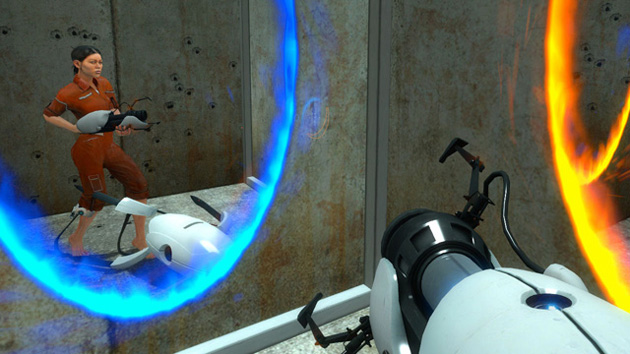
You won't have to stick to a PC or TV to play Valve's iconic games in the future. The developer is teaming up with NVIDIA to bring the original Portal to the Shield handheld -- in other words, Portal is coming to Android. The two haven't said just when the space-defying puzzle title will be available on the Shield, although it unfortunately sounds like other Android devices may be out of luck. We've reached out to see if there's a possibility of a wider release. Still, it's good to see Valve dip its toes in the mobile gaming waters, unlike certain companies. And hey -- it'll be as good an excuse as any to get reacquainted with your Companion Cube.

Update: An NVIDIA spokesperson says that the company isn't discussing "additional devices and/or device requirements at this time."

Filed under: Gaming, Handhelds, Science, Mobile, NVIDIA

Comments

Source: NVIDIA Blog

26 Mar 12:43

Nvidia reveals $3000 GTX Titan Z graphics card for "supercomputer-inspired performance"

by no-reply@gamespot.com (Eddie Makuch)
Yousef Alnafjan

TWO THOUSAND NINE HUNDRED AND NINETY NINE US DOLLARS

Today during Nvidia's annual GPU Technology Conference, the company announced the GeForce GTX Titan Z, a new graphics card that promises to deliver "supercomputer-inspired performance." The card will sell for $3000.

The GeForce GTX Titan Z is built around two Kepler GPUs and 12GB of dedicated frame buffer memory. It features two GK110 chips, and is powered by a total of 5,760 processing cores, or 2,880 cores per GPU. It has also been engineered for 5K and multi-monitor gaming.

"If you're in desperate need of a supercomputer that you need to fit under your desk, we have just the card for you," Nvidia CEO Jen-Hsun Huang said (via the Nvidia blog).

Nvidia says its Titan Z GPU is different than other dual-GPU cards because its GPUs are tuned to run at the same clock speed, and feature "dynamic power balancing." This means, according to Nvidia, that neither GPU will face a performance bottleneck.

"And that performance is delivered in a card that is cool and quiet, rather than hot and loud. Low-profile components and ducted baseplate channels minimize turbulence and improves acoustic quality," Nvidia said.

Eddie Makuch is a news editor at GameSpot, and you can follow him on Twitter @EddieMakuch
Got a news tip or want to contact us directly? Email news@gamespot.com
26 Mar 12:41

Why You Shouldn’t Worry about Facebook Buying Oculus Rift

by no-reply@gamespot.com (Peter Brown)

I was as surprised as anyone when I heard that Facebook acquired Oculus VR, the company behind the Oculus Rift virtual reality headset. Oculus VR has repeatedly positioned its device as a gaming platform, and outside of supporting social games made by developers like Zynga, Facebook has relatively little experience in gaming at large. This, coupled with the fact that a lot of people dislike some of Facebook's practices, has left a lot of people confused and dismayed by the announcement.

Regardless of Facebook's privacy-related controversies, I think this acquisition is a clear boon for VR's biggest proponents, not a threat. Here’s why.

More Funds for Research and Development

Not long after the announcement, Oculus co-founder and VR visionary Palmer Luckey took to Reddit to defend the decision to join a large and controversial company like Facebook. For someone who’s made VR his life’s work, Luckey knows full well that developing new technologies requires money--lots of money. Luckey had this to say about the benefit of the acquisition:

“The partnership accelerates our vision, allows us to execute on some of our most creative ideas and take risks that were otherwise impossible. Most importantly, it means a better Oculus Rift with fewer compromises even faster than we anticipated.”

So, with more working capital, Oculus VR will improve the Rift faster than it could have before and bring it to market sooner than they previously envisioned? Makes sense. So far so good.

Facebook Has Proven its Ability to Grow Businesses

When Facebook acquired the photo sharing service Instagram nearly two years ago, there were 30 million active users. Today, that number is over 200 million. Did Facebook do this by fundamentally changing Instagram? No. If Zuckerberg’s statements to investors earlier today are to be believed, Instagram has continued to operate independently since it was purchased. That doesn’t mean that Facebook isn’t leveraging Instagram as a product, but apart from reducing it’s functionality on Twitter, Instagram has benefited from the partnership with Facebook because it's largely been left alone.

The association with a company like Facebook, whose proliferation of users is admirable, will expose Oculus VR and the Rift to a wider audience. With more people interested in VR, there’s a greater chance that game publishers will take VR seriously, and the medium will grow faster than it otherwise would have.

Facebook is in this for the Long Run

Facebook’s acquisition of Oculus VR is part of a long-term plan that aims to connect the global population, ideally, within the next 10 years. When discussing the development of VR, including gaming, Zuckerberg stated that he views VR as a five to ten year initiative. What that means is that Facebook isn’t in a rush to turn a profit on the hardware; it’s in a rush to fund development today to get results further down the road.

Though Zuckerberg made it clear that VR can serve Facebook’s business outside of gaming, he also said that Oculus VR was valuated at $2 billion “solely” for its gaming business alone, and that it is the “clearest opportunity” for the device. Time, Facebook money, and its belief in VR gaming equals a brighter future for the medium.

Facebook Supports Open Software Development

Facebook began its Open Compute Project in 2011, which aims to develop advanced, energy efficient data centers, but more importantly, share its findings with the industry at large in the form of open-source design documents. While that doesn’t mean Facebook will give away Oculus VR’s secret sauce, it’s proof that Facebook isn’t solely driven by monopolizing technology, and there’s a great chance it will keep Rift development open to anyone who’s interested.

...with more working capital, Oculus VR will improve the Rift faster than it could have before...

If Facebook throws more money at research and development, if it isn’t in a rush to turn a profit on VR, and it respects the Rift’s value as a gaming platform, why should this acquisition negatively impact the future of VR gaming? We know that the Rift will also be leveraged for non-gaming purposes that tie into Facebook’s advertising network, but that doesn’t mean gaming will as well.

Not everyone is convinced. Mojang pulled out of a potential deal to bring Minecraft to the Rift due to owner Markus Persson’s feelings that “Facebook creeps me out.” But, who says VR gaming will be threatened just because a service-based company with a social focus is involved? I’m optimistic that Facebook will help legitimize VR as a future gaming medium, and that Oculus VR will benefit as a result of time and further investments.

What do you think? Will VR gaming benefit or suffer from Facebook’s involvement?

26 Mar 04:18

Facebook buying Oculus VR for $2 billion

by Chris Welch

Facebook plans to purchase Oculus VR, maker of the Oculus Rift virtual reality headset, for $2 billion. The deal is comprised of $400 million in cash and 23.1 million shares of Facebook stock. Facebook announced its surprise purchase via a blog post. CEO Mark Zuckerberg has also revealed Facebook's reasons for the deal. "Oculus's mission is to enable you to experience the impossible. Their technology opens up the possibility of completely new kinds of experiences," Zuckerberg says. "Immersive gaming will be the first, and Oculus already has big plans here that won't be changing and we hope to accelerate."

Zuckerberg says that Facebook will "focus on helping Oculus build out their product and develop partnerships to support more games." But he makes clear that after Oculus sees through its gaming ambitions, Facebook will expand the product into new territory. "We're going to make Oculus a platform for many other experiences. Imagine enjoying a court side seat at a game, studying in a classroom of students and teachers all over the world or consulting with a doctor face-to-face — just by putting on goggles in your home." Zuckerberg equates Oculus to "a new communication platform" and clearly has a vision that extends far beyond the gaming focus that helped Oculus become a smash Kickstarter success.

"Imagine sharing not just moments with your friends online, but entire experiences and adventures."

The acquisition of Oculus seemingly comes out of nowhere: the company just demoed its most recent version of the Oculus Rift development kit at GDC 2014 to much fanfare. Oculus has been steadily moving towards a consumer product, and Facebook's resources can only help to push that mission along. "Facebook understands the potential for VR," the Oculus team wrote in its own blog post announcing the deal. "Mark and his team share our vision for virtual reality’s potential to transform the way we learn, share, play, and communicate. Facebook is a company that believes that anything is possible with the right group of people, and we couldn’t agree more."

But the most interesting question, as Zuckerberg lays out, is where the technology will go in the future. "By feeling truly present, you can share unbounded spaces and experiences with the people in your life. Imagine sharing not just moments with your friends online, but entire experiences and adventures." Zuckerberg says that future is coming sooner than anyone thinks, and he "can't wait to start working with the whole team at Oculus to bring this future to the world, and to unlock new worlds for all of us."

26 Mar 04:17

Oculus investor says Facebook purchase is like 'Google buying Android in 2005'

by Ben Popper

Facebook announced today that it was acquiring virtual reality darling Oculus Rift for $2 billion in cash and stock. The transaction left a lot of people scratching their heads: Oculus has been focused on high-end gaming applications, a market where Facebook has little to no experience.

According to sources familiar with the deal, Oculus investors had offered the company more money to go it alone, but trying to compete with titans like Sony — which just showed its Project Morpheus headset last week — would've required an enormous additional investment that Facebook can provide out of the gate. Sources say that several big companies other than Facebook had also made overtures to Oculus about a potential acquisition, which could've accelerated Facebook's bid. Matrix Partners investor Antonio Rodriguez says the deal happened very quickly: "Mark Zuckerberg has been aware of the company for perhaps the last few months, and he got very interested in the last seven days."


Other bidders were in the mix

For now, the company plans to stay in Los Angeles and continue to operate as before. "Keep on doing what you're doing, back to changing the world, we're still on target," CEO Brendan Iribe wrote to employees in an internal memo, according to a source at the company.

So, why Facebook? Oculus investor Chris Dixon, a partner at Andreessen Horowitz, says the best way to think of the deal is to compare it to a big acquisitions from a decade ago. "The way to understand this purchase is to think of Google buying Android in 2005. That confused a lot of people at the time. Facebook believes that virtual reality will become the next major platform, the same way mobile computing did, and they want to make sure they have a big stake in that."

Facebook's founder seems to agree. "There are not that many companies building technologies that could be the next computing platform, and Oculus is the clear leader," Mark Zuckerberg noted on a conference call about the acquisition Tuesday afternoon. He expanded on this logic in a Facebook post: "Our mission is to make the world more open and connected. For the past few years, this has mostly meant building mobile apps that help you share with the people you care about. We have a lot more to do on mobile, but at this point we feel we're in a position where we can start focusing on what platforms will come next to enable even more useful, entertaining and personal experiences."

26 Mar 04:17

Notch cancels Minecraft for Oculus Rift, but other developers still have interest (update)

by Timothy J. Seppala

It looks as if the Facebook and Oculus deal already has its first casualty. Minecraft mastermind Markus "Notch" Persson has said that he'll no longer be developing his game for the Rift after Zuckerberg's purchase. "We were in talks about maybe bringing a version of Minecraft to Oculus," he tweeted. "I just cancelled that deal. Facebook creeps me out." Persson continues on his blog that, while social aspects could be one of VR's biggest applications, he doesn't want to work with social experiences -- he wants to work with games. Beyond that, he doesn't see the social network as a stable platform, and won't work with it in any form as such.

If you were dead-set on traversing a pixelated Great Britain in VR, it's looking like you might have to settle for the hacked PC version for now. All isn't lost, though. Minecraft's already been announced as a PlayStation 4 title and the wraps recently came off Sony's Project Morpheus headset -- it could possibly show up there. That arguably one of the biggest indie developers (and one of Oculus' earliest supporters), however, has cancelled a project the scale of Minecraft is pretty major. What do others in the indie scene make of the news, though? Those we spoke to actually seemed pretty happy about it.

Update: John Carmack has also tweeted about the sale, saying "I am coding right now, just like I was last week." Check after the the break for more of his statements on the matter.

The developer behind the Rift's highest profile game, and the one that Oculus trots out time and again when there's new hardware to show off (EVE: Valkyrie), has nothing but praise.

"We're very excited for our friends and colleagues at Oculus," David Reid, CCP Games' CMO told us. "We share their vision about the future of VR and gaming and are looking forward to participating in the consumer launch of the Oculus Rift with EVE: Valkyrie."

"I think this is a smart move for Oculus," Rami Ismail of Vlambeer told us. The developer behind Ridiculous Fishing, and, most recently, Luftrausers, said that while Oculus is well known on the tech scene, it needs a backer with a household name now that Sony has entered the VR space. "Facebook is a huge established tech presence, has amazing engineers, hardware, software, public mind-share and lots of money," he said. "I mean, I am not a big fan of exits as a business model at all, but in light of not really having a profitable business model, it makes total sense for them to exit."

The general consensus among those we've talked to is that Facebook's investment is ultimately good for Oculus. This willl get the tech in front of more users and could increase the awareness of a game that uses it. Hot Blooded Games' CFO Dave Oshry has visited the Oculus offices and says he's seen the outfit's latest versions of the technology (his team is working on an unannounced VR-enabled game); knowing the company's future plans has him incredibly excited.

"No acquisition can change my mind about that," he told us. "I've always encountered resistance from people who think VR tech 'isn't there yet' or that it's 'just another fad.' When you've seen what I've seen -- you become a believer."

Oshry, whose previous work includes the recent Rise of the Triad reboot, said he's sure that Oculus wouldn't have made this deal if it wasn't in the best interest of everyone in the company, either. After all, what's good for Oculus should be good for developers and, most importantly, be good for the end user.

"Oculus is made up of some of the best and brightest minds in all of tech, and I believe in their ability to make the right decisions moving forward. Regardless of who owns the company, it's the technology that I believe in."

Indie publishers are bullish, too. "Ultimately if Facebook allows the Oculus platform to get into the hands of more people, gamers or otherwise, then this acquisition will prove to be a good thing," Devolver Digital (of Hotline Miami fame) partner Nigel Lowrie told us. "We've seen what this next generation of VR technology from Oculus, Valve and Sony can do and how it can change the game. Anything that achieves a greater awareness and broader reach for video games as mainstream entertainment, and pushes new technology forward in new ways is ace."

For the record, I am coding right now, just like I was last week.I expect the FB deal will avoid several embarrassing scaling crisis for VR.

- John Carmack (@ID_AA_Carmack) March 26, 2014

John Carmack left the company he co-founded, iD Software to become the Chief Technical Officer of Oculus VR, so what does he think of this development? In several tweets, he said he's still coding right now, just as he was last week, and seems unconcerned about the future of the company. Where Notch is wary of Facebook, Carmack says he "has respect for the scale Facebook operates at" and thinks the deal will help VR avoid possible scaling crisis in the future. Like Zuckerberg, he envisions a cyberspace that matches the scale of Facebook's billion+ users. We'll have to wait for a more detailed response and interestingly, it might come on Facebook -- Carmack says he might open an account now.

I have a deep respect for the technical scale that FB operates at. The cyberspace we want for VR will be at this scale.

- John Carmack (@ID_AA_Carmack) March 26, 2014

Filed under: Gaming, Wearables, HD, Facebook

Comments

Source: Markus "Notch" Persson (Twitter), Notch, John Carmack (Twitter)

26 Mar 04:16

Oculus founder says Facebook deal will make virtual reality cheaper and better

by Sean Hollister

One year ago, Oculus founder Palmer Luckey told me that his virtual reality headset company had no intention to sell. He said that the team had agreed, for the time being, to stay independent — to make sure that it didn't have to cater to another company's business strategy in order to further its goals. When Oculus raised $100 million in funding, it seemed that independence was assured, even though the company picked up a few new bosses along the way. But today, Facebook bought Oculus for $2 billion, including $400 million in cash.

If Oculus already had enough money to launch its consumer virtual reality platform, why would it sell to Mark Zuckerberg? We just asked Oculus CEO Brendan Iribe and founder Palmer Luckey that very question. Luckey says that Facebook will not only allow Oculus to stay independent, but that it will also provide the resources to design and produce components purpose-built for virtual reality hardware. Though originally, Oculus piggybacked on the low cost of commodity components built for smartphones, Luckey says that won't necessarily fly from here on out. "Great virtual reality has different requirements than great cellphones," says the founder. "This is going to let us do things that would have just been far and away impossible without Facebook."

You can read our full conversation with Luckey and Iribe below.

Why did you decide to do this? Did Sony's announcement spur a deal?

Oculus CEO Brendan Iribe: We've been working on this relationship for a while. It really started with us just getting to know Mark and his team: they were interested to see a demo, they came down, we showed them a demo, we started talking about the vision, and they got excited.

"They believe in our vision of virtual reality."

Basically, Mark said, "Is there any way we can help, is there anything we can do? Any kind of partnership, anything we could invest in or promote? How can we be a part of this and help make virtual reality even bigger and even better?" After meeting and talking and hanging out a lot, we started to get to know each other, we started to trust each other, we started to tell Mark and his team more about the future and how we saw this impacting the world, and how big an impact it could be, and how we were really focused on hiring the very best people in the world... and ultimately how we wanted to get out the hardware to as many people as we could, as fast as we could, at the most affordable price.

As we went down that path, Mark said, "I think we really could help you on that side of it. You clearly know what you're doing on gaming, we don't need to have any real impact on that, but I think we could help you on some other parts." And that's where the discussion went. Oculus is all about the gaming community right now, we're super focused on that. But with this acquisition and with this partnership, we can now get the virtual reality platform out to more people faster, better, and at a lower cost.

You had $100 million in funding, and a year ago Palmer told me that the company wanted to be independent. What did you need from Facebook that would be worth changing that? What are you getting from Facebook that could make this happen any differently than you could with $100 million in funding?

Oculus founder Palmer Luckey: They believe in our vision of virtual reality. There are so many other companies that have been interested, they have a vision of what they wanted to do to fit into our product roadmap, and if they bought us it would be so that we could build what they wanted us to build. Mark does believe in our vision of virtual reality, and we're going to continue operating independently, delivering what we've always wanted to deliver. This gives us a lot of resources to do what we've always wanted to do, but it doesn't change what we want to do.

What tangible benefit was there to signing on with Mark Zuckerberg and Facebook right now — something that you couldn't do with $100 million in funding?

Iribe: When you look at this and where it's all going, the hardware business requires a lot of investment. It's very hard, it's very expensive, and ramping up hard on any given platform, whether it's a console or any kind of PC or mobile device, going into the hardware business requires a lot of investment. We had a lot of investment, and that was great, but at this point, we're looking at scaling this, at going out and acquiring components, and doing deals with some of the biggest companies in the world that got behind us and were working with us so that — because they believed in it and they wanted to, and in many ways they were trying to give us the benefit of the doubt, and almost bend the rules on how much of a commitment they normally require from companies.

Now we're able to show up and say "Hey guys, not only are we in this for a very long time, and the risk is a lot lower that we're going to go away or have any financial problems, but we're now ready to step up and actually put in bigger orders and bigger commitments, and hit bigger volumes around where virtual reality can go." I think that's a key part of it.

"Great virtual reality has different technical requirements than great cellphones."

Luckey: Another thing to keep in mind is that up until now, we've largely been driven by the mobile phone market, most of the hardware we've been using is out of the mobile phone market. But as virtual reality gets more and more advanced, the right thing to do is develop hardware that's made specifically for virtual reality.

Great virtual reality has different technical requirements than great cellphones, and like Brendan said, the hardware business is really, really expensive. Designing new display technologies is really, really expensive. This is going to let us do things that would have just been far and away impossible without Facebook. We want to deliver the best possible product, at the lowest possible cost, and this was clearly a panacea to do that.

So does this change your roadmap? Does this mean the headset will come any quicker, or any cheaper, or be any better in any particular way than it would have been previously?

Luckey: This does let the headset be better and cheaper. Our roadmap is about the same as it's always been, but there are a lot of things we'd wanted to do that now we can really execute on. This does make the Rift cheaper and better, both in the near term and the long term.

Another thing is that we're going to be able to devote a lot of resources to content that we would not have been able to do otherwise. Virtual reality is a tough sell for a software developer. They have to convince investors that not only are they going to build a good game, which is what they normally have to do, they have to convince them that it's going to be a good game and that virtual reality will be successful. This puts us in a position where we can invest in games because we know virtual reality is going to be successful; we just have to believe in the game.

You're going to see a lot more coming out of our content investment and publishing side.

Is there now a long-term plan to develop a virtual reality platform with Facebook itself?

"We're a rocket, and we just attached ourselves to an even bigger rocket."

Iribe: We can't comment on any announcements right now besides this partnership, but I think that you'll see the announcements we make in the future, literally they're going to be bigger, better, and faster, and we're incredibly excited to go into this new world of virtual reality with one of the biggest, fastest growing companies of all time. That's why we did this deal. We're a rocket, and we just attached ourselves to an even bigger rocket to get it out there and deliver a better virtual reality experience to the world.
26 Mar 04:16

Greetings from Planet Facebook

by Joshua Topolsky

You blink and open your eyes to a fantastic new sun above your head. You're lying in a field of tall grass, but in the distance you hear sounds of machinery. The city. As you lay there, a blimp begins to float into view, its bulbous shape painted in the striking cherry red and stark white ripple of the Coca-Cola logo. "Go Offworld with Coca-Cola today!" bellows a voice from a loudspeaker high above your head. "The adventure of a lifetime awaits... and all you have to do is say yes!" Offworld...

Continue reading…

26 Mar 04:15

Comic #130- Undying Loyalty

by Tyler Rhodes
Yousef Alnafjan

Surprise! Facebook buys Oculus VR.

25 Mar 19:42

'Jobs' film starring Ashton Kutcher is now streaming on Netflix

by Dante D'Orazio
Yousef Alnafjan

The only thing going through my mind watching this movie was "that's not Steve Jobs, that's Kelso"

Netflix subscribers: if you've been waiting for the streaming service to offer Ashton Kutcher's take on Steve Jobs, your wait is officially over. Jobs is now available to stream on Netflix (previously, it was only available as a DVD or Blu-ray from rental service).

The first biopic centering on Steve Jobs since the Apple founder's death wasn't exactly a success. Reviewers found the film bland, though Kutcher offered a surprisingly impassioned take on the man behind Apple. And when the independent film hit theaters it didn't strike much of a chord with moviegoers. Nevertheless, it should now be easier than ever to take a look at the film. And if you're not a Netflix subscriber, it's available to rent on iTunes and Amazon Instant Video for $4.99.

25 Mar 19:10

Nvidia Shield price drops to $199 alongside new features

by Sean Hollister
Yousef Alnafjan

Fantastic support for the device by Nvidia. Hats off to them.

We've said it before and we'll say it again: though Android may not be a great game platform, Nvidia is trying its damnest to make the platform better. Today, that means a host of new updates for the company's Nvidia Shield portable game console, updating the system to Android 4.4 and adding the ability to stream PC games outside your house — even waking your PC from sleep and letting you remotely log in, presumably after jumping through a few hoops to set up a compatible system.

The other thing that Nvidia's doing today is dropping the price of the Shield to just $199 through the month of April, with no strings attached, quite a dip from the original $299 MSRP. However, we're not sure if that's an admission the Shield isn't selling well, or simply clearing inventory for a new Tegra K1 powered Shield in the near future.


Welcome updates for a niche audience

Either way, new and existing Shield owners alike will surely appreciate the other features the update brings, including the ability to play games with Bluetooth keyboards and mice in the system's Console Mode, the ability to charge the system and use a USB devices simultaneously with a Micro USB OTG Y cable (yes, that's a real thing), a new interface for the GamePad Mapper, the ability to stream many more games (including Titanfall) and a new interface for the TegraZone app that lets you pair several different PCs with one Shield for streaming. We haven't gotten to try the update for ourselves yet, but Nvidia says it should be available on April 2nd. The company also says that the performance of streaming games outside your home — assuming you have a "robust" Wi-Fi connection — should be comparable to streaming them through Nvidia's Grid cloud gaming service.

25 Mar 19:02

Smokers’ rights group sues NYC to overturn e-cig ban

by Adrianne Jeffries
Yousef Alnafjan

I don't smoke or vape, but treating them like they're the same is clearly moronic. There's no smell or significant second hand smoking effects from e-cigs.

Also: "gateway drug to cigarettes for children"? Really?

Citizens Lobbying Against Smoker Harassment (CLASH), the group that successfully sued to overturn the smoking ban in New York state public parks, just filed a lawsuit to overturn New York City’s recent ban on the use of e-cigs in public places.

Rather than address the unresolved question of whether e-cigs are harmful to your health, CLASH is arguing the case on a technicality. The vaping ban was instituted under an amendment to the Smoke-Free Air Act, even though e-cigs vaporize a nicotine-laced liquid using a battery and do not produce smoke. New York’s constitution says that laws must address only one subject, and that subject must be reflected in the title.

The smoking and vaping communities are separate, but many vapers are former smokers, and legislative efforts have turned the groups into natural allies. The effort has already raised more than $11,000 out of a desired $40,000 for the lawsuit and the expected appeal.


"We’re fighting a cult, and it’s the same cult."

"We’re fighting a cult, and it’s the same cult," says Audrey Silk, founder of CLASH, which now has nearly 2,000 members between Facebook and its email list. "The same enemies that came after smoking are coming after the electronic cigarettes. It’s an ideology to them, and vaping is an extension to ‘renormalize regular cigarettes.’"

CLASH joined Russ Wishtart, a vaping advocate who hosts a podcast and a meetup for vapers in New York City, in filing the lawsuit. He noted that the vaping ban was tacked on to the smoking ban to make it easier to pass and avoid the debate over health impacts and the potential for e-cigs as smoking-cessation aids.

"They could have said, ‘Let’s make a bill called the Vape-Free Air Act,’" he says. "They chose to put it under the cover of a smoking ban that has been around for a long time because it makes it much more palatable for a legislator to vote for it."

E-cigs are spreading faster than laws can keep up. So far, Los Angeles has banned e-cigarettes in public places, following New York, and other jurisdictions are considering bans. The Food and Drug Administration still has not ruled yet on whether e-cigs will be regulated as tobacco products or anti-smoking aids, even though they’re rapidly gaining popularity and major tobacco companies have started investing in them. Sales doubled from 2012 to 2013 according to some estimates, and vaporizer shops and vaping lounges have started popping up in New York City and elsewhere.

E-cigs are spreading faster than laws can keep up

When it banned e-cigs, the New York City council noted that e-cigs are unregulated by the Food and Drug Administration, may encourage dependence on nicotine, could be a gateway drug to cigarettes for children, and increase the "social acceptability of smoking." The American Lung Association issued a warning about e-cigs, calling them a "buyer stay away, a buyer health hazard, potentially," citing the lack of health information.

The vaping ban in New York City is really a prelude to a different fight that will be argued on the merits of the devices. Vapers like Wishtart are looking forward to defending e-cigs as a benefit to society, in a way that could set precedent for the rest of the country. "There is technology today that didn’t exist 10 years ago that allows you to use nicotine in a much safer way," he says. "I see it as an evolution."

25 Mar 18:13

Construction on the world's tallest building will reportedly start on April 27th

by Kwame Opam
Yousef Alnafjan

Finally using all that money for something productive: an international male compensation contest!

Construction of what will one day be the tallest building in the world finally has a start date. According to UK-based architecture magazine Building Design, architects will break ground for Saudi Arabia's Kingdom Tower on April 27th.

The Kingdom Tower, which will reportedly stand at a height of a little more than a kilometer, has been in development for years. The project made major headlines in 2011 when outlets stated that the tower would be an incredible mile high, but designers balked at that early proposal. According to BD Online, architects expect the building to take a full 63 months to complete. When it's finished, it will beat out China's 838-meter tall Changsha Sky City, which will wrest the title from the Burj Khalifa when it's completed later this year.