Shared posts

30 Apr 08:08

notagoodusername360: ingthing: notagoodusername360: ingthing: ...


notagoodusername360:

ingthing:

notagoodusername360:

ingthing:

notagoodusername360:

ingthing:

beamkatanachronicles:

thepurpleeyedone:

beamkatanachronicles:

thepurpleeyedone:

beamkatanachronicles:

appleseeddrama:

THEY HAVE THE ACE ATTORNEY OFFICIAL MANGA IN MY LAW LIBRARY I AM CRYING.

image

image

Your honor, something is amiss here!

As you are probably aware, library materials are labeled with barcodes as well as a number to determine their location on the shelf, as per the Dewey Decimal System. The books just to the left of the manga are labeled, as are the DVDs just in view on the lower shelf. Look even further behind these shelves and you’ll see that even those books are labeled! 

Ladies and gentlemen of the courtroom, I invite you to take a closer look at the volumes that are, allegedly, part of this law library! Something is missing from the spines, isn’t there?

image

Where are the bar codes?!

This is a blatant contradiction! The OP is lying— these volumes cannot, therefore, be a part of this library at all! I propose that they simply brought these materials in for the sake of the joke!! 

Only focusing on one aspect and not the whole of the issue, are we, Mr. Wright? Typical.

Your honor, if you bring your attention to the books just left of the manga, you’ll notice there’s a book (the second to the left) that also does not have a bar code.

If you examine the picture even closer—particularly the DVDs below—you’ll see that they bear bar codes, but not on the spines. No, they have them on the back and/or front of the DVDs. Of course, this method of labeling and organizing isn’t limited to products of the film industry alone.

Therefore, I’d like to propose that it is entirely possible that the manga books do, in fact, belong to the library!

image

Wh-WHAAAAT?! You’re kidding!! 

image
(Shoot, he’s got me there… Better think of something fast! Something about the books that sets them apart from—

image
…! I’ve got it!)

While that may be true, you’ve also overlooked one critical error: the titles of the books! Whether or not your hypothesis regarding the labeling system is correct, these titles aren’t alphabetized correctly! What kind of self-respecting librarian would misplace such vital books? 

Well, Edgeworth?

While it pains me to have to point out something so obvious, I suppose I’ll make an exception for you, Wright.

Clearly, one look at the titles of the books next to the manga is a tell-all of this certain library’s less-than-stellar organization skills. None of the books are in alphabetical order, I’m afraid.

They could very well be alphabetized by author and not title, but it’s a little difficult to be able to decipher that from this single picture, wouldn’t you say?

Furthermore, the manga books themselves are in numerical order, suggesting some kind of system is in place, albeit not a very good one, if the alphabetizing is off.

At the end of the day, it seems like neither of us can draw a clear conclusion from this evidence alone. Your honor, I strongly suggest a recess in which we could investigate the library itself further.

I see the issue here very clearly.

image
Due to the uncertain nature of this case, we’ll have to postpone this decision until more decisive evidence can be obtained. The court will now take a 15-minute recess.

image

(W-wait, but I’m not—)

image

WAIT!!!

I’ve got some decisive evidence for you, pal!

We investigated further into the photo. Zooming in, you can see a label on the DVD case to the bottom left.

Photo Close-up added to the court record!

As you can see, pal, you can vaguely see the words “Of Toledo Law Library” on the label!

And, considering possibilities of the rest of that label, “University of Toledo" was the first to come to my mind!

A quick search on the University of Toledo’s Online Law Library Database revealed that there ARE the comics pictured in it!

Miles Edgeworth Ace Attorney Investigations volumes 1-4 and Phoenix Wright Ace Attorney volumes 1-5!

And there’s more! 

The section these comics are filed under is the “Law in Popular Culture" Section, which matches up with the stickers on the rest of the books on that shelf: "Lowering the Bar: Lawyer Jokes & Legal Culture”, “Prime Time Law”, “Lawyers in Your Living Room!" and "Reel Justice: The Courtroom Goes to the Movies”!

Not only is it in the right section, it’s also a documented part of the Law Library’s database!

How’s that for decisive evidence?

…It’s true that the books are definitely in the library, but look at the books that are immediately next to it, on the left side!

Specifically, the one that is titled “Lowering The Bar: Lawyer Jokes & Legal Culture”. Therefore, the shelf is clearly on the culture surrounding the law itself and popular culture relating to the legal world!

I hardly think it’s odd to see the Ace Attorney manga as an example of either humor in the legal world OR popular culture relating to the law!

O-Oh. I guess you have a point there…

Hey, wait a minute, pal!

Don’t go pullin’ the wool over my eyes here!

The University Library’s Online Database clearly shows that the comics are filed under “Law and Popular Culture”!

See?

It doesn’t matter whether those comics are related to the section or not; they’ve been listed under it in this library, and that’s nothing but the truth!

And since they’re filed under “Law and Popular Culture”, they’re in the exact right place they’re supposed to be!

The books next to those comics have little stickers that say “Law Pop Culture” on them! That proves the books are on the shelf meant for the “Law and Popular Culture” books!

You can’t fool me so easily, pal!

Oh, I’m not disputing the fact THAT the library owns them…

…but rather, the significance of the original testimony in light of this fact!

Recall, the witness clearly stated, “THEY HAVE THE ACE ATTORNEY OFFICIAL MANGA IN MY LAW LIBRARY I’M CRYING

However, as we have just learned, they were in a section explicitly dedicated to depictions of the law in popular culture… Which perfectly makes sense! So let me ask you….

Why did the witness act like seeing the manga in that particular part of the library was such a big deal?!? I’ll tell you why…

The witness has been DELIBERATELY MISLEADING this court this whole time!!!

You sure about that, pal?

I mean, I’m pretty sure the witness was just surprised.

Point is, the witness wasn’t surprised by the fact that the comics were in that section; she was probably surprised because the library actually has those comics. 

Law Libraries don’t usually have comics, that’s for sure. I know the one down at the precinct doesn’t!

Er…. um, well, yeah, but… The witness WAS implying that the books didn’t belong at all in the library, when in fact they did!

…That’s at least is a LITTLE bit suspicious… right?

(D-Damn, spoke too quickly, I can’t object to what they were IMPLYING… can I?)

(Still… its undeniable that the books WERE supposed to be there… But something isn’t sitting right with me…)

(I MUST be onto something… maybe the question isn’t “why they have the comics there”…

…but, rather, “what ELSE should be there”…)

Detective, it was brought up several times earlier that there were also DVDs related to law in the library…

…Was, by any chance, one of those DVDs the English Subtitled version of the Gyakuten Sabien live-action movie?

Well, we don’t know. We only have this one photo, after all.

But the online database definitely doesn’t list a Gyakuten Saiban Movie.

New OP Testimony added to the Court Record!

appleseeddrama

OP here!

I don’t actually own the official manga, so I could not have put them on the shelf. The manga are located in a section of my library highlighting Law in Popular Culture. This can be evidenced by the catalog code sticker on the BACK of the books (placed there to not obscure the title, author, or volume number on the spine).

Thank you for defending me Prosecutor Edgeworth and Mr. Gumshoe. Mr. Wright, I do not appreciate being called a liar. You may want to do some research on defending pro se against a libel charge.

Aw, shucks, pal, all in the day’s work!

And uh…You know, pal, it’s pretty clear to me that you’re grasping at straws here, and I’m not the brightest bulb in the pack!

Maybe you should think a little.

28 Apr 09:23

Zack Snyder will direct a 'Justice League' movie to follow 'Batman vs. Superman'

by Sam Byford

A Justice League movie will follow Batman vs. Superman, and Zack Snyder (300, Watchmen, Man of Steel) is on board to direct again. Warner Bros' president of worldwide production Greg Silverman tells The Wall Street Journal that plans are in motion, with Henry Cavill, Ben Affleck, and Gal Gadot set to reprise their roles as Superman, Batman, and Wonder Woman. "It will be a further expansion of this universe," says Silverman. "Superman vs. Batman [sic] will lead into Justice League."

A Justice League film that would unite several DC superheroes has been rumored for some time, but this represents the first official confirmation. Comic book action fans may have a while to wait, however — with Batman vs. Superman delayed until May 6th, 2016, the Journal reports that the Justice League movie may not come until 2018. The Hollywood Reporter, on the other hand, has sources that suggest a 2017 release date, and claims that Snyder will shoot the pair back-to-back.

28 Apr 09:22

Google Announcement

The less popular 8.8.4.4 is slated for discontinuation.
27 Apr 04:29

Praying mantises get extra-tiny 3D glasses to test their vision

by Jon Fingas
3D glasses on a praying mantis

While 3D video may not be very popular these days, someone's still wearing 3D glasses -- or rather, something. Newcastle University scientists are outfitting praying mantises with very small 3D eyewear to test their depth perception, which is unique in the insect world; most species are limited to 2D. The researchers want to see if the bugs are fooled by the effects of a 3D movie like that you'd see in a theater. If they are, we'll know that they evolved 3D vision similar to that of humans and monkeys.

If they aren't, things get interesting. That suggests that there's a different approach to depth perception that could translate to simpler algorithms for 3D-sensing robots. It's too soon to know how the mantis study will play out, so there's no guarantee that it will lead to a biological or technological breakthrough. Think of it this way, though -- if nothing else, Newcastle will have the world's hippest-looking invertebrates on its hands.

Filed under: Science, Alt

Comments

Via: Huffington Post

Source: Newcastle University

27 Apr 04:10

Microsoft morphs into a hardware giant with closure of Nokia deal

by Tom Warren

Microsoft is no longer just a software giant, it’s now a hardware giant.

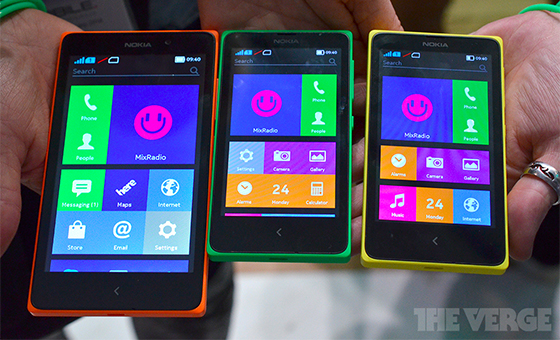
Nearly eight months after its original announcement, Microsoft has completed its deal to purchase Nokia's devices and services unit today. Microsoft will pay €3.79 billion for Nokia's phone making business, plus another €1.65 billion to license its portfolio of patents. That's a total of around €5.44 billion (around $7.2 billion), a lot less than the $8.5 billion Microsoft paid for Skype back in 2011. Nokia expects the total transaction price will be "slightly higher," and the company plans to provide full details next week during its financial results. The deal sees Microsoft take control of more than 90 percent of all Windows Phones with Nokia's Lumia lineup, and the company will also acquire the low-end Asha brand, Android-based Nokia X handsets, and feature phones. The Redmond-based software maker will now morph into a hardware maker responsible for shipping more than 200 million handsets a year with an additional 25,000 employees moving across from Nokia.


Welcome to Microsoft Mobile

Microsoft is planning to use the "Microsoft Mobile" moniker for the Nokia phone business, running it as a separate subsidiary where the vast majority of employees making the switch won't be making the physical move to Redmond. It's a significant acquisition for Microsoft and it's clear the company wants to keep the incoming Nokia business slightly separate before it can tackle the complex task of fully integrating its new phone making skills into the firm. To highlight that complexity, Microsoft CFO Amy Hood admitted on the company's Q3 earnings call yesterday that deal closure "is about four months later than the deal economics that we outlined in September." Microsoft was clearly aiming for January, and even publicly committed to completing by March, but regulatory approvals and other issues pushed the deal back. As a result, the original deal had Microsoft acquiring Nokia’s Korean manufacturing facility and an Indian handset plant, but neither will be fully acquired. An ongoing tax dispute means Nokia will continue to operate its Indian manufacturing plant on a contract to Microsoft.

Elopnadella

The manufacturing alterations are just a piece of a giant puzzle that Microsoft will now have to piece together. Microsoft is taking control of the Nokia.com domain and social media accounts for up to a year to ease the transition, alongside the huge phone making business. Nokia will still exist, but it now plans to focus on three core technologies: NSN (its network infrastructure) HERE (its maps and location-based services); and Advanced Technologies (a licensing and development arm). Microsoft will pay Nokia for a four-year license of the HERE services, but overall Nokia will be a much smaller company. The "Asha" and "Lumia" trademarks will transfer to Microsoft, but the "Nokia" mark will remain property of the Finnish company, and may only be used on feature phones under a 10-year license agreement. Nokia, as it exists today, is now barred from using the Nokia brand on any mobile devices at all until December 31st, 2015. Any future Windows Phones built by Microsoft will now be Microsoft-branded.

What does Microsoft do with millions of phones not running Windows?

Nokia sold nearly 251 million handsets last year, a mixture of feature phones and smartphones. While the Lumia lineup of Windows Phones only accounted for 30 million of that 251 million, Microsoft now has to plan and manage how it handles the millions of other devices that Nokia produces that do not run Windows Phone. That's a mixture of Asha handsets, feature phones, and Nokia's new Android-based X range. It's a big worldwide business that places Nokia in second place behind Samsung in the top mobile phone manufacturers. Microsoft is now the world's second largest phone manufacturer by sales.

Nokiaxfamilyhandson

A tricky balance between making Windows Phone software and hardware

Nokia's Android handsets are the most intriguing part of the deal, as they shed some light on how Microsoft might approach the messy and complex nature of shipping devices that don't run the company's Windows software. The Nokia X introduces a new "forked" version of Android that’s akin to what Amazon does with its Kindle Fire line, but it also includes a Windows Phone-like UI and an Android store that's separate to Google Play. Microsoft has the chance to control another app store, but also a solid opportunity to push its own cloud-based services. OneDrive, Outlook, and Skype are all preinstalled on Nokia X handsets, and Bing is the default search engine. Microsoft CEO Satya Nadella is taking a "cloud first, mobile first" approach, and the Nokia X or Office on iPad are good examples of how Microsoft can leverage platforms outside of Windows to push and sell services. "The feature phone product family coming to Microsoft will start to have more of the Microsoft services shipped on those phones right out of the gate." admits Microsoft's Tom Gibbons, the corporate vice president who is responsible for the Nokia integration.

Perhaps the biggest challenge Microsoft faces with its Nokia deal is the risk to Windows Phone. Microsoft is now in a rather unique position dominating Windows Phone hardware, while also producing the software that runs on rival devices from phone manufacturers like Samsung and HTC. Microsoft is desperately trying to convince other phone makers to use Windows Phone, and the company recently made the software license free to encourage adoption. Windows Phone 8.1, the latest software update, includes some changes designed to allow phone makers to easily reuse Android designs with on-screen software buttons and better chipset support.

The big risk in all of this is that Microsoft will have to balance out the priorities of shipping its own hardware to compete with its own licensees, while still creating a successful platform. Microsoft could be the rare exception that manages this well, but Apple failed with the original Mac and the Newton, Palm failed with Palm OS, and Nokia itself struggled with Symbian. Google's experiment with making its own Android phones resulted in the search giant selling Motorola to Lenovo for $2.91 billion, less than two years after paying $12.5 billion to acquire it.

Lumiavssurface

Surface or Lumia? Microsoft has to decide

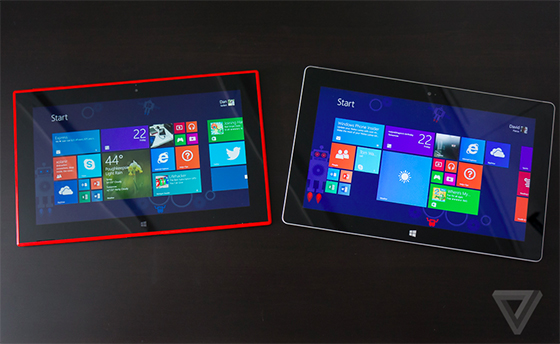
Regardless of how Microsoft handles the tricky balance of making the phones and licensing the software, there's a number of questions that still remain largely unanswered. Former Microsoft CEO Steve Ballmer outlined a "devices and services" plan for the company which included the big Surface bet. While Microsoft has experimented with hardware for years, it has never competed directly with PC makers until it unveiled its Surface tablets. Former Nokia CEO Stephen Elop returns to Microsoft and will take control of all hardware projects, including Lumia, Surface, and Xbox. Nokia has released one Lumia tablet running Windows RT, so Microsoft is also tasked with figuring out its tablet strategy once again. Does the company opt for Nokia's Lumia tablet design or Surface? It's a question Microsoft has not yet answered. Likewise, it's not clear what exact branding will be used on the company's Windows Phones going forwards.

Nokia and Microsoft have confirmed the close, but Microsoft has not yet provided any details on the full plan for how it's going to handle the integration of Nokia yet. Stephen Elop plans to answer questions on Monday, but for now he says Nokia's phone business has to "not only evolve to fit into Microsoft in general, but into an evolving Microsoft." Skype's integration into Microsoft was, and still is, a rather a slow process that has kept it largely separate from the software maker. Hopefully the collaboration means improved Windows Phone software and hardware in the future, something that Nokia and Microsoft had been working on together as separate companies until now. Whatever the deal brings, a big part of Microsoft's "mobile first" strategy is focused on Nokia's assets. Microsoft can't afford to be slow with its latest acquisition and risk Windows Phone's growth and sales numbers. Nokia might be over as a phone manufacturer, but Microsoft Mobile lives on and Windows Phone's future relies on it.

27 Apr 04:00

Saudi Arabia cracking down on local YouTube producers

by Steve Dent

Saudi Arabia's youngish population isn't crazy about local TV, so they've naturally turned to a substitute: YouTube. As a matter of fact, the country features three times the per-capita viewing as the US, to the point that Google reps conducted a roadshow teaching local producers how to make money. But according to the WSJ, authorities there aren't crazy about all that since they have no control over what gets posted on the "broadcast yourself" site. As a result, the kingdom is planning to regulate content produced in the country, with guidelines on alcohol, nudity and of course, wanton "drifting" videos (as shown below). It likely boils down to "security," though, as the nation has previously detained producers critical of the royal family. And that, unfortunately, is a movie we've seen before.

Filed under: Home Entertainment, Internet, Google

Comments

Source: WSJ

27 Apr 03:59

Saudi Arabia joins the killer drone arms race

by Russell Brandom

Last week, Saudi Arabia bought its first drone fleet, according to a dispatch from Tactical Reports. Saudi Crown Prince Salman met with Chinese General Wang Guanzhong to sign a contract for a shipment of Chinese Wing Loong drones, also known as Pterodactyls. The drones that make up the shipment are designed to mimic America's Predator drone, with surveillance capabilities and enough lift to carry two matched air-to-ground missiles.


Drones are available to whoever can pay for them

If the report is true, it means Saudi Arabia may have joined an exclusive club, one of the few nations with armed, unmanned aircraft. It's a group that, to date, includes just the US, Britain, Israel, China, and (depending who you ask) Iran — but beyond those countries, the capability is increasingly available to whoever can pay for it. At the Singapore Air Show earlier this year, both Israel and China were showing off their wares to would-be clients, including the Pterodactyl drone named in the report, and you could find similar displays at dozens of other air shows. With American counterterrorism efforts providing an ongoing test of how valuable the machines can be, there are lots of countries willing to buy.

"The American monopoly on drones is over."

The US is still responsible for the vast majority of drone strikes, but that may have more to do with politics than capability. A GAO report from 2012 found that more than 75 countries have some form of drone system. Most are unarmed but some, like the systems used in Australia, Japan, and Singapore, could be retrofitted for military purpose. More importantly, the US’ use of drones — more than 50 strikes in 2013 alone — seems to have whetted a global appetite for combat drones. "If you think of this as part of a broader trend of the proliferation of military robotics, then the idea that we were going to have a monopoly on this kind of technology was always a bit far-fetched," says University of Pennsylvania political scientist Michael Horowitz. "The American monopoly on drones is over and probably never really existed."

Israel exported $4.6 billion in drone systems over seven years

International trade barriers have slowed down the spread, but they haven’t stopped it. For US companies, combat drones are controlled under the same agreement as cruise missiles, through an association called the Missile Technology Control Regime. But China and Israel aren't part of the group, and the two countries have begun aggressively marketing drone systems to outsiders eager to keep up with US capabilities. One report from the consulting firm Frost & Sullivan estimated that Israel had exported $4.6 billion in drone systems between 2005 and 2012.

Experts also say Saudi Arabia has previously demonstrated both the interest and the budget for this kind of purchase. "Saudi Arabia and smaller countries like the UAE are trying to get their hands on whatever they can, and the US has pretty restrictive export policies," says Cornell University professor Sarah Kreps, who studies drone proliferation. The result leaves China as one of the only sources available in town.

"Saudi Arabia and...the UAE are trying to get their hands on whatever they can."

One of the biggest questions is whether the new generation of foreign drones can match US capabilities. "We don't know at all about the quality of the pterodactyl," Kreps cautions, "these aren't combat-tested." Since unmanned aircraft rely so heavily on satellite and communications infrastructure, it’s hard to tell from the craft alone how well it will perform in the field. The Pterodactyl is also typically sold for a fraction of the price of the Predator, which has only fueled skepticism.

But even if China needs help to bring its drones up to US standards, that expertise may not be hard to find. UAVs are built on mostly commercial technology, drawing from the robotics and aviation industries. That’s much harder to keep under wraps than military tech like warheads or missiles. As long as there’s a market, there’ll be an incentive to build cheaper and more powerful drones, and the club of drone-armed countries will continue to grow. As Horowitz puts it, "What we know about the history of military technology suggests it will be really difficult to keep a lid on this."

27 Apr 03:55

Construction workers unearth legendary cache of Atari games in New Mexico desert

by Dante D'Orazio

According to urban legend, a massive stockpile of Atari gear — including truckloads of the notoriously awful game E.T. The Extra-Terrestrial — has laid buried in a New Mexico landfill for over thirty years. Today, that story is no longer a myth. Construction crews have uncovered copies of the Atari 2600 game at a landfill deep in the New Mexico desert, near the city of Alamogordo.

Back during the so-called video game crash of 1983, a struggling Atari was stuck with truckloads of the game and other unsold hardware. With little recourse and a crashing interest in video games in North America, the company decided to dump its excess merchandise into a landfill, according to reports at the time. The story was never confirmed, however, and it's carried on as a legendary tale from a time when video games were near worthless. It reportedly cost Atari millions to get the rights to produce a video game tie-in to the incredibly successful Steven Spielberg film, but the resulting E.T. game was a massive flop and it's considered one of the worst titles of all time.

Today's dig became a reality thanks to an upcoming documentary, produced by Microsoft's Xbox Entertainment Studios. The documentary, which will focus on the changing landscape of the video game industry, is expected to come out next year, and it is part of a broader push by Microsoft to produce original video content for Xbox 360 and Xbox One owners. Its biggest project is a live-action Halo TV series connected to Steven Spielberg.

Looks like ET had some company here in New Mexico. Still in shrink wrap! pic.twitter.com/BNjKyVVcrN

— Larry Hryb (@majornelson) April 26, 2014

Here it is up close - the very first ET cartridge exhumed after 30 years pic.twitter.com/nb8tv33w8F

— Larry Hryb (@majornelson) April 26, 2014
25 Apr 17:15

Saudi Arabia joins the killer drone arms race

by Russell Brandom

Last week, Saudi Arabia bought its first drone fleet, according to a dispatch from Tactical Reports. Saudi Crown Prince Salman met with Chinese General Wang Guanzhong to sign a contract for a shipment of Chinese Wing Loong drones, also known as Pterodactyls. The drones that make up the shipment are designed to mimic America's Predator drone, with surveillance capabilities and enough lift to carry two matched air-to-ground missiles.

Continue reading…

25 Apr 17:15

Photo


25 Apr 15:31

[Deal Alert] Security App Cerberus Is Three Years Old Today, Celebrating With Free Licenses For One Day Only (Plus A New Feature)

by Ryan Whitwam
Yousef Alnafjan

Every Android user should have this. Seriously.

Tphotohe Android Device Manager might get the basics taken care of, but Cerberus goes a few steps farther. It's a powerful security suite with features like SIM locking, device alarms, remote lock, remote wipe, remote picture taking, and location tracking. It would usually cost you €2.99 (about $4) for a lifetime license, but it's free for the next day in celebration of the app's third birthday.

cerberus

Cerberus has robust functionality on standard devices, but it can also take advantage of root access to move to the system partition so it persists between device resets.

Done With This Post? You Might Also Like These:

[Deal Alert] Security App Cerberus Is Three Years Old Today, Celebrating With Free Licenses For One Day Only (Plus A New Feature) was written by the awesome team at Android Police.


25 Apr 08:39

Old Files

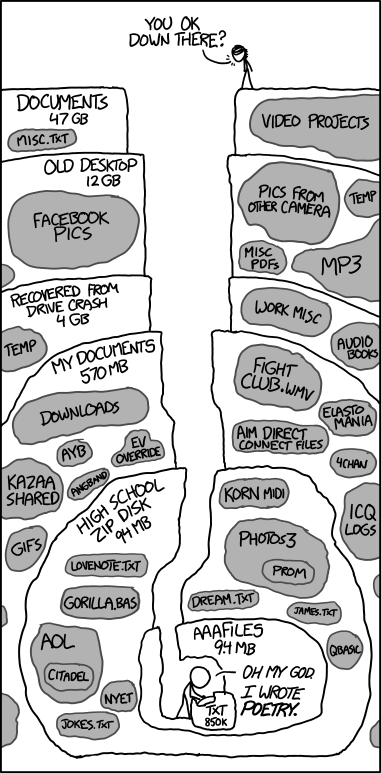
Wow, ANIMORPHS-NOVEL.RTF? Just gonna, uh, go through and delete that from all my archives real quick.
24 Apr 21:32

Quote Of The Day - Cliven Bundy

by Joe Jervis
“I want to tell you one more thing I know about the Negro. In front of that government house the door was usually open and the older people and the kids — and there is always at least a half a dozen people sitting on the porch — they didn’t have nothing to do. They didn’t have nothing for their kids to do. They didn’t have nothing for their young girls to do. And because they were basically on government subsidy, so now what do they do? They abort their young children, they put their young men in jail, because they never learned how to pick cotton. And I’ve often wondered, are they better off as slaves, picking cotton and having a family life and doing things, or are they better off under government subsidy? They didn’t get no more freedom. They got less freedom." - Nevada rancher Cliven Bundy, who is the current hero of the Tea Party for refusing to pay federal grazing fees.

Rand Paul, Ted Cruz, Sean Hannity, and Todd Starnes have all hailed Bundy for refusing to recognize federal authority over the land where his cattle have grazed for decades. Media Matters writes about Starnes' defense of Bundy:
During an appearance today on the radio program of Republican strategist Alice Stewart, Fox's Todd Starnes championed Bundy as an example of Americans "saying enough is enough" with the federal government. "We do know that the feds returned some of the cattle that they had taken from the Bundy Ranch. What I find interesting, though, Alice, is don't they still have laws on the books about cattle rustling out in Nevada?" Starnes said. "Back in the day, they used to string folks up for stealing cattle." Starnes later claimed that the Bundy incident shows that "Americans have really reached a boiling point here" and Americans have finally said, 'You know what? We're not going to stand by and let the Constitution be tramped.'" He also took the opportunity to link the situation to the 2012 attacks in Benghazi, Libya, stating: "Look at all the government firepower that was out there at that ranch. They had more guns there than they did at the consulate in Benghazi ... if only Ambassador [Christopher] Stevens had been a protected tortoise."
UPDATE: The backpedaling has begun. Sen. Rand Paul: "His remarks on race are offensive and I wholeheartedly disagree with him." Spokesman for Sen. Dan Heller: "Senator Heller completely disagrees with Mr. Bundy’s appalling and racist statements, and condemns them in the most strenuous way."
24 Apr 16:47

Google Glass now available to anyone, may be prepping for public launch (update: not so much...)

by Terrence O'Brien

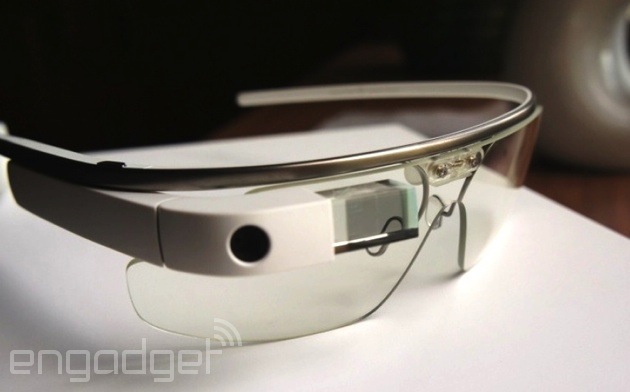
Google offered Glass to the public as part of a one day sale not long ago. Now it seems that anyone can order one again without an invite. There's been no announcement so far, no fan fair -- a few Redditors just happened to discover that you can head straight to the order page and add one to your cart. We've tried it from multiple accounts that we can confirm did not sign up for the Explorer program, so it appears that Glass is legitimately available to anyone with a Google account. We've reached out to Mountain View for comment and we'll let you know as soon as we hear back. In the meantime you can go order your own Explorer Edition unit now. So long as you're comfortable coughing up the $1,500 asking price, of course.

Update: Well, it appears that Glass is not available to everyone after all. Google just never pulled the URL for the shop down following the April 15th sale. The company told Android Community it would be pulling the site down soon. And, sadly, if it seemed like you successfully put in an order today chances are that won't be honored. According to the statement customers not already "in the pipeline" won't be getting Glass.

Filed under: Wearables, Google

Comments

Via: Google Glass Geeks

Source: Reddit, Google Glass shop

24 Apr 16:42

This Super Mario 64 speedrun is darn impressive

by Eddie Makuch

How long did it take you to collect all 120 stars in Super Mario 64? Surely longer than one speedy gamer, who this week posted a video of what appears to be a world record speedrun.

Watch the video below as Twitch user Siglemic completes the beloved 1996 Nintendo 64 game in an astonishly quick 1:43:54. He's using a standard Nintendo 64 controller and you'll notice it's the Japanese version. That's because it has a 2.7 second advantage, he says.

Siglemic makes use of advanced techniques like backwards long jumps, jumpdives, and lava boosts, but he assures us that this video is not a tool-assisted speedrun. He also points out that he's playing on a Nintendo 64 itself, not an emulated version.

In all, Siglemic says he's been playing Super Mario 64 for three years and has racked up around 5,000 hours of playtime so far. Watch and be amazed.

Eddie Makuch is a news editor at GameSpot, and you can follow him on Twitter @EddieMakuch
Got a news tip or want to contact us directly? Email news@gamespot.com
24 Apr 10:53

Dragon Age: Inquisition Gameplay Trailer, Launching October 7

by noreply@blogger.com (Zak Islam)


24 Apr 06:21

Made it: Mark Zuckerberg joins Madame Tussauds

by Mat Smith

A net worth of $27 billion. Doesn't wear socks.

[Image: Mashable/Kurt Wagner]

Filed under: Internet, Facebook

Comments

Source: Mashable

24 Apr 04:26

You might also like this story about weaponized clickbait

by Casey Newton

Reading news online over the past year, I came to realize that more or less every story now includes a beautiful woman. Tucked into modules with names like "around the web" or "you might like," there she is, demonstrating her bosom or backside or pearly-white smile. Often she is a celebrity, talking about weight loss, filing a lawsuit, or collapsing onstage. Other times she is a fitness guru, or a fashion expert, or (in at least one case) a "former pole vaulter" who is "still smoking HOT." The women of "Around the Web" are ubiquitous, they are alluring, and they only want one thing — your click.


To finish an article on the web today is to immediately enter the desperate, and strangely tedious, world of "content discovery." Eager to keep visitors on their websites for as long as possible, publishers have long built widgets filled with links for their readers to consider. But increasingly, those links are pointing away from their own sites to titillating items from other publishers, many of whom have something to sell. Readers are clicking, publishers are reaping millions, and the startups that power these modules are profitable and on the cusp of becoming public companies. But there’s reason to believe "Around the Web"-style links won’t be with us forever.

Very interesting real estate

Over the past few years, paid links like these have popped up on some of the biggest sites of the web: CNN, Fox News, MSNBC, USA Today, and Huffington Post, to name a few. And those are just the sites that use Outbrain and Taboola, the leading players in the field. Outbrain, an eight-year-old company that has raised $99 million, is reportedly in the early stages of planning an initial public offering of its stock. Taboola, which began as a way of recommending videos and has since expanded into web links, has raised $40 million and says it is profitable. "The way these started was with this realization that people were more likely to click on a ‘related story’ than a banner ad — even if it’s advertising content," says Shane Snow, vice president of content at Contently, which among other things helps brands develop advertorials. "So that became very interesting real estate."

But as "Around the Web"-style widgets have become ubiquitous, their style has been widely imitated, so that the average reader has no idea what they might find when they follow a link. Clicking on that beautiful woman might lead you to an interesting story, to a thinly disguised advertisement, or to an infinitely scrolling landing page filled with weaponized clickbait, designed to get you to open as many tabs as possible. Companies like Outbrain use cookies to track your clicks over time in an effort to learn your preferences and serve you stories that you’ll actually like. It also maintains editorial standards designed to keep pure advertisements out of its modules. But as less scrupulous competitors ape their style, readers are likely to start tuning out article recommendations in the same way they learned to tune out banner ads. "It’s our number one challenge," says Lisa LaCour, vice president of global marketing at Outbrain.

So what if the Around the Web girls all went away? Would anyone really miss them?

15 HOT PUBLISHERS WHO ARE HORNY FOR CASH

Publishers, for their part, have a vested interest in making sure the girls stick around. There’s a simple reason for the sudden ubiquity of the Around the Web link: cash. Outbrain, Taboola, and their peers have a simple pitch for the sites they work with: add our modules to your site for free, with just a few lines of code, and start making money immediately from the traffic you deliver to paying partners. "Our whole pitch to publishers is a no-brainer," LaCour says. Adam Singolda, co-founder and CEO of Taboola, says top journalistic outlets are making more than $10 million a year adding its modules to their sites — significant revenues in an industry still struggling to find its footing online.

150 billion links a month

And people are clicking. Fainthearted readers may still feel disoriented finishing a smart piece of reporting only to encounter "15 hot celebs who dress too scandalously," as I did recently, but we seem to be in the minority. Singolda says that 70 percent of people who clicked on a Taboola link this month clicked on at least one other Taboola link the past 90 days, which he takes as an encouraging sign. Then there’s the sheer scale of the clicking: Taboola says it serves serves 3.5 billion recommendations a month, to 300 million people. Outbrain is used on more than 100,000 sites, and recommends 150 billion links a month.

But publishers don’t seem eager to to discuss their adventures in content discovery. I asked Outbrain and Taboola to speak with one of their publishing partners about their growing enthusiasm for recommended links, but all of them declined. It seems possible that publishers themselves remain unconvinced of the long-term value of the Around the Web girls. "Our view of them is that these guys are the Groupons of publishing — it’s a really good short-term hack," says Ryan Singel, co-founder of Contextly, which sells module technology to publishers that recommend only internal links. "Sending people off your site for three cents a click to sites you can’t control — that’s not what is going to work in the long term. The future of native advertising isn’t going to be sending people off your site, it’s going to be having that content living on your site."

21 CELEBS WHO BROWSE DIFFERENTLY THAN THEY USED TO

The Around the Web folks take another view. Once upon a time, a reader might come to a site like the Huffington Post through its home page and scroll down hunting for links. These days, that reader is much more likely to come to an individual story page through a link from email, social media, or a search engine. In that world, they say, publishers have to advertise their best stories on other publishers’ sites. "People are navigating the web site to site now, and not up and down," says Outbrain’s LaCour. "We’ve got to get better at personalization, but what we want to say is, ‘Hey Casey, we know what you want. We know about you, we know about your reading habits, we know what you want to consume. So here are our recommendations for what we think is best.’"

The shrill seductions of the supermarket tabloid

It’s a pitch that would be more persuasive had one of these recommendations ever showed me something I wanted to see. While chatting with LaCour, I pulled up a page at random on the website of New York Magazine and read her Outbrain’s suggested stories: the aforementioned hot pole vaulter, "celebs who fell in love with people who didn’t love them back," and "22 ‘used to be’ hot celebs who aren’t anymore." The superior journalism and refined editorial sensibility of New York had given way to the shrill seductions of the supermarket tabloid.

LaCour fired back with the recommendations OutBrain had given her, and they were much better targeted: stories about New York, about being a mom, and about real estate — all topics close to her heart, and some presumably from genuine publications. The secret, LaCour says, is that she clicked on enough Outbrain links to teach its algorithms what she likes. But who has the time or inclination to teach a widget?

29 WAYS THAT CLICKBAIT IS KILLING ITSELF

Meanwhile, the success of companies like Outbrain have led to proliferation of less savory recommendation engines. Companies like Hexagram and Crowd Ignite make widgets where the recommended links lead not to the stories you expected but to landing pages full of other stories, with a goal of getting you to stay and click through multiple stories before you leave. These so-called link exchanges don’t always involve direct payment — they’re just a way for publishers to attract new visitors.

But chances are you won’t know what you’re getting before you click. Today, a single-digit percentage of readers will click through a link in an "Around the Web" module, compared to 0.1 percent who will click on a traditional banner ad. But banner ads once had high clickthrough rates themselves. Over time, readers learned that banners rarely led to anything good. At Outbrain and companies like it, there’s an existential fear that their own products could suffer a similar fate. Speaking of the company’s ideal customer, LaCour says: "We want to make sure that she’s happy and she’s delighted. If we as an industry continue to try to clickbait her, and she’s not happy after she clicked, then we’re all screwed." (LaCour says Outbrain strives to recommend only high-quality links.)

"How do you get increases in revenue? You show babes."

But it seems just as likely that a handful of rotten apples will eventually spoil the bunch. "The problem is, you make more money when you show a risqué link," says Reggie Renner, co-founder and CEO of ZergNet, a kind of link exchange where human editors select all of the recommendations. "You make more money, you get more short-term benefit. When it’s time to IPO, you need to show increases in revenue. And how do you get increases in revenue? You show babes."

Notably, everyone I interviewed described their companies not as link purveyors but as technology platforms that will prove invaluable to publishers over time. The modules are just the beginning, they insist — in the future, the data they have collected about readers’ habits can be turned into all sorts of useful products and services for their publisher clients.

In the meantime, though, here are some beautiful women to look at. They’d appreciate your click.

23 Apr 15:03

Edit image text with useful Chrome extension

by Cassandra Khaw
Yousef Alnafjan

What black magic is this?

Meme generation might never be the same again. Project Naptha is a browser extension that lets users select, copy, edit and translate text from any image — so long as it is under 30 degrees of rotation. The plug-in runs on the Stroke Width Transform algorithm Microsoft Research invented for text detection in natural scenes. It also provides the option of using Google's open-source OCR engine Tesseract when necessary. Project Naptha utilizes a technique called "inpainting" to reconstruct images after they've been altered by the extension. According to the website, this entails using an algorithm that fills in the space previously occupied by text with colors from the surrounding area. Right now, the program is only compatible with Google Chrome but a Firefox version may be released in a few weeks.

23 Apr 14:46

Print-only interactive visualization by The Economist

23 Apr 14:06

Amazon bringing older HBO shows to Prime Instant Video members for free

by Daniel Cooper

http://o.aolcdn.com/hss/storage/midas/65a2886361dc3602332624de6a2ec21a/200064066/claydavis_shiiiiiiiit_630pxhedimg.jpg

HBO's always been stingy about who gets to stream its cherished TV assets but on May 21st, some of the network's vintage material will get a wider release. The company has signed a deal with Amazon to bring its classic shows, including The Sopranos, The Wire and Deadwood to Prime Instant Video members for free. If you're waiting for newer fare -- by which we mean Game of Thrones -- you'll be disappointed, but seasons of HBO's other new shows, like True Blood and Veep will arrive roughly three years after their first broadcast. As part of the deal, HBO Go will launch as an app on Amazon's Fire TV set-top box, which is due to land at some point towards the end of the year. In the meantime, however, you can prepare yourself for a May binge-a-thon by buying in plenty of snacks and bottled water.

Filed under: Home Entertainment, HD, Amazon

Comments

Source: Amazon

21 Apr 18:36

The Game Boy is now 25 years old -- What's your favorite memory?

by Eddie Makuch
Yousef Alnafjan

The greatest brick ever made

Nintendo released the original Game Boy on April 21, 1989, meaning the beloved brick-shaped portable device is now a quarter-century old.

According to the latest official numbers, Nintendo has sold over 118.69 million units (including Game Boy Pocket and Game Boy Color) to date, along with 501.11 million pieces of software.

The original Game Boy came bundled with Tetris. It wasn't the first portable gaming device on the market, but it is considered to be the first to gain mainstream appeal.

Nintendo would later release the Game Boy Advance in 2001, which would go on to sell over 81.5 million units worldwide. The company's success in the portable market continues, as the original DS line has shifted over 153 million units, while 3DS sales currently stand at nearly 43 million systems.

Did you have an original Game Boy? What's your favorite memory of the device?

Eddie Makuch is a news editor at GameSpot, and you can follow him on Twitter @EddieMakuch
Got a news tip or want to contact us directly? Email news@gamespot.com
21 Apr 18:35

Did lead in gasoline cause a decades-long crime wave?

by Arielle Duhaime-Ross
Yousef Alnafjan

Coincidentally, the latest episode of Cosmos tells the story of how leaded gasoline was banned, thanks to the man who calculated the age of the Earth (using the lead in meteorite fragments)

The presence of lead in the environment — a subject discussed in Neil deGrasse Tyson's show Cosmos last night — has been linked to a number of health problems, including kidney damage, anemia, and various forms of cognitive deficiencies. But the BBC reports that lead might also be to blame for an increase in violent crime following its introduction in petrol in the 1920s. Indeed, people exposed to lead tend to make poor decisions and to become more aggressive over time. And, according to various economists, the incidence of violent crime during the 20th century appears to correlate with the rise and fall of lead in gasoline. Unfortunately, this link is hard to validate, so the idea is speculative. Regardless, the tale of how various economists came to this conclusion — and why some researchers dismiss the lead-crime hypothesis entirely — is worth checking out. Read the full story over at the BBC.


21 Apr 15:35

Xperia Z2 and Z2 Tablet review: One Sony, two devices

by Vlad Savov

After years of extensive testing, I have determined the perfect screen size for watching YouTube videos in bed. It's just over 5 inches. Anything larger and you have to hold the device too far from that ideal chest-perching point, anything smaller and you might as well not bother. Obligingly, Sony has released a new phone designed specifically for my needs. The Xperia Z2 has a 5.2-inch screen, a fast processor, a long-lasting battery, and front-facing stereo speakers.

That is, of course,...

Continue reading…

21 Apr 12:18

Inside Microsoft's '90s chat war with AOL

by Tom Warren

Microsoft might have killed off its Messenger service in favor of Skype recently, but back in 1999 it was the centerpiece of a heated war between the software giant and AOL. At the time, Microsoft had just introduced its MSN Messenger Service as a direct rival to AOL's popular AIM instant messenger. David Auerbach, a former Microsoft engineer who worked directly on MSN Messenger, recounts his unusual role in a chat war with AOL. Auerbach had reverse-engineered AOL's chat protocol to allow MSN Messenger to sign into AIM, a process that AOL wasn't happy with when Microsoft first released its instant messaging client in July 1999.

AOL kept blocking MSN Messenger from accessing AIM, and Auerbach persisted at Microsoft by creating new ways to work around the blocks put in place. The battle resulted in AOL using a security bug in its own AIM software to prevent Microsoft from accessing its AIM service, a move that forced Auerbach and his coworkers to give up on any dreams of interoperability between AIM and MSN Messenger, but not before an unknown Microsoft employee posed as software consultant to try and get security experts to detail the AOL flaw. Auerbach's recount is a fascinating look at an early war over instant messaging before it became a daily part of the internet.

21 Apr 05:57

How a toy designer dreamed up the geek-friendly AeroPress coffee maker

by Terrence O'Brien

The AeroPress is a deceptively simple device -- it's basically a coffee syringe. The quick brewing coffee maker sits somewhere between an espresso machine and a French press. You pour hot water over your grounds then force the water through them with a plunger. What makes the AeroPress unique is how quickly it can spit out a high quality cup of Joe. The entire process takes roughly one to two minutes and at the end you've got a heavily concentrated, smooth mug of coffee. But unlike other modern methods for making a hot caffeinated beverage, the AeroPress was dreamed up by an engineer who spent a good chunk of his career making toys and electronics.

After designing flying discs for Parker Brothers, Alan Adler turned his attention to coffee following a conversation with a friend's wife. The two were discussing how hard it was to brew a single cup of decent coffee using a drip machine. That was in 2004. By the following year Adler had his prototype -- a pair of plastic cylinders that fit together to create an air-tight seal. By forcing the hot water through the grounds at a high pressure, Adler was able to reduce the steep time to as little as 10 seconds (though many will wait up to 30 seconds before pressing the plunger).

The whole setup might seem overly simplistic, but it has inspired an entire subculture dedicated to devising the best ways to brew using an AeroPress. There's even a World Championship where competitors battle it out to see who can make the best mug of Joe using the device. Fast Company has an interview with the inventor and you can see Tested's method for brewing with the AeroPress below.

Image via the Department of Coffee and Social Affairs.

Filed under: Household

Comments

Source: Fast Company

20 Apr 18:05

Google now lets you access your computer through Android with Chrome Remote Desktop

by Adi Robertson

Google's Chrome Remote Desktop service, first launched in 2011, is coming to mobile. Today, the company released an Android app that will let users access their desktop computers, whether through a Chrome web app for Mac, PC, and Linux or through Chrome OS itself. Once you've set up your primary machine, you can launch the Android app to connect to it. GigaOm reported a few days ago that the app was in beta testing, but it's now available to anyone with an Android phone or tablet, though doing much with the former will be a little cramped. There's no precise date given for an iOS version, but Google says it will be coming later this year.

Since releasing Chrome Remote Desktop, Google has increasingly added ways to connect desktop computers with other devices. Hangouts got a remote desktop feature in mid-2013, and the Chromecast dongle pulls Chrome tabs onto a TV with a minimum of hassle. Outside its ecosystem, other companies have offered similar apps, including Microsoft, which added native remote desktop support in Windows 8 and released apps for both iOS and Android in late 2013.

19 Apr 19:39

Can We Build a Gaming PC on a Console Budget?

by GameSpot Staff
Yousef Alnafjan

Not bad, but if you factor in the required annual subscriptions on PS4/Xbone, the generally cheaper prices for new PC games, and the amazing Steam/Humble Bundle sales.. you can easily justify paying a bit more to buy a PC that's way better than what's in this article.

Start here: http://bit.ly/GAFPC2014

There's no debating that a souped-up gaming PC will outperform an Xbox One or PlayStation 4 any day of the week, but it'll also cost you a lot more at checkout. However, what about a gaming PC that isn't top of the line, say, one that was built for $550?

This is the question we put to the test: could we build a gaming PC from scratch that could provide a gameplay and visual experience on par with a next-gen console, for around the same price as a next-gen console? While the PlayStation 4 is substantially cheaper, we wanted to make this exercise as competitive as possible, and that meant allowing ourselves the luxury of a slightly higher budget. Our own Mark Walton and Peter Brown each built one machine; one based on Intel and Nvidia chipsets, and the other on AMD hardware. Then, we put them to the test to see if Mark and Peter used their budgets wisely or if they would have been better off buying a console for great graphics on a fixed budget. The text on this page covers the basics of our test, but be sure to check out the videos below for a more in-depth look at Mark's and Peter's process and results.

Rules and Goals

We aimed to stay within a budget of $550--roughly the most you can pay for an Xbox One in North America. In addition to acquiring the bare essentials for a PC--CPU, GPU, RAM, motherboard, power supply, computer case, and hard drive--each editor had to include the cost of a mouse, a keyboard, and a Windows license. No piracy or preexisting parts allowed!

The other goal was to build a machine that performs as well as or better than an Xbox One or PlayStation 4 in cross-platform games. The list of benchmark candidates included Assassin's Creed IV: Black Flag, Battlefield 4, Thief, and Titanfall.

Mark Walton - AMD Gaming PC

Mark Walton's AMD PC

Gaming PCs live and die by the GPU and CPU. AMD's budget offerings are a far better value for the money than either Intel's or Nvidia's. For less than the price of the cheapest Ivy Bridge-based Core processor from Intel, you can pick up six-core chips from AMD that happily outperform it. The same goes for AMD's GPUs, which offer excellent performance for less than the Nvidia equivalent.

My plan was simple: stick as much money into the CPU and GPU as possible, and work with what's left--and if I could make the computer look half decent too, all the better.

Component Type Price Store
CPU AMD FX-6300 Vishera 3.5GHz $109.00 Amazon
Motherboard ASUS M5A78L-M/USB3 AM3+ AMD 760G $48.49 Newegg
Case Fractal Core 1000 $39.99 Newegg
PSU EVGA 100-W1-500-KR 500W $44.99 Newegg
GPU PowerColor AX7850 2GBD5-DH Radeon HD 7850 (open box item) $107.00 Newegg
RAM HyperX XMP Blu Series 4GB DDR3 1600 $40.00 Newegg
Storage Seagate Barracuda ST500DM002 500GB 7200 RPM 16MB $50.95 Amazon
OS Windows 8 $70.00 eBay
Key/Mouse V7 Standard PS/2 Keyboard and Mouse Combo $10.19 Amazon
Subtotal $520.61
Sales Tax $45.55
Total $566.16

Game Settings Average Frame Rate
Assassin's Creed IV 1080p, Ultra, AA 42
Battlefield 4 1080p, High, AA 72
Battlefield 4 1080p, Ultra, MSAA 42
Thief 1080p, Ultra, AA 87
Titanfall 1080p, Very High, AA 60

Note: Click the links under "settings" to view the complete list of settings used during testing.

I was pleasantly surprised at just how well this system worked. All the games I tried hit frame rates 60fps, and--with the exception of Battlefield 4--did so at the highest settings. Rendering games 1080p60 is an achievable goal on a budget, then, as long as you're realistic about which games you'll be able to do it with, and at what settings. If you're after a bit more oomph and some peace of mind for future releases, though, spending a few extra bucks here and there will give you a big boost in performance.

More RAM is the obvious choice. It doesn't cost much to bump it up to 8GB, and the less time the PC has to spend thrashing the hard drive for a swap file the better. An extra $70 toward an R270 GPU would be a wise decision too. It's good value and overclocks extremely well, putting it firmly in the high-end GPU segment for just a fraction of the cost. There's also the option of an SSD for a more responsive feel, an aftermarket cooler for CPU overclocking, and a nicer-looking case, but they're not essential.

Peter Brown - Intel/Nvidia Gaming PC

Peter Brown's Intel/Nvidia PC

A budget of $550 is unusually small for a gaming PC, especially when the cost of an operating system is factored in. My strategy for this build was centered around a few key tactics.

First, I planned to keep the system's power draw as low as possible to save money on the cost of the power supply. I wanted to build small because smaller form factor cases and motherboards are usually cheaper overall unless they're particularly fancy. I also decided to use an unusually modest CPU. Intel makes excellent processors, but this quality isn't limited to the Core line. As long as I wasn't going to risk bottlenecking the GPU's performance, I looked for the simplest and cheapest option available. That way, I could focus on the linchpin of a gaming PC: the GPU. In this instance, I was aiming for Nvidia's Geforce GTX 750 Ti due to its great price/performance ratio.

Component Type Price Store
CPU Intel Pentium G2130 3.2 GHz $74.99 Newegg
Motherboard Biostar H61MGV3 $36.99 Newegg
Case Topower TP-1687BB-300 $34.99 Newegg
PSU 300W SFX Power Supply (included w/case) n/a Newegg
GPU EVGA GeForce GTX 750 Ti 2 GB $154.99 Newegg
RAM Team Elite 4GB (2x2GB) DDR3 1333 $39.99 Newegg
Storage Western Digital Blue 500 GB 7200 RPM 16MB $54.99 Newegg
OS Windows 8.1 64-Bit $99.99 Newegg
Key/Mouse Rosewill PS/2 Wired $12.98 Newegg
Subtotal $509.91
Sales Tax $38.24
Total $548.15

Game Settings Average Frame Rate
Assassin's Creed IV 1080p, High, FXAA 40
Battlefield 4 1080p, High, 2x MSAA 50
Thief 1080p, High, FXAA 55
Titanfall 1080p, High, No AA 50

Note: Click the links under "settings" to view the complete list of settings used during testing.

Like Mark, I was surprised how well my rig performed. I had faith that the GTX 750 Ti would hold up under light pressure, but given its partner in crime, the Pentium CPU, I presumed that I would have to dial down the in-game settings a bit more. In practice, all it took for most games to play near 60 frames per second at 1080p was to disable a few flourishes like ambient occlusion and aggressive anti-aliasing. With my $550 PC, I was able to handily outperform the Xbox One in every case, and the PlayStation 4 in most cases, which says a lot about the value of the PlayStation 4 given its lower $400 price point.

If I had had a larger budget, I would have sprung for a better CPU and a bit more RAM. My inexpensive Pentium CPU held up quite well considering that it cost only $80, but it was typically running at full speed with little to no remaining overhead. Unfortunately, given my skimpy power supply, there's little hope for tossing a better Nvidia GPU into this build down the road without other additional upgrades. In the end, with our meager budget, Mark's AMD focus gave him a slight advantage in terms of performance and upgradability.

Closing Thoughts

As it turns out, you can build a gaming PC for around the cost of an Xbox One that will outperform both next-gen consoles given the current stock of cross-platform games. You'll also enjoy a massive library that neither the PlayStation 4 nor the Xbox One will ever be able to match from a pure numbers standpoint. Plus, your PC is upgradable, and its functionality in non-gaming areas only adds to its value. AMD has an advantage when it comes to the balance of price and performance on the low end, but there's nothing stopping you from mixing and matching components from different manufacturers, which very well might be the best plan if you've got a larger budget to work with.

Keep in mind, too, that current cross-platform games on consoles perform best on a PlayStation 4, which currently sells for $100 less than an Xbox One. If you were to try to build a gaming PC for $400 to $450, our experience has taught us that you would end up with a machine that can't compete with either next-gen console. Though we both succeeded in our goal, $550 was proved quite limiting when it came to picking components.

If you had a budget of $550, which platform--PlayStation 4, Xbox One, or PC--would you choose? How would you build a gaming PC on a console-size budget? Let us know in the comments below.

17 Apr 18:46

Funny Exam Answers | 586.jpg

586.jpg
17 Apr 09:12

Call of Duty Ghosts ~ Snoop Dogg Trailer

by noreply@blogger.com (Zak Islam)
Yousef Alnafjan

"It's the coolest game in the hood, all my homies play this game"