Shared posts

27 Jan 10:19

Watch Reggie Watts build an amazing one-man band with new beatboxing app, Keezy

by Ben Popper

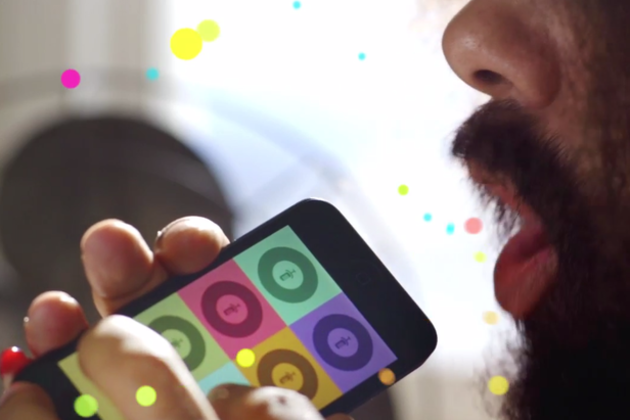
Today the mad geniuses from Elepath, the app studio created by Vimeo founder Jake Lodwick, are debuting Keezy to the public. It's a deceptively simple app. You have eight buttons, each of which can record a short sound clip. To create a clip you sing, scream, beatbox and spit into your iPhone's microphone. You mix and match the samples over one another, using the loops like a drum machine to create killer beats and melodies. A slider on-screen allows you to delete or undo individual clips.

Lodwick introduced The Verge to the app at last year's South by Southwest Festival. For months it was our favorite trick to show off at parties, resulting in hours of drunken music-making revelry, but the company kept the service in private beta...

Continue reading…

12 Nov 03:37

Sony Online Entertainment is charging $60 to alpha test a free-to-play MMO

by Ron Amadeo

The MMORPG EverQuest once had a reputation for being so addictive that it was jokingly given the nickname "EverCrack." Sony Online Entertainment (SOE) is now readying the next installment in the EverQuest franchise, EverQuest Next Landmark, and it's hoping players feel that same level of devotion to the threequel. But over the years, Sony's MMO division earned a bit of a reputation for nickel-and-diming players to death, and it looks Landmark is hitting a new low. While the released game will be free-to-play, SOE is charging players for the privilege of testing it.

EverQuest Next—the released game—is slated to have a very large collecting and building component, basically encompassing the entire feature set of Minecraft without the blocky resolution. These building features have been broken off into a separate entity, Landmark, which SOE will start alpha testing on or before February 28, 2014. Landmark isn't really a complete, monster-fighting MMO. Its goal seems to be to get the EverQuest Next game engine out to players as quickly as possible. Landmark is really an extended, long-term beta test for the real next version of EverQuest (EverQuest Next). So players aren't just paying to alpha test a new MMO, they're alpha testing the extended beta of an MMO.

How much will it cost you to get a glimpse of the next version of EverQuest before everyone else? $60. SOE is calling these early access charges the "Founder's packs," and it's $60 for alpha access or $20 for beta access. However, if you really want to drop some cash, $100 will get you alpha access, your name in the Landmark credits, and some pay-to-win items.

Read 3 remaining paragraphs | Comments


11 Nov 01:09

Why You Should Get Rid Of Spotify And Switch To Rdio

by Steve Kovach

rdio main product image

At the risk of sounding like I came from a clichéd middle class upbringing in the suburbs (disclosure: I did), one of my favorite bands of all time is Cake. 

Fifteen years ago, I made the mistake of buying one of Cake's best albums "Fashion Nugget" at Walmart. Cake's lyrics are mostly clean, but occasionally the lead singer likes to drop in an F-bomb or two. Back then, Walmart used to only sell albums with naughty words bleeped out, so my copy of "Fashion Nugget" was too PG even for my 13-year-old ears. But because you can't return an opened CD, I was stuck with a $12 album that I didn't want.

Let's fast forward to today. I haven't bought a CD since 2004. I have a bunch of music stored on an external hard drive, but that hard drive has been sitting unused in a cupboard in my entertainment center for the last two years or so. Instead, I started using Spotify almost as soon as it became available in the U.S. I'm sure many of you can tell a similar story.

On paper, Spotify was perfect for my music habits. I don't feel compelled to "own" music like I used to, and I'm more than happy to pay $10 a month to get any song whenever I want it.

But over time, Spotify's quirks started getting to me. It's search function just wasn't good. Often, I'd search for an album and get several results that looked the same. And if I wanted to listen to "Fashion Nugget," it was impossible to tell which result was the squeaky-clean, Walmartified version and which was the naughty version I wanted to listen to.

I began to have other problems with Spotify too. A few months ago, the tab for finding new releases disappeared in favor of the Discover section, which pulls in music you might want to listen to based on what your Facebook friends are listening to, what you have saved in your playlists, and a bunch of other factors. It's a nice feature, but it wasn't good or useful enough for me as a replacement for the new music section.

Finally, there was the app's design. Spotify's iPhone app made it confusing and clunky to add tracks to a playlist, or even download a full album. It simply wasn't as user friendly as I wanted it to be. The desktop app was pretty awful too. It's basically a clone of the clunky old iTunes app.

(Spotify declined to comment when I reached out.)

rdio iphone app

So, a few weeks ago I turned to rdio, a service that works almost exactly like Spotify. You still pay $10 per month for unlimited access to about 20 million songs. A lot of my techie friends had already made the switch and had encouraged me to do so.

It only took a few minutes with rdio's iPhone app to convince me to cancel my Spotify account. I haven't looked back since. Rdio is that much better. And it solves just about every gripe I had with Spotify.

First of all, rdio's iPhone app is gorgeous. In terms of design language, it felt a lot like Apple's redesigned iOS 7 operating system months before iOS 7 even launched to the public. It's simply pretty to look at, and a lot more functional than Spotify's app. For example, you can quickly sync full albums to your phone by tapping and holding down on the search result for a few seconds. 

Apparently, I wasn't the only one who thought so. I spoke with Chris Becherer, rdio's VP of product last week and he said the company received a ton of positive feedback about the app's design since iOS 7's unveiling. And Becherer knows the value of top-notch design. He used to work on Apple's iOS team on apps like Passbook, iMessage, and FaceTime.

"Our founder is a very design-forward guy," Becherer said. "When iOS 7 was first previewed in June, a few people picked up that our app already looked like it. That's sort of where the design headwinds have been blowing for some time."

Rdio's Web/desktop app (they're nearly identical) is a lot better than Spotify's. Instead of mimicking the old iTunes interface like Spotify does, rdio designed the product to make it super simple to jump into the music you want to listen to thanks to the "Heavy Rotation" section you see at launch.

And like the mobile app, it's very pretty:

rdio desktop appSearch is better too. Albums with explicit lyrics are clearly labeled "explicit," so you know exactly what you're getting. I'm 28 years old, and I don't need a music service treating me like I'm seven. Becherer said rdio's search algorithm takes a lot of factors into account, but it usually bubbles up the most popular tracks to the top of your results. For example, if you start typing "Arcade," you'll get a bunch of results for the band Arcade Fire at the top.

Finally, rdio has a great section that updates every Tuesday with new music. Unless there's some sort of special release deal with a particular album or single, you'll find all new releases from the major labels right there. You can't get that on Spotify.

In short, rdio has just about the same selection of music as Spotify for the same price. But what sets it apart is the ability to easily find what you want to listen to in a beautiful interface. That's all the reason you need to switch.

Join the conversation about this story »


11 Nov 01:08

Here's Why You Shouldn't Trust 'Trusts'

by The Economist

dollar cash money hundred laundering

Only a fool holds dirty money in his own name. The world’s financial system offers safer and friendlier ways to hide the proceeds of crime. Shell companies--those with no real operations--are one, phoney trusts and foundations are another (see "Trusts: The weak link").

Belatedly, life is getting a bit more difficult for tax evaders, money launderers and those who abet them. One big move--now backed by the British government--is to oblige limitedliability companies to give details of their real owners. This newspaper has argued in favour of such a duty: limited-liability status is a kind of public subsidy (if the firm goes bust, the shareholders are not responsible for its debts). It was never meant to be a means of concealing ownership. Yet in many places it is just that: only six of 69 jurisdictions surveyed last year by Eurodad, an anti-corruption network, required all types of firm to record beneficial-ownership information.

Spurred by complaints from the police, pressure from campaigners and public distaste for tax-dodgers, the British government wants not only to set up a proper registry of beneficial ownership, but also to make its contents public. If the detailed regime matches the promise, this will be an important breakthrough. But Britain should also coax its offshore dependencies into greater openness. Some are conscientious, others less so. Even official investigators can find it hard to get the information they need. America can do more to help, too: states such as Nevada apply scandalously little scrutiny to the identity of those forming companies. European governments are keen to collect more tax, but many have been less eager to make corporate ownership transparent.

Cleaning up corporate ownership will increase public confidence in the financial system. But it is only the start. The misuse of trusts and other non-corporate entities is also a big problem. These have proper purposes, such as managing charitable donations, ring-fencing employee pension plans, safeguarding assets for children or organising wills and bequests. But they too enjoy a legal advantage: they are a way of parking assets. That seems fine as long as the trusts pay tax on profits (just as companies do) and their beneficiaries pay tax on any disbursement or benefit (just as shareholders do).

Instead, trust law has become a murky world. In many places there is no rule that trusts must disclose their existence, let alone pay tax on their earnings. "Orphan assets", no longer legally owned by the person who put the money into the trust but not yet belonging to the trust’s potential beneficiaries, offer plenty of room for abuse. Some trusts, revealingly, even have flee clauses, where the trustees are obliged to try to change the domicile of the trust if the tax police start asking questions. A structure that was set up to protect the wives of medieval crusaders has ended up being used by the sort of businesspeople who greet the Russian leader as "Vladimir".

Swiss knives

Far better to concentrate on two simple rules. First, all trusts and foundations should be registered, just as companies are, and their beneficiaries, both actual and potential, should be disclosed. Second, the trustees and the beneficiaries should be legally responsible for reporting any disbursements or benefits, and for making sure the tax is paid on them. Both the European Union and America are tiptoeing in this direction, but Luxembourg, Switzerland and some micro-states are resisting. It would be much better if they worked together. Trusts are a useful vehicle--but not for dodgy goods.

Click here to subscribe to The Economist.

Join the conversation about this story »


11 Nov 01:08

Europe's gravity-mapping GOCE satellite is hours away from falling to the ground

by Chris Ziegler

Spaceships like Voyager have long disproved the axiom that "what comes up, must come down" — but the rules still apply to the European Space Agency's GOCE satellite, which ran out of fuel last month and has been slowly making its way back to Earth ever since. The craft, designed to map our planet's gravitational field and weighs a full ton, is expected to reenter the atmosphere in spectacular fashion as early as today.

As is often the case with satellite reentry, no one's exactly sure when, where, or how GOCE will come crashing down. Much of the craft will burn up in this atmosphere, but there's at least a chance that some chunks will make it to the surface — the thought of a single flaming pound of white-hot space debris hitting...

Continue reading…

11 Nov 01:07

World of Warcraft: Warlords of Draenor PvP, dungeons detailed

by Megan Farokhmanesh

World of Warcraft's upcoming expansion, Warlords of Draenor, will introduce new dungeons, user interface and more, as detailed by several posts on Battle.net.

The game's new PvP zone, announced alongside the expansion, will offer "constantly evolving objectives for participants to take part in." The zone will not include a cap on participating players. As players join the zone, they'll be informed of objectives for the current status of the battle.

"The closer you get to your opponent's base, the more difficult your tasks will become," the post reads. "Objectives will change at a moment's notice based on events within the zone, and you may quickly find yourself switching from offense to rebuilding your fortress and gathering the...

Continue reading…

11 Nov 01:06

Nigeriaanse pooierbende opgerold

In Spanje zijn 25 Nigerianen opgepakt die vrouwen uit Nigeria ontvoerden om hen in Spanje in de prostitutie te laten werken. Er is ook voor 5 miljoen euro aan waardevolle spullen in beslag genomen, die in busjes klaar stonden om naar Nigeria te worden verscheept.
11 Nov 01:05

If You Believe In Bitcoin, You Should Never Buy Anything In Bitcoin

by Joe Weisenthal
Maxim Bange

Lame, then I'm not a believer?

bitcoin

Many Bitcoin believers think that the digital currency will one day become the pre-eminent currency of the internet. They basically see it becoming the internet's version of gold in that it's naturally scarce, independent, virtually impossible to manipulate, and crucially suited for a digital world when money ought to be able to be moved seamlessly and at no cost.

Well here's a tip: If you think that this is true, then never use Bitcoin in a transaction.

As more people have gotten into Bitcoin, the price has gone way up.

Virtually everyone who has ever bought anything in Bitcoin has been a huge loser, who would have been better suited just holding onto the Bitcoins instead.

Remember the pizza that was purchased for $25 in Bitcoins years back? Had the person not bought that pizza, it would be worth nearly $3 million. That purchase was a catastrophic decision, as that was probably the most expensive pizza of all time.

Of course this presents a Catch-22. How can Bitcoin become a real currency if it's not used in transactions? And why would anyone use it in transactions if becoming a real currency offers so much more price appreciation? This contradiction is a core problem, and it's a reason why it's probably doomed to fail (real currencies don't have this issue, since central banks prevent rapid price appreciation, and they mandate that the currency be used).

But really, if you're thinking that Bitcoin is going to be huge, it'd be insane and irresponsible to buy anything with it.

Join the conversation about this story »


11 Nov 01:04

Google Event Shows How Valuable Veterans Can Be To The Tech World

by Paul Szoldra

flyer rocks gunnerFor the hundreds of thousands of veterans soon to be hitting the civilian workforce in the coming years, the tech industry may be the place to shine.

In a presentation put on by non-profit "Got Your Six" at Google's New York headquarters Friday, some of the top minds in tech, non-profits, and politics made the case that hiring veterans — especially in the tech sector — is a huge win for businesses.

"130,000 soldiers will leave the army every year," said Brig. Gen. David MacEwen, the Army's chief administrative officer. "They deserve to be brought back into society."

Google has been leading the way with the creation of VetNet and by bringing on veterans in many aspects of their business. The company's head of user operations is a former F-14 pilot, a Navy veteran takes care of green energy operations, and it's a Marine who oversees the release and recovery of the balloons designed to provide Internet worldwide with "Project Loon."

"At Google, we hire veterans because of the values that they hold," said Carrie Laureno, an audience evangelist at Google, and founder of the Google Veterans Network.

The opportunities extend far beyond Google, according to Rob Gordon, a 26-year veteran and chief strategy officer at APX Labs. “Our veterans are contributing in so many ways and thinking about so many innovations," he said.

Some of those innovations include RideScout, a smartphone app that aggregates different commuting options like buses, trains, and cars all in one place. Another, he says, is lettrs, an app that allows users to write letters without going to the post office.

“They are an important part of our human capital in this country," Gordon said.  "If only we provide our veterans with further opportunities to innovate, create, and ideate in the field of technology — America will be a better place."

While the technology sector offers many opportunities, some have gone the non-profit route and produced incredible results.

Jake WoodJake Wood, a former Marine Corps sniper, is co-founder and CEO of Team Rubicon, a non-profit providing relief to victims of natural disasters — most recently helping in the Colorado floods, as well as repairing areas of New York devastated by Hurricane Sandy.

"If we can provide the leadership that these military veterans are willing to provide, we can get America back to its roots," said Wood, who says Rubicon strives to return to an age when "neighbors help neighbors."

Throughout the talks, speakers emphasized the value of veterans, often entrusted with huge responsibility and instilled with leadership experience.

"When I look at a soldier, I don’t have to get their resume," said MacEwen. "I know they are the type of person I want to hire."

NOW: America's Oldest Veteran Drinks Whiskey And Smokes Cigars Every Day

Join the conversation about this story »


11 Nov 01:04

Meer geld voor jeugd-ggz

Gemeenten krijgen vanaf 1 januari 2015 meer geld dan gepland voor de psychische hulp aan jongeren en hun ouders. Staatssecretaris Van Rijn heeft het budget dat gemeenten krijgen voor jeugd-ggz-taken verhoogd van 700 miljoen euro naar 850 miljoen euro. Dat staat in een brief aan de Tweede Kamer.

In 2015 worden de gemeenten verantwoordelijk voor de geestelijke gezondheidszorg aan jongeren. Ze krijgen daarvoor geld dat nu nog naar de zorgverzekeraars gaat.

Meer geld

Uit navraag bij de verzekeraars en de zorgaanbieders bleek dat er veel meer geld naar de jeugd-ggz gaat dan het kabinet had berekend. Dat komt vooral doordat niet alleen kinderen en jongeren worden behandeld, maar vaak ook hun ouders. Ook voor die behandelingen worden de gemeenten verantwoordelijk.

De verhoging betekent niet dat het kabinet meer geld moet uitgeven. De 150 miljoen extra wordt uit het budget voor de verzekeraars gehaald.

11 Nov 01:03

HRW:Syrië gebruikt veel brandbommen

Het Syrische leger heeft in een jaar tijd zeker 56 aanvallen met brandbommen uitgevoerd. Dat blijkt uit een onderzoek van Human Rights Watch.
11 Nov 00:03

Thuisbezorgd laat klanten betalen met Bitcoins

by Chris Koenis
Maxim Bange

Confirmed!

De eerste Nederlandse retailer van naam ziet heil in de Bitcoin. Thuisbezorgd.nl accepteert vanaf nu de cryptovaluta.
11 Nov 00:00

HP distantieert zich van 64-bit Itanium

by Jasper Bakker
Maxim Bange

What?!

HP neemt afstand van de Itanium-processor waar het ooit groots op inzette. Zijn zware servers gaan toch ook x86 gebruiken.
10 Nov 23:59

Kwaadwillende miners kunnen Bitcoin-systeem kapen

by Andreas Udo de Haes
Maxim Bange

F*, a bug

Door blockchains tijdelijk achter te houden kun je andere delvers op kosten jagen en zo stapsgewijs het netwerk overnemen.
10 Nov 23:59

OS X Mavericks beschermt tegen 2 jaar oude crypto-aanval

by Jasper Bakker
Maxim Bange

FAIL FAIL FAIL

Mac OS X 10.9 weert de 2 jaar oude BEAST-aanval af waarmee browsersessies zijn te kapen. Safari zit nu op securityniveau van 2012.
10 Nov 23:58

KitKat identificeert onbekende bellers via Google+

by René Schoemaker
Maxim Bange

Good idea buy Google :-(

Google gaat telefoonnummers linken aan mensen hun Google+-account. In de nieuwe Android KitKat kan je zo zien wie je belt, met fotootje.
10 Nov 23:57

Google verbouwt YouTube tot Google+-hub

by Chris Koenis
Google gebruikt YouTube als springplank voor meer gebruikers op Google+. Uploaders van video's mogen nu ook reacties modereren.
10 Nov 23:57

Hackers plunderen Bitcoin-portemonnee Inputs.io

by Kristian van Tuil
Maxim Bange

Happend to me

Door Bitcoin-wallet Inputs.io te kraken, zijn hackers erin geslaagd 4100 Bitcoins (ca. € 800.000) buit te maken.
10 Nov 23:57

Oud IE hindert nieuw internetbankieren ABN Amro

by Jasper Bakker
De problemen met ABN Amro's internetbankieren treden vooral op bij Windows XP en IE8. "En met de IE-compatibiliteitsinstelling."
10 Nov 23:56

Proef met mobiel betalen in Leiden wordt verlengd

by René Schoemaker
Maxim Bange

Schavuiten & co 'Future View' - tag/label

De proef met het mobiel betalen in Leiden wordt verlengd tot het einde van het jaar.
10 Nov 23:55

Storing door klanten-DDoS dwingt ABN terug naar oude site

by Jasper Bakker
Maxim Bange

Nice back-up.

ABN Amro heeft zijn internetbankierensite weer online, door de oude versie terug te zetten. Klanten hebben de nieuwe site geDDoS't.
10 Nov 23:52

Nieuw zeroday-lek ontdekt in IE

by Tonie van Ringelestijn
Een nieuw lek in Internet Explorer wordt al actief misbruikt voor malwarebesmettingen.
09 Nov 21:21

The Today Show will televise Virgin Galactic’s first commercial space flight

by Engadget

The Today Show will broadcast Virgin Galactic's first commercial space flight

If you can’t quite afford the fare to space, at least you’ll be watch the future of non-terrestrial tourism on your TV. NBC has won the rights to televise Virgin Galactic‘s first flight, and plan to make it into a three-hour Today Show special. When Sir Branson and his two children travel beyond the atmosphere next year, the build-up will be covered across the entire TV network, including CNBC, MSNBC, The Weather Channel and (of course) The SyFy channel.

Filed under: Science, HD, Alt

Comments

Source: Time

The post The Today Show will televise Virgin Galactic’s first commercial space flight appeared first on AIVAnet.

09 Nov 21:17

Bitcoin Is Having Another Preposterously Huge Day

by Joe Weisenthal

Thursday morning we were struck by the fact that Bitcoin had surged to $300.

Friday we were stunned by Bitcoin spiking to $350.

This morning? It's closing in on $400.

Astounding.

Here's a one-year chart from Clarkmoody.com:

index

Join the conversation about this story »


09 Nov 21:16

Live from Expand: Google Glass Senior Developer Advocate Timothy Jordan

by Engadget

Live from Expand Google Glass senior developer advocate Timothy Jordan

Still got lots of questions about Google Glass? Yeah, us too. The wearable’s Senior Product Advocate Timothy Jordan will be joining us on stage to discuss hardware as a platform, the company’s visions for the technology and why Glass represents Google’s future.

November 9, 2013 11:45:00 AM EST

Follow all of Engadget’s Expand coverage live from New York City right here!

Filed under: Google

Comments

The post Live from Expand: Google Glass Senior Developer Advocate Timothy Jordan appeared first on AIVAnet.

09 Nov 21:15

Nederlandse hulp voor Filipijnen

Nederlandse hulpverleners van het Rode Kruis gaan zo snel mogelijk naar de Filipijnen om de slachtoffers van orkaan Haiyan te helpen. Het Nederlandse Rode Kruis heeft 50.000 euro voor de noodoperatie uitgetrokken, zegt een woordvoerder.
09 Nov 21:15

Grote toename longkanker Peking

In de Chinese hoofdstad Peking is het aantal gevallen van longkanker de afgelopen jaren fors toegenomen. Het aantal patiënten steeg volgens de stedelijke gezondheidsorganisatie van 40 per 100.000 inwoners in 2002 naar 63 per 100.000 in 2011.

Peking staat bekend om zijn extreem vervuilde lucht. Toch komt luchtvervuiling in het rijtje van oorzaken pas op de derde plaats, na roken en meeroken.

09 Nov 21:15

Lunar elevators and asteroid mining: Kickstarting the next chapter of space exploration

by Engadget

Lunar elevators and asteroid mining Kickstarting the next chapter of space exploration

Privately funded space missions might sound like the preserve of the financial elite, but the truth is actually a little more pedestrian. Speaking at Expand New York today, Michael Laine (LiftPort) and Chris Lewicki (Planetary Resources) both extolled the virtues of people power, and the critical role it will play in the future of private space exploration. Head past the break to find out how you might play a part in the next chapter of space research.

Filed under: Science

Comments

The post Lunar elevators and asteroid mining: Kickstarting the next chapter of space exploration appeared first on AIVAnet.

09 Nov 21:14

Why Dota 2’s Diretide didn't ship

by Megan Farokhmanesh

Dota 2's Diretide event will ship with the game's next update after an absence caused by an in-progress update and an underestimation on the team's part, according to a post from the Dota 2 Team.

Diretide is an annual Halloween event that adds new themed game modes. According to the post, the developer underestimated how much players wanted the update. Compounded by "how busy everyone was with our next major update" and the work needed to resurrect the event, the team decided not to ship or inform players of that decision — which was "clearly a mistake."

"The rest of the update we've been working on is in final testing, and as each of us finish up our work on it, we've been jumping over to Diretide," the post reads. "We're pretty...

Continue reading…

09 Nov 21:12

THE ECONOMIST EXPLAINS: How Poor Countries Afford Space Programs

by The Economist

India Mars Mission

ON NOVEMBER 5th, India’s space organisation, ISRO, launced a rocket carrying a small, unmanned spacecraft, the Mangalyaan (“Mars vehicle”). By the end of the month, the orbiter is set to stretch its solar wings and begin a nine-month trip to Mars. Officially, it will look for signs of methane on Earth’s neighbour. In fact the main concern is rivalry closer to home: to show that India’s space plans are not entirely outclassed by China’s. A successful mission would swell national pride. But as the Mangalyaan begins its journey, many might wonder how a country that cannot feed all of its people can find the money for a Mars mission. How can poor countries afford space programmes?

India is not the only emerging economy with space ambitions. Nigeria already has a handful of satellites floating around the Earth (though these were launched by others). Depending how you define a space programme, even minnows like Sri Lanka, Bolivia and Belarus have plans of some sort to get space activity under way. By one count, including co-operative efforts between countries but not fully private ones, there are currently over 70 space programmes, though only a dozen of these have any sort of launch capability. China’s programme is advanced: last year it put a woman in space, and in December it will launch its first (uncrewed) lunar mission

From a distance, India's extra-terrestrial ambitions might seem like a waste of money. The country still has immense numbers of poor people: two-fifths of its children remain stunted from malnutrition and half the population lack proper toilets. Its Mars mission may be cheap by American (or Chinese) standards, at just $74m, but India’s overall space programme costs roughly $1 billion a year. That is more than spare change, even for a near $2-trillion economy. Meanwhile, spending on public health, at about 1.2% of GDP, is dismally low. What if the 16,000 scientists and engineers now working on space development were deployed instead to fix rotten sanitation? And why should donors bother to help tackle poverty where governments have enough spare resources to think about space? For some countries, at least, decent answers exist to such questions. Trips to the Moon and Mars may well be mostly about showing off. But most space programmes are designed to get satellites into Earth’s orbit for the sake of better communications, mapping, weather observation or military capacity at home. These bring direct benefits to ordinary people. Take one recent example: a fierce cyclone that hit India’s east coast last month killed few, whereas a similar-strength one in the same spot, in 1999, killed over 10,000. One reason for the improvement was that Indian weather satellites helped to make possible far more accurate predictions of where and when the storm would hit. Otherwise, improved data on monsoon rains, or generally shifting weather patterns, can help even the poorest farmers have a better idea of when to plant crops.

Donors may not be mollified (Britain, for example, is winding down its aid to India). But any aid programme has to be justified in the face of other waste, which can be far costlier than space programmes. A bigger problem in India, for example, is that pitifully few people pay tax, partly because so few have formal jobs. As an emerging middle-income country, India should easily have the means to pay for proper public health, as well as the odd jaunt into space. The pity of it all: it does neither as well as it could.

Join the conversation about this story »