
Darwinism in action for lazy users

    
|
Darwinism in action for lazy users
|
|

We've just been handed an urgent and horrifying news story

|
|
 The Pirate Bay is not particularly liked by most entertainment industry companies, but there are tens of thousands of artists who are eager to get a plug from the notorious torrent site.
To help this group the site launched The Promo Bay last year and many artists have profited from a banner on the site’s frontpage since. Every weekend The Pirate Bay showed off one or more content creators to its millions of visitors, until last August when the project was suddenly halted.
The Promo Bay team informed us that due to personnel changes they could no longer continue the promo platform, but said that it may return in the future. And so it happened. After a three-month hiatus a reimagined version of The Promo Bay relaunches today.
The new promo platform is currently promoted by a banner on The Pirate Bay’s frontpage. The main difference is that the site is no longer restricted to artists – activists, startups, charities and other groups are also welcome to join.
Promo Bay coordinator Will Dayble felt that the focus on “content creators” was too narrow and he and his team used the break to expand the project’s reach.
“The main goal of the new Promo Bay is to draw attention to disruptive things happening around the world. Art, activism, charity, startups, the weird and wonderful, the game changers and indie,” Dayble tells TorrentFreak.
“We’re shifting how we work, play interact, speak, live and fall in love. Hopefully, we can reveal some of the good stuff to a wider audience,” he adds.
In addition to the broadened scope The Promo Bay also wants to open source their code. They further hope to add an option to track the impact of their promotion campaigns through in-swarm monitoring of the numbers of downloads and download locations.
“We’re in talks with another Aussie startup that does in-swarm monitoring, for more complex measurement of our impact,” Dayble says. More news on these future improvements will be announced later, first the Promo Bay needs some fresh submissions.
Do you have something to plug? Head over to the new Promo Bay and perhaps your idea will soon be in front of millions of Pirate bay visitors.

Source: Pirate Bay Backs Disruptive Activists, Startups, Charity and More

Our first glimpses of those consoles, under their code names Durango and Orbis, used by developers to secretly talk about the Xbox One and PS4, respectively, came in early 2012.
At the time, the most basic details were being reported by Kotaku; the next Xbox would include a Blu-ray optical drive, a higher fidelity Kinect sensor and might not play used games. Those details were all accurate when Microsoft announced the Xbox One more than a year later, though the company famously reversed course on restricting used games.
(Truthfully, one of the first indicators of a new Xbox was the inclusion of an "Xbox 720" logo cameo in the movie Real Steel. But since robot boxing is not yet a major spectator sport, the timing of the console's...

New York based photographer Michael Vahrenwald has an eye for the eerie.
In his travels he's collected pictures of once-majestic bank buildings far removed for their former glory. From McDonalds' to churches, these spaces have been repurposed for the every day needs of the neighborhoods around them.
It's all captured in a series called 'The People's Trust.'
And check out more of Vahrenwald's awesome work here.


|
|

So, you’ve amassed a fortune in Bitcoins, possibly ill-gotten. If you’re storing them on a computer that’s exposed to the internet, you may want to rethink that strategy thanks to a huge theft from a digital wallet service called Input.io. 4,100 Bitcoins worth $1.2 million were plundered through two separate attacks by a hacker that gained access through social engineering, according to “TradeFortress,” the site’s owner. The thief managed to reset the site’s password through an email recovery scheme, routing the process through a proxy server near the Australian service’s location to avoid suspicion. Unfortunately, Input.io is unable to return the lion’s share of the theft, though TradeFortress told Wired he’d pay back 1,540 Bitcoins from his personal stash. The service is now dead and you may want to heed to rueful owner’s parting words: “I don’t recommend storing any Bitcoins accessible on computers connected to the internet.”
Via: Wired
Source: Bitcointalk.org
The post $1.2 million in Bitcoins hijacked in ‘social engineering’ attack appeared first on AIVAnet.
Maxim Bangeboth?

While it's been all the rage to rail on the oppressive U.S. and U.K. governments and their oppressive NSA and GCHQ Internet surveillance campaigns, there's a bit of reality that's just aching to be said: the U.S. and U.K. governments are really not all that oppressive.
Don't get me wrong, though, domestic (emphasis on domestic) surveillance should be resisted, if not dismantled, regardless if it's only "metadata" that these three-letter agencies scoop.
Throughout the Edward Snowden saga, the prevailing line of rhetoric is that the U.S. and U.K. government somehow suppresses free speech and press freedom — such as when David Miranda, journalist Glenn Greenwald's partner, did his best bungling foreign spy impression by trying to sneak through a Heathrow airport with files containing the names of covert agents.
Doh!
In the eyes (and cries) of many witnesses though, that was simply suppression of "journalism."
The reality is that while London and Washington have many failings, onto which we should heap much criticism, oppression and media suppression really aren't one of them.
Not nearly as oppressive as, say, Brazil's government.
Brazil has a group of police and demolition workers who shows up to citizens' doors in Rio and literally tells them, "you have to move because we're demolishing your home today."
These "slum dwellers" probably don't rub elbows with the likes of Greenwald, though, the journalist who brought us the global tales of espionage from fugitive analyst Edward Snowden.
The results of said tales have been pretty staggering: not only has the debate raged around NSA surveillance, but it's led certain countries to try and build their own independent Internets.
When a BBC reporter asked if an oppressive regime standing up its own independent Internet could lead to more surveillance and oppression over innocent citizens, Greenwald said, "There is a temptation on the part of every power faction to try and exploit the Internet to erode privacy and to increase their own surveillance. And I think that a lot of vigilance is going to have to be devoted to these alternatives as well and make sure that they don't end up being as bad just in different ways."
In specific, he was talking about Brazil's new push to give the government more control over their domestic Internet traffic, and the "possibility" that Brazil would use it to keep journalists/citizens in check.
In general, Brazil isn't the nicest place for journalists who talk about government corruption. Or for journalists who want to protest the vast income gap pushed to a breaking point by funds for the Olympics.
Journalists in China (and regular people for that matter) don't fare much better. China has one of the most oppressive censorship and surveillance apparatuses on the planet — giving almost real-time results to any type of anti-government speech floating around the net.
Let's not forget that sometimes those results literally mean getting dragged off the street and thrown in jail.
On the other end of the scale, China has been reaching into the pockets of U.S. corporations (both defense and non-defense related) for at least the last ten years. (Thusly, one could also say they're reaching into the pockets of regular, hard working Americans. Certainly, that's as invasive as anything the NSA is guilty of doing.)
It's without doubt that Edward Snowden knew of China's capabilities when he sat in Hong Kong and said of surveillance practices, "I really want the focus to be on these documents and the debate which I hope this will trigger among citizens around the globe about what kind of world we want to live in."
Snowden said he carefully reviewed the documents before taking them, to make sure they were the most relevant.
"I don't want to live in a society that does these sort of things," he concluded.
Snowden, consequently, now lives in Moscow.
Moscow has stated pretty openly that it plans to scoop the communications of every phone in Sochi. The fate of gays in Moscow is less than enviable. Moscow's response to journalists who dare not goose step is either gangland style hits, or jail.
Russian prison probably isn't too fun.
Snowden — whose every public exertion is now presided over, if not carefully planned, by the Russian FSB — certainly knows what type of invasive intelligence techniques Beijing and Moscow like to use.
This is not, by any means, an argument that because Moscow and Beijing monitor and jail dissidents, Snowden shouldn't be exposing Washington's programs.
Kurt Eichenwald of Newsweek may have the clearest explanation:
Some security industry and former intelligence officials say they originally believed Snowden's apparent outrage at espionage by governments might lead him to expose activities by the Chinese, who use their hacking skills not only for economic competition but to track and damage dissidents overseas and monitor their citizens.
There was good reason to believe Snowden had plenty of details about Beijing's activities - he has publicly stated that as an NSA contractor he targeted Chinese operations and taught a course on Chinese cyber counterintelligence. And while he says he turned over his computerized files of NSA documents to journalists in Hong Kong, he boasts that he is so familiar with Chinese hacking techniques that there is no chance the government there can gain access to his classified material.
But outside of American intelligence operations conducted there, Snowden has revealed nothing about surveillance and hacking in China, nor about the techniques he asserts he knows so well.
Kevin Ghosztola of Firedoglake makes the dubious claim that "Snowden has not exposed anything on Chinese surveillance because, if he did, he would most certainly be exposing what the NSA has learned about Chinese surveillance. Wouldn’t that make him even more of a traitor to people like Eichenwald?"
Well, at risk of speaking for Eichenwald: no, it wouldn't.
The exposure of Chinese surveillance by the company Mandiant should be proof enough that any exposure of Beijing and Moscow's espionage methods would be welcomed with open arms, as presumably would the exposure of Russia and China's monitoring of foreign diplomats.
Ghosztola's retort to Eichenwald doesn't just blindly defend Snowden, it highlights the reality that two different camps have risen since Snowden began his disclosures.
One camp asserts that Snowden is a hapless traitor, and the other that he is on a higher moral road, beyond reproach.
I would assert that his disclosures about government surveillance on citizens have merit and that his disclosures about governments spying on other countries reveals routine, not oppressive, behavior.
If anything, that his disclosures are solely against the American government has bolstered the surveillance practices of other governments.
So I guess the final question for Snowden would be: are you against governments invading the privacy of the global community, or are you solely against Washington's spy agencies?
Flatly: You're either for Internet privacy, or you're simply against the American government.
Join the conversation about this story »

|
|
Maxim BangePerhaps one of the last classes of aircraft carriers as we know them

The United States is launching its next generation of aircraft carrier, the USS Gerald Ford, Saturday.
The construction of the Ford took place at Newport News Shipbuilding, Virgina.
Along with its groundbreaking architecture and network systems, the carrier is the first ever to use electromagnetic force — the same as in modern roller coasters — to launch jets into flight.
The numbers behind the USS Gerald R. Ford are impressive; about $14 billion in total cost, 224 million pounds, about 25 stories high, 1,106 feet long and 250 feet wide. But the sheer enormity of the ship and construction operation is hard to grasp until you're nearly face-to-metal with the massive military beast.
At Newport News Shipbuilding the power of new technology and 100 years of carrier design is built into every facet of the new ship. The Ford will handle up to 220 takeoffs and landings from its deck every day. Part of that quick turnaround is because when aircraft like the new F-35 return for maintenance, the plane's network will already have alerted ground crews to what's needed so they can get the aircraft on its way faster than ever before.


|
|

There are no winners or losers this week, just our fondest memories from one of gaming's longest console cycles. I had a nice time recording this episode. Like Justin and Griffin, I started covering games professionally during this generation. I can plot my entire career alongside its big releases, studio openings, studio closures, small conferences, big conferences and comic conferences. When the Xbox 360 came out, I was still in college. That's strange to think about.
Share a few of your best memories from this generation in the comments. Let's have an old-fashioned reminiscence.
This is the dramatic moment a Greenpeace ship was boarded by armed Russian authorities during a protest against oil drilling in the Arctic
The newly released footage was shot on September 19 and shows a Russian helicopter hovering over the deck of Greenpeace's Arctic Sunrise.
Armed men drop on to the deck, while members of the Greenpeace crew are seen with their hands in the air.
The footage also shows the ship being towed towards Murmansk, where the 30 people on board were taken ashore and arrested.
The protesters were initially charged with piracy, but this has been changed to hooliganism, which carries a lesser sentence.
Prime Minister David Cameron has called the charges "excessive" and urged President Vladimir Putin to make sure those being held can come home.
Join the conversation about this story »

|
|

Connecting health-monitoring hardware to smartphones is a no-brainer. The phone does the heavy processing, offers up power and screen, and thus makes the hardware cheaper and more importantly , smaller. However, you still need to power the thing, which can be tough when you’re trying to gauge vitals overnight or longer. Insert Coin competitor iOximeter, a pulse oximeter, reckons it’s solved that issue by taking what it needs, power-wise, from your headphone socket. Using a special pulse sensor (that it already owns the intellectual property rights for), iOximeter drops the power requirements down to under 8mA, which means it frees up the typical smartphone battery port (micro-USB or Lightning; it’s iOS- and Android-compatible) to continue charging.
“Because we can add more features through the smartphone app, unlike some relationships, it’s going to get even better over time.”
The sensor we toyed with at Expand was accurate to within 2 BPM at resting heart rates (it gets even better when you’re riled), while it can also count the level of blood oxidation — thus the name. That isn’t where the capabilities stop however, and future development focuses on both respiration rate (intake per minute) and heart-rate deviation, which sounds like a scary metric that would deserve some monitoring. “Because we can add more features through the smartphone app, unlike some relationships it’s going to get even better over time”, said iOximeter’s Yale Zhang, with a sigh. Aside from health business applications, where a cheap long-term monitor could make remote care a whole lot more feasible, the team has already seen interest from, oddly, yoga and meditation groups. These people are apparently looking to log and monitor exactly how relaxed (precisely!) they’re getting during their mantras. No price has been set yet, although the team is promising it’d be an accessible one. We’ll update when we get a price tag.%Gallery-slideshow119586%
Edgar Alvarez contributed to this report.
Filed under: Cellphones
The post iOximeter monitors your heart-rate, is powered by your phone’s headphone socket appeared first on AIVAnet.

Your scanner is stupid. You might not know that, but it is. Thankfully, Expand NY Insert Coin semi-finalist BlinkScan is here to give you what you never knew you needed. It’s a device that scans images, documents or even objects like many other scanners out there, but unlike those dumb machines, BlinkScan tailors its output. Instead of producing a single image with everything lumped together, it crops out the individual items scanned (so that the background is completely eliminated), straightens the resulting images and exports them as separate files to your photo editing software of choice — all in about three seconds. BlinkScan also delivers super-high-quality pictures thanks to its unique image-capture method, which the company calls “perfect color capture.” To get such fidelity, the device takes three separate 10-megapixel monochromatic images (red, blue and green) and combines them into a 36-bit, 30-megapixel image. %Gallery-slideshow119582%
Filed under: Misc
The post BlinkScan is a flexible, fast and high-fidelity scanning solution appeared first on AIVAnet.

China’s online-video market is the largest and most innovative in the world. It is also the most competitive
LATER this month PPTV, a Chinese online-video firm, will release a new reality show called "The Goddess Office" (pictured) about four young women living together in a house, trying to create their own e-commerce company. Viewers will be able to ask the stars questions and send them money and ideas for their start-up. The show will employ familiar television elements: the comedic rapport of the characters in "Friends" and the commercial ambitions of contestants in "The Apprentice". But this "television" show will run exclusively online, rather than on a traditional TV network.
Around the world online video is becoming a bigger and more sophisticated business, but nowhere is that truer than in China. The country has the largest number of online-video viewers: around 450m, or nearly 80% of the internet-connected population. Their numbers will rise to around 700m by 2016, according to iResearch, which tracks the industry. In America and Europe, online video has yet to supplant broadcast- and pay-TV, but in China it seems rapidly to have done so. A government news source has said that in 2012 only 30% of households in Beijing watched TV, down from 70% three years earlier--although official figures are not always reliable.
Google’s YouTube video service is blocked in China, but local companies, including Youku Tudou and Sohu, are wildly popular (see table). There is lots of user-generated content, but viewers spend most of their time watching professional shows, such as the full-length films, television dramas and comedies that the websites license from China and around the world. Media gluttons can devour all this content without charge, as long as they sit through the advertisements.
Online-video sites in China owe much of their popularity to the government’s tight regulation of the TV industry: all of the 3,000-plus stations are state-owned and their programmes are heavily censored. Rules about content range from the predictable (no shows inciting political unrest) to the puzzling (no depictions of time travel). It takes months for programmes to get official approval for broadcasting, and only an estimated 30% of shows that are made get aired on TV.
Online-video sites, in contrast, need a government licence to operate, but are left to police the content on their sites themselves--perhaps because the government never expected them to attract such a mass of viewers. "In principle it’s the same, but in reality it’s very difficult to say what the standards are for the online-video content players," says Victor Tao, the boss of PPTV. For example, last month the government ordered television channels to edit episodes of "Pleasant Goat and the Big Big Wolf", a long-running children’s cartoon, because it was deemed to be too violent. But online-video firms that host episodes of the show seem not to have been given the same instruction.
Around five years ago Chinese online-video firms started competing directly with television by making their own programmes, and this year they will spend a combined 1 billion yuan ($164m) on shows like "The Goddess Office", according to Jiong Shao of Macquarie Securities, an advisory firm. (The same thing is happening in America, too: three internet firms, Netflix, Amazon and Hulu, have been making their own programmes, to cut the cost of licensing content and to create a more tempting offering for subscribers.)
Online-video shows resonate more with the people aged between 15 and 40, who flock to their sites. For example, "Surprise", a series made by Youku that parodies such things as university entrance exams, has been viewed 260m times since it premiered on Youku in August.
This year the number of people watching online video on their mobile devices has surged. Analysts expect the arrival of fourth-generation mobile networks to accelerate this trend. People who watch shows on mobile devices spend more time viewing, overall, than those on desktop PCs, according to Victor Koo, the boss of Youku. The main challenge for him and his rivals is to lure more advertisers.
The size and innovation of the Chinese online-video industry may be unique, but its economics are not. Like all online-video companies that rely on ad revenues, Chinese firms find it hard to make much money, if any. Although the industry had revenues of around 9 billion yuan in China last year, few firms are profitable. This is because their costs are so high. Buying bandwidth to deliver content to so many users is expensive, and so are the rights to license content. As a result there have been nearly as many mergers as there are elimination rounds on "The Voice of China", one of China’s most popular TV shows. Last year Youku and Tudou, the most popular online-video sites, merged. In May Baidu, an internet-search giant, bought PPS, a video site, for $370m and merged it with its existing video service, iQiyi.
Self-interest has helped change the treatment of copyright in China. Several online-video firms are stockmarket-listed, and as a result they take content licences seriously, especially since as makers of their own shows they now have intellectual property to protect. They are suing those who pirate their content and are thus stealing some of their potential traffic. Youku alone has several hundred copyright lawsuits on the go.
Online-video firms are also setting their sights on the living room. Several firms are designing internet-enabled set-top boxes; LeTV is making an internet-enabled television. By invading TV stations’ home turf they can make themselves more valuable to advertisers--and may even be able to start charging subscription fees.
However, there is no guarantee that this will make the industry profitable. "The biggest enemy to the online-video service providers is consumer behaviour," says Mason Xu of Heyi Capital, a venture-capital firm. Because the government runs the television "business", consumers are used to paying little for cable--the equivalent of around $3 a month for digital cable. So it is unclear if they will pay much for online video, even if it comes with extra benefits such as ad-skipping. A study by McKinsey, a consultancy, suggests that around 15% of Chinese viewers might subscribe to online video on an internet-enabled TV set if it cost no more than 30 yuan ($5) a month. But even that is probably optimistic.
Getting slaughtered in the ratings by online video has prompted China’s TV channels to try harder. A wave of singing competitions and dating shows--some of them adaptations of successful Western ones--have come on air in recent years, particularly on provincial satellite channels. Meanwhile CCTV, the central government’s giant channel, continues to lose viewers. Last month officials scolded other stations for their "vulgar" and "excessive" entertainment and pushed for more "morality-building" and educational shows. Some singing contests are being forced off the air, and from next year satellite stations will be limited to one foreign show a year.
This will only accelerate the broadcasters’ decline and the switch to online viewing. "TV is useless now," one person posted on a Chinese weibo, or microblogging site. "Fortunately we still have computers."
Click here to subscribe to The Economist
Join the conversation about this story »

|
|
[Update 6:53pm CT: Originally we reported that the laptops were hidden in a dishwasher, but a reader pointed out on Twitter that the original court documents refer to a "lower corner cabinet." We regret the error.]
Back in January 2013, former self-proclaimed Anonymous spokesperson Barrett Brown was charged for the third time in four months on federal criminal charges.
As we previously reported, Brown was initially arrested and taken into custody in September 2012 after allegedly threatening an FBI agent. In December 2012, he was indicted by a federal grand jury for trafficking “stolen authentication features,” as well as "access device fraud" and “aggravated identity theft.”
Read 5 remaining paragraphs | Comments

|
|
In the latest development in the never-ending war for video card superiority, AMD seems to have taken a healthy lead over Nvidia. Released a couple of weeks ago, AMD's R9 290X took the single GPU performance crown, but with a steep $549 price tag attached.
Today, AMD released the 290X's cheaper sibling, the 290. The 290 loses a bit of clock speed and shader performance relative to the 290X, but it also shaves $150 off the price. The result? You pay a lot less money for almost identical performance. For the moment, then, AMD holds the price/performance crown. This is in spite of Nvidia cutting prices in response to the 290X's release and preempting the 290's release.
There is a downside to this performance, however: noise. AMD originally planned for the 290 to go up against Nvidia's $399 GTX 770. The 290 handily beats the 770—but thanks to Nvidia's price cuts, the 770 is no longer a $399 card. To keep the 290's performance looking good, AMD has had to make its fans spin faster, giving it more thermal headroom and allowing its GPU to run faster.
Read 5 remaining paragraphs | Comments

|
|

Burger King's new "BBQ Rib" sandwich looks an awful lot like McDonald's classic McRib.
There's the pork patty, barbecue sauce, onions, and pickles.
But a key differentiation puts Burger King's version miles ahead of the McDonald's item, notes Scott Hume at Burger Business.
Burger King's sandwich costs about $1, compared with $3 for a McRib.
"The BBQ Rib, described 'juicy boneless rib patty, freshly cut onions, crisp pickles, a sweet and spicy BBQ Sauce and all served on a on a warm toasted sesame bun,' is a serious challenger to the Dollar Menu & More and the McRib," Hume writes.
With customers watching every dollar, the price differentiation is an important one.
Like the McRib, the BBQ Rib sandwich will be served for a limited time.
SEE ALSO: 16 Fast Food Chains That Should Come To The U.S.
Join the conversation about this story »

|
|

The Chinese government has moved from censoring Chinese media to attempting to control media organizations outside the communist nation.
A new study by the Center for International Media Assistance has found that, over the last five years, China's media restrictions have begun to seriously affect the reportage and operations of international organizations.
As China's international political and economic power has grown, so has international coverage. The number of foreign correspondents in the country has nearly doubled since 2002. As a result, the Chinese government has moved to use its increased clout to control international opinion and reportage.
“The Communist Party thinks it’s now powerful enough to intimidate [non-Chinese], from business people to diplomats to academics and journalists, and it’s willing to throw its weight around,” veteran China reporter Paul Mooney said. “It has learned that this often works and is willing to do anything to protect its image and stop negative news from being reported.”
The Communist Party of China engages in four main strategies for influencing international media, according to the study:
The study found that, during the last six years, foriegn journalists have been assaulted while reporting on land protests in Zhejiang and an activist’s trial in Sichaun, among other incidents.
In addition, journalists have expereinced delays in visa processing or had their applications rejected directly based on the content of their reporting. In 2013, ten percent of respondents reported difficulty obtaining press accreditation because of their reporting. In 2012, al-Jazeera English’s Melissa Chan and the New York Times’ Chris Buckley were denied visa renewal and forced to leave the country, in what the Foreign Correspondents' Club of China called “the most extreme example of … using journalist visas … to censor and intimidate foreign correspondents in China.”
The other major facet of the Chinese censorship enterprise is the use of economic benefits or repercussions for businesses and publications, based on their coverage.
A few examples from the study:
The iPhone apps for Hong Kong weekly iSun Affairs, New York-based Chinese news organization NTDTV, and an overseas bookstore with works on Tibet and democracy were removed by Apple from its Chinese app store. The only explanation was that the content was “illegal” in China.
Similarly, in 2004, NTDTV signed an agreement with French satellite provider Eutelstat. At the time, Eutelsat had no contracts with China. In 2005, when Eutelsat began trying to connect with state-affliated Chinese clients, the company suddenly stalled the renewal of NTDTV’s contract.
The study details perhaps the most egregious case of China's economic maneuvering with the press:
According to a leaked U.S. diplomatic cable, in January 2007, the company’s representative in China, a U.S. citizen, was summoned and interrogated by the State Security Bureau about NTDTV staff reporting from its New York offices. He was released the same day but under pressure, “may have pledged to Chinese authorities that NASDAQ would no longer allow,” NTDTV to report from the exchange headquarters.
Starting in February 2007, NTDTV’s correspondent was suddenly barred from the building, after reporting from there on a daily basis for more than a year. The station suspected Chinese pressure behind the unexpected change of heart but did not know what had happened until the leaked cable was discovered in 2012. Soon after NTDTV’s exclusion, NASDAQ received Chinese regulatory approval to open its first representative office in China.
Meicun Weng, the founder of Chinese community and news site Boxun (which regularly reports on Chinese human-rights abuses and is blocked in China), drives home the point about how the Chinese government wields influence with its economic power.
“Any big companies in the United States won’t want to be involved with Boxun; even foundations have offices in Beijing,” Meng said. “China does track down who gives money [to disfavored overseas outlets]. They will get a phone call.”
For just a glimpse at what Chinese government can do to an American company, look back to China’s response to the New York Times’ 2012 reports about the finances of China’s Premier and Vice President.
Shortly after the reports surfaced, the Chinese government blocked the Times’ site in Chinese and English in China. Overnight, the company’s stock dropped 20 percent and the Times’ was forced to renogiate contracts with advertisers, causing revenue loss.
Join the conversation about this story »

|
|

India is now well on its way to having an interplanetary presence. The country has successfully launched the Mars Orbiter Mission, a satellite that will search the Martian atmosphere for elusive chemicals like methane. The spacecraft should take about 300 days to reach the Red Planet, but it’s relatively cheap at $72 million; the MOM team is saving money by building up speed in Earth’s orbit. While the mission faces daunting odds when less than half of all Mars missions have been successful, the potential for prestige is high. India’s space agency would be just the fourth to reach the planet — a symbolic win over countries like China, whose efforts have fallen short.
Via: BBC, The Inquirer
Source: Satish Dhawan Space Centre
The post India launches its first Mars mission, joins the interplanetary space race appeared first on AIVAnet.
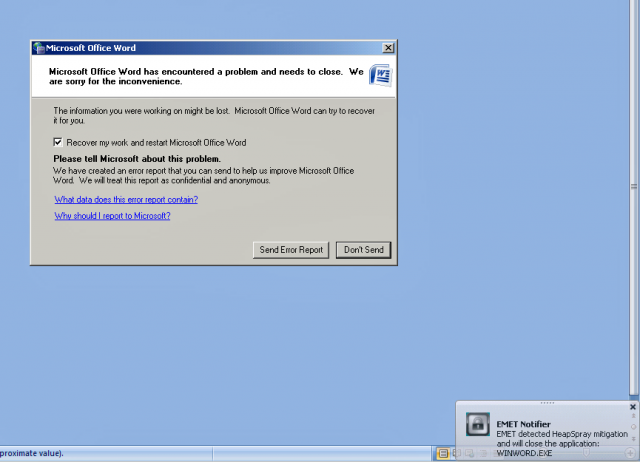
Hackers are exploiting a previously unknown vulnerability in Microsoft Windows and Office software that allows computers to be infected with malware, the company warned in advisories published Tuesday.
The advanced exploit arrives in a booby-trapped Word document attached to e-mails, Elia Florio of the Microsoft Security Response Center wrote on Tuesday. The attacks are narrowly targeted at certain individuals or companies and are mostly found in the Middle East and South Asia. The malicious document exploits a vulnerability in Microsoft's graphics device interface that makes it possible for attackers to remotely execute any code of their choice.
"If the attachment is opened or previewed, it attempts to exploit the vulnerability using a malformed graphics image embedded in the document," Dustin Childs, group manager in the Microsoft Trustworthy Computing group wrote in a separate advisory. "An attacker who successfully exploited the vulnerability could gain the same user rights as the logged on user." A third advisory is here.
Read 9 remaining paragraphs | Comments

|
|
 Towards the end of the last decade LimeWire was one of the most-used pieces of software on earth, installed on nearly one in five computers.
By the end of 2010 the situation changed somewhat when LimeWire was forced to cease its operations after a U.S. federal judge granted an injunction in favor of the RIAA.
According to the ruling LimeWire “intentionally encouraged infringement,” its software was used “overwhelmingly for infringement” and the company was aware of the “substantial infringement being committed” by LimeWire users. The evidence further showed that LimeWire marketed its application to Napster users and that its business model depended on mass copyright infringements.
The record labels then went after the company for damages and settled for a record-breaking $150 million.
This big win prompted Twentieth Century Fox, Viacom, Comedy Partners, Disney, Paramount Pictures and Warner Bros. to launch a separate lawsuit last year. The movie outfits accused LimeWire of infringing the copyrights of approximately 2,000 of their videos and demanded several hundred million dollars in damages.
In addition, the studios requested a ruling in their favor because they feared that LimeWire could launch a similarly infringing platform in the future, through which their copyrights may be infringed.
Over the past few months the two parties have been battling in court but without much progress being made. Last week the movie studios dismissed the entire case with prejudice, meaning that the case is effectively over.

It’s unclear why the case was dropped, but one possibility is that the case required more resources than the studios were prepared to commit. The studios hoped that a new trial on several key issues wasn’t required as the RIAA already did much of the groundwork.
However, LimeWire objected to the motion for summary judgment and wanted to treat the case as distinct from the RIAA ruling. The software maker argued that they operated differently in the 2009 / 2010 period the studios claim the infringements were committed, and said that the RIAA case only applied to musical works, not video.
While the dismissal is good news for LimeWire, vulture’s keep circling over the company.
Early last month LimeWire was sued by the independent music publisher Microhits, who also demand millions in damages. Microhits appears to have a preference for defunct file-sharing services as it also sued Megaupload last year, a case that’s still pending.
Source: Movie Studios Drop Multi-Million Dollar Lawsuit Against LimeWire


