 He can't hear you, kids. He. Can't. Hear. You.
Shared posts
02 Jul 18:20
He can't hear you, kids. He. Can't. Hear. You.
Spongebob Theme Song slowed down is a terrifying subaquatic nightmare
by Rob Beschizza
He can't hear you, kids. He. Can't. Hear. You.
01 Jul 18:03


Free Download: They Might Be Giants Play Their Entire First Album Live
by Dan Colman

They Might Be Giants released their eponymous debut album in November, 1986 and it immediately attracted the attention of Village Voice music critic, Robert Christgau, who, in giving the album an “A,” said “the hits just keep on coming in an exuberantly annoying show of creative superabundance”. Almost thirty years later, the band performed the seminal first album live in its entirety during its 2013 world tour. And now, as a special gift to fans old and new, they’re making available a recording of those performances for free. It runs 47 minutes. To get the recording, click the “Free Album Download” button below, and follow the instructions. Or click here.
Free Download: They Might Be Giants Play Their Entire First Album Live is a post from: Open Culture. Follow us on Facebook, Twitter, and Google Plus, or get our Daily Email. And don't miss our big collections of Free Online Courses, Free Online Movies, Free eBooks, Free Audio Books, Free Foreign Language Lessons, and MOOCs.
The post Free Download: They Might Be Giants Play Their Entire First Album Live appeared first on Open Culture.
30 Jun 20:42


The Road to Bad Science Is Paved with Obedience and Secrecy
by Jalees Rehman
by Jalees Rehman
We often laud intellectual diversity of a scientific research group because we hope that the multitude of opinions can help point out flaws and improve the quality of research long before it is finalized and written up as a manuscript. The recent events surrounding the research in one of the world's most famous stem cell research laboratories at Harvard shows us the disastrous effects of suppressing diverse and dissenting opinions.
The infamous "Orlic paper" was a landmark research article published in the prestigious scientific journal Nature in 2001, which showed that stem cells contained in the bone marrow could be converted into functional heart cells. After a heart attack, injections of bone marrow cells reversed much of the heart attack damage by creating new heart cells and restoring heart function. It was called the "Orlic paper" because the first author of the paper was Donald Orlic, but the lead investigator of the study was Piero Anversa, a professor and highly respected scientist at New York Medical College.
Anversa had established himself as one of the world's leading experts on the survival and death of heart muscle cells in the 1980s and 1990s, but with the start of the new millennium, Anversa shifted his laboratory's focus towards the emerging field of stem cell biology and its role in cardiovascular regeneration. The Orlic paper was just one of several highly influential stem cell papers to come out of Anversa's lab at the onset of the new millenium. A 2002 Anversa paper in the New England Journal of Medicine – the world's most highly cited academic journal –investigated the hearts of human organ transplant recipients. This study showed that up to 10% of the cells in the transplanted heart were derived from the recipient's own body. The only conceivable explanation was that after a patient received another person's heart, the recipient's own cells began maintaining the health of the transplanted organ. The Orlic paper had shown the regenerative power of bone marrow cells in mouse hearts, but this new paper now offered the more tantalizing suggestion that even human hearts could be regenerated by circulating stem cells in their blood stream.
A 2003 publication in Cell by the Anversa group described another ground-breaking discovery, identifying a reservoir of stem cells contained within the heart itself. This latest coup de force found that the newly uncovered heart stem cell population resembled the bone marrow stem cells because both groups of cells bore the same stem cell protein called c-kit and both were able to make new heart muscle cells. According to Anversa, c-kit cells extracted from a heart could be re-injected back into a heart after a heart attack and regenerate more than half of the damaged heart!
These Anversa papers revolutionized cardiovascular research. Prior to 2001, most cardiovascular researchers believed that the cell turnover in the adult mammalian heart was minimal because soon after birth, heart cells stopped dividing. Some organs or tissues such as the skin contained stem cells which could divide and continuously give rise to new cells as needed. When skin is scraped during a fall from a bike, it only takes a few days for new skin cells to coat the area of injury and heal the wound. Unfortunately, the heart was not one of those self-regenerating organs. The number of heart cells was thought to be more or less fixed in adults. If heart cells were damaged by a heart attack, then the affected area was replaced by rigid scar tissue, not new heart muscle cells. If the area of damage was large, then the heart's pump function was severely compromised and patients developed the chronic and ultimately fatal disease known as "heart failure".
Anversa's work challenged this dogma by putting forward a bold new theory: the adult heart was highly regenerative, its regeneration was driven by c-kit stem cells, which could be isolated and used to treat injured hearts. All one had to do was harness the regenerative potential of c-kit cells in the bone marrow and the heart, and millions of patients all over the world suffering from heart failure might be cured. Not only did Anversa publish a slew of supportive papers in highly prestigious scientific journals to challenge the dogma of the quiescent heart, he also happened to publish them at a unique time in history which maximized their impact.
In the year 2001, there were few innovative treatments available to treat patients with heart failure. The standard approach was to use medications that would delay the progression of heart failure. But even the best medications could not prevent the gradual decline of heart function. Organ transplants were a cure, but transplantable hearts were rare and only a small fraction of heart failure patients would be fortunate enough to receive a new heart. Hopes for a definitive heart failure cure were buoyed when researchers isolated human embryonic stem cells in 1998. This discovery paved the way for using highly pliable embryonic stem cells to create new heart muscle cells, which might one day be used to restore the heart's pump function without resorting to a heart transplant.
The dreams of using embryonic stem cells to regenerate human hearts were soon squashed when the Bush administration banned the generation of new human embryonic stem cells in 2001, citing ethical concerns. These federal regulations and the lobbying of religious and political groups against human embryonic stem cells were a major blow to research on cardiovascular regeneration. Amidst this looming hiatus in cardiovascular regeneration, Anversa's papers appeared and showed that one could steer clear of the ethical controversies surrounding embryonic stem cells by using an adult patient's own stem cells. The Anversa group re-energized the field of cardiovascular stem cell research and cleared the path for the first human stem cell treatments in heart disease.
Instead of having to wait for the US government to reverse its restrictive policy on human embryonic stem cells, one could now initiate clinical trials with adult stem cells, treating heart attack patients with their own cells and without having to worry about an ethical quagmire. Heart failure might soon become a disease of the past. The excitement at all major national and international cardiovascular conferences was palpable whenever the Anversa group, their collaborators or other scientists working on bone marrow and cardiac stem cells presented their dizzyingly successful results. Anversa received numerous accolades for his discoveries and research grants from the NIH (National Institutes of Health) to further develop his research program. He was so successful that some researchers believed Anversa might receive the Nobel Prize for his iconoclastic work which had redefined the regenerative potential of the heart. Many of the world's top universities were vying to recruit Anversa and his group, and he decided to relocate his research group to Harvard Medical School and Brigham and Women's Hospital 2008.
There were naysayers and skeptics who had resisted the adult stem cell euphoria. Some researchers had spent decades studying the heart and found little to no evidence for regeneration in the adult heart. They were having difficulties reconciling their own results with those of the Anversa group. A number of practicing cardiologists who treated heart failure patients were also skeptical because they did not see the near-miraculous regenerative power of the heart in their patients. One Anversa paper went as far as suggesting that the whole heart would completely regenerate itself roughly every 8-9 years, a claim that was at odds with the clinical experience of practicing cardiologists. Other researchers pointed out serious flaws in the Anversa papers. For example, the 2002 paper on stem cells in human heart transplant patients claimed that the hearts were coated with the recipient's regenerative cells, including cells which contained the stem cell marker Sca-1. Within days of the paper's publication, many researchers were puzzled by this finding because Sca-1 was a marker of mouse and rat cells – not human cells! If Anversa's group was finding rat or mouse proteins in human hearts, it was most likely due to an artifact. And if they had mistakenly found rodent cells in human hearts, so these critics surmised, perhaps other aspects of Anversa's research were similarly flawed or riddled with artifacts.
At national and international meetings, one could observe heated debates between members of the Anversa camp and their critics. The critics then decided to change their tactics. Instead of just debating Anversa and commenting about errors in the Anversa papers, they invested substantial funds and efforts to replicate Anversa's findings. One of the most important and rigorous attempts to assess the validity of the Orlic paper was published in 2004, by the research teams of Chuck Murry and Loren Field. Murry and Field found no evidence of bone marrow cells converting into heart muscle cells. This was a major scientific blow to the burgeoning adult stem cell movement, but even this paper could not deter the bone marrow cell champions.
Despite the fact that the refutation of the Orlic paper was published in 2004, the Orlic paper continues to carry the dubious distinction of being one of the most cited papers in the history of stem cell research. At first, Anversa and his colleagues would shrug off their critics' findings or publish refutations of refutations – but over time, an increasing number of research groups all over the world began to realize that many of the central tenets of Anversa's work could not be replicated and the number of critics and skeptics increased. As the signs of irreplicability and other concerns about Anversa's work mounted, Harvard and Brigham and Women's Hospital were forced to initiate an internal investigation which resulted in the retraction of one Anversa paper and an expression of concern about another major paper. Finally, a research group published a paper in May 2014 using mice in which c-kit cells were genetically labeled so that one could track their fate and found that c-kit cells have a minimal – if any – contribution to the formation of new heart cells: a fraction of a percent!
The skeptics who had doubted Anversa's claims all along may now feel vindicated, but this is not the time to gloat. Instead, the discipline of cardiovascular stem cell biology is now undergoing a process of soul-searching. How was it possible that some of the most widely read and cited papers were based on heavily flawed observations and assumptions? Why did it take more than a decade since the first refutation was published in 2004 for scientists to finally accept that the near-magical regenerative power of the heart turned out to be a pipe dream.
One reason for this lag time is pretty straightforward: It takes a tremendous amount of time to refute papers. Funding to conduct the experiments is difficult to obtain because grant funding agencies are not easily convinced to invest in studies replicating existing research. For a refutation to be accepted by the scientific community, it has to be at least as rigorous as the original, but in practice, refutations are subject to even greater scrutiny. Scientists trying to disprove another group's claim may be asked to develop even better research tools and technologies so that their results can be seen as more definitive than those of the original group. Instead of relying on antibodies to identify c-kit cells, the 2014 refutation developed a transgenic mouse in which all c-kit cells could be genetically traced to yield more definitive results - but developing new models and tools can take years.
The scientific peer review process by external researchers is a central pillar of the quality control process in modern scientific research, but one has to be cognizant of its limitations. Peer review of a scientific manuscript is routinely performed by experts for all the major academic journals which publish original scientific results. However, peer review only involves a "review", i.e. a general evaluation of major strengths and flaws, and peer reviewers do not see the original raw data nor are they provided with the resources to replicate the studies and confirm the veracity of the submitted results. Peer reviewers rely on the honor system, assuming that the scientists are submitting accurate representations of their data and that the data has been thoroughly scrutinized and critiqued by all the involved researchers before it is even submitted to a journal for publication. If peer reviewers were asked to actually wade through all the original data generated by the scientists and even perform confirmatory studies, then the peer review of every single manuscript could take years and one would have to find the money to pay for the replication or confirmation experiments conducted by peer reviewers. Publication of experiments would come to a grinding halt because thousands of manuscripts would be stuck in the purgatory of peer review. Relying on the integrity of the scientists submitting the data and their internal review processes may seem naïve, but it has always been the bedrock of scientific peer review. And it is precisely the internal review process which may have gone awry in the Anversa group.
Pygmalion and Glatea by Louis Gauffier (via Wikimedia - Public Domain)
Just like Pygmalion fell in love with Galatea, researchers fall in love with the hypotheses and theories that they have constructed. To minimize the effects of these personal biases, scientists regularly present their results to colleagues within their own groups at internal lab meetings and seminars or at external institutions and conferences long before they submit their data to a peer-reviewed journal. The preliminary presentations are intended to spark discussions, inviting the audience to challenge the veracity of the hypotheses and the data while the work is still in progress. Sometimes fellow group members are truly skeptical of the results, at other times they take on the devil's advocate role to see if they can find holes in their group's own research. The larger a group, the greater the chance that one will find colleagues within a group with dissenting views. This type of feedback is a necessary internal review process which provides valuable insights that can steer the direction of the research.
Considering the size of the Anversa group – consisting of 20, 30 or even more PhD students, postdoctoral fellows and senior scientists – it is puzzling why the discussions among the group members did not already internally challenge their hypotheses and findings, especially in light of the fact that they knew extramural scientists were having difficulties replicating the work.
Retraction Watch is one of the most widely read scientific watchdogs which tracks scientific misconduct and retractions of published scientific papers. Recently, Retraction Watch published the account of an anonymous whistleblower who had worked as a research fellow in Anversa's group and provided some unprecedented insights into the inner workings of the group, which explain why the internal review process had failed:
"I think that most scientists, perhaps with the exception of the most lucky or most dishonest, have personal experience with failure in science—experiments that are unreproducible, hypotheses that are fundamentally incorrect. Generally, we sigh, we alter hypotheses, we develop new methods, we move on. It is the data that should guide the science.
In the Anversa group, a model with much less intellectual flexibility was applied. The "Hypothesis" was that c-kit (cd117) positive cells in the heart (or bone marrow if you read their earlier studies) were cardiac progenitors that could: 1) repair a scarred heart post-myocardial infarction, and: 2) supply the cells necessary for cardiomyocyte turnover in the normal heart.
This central theme was that which supplied the lab with upwards of $50 million worth of public funding over a decade, a number which would be much higher if one considers collaborating labs that worked on related subjects.
In theory, this hypothesis would be elegant in its simplicity and amenable to testing in current model systems. In practice, all data that did not point to the "truth" of the hypothesis were considered wrong, and experiments which would definitively show if this hypothesis was incorrect were never performed (lineage tracing e.g.)."
Discarding data that might have challenged the central hypothesis appears to have been a central principle.
According to the whistleblower, Anversa's group did not just discard undesirable data, they actually punished group members who would question the group's hypotheses:
"In essence, to Dr. Anversa all investigators who questioned the hypothesis were "morons," a word he used frequently at lab meetings. For one within the group to dare question the central hypothesis, or the methods used to support it, was a quick ticket to dismissal from your position."
The group also created an environment of strict information hierarchy and secrecy which is antithetical to the spirit of science:
"The day to day operation of the lab was conducted under a severe information embargo. The lab had Piero Anversa at the head with group leaders Annarosa Leri, Jan Kajstura and Marcello Rota immediately supervising experimentation. Below that was a group of around 25 instructors, research fellows, graduate students and technicians. Information flowed one way, which was up, and conversation between working groups was generally discouraged and often forbidden.
Raw data left one's hands, went to the immediate superior (one of the three named above) and the next time it was seen would be in a manuscript or grant. What happened to that data in the intervening period is unclear.
A side effect of this information embargo was the limitation of the average worker to determine what was really going on in a research project. It would also effectively limit the ability of an average worker to make allegations regarding specific data/experiments, a requirement for a formal investigation."
This segregation of information is a powerful method to maintain an authoritarian rule and is more typical for terrorist cells or intelligence agencies than for a scientific lab, but it would definitely explain how the Anversa group was able to mass produce numerous irreproducible papers without any major dissent from within the group.
In addition to the secrecy and segregation of information, the group also created an atmosphere of fear to ensure obedience:
"Although individually-tailored stated and unstated threats were present for lab members, the plight of many of us who were international fellows was especially harrowing. Many were technically and educationally underqualified compared to what might be considered average research fellows in the United States. Many also originated in Italy where Dr. Anversa continues to wield considerable influence over biomedical research.
This combination of being undesirable to many other labs should they leave their position due to lack of experience/training, dependent upon employment for U.S. visa status, and under constant threat of career suicide in your home country should you leave, was enough to make many people play along.
Even so, I witnessed several people question the findings during their time in the lab. These people and working groups were subsequently fired or resigned. I would like to note that this lab is not unique in this type of exploitative practice, but that does not make it ethically sound and certainly does not create an environment for creative, collaborative, or honest science."
Foreign researchers are particularly dependent on their employment to maintain their visa status and the prospect of being fired from one's job can be terrifying for anyone.
This is an anonymous account of a whistleblower and as such, it is problematic. The use of anonymous sources in science journalism could open the doors for all sorts of unfounded and malicious accusations, which is why the ethics of using anonymous sources was heavily debated at the recent ScienceOnline conference. But the claims of the whistleblower are not made in a vacuum – they have to be evaluated in the context of known facts. The whistleblower's claim that the Anversa group and their collaborators received more than $50 million to study bone marrow cell and c-kit cell regeneration of the heart can be easily verified at the public NIH grant funding RePORTer website. The whistleblower's claim that many of the Anversa group's findings could not be replicated is also a verifiable fact. It may seem unfair to condemn Anversa and his group for creating an atmosphere of secrecy and obedience which undermined the scientific enterprise, caused torment among trainees and wasted millions of dollars of tax payer money simply based on one whistleblower's account. However, if one looks at the entire picture of the amazing rise and decline of the Anversa group's foray into cardiac regeneration, then the whistleblower's description of the atmosphere of secrecy and hierarchy seems very plausible.
The investigation of Harvard into the Anversa group is not open to the public and therefore it is difficult to know whether the university is primarily investigating scientific errors or whether it is also looking into such claims of egregious scientific misconduct and abuse of scientific trainees. It is unlikely that Anversa's group is the only group that might have engaged in such forms of misconduct. Threatening dissenting junior researchers with a loss of employment or visa status may be far more common than we think. The gravity of the problem requires that the NIH – the major funding agency for biomedical research in the US – should look into the prevalence of such practices in research labs and develop safeguards to prevent the abuse of science and scientists.
30 Jun 20:31


Barbie's Dream Hearse Available To Rent For Barbie's Funeral
by Meredith Woerner

Things we did not know existed until today: Barbie's Dream Hearse, which is perfect to ferry Barbie from her Dream House to the Dream Morgue, and then the Dream Cemetery Plot or wherever her preferred resting place is. What a fun thing.
firehose likes this
30 Jun 20:29
Somebody Mashed Up Frozen and the Game of Thrones Trailer - Winter is--oh, wait. It's here. Hah.
by Victoria McNally
The Internet likes three things: mash-ups, Game of Thrones, and Frozen. Oh, and kittens. Okay, The Internet likes four things. There are no kittens in this video, but everything else is there, in all its genre-smashing glory! Except for angry comments. Damn it, the Internet likes five things.
Best part (other than Hans as Joffrey, which is a given)? Baelish’s lines being given to the shop owner. Imagine him sitting there, silently judging and waiting for his opportune moment. Slowly collecting leverage on all the people who come in looking for snowshoes.
Are you following The Mary Sue on Twitter, Facebook, Tumblr, Instagram, & Google +?
30 Jun 18:37
Patents are slowing us down
by Matt Hall
 I visited a geoscience consulting company in Houston recently. Various patent awards were proudly commemorated on the walls on little plaques. It's understandable: patents are difficult and expensive to get, and can be valuable to own. But recently I've started to think that patents are one of the big reasons why innovation in our industry happens at a snail's pace, in the words of Paul de Groot in our little book about geophysics.
Have you ever read a patent? Go and have a read of US Patent 8670288, by Børre Bjerkholt of Schlumberger. I'll wait here.
What are they for?
It is more or less totally unreadable. And Google's rendering, even the garbled math, is much nicer than the USPTO's horror show. Either way, I think it's safe to assume that almost no-one will ever read it. Apart from anything else, it's written in lawyerspeak, and who wants to read that stuff?
Clearly patents aren't there to inform. So why are they there?
- To defend against claims of infringement by others? This seems to be one of the main reasons technology companies are doing it.
- To intimidate others into not trying to innovate or commercialize an innovation? With the possible unintended consequence of forcing competitors to avoid trouble by being more inventive.
- To say to Wall Street (or whoever), "we mean business"? Patents are valuable: the median per-patent price paid in corporate acquisitions in 2012 was $221k.
- To formalize the relationship between the inventor (a human, given that only humans have the requisite inventive genius) and the intellectual property owner (usually a corporation, given that it costs about $40k in lawyer's fees to apply for a patent successfully)?
- Because all the cool kids are doing it? Take a look at that table. You don't want to get left behind do you?
I'm pretty sure most patents in our industry are a waste of money, and an unecessary impediment to innovation in our industry. If this is true then, as you see from the trend in the data, we have something to worry about.
A dangerous euphemism
That phrase, intellectual property, what exactly does that mean? I like what Cory Doctorow — one of Canada's greatest intellects — had to say about intellectual property in 2008:
the phrase "intellectual property" is, at root, a dangerous euphemism that leads us to all sorts of faulty reasoning about knowledge.
He goes on to discuss that intellectual property is another way of saying 'ideas and knowledge', but can those things really be 'property'? They certainly aren't like things that definitely are property: if I steal your Vibroseis truck, you can't use it any more. If I take your knowledge, you still have it... and so do I. If it was useful knowlege, then now it's twice as useful.
This goes some way to explaining why 2 weeks ago, the electric car manufacturer Telsa relinquished its right to sue patent infringers. The irrepressible Elon Musk explained::
Yesterday [11 June], there was a wall of Tesla patents in the lobby of our Palo Alto headquarters. That is no longer the case. They have been removed, in the spirit of the open source movement, for the advancement of electric vehicle technology.
This is bold, but smart — Tesla knows that its best chance of dominating a large electric vehicle industry depends on there being a large electric vehicle industry. And they've just made that about 10 times more likely.
What will we choose?
I think one of the greatest questions facing our industry, and our profession, is: How can we give ourselves the best chance of maintaining the ability to find and extract petroleum in a smart, safe, ethical way, for as long as humanity needs it? By seeking to stop others from applying a slightly new velocity model building algorithm? By locking up over 2000 other possibly game-changing ideas a year? Will society thank us for that?
30 Jun 18:33
Geology and Generals: How Geology influenced the Gettysburg Campaign (Part I.)
by David Bressan
“Hence the saying: If you know the enemy and know yourself, your victory will not stand in doubt; if you know Heaven and know Earth, you may make your victory complete.”
The Art of War, by Sun Tzù
In 1863, after more than two years of Civil War, the Confederate Army of Northern Virginia launches a decisive attack towards the north, in direction of the town of Harrisburg in Pennsylvania. Spotted by the Union Army a skirmish near the small farm town of Gettysburg starts, soon escalating into one of the bloodiest battles in U.S. history. In three days (July 1 to July 3) nearly 50.000 Americans were killed or wounded. The outcome of this military campaign and battle was strongly influenced by geological events almost one billion years in the making.
 Fig.1. Simplified geological map of the Gettysburg campaign (after EHRLICH 2009; BROWN 2006; CUFFEY 2008, modified, with edits suggested by BENTLEY 2014), for more and a better geological & tectonic description of the Appalachian Mountains and surrounding areas see also Callan Bentley´s Mountain Beltway Blog.
The Gettysburg campaign started almost a month earlier in the town of Fredericksburg, where both armies had passed the winter along the shores of the Rappahannock River. An easily defendable terrain, the attacks of the Union Army towards south were successfully stopped by the Confederates. June 3 part of the Confederate troops marches first towards west and follows then the south-north trending Great Valley.
Both the Piedmont area, where Fredericksburg is located, as the nearby Blue Ridge Mountains, are formed by hard igneous and metamorphic rocks, more than a billion years old. Such rocks, when eroded, form a rocky and rough terrain, not a very good ground for the soldiers or horses to pass there. However the Blue Ridge Mountains provided shelter from Union spies and attacks by the enemy’s cavalry.
In the flat Great Valley, filled by soft, erodible ancient sediments, the roads were easily trafficable and the Confederate soldiers quickly advanced. The well developed, and therefore fertile soils, provided also plenty of food to support the advancing army.
The roughly parallel bands of mountains and large plains, of great tactical use for the Confederate Army, follows the outline of the Appalachian Mountains, formed in the late Paleozoic, some 400 million years ago, during the collision of ancestral North America with ancestral Africa.
The gently rolling landscape with small hills in the Gettysburg area and in similar sedimentary basin regions, crossed by the Union Armies during their pursuit of the Confederates, is formed by sediments deposited in a second tectonic phase. During the Triassic, some 220 to 200 million years ago, the supercontinent of Pangaea broke apart and large rift-basins opened. This chain of tectonic basins (Culpeper and the Gettysburg-Newark basin) were subsequently filled with sediments coming from the slowly eroding Appalachians, mostly layers of hard sandstone, interbedded in soft siltstone and shale-formations.
Not only large-scale orogenic processes, also local fault systems played an important role in the Gettysburg campaign, as trafficable gaps in the Blue Ridge and South Mountain formed where tectonic movements have crushed the rocks. The weakened rocks are easily removed by weathering and running water and so form broad valleys in the mountain barriers.
In the night of June 28 general Robert Edward Lee (1807-1870) learned from a spy that the Union Army was concentrated around the town of Frederick. Lee therefore positioned his soldiers in the towns of Chambersburg, Cashtown and Carlisle. The Cashtown gap was the only trafficable road for heavy artillery at the time and shaped by tectonic movements along the Cashtown strike-slip fault. Lee could here quickly cross the South Mountain ridge into the Gettysburg basin and eventually face the enemy.
On the same day general George G. Meade (1815-1872) replaced Joseph Hooker (1814-1879) as commander of the Union Army. Meade, anticipating an attack from the west, immediately send troops from Frederick to the nearby Parrs Ridge, to secure this strategic advantageous topographic height. Similar to the Blue Ridge, also Parrs Ridge is formed by weathering-resistant schist and quartzite.
Meade send also the cavalry and three infantry corps to Gettysburg, however the flat terrain of the sedimentary basin couldn’t provide cover and was therefore not considered good battleground.
Unfortunately and unprepared the Union soldiers encountered the scouting Confederate soldiers. What at first seemed to be a lesser skirmish soon developed to a fierce battle when more and more Confederate reinforcements pulled through the tectonic gaps and the rest of the Union Army rapidly advanced towards Gettysburg on the sedimentary flats.
To be continued…
Bibliography:
BROWN, A. (2006): Geology and the Gettysburg Campaign. Pennsylvania Geological Survey Educational Series 5, published by the Commonwealth of Pennsylvania/Department of Conservation and Natural Resources/ Bureau of Topographic and Geological Survey: 14
CUFFEY, R.J. et al. (2008): Geology of the Gettysburg Battlefield: How Mesozoic Events and Processes Impacted American History. Geological Society of America, Field Guide 8 Excursions in Geology and History: Field Trips in the Middle Atlantic States: 1-16
EHRLICH, T.T. (2009): Gettysburg National Military Park & Eisenhower National Historic Site – Geologic Resources Inventory Report. National Park Service of the U.S. Department of the Interior: 49
ROSE. E.P.F. & NATHANAIL, C.P. (2000): Geology and Warfare: Examples of the Influence of Terrain and Geologists on Military Operations. Geological Society of London: 498
UNDERWOOD, J.R. & GUTH, P.L. (eds.) (1998): Military Geology in War and Peace. Reviews in Engineering Geology, Vol. 13, The Geological Society of America: 237
30 Jun 18:32
Incredibly disappointed, entirely unsurprised. BTW, our healthcare system sucks.
by Rachael
The ruling for the Hobby Lobby case has come rolling downhill from SCOTUS, like a giant turd. (PDF here, dissents start on page 60, thank you Elise.) A couple of months ago and after a Facebook kerfuffle, I had a nice in-comment chat with a friend of mine who is a lawyer. And he explained to me why he thought the ruling would probably go the way it did today, and it made sense. Ultimately it was about the letter of the law and the way it applies, rather than the principle that has us all foaming at the mouth. You know, that whole “women are people and your boss has no business making your medical decisions” thing. Yeah. That doesn’t really matter so much.
Not a lawyer. Not going to try to rehash my very smart friend’s point. Just saying now that I am still incredibly disappointed, but thanks to Aaron, I am entirely unsurprised.
Rather than railing about SCOTUS and the way this country seems set on just fucking over women at every opportunity, I think there’s another important take home here:
Being forced to depend upon employment and the good will of your employer for your access to healthcare is a shitty, shitty system.
The reason I’ve come to believe that healthcare is a human right is because it’s about survival, and about control. Someone else controlling your healthcare, your decisions, puts them in no small measure in control of your life. Well, America is supposed to be all about “freedom.” We’re so about freedom we got freedom coming out of our goddamn ears. And there’s this unending drumbeat talking about about how freedom is destroyed by dependence on the government. Keep your government hands off my healthcare!
So tell me, what kind of freedom is it to have your healthcare in the hands of a corporation? How is having your ability to get healthcare and, it seems, even some of the decisions you make completely controlled by a corporation better? (And don’t give me that fucking line about “don’t like your job? find a new one!” have you even looked at the fucking economy for the last five years? IF you’re even lucky enough to have a job!) You don’t want to be dependent on the government, great. Why the fuck do you want to be dependent on a corporation? An entity whose sole driving force is making a profit.
When I worked for AT&T and was still in my conservative phase (yes, I did have one, I have the humiliating voting history to prove it), even then I’d get taken aback by some egregious abuse of corporate power against employees or the environment and get told: well, you can’t blame the corporation. It’s just there to make money. Just doing what it has to do to fulfill that purpose. (Which even then made me ask and deregulating that is a good thing how? But that’s another song and dance.)
But fine, if all corporations do is make money and fuck everything else, why the fuck do you think it’s a good idea to put someone who literally only gives a shit about money in charge of your health? In charge of your life?
The government ain’t perfect by any stretch of the imagination. But at least I can pretend I have a tiny voice, a sliver of input, a crumb of power in a democracy. Maybe YA has missed the boat, with its ceaseless totalitarian government dystopias. At this point, I’m far more concerned about the benevolence of our corporate overlords.
26 Jun 20:16
Ask Slashdot: Is It Feasible To Revive an Old Linux PC Setup?
by Unknown Lamer
Qbertino (265505) writes I've been rummaging around on old backups and cleaning out my stuff and have once again run into my expert-like paranoid backups and keepsakes from back in the days (2001). I've got, among other things, a full set of Debian 3 CDs, an original StarOffice 6.0 CD including a huge manual in mint condition, Corel Draw 9 for Linux, the original box & CDs — yes it ran on a custom wine setup, but it ran well, I did professional design and print work with it. I've got more of other stuff lying around, including the manuals to run it. Loki Softs Tribes 2, Kohan, Rune, and the original Unreal Tournament for Linux have me itching too. :-) I was wondering if it would be possible to do an old 2001ish setup of a Linux workstation on some modern super cheap, super small PC (Raspberry Pi? Mini USB PC?), install all the stuff and give it a spin. What problems should I expect? VESA and Soundblaster drivers I'd expect to work, but what's with the IDE HDD drivers? How well does vintage Linux software from 2003 play with todays cheap system-on-board MicroPCs? What's with the USB stuff? Wouldn't the install expect the IO devices hooked on legacy ports? Have you tried running 10-15 year old Linux setups on devices like these and what are your experiences? What do you recommend? 


Read more of this story at Slashdot.
26 Jun 20:15
Mirador: A tool to help you find correlations in complex datasets
by Nathan Yau

Mirador, a collaborative effort led by Andrés Colubri from Fathom Information Design, is a tool that helps you find correlative patterns in datasets with a lot of variables and observations. It's in the early stages of development, but is available to use and test on Windows and Mac. Colubri explains the process, from its early stages to its current iteration.
Although fields like Machine Learning and Bayesian Statistics have grown enormously in the past decades and offer techniques that allows the computer to infer predictive models from data, these techniques require careful calibration and overall supervision from the expert users who run these learning and inference algorithms. A key consideration is what variables to include in the inference process, since too few variables might result in a highly-biased model, while too many of them would lead to overfitting and large variance on new data (what is called the bias-variance dilemma.)
Leaving aside model building, an exploratory overview of the correlations in a dataset is also important in situations where one needs to quickly survey association patterns in order to understand ongoing processes, for example, the spread of an infectious disease or the relationship between individual behaviors and health indicators.
26 Jun 20:06


This 1980s-Style Game Of Thrones Intro Is Wonderfully Cheesetastic
by Charlie Jane Anders
A few months ago, we showed you what Game of Thrones would look like as a 1980s sitcom . But what would it look like as a straight-up 1980s heroic fantasy show? Something like this.
26 Jun 20:04

Filed under: ESRI, GIS, Modeling
A Dynamic GIS as an Efficient Tool for Integrated Coastal Zone Management
by Matt Artz
 ISPRS International Journal of Geo-Information 2014, 3(2), 391-407
By Françoise Gourmelon, Damien Le Guyader, and Guy Fontenelle
“This contribution addresses both the role of geographical information in participatory research of coastal zones, and its potential to bridge the gap between research and coastal zone management. Over a one year period, heterogeneous data (spatial, temporal, qualitative and quantitative) were obtained which included the process of interviews, storing in a spatio-temporal database.
Activity zones for supervised maritime activities in the Bay of Brest.
“The GIS (Geographic Information System) produced temporal snapshots of daily human activity patterns allowing it to map, identify and quantify potential space-time conflicts between activities. It was furthermore used to facilitate the exchange of ideas and knowledge at various levels: by mapping, simulation, GIS analysis and data collection. Results indicated that both captured data and the participatory workshop added real value to management and therefore it was deemed well managed by stakeholders. To incorporate a dynamic GIS would enhance pro-active integrated management by opening the path for better discussions whilst permitting management simulated scenarios. “
Filed under: ESRI, GIS, Modeling
19 Jun 21:59
Judges Release Sherlock
by Ian MacAllen
Sherlock Holmes has been freed by the Seventh Circuit Court of Appeals. The estate of Arthur Conan Doyle claimed copyright over the character who first appeared in 1887 and has appeared in more than fifty-six stories and four novels. The copyright claim stems from the final ten stories, published between 1913 and 1927.
The court ruling (PDF) releases the character into the public domain while maintaing the copyright on the final stories. In the argument, the judges cite Star Wars as a contemporary example, stating that the release of Episode III no more extends the copyright on the original 1977 film than do the last ten stories protect Sherlock.
The Doyle estate sought licensing fees from Leslie Klinger, author of A Study in Sherlock: Stories inspired by the Holmes Canon. Klinger’s publisher paid the initial fee, but decided to challenge the estate as Klinger prepared a second book. The New York Times reports that the estate has yet to decide whether it will appeal the court’s decision.
Related Posts:
19 Jun 21:58
Study of MOOCs Suggests Dropping the Label ‘Dropout’
by Avi Wolfman-Arent
Way back in 1978, Frenchy in Grease was unceremoniously dubbed a beauty-school dropout. But what if she took a MOOC today on midcentury follicular art? Might we call her a beauty-school “collector”? What about a beauty-school “bystander”?
Maybe, thanks to a new quantitative study of MOOC engagement released on Wednesday by Cornell and Stanford Universities. After tracking the behavior patterns of more than 300,000 students enrolled in Stanford-based Coursera courses, the authors created a “taxonomy of engagement” to differentiate between different types of MOOC participants.
In this new paradigm there are five broad types of MOOC students.
Viewers “watch lectures, handing in few if any assignments.” Solvers “hand in assignments for a grade, viewing few if any lectures.” All-Rounders “balance the watching of lectures with the handing in of assignments.” Collectors “primarily download lectures.” And bystanders are “registered for the course, but their total activity is below a very low threshold.”
The study found that pasting the “dropout” label on everyone who fails to complete a MOOC misses key distinctions and fails to acknowledge the spectrum of learning goals that students bring to open online courses. A student who engages with the material but does not turn in all assignments should not, the researchers argue, be considered a failure. Nor should it be assumed the MOOC wasn’t useful.
They write:
This range of engagement styles shows that while the issue of students “dropping out” of MOOCs points to a genuine and important distinction in types of student activity, it is arguably a distinction being made at too superficial a level. Indeed, even asking whether a student “completes” an online course is a question already based on the assumption that there is a single notion of completion.
Coursera has talked before of upending the pass-fail dichotomy when evaluating MOOC participants. Indeed, this new “conceptual framework for understanding how users currently engage with MOOCs” may help online providers rebut critics who cite high attrition rates as an endemic flaw of cybereducation.
Ashton Anderson, a Ph.D. student at Stanford who is one of the paper’s authors, says the researchers had those critics in mind by the time they published their findings. “Hopefully it will change the way people think about MOOCs,” Mr. Anderson says. “That’s part of the reason we wrote this paper.”
19 Jun 17:13
Intel To Offer Custom Xeons With Embedded FPGAs For the Data Center
by timothy
MojoKid (1002251) writes For years, we've heard rumors that Intel was building custom chips for Google or Facebook, but these deals have always been assumed to work with standard hardware. Intel might offer a different product SKU with non-standard core counts, or a specific TDP target, or a particular amount of cache — but at the end of the day, these were standard Xeon processors. Today, it looks like that's changing for the first time — Intel is going to start embedding custom FPGAs into its own CPU silicon. The new FPGA-equipped Xeons will occupy precisely the same socket and platform as the standard, non-FPGA Xeons. Nothing will change on the customer front (BIOS updates may be required), but the chips should be drop-in compatible. The company has not stated who provided its integrated FPGA design, but Altera is a safe bet. The two companies have worked together on multiple designs and Altera (which builds FPGAs) is using Intel for its manufacturing. This move should allow Intel to market highly specialized performance hardware to customers willing to pay for it. By using FPGAs to accelerate certain specific types of workloads, Intel Xeon customers can reap higher performance for critical functions without translating the majority of their code to OpenCL or bothering to update it for GPGPU. 


Read more of this story at Slashdot.
19 Jun 17:11
Her Universe Launches All-New Line of Marvel Themed Apparel - This makes me want to fondue.
by Victoria McNally
Click to view gallery
thumbnails
Thumbnails
n of 12
Image title
this is some kind of spaceship or something.
We all knew this was coming when Ashley Eckstein tweeted out a teaser of that Captain America hoodie yesterday, but now it’s official: Her Universe has just released an all-new line of Marvel clothing, including some very cool SHIELD t-shirts with some sneaky glow-in-the-dark surprises underneath.
“I am so excited to announce that we have joined forces with Marvel for a Her Universe line of apparel,” Eckstein said in a statement on the Her Universe blog. “The fans have been asking us to make Marvel merchandise and it’s been on my wish list for a long time! There are so many compelling characters in the Marvel Universe and it is a dream come true to be able to collaborate with Marvel and design with these celebrated Super Heroes and villains!”
Currently two of the dresses in the above gallery aren’t available for purchase, but hopefully they’ll show up in the store soon. With any luck this also means there are more designs on the way, because I would kill for an Iron Man costume dress. Especially one with a glowing arc reactor. In fact, you want me to just come over there, Her Universe? I have all these ideas for you.
Which is your favorite of the new designs?
(via Her Universe)
Are you following The Mary Sue on Twitter, Facebook, Tumblr, Instagram, & Google +?
11 Jun 17:46
Geospatial Intelligence & the Geospatial Revolution: PSU MOOC Set for 2015
by Adena Schutzberg
Penn State's second geospatially focused MOOC, Geospatial Intelligence & the Geospatial Revolution is set for Jan 14 - Feb 18, 2015. It'll be taught by Penn State's Todd Bacastow who pretty much built the university's online GEOINT offerings.
Learn how the revolution in geospatial... Continue reading
10 Jun 18:30


School bans Cory Doctorow’s novel for lauding “hacker culture”
by Joe Silver

After the Booker T. Washington Public High School in Pensacola, Florida, placed best-selling author and popular Boing Boing blog editor Cory Doctorow’s young adult novel Little Brother on its “One School/One Book” summer reading list, the school’s administration promptly cancelled the school-wide reading program.
In a blog post on Friday, Doctorow argued that the school’s motivations for gutting the program included the administration's desire to shield students from his book’s politics and content. The school’s principal, Michael J. Roberts, cited reviews that emphasized the novel's “positive view of questioning authority, lauding ‘hacker culture,’ discussing sex and sexuality in passing" as his motivation for trying to steer students clear of the book. He also said that a parent complained about profanity in the book.
Doctorow countered that there is no profanity in the book, “though there’s a reference to a swear word.” What’s more, Doctorow wrote that his publisher, Tor, has now agreed to send 200 copies of the book to the school, along with two lithograph posters containing the full text of the novel.
Read 3 remaining paragraphs | Comments
10 Jun 17:01
INTERMISSION
How to Make Government Data Sites Better
by Nathan Yau
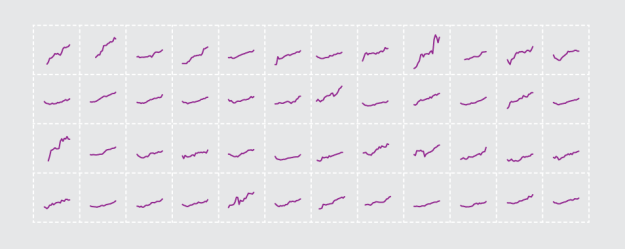
Accessing government data from the source is frustrating. If you've done it, or at least tried to, you know the pain that is oddly formatted files, search that doesn't work, and annotation that tells you nothing about the data in front of you.
The most frustrating part of the process is knowing how useful the data could be if only it were shared more simply. Unfortunately, ease-of-use is rarely the case, and we spend more time formatting and inspecting the data than we do actually putting it to use. Shouldn't it be the other way around?
It's this painstaking process that draws so much ire. It's hard not to complain.
Maybe the people in charged of these sites just don't know what's going on. Or maybe they're so overwhelmed by suck that they don't know where to start. Or they're unknowingly infected by the that-is-how-we've-always-done-it bug.
Whatever it may be, I need to think out loud about how to improve these sites. Empty complaints don't help.
I use the Centers for Disease Control and Prevention as the test subject, but most of the things covered should easily generalize to other government sites (and non-government ones too). And I choose CDC not because they're the worst but because they publish a lot of data that is of immediate and direct use to the general public.
I approach this from the point of view of someone who uses government data, beyond pulling a single data point from a spreadsheet. I'm also going to put on my Captain Obvious hat, because what seems obvious to some is apparently a black box to others.
Provide a useable data format
Sometimes it feels like government data is available in every format except the one that data users want. The worst one was when I downloaded a 2gb file, and upon unzipping it, I discovered it was a EXE file.
Data in PDF format is a kick in the face for people looking for CSV files. There might be ways to get the data out from PDFs, but it's still a pain when you have more than a handful of files.
For example, the data and statistics page for sexually transmitted diseases on CDC points to a bunch of PDF files.
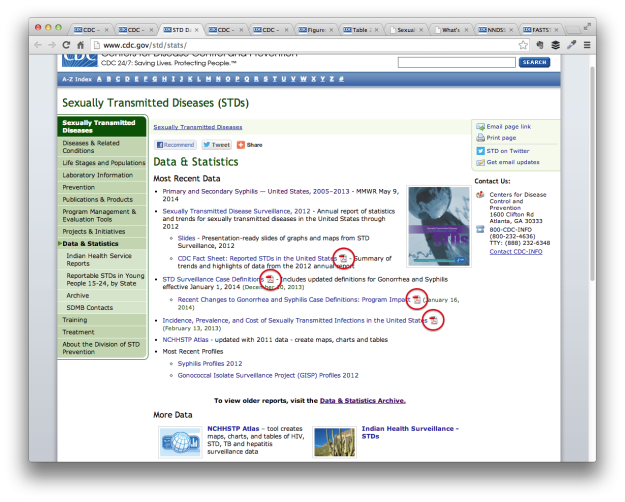
Uh oh, it looks like the page might have caught something.
So to use the data, you must download PDF files and scroll through the pages to find the actual data tables.
Excel spreadsheets is the other most common format. It's better than PDF, but you still have to convert, and there's almost always a bunch of other cruft in the spreadsheet that you have to remove before you can export to CSV.
Some release data in SAS format. Users who don't have SAS are screwed. Same with Microsoft Access. Again, there are ways to convert these files to CSV, but it's so much easier to import CSV into other programs than the other way around.
Just give us CSV files. Everybody wins.
Useable data format is the most important, and if there's just one thing you change, make it this.
(Raw data is fine too)
It's rare to find raw government data, so it's like striking gold when it actually happens. I realize you run into issues with data privacy, quality, missing data, etc. For these data sources, I appreciate the estimates with standard errors. However, the less aggregated (the more raw) you can provide, the better.
CSV for that too, please.
Never mind the fancy sharing tools
 Not all government data is wedged into PDF files, and some of it is accessible via export tools that let you subset and layout your data exactly how you want it. The problem is that in an effort to please everyone, you end up with a tool shown on the left.
That is a long form.
You might not even get data after you select all of your options.
The multipart form is from the CDC's WONDER, which stands for Wide-ranging Online Data for Epidemiologic Research. I think government organizations are required by law to give every single project an acronym that evokes a feeling of magic.
There are various problems with the form, but the worst is that you almost always have to know exactly what you're looking for. You have to know the name that the CDC used for that specific report. If you don't, you have to browse through a lot of options. Some options might make zero sense.
Financially, these forms (and the databases behind them) don't make a lot of sense either. I don't know what the situation is with CDC WONDER (ALL CAPS), but I know some government organizations have to pay contractors substantial sums of money to make changes or add and remove data.
It's okay to remove some of the options. Let people subset and format the data on their own. Just provide the data that allows that.
Annotate and include metadata
WONDER is one of several data portals the CDC provides. Another is at data.cdc.gov. The main data that it houses is from the National Notifiable Disease Surveillance System (NNDSS), which is published weekly in the Morbidity and Mortality Weekly Report (MMWR). Yay for abbreviations.
The CDC data subdomain makes use of the Socrata Open Data API, which sounded fun at first. It's weekly data that has been updated regularly for the past few months. There's an RSS feed. There's an API. There's a lot to like.
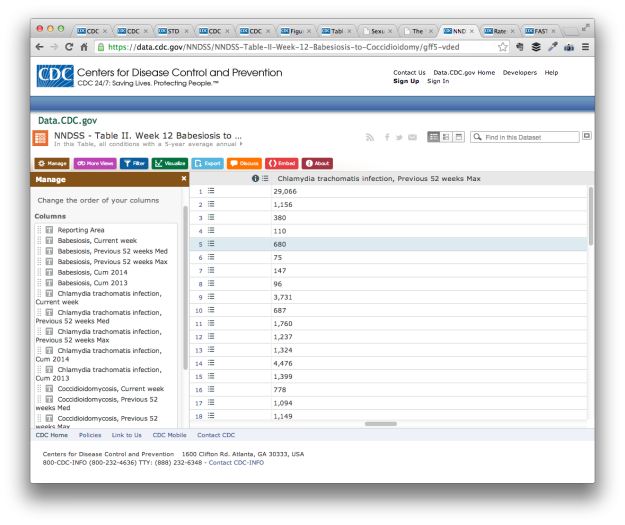
There's also a lot of variables without much annotation or metadata.
For example, Coccidioidomycosis, commonly known as "valley fever", is one of the semi-weekly reported conditions. When I checked one of the weekly reports, the count for California was in single digits, and there were several east coast states in double digits. I should also mention that another name for Coccidioidomycosis is "California fever".
This is likely related to who reported during the week. The counts for all the NNDSS conditions vary based on who reported to the system, so one week a count might be zero and it might be triple digits the next. There's no way to see who's reporting though, which makes it difficult to compare states or look at changes over time. You can't really take much away from a single data point either.
I emailed the "Dataset Owner" about the low counts last month. I didn't get an answer.
I'm almost certain that the reporting sites information is available on some PDF, but we shouldn't have to sleuth for it.
When you share data, tell people where the data is from, the methodology behind it, and how we should interpret it. At the very least, include a link to a report in the vicinity of the dataset.
INTERMISSION
Tell people where to get the data
Get the things above done, and your government data site is exponentially better than it was before, but let's keep going.
The navigation process to get to a dataset is incredibly convoluted, which makes it hard to find data and difficult to return to it.
The start page of for CDC data and statistics doesn't seem too bad at first glance. We get a list of topics and links to tools on the bottom.
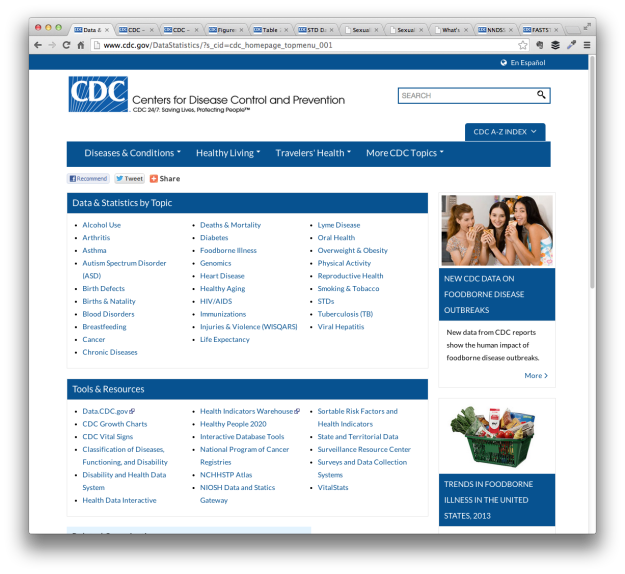
However, we run in to two immediate problems. (Disregard the choice of stock photo of three teenage girls eating strudel, above the headline of foodborne disease outbreaks.)
The first is under the Tools & and Resources section. It's a mix of vague descriptions like "interactive data tools" and "state and territorial data" and titles that don't mean much to the uninitiated like "CDC Vital Signs", "NCHHSTP Atlas", and "VitalStats".
Which one do we choose to get the data we want?
I guess it's better to go through the topic pages. But there isn't much consistency across the pages, so we're always sleuthing.
For example, the page for chronic diseases is purely a list of more resources.
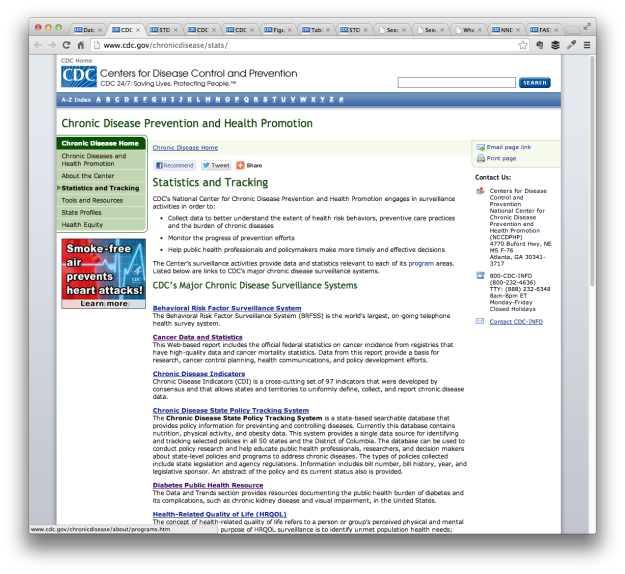
The vaccinations page goes directly to subpopulations.
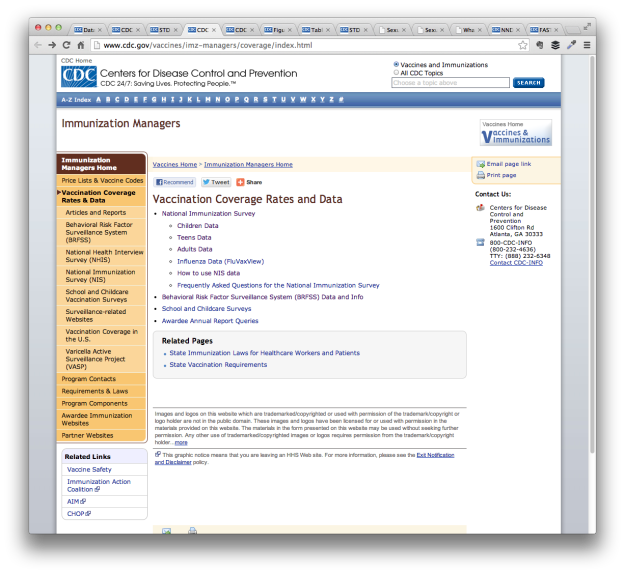
If someone's looking into a specific topic, this isn't too bad. They're unlikely to visit other topic pages anyway. However, problems arise when you change the links on the topic homepage. If we didn't bookmark a data source of interest, it's almost guaranteed we spend an hour looking for it again. So frustrating.
Consistency across topic pages can at least help us figure out where to turn when we lose a URL.
Mainly though, I don't want to spend half a day looking for data. Anything you can do to expedite the process is much appreciated.
Consistency
Speaking of which, a challenge of big government organizations is that they employ a lot of people who tend to work independently of each other. The CDC employs 15,000 people and the CDC data and statistics sections look like it. I wish it wasn't like this, but I understand why it is like this.
The pain comes when the inconsistency carries over to the data you provide and how you provide it.
Some data is provided via a portal, such as the previously mentioned WONDER and Data.CDC. Others only provide PDF files, whereas others go with Excel, CSV, or formatted plain text.
The CDC data search seems to get worse when I start to use Google to find the data I want. I end up on a separate site like HealthData.gov, which provides the same meta-information as the CDC sources, and the site simply points back to CDC.
Choose a format or framework. Make a decision. Get people in your organization to use it.
Show visual previews
I'm all for visualization integrated with the data search tools. It always sucks when I spend time formatting data only to find that it wasn't worth my time. Census Reporter is a fine example of how this might work.
That said, visual tools plus an upgrade to the previously mentioned things is a big undertaking, especially if you're going to do it right. So I'm perfectly fine if you skip this step to focus your resources on data that's easier to use and download. Leave the visualizing and analysis to us.
Decide what's important, archive the rest
So much cruft. So many old documents. Broken links. Create an archive and highlight what people come to your site for.
Wrapping up
There's plenty more stuff to update, especially once you start to work with the details, but this should be a good place to start. It's a lot easier to point out what you can do to improve government data sharing than it is to actually do it of course. There are so many people, policies, and oh yes, politics, that it can be hard to change.
Maybe give it a try anyway.
Seek out the people who care.
Maybe start with an area you are already strong, improve on it, and branch from there. In the case of CDC, a start with WONDER or Data.CDC might be where it's at. Or maybe start by unifying the topic pages and all those spreadsheets.
As an outsider looking in, I can't say for sure the best place to start. I don't know all the administrative baggage that comes with updating these sites. I would just hate to come back to this five years from now and see that nothing changed or worsened because of age.
Like I said, I want to use government data. Lots of people do. At this point though, it's just hard not to complain.
10 Jun 17:00


The Scientist Who Inspired the Count of Monte Cristo
by Esther Inglis-Arkell

Alexandre Dumas' famous story, The Count of Monte Cristo, was a fictional story based on real events. One of its characters, a mad-genius of a scientist who writes his greatest work in prison, was based on a real person. Learn of the imprisonment of Déodat de Dolomieu.
09 Jun 20:29

Long-term weight loss considered nearly impossible
by Cory Doctorow

Here's a CBC science piece quoting several obesity experts argues that long-term weight loss is almost impossible, saying that (uncited) meta-analyses of weight-loss intervention found that in the 5- to 10-year range, most weight-loss was reversed. According to Tim Caulfield, who holds a Canada Research Chair in Health Law and Policy, this is an open secret in scholarly and scientific weight-loss circles, but no one wants to talk about it for fear that it will scare people off of healthier eating and exercise regimes, which have benefits independent of weight-loss.
I found the article frustrating. While I am willing to stipulate that the data on long-term weight-loss suggests extreme difficulty, I wish the journalist had found biologists or doctors to discuss the issue, and had cited actual, specific research to support the claims made, which would make it easier to parse the nuances in the piece. It's not that I don't think that interdisciplinary lawyers with an undergraduate science background have something to say on this (I am 100 percent for interdisciplinary researchers, especially on complex questions like obesity), and while I think that psychologists like Traci Mann have a lot to say about some dimensions of weight-loss, it would have been great to find out what endocrinologists and other bioscience-types had to say about the phenomenon.
For my part, I went from about 250 lbs to about 170 in 2002/3, by eating a very low-carb diet. This morning, I weighed in at 176 lbs. I attribute my sustained weight loss to daily swimming (which I do for physiotherapy for chronic back pain) and a moderate-carb diet, as well as a two-day-a-week 600 calorie fasting regime.
Which is to say, it's a ton of work to stay where I am, and I know from past experience that if I skip swimming for a few days, or let myself go nuts on carbs for more than a day or two, or skip fasting-days (which aren't really fasting -- just very low-calorie days) that my weight creeps up. I pretty much never eat without making a complex (and tediously unwelcome) calculation about what I'm about to consume, and I often experience guilt while eating "bad" food and shame afterwards.
Clearly, this is less than optimal! Read the rest
Scirocco6, Ronald.phillips likes this
09 Jun 20:29


In 1964, Arthur C. Clarke Predicts the Internet, 3D Printers and Trained Monkey Servants
by Jonathan Crow
“If by some miracle some prophet could describe the future exactly as it was going to take place, his predictions would sound so absurd, so far-fetched that everyone would laugh him to scorn.”
That was Sir Arthur C. Clarke, science fiction author best known for 2001: A Space Odyssey, describing the inherent folly of predicting the future in a 1964 BBC documentary. Of course, he then goes on to do exactly that – with remarkable, unnerving accuracy. Part one of the documentary is above. Part two is below.
The piece opens with a generic narration that describes a diorama of future society at the GM pavilion at the 1964 World Fair. Perhaps because it was a more innocent time or maybe because it was sponsored by an automaker, this vision of the future is touchingly oblivious to anything related to climate change. Machines with laser guns will clear jungles in hours flat and people will live in domed communities on the ice caps. (Ice caps in the future. Hilarious.)
Then the reedy, bespectacled author appears and starts to describe how he thinks the world in fifty years (i.e. 2014) will look. And this is where the movie starts to feel uncanny. He talks about how the advancement of transistors and satellites will radically alter our understanding of physical space.
These things will make possible a world in which we can be in instant contact wherever we may be. Where we can contact our friends anywhere on earth, even if we don’t know their actual physical location. It will be possible in that age, possibly 50 years from now, for a man to conduct his business from Tahiti or Bali just as well as he could from London.
For the record, I’m writing this post in a coffee shop in Los Angeles, hundreds of miles from the massive Open Culture headquarters in Palo Alto, but I could just as easily be writing this on a beach in Sri Lanka or a hotel room in Dubrovnik. Clarke sounds here less like some pie-in-the-sky futurist than an aspirational lifestyle guru like Tim Ferris.
Clarke then describes how medicine might change. “One day, we might have brain surgeons in Edinburgh operating on patients in New Zealand.” The long-distance virtual surgery first was pioneered back in 2001 and it continues to improve as internet speeds increase.
And he predicts that at some point science will invent a “replicating device” that would create an exact copy of anything. That sounds an awful lot like a 3D printer. Clarke warns that this invention might cause massive societal disruption. “Confronted by such a device, our present society would probably sink into a kind of gluttonous barbarism. Since everyone would want unlimited quantities of everything.” In other words, 3D printers might turn the world into Black Friday at Walmart.
Some of his other ideas are just weird. Clarke proposes to tame and train armies of chimpanzees to cook, clean and do society’s grunt work. “We can certainly solve our servant problem with the help of the monkey kingdom. “ Planet of the Apes wouldn’t come out for another four years so Clarke could be forgiven for not realizing that that is one terrible idea. On the other hand, it’s hard to see how hiring monkeys could possibly make the customer service at Time Warner Cable any worse than it already is.
Related Content:
Arthur C. Clarke Narrates Film on Mandelbrot’s Fractals; David Gilmour Provides the Soundtrack
Isaac Asimov Predicts in 1964 What the World Will Look Like Today — in 2014
Free Science Fiction Classics on the Web: Huxley, Orwell, Asimov, Gaiman & Beyond
Jonathan Crow is a Los Angeles-based writer and filmmaker whose work has appeared in Yahoo!, The Hollywood Reporter, and other publications. You can follow him at @jonccrow.
In 1964, Arthur C. Clarke Predicts the Internet, 3D Printers and Trained Monkey Servants is a post from: Open Culture. Follow us on Facebook, Twitter, and Google Plus, or get our Daily Email. And don't miss our big collections of Free Online Courses, Free Online Movies, Free eBooks, Free Audio Books, Free Foreign Language Lessons, and MOOCs.
The post In 1964, Arthur C. Clarke Predicts the Internet, 3D Printers and Trained Monkey Servants appeared first on Open Culture.
09 Jun 20:26
How to Open a Book
by Diksha Basu
It can be tricky. Let Electric Literature help you figure out the best way to open a new book. There are several different ways to open your next book. Try, for instance:
The Precious: A favorite of collectors who want to keep their books in as near mint condition as possible, The Precious involves only opening pages at a thirty degree angle to ensure the spine never bends. The downside is that readers often can’t make out the two words on each line closest to the gutter, but at least the books stay pretty.
Related Posts:
04 Jun 03:53
Recent GigaPannery from Team M.A.G.I.C. & GEODE
by Callan
It’s been a while since I’ve shared some of the work of our GigaPan making team. We’re gearing up for our NSF-funded summer GigaPan generating session, so it’s worth taking a look back at some of the highlights from the last couple of months of work… See if you can find (a) evidence of pressure solution, (b) a thrust fault, (c) red beds, (d) a cross-section of a trilobite shell, …
04 Jun 03:53
 Australia-based BHP Billiton Ltd. (NYSE: BHP) is the largest foreign investor in the U.S. shale boom and the 25th largest company in the world. But Rod Skaufel remains "amazed … people (in the U.S.) do not know who BHP Billiton is."
Skaufel is BHP's North American shale president, and he oversees the division that now accounts for 42 percent of BHP's total oil and gas production. BHP's energy section used to be known for its deepwater offshore efforts, and that has changed dramatically in just…
Australia-based BHP Billiton Ltd. (NYSE: BHP) is the largest foreign investor in the U.S. shale boom and the 25th largest company in the world. But Rod Skaufel remains "amazed … people (in the U.S.) do not know who BHP Billiton is."
Skaufel is BHP's North American shale president, and he oversees the division that now accounts for 42 percent of BHP's total oil and gas production. BHP's energy section used to be known for its deepwater offshore efforts, and that has changed dramatically in just…


Who is BHP Billiton? You're not the only one asking
by Jordan Blum
Australia-based BHP Billiton Ltd. (NYSE: BHP) is the largest foreign investor in the U.S. shale boom and the 25th largest company in the world. But Rod Skaufel remains "amazed … people (in the U.S.) do not know who BHP Billiton is."
Skaufel is BHP's North American shale president, and he oversees the division that now accounts for 42 percent of BHP's total oil and gas production. BHP's energy section used to be known for its deepwater offshore efforts, and that has changed dramatically in just…
04 Jun 03:53


Steelcase And Susan Cain Design Offices For Introverts
by Mimi Zeiger
Downward dogs and meditation aside, these five "Susan Cain Quiet Spaces" offer productivity-enhancing focus and privacy at work.
Introverts of the workplace are having a moment. The office furniture company Steelcase teamed up with Susan Cain, author of the bestseller Quiet: The Power of Introverts in a World That Can't Stop Talking, to create a series of five spaces that address the need for more focus and privacy at work.
04 Jun 03:52


Newswire: Here’s a photo of Game Of Thrones’ Mountain and Viper acting like everything’s cool
by Dan Selcke
On this past Sunday’s episode of Game Of Thrones—plot details of which will now be discussed—the characters of Oberyn “The Viper” Martell and Gregor “The Mountain” Clegane engaged in combat, a match-up that left one party with a gaping chest wound, and the other lying in a pile of what used to be his own face. To assure viewers that the horrors they witnessed were fictionalized, Pedro Pascal (who plays Oberyn) posted a picture of himself and Hafpór Júlíus Björnsson (who plays the Mountain) to Instagram. It shows the two actors hanging out in their swim trunks, acting like everything’s fine, and that one didn’t just crack the skull of the other wide open like it was a brittle eggshell.
Pascal even gives the photographer a thumbs-up gesture, showing no indication that he wants to slice open his companion’s hamstrings in revenge for the ...
Phung.aq likes this
04 Jun 03:42


No, Female Hurricanes Are Not Deadlier Than Male Hurricanes
by Annalee Newitz
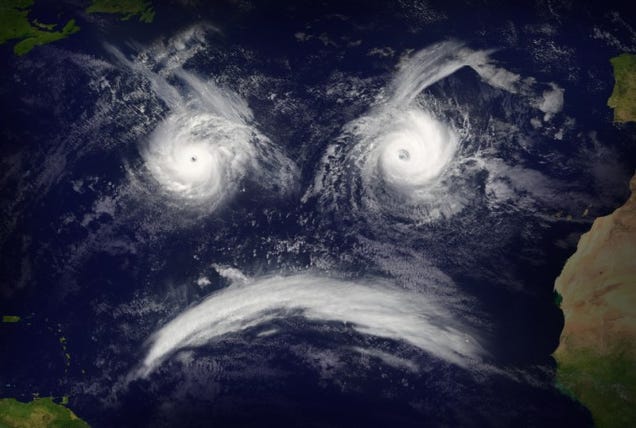
A group of marketing researchers at University of Illinois at Urbana–Champaign decided to tackle the problem of gender bias by analyzing a peculiar statistical anomaly: hurricanes with female names tend to be more deadly than ones with male names. And that was only the first thing they did wrong.
04 Jun 03:41
The Female Scientist CUUSOO Set Is Officially Getting Made Into a LEGO Product
by Victoria McNally

Good news, fans of tiny science! After months and months of consideration, the female scientist minifigure set that we told you about in February is getting made into a thing you can actually own. Hooray! Dinosaur skeletons and plastic ponytails for everyone!
LEGO Ideas (formerly LEGO CUUSOO) is a cool project that allows users to create, upload, and share their own concepts for LEGO sets with the hope of getting them made into actual buyable toys. Ideas that get a certain number of votes are reviewed by LEGO, who then selects one idea per cycle to make. Previous winners include the Mars Curiosity Rover, a Ghostbusters 30th anniversary set, the DeLorien from Back to the Future, and a Minecraft “Micro world.”
For CUUSOO #008, these awesome scientists beat out a Sherlock set, a Super Dimension Fortress Macross, The Legend of Zelda, a Japanese pagoda, Adventure Time, and a remote controlled DeLorean. It might not end up looking exactly like the design by the original creator, Alatariel, but the end result will hopefully be the same: showing kids (and adults) everywhere that women can be scientists and LEGO-lovers, too, without necessarily having to buy into the extremely feminine and stereotype-heavy LEGO Friends.
Oh, and if they could not do that thing where they indent the sides of their lady minifigs to create a smaller waist, too, that would be great—though I’ll admit, that’s a personal pet peeve on my part.
Check out the official announcement video from LEGO for more:
(via Topless Robot and The Mary Sue, image via Alatariel)
Meanwhile in related links
04 Jun 03:41
Google Renews Battle With the NSA by Open Sourcing Email Encryption Tool
Google is taking another step towards an internet that can stand up to snooping from the NSA. Today, the company released the source code for a new web browser plugin that encrypts your email messages before they’re sent across the net. Dubbed End-to-End, the plugin aims to prevent interlopers from reading messages even if they […]


