Shared posts

13 May 01:56

Five Steps To Prepare For Your First Iron Butt

by Evans Brasfield

Spring is springing like an underdamped shock absorber, and the heart of the riding season – with its long days and warm nights – is just around the next corner. So, why not make 2021 the year you do something epically MOronic? Grab a riding buddy, or two, and experience the Iron Butt Association‘s Saddlesore 1000, the gateway drug to long-distance motorcycle riding. Even if you only do it once, you’ll be able to regale your friends with stories from the time you rode your motorcycle 1000 miles in less than 24 hours. (Or maybe you were really feeling your oats and cranked out a Bun Burner 1500.

American Iron Butt: Conquering A SaddleSore 1000

While you may be able (and lucky enough) to simply pick a weekend to jump on your bike and ride those 1000 miles without any forethought, the rest of us would benefit from planning, particularly if your intended route takes you into remote parts of the country in the middle of the night. Not every gas station is fully automated or open 24 hours, and it would be a bummer to have your SaddleSore 1000 scuttled due to a lack of fuel. 

So, read on to learn the five things that we learned during our own Saddlesore 1000. 
1. Thoroughly plan your route

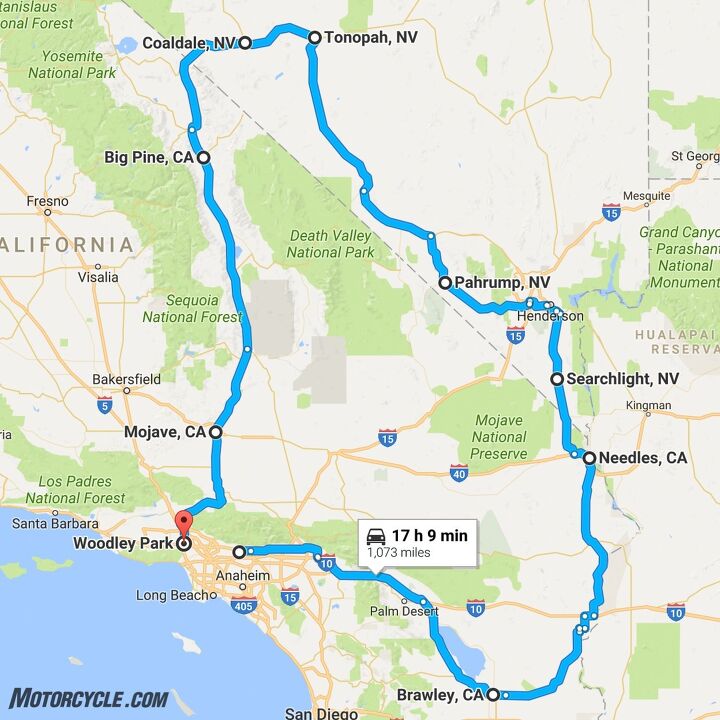
Map people will love this part. You need to plot your complete route for the 1000+ miles (to have a buffer to account for speedometer error). Once you have your route roughly planned out, go back through it and mark your gas stops, based on your bike’s range. In states with wide open spaces, like in the Southwest, you may have a relatively short stint before one that could tax your bike’s limits. As you are plotting your gas stops, also consider the time of day and when you may need to stop for food. In my experience, the middle of the night and around dawn are ideal rest/meal stops to combat fatigue and stay sharp. The rest of the time, make your gas stops as efficient as possible. 
2. Do your research

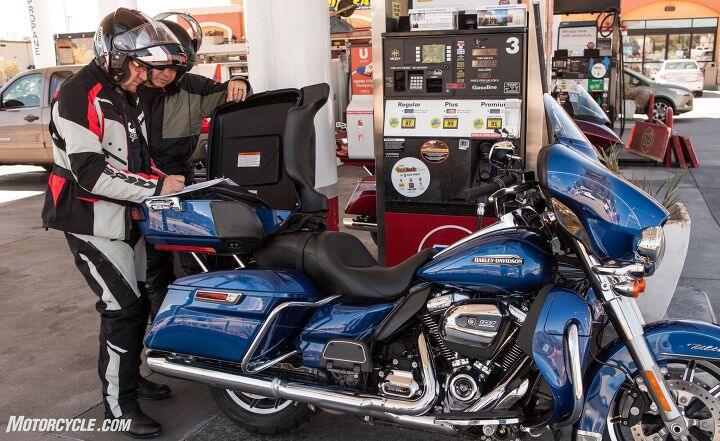
Look at every feature of your intended route. We had to change our plans because of snow a couple days before we planned on traversing an 8,000-ft pass in the middle of the night. (It was February, after all.) Consider the time of day that you’ll be traveling through an area. Thanks to the internet, you can find all the stations in each town and even ascertain that they’ll be open when you’re scheduled to pass through. 
3. Use a GPS and a tracker

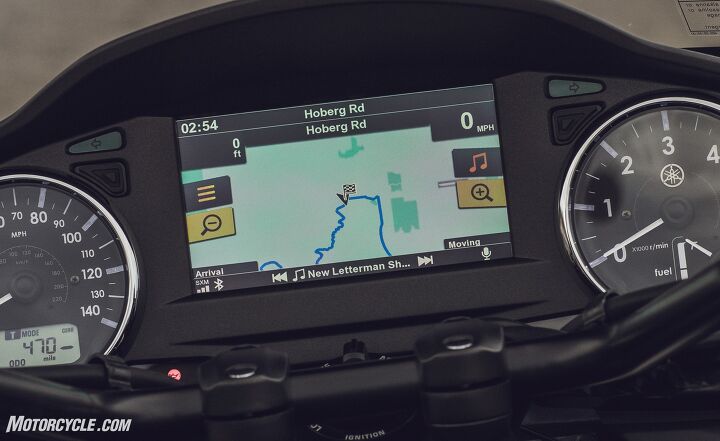
While I count myself among those who love reading and using maps, a GPS is a vital tool on an Iron Butt ride. You can program in your route and make the gas stops waypoints so that you don’t make any silly mistakes when you ride. Also, you can use your GPS to save your track as a means of verifying your route to the Iron Butt Association. Should you encounter unexpected construction or road closures, the GPS can still get you to your next gas stop if you follow an extended detour. Finally, having your GPS remind you of upcoming turns is extremely helpful when you’re tired late in the ride. Note: Unless you have an app that features downloadable maps, it’s better to use a dedicated GPS rather than a smartphone since you are likely to spend time out of cell service.  

The Spot Gen4 tracker.

Your friends and loved ones will want to follow your progress, particularly through the night. While there are smartphone apps you can use, I’m a big fan of Spot trackers. If buying and subscribing to their service is too expensive for you, consider renting one. In addition to tracking (and documenting for Iron Butt certification) your progress, you have the ability to send pre-programmed messages to your contacts from along the route from the array of buttons on the Spot. If an emergency arises, you can summon help to your location with the push of a button. 

MO Tested: Spot Gen3 Rental Review

4. Carry your own provisions

The key to a successful Iron Butt ride is keeping the stops short. That way, you can build up a buffer of time for unexpected delays on your route. If you carry your own snacks and easy-to-eat meals with you, you can fuel yourself and the bike at the same time. While it’s easy to buy fluids at gas stations, healthy food is more difficult to acquire. Believe it or not, you’re stressing your body during endurance rides, so you’ll want to avoid heavy, fatty foods and stick to items that will be easy to eat and deliver maximum nutrition. 

Caffeine can give you a boost if you don’t resort to it too soon. However, stopping for a meal with a cup of coffee isn’t something to avoid as you get tired.

Avoid caffeine, at least in the early hours of your ride. If you don’t, you could use up its limited boost and hit a wall later in the trip, and caffeinated drinks may not be able to pull you out of it. When riding through hot weather, carry a hydration pack. You don’t want to drink so much that you need to pee every hour, but your concentration is the first thing to go when you get dehydrated. 

If you build up a buffer of time thanks to efficient gas stops, you’ll be able to enjoy the luxury of a restaurant meal along the road when you really need it. 
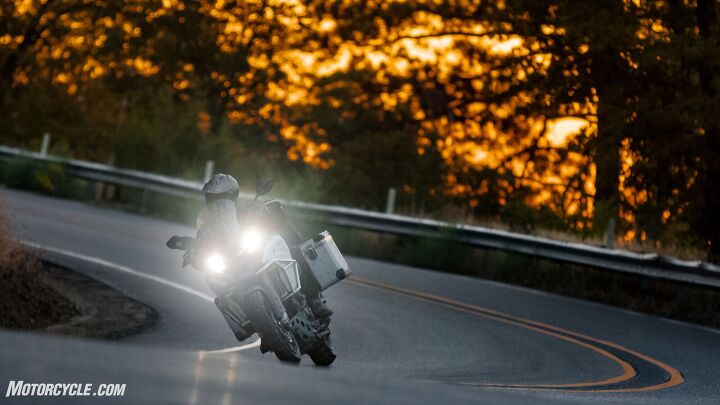
5. Listen to your body

Only you can decide if you’re too tired to ride, and you need a short break. More than once, I’ve hit the afternoon doldrums on an extended ride and achieved quick recovery with a 20-minute nap, leaned back on my bike, parked in the shade. The fun of endurance riding comes from completing the event. Don’t risk falling asleep at the handlebars and crashing. If you’ve got time in your pocket, get off the bike at a gas stop and move around a little to get the blood circulating. 

If you’ve never ridden long distances before, don’t jump into the deep end of the pool not knowing how to swim. Take some longer rides to build up to an Iron Butt. Yes, you are just physically sitting on a bike, but riding is tiring. Rack up some 300-500 mile days before you attempt a Saddlesore 1000. 

For more information on riding Iron Butt challenges, look to the Iron Butt Association website and it’s very informative forum. 
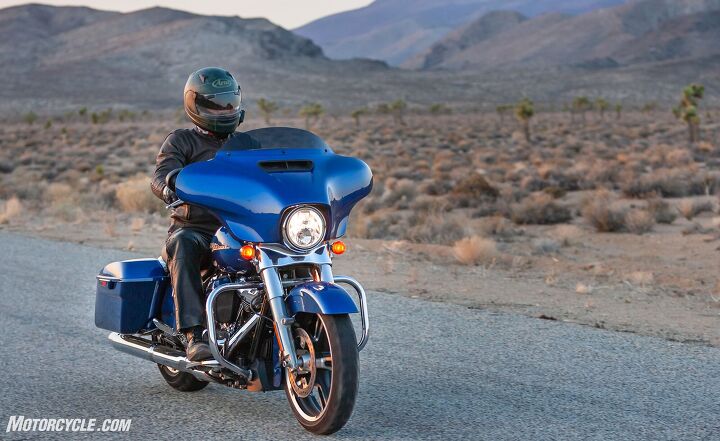

We are committed to finding, researching, and recommending the best products. We earn commissions from purchases you make using the retail links in our product reviews. Learn more about how this works.

Become a Motorcycle.com insider. Get the latest motorcycle news first by subscribing to our newsletter here.

The post Five Steps To Prepare For Your First Iron Butt appeared first on Motorcycle.com.
13 May 01:41

The 10 best gins for a refreshing gin and tonic

by Mark Stock

When it comes to classic gin cocktails, there is perhaps nothing more classic than a gin and tonic.

The post The 10 best gins for a refreshing gin and tonic appeared first on The Manual.

13 May 00:21

Mayna Treanor Avent Studio in Gatlinburg, Tennessee

The Avent Studio from beneath the porch.

A small cabin built in 1850 by the Ownby family stands in the middle of the Great Smoky Mountains.

In 1918, Frank Avett brought the property from the family for $200. Mayna Avett, the wife of Frank, remodeled the house into an art studio. Inside, she painted oil and watercolor paintings of the Appalachians and would exhibit them in  South Carolina, Tennessee, and Massachusetts. She used the cabin as a studio for well over 20 years. 

The cabin itself is a simple one-room structure with a cobblestone chimney. The building was transferred to the National Park Service in 1932. It lies just one mile into the Jake's Creek Trail from Elkmont, Tennessee. 

12 May 17:44

Man Who Is Paralyzed Communicates By Imagining Handwriting

by Jon Hamilton
An experimental device that turns thoughts into text has allowed a man who was left paralyzed by an accident to swiftly construct sentences on a computer screen. The man was able to type with 95% accuracy just by imagining that he was handwriting letters ...
12 May 17:42

Grow Your Photography Business With a Text-Based Marketing Campaign

Grow Your Photography Business With a Text Based Marketing Campaign

photo by izusek via iStock

If you’ve been trying to grow your photography business over the last year, then more power to you. It’s hard enough to run a business in general, but running a business that requires person-to-person contact during a pandemic is near impossible.  

Now that the world is slowly returning to normal, you may be finding yourself in a position where you feel like you don’t need to grow your photography business anymore. You’re probably getting clients coming back to you again and are feeling a lot better. 

However, this would be a huge mistake. There are tons of potential clients out there that you’d be missing out on if you didn’t keep trying to grow your photography business right now. 

So, I’m bringing you a quick overview of one of my favorite marketing campaign ideas for photographers: text-based marketing. 

 t’s 2021 and the more available you can make your business, the better. 

Benefits of a Text-Based Marketing Campaign

grow your photography business

photo by Sitthiphong via iStock

There are a ton of benefits of using modern photography business tools in your marketing plan. But, I really think that the best way to grow your photography business this year is through text-based marketing campaigns. Here’s why.

98% Open Rate

Unlike email, which has an abysmal open rate of anywhere between 15-25%, 98% of all text messages that are sent are opened. If you’ve ever subscribed for text messages from a business, then you likely already know this because you open every single ad you get from them. 

A near-perfect open rate ensures that you are reaching the widest possible audience with your marketing campaign. It basically takes all of the leg work out of actually getting people to interact with your ads. This way, the only thing left for you to do is find your perfect audience. 

75% of Consumers Like Text-Based Marketing

75 percent interest rate

Text-based marketing campaigns are also one of the best ways to grow your photography business because the majority of people say that they are interested in getting marketing material texted to them. 

I can assure you that if you were to ask people whether or not they’re excited to receive marketing emails, a large majority would say no. So, what makes text messaging different?

It’s easy. People are always on their phone. It’s easy to read a marketing message from a business you really care about, and if that particular deal doesn’t appeal to you, to simply go about your day. You aren’t needing to sort through hundreds of marketing messages, like you do with your email, in order to find things that are really important to your day. 

Learn More:

Benefits of Podium

benefits of podium

So, if you’re ready to grow your photography business through a text-based marketing campaign, then you need to know about Podium. 

Podium is an all-in-one messaging platform that takes all of your messages, from your email to your social media accounts, and puts them all in one place. This way you never miss anything. 

But Podium also just started Podium Campaigns. Podium Campaigns takes all of the work out of building a text-based marketing campaign.  

It’s really difficult to grow your photography business. With Podium Campaigns, you won’t need to spend any more time sifting through photography business tips and photography marketing tips that all conflict with one another. 

Easy to Gain Traction

easy to gain traction

Podium Campaigns makes it really easy to get all of your clients to opt in to your marketing texts. Since Podium already helps you to handle all of your communications with your clients, from answering inquiries to invoicing, they created multiple points in this communication channel to allow your clients to opt in. 

So, there’s no need for you to beg your clients to let you send them text messages. They actually want to participate in this marketing campaign. 

Easy to Track Your Success

easy to track your success

Another way that Podium Campaigns helps you to grow your photography business is that it helps you keep track of how well your campaigns are going. 

It tracks all of the clients who unsubscribe from your text message marketing, so that you know when a campaign really isn’t landing. It also tracks transactions that occur based off of one of your text message marketing campaigns, so you know exactly how much money you’re bringing in that you otherwise wouldn’t have. Finally, it tracks all of the basic data you need, like click rate and response rates. The higher your engagement, the batter your campaign is working. 

While Podium isn’t a free service, they do offer a free trial to PhotographyTalk readers. All you have to do is head over to their website to find out more information. 

Learn More:


We Recommend


12 May 17:41

5 Reasons Why You Should Shoot on Film in 2021

5 Reasons Why You Should Shoot on Film in 2021

 photo by naqiewei via iStock

Please indulge my reminiscing as I discuss why you should shoot on film in the digital age. I’ve been a photographer for a very long time, having grown up with various formats of film cameras. As I got into paid photography, I was still solidly in the film photography era. 

Digital was an interesting thing to read about in photography magazines and see at consumer product shows and when various sales reps would visit my local camera shop.

Bit by bit, digital imaging started making its way into mainstream photography. First through news and sports agencies, then in mass market magazine advertising, and finally down to us regular pros and avid photo enthusiasts.

My early entry into digital imaging came by means of Kodak and other brands offering photo CDs   along with my film processing. Then, in 2002, Canon introduced the EOS-1Ds with a Full Frame sensor which actually surpassed the industry standard resolving power of Kodachrome 25 film. Ever since then, I’ve been shooting digital and transitioned away from film for a large part of my photography.

Why I Use a Film Camera in 2021

why you should shoot on film

 photo by jwblinn via iStock

I actually never totally stopped using film cameras, especially for larger formats, but I’ve recently started using a film camera more often now. There are good reasons to shoot on film if you’re a digital photographer. 

If you are wondering why should you shoot film, here are 5 reasons for why I shoot film that might apply to you, too:

  • Larger Formats
  • Learn the Complete Photographic Process
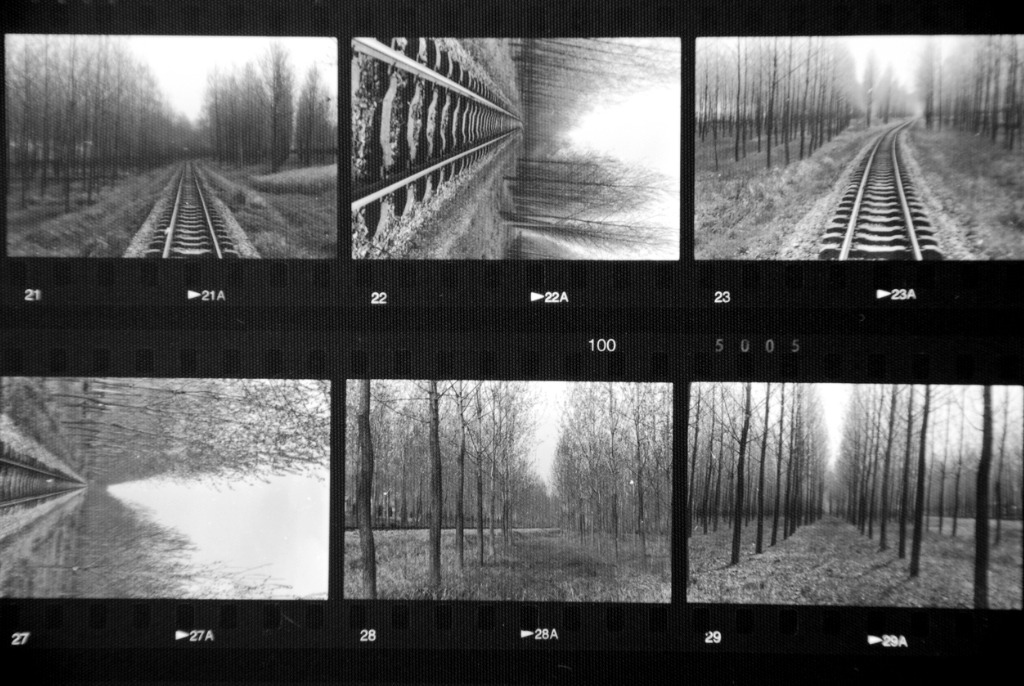
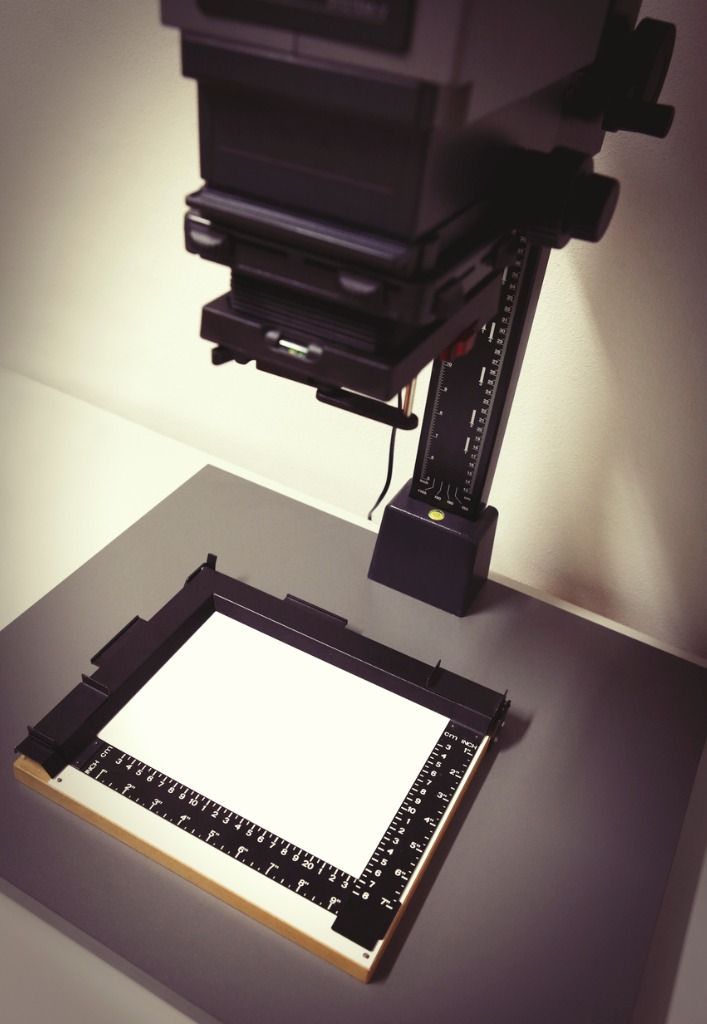
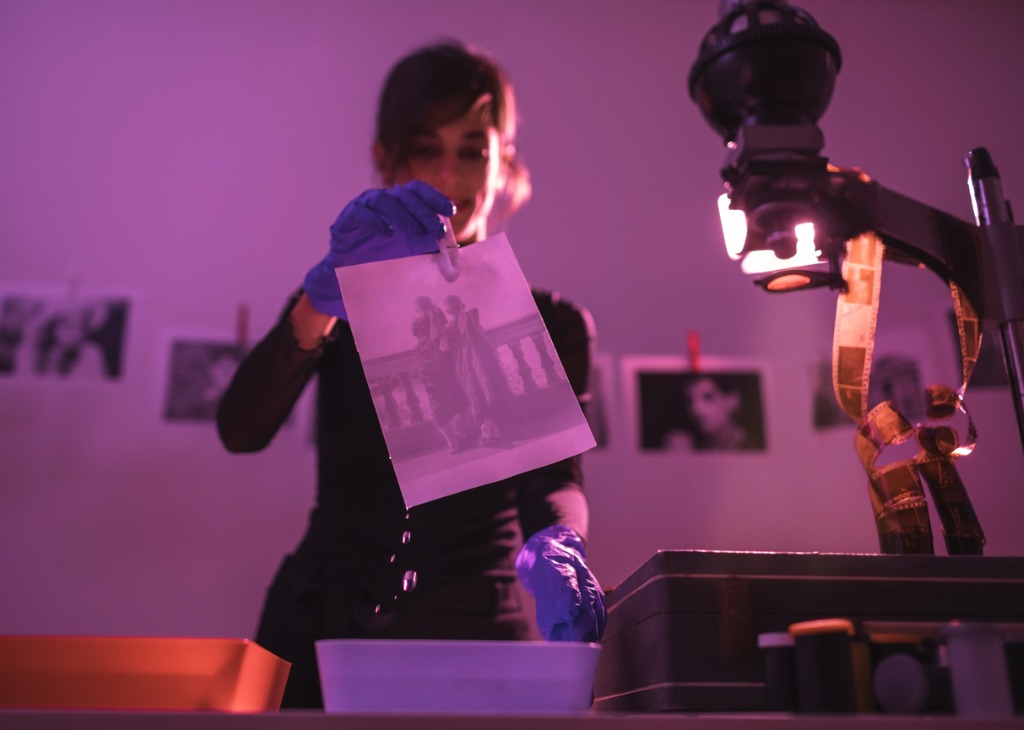
  • Print In a Darkroom
  • Become a Better Digital Photographer
  • It’s FUN!

Cheap Access to Larger Formats

film photography

 photo by DERO2084 via iStock

I’ll be honest with you, I spend a lot of money on photography and videography, and I bet many of you do, too. In order to get specific features and also to have a certain quality level, camera gear prices go up. 

Entry-level cameras and lenses are among my favorite tools for helping others learn serious photography. The quality of images produced by these fantastic products is absolutely superb, so I like to emphasize to never look down on entry-level gear.  

The entry-level label refers to friendly pricing and not to image quality. What makes other cameras cost more is often an increase in ruggedness and special features such as very fast lens apertures. 

Larger formats cost more, too. An APS-C entry-level camera with two lenses might cost less than a pro series Full Frame camera body alone. It’s not just the cameras, but lenses too, that cost more in Full Frame than in APS-C, even when comparing professional caliber gear in those two formats.

As a general rule, cameras and lenses simply cost more as format size goes up. In digital cameras, take a look at Medium Format cameras compared to Full Frame 35mm format. A typical Medium Format camera with 3 lenses costs about as much as a nice car or even a modest home in some real estate markets.

120 Roll Film and 4X5 Sheet Film

reasons to shoot on film film cameras

 photo by redstallion via iStock

A great reason for why you should shoot on film is that you get much cheaper access to photography formats larger than Full Frame 35mm. 

Take a look on a trustworthy used camera website and you’ll find professional level Medium Format cameras using 120 and 220 roll film and their lenses for prices that are true bargains. If you were to look locally at estate sales or neighborhood camera stores, you might even find enthusiast level roll film cameras for extreme bargain basement pricing.

Moving up into Large Format, such as 4 by 5 inch sheet film view cameras, field cameras, and press cameras, also known simply as 4X5, we see very view digital options. What does exist is so expensive I can’t see most of the working pros I know ever owning one, though renting might be cost effective based on the job.

Once again, in the used market for 4X5 cameras, prices are very friendly. 4X5, 8X10, and even larger sheet film cameras are still being made brand new, too. I love using 4X5 film cameras. These cameras have capabilities that require us to use deep menus in Photoshop to mimic digitally, such as perspective correction and plane of focus adjustments.

Learn More:

Learn the Complete Photographic Process

why i shoot film why should you shoot film

 photo by yuryRumovsky via iStock

If you’re even just a little bit younger than I am or otherwise just now started getting serious about photography, you may have never used a film camera for serious photography. Which is nothing to be ashamed of, it just means you didn’t get a background in the classic photographic process. 

While we have amazing post processing programs that can perform many operations, most of the advanced features of these programs are a way to do digitally what was done with film, photo printing paper, processing chemicals, and special techniques. 

An understanding of what happens when we expose, develop, and print film based images directly corresponds to digital tools and features and is a good reason why you should shoot on film. For instance, look at the Photoshop tool of Dodge and Burn. Though it’s a digital PS tool, it is based on and even named for a technique used in physical printing from a negative.

Contrast adjustments, dynamic range, film grain, and so on all refer to characteristics and techniques of film, paper, and chemicals. So, seeing and doing it in film ourselves lets us really learn what is happening and more importantly why.

Print In a Darkroom

using a film camera 1

 photo by narvikk via iStock

Which is why, if at all possible, using a darkroom to develop and print ourselves is very beneficial. When we shoot digital, especially JPEGs to use as is, we miss out on a lot of what’s happening.  

In a class I used to teach a long, long time ago, we would even make our own film to get the full picture, pun regretted. We spread a light sensitive copper based emulsion on a sheet of paper, exposed it, developed and fixed it, and had a barely discernible image, but we did make an image! It was a great exercise, I’ll have to see if I can find the materials and instructions again. 

Outside of that, shooting B&W with film cameras, developing it ourselves, using an enlarger in a darkroom, and finishing the prints will also provide an eye opening view of the entire set of operations of what happens in the camera, on the film, and how it all affects how a final image might come out, plus why it all happens the way it does.

Become a Better Digital Photographer

using a film camera 2

 photo by Visual_Intermezzo via iStock

All of this playing around with classic film cameras, developing, and printing in a darkroom will teach us about photography in general. Knowing what is happening, and more importantly WHY, allows us to have more control of whatever type of photography we’re doing. This also applies to digital video.

Much of what is happening when we capture and post process a digital file is directly analogous to the photography that was made by scientists and artists in the early 1800s. 

Light as a waveform is adjusted by the optics of our lenses. Light as particles is controlled by lens apertures and shutter speeds and impacts a light sensitive surface which is then manipulated to make a permanent image.  

A Daguerreotype and a JPEG from a mirrorless Canon, Nikon, or Sony have more things in common than differences. Thus, completely understanding the art and science of photography is among the more important reasons why you should shoot on film.

Film Photography Is FUN!

use a film camera in 2021 1

 photo by dansiga via iStock

The number one reason why you should shoot on film is because it’s fun. It is so enjoyable to change our mindset of how we create an image, slowing down and considering how to maximize the limited number of exposures available in a roll of film or even on a single sheet of large format film.

Even if you’re not going to develop and print the film yourself, it still makes us think more about each individual shot. And that’s part of the real enjoyment of using a film camera. As photographers, the more we exercise our creativity, the happier we are.  

Here’s an assignment if you want to enjoy using a film camera yourself. FInd a classic 120 roll film camera. A TLR or a folding camera will be great. This will likely mean you are going to be setting the shutter speed and lens aperture or f-stop manually. That’s okay, pick up an old light meter, too, or practice the Sunny 16 Rule. 

I suggest 120 roll film because the images will be larger on the negative, plus there will be fewer exposures available per roll, making us really consider each shot. I recommend black and white negative films for the complete experience. Color negatives or chromes (slides) are nice, but B&W is easier to process and print.

In some areas, I’ve seen darkrooms for rent, though that isn’t as plentiful as it was before the last 15 years or so. I have found listings for used darkroom equipment that you can put in a second bathroom or a spare bedroom.

use a film camera in 2021 2

 photo by Visual_Intermezzo via iStock

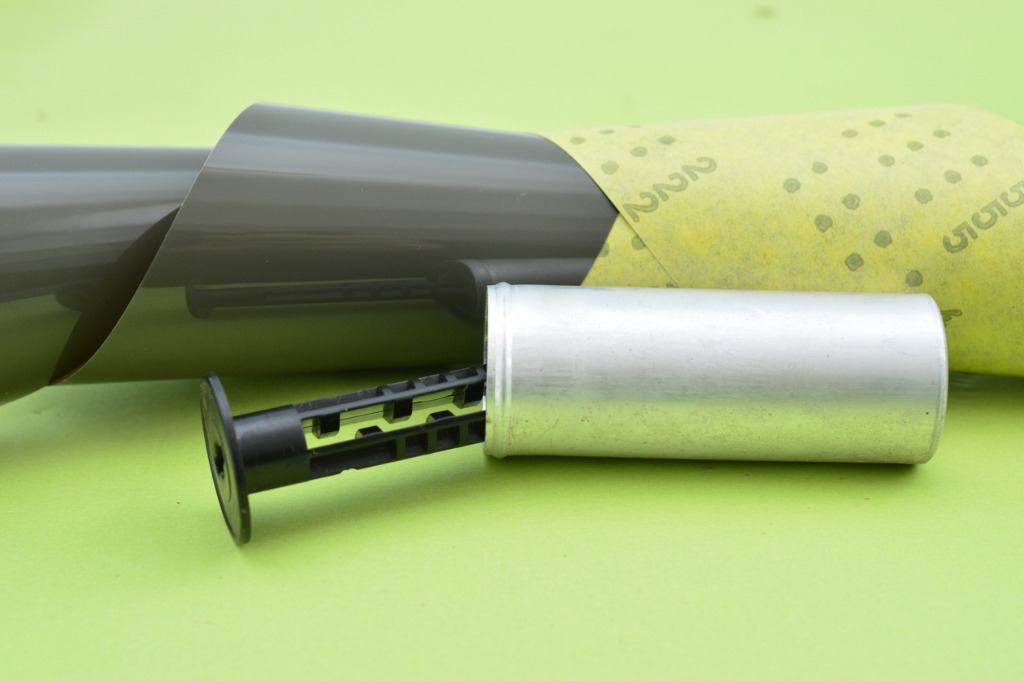
A light tight changing bag is useful for loading the exposed film into the developing can but most of the other operations don’t actually require complete darkness. Black out the windows and seal up around doors to limit light leaks affecting your printing, find a deep red safelight filter for that part of the process. 

And finally, to complete the experience, matte the enlargements yourself and hang them on the wall. The joy of creating your own art and the fun of learning by doing all the steps are the best reasons why you should shoot on film. As an added bonus, you may also become a better digital photographer by engaging in film photography. 

Learn More:


We Recommend


12 May 17:39

Historical Hackers: Emergency Antennas Launched by Kite

by Al Williams

Your airplane has crashed at sea. You are perched in a lifeboat and you need to call for help. Today you might reach for a satellite phone, but in World War II you would more likely turn a crank on a special survival radio.

These radios originated in Germany but were soon copied by the British and the United States. In addition to just being a bit of history, we can learn a few lessons from these radios. The designers clearly thought about the challenges stranded personnel would face and came up with novel solutions. For example, how do you loft a 300-foot wire up to use as an antenna? Would you believe a kite or even a balloon?

Why Such a Big Antenna?

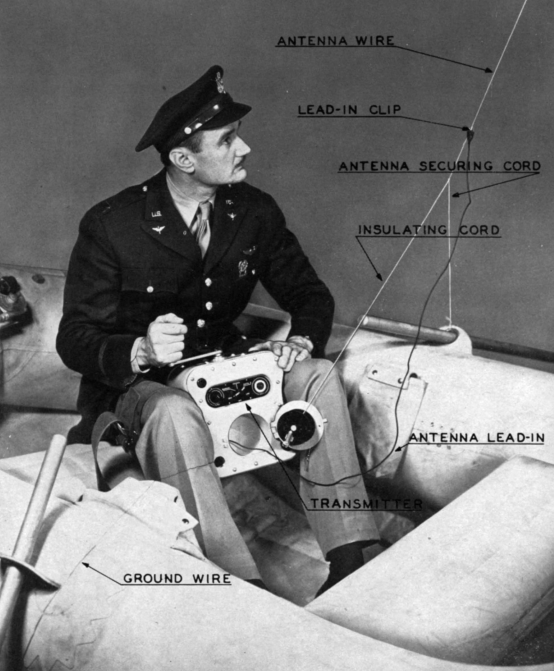
Operating the emergency radio from a life raft.

The international rescue frequency in those days was 500 kHz. This allowed simple spark gap transmitters to be placed on lifeboats even in the 1920s. Unfortunately that is 600 meters wavelength! A quarter-wave antenna at that frequency is 150 meters long or nearly 500 feet.

After the Titanic sunk, ships maintained a watch on 500 kHz, and ground-wave propagation ensured a good range. Even after spark gaps fell out of favor, they continued to be allowed on lifeboats due to their simplicity. So by the time the war started, 500 kHz was the frequency everyone monitored for distress traffic

History

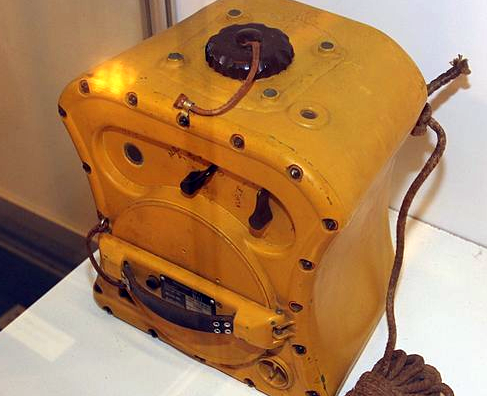
German NS2 Set

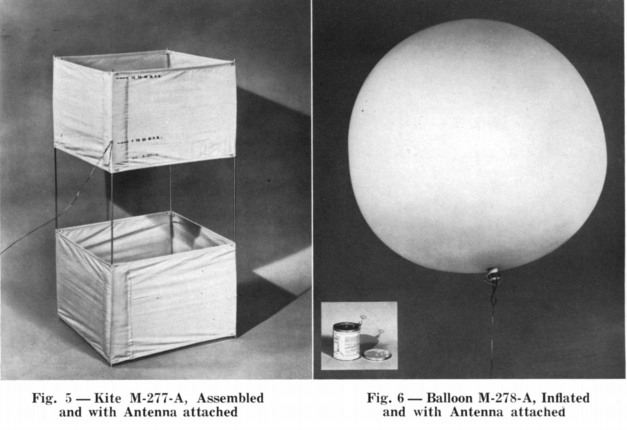
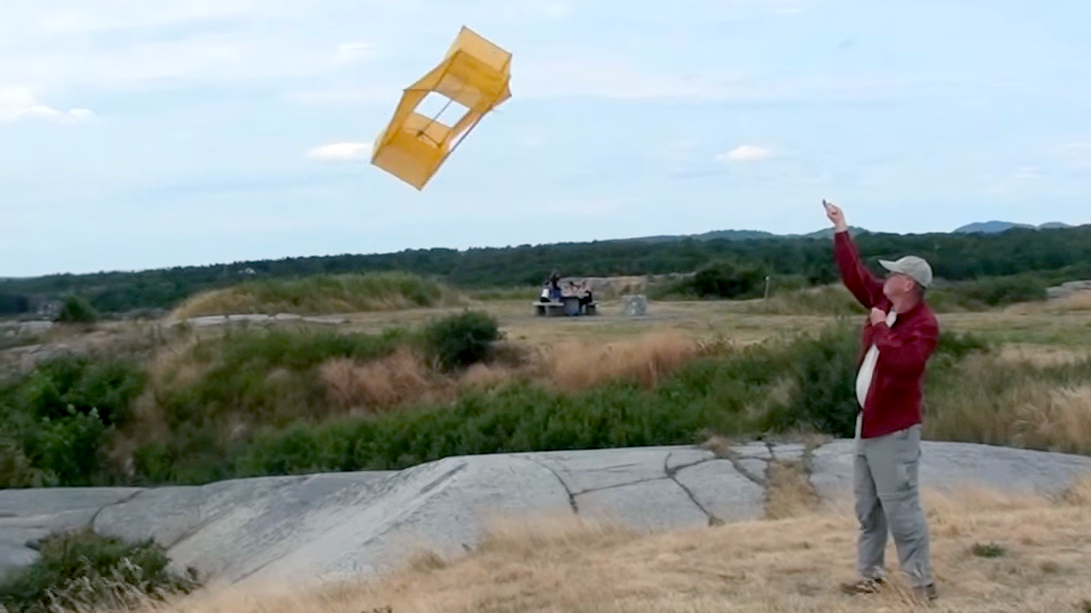
The German NS2 (or NSG2) was a two-tube 500 kHz transmitter with a crystal oscillator. In 1941, the British captured one and created their own version, the T-1333. A second captured unit went to the United States, spawning the SCR-578 and its transmitter, the BC-778. An SCR-578 had a folded metal frame for making a box kite and a balloon with a hydrogen generator. Water would cause the generator to produce gas and the balloon would carry one end of the antenna aloft. The 4.8W transmitter could reach about 200 miles with its 300 feet of antenna wire lofted into the air. You needed at least 175 feet of antenna out for the radio to work.

The American set could use a kite or a balloon to lift the antenna.

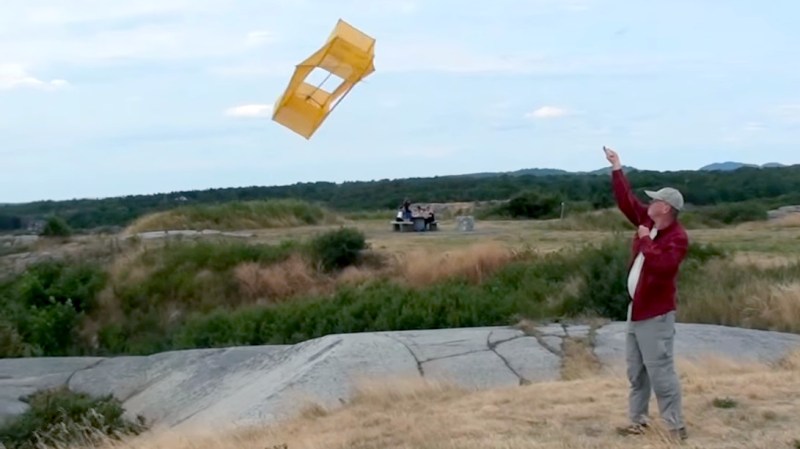
The designers knew you wouldn’t be able to erect that much wire in a life raft. The kite or balloon were workable solutions and would deploy the antenna from a reel mounted in the radio (you can watch a modern-day kite launch in the video, below). Not only that, they could obviously envision what the situation would be like on a tiny raft bobbing around. These radios all had a shape designed to clamp between your knees during operation. The hourglass-like shape spawned the nickname “Gibson Girl” after the illustrations of Charles Dana Gibson. They were also waterproof and made to float.

There were variations. The NSG2 produced 8 watts out using a crystal oscillator while the United States version didn’t use a crystal — they were in short supply — and produced less power. The T1333 used a flare gun to launch the kite folded up, which would deploy at 200 feet. It was also rectangular and had pads to allow the operator to grip the box in operation and didn’t have a balloon.

The entire kit weighed about 33 pounds and included a signal lamp, two balloons, two water-activated hydrogen generators, two rolls of antenna wire, and a parachute so you could drop the whole bag from an airplane.

A True Lifeline

It would be a pretty bad situation if you fished out your survival radio when you needed it and found the batteries were dead. That’s why these radios typically had cranks to generate electricity. No batteries to replace or wear out. If you had enough strength to turn the crank, you were on the air. The crank could also automatically send SOS.

If you want to read more about these old radios, check out [RadioNerd’s] scans of the military manuals. There’s a lot of detail there. For example, it explains that the hydrogen generator uses lithium hydride to produce hydrogen gas when exposed to water. The automated system for sending SOS, AA, or dashes was clever and something we’d do with a microcontroller today but in the 1940s, required mechanical engineering. The circuit description is interesting, too.

The design was durable. Both military and civilian aircraft used the SCR-578 or its direct descendant the AN/CRT-3 until the 1970s. The newer radio acted like the older one, but could also transmit on 8,364 kHz. The Russians started making copies of the original transmitter in 1945. The AVRA-45 is hard to tell from its American counterpart, apart from the lettering on the case.

Hindsight

I don’t know which German engineers at Frieseke & Höpfner GmBH designed the NS2, but they were clearly thinking about their users and willing to solve problems in the true hacker fashion. The shape is easy to grip, the crank does away with battery problems, and the radio is suited for its intended use. You have to wonder what other ideas they had for lifting the antenna before they settled for the balloon and kite combo. I also wonder why the British kite is so different and requires a Very pistol to launch.

Of course, this wasn’t the first example of a kite-lofted antenna. In 1898, a weather balloon lifted an antenna over Massachusetts and in 1901, Marconi’s antenna at Newfoundland would communicate with England while connected to a man-carrying observation kite. Military use dates back to at least 1905 with the United States Army using them as late as 1920. The British and Germans were using them around the turn of the century, too and the U.S. Navy had kite-based antennas on seaplanes in 1922. Still, the NS2 was a marvel of packaging and practicality.

The NS2 was the successor to the heavier NS1. While it did have a kite, it also had an ungainly aluminum antenna for use with no wind and it also relied on batteries. You can presume that by taking honest feedback on the NS1, the engineers were able to build the NS2 and they really hit the mark. After all, isn’t imitation the sincerest form of flattery? I doubt those engineers considered themselves hackers — that term wasn’t even in use then — but I do.

It is amazing how simple a radio can be if you are motivated enough. Don’t think hams haven’t used balloons before, either.

[Main image source: German WWII emergency kite by Helge Fykse]

12 May 17:34

This is Architectural Photographer Mike Kelley’s Actual Client Contract

by David Crewe

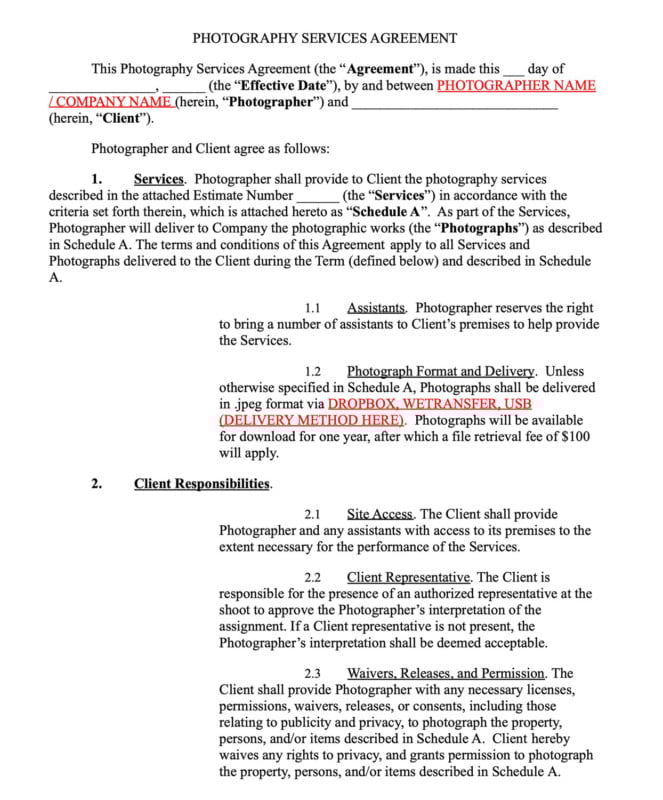
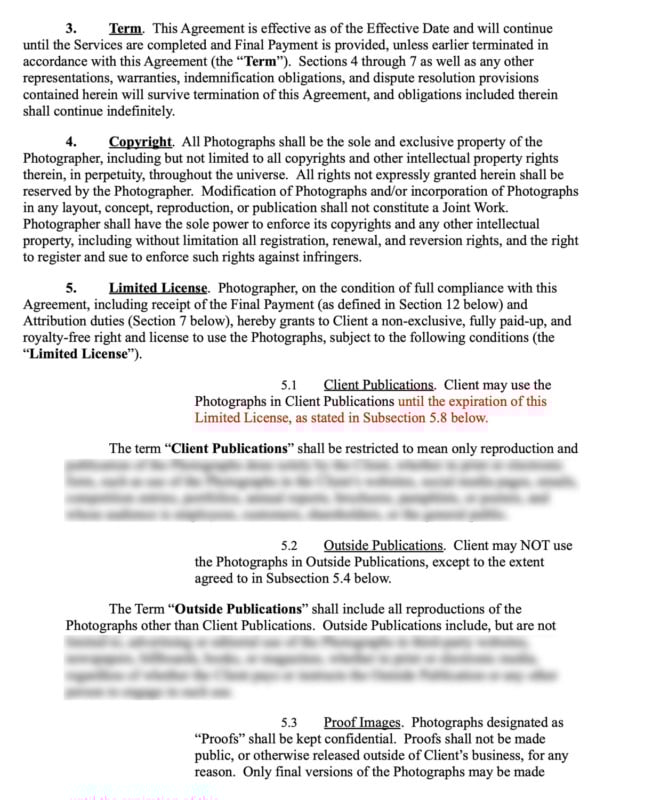
Architectural photographer Mike Kelley, who might be best known for his viral photos of Airports around the world has released a $100 contract template for professional photographers working in the architecture, design, and real estate markets.

Kelley says that he has worked with a team of lawyers to draft a contract that is easily adaptable for photography businesses in the real estate and architecture vertical.

“I have been using this exact contract right out of the box for about a year now in testing and have tweaked it to just about near perfection,” Kelley says.

As detailed on APAlmanac, once the template is purchased and downloaded, photographers can start using it straight away with the included instructions, or cut and paste sections that are applicable to individual businesses.

“Even skimming the contract will probably open your eyes to new ways of managing client expectations and deliverables,” Kelley adds.

“No matter what sub-genre of architectural photograph you produce, the core of this document will be relevant and very easily adaptable to your business. Whether you’re delivering 100 images per shoot or three images a day for a giant hotel ad campaign, you’re covered,” he promises.

Kelley also states that this contract template should work and apply any architecture, interior, or real estate photographer all over the world, however, he does stipulate that those who reside outside the United States should consult a local lawyer to verify details before using it.

The APAlmanac Contract Template is an instant digital download for architecture, real estate, and interior design photographers which contains a full-length contract designed specifically for those of us who make money photographing the built environment. Never again will you feel unprotected or adrift when it comes to working as a professional photographer; the goal is to provide clarity for both the photographer and client. Licensing agreements are clearly spelled out, your workflow is protected, you’ll never go uncredited again, and you’ll never have to wonder just how in the world your photos ended up on the pool contractor’s website without your permission.

The template includes the 11-page contract Kelley uses in his day-to-day business in Word, PDF, and RTF formats so that it is readily available for photographers to update their own information before use. Kelley also includes a sample estimate to show you how to structure and build out your own, and an “explainer document” to help make the more “legalese” sections of the contract easier to understand.

“The explainer also shows you just how I get my clients to sign the contract and the simple workflow that I use to ensure a quick send of the contract and estimate, and a frictionless way to get clients to sign the document without having to print or open up a PDF reader to do so,” Kelley explains. “I want my clients to have an easy experience working with me, and that includes their experience signing contracts. I know they can be onerous and burdensome, but that is not the case here. Quick, efficient, and clear – the three hallmarks of a great contract in any business.”

The contract template is available for purchase and download from the Architectural Photography Almanac website for $100.

12 May 11:06

Morse Code is simple


Tags: Morse, code, learn

15554 points, 567 comments.

12 May 11:05

8 of the best full-body exercises to get you in shape

by Cristina Montemayor

Full-body workouts maximize your results, targeting multiple muscle groups simultaneously, in half the time.

The post 8 of the best full-body exercises to get you in shape appeared first on The Manual.

12 May 11:05

Water Wells are at Risk of Going Dry in the US and Worldwide

by Debra Perrone and Scott Jasechko

This article is republished from The Conversation under a Creative Commons license. Read the original article.

As the drought outlook for the Western US becomes increasingly bleak, attention is turning once again to groundwater—literally, water stored in the ground. It is Earth’s most widespread and reliable source of fresh water, but it’s not limitless.

Wells that people drill to access groundwater supply nearly half the water used for irrigated agriculture in the US and provide over 100 million Americans with drinking water. Unfortunately, pervasive pumping is causing groundwater levels to decline in some areas, including much of California’s San Joaquin Valley and Kansas’ High Plains.

We are a water resources engineer with training in water law and a water scientist and large-data analyst. In a recent study, we mapped the locations and depths of wells in 40 countries around the world and found that millions of wells could run dry if groundwater levels decline by only a few meters. While solutions vary from place to place, we believe that what’s most important for protecting wells from running dry is managing groundwater sustainably—especially in nations like the US that use a lot of it.

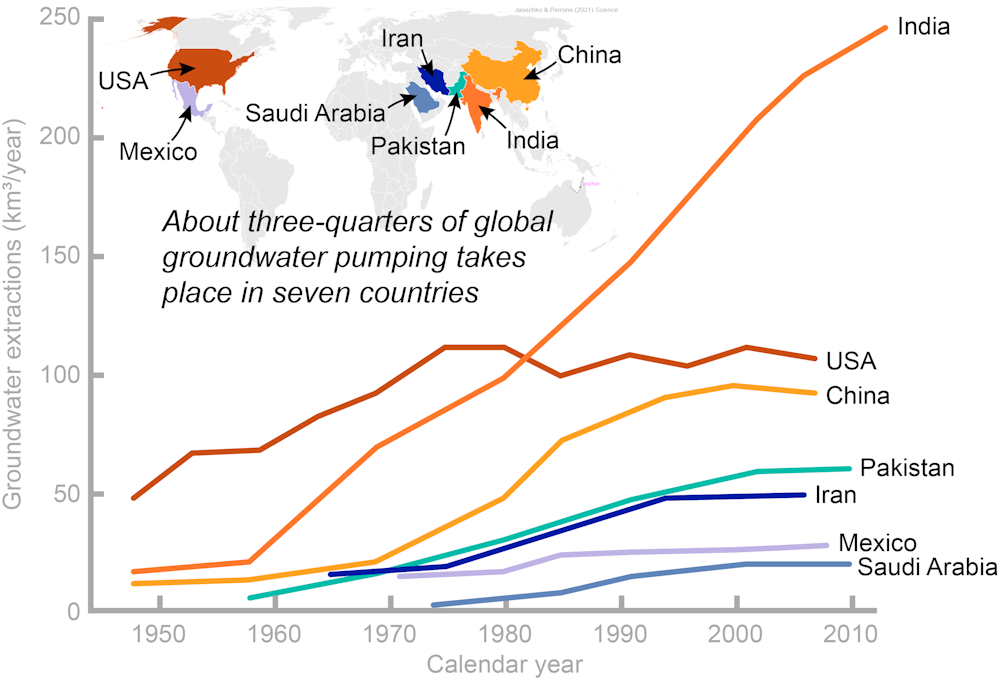
About 75% of global groundwater pumping occurs in India, the U.S., China, Pakistan, Iran, Mexico and Saudi Arabia.

The US has one of the highest national groundwater use rates in the world. Jasechko and Perrone, 2021, CC BY-ND

Groundwater use today

Humans have been digging wells for water for thousands of years. Examples include 7,400-year-old wells in the Czech Republic and Germany, 8,000-year-old wells in the eastern Mediterranean, and 10,000-year-old wells in Cyprus. Today wells supply 40 percent of water used for irrigation worldwide and provide billions of people with drinking water.

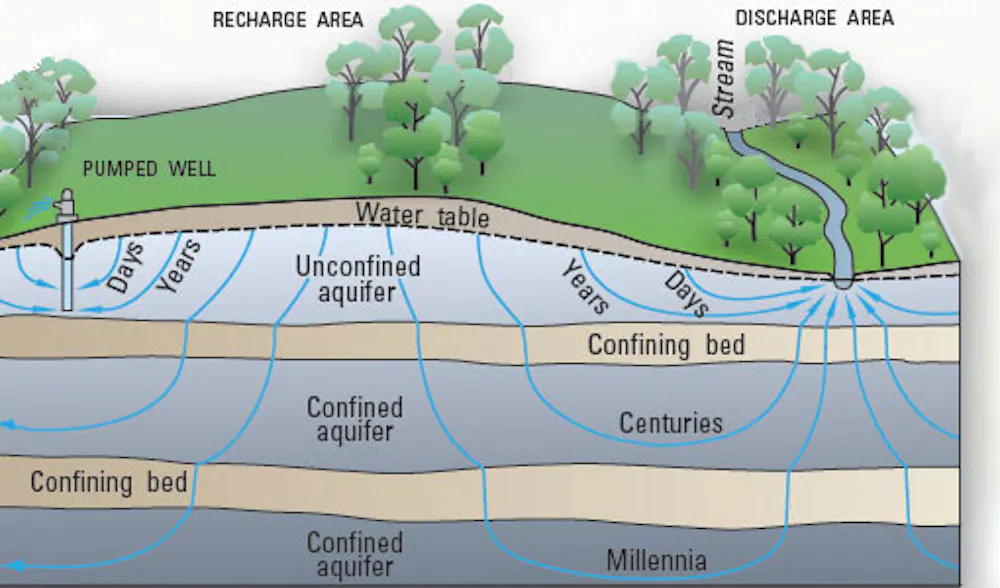
Groundwater flows through tiny spaces within sediments and their underlying bedrock. At some points, called discharge areas, groundwater rises to the surface, moving into lakes, rivers and streams. At other points, known as recharge areas, water percolates deep into the ground, either through precipitation or leakage from rivers, lakes and streams.

Pumping can remove groundwater from underground faster than it recharges.

Groundwater can remain underground for days to millennia, depending on how deep it sinks, how readily it moves through rock around it and how fast humans pump it to the surface. Graphic courtesy of USGS.

Groundwater declines can have many undesirable consequences. Land surfaces sink as underground clay layers are compactedSeawater intrusion can contaminate groundwater reserves and make them too salty to use without energy-intensive treatment. River water can leak down to underground aquifers, leaving less water available at the surface.


Groundwater depletion can also cause wells to run dry when the top surface of the groundwater—known as the water table—drops so far that the well isn’t deep enough to reach it, leaving the well literally high and dry. Yet until recently, little was known about how vulnerable global wells are to running dry because of declining groundwater levels.

There is no global database of wells, so over six years we compiled 134 unique well construction databases spanning 40 different countries. In total, we analyzed nearly 39 million well construction records, including each well’s location, the reason it was constructed and its depth.

Our results show that wells are vital to human livelihoods—and recording well depths helped us see how vulnerable wells are to running dry.

Millions of wells at risk

Our analysis led to two main findings. First, up to 20 percent of wells around the world extend no more than 16 feet (5 meters) below the water table. That means these wells will run dry if groundwater levels decline by just a few feet.


Second, we found that newer wells are not being dug significantly deeper than older wells in some places where groundwater levels are declining. In some areas, such as eastern New Mexico, newer wells are not drilled deeper than older wells because the deeper rock layers are impermeable and contain saline water. New wells are at least as likely to run dry as older wells in these areas.

Wells are already going dry in some locations, including parts of the US West. In previous studies we estimated that as many as 1 in 30 wells were running dry in the western US, and as many as 1 in 5 in some areas in the southern portion of California’s Central Valley.

Households already are running out of well water in the Central Valley and southeastern Arizona. Beyond the Southwest, wells have been running dry in states as diverse as MaineIllinois and Oregon.

What to do when the well gives out

How can households adapt when their well runs dry? Here are five strategies, all of which have drawbacks.

– Dig a new, deeper well. This is an option only if fresh groundwater exists at deeper depths. In many aquifers deeper groundwater tends to be more saline than shallower groundwater, so deeper drilling is no more than a stopgap solution. And since new wells are expensive, this approach favors wealthier groundwater users and raises equity concerns.

– Sell the property. This is often considered if constructing a new well is unaffordable. Drilling a new household well in the US Southwest can cost tens of thousands of dollars. But selling a property that lacks access to a reliable and convenient water supply can be challenging.

– Divert or haul water from alternative sources, such as nearby rivers or lakes. This approach is feasible only if surface water resources are not already reserved for other users or too far away. Even if nearby surface waters are available, treating their quality to make them safe to drink can be harder than treating well water.

– Reduce water use to slow or stop groundwater level declines. This could mean switching to crops that are less water-intensive, or adopting irrigation systems that reduce water losses. Such approaches may reduce farmers’ profits or require upfront investments in new technologies.

– Limit or abandon activities that require lots of water, such as irrigation. This strategy can be challenging if irrigated land provides higher crop yields than unirrigated land. Recent research suggests that some land in the central US is not suitable for unirrigated “dryland” farming.

Households and communities can take proactive steps to protect wells from running dry. For example, one of us is working closely with Rebecca Nelson of Melbourne Law School in Australia to map groundwater withdrawal permitting—the process of seeking permission to withdraw groundwater—across the US West.

State and local agencies can distribute groundwater permits in ways that help stabilize falling groundwater levels over the long run, or in ways that prioritize certain water users. Enacting and enforcing policies designed to limit groundwater depletion can help protect wells from running dry. While it can be difficult to limit use of a resource as essential as water, we believe that in most cases, simply drilling deeper is not a sustainable path forward.


Debra Perrone is an assistant professor of environmental studies at the University of California Santa Barbara. Scott Jasechko is an assistant professor of water resources at the University of California Santa Barbara. 

11 May 19:10

Where will College GameDay visit each week in 2021?

by Zach Barnett

It is my belief that the 2021 college football season will be the best ever. With a historic return of talent combined with unprecedented freedom of movement for players, the product on the field should be better than any in recent memory. That’s just my belief, though, and time will ultimately tell what the players […]

The post Where will College GameDay visit each week in 2021? appeared first on FootballScoop.

11 May 19:07

Best OBD2 Scanners for 2022 - CNET

by Roadshow staff
Having a hard time interpreting the car codes your dashboard is displaying? Car codes can be confusing, so here are the best OBD2 scanners for reading, analyzing and clearing diagnostic trouble codes on your own.
11 May 19:01

Gardening Secrets of the Kentucky Derby

by Dacey Orr

Sure, we all recognize certain familiar things about the Kentucky Derby (the horses! the juleps! the hats! the seersucker!), even if we’ve only ever watched the Run for the Roses through a television or tablet. But part of the pageantry of the day also comes from the majestic architecture of Churchill Downs and the unending sea of flowers in and around every event leading up to the most famous two minutes in sports.

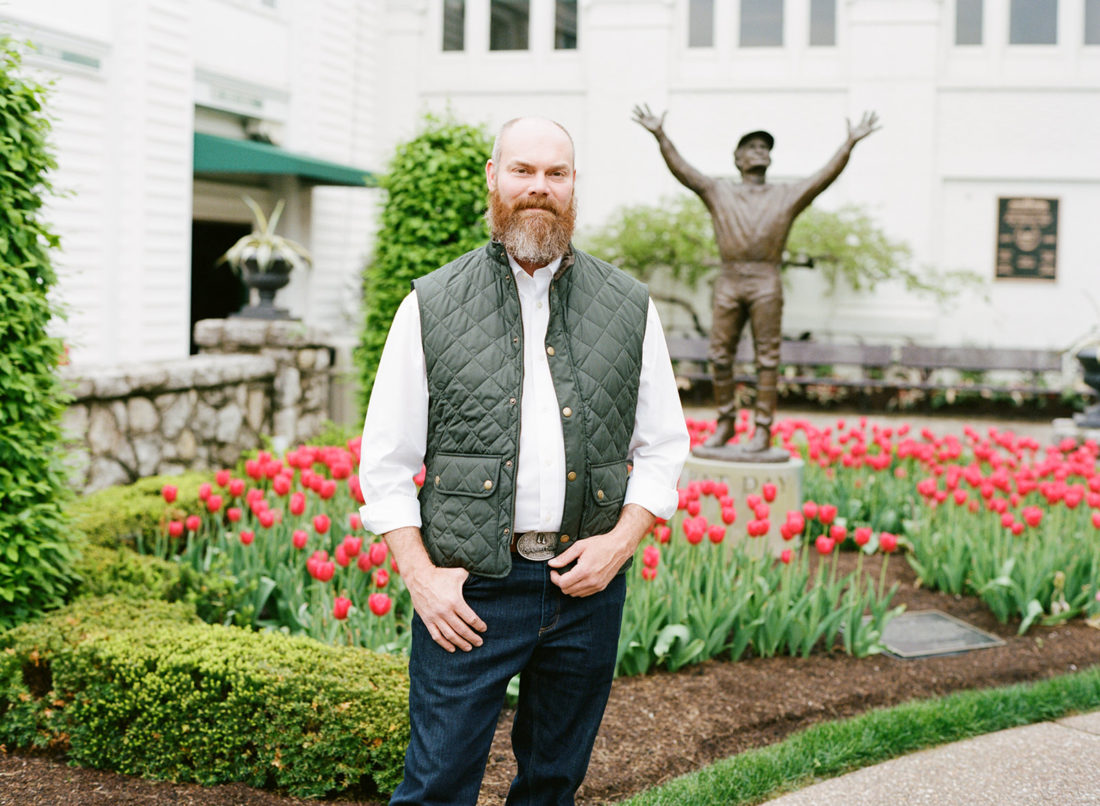
Director of horticulture Matt Bizzell is the man behind it all. For months, he and his team quietly tend thousands of specimens for planting in nearby greenhouses. And then the rollout begins: Five thousand burgundy lace tulips in the Aristides Garden (named after the first Derby winner), a giant four-panel living wall at the track, not to mention all the hanging baskets, planters, and beds that can be found throughout the grounds. 

Once the flowers are installed, the biggest issues are trampled plants and foul weather. “It’s our most difficult obstacle,” Bizzell says. “We have to plant 15,000 to 17,000 plants for opening night the Saturday before Derby, so we are really pushing our luck, and this year we had an inch of snow that damaged some of our plantings and set us back.” Thanks to the relentless work of his team of nine men and women, they somehow pulled it off. “Most of them have spent their whole career caring for this property and love and nurture it like it’s their own.”

photo: Josh Merideth
Bizzell in the Aristides Garden.
photo: Josh Merideth
Petunias as far as the eye can see in the greenhouses before planting.
photo: Josh Merideth
Members of Bizzell’s team hard at work.

On the eve of this year’s race, the mood at the track is hopeful as the world begins opening up post-pandemic. “It’s still very different than a normal year because we are limiting our admission,” he says, “but the excitement to be among other race fans is palpable.” 

Plant-wise, Bizzell is particularly excited about the introduction of new varieties such as Senecio candicans, known as Angel Wings; Eupatorium, or Elegant Feathers, Begonia Glory Bicolor; Celosia, Sol Gekko Green; and Streptocarpus Lady Slippers Deep Blue Vein. But his favorite spot is always the Winner’s Circle, where two Swiss stone pines bookend the presentation stand, and hundreds of bright red geraniums fill the horseshoe-shaped flower bed. “All of Churchill feels like sacred ground, but this small Winner’s Circle is truly hallowed,” Bizzell says.

photo: Josh Merideth
Bizzell putting the finishing touches on the Winner’s Circle.

When all the guests are gone, and Bizzell and his team replace any bruised and battered blooms, a familiar quiet descends on the place—and that’s just how Bizzell likes it. “I definitely love the energy and excitement of Derby,” he says. “But the calm days here are my favorite.”

The post Gardening Secrets of the Kentucky Derby appeared first on Garden & Gun.

11 May 18:59

The Perfect Spray Booth for Small Shops

by claudia
11 May 18:54

How to turn corners

7961 points, 384 comments.

11 May 18:53

This New Covid-19 Travel Website Tells You Everything You Need To Know About Traveling Right Now

by Alexandra Kirkman, Contributor
Www.canitravel.net—a comprehensive, user-friendly guide to Covid-19 travel restrictions worldwide—is simplifying the prospect of international travel for hundreds of thousands of would-be travelers around the globe.
11 May 01:28

How to Prevent Dog Fights

Aggressive behavior in dogs can be scary, whether it's in your home or in public. Luckily, you can take steps to prevent it. If you have 2 or more dogs that are resource aggressive, meaning they fight over food or toys, you can take steps to keep them separated during stressful times. If your dogs just tend to fight with each other, you can lower aggression by changing some of the environmental factors. When you're in public, take steps to stay away from stray dogs, as you never know when they'll want to start a fight. When you're introducing new dogs, make sure to do it slowly and in a neutral location to keep them from fighting.

[Edit]Steps

[Edit]Preventing Resource Aggression at Home

  1. Feed your dogs 2-3 times a day on a strict schedule. Fights over food often stem from feeling insecure about it. To help tone that down, try spreading your dogs' food out over the day so they get to eat more often, as it reassures them you will continue to feed them. Also, make sure to use a set schedule. If they can predict when they will get fed, they will feel more secure about their food.[1]
    Prevent Dog Fights Step 1 Version 2.jpg
    • Once your dogs are on a schedule, they will know when feeding time is. They will bug you until you feed them, so try to stay on time!
  2. Give your dogs an amount of food they can finish in less than 5 minutes. Only feed your dogs as much as they need during their meal times so they don’t leave any food in their bowls. That way, your dogs will only focus on eating their meal rather than fighting over food. Aim to give your dogs ⅔-1 cup (148-224 g) of food per meal so they have 2 cups (448 g) total throughout the day.[2]
    Prevent Dog Fights Step 2 Version 2.jpg
    • Don’t move the bowls before your dogs are finished eating since it could increase how protective they are of their food and may make them more aggressive.
  3. Move your dogs to separate rooms to feed them to calm aggression. If you have dogs who constantly try to steal each other's food and end up in nipping wars, then this may be your best option. Put them in rooms where they can't see each other and then feed them.[3]
    Prevent Dog Fights Step 3 Version 2.jpg
    • This is also a good idea for when you're giving them treats or toys. If you know your dogs are going to fight over a treat or toy, take them to separate rooms. Make sure each dog gets something, though, as leaving one dog out will cause tension.[4]
  4. Discourage your dog from guarding its food by training it over time. Part of food aggression is territorially based, so your dog will want to guard its bowl. Start by standing away and asking the dog, “What do you have there?” in a conversational tone. Toss a small treat into the bowl after you talk to them, and repeat the process every few seconds. As the dog gets more comfortable, start taking steps closer to the bowl and feeding them treats. Once the dog feels safe when you’re near it while it's eating, try lifting the bowl away.[5]
    Prevent Dog Fights Step 4 Version 2.jpg
    • Training your dog so it doesn’t guard its food can take a bit of time. Stay the same distance away and continue training if the dog doesn’t respond or is still aggressive while it eats.
    • If your dog is still actively aggressive about its food, then seek professional help from a behaviorist to help.
  5. Put away food, toys, and bones when you're not there to supervise. If you have resource aggressive dogs, these items can cause fights to break out, which could be dangerous if you're not there. Only let your dogs have them when you can see them, and put them back up when you're not around, even if you're just in another room.[6]
    Prevent Dog Fights Step 5 Version 2.jpg

[Edit]Reducing Other Types of Aggression

  1. Work on obedience training with your dogs. Obedience training won't necessarily keep your dogs from fighting. However, they are more likely to stop fighting when you command them if they have this kind of training. Take your dogs to an obedience school or work on training commands like "sit" and "stay" at home.
    Prevent Dog Fights Step 6 Version 2.jpg
    • Try the clicker training approach. With this method, you teach your dog that the sound of a clicker button is a good thing by rewarding it with a treat as soon as it hears the click. Then, you can use it as a way to reinforce the behavior you want, like clicking when your dog sits.
  2. Have your dog spayed or neutered if a vet recommends it. Intact dogs have more hormones running through their bodies, which could lead to more fights, particularly in male dogs. However, getting your dog spayed or neutered could make your dogs more competitive if they have similar natures or behaviors. Talk with your vet or a behaviorist that’s familiar with your dogs to see if spaying or neutering them is the best choice.
    Prevent Dog Fights Step 7 Version 2.jpg
    • If you can't afford to have your pup spayed or neutered at a veterinarian, look around for low-cost clinics in your area. Sometimes, local shelters will offer this service inexpensively.
  3. Crate your dogs when you're not around. While some people consider crates cruel, most dogs feel safe and secure in their crates, as it acts as a den for them. Plus, crating will keep your dogs from acting aggressively toward one another when you're not there to stop it.[7]
    Prevent Dog Fights Step 8 Version 2.jpg
    • Make sure a crate is just big enough for your dog to stand up fully, sit up, and lay down. If it's too big, it won't feel secure, but you don't want your dog to feel uncomfortable. Crate training can also help you housebreak a dog, and it can be a good way to break up fights if you send the dogs to separate crates.
    • If you don't want to use crates, try leaving your dogs in separate rooms.
  4. Try a calming pheromone diffuser for dogs. The pheromones in these sprays or diffusers are shown to decrease stress in dogs. If your dogs have fear-based aggression, it may help calm them down and lower the number of fights in your home.[8]
    Prevent Dog Fights Step 9 Version 2.jpg
    • You can find these diffusers in most pet stores and online. You just plug them into the wall and refill them as they empty.
    • This may not work for all aggressive dogs, but it doesn't hurt to try it.
  5. Visit the veterinarian if aggressive behaviors suddenly appear. If your dog's behavioral problems recently appeared, they may have an underlying condition. When your dog is in pain or not feeling well, they may lash out other dogs around them or even you. Get your dog into the veterinarian to see if anything is wrong.
    Prevent Dog Fights Step 10 Version 2.jpg
    • You should see the veterinarian if you notice any change in behavior with your dogs. You never know what could be behind it.
  6. Consult an expert if the dog fighting continues. If you end up having to take one of your dogs to the veterinarian because of a fight, it may be time to call in expert help. An expert will observe your dog's behavior and give you tips on how to prevent fights. They can also help you to train your dogs to follow commands.[9]
    Prevent Dog Fights Step 11 Version 2.jpg
    • To find a trainer or dog behaviorist, ask your vet for a recommendation or look up reviews online.

[Edit]Keeping Your Dog Safe in Public

  1. Put your dog on a leash at all times in public. This is as much for your dog's safety as it is for the safety of other dogs. If your dog isn't on a leash, you can't pull it out of a situation when things go bad. Plus, you don't want to be responsible if your dog happens to act aggressively, injuring another dog.[10]
    Prevent Dog Fights Step 12 Version 2.jpg
    • You don't know how your dog will react if another dog starts a fight. Your dog may fight back and seriously injure it, and in some cases, local laws may require it be put down. It's better to be safe than sorry.
    • If you know that your dog has anxiety or behavioral problems that make it aggressive, get a leash that has the word “Nervous” printed on it so other owners are aware of it.
  2. Back away from other unleashed dogs. If you're with a dog and another one runs up off a leash, it's best to get out of the situation, as you don't know how that dog will react. Don't turn your back on the dog, which could encourage aggression, but do try to get away by walking backward slowly.
    Prevent Dog Fights Step 13 Version 2.jpg
    • If your dog is small enough, pick it up as you back away.
  3. Watch for signs of aggression in your dog and other dogs. These can include growling and snarling, as well as standing up tall. They may have stiff posture. Look at their ears, which may be raised, along with the hair on the head and back. They're also likely to move slowly with purposeful steps while they stare at your dog.
    Prevent Dog Fights Step 14 Version 2.jpg
    • If you notice these signs, get away from other dogs if at all possible.
    • If you’re taking your dog for a walk and you suspect that it may get aggressive with another dog on your path, pass the other dog in a wide arc so the dogs don’t feel like they need to confront one another.
  4. Try saying "sit" or "stay" to the other dog but don't yell or scream. Many dogs have learned obedience training, so if you say these to a dog, you may be able to get them to stay back. Just use a firm, commanding tone in a clear voice.
    Prevent Dog Fights Step 15 Version 2.jpg
    • Yelling and screaming will make the situation worse, as the other dog may take it as aggression.[11]
  5. Toss a handful of tasty treats at an approaching dog. If a dog is coming toward you and you're not sure if it's friendly, you can use treats to slow down its approach. If you throw them toward the dog, they'll often stop to look around for more tasty morsels.[12]
    Prevent Dog Fights Step 16 Version 2.jpg
    • Try chicken jerky for dogs, pieces of cheese, or other types of dried meat.
    • Use the time to get you and your dog out of the way!
  6. Hold an umbrella out to shield yourself and your pup from dogs. When a dog is coming your way and looking aggressive, this can be a simple way to buy yourself some time. Open the umbrella and hold it out in front of you. It won't keep a dog away for long, but it may be enough time for their owners to show up or for you to grab another distraction.[13]
    Prevent Dog Fights Step 17 Version 2.jpg
    • Make sure to carry an umbrella with you at all times if you want to use this trick.
  7. Squirt an approaching dog with water to startle it into stopping. Use a water bottle that has a pop-up lid since they squirt better. Then, when a dog comes your way that's not on a leash, squirt the water it in its face to keep it from getting too close to you and your dog.[14]
    Prevent Dog Fights Step 18 Version 2.jpg
    • Just be sure not to drink all the water while you're walking!
    • You could also use a small water gun or even a spray bottle if you prefer.
  8. Carry a break stick with you when you might run into loose dogs. If your dog does get into a fight, you can use a break stick to wedge a dog's mouth apart. It has a rounded end to make it safe for the dog. Use it to pry open a dog's mouth during an intense fight. Then try to back away slowly.[15]
    Prevent Dog Fights Step 19 Version 2.jpg
    • Another option is to carry a citronella spray for dogs. This startling smell is sometimes enough to break up a dog fight.[16]

[Edit]Introducing New Dogs to Your Home

  1. Get dogs of the opposite sex to discourage fighting. In a pack in the wild, males and females would form separate groups. Therefore, in a home, they're less likely to fight than 2 males or 2 females. When looking for dogs, think about picking one of the opposite sex to bring into your home.[17]
    Prevent Dog Fights Step 20 Version 2.jpg
    • If you have more than 2 dogs, try keeping the males and females even.
  2. Gather up beds, food bowls, and toys in your home before bringing the dog home. If the new dog tries to take one of these toys, your current pups may get aggressive over them. It's best to start them out in a home free of these territorial possessions.[18]
    Prevent Dog Fights Step 21 Version 2.jpg
    • You can give them back in a week or two, but provide new toys for the dog you're bringing home.
    • In the meantime, let your current dogs play with their toys in a separate room.
    • If possible, bring the dog's smell home first. That is, take a shirt or towel and rub it all over the new dog. Put it in your home in the area the dog will be sleeping and let your other dog or dogs smell it all over to get used to the scent.[19]
  3. Allow the dogs to meet in a neutral location outside your home. Pick a place such as a park or someone else's backyard for your dogs to meet. That way, your current dog won't feel compelled to protect its territory.[20]
    Prevent Dog Fights Step 22 Version 2.jpg
    • However, don't take your current dog with you when you go to pick up your new one. You won't be able to manage them both properly in the car.
    • If you have more than 1 dog at home, have them each meet the new dog this way. Take them out one-by-one to meet the dog in a neutral location. That way, the new dog has a chance to get used to each one.[21]
  4. Leash both dogs and have someone else handle one of them. It's best to keep both dogs on a leash so that if a fight does break out, you can easily separate them. Have someone else handle one dog by holding on to its leash while you hold on to the other dog's leash. It will be impossible to pull them apart if it's just you handling both of them.[22]
    Prevent Dog Fights Step 23 Version 2.jpg
    • Make sure you each keep a close eye on the dog you're handling. Look for signs of aggression, such as snarling, growling, or raised hackles, and if you see these signs, pull them apart.[23]
  5. Walk along together with the other dog for a short period. Instead of just bringing them face to face, come up alongside the person handling the other dog. Just walk together for a little ways and let the dogs start getting used to each other.[24]
    Prevent Dog Fights Step 24 Version 2.jpg
    • They may ignore each other, and that's fine.
  6. Let the dogs sniff each other briefly. After 5 minutes or so, stop and let the dogs touch noses and introduce themselves to each other. Make sure to keep the leash tight so they can't suddenly lunge at each other. Keep this interaction brief, as you don't want them to start getting aggressive.[25]
    Prevent Dog Fights Step 25 Version 2.jpg
    • If they start to seem aggressive, pull them apart and try again in a few minutes.
  7. Mix play or walking with short interactions until the dogs are calm. Keep alternating between short interactions where the dogs sniff each other and play, obedience training, or walking side-by-side. That way, the dogs can get to know each other, but they won't have much time to get aggressive before you're distracting them with something fun again.[26]
    Prevent Dog Fights Step 26 Version 2.jpg
    • If the dogs seem aggressive, pull them apart and try a short introduction again in a bit, though keep them a little farther apart from each other so they can't touch.[27]
    • Once the dogs seem less excited and calm, you can likely take them home together.
  8. Put your current dog(s) away while you show the new dog around your home. Place your current dogs in one room and shut the door. With the new dog on a leash, lead it around your home so it can see where the food, water, and beds are. Show it where the outside door is and then take it outside to see where to go to the bathroom.[28]
    Prevent Dog Fights Step 27 Version 2.jpg
  9. Keep your dogs separated for a few days. Put the new dog in a smaller room while giving your current dog or dogs the run of your home. That way, they can get acclimated to each other's smells through the door or baby gate. Plus, a smaller territory will help your new dog feel less overwhelmed at first.[29]
    Prevent Dog Fights Step 28 Version 2.jpg
    • When you do allow them together, supervise them until you're sure they won't be aggressive. If you need to go out or if you're going to bed, put them in separate areas or crates so they can't fight. If they show signs of aggression or get overzealous while playing, keep them apart for 5-10 minutes before letting them try again.[30]

[Edit]Tips

  • Learn the difference between play fighting and real fighting. If your dog is play fighting, they'll bounce around and take turns biting. Their mouths will stay open, rather than trying to close down. If the dogs are truly fighting, they'll growl, snarl, raise their hackles, and try to bite down at the same time as the other dog.

[Edit]Warnings

  • Never try to get between 2 fighting dogs, as they can redirect on you. You could end up severely injured.

[Edit]References

  1. http://www.vetstreet.com/our-pet-experts/6-ways-to-prevent-feeding-time-from-turning-into-a-food-fight
  2. http://www.vetstreet.com/our-pet-experts/6-ways-to-prevent-feeding-time-from-turning-into-a-food-fight
  3. http://www.vetstreet.com/our-pet-experts/6-ways-to-prevent-feeding-time-from-turning-into-a-food-fight
  4. https://www.akc.org/expert-advice/training/mine-mine-mine-tips-to-preventing-resource-guarding/
  5. https://www.aspca.org/pet-care/dog-care/common-dog-behavior-issues/food-guarding
  6. http://www.washingtonpashelter.org/wp-content/uploads/2012/05/Stopping-and-Avoiding-a-Dog-Fight.pdf
  7. http://www.washingtonpashelter.org/wp-content/uploads/2012/05/Stopping-and-Avoiding-a-Dog-Fight.pdf
  8. https://www.semanticscholar.org/paper/Efficacy-of-dog-appeasing-pheromone-in-reducing-and-Tod-Brander/51eae95f7eeb7a08357334162b8005312db99310
  9. https://www.akc.org/expert-advice/training/mine-mine-mine-tips-to-preventing-resource-guarding/
  10. http://www.washingtonpashelter.org/wp-content/uploads/2012/05/Stopping-and-Avoiding-a-Dog-Fight.pdf
  11. https://sheltermedicine.vetmed.ufl.edu/files/2015/02/breaking-up-dog-fight.pdf
  12. https://www.rspcaqld.org.au/blog/trending-now/off-leash-dogs
  13. https://www.rspcaqld.org.au/blog/trending-now/off-leash-dogs
  14. https://www.rspcaqld.org.au/blog/trending-now/off-leash-dogs
  15. https://www.lanecounty.org/government/county_departments/public_works/general_services/animal_services/tips_for_pit_bull_owners
  16. https://sheltermedicine.vetmed.ufl.edu/files/2015/02/breaking-up-dog-fight.pdf
  17. https://www.texvetpets.org/article/why-do-dogs-fight/
  18. https://www.luckydoganimalrescue.org/articles/tips-introducing-new-dog-your-household-pack
  19. https://www.luckydoganimalrescue.org/articles/tips-introducing-new-dog-your-household-pack
  20. https://www.petpoisonhelpline.com/blog/introducing-new-dog-home-resident-dogs/
  21. https://www.luckydoganimalrescue.org/articles/tips-introducing-new-dog-your-household-pack
  22. https://www.petpoisonhelpline.com/blog/introducing-new-dog-home-resident-dogs/
  23. https://www.luckydoganimalrescue.org/articles/tips-introducing-new-dog-your-household-pack
  24. https://www.luckydoganimalrescue.org/articles/tips-introducing-new-dog-your-household-pack
  25. https://www.petpoisonhelpline.com/blog/introducing-new-dog-home-resident-dogs/
  26. https://www.petpoisonhelpline.com/blog/introducing-new-dog-home-resident-dogs/
  27. https://www.luckydoganimalrescue.org/articles/tips-introducing-new-dog-your-household-pack
  28. https://www.luckydoganimalrescue.org/articles/tips-introducing-new-dog-your-household-pack
  29. https://www.luckydoganimalrescue.org/articles/tips-introducing-new-dog-your-household-pack
  30. https://www.luckydoganimalrescue.org/articles/tips-introducing-new-dog-your-household-pack
10 May 17:52

How Do Animals Find Their Way Home (Without GPS)?

by Cynthia McMurray

Have you ever thought about how animals—some domesticated and others wild—find their way home or places to migrate to each year? Believe it or not, certain animals have a built-in, location-finding capability that relies on everything from sight and smell to more intricate magnetic methods of geolocation. Some animals even have innate, map-based orientation systems. Check out this impressive list!

Pigeons – Compasses With Wings

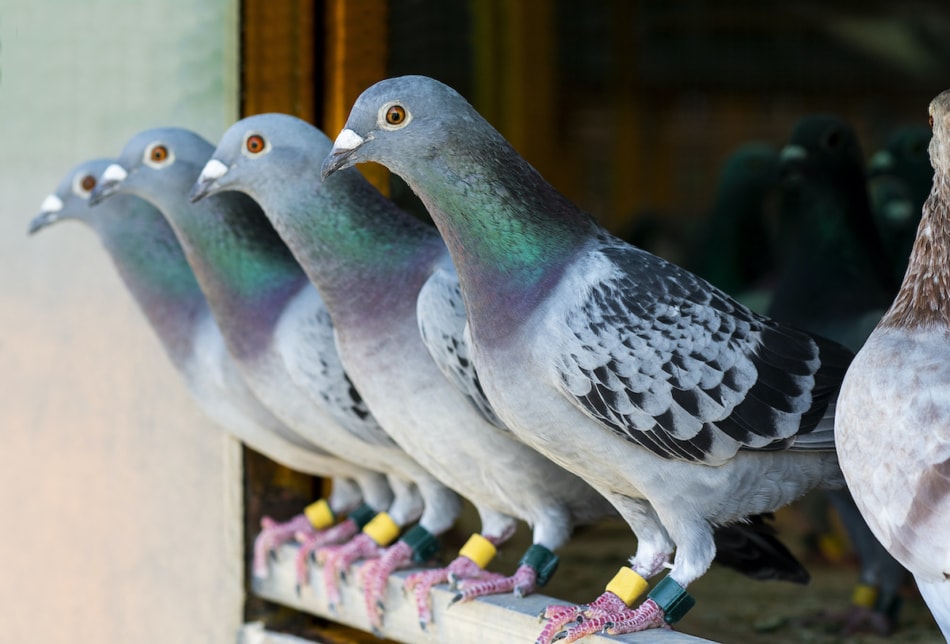
four carrier pigeons
Pigeons have a “map and compass” type of navigation system.

Historically, pigeons played an important role in relaying messages. Since they have an innate homing ability, pigeons were routinely used for such things as announcing the winner of the Ancient Olympics and sending covert messages during numerous wars.

Charles Darwin determined that all pigeons ultimately descend from one species—the wild rock dove. Historians claim that humans began breeding pigeons that excelled in specific traits early on, ultimately creating different varieties, such as homing pigeons and carrier pigeons.

How They Do It:

Scientists surmise the pigeon’s ability to home in on various locations with such precision is a result of a “map and compass” type of navigation system. In other words, they orient themselves relative to a goal site, using a combination of the Sun and other celestial light patterns, sight and smell, various gravity anomalies, and the Earth’s magnetic field. Scientists believe special neurons within their inner ear may help them process such things as minute changes in direction and the strength and polarity of the magnetic fields around them.

Fun Fact: The carrier pigeon was bred for its beauty and the homing pigeon for its speed and ability to return home.

Monarch Butterflies – “Recalculating”

Swarm of monarch butterflies
Monarch butterflies monitor the position of the Sun.

For humans, heading south for the winter is as easy as hopping on a plane, but for millions of monarch butterflies that make the yearly 3,000-mile trek from Canada to Mexico, they must rely on an internal, genetically encoded GPS system.

How They Do It

According to a new University of Washington study, butterflies use an internal “compass” that integrates two specific pieces of information—the time of day and the Sun’s position on the horizon. To configure this information, they monitor the Sun’s position using their extremely complex, compound eyes, and an internal, clock-like system within their antennae. They send this information through specific neurons to their brain and determine which direction is southwest. If they are blown off course, they simply recalculate much like our car’s GPS system.

Salmon – Smells Like Home

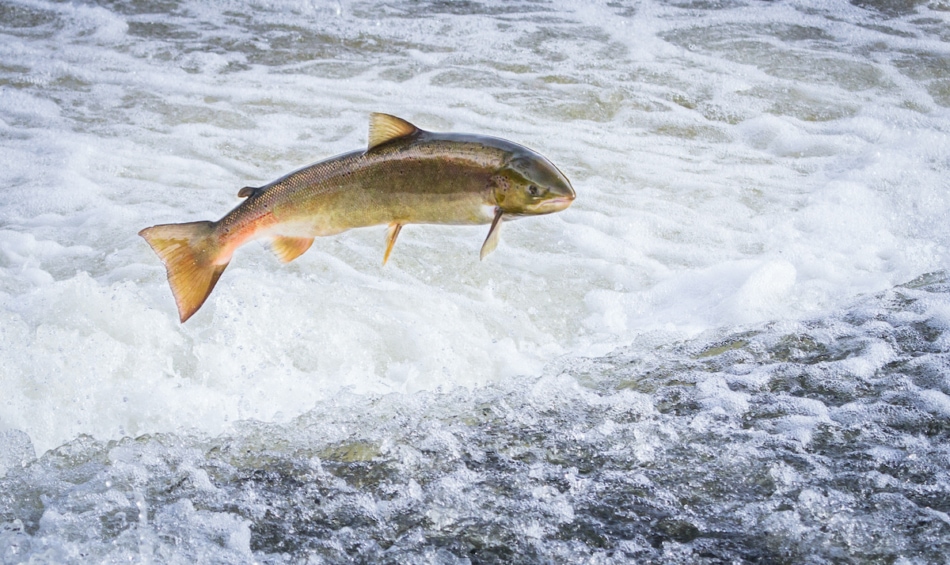
salmon fish swimming upriver
Salmon may rely on smells and environmental cues.

Every year, thousands of juvenile salmon, with no prior migratory experience, make their way downstream to specific oceanic feeding grounds hundreds of miles from the riverbed where they were born. Several years later, with pinpoint accuracy, they return to that same river to breed.

How They Do It

While the actual process is much more in-depth, scientists have determined that young salmon use a navigation system similar to pigeons (although it’s more developed, since fish must continuously account for drifting and have no stationary visual land cues).

Ultimately, they use a combination of environmental cues, including length of the day, the Sun’s position and angle in the sky, water salinity and temperature gradients, and the Earth’s magnetic field. They may also rely on smells, which they start remembering when they first make their way downstream. While some humans can follow their noses to the nearest bakery, it’s unlikely they can make their way hundreds of miles away by smell alone!

What About Pets?

What about domesticated animals? Can they fend for themselves if lost, or has domestication made them less adept than their wild counterparts? How do they measure up to humans?

Cats – Head-To-Toe Compass

White cat rubbing against a building
Cats mark their territory so they know where home is!

Interestingly, according to the Genome Institute, cats, unlike dogs, are really only “semi-domesticated.” In fact, scientists go as far as to say there is little difference between the average house cat and wild cats.

How They Do It

In general, cats have very powerful senses. In fact, they have more than 19-million scent receptors. They tend to bond strongly to a home location, even marking their territory by spraying urine or rubbing their many scent glands onto various items in their home area, which also makes it easier to find their way back.

Cats also have incredible eyesight and hearing, and they use their fur, whiskers, and paws to gather information to help them navigate. Scientists have determined that cats can detect the Earth’s magnetic fields through iron in their ears and skin, which acts as a natural compass.

Dogs – There’s No Smell Like Home

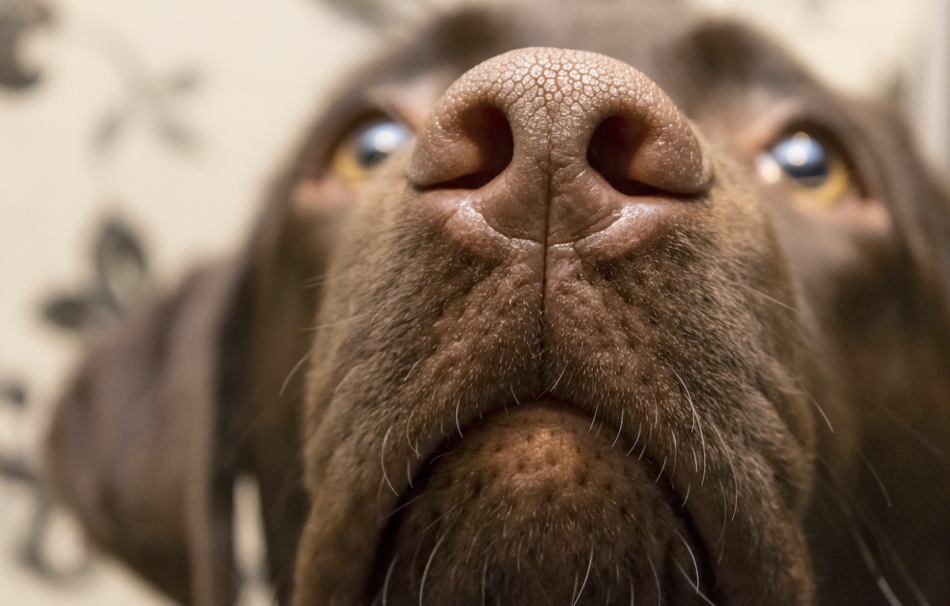
Close up of chocolate lab dog nose
Dogs’ noses contain hundreds of millions of sensory neurons that make them superior navigators to humans.

Anyone with a dog knows it’s all about smells. Dogs are constantly sniffing everything they come in contact with, so it should come as no surprise that they also use their incredible sniffers to navigate.

How They Do It

Dogs’ noses contain hundreds of millions of sensory neurons—up to 300 million, compared to the six million in the human nose, making their sense of smell 10,000-to-100,000 times keener than ours. They also have a second olfactory capability humans don’t have—the Jacobson’s organ, found at the bottom of their nasal passage, which allows them to smell pheromones.

New studies also show dogs rely on their sense of smell to pick up familiar scents over a 10-mile distance. Dogs also see much better at night than humans (because they have larger pupils, which let in more light, and their retinas have more light-sensitive cells), which makes them supremely better navigators. Some researchers suggest if your dog gets lost, you can leave a familiar piece of your clothing or their bed outside to help them find their way home.

Any way you look at it, animals have us beat when it comes to navigating. While some of us may be better than others at finding our way, it’s a good thing we can rely on GPS!

09 May 00:20

Hoober: Besides A Gun This Is The Most Important Thing You Need For Open Carry

by Guns and Gear
Open carry is a hot potato in the gun community.
09 May 00:06

Inspiration Friday: Distinguished Gentleman’s Ride

by Michael Le Pard
Inspiration Friday: Distinguished Gentleman's Ride

Date changed to May 23rd! Welcome to Inspiration Friday: Distinguished Gentleman’s Ride. April showers may bring May flowers but it also brings motorcycle events, rallies and meetups! Celebrate 10 years of riding with Distinguished Gentleman’s [...]

The post Inspiration Friday: Distinguished Gentleman’s Ride appeared first on Total Motorcycle.

08 May 23:54

2021 Ducati Monster Review First Ride

by John Burns

2021 Ducati Monster

Editor Score: 86.5%
Engine 18.0/20
Suspension/Handling 12.5/15
Transmission/Clutch 9.0/10
Brakes 9.0/10
Instruments/Controls 4.5/5
Ergonomics/Comfort 9.0/10
Appearance/Quality 8.5/10
Desirability 8.5/10
Value 7.5/10
Overall Score 86.5/100

Ok, I’m old, so what? When I was young, the first Monster M900 (1994) spoke to me. A basic, naked, standard Ducati that was perfect for rumbling round the urban maze back when we all had a downtown office to go to… a svelte Italian Sportster that bounced its mating call off the concrete canyons all the way to 9000 rpm. It really was a radical departure since, before then, Ducati had only built fully-faired assume-the-position sportbikes, and not many of them. They were great on the Futa Pass and Angeles Crest but not so much anywhere else. Later, when we grew power-hungry in the ’oughts, there came the 996-powered S4R, then the Monster 1200s…

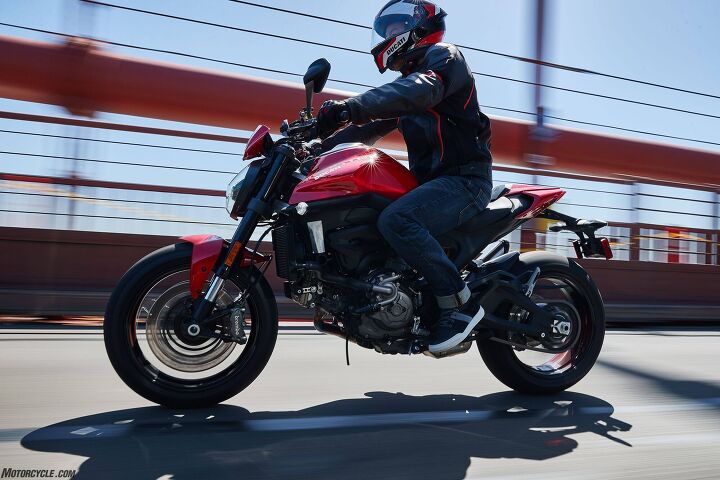
I’m pretty sure I’m no longer the target audience, but 27 years down the road, I can’t help thinking Ducati’s keeping an eye on me and every inch of girth I gain, with every new Monster they design: The ergonomics and user interface of this latest one are the kindest, least monstrous ever. They’ve stuffed more of some exclusive foam into the seat, narrowed the bike between the knees. They’ve pulled the handlebar 2.6 inches rearward, and moved the footpegs 0.4 in. lower and 1.4 in. rearward compared to the previous Monster 821. It always was, but now, the Monster’s an even easier bike to just hop on and go, and feel immediately comfortable.

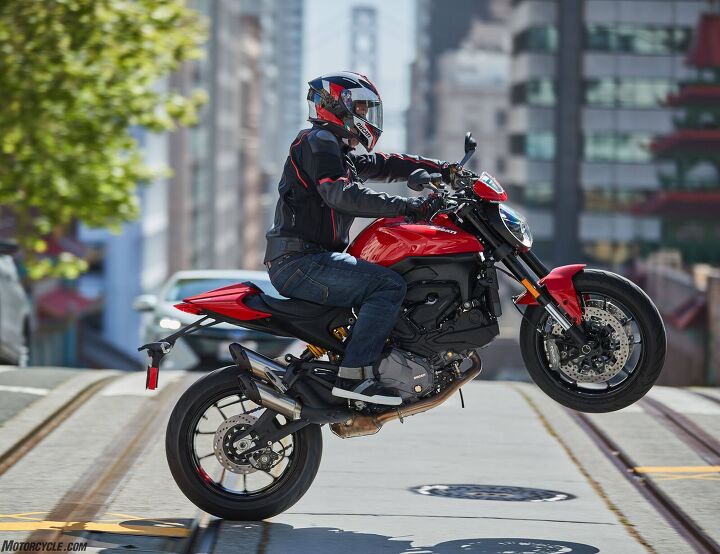
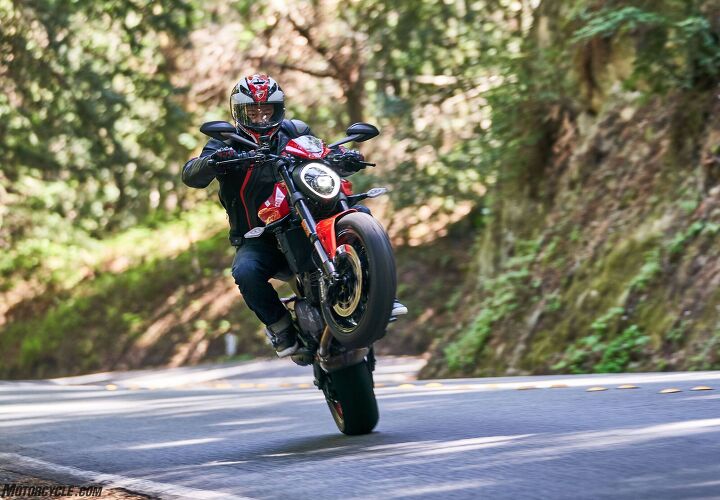
2021 Ducati Monster Review - Jake Zemke wheelie

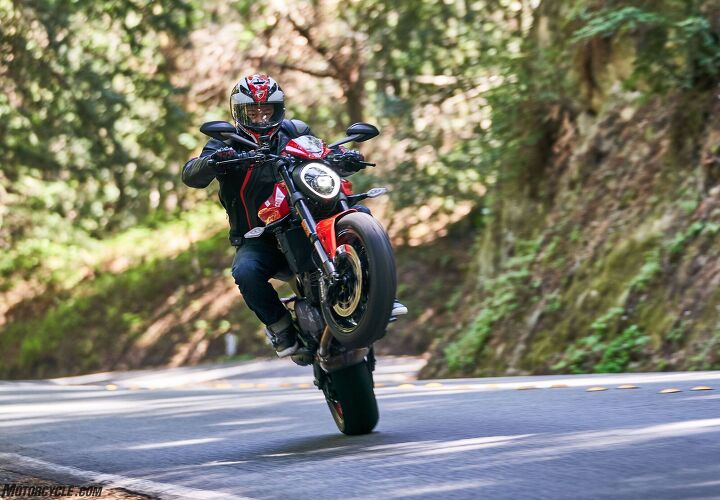
Jake Zemke is more the target audience than me, though the former AMA Formula Xtreme champ is sprouting three or four gray hairs himself.

2018 Ducati Monster 821 Review – First Ride

You Look Different?

2021 Ducati Monster Review

Waif-like. Anorexic almost.

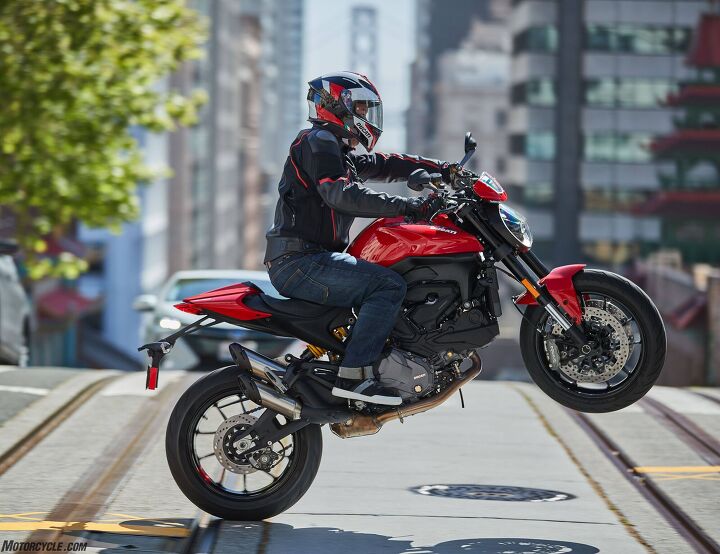
Mostly it’s what they’ve taken away from the new Monster that makes it nicer to ride than ever: 40 pounds. Love it or hate it, the new aluminum monocoque “frame” and GFRP (Glass Fiber Reinforced Polymer) subframe lop off around 15 pounds. The new swingarm gets rid of another 3.5 pounds, the wheels are said to be lighter by nearly 4 pounds total, and the new Testastretta 11° V-twin takes off another 5 lbs. Suddenly you’re at 366 lbs dry, says Ducati, and 414 ready to ride. That’s 8 pounds more than the Yamaha MT-07 Troy just rode, and 3 pounds less than the new MT-09. It’s also right in there with KTM Duke 890 and Triumph Street Triple – all motorcycles defined by their lightweight athleticism.

Urban Grind

For getting around the city, the Monster is right there with the best of them. Getting rid of the steel frame freed up a lot of room in the headstock area, which gives the new bike 7 degrees more steering sweep in both directions. That makes it possible to turn around in the tightest alleys, and slalom quickly through the dumpsters. (Show some respect; people are trying to sleep in many of them in San Francisco, where we went to ride the new bike. I kid, people are only trying to sleep in a few dumpsters. Most of San Francisco is a beautiful place.)

2021 Ducati Monster Review

The new aluminum “frame” bolts to the cylinder heads and mounts the front fork. The swingarm pivots in the engine cases.

Furthermore, the new (lack of) frame makes the Monster waif-like between the knees, which makes it easy to touch the ground and reinforces its nimbleness. In fact, Ducati really wants it to be approachable for less experienced and/or shorter riders. The standard seat is 32.3 inches, but the low option is 31.5 in. – and there’s a $300 suspension lowering kit available to take it down another inch.

2021 Ducati Monster Review

There’s a new hydraulically actuated clutch lever at your left hand, which is way easier and smoother to engage than Monsters of yore, and the clutch itself is a slip/assist unit. Internal changes to the 6-speed gearbox make for light, precise shifts – until you remember you’ve got a standard up/down quickshifter and barely need to think about shifting. Stuck in traffic with the group (you’d never get stuck if you were by yourself on the Monster), it’s easy to snick into neutral even when you’re stopped.

Since this is a semi entry-level Ducati and we’re trying to keep the price down, we’re not getting fully adjustable electronic suspension, but the inverted 43mm fork and single cantilevered shock out back, with dual-rate spring, work nicely together: 5.1 inches travel in front and 5.5 out back smooth out 88% of San Francisco’s larger lumps, trolley tracks, and chunks of construction debris. A large degree of credit goes to that cush new seat, too. The only ergonomic complaint you might lodge, if you have big feet and are whatever the opposite of pigeon-toed is, is that your heels might not like the passenger peg carriers, especially the right one that’s also the exhaust hanger.

Big Honkin’ Angry Goose

To move into the Euro 5 era, Ducati replaced the previous 821 cc Testastretta 11° with the 937 cc version. In Monster trim, Ducati claims 111 hp at 9,250 rpm with torque peaking at 69 lb-ft at just 6,500 rpm. That’s 2 hp more than the 821 had. But only a slightly disappointing 1.5 more lb-ft of torque, given the 116 more cc and compression ratio bump to 13.3:1 of the new engine. It is cool that the torque peak – 6500 rpm – arrives 1200 rpm sooner than before.

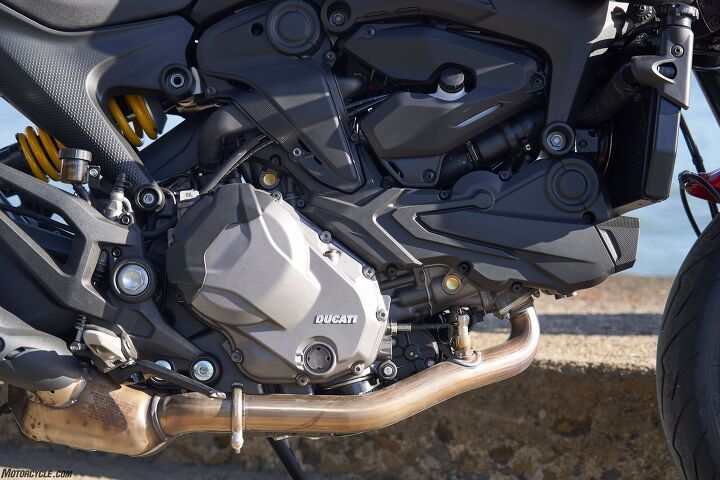
2021 Ducati Monster engine

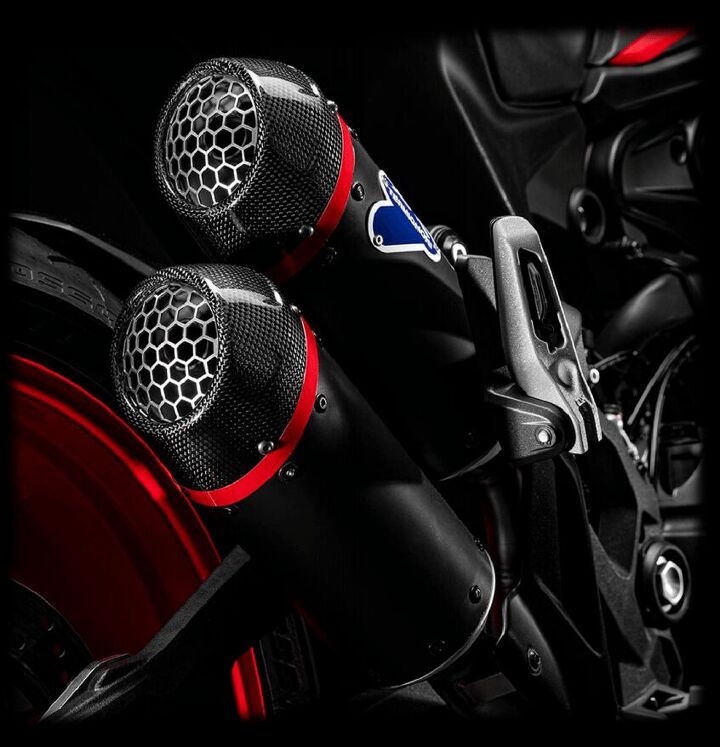
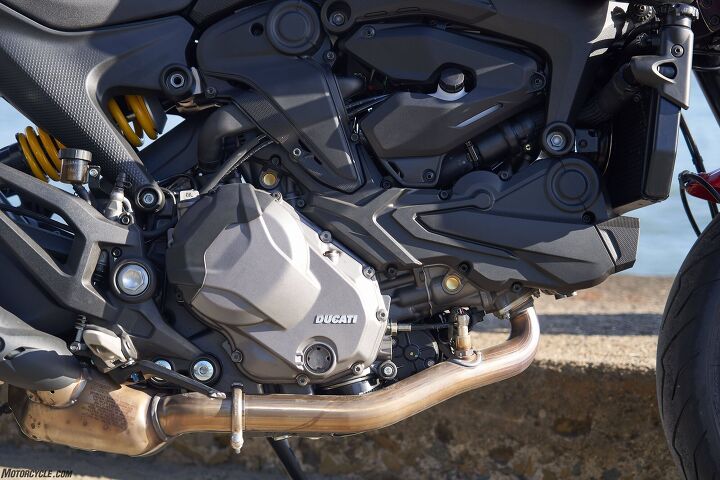
The clutch cover is new, along with a bunch of other engine refinements: new pistons and rods, a revised geardrum and clutch, new cylinder heads and alternator cover all refine, enhance or lighten the package by 5.7 pounds. Desmo valve inspections are every 18,000 miles.

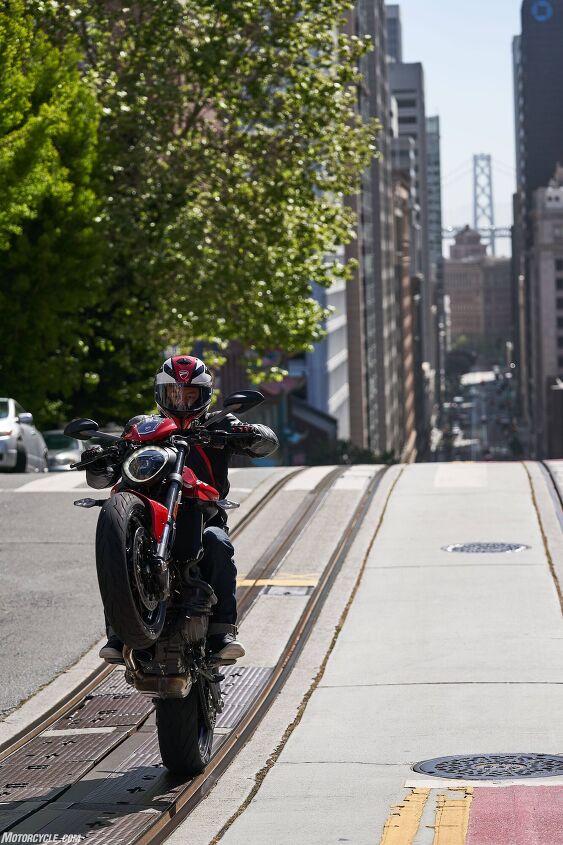
2021 Ducati Monster Review

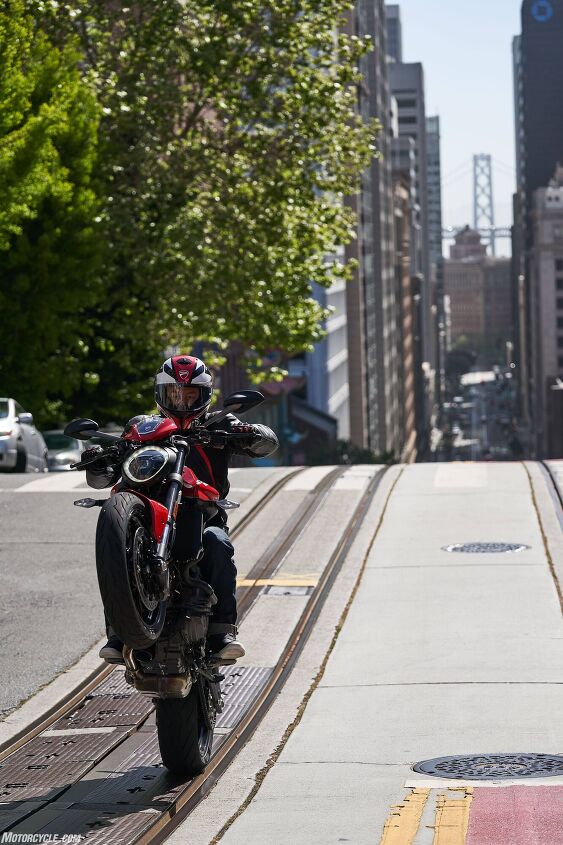
Railroad tracks, shmailroad tracks, says Zemke.

Anyway, there’s no shortage of power. There’s plenty of torque to get rolling right off idle, but whatever’s going on in the new airbox, at 5000 rpm or so and big throttle openings, there’s a big bump in volume and power as the Monster gets down to whatever business you point it at, including hoisting its front wheel in the air. All the latest electronic aids have trickled directly down from the Panigale, including wheelie control, and setting 1 in second gear is a good place to acquire that skill without fear of over-rotating, if you’re up for it, so to speak.

For me, it all feels quite a bit torquier than the numbers indicate; the Monster’s newfound midrange reminds me a lot of the Indian FTR1200’s immediate punch. It’s not as powerful as the FTR, but the fact that the Monster’s 100 pounds lighter than the FTR makes it just as eager. You’ve got the usual ride modes, but even in the most aggressive – Sport – power delivery is perfectly acceptable and smooth, and riding up Lombard Street (you can only ride down it without a police escort) is a doddle in first gear with a little clutch here and there.

2021 Ducati Monster Review

A pair of 53mm throttle bodies deliver the juice. Panigale V4-style “frame” bolts to the cylinder heads. The rear shock’s top mount attaches to a plate bolted to the back of the rear head. Ducati says the alloy frame weighs just 6.6 lbs, or 40% as much as the steel trellis it replaces.

Part of the Ducati L-twin charm was always a slight lumpy-cam idle at small throttle openings, and that’s still there. But the power comes instantly and smoothly online when you twist the throttle. It’s a proactive engine that prefers to be accelerating, not hanging around. I’m told “Urban” transforms it into a pussycat around town, but I didn’t feel like a pussycat that day. Sorry.

Exurban

2021 Ducati Monster Review

It’s a good time for a backlit photo, so you can’t see the five coolant hoses. I wonder if it would look better if you bought one of those red silicone hose kits?

Busting out of the city south on I-280, the Monstrosity is still pulling strong at 111 mph on the new 4.3-inch TFT display when other, slower traffic interrupts the road test. But with no fairing, 83 mph and 5000 rpm are where you’d prefer to be most of the time for daily use. Above 100, you might contemplate whether a steering damper might not be a good investment for the steep, short Monster. Our wheelie-happy friends report that you need to be sure to set the front wheel back down straight.

2021 Ducati Monster Review

Well, Jake Zemke might be able to have more fun on a really tight road on a 208-hp Streetfighter V4…

Though it’s supposed to be a city bike, the Monster feels equally at home riding the squiggliest lines on the map. Short of wheelbase and trail and with a wide but not too-wide handlebar, perfectly decent suspension suspending full-size Diablo Rosso III tires, and three strong, predictable disc brakes, a good rider on a Monster could keep up with any sanely-ridden motorcycle. And probably have more fun and less stress than on Ducati’s heavier, longer, 208-horsepower Streetfighter V4.

2021 Ducati Monster Review

… though I’m fairly certain most of the rest of us would not.

The standard up/down quickshifter is nice to have all the time, but particularly sweet downshifting into tight hairpins and making use of the slipper clutch. The cut time on the shifter is tied into the new IMU: The computer gives less lag time when the bike is straight up and down and accelerating. More lag time when it’s leaning over and downshifting means less chance of upsetting the chassis as you dive into the corner.

Modern electronics

On temperate days, there’s no reason why the Monster couldn’t be a great long-distance commuter or traveller except for one glaring one: There’s no cruise control button and no optional one in the catalog either.

Which is doubly inexcusable, since we just went fully Euro 5 ride-by-wire and even added an IMU (inertial measurement unit) to bring all the latest lean-sensitive ABS and traction control systems on board. Fans of backin’ her in rejoice: In ABS setting 1 (of 3), rear ABS is deactivated. You’ve got eight levels of traction control plus Off, four levels of wheelie control plus Off, and three levels of engine power you can set independently of the three standard ride modes. You’ve even got launch control. Be sure to check that the intersection is safe before proceeding.

2021 Ducati Monster Review

On the 4.3-inch TFT display, it’s easy to go in and dial everything up or down as desired. That’s a good thing, since the Monster inspires more risky behavior than most. Putting the gear position indicator right inside the tach was smart. Your Bluetooth module is available as an accessory.

The TFT is nicely colorful, packed with information that’s probably easy to find after you’ve ridden the bike a while, and switches from day to night automatically. Now we’ve got full LED lighting including turn signals (well, they’re still awaiting US certification), and a daytime running light that lends a kind of beatific aspect to the Monster.

2021 Ducati Monster Review

Anyway…

If you’re one of those people who’s bent out of shape because the pretty trellis frame is gone, you might as well just get over it. As Ducati points out, the original Monster recipe was the previous-generation engine in the superbike frame. Which is exactly the recipe for this one. Also, they’ve sold over 350,000 Monsters to date, so if you don’t like this one there are literally tons of pre-owned Monsters of every stripe looking for a good home.

Bottom Line

How much would you expect to pay? $11,895 in Monster Red seems about right, and $200 more for Aviator Gray or Dark Stealth. Monster + adds a fly screen that’s more a fig leaf, and a passenger seat cover, for $200 more – that’s $12,095 in red. Not bad for a Ducati. Not great for the class: Riding home, I lane-splat for a while with a guy on a brand-new Yamaha MT-09 SP, which comes with premium suspension and cruise control, for $11k.

2021 Ducati Monster Review

Massimo Bordi’s original idea for the Monster was to build a bike as modifiable as a Harley, and that hasn’t changed. You may need these Termignoni cans, and Ducati is also offering a bunch of other accessories, graphics packages, sticker kits and things. Also to appeal to the sticker generation: a Ducati Premier Financing deal with $109 payments for 48 months (with a final $6,755 payment due at the end when you read the smaller print). Can you just give it back after four years?

But then, the dark side of Japan may not be your bag if you’re lusting after a Ducati. It’s true, the bolides from Bologna, the Italian stallions, whatever you call them – do have a certain swagger, and do get you membership in the Ducati club. Wikipedia informs us that on September 21, 2008, “a gathering of Ducati Monsters in Hamme-Moerzeke, Belgium, broke the Guinness Record for the ’largest parade of motorcycles of the same brand and type.’ 405 Ducati Monsters were tallied.”

Wait, has no one in Belgium been to Sturgis or Daytona?

That’s beside the point. The point is, welcome to the new Monster, same as the old Monster. But more sophisticated, comfortable, lighter, lither, and more “fun to ride” than ever.

2021 Ducati Monster Review

2021 Ducati Monster
+ Highs
  • Light weight, skinny waist, great ergos
  • Monsterish midrange power
  • Full IMU-based electronics
– Sighs
  • No cruise control
  • Grip heaters are controlled via the computer
  • No cruise control

In Gear

2021 Ducati Monster In GearHelmet: Shoei Neotec 2 Splicer $799
Jacket: Vanson AZ2$539
Gloves: Dainese 4-stroke $249
Jeans: Sa1nt Unbreakable $299
Boots: Sidi Arcadia Tex $179

2021 Ducati Monster Specifications
Engine Type Testatretta 11°, V2 – 90°, 4 valves per cylinder, desmodromic valvetrain, liquid cooled
Displacement 937 cc (57 cu in)
Bore x Stroke 94 mm x 67.5 mm
Compression Ratio 13.3:1
Power 111 hp (82 kW) @ 9,250 rpm (claimed)
Torque 9.5 kgm (93 Nm, 69 lb ft) @ 6,500 rpm (claimed)
Fuel Injection Electronic fuel injection system, Ø 53 mm throttle bodies with Ride-by-Wire system
Exhaust Pre-muffler and twin muffler, catalytic converter and 2 lambda probes
Transmission 6 speed
Primary Drive Straight cut gears, ratio 1.85:1
Gear Ratios 1=37/15, 2=30/17, 3=28/20, 4=26/22, 5=24/23, 6=23/24
Final Drive Chain, front sprocket z15, rear sprocket z43
Clutch Slipper and self-servo multiplate wet clutch with hydraulic control
Frame Aluminum alloy front frame
Front Suspension Ø 43 mm usd fork, 5.1 inches of travel
Rear Suspension Progressive linkage, preload adjustable monoshock, aluminum double-sided swingarm, 5.5 inches of travel
Front Wheel Light alloy cast, 3.5″ x 17″
Rear Wheel Light alloy cast, 5.5″ x 17″
Front Tire Pirelli Diablo Rosso III 120/70 ZR17
Rear Tire Pirelli Diablo Rosso III 180/55 ZR17
Front Brake 2 x Ø 320 mm semi-floating discs, radially mounted Brembo M4.32 monobloc 4-piston callipers, radial master cylinder, Cornering ABS
Rear Brake Ø 245 mm disc, Brembo 2-piston floating calliper, Cornering ABS
Instrumentation 4.3″ TFT colour display
Dry Weight 166 kg (366 lb), claimed
Curb Weight 188 kg (414 lb), claimed
Seat Height 820 mm (32.3 in)
800 mm (31.5 in) (accessory low seat)
775 mm (30.5 in) (accessory low seat + low suspension kit)
Wheelbase 1,474 mm (58.0 in)
Rake 24°
Trail 93 mm (3.7 in)
Fuel Tank Capacity 14 l (3.7 US gal)
Number Of Seats 2
Safety Equipment Riding Modes, Power Modes, Cornering ABS, Ducati Traction Control, Ducati Wheelie Control, Daytime Running Light
Standard Equipment Ducati Quick Shift, Ducati Power Launch, 4.3″ TFT colour display, Full LED headlight and lighting system, Dynamic turn indicators, USB power socket
Ready For Ducati Multimedia System, Heated grips
Warranty 24 months, unlimited mileage
Maintenance Service Intervals 15,000 km (9,000 miles) / 12 months
Desmoservice 30,000 km (18,000 miles)
2021 Ducati Monster Review 2021 Ducati Monster Review 2021 Ducati Monster Review 2021 Ducati Monster Review - Jake Zemke wheelie 2021 Ducati Monster Review 2021 Ducati Monster Review 2021 Ducati Monster Review 2021 Ducati Monster engine 2021 Ducati Monster Review 2021 Ducati Monster Review 2021 Ducati Monster Review 2021 Ducati Monster Review 2021 Ducati Monster Review 2021 Ducati Monster Review

We are committed to finding, researching, and recommending the best products. We earn commissions from purchases you make using the retail links in our product reviews. Learn more about how this works.

Become a Motorcycle.com insider. Get the latest motorcycle news first by subscribing to our newsletter here.

The post 2021 Ducati Monster Review – First Ride appeared first on Motorcycle.com.

08 May 23:47

Pulling the pallette

353 points, 19 comments.

08 May 23:43

WATCH: How to de-Google

by Editor
Remember when Google was just a search engine? In the age of Gmail and Google Drive and Google Maps and GooTube and Google phones, it’s truly unsettling to think how much of the average person’s online activity is now directly feeding the Google data behemoth. Today on #SolutionsWatch, James talks to Rob Braxman (The Internet …
08 May 20:34

Riders Share Launches Rider Pass Subscription for Peer-to-Peer Motorcycle Rentals

by Press Release
Riders Share Ride Pass review motorcycle rental subscription service

Riders Share, the largest motorcycle sharing marketplace, has announced that bikers can now pay a monthly subscription for discounted rides across the motorcycle rental marketplace. The Rider Pass subscription pricing plan is an industry-first service for peer-to-peer rentals designed to spur growth and motorcycle ridership as the economy rebounds.

  • Rider Pass subscription service provides 35% discount for rides booked on Riders Share marketplace for a $24 monthly fee
  • Service includes free motorcycle rental delivery up to $50
  • Perfect for trying multiple bikes, for frequent travelers and for riders who can’t commit to a single motorcycle
Riders Share Ride Pass review motorcycle rental subscription service

Launched in 2018 by CEO and avid motorcyclist Guillermo Cornejo, Riders Share has powered over 100,000 registered users in its motorcycle rental community, and over 15,000 people have shared their motorcycle on the platform. The company was part of Techstars Los Angeles ’19, and is backed by Texas-based LiveOak Venture Partners and other institutional investors.

The average price for renting a motorcycle on Riders Share is set by the owners of the bike and is typically around $100 a day including insurance — much more affordable than other motorcycle rental alternatives. Now, with the Rider Pass subscription, users will receive an additional 35% off the total price in exchange for a monthly rate of $24.

Riders Share Ride Pass review motorcycle rental subscription service

“We believe subscriptions are key to continued growth in peer-to-peer rentals,” said Cornejo. “There’s an entire market of twenty million plus riders who are bikeless; our goal with subscription services is to provide an economic re-entry point to stimulate responsible ridership across the country.”

Motorcycles are notoriously underutilized in the U.S. On average, motorcycles are used four times less often than cars, which has a significant effect on the total cost of a motorcycle trip. In fact, for the large number of motorcyclists that ride under 40 days per year, each trip requires an average of $190 in ownership costs.

Riders Share Ride Pass review motorcycle rental subscription service

“Peer-to-peer rentals typically cost up to 70% less than brick-and-mortar motorcycle rentals. With our new subscription offering, we’re now able to further reduce this cost, giving people that can’t commit to motorcycle ownership a viable alternative,” said Cornejo.

Riders Share has been recognized as an industry-leader in terms of vehicle selection, marketplace members and low cost. While COVID made a significant impact on travel in general, Riders Share is beginning to see new records in transactions.

Riders Share Ride Pass review motorcycle rental subscription service

“Our mission is to encourage safe motorcycling by making it more affordable,” said Cornejo. “We felt the time was right to further diversify our pricing model and help people create new mobility habits as our cities start moving again.”

The Rider Pass subscription model is only available for riders over the age of 25 and with a FICO score over 700. Free delivery is included up to $50. The base monthly subscription price is $24 with a 12-month term, or $22 per month if prepaid in advance.

For more information, visit riders-share.com.
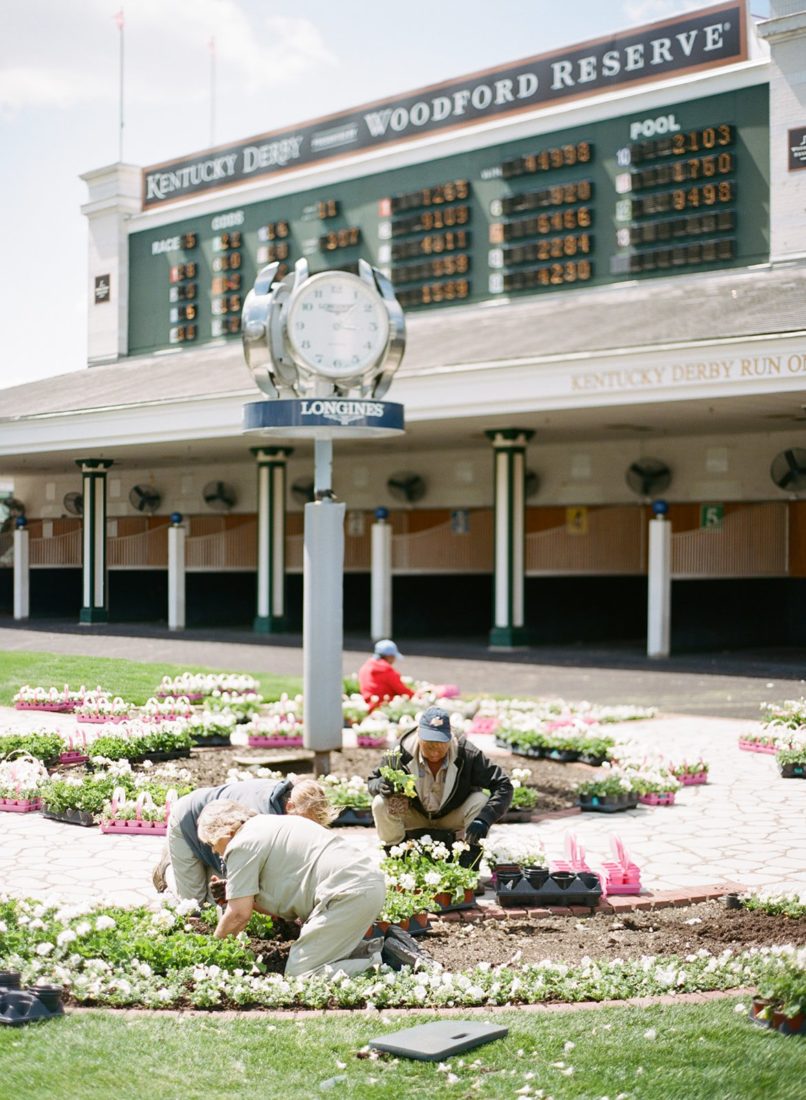
About Riders Share
Riders Share, is the world’s largest peer-to-peer motorcycle marketplace platform, matching underutilized motorcycles with vetted riders that want to rent them. Riders Share leverages machine learning to vet riders, provides an insurance policy for owners and offers roadside assistance. With over 100,000 registered users, Riders Share offers the largest variety of motorcycles available to rent in the world, all while providing a superior experience for renters and an extra source of income for owners.

About LiveOak Venture Partners
LiveOak Venture Partners is a venture capital fund based in Austin, Texas. With 20 years of successful venture investing in Texas, the founders of LiveOak have helped create nearly $2 billion of enterprise value. While almost all of LiveOak’s investments begin at the Seed and Series A stages, LiveOak is a full life cycle investor focused on helping create category-leading technology and technology-enabled service companies headquartered in Texas. LiveOak Venture Partners has been the lead investor in over 30 exciting high-growth Texas-based companies in the last seven years including ones such as CS Disco, Digital Pharmacist, OJO Labs, Opcity and TrustRadius.

The post Riders Share Launches Rider Pass Subscription for Peer-to-Peer Motorcycle Rentals first appeared on Rider Magazine.
08 May 20:30

The economics of movie product placements

by Zachary Crockett

In the 2000 film Cast Away, Tom Hanks’ co-star isn’t Leonardo DiCaprio, Meg Ryan, or some other A-list actor.

It’s a volleyball, courtesy of Wilson Sporting Goods.

Throughout the film, the volleyball enjoys 10.5 minutes of screen time worth an estimated $1.85m+ in advertising value. And for this exposure, Wilson paid a grand total of $0.

Each year, hundreds of brands — cars, computers, clothing, kitchen appliances, and lawn chairs — grace the silver screen.

Sometimes brand appearances are overbearing (think a 30-second-long glamour shot of a Lexus driving down the coast); other times, they’re so subtle you might miss them if you blink.

But how do these brands end up in major motion pictures? What do the economics of these deals look like on the back end? And is this an effective form of marketing?

A mutually beneficial exchange

A frequent misconception is that all brands pay a fortune to appear on the silver screen. In some cases this is certainly true:

  • Harley-Davidson paid $10m to get its electric motorcycle featured in Marvel’s Avengers: Age Of Ultron (2015).
  • Heineken shelled out an estimated $45m for 7 seconds of screen time in the James Bond film Skyfall (2012).
  • BMW plunked down ~$110m to supply cars for GoldenEye (1995), Tomorrow Never Dies (1997), and The World is Not Enough (1999) before Aston Martin outbid them with a ~$140m offer for Die Another Day (2002).
  • More than 100 brands (including Gillette, Nokia, and Carl’s Junior) offered a combined $160m to be featured in Man of Steel (2013).

Heineken’s $45m James Bond deal came with the rights to cross-promote the beer in commercials starring the leading man, Daniel Craig (via Heineken) 

These big-money deals include a slew of other elements, like verbal cues written into the script (“Boy, I sure could go for a nice, ice-cold Budweiser!”), a guaranteed amount of screen time, and the rights to run cross-promotional advertisements with the film’s leading actor.

But in the majority of cases, there is no cash exchanged at all between the brand and Hollywood: Producers need props, and brands are happy to loan them out at no cost in exchange for exposure. 

The rationale for these arrangements is simple: Movies are pretty damn expensive.

On average, a major studio film costs around $65m to produce, not including marketing and distribution. The largest chunk of that is general production costs, which include set design, props, and wardrobe.

For action films, the prop budget alone can stretch into the millions.

The Fast & Furious franchise, for instance, wrecked a total of 1,487 cars over its first 7 movies. Even at a modest estimate of $20k/car, that amounts to $30m in prop costs.

Property masters (the folks in charge of props) are on a constant quest to cut down budgets — and product placement can be a lifesaver.

By getting free stuff — hotel rooms, cars, fancy clothes, kitchen appliances — a big production might trim its budget by $250k to $5m+, according to industry insiders The Hustle spoke with.

That might not sound like a lot in the context of a $65m film, but it’s money that can be reinvested into better music, special effects, or other details that improve the quality of the final cut.

Ray-Ban sunglasses were featured prominently in Top Gun(via Paramount Pictures)

Many well-known product placements in film were unpaid:

  • Reese’s got star treatment in E.T. (1982) after M&Ms turned down Speilberg over fears the alien would scare kids.
  • Ray-Ban didn’t pay film producers for its prominent placements in Risky Business (1983) and Top Gun (1986).
  • Google not only got complimentary inclusion in The Internship (2013) but had an active say in how its brand was represented.

For the most part, these are mutually beneficial trades: Films save money on their budget, and companies get exposure and brand recognition.

But getting a product on Hollywood’s radar often requires expert help.

The connection brokers

Prop departments constantly get inundated with products hoping to fill a production team’s needs.

To stand out among the masses, brands will often hire a product placement agency like Hollywood Branded, which promises to leverage its industry connections to “make your brand a star.”

Hollywood Branded CEO Stacy Jones has placed Lacoste into Mother’s Day (2016), Vita Coco into Entourage (2004-2011), and Blackberry into Up in the Air (2009), among many others.

Two product placements in one shot: George Clooney uses a Blackberry in Up in the Air, while sporting a Hilton Hotels bathrobe (Paramount Pictures)

The process typically works like so:

  1. The brand pays a fee (anywhere from $40k to $300k annually, depending on the desired scope) with the agency.
  2. The agency “educates” Hollywood about the brand, what it can loan out, and what kinds of projects it wants to associate with.
  3. The agency hobnobs with decision-makers (prop masters, set decorators, transport coordinators, stylists), stays up to date with projects that are in production, and reads scripts.
  4. When a good fit is sourced, the agency informs the brand and secures a deal with the production company.

In brokering these deals, Jones has to ensure that the context in which a brand is used won’t cause potential conflicts for the company.

“There’s some risk involved,” she told us. “You don’t know if the film will be a hit. But you also often don’t have all the details; scripts, sets, camera angles, final cuts — everything is subject to change.”

Reebok learned this the hard way.

The brand provided $1.5m in merchandise to be featured in Jerry Maguire (1996) under the pretense that Cuba Gooding Jr.’s character, Rod Tidwell, an athlete who’d been smited by Reebok, eventually made amends with the brand. 

But in the end, this scene was cut. The amended context — and a final script that included the line “Fuck Reebok!” — made the brand look like a terrible sponsor. They later sued TriStar Pictures and settled out of court.

Reebok was featured extensively in Jerry Maguire — and not necessarily in a good light (via TriStar Pictures)

Any time a brand’s logo appears in a film — even if it’s just in the background somewhere — producers have to get clearance from the company to include it.

Certain brands are hyper-vigilant about avoiding conflicts.

Eric Smallwood, president of the product placement agency Apex Marketing Group, tells The Hustle that the coffee liqueur brand Kahlúa asked to not be named in The Big Lebowski (1998) over fears that it would be associated with alcoholism. (It later embraced The Dude.)

When the film or TV show can’t get clearance, it often has to resort to less authentic workarounds like:

  • Greeking, or obscuring logos: You’ll sometimes see an Apple laptop with a strategically placed sticker, or a car emblem that’s blocked by a tree.

  • Generic props: Some prop companies specialize in making fictional products (like Heisler, the “Bud Light of fake beers”) that can be used in negative contexts without repercussion.

The fictional beer brand Heisler — which is often used when a film can’t get clearance from an established brand — makes an appearance in the 2001 cop drama Training Day (via Warner Bros. Pictures)

Other brands prefer to handle their product placements in-house, bypassing the middleman agencies.

Dell started doing this 20 years ago by cold-calling folks in Hollywood and organically building relationships in-house.

Gary Moore, who runs Dell’s global product placement team, tells The Hustle that the brand has been featured in dozens of TV shows and films over the years, including The Big Bang Theory (2007-2019).

In 2020, Dell made a cameo in 19 films, including 5 minutes of screen time in Bad Boys for Life that, alone, was worth ~$8.5m in ad exposure.

Whether a movie needs 100 military-grade PC desktops for an FBI scene or a dozen laptops for a startup office, he’s the go-to guy.

“We have a vetting process we look at to make sure that a show or film is a good fit for our brand,” he says. “We want to make Dell is represented in a positive light, and we turn an opportunity down if we think our products will be used in a nefarious context.”

Characters in the hit TV show The Big Bang Theory using Dell laptops (via Warner Brothers Television / CBS)

To ensure this, Moore often flies from Austin, Texas, to Hollywood just to read potential spec scripts.

“I say to every brand that comes my way, you should be doing product placement and it’s not as expensive as you think.”

But just how effective is product placement as a form of marketing?

Are film placements worth it?

Dominic Artzrouni is the founder of Concave Brand Tracking, a firm that offers detailed analytics on the performance of product placements in film.

Artzrouni provides brands like Dell with data on screen time, discernibility, logo visibility, context (location, associations), and — most importantly — the value they derive from their placements.

The process of determining this value is complex and varied, but Artzrouni says it can be simplified into a basic formula:

(Exposure on screen) x (Viewership) x (Cost of TV commercials)

It’s not an exact science, but it spits out a rough dollar amount that equates a brand’s film placement to the value it would’ve derived from traditional TV commercials. 

Each year, he publishes a list of the brands that derived the most value out of product placements.

In 2020, the top brand — the British clothing and shoe manufacturer Lonsdale — generated an estimated $16.5m from its 16+ minutes of screentime in The Gentlemen.

Zachary Crockett / The Hustle

Artzrouni says brands that appeared in 2020’s 50 highest-grossing films reaped $890m in combined ad value. Extrapolating across all films, he estimates that brands saw $1.2B in ad value from movie product placements in 2020.

But that only tells part of the story: Unlike traditional commercials, good films are timeless, and those values can increase exponentially.

“Product placement is the gift that keeps on giving,” he says. “The ROI can be ridiculous; a brand might get into a film for free and get $3m in value from it.”

Outside of equivalent ad value, brands can reap both short- and long-term sales benefits from placements:

  • Reese’s saw a reported 65% spike in sales after E.T.
  • Ray-Ban sales skyrocketed from 18k to 360k after Risky Business.
  • Etch A Sketch saw sales balloon by as much as 4,500% in the wake of Toy Story (1995).
  • Chevy Camaro sold 80k cars after playing a starring role in Transformers (2007), jumpstarting the ailing brand. The film was such a hit for the carmaker that it was later called a “GM ad in disguise.”

And academic research has shown that product placements can raise brand awareness by 20%, resulting in a greater recall rate, more positive attitudes, and a stronger intention of buying.

Brands are flocking to the space

Jones, of Hollywood Branded, says there has never been a better time to get into product placement in film.

“I’ve never, in 25 years, seen more opportunity in the space,” she says. “We’ve never had our phone ring more. The level and number of brands getting into the space is astonishing.”

Zachary Crockett / The Hustle (Stills via 20th Century Fox)

She attributes this to a confluence of factors:

  • A changing of the ad guard: Traditional TV advertising is declining and brands are looking for creative ways to leverage digital media.
  • A content boom: Streaming services have been pumping out historically high quantities of content, leading to more product placement opportunities.
  • Budget awareness: Rising production costs on the backside of the pandemic have caused producers to think more deeply about ways to save money on films.

Like any form of marketing, success is often contingent on high volume and good luck.

“First you need to be lucky enough to have your product shown a lot in a film,” she says. “Then you need to get lucky with the film’s performance.”

But if Wilson Sporting Goods imparted any lesson, it’s that the potential rewards from a slam-dunk film placement are worth the risks.

More than 20 years after the release of Cast Away, the company still sells replicas of its famous blood-stained volleyball to fans all over the world.

06 May 22:31

3 Things You Need to Do Before Using Deadly Force

by U.S. LawShield

If you choose to carry a gun, the first thing you should understand is that using the gun in an actual self-defense situation is still a negative outcome.

The post 3 Things You Need to Do Before Using Deadly Force appeared first on GunsAmerica Digest.

06 May 22:15

The Winners of the 2021 Nikon Surf Photo and Video of the Year Awards

by Jaron Schneider

Nikon Australia, in partnership with Surfing Australia, has announced the winners of its 2021 Nikon Surf Photo and Video of the Year Awards. The industry-recognized awards provide a national platform to celebrate the work of local surf photographers and videographers.

Now in its ninth year, the competition was judged by a panel of 13 “high-profile individuals within the surfing industry,” including seven-time World Surfing Champion and Nikon Brand Ambassador Stephanie Gilmore. The panel were tasked with selecting the best surfing photo and video based on four criteria: innovation and creativity, dramatic effect and sensory impact, uniqueness, and composition of the panel.

The winning image was captured by Stu Gibson who gained the title of “Nikon Surf Photo of the Year” while Spencer Frost claimed “Nikon Surf Video of the Year.” Both Gibson and Frost were awarded a Nikon Z6 II and Nikkor Z 24–70mm f/4 S lens.

John Young, General Manager, Marketing, Nikon Australia, said, “We’re proud to celebrate the incredible talent and passion of Australia’s surf photographers and videographers in partnership with Surfing Australia. Continuing to see the stories captured by the best surf photographers and videographers with such a high caliber of creativity has been awe-inspiring. Congratulations to all the finalists.”

Chris Mater, CEO, Surfing Australia, said, “Each year, we look forward to hosting such an esteemed event, where we recognize the outstanding achievements of the Australian surfing community and the creatives behind the lens who capture the action.”

Below is Gibson’s winning image:

Below are the other finalists from the competition:

Photo by Simon Connolly
Photo by Lucas Martin
Photo by Warren Keelan
Photo by Eddy Dallimore
Photo by Peter Jovic
Photo by Piotr Parzybok
Photo by Jordan Godley
Photo by Eden Pogonoski
Photo by Tom Pearsall
Photo by Scott Harrison
Photo by Alex Van Kampen
Photo by Russel Ord
Photo by Jack Ogrady
Photo by Travis Johnson
Photo by Warren Keelan
Photo by Mark Onorati
Photo by Gergo Rugli

Frost’s winning film below is titled A Corner of the Earth.

Below are the two other finalists’ videos. First is Spirit by Tom Jennings followed by First Name in the Water by Andrew Kaineder.


Image credits: Photos individually credited and provided courtesy of Nikon Australia.

06 May 13:45

Here Is Every Michelin-Starred New York Restaurant for 2021

by Jeremy Repanich
Seven restaurants earned stars for the first time, while the pandemic wiped out a large swath of previous recipients.
06 May 13:36

Great Art Explained: Watch 15 Minute Introductions to Great Works by Warhol, Rothko, Kahlo, Picasso & More

by Josh Jones

Can great art be explained? Isn’t it a little like explaining a joke? Yet this can be worthwhile when the joke is in a foreign language or an unfamiliar idiom, a long-forgotten dialect or an alien idiolect. Consider, for example, the most common response to Mark Rothko’s monochromatic rectangles: “I don’t get it.”

Will perplexed viewers better understand Rothko’s Seagram murals when they learn that “he was found in a pool of blood six by eight feet wide, roughly the size of one of his paintings,” as James Payne writes, hours after he sent the nine canvasses to the Tate Modern gallery in London in 1970? “His suicide would change everything and shape the way we respond to his work,” adding a darker edge to comments of his like “I’m interested only in expressing basic human emotions, tragedy, ecstasy, doom and so on.”

Last summer, Payne launched his series Great Art Explained in Fifteen Minutes, “a brilliant new addition to YouTube art history channels,” Forbes enthused — “entertaining and informative short films [that] present a fresh look at familiar artworks.” There’s much more to Rothko than his tragic death at 66. We learn of his love for Mozart, a composer who was “always smiling through his tears,” the painter said.

An artist who seems to embody the opposite of Rothko’s troubled passion, Andy Warhol gets an explainer, above, in which Payne takes on the artist’s Marilyn Diptych. He opens with 30 seconds of audio from an interview with Warhol, who gives characteristically disinterested yes or no responses: “Andy, do you think that Pop Art has reached the point where it’s becoming repetitious now?” “Uh, yes.”

Pop Art’s repetitions were the point. Warhol elevated the unremarkable mass product to the level of high art, becoming the biggest-selling artist in the world. Payne draws a parallel between Marilyn Monroe’s transformation from “abused foster child from the rural midwest” to Hollywood royalty, and Warhol’s move from a shy, sickly child of immigrants to an international art star.

Even if Payne is explaining things you already knew about famous artworks like Monet’s Water Lilies, you’ll still enjoy his presentation, with its clever editing and compelling narration. “I want to present art in a jargon free, entertaining, clear and concise way,” he writes. Each video covers one famous artwork, not all of them modern. (We recently featured Payne’s take on Hieronymus Bosch’s Garden of Earthly Delights.)

Payne’s work as an art consultant, guide, “and art and film writer,” Forbes writes, “make him the ideal presenter of this excellent new art history series.” Craving some context on your lunch break? Head over the Great Art Explained in Fifteen Minutes and catch a few excellent mini-art history lectures, each one 15 minutes or less, for free.

Related Content: 

60-Second Introductions to 12 Groundbreaking Artists: Matisse, Dalí, Duchamp, Hopper, Pollock, Rothko & More

An Introduction to 100 Important Paintings with Videos Created by Smarthistory

Free Course: An Introduction to the Art of the Italian Renaissance

Josh Jones is a writer and musician based in Durham, NC. Follow him at @jdmagness

Great Art Explained: Watch 15 Minute Introductions to Great Works by Warhol, Rothko, Kahlo, Picasso & More is a post from: Open Culture. Follow us on Facebook and Twitter, or get our Daily Email. And don't miss our big collections of Free Online Courses, Free Online Movies, Free eBooksFree Audio Books, Free Foreign Language Lessons, and MOOCs.