KWBaker
Shared posts
Revive That Scorched Cast-Iron Skillet With This Pantry Staple - CNET

From One Hunter To Another
I could go on and on; the bill of laden is interminable . . . all the things that can displace or render to anguish a joyful day of hunting or fishing. But it’s quibbling over pocket money. Folks who’ve lived past yesterday will tell you life is unpredictable. But I don’t know. Seems to…
The post From One Hunter To Another appeared first on Sporting Classics Daily.
How to Grow Your Own Wondrous Fruits
Every time you shop for groceries, you see them: Red Delicious apples, Cavendish bananas, Crimson Seedless grapes, and so on. The monotonous array of fruit stacked onto supermarket shelves does little to represent the bountiful biodiversity of the world’s fruit.
But beyond the standard produce aisle, the pineapples are pink and the bananas taste like custardy melons. Sadly, it’s not always easy to find rare fruits from far-flung corners of the globe. Chocolate pudding fruit and pink lemonade blueberries may never make it to your grocer, which is exactly why you should grow your own. Luckily, seeds and plants from around the world are increasingly easy to find and cultivate. Here is a collection of Gastro Obscura’s favorite fairytale fruits, along with where to order them.

Peanut Butter Fruit
Genetically, this Andean fruit has absolutely no connection to the legumes in a jar of Jiffy. Yet all those who taste these red and orange berries swear they taste just like peanut butter. Their sweet nuttiness makes for a delicious addition to smoothies.
Where It's From: Colombia, Peru, Ecuador, Bolivia, Venezuela
Where to Find It: Logee’s Plants for Home and Garden

Chocolate Pudding Fruit
Dip a spoon into a ripe chocolate pudding fruit, and the smooth texture and brownie-esque hue might fool you into thinking it’s mousse. Also known as black persimmon, the fruit’s sugary flesh has a mild flavor with subtle cacao undertones. Steer clear of fruit that isn’t completely ripe, which has an astringent flavor.
Where It's From: Mexico, Guatemala, Belize, Honduras, Panama, El Salvador
Where to Find It: Forever Seeds

Cucamelon
These aren’t actually diminutive watermelons. Slice into one of these babies and you’ll find a pale green interior that tastes like a slightly sour cucumber. Fun fact: cucamelon shares a family, but not genus, with both cucumbers and watermelons, so it’s a little like both, but not exactly like either.
Where It's From: Mexico
Where to Find It: Burpee

Kiwi Berries
Just as the name implies, these are kumquat-sized versions of the emerald fruit we all know and love. Unlike their fuzzy-skinned counterparts, these extra-sweet itty-bitty ones don’t need to be peeled. Simply pop a whole Actinidia arguta into your mouth and enjoy.
Where It's From: China, Japan, Korea, Siberia
Where to Find It: Stark Bros. Nurseries & Orchards Co.

White Strawberries
The red pigment in your familiar strawberries directly correlates with how sour they taste. As a result, their alabaster cousins, which are native to the Chilean town of Purén, have a delicate, floral sweetness without any acidity. While the fragrant frutillas blancas can only be found in South America, related varieties of white strawberries are becoming increasingly popular in the United States.
Where It's From: Chile
Where to Find It: Baker Creek Heirloom Seeds

Pink Lemonade Blueberries
Unlike their more common cousins, these diminutive berries ripen to a shocking shade of fuchsia. First developed in the 1970s by the U.S. Department of Agriculture, the bushes were mostly used as ornamental shrubbery for decades—until someone realized that the berries are delicious. In addition to being sweeter than regular blueberries, they boast a subtle, citrusy perfume.
Where It's From: USA
Where to Find It: Gurney’s Seed & Nursery Co.

Finger Limes
Chefs have fallen hard for this fruit from the Australian bush, which occasionally goes by the nickname “citrus caviar.” It’s not hard to see why. The glistening, jewel-like beads of coral, gold, emerald, or ebony bear a striking textural resemblance to pricey sturgeon eggs. Poor-quality fruit occasionally carries an unpleasantly soapy aftertaste, but prime specimens make for perfect garnish for oysters or sushi.
Where It's From: Australia
Where to Find It: Forever Seeds

Rollinia
Imagine dipping a spoon into a slice of lemon meringue pie and you get a pretty good idea of what this Brazilian fruit tastes like. Although the somewhat slimy consistency of its flesh has earned it the nickname “snotfruit,” the flavor, which also has notes of coconut, banana, and pineapple, makes it incredibly popular in its country of origin.
Where It's From: Brazil
Where to Find It: Trade Winds Fruit

Black Arkansas Apple
First discovered in 1870, these striking, deep-violet fruits all but disappeared thanks to moth infestations and the onset of the Great Depression. They’ve started to make a comeback in recent years, thanks to a nuanced flavor profile that includes notes of vanilla, cinnamon, cherry, and even coriander. Aside from its striking coloring, what’s most unusual about this rare fruit is that its flavor actually improves dramatically with cold storage, making it perfect for saving over long winter months.
Where It's From: USA
Where to Find It: Gurney’s Seed & Nursery Co.
The 7 Best Dry Dog Foods, According To Veterinarians

Chicken Stew – High Country Comfort Part 3
CHICKEN STEW Chicken soup is associated with being a bit under the weather for good reason. It’s nutritious, tasty, filling and somehow seems just the thing for when, as Grandpa Joe would have put it, “a body is ailing a bit.” Curiously, I don’t remember Grandma Minnie ever making chicken soup or indeed soup of…
The post Chicken Stew – High Country Comfort Part 3 appeared first on Sporting Classics Daily.
How Preserving Agave Could Help Save an Endangered Bat
This piece was originally published in Yale E360 and appears here as part of our Climate Desk collaboration.
At the southeast tip of a large valley in the northern Sierra Madre Oriental is the small Mexican town of Estanque de Norias, some 200 miles west of the Texas border at Laredo. Mountains rise up around the scrubby, treeless terrain like undulating brown walls. The star of this parched landscape is Agave asperrima, whose rosettes of impressive thick, blue-gray leaves edged with large, sharp teeth can grow four feet high and five feet wide. The agave spends its entire 10- to 15-year life storing enough sugars for the moment when it sends a massive flowering stalk up into the sky. The stalk, which can reach 20 feet tall, is topped by a giant, candelabra-like inflorescence with numerous flower clusters bearing countless small, bright yellow blooms that produce large quantities of sweet nectar at night. After flowering, the plant dies.
Estanque de Norias is an ejido, a communal agrarian community whose 300 inhabitants make their living in the desert scrub. The striking landscape offers barely enough to support the ejidatarios and their cattle in normal times, and climate change has made their living even more precarious. “One of the principal problems is the availability of water for the people and the cattle in the driest months,” says José Juan Flores-Maldonado, executive director of the Mexican nonprofit Species, Society, and Habitat—known by its Mexican acronym ESHAC. “Desertification, which is evident in a huge part of the area, is the key threat to human livelihoods and biodiversity in ejidos like Estanque de Norias.”
Harvesting agaves for the production of mezcal, including tequila, is not a major threat in northeastern Mexico, as it is in the western part of the country. However, as drought has intensified and become more frequent, the cattle, which have traditionally grazed on grasses and other native forage, have been forced to feed on agaves. The land is now so heavily grazed and degraded that the agaves are disappearing or are consumed by the cattle before they can flower, threatening another important denizen of the desert scrub, the endangered Mexican long-nosed bat.

The relationship between agaves and long-nosed bats—the plant’s main pollinator—is the product of thousands of years of coevolution. Because both the bats and the plants benefit from their relationship, it is a classic example of what biologists call a “mutualism.” In fact, they are considered keystone mutualists because their relationship is essential to the health and stability of their ecological communities. Agaves also serve as keystone species for human communities and have been an inextricable part of the culture and identity of the Mexican people for millennia.
“Conservation is also about people,” says Kristen Lear, who leads Bat Conservation International’s Agave Restoration Initiative. Along with Flores-Maldonado, Lear is part of a group of Mexican and American partners working on ways to enable the ejidatarios, the agaves, and the nectar-dependent bats to share the harsh landscape. “In situations like this where wildlife and people are tightly connected,” she says, “paying attention to human needs and engaging local people is just as important as studying wildlife needs.”
The project epitomizes a new kind of conservation that strives to preserve not just single species but rather mutualistic and keystone relationships. This outlook views local people as a key part of the web of interdependent, mutually beneficial relationships with other species, which is essential for the health of the land and the biodiversity and human livelihoods it supports.
From 2015 to 2018, Lear spent a lot of time in communities like Estanque de Norias doing field work for her doctorate in integrative conservation, which aims to combine the health of human communities with conservation goals. She was there to understand how the ejidatarios use and manage the agaves on their lands and to study the behavior of the secretive bat. Many nights she sat silently with an infrared camcorder under a sky spangled with stars, watching intently for nocturnal visitors to the towering stalks of nearby agaves. “Suddenly, the silence is interrupted by the whooshing sound of a small group of Mexican long-nosed bats rocketing into the area to sip the sugary liquid in the agave flowers,” says Lear. “For 10 or 15 or 20 minutes at a time they hit the agaves one after another. It’s magical.”

The largest nectar-feeding bat in North America, the Mexican long-nosed bat has an elongated muzzle with a prominent “nose leaf,” a small fold of skin, at the tip. The bat’s long nose and tongue, which can extend 3 inches, enable it to probe deep inside agave flowers for nectar. “The bats are just adorable,” says Francesca Claverie, head of the native plant nursery program at the Borderlands Restoration Network, which collaborates with Bat Conservation International (BCl) to grow agaves to support long-nosed bats. “They look like baby chihuahuas with a cute little nose.”
They are also highly endangered. Bat scientists suspect the species declined by more than 50 percent within a decade. Loss of roosting sites is one factor believed to be causing its swift downturn. For example, urbanization and increasing visits by tourists and speleology groups threaten the bat’s one known mating site, Cueva del Diablo, just outside Mexico City. From 2001 to 2010, standardized counts by Rodrigo Medellín of the Universidad Nacional Autónoma de México found 3,500 individuals. From 2017 to 2019, 2,000 bats were recorded at the cave, and in 2020 the number had dropped to 1,500.
Conservation efforts are complicated by the fact that many of the bats undertake a 700-mile migration between central Mexico and the southwestern United States each year. In March, pregnant females leave the mating site, where both sexes gather during winter, and follow the wave of blooming agave and cactus species north. During April, May, and early June, the females stop at four known maternity roosts in east and northeast Mexico and Big Bend National Park in Texas, where they give birth to a single “pup.” One of the roosts, Rosillo Cave, is just a few miles from Estanque de Norias, making the ejido a critical foraging site for hungry moms and their pups.
“The maternity roosts are where the moms raise the pups until they can fly, which is usually about six weeks,” Lear says. Some of the young and their mothers continue to follow the trail of blooms to a post-maternity cave in the southwestern corner of New Mexico. In late summer and fall, the bats follow the wave of late-blooming agaves back south.

Scientists believe that the loss of food sources along the so-called “nectar corridor” is a key cause of the bat’s demise. Nectar and pollen from agave plants are a primary food of the Mexican long-nosed bat — in northern stretches of the migration they are thought to be the only source. When the bats are in Texas, for example, they feed solely on one agave species, Agave havardiana, which is deemed vulnerable to extinction and declining on the Red List of imperiled species.
Unlike its close relative the lesser long-nosed bat, which migrates through western Mexico where the production of agave-based liquors like mezcal and tequila has reduced the number of flowering agaves, the Mexican long-nosed bat appears to be threatened by the loss of agaves to the expansion of agriculture, cattle ranching, and urban development. Those impacts are exacerbated by increasing drought. In desert scrubland communities of northeast Mexico like Estanque de Norias, Lear says, “agave liquor production is not people’s primary livelihood. The key thing there is the use of wild agaves for livestock fodder.” Especially during dry times, the ejidatarios cut the leaves and flower stalks to feed their cattle or goats. The animals also graze on emerging flower stalks. As Lear points out, “this is becoming more and more of an issue with climate change.”
Since 2019, BCI has been working with partners to reestablish healthy populations of agaves along the migratory route of the Mexican long-nosed bat. “The migratory corridor is critical to protect, but we actually don’t know the full route yet,” says Lear. In one of the earliest attempts to map the route, documented in a 2017 paper in the journal Diversity and Distributions, Emma Gómez-Ruiz of the Parque Ecológico Chipinque in Nuevo León and coauthor Thomas Lacher of Texas A&M University modeled the distribution of nine agave species with the paniculate (branched) inflorescences suitable for nectar-feeding bats. They then determined whether bat records were significantly related to areas rich in these agave species. “We found a general pattern relating bat presence with agave richness,” Gómez-Ruiz says.
Their research indicates that the Mexican long-nosed bat generally follows the Sierra Madre Oriental north into Texas in spring. It also suggests that the areas with the highest number of agave species are at higher elevations, leading the scientists to conclude that conservationists should focus on mountainous areas of the adjacent northeast border states of Coahuila and Nuevo León, where agaves may be the bat’s only food source and few biological surveys have been done.

“The biggest mystery,” says Lear, “is how on earth do they get between Emory Cave in Texas and Romney Cave in New Mexico.” The bats “are really hard to study,” she says. “They fly at night; they’re difficult to catch; and they’re too small for the traditional GPS trackers used on bigger animals.” This has led Lear and colleagues to develop a new application of environmental DNA (eDNA) technology to detect bat fur or saliva on agave flowers. To track the bats’ movement in Texas, for example, they are currently testing the effectiveness of swabbing agave flowers with what is essentially a giant Q-tip they jury-rigged using materials from a local Tractor Supply store.
In 2019, in the journal Scientific Reports, Gómez-Ruiz and Lacher followed their earlier paper with the first study to examine how climate disruption is likely to affect the distribution of the agaves and the Mexican long-nosed bats. After modeling potential distributions in 2050 and 2070, they found that the overlap between the agaves and the bats will be reduced at least 75 percent.
Climate change is already taking its toll. Although droughts have always been a recurring part of life in northeastern Mexico, agriculture, cattle ranching, and other human activities have reduced the land’s capacity for water retention, and since 1960 climate change has raised Mexico’s mean annual temperature. Studies suggest that warmer temperatures increase evaporation in soil, exacerbating the lack of water and promoting desertification.
The severity of the situation led the Endangered Species Coalition to include the Mexican long-nosed bat in its 2021 report Last Chance, a list of 10 U.S. species already severely imperiled by climate change.

Over millennia, many agaves have evolved adaptations such as the towering, nectar-filled flowers that have made them the bats’ favored food. At the same time, the bats have become the plants’ main pollinator, completing the mutualistic relationship. As the bats feast on agave nectar, their fur becomes covered with pollen grains. When they fly to another agave in search of more food, they transfer the pollen to a new flower, assisting in the cross fertilization of the plant and boosting the species’ genetic diversity and resilience to environmental stresses. What’s more, agaves prevent soil erosion and provide food and shelter for a variety of other animals, from bees and birds to lizards and small mammals. If they and their bat pollinators disappeared, their habitats would be severely disrupted.
The relationship between people and magueyes, as agaves are known in Mexico, began about 10,000 years ago. The leaves were employed as an impenetrable thatch for dwellings; their hard fibers were used to produce strong cords; and the thorns were made into pins and needles.
Today, some agave species are still cultivated for fibers, and agave syrup is derived from the sap, known as aguamiel, or “honey water.” In fact, every part of the plant is edible, including the sweet flower stalks, which are roasted. When the juice of some agaves ferments, it becomes an alcoholic beverage known as pulque, long popular in some parts of the country. Distillation technology, possibly introduced by the Spanish, led to today’s multibillion dollar tequila industry. Lear says that although most of the agaves utilized for these products are cultivated, wild populations are still exploited, and agaves grown for liquor production are harvested before they flower, leaving little to sustain nectar-feeding bats.
BCI and its partners have been collaborating with ejidatarios in northeastern Mexico on measures that preserve the bats by restoring the agaves that protect the land and support their livelihoods. According to Flores-Maldonado, ESHAC began working with the Estanque de Norias ejido in 2013, monitoring the agaves and bats and educating the people about their importance to the health of their land. In 2019 they held an ejido voting assembly and presented a plan for how they could work together to restore the agave habitat. “They got the community on board,” says Lear, “and they worked with a group of the ejido members to design the conservation measures”—deciding, for example, where to plant the agaves and where to fence off small areas from their livestock while leaving enough grazing land for the cattle.
“When it does rain, the soil gets washed all over the place.”
ESHAC has been working with the ejidatarios on other regenerative ranching practices as well. Because the land is overgrazed, says Lear, “there are just not enough plant roots to hold the soil in place anymore, so when it does rain, the soil gets washed all over the place.” ESHAC is training members of the community to build small filtration dams in vulnerable areas to prevent soil erosion, and to dig trenches so that rainwater can infiltrate the soil and support the native grasses. In Lear’s words, “Basically it’s about regenerating the soil and the natural vegetation that the cattle can then graze on in the future.” The ejidatarios are paid to build the fences and dams and plant the agaves.
According to Flores-Maldonado, 29 people in Estanque de Norias, or about 10 percent of the community, have participated in these activities, and although work has been interrupted by Covid-19, they have already managed to restore almost 150 acres of agave habitat, including the planting of some 2,000 agaves. He adds that in the adjacent ejido of La Reforma they have constructed a greenhouse which they hope will supply the area with at least 10,000 native agave plants in the next two years.
There is no time to lose. While the Mexican long-nosed bat population has quickly plummeted, agaves are agonizingly slow growers. Even once greenhouses and other infrastructure are in place, “between growing out the plant, getting it in the landscape, and waiting for it to flower, you’re looking at at least a decade,” notes Claverie of the Borderlands Restoration Network.

In a 2016 paper, Steve Buckley of the National Park Service and Gary Paul Nabhan of the University of Arizona wrote that conservation biologists have inadvertently hampered public concern by viewing conservation as an attempt “to simply avert extinction and foster recovery of single imperiled species.” But they believe there is an emerging paradigm shift toward the conservation of mutualisms and keystone relationships, such as the agave and the Mexican long-nosed bat. This should not be limited to interactions between plants and pollinators, they add, but “should include people and pollinators and people and landscapes as emerging mutualisms to restore.”
“We are in a critical time,” says Flores-Maldonado. “We have a huge challenge, because the climate crisis is forcing us to rethink the way we do cattle ranching, agriculture, and conservation.” However, he has confidence that the kind of integrative conservation being done in places like Estanque de Norias can help promote a mutually beneficial relationship between the people and the land. “In this toolbox,” he says, “we can find the alternatives to meet this challenge.”
The best Super Bowl snacks: Your party will be a win even if your team sucks
For this Super Bowl, why not wow your party's tastebuds? From pitmaster Rodney Scott to best-selling cookbook author Pati Jinich, these snacks will up your game.
The post The best Super Bowl snacks: Your party will be a win even if your team sucks appeared first on The Manual.

The Owl Bar in Baltimore, Maryland

When the Belvedere Hotel opened its doors on December 14, 1903, it became Baltimore's first luxury hotel. Off the posh lobby of the Beaux Arts–style building was the Owl Bar, then known simply as the Bar Room. Because it served alcohol, admission was restricted to men. The bar quickly became one of the city's most popular and notorious watering holes, frequented by clientele ranging from businessmen and politicians to bookies and gangsters.
Although the spittoons are gone, today the Owl Bar looks much as it did when it opened. The walls are ornate brickwork and dark wood paneling. Vintage chandeliers illuminate the dimly lit space. Murals of Renaissance scenes harken to a brief period when the bar was known as the Falstaff Room. Stained glass windows, backlit behind the bar, feature images of owls and the following nursery rhyme:
A wise old owl sat in an oak
the more he saw the less he spoke.
The less he spoke the more he heard
why can't we all be like that wise old bird?
The simple rhyme assumed additional significance with the onset of Prohibition on January 17, 1920. For the next 13 years, the bar operated as a speakeasy and served bootleg liquor to in-the-know patrons.
Then owner Colonel Consolvo added to the bar's owl-themed décor when he brought in two large plaster owl statues and placed them on the cash registers. The owls were named Sherry Belle and John Eager Howard, and they had electric glass eyes that signaled the availability of contraband whiskey. An amber eye on each owl would blink when the hotel's basement had liquor and the coast was clear of law enforcement. When Prohibition ended in 1933, the owls mysteriously disappeared.
Like many urban establishments, the Belvedere Hotel fell on hard times by the 1970s. Although used briefly for low-rent student housing, the building closed in January 1972 due to code violations. Contractor Victor Frenkil bought the property at auction in 1976 and set about returning the Belvedere to its former glory.
When the bar reopened, it was officially named the Owl Bar. And thus began a search for the original eponymous birds. Eventually, Frenkil's friend found them in New York. Late one night in April 1977, they mysteriously reappeared in the locked bar, with a new poem:
Where we've been, what we've seen
No matter the din, no one will glean.
But if your eyes are clear today you can tell
The Owls of Belvedere—have returned from Hell!
The revamped Owl Bar hosted patrons merrily until around 1990, when financial problems and a dispute with the city led to Frenkil leaving with the owls in tow. In 1991, restaurateur Dion Dorizas bought the bar and transformed it into the Taos Cafe, a southwest American eatery, with coyotes in place of the beloved owls. Locals did not go along for the ride. By 1995, Frenkil and the birds were back.
The 30-pound owls now sit on high perches behind the bar and continue to watch over staff and patrons. And, sometimes, they still wink.

Handbook: Carrying a Firearm in your Vehicle
This Michelin-Starred Chef Shows You How to Make Steak Sandwiches for Your Super Bowl Party

NWA? GADA? Decoding the Online Language of Watch Enthusiasts
Fit right in on the forums with this guide to talking like a watch nerd.

The Fiendishly Complicated Board Game That Takes 1,500 Hours to Play: Discover The Campaign for North Africa

Monopoly is notoriously time-consuming. On the childhood Christmas I received my first copy of that Parker Brothers classic, my dad and I started a game that ended up spreading over two or three days. That may have had to do with my appreciation for Monopoly’s aesthetic far exceeding my grasp of its aim, and I’ve since realized that it can be played in about an hour. That’s still a good deal longer than, say, a game of checkers, but it falls somewhat short of the league occupied by The Campaign for North Africa — which is, in fact, a league of its own. Since its publication in 1979, it’s been known as the longest board game in existence, requiring 1,500 hours (or 62 days) to complete.
We are, of course, talking about a war game, and that genre has its own standards of complexity — standards The Campaign for North Africa leaves in the dust. “The game itself covers the famous WWII operations in Libya and Egypt between 1940 and 1943,” writes Kotaku’s Luke Winkle. “You’ll need to recruit 10 total players, (five Allied, five Axis,) who will each lord over a specialized division. The Front-line and Air Commanders will issue orders to the troops in battle, the Rear and Logistics Commanders will ferry supplies to the combat areas, and lastly, a Commander-in-Chief will be responsible for all macro strategic decisions over the course of the conflict. If you and your group meets for three hours at a time, twice a month, you’d wrap up the campaign in about 20 years.”
You can get an idea of what you’d be dealing with over those two decades in the video below from Youtuber Phasing Player, an overview that itself takes about an hour and a half. “Honestly, if I’m being straight-up here, this game does sound, broadly speaking, like a fun time,” he says, half an hour deep into the explanation. “Imagine setting up a giant map of Africa,” getting your friends together, “Sarah’s in charge of the air force and Jim is in charge of logistics. You have all these people in charge of different things, and you’re communicating strategies, and the commander-in-chief is formulating plans and doing all this stuff. That sounds like a real hoot, right?” Alas, “the big asterisk comes in when that good time has to last literally a thousand hours,” involving what another player quoted by Winkle calls “doing tedious calculations all the time.”

Those calculations necessitate paying close attention, on every single turn, to not just quantities like fuel reserves but the historically accurate size of the barrels containing those reserves. Note also that, as Winkle adds, “the Italian troops in World War II were outfitted with noodle rations, and in the name of historical dogma, the player responsible for the Italians is required to distribute an extra water ration to their forces, so that their pasta may be boiled.” The Campaign for North Africa‘s designer, the late Richard Berg, claimed that the so-called “pasta rule” was a joke, and that the game’s fiendish overall complexity was in keeping with the style of the times, a “golden age” of war gaming with high sales and ever-escalating ambitions. As with so many other seemingly inexplicable artifacts of cultural history, one falls back on a familiar explanation: hey, it was the 70s.
via Kotaku
Related content:
Learn to Play Senet, the 5,000-Year Old Ancient Egyptian Game Beloved by Queens & Pharaohs
The Fear and Loathing in Las Vegas Board Game, Inspired by Hunter S. Thompson’s Rollicking Novel
Monopoly: How the Original Game Was Made to Condemn Monopolies & the Abuses of Capitalism
Download & Play the Shining Board Game
Board Game Ideology — Pretty Much Pop: A Culture Podcast #108
Based in Seoul, Colin Marshall writes and broadcasts on cities, language, and culture. His projects include the Substack newsletter Books on Cities, the book The Stateless City: a Walk through 21st-Century Los Angeles and the video series The City in Cinema. Follow him on Twitter at @colinmarshall or on Facebook.
Strip Away What I Have Been Taught
“I said to myself, ‘I have things in my head that are not like what anyone has taught me…shapes and ideas so near to me…so natural to my way of being and thinking that it hasn’t occurred to me to put them down.’ I decided to start anew, to strip away what I had been taught.”
– Georgia O’Keeffe
Vision Marine Is Challenging Polluting Boats With Its Powerful Electric Motor

Why We Forget: Scientists Say Memories Aren't Actually Lost After All...
Why We Forget: Scientists Say Memories Aren't Actually Lost After All...
(Third column, 18th story, link)
1031 Exchange: A Tax-Deferred Way To Build Your Real Estate Business

DEA Intelligence Sells For Just $5 On Facebook—Here’s How Gangs (And Cops) Use Social Media

NASA’s ‘Son of Concorde’ Supersonic Jet Is Now Undergoing Testing

8 Signs I’ve Used to Track My Growth as a Photographer

Photography, like all art, is subjective. However, one of the most common questions I see from people starting their photography journey is "how do I know when I’m getting better?" While the idea of ‘better’ is also partly subjective, improvement is still something every photographer strives for, and there are many different ways we can assess our own growth.
Repair Wars: Cory Doctorow on the State of Right to Repair

They’ve stacked the decks against servicing your own purchases;
The community is now resisting
— and winning.
The post Repair Wars: Cory Doctorow on the State of Right to Repair appeared first on Make: DIY Projects and Ideas for Makers.
8 Grilled or Smoked Bite-Size Snacks for Super Bowl Sunday
Are you expecting hungry guests on Super Bowl Sunday, taking place on February 13? Below are some appetizer recipes for the big game, guaranteed to make you feel like the MVP. May your team win!
8 Grilled Appetizer Recipes for Superbowl Sunday
1. Nashville Hot Wings
The heat seekers in your circle of friends will love these wings, which were inspired by Nashville hot chicken. Spicy, smoky, and a little bit sweet, you’ll want to make extras.

2. Pork “Shooters”
Stuffed with briny shrimp, cheese, and andouille sausage and belted with bacon, these bite-size appetizers first made their debut during Season 2 of Project Fire. They’ve become one of our most popular recipes.

3. Bourbon Brined Turkey Breast
Bourbon-brined turkey can be made a few days ahead of Game Day, thinly sliced, and served on slider buns or Hawaiian rolls with a variety of condiments. Round out the meal with coleslaw or potato salad.


5. Sugar Cane Shrimp with Spiced Rum Glaze
Warm spices and dark rum pair beautifully with snappy brined shrimp skewered on sharpened lengths of sugar cane. Can’t find sugarcane? Feel free to use bamboo skewers or order the sugar cane from melissas.com.

6. Maple-Sriracha Glazed Chicken Drumsticks
A small palette of ingredients, including wood smoke, gives chicken legs bold flavors—perfect for Super Bowl Sunday.

7. Ember-Roasted Salsa with Grilled Tortillas
Vegetables charred directly in the embers far surpasses supermarket salsa. Make it a few hours before party time and serve with grilled tortillas.

8. Plank-Smoked Camembert
This elegant cheese combines two techniques—planking and smoking—but takes only minutes to prepare and smoke. Feel free to substitute brie, if desired.

What are your favorite appetizers to make for Super Bowl Sunday? Let us know on Facebook, Twitter, Reddit, or Instagram!
The post 8 Grilled or Smoked Bite-Size Snacks for Super Bowl Sunday appeared first on Barbecuebible.com.
What is an NFT—and Why Are Some Worth So Much Money?
Depending on who you listen to, NFTs are either worthless and unexplainable or a major innovation in decentralization, rivaling cryptocurrency in importance. But what are they really?
The Dark Truth about America’s Agricultural System
Farming in the US is dominated by subsidies and price controls to a degree few Americans likely appreciate.
America’s First Experiment With Paper (Fiat) Money
The hyperinflation of the continental dollars that Congress printed between 1775 and 1780 was not the first paper money episode in North America.
Censorship Isn’t the Answer to “Misinformation.” But Retrodiction Markets Might Be
Joe Rogan has been accused of proliferating “misinformation” about the virus on his program hosted on Spotify.
But who decides what constitutes misinformation?
Why 42 States Have Removed Taxes from the Purchase of Gold and Silver
Several remaining states are seeking to remove taxes on gold and silver. Here's why that's a good thing.
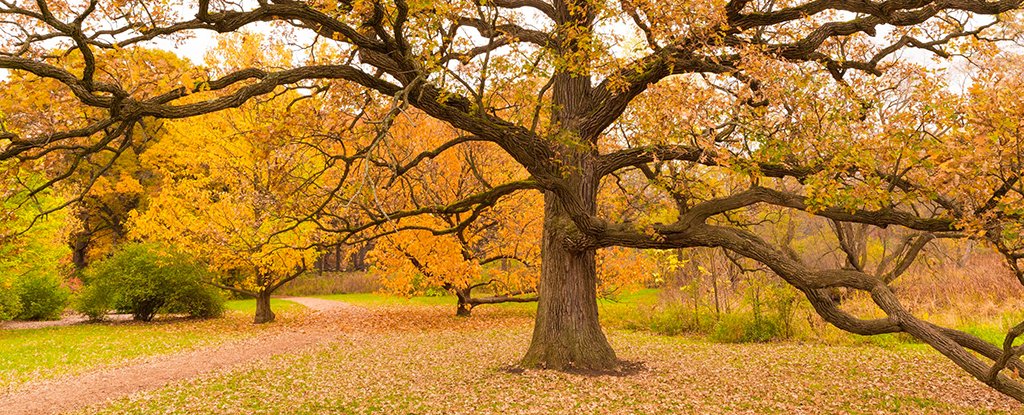
Rare Breed of Ancient Trees With Incredible Lifespans Help Keep Their Forests Alive
When the bough breaks, the cradle will fall.