Marietta Diner has been a staple 24-hour restaurant. | Marietta Diner/Leah Price
From diners to drive-thrus, these restaurants serve pizza, pancakes, burgers, and Korean barbecue around the clock
Atlanta isn’t really a 24/7 kind of town, so the options for around-the-clock dining are limited to mainly fast food. However, there are a few restaurants where hungry Atlantans can sit down and grab a bite no matter the time of day. From pho and waffles to fried jumbo shrimp, doughnuts, and Korean barbecue at 3 a.m., these Atlanta-area restaurants stay open for 24-hour (or nearly) dining.
This latest update includes the recently opened Original Maxwell Street hot dog and hamburger joint from Chicago, Mr Fries Man, and R. Thomas Deluxe Grill. The restaurants are listed geographically from south to north. Don’t see a favorite 24/7 restaurant listed here? Send Eater Atlanta the details to check out via the tipline for the next update.
Stock photography can add a welcome income stream for photographers. Travel stock photography is one of the more popular categories among the stock photography niches.
Since so many of us are curious about beginning to work in this type of photography, we’ve put together a short list of five travel stock photography tips to help out.
Some travel stock photography tips may surprise you, while others will be helpful reminders that benefit our other for-profit photographic endeavors. Here’s what on the agenda:
Just like everything else in our digital, online world, one of the things that stays the same in travel stock photography is that things change all the time. By changes in travel stock photography, I mean that there always seems to be some new trend that takes center stage for a while.
Please note, I don’t mean fads; trends is the important word. What’s the difference? It’s hard to cash in on an online fad. Once you actually see it saturating the online world, especially social media, it’s often already on its way out. It’s also difficult to predict fads, though if you do happen to catch a faddish wave before it breaks on shore, enjoy it!
Trends are more like a direction that image buyers are leaning towards. Some trends may last for years or months, so you may have some time to get up to speed. Inserting a person leading the viewer into a familiar view of a tourist attraction is a trend that I at first thought was a fad, but its popularity seems to have stood the test of time.
An important aspect of following travel stock photography trends is to watch out for an oversaturated market. That trend I mentioned in the last paragraph is a good example of that. There are so many images like that available for every imaginable tourist destination, that the chances of our image-making a sale are very small.
So, how do we find trends that we can tap into? Believe it or not, the stock photography agencies actually help us out! It’s in their best interest to increase your sales potential, since they get a cut of everything that passes through their sites. We have to do a little work for ourselves, though.
For instance, if you’re signed up as a provider for iStock by Getty Images, you can read their blog pages, such as the regularly updated Creative Trends section. Other stock agencies have similar photographer assistance. These are excellent resources to help us keep up on trends within the travel stock photography market.
Travel stock photography is an interesting genre of professional imaging. Users are always looking for certain types of images or travel destinations to illustrate, but we don’t want our images to get stuck on page 30 of the same point of view of the same place.
Looking for a unique view for our travel stock photography can sometimes be as simple as changing our angle of view or zooming with our feet. A low angle of view of a familiar place can capture attention. Really, any change from the standard eye-level view right in front of a place can greatly impact whether or not our images get chosen.
Other unique views may include not being in the same place at the same time as everyone else with their smartphone cameras.
As an example, there are so many images of Bourbon Street in New Orleans, especially during Mardi Gras. But what is 2 blocks over? What does that area look like during the fall or in the dead of winter? Are there similar sights in Galveston, Texas or near Gulf Shores, Alabama? You get the idea.
Same thought applies to other travel stock photography destinations. Big Sur, California, Windsor Castle, Sydney Opera House, Eiffel Tower, downtown Tokyo, Moab, Utah, Denver and the Rockies, New York City, and the list goes on. What else is in that area? Maybe even include the well known thing in the background, but provide a different and fresh view.
An opportunity for capturing a very special travel stock photography image can come up right before our eyes in a moment’s notice. Or, inspiration may suddenly strike us as we’re out photographing the city, town, beach, or forest we’re in.
Being ready can refer to our state of mind, photographically, and it can also refer to having the right gear to assist our creative state of mind. Two items I find helpful in this are a great bag solution and a compact camera mount.
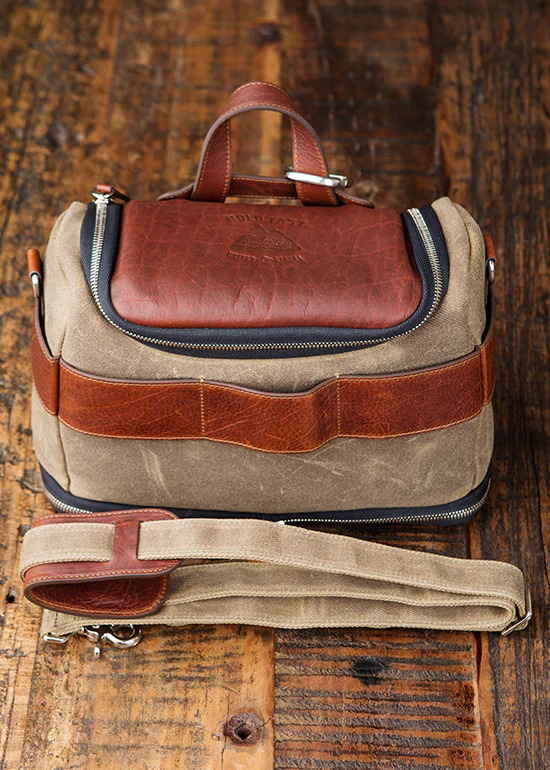
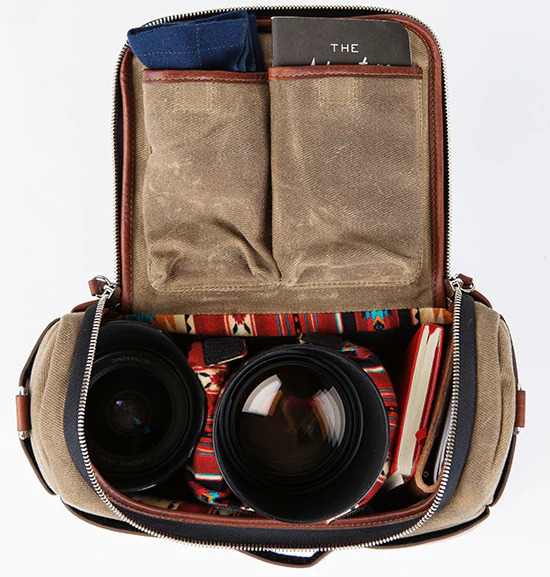
Hold Fast Gear makes the Sightseer Modular Lens System that can be used as a standalone bag by itself or attached to the MoneyMaker camera harness. The Sightseer bag is crafted from waxed canvas, American Bison leather, and Aztec flannel fleece, making it excellent protection for your extra lenses and an attractive camera accessory for travelers.
With the Sightseer, you can have your other lenses, such as an ultra-wide-angle lens or a fast telephoto zoom ready to go at a moment’s notice. Sometimes that unique point of view from the previous thought can be found in a different lens choice. A fast telephoto can give you a tighter view and selective focus. Or an ultra wide lens can be placed down low for another perspective.
Using a low angle of view or finding a fresh perspective can be handled easily with a good camera mount. A very compact and highly versatile tripod alternative is the OctoPad Camera Mount. It’s a weighted disk with a ball head and it can be placed virtually anywhere. Its non-slip pad even allows it to sit securely on surfaces angled up to 45 degrees.
Another part of being ready is to look for the Defining Moment. This applies more to street photography than it might to regular travel stock photography, but it’s a good principle to use in a lot of our photography work. Several of our street photography articles discuss this idea in detail, check them out.
Special techniques that may benefit our travel stock photography could include camera and lens usage, post-processing, or a combination of both.
A technique involving our camera work and post-processing is bracketing and merging HDR photography.. HDR is for much more than special effects images, it also helps tame dynamic range issues in a scene and can even remove people from crowded places. (Look for “ghosting” instructions in your post-processing instructions or other online tutorials.)
Shooting with an eye for processing in Black & White is another creative technique that has a huge potential for creating travel stock photography images that stand out. Several of the popular post-processing programs such as Adobe Photoshop Lightroom have very intuitive controls for adjusting our image files into awesome B&W photographs.
One of the hardest jobs for a professional photographer is to be our own critic. This holds true for shooting part-time as a provider of travel stock photography, too.
Many of the stock photography agencies have very specific and quite demanding standards. Our images need to be technically superb, but also artistically excellent. We may look at an image we made and remember all the good feelings about being there, but will the image stand on its own without our personal memories?
If we can look at our travel stock photography images with a truly critical eye, we will constantly be uploading excellent photographers that have a higher probability of being sold. Critical doesn’t mean being down on ourselves, but rather, viewing the images through the eyes of the realities of the travel stock photography marketplace.
The previous point about keeping up with trends in the world of travel stock photography will help us out a lot as we cull through our photos before we even try to submit them to any agency. Combine these ideas with being ready for anything and looking for fresh perspectives should greatly boost your travel stock photography success.
While no Scandinavian city is a travel bargain, there are plenty things to do in Bergen that won’t break the bank. In particular, Bergen offers fantastic experiences for those who like walking, either free or the price of a public transit ticket.
The Shot Tower Historical State Park sits on the New River in Austinville, Virginia. The 215-year-old tower was conceived by Thomas Jackson, a local miner and business owner. It took seven years to complete the 75-foot high tower of limestone, quarried from the Austinville mine about a mile away. Inside the tower is a 75-foot-deep shaft, that reaches river level.
The tower was used to mold “shot,” which was sold to settlers as ammunition. This was done by pouring molten lead from the top of the tower through sieves of varying sizes, like a spaghetti strainer. Once it went through the strainer, it created little balls of lead, or shot that would fall 150 feet into a kettle of water at the bottom. The lead cooled on the way down and the water acted as a cushion, so the shot retained its round shape. The kettle was accessible through a tunnel near the river, which was where it was loaded onto boats to be sold at the market.
Visitors can go all the way up to the top using the interior winding steps and look all the way down to the very bottom of the tower where the kettle of water would have been. There are also very beautiful views of the surrounding area including the New River itself.
LONDON — Clean energy may be about to get a whole lot cheaper! British scientists have developed a new type of hydrogen fuel cell using iron instead of costly platinum. The breakthrough brings the widespread commercialization of hydrogen cell electric vehicles a step closer to reality. They are an environmentally-friendly alternative for portable power, with…
If you’re reading this, chances are you’ve used a keyboard shortcut. Ctrl+C, perhaps?
For years, Macs and PCs have offered shortcuts (AKA hotkeys) to help users execute various functions.
If you’ve ever wondered where the heck they come from, WSJ’s Dalvin Brown tracked down a legend in the keyboard shortcut game to get the scoop.
The 1st keyboard shortcuts…
… were created at Xerox in the 1970s, and include functions like cut, copy, and paste.
But the crown jewel of shortcuts, Control-Alt-Delete, was created in the early 1980s by David Bradley, an IBM engineer.
Bradley said it only took 5 minutes to dream up the iconic combination, which became a hit among IBM employees, then got programmed into the company’s original PC.
Beyond Control-Alt-Delete…
… Brown found keyboard shortcuts tend to follow similar origin stories — starting with either a problem that needs solving, or a function that needs to be easier to execute.
The challenge for engineers is threefold:
Make shortcuts easy to remember
Ensure they make sense with existing keyboards
Develop combinations that don’t trigger other shortcuts
They also need to factor in how frequently a shortcut will be used. Shortcuts that are used more often tend to include simpler key combinations (e.g., copy and paste), while those that are less frequent tend to include more keys (e.g., force-quitting an app).
Modern apps are ushering in a new era of shortcuts
One of the biggest trends in productivity software is using shortcuts. Companies like Notion, Superhuman, and Figma have created their own shortcuts to help users save time by ditching the mouse.
If you’re looking to start using your keyboard more effectively, Use The Keyboard is a website that lists shortcuts from a range of popular apps and websites.
If you’re more of a DIYer, you can always take your keyboard into your own hands — both Mac OS and Windows allow users to create their own shortcuts.
One of the first things many of us do when we settle into a hotel room is reach for the packaged bar of soap on the bathroom counter.
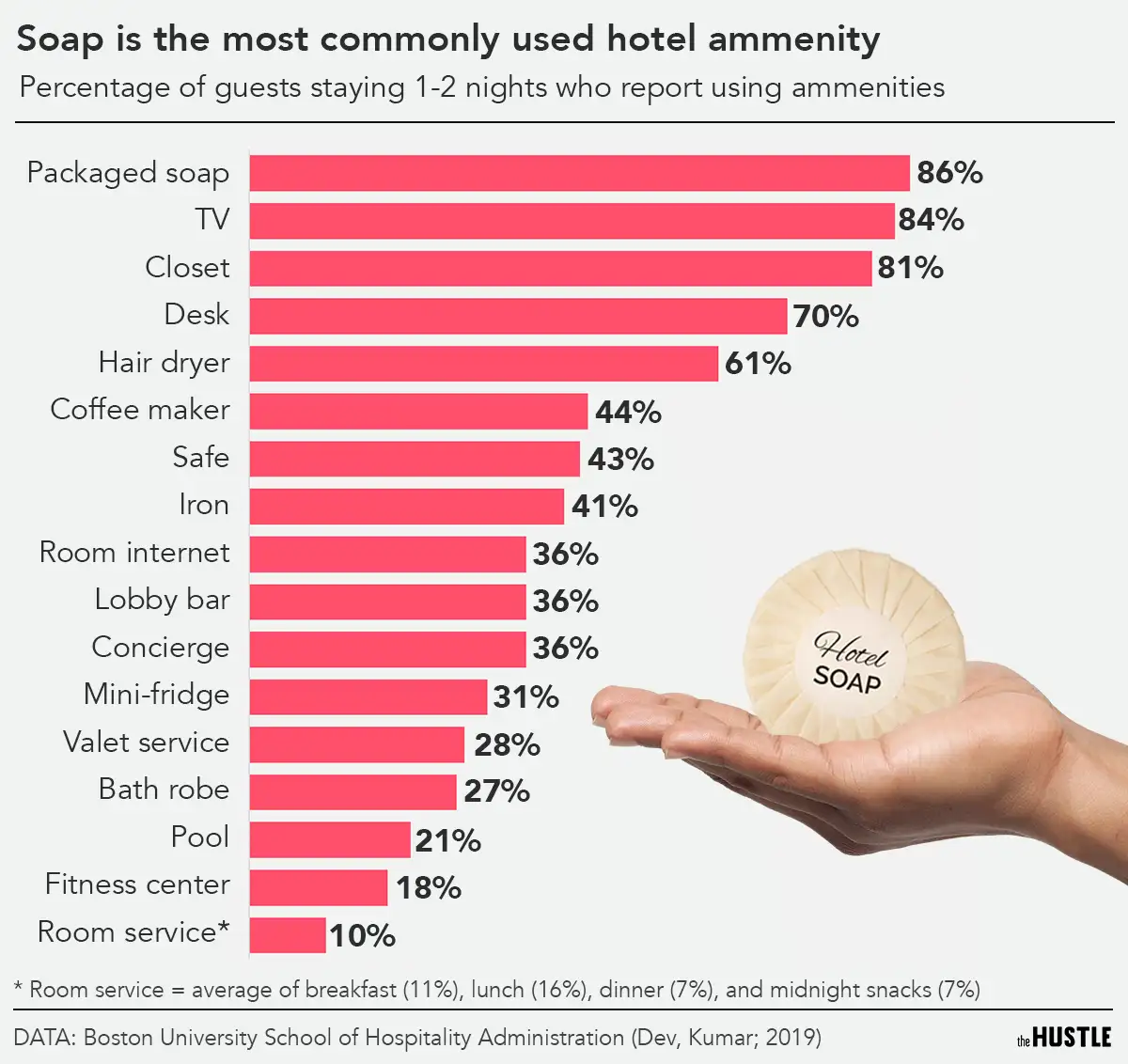
These soaps are the single most-utilized amenity at hotel chains: 86% of guests who stay at a hotel for 1-2 nights use it, handily outranking other popular offerings like the in-room TV (84%), hair dryer (36%), and valet parking (28%).
Hotels take great pride in selecting their toiletries, and invest a tremendous amount of time and money into finding the right brand partners.
Zachary Crockett / The Hustle
But these tiny bars come with a big problem.
While some of us smuggle home every bar we can get our hands on (a totally acceptable move, according to hoteliers), most guests leave behind sizable, half-used hunks of soap.
Pre-pandemic, the average occupancy rate was ~66%.
That means that, in normal times, hotels go through ~3.3m bars of soap every day.
Every year, it has been estimated that the hospitality industry generates~440B pounds of solid waste — much of it soap and bottled amenities. That’s the equivalent weight of 2m blue whales.
What happens to all that leftover soap?
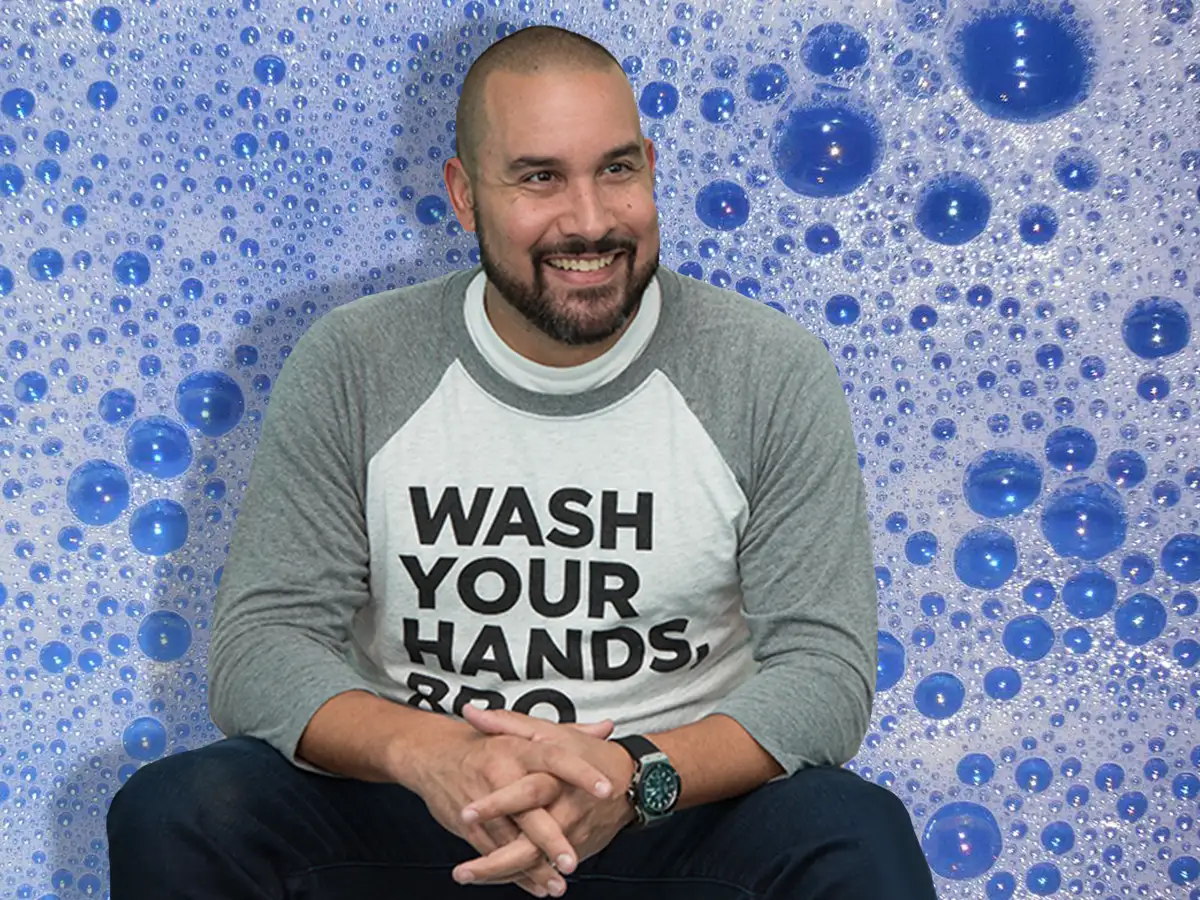
Fourteen years ago, one man asked that very question. And the answer led him down a path that has since saved tens of thousands of lives all over the world.
One man, a pickle bucket, and a potato peeler
The thought first struck Shawn Seipler in 2008 while staying at a hotel in Minneapolis.
Seipler was a road dog. A technology executive, he spent 150 days per year in hotels on business trips. And one night, after a few room service cocktails, he wondered what became of unused hotel room soap.
So, he called the front desk and asked.
“Excuse me, what do you do with all that leftover soap?”
“Sir, would you like another cocktail?
“Absolutely… but also, what happens to all that soap?”
“Well, we throw it away.”
“Do all hotels throw it away?”
“Yes, sir, it all goes to a landfill.”
Seipler did some back-of-the-napkin math and realized that millions of bars of perfectly salvageable soap were going to waste.
“I couldn’t stop thinking about that,” Seipler told The Hustle. “And I decided I had to do something about it.”
A few weeks later, in his hometown of Orlando, he walked into a Holiday Inn and asked if they’d be willing to part with their unused soap. The general manager happily complied, and Seipler left with a giant bag of half-used toiletries.
“I went to 6 other hotels that same day and they all said the same thing,” recalled Seipler: “‘Yes! Yes! Yes! Yes! Yes! Yes!’”
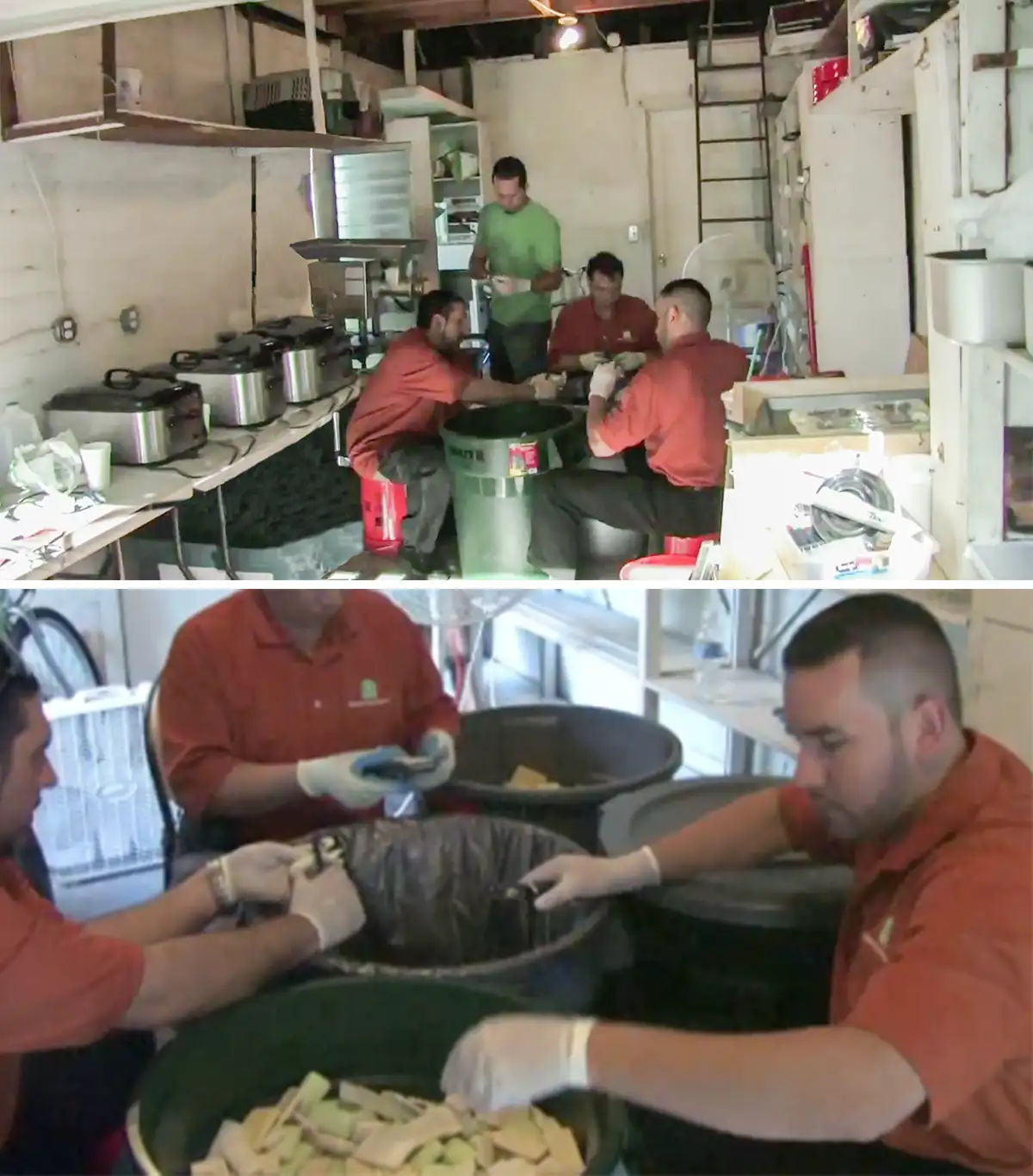
Armed with thousands of bars of soap, Seipler and a few friends set up a small “workshop” in a single-car garage in downtown Orlando.
The group sat on upside-down pickle buckets and scraped the outside of the soap bars off by hand with potato peelers, pulverized them in a meat grinder, melted them down in Kenmore slow cookers, poured the mixture into soap molds, dried it overnight, and cut it up into new bars.
Seipler (right) and his buddies in a garage, manually cleaning hotel soap, in 2008 (courtesy of Clean the World)
At his best, Seipler could churn out ~500 new soap bars per day.
The next question was what he was going to do with it all.
He laid out a bunch of stats and came to a realization:
Hotels were wasting millions of bars of soap.
At the time, ~9k children under the age of 5 were dying from hygiene-related illnesses every day globally.
Seipler launched Clean the World and set out on a mission of getting those millions of bars of wasted soap to children in need.
To do that, the first thing he’d have to do is scale his operation. But getting monetary support for a real facility proved to be difficult.
“I put together a grant application for the Bill & Melinda Gates Foundation, imagining that Bill would walk up our driveway and hand us a check for $1m,” said Seipler. “We got a rejection notice within 8 hours of submission, with a note that said, ‘Please do not reapply for 3 years.’”
Donated hotel soap was piling up. The economy was in a bad spot. And if Seipler didn’t figure out a solution, the whole idea would die.
Shawn Seipler (photo via i4 Business Magazine; illustration: The Hustle)
So, Seipler came up with an annuity model:
Hotels pay a small fee ($0.50 to $1 per room, per month) to participate in a soap recycling program.
They’re provided with everything they need to streamline donations and get rid of their waste: storage bins, shipping, staff training.
They also get impact reports detailing the social and environmental impact of their donations.
For hotels, this serves 2 purposes: 1) It was a relatively affordable way to get rid of all their waste, and 2) it helped them meet sustainability goals.
How the hotel soap recycling process works
Today, Clean the World partners with more than 8k hotels — roughly 1.4m rooms in total — around the world.
Its clients include major chains like Hyatt, Marriott, InterContinental, Walt Disney Resorts, and Hilton, in addition to cruise ship lines, casinos, and airlines.
Since 2009, the company has:
Collected 13m pounds of discarded soap from hotels
Distributed 68m bars of reprocessed soap to 127 countries
Diverted 23m pounds of plastic and soap waste from landfills
Its biggest partner, Hilton, which signed on all of its worldwide locations in 2019, has contributed 14.5m bars of soap in less than 3 years.
To recycle all of this soap, Clean the World has a $750k production facility in Orlando, and satellite facilities in Las Vegas, Hong Kong, the Dominican Republic, Montreal, and Amsterdam.
“It’s a much more professional operation now,” said Seipler. “No more potato peelers or meat grinders.”
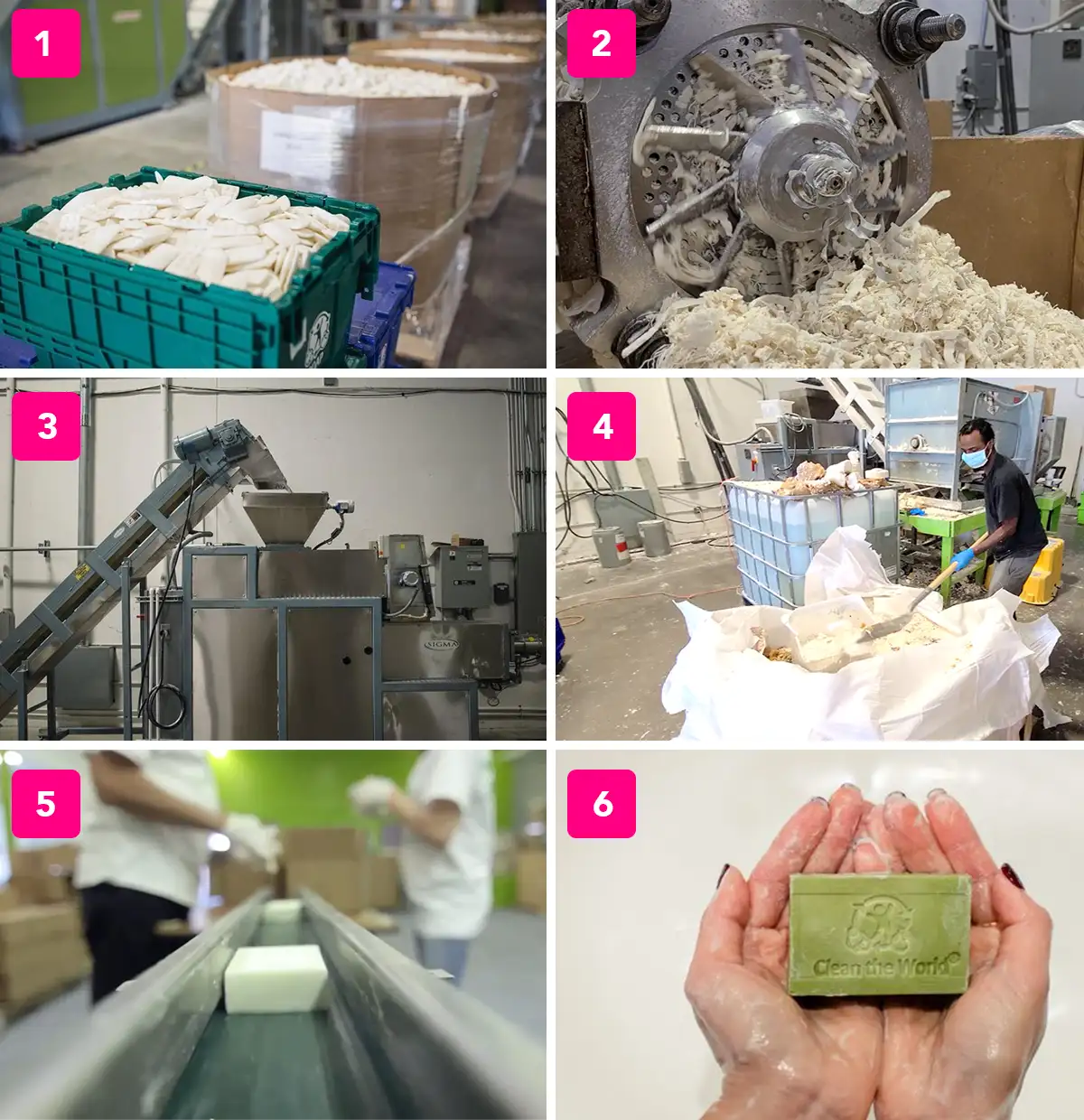
The process to convert hotel soap into new bars works like so:
Clean the World provides a participating hotel with storage bins; when full, they’re shipped to a Clean the World facility
Soap goes into a giant refining machine, which filters out hair, dirt, and other debris, and churns out “soap noodles”
Soap goes into a mixer and is sterilized with diluted bleach
Soap goes into a duplex plodder, where it’s pummeled into a powdery substance and compressed into long solid blocks
Soap is cut into bars, stamped, and packed into boxes
Soap is sent to countries in need
Hotels all use different types of soap, and there’s a whole science to mixing the right bars together. Holiday Inn Macau’s oatmeal bars, for instance, pair well with Aloft Taipei’s Bliss bars. Clean the World relies on 20k+ volunteers to determine the right sorting process.
The soap recycling process (photos via Clean the World)
Every donated bin is weighed so Clean the World can give hotels detailed impact reports chronicling things like:
The number of new bars contributed
The total pounds of landfill waste diverted
Carbon footprint reduction (in kg of CO2)
The number of refugees the soap directly impacted
Water and energy use reduction
Once the soap is repurposed and ready for its second life, Clean the World works with humanitarian partners like UNICEF, United Nations High Commissioner for Refugees, World Vision, and Children International to determine where it’s most needed around the world.
With these partners, they’re able to work with local clinics and schools, where they teach kids hygiene protocols and monitor effectiveness.
The organization played a big role in providing soap to Syrian and Somalian refugees, and Haitian residents in the wake of the 2010 earthquake.
Millions of bars of soap have been sent to help refugees and others without access to basic hygiene products (via Clean the World)
By volume, the largest amount of soap has gone to countries like the Philippines, Zambia, and Honduras.
But in recent times, another country has been added to the list: the US.
A pandemic pivot
In 2020, Clean the World faced a frustrating problem:
Supply was crimped by massive hotel closures
Demand for soap in the US was at an all-time high
“We were nearly on the brink of extinction at a time when people needed soap more than ever,” Christina Flores, Clean the World’s marketing director, told The Hustle. “We had to let 80% of our staff go.”
When hotels began to slowly open back up, many big chains — including Marriott and IHG (the parent company of Holiday Inn) — also pivoted from packaged soaps to big refillable dispensers.
Facing a diminished supply, Clean the World launched a new arm that provides at-home kits consumers can fill up with unused soap and other toiletries at home.
To date, the organization has distributed 5m+ of these kits to US homeless shelters and other countries facing sanitation supply chain shortages.
These initiatives have had a considerable global impact.
As the largest hotel soap recycler in the world, Clean the World has helped lead to a 60%+ reduction in the number of children who die from diarrheal diseases each year.
One 3-ounce bar of soap is good for 100 hand-washings — enough to significantly cut down the risk of contracting such illnesses.
Zachary Crockett / The Hustle
A big problem still looms: worldwide, an estimated 3B people still don’t have access to hand-washing facilities with soap. And thousands of hotels still throw away their soap waste.
Luckily, Clean the World isn’t the only organization working on solving this problem:
EcoSoap partners with 1k+ hotels and has provided 250k+ pounds of soap to children in 10 countries
Diversey, a leading provider of hotel hygiene products, has repurposed 25m bars of soap since 2013
Thanks to these efforts, hotel toiletries that otherwise would’ve ended up in landfills have been given a second use case.
Seipler has seen mothers cry with joy when they’re given soap. The small, commonplace things we often take for granted, he said, can make a world of difference when reallocated.
“I know it sounds funny,” he said, “but that little bar of soap on the counter in your hotel room — that thing can literally save a life.”
Traffic lights were 1st used in 19th-century England, but the gaslit bulbs were hazardous and prone to explosion.
In 1914, Cleveland installed the 1st electric traffic light. The classic 3-colored lights emerged in Detroit in 1920.
Today’s innovations? Using AI to make our traffic lights smarter.
How it works
LYT (pronounced “light”) is an intelligent connected traffic tech provider. Basically, its software uses data and machine learning to manipulate traffic signals and improve the flow of traffic.
Cities often have traffic sensors, while emergency vehicles, public buses, trains, and even our phones are all equipped with GPS. This forms aggregate data about what traffic looks like at any given moment.
LYT gathers all available data in a central cloud-based system, which “allows us to take that information and turn it into a single story,” CEO and founder Tim Menard explained to The Hustle.
That story is like a real-time, bird’s-eye view of the road
But the AI also learns from past traffic patterns. For example, say there’s a city bus that’s off schedule.
LYT’s AI would take:
Historical information (e.g., how long the bus typically waits at a stop
Real-time data (i.e., where the bus actually is)
LYT then sets up a “green wave,” in which the bus hits green lights as it needs them.
“Then people who are taking the bus are… less stressed because those buses feel like trains, where they only stop at each bus stop,” Menard said.
A pilot program involving 17 intersections on a San Jose bus route shortened travel times by 20%.
It works on emergency vehicles, too
In Fremont, California, LYT is being used to improve response time.
Principal transportation engineer Eric Hu says that because AI can respond to approaching emergency vehicles at greater distances, it allows “crossing motorists, bicyclists, and pedestrians to clear the intersections ahead of time,” improving safety.
Other benefits include:
Less pollution from stop-and-go traffic (and increased efficiency in EVs)
Less overall congestion and reduced wait times for drivers, cyclists, and pedestrians
And less stress — especially if you’re not sitting in your car trapped in traffic.
BTW: For more, check out this video on smart lights in the Netherlands.
A wildlife artist has documented the love story between two kestrels during their first year of mating, with the help of crystal clear hidden cameras and smartly-placed manmade nests.
A century ago, longleaf pine forests dominated the Southeast, home to diverse wildlife and recreational opportunities. But over the past several decades, this ecosystem has seen a decline to just five percent of its original acreage, mainly due to fire suppression practices and conversion to other land uses.
Enter America’s Longleaf Restoration Initiative (ALRI), a project involving a slew of private, nonprofit and governmental partners that have worked diligently to restore longleaf pine populations over the last decade, including planting 1.7 million acres of trees.
“Anywhere from 350 to 700 trees per acre are planted depending on the land objective,” says Colette DeGarady of the Nature Conservancy, a global environmental organization and one of ALRI’s many partners. This means somewhere between 595 million and 1.19 billion longleaf pine seeds have been planted.
Experts have noticed that restoration projects such as the longleaf pine initiative are on the rise across the country. “People are increasingly recognizing all of the benefits that trees provide, including removing carbon from the atmosphere, which helps slow climate change, and this has led to an increase in interest in reforestation,” says Joe Fargione, science director for the Nature Conservancy’s North America region. “In addition, there is an increasing need for restoration and reforestation, for example, due to the increasing size and severity of wildfires in the Western US, which otherwise might not grow back.”
Securing the Right Seeds
Before these restored habitats can take root, they need the right seeds. There’s a lot riding on the success of those little seeds, and native plants (indigenous species that evolve naturally in an ecosystem) such as the longleaf pine don’t usually come from a package with growing instructions printed on the label. The nurseries and restoration organizations that specialize in native plant seeds—collecting them, growing them out in greenhouses and then planting them back in the wild—rely on labs such as the National Seed Laboratory to support their work. These labs provide critical testing to determine the viability of the seeds and give growers other important information, such as how many seeds should be planted per container, in what conditions they can be stored and the hardiness of each batch of seeds collected.
The National Seed Laboratory, a division of the USDA that is overseen by the US Forest Service, contributes to the longleaf pine restoration project by testing the seeds of longleaf pine and other native plant species found in their ecosystem’s understory for nurseries and seed companies that sell plant stock to private landowners, another group of important AlRI stakeholders working to restore those ecosystems on their land.
Photo by Andrew Kornylak.
Since its inception in the 1950s in Brooklyn, Mississippi, where it initially provided bare-bones testing out of an office for US Forest Service nurseries, the lab has worked with hundreds of clients throughout the US. It has helped restore a wide variety of ecosystems that include species such as the towering Douglas firs of the West and roughly 250 different non-woody native plant species, such as the humble milkweed.
By the 1960s, the National Seed Laboratory moved just outside of Macon, Georgia into a full-scale lab providing services across the southeast. In the 1980s, it expanded nationally but kept its focus on trees, then later added grasses and wildflowers.
Today, the lab provides its testing mostly to federal land management agencies such as the Bureau of Land Management, National Park Service and Forest Service, but it also services state forestry and water management agencies, some public and commercial seed companies and nonprofits involved in restoration.
Photo courtesy of the Nature Conservancy/Debbie Crane.
These organizations do the collecting and processing of the seeds—sorting out empty, small or immature seeds—then send a sample (anywhere from a couple hundred to a couple thousand) to the lab for testing, says Victor Vankus, director of the National Seed Laboratory. The seed sample gets analyzed for a variety of factors, including moisture content, physical purity, seeds per pound and germination, which help to determine their viability for planting and optimal growing conditions for healthy seedlings, which in turn helps with management costs.
“If your germination [rate] is only 65 to 70 percent, you can’t really put just one seed per container,” says Vankus, who has worked for the National Seed Laboratory for 33 years. “You’d have too many empties on the table. If a nursery is ordering 30,000 seedlings of some particular species, there’s a pretty good chance you’ll need to plant more than 30,000 seeds. That’s the kind of thing the nurseries use our numbers to help them with.”
Playing the Long Game
Another important project with which the lab is involved, in collaboration with the USDA Agricultural Research Service and the National Center for Genetic Resources Preservation (NCGRP), is the long-term storage of native plant seeds for genetic conservation. After the lab obtains the seeds for testing, it sends some to the NCGRP for storage in disaster-proof freezer vaults so they can then be used for future restoration of plant populations in the event the plants are lost completely in the wild. These seeds are cataloged in a database of more than 10,000 plant species, most of which are agronomic crops.
The lab also offers workshops for clients to help them better understand the seed testing process and its results, provides technical training for seed analysts at other labs and conducts studies and collaborative research in areas such as standardized testing rules and optimal storage conditions for native species where this information doesn’t yet exist.
[RELATED: Indigenous Plant Nurseries Look to Revive Landscapes and Cultures]
Currently, the lab is working to develop testing protocols for species such as milkweed, important for the monarch butterfly’s survival. Some species have evolved to produce seeds that only germinate under a certain set of conditions in the field. “So, when it comes into the laboratory, we might have an idea of what will work well, but it hasn’t really been tested,” says Vankus. The National Seed Laboratory then works with other labs to compare methods and replicate findings to develop testing procedures.
In the past, harvested seeds were generally planted in the same year, but with the increased demand for restoration projects across the country, knowing how to handle and store seeds becomes critical. Take sagebrush, for example, which is used in habitat restoration projects throughout the West. Those seeds have traditionally been stored in warehouses that aren’t necessarily climate controlled and in bags that aren’t always moisture proof. Sagebrush was commonly thought of as a seed that doesn’t store well, but when the lab analyzed best storage practices, it discovered that if the seeds were dried and packaged to regulate the amount of moisture inside them and then frozen, they could last for at least 10 years, which is as long as the study has been going on.
What sets the National Seed Laboratory apart is its ability to provide technical assistance to nurseries and their engagement in research studies, but Vankus emphasizes that the lab is one of many such labs. Just as the plants within the complex ecosystems that comprise our nation’s forests and grasslands depend on one another for survival, it takes all of these organizations and labs working in concert to restore them.
What happens in your brain when you enjoy looking at something? In a recent study, researchers measured brain waves of people while they looked at art to learn more about the neuroscience of aesthetics.
Sign up here to get Recomendo a week early in your inbox.
Best digital tools
Without wasting a single second of your time, this fast-paced video by Ali Abdaall describes the best productivity apps and tools available today. Here is the highly-evolved tool set that he uses to get a lot of things done very efficiently. Well researched, well presented. — KK
A tip for taming anger
I remember reading somewhere that customer service desks often times have a mirror mounted behind them so that customers can keep their cool when complaining. I thought of that when I read this quote from by Thich Nhat Hanh from Taming the Tiger Within: Meditations on Transforming Difficult Emotions: Whenever anger comes up, take out a mirror and look at yourself. When you are angry, you are not very beautiful, you are not presentable. Hundreds of muscles on your face become very tense. Your face looks like a bomb ready to explode.
I don’t really pull out a mirror, but when I begin to feel my face get tense I immediately remind myself to relax my jaw and muscles and it helps to temper the hot emotions. — CD
Rock hard repair tape
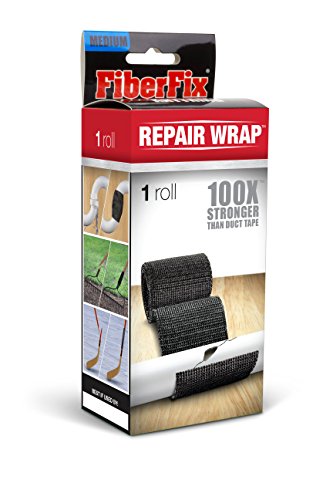
The plastic strap on my Oculus Quest headset snapped, and I used Repair Wrap to fix it. It’s a roll of tape that comes sealed in a foil pouch. When you are ready to use it, open the pouch and dip the tape in water. Then wrap it aound the thing you want to repair. It cures in 10 minutes to form a rock-hard bond. — MF
Multi-port Hub
In my experience, you can’t have too many usb ports at your desktop. I have an Anker 13-port USB hub mounted on my desk. I can charge several devices at once but most of the ports are for data comms with the many peripherals I have connected to my PC, such as headset, mic, label printer, wacom tablets, CD player, etc. I already have all 13 slots filled and next time would go for a 16 port hub. — KK
How black and white is your thinking? This 5-minute test asks 15 questions to measure your empathy, open-mindedness, flexibility and intellectual curiosity and visualizes your thinking using floating color blob. Your personality-color blob starts off as white but as you progress through the questions, you see it add and subtract colors and change in brightness and dullness. The test is called “Thinking in colour” and that’s exactly what it inspires me to do. — CD
Intro to AI art
I started playing around with AI generated art this week, using this guide from the Unlimited Dream Co. I’m blown away with what the software produces from a text prompt. Here’s a “plastic space deity” and an “alien astronaut helmet” I asked the AI to create for me. Be sure to check the Unlimited Dream Co.’s art, too. It’s incredible. — MF
We’ve gotten a wonderful response to the Maker Update giveaway of my books (5 inscribed copies of Vol. 2 and a grand prize of Vol. 1, Vol. 2, and the Maker’s Notebook gift box). See the entries so far in the comments to this Maker Update video and add your own for a chance to win. I’ll be announcing the winners here in next week’s newsletter.
Making a Waxed Canvas Tool Roll
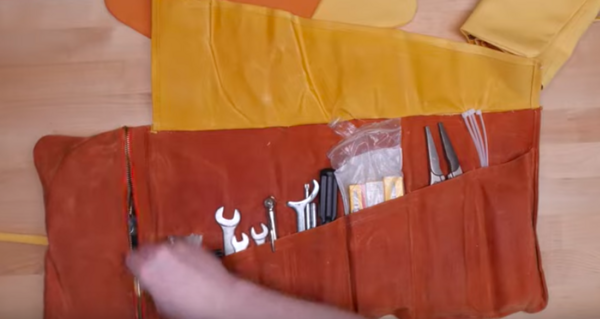
In thisBecky Stern video, Becky shows how you can plan out, sew, and wax-treat a tool roll. She used cotton canvas for the project and includes a free pattern on her website so you can more easily make your own tool roll-ups. You don’t have to wax the roll-up, but it adds water resistance and more durability. Becky used impregnation wax that comes in a bar and is made of paraffin and beeswax. You can also make your own wax mixture and brush it on.
Bending G-Code to Make Nonplanar 3D Prints
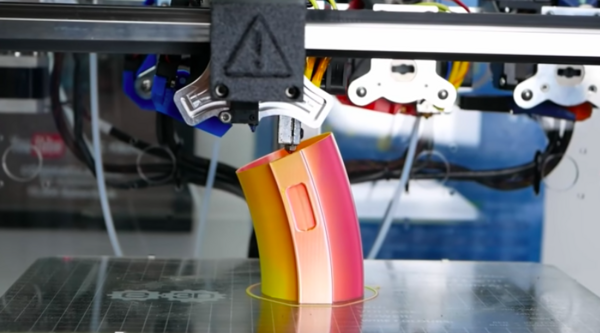
The ever-clever Stefan of CNC Kitchen is at it again. He wanted to made a suction-cup, window-mounted ball run for his young daughter. But, how to 3D print the curved tubing needed for the run? In this video, he shows how he tweaked G-Code (the common CNC programming language) to create these curved pieces. To accomplish this, he wrote a small script using the Python programming language.
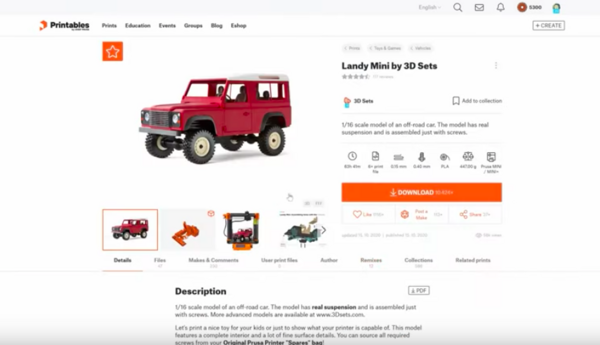
PrusaPrinters.org Becomes Printables
Most people who have even a passing knowledge of 3D printing are likely familiar with Thingiverse, the 3D design files repository that grew up alongside the consumer 3D printer marketplace. After the site’s parent company, MakerBot, was bought by industrial 3D printer juggernaut, Stratasys, Thingiverse began losing some of its community spirit and pioneering charm. Ads started showing up, along with a lot of bad prints, and it has a long-in-the-tooth interface. Then, there was a massive user data breach. If only there was an alternative. There has been, for the past three years, PrusaPrinters.org, another file repository run by printer maker Prusa. But the name PrusaPrinters was confusing to consumers, many thinking that you had to own a Prusa printer to access and use the files stored there (you didn’t). So, PrusaPrinters.org has now relaunched under the clearer, more inclusive name, Printables. This video runs through the features on the site and they look pretty sweet.
10 Inexpensive Harbor Freight Tools You Need in Your Workshop
On these Reformation Woodshop videos (Part 1, Part 2), Marcus runs through ten tools and shop consumables that he recommends from Harbor Freight. The key to getting real value from the Freight is knowing what products to pay attention to and which to avoid, so videos like these are always welcome. While Marcus is a woodworker, almost all of these suggestions apply to any workshop. He covers consumables, like paint brushes, shop rags, and gloves, casters and rubber tires, tarps (recommended for light-duty work only), toggle clamps, storage hooks, their surprisingly-decent and cheap ($59) tabletop belt sander, and outfeed stands.
Adam Savage on Post-Project Depression
In this “Ask Adam” segment on Tested, Adam answers a fascinating question about getting post-project depression. I’ve never heard this discussed before, but it’s a thing I’ve certainly experienced. Adam says he can get it, especially after big, all-consuming projects that have taxed a lot of mental and physical resources. I usually experience this kind of post-project flatness after finishing writing and editing a book. Such a project tends to take everything you’ve got. I find that having a new and exciting project already on deck can be a big help. Have you also experienced this? What do you do?
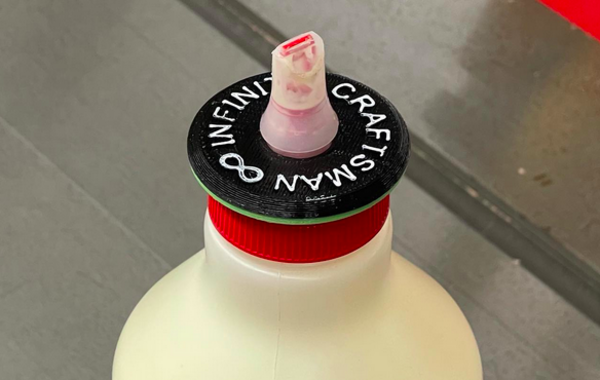
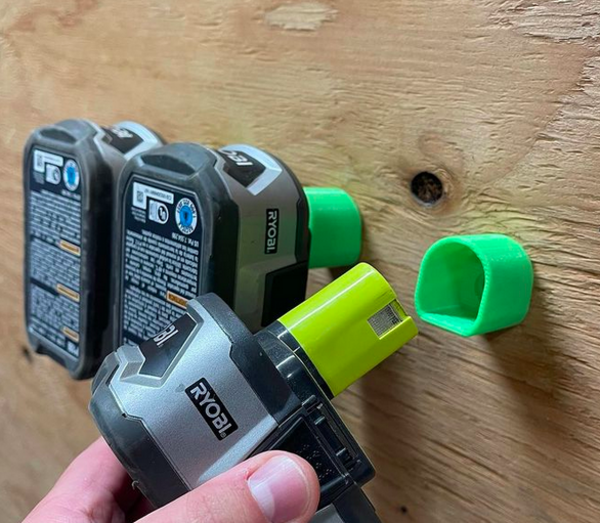
Must-Follow Makers on Instagram: Infinite Craftsman
I recently started following Thomas Baisch and his Infinite Craftsman account on Instagram. He regularly posted really clever shop hacks that he comes up with, often using 3D printed solutions. He makes a number of these inventions into small-run products that he sells on his website. Above is his glue donut, a ring that goes on your glue bottle, beneath the spout, allowing you to open it with one hand. Below is his solution for holding battery power packs on the wall. Many of his designs are super simple but oh-so-clever.
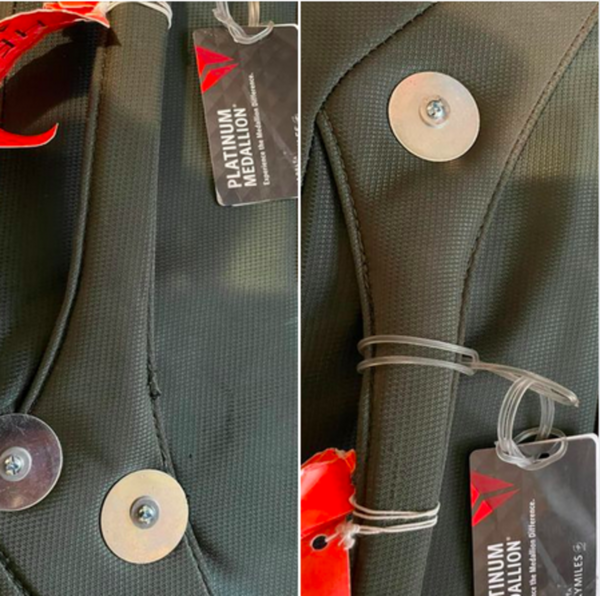
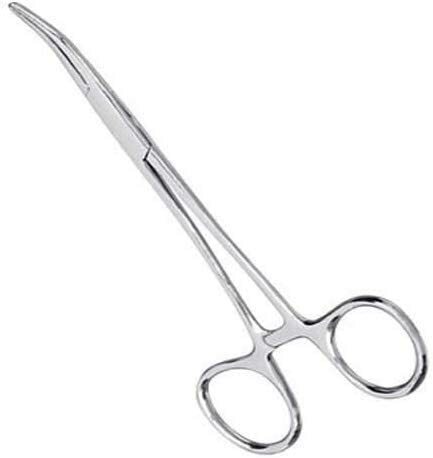
Shop Talk Ross Hershberger: “Thanks for reminding me about fender washers. My suitcase usually holds 50-60 lbs of stuff because I carry extra tools in it. It’s difficult to find a reasonably priced bag that will withstand 80-90 flights a year, so I repair them when I can. This Samsonite has a good padded fabric handle that’s well designed to spread the load where it’s stitched into the body fabric. There’s no attachment to the thick plastic body underneath though. Repeated yanking by baggage handlers eventually caused the stitching to fail. Before it completely came apart, I decided to see if I could extend its life. Repaired with fender washers, this suitcase now has a few more flights left in it.” Reid Fisher: “One recurring favorite tool of mine is a pair of locking forceps. They’re often good steel with sharp teeth on the tiny jaws, and they lock! Great for getting a tiny part into place where your fingers won’t fit, and you’d drop the part using regular rat nose pliers.”
Automatic withholding allows Uncle Sam to diffuse the financial and emotional blow of paying taxes.
If most taxpayers saw $4,000, $7,500, or $15,000 disappear from their bank accounts on April 15th in one fell swoop, how different might the political equilibrium look?
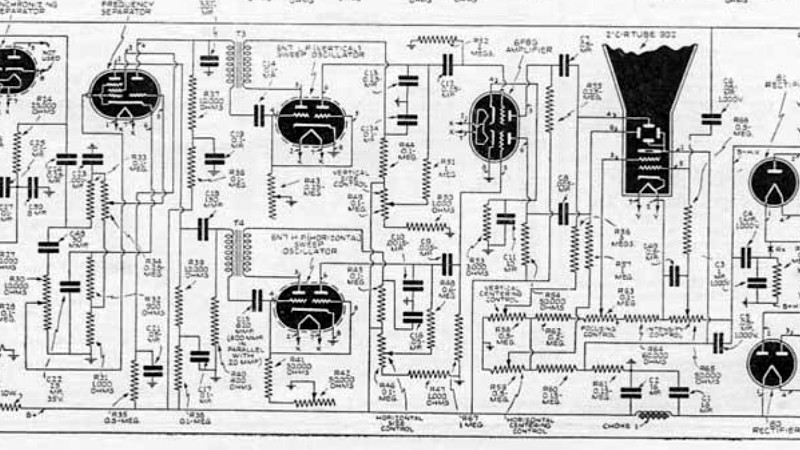
84 years ago, a teenager built a TV set in a basement in Hammond, Indiana. The teen was a radio amateur, [John Anderson W9YEI], and since it was the late 1930s the set was a unique build — one of very few in existence built to catch one of the first experimental TV transmitters on air at the time, W9XZV in Chicago. We know about it because of its mention in a 1973 talk radio show, and because that gave a tantalizing description it’s caught the interest of [Bill Meara, N2CQR]. He’s tracking down whatever details he can find through a series of blog posts, and though he’s found a lot of fascinating stuff about early TV sets he’s making a plea for more. Any TV set in the late ’30s was worthy of note, so is there anyone else out there who has a story about this one?
The set itself was described as an aluminium chassis with a tiny 1″ CRT, something which for a 1930s experimenter would have been an expensive and exotic part. He’s found details of a contemporary set published in a magazine, and looking at its circuit diagram we were immediately struck by how relatively simple the circuit of an electrostatically-deflected TV is. Its tuned radio frequency (TRF) radio front end is definitely archaic, but something that probably made some sense in 1939 when there was only a single channel to be received. We hope that [Bill] manages to turn up more information.
A worker didn't want a birthday party. His company held one anyway. Now it owes him $450K https://t.co/PR43uTRIUt via @courierjournal — Andrew Wolfson (@adwolfson) April 14, 2022 Hey Siri, show me a douche canoe. Via KIRO: If you are going to throw a birthday party for an employee, make sure that person wants one. A […]
Today in Tedium: You ever read an issue of this newsletter, spot an interesting quote, and think to yourself, “Man, it’d sure be great if there were more quotes in this newsletter?” Odds are, you represent a relative rarity among our readership. But the truth of the matter is, we do a lot with quotes to break up our many issues, but we’ve never delivered a piece that was based around quotes. And because I like setting precedents, here’s a pretty new precedent: a newsletter about quotations. Is the newsletter going to be nothing but quotes? Well, you’ll have to keep reading to find out. Today’s Tedium takes on the quotation. — Ernie @ Tedium
“The object of this work is to show, to some extent, the obligations our language owes to various authors for numerous phrases and familiar quotations which have become ‘household words,’ and ‘to restore to the temples of poetry the many beautiful fragments which have been stolen from them, and built into the heavy walls of prose.’”
— The first line of the preface of the earliest editions of Bartlett’s Familiar Quotations, a popular book series dating back nearly 170 years, to 1855. The book series gathers up different quotes from famous people and literary works throughout both history and the modern day, with Bartlett’s original goal to highlight the evolution of language, rather than merely quoting famous people. Per American Heritage, John Bartlett first published the book in an edition of just 1,000 copies—but within just a few years, the publishing of the work had been taken over by the powerhouse publisher Little, Brown and Company, a company Bartlett became a partner in.
So, before we go any further, we need to talk about how bad quotation sites are at citing sources
OK, sorry, I said this was the quote issue and I’m totally butting in with a block of text.
But there’s a reason for this. If you read the internet and look for sites with quotes, you will find sites full of unattributed quotes that just offer the line, with no effort to connect the quote to a source.
For example, when I did a search for a quote about quotes, I found this excellent line from Yoko Ono:
“If you have too many quotes from other people in your head, you can’t create. You have to keep your head empty. That’s why I am constantly enjoying the sky, the park, the walk.”
You might be thinking, what an amazing insight! I wish I could share that with others and tell people where it came from. But if you go to a website like BrainyQuote, you’ll find that the quote does not get connected to what she originally said. It is just a line hanging out there without any context.
Yoko Ono’s quote just lives there by itself, surrounded by thousands of competing quotes from other people. The line comes from an interview Ono did with The Observer, The Guardian’s weekend sister publication, on the occasion of her 80th birthday in 2013.
The broader context tells us a lot more than the quote on its own does. Here’s the quote in context, along with the two paragraphs above it, with the original quote bolded:
She describes herself as a “very thoughtful, always dreaming” child, who escaped constantly into words. Did she consider herself an outsider in the family? “A little. I was known for creating poetry anytime. Just like that! Somebody said to my parents, ‘She walks and when she stops walking, she has a poem coming out of her mouth.’ Was she rebellious? “Oh yes. Naturally. I did not like the conformity of Japanese life and, though I did not have any bad feelings against my parents, the whole history of the family felt like a big weight. I felt like I had to succumb to that and become a little particle in their big family and die spiritually. Or I had to survive on my own. It was that simple. And that complex.”
After the war, the family returned to New York and Yoko attended the exclusive Sarah Lawrence College, a liberal establishment where activism was encouraged alongside study of the arts. She also trawled the city’s art galleries and artists’ hangouts, connecting with leading lights in the American avant-garde, most notably the composers La Monte Young and John Cage as well as George Maciunas of the Fluxus group.
”I bumped into them,” she says. “I didn’t search them out as people think. I created friends that are like me. I attracted them. It’s a journey and you have to make your own way. If you have too many quotes from other people in your head, you can’t create. You have to keep your head empty. That’s why I am constantly enjoying the sky, the park, the walk. Anything in life is beautiful.”
The quote, on its own, seems a bit odd, as if it doesn’t fully explain itself. The context is more clear—it’s about trying to create original art when everyone around you is also trying to create original art.
In 2001, the website BrainyQuote, perhaps the best-known site in this genre of quotation, launched without a lick of attribution. Though, to be fair, perhaps the website was inspired by Bartlett’s list of quotes, which, in its original form, didn’t come with any direct citation to go with the quotes.
You can cite us, but we won’t cite you.
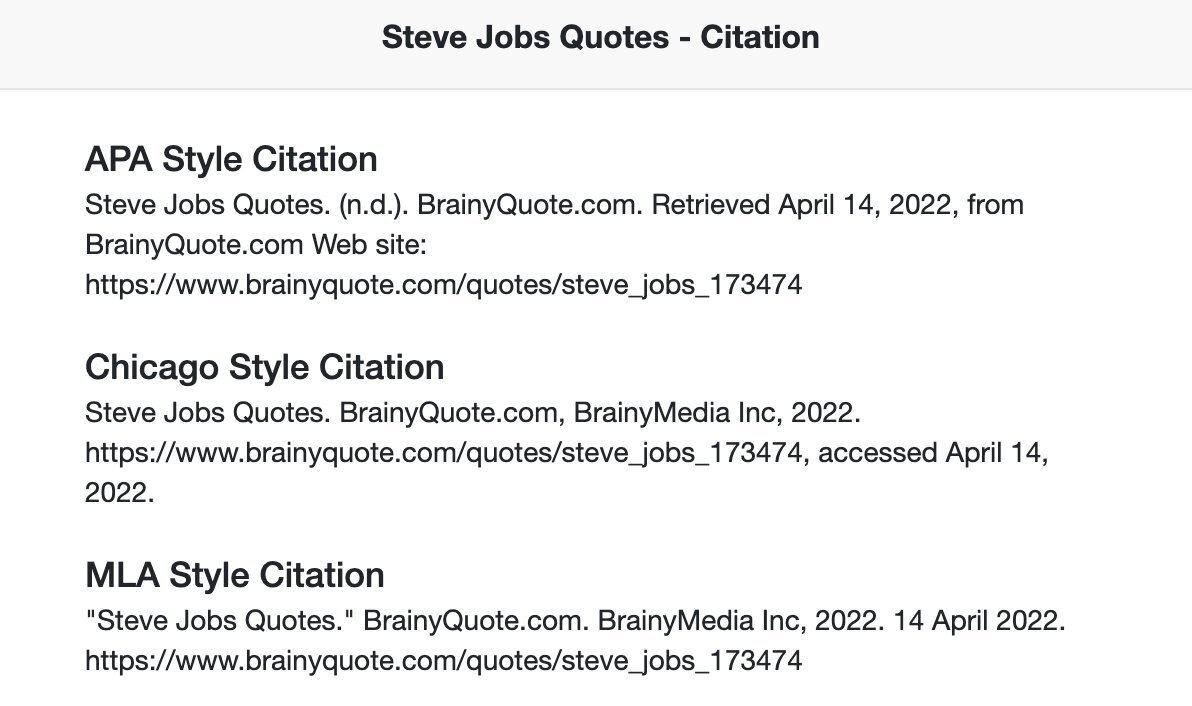
But on the internet, a medium designed around clickable links, it seems like a self-serving omission. But at the same time, it’s arguable the kind of omission that arguably harms the website—as highlighted by the fact that common style guides such as MLA recommend that you don’t use famous quote sites as a source. But still these sites persist—BrainyQuote has been online for more than 20 years!
So why doesn’t BrainyQuote, or any of its competitors, source the links? I have two guesses:
It’s an intentional legal strategy to avoid being buried in DMCA or libel complaints all the time, as it means they have some sort of built-in deniability baked in because the quotes don’t have a source.
They don’t want to have to deal with the additional work of sourcing all the quotes, because it’s potentially costly.
They want to put up the quotes without asking for permission all the time.
There are likely also fair-use considerations around the quotes in media, in part because it’s tough to argue that BrainyQuote is really adding any commentary to the quotes, and the quotes, out of context, seem to scrape the edges of educational.
But I’m not a lawyer, so take my speculation with a grain of salt. But I am a journalist, and I need to recommend that you take a quote on BrainyQuote, or on any other quote site, with a grain of salt, because it’s clearly not a site that’s focused on accuracy. On quote sites, engagement always wins.
“Plaintiffs contend, and the Court believes, that ‘E.T.’ is more than a mere vehicle for telling the story and that ‘E.T.’ actually constitutes the story being told. The name ‘E.T.’ itself is highly distinctive and is inseparable from the identity of the character. The use of the name ‘E.T.’ on Kamar’s products inevitably conjures up the image and appeal of the “E.T.” character.”
— A passage from the 1982 ruling in the federal civil suit Universal City Studios vs. Kamar Industries, a lawsuit over the use of the name E.T. on a series of drinking mugs that were not licensed by Universal. The case is notable because it found that short passages of text can be copyrightable if the short phrase conjures up the value of the copyrighted work, and has been studiedclosely by legal scholars.
(Patrick Tomasso/Unsplash)
10 quotes we greatly enjoy that you might also find enjoyable
So, with the discussion about the ethics of quotations out of the way, let’s have some fun and highlight some really great quotes, shall we?
These quotes are a mixture of random ones we’ve uncovered, some of my favorites from my time with Tedium and ShortFormBlog, and some that just highlight absurd moments in history, digital or otherwise. Hopefully you find them as fascinating and as comical as we do.
“We have many Lisas, Marks, Dennys, Johnnys, and other characters from The Room in America and in the entire world.”
— Tommy Wiseau,in a 2009 interview with The A.V. Club about his masterwork, The Room, a film he compared to the work of Tennessee Williams in the marketing materials.
“What the devil do you mean to sing to me, priest? You are out of tune.”
— Jean-Philippe Rameau, a prominent 18th-century French composer, who died immediately after criticizing someone for singing poorly, which, let’s be honest, is probably the best way to go.
“Litter drove him wild. He’d come back with these bags and wave them and say, ‘Why do people have to do this?’ It perplexed him to no end. Knowing my father, he might have been worrying about how to solve the litter problem for ten years and never said anything about it.”
“A man’s a man. A Highlander doesn’t need underwear. … If we did wear underwear, it would be made of, like, twigs.”
— Washington, D.C. resident William Oscar Fleming, expressing anger at a 2010 decision made by the Scottish Tartans Authority to change the underwear standards of its kilt-wearers, citing the “unhygienic” and “offensive” nature of the practice.
“KEEP THIS MEDIA KIT. Someday it will be worth a lot of money. Someday it will be known as ‘the first Virgin Cola media kit.’”
— The message on the front of the packaging for a Virgin Cola press kit circa 1998, a kit that is a part of my personal collection. Given that it cost me $9.95, it didn’t really live up to the big talk on the front of the kit.
“Like buyers of Model T Fords, banks can have magnetic ink characters printed in any color they choose—as long as it is black.”
— Albert L. Kraus, a New York Times reporter circa 1960, discussing a painful side effect of automation on the creative process for graphic designers that made checks. Essentially, the customization that banks relied on to build eye-popping checks was reined in by the simple reality that computers needed a streamlined process for accepting checks, which meant that was a no-go.
“As a company that reaches 110,000 retail outlets in all those countries around the world, HP has the scope, and scale, and supply chain to mass market this to a wider audience than it has ever seen before, and sell it at a good price.”
— Carly Fiorina, the then-CEO of Hewlett-Packard, explaining why she felt it was a good move to start selling a HP-branded iPod through its retail channels. The move, retrospectively considered one of many questionable moves in a gaffe-filled tenure, gave Apple an entry into a more mainstream consumer supply chain as well as a pathway to get iTunes onto millions of Windows computers. However, Apple quickly upgraded its iPods, leaving HP stuck hawking last-gen tech, and the contract prevented HP from building an iPod competitor for two years—sinking the company’s chances in the market. It was revealed in 2015, as Fiorina was attempting to run for president, that this was an intentional strategy on the part of Steve Jobs.
“I have a soft spot for Joe Biden. I like him. But he’s dumb as an ashtray.”
— Roger Ailes, the deceased, disgraced mastermind behind Fox News, expressing admiration for the then-vice president in a 2013 interview. Good quotes make for strange political bedfellows.
“I used to tell everyone if I just had a room full of people to show how the product works everybody would buy it. The problem was I could never figure out where that room full of people was located.”
— John Scherer, a.k.a. The Video Professor, discussing his life as a pitchman before he came across that big-money idea, which made him a staple of infomercials and cable-television commercials for more than 20 years.
“Pizza’s actually healthy for you if you don’t eat too much of it. You can’t eat five or six slices but if you eat one or two slices it’s very nutritious.”
— Papa John Schnatter, disgraced founder and CEO of the pizza megachain Papa John’s, in a 2009 radio interview with BBC Radio Four, in what might be the world’s only example of pizzasplaining. Schnatter’s questionable commentary in areas outside of food would eventually cost him his job.
Even early on in history, there always needed to be a way to referencing something someone else said, which means that quotes have a lineage that goes all the way back to the Library of Alexandria, in the form of the “diple,” which plays a similar role that a right bracket plays when writing Markdown. That’s right, we’ve been using block quotes for more than 2,000 years.
“Though the diple kept its special place in Christian writing (and hence, in writing in general), it was buffeted over the centuries by successive leaps in scribal practices,” Houston wrote in an excerpt from the book, published in Slate in 2015.
(Amador Loureiro/Unsplash)
The quotation mark itself is a bit newer, dating to late-15th century Italy. In 2008, Italian literary historian Giordano Castellani argued that Renaissance-era humanist Francesco Filelfo first came up with an approach similar to quotation marks when publishing the works of Aristotle.
Another early work, cited by Houston, is Bishop John Fisher’s Defensio Regie Assertionis contra Babylonicam Capituitatem, in which inverted commas were used around excerpted blocks of text.
The approach was also similar to the modern blockquote, but eventually, quotations came to be used as citations within the text, rather than just off to the side.
Eventually, quotes became an essential part of life, publishing, and ranting. We would not be able to complain about takes we disagree with without a good quotation mark (though we would probably try to find a way anyway).
We live in a world where we excerpt and tear apart insights from others for sport. Quotations are our best tool for doing so, so if you see someone using one, keep in mind it’s just as likely to be used as a reference as it is a weapon.