Shared posts

19 Feb 14:13

Old Tools: The Adze

by Dave

The itch to build furniture has resurfaced so I decided to start milling what would eventually become a few side tables.  I placed an over-sized log on the sawmill and began my normal routine of paring it down with a chainsaw.
 
Sawmill, Pine Log


As the saw screamed and the wood chips sprayed my face, I remembered my old adze.  After finding it stashed away in a dark corner, I jumped up on top of the log and made short work of removing large chunks of wood with every swing.
Turns out the adze is quieter, quicker, and doesn’t fill your pockets up with wood chips like the chainsaw will.

Never forget about the old tools.  Time to clean this adze up and keep it close at hand.
 
Standing on Log with Adze
 
Adze
 
Adze
 
Adze


19 Feb 14:13

Lost Legendary Watermelon Resurfaces

A lost treasure of American horticulture has resurfaced in Sumter, South Carolina. The Bradford Watermelon, a ridged dark gray green red-fleshed watermelon with white seeds and splendid taste, has been preserved by eight generations of the Bradford family since the late 1840’s.

By Dr. David Shields, SE Regional Ark of Taste Committee Chairperson

A lost treasure of American horticulture has resurfaced in Sumter, South Carolina. The Bradford Watermelon, a ridged dark gray green red-fleshed watermelon with white seeds and splendid taste, has been preserved by eight generations of the Bradford family since the late 1840’s.

It was a modern namesake of the original creator – landscape architect Nat Bradford – who called me this week, telling me that he kept the Bradford growing. I met him, reviewed his photographs against the classic description of the melon’s characteristics, and concluded he had the real deal. One of most legendary of the country’s ancestor watermelons had survived to the 21st century.

Recollections by Nat:

“At the age of ten, my two brothers and I were introduced to the Bradford Family watermelon field. My grandfather, Theron Bradford, (I’ll refer to him as my “Papa”) enlightened us on the history of our watermelons and how to plant them.

The most important thing I learned is to never, never, never let the watermelon cross with another variety. This was ensured by planting them at least a mile away from any other patch. For three generations, these watermelons rotated in one little field far away from other patches and well out of sight.

As far as descriptions go, words cannot do justice. If you ask anyone in the family what they think about “store-bought” melons, you’ll get some variation of “never as good as a Bradford.” I will, as unbiased as I can be, admit that there is a uniqueness to our melon that I have never experienced outside of our fields.

If you placed our watermelon beside the store-bought sorts, ours might look a bit peculiar: sort of like an alien, oversized, green cucumber. It hasn’t been updated to easily accommodate the modern refrigerator… no matter how you slice it.

Any other melon I’ve had is so firm that I usually get spritzed with juice when I attempt to gouge in with a spoon. But the Bradford meat is tender, succulent and goes right through the white of the rind. The greatest of all attributes, of course, is sweetness. The Bradford is the sweetest watermelon I have eaten in my entire 37 years. It is precisely these peculiarities that I find so perfectly attractive. It’s why I’m so proud of our little melon, and why I’m so proud to be a part of its legacy.

Our little family fruit left its field and went on a journey a century and a half ago. It became popular. Then one day it slipped out of popularity and into history… save a small remnant.

This remnant continued relatively hidden in a small family field, passed on from one generation to the next, popular to the Bradford family and a handful of close friends looking forward to the next year’s bounty. I look forward to seeing where it goes next!”

The Bradford Watermelon is currently under review by Southeast Regional Committee for boarding to the U.S. Ark of Taste catalog. Know of other foods that are in danger of extinction?  Nominate them for preservation and protection through the Ark of Taste.

19 Feb 14:12

Extracting Day!!

by Steven C
As I had mentioned before, the bees in the Brown Hive had been collecting honey for a while now. I decided with the good weather it was time to do some extracting.

In our Church we have missionaries who serve in our congregations. The two Elders in our Ward heard that I had bees and was going to extract some honey, so they asked if they could come over and see / help. Some of these pictures were taken by them.

I have a basic way of removing the frames of honey from the hive. I don't use a bee escape (too lazy to get one) and I don't use any Bee Quick repellent-type liquid. What I do is I remove the super of frames, and set it on the ground near/behind the hive. Then I remove one frame at a time, shake/brush off the bees back into the hive, and walk the frame across my yard (maybe 30 feet) to where I have an empty super on a table. I have a towel over the super to keep the bees out - that is where I put frame after frame.


It isn't the quickest way, but it works for the few frames I have. I only had 1 bee make it into the house when I brought in the frames!

Here's a (blurry - sorry) picture of one of the frames - nicely capped with a pale honey!


Last week I was worried if this hive had swarmed. As I was removing the frames of honey, I found a few frames in the center which looked like this:


The empty part was bone dry - not like it would be if the bees had not yet finished capping it. It was as if they had removed it. Either the hive was in need of food, or they took some of the honey with them when they swarmed.

I didn't take the time to inspect the hive - I'll do that later, and look for a queen.

So it's down to the basement and bring up the extractor!


I have a nice hive stand for permanent mounting on some kind of a base, but I still haven't gotten around to doing anything with it. Some day...

Uncapping was accomplished with my simple little serrated bread knife - no heat involved. It works just fine.


I ended up with about 13 frames (some partial) to extract. The honey was not evenly distributed, so the extractor bounced around a lot (another reason to build the stand - I can mount it to a baseboard and stand on it, providing better stability).

Here's the first of the honey!


The only filtering I do is to pass it through a coarse (600 micron) and fine (400 micron) filter, to get rid of the bits of honey and other bee bits. I also have a 200 micron filter, but when I tried that the honey took forever to pass through it!


I had the missionaries put their finger in the stream and taste the honey. They were amazed that this honey was in a functioning beehive just an hour earlier!
It looks like I got a little less than 4 gallons. I didn't weigh the bucket empty, so I don't know the total at this point.


(notice the newspaper - I learned early that leaving sticky honey on the dining room floor does not endear you to the Mrs.!)

Here's the haul. Based on the jars filled, I got about 38 lbs. Not bad for just one hive, in the summer!


What we noticed was that this honey is very light. Here's a jar from last year (left) vs. this year (right). You can see how much darker last year's honey was:


That's about it! I'm going to enter this honey into both the Spencer Fair and the Woodstock Fair - wish me luck!
19 Feb 14:12

Does Sutton Have a Queen?

by Steven C
Back on July 14 I performed a walk-away split on the hive at Sutton. I wanted to make a 2nd hive to have two there. A week later, there were some good queen cells starting. Today I decided to check to see if the nuc has a queen - according to bee math, she should be there and laying.

When I got over to the Sutton hives, I could tell summer was being good to the vegetation - there were vines and weeds threatening to overrun the hives!

Here's a back view of the new nuc:


And the front view:


Even the main hive had some weeds growing in front of the hive:


I pulled back a lot of the climbing vine away from the hives as much as I could. My wife said it was a trumpet vine, based on the flowers I described. But whatever it was, it was everywhere!

Sutton Hive #2
(really just a nuc now)

I popped open the nuc, and saw some good activity (the bees were doing well coming and going as well):


The first frame I pulled out had some good evidence of a queen - lots and lots of young larvae! If you click on the picture you can see the white worm-like things in some of the cells.


So now the quest - find the queen! I looked at all of the frames, and didn't see here. But one of the benefits of a 5-frame nuc is that she can't go far to hide. A second pass showed here. She is on this frame - see if you can spot the queen:


If you can't find her, click here for a version of the picture where I circled the queen.

I nabbed her, put her in my queen marking tube, and now she has a very fashionable red dot (red is this year's color).


I put her back in the hive, and I'll check in a week or so to see if it's time to move that nuc into a full-size hive.

Sutton Hive #1

Back to the main hive, popping the cover showed a good number of bees under the inner cover (there were also a bunch on top of the inner cover):


You'll notice the outer frames are black - those are the frames of honey I put in the hive last time, which came from the Sutton hive that died out over the winter.

This queen is doing what the queen needs to do - makin' lots of babies! She has a nice laying pattern:


There were a lot of frames with a good brood pattern - it was good to see!

Looking into the lower box, I found a lot of burr comb on top of the frames. You can see the comb zig-zagging along the top of the 4th and 5th frames.


That burr comb had drones in it, and that comb was destroyed when I separated the hive bodies. So I just scraped it out.

The lower box also had some brood - the queen was using both top and bottom for the brood nest. Again, that's good.

I looked for the queen, but didn't see here. But that's not a problem - I know she's there.

There was still plenty of space for her to lay, so I didn't make any changes to the hive. There was also plenty of honey in the hive. I'll check in a couple of weeks.
19 Feb 14:12

Expensive Delays...

by Steven C
I'm behind about 4 posts, so I'm playing catch up. I've dated the posts based on the day I did the activity, not the day I am writing the post (yay Blogger!).

I have been talking for the last couple of years that I wanted to breed some queens. I wanted to increase my hives and maybe over-winter a nuc or two.

Well, like past years, the time has slipped away and now it's too late to start the process. Since I still want to overwinter my nucs, that leaves me to purchasing some queens. I called up my fellow WCBA member George O'Neil and sure enough, he had a couple of queens I could buy. So I took some of my honey money and bought two queens.


So here's my plan:
  • Take the queen in the Green Hive (last year's queen) and move her to a nuc
  • Put one of the new queens in the Green Hive
  • Take some frames from the Green Hive and make another nuc, and put the second queen in.

The idea is that I would have a good queen in the large green hive, and one in a nuc. The other nuc was last year's queen.

So on Friday I made the two nucs, moving the Green Hive queen into one of them (leaving the Green Hive queenless).

Then on Saturday when I picked up the new queens, I put them in their respective hives. Here's the Green Hive - look how the bees are all over the queen cage. They are excited to have a queen again!


Here is the bee yard now.


19 Feb 14:12

Sutton Moving Up

by Steven C
It's about time to move the Sutton Nuc into a full-size hive. I need to give the queen lots of space to build up for the winter. So I took out the full size hive parts (with extra frames) to transfer the Nuc.

Here's a frame from the Nuc - the queen is doing what she is supposed to!


But as I was transferring the frames, I saw something on one of the frames - a supercedure cell! See if you can spot it:


 This confused me a little, since the queen was doing just fine (I saw her on another frame):


I didn't want to let this hive make a new queen, since it would put it behind about a month. So I decided to bring the frame with the supercedure cell on it home, and put it in a new nuc:


I added a couple of frames of bees and brood from my hive to be able to service the queen cell. Let's see if the queen hatches fine. If so, I have a new hive - woot!!

So here's my backyard now:


19 Feb 14:12

Let's Go To The Fair!

by Steven C
Last year I entered a jar of my honey in the Spencer Fair. I didn't really know what I was doing. I came in 2nd place, but out of 2 entries it was less than impressive :-)

This year I planned to enter my honey into two fairs.

Woodstock Fair

Our family goes to the Woodstock Fair pretty much every year. Last year I saw only a jar or two of honey, so I decided to enter some this year. I think the person running the honey contest did a little advertising since there were more entries this year.

There were two categories: Extracted Honey, and Extracted Wildflower Honey. Since I had wildflower honey, I figured I qualified for both, so I entered two jars.

I won Blue Ribbons (first place) in both categories!


I don't know what the judging criteria was for Woodstock, but whatever I did, they liked it.

Spencer Fair

This year I had more information on the judging criteria for the Spencer Fair (based on entering last year). There were 8 entries in the category I was in (the category is based on the color / lightness of the honey). I again won 2nd place, but it is more meaningful out of 8 entrants.


The honey contests are all about appearance, and it's a little bit of fun for a beekeeper.
19 Feb 14:12

Inspection 9-11-2013 - Overdue!

by Steven C
I usually do my inspections on Saturdays or Sundays. Between activities which take up my Saturdays, and some bad weather, I haven't been able to inspect like I'd like.

I decided to take a half-day off on Wednesday since the weather was supposed to be nice. In this case, "nice" meant really hot and humid. When I started my inspection in the morning, the temperature was already 80!


I had a few goals for this inspection - check things out, and add some MAQS mite treatment.

White Nuc

I started on the White Nuc, which was the nuc I created by bringing back the frame with the capped queen cell on it from Sutton. According to bee math, there might be a new queen here if all went well.

Sure enough, as I pulled a frame, I found her! See if you can spot her on this frame (I like playing "spot the queen" on my blog!):


In case you can't find her, click here for a version of the picture with the queen circled.

So I did with her what I always do when I have a new queen - I marked her!


(there was another worker trapped in the marking tube that I didn't bother getting out).

So now I have another Nuc.

Blue Nuc

The Blue Nuc has one of George's queens in it. Here she is - doing a good job:


Gray Nuc

The Gray Nuc has the queen I moved over from the Green Hive. Looking at this frame, it doesn't look as nice and full as others:


Here's the queen, marked with yellow from last year:


But this hive is bringing in some good honey for their stores (I won't collect this since it's in a nuc):


I haven't quite decided what to do with this nuc / queen yet. When she was in the green hive, the hive was very very nasty and mean. That's why I replaced her with one of George's queens. If she is making mean bees due to genetics, I don't know if I want to keep that line alive. I may end up snuffing her and combining the bees back into the green hive. I'll give it another inspection before I decide.

Brown Hive

The brown hive is doing well. The honey super up top was pretty much empty. But the bees are doing all right in the upper chamber - a good honey frame:


And here's a good brood frame. Note that it's a half-circle, meaning there is other brood in the lower chamber:


I decided to apply some Mite Away Quick Strips (MAQS) to the hive. It's one of two types of chemical treatments I do (the other being Fumagillin in the fall for Nosema control).

You place two pads in between the upper and lower brood chambers:


A couple of things I like about this treatment - you don't have to remove your honey supers, and you don't have to remember to remove the treatment after you are done. I eventually remove it, but the treatment ends itself.

Green Hive

I saved the worst for last - the green hive has been nasty. I requeened with George's queen, so eventually it will sort itself out, but I have to wait until the mean bees die. Well, to (mis-)quote Monty Python, "they aren't dead yet!"

I got a little bit of a surprise when I opened up the hive. There's a honey super on it just because, and the surprise was that it was actually heavy! The bees were collecting some honey, I suspect from goldenrod. Here is one of the frames partially filled:


They were also collecting it in the brood chamber as well:


Here's a good frame of brood from the new queen:


And here's the queen:


I added a 2nd box for the brood chamber, to get the hive ready for the winter. I also added the MAQS but didn't get any pictures - because the bees were MEAN!

At the end I took this picture of the hives:


As a final thing, as I took this picture, a bee from the green hive zapped me on the inside of my arm (on the fleshy part, of course!). I was still in my suit. It took 10 minutes standing in front of my garage door waiting for the 5 bees who were hassling me to finally leave me alone. I'll be glad when that hive calms down.

Oh, and the temperature? It got even hotter by the time I was done. I was drenched in sweat, and had to take another shower before I went on to work.
19 Feb 14:11

Bee Meeting and Inspection - 9-21-2013

by Steven C
Today was an outdoor bee meeting at Keown Orchards in Sutton. The weather is starting to get a little cold, and today was a windy day.

The bees at the orchard were particularly nasty as well, due to the weather and the fact that there wasn't any nectar available. Here are some pictures:


There's a bee on some goldenrod:


The hives weren't really in very good condition - lots of dry rot. The bees were using this as a back entrance.


Ken working the bees. He ended up putting on a veil. You know the bees are nasty when Ken puts on a veil! The bees were also irritating the observers, so I didn't stick around.


There was this pretty cat walking around the orchard, very friendly. Had to take a picture of it! :-)


I also took the opportunity to inspect the backyard hives. Just wanted to do a queen check and see how they are doing on food.

White Nuc

I like to look down into the frames to judge the overall activity of the hive.


Saw the queen in the White Nuc - marked red (it's a little dark - she's along the top wooden part of the frame on the left).


Blue Nuc

Found the queen here too - red dot (it's easy(-ier) to find the queen in a Nuc - only 5 frames to deal with!)


Gray Nuc

Good activity on this hive as well.


 This nuc has the yellow-dot queen formerly from the Green Hive (from last year):


This hive was a little different than the rest - it was packing away the nectar a lot better than the other nucs.


Green Hive

The Green Hive is doing a good job putting up some honey in the super, but it just won't / can't finish it off:


I don't know if I'll get any of this - probably not; I'll leave it for the winter stores.

But I did see something strange. A little over 2 weeks ago I put in some Mite-Away Quick Strips for mite control. I pulled out one of the frames on the Green Hive and this is what I found:


This used to be a full frame of comb; now a lot of it is missing (you are seeing through the frame to the Brown Hive). I've never heard of bees doing this. Right under this frame was one of the MAQS pads, and as you can see, there is a lot of junk on top of it:


The only thing I could figure was that something about the MAQS pads the bees didn't like, and it made them think they needed to tear down some of the comb.

But the queen was still laying:


And here she is (another weird thing - the queen usually doesn't like to be on a honey frame, and this frame is almost exclusively honey).


Brown Hive

The Brown Hive has a honey super on it, but it is bone dry. They haven't done anything with it all season.
But in the hive proper there are plenty of stores - a full honey frame:


The Brown Hive is an enigma - I have never been able to spot the queen in this hive all season! But there is plenty of evidence she is doing what she needs to. Here's a frame with honey and brood (the white things in the cells are larvae):


And another frame packed with brood - excellent!


But... I did see a queen cell! I decided to tear it down since it's too late in the season to make a new queen. They'll just have to deal with the queen they have.


By the time I got done with the inspection, a lot of bees had collected on top of the frames. Happens sometimes. If you enlarge the picture, you can see some bees along the back edge (to the left) have their tails in the air scenting:


Overall things are doing just fine.
18 Jan 19:02

The 11 Weirdest Fried Foods at the State Fair of Texas

by Leslie Horn on Gizmodo, shared by Albert Burneko to Foodspin

The 11 Weirdest Fried Foods at the State Fair of Texas

The State Fair of Texas is one of the biggest, longest-running state fairs of the country. It's steeped in tradition, from its livestock competitions to its architecturally significant Art Deco grounds. But perhaps the most important part of the Texas State Fair? Its role as America's fried food mecca.

Read more...

18 Jan 19:01

The Great American Menu: Foods Of The States, Ranked And Mapped

by Albert Burneko on Deadspin, shared by Albert Burneko to Foodspin

The Great American Menu: Foods Of The States, Ranked And Mapped

What are the United States' best regional foodstuffs? Its worst? These are the questions that bedevil the mind of man—but no longer! For here, we have ranked them. Rigorously scientific (not), ardently researched (nope), and scrupulously fair (not even a little bit): this is the Great American Menu!

Read more...

18 Jan 18:58

Food Blogger Brags About Using Guys to Fund Her Fancy Restaurant Habit

by Neetzan Zimmerman on Gawker, shared by Albert Burneko to Foodspin

Food Blogger Brags About Using Guys to Fund Her Fancy Restaurant Habit

I can hear the script deal now: A cash-strapped "aspiring actress" and food blogger is being called a "manipulative sociopath" for devising a plan to date as many men as it takes to complete her fancy restaurant wish list.

Read more...

18 Jan 18:51

How To Make Beef Stroganoff, Which, Hey, Remember Beef Stroganoff?

by Albert Burneko on Deadspin, shared by Albert Burneko to Foodspin

How To Make Beef Stroganoff, Which, Hey, Remember Beef Stroganoff?

Remember Beef Stroganoff? That grey mushroomy stuff your adult caregiver made a few times back when you were a kid, and then it vanished off the face of the earth, and then you completely forgot it existed, and now you're going, "Oh, yeah—Stroganoff! Whatever happened to that stuff?"

Read more...

18 Jan 18:45

Chart: A "Family Tree" Of American Whiskeys and Bourbons

by Reuben Fischer-Baum

Chart: A "Family Tree" Of American Whiskeys and Bourbons

You're probably aware that most popular beers come from just a few massive parent companies, but do you know who's making that delicious bourbon you're into? The chart above—an excerpt from Colin Spoelman and David Haskell's new book The Kings County Distillery Guide to Urban Moonshining that they posted on GQ—breaks down the parent corporation, distillery, style/process, and aging of over 80 popular brands in one beautiful graphic.

Read more...

05 Jan 15:04

A visit to Lopez de Heredia

by Dr. Vino

lopez heredia10

I’m in Rioja attending the Digital Wine Communicators’ Conference.

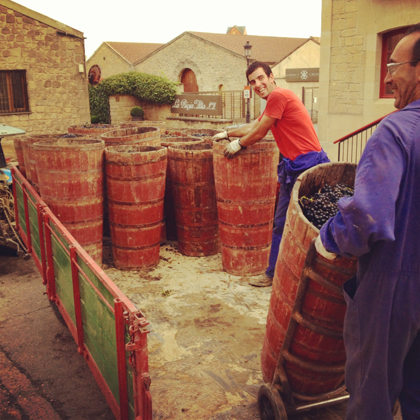
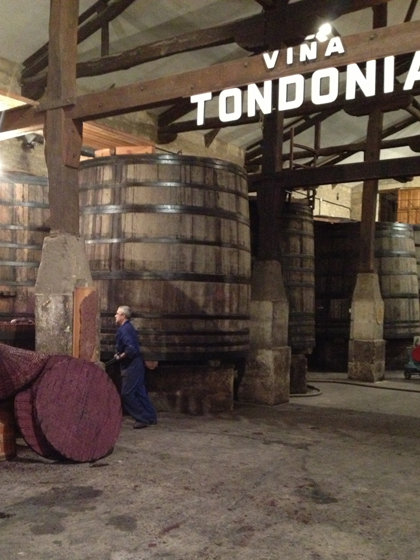
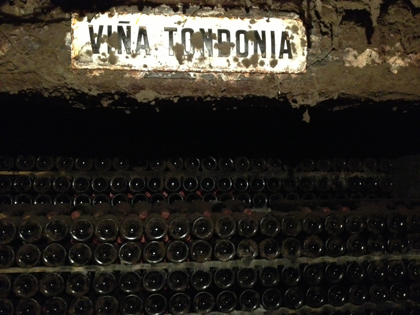
I got to stop by Lopez de Heredia, the shrine to fine wine in Haro. As the sun set and the last grapes of the 2013 harvest arrived, Mercedes Lopez de Heredia took a break from her duties to show a few of us around. Because the celebrated winery, a shrine to fine wine, has been around for over a century, it’s not exactly breaking news. But the mold-covered walls and the cellars where 13,000 barrels a phenomenal 2 million slumber should be on the bucket list for all wine geeks. Although I’ve tasted as far back as the 1945 vintage with collectors in New York, this was the first time I’d been to the bodega.

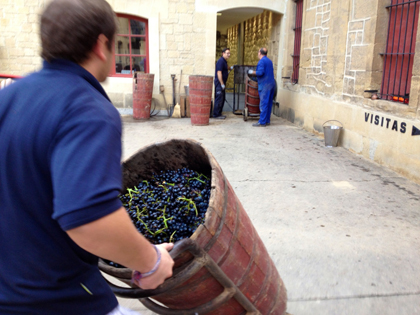
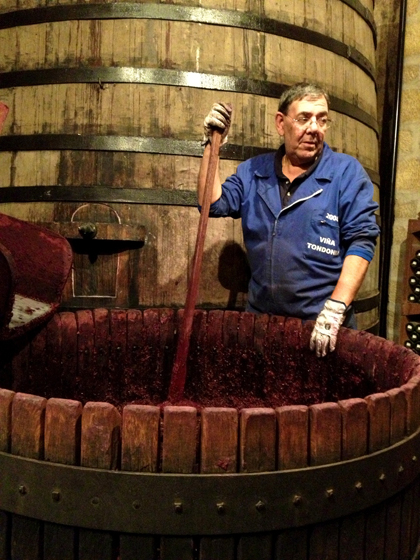
The last grapes from this late vintage were still trickling in (see above). The workers to this day bring them in via tall poplar baskets called “comportas.” The conical structure means that the wood bears the load and the grapes don’t start the crush on the way to the winery.

lopez heredia12

lopez heredia15
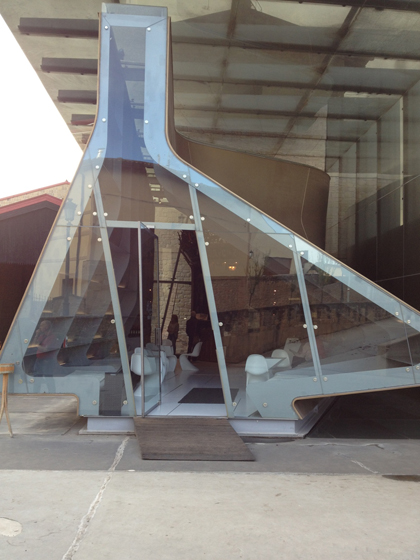
Tasting room and shop designed by Zaha Hadid.

lopez heredia09

lopez heredia11

lopez heredia14
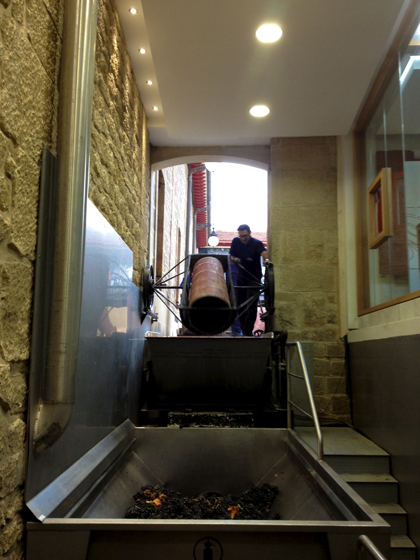
They end up in these enormous fermenters some of which still date from Rafael Lopez de Heredia.

lopez heredia13

lopez heredia08
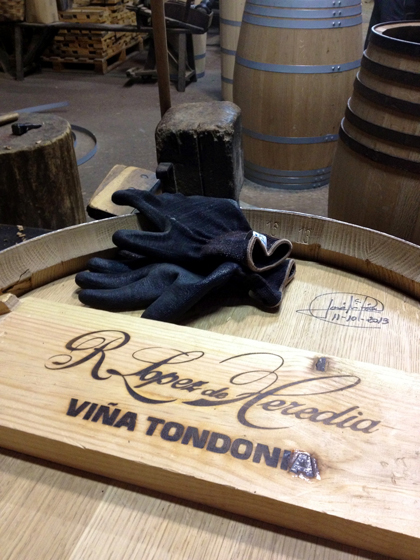
There’s also a cooper, or barrel maker. Each barrel bears the signature of the individual maker. She said that her grandfather thought that oak for a wine was like perfume for a woman–to enhance her beauty not cover it. He added that it was a “wrong” wine that the winemaker tried to cover with the new wood flavor.

lopez heredia02
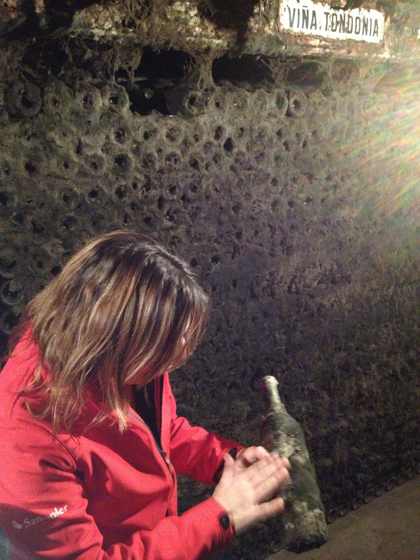
The mold acts like a sponge, Mercedes says, regulating the humidity.

lopez heredia01

lopez heredia07
Mercedes momentarily disturbed a 1961 Gran Reserva from its slumber to show us.

lopez heredia06

lopez heredia05

lopez heredia03
The wines are terrific across the board. But this 1994 gran reserva has incredible poise and delicacy.

lopez heredia04
This 1998 reserva was vibrant and had a real brightness to it despite being 15 years young.

We chatted about the rosé/rosado, which only gets produced when the conditions are right. Mercedes said that the wine is a blend of the white viura and garnacha (grenache) and the main catch for the rosado is that the garnacha must be harvested within a day and a half of the viura (which comes in first). This year the garnacha was late in ripening so it missed the start of the viura’s fermentation. The next rosado will ne the 2008 vintage, released from the winery in 2016.

Interestingly, Mercedes’ father always said that rosado is not a serious wine, an amusing statement since the LdH rosado (along with Tempier and a couple of others) makes a strong case that rosé can actually be a serious wine.

The post A visit to Lopez de Heredia appeared first on Dr Vino's wine blog.

20 Dec 15:38

THE HOUSE ON CANAL ROAD & ISDT, 1964 | LEGENDARY TALES AS TOLD BY DAVE EKINS

by JP

DAVE EKINS

Dave Ekins, 1954 class win at Catalina Grand National Race, on a 250cc NSU Renn Sport Max. Photo courtesy of Bud and Dave Ekins Collection. ”Blister goop, castor oil, and blood were soaked into what had been a new pair of gloves. I never rode that motorcycle again. They sent it back to Neckersolm, Germany.” 

The anniversary of Steve McQueen’s passing is on my mind, as well as the Ekins brothers and the incredible motorcycling history that they forged separately and together. May their tales and achievements be retold and marveled-over by many generations to come. It’s that rich. Stories like this one (via budanddaveekins.com) from the lips of Dave Ekins himself, unpacking in firsthand detail what it was like to be on the first American ISDT racing team with Steve McQueen, Cliff Coleman, John Steen, and his brother Bud Ekins as they traveled, prepped, and raced together are utterly priceless.

“When the Erfurt trials was over and the British had finished second to the all conquering East Germans because some ‘Yanks’ had outdone the Limeys in a few of the special tests, an English journalist aired his views of the U.S. Vase team: ‘Those Yanks just came to have fun and were not a bit serious about winning. They were a bloody nuisance to our boys.’ But from Sid Chilton, public relations manager of Triumph of Coventry, came the reply: ‘I think the Yanks had the right idea. After all, nobody paid them to ride the International so why not make a holiday out of it? Even so, two of them won Gold Medals and one a Silver. The only objection I have is that they are all so bloody handsome!’ –Dave Ekins

THE HOUSE ON CANAL ROAD by Dave Ekins — October 2011

There was the Six Day Team, Steve McQueen, Cliff Coleman, John Steen, Bud and I and three more persons who were Steve’s personal travel buddies. One was Elmer Valentine who owned the popular “Whiskey a Go Go” nightclub on the Sunset Strip. Also traveling with us was Steve’s stand-in double and a third person who lurked in the shadows. (Forty seven years later I can’t remember their names.)

Our airplane landed at London’s Heathrow Airport that summer day in 1964. Five of us Team members stepped out of customs onto the street and found a crowd of people, cameras, and many questions. There were two limos and an elegant 1930s-era Rolls Royce waiting. We took the Rolls and our luggage followed in the limos. All three cars left in different directions in an effort to shake the gang of cameras and news people. Steve McQueen was a very popular actor and public figure in Great Britain and all of Europe in the mid 1960s.

PICCADILLY CIRCUS- LONDON 1964 Photo courtesy of Bud and Dave Ekins Collection

PICCADILLY CIRCUS- LONDON 1964
Photo courtesy of Bud and Dave Ekins Collection

The Studio’s London office had made arrangements for the four of us to stay in a three story home owned by the Ogilvy family on Canal Road. Mrs. Ogilvy was vacationing in Spain at the time and arranged for her housekeeper to stay with us. She would take our grocery requests pass them on to the postman who would then pass the list on to the grocery store. A few hours later someone from the store would appear with bags of food. After a day or two the housekeeper smiled at me and commented that “This is a happy house” referring to the constant partying and the sound of noisy diesel London taxis cabs coming and going at all hours. Steve once said to me “You only go around once in life and I’m going to grab a handful of it”.

Steve took the master suite, Bud took another bedroom, and Cliff, John and I stayed upstairs in one of the children’s rooms. We discovered the place had a basement; four flights of stairs, no elevator. Bud liked it because we could start in the basement and run to the top before breakfast and get in a little workout.

HEATHROW AIRPORT Photo courtesy of Bud and Dave Ekins Collection

HEATHROW AIRPORT
Photo courtesy of Bud and Dave Ekins Collection

Steve managed to borrow a late model Ford wagon from the studio then Bud drove us to the Matchless Factory near Wolverhampton. Despite the length of the drive Bud didn’t miss a turn; remarkable considering he hadn’t made that trip in the last ten years. At the Matchless factory, we were given the royal tour. We peeked into the future, and then left the windowless old factory; a veteran of World War II that unfortunately went out of business during the next twenty years.

That same day we had an appointment with Triumph Motorcycles in Coventry. Triumph took great pride in showing us their “next generation” three cylinder 750s. Next we were escorted in to Mister Edward Turner’s office. The introductions, handshaking and a round of Britain’s famous Scotch Whiskey followed. The conversation got around to the Japanese motorcycle industry and how the British were going to defeat them “the way they did in Burma”. Steve said “Don’t change a thing. Keep it simple”. We, the Six Day Team, agreed we liked things the way they were. Triumph thought otherwise.

HOUSE ON CANAL ROAD Photo courtesy of Bud and Dave Ekins Collection

HOUSE ON CANAL ROAD
Photo courtesy of Bud and Dave Ekins Collection

From Coventry we drove to BSA (Birmingham Small Arms) in Birmingham and were briefed on international relationships and our care of the British Pound while in East Germany. Then we were walked onto a manicured lawn to inspect our Six Day Triumphs, two 650 TR6s and two TR5s. These were East Coast bikes with QD (quick detachable) rear wheels and wide ratio gearboxes; extras the West Coast never knew about.

Upon closer examination I reasoned the high mounted exhaust pipe and muffler would bend the rear shock when the bike was laid on its left side. Closer examination would reveal the latest front fork they were excited about had only 4.5 inches of travel. One year earlier Triumphs had 6.5 inches of travel, they went backwards! Also that eight inch, forty pound cast iron front brake hub would only make matters worse.

DAVE - QUIET TIME IN THE HOUSE Photo courtesy of Bud and Dave Ekins Collection

DAVE – QUIET TIME IN THE HOUSE
Photo courtesy of Bud and Dave Ekins Collection

I was in shock. Any old desert sled would be better than that thing. Bud made arrangements to have the bikes shipped to a shop in London called Comerfords. The good people there made room for us to do the final preparations prior to taking them to East Germany. There were no number plates, just some brackets to fit them with. They did manage to drill holes in the proper places for official seals required in the rulebook. But no number plates! Got to have number plates, how do you get number plates? Make them?

We were very lucky to have Bud’s friend Ted Wassell on our team acting as the official U.S Team Juryman. Now Ted had a manufacturing plant near Birmingham, and Bud asked him to find some number plates. Simple, it only took three days. Our individual numbers would be painted on by the East Germans who were sponsoring the Six Days. (They had hired several local sign painters to do the job.) All entrants will accompany their bikes through the “scrutinizers” who will mark important individual pieces with a special paint and each race number. The cylinder head was sealed to the cylinder and cylinder to the crankcase. Pretty damn thorough, I thought.

BLUE VAN TRAVELING IN FRANCE Photo courtesy of Bud and Dave Ekins Collection

BLUE VAN TRAVELING IN FRANCE
Photo courtesy of Bud and Dave Ekins Collection

Five of us stood around looking at the area Comerfords allowed us to work in: Generous for British standards, not much for us Americans. But you take what you can get; then get to work. Bud and Steve had a different plan. They went to Eric Cheney’s house/shop, outlined what needed to be done; and stayed in the area; about an hour’s travel from London. Eric did the final preparations including rerouting the exhaust pipes placing the muffler just ahead of the rear axle. Whereas Eric Cheney made up some beautiful carburetor/air filter covers; we did the best we could using “‘elephant snot” rubber glue to glue custom cut inner tubes on the frame in order to avoid water damage to the air filter and carburetor. They looked funky, but proved to be effective. Cliff, John, and I rode our Triumphs to the house from Comerfords and back again for three days, without hearing a word from Bud or Steve.

Bud called the house one night and asked if we were ready. They would meet us at Comerfords, load the bikes, get our stuff and be on our way. Ted Wassell would also meet us there with his Mark10 Jaguar sedan. Two fuel tanks and British Racing Green, of course. Seated next to Ted was another Six Day official and a French journalist who worked for Paris Match magazine was alone in the back seat.

CLIFF SUPERVISING THE GAS FILL-UP IN FRANCE Photo courtesy of Bud and Dave Ekins Collection

CLIFF SUPERVISING THE GAS FILL-UP IN FRANCE
Photo courtesy of Bud and Dave Ekins Collection

“Paris Match” was huge like Life Magazine was in the ’60s. Steve’s “Wanted Series” was the most viewed TV series in France. Paris Match was to take care of us while in Paris for the premiere of “Love With The Proper Stranger” starring Steve and Natalie Wood. It just happened the cast of the movie “The Great Race” starring Natalie Wood, Tony Curtis, and Keenan Wynn would pull into the same hotel we were in prior to the premiere (So that was the timing; London, prepare the bikes, drive to Erfurt, East Germany, ride the ISDT, drive to Paris, then do the premiere and body guard thing with Steve. Then take a flight home for me. The other guys went back to London, except for Steve and friends; they went to Majorca for a week or two.)

For now our six Triumph motorcycles were arranged in a blue box van with a large American Flag painted on both sides, the five team motorcycles plus Lynn Wineland’s TR6. Lynn was a photo journalist who joined the party and was to report about the team. So we had six guys in a box van with two seats and enough room to make “nests” from our luggage and riding gear for the others. I climbed into the Jag’s left side back seat and sat down next to a French legend.

RACE HEADQUARTERS Photo credit - Roger Ganner

RACE HEADQUARTERS
Photo credit – Roger Ganner

Marcel Descamps was about my age, he had a wife and two small girls; and employed by Paris Match Magazine. He had just returned from a long assignment in Viet Nam and was given this prize of writing and photographing Steve and his adventures in East Germany. His next assignment was back in ‘Nam from which he didn’t return. I grieved as did many others. His words to me were “Don’t let your country get into this fight”. A moment please while I think about this.

We disembarked on the coast of France then drove to Erfurt, East Germany during the height of the Cold War. Darkness set in before we crossed the border between France and Germany and my thoughts turned back to the drive from Birmingham to London. We were in the Ford Wagon and Steve was in the back seat alone. All of a sudden he hung over the second seat and told Bud to “Stop! Pull over!” A slick little car pulled in behind us and Steve jumped out of our car and into the one following us. They pulled out ahead of us and our jaws dropped as this gorgeous young woman motored by. How did he pull that one off? I reasoned she had to be someone Steve knew when he was in England making the film “War Lover” with Robert Wagner.

house_on_canalp

UNIVERSITY DORMITORY
Photo credit – Roger Ganner

I woke from my slumber as the Jag rumbled over what seemed to be an all-metal bridge; we were crossing the Rhine River still in darkness and I could see orange colored flames rising into the early morning mist. “Must be Frankfurt” I muttered. Our Jag swerved to a side road and parked; the four of us jumped out, sprinted to some growth and stood there in the flash of car lights as we relieved ourselves from too long a time since our last rest stop. By now the blue box van we were following had gained a few miles on us.

It was still early morning, we were in a line of non-moving cars and vans and the blue one with the American flags was at the front of the line. We must be near the border between East and West Germany. Bud walked back to us and said, “The border guards were getting permission from Berlin to allow Steve McQueen to enter East Germany”. It seemed a reasonable statement, but I found out later that there was more to the story. The East Germans did make that call to Berlin, but it was more about some suspicious cargo not just a famous movie star in their midst.

HOW TO TRANSPORT 14 MOTORCYCLES Photo credit - Roger Ganner

HOW TO TRANSPORT 14 MOTORCYCLES
Photo credit – Roger Ganner

While we were all waiting at the border Bud made his way back a few more cars and heard two young men speaking French. Still teenagers, Roger DeCoster and Joel Robert were wondering about the delay. Bud, who spoke some French, jumped into the conversation. Joel Robert had just won his first World Championship, the youngest ever to do that. He and Roger were going to ride this Six Days and wondered about the holdup. Bud invited them to stay with him if they came to race in the U.S. Three years later they did just that! This was the beginning of professional motocross in the U.S. Edison Dye was promoting the first motocross races held in the United States.

The line of cars and trucks started moving. We continued on our way to Erfurt, East Germany; a university town where we were to stay in the dormitory.

We were told a “special feature” of riding roads and trails in East Germany are the many scattered horse shoe nails that find their way into your tires. Everyone knew this was a problem, and a flat can put you out of the running. Our Triumphs carried compressed air bottles, tire irons, and each rider carried new tubes on his person. Experienced Six Day riders can replace an inner tube in less than four minutes. Cliff Coleman did this at least twice during the six days and did not lose a mark.

STEVE AND OTHER TEAM MEMBERS CHANGING TIRES Photo credit - Roger Ganner

STEVE AND OTHER TEAM MEMBERS CHANGING TIRES
Photo credit – Roger Ganner

Sunday we pushed our bikes through Tech inspection according to their schedule. Lower numbers first while larger displacement bikes carried bigger numbers. Bud was 250; I was 261, John Steen was 266, Cliff 276 and Steve 278. We would start several hours after the 50cc bikes carrying single digit numbers and usually ahead of them before the end of a long day because the speed schedules were set according to motor displacement. About two-thirds of the entries were less than 350cc because of the popularity stemming from mopeds and lightweight motorcycles found all over Europe at that time.

John Steen took a wrong turn on the first day, didn’t see any course markers, stopped, turned around then hurried back to find the trail and clocked in late. He was now on a Silver Medal if he did everything else right with five days to go. The U.S. Vase team was still all on Gold at the end of the second day. They say if you get through the third day clean then you have a good chance of winning Gold. Why? Well, they make a much tougher course early in the game and your body is nearly exhausted. This day the 50cc bikes woke us up when they came by in the dark of morning. We got up, had breakfast, and got started at our scheduled departure time in the daylight.

SAMMY MILLER WATCHING DAVE Photo credit - Roger Ganner

SAMMY MILLER WATCHING DAVE
Photo credit – Roger Ganner

First thing a few miles out on the wet cobblestones Bud fell off! The ensuing slide down the road spun his air bottle open and lost its emergency air supply. Bud waved down a car and asked for a pump; he knew cars in Europe carried working tire pumps. Bud pulled the rear wheel, found the nail and removed it, then slipped in a new tube, inflated the tire and going again sliding into the first time control without losing a point. Riding a normal pace you can get into the Control four minutes early; then wait for your time before clocking through. Bud’s two Gold Medals and one Silver Medal had given him the confidence to make good.

Coleman, John Giles, and McQueen were the next to last riders to start; Englishman Ken Heanes was on the last minute, riding alone. This is conjecture; I think Heanes caught Steve in one of the tough sections late in the day and Steve crashed trying to keep up. (The British Works bikes were light years better than what we were riding even though they were all Triumphs.) Now Steve was last on the trail and falling back. Spectators were everywhere in sections near a village or road. There became a time gap between the last riders and Steve who fell behind. So, according to Bud, Steve swerved into some trees avoiding the spectators who were walking the trail. This crash bent the forks and closed up the exhaust pipe. Steve was done. Bud meanwhile swerved wide on the cobblestones and caught his ankle against a stone wall. This mishap broke Bud’s ankle. Bud made the final control without losing a point and was still on Gold. We all had to push our bikes a few yards on gravel to our marked parking spot, about twenty yards. Bud did this and was going to ride the rest of the Six Days. That evening, after a few more Scotches, Steve escorted Bud to the local hospital, an X-ray and plaster cast finished the American Champion’s ride.

STARTING LINE Photo credit - Roger Ganner

STARTING LINE
Photo credit – Roger Ganner

The DDR (Deutsche Demokratische Republik) officials still had a trick or two left. The special test on Day 4 was two miles of paved mountain road in dense fog. They had made large campfires at each turn. Riders would start at 20 second intervals, so I was 20 seconds behind Sammy Miller. Usually I could not catch Sammy on special tests, just follow. But this time I got to the end of the Special Test about ten yards behind the ‘Millerman”. I was used to going fast without seeing much in the dust filled desert, a talent I picked up racing cross-country in the Mojave Desert.

Each morning the daily special test results were posted near the “Parc Ferme”. I stopped and looked at my score for the previous day. Sammy walked over, pointed to my score, then his, and smiled. I had beaten the ”Millerman’ by a few seconds on Day Four.

Morning of Day 5 I was chasing Sammy’s Ariel up a short hill with about a meter vertical step at the top. The Ariel went into a wheelie; Sammy caught the skid plate on the lip and body “Englished” the bike over, and then disappeared. My TR5 didn’t wheelie, hit the cliff and bounced back to the bottom. That didn’t work so I headed towards the wall’s corner and threw the bike over the top, then scrambled after it and rode away. I later asked Paul Hunt how the other guys made that step. He said “They went around it, you dummy”. Nobody ever told me!

RACE COURSE THROUGH TOWN OF ERFURT Photo credit - Roger Ganner

RACE COURSE THROUGH TOWN OF ERFURT
Photo credit – Roger Ganner

Day 6 was a short ride to an airfield and last Special Test; a road race on a flat chunk of concrete. They would bunch bikes together. In my race we had 350s, 500s, and open class, over twenty riders bunched up on the start line. The flag dropped and I sped into the left-hander first, down the long straight then rear-braked it into the next left-hand turn. They had a ‘kink’ at the entrance and exit of the long front straight so tight I had to use second gear. Going into the back straight Cliff Coleman passed by me all tucked in while East German ace Fred Williamowski and his MZ went around both me and Cliff at the same time. Cliff put on a show sliding his TR6 in an effort to hang onto Fred and his 100mph MZ. I ended up fifth or sixth or something, the fight went out of me when the rear brake got hot. But it was a great day, Cliff and I won Gold Medals and John Steen had his Silver Medal. Steve and Bud, with his right ankle wearing a white cast, watched the race seated near the slow turn. I felt sorry for them; as Brando said; “We coulda’ been somethin”. Fred and his flying 352cc MZ won the overall Trials. From here it was “off to Paris” as Steve’s body guards for the premiere.

CHECK POINT Photo credit - Roger Ganner

CHECK POINT
Photo credit – Roger Ganner

Paris Match Magazine had our visit all planned, reserved, and locked in. The film crew for “The Great Race” got into the Hotel several hours behind us. Later I found Keenan Wynn in the bar with John Steen and Bud. Keenan seemed to be happy hanging out with his old friends from Bud’s shop back in Sherman Oaks, California.

Our hotel, Hotel de Crillon, was close to everything including the U.S. Counsel next door, and the U.S. flagged blue van was parked there. (With two uniformed U.S. Marines standing at the gate, we didn’t need to worry about the van or its contents.)

We were invited to have dinner at the Ritz; in a private banquet room. Our host was Paris Match Magazine. I am sure they thought this out; they had name cards placed at each chair. I was sitting next to the Foreign Affairs Editor; Steve was sitting on the other side. A couple of French speaking countesses, and the French actress, Capucine, were also invited to rub shoulders with ‘these Americans’. We spoke about the American film she had done with John Wayne and Red Buttons on location in Africa. She was a charming lady who circulated around the elegant hall. At one point she wanted to dance. Her eyes went to Bud first and then she noticed the cast on his ankle. I was her second choice but happy for the opportunity to join this classy woman on the dance floor. The live band played 60′s music. It was all familiar and I felt pretty special in her company until I headed back to the table to join the others.

BUD CHECKING IN Photo credit - Roger Ganner

BUD CHECKING IN
Photo credit – Roger Ganner

Just then the French Foreign Affairs Editor asked me my thoughts about the J.F.K. assassination. He thought it was a conspiracy. Steve, sitting close by said it was not and he was convinced from conversations he had with people closely connected with the Kennedy family. It almost became an argument and I excused myself and went back to my room.

Steve had arranged for all of the U.S. Team members to be dressed in grey flannel slacks and navy blue blazers. I was fortunate that Steve and I wore the same 32″ inch waist size and could use a pair of his slacks from Paramount Studios. The pants were lengthened and I was good to go. The name “Steve McQueen Love With The Proper Stranger” was sewn in at the waist band. I wore them to the party and the premiere. It wasn’t until we were ready to leave the hotel that I noticed the pants had disappeared. Most likely a hotel staffer saw an opportunity for a great souvenir; maybe on “eBay” one day!

The following morning Marcel invited Bud and me to his Paris Match office to look at some photos. He gave us a few B&W 8x10s included in our stories. That was the last time I would see him.

That evening Bud, Cliff and I escorted Steve and his beautiful wife, Neile, through the crowd and into the theater, just like Hollywood only without the red carpet. The following day Steve and his flock flew to Majorca. I flew home to California while Cliff, John, and Bud drove back to Birmingham in the blue van with the American flags painted on it.

I rode four more Six Days and sadly there was never one that came even close to 1964.

From the pen of Daring Dave Ekins comes the true tale of the biggest, the toughest and the bone-breakingest motorcycle race in the world–the International Six Day’s Trial. A first hand account of riding and cheating next to Europe’s best…with due note of team and movie hero, Steve McQueen!

ISDT by Dave Ekins

Here we have observed trials which demand taut precision in manipulating a series of obstacles expressly designed to drop you into the muddy and here we have enduros that last for a day or two or twenty-four hours straight; enduros that lead through sand and mud, swamps and streams swift enough to tow you under, enduros that require calculation, concentration to stay where you should be at a given time and at a given speed. But imagine riding at a given very high speed for six days over twelve hundred miles, each mile superbly calculated to break both your motorcycle and every bone in your body. Add to that a grueling series of observed-trial type speed tests at the end of each day. If that sounds like your kind of game, then you’re up for the International Six Days Trials.

The ISDT has been held annually since 1913 (except for the war years) and has become a real international competition with most of the bike people in Europe making an all-out effort to win the trophy–a trophy that really does bring them and their country some fame and fortune but does a heck of a lot more to promote sales. (Even the Russians go for an ISDT wearing their long brown rubberized rain suits, riding those clumsy green and yellow ISHes.) Add to the honor, the fact that the winning team has the chance to organize the next year’s event–an advantage quite worth the effort (as we shall see).

isdtb

Dave Ekins, John Steen, Steve Mc Queen, Cliff Coleman and Bud Ekins
Photo courtesy of Bud and Dave Ekins Collection

The actual riding of the International is a hurry up and wait game. You spurt along from one time control to the next and then wait for your time to catch up; you clock through the check and hurry on to the next time control. The speed tests each day award bonus points to the individual in accordance with his performance. It takes five hundred bonus points and no penalty points to earn a Gold Medal. Penalty points are given for being late into a time control. A Silver Medal is the accumulation of three hundred bonus points and not more than fifty penalty points. The Bronze is given to anyone who just finishes without being excluded. Any outside assistance means immediate disqualification and if your bike breaks and you cannot fix it with what you have in your pockets in less than an hour’s time, you’re out.

We were on the Autobahn driving through what is known as the five-kilometer section–the bare, no-man’s land between East and West Germany. The forests had been cut away as far as the eye could see and guard towers stood tall, spaced out in a staggered pattern where trees should have been. We were leaving the land of the free. Our three-car motorcade had passed into East Germany and before long we were in the picturesque countryside of Erfurt. The American vase team: Steve McQueen, John Steen, Cliff Coleman, my brother Bud Ekins, and me. The noted English manufacturer Ted Wassell acted as our manager. It was more than helpful that he was on the Jury too. (But this was the year of Steve McQueen and there were a group of French journalists with us to report every move the actor made–the TV series “Wanted” was a favorite in France).

Colorful banners and flags of the participating countries were hung on both sides of the road for a mile before we got to the town hall, headquarters of the Trials. Although Bud had ridden the Trials before (three times before) the rest of us were virgins and this was the first official Vase team to represent the U.S. in an International. We came with our necessary receipts and licenses and were told we still owed two hundred and eighty dollars. It took a lot of convincing to assure our hosts that not all Americans are millionaires and that we really had paid all the fees. At last, all was stamped “in order” and we left for our assigned quarters.

Dave and John waiting for the flag to drop Photo courtesy of Bud and Dave Ekins Collection

Dave and John waiting for the flag to drop
Photo courtesy of
Bud and Dave Ekins Collection

All of the competitors were housed in a newly completed college dormitory a couple of miles south of the staging area. The drive from one place to the other took us through town and Germans marked the way so we wouldn’t get lost. Nice of them I thought, until I found they didn’t want us driving through their slums.

That evening before Day One, nearly 300 contestants were seated in a giant dining hall looking down at the plate of food just served; whole eel with cold cuts! I will not eat something that is still looking at me! There were about ten Americans assigned to our table. Steve McQueen had the insight to ask our waiter where the jury members ate. The American Team, the British Team and the Swedish Team left the dining hall and proceeded to the Erfurt Hof for a more palatable dinner. The East German sponsors were at least sportsmanlike enough to change the menu for the remainder of the Trials.

Early the next day, I found Coleman and McQueen in an all-out power slide contest on the gravel road in the Park Ferme. Some of the ISDTers joined in with enthusiasm and before long the bailiwick turned into a dust bowl–this new Yankee game was fun! And when the champ emerged, it was no one other than motocross ace Joel Robert.

THE AMERICAN ISDT TEAM Photo courtesy of Bud and Dave Ekins Collection

THE AMERICAN ISDT TEAM Photo courtesy of Bud and Dave Ekins Collection

The trials got under way on schedule and right away John Steen got pointed in the wrong direction by some shady character in a uniform. By the time he found his way back to the right trial and into the next time control he was running thirty minutes late and already on a Silver Medal. Later, still trying to make up for lost time, Steen crashed on a very tricky paved turn that also claimed among its victims Bud Ekins and Cliff Coleman, both of whom survived with little precious time lost. To hear Bud tell it, he had his Triumph down dragging the handlebar in the pavement trying to avoid the inevitable but he still slid of the road just missing two concrete abutments. Looking back, I think it might have been nice if the organizers had slowed us down a bit for this turn; but then the East German team knew the road and might have lost some advantage.

Third morning out, a Czech rider walked into the Park Ferme with a peculiar bulge in his coat, pushed his broken Jawa into the working area, and began to install a curious brace that (it appeared) had been made the night before. The front down-tube on his Jawa had parted and this new piece was to do the job of the broken part. Well, the two officials said nothing as they watched the sneaky one make his repair. They waited until he had sweated and cursed the thing on and even let him push the bike to the starting gate before strong-arming him out of the Trials.

There is a saying among the ISDT set that if you can complete the third day clean then your chances of finishing the contest are better than ever. I didn’t realize what they meant until I rolled my tired body out of the sack that third morning and began moving stiff and tired muscles in an effort to get dressed. I had managed to make it through the first two days clean but the pace was beginning to show. I had begun the Six Days mostly concerned about blistering my hands, now I had a new worry: battle fatigue.

Dave and Steve - Broken Dreams Photo courtesy of Bud and Dave Ekins Collection

Dave and Steve – Broken Dreams
Photo courtesy of
Bud and Dave Ekins Collection

Well I made it to the day’s end, but my favorite actor didn’t and neither did my big brother. McQueen, whose reflexes were showing signs of fatigue parted company with his Triumph in a pile of rocks. He scrambled back on his bike in an attempt to continue, but found he was down about twenty horsepower. The bash through the rocks had closed his exhaust pipe. Now luckily there were some woodcutters nearby and Steve, being a resourceful chap, borrowed an ax and vented his exhaust pipe.

But this untimely detour put the Matinee Idol well behind the last rider, and while he was making an honest effort to continue, the bystanders and the kids who had been quite good about staying off the trials naturally joined the game when all seemed clear. So here was Steve traveling South at a high speed on a narrow twisting trail in the woods and there was an unsuspecting lad riding North on the same path. The meeting was inevitable, but rather than crunch a kid and his moped, Steve pointed his bike off the path. A firmly planted tree did not give way to the forces of the high speed Coventry projectile that tried to uproot it. It was a straight-on crash that put the front wheel squarely between the exhaust pipes and left not a few scratches on Mr. McQueen’s valuable face.

Now Bud had won three medals in previous ISDTs and pretty well knew what to expect. The morning sun was high as I rounded a bend and saw my brother feverishly working over his rear wheel with tire irons. I knew his air bottle was empty from the first day crash and I stopped to give assistance. But he told me to get the hell going for this was a fast section and the time control wasn’t far ahead.

Bud borrowed one of those big double cylinder pumps from a nearby car and had the new tube inflated in less than ten strokes. I had made the time control and waited until bud came sliding in, directing him into the check and putting him to the head of the line. He punched through with only seconds to spare. Now you are supposed to get gas and oil before you clock through, and although the senior Ekins was in on time he had no gas for the next sixty mile leg. Our ever alert Ted Wassell saved the day, slipping down the road a piece with a full petrol can in hand. The refueling job was done undetected by the enemy and though Bud and his Triumph entered the course from a thicket, no one was the wiser.

1964 Final Classment/Results ISDT Photo courtesy of Bud and Dave Ekins Collection

1964 Final Classment/Results ISDT
Photo courtesy of Bud and Dave Ekins Collection

The afternoon’s course took us along a rocky path and then turned ninety degrees under a railroad trestle and out again on the other side of the tracks. The dampness in the tunnel and on the round slippery rocks made the navigating a bit squirrely. Bud turned into the tunnel a little hot and though his mind told him to change gears, his body reacted a bit too late and he glanced sharply off the wall. A sickening crack was heard; the small bone above his ankle had broken-but Bud wasn’t telling anybody. He rode the last fifty miles feet up as only he can, and then following the rules, pushed that Triumph a hundred feet in the gravel and put it on the centerstand to rest. With no points lost!

John Steen, Cliff Coleman and I were the remaining Americans, and with the pressure of doing well for the Team removed, we settled down to enjoy the last three days of riding. Coleman and I were still in the running for our first Gold Medals.

According to plan I slipped on a new rear chain just before we started the fourth day, but in doing so I lost the masterlink in the dirt. Ted Wassell noticed me scratching around for it and happened to drop a new one right beside me. It’s nice to have a pit juryman on your side.

But being the host country is having a real advantage. According to legend, the MZed and Simpson banners that were hung along most of the course were put there in code. A Simpson banner meant a right turn and an MZed one meant a fast turn. Pretty sneaky those Germans. But the real kicker is when they quietly let the news out and then reversed the code for the rest of the Trials. This sent more than one guy who thought he had the secret into some very hairy turns at some very wrong and hairy speeds.

Along with the MZed and Simpson banners along the course were numerous East German bikes complete with a mechanic. It’s nice to have a parts house every half mile or so just in case.

Photo courtesy of Bud and Dave Ekins Collection

Photo courtesy of Bud and Dave Ekins Collection

At the end of it all is held a speed test–usually on a road race course. It is so designed that if a motorcycle is ailing at all after five and a half days, it will surely blow when the rider tries to do those fiendish laps at an average of forty six miles an hour for forty five minutes.

Steen, Coleman, and I were in the same race with all the three fifty and larger displacement machines. At the drop of the banner we shot down the short straight and I grabbed the inside of the turn and polished the knobs on the rear tire and got into the next straight out front. Then Coleman came by me on his six fifty and just as that happened an East German zonked by both of us on a three sixty two-stroke! My five hundred would turn an honest eighty five, but that five-speed MZed was capable of the century mark—and he was doing it too! Equipment means a lot.

When the Erfurt trials was over and the British had finished second to the all conquering East Germans because some “Yanks” had outdone the Limeys in a few of the special tests, an English journalist aired his views of the U.S. Vase team: “Those Yanks just came to have fun and were not a bit serious about winning. They were a bloody nuisance to our boys”. But from Sid Chilton, public relations manager of Triumph of Coventry, came the reply: “I think the Yanks had the right idea. After all, nobody paid them to ride the International so why not make a holiday out of it? Even so, two of them won Gold Medals and one a Silver. The only objection I have is that they are all so bloody handsome!”

–Dave Ekins

1964, Erfurt, Germany -- Steve McQueen from the United States took part in 1964 with the number "278" on his Triumph at the international motorcycle race "Six Days", Photo, Dieter Demme 1964, Erfurt, Germany -- Steve McQueen smokes a cigarette during a rest as he took part in the international motorcycle race Six Days on his Triumph with the number 278.  Photo, Dieter Demme 1964, Erfurt, Germany -- Steve McQueen rolls a cigarette during a rest as he took part in the international motorcycle race Six Days on his Triumph with the number 278. Photo, Dieter Demme 1964, Erfurt, Germany -- Steve McQueen has a coffee during a rest as he took part in the international motorcycle race Six Days on his Triumph with the number 278. Photo, Dieter Demme 1964, Erfurt, Germany -- Steve McQueen prepares for a ride during a rest as he took part in the international motorcycle race Six Days on his Triumph with the number 278. Photo, Dieter Demme 1964, Erfurt, Germany -- Steve McQueen prepares for a ride during a rest as he took part in the international motorcycle race Six Days on his Triumph with the number 278. Photo, Dieter Demme 1964, Erfurt, Germany -- Steve McQueen prepares for a ride during a rest as he took part in the international motorcycle race Six Days on his Triumph with the number 278. Photo, Dieter Demme 1964, Erfurt, Germany --- Steve McQueen from the United States took part in 1964 with the number "278" on his Triumph at the international motorcycle race "Six Days" in Erfurt, Photo. Dieter Demme 1964, Erfurt, Germany -- Steve McQueen from the United States took part in 1964 with the number "278" on his Triumph at the international motorcycle race "Six Days". Photo, Dieter Demme

.

RELATED TSY POSTS:

STEVE MCQUEEN, RICHARD AVEDON & RUTH ANSEL | HARPER’S BAZAAR, 1965

STEVE McQUEEN DOIN’ IT IN THE DIRT | TRIUMPH DESERT BIKE BY BUD EKINS

STEVE McQUEEN’s 1971 HUSKY 400 CROSS UP FOR AUCTION | BUY IT NOW!

STEVE McQUEEN’s 1971 HUSKY 400 CROSS UP FOR AUCTION | BUY IT NOW!

STEVE McQUEEN REVIEWS THE HOTTEST NEW GT’s | 1966 SPORTS ILLUSTRATED

STEVE McQUEEN ’66 POPULAR SCIENCE | WHAT I LIKE IN A BIKE –AND WHY

STEVE McQUEEN | LE MANS & BEYOND GRATUITOUS 1970s RACING GOODNESS

STEVE McQUEEN | HOLLYWOOD’S ANTI-HERO & TRUE SON OF LIBERTY

REQUIRED VIEWING “BULLITT” | THE GRANDDADDY OF CAR CHASE SCENES

THE TSY FRIDAY FADE | STEVE MCQUEEN’S DUNE BUGGY DAYS

HUSQVARNA | THE SCREAMIN’ SWEDE THAT STARTED A RACING REVOLUTION

1970 12 HOURS OF SEBRING RACE | STEVE McQUEEN’S BRUSH WITH VICTORY


20 Dec 03:07

Clark Gable’s Rolex

by jared

Clark Gable was a man of many talents, much style and great taste.

He had a fondness for fast cars, including the Jaguar XK120 and the iconic Mercedes-Benz 300SL “Gullwing.”

It’s no surprise that his watch of choice was a Rolex, though it may pique your interest to note that his personal gold Oyster Perpetual from 1940 is coming up for sale next week.

It’s part of Bonhams’ What Dreams Are Made Of: A Century of Movie Magic sale in NYC next week, where it’s expected to fetch up to about $30,000.

The manly movie star sported it in several films, including the safari classic Mogambo in 1953.

The perfect thing to wear for your next big role…


23 Nov 13:25

The Kennedy Assassination: All Roads Lead to Moscow?

Fifty years ago, the nation stood in stunned silence as they learned that the President had been killed in Dallas, Texas. The shooter, Lee Harvey Oswald, was a Communist. Over the years hundreds-of-thousands of stories have been thrown against the wall to see if anything that would distract from that fact would stick. Not everyone was taken in by these antics.  

Lt. Gen. Ion Mihai Pacepa--the highest ranking intelligence official ever to have defected from the Soviet bloc--in his books Programmed to Kill: Lee Harvey Oswald, the Soviet KGB, and the Kennedy Assassination and Disinformation: Former Spy Chief Reveals Secret Strategies for Undermining Freedom, Attacking Religion, and Promoting Terrorism suggests that all roads in the plot to kill President John F. Kennedy lead back to Moscow. 

According to his own account (as told by those who knew or spoke with him), Lee Harvey Oswald became interested in Marxism in 1952 or 1953, when an "old lady" handed him "a pamphlet about saving the Rosenbergs." (In addition to the Rosenbergs' crimes, the "save the Rosenbergs" propaganda campaign was one of the most successful in KGB history--having the effect of creating and enflaming massive anti-Americanism. It just goes to show that you never know who is listening, or in this case, reading what you write.) 

Then, a few years later, Oswald was in the Marines stationed abroad, where, as he later said "I met some Communists in Japan and they got me excited and interested, and that was one of my inducements in going to Soviet Russia, to see what goes on there." To be more precise, he met some pretty girls in the local bars frequented by American servicemen (a favorite recruiting ground for the KGB) and began spending more money than he made. He had access to information regarding the classified U-2 spy planes, and the Soviets very much wanted this information. When he returned to America, he was stationed in Texas, and continued  his strange behavior, like having bags full of classified information deposited in an empty locker at a bus station in Los Angeles, California and at times going off on his own to meet "friends" in Tijuana, Mexico. Around that time, the Soviets started receiving classified information on the U-2 from their sources.  

While Oswald was in the Soviet Union, momentous events continued to shape the globe:  

  • Fidel Castro, who had seized power in Cuba thanks in part to gun runners smuggling weapons to him in the Sierra Maestra mountains (one of those involved in this smuggling was Jack Ruby), had begun to consolidate power in the hands of himself and the Communist Party and started cutting deals with shady underworld figures in the United States (including Jack Ruby);  
  • A U-2 piloted by Francis Gary Powers was downed by the Soviets inside the Soviet Union, thanks to classified information the KGB obtained on the plane's functions (Oswald was taken to see Powers's "trial");  
  • Kennedy was elected President;  
  • Soviet dictator Nikita Khrushchev learned through his espionage sources in January 1961 that Kennedy had authorized a CIA-backed invasion of Cuba (one of the Soviet Union's longtime agents, most commonly known by the name George de Mohrenschildt, was known to be staying in the area where the CIA was making preparations for the invasion), and were ready for it when it came in April 1961;  
  • Khrushchev escalated the Berlin crisis in August 1961, resulting in the building of the Berlin Wall. (His dislike of Kennedy grew greater and greater as time passed)  

Not only was "his Soviet connection in good working condition", but he even moved in with the previously mentioned Soviet agent known as George de Mohrenschildt in Dallas. 

As to the events in the months leading up to November 22, 1963, no description can be better than the one Gen. Pacepa gave to FrontPageMag in 2007. It is a bit long, but well worth the required attention span

FP: So give us some concrete KGB fingerprints.

Pacepa: Let’s take the handwritten note in Russian Oswald left his Soviet wife, Marina, just before he tried to kill American general Edwin Walker in a dry run before going on to assassinate President Kennedy. That very important note contains two KGB codes: friends (code for support officer) and Red Cross (code for financial help). In this note, Oswald tells Marina what to do in case he is arrested. He stresses that she should contact the (Soviet) “embassy,” that they have “friends here,” and that the “Red Cross” will help her financially. Particularly significant is Oswald’s instruction for her to “send the embassy the information about what happened to me.” At that time the code for embassy was “office,” but it seems that Oswald wanted to be sure Marina would understand that she should immediately inform the Soviet embassy. It is noteworthy that Marina did not mention this note to U.S. authorities after Oswald’s arrest. It was found at the home of Ruth Paine, an American friend with whom Marina was staying at the time of the assassination.

FP: The Warren Commission and the House Select Committee on Assassinations concluded that Oswald had no connection whatsoever with the KGB. But according to your book, Oswald secretly met an officer of the KGB’s assassination department in Mexico City just a few weeks before shooting President Kennedy. What’s the evidence?

Pacepa: There are many bits of evidence proving Oswald’s connection with the KGB. A tangible one is the letter he sent to the Soviet embassy in Washington a few days after meeting “Comrade Kostin” in Mexico City. Elsewhere Oswald identified the person he had met there as “Comrade Kostikov.” The CIA has identified Valery Kostikov as an officer of the PGU’s Thirteenth Department for “wet affairs” (wet being a euphemism for bloody). A handwritten draft of that letter was found among Oswald’s effects after the assassination. The previously mentioned Ruth Paine testified that Oswald re-wrote that letter several times before typing it on her typewriter. Marina stated he “retyped the envelope ten times.” It was important to him. A photocopy of the final letter Oswald sent to the Soviet embassy was recovered by the Warren Commission. Let me quote from that letter, in which I have also inserted Oswald’s earlier draft version in brackets:

“This is to inform you of recent events since my meetings with comrade Kostin [in draft: “of new events since my interviews with comrade Kostine”] in the Embassy of the Soviet Union, Mexico City, Mexico. I was unable to remain in Mexico [crossed out in draft: “because I considered useless”] indefinily because of my mexican visa restrictions which was for 15 days only. I could not take a chance on requesting a new visa [in draft: “applying for an extension”] unless I used my real name, so I returned to the United States.”

The fact that Oswald used an operational codename for Kostikov confirms to me that both his meeting with Kostikov in Mexico City and his correspondence with the Soviet Embassy in Washington were conducted in a PGU operational context. The fact that Oswald did not use his real name to obtain his Mexican visa confirms this conclusion.

Now let’s juxtapose this combined letter against the free guide book Esta Semana-This Week, September 28 – October 4, 1963, and a Spanish-English dictionary, both found among Oswald’s effects. The guide book has the Soviet embassy’s telephone number underlined, the names Kosten and Osvald noted in Cyrillic on the page listing “Diplomats in Mexico,” and check marks next to five movie theaters on the previous page. In the back of his Spanish-English dictionary Oswald wrote: “buy tickets [plural] for bull fight,” and the Plaza México bullring is encircled on his Mexico City map. Also marked on Oswald’s map is the Palace of Fine Arts, a favorite place for tourists to assemble on Sunday mornings to watch the Ballet Folklórico.

Contrary to what Oswald claimed, he was not observed at the Soviet embassy at any time during his stay in Mexico City, although the CIA had surveillance cameras trained on the entrance to the embassy at that time. In short, all of the above facts taken together suggest to me that Oswald resorted to an unscheduled or “iron meeting”—zheleznaya yavka in Russian—for an urgent talk with Kostikov in Mexico City. The “iron meeting” was a standard KGB procedure for emergency situations, iron meaning ironclad or invariable.

In my day I approved quite a few “iron meetings” in Mexico City (a favorite place for contacting our important agents living in the U.S.), and Oswald’s “iron meeting” looks to me like a typical one. That means: a brief encounter at a movie house to arrange a meeting for the following day at the bullfights (in Mexico City they were held at 4:30 on Sunday afternoon); a brief encounter in front of the Palace of Fine Arts to pass Kostikov one of the bullfight tickets Oswald had bought; and a long meeting for discussions at the Sunday bullfight.

Of course, I cannot be sure that everything happened exactly that way—every case officer had his own quirks. But however they may have connected, it is clear that Kostikov and Oswald did secretly meet over that weekend of September 28-29, 1963. On the following Tuesday, still in Mexico City, he telephoned the Soviet embassy from the Cuban embassy and asked the guard on duty to connect him with “Comrade Kostikov” with whom he had “talked on September 28.” That phone call was intercepted by the CIA.

On November 22, 1963, Florentino Aspillaga, a radio intercept officer with Cuban intelligence, went to work to do what he did every day--sit at a monitoring station outside Havana and listen for CIA transmissions from Virginia, Miami, and offshore ships. But on that day, the only time in a dozen years his routine was altered, he was ordered to stop monitoring CIA transmissions and instead listen to for communications coming out of Texas. A few hours later, he listened as news broke of the shooting of the President and reported it to headquarters. At the same time, the leaders of both the Soviet Union and Cuba just happened to be having meetings with westerners at the moment of the assassination who could credibly record their "shocked" reaction. As Pacepa writes: "From our KGB advisors, I had learned that the best way to put over a deception was to let the target see something for himself, with his own eyes." 

Immediately, the intelligence services of the Communist world initiated one of their largest disinformation campaigns of all time: putting the blame of the Kennedy assassination on the United States government. Pacepa writes: "As that very clever master of deception Yuri Andropov once told me, if a good piece of disinformation is repeated over and over, after a while it will take on a life of its own and will, all by itself, generate a horde of unwitting but passionate advocates." 


20 Nov 23:18

Los Angeles: Jeep Wrangler Willys Wheeler wants mountains, not a stage

by Steven J. Ewing

Filed under: LA Auto Show, SUV, Jeep, Off-Road

2014 Jeep Wrangler Willys Wheeler Edition

We've said it before and we'll say it again - while we usually grow tired of the endless barrage of special edition vehicles, that isn't the case with the Jeep Wrangler. Every unique model we encounter seems cooler than the one before it, and this Willys Wheeler Edition is no exception.

The Willys Wheeler package is sort of a throwback to early Jeep CJ models, and wears "Willys" stickers on the hood. There's also a gloss black grille, rock rails to protect the side sills, and unique 17-inch black wheels wrapped in meaty BF Goodrich KM Mud Terrain tires. For proper off-road prowess, this special edition uses a Dana 44 rear axle with a limited-slip differential and a 3.73 final drive ratio.

Look for the Willys edition to hit dealerships early next year, starting at $25,795 for the two-door version and $29,595 for the four-door. Feel free to read all about it in the press release below.

Continue reading Jeep Wrangler Willys Wheeler wants mountains, not a stage

Jeep Wrangler Willys Wheeler wants mountains, not a stage originally appeared on Autoblog on Wed, 20 Nov 2013 17:39:00 EST. Please see our terms for use of feeds.

Permalink | Email this | Comments
16 Nov 21:05

Texas A&M Law Professor: Time 'to Repeal and Replace Second Amendment'

Speaking in a gun violence symposium at University of Connecticut's School of Law, Texas A&M law professor Mary Margaret Penrose said it's time "to repeal and replace [the] Second Amendment."

Penrose said this after expressing her frustration with the fact that President Obama has failed to pass more gun control in the eleven months since the heinous crime at Sandy Hook Elementary.

According to a Connecticut news blog, Penrose said gun laws should be decided on a per-state basis, versus the overarching rules and laws that result from the current amendment: "The beauty of a states' rights model solution is it allows those of you who want to live in a state with very loose restrictions to do so." 

As Breitbart News reported on December 15, 2012, a repeal of the Second Amendment is possible and can begin as soon as the majority of the populations in the 50 states vote for the repeal of the amendment. After that, the repeal has to receive two/thirds vote in the House of Representatives and two/thirds vote in the Senate, and two/thirds of all state legislatures. 

Penrose said her problems with the Constitution are not limited to the Second Amendment. She "advocates redrafting the entire U.S. Constitution" in her law courses at Texas A&M.

Follow AWR Hawkins on Twitter @AWRHawkins.


16 Nov 20:56

The Two Kinds of Libertarianism: Calhounian and Heinleinian

Today in America, we see two kinds of libertarianism, which we might call “Calhounian” and “Heinleinian.” Both kinds believe in freedom, but they are very different in their emphasis—and in their politics. 

The names behind the adjectives are John C. Calhoun (1782-1850), of South Carolina, and Robert A. Heinlein (1907-1988), of California. In other words, two different states, two different centuries—and two very different outlooks.

Today, the gap between the Calhounians and the Heinleinians is wide; indeed, for the most part, these two kinds of libertarians are not even in the same political party. But if the gap could be bridged, and the two libertarianisms united inside the Republican Party, that uniting would be great for Republican prospects. 

So let’s take a look at the two men, Calhoun and Heinlein, and the traditions that embody their legacies. 

A Closer Look at Calhoun 

Calhoun was a lawyer, pamphleteer, and constitutional scholar. He was also a proud slaveholding South Carolinian who rose in politics to be vice president of the United States—although he resigned that post in 1832 to protest what he saw as the excessively pro-federal unionist tilt of President Andrew Jackson.

Indeed, Calhoun spent the last two decades of his life making the case for states’ rights over national unity; seeing that his beloved South was destined to be outnumbered by the North, he ceaselessly generated intricate arguments in favor of minority rights—even at the expense of majority rights. In particular, he was a passionate advocate of “nullification”—that is, the idea that any or all of the states could nullify a federal law.

Calhoun died 11 years before the beginning of the Civil War, and yet it’s a cinch that he would have joined his fellow Palmetto Staters at the forefront of secession. Today, there’s no more talk of war, but Calhoun’s suspicion of, and opposition to, federal power is the still-beating heart of Southern conservatism.

A Closer Look at Heinlein 

So now to Heinlein, who came along more than a century after Calhoun.

Heinlein was also a scholar of sorts; he had learned engineering at the US Naval Academy, Class of 1929, and kept up with technology issues all his life. He was also on the right—not only a Republican, but a vociferous supporter of Barry Goldwater’s 1964 presidential campaign. Yet by trade, Heinlein was a science-fiction writer; he ranks as one of the great sci-fi writers of all time, the author of such pathfinding novels as Starship TroopersStranger In a Strange Land, and The Moon Is a Harsh Mistress. Virtually all of Heinlein’s works include not only a solid dose of science and scientific extrapolation, but also strongly individualist, anti-authoritarian, libertarian themes. 

The lead character in Harsh Mistress, for example, describes himself as a “rational anarchist,” and the novel’s plot line concerns a lunar colony’s rebellion against earth, erupting in the symbolically loaded year of 2076—as in, three centuries after the American Revolution. 

Okay, so Calhoun and Heinlein were interesting figures. But how does that make them relevant to today’s politics? After all, the average Republican voter might not have heard of either Calhoun or Heinlein. So who cares about those old guys?

The answer is two-fold: First, the libertarian policy elites are familiar with both men. Second, even among those who have never heard of Calhoun or Heinlein, the belief systems of the two men still have the power to inspire and provoke.

Indeed, in comparison to the controversies engendered by the respective spirits of Calhoun or Heinlein—radical devolution, even civil war, for Calhoun; warp-speed space travel and immortality for Heinlein—most contemporary political arguments seem rather pale. Yes, it’s the vast scope of their persuasive ambition that makes both men relevant in our time.

The Elite Libertarian Synthesis—And Who’s Left Out 

Today, probably 90 percent of the Republican intelligentsia in Washington DC and New York City counts itself as libertarian on economic and social issues—and that matters. Why? Because it’s these libertarian experts/nerds/wonks who who write the articles, talking points, TV scripts, speeches, and books that shape Republican policy and politics. If there’s a wonk in every office putting policy material in front of his or her boss, then it’s the wonkocracy, overall, that not only sets the agenda, but also enforces the orthodoxy of the agenda.

Indeed, the libertarian influence is so large today that quite a few Democratic intellectuals are also substantially libertarian. Really? Yeah, really.

On social issues, of course, it’s a slam dunk favor of the libertarians—in both parities. It’s hard, for example, to find a Democratic wonk who is not in favor of gay marriage, unrestricted abortion, and legalized marijuana. In other words, on the social-issue side of libertarianism, the libertarian ascendancy in both parties is complete, save for a few conservative Republican holdouts.

And even on economic issues, many Democrats accept the basic idea of market forces, from free trade to spectrum auctions to the ill-fated Obamacare exchanges.

Indeed, it’s possible to see a great deal of overlap between Republican and Democratic intellectuals: They tend to have gone to the same schools, read much of the same policy literature, and share typically the same secular outlook. So yes, the respective parties, and bitter partisanship, still divide the wonk class, but there’s plenty still that unites them. If you’ve ever wondered why abortion, for example, is always legal, or why gay marriage and free trade are always advancing, the answer is the quiet bipartisan libertarian consensus among the elites. 

In other words, much—although by no means all—of the wisdom of libertarian economists has been translated into DC policy; the “neoliberal” Democrats have embraced at least some of the DC libertarian agenda. And so that opens up a lot of room for possible agreement among libertarian Republicans and libertarian-ish Democrats. 

Only those on the fringe left dream, these days, of socialism or central planning; in the current real world of DC, Jason Furman, whom Obama appointed earlier this year to chair the White House Council of Economic Advisers, argues for a lower corporate income tax rate. Global competition has, indeed, melted away most kinds of socialism. Even liberals understand that you can’t rely on the Post Office to compete in a FedEx world; to compete against FedEx, you need UPS, not a unionized civil service.

And so Republicans, too, get sucked into the elite consensus. Rep. Paul Ryan of Wisconsin, for example, once inspired to get into politics by a liberty-loving writer, Ayn Rand, has since publicly disavowed many of her views. And now that he is chairman of the House Budget Committee, he is hard at work on some sort of fiscal “grand compromise” about government trimming. Although, in his heart of hearts, Ryan would undoubtedly seek to go much further, escalating from modest trims to deep cuts, even full-blown eliminations—he seems determined now at least to try to reach an agreement that the Democrats in the Senate, as well as Obama, can agree upon. And that limits his freedom of action. Meanwhile, we might note, the conservative social agenda languishes on Capitol Hill, as it always does. 

So we can see, the practical politics of the Beltway has a way of both bringing in the libertarians and then cramping their style. If Ryan wants to accomplish things, he will have to settle for small things, as opposed to big things. It’s just the way DC works.

Now, enter Calhoun and Heinlein. Their worldviews, and their supporters, stand well outside the mainstream of what’s familiar and acceptable to DC opinion. That’s what makes them interesting.

The Calhounian Challenge to the Status Quo

Let’s start, once again, with Calhoun. The Calhounian prescription for America can be summed up in those two potent words: states’ rights.

Not too surprisingly, we see the strongest Calhounian influence today in the places where Calhounianism was strongest two centuries ago—in the American South. Slavery is gone, segregation is gone, but the white South’s suspicion of Washington DC is not forgotten.

So the Dixie-dominated Republican Party, and the Tea Party, and allied movements, all owe much to Calhoun. Indeed, the Calhounian influence extends to other places, such as the Rocky Mountain West, in part because many of those states were settled mostly by Southerners uprooted in the wake of the Civil War.

Yet wherever they are in the US, Calhounian libertarians share an antipathy to the federal government, to Obamacare, to the United Nations, to Keynesianism, and, of course, to the MSM. 

Indeed, the Calhounian spirit is everywhere, especially outside the Beltway. The Calhounians drive the Republican preoccupation with devolutionnullification—even outright secession, at least at the local level.

As for social issues, the Calhounians are split. On abortion, for example, some are pro-choice, although most are pro-life. Yet either way, the Calhounians have a ready answer: states’ rights. Let the states decide abortion policy, and most other policies.

In the Calhounian vision, the federal government would be shrunk dramatically, and the states would, in fact, decide just about everything. That’s federalism in action, which would mean a big change from today. Right now, Massachusetts and California can support gay rights, and they can use their influence to outvote and outmuscle, say, Alabama and Utah—and so the latter states lose their rights. Red states end up with the social policy demanded by blue states.

The US military provides us with a case study of this majoritarian phenomenon. Under the Obama administration, the Pentagon is officially gay-friendly; even now, “diversity officers” are fanning out through DOD, propagandizing in favor of the new sexual order.

But in a Calhounian America, there wouldn’t be a national military, or at least not much of one. Instead, there would be state militias. And the Arkansas state militia would be run the way Arkansans want it to be run. 

The appeal of such policies should not be underestimated. And not just on the right. No liberal would ever praise “states’ rights,” but they tend to be in favor of “local control.” In the days of Reaganism, it wasn't hard to find folks in Burlington, Vermont, or Berkeley, California, who yearned to separate themselves out from the seemingly permanently conservative America, carving out their nuclear-free zones of of sexual and pharmacological liberation. That “small is beautiful”-type left-wing secessionism has faded since the Democrats started winning so many national elections; today, it’s the Baptists and anti-taxers who want out. But all that could change with the next election; the essence of Calhounianism is that loyalty to the local jurisdiction is, and should be, stronger than loyalty to the nation.

Were he alive today, Calhoun would sympathize with exit-minded left-wingers as well as as exit-minded right-wingers. That was his point: When a government gets too big, liberty gets crushed. A free people should be able to chart their own destiny, even if their chosen paths lead them apart.

But we can see four problems with Calhounianism:

First, there’s the issue of national defense. Can North Carolina go its own way and still defend itself against China? Can Montana afford to build a missile shield system against North Korea?

History shows that it takes a big nation to survive a threat from another big nation—or nations. And out of the imperative for national survival has come a necessary degree of centralization. Have the Calhounians really developed a “workaround” for that strategic challenge?

Second, there’s the reality that some systems are naturally, even necessarily, big. Industries need big markets to enjoy economies of scale, and they need rationalized systems of money and credit and contract-enforcement. Commerce also requires robust infrastructure. And there’s the Internet. Can Idaho have its own Internet? Can any state really leave the World Wide Web?

Third, Calhounianism seems to find itself in alliance with those opposed to modernity. That was the situation in the South of the 19th century, as Confederates praised life on the plantation, far away from big cities. And it’s the situation today, as the Tea Party today reacts to everything that liberals are doing. True to their Calhounians roots, Tea Partiers celebrate agrarianism and small-town Americanism. There’s absolutely nothing wrong with farms and small towns, but it’s a cruel truth that 82 percent of Americans live in cities or suburbs. It’s hard to build a successful national movement on a mere 18 percent of the population.

Fourth, it must be said, a certain anti-intellectual strain has crept into Calhoun Country. John C. himself was quite smart, he went to Yale. Yet fear of Yankee institutions seems to have extended to fear of concentrated clusters of knowledge. Here’s where the Tea Party’s reading of the Constitution—a reading that leaves out, of course, the parts about general welfare, common defense, infrastructure, and the regulation of commerce—has led the Calhounians into an intellectual cul de sac. Electricity is not in the Constitution, but it’s still a good idea. In this sense, Constitutional fundamentalism is akin to Biblical fundamentalism. Faith is faith, and faith is great, but the faithful need to be educated and smart in order to flourish and survive in a competitive political environment. In the game of national politics, it’s not Mississippi vs. Louisiana, it’s Mississippi vs. New York.

Calhounians have answers to all these concerns, but suffice it to say, most Americans aren’t convinced. And in particular, a key group of potential libertarian allies, the Heinleinians, aren’t convinced at all.

The Heinleinian Challenge to the Status Quo

If the Calhounians are numerous in the Southern and Mountain states, the Heinleinians are relatively small in number, even in the states where they are most likely to appear—the West Coast and the Northeast. In other words, Heinleinians are strongest where the Calhounians are weakest.

Politically, too, the Calhounians and Heinleinians are different. The Calhounians are virtually all Republicans now, however disgruntled, with a sprinkling of capital “L” Libertarians. For their part, the Heinleinians are much more diffuse: They are scattered across all the parties, although a good chunk of them are apolitical and don’t vote. Still, the bulk of them would regard themselves as “progressive,” and it’s fair to say that, last year, Mitt Romney didn’t get many of their votes.

Finally, the two groups are wired differently. Calhounians are often rooted in place, and feel both constrained and liberated by tradition and belief. 

On the other hand, the Heinleinians, tech-oriented as they are, tend to feel emancipated from the past. We might consider one of the central activities of a modern techster: computer coding.

If, as has been said, situation determines consciousness, then the act of coding and recoding gives one the sense that one can and should remake the world—every few hours.

Some might assert that the Hacker Way is a kind of relativism, and maybe it is, but it also can be seen as a new set of rules—very strict rules. After all, the laws of physics are immutable, and so definite boundaries exist. Yet within those boundaries, with enough brains and work, smart people can make the electrons dance in ever-newer ways. It’s a heady feeling, no doubt, but technology is also a severe discipline. Techsters cut loose, toga-party-wise, every now and then, but most of the time, they are working as diligently and quietly as medieval monks scribing Bibles.

And there’s one other big difference: Heinleinians admire Heinlein, as well as other sci-fi writers. And if they aren’t readers, then they might be watching sci-fi on video. And if they aren’t currently consuming any sort of science fiction, it’s likely that they are busy creating their own kind of science non-fiction—actual science.

Once again, this is a small group, but an important group—and a very smart and rich group. Having turned Silicon Valley into what it is today, techsters are now thinking beyond digital, looking out into space. Elon Musk of Tesla, Jeff Bezos of Amazon, Mark Shuttleworth of Ubuntu software and many other ventures— all spent money to make private space travel into a reality.

A company called Planetary Resources, based in Seattle, aims to mine the wealth of asteroids. You read that right: The governments of the world can’t even keep up a half-decent space program, and yet private billionaires want to fly up and extract minerals out of the heavens. As the company explains: 

There are near-limitless numbers of asteroids and more being discovered every year. More than 1,500 are as easy to reach as the Moon and are in similar orbits as Earth. Asteroids are filled with precious resources, everything from water to platinum. Harnessing valuable minerals from a practically infinite source will provide stability on Earth, increase humanity’s prosperity, and help establish and maintain human presence in space.

Now that’s vision. Pure Heinleinian vision, in fact—note the word “government” doesn’t appear. Nor does there appear to be any concern about despoiling the “natural” environment of space or crowding up the earth with new raw materials.

Indeed, if one looks at the big investors in the company—including Larry Page and Eric Schmidt of Google, Charles Simonyi of Microsoft, James Cameron of high-tech blockbuster filmmaking, plus Richard Branson and Ross Perot, Jr.—one sees nary a Tea Partier, and maybe even only one Republican. 

So we can see that the kind of libertarianism inherent in Planetary Resources is a far cry from the libertarianism of those who wish to see Tennessee opt out of Obamacare. That’s the difference between the Heinleinians and the Calhounians. The Heinleinians are reading technical papers and spreadsheets, not the Constitution or the Declaration of Independence.

Yet make no mistake—the Planetary Resourcers are fully revolutionary. None of them are interested in waiting around to see what the federal government is willing to do in space—although, in their pragmatism, they are willing to work with NASA. Still, it has surely has crossed the mind of these investors that there’s no EPA in space; indeed, space can be seen as one universe-sized enterprise zone.

Heinlein was a huge proponent of space, but another theme, immortality, was also important in his work. One of his characters, the aptly named Lazarus Long, who has been around for 2000 years and counting, appears in no fewer than six Heinlein novels.

Today, the immortalist spirit of Heinlein is visible all over Silicon Valley. One expression is The Singularity, the concept of a kind of techno-rapture, in which computers and humans—at least some humans—become as one. The Singularity has long been championed by Ray Kurzweil, the prolific science visionary; Kurzweil now works at Google.

Earlier this year, Buzzfeed’s Eric Benson published a piece entitled “Sci-Fi, Religion, And Silicon Valley’s Quest For Higher Learning At Singularity University: Inside the $12,000 weeklong program teaching rising entrepreneurs that the secret to success is as simple as being able to tell the future.” In this piece we can see just how tightly helixed together are the strands of imagination, hard science, and capitalism; it takes a lot of gumption to charge $12,000 for a few days—and it takes a lot of disposable income to be able to shell out the $12k. Heinlein would have loved all of it.

Yet the Singularity is way more than a marketing gimmick—some of the smartest and richest people on the planet are striving to make it, or something like it, real.

In May 2013, Google’s Larry Page was quoted in The Verge, a tech publication, saying that while “the pace of change is increasing,” legal and regulatory systems haven’t kept up. And so, he said, we need “mechanisms to allow experimentation.” Sounds like another enterprise zone, eh?

Page continued: “There are many exciting things you could do that are illegal or not allowed by regulation. And that’s good, we don’t want to change the world. But maybe we can set aside a part of the world.” According to The Verge report, Page likened this potential free-experimentation zone to the wide-openness of the Burning Man hippie-fest, adding that the world needs “some safe places where we can try things and not have to deploy to the entire world.”

Many observers might be horrified by the possibility of amoral—even unethical, even ruthless—projects that might take place under the banner of “experimentation.” In truth, nobody knows what’s coming.

What we do know is that the Heinleinians are rising up, albeit mostly outside of traditional politics. The techsters have been reinventing the world for some time, and now they are seeking to create enterprise/research zones where they can do even more of their thing.

So again, they are practicing libertarianism, in the sense that they want to be left alone, but they see politics as only dimly relevant to their efforts. 

Meanwhile, the billionaire beat goes on. In September, Google announced it was creating the California Life Company, or Calico for short, dedicated, the press release says, to improving longevity. Yet in an article in Time magazine at the same time, the Googlers went further, declaring that the goal wasn’t just longevity—the goal was flat-out immortality. Heinlein would have loved that, too.

The overall takeaway is that these cutting-edge billionaires are bored with the humdrum of life on earth and wish to create the option, at least, of going somewhere different. And since that might take a long time, they want to live longer in the meantime. And who knows what else they might have in mind, that they haven’t told us about? One is starting to see the value in reading sci-fi, just to keep up with the Googlers. 

We can also see that that these Heinleinian libertarians are putting forth visions that will either attract or repulse just about everyone.

On the “attraction” side of the equation, geeks and others who swear by science and technology will applaud the effort to conquer space, and maybe even death. All these efforts are not just “cool”; they are, as the late Steve Jobs would say, “insanely great.”

On the “repulsion” side, regular people, who might think of themselves as conservative or merely liberal, are likely to be confused, troubled, or even horrified, by these developments, and what they might portend for natural law. What happens to the social contract when billionaires live a completely different life from everyone else? It’s a cool world, but it’s also a cruel world, as seen in films as different as Metropolis (1927), Blade Runner (1982), and Elysium (2013).

In particular, what would happen to the basic bonds of humanity if some individuals can buy longevity, to say nothing of immortality?

So what of libertarians, in particular? They’d be in favor of all this, right, so long as it’s private? Ayn Rand—who never called herself a libertarian, but close enough—would surely admire the pure egomaniacal will-to-power of these tycoons and visionaries. 

Yet others who count themselves as liberty-lovers are sure to be troubled. As we have seen, most Calhounians are probably Christians—how can they square what’s happening in Silicon Valley with what’s written in the Bible?

Calhounians vs. Heinleinians

So now we’re starting to see why the Heinleinians aren’t Republicans. Indeed, some of them, such as Eric Schmidt, are avowed Obama supporters.

But wait a second: Obama is no libertarian. Except, in a way, he is: The President may be actively tangling up the economy in ruinous red tape, but at the same time, he seems content to let the rich do as they please. Obamacare may be a mess for most Americans, but the one percent won’t notice a thing.

Moreover, nobody in the Obama administration seems the least bit interested in scrutinizing, let alone regulating, any of the bold projects of Planetary Resources or Calico. We can think of this emerging reality as akin to the aristocracy of yore—the peasants were mired in feudalism, but the royalty could do whatever it wished. So today, the rich can carve out all the libertarian freedom they need from this status quo. 

Yes, maybe Obama is in favor of raising the taxes of the rich, at least in theory. But in practice, it’s only a theory, and nothing more. As we know, Obama doesn’t mean much of what he says, and he doesn’t seem to follow through on anything.

We might recall that Hyatt Hotels heiress Penny Pritzker had all her billions offshore, far from the reach of the IRS, and yet Obama rewarded her help to his campaign by appointing her as his Secretary of Commerce. So who really believes that any Obama tax initiative is going to truly crimp the lifestyle, or the worldwide investments, of Schmidt, Pritzker, or any of the others? No one should be so naive. That’s why it’s so easy to be a rich Democrat.

Meanwhile, as we know, the Democrats give the fun-loving rich most of what they could reasonably want on social issues: not just the personal freedom of gay marriage, abortion, and pot-smoking, but also the powerful psychic goods of Green self-esteem, loudly expressed tolerance, and class-appropriate disdain for the Bible Belt. Indeed, in the case of Obama, the African-American man, a supporter of his is immediately cleansed of any guilt feelings of racism.

Compared to all that, Republicans can’t offer the rich nearly as much. Yes, the GOP offers tax cuts and deregulation, but it’s no sure bet that even a President Mitt Romney would have gotten very far in that direction. Meanwhile, during the 2012 Republican primary contest, Romney surely antagonized Heinleinians when he angrily dismissed Newt Gingrich’s idea of a lunar colony. 

Indeed, the gulf between the Calhounians and the Heinleinians seems to be growing wider. The issue of healthcare illustrates the width of that gulf. The Calhounians, of course, adamantly oppose Obamacare. To someone with an ordinary income, the dislocations of Obamacare are huge indeed; a few thousand dollars in extra costs is a big deal. By contrast, to someone with an extraordinary income—the top tier of the Heinleinians—the cost of health insurance is no big deal. 

Instead, the Heinleinians are looking to solve a completely different problem; they don't worry about health finance, they worry about health itself. The richest of the Heinleinians have plenty of money; what they need is a cure for cancer, autoimmune disease, or whatever else it is that runs through their family. Illness is the real enemy to such people; the cost of disease is just a detail. (Come to think of it, illness is the real enemy of all of us.)

Of course, the less-wealthy Heinleinians—and that’s most of them—do have to worry about mere healthcare costs; it’s not altogether obvious to them that the Republicans have a better healthcare plan, or any sort of healthcare plan.

To sum up: The Calhounians are libertarians, for the most part, at their own particular level. And the Heinleinians, too, are libertarians, for the most part, at their particular level. The problem is that the levels are much different. And in the meantime, of course, the Heinleinians are infusing the Democrats, not the Republicans, with superior campaign technology.

Thus, from a Republican point of view, we see a painful paradox in the current situation: two different libertarian groups, both of which should be pushing in the same GOP direction. But they’re not—at least not yet. 

Calhounians and Heinleinians, Together at Last?

So how could the Southern-fried Calhounians and the sushi-eating Heinleinians possibly get together? How could they overcome their geographic separation and their cultural differences? How could the Calhounians get over their hostility to elites? How could the Heinleinians get over their snobbery? 

Most likely, it will happen like this: The Democrats will overreach and drive the two libertarian groups together.

We might start with the revelations that the National Security Agency is spying on everyone. Admittedly, the surveillance program seems to have started in the Bush 43 administration, if not before. But Obama is getting the blame. And while all Americans should feel threatened by the prying eyes of the NSA, techsters face the risk of losing not only their privacy, but also their business model. If American companies are subject to NSA snooping, and such snooping is legal under US law, there’s not much that techsters can do about it. By contrast, other countries have an option; they can create their own systems that are outside NSA snooping. Brazil and Germany, to name just two, are moving in the direction of digital independence from the US. If so, that’s a big loss for Google, Facebook, Yahoo, and other American tech giants. 

And so it’s possible that American techsters will seek relief from the spying. If the GOP is willing to offer more immunity from spying, that could be a selling point.

In addition, the Democrats seem to be moving left. The election of Bill DeBlasio as mayor of New York City, for example, is great news for two key liberal constituencies: bureaucrats and criminals.

Also, the possible 2016 candidacy of lefty-populist Elizabeth Warren, as a challenger to Hillary Clinton in the Democratic primaries, is one of the most buzzed-about stories in DC right now. To smug liberal fatcats, Hillary is fine; she’s a known quantity, likely to support the next Wall Street bailout, just as she supported the last one. But if Warren were somehow to beat Hillary, well, that would be political game-changer.

Indeed, given the general sentiment of Democrats at the grassroots—as distinct from Democrats in DC—it seems possible, even likely, that the the national party will take a sharp turn to the class-warring left on issues concerning big business and free markets. The idea of France-style income taxes, or even confiscation and socialism, does not seem as absurd today as it did a decade ago. In other words, trends are developing that would change the political thinking of most billionaires.

So if, in the future, the Heinleinians start rethinking their affection for the Democrats, questions nevertheless remain for Republicans. Could the Calhounians, who currently dominate the GOP make room in their party for these rich and smart Heinleinian refugees? Can the two learn truly to play nice with each other? As in, support each other’s candidates? That’s a key political hurdle that both sides would have to learn to jump over. 

No, it won’t be easy to fit together Bible-believing Christians and space-traveling New Agers.

The Calhounians represent the old order. And it’s a good order, the order of the American Revolution, of patriot graves, of traditional family values.

The Heinleinians represent a new order. And it’s a good order, too, the order of progress and transformation. Indeed, the old order can't survive without at least one aspect of the new order: technology. We won World War Two, for example, not just with gallantry, but with better weapons. The A-Bomb alone saved millions of American lives.

Yet because they are not numerous, the Heinleinians need political cover. Hard-chargers have always needed politicians who can mediate the hard edges of transformation, from railroads to electricity to the internet. If the Calhounians could get their heads around what Heinleinians have in mind, they could be better allies than Democratic statists, levelers, and class warriors. 

To resolve this tension, we might might step back and observe that libertarianism is about a lot more than eliminating the government: Libertarianism is also about unleashing the imagination of free men and women.

For freedom lovers, that’s an exciting vision: The Calhounians get to do what they want, and the Heinleinians get to do what they want. The two groups might not have a whole lot in common, but they share something important—they both want to be left alone.

And that shared goal could be the beginning of a beautiful alliance.


08 Oct 22:49

Live Your Life on Your Own Terms

by Mike Dang
by Mike Dang


I’m graduating from college this December with likely about $15,000 in student loans. I transferred schools after my junior year, and I owe an additional $17,000 to my other school (although I have been advised to just save up as much as I can, even as low as $7,000, and offer to repay it as a lump sum—which looks appealing because a debt collector has been hounding me on and off since I arrived at my new school, and at this point she’ll likely accept less). I am still working on figuring out exactly how much I owe, because my dad was the one who took care of all the financial arrangements when I went away to school, and has been reluctant to share the full details with me because he doesn’t want me to stress out. I wish I had been more independent and forward-thinking as an 18-year-old, but I knew nothing about finances and figured I’d just let him take care of it.

Flash forward a bit. My mom lost her job in the Recession, and I found out about three years late that my dad did, too (he worked from home so we couldn’t tell the difference, except that money was progressively tighter until we finally figured it out). For a while, we lived off the money my grandparents left my dad, but it ran out right around the time when my mom found another job. For the past few years I have been helping my dad out financially when he’s asked, from as little as $50 to as much as $2,000 (sometimes directly from my paychecks, sometimes from the reimbursement I get from my student loans).

It’s always been really stressful for me when he does this, because I have always had a full course load and work as much as I can at my campus jobs. I don’t have a lot of money to spare to give to him but he needs the help. This last year, I’ve been trying to save up money to fulfill a dream of moving to South America to live with and help out my ailing grandmother in 2014, but every time I started to make a dent in my savings, he asks for money, and I’m back at square one.

My dad still isn’t employed, but is working on a company that has investors lined up and looks to be promising. The people who helped put it together have faith in its prospects and are accepting partial ownership in lieu of payment, but the website designer will only accept $2,500 in cash. The project has been stuck in development hell for the last year, with just this final bit to finish up before the company and website can be launched, and it will likely begin turning a profit shortly after.

Our family really needs him to start making an income again, and I’m starting to stress about what will happen if he can’t turn things around. He has no savings, and no plan for retirement. He keeps insisting he’ll take care of the bulk of my and my brothers’ student loans (I don’t believe it), and he and my mom occasionally splurge on things they really could do without (they both got the new iPhone 5S, 32g, for $300 apiece). They’re not good savers, and they have a lot of expenses, because they refuse to move away from Silicon Valley (which is ludicrously expensive) until my youngest brother graduates high school in three years. We’re living in extremely small quarters and doing the best we can, but expenses add up.

Here’s my problem. I am graduating soon, and trying to move to another country (where I’ll be working, won’t have to pay rent, and the cost of living is lower, but so is the value of the currency) next year. I am currently working two jobs and starting a third next week, while taking six classes and a lab. My savings are not close to recovering from the last time I lent my dad money this summer. I’m going to have to start paying back my student debt soon. I know my family is struggling to get things under control, but what it really comes down to is that my dad NEEDS to go back to work. There’s not really another option. But he has no source of income except for his pension checks (it terrifies me that he’s already getting them), and those go immediately to cover costs that my mom’s salary can’t, so he can’t (or maybe can and just doesn’t) save up the $2,500 to pay the designer and get the business going.

I’m torn because on the one hand, I am already working three jobs and taking all of those classes to finish my degree, and I want to actually have some fun my last semester of college because I’ve generally had too much on my plate to ever truly enjoy the past four and a half years. But I also feel the need to help my family, because everyone will be able to relax a little bit when my dad starts working again. I’ve considered taking a fourth job for the next few months (probably as a cocktail waitress at a strip club in town where the average waitress earns $100/shift, and which is the only place I could imagine is willing to be flexible about scheduling). If I took that option, I’d need to figure out how to do my own taxes, because it would probably break my parents’ hearts a little if they found out on a joint tax form that I worked at a strip club.

I don’t have any moral objections to working there myself, and I’d just be waitressing, not dancing. If I didn’t take that job, I’m not sure how long I’d need to save up to give my dad the $2,500. Right now the prospects are looking pretty bleak. I have no idea how to come up with enough money to help out my dad, save for travel, and start paying back my student loans at the same time, given all the commitments I have to deal with right now. Unfortunately it doesn’t look like I have a ton of time to think about it because my grandmother isn’t doing too hot, and my parents are pushing me to move there as soon as I can to be with her. I’d be happy to work through the summer and leave in the fall, but they don’t know how long she’ll be around so time is of the essence.

I don’t even know where to start to ask for help. I know there’s a ton of family drama to sort through with that (maybe I’ll seek out the free counseling services on campus), but when it comes to the financial stuff, I could really use an outsider’s take on it. In your expert opinion, should I just suck it up, take on the fourth job, get college over with and try to help out my family? Should I forego the fourth job and try to help out my family anyway? Or just do the best I can to support myself, try to enjoy the last few months of college, and hope my family is able to figure it out as well? — C.

C. — There is so much to unpack in this letter you sent (do take advantage of the free counseling services and talk through all of this), but the thing you need to know is that if you take care of yourself first, you’ll be in a better position to help take care of other people. It’s worth repeating: You need to take care of yourself first because then you’ll be able to help other people on your own terms.

As a person who supports his parents, I’m sympathetic to your situation, but I’ve been only able to help them by living my life on my own terms. The career I’ve built is my own, and not the one they dreamed for me. On the face of it, it’s a fairly typical story from a child of immigrant parents: They were strict and had high expectations for me when I was in school, and I was both verbally and physically admonished if I brought home less than stellar grades. They expected me to become a doctor or a lawyer and I instead moved to D.C. when I graduated from college to work as a reporter. I rebelled against their wishes, and it wasn’t easy—no child wants to hear from his or her parents that he or she is a disappointment—but I also proved to them that I was smart and independent, that I could be successful, and most importantly, that when I started sending home that money to them that it would not only be an act of filial piety, but that it would be an act of love. It would be an act that I did on my own terms. And because it’s money sent on my own terms, there is no resentment attached to it.

That money you’re sending to your dad to help him out financially? There are seeds of resentment planted all over it. It’s all there, written in your letter.

You have no idea what the full financial details are for your college education because your father says he doesn’t want you to stress out, yet he seems to have no problem stressing you out by asking you to give him as much as $2,000 (seriously, there is no reason why you shouldn’t know these details—have him show you all the paperwork so you can get that debt sorted out). He apparently needs the money because he’s unemployed, but he’s also using the money to, as you say, “splurge” on things like two new iPhones for himself and your mother. He is preventing you from saving up money to do what you want to do, which is move to South America to be with your ailing grandmother. To continue supporting your dad and to help him with his dream of launching his new company, you are considering taking on a fourth—FOURTH—job waitressing at a strip club. The seeds of resentment are abundant.

It’s time to start living your life on your own terms. Figure out what you need to save to move to South America and start saving that money for yourself. Figure out what your student loan situation is so you’ll know what you’ll have to pay back once you’ve graduated and can plan ahead for that. Run through the numbers and figure out the exact amount of money you can give away without having it interfere with any of your plans. If want to help your father, that’s the figure you can give him: “Dad, I can afford to give you [x dollars] a month, but that’s it—you’ll have to figure out the rest on your own.” If he asks for more, tell him the truth: “The only way I can afford to help you more is if I take on a fourth job at a strip club working as a waitress.” The truth isn’t pretty, but he’ll need to hear it. And then, after this, if he still asks for more money (“I know you said that all you can give me is [x dollars], but if I could just get a little more this month…”), the thing you have to say next is “no.”

Remember, your parents are capable adults. If they need money and if you don’t have the money to give to them, they’ll just have to figure out how to get that money somewhere else. And they will figure it out because they’ll have no other choice but to figure it out.

When I lost my job during the Recession, I couldn’t ask my parents for money because they had no money to give me. I was forced into a position of figuring out how to pay my rent or give up my life in New York and move in with relatives somewhere else. So: I figured it out. I went though every single contact I had looking for leads, and in a shaky economy was able to score a job driving a truck around the city for a few months delivering newspapers and other goods to businesses. I was accompanied by a dog named Louie. It was hard work, physically, and mentally—I felt humbled driving a truck while I held two advanced degrees, but I did what I had to do to pay the bills because I had no other choice. That experience proved to me how resilient I could be during the toughest of times. And then things just got better from there. Your father, when faced with few choices on how to pay the bills, will have to dig deep and figure out how to be resilient.

C., enjoy the last few months of college. Send only what you can afford to help out your parents, and do what you need to do to get yourself to South America. Start living your life on your own terms.


Email me your WWYD experiences to me with “WWYD” in the subject line. See previous installments. Photo: Neil’s Photography


11 Comments
08 Oct 02:23

SF Bay Obamacare Victims: 'I Was Laughing at Boehner -- Until the Mail Came Today'

Sticker shock over Obamacare has arrived in San Francisco. Now that Obamacare exchanges are live (or are they?) people looking for health care are getting quite a surprise. And it's not just limited to those looking for exchanges, other people who already have health insurance are experiencing some eye opening. 

Cindy Vinson and Tom Waschura are big believers in the Affordable Care Act. They vote independent and are proud to say they helped elect and re-elect President Barack Obama.

Yet, like many other Bay Area residents who pay for their own medical insurance, they were floored last week when they opened their bills: Their policies were being replaced with pricier plans that conform to all the requirements of the new health care law.

Vinson, of San Jose, will pay $1,800 more a year for an individual policy, while Waschura, of Portola Valley, will cough up almost $10,000 more for insurance for his family of four.

With the new requirements imposed on health insurance policies, the San Franciscans are learning first hand that EX NIHILO NIHIL FIT: out of nothing, comes nothing. Ergo, someone is going to have to pay for expanded insurance coverage. 

But people with no pre-existing conditions like Vinson, a 60-year-old retired teacher, and Waschura, a 52-year-old self-employed engineer, are making up the difference.
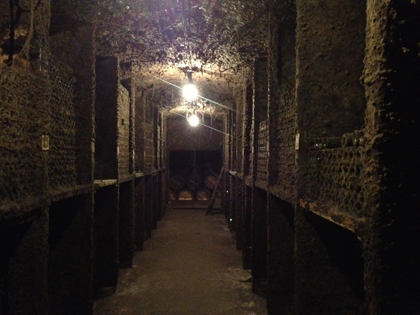
"I was laughing at Boehner -- until the mail came today,"

Waschura said, referring to House Speaker John Boehner, who is leading the Republican charge to defund Obamacare.
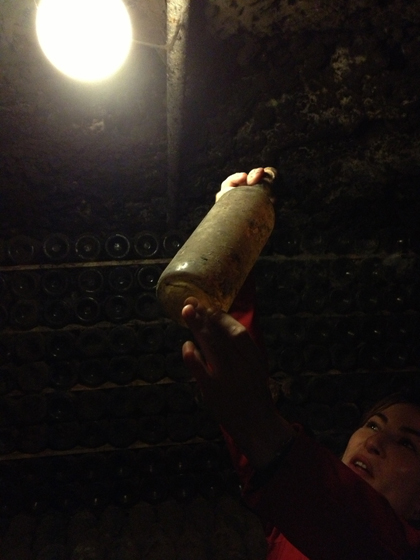
"I really don't like the Republican tactics, but at least now I can understand why they are so pissed about this. When you take $10,000 out of my family's pocket each year, that's otherwise disposable income or retirement savings that will not be going into our local economy."

Read the whole article, my favorite part is this: 

"Of course, I want people to have health care," Vinson said. "I just didn't realize I would be the one who was going to pay for it personally."


08 Oct 02:17

Exclusive–Fraud, Identity Theft, & Forgery: Study Exhaustively Lists Laws Broken by Illegal Immigrants

A new report from the Center for Immigration Studies (CIS), provided exclusively to Breitbart News ahead of its release, seeks to counter the talking point that America’s at least 11 million illegal immigrants are “otherwise law-abiding.”

The 21-page report, titled “The Myth of the ‘Otherwise Law-Abiding’ Illegal Alien,” analyzes which key laws the authors allege illegal immigrants regularly break and other illegal activity they purportedly engage in on a frequent basis. 

“For years advocates of amnesty and high levels of immigration have described the illegal alien population as one made up of ‘otherwise law-abiding’ people who have committed no violation other than the simple act of crossing a border illegally or overstaying a visa,” report author Jon Feere writes in the introduction. 

“Journalists routinely invoke this language when writing about amnesty, conspicuously avoiding any discussion of the various crimes the average working illegal alien commits. Many politicians have also embraced the myth of the otherwise law-abiding illegal alien in an effort to promote amnesty, arguing that illegal aliens are no threat to the United States.”

Specifically, this new CIS report details how illegal aliens regularly engage in violations of laws regarding identities and Social Security numbers. What Feere describes as “examples of oft-violated but under-enforced laws” include the “False Personification of a U.S. Citizen,” a violation of 18 U.S.C. § 911, “Fraud and False Statements,” a violation of 18 U.S.C. § 1001, and “Social Security Fraud,” a violation of 42 U.S.C. § 408.

When describing the how illegal immigrants often illegally falsely personify a U.S. citizen, Feere notes that they frequently “present themselves as U.S. citizens, an act punishable by up to five years in jail, a felony. This law is often cited in immigration prosecutions and may involve, for example, an alien claiming U.S. citizenship to his employer.”

“It is common for illegal aliens to make false statements to the government or on official documents,” Feere added when describing how illegal immigrants often engage in activity that involves fraud and false statements. “An illegal alien violates this law when claiming to be a U.S. citizen on an I-9 Employment Eligibility form and faces a fine and up to five years imprisonment.”

Regarding Social Security fraud, Feere writes that illegal immigrants will often have “provided a false Social Security number for the purpose of acquiring a job, where an illegal alien used a fraudulent Social Security number for the purpose of acquiring a driver’s license, and when an illegal alien used a Social Security card belonging to a citizen in order to obtain Section 8 housing, for example.”

“Violation of this statute can result in a fine and/or imprisonment up to five years,” Feere writes. “The court can also require violators to provide restitution to the victims.”

This new report does not get into crimes that some illegal immigrants commit, like gang activity, murders, and drug-related offenses. It focuses solely on the series of laws they break just by entering the country illegally. The report is divided into four sections detailing all the laws illegal aliens break frequently just entering America illegally.

The first report section deals with how illegal immigrants break laws “involving entry [to the United States], presence [in the country], and travel [throughout].” Violations of U.S. Code frequently committed by such persons include, according to Feere, “improper entry by alien” a violation of 8 U.S.C. § 1325, “registration of aliens,” a violation of 8 U.S.C. § 1302, “high speed flight from immigration checkpoint,” a violation of 18 U.S.C. § 758, “unlawful bringing of aliens into United States,” a violation of 8 U.S.C. § 1323, “overstaying duration of stay,” a violation of 8 U.S.C. § 1227(a)(1)(B) & (C)(i), “reentry of removed aliens,” a violation of 8 U.S.C. § 1326, “willful failure or refusal to depart,” a violation of 8 U.S.C. § 1253, “civil penalties for failure to depart,” relating to 8 U.S.C. § 1324d, “failure to comply with terms of release under supervision,”  a violation of 8 U.S.C. § 1253(b), “bringing in and harboring certain aliens,” a violation of 8 U.S.C. § 1324, aiding or assisting certain aliens to enter,” a violation of 8 U.S.C. § 1327, and “civil penalty for failure to depart under voluntary departure,” relating to 8 U.S.C. § 1229c(d).” This section of the report also details how illegal aliens frequently engage in activity that constitutes violation of state and local laws, like “driving without license,” “driving without insurance,” “driving without a valid vehicle registration,” and giving “false statement[s] to law enforcement.”

The second section of the report details the workplace statutes these individuals violate, as well. According to Feere, they include: “False Personation of a U.S. Citizen,” a violation of 18 U.S.C. § 911, “Fraud and False Statements,” a violation of 18 U.S.C. § 1001, “Falsely claiming citizenship,” a violation of both 8 U.S.C. § 1182(a)(6)(C)(ii) and § 1227(a)(3)(D), “fraud and misuse of visas, permits, and other documents,” a violation of 18 U.S.C. § 1546, “penalties for document fraud,” relating to 8 U.S.C. § 1324c, “penalties for Social Security fraud,” relating to 42 U.S.C. § 408, “aggravated identity theft,” a violation of 18 U.S.C. § 1028A, and “willful failure to file return, supply information, or pay tax,” a violation of 26 U.S.C. § 7203.

The third section of the report details how illegal immigrants frequently break “other document laws,” as well. According to the report, such laws include: “misuse of evidence of citizenship or naturalization,” a violation of 18 U.S.C. § 1423, “procurement of citizenship or naturalization unlawfully,” a violation of 18 U.S.C. § 1425, “reproduction of naturalization or citizenship papers,” a violation of 18 U.S.C. § 1426, “sale of naturalization or citizenship papers,” a violation of 18 U.S.C. § 1427, “naturalization, citizenship, or alien registry,” a violation of 18 U.S.C. § 1015, “fraud and related activity in connection with identification documents, authentication features, and information,” a violation of 18 U.S.C. § 1028, “possession of false papers to defraud the United States,” a violation of 18 U.S.C. § 1002, “false statement in application and use of passport,” a violation of 18 U.S.C. § 1542, “forgery or false use of passport,” a violation of 18 U.S.C. § 1543, and “misuse of passport,” a violation of 18 U.S.C. § 1544.

The fourth section of Feere’s report deals with various other “additional laws” that illegal immigrants frequently break. According to the report, they frequently violation “Selective Service registration” laws, engage in “voting by aliens,” a violation of 18 U.S.C. § 611, and in “violations of state laws” like “identity theft, forgery, and tax laws.”

The report notes that a lot of these laws are not enforced due to President Barack Obama’s “administrative amnesty.”

“According to Immigration and Customs Enforcement (ICE), the agency ‘prioritizes the removal of criminal aliens, those who pose a threat to public safety, and repeat immigration violators,’” Feere wrote. 

Although low-level illegal aliens engaged in basic identity theft do pose a threat to the public, the Obama administration has directed ICE to ignore such criminality and to focus on the "worst of the worst." Often called the White House’s "administrative amnesty," the immigration agenda pursued by the Obama administration is often referred to as a "prioritization" scheme, but it is largely a decision to not deport illegal aliens unless or until a crime of violence has occurred. The policy came into shape through what are known as the "Morton Memos," a series of directives from former ICE director John Morton. The directives resulted in the union for ICE agents taking a vote of "no confidence" against Morton in June 2011.

Morton resigned this year, after Senate Budget Committee ranking member Sen. Jeff Sessions (R-AL) called for his resignation over those very “Morton Memos.”

Finally, if Congress does end up granting amnesty, or legal status, to illegal immigrants, Feere’s report notes those illegal immigrants will likely get a pass on many of these other laws they have broken, too. 

“As written, violation of any of the dozens of laws listed below, such as those involving identity theft, could result in an illegal alien being deported after paying a fine or serving time in jail for the violation,” Feere states.

However, proposed amnesties have been written so as to not render an applicant ineligible even if he has violated certain statutes and committed some misdemeanors. And due to political priorities in the Obama administration, many of the laws listed below are not being enforced anyhow. Taken together, these policy prescriptions make the concept of conducting background checks on illegal aliens applying for amnesty somewhat absurd. Nevertheless, some of these crimes currently being committed by illegal aliens can amount to aggravated felonies and would prevent an alien from having "good moral character," permanently barring them from naturalization under existing immigration law.


31 Aug 16:00

How To Barbecue Ribs: A Guide For The Perplexed

by Albert Burneko

How To Barbecue Ribs: A Guide For The Perplexed

Pork ribs are to Serious Barbecue—which is something distinct from the burgers-and-dogs routine for which your average Suburban Dad-type unfurls his "Kiss The Cook" apron on the odd sunny July weekend—what the four-seam fastball is to pitching.

Read more...


29 Aug 17:24

Are You Creative? Make Designs & Sell Them On 3 Merchandising Websites

by Joel Lee
art-desk

For those of you who are creative — did you know you can profit online by selling your designs? Whether you’re a graphic designer or a master wordsmith, you can plaster your creative manifestations onto T-shirts, mugs, pens, and all sorts of other merchandise. If you’re good enough, people will buy it, especially if you can properly brand yourself. Thousands are doing it today, and so can you. People love to buy merchandise if they can connect with it somehow: if it makes them feel warm and fuzzy inside; if it tickles their funny bone and evokes laughter; if it’s...

Read the full article: Are You Creative? Make Designs & Sell Them On 3 Merchandising Websites

21 Aug 02:09

Mike Rowe, Lagunitas, & An Apology [VIDEO]

by reidramsay


Mike Rowe of Dirty Jobs fame has to clear the air about something. Fascinating story… and great IPA.

13 Aug 18:27

Cinnamon Crisps

by Ree

crispsFirst of all, these crisps are about the most delicious things you’ll ever eat.

Second, these crisps are about the easiest things you’ll ever make.

Third, when I was a little girl, I had a stuffed monkey named Womba. His hands Velcroed together and I think I might have worn him as an accessory for the first half of my fourth grade year. Sometimes he was around my shoulders like a cardigan. Sometimes he was around my waist like a belt. Sometimes he was criss-crossed over my shoulder like a purse. And if I was nervous, I’d stroke his soft, fuzzy head and would feel better instantly.

I always wondered why Brad Benz didn’t like me.

Back to my original point: These crisps are about the most delicious things you’ll ever eat. I made them using homemade tortillas to go with cinnamon ice cream (swoon) in my next cookbook…but I also made them last week for a Food Network episode we filmed here on the ranch, and the guys absolutely inhaled them. So yesterday, for a Sunday snack, I made ‘em again using storebought tortillas and served ‘em with storebought vanilla ice cream. And they were still utterly divine.

You won’t believe the simplicity. And you won’t believe how addictive they are!

 
Cinnamon Crisps | The Pioneer WomanThis is what you need!

And you also need to preheat the oven to 350 degrees.


Cinnamon Crisps | The Pioneer WomanAdd some sugar and ground cinnamon to a bowl.


Cinnamon Crisps | The Pioneer WomanThen grab a fork and use it to violently combine the two…


Cinnamon Crisps | The Pioneer WomanUntil the two are now one!

Did you ever wear a stuffed monkey as an accessory when you were a child? I’m just asking.

(Note: If you’ve ever worn a stuffed monkey as an accessory when you were an adult, I’d rather not know. Thank you.)


Cinnamon Crisps | The Pioneer WomanNext, melt some butter.


Cinnamon Crisps | The Pioneer WomanDip in a pastry brush…


Cinnamon Crisps | The Pioneer WomanAnd very, very generously brush the butter on one side of a flour tortilla.


Cinnamon Crisps | The Pioneer WomanBasically, you want to douse the sucker. Pretty much the only way you can mess up these things is if you don’t get enough butter on them at this stage.


Cinnamon Crisps | The Pioneer WomanThen do the same for a couple of other tortillas.


Cinnamon Crisps | The Pioneer WomanRight away, start sprinkling on the cinnamon sugar. You want it to totally cover the tortilla and mostly be absorbed by the butter. When most of it has been absorbed, sprinkle on a little more!


Cinnamon Crisps | The Pioneer WomanRepeat it with the other two tortillas, then flip them all over to the other side.


Cinnamon Crisps | The Pioneer WomanAnd repeat the process with the butter…


Cinnamon Crisps | The Pioneer WomanAnd the sugar. Next, just pop ‘em in the oven for about 15-17 minutes…

And brace yourself.

Just brace yourself.


Cinnamon Crisps | The Pioneer WomanThis is what they should look like!


Cinnamon Crisps | The Pioneer WomanThey’re crunchy. They’re crispy. They’re magical.

But you have to put them aside and let them cool completely.

Note: This will be extremely difficult.

So while we wait: Have you ever given your summer camp crush a hug goodbye when you were twelve, then turned around to leave and tripped over a rock and fell, scabbing your knee?

I’m just asking.


Cinnamon Crisps | The Pioneer WomanA minute or so after removing the pan from the oven, use a knife to loosen the crisps from the pan so they won’t stick until the end of eternity.


Cinnamon Crisps | The Pioneer WomanBut really, there’s so much butter in these heavenly objects, they really don’t stick that badly.


Cinnamon Crisps | The Pioneer WomanAfter they’re totally cooled, break them into pieces. They should be totally crisp and hard, and should break apart pretty neatly.


Cinnamon Crisps | The Pioneer WomanYou can’t know. You can’t know the deliciousness until you try them. And at this point, you could break them up into smaller pieces, bag them up, and use them as snacks.


Cinnamon Crisps | The Pioneer WomanBut I have other plans for them.


Cinnamon Crisps | The Pioneer WomanI scream.


Cinnamon Crisps | The Pioneer WomanOne…two…three…


Cinnamon Crisps | The Pioneer WomanTA-DA!


Cinnamon Crisps | The Pioneer WomanWondrous. Just a wondrous, wonderful, fabulous combination.


Cinnamon Crisps | The Pioneer WomanYou can also do smaller dishes of ice cream and have some fun sticking the crisps right in the scoop.


Cinnamon Crisps | The Pioneer WomanAnd use them as spoons!

Goodness gracious, my friends. Make ‘em this week. They’re too good not to. And they’re a complete cinch.

Here’s the handy dandy printable!

Recipe

Cinnamon Crisps

Prep Time:
Cook Time:
Difficulty:
Easy
Servings:
8

Ingredients

  • 1 stick Butter, Melted
  • 3 whole Flour Tortillas (small Size)
  • 1 cup Sugar
  • 1 Tablespoon Ground Cinnamon

Preparation Instructions

Preheat the oven to 350 degrees.

Mix together the sugar and cinnamon.

Brush butter on one side of the flour tortillas. Sprinkle generously with the cinnamon sugar. Flip tortillas to the other side, then sprinkle on the cinnamon sugar.

Bake for 15-17 minutes until very crisp. Remove from oven and allow to cool completely.

Break into pieces and eat as snacks...or serve with ice cream!

Posted by Ree on August 12 2013

13 Aug 18:26

stufftoblowyourmind: Some awesome anatomy art for kids by...


stufftoblowyourmind:

Some awesome anatomy art for kids by Rachel Ignotofsky! /Robert

Everybody thinks. Everybody has heart.

I love these, I bet you will too.

26 Jul 20:41

Woodpile BBQ Brisket: Partially cooked, fully smoked brisket delivered to your doorstep for you to finish in your own kitchen

by Graham Hiemstra
Woodpile BBQ Brisket
Living in a city like NYC it's often easier to eat out than spend the time and energy cooking. And, for some of us, the most gourmet meal we're qualified to cook is a peanut butter and jelly sandwich. For those of you...
Continue Reading...