
KWBaker
Shared posts
09 Jan 02:34

Harman and Neil Young's Pono want to bring pristine audio to your car stereo
by Chris Welch
Neil Young's mission with Pono is about much more than a single music player; the rock legend made as much clear in an interview with GigaOm earlier today. During that chat, Young revealed that Pono plans to certify third-party devices with a Pono stamp of approval whenever they meet the company's stringent standards for audio quality. Certification won't be free, but Young said it's a nominal fee and the Pono seal will tell listeners that they're hearing music in its purest form. "It can say ‘certified Pono’ or it can say ‘branded Pono’. Those are the two things we offer, and neither of them are very expensive," Young said. And it turns out Pono already has its first partner lined up: Harman.
Baker likes this
09 Jan 02:20
100-year-old exercise instructor says secret to longevity is attitude of gratitude...
(Third column, 21st story, link)


100-year-old exercise instructor says secret to longevity is attitude of gratitude...
100-year-old exercise instructor says secret to longevity is attitude of gratitude...
(Third column, 21st story, link)
Baker likes this
08 Jan 13:46
Zoo bars holding groundhog...
(Third column, 14th story, link)
Related stories:


Zoo bars holding groundhog...
Zoo bars holding groundhog...
(Third column, 14th story, link)
Related stories:
Man tries to run down officers in NYC...
Uproar after DeBlasio wife accused of wearing jeans to funeral!
Mayor cracks down on to-go food containers, packing peanuts...
Legal Action Against Officers Possible If NYPD Crime Statistics Continue To Go South...
Uproar after DeBlasio wife accused of wearing jeans to funeral!
Mayor cracks down on to-go food containers, packing peanuts...
Legal Action Against Officers Possible If NYPD Crime Statistics Continue To Go South...
Baker likes this
08 Jan 00:20
STUDY: Sun may determine lifespan at birth...
Baker likes this
07 Jan 00:50
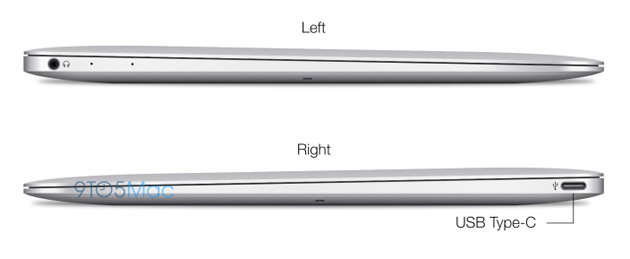 Hey, Dell: you might not be the only one in town with an impossibly small laptop this year. Tipsters for 9to5Mac claim that the long-rumored 12-inch MacBook Air is not only real, but uses a "radically new" body that's much thinner and narrower than t...
The next MacBook Air is reportedly so small it needs a new USB port
by Jon Fingas
Hey, Dell: you might not be the only one in town with an impossibly small laptop this year. Tipsters for 9to5Mac claim that the long-rumored 12-inch MacBook Air is not only real, but uses a "radically new" body that's much thinner and narrower than t...
Baker likes this
07 Jan 00:28
Identify Sun and Shade Areas in the Landscape
by Contributors
 |
|
|
Path and angle of the sun in March, June, and December in the northern hemisphere
|
Sun and shade areas create microclimates in the landscape that may or may not be desirable. Identify existing sun and shade areas on the property map when conducting the landscape inventory. Once these areas are identified, use the landscape analysis to plan locations for new sun or shade areas. In some cases, sun areas will need to be created by removing plants. In other cases areas more shade will be needed.
Identify:
1. Daily sun and shade patterns from existing vegetation and structures
2. Seasonal sun and shade patterns from existing vegetation and structures
3. Sun and shade areas affecting heat, cooling, and light into buildings
4. Sun and shade areas affecting plant choice decisions and locations
5. Mature size when planning for tree placement
How to Chart Solar Angles
07 Jan 00:26
This Month in Southern History: January
by rreed
If there’s one thing we Southerners are good at, it’s telling—and retelling, and retelling—our stories. And because our history runs so deep, we’ve got plenty to share. Starting today, we’ll be compiling a monthly roundup of Southern history highlights—some serious, some silly, some you may fondly remember, and some you might be surprised to learn.
January 6, 1957
Elvis Presley’s final Ed Sullivan Show Performance
Although Elvis was still a young star at the time, his third appearance on the Ed Sullivan Show would be his last. The Mississippi-born star had already riled audiences in two earlier Ed Sullivan Show appearances when he shook his famous pelvis. For the January 6 performance, producers would only shoot the King from the waist up. Although Sullivan described Elvis on-air as “a real decent, fine boy,” Elvis never again played on the popular primetime variety show. But there’s no doubt the performance helped launch him to superstardom. See Elvis perform his final song of the show, “Peace in the Valley.”
January 15, 1978
First Indoor and Prime Time Super Bowl
Though we may be now known more for college football (well, except this year), the South dominated Super Bowl XII. The game was the first Super Bowl played indoors, at the Louisiana Superdome. The Dallas Cowboys (led by innovative coach—and native Texan—Tom Landry) defeated the Denver Broncos 27 to 10. And the nation saw it all—the game was also the first to be played and aired in prime time.

January 20, 1986
First Observance of Martin Luther King, Jr. Day
The civil rights leader was born in Atlanta, Georgia, on January 15, 1929 and traveled the country championing equality until his 1968 assassination in Memphis, Tennessee. Beginning just five days after his death, colleagues and supporters, led by his widow Coretta Scott King, drafted legislation and sponsored signature drives to create a federal holiday honoring the leader, culminating in the largest petition in the nation’s history. Even Stevie Wonder got involved in 1980 when he released “Happy Birthday” as a tribute to Dr. King. The song became a rallying cry for the holiday’s supporters. In November 1983, President Ronald Reagan signed a bill establishing Martin Luther King, Jr. National Holiday beginning in 1986.

Photograph courtesy of Prints and Photographs Division, Library of Congress, © Bob Adelman
January 19, 1977
Southern Snow
Snow fell in the deepest part of the deep south. Florida was dusted and even Miami received its first recorded snowfall. Florida newspapers plastered their front pages with font sizes usually reserved for elections, disasters, or war. Heavier snow fell across the country and the Associated Press reported snow in 49 states—every one except South Carolina.

Left to right: Photographs courtesy of Tampapix and WLRN
January 26, 1939
Gone with the Wind’s First Day of Filming
As director George Cukor began the first day of the beloved film’s principal photography, the large Technicolor camera broke. Once a new camera arrived on location, three takes were needed to get a good shot of Scarlett running across the set created to look like the Tara plantation. The tumultuous first day set the tone for a whirlwind shoot that officially ended on June 27 after exhausting multiple directors and scores of writers, artists, musicians, actors, and extras who worked on the three-year-long production. Take a behind-the-scenes look at hundreds of rare photographs, sketches, scene outtakes, and makeup stills here.

Photograph courtesy Harry Ransom Center
Baker likes this
07 Jan 00:22
The Joe Biden random compliment generator - Washington Post (blog)
The Joe Biden random compliment generator Washington Post (blog) Perhaps you will never be elected to Congress. Or worse, perhaps you will never have the opportunity -- as the newly sworn-in members of the 114th Congress had Tuesday -- to have Vice President Biden stand two feet away from you and offer you a ... and more » |
Baker likes this
06 Jan 16:43


Escape the Idea of Being Perpetually Busy by Tweaking Your Language
by Patrick Allan

It's easy to get caught up in the notion that you're too busy to do anything, but it's most likely due to your mindset. It can be helpful to stop telling yourself that you're so busy , and one way you can do that is by changing what you say.
Baker likes this
06 Jan 16:42


Learn How to Tie 12 Useful Knots with This Visual Guide
by Patrick Allan
If the only knot you know involves tying your shoes, then this infographic provides clear, step-by-step instructions on tying some of the most useful knots out there.
Baker likes this
06 Jan 16:34


How to Deal with Someone Who Constantly Rambles
by Patrick Allan
A good conversation is all about the back-and-forth; both parties listening and responding. If you're with someone who tends to ramble on and on, however, that dialogue turns into a monologue. Here are a few tips for dealing with a Chatty Kathy or Mr. Chatterbox.
Baker likes this
06 Jan 16:30


Turn Your Heat Down, Not Off, to Save On Your Heating Bill
by Eric Ravenscraft

Heating your house can be a pretty massive utility drain. While you might be tempted to save money by turning it off when you're not home, it may be better to simply turn it down instead.
Baker likes this
06 Jan 16:30


The Best Tools for Finding Information When Google Isn't Enough
by Eric Ravenscraft
Google is so entrenched when it comes to finding information on the internet , we named the act after it. However, there are a ton of other tools and tricks that can get you answers to your question when Google doesn't have the answer .
Baker likes this
06 Jan 03:46


The University of California Explains Why We’re Wired To Be Nice People [Stuff to Watch]
by Tim Brookes
Apparently, human beings are hard-wired creatures of kindness – hell-bent on helping each other out even when there’s nothing in it for us. Science said so. The University of California’s recently launched Fig. 1 YouTube channel takes you on a virtual tour of the institution’s areas of expertise, top professors and oh so interesting factoids you simply can’t help but tell your friends all about. We Are Built To Be Kind Despite poverty, disparity in wealth, war and everything else that drags the human race through the mud, scientists still find themselves asking why human beings are so frequently caught being nice. To suggest that...
Read the full article: The University of California Explains Why We’re Wired To Be Nice People [Stuff to Watch]
Baker likes this
06 Jan 03:40


Smart Luggage Could Forever Change The Way We Travel
by Dave LeClair
Smart devices are everywhere! We have all kinds of cool smart home devices that bring “the Internet of things” to us. Some of that same technology is making its way into the world of travel in the form of smart luggage! Not only is smart luggage a major convenience, it can also help keep your important items safe and secure. In fact it just might change travel forever, as this infographic explains. Via Hotels4u Click To Enlarge
Read the full article: Smart Luggage Could Forever Change The Way We Travel
Baker likes this
06 Jan 03:37

Standard of the World: 1926
by Dave
With the help of our commenters, we've identified this plush barouche as a 1926 Cadillac Model 314 Four-Passenger Phaeton.San Francisco circa 1923. "Touring car, top view." Who'll be first to put a name to this swank charabanc? 6½ x 8½ glass negative, Wyland Stanley. View full size.
Baker likes this
06 Jan 03:35
Charlie Rangel Says Dead Soldiers Never Bothered Him (Unless They Were Black)
by Jerome Hudson
The Congressman from New York has let some absolutely disgusting dribble fall from his mouth over the years. And just when you think you’ve heard the worst from Rep. Charles Rangel, he goes out and proves you wrong again.
On Monday night’s edition of a barely-watched cable news program called The ED Show, Rep. Rangel was on a panel discussing the repeated decision by New York Police officers to turn their backs on Mayor Bill de Blasio. For the second time in a week, hundreds of NYPD officers attending a funeral for a murdered officer turned their backs on de Blasio as he delivered the eulogy.
Charlie Rangel, being the unrelenting narcissist that he is, used the officers’ protest to compare his experience in the U.S. Army as a staff sergeant during the Korean War.
“It’s awkward, because no one wants to be in the position that you’re not with your colleagues, right or wrong,” Rangel said. “I was in combat, and I’m telling you, I saw more dead people, but I never was moved until I saw dead people that looked like me in my uniform. And it does make a difference. And so, yes, the blue wall of silence has kept communities and minority communities apart for so long, so that even minority policemen don’t want to break that silence.” (Emphasis added.)
The ease with Rangel allows his racial prejudices to fly off his tongue is sickening. Officers Rafael Ramos’s and Wenjian Liu’s race had nothing to do with their brethren’s decision to turn their backs on de Blasio. To suggest that race is a factor is asinine. And to admit on national TV (granted, MSNBC) that the only dead comrades that moved him emotionally during the Korean War were black soldiers is, well, I guess the type of bigoted talk we’ve come to expect from the Harlem congressman.
Rangel is, thankfully, serving (he claims) his last term in office. And I’ve never been more excited for an election.
The post Charlie Rangel Says Dead Soldiers Never Bothered Him (Unless They Were Black) appeared first on Daily Surge.
Baker likes this
06 Jan 03:34


Obamacare Architects At Harvard Furious After Learning They Are Not Exempt From Obamacare
by Tyler Durden
The brain incubator at Harvard, the place which according to legend, and certainly the US News and World Report's annual paid college infomercial, is the repository for some of the smartest people in the world, is furious.
The reason - Harvard's illustrious faculty has learned that they too will be subject to their own policy recommendations as relates to Obamacare, which they themselves helped conceive. As the left-leaning NYT reported earlier today, "for years, Harvard’s experts on health economics and policy have advised presidents and Congress on how to provide health benefits to the nation at a reasonable cost. But those remedies will now be applied to the Harvard faculty, and the professors are in an uproar."
Because Harvard's brilliant ivory tower economists and public policy wonks know precisely how to fix the world... as long as said fix never applies to them.
And sure enough, the faculty did everything in its power to make sure it never had to suffer the consequences of its own brilliance...
"Members of the Faculty of Arts and Sciences, the heart of the 378-year-old university, voted overwhelmingly in November to oppose changes that would require them and thousands of other Harvard employees to pay more for health care. The university says the increases are in part a result of the Obama administration’s Affordable Care Act, which many Harvard professors championed."
... But it was too late:
The faculty vote came too late to stop the cost increases from taking effect this month, and the anger on campus remains focused on questions that are agitating many workplaces: How should the burden of health costs be shared by employers and employees? If employees have to bear more of the cost, will they skimp on medically necessary care, curtail the use of less valuable services, or both?
And it just gets better:
“Harvard is a microcosm of what’s happening in health care in the country,” said David M. Cutler, a health economist at the university who was an adviser to President Obama’s 2008 campaign. But only up to a point: Professors at Harvard have until now generally avoided the higher expenses that other employers have been passing on to employees. That makes the outrage among the faculty remarkable, Mr. Cutler said, because “Harvard was and remains a very generous employer.”
Ah, hypocrisy: exactly the same whether it is at the lowliest of community colleges or the leading bastion of liberal thought.
In Harvard’s health care enrollment guide for 2015, the university said it “must respond to the national trend of rising health care costs, including some driven by health care reform,” otherwise known as the Affordable Care Act. The guide said that Harvard faced “added costs” because of provisions in the health care law that extend coverage for children up to age 26, offer free preventive services like mammograms and colonoscopies and, starting in 2018, add a tax on high-cost insurance, known as the Cadillac tax.
The faculty is enraged, ENRAGED that what it hoped would only apply to the plebian peasantry is just as applicable to the self-appointed smartest people in the world. Here's Dick:
Richard F. Thomas, a Harvard professor of classics and one of the world’s leading authorities on Virgil, called the changes “deplorable, deeply regressive, a sign of the corporatization of the university.”
And here's Mary:
Mary D. Lewis, a professor who specializes in the history of modern France and has led opposition to the benefit changes, said they were tantamount to a pay cut. “Moreover,” she said, “this pay cut will be timed to come at precisely the moment when you are sick, stressed or facing the challenges of being a new parent.”
Why the anger? Because Harvard thought that it would be, drumroll, exempt from the Affordable Care Act which it was instrumental in conceiving :
The university is adopting standard features of most employer-sponsored health plans: Employees will now pay deductibles and a share of the costs, known as coinsurance, for hospitalization, surgery and certain advanced diagnostic tests. The plan has an annual deductible of $250 per individual and $750 for a family. For a doctor’s office visit, the charge is $20. For most other services, patients will pay 10 percent of the cost until they reach the out-of-pocket limit of $1,500 for an individual and $4,500 for a family.
Continue reading the main story
Previously, Harvard employees paid a portion of insurance premiums and had low out-of-pocket costs when they received care.
Kinda like how America worked before the tax that is Obamacare was forcefully shoved down everyone's throat thanks to Harvard brilliant geniuses no less who decided it was time to treat the free market like their own socialist lab experiment. But hey, at least it helped "boost" Q1 Q3 GDP by 1%.
It has gotten so bad that Harvard, realizing it is not exempt for socialist utopia, is suffering from "distress" and "anxiety."
The president of Harvard, Drew Gilpin Faust, acknowledged in a letter to the faculty that the changes in health benefits — though based on recommendations from some of the university’s own health policy experts — were “causing distress” and had “generated anxiety” on campus. But she said the changes were necessary because Harvard’s health benefit costs were growing faster than operating revenues or staff salaries and were threatening the budget for other priorities like teaching, research and student aid.
In response, Harvard professors, including mathematicians and microeconomists, have dissected the university’s data and question whether its health costs have been growing as fast as the university says. Some created spreadsheets and contended that the university’s arguments about the growth of employee health costs were misleading. In recent years, national health spending has been growing at an exceptionally slow rate.
We also learn that the only reason why it was called "Affordable Care" is because, apparently, it was unaffordable.
some ideas that looked good to academia in theory are now causing consternation. In 2009, while Congress was considering the health care legislation, Dr. Alan M. Garber — then a Stanford professor and now the provost of Harvard — led a group of economists who sent an open letter to Mr. Obama endorsing cost-control features of the bill. They praised the Cadillac tax as a way to rein in health costs and premiums.
Dr. Garber, a physician and health economist, has been at the center of the current Harvard debate. He approved the changes in benefits, which were recommended by a committee that included university administrators and experts on health policy.
In an interview, Dr. Garber acknowledged that Harvard employees would face greater cost-sharing, but he defended the changes. “Cost-sharing, if done appropriately, can slow the growth of health spending,” he said. “We need to be prepared for the very real possibility that health expenditure growth will take off again.”
But Jerry R. Green, a professor of economics and a former provost who has been on the Harvard faculty for more than four decades, said the new out-of-pocket costs could lead people to defer medical care or diagnostic tests, causing more serious illnesses and costly complications in the future.
“It’s equivalent to taxing the sick,” Professor Green said. “I don’t think there’s any government in the world that would tax the sick.”
But in her view, there are drawbacks to the Harvard plan and others like it that require consumers to pay a share of health care costs at the time of service. “Consumer cost-sharing is a blunt instrument,” Professor Rosenthal said. “It will save money, but we have strong evidence that when faced with high out-of-pocket costs, consumers make choices that do not appear to be in their best interests in terms of health.”

If you aren't crying with laughter yet, you will now once the sheer idiocy of central planning, even when conceived by the world's smartest people, is unveiled:
Harvard’s new plan is far more generous than plans sold on public insurance exchanges under the Affordable Care Act. Harvard says its plan pays 91 percent of the cost of care for a typical consumer, while the most popular plans on the exchanges, known as silver plans, pay 70 percent, on average.
In many states, consumers have complained about health plans that limit their choice of doctors and hospitals. Some Harvard employees have said they will gladly accept a narrower network of health care providers if it lowers their costs. But Harvard’s ability to create such networks is complicated by the fact that some of Boston’s best-known, most expensive hospitals are affiliated with Harvard Medical School. To create a network of high-value providers, Harvard would probably need to exclude some of its own teaching hospitals, or discourage their use.
“Harvard employees want access to everything,” said Dr. Barbara J. McNeil, the head of the health care policy department at Harvard Medical School and a member of the benefits committee. “They don’t want to be restricted in what institutions they can get care from.”
In other words, compared to the rest of the socialist experiment they helped conceive, Harvard has it much, much better. "Although out-of-pocket costs over all for a typical Harvard employee are to increase in 2015, administrators said premiums would decline slightly. They noted that the university, which has an endowment valued at more than $36 billion, had an unusual program to provide protection against high out-of-pocket costs for employees earning $95,000 a year or less. Still, professors said the protections did not offset the new financial burdens that would fall on junior faculty and lower-paid staff members."
But the punchline comes from none other than a sociologist:
“It seems that Harvard is trying to save money by shifting costs to sick people,” said Mary C. Waters, a professor of sociology. “I don’t understand why a university with Harvard’s incredible resources would do this. What is the crisis?”
Indeed: how dare a university with such "incredible resources" be forced to comply with the policy it itself helped create?
Of course, none of the above is the issue at hand: what is really pissing Harvard off, is that as its perennial next door competitor MIT, as expressed by one professor Jonathan Gruber, made it quite clear that only a nation as stupid as America would allow such as an opaque law as Obamacare to be passed. And, by implication, Harvard being subject to this law, makes its faculty about as stupid as the average American voter. And there is nothing more crushing, "distressing" and "anxiety-provoking" for a bunch of wealthy, ivory tower dwellers than seeing their own egos go down in flames.
Or, said otherwise: MIT 1 - Harvard 0.
Baker likes this
06 Jan 03:28
State: Yeah, we don’t know if Cuba has released the 53 prisoners we required they release
by Mary Katharine Ham

Good faith.
Behold, the superior negotiating powers of President Barack Obama: State Department Spokesperson Jen Psaki repeatedly refused to answer questions this afternoon about the 53 political detainees Cuba promised to release as part of a deal with President Obama to normalize relations with the United States. When asked about a lack of transparency in the prisoner […]
Baker likes this
06 Jan 03:28
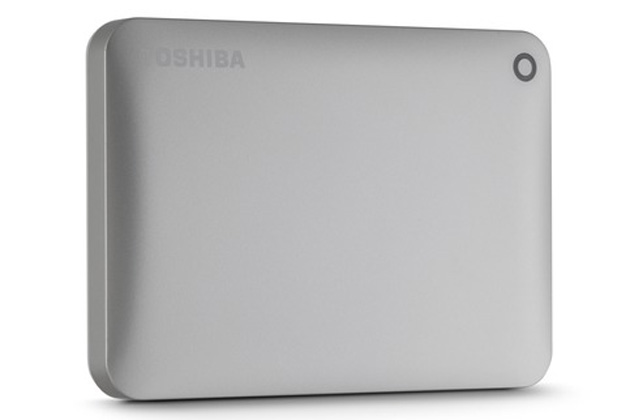 Portable hard drives don't hold nearly as much data as their desk-bound counterparts, but Toshiba is closing that gap in a big way. Both its simple Canvio Basics drives and sharing-friendly Canvio Connect II models (shown above) are some of the first...
Toshiba stuffs 3TB into its latest portable hard drives
by Jon Fingas
Portable hard drives don't hold nearly as much data as their desk-bound counterparts, but Toshiba is closing that gap in a big way. Both its simple Canvio Basics drives and sharing-friendly Canvio Connect II models (shown above) are some of the first...
Cooper Griggs, Baker likes this

06 Jan 03:01
Man spent $75 on a truck that lasted 38 years
by Jonathon Ramsey
Filed under: Videos, Chevrolet, Truck, Classics
Bob Sportel needed a cheap ride to get to work when he took a job at a farmer's co-op 38 years ago, so he bought a rusty 1957 Chevy pickup for $75 from a farmer. He's still driving it every day, 38 years later.Continue reading Man spent $75 on a truck that lasted 38 years
Man spent $75 on a truck that lasted 38 years originally appeared on Autoblog on Mon, 05 Jan 2015 17:00:00 EST. Please see our terms for use of feeds.
Permalink | Email this | Comments
Baker likes this
06 Jan 03:00
 The Coca-Cola Co. is seeking to trademark two Twitter hashtags, something it has apparently never done before.
The soft drink giant (NYSE: KO) on Dec. 15 applied to trademark #cokecanpics and #smilewithacoke.
A hashtag is a symbol used on the Twitter short messaging service to help users find messages about specific topics. The symbol # is placed in front of a keyword or phrase.
A Coca-Cola spokesman said in an e-mail that the company doesn't typically comment on trademarks.
Other companies have…
The Coca-Cola Co. is seeking to trademark two Twitter hashtags, something it has apparently never done before.
The soft drink giant (NYSE: KO) on Dec. 15 applied to trademark #cokecanpics and #smilewithacoke.
A hashtag is a symbol used on the Twitter short messaging service to help users find messages about specific topics. The symbol # is placed in front of a keyword or phrase.
A Coca-Cola spokesman said in an e-mail that the company doesn't typically comment on trademarks.
Other companies have…


Coca-Cola seeks to trademark two Twitter hashtags
by David Allison
The Coca-Cola Co. is seeking to trademark two Twitter hashtags, something it has apparently never done before.
The soft drink giant (NYSE: KO) on Dec. 15 applied to trademark #cokecanpics and #smilewithacoke.
A hashtag is a symbol used on the Twitter short messaging service to help users find messages about specific topics. The symbol # is placed in front of a keyword or phrase.
A Coca-Cola spokesman said in an e-mail that the company doesn't typically comment on trademarks.
Other companies have…
Baker likes this
06 Jan 03:00
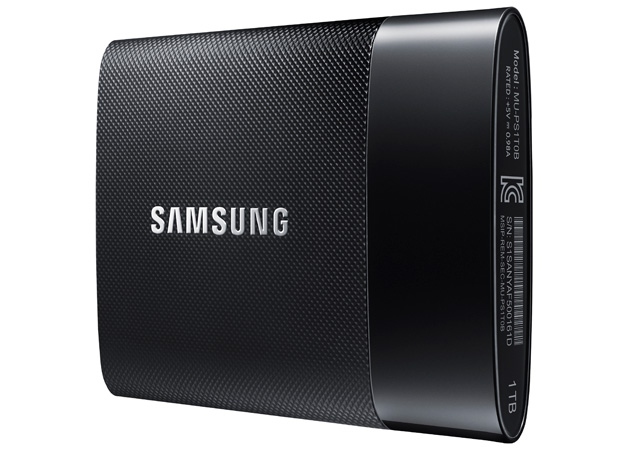 You don't exactly have a ton of options when it comes to portable solid-state drives. You can get fast performance or high capacity at a halfway affordable price, but rarely both. Samsung thinks it can strike that tricky balance with its first-ever e...
Samsung's first portable SSD packs fast storage for relatively little cash
by Jon Fingas
You don't exactly have a ton of options when it comes to portable solid-state drives. You can get fast performance or high capacity at a halfway affordable price, but rarely both. Samsung thinks it can strike that tricky balance with its first-ever e...
06 Jan 02:58

Bow "Forgiveness" is B.S. (Mostly)
by Dave Hurteau

Doing research for a new bowhunting book Bestul and I are writing, I have been peering more deeply than ever into the murky topic of bow forgiveness—and have found that the deeper you look, the murkier it gets.
One bit of advice I think I can pass along with confidence is that whenever you read the words "forgiving" or "forgiveness" in ad or catalog copy, you should replace them with "schmegeggy" and "clatfart." It makes the reading way more fun and doesn't alter the meaning in the least.
The concept of bow forgiveness is a marketing department's dream. It has the benefit of being both unequivocally good—Who doesn't want forgiveness?—and impossible to quantify. And so the term has been flogged senseless. Company X's latest model is not only extremely forgiving but even more extremely forgiving than all their other extremely forgiving models. Total B.S.
And yet, bow forgiveness does seem to exist in the real world. Having shot scores and scores of different bows, I can tell you that some models really do seem to mitigate your mistakes moreso than others. Where one bow will put you only a few inches out of the bull if you punch the trigger, another will put you in the weeds, searching for your arrow.
Also, when we test bows using a panel of shooters—each with slightly different shooting form and each making slightly different mistakes—certain bows do shoot better, and they do so with obvious consistency among the shooters. In other words, some bows are more forgiving of a variety of shooter screw-ups.
But here's the problem: There is very little obvious consistency in terms of which specific bow characteristics produce those results. About the only general rule I'd stand by is that heavier bows tend to do a little better than very light ones. But I've seen exceptions to this. As for the rest of the conventional wisdom about what affects forgiveness—brace height, speed, different cam system, cable guards, etc.—none of it has been borne out clearly in our tests or in my experience. I can't tell you how many bows I've shot—several in the low- to mid-price range—that "shouldn't" have been forgiving but nonetheless shot really well even when I wasn't at my best.
In the end, if you want a forgiving bow, you need to ignore pretty much everything you read—with a few exceptions of course—and just go shoot lots of bows. Find a shop with a good range, a bunch of bows already set up, and a pro with the patience to tweak the specs for you. Then shoot until you find your perfect match.
Baker likes this
06 Jan 02:56
Chipmaker Qualcomm Is Increasingly Finding Itself In Cars, Healthcare And Lightbulbs
by Aaron Tilley, Forbes Staff
At CES today, San Diego chipmaker Qualcomm was keen to emphasize how many other places you'll start to see Qualcomm chips and software outside of smartphones. Qualcomm has found itself as the dominant player as the chipmaker for the smartphone world. But some commentators out there think the market has matured, at [...]
Baker likes this
06 Jan 02:56


The Financial Moves You Should Make in January
by LearnVest

The countdown is over, the champagne glasses are empty—and holiday sweaters are selling at huge discounts. It's 2015! And you know what that means? It's time to start working on all those lofty resolutions you made.
Baker likes this
05 Jan 18:39

Gogo in-flight Wi-Fi is spoofing its own customers
by Russell Brandom
Connecting to the web on a flight this Friday, Google engineer Adrienne Porter Felt noticed something weird. When she logged in, there was a red X over the padlock by the URL bar, a sign that something was fishy. She was looking at the Google search page, supposedly protected by HTTPS, but the site wasn't what it seemed.
A successful HTTPS connection to google.com usually means you can be sure all the data had come from Google and no one had messed with it in transit. There's even a signed certificate to prove it — but that red X meant the certificate didn't check out, and when she looked closer, Felt realized why. The certificate wasn't signed by Google. It was signed by Gogo, the inflight Wi-Fi provider, which was pretending to be...
Baker likes this