
They said it would never happen, but it's here: Soon, you'll be able to subscribe to a streaming version of ESPN (along with a few other channels) for $20 a month, no cable subscription required.

They said it would never happen, but it's here: Soon, you'll be able to subscribe to a streaming version of ESPN (along with a few other channels) for $20 a month, no cable subscription required.

Walter Block is one of my favorite people in the liberty movement. He’s clear, uncomprimising, and good natured. He’s also a brilliant economic mind.

“Hey taxpayer…I’m Boeing. Subsidize my loan or else!”
Another excellent article from Tim Carney. If you really want to understand the politics of the Export-Import Bank you need to read it.
Not renewing Ex-Im is a good start. But just a start. (And we’re not even there yet.) The bank is just the first of the crony programs which need to be unwound in the months and years ahead.

The War on Drugs is now 100 years old. It’s caused unfathomable heartache. It’s fattened the wallets of police departments and drug dealers alike. We have prisons full of people there because of drugs. Lives have been torn apart. Families have been torn apart. Countries have been torn apart.
The War on Drugs has made a mockery of the Constitution. Do you think the founders ever envisioned the police digging through the possessions of American citizens in a search for intoxicants? I don’t think so. I think the founders (at least most of them) would have been horrified.
And yet Americans have long been conditioned to accept the gross invasions of privacy which come with the drug war.

Christopher Nolan has taken audiences through the outer reaches of space and into black holes using cutting-edge visual effects.


We use speakers all of the time. In fact, I’d guess that the device on which you are reading this article has a speaker on it somewhere. Do you know how a speaker works? I’ll admit, I had no idea before I found this awesome animated infographic. Sure, I knew that there was a cone and a bunch of other components that allows them to push the sound towards my ears, but other than that, it was complicated nonsense. Now, I understand, and if you read through this beautiful animated infographic, you will too! Via Animagraffs Click To Enlarge Each...
Read the full article: An Animated Look At How A Speaker Makes Sound
Some things have their place way, way back in history, in the time when we were all still coming to grips with our places in the world and the finer points of human rights were still in their infancy. Slavery, state-sanctioned bigotry, and rote execution by any means necessary should have stopped a long time […]
The post 10 Outdated Practices That Lasted Longer Than You Thought appeared first on Listverse.
We quote experts and live by their advice, whether it’s the latest medical news, financial advice, or scientific discovery. Just by our actions, we show that we think they’re smarter than us. But a lot of times, we put more faith in these experts than they deserve. 10Forensic Experts Are Misled By False Evidence Especially […]
The post 10 Dirty Little Secrets About The Experts We Trust appeared first on Listverse.
This SlideShowPro photo gallery requires the Flash Player plugin and a web browser with JavaScript enabled.
Michael Loyd Young
Beer, Bait & Ammo
A SOUTHERNER…by definition is an American who lives in the south…It’s more than that…from Texas to the Carolina’s the south is a way of life. Considered Rednecks, Bubbas and Good Old Boys they live by an unwritten code.
If you kill it you grill it, if you catch it you fry it, if you meet someone in a bar you buy them a beer. An outsider is not a stranger, he’s your neighbor.
Music still comes out of jukeboxes in the Ice houses and honky tonks. Bait shops that sell everything from beer to pickled eggs dot the landscape from one end to the other. Motor Courts and RV Parks welcome travelers who venture away from the franchised interstates. Two lane black top roads stretch across the south connecting the small towns main streets where Family owned diners serve home cooked meal with a smile.
American flags are proudly displayed on store fronts and school yards. Freedom has a special meaning and change doesn’t come easy. Most are desperately holding on to their past..this is the South…my backyard.
-Michael Loyd Young-
Commentary by Diego Orlando Photo Editor BurnMagazine
“A Southerner in the South taking pictures of the South. This how I see Mike’s book and this is has been my first impression when I had the chance to see the journey at its earlier stage. Mike’s five year journey took him from the tip of Texas to the Florida Everglades. For me – as European – has been a surprise. Stereotypes are among the most used key to pretend to understand the reality we do not know – and I was not an exception. So being dragged with pictures into a lifestyle so faraway from my own world, made me curious. And I started to look beside the images.. what emerges is a culture explored with no judgment, without overwriting it, without filters. Way more than a diary of a journey. No, a real exploration done by one of the subjects photographed there.. That’s why this book is so authentic: Mike is the photographer, but he could be one of the subjects, it could be one of the fishermen or one of the hunters on the frames easy to find in many of the bars there. Tones and lights, composition and places.. everything contributes to picture the South in a way I have never seen before.” Diego Orlando – BB&A Curator
see the interview between David Alan Harvey & Michael Loyd Young about BB&A

Bio
Michael Loyd Young is a photographer based in Texas, travelling from there all around the world. His main work focuses on exploring the Southern part of the U.S. through the daily life of people.
BLUES, BOOZE & BBQ, published by Powerhouse Books. B,B, & BBQ won the Mississippi Institute of Arts and Letters Award for photography.
CHANGES IN LATITUDE, published by Burn Books, was released in June 2012.
BEER, BAIT & AMMO release date March 2014 published by Burn Books. BB&A documents the southern half of the United States, or the “South”. A world of its own where change comes slow and the right to live the way you choose is a way of life.
Recent exhibits include Photo Week Washington, DC — Houston Photo Fest — Powerhouse Arena, Brooklyn –Delta Blues Museum, Clarksdale — Rouen, France — Lille, France — Vannes Jazz Festival, France — Rennes, France — Sydney, Australia
Michael lives in Texas.
Related links


Beliefs that my generation held as sacred are now null and void. If Capt. John Paul Jones were asked to surrender today, he would not answer “I have not yet begun to fight” but “Let’s work this out. Violence is never the answer, and all these dead bodies in the ocean are an environmental hazard.”
Also, we can’t seem to shoot offhand anymore. We no longer walk; we sit. And thanks to the current long-range craze, the idea of sneaking to get a closer shot at something is as alien as going afield without four electronic devices that you consult every two and a half minutes.
Stand and Deliver
Shooting from your hind legs like a man (or a woman, or whatever makes your heart happy) is by far the most difficult of all the positions. It requires exponentially more practice than any other simply to be competent, never mind good. And it is still absolutely necessary to master, unless you enjoy papering the walls of your home with unpunched licenses.
Offhand, Easily, Sort Of
The secret to shooting offhand is to accept that no one can hold a rifle steady while perched on his hind legs. No one. So don’t try to eliminate muzzle movement; instead, control it. Develop the finesse to make the end of the barrel move in a circle and to make that circle smaller and smaller as you aim. Then, the instant the crosshairs are on any part of the bull’s-eye, pull the trigger. Crude as this approach may seem, a great many of your shots will land in the center of the bull anyway.
The other thing you must do is shoot fast—because bucks won’t stand around waiting for you. An aimed offhand shot should take you no more than five seconds, and three is better. The longer you wait, the more likely you’ll screw up.
The Range Regimen
Here’s how to practice shooting offhand: Get a .22 rifle, as close a match to your centerfire as possible. Get as much ammo as you can buy, beg, or extort. Get a package of 100 NRA A-17 paper targets, each of which has 11 black bull’s-eyes about the size of a silver dollar.
Set your scope at 4X and start from 20 feet. Shoot strings of five rounds per bull; a hit anywhere in the black counts. Zero hits through two is pathetic; three is so-so; four is not bad at all; and five is outstanding. Your initial efforts are likely to be so bad that you will go into shock and require hospitalization.
As you improve, move back to 25 yards. Once you are shooting mostly fours and fives, switch to your centerfire rifle, and shoot from 100 yards at an NRA 50-yard pistol target with an 8-inch bull. Shoot no more than 20 rounds per session, and try to get all of them in the black. Very few shooters can do this; if you can get 18 or 19 into the 10-ring, you’ve done very well.
Finally, remember two things: First, practicing offhand is logistically easier, cheaper, and more valuable to real hunters than practicing at long range will ever be. So there’s no excuse not to do it. Second, shooting is a sport of muscle memory, repptitian, and concentration, so shoot lots. And good luck getting the .22 ammo.
 The Obama
Boom is finally here. Gross domestic product grew by a healthy 5
percent in the third quarter, the strongest growth we've seen since
2003. Consumer spending looks as if it's going to be strong in
2015. Unemployment numbers have looked good. Buying power is up.
And the stock market closed at 18,000 for the first time ever. All
good things. So what happened?
The Obama
Boom is finally here. Gross domestic product grew by a healthy 5
percent in the third quarter, the strongest growth we've seen since
2003. Consumer spending looks as if it's going to be strong in
2015. Unemployment numbers have looked good. Buying power is up.
And the stock market closed at 18,000 for the first time ever. All
good things. So what happened?
Those who've been paying attention these past few years may have noticed that the predominant agenda of Washington has been to do nothing, notes David Harsanyi. It was only when the tinkering and superfluous stimulus spending wound down that fortunes began to turn around.
 Government (and the creatures
who infest its rotten carcass) was the
most important problem facing the United States in 2014,
Americans tell Gallup pollsters. That's up from being the second
most serious problem in 2013, and the third-ranker in 2012.
Government (and the creatures
who infest its rotten carcass) was the
most important problem facing the United States in 2014,
Americans tell Gallup pollsters. That's up from being the second
most serious problem in 2013, and the third-ranker in 2012.
Who says the American political system is stuck? This is progress!
The news that Americans are un-fond of government, Congress, the president, and politicians in general comes from an average of monthly survey results throughout the year. Given officialdom's litany of stupid government tricks, the elevation of America's own flavor of Leviathan to public enemy numero uno may seem like nothing more than good common sense to many observers. Perhaps an expression of collective survival instinct. Or, at least, mass revulsion.
True, government just barely edged out general economic concerns and worries over jobs and unemployment for top ranking. But still, it's impressive when the institution whose adherents bill it as the cure for life's ills wins top billing as a major disease itself.

Gallup's findings hardly come out of the blue. Pew finds public trust in the government, at 24 percent, is near historic lows.
A plurality of those surveyed (42 percent) tell Reason-Rupe pollsters that President Obama has expanded the power of the government too much. Majorities among younger Americans say that government is wasteful and government agencies abuse their power.
Americans have felt less free year by year since 2006, and there's a evidence to back up their perceptions of eroding liberty. That includes slippage in rankings of economic freedom and a plummet in the ratings of press freedom.
Distrust of government has become so pervasive that the Census Bureau thinks the only way to get cooperation from the seething masses is with threats. Probably because that always evokes warm and fuzzy feelings.
The good news for politicians, not that they deserve any, is that there's enormous room here for growth, and little downside. Frankly, it would be hard for them to disappoint a public that holds them in such low regard.
Filed under: Green, Plants/Manufacturing, Videos, Porsche, Europe, Germany, Convertible, Hybrid, Luxury, Performance, Supercars
No music track, no dialogue, no voiceover, just ten minutes of a group of women and men in a very clean room in Zuffenhausen assembling the Porsche 918 Spyder.Continue reading Watch a Porsche 918 Spyder being built by hand
Watch a Porsche 918 Spyder being built by hand originally appeared on Autoblog on Fri, 02 Jan 2015 20:02:00 EST. Please see our terms for use of feeds.
Permalink | Email this | Comments

Compact & self-contained, the Mountain Vacuum Food System from Stanley features a 20 oz, BPA-free Stainless Steel hot/cold canister stacked with nested camp cooking and eating essentials. The vacuum insulated jar keeps food hot for 13 hours or cold for 11. Spork included.
For purchase information, Click Here
“Portraits of Time” is a series of photographs showing the oldest and most majestic trees on the face of the Earth. Photographer Beth Moon traveled to the far corners of the world over a period of 14 years in the process of shooting the shots, traveling to remote regions where the trees have largely remained undisturbed by mankind.
Many of the trees have “survived because they are out of reach of civilization,” Moon writes. They were found on mountainsides, private estates, and protected lands. Some of the trees only exist in a very specific area (e.g. baobab‘s on the island of Madagascar).
Moon’s project has taken her to locations in the United States, Europe, Asia, Middle East, and Africa. She selects her trees based on three criteria: age, size, and/or notable history. After identifying a tree that would be suitable for her series, she will travel out to the location to capture a portrait of it.
The images are intended to “celebrate the wonders of nature that have survived throughout the centuries,” Moon states. “I cannot imagine a better way to commemorate the lives of the world’s most dramatic trees, many which are in danger of destruction, than by exhibiting their portraits.”
On her website, Moon writes that she uses platinum printing as a “noble process in the digital age”:
With platinum printing, noted for its beautiful luminosity and wide tonal scale, the absence of a binder layer allows very fine crystals of platinum to be embedded into the paper giving it a 3 dimensional appearance. Unrivaled by any other printing process, platinum, like gold, is a stable metal. A print can last for thousands of years. This process gives tones that range from cool blacks, neutral grays, to rich sepia browns.
Here are some of the photographs in the series (some of the trees are thousands of years old):


Portraits of Time [Beth Moon via Colossal]
Image credits: Photographs by Beth Moon and used with permission
We rounded up some of our favorite stories from this past year and gave them our stamp of approval.
As December comes to a close, read on for the best of 2014.

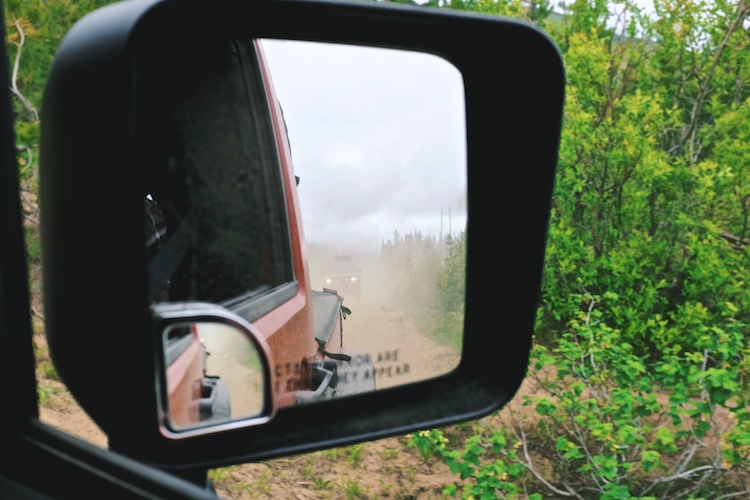
 ead, we’ve got three motos approaching from the rear. Pulling over to let them by.”
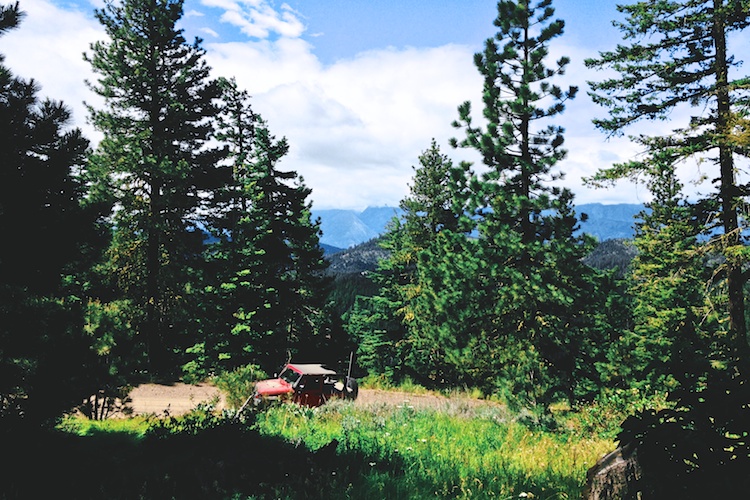
A few moments later, the radio crackles in affirmation and the train of heavily-modified sport utility vehicles snaking its way up a dusty ribbon of gravel in the Wenatchee National Forest grinds to a halt. But to call these vehicles mere “sport utility” platforms would do not only them, but their original intent a great disservice.
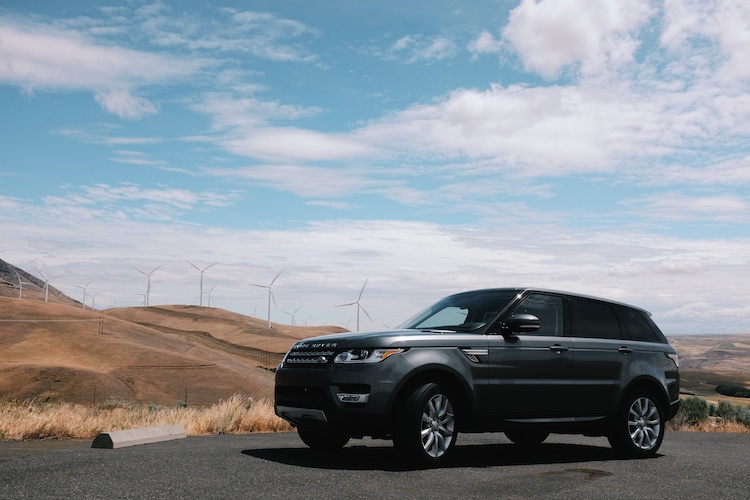
24 hours previous, we were bearing north, gobbling up the tarmac on Highway 97 in a borrowed Range Rover Sport, following the bends of the Okanagan River under a sky beset with sheets of opaline clouds. The destination? The Overland Rally held in Plain, Washington. Overlanding is many things — some specific, most significantly less so, and that's what we were looking to discover.
“The real woodsman is the man who can be really comfortable in the bush.” - Ernest Hemingway
Granted, Hemingway didn’t make himself “comfortable in the bush” with running water, satellite GPS navigation, or a memory foam mattress custom-fitted to a climate-controlled camper bunk, but that’s beside the point. There’s still something very visceral and savory about surrendering to forestry maps to feel the sinewy rhythm of unspoiled earth, churned asunder by 30-inch tires on trail that hasn’t seen vehicles since the Nixon era. And doing so, with everything you need in a custom off-road rig personally assembled for 30 days of complete self-sufficiency. Hemingway might have even tried overlanding, if he knew it was much more than scaling sandstone ledges and ripping donuts on BLM land. That's because pins on the map are more than just destinations, they're part of creating the drive experience inside and out.
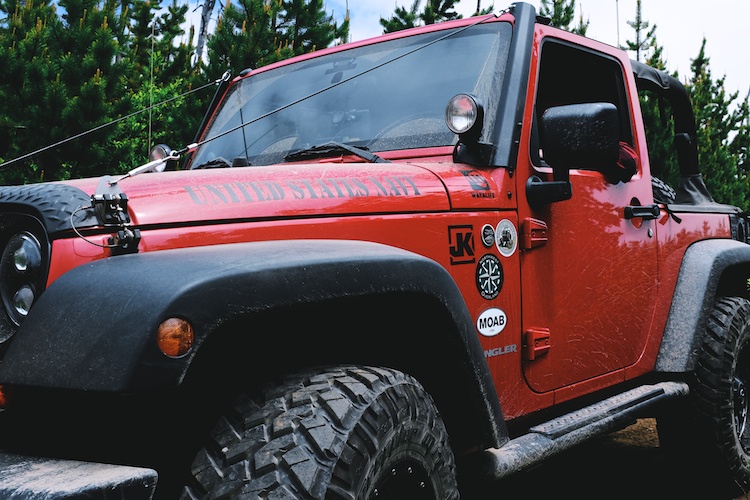
But back in the moment; somewhere between points 'A' and 'B' and crawling up a series of increasingly narrow forest roads twisting up to the tallest point in Wenatchee National Forest: the wooden fire lookout hut at Sugarloaf Peak. In the driver's seat of our heavily modified 2012 Jeep Wrangler JK sat Richard Cronin: a remarkably spry seventy-something Navy veteran who has discovered the fountain of youth in his Jeep and the snow-capped Cascades. "When I bought it, she had these tiny wheels that were completely embarrassing to drive around in,” he laughs.
For Cronin, overlanding is indeed about assembling a super-capable vehicle (a long and expensive process he describes as “never done until you sell it”), but only in part. The greater enjoyment was a pursuit of getting as far off the grid as possible and creating the means to stay there — a thirst that began in his years as a young father, carting the family around in an ’72 Ford Bronco and towing a camper trailer behind.
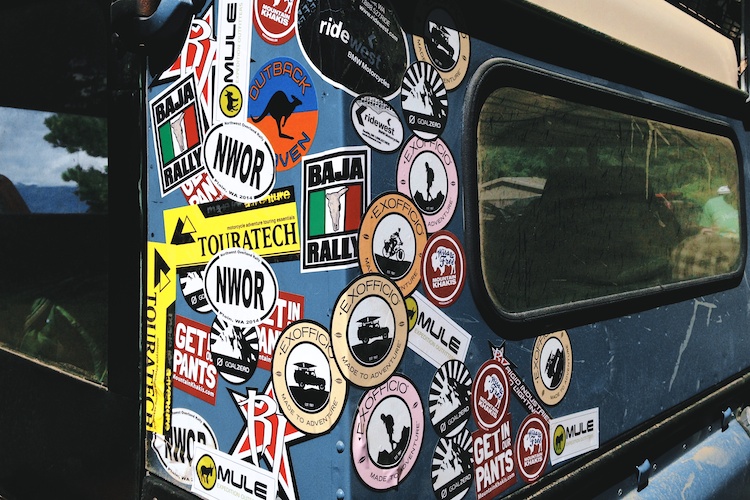
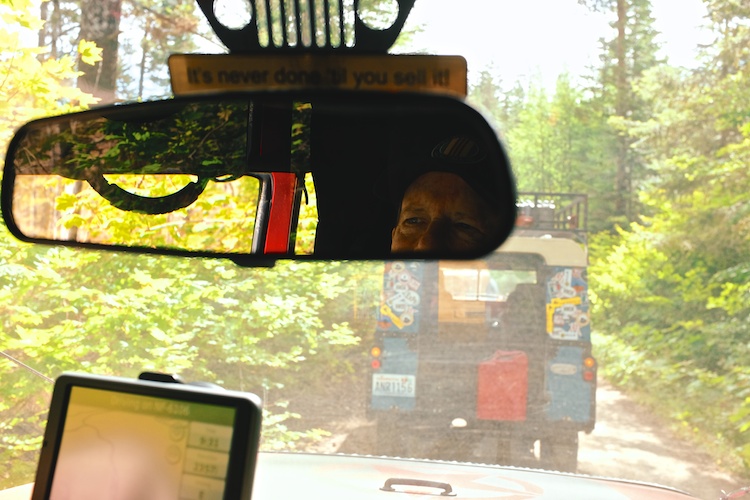
“I think it’s all about getting up into God's country. Getting out and getting as far away as possible... —Oh, and when we get to where we're going,” Cronin interrupts himself, waving his hand up the mountain towards the front of the convoy, "you're gonna shit your pants, it’s so beautiful. That's why I'm saving my camera battery.” Obviously he had no need to preserve his battery, as he reached between the seats and flipped open a mobile battery charging pack. Off the grid with everything we needed.
As we neared the summit, the gravel forest road turned to a steep patch of sand, slowing our travel even further. The Land Rover immediately ahead of us is late reacting to the change of pace; we hear its transmission grind awkwardly, and watch its faded blue body shudder and lurch before stalling. We soon learn its engine is flooded, and the group will either need to wait it out, or tow its disappointed driver to the nearby overlook. Luckily, nearly every other vehicle in the group has a winch and an overlander eagerly prepared to use it.
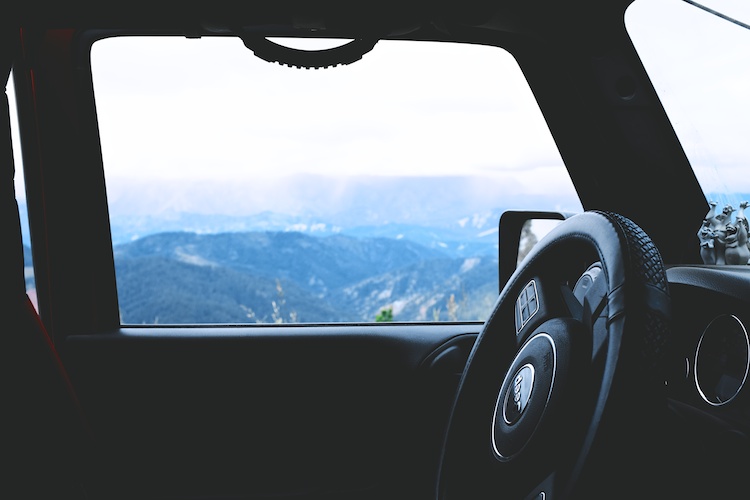
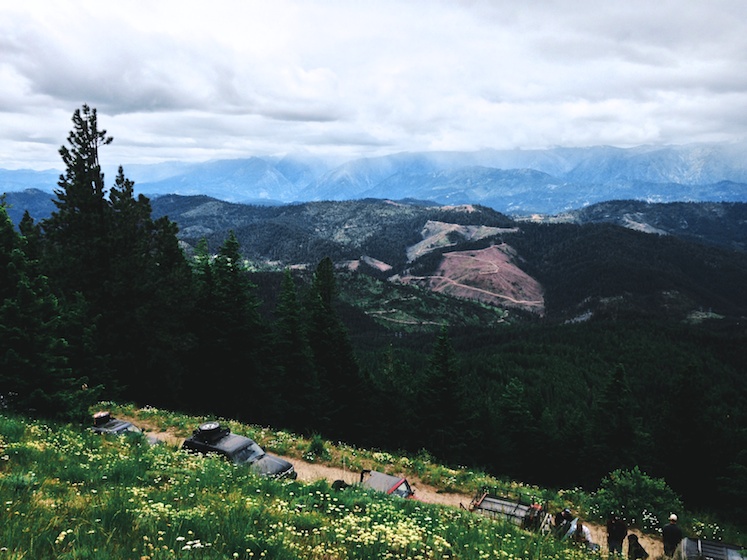
“I beat two cancers and Agent Orange, but when I lost my wife, that’s when I really didn’t know what I was supposed to do,” Cronin quietly reflects as we wait for the convoy to roll. Ahead, the driver of the Land Cruiser is hard at work, insisting that his tinkering beneath the hood will be enough to get the train rumbling again. In the years that followed his wife’s passing, Cronin retired from his job at Boeing and found a new calling with overlanding through his son, who was already an avid outdoorsman and the president of the Northwest Overland — a local organization who provides a valuable resource for vehicle and community building, and who provides volunteers and guides for the weekend’s rally.

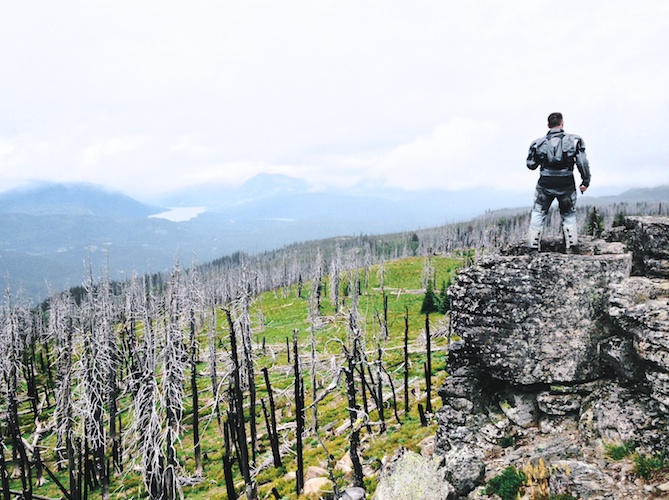
Cronin admits that while driving in the mountains provides adrenaline in small doses, overlanding is not about a pursuit of cheap thrills. Call it an addiction to freedom in its purest form instead — the ultimate outdoor high for tinkerers, explorers, petrol-heads and backcountry junkies alike. And this weekend’s Overland Rally is a collective celebration of this spirit. Granted, the forest roads in the Wanatchee National Forest aren’t quite as off the grid as driving down the Baja Peninsula or trekking the Trans Canadian Trail (both larger-scale achievements reserved for only the most capable of overlanders), it’s just enough to whet the appetite for a weekend adventure in the woods.
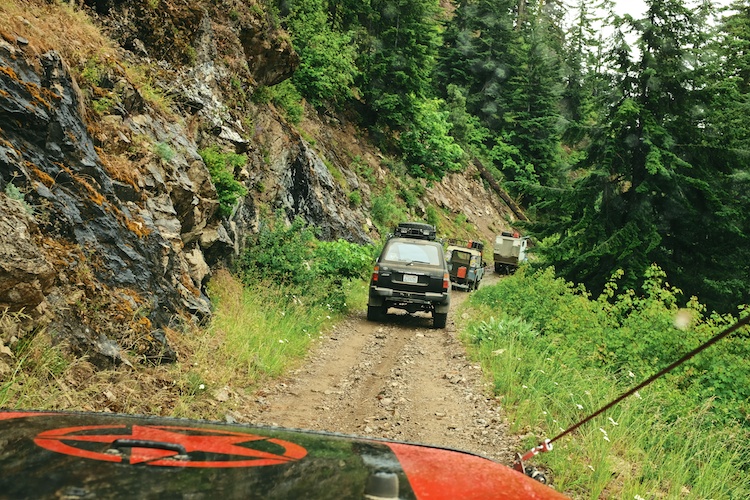
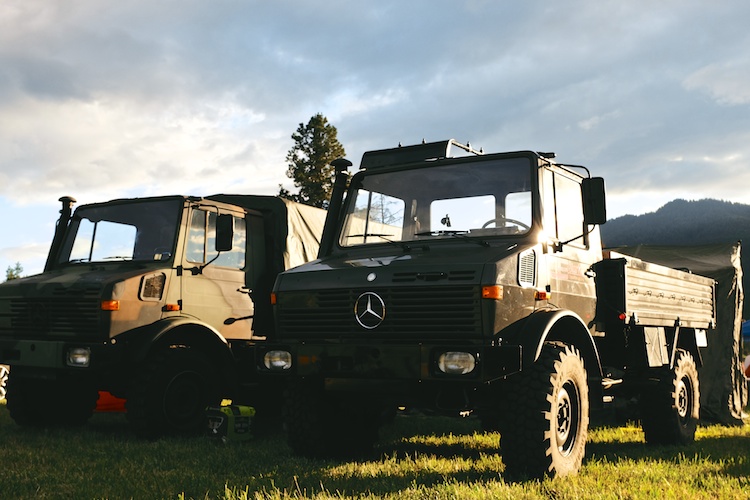
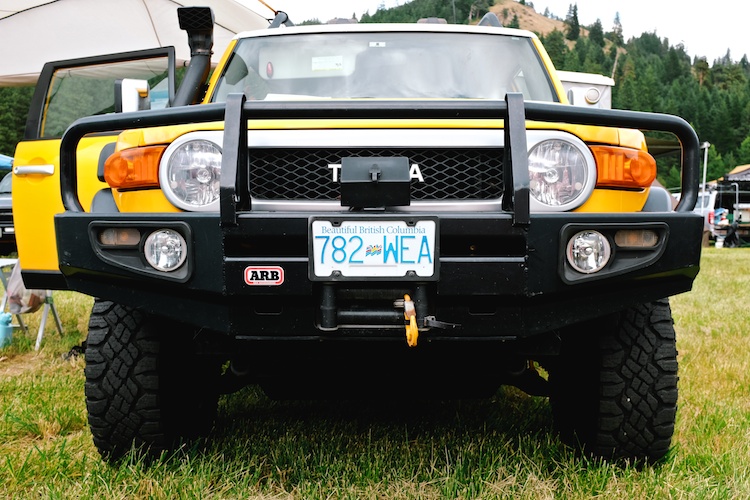
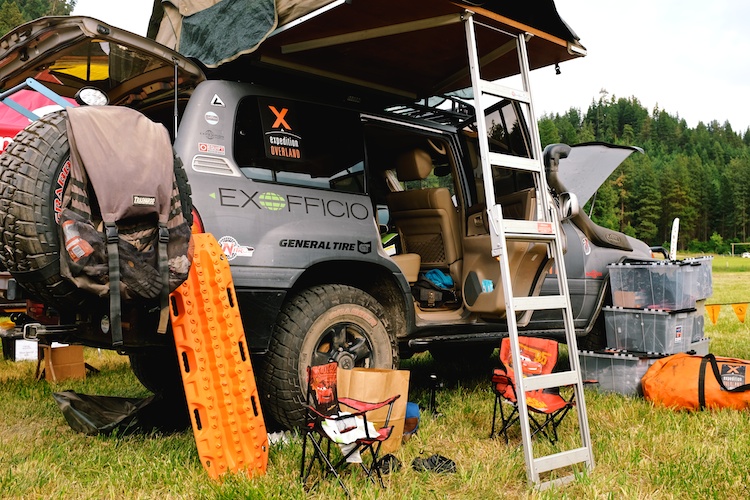
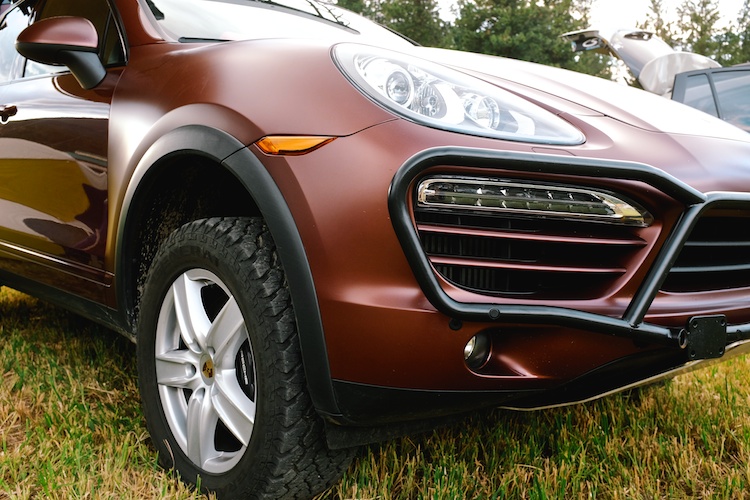
Land Rover repaired, epic views savored [relax, our pants stayed clean - .ed], and kidney-rattling descent endured, we find ourselves back at the Overland Rally base camp. Here, our muddy procession rejoins the field packed with overland vehicles; some perfectly vintage, others ultra-modern — a massively mobile circle of off-road wagons, bedded down for the night. Rows upon rows of Wranglers and Rubicons, Toyota FJ cruisers, Land Rovers, Mercedes G-Wagons, and even a pair of impervious Unimogs. There was even an off-road-ready Porsche Cayenne, clearly a great distance from home on the Autobahn. And across the field, an entire village of neatly organized touring motos and one-man tents.
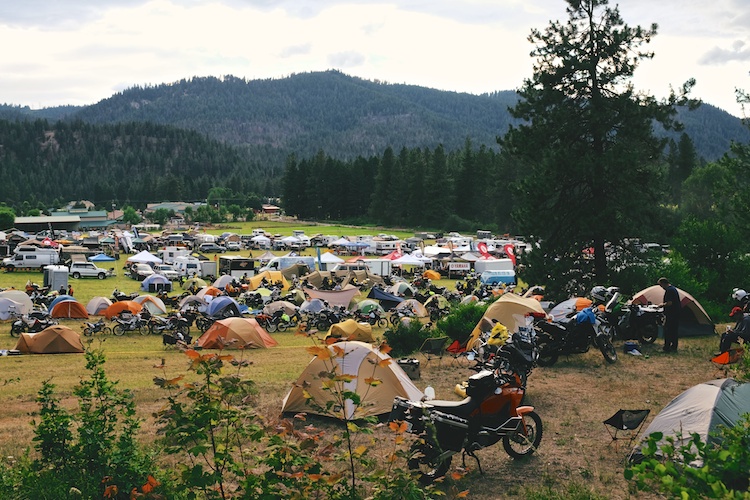
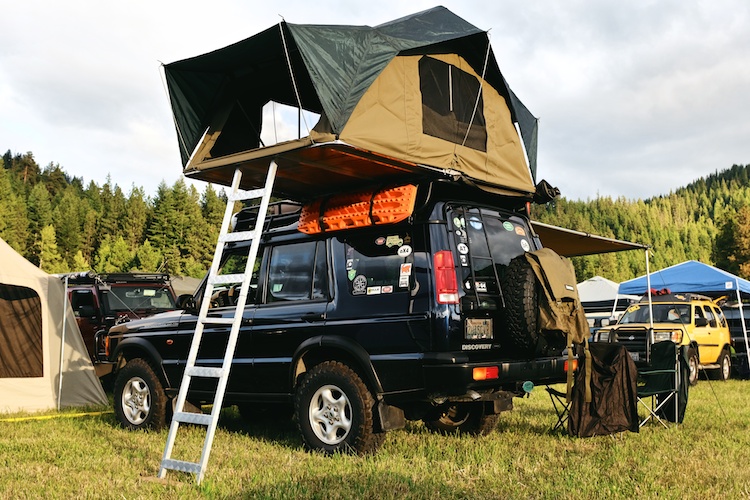
It’s here, at the intersection of such incredible variety of life-meets-vehicle, where the beauty of overlanding becomes clear: it’s a passion shared amongst those who appreciate problem-solving and addressing the singular challenge of self-sustained backcountry travel from completely unique perspectives. Each vehicle is built for capability and comfort, but these are subjective aspects interpreted by each driver to best suit their own needs. Of course points ‘A’ and ‘B’ are a large slice of overlanding, but more importantly is everything between; the lifestyle of self-sufficiency across great distances on a road much-much less traveled.
Oh, and Unimogs. [H]
"Happiness is a way of travel, not a destination." - Roy Goodman

Zach Piña is Huckberry's Managing Editor and resident watch nerd.
In another life, he was a pastry chef on Zissou's Bellefonte.
Follow him on Instagram here.

We rounded up some of our favorite stories from this past year and gave them our stamp of approval.
As December comes to a close, read on for the best of 2014.
 arlos Hathcock was a country boy. Born in 1942, he was raised in the rural outskirts of Little Rock, Arkansas until his parents separated. After that, he moved down to Mississippi to live with his grandmother. At a young age, Hathcock took to hunting game in the woods near her home to help put food on the family table. At night, he would take his father's old service rifle from WWI and sneak out into the forest, pretending to stalk and shoot imaginary enemies.
The day Hathcock turned 17-years-old, he enlisted in the Marine Corps. Three years later, he married his wife Jo Winstead on November 10, 1962 — the date of the Marine Corps birthday. All Hathcock ever dreamed of was going to war. Finally, he got his wish, and in 1966, his unit hit the ground in Vietnam. This time, there was a very real enemy lurking in the jungle.

Before his deployment overseas, Hathcock had won several shooting competitions, including matches at Camp Perry, and the Wimbledon Cup. He began his service as a Military Police officer, until his sharpshooting ability caught the attention of Captain Edward James Land, who was pushing for Marines to add snipers to every platoon. Captain Land recruited Hathcock into sniper training, where he quickly proved himself to be an excellent marksman.
Hathcock had 93 confirmed kills during the Vietnam conflict, but since confirmation had to be established through a third-party officer, and many of the shootings took place on solo missions behind enemy lines, 93 is thought to be much lower than his actual kill count. Hathcock estimated that he killed roughly 300 NVA soldiers during his time in Vietnam.
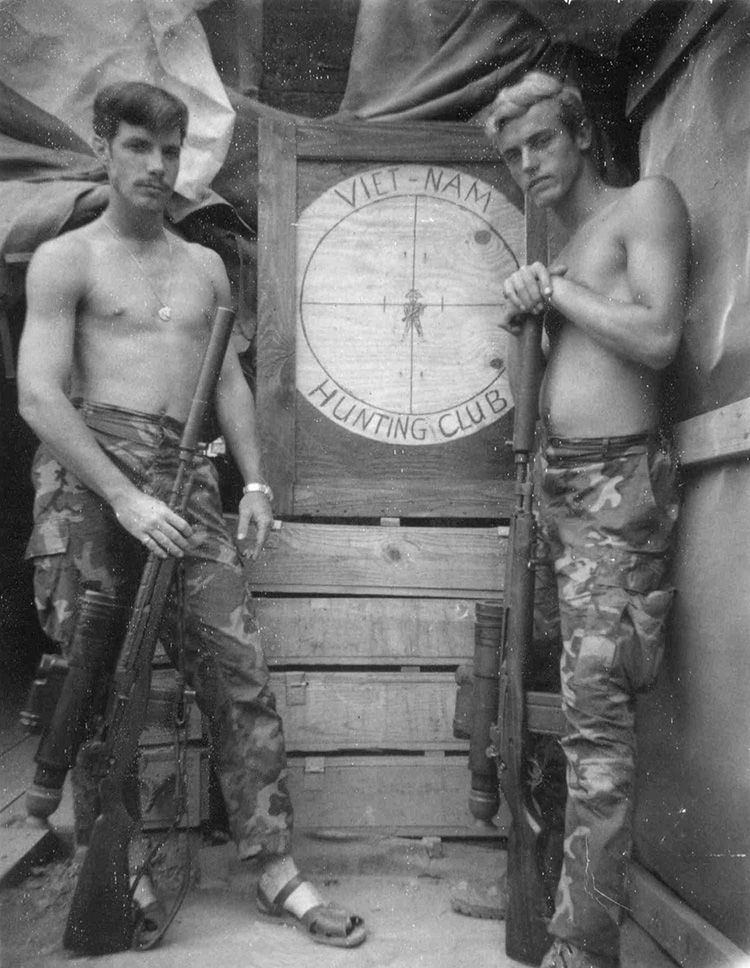
The NVA frequently put bounties on the heads of American snipers operating in the conflict. These generally ranged anywhere from $8 to $2,000. Hathcock was so deadly that the NVA placed a $30,000 bounty on his head. Hathcock held the highest bounty throughout the Vietnam war, and single-handedly killed every NVA marksman who sought to claim it.
The Vietcong took to calling Hathcock "Lông Trắng," which means, "White Feather," because of the long white feather he kept in the band of his bush hat. The white feather became such an iconic symbol, that many Marines took it upon themselves to also wear white feathers, hoping to deceive the enemy and draw counter-sniper fire away from Hathcock.

Hathcock is credited with several accomplishments throughout his service, one of the most notable of which was killing an NVA soldier by shooting a bullet through their rifle scope. Hathcock and his spotter were stalking an enemy sniper deep in the jungle near Hill 55, when Hathcock saw a dim flash of light reflecting off the glass of the enemy's scope. Hathcock lined up his shot, held his breath, and fired.
When they approached the fallen soldier, they realized that the only way the shot could have passed through his scope was if the enemy soldier was lining up a kill shot at precisely the same moment that Hathcock was. Hathcock had managed to pull the trigger just seconds before he would have been killed himself. As incredible a feat as that shot was, the mission that would come to define Hathcock's career, was one that he would undertake completely on his own.

Hathcock only removed the white feather from his hat once during his entire tour, and it was to carry out the most dangerous assignment of his military career. When asked if he would be willing to volunteer for a solo mission targeting a high-ranking NVA general, he accepted before hearing any of the details. Those details, as it would turn out, involved crawling more than 1,500 yards inch-by-inch through heavily guarded enemy jungle, painstakingly timing his incremental movements with wind rustling the grass around his hidden position.
It took Hathcock four days and three nights without sleep or food to reach a suitable shooting position. As it neared sunset, he lay completely motionless and camoflauged as a patrolling footsoldier nearly stepped on top of him as he passed by. At one point a venomous Bamboo Viper slid inches from his face, and he had to struggle to retain the presence of mind not to move and reveal his position. When the target finally exited his tent that night, Hathcock took aim, held his breath, and squeezed the trigger.
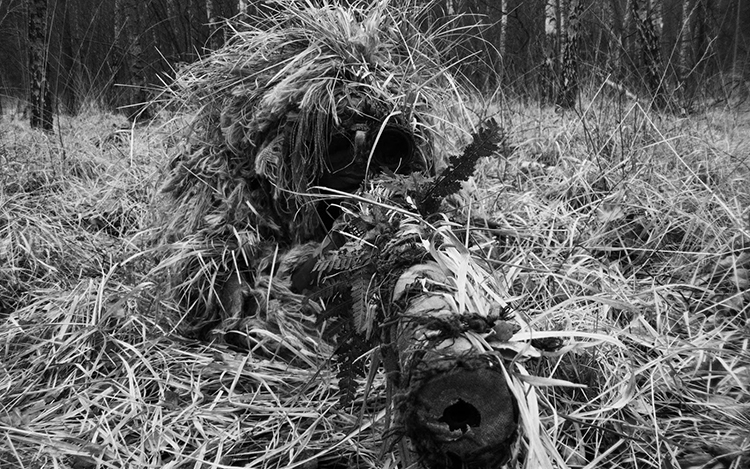
The target now taken out, the mission was still far from over. Hathcock had to crawl back the way he came, through territory now swarming with enemy soldiers on high alert and searching for him. Hathcock made it out unscathed and returned home after the mission was complete. He later regretted taking the shot, as the NVA stepped up attacks on American bases in retaliation for the killing, leading to massive U.S. casualties that he felt partially responsible for provoking. Following his discharge, Hathcock had a difficult time re-adjusting to civilian life, and returned to the Marine Corps in 1969 where he was re-deployed to Vietnam and placed in command of a platoon.
Hathcock's sniper career was cut short when the LVT-5 he was riding on just North of LZ Baldy was struck by an anti-tank mine submerged underwater. Hathcock was knocked unconcious by the blast, but awoke in time to drag seven Marines from the flame-engulfed vehicle. Hathcock received severe burns during the rescue which left him in constant pain, hampering his abilities as a sharpshooter.

Hathcock went on to help establish the Marine Corps Sniper School and served as an instructor there. He often said that his incredible shooting prowess was a result of being able to "get into the bubble" and focus solely on the task at hand, something that kept him alive in overwhelming and dangerous situations.
After the war, a friend showed Hathcock a passage from On the Blue Water, where Hemingway writes,
"Certainly there is no hunting like the hunting of man, and those who have hunted armed men long enough and like it, never really care for anything else thereafter."
Hathcock copied Hemingway's words on a piece of paper, and committed it to memory. "He got that right," Hathcock admitted, "it was the hunt, not the killing. I like shooting, and I love hunting. But I never did enjoy killing anybody. It's my job. If I don't get those bastards, then they're gonna kill a lot of these kids dressed up like Marines. That's the way I look at it." [H]

Images ©: 1. 1st Marine Division, Combat Photographer; 2, 3, 4, 8, 9. National Archives — USMC; 5. S.M. Leighty — USMC; 6. Mike Perry — SOFREP; 7. Walt Sides — USMC.

Thomas McDermott is an Editor at Huckberry.
He likes big mountains, strong coffee, and good conversation.
Follow his latest adventures on Instagram.

We rounded up some of our favorite stories from this past year and gave them our stamp of approval. As December comes to a close, read on for the best of 2014.

 s Thanksgiving approaches, we’re dreaming of getaways — à deux getaways, that is. Yes, we all agree that family is important. We love them unconditionally. But sometimes the idea of spending four days inside with all your closest relatives just sounds… unsavory. A compelling alternative? The Meadow House.
In the Ocooch Mountains of southwest Wisconsin, Norbert and Susan Calnin have lived on 80 acres of former farmland for the past 30 or so years. What began in the 90s as a way to make use of Norbert’s brother’s recently vacanted cabin has since turned into Candlewood Cabins — a set of four carefully built, rustic oases dispersed among the land for optimum privacy. Want to spend a night in the Hillside Cabin, the Log Cabin, the Glass House, or the Meadow House? Well, time to plan in advance. Most of these are booked up more than a year in advance. And the Calnins are more surprised by that fact than anyone.
“I hate to say it,” says Norbert, “but this whole thing is almost like a fluke. We never anticipated the amount of traffic we have. We were just onto something without being aware of it — at least in the Midwest. People in the cities are so into being in their offices, into being online all the time, that they need a break from that part of their lives. What we do here has appealed to them. We happened to be in the right place at the right time.”


'Fluke' isn’t even the right word — we’d call it something more nuanced. Along the lines of 'organic luck,' maybe? Back when the Calnins started advertising the property as a bucolic getaway, the Internet wasn’t even a thing yet; they relied on printed brochures. The first time a guest came to stay, they hand wrote them a letter after their stay as a show of thanks for thinking of Candlewood. As word of mouth spread, there came a time when too many people were trying to make reservations for just the Hillside Cabin; Norbert and Susan has to turn people down. As a solution, they built the Log Cabin; when there were too many for both, they built the Glass House, which they listed on their website in 2009. And it took a couple years for buzz about it to spread, but when it did, business skyrocketed.
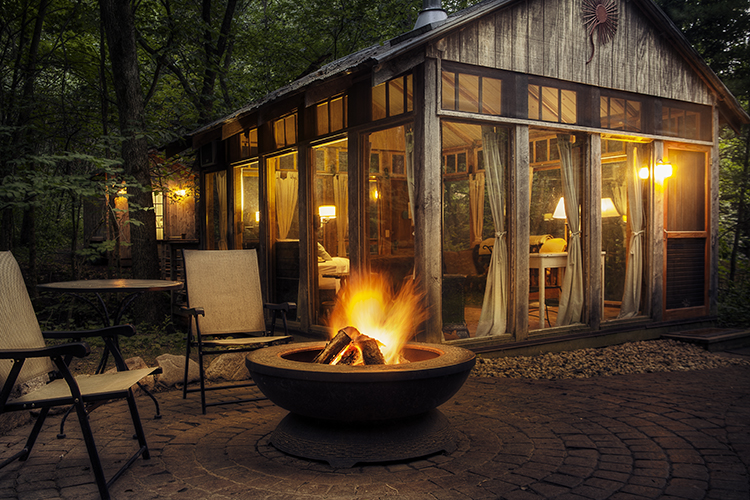

In our age of social media, one callout about the Glass House (pictured above) on Travel Wisconsin’s website earlier this summer had the likes of Cabin Porn and Vogue scrambling for more. And then the requests for reservations started pouring in with the force of Niagara Falls. The Glass House, says Susan, is booked every day it’s open from April through November and every weekend is booked a year in advance. (A little context: in 2010, they had somewhere between six and nine weekends booked.)
And so the Meadow House, the latest addition to the Calnins’ arsenal of dream getaways, is a direct result of the Glass House’s unprecedented success.
“People kept saying how lovely it would be to stay in the Glass House in the snow,” says Susan. But when Norbert first built it — he worked for many years as a contractor — he and Susan imagined it as a kind of bunkhouse for visiting families’ children. When they decided that children trying to find their way from the Glass House back to the other cabins at night wasn’t the best of ideas, they turned it into a full unit, adding a full bathroom and kitchenette to what used to be a simple one-room bungalow. You still have to cross a small wooden bridge to get to those, though; not ideal in the snow. In addition, there’s no central heat or furnace in the Glass House; even with an indoor fireplace, the place is just too cold to stay in when the Wisconsin winters hit.

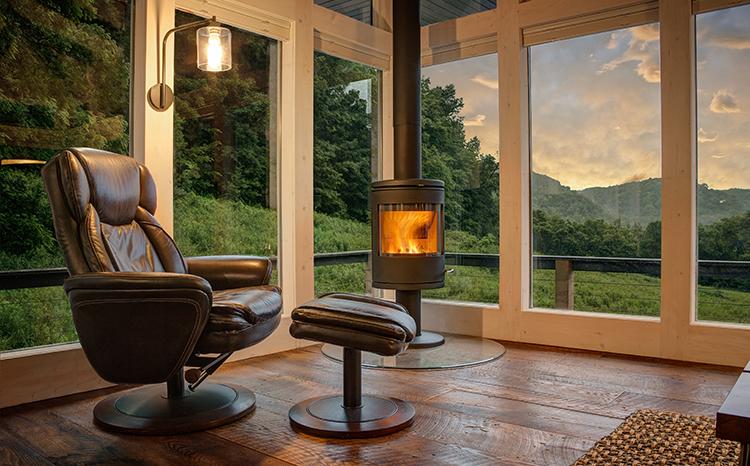
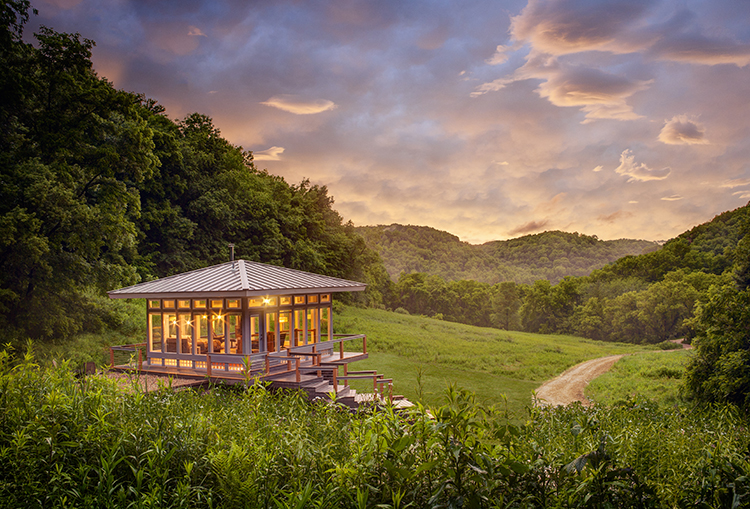
Enter the Meadow House. Just completed this past summer, this prairie-style cabin has 360-degree views of the tree-lined meadow it sits in. Inside, you’ll make it through the snowy weekends with the help of a Scandinavian wood-burning stove, central heat and furnace, and a fully-stocked kitchen. Details like custom wood countertops and reclaimed barnwood floors have you feeling back-to-the-land while the wireless Internet and Jambox provide you with a few modern amenities.
“People might want to get out of the city,” says Norbert, “but they still want to bring bits of the city with them.”
Despite the exponential increase in business, Candlewood remains a mom and pop operation. Norbert and Susan still live on the property, as do Norbert’s parents. Susan continues to maintain and clean the cabins between reservations, and she and Norbert greet all the guests personally. Norbert built the Log Cabin and the Glass House entirely himself and was the general contractor for the Meadow House. Candlewood is very much theirs; something that's apparent in every detail.
After all, they’re not doing any of this with the aim of making millions and having other people take care of the nitty-gritty; the Calnins started Candlewood with the simple aim of making payments for their property taxes. “We could build five more of these cabins and be successful,” says Norbert, but they have no plans for doing any such thing. For them, what’s meaningful has nothing to do with money — it’s with providing people with a place where, even for a weekend, they feel like its their own. Packing dozens of cabins onto the property would detract from their draw; walking around naked in your glass-walled getaway is slightly less appealing when your neighbor is peering at you from 30 feet away. Privacy is key. Privacy, and that sense of waking up with the sun, wandering out onto your porch, and feeling like there’s no one else in the world.
“People aren’t just reconnecting with nature,” says Norbert. “Here, it’s as much about the outside as it is the inside. People are reconnecting with each other. After they stay here, we see so many comments about people having conversations again that matter. And that’s what’s meaningful.”
So that settles it — you'll know where to find us next Thanksgiving. [H]
Images courtesy of Candlewood Cabins

Liv Combe doesn't like gin but is sometimes tricked into drinking it anyway.
She's an Editor at Huckberry who also finds time to practice yoga, climb rocks, and run beaches.
Follow her on Twitter and Instagram.
We rounded up some of our favorite stories from this past year and gave them our stamp of approval.
As December comes to a close, read on for the best of 2014 — including this epic day hike by Huckberry reader Kyle Frost.
I've been thinking about hitting the Lost Coast trail for awhile now, so when my buddy Eric from Hipcamp shot me a text last week asking if I wanted to hit the trail, I jumped on the opportunity.
We decided to tackle the southern portion of the trail, which is less traveled than the more popular beach hiking on the northern section. The southern trail from Needle Rock to Usal beach is around 20 miles, with hiking mostly up on the ridge line and plenty of coastal views.
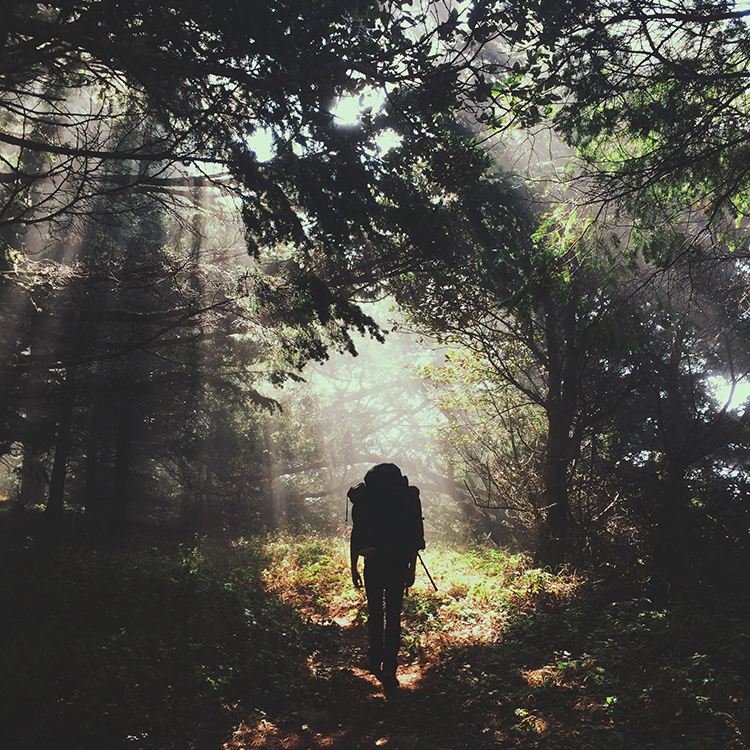

The typical way to hike Lost Coast is one way, so we shuttled from our car at Usal Beach up to Needle Rock visitor center in the morning. The amazing Sherri has run Lost Coast Shuttles since 1995, and provided conversation and witty banter regarding roadside attractions on the 2.5 hour drive up. If you’re headed to do some hiking on the Lost Coast, definitely give Sherri a call for your transportation needs!
After reaching the Needle Rock visitor center, we finally hit the trail around 10am.
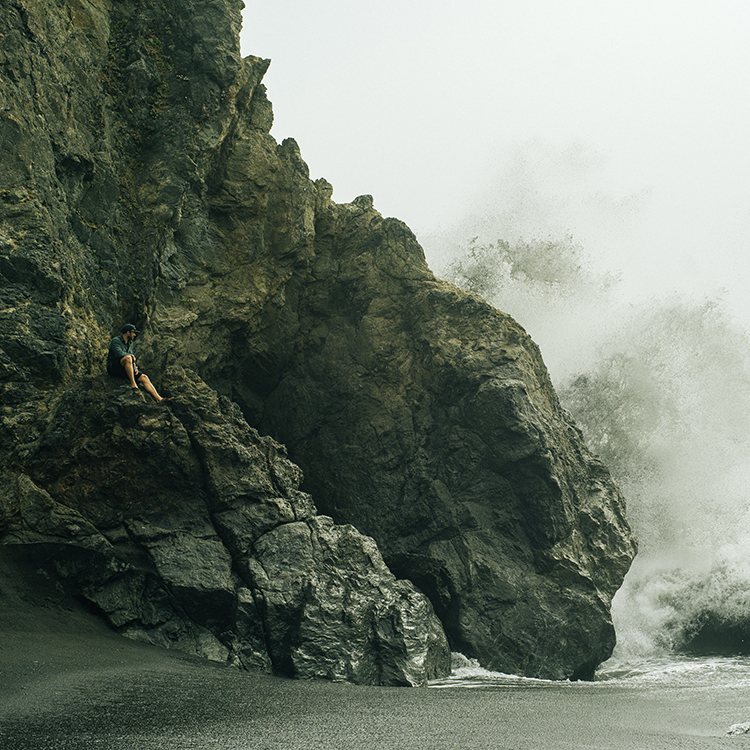

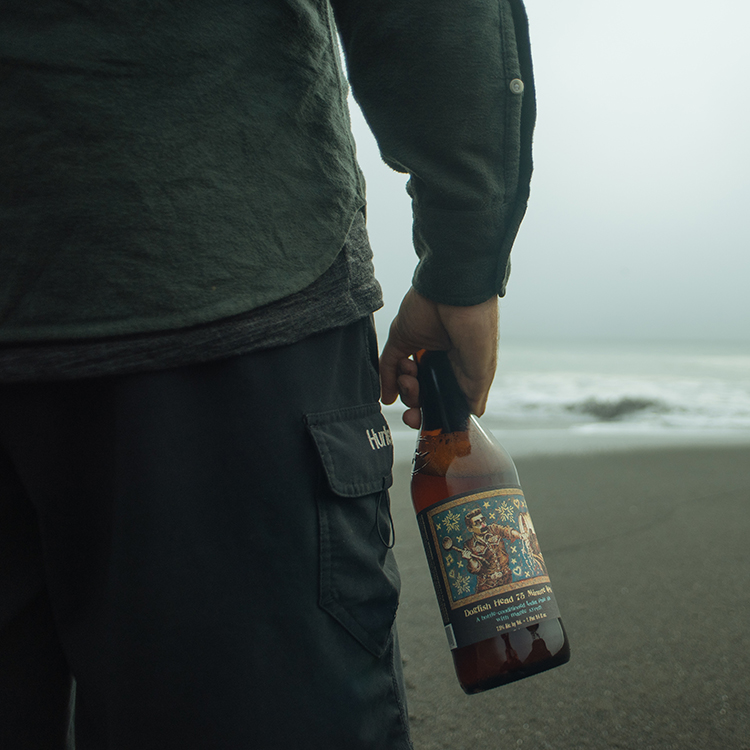
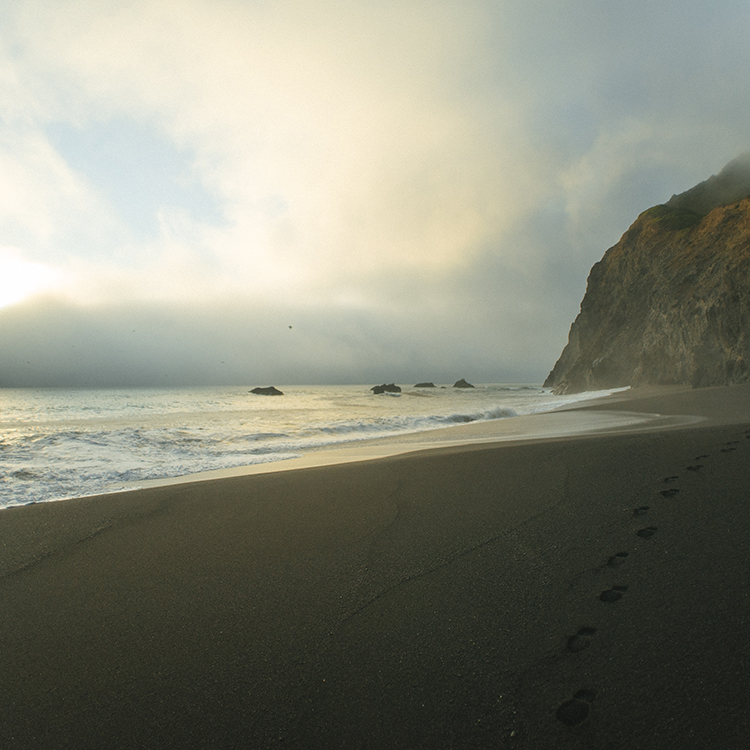
Around 8 miles in, after winding up and down along the coastline, the trail reaches Wheeler Camp. A couple of campsites dot the flats above a black sand beach and Jackass Creek. We managed to snag arguably the best campsite, with a picnic table, plenty of space and easy access to the water.
Thick fog stymied our coastal views for most of the afternoon and well into the evening. Typical northern California weather. This didn’t stop us from doing some exploring through (after a well deserved nap).
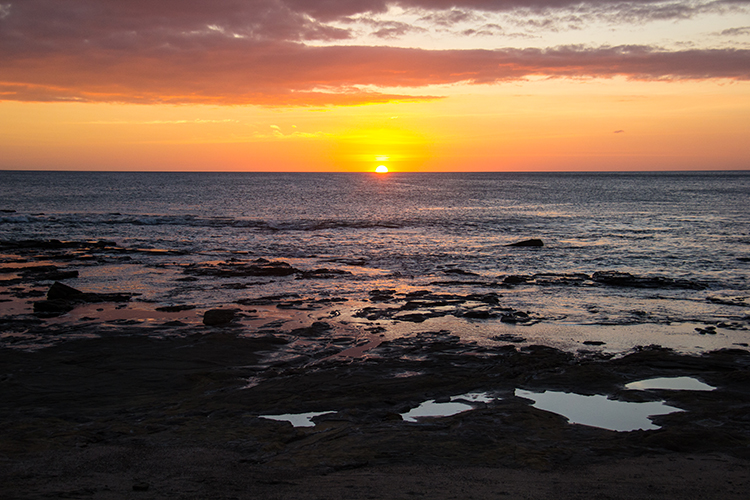
Lo and behold, the fog lifted just enough around sunset to give us a spectacular light show.
We climbed a small ridge to the north of the beach for a better perspective. The fog and clouds and sunset combined for a beautiful array of color on the rocks and water.
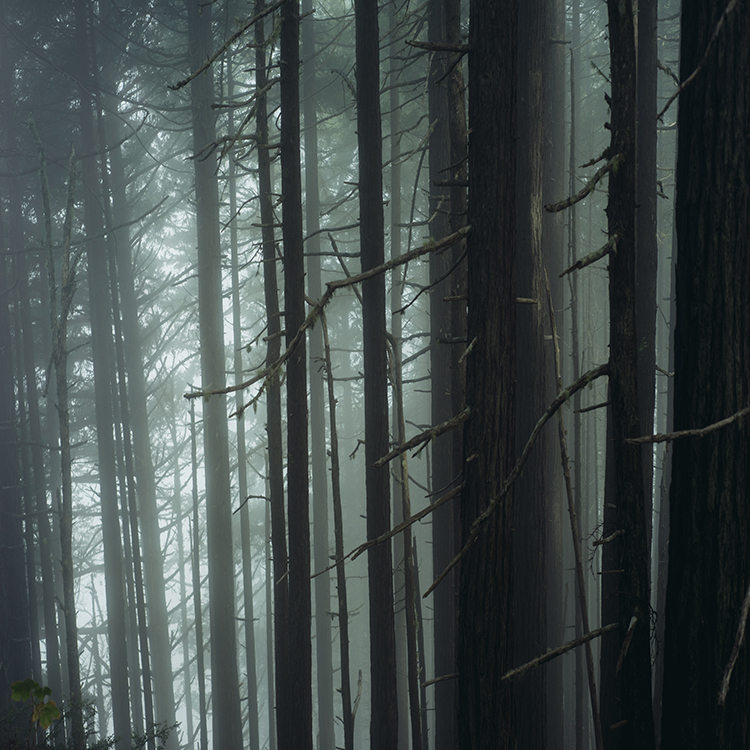

Most people are familiar with the classic Lost Coast route up north, a 24 mile FLAT beach hike. The southern portion is not flat in any sense of the term. Where the north trail winds along the beach, the south goes up and over every ridge and back down to every stream and creek. I think we had around 5,000 ft of uphill elevation on our second day alone.
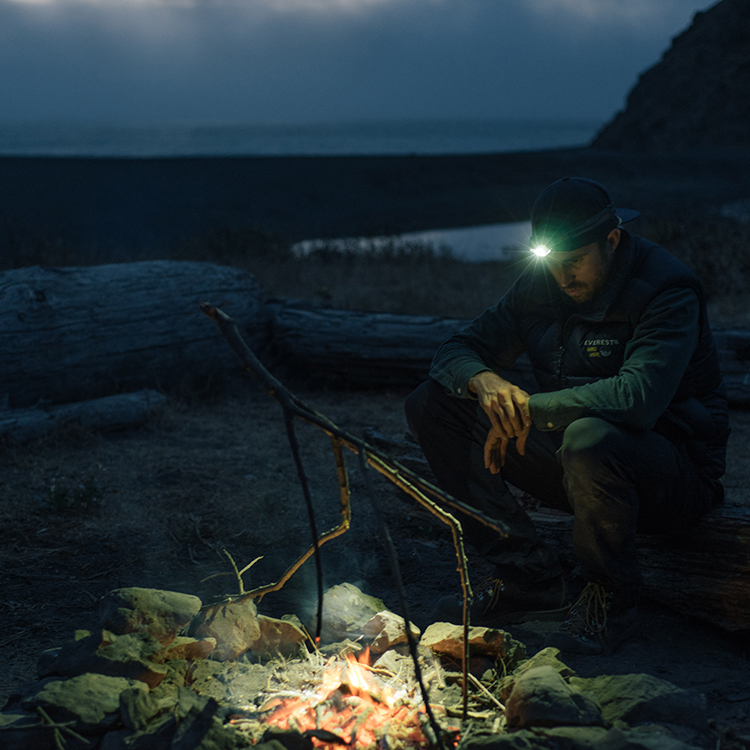


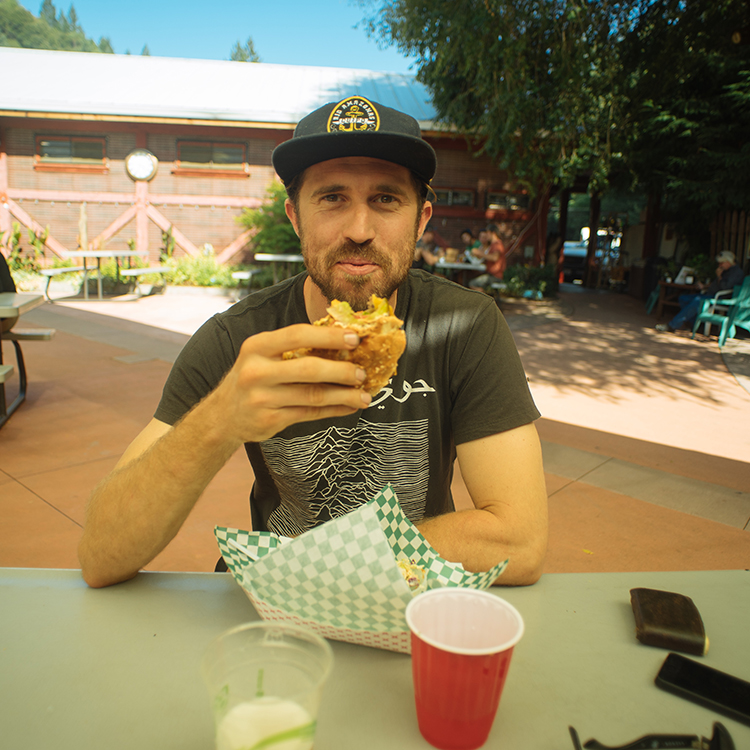
As always, the success of a weekend can hinge on the quality of the burger and beer at the end of the trail. The Peg House delivered on both counts.

Huckberry contributor and weekend warrior extraordinaire Kyle Frost is a fan of coffee, big mountains, and witty banter. Follow him on Twitter or Instagram here.
Images © Kyle Frost

Folding and throwing paper airplanes is an indisputably fun hobby, but it’s frustrating when you can’t get the folds quite right and your plane sinks rather than sails. John Collins holds the Guinness World Record for designing and folding the longest-flying paper airplane, and he has made the design available to the world.

The airplane design is called the Suzanne, and she’s a serious beauty. In the below video, Collins demonstrates how to fold your own Suzanne from beginning to end.
Using nothing more than a piece of paper, a creasing tool (which you can either find at a craft store or simply use a ruler or other hard-edged object) and a chip clip, Collins shows the folds that make up the world’s longest flying paper airplane.
The video above shows the Suzanne in its history-making flight. While your homemade version might not be quite as impressive as Collins’ creation, it’s bound to be way better than the ones you used to throw at your high school algebra teacher’s back.






We live in an age of smiles. Everywhere you look, people in photographs are smiling. It's not just the toothpaste ads, it's everywhere. Our cameras and phones are equipped with smile detection technologies that make sure we never miss a shot of our subject smiling.
Smiling is associated with happiness, well being, humor and inner piece. It is also a universal way to communicate with people from other cultures and scientists even claim it is beneficial to our health.
But when you look at old portrait photographs, from the early years of photography, you can't help noticing that nobody smiles.
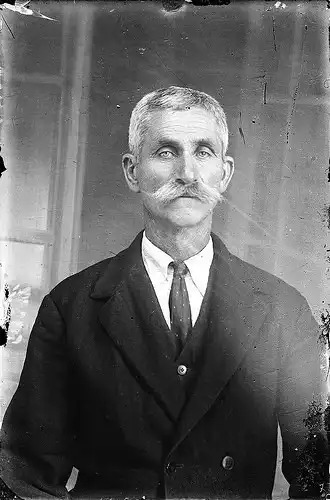 Source: Costica Acsinte Archive
Classic portraits like those of Abraham Lincoln contradict his know humorous personality.
So what could be the reason behind all that seriousness exhibited in the early days of staged portrait photography? A not too difficult mental exercise brings up a couple of theories as to why this happened all the time. {Photographers guide to posing}

Source: familytree.com
Number one would be oral hygiene. In the 19th century and the first part of the 20th century, people's teeth were horrible. Having bad teeth and not wanting to smile is totally understandable by today's standards, but back in those days, bad teeth were so common that people just ignored them. So bad teeth were no reason to refrain from smiling.

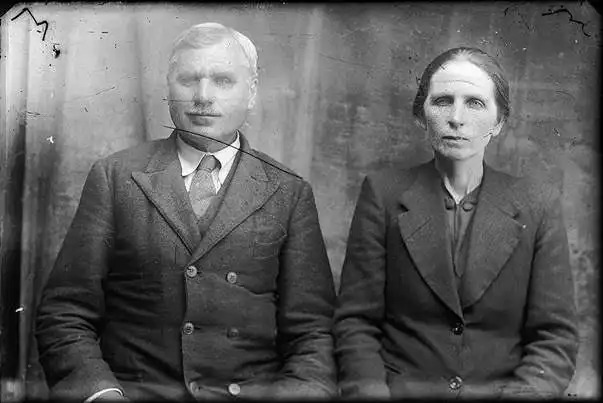 Source: Costica Acsinte Archive
A second theory is related to the technology available at the time. To keep it short, in the early years of modern photography, film would take a lot longer to expose. A standard portrait would often require seconds of exposure and the model would have to sit perfectly still. As you can imagine, it is far easier to hold a serious expression than a smile. Personal experience might have already taught you that keeping a smile for too long will make you feel silly or insecure.

While this might be a plausible explanation, it turns out the issue of smiling goes a lot deeper than that. In an article written by Nicholas Jeeves and published by the Public Domain Review, the author points out to something that I for one would have never guessed.
According to Jeeves: "By the 17th century in Europe it was a well-established fact that the only people who smiled broadly, in life and in art, were the poor, the lewd, the drunk, the innocent, and the entertainment" .
Canon Rebel T5i | Nikon D7100 | Nikon D810 | Canon 5D Mark III | Nikon D5200 | Sony a7R
In other words, if you wanted to be respected and well looked at, you had to act like Clint Eastwood.
Perhaps no one else put it better than Mark Twain, a personality whose portraits are some of the best known from those times: "A photograph is a most important document, and there is nothing more damning to go down to posterity than a silly, foolish smile caught and fixed forever.”

So there you have it. Photography was probably not something available to all social classes and you had to be someone to have your picture taken. Photographers would take very few photographs and in many cases a single one that had to be right. Smiling was a habit of lower classes, so if you wanted to look good, frowning would be the way to go.
What's in it for you:

Twitter is a powerful communication tool, beloved by many, including rock stars, comedians, actors, comic book writers, activists, and the ordinary man and woman in the street like you and me. But that communication power is only there if you have the correct nuts and bolts in the toolbox to help you. Otherwise Twitter just becomes a lot of noise, which will eventually overwhelm you. Today on Cool Websites and Apps, we are going to take a look at 5 never-before-looked-at Twitter apps, which will help you become a better Tweeter at Twitter. Riffle If you use Google Chrome, and...
Read the full article: 5 Power Tools To Make You Better At Tweeting On Twitter

Facebook is a magnificent place for starting an online community, promoting yourself or your business, or keeping in touch with friends and family. What makes it even more insanely useful though is the fact that there are countless tools and apps floating out there in cyberspace — some good, some bad — designed to help us do Facebook better. We have covered Facebook relentlessly since the beginning, including a privacy guide, a marketing guide, and a Facebook Tips column (all courtesy of the lovely Angela). But today on Cool Websites & Apps, allow me on your behalf, to take a hacksaw to all the...
Read the full article: 5 Sites That Improve Your Facebook Activity By A Hundred

With all the conflicting information available online, it’s understandable that you sometimes don’t know who to trust. Security and privacy are no strangers to misconceptions; we’ve covered some of the most dangerous cyber myths. If you’ve taken these myths as truth, it’s time to get the facts straight! Extinguishing the lies is a big step in making sure everyone is safer online. Misconception: Windows Updates Make Antivirus Software Unnecessary Our guide on everything you need to know about Windows Update highlighted the fact that updates are crucial to your PC’s security. It seems to follow, then, that if you’re diligent...
Read the full article: 4 Security Misconceptions That You Need To Realize Today


