Having your smartphone stolen can make you feel paranoid, angry and sad about losing the irreplaceable files on the phone, but Dutch filmmaker Anthony van der Meer used the theft as a learning experience.
Because, unbeknownst to the thief, Anthony had installed spyware on his phone so he could monitor the phone and follow the thief wherever they went, thereby inadvertently helping him create his short film "Find my Phone".
Anthony decided to set the trap and make the film after his first phone was stolen, which led him to investigate smartphone theft and make a startling discovery:
In the Netherlands, 300 police reports a week are filed for smartphone-theft. Besides losing your expensive device, a stranger has access to all of your photos, videos, e-mails, messages and contacts. Yet, what kind of person steals a phone? And where do stolen phones eventually end up? The short documentary ‘Find My Phone’ follows a stolen phone’s second life by means of using spyware.
Walk the streets of downtown Chattanooga, Tennessee, today and you’ll find little evidence that the town’s residents of yesteryear conducted business in first floors that are now below sidewalks and parking meters. For that, you have to go underground.
“So this is Loveman's,” says Cheri Lisle-Brown, property manager for the 130-year-old Loveman’s Building, which was originally a department store, in the heart of Chattanooga’s downtown. She walks through a pair of metal doors. “This is the original freight elevator. Watch your step.”
Below, the basement of the 19th-century building is made from a mix of cinderblock, brick walls and Tennessee limestone. It has the feel and smells of other old basements. Unlike other basements, however, the northern outer wall has openings in the brick—doorways or large windows—framed with wood leading to an alcove. What looks like a place to enter the building or let in light sits underground.
At some point in time, possibly between 1875 and 1905, Chattanooga built up its roads and abandoned the first stories of the buildings in the downtown of the city, turning them into basements. Today, no one knows exactly why or how it happened. The popular theory is that Chattanooga raised its city a story to escape the devastating flooding the Tennessee River wrought every few years. Evidence also points to an attempt to escape the diseases of the day, cholera and yellow fever.
Cities build upon themselves. For example, they pave over cobblestones that were once dirt paths. For Chattanooga, located a few miles from the Tennessee-Georgia state line, the foundations of the buildings echo the story of a construction project more unusual than most.
The best proof of Chattanooga’s hidden layer can be found in the basements of its older buildings. Yet the city’s original first floor is largely off limits to the curious because the locations are on private property.
And there’s the mystery of it. Documentation of the construction is scarce. City records don’t point to any motion where city leaders resolved to raise the streets. Newspapers from the time discuss the proposal but did little to document the earth moving project. This leaves modern city historians unable to answer basic questions like “when did this occur?” and “where did the city get the soil?”
“It required concerted effort—and that’s the big question mark—because there’s not a lot of evidence for it,” says Nick Honerkamp, professor of Anthropology at the University of Tennessee at Chattanooga, of the massive infrastructure project.
Indeed, utility workers would occasionally find items like a cut tree trunk eight feet below ground, he notes. Honerkamp’s predecessor, Jeff Brown, first posited the theory that the city initiated a project that raised the streets and made first stories basements after he noticed the doors and windows in basements of Chattanooga’s downtown. “It doesn’t make sense to have a window or a door that leads to dirt,” Honerkamp says.
As part of this theory, some people think that the dirt excavated from the Hamilton County Courthouse was pushed downslope to fill the streets below. The building, according to Honerkamp, features a large basement. “That dirt had to go somewhere and the easiest place to put it was downhill,” he says. The file Chattanooga Public Library’s keeps on the project suggests the soil might have been lifted from one of the nearby hills.
Braving floods was a risk of doing business in Chattanooga during the 1800s and early 1900s. “We had dramatic floods virtually every decade,” says Maury Nicely, a Chattanooga-based lawyer and amateur historian. Chattanooga made its fortunes from the railroad system connecting it to the rest of the South and the Tennessee River. The main streets running from train depot to river were “low-lying troughs” that filled during large floods, according to Nicely.
Ultimately, it was a problem that was solved in 1933 when the U.S. Government created the Tennessee Valley Authority, which built hydroelectric dams along the river and stymied the floods.
But in 1875, city leaders were wrestling with what to do after flood waters once again ripped through their town. Robert Hooks, the city’s engineer, floated the ideas of building a levee and raising the streets in the March 4 edition of the Chattanooga Times. “The streets of Chicago, Boston, and many other cities have been raised, both for the purpose of escaping flood and for improving their system of sewerage,” Hooks wrote.
That week, Chattanooga’s Board of Mayor and Alderman considered a proposal to raise 15 miles of street 10 feet high, paid for by the property owners, but the resolution was put off. As Hooks noted earlier, these projects were cost prohibitive.
More motivation arrived in the summer of 1878, when yellow fever spread across the Mississippi River basin, striking its victims with jaundiced skin and black vomit, and killing thousands. In Chattanooga, 140 people in the city of 12,000 died.
People at the time didn't know the true carrier of the disease, Aedes Aegypti mosquitoes, which can spread the Zika virus of today. But Chattanooga's then-Registrar of Vital Statistics, J. H. Vandeman, was onto something when he wrote: “The more filth, the more yellow fever; the lower the ground, the poorer the drainage and water supply, there you would find this disease the worst.”
In 1878, people were already trying to raise up the land in downtown Chattanooga, but it was going in fits and starts. During his postmortem of how yellow fever infected the city, Vandeman described how even in the city's downtown the ground never completely dried. He pointed out one building in particular, which is today known as the Loveman’s Building.
The building had been recently built with a commercial first story below the level of the street. It was not a good place to do business, however. It “is constantly exposed to dampness of the soil underneath, amounting at times to large collections of water,” Vandeman wrote.
The lot 100 feet to the east was not helping, either. The developer there placed fill so that the lot stood three feet taller than the ground of the Loveman’s Building. This cut off drainage. In other words, people were filling up Chattanooga a little at a time. Those who did not do so were left with damp ground.
As a result of the epidemic, Vandeman called for the city to improve its sanitation. Build out the sewer system, he wrote, and “increase our surface drainage.”
Unlike a city such as Paris, with its maze of catacombs and sewers, Chattanooga’s underground is mostly contained to a dozen or so basements today. Other basements were never first-story floors because they were dug out at a later date. “It’s a lot more localized than most people think,” Nicely says.
As with many places in cities, unused spaces are not long left unused. Today, a portion of the Loveman’s Building is used as storage for the current tenants of the building. Before she had the basement sealed, “I used to get a lot of flooding,” says Lisle-Brown, who managed the property for 10 years.
This is part of the nature of cities: they change and adapt to challenges, says Honerkamp. Sometimes it’s subtle, other times it’s dramatic. “To me, it represents a corporate, combined effort—between city and private individuals—to address a basically pretty horrific problem that was messing up the economy and driving people crazy.”
With most of Canada now frozen under a "Polar Vortex", paddling season is very much done. Here's a wacky idea for canoeing freaks that want to continue their addiction through the winter. Brought to you by the folks at Historic Images.
The back of the photo contains a caption describing the scene:
MARINETTE - WIS. "Dare Devil" Jack Boyle guides his snow-going canoe to a landing after making hair-raising slide down Marinette ski slide. Mr. Boyle doesn't recommend it as a winter sport for novices, but claims it's easy if you know how. 1-18-41
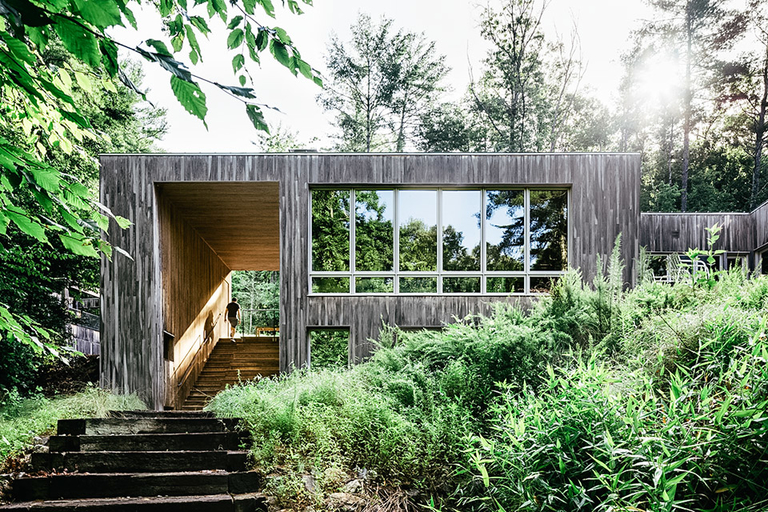
Accessed by an abandoned logging road, the Carolina Hillside House is a secluded getaway above North Wilkesboro's Kerr Scott Lake. The entire exterior is clad in untreated cypress, allowing for...
Live radio? Who listens to that in this age and day of podcasts and Spotify? Far more than those who remember the “Who listens to the radio?” song by The Sports. In 2015, Nielsen mentioned that more than 91 percent of Americans remain loyal to everything between AM and FM. And if you remember the feel of turning the knob, head over to this cool experiment that uses an interactive globe to take you across a world filled with radio stations. Radio Garden is a live online radio that makes many radio stations easily accessible with a turn of the...
When you’ve had enough of the news, the noise, the office, the traffic—and the Kardashians—there’s nothing like a good long walk to clear the hubbub out of your head. And if your local footpath isn’t quite enough, here are a few world-class hiking trails you may want to put on your walk-it list. (Which is kind of like a “bucket list”—only more walky.)
THE INCA TRAIL
Location: Peru
Distance: 26 miles (recommended time: 4 days)
Best Time to Go: May to September
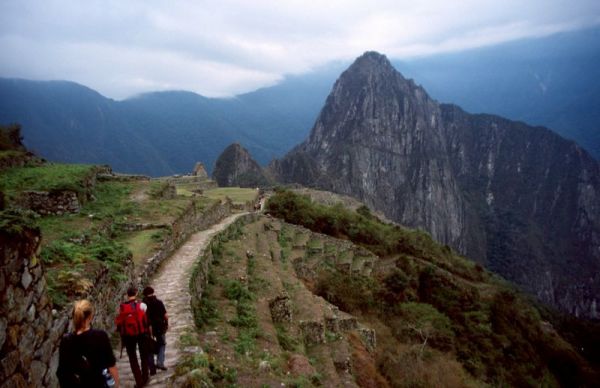
Details: This fairly grueling hike through the Sacred Valley of the Incas in southern Peru takes you across high rocky mountain plateaus, into densely vegetated cloud forests, and past ancient ruins, all surrounded by the stunning Andes mountains, and finally ends at the most famous Incan site, Machu Picchu. It’s not for everyone: the path has a lot of ups and downs, climbing from elevations of about 6,000 feet to 13,000 feet, so aside from the work, there’s the danger of altitude sickness. The Inca Trail is one of the most popular treks in the world, meaning you need a reservation and a permit (required) at least six months in advance.
Note: Since 2001, trekkers are no longer allowed to hike the trail alone. Most people go with guided tour groups (porters, cooks, food, tents, and sleeping bags provided). But you can certainly go smaller—just you (or you and a small group) with one guide—for a more personal trail experience.
THE SENTIERO AZZURRO
Location: Italy
Distance: 7.5 miles (3 to 4 hours…or 3 to 4 days)
Best Time to Go: In the spring
Details: This is the most popular walking path in the Cinque Terre (Five Lands), a historic and picturesque section of the Italian Riviera in northwestern Italy, comprised of five villages on the coast of the Mediterranean Sea. (The entire area is recognized as a UNESCO World Heritage Site.) The Sentiero Azzurro, meaning “Blue Path,” connects those five medieval Italian villages, famous for their pastel covered buildings, while passing sandy beaches, coursing along steep rock cliff faces overlooking the sea, and climbing stone steps up into the forested hillsides. The entire trail can be done in just a few hours, but most hikers take their time, taking in the sights, stopping for a swim, drinking some of the local wine, and staying overnight in guesthouses or hotels along the way. (Tip: Seasoned hikers suggest starting in the southernmost village of Riomaggiore and finishing in the northernmost, Monterosso al Mare. The hike starts off a bit easier this way, and gets you ready for the more difficult northern part.) This trail is extremely popular—so much so that there is now a small fee and a daily limit on the number of people who can walk it. Hotels must be booked far in advance, too.
THE GOECHALA TREK
Location: India
Distance: 55 miles (about 11 days)
Best Time to Go: Mid-April to May; October to mid-November
Details: This Himalayan mountain trek, called by many avid hikers the best in the Indian Himalayas, starts in the northeastern town of Yuksom at an elevation of 5,670 feet, and ends at the 16,000-foot-high Goechela Pass, a few miles from the eastern border of Nepal. Like on the Inca Trail, most people do guided treks, with porters, gear, and food included (carried by yaks!), but you can do it without guides, provided you’re fit and have experience with high-altitude hiking. Sights include the spectacular Himalayan mountain range—including Kanchenjunga, the third-highest mountain in the world (at over 28,000 feet); sprawling alpine meadows of wildflowers; forests of giant ferns, bamboo, and rhododendron; turquoise-blue alpine lakes; gushing rivers, possibly with some frozen waterfalls; many glaciers; and a lot more. (The trek is not recommended during the summer rainy season. You can do it in November and December, but be prepared for very cold, very dry weather.)
THE GREAT BAIKAL TRAIL
Location: Siberia, Russia
Distance: Varied
Best Time to Go: June to October
Details: The Great Baikal Trail is a Russian nonprofit organization founded in 2003 to promote environmentalism and ecotourism in the region by getting volunteers to help build hiking trails all the way around southern Siberia’s Lake Baikal, the deepest and oldest lake on earth. Over the years, more than 5,000 volunteers from all around the world have built or improved more than 400 miles of trails in the region. One of the most popular: the 34-mile-long path between the lakeside villages of Listvyanka and Bolshoye Goloustnoye (recommended time: 3–4 days). It takes you along the lakeshore, up to the top of rocky cliffs overlooking the lake, across lush green meadows, and through dense forests, passing little villages and staying in cabins, guesthouses, or tents along the way. (Bonus: You might even see some nerpa, or Baikal seals—the only freshwater seals on earth—swimming in the lake or sunning themselves on the beach.)
THE KUMANO KODO
Location: Japan
Distance: Varied
Best Time to Go: Spring and fall, but winter is okay, too. (Summer isn’t—it’s the rainy season.)
Details: The Kumano Kodo (Kumano is a type of Shinto shrine; kodo means “road” or “passageway”) is a network of seven trails that wind through the densely forested, often misty and mysterious Kii mountain range, in the south of Japan’s main island, Honshu. The trails have been used by Japanese people for more than 1,000 years, and are used for making pilgrimages to three sacred Shinto shrines, collectively known as Kumano Sanzan. Called “one of the best (and possibly most overlooked) treks on the planet” by CNN’s On the Road series, individual trails can be hiked on short day trips, or the entire set of seven main trails can be trekked over the course of four to five days. (You can camp or stay in bungalows along the way.) Highlights include lush cedar forests; the many oji (mini shrines) along the path; the three main shrines, each elaborately constructed in ancient Japanese style; the many farms and gardens along the route; numerous creeks and rivers; and Nachi no Taki, a 436-foot-tall waterfall (Japan’s highest).
THE URIQUE-BATOPILAS TRAIL
Location: Mexico
Distance: 32 miles (3 to 4 days)
Best Time to Go: October to March
Details: This hike takes you between the towns of Urique and Batopilas in the Sierra Madre Occidental mountains, in Mexico’s northern state of Chihuahua, and runs through six interconnected canyons, collectively known as Copper Canyon. The hike starts at the floor of Urique Canyon, the deepest of the canyons, in the historic mining town of Urique, at about 1,800 feet. It climbs more than 4,000 feet of rocky desert pathways, past cacti and agave, to the canyon’s rim, amid patches of mesquite, sycamore, and wild fig trees. It then descends into neighboring Batopilas Canyon, ending at the mining town of Batopilas. The breathtaking Grand Canyon–like vistas, the bizarre rock formations, the burbling creeks (fed by the winter rainy season), and night skies filled with more stars than you’ve probably seen in your entire life make this one of Mexico’s most memorable hikes. (Bonus: you can also take side trips to the villages of Tarahumara Indians, who have lived in the canyons for centuries. You might also spot some rattlesnakes, mountain lions, wild boar, and wild burros on your journey.)
MOUNT KAILASH KORA
Location: Tibet
Distance: 32 miles (3 to 4 days)
Best Time to Go: May to October
Details: Mount Kailash is a 21,778-foot Himalayan mountain peak in southwestern Tibet, and is considered one of the most sacred places in the world by Buddhists, Hindus, Jains, and Bons. (Bon is a native Tibetan religion.) The Mount Kailash Kora (kora means “circumambulation”) is a 32-mile-long pilgrimage trail around the base of this stark, rocky, dome-shaped and snowcapped peak that has been followed by practitioners of these religions for millennia. The trail has also become increasingly popular with tourists over the last few decades. The path itself passes over barren terrain, intermixed with an occasional lush meadow, but the views of the surrounding Himalayan peaks, and the diverse groups of pilgrims and tourists traveling together along this path, make the Mount Kailash Kora a combination of geographical, cultural, and religious wonder, and one of the highest-rated hikes on earth. And while it’s difficult—the average altitude is about 16,000 feet and the path follows a lot of uneven ground—there are regular guesthouses along the way, as well as tents where you can get hot meals and drinks. So take your time!
THE ISRAEL NATIONAL TRAIL
Location: Israel
Distance: 620 miles (45 to 60 days)
Best Time to Go: Spring and fall
Details: The Israel National Trail (INT) was the brainchild of Israeli journalist and environmentalist Avraham Tamir, who was inspired to see such a trail in his country after hiking America’s Appalachian Trail in 1980. The INT zigzags its way across the entire nation of Israel, from the kibbutz community of Dan near the Lebanese border, to the southernmost point in Israel, the Red Sea resort city of Eilat. The trail covers a range of terrains, from greener regions in the north, to beaches on the Mediterranean coast, across parts of the Judean mountain range on the outskirts of Jerusalem, to deserts in the south, crossing many ancient archaeological sites along the way. This is a very difficult hike, especially in the desert sections, where you will have to hire people to bring your supplies. It’s recommended that all hikers either get a guide or do serious research before attempting it. One of the great things about the trail: the INT “Trail Angels,” people who open their homes at various spots along the way for showers, a place to cook a hot meal, a yard to set up camp, and some friendly conversation. Several kibbutzes along the way offer inexpensive food and lodging, as well, as do some Bedouin communities in the southern desert regions. Of course, like most of the trails listed here, if you don’t have time to do the whole thing, you can always do small sections at your leisure.
Couch Potato Hiking Bonus: Over the course of three months in the summer of 2015, about 250 volunteers, organized by the Society for the Protection of Nature in Israel and Google, took turns hiking the trail with 360-degree cameras strapped to their backs—so you can now enjoy the entire INT on Google Street View from your home computer.
OTHER WALKS OF LIFE
The Kungsleden (King’s Trail) is a popular 270-mile-long trail in the arctic north of Sweden that offers comfortable cabins at regular intervals along its length. The trail is especially popular around the summer solstice, when daylight lasts for nearly 24 hours. (In the winter, the Kungsleden is open as a cross-country ski trail.)
The Thorsborne Trail is a 20-mile trail on Hinchinbrook Island, five miles off the coast of Queensland, Australia. Only 40 hikers are allowed on the path each day, and there’s a small entrance fee, but it’s worth it: you can camp on tropical beaches (where you might see dugongs, sea turtles, or crocodiles); on rocky outcrops overlooking the Great Barrier Reef; or beside waterfalls in lush and misty rain forests.
Mount Kilimanjaro in Tanzania is the tallest mountain in Africa (19,340 feet), and the tallest freestanding mountain in the world. (It’s not part of a larger mountain range—it just suddenly rises out of the African plain.) It’s one of the rare tall mountains that doesn’t need any special gear to climb, and there are a number of fairly easy trails to its summit, although it will take six to eight days. The trek will take you from hot African savanna at the mountain’s base up through the clouds to glaciers near the mountain’s snow-covered peak.
The Narrows is just 16 miles long, but it’s one of the most beautiful hikes on the planet. It takes you down the Virgin River at the base of Zion Canyon in Zion National Park, Utah. Much of the hike is actually spent walking in the shallow water of the river—refreshing in the heat of the Utah summer—in a sandstone canyon that is sometimes just 20 feet wide, with beautifully sculpted, terra-cotta-hued sandstone walls stretching straight up as high as 2,000 feet above you. You can do the walk in one day, but it’s best to take your time and camp in one of the 12 designated campgrounds provided. (Happy trails!)
_______________________________
The article above is reprinted with permission from Uncle John's newest volume, Uncle John’s Uncanny Bathroom Reader. The 29th volume of the series is chock-full of fascinating stories, facts, and lists, and comes in both the Kindle version and paperback.
There are nearly 30 man-made spaceships out in the solar system right now gathering information about our planet’s neighborhood. Every year, evidence is gathered to bolster some theories while others fall by the wayside. Here are just some of the highlights of what we’ve discovered about the solar system in 2016. 10 Jupiter And Saturn […]
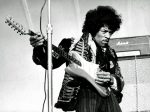
The legacy of Jimi Hendrix’s estate has been in conflict in recent years. Since his father’s death in 2002, his siblings have squabbled over his money and battled unlicensed and bootleg venders. But Hendrix’s musical legacy continues to amaze and inspire, as Janie Hendrix—his stepsister and CEO of the company that manages his music—has released album after album of rarities over the last couple decades. Not all of these releases have pleased Hendrix fans, who have called some of them mercenary and thoughtless. But it is always a joy to discover an unheard recording, whether a live performance, wobbly studio outtake, or semi-polished demo, so many of which reveal the territory Hendrix intended to chart before he died.
In 1982, some of that unreleased material made it into a four-hour Pacifica Radio documentary, which you can hear in four parts here. Produced by what the station calls “some of Pacifica’s finest” at its Berkeley “flagship station 94.1 FM,” the documentary does an excellent job of placing these recordings in context. With help from Hendrix biographer David Henderson, the producers compiled “previously unheard and rare recordings” and interviews from Hendrix, his family, Noel Redding, Ornette Coleman, Stevie Wonder, John Lee Hooker, John McLaughlin, Chas Chandler, and more. After a newly-recorded introduction and a collage of Hendrix interview soundbites, Part 1 gets right down to it with a live version of “Are You Experienced?” that pulses from the speakers in hypnotic waves (listen to it on a solid pair of headphones if you can).
“I want to have stereo where the sound goes up,” says Hendrix in a soundbite, “and behind and underneath, you know? But all you can get now is across and across.” Somehow, even in ordinary stereo, Hendrix had a way of making sound surround his listeners, enveloping them in warm fuzzy waves of feedback and reverb. But he also had an equally captivating way with language, and not only in his song lyrics. Though the received portrait of Hendrix is of a shy, retiring person who expressed himself better with music, in many of these interviews he weaves together detailed memories and whimsical dreams and fantasies, composing imaginative narratives on the spot. Several extemporaneous lines could have easily flowered into new songs.
Hendrix briefly tells the story of his rise through the R&B and soul circuit as an almost effortless glide from the ranks of struggling sidemen, to playing behind Sam Cooke, Little Richard, and Ike and Tina Turner to starting his solo career. We move through the most famous stages of Hendrix’s life, with its iconic moments and cautionary tales, and by the time we get to Part 4, we start hearing a Hendrix most people never do, a preview of where his music might have gone into the seventies—with jazzy progressions and long, winding instrumental passages powered by the shuffling beats of Buddy Miles.
As has become abundantly clear in the almost four decades since Hendrix’s death, he had a tremendous amount of new music left in him, stretching in directions he never got to pursue. But the bit of it he left behind offers proof of just how influential he was not only on rock guitarists but also on blues and jazz fusion players of the following decade. His pioneering recording style (best heard on Electric Ladyland) also drove forward, and in some cases invented, many of the studio techniques in use today. Processes that can now be automated in minutes might took hours to orchestrate in the late sixties. Watching Hendrix mix in the studio “was like watching a ballet,” says producer Elliot Mazer.
This documentary keeps its focus squarely on Hendrix’s work, phenomenal talent, and uniquely innovative creative thought, and as such it provides the perfect setting for the rare and then-unreleased recordings you may not have heard before. Pacifica re-released the documentary last year as part of its annual fundraising campaign. The station is again soliciting funds to help maintain its impressive archives and digitize many more hours of tape like the Hendrix program, so stop by and make a donation if you can.
From Wendover Productions–a Youtube channel dedicated to explaining how our world works, from travel, to economics, to geography–comes a two part series called “Every Country in the World.”
In 30 minutes, the videos traverse the world, telling you curious facts about 190+ countries, starting with this: China, despite being so vast, doesn’t have time zones. It’s the same time across the entire country. Meanwhile it’s neighbor, Afghanistan is “offset from Greenwich Mean Time by a 30 minute interval.” When it’s 9 am in San Francisco and 5:00 pm in London, it’s actually 9:30 pm in Kabul.
How about another factoid: Canada is so geographically large that it’s eastern border is closer to Croatia than Vancouver. Get the gist?
You can watch “Every Country in the World” above and below.
For storing, sorting, and editing your photos, solutions don’t come much better than Adobe Lightroom. It’s why professional photographers from around the world live by the app. But accessing the huge range of features, settings, and tools can interrupt your workflow. That’s where shortcuts come in. To remove some of those unnecessary steps, it’s well worth your time to learn just a few Lightroom keyboard shortcuts. Together, these can massively speed up your Lightroom processes, and make the whole task of managing your photos a lot more streamlined. Below are over 27 of the most useful, productivity-enhancing shortcuts you can use...
Contrary to popular belief, Atlanta’s best Mexican food isn’t only found along Buford Highway. Recently, the concentration has shifted to other neighborhoods such as Tucker, Jonesboro, and Smyrna, where you can find top-notch tacos in all manner of styles. While this list is by no means exhaustive, my picks span the spectrum of authentic to Americanized indulgence. Did your favorite taco spot make the cut? Taqueria La OaxaquenaPhotograph by Ted Golden Taqueria La Oaxaquena This Southside Atlanta taqueria makes excellent tacos with a variety of flavorful fillings like tripe (beef stomach) and asada (beef). An impeccable condiment bar lets you customize your taco with smokey salsas or pickled chilies. Oaxaca is considered the culinary capital of Mexico, and the kitchen makes an impressive regional specialty: a…View Original Post
Photo by Ethan Payne 13 Questions is a weekly series where we ask chefs and industry folk 13 questions to get to know them outside of the kitchen. Eric Johnson is the brewmaster at Wild Heaven Craft Beers. What’s the most annoying beer trend? Two things: I have great admiration for anyone who makes these styles, but the unmitigated love that IPAs have creates almost an exclusion of any other style. My hope is it’s an American fad that fades with the saturation of the market. Also quick sours, which are sour beers that are basically made in 48 hours but marketed in the same way as more traditional European sour beers. I have very strong opinions that sour beers take 12 to 24 months to make. That [creates]…View Original Post
Rising between the Eastern seaboard and the Midwestern plains, the Appalachian Mountains house an embarrassment of riches. Rolling vineyards. Stunning vistas. Charming town squares. Selecting a mere ten communities from its southern portion, which spans the Blue Ridge, Great Smoky, and Cumberland ranges, was a daunting task. To narrow the scope, we focused our search on small towns, places where you can often see Main Street end-to-end and where time seems to move at its own unhurried pace. Some of our picks are celebrated locales; others may be new to you. All share these essential elements: natural splendor, a colorful history, and a slate of interesting places to drink, dine, and do a little shopping. Come along on a whirlwind tour of some of the…View Original Post
The biscuit sandwich at 8ARM.Photograph courtesy of ryanfleisher.com. For Southerners, the humble biscuit is a foodstuff as hotly debated as barbecue or fried chicken. Ask someone where to get a good biscuit in the Atlanta, and you’ll get recommendations with passionate proclamations on the benefits of lard, shortening, or butter. Let me make things easy for you—just go to 8ARM, where baker Sarah Dodge is making my current favorite biscuit in Atlanta. Before 8ARM, Dodge worked at Octopus Bar (which is owned by Angus Brown and Nhan Lee, the team behind 8ARM and the now shuttered Lusca), Little Tart Bakeshop, Spice to Table, and, most recently, the Preserving Place, where she managed special events and cooking classes. Teaching a how-to class on biscuits actually landed…View Original Post
Photograph by Caroline C. Kilgore The folks who brought us Twain’s Brewpub & Billiards struggled to name their newest business, a 30,000-square-foot bowling alley in Decatur that for 60 years was known as Suburban Lanes. They settled on the Comet Pub & Lanes, a nod to space-age nostalgia and again to Mark Twain, who was born and died during Halley’s Comet years. Ben Horgan and Uri, Ethan, and Talia Wurtzel renovated the space into the family-friendly but still cool—and a little bit kitschy—Comet this summer. It boasts 32 lanes, a shuffleboard area, a sprawling bar, and a menu from Savannah Sasser that gives a gastropub feel to straight-from-the-fryer food. Although the Comet Hot Pins’ panko crust and pimento cheese don’t improve on the original jalapeño…View Original Post
But what exactly is an oyster roast? It’s different from fire roasting oysters.
In coastal America friends gather during the “R” months and shake off a bit of a winter chill over a steaming hot table of oysters.
Nothing fancy. It’s just oysters (sometimes a bit of grit and mud if you’re really authentic) some hot sauce, saltines, and cocktail sauce.
If you really want to put the “roast” back in YOUR oyster roast read on…
Roasting is usually fire, meat and char, right? You can add the “roasting” back into the cook by preparing your oysters on the half shell first and then add a dollop of specially prepared savory compound butter (recipe below). Shell your oysters being careful to retain as much “liquor” as possible. Loosen the meat and keep in the half shell.
Keep your oysters stable by nestling them on a bed of rock salt (ice cream salt was most readily available) in a large cast iron skillet. You can try to rest the shells directly on the grate but it may be a balancing act with unevenly shaped shells.
Bonus tips:
Clean live oysters in a drum of clean salt water by allowing them to sit for a few hours and work any existing mud out of the digestive tracts
Using fresh oysters on the half shell (shuck them by inserting the tip of the oyster knife into the joint end of the shell fish and twisting the blade. Try to keep as much of the briney liquid (also called liquor) in the bottom shell with the loosened oyster meat. Top with a dollop of compound butter and heat shell side down over live fire or coals until edges brown and liquid bubbles.
Ingredients
1 Stick of butter
1 tsp paprika or cayenne
2 cloves of minced garlic
1/4 cup grated parmesian
2 tbls. worchestishire sauce
2 tbls. hot sauce
3 tbls chopped parsley
One dozen raw oysters
Instructions
Mix butter and ingredients other than the oysters in a bowl. Top each oyster with a tablespoon of butter mixture. Heat over live flame utilizing coarse salt in a cast iron pan to stabilize. Once sizzling hot top with additional parsley for garnish.
Bit of a lunch hour copy-and-paste from Facebook today - but good stuff to share.
What a wonderful night at Sebago last night. My last post leaving work was a good island thing - "Go home, cook rice". The rice I went home and cooked was to go with the chicken adobo I made over the weekend for a movie night at Sebago Canoe Club, first one for the winter of 2016-2017. I shared the documentary "Papa Mau", which I'd bought while Hokule'a was here - I hadn't gotten around to watching it yet and it was great to actually see it for the first time with my paddling friends. Great documentary, we loved it, and it made such a good pairing with Sam Low's "The Navigators", which I shared at the club last year (with the help of friends from Halawai) as part of the preparations for the Hokule'a's visit.
With all the buzz about Moana, I just can't recommend this pairing enough for mainland friends who have gone or are going to see that movie, and want to learn more about the real-life traditions that, through the efforts of the people you'll meet in the films, carry on to this day. You can see both for free online: Click here for The Navigators, And here for Papa Mau.
And then don't forget to follow Hokule'a as she continues on the amazing Malama Honua Worldwide Voyage! Leg 25 just finished, she's back in Miami now and I would guess that she'll be continuing on south to the Panama Canal, looking forward to touching the Pacific again for the first time in a long time. What an adventure, I'm still so honored to have been able to join in on the welcome here in NYC.
Today nearly everyone has a camera in their pocket. Photography is one of the most democratic forms of expression. It can be precious, but need not be. It can be shared instantaneously with a dozen friends or followers. Or a few thousand. Or with millions of people instantaneously through platforms like Instagram.
This year, we saw iconic photos, more selfies than you could shake a stick at, and video portraits. We questioned the portrayal of felons, watched giants fall, and tried to make sense of live violence. But as in years past, all the photos and the stories behind them represented the gamut of human emotion and experience.
For all these reasons, I love photography. Let me show you why.
1. The view’s still good from above
2016 might have been the year we hit peak drone, and at some point you would think that we would tire of yet another overhead shot. But Michael B. Rasmussen’s aerials of Denmark in Autumn reminds us that while the drone is just a tool, the eye and patience of the photographer make the image.
2. “It’s like Princess Leia against the Stormtroopers”
TIME called it one of the 10 best photos of the year. We agree. Photographer Jonathan Bachman said, “Whatever the photographic merits of the image may be, I am most proud that it sparked an international conversation about police brutality and race relations in America. I believe that when there is conversation, no matter what side you are on, progress is being made and we begin to better understand one another. And to me, the ability to stimulate dialogue is one of the hallmarks of great photography.”
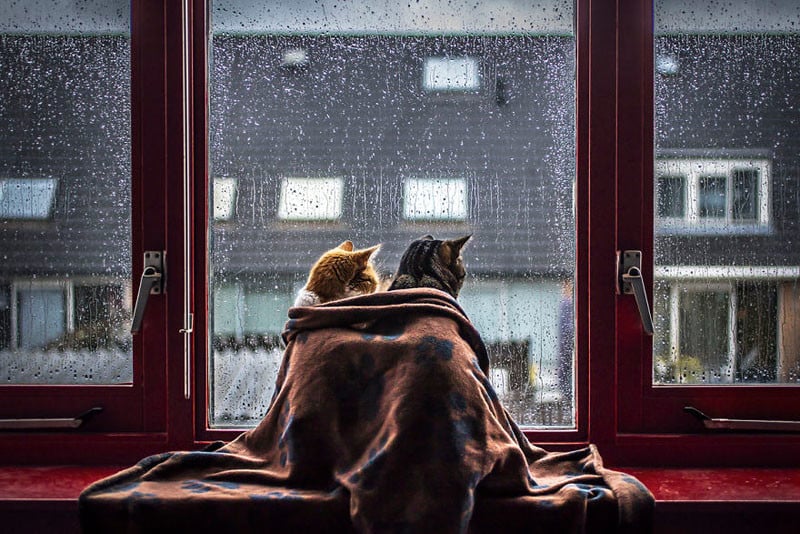
3. Even cats know window light makes them look good
Virtually every student of photography knows that diffuse window light makes for great portraits. Dutch pet photographer Felicity Berkleef photographs a lot of cats, but we’re partial to the photos of her cats in front of her window on rainy days.
4. Put it on photopilot
For passengers, long flights can be a great way to binge watch a few movies while staving off boredom. But pilots don’t have personal entertainment systems. Pilot Christiaan van Heijst doesn’t mind because the view out of the cockpit is pretty good. We also like Pilot Santiago Borja’s photo of a lightning storm over the Pacific Ocean.
Photo by Santiago Borja
5. Oh when the fog, comes rollin’ in
More than a handful of photographers have hiked up to Mount Tamalpais in Marin County to capture the scenic view. But the persistence of Lorenzo Montezemolo paid off one moonlit evening when the fog rolled over the gentle slopes for this incredible 3-minute exposure.
Photo by Lorenzo Montezemolo
6. AI tells you where photo was taken & who you are
We are in the early days of Artificial Intelligence, but if the first examples are any indication, we’re in for an interesting ride. Services like Apple Photos have employed automatic keywords and facial recognition for a while, but Google’s new AI can already outperform humans in identifying a location without GPS data. And researchers at the University of Texas at Austin and Cornell University created software that can identify faces even when they are highly pixelated.
7. Grammer lesson
Computational photography has been slowly infiltrating the imaging domain from Lytro’s light field cameras to the iPhone 7 Plus “Portrait Mode.” Photogrammetry – the science of taking measurements from photographs (or during the process of capture) – helped stunned scientists visualize 40 shipwrecks in the Black Sea dating back to the 13th or 14th century.
Expedition and Education Foundation/Black Sea MAP
8. But not everything is digital
Technology has accelerated the adoption of photography from a curious niche to a daily activity for the masses. But for the analog-inclined, there’s great news. Film photography has been making a startling comeback and alternative processes like developing with coffee have elevated the heart rates of photographers. We love how Giles Clement creates 16×20 ambrotypes, and then photographs his subjects holding their transparent, larger-than-life visage.
Photo by Giles Clemet
9. A stolen gnome returns bearing photos
We don’t condone theft of garden gnomes, but if you’re gonna do it, you might as well return it with a gift. Bev York, a woman in British Columbia, found her stolen gnome returned to her garden with a photo book of its international adventures.
Photo by Bev York
10. Authentic family albums
Family photos can be awkward but for the most part they illustrate idealized moments: a birthday, a graduation, a wedding, etc. Sophie Howarth and Stephen McLaren reached out to their network of photographer friends to edit “Family Photography Now” a more authentic look at the travails and triumphs of family life with work from photographers like Timothy Archibald, Christopher Capoziello, and Motoyuki Daifu.
11. Space loops
Animated GIFs, boomerangs and looped Vine videos can be a bit gimmicky. But Armand Dijck used images taken by astronauts on the ISS to stitch together eye-popping 4K cinemagraphs.
12. 8 years and 2 million photos later
Americans have polarized views on politics, but the work of White House photographer Pete Souza has been indisputably awesome for the past 8 years. From the quietest to the most intense of moments, Souza has captured the life of the Presidency in an admirable and enviable way.
Official White House Photo by Pete Souza
13. Maybe the trees aren’t crooked
From our anthropocentric perch, trees can sometimes seem crooked. But Daniel Temkin wants you to see the world from the trees’ point of view.
Photo by Daniel Temkin
14. Instant camerafication
The surprising success of Fuji’s Instax cameras has led to the development of not one, but two more instant photography cameras this year. Impossible Project’s I-1 features an LED ring flash, and even Leica got into the game with the Sofort.
15. It was just personal
Rob Whitworth starting playing around with his signature hyperlapse technique – dubbed “flow motion” – in 2011 while in Vietnam. From there, he continued creating and refining his stunning flow motion shorts as a series of personal projects, which caught the eye of a television producer. That producer, Fredi Devas, happened to be working on the BBC’s Planet Earth II. This week, in the series’ final episode, a new Whitworth 3-minute flow motion segment will be seen by up to 600 million people worldwide.
16. Masayoshi Sukita & David Bowie
In documentary photography, photographers fight for “access.” But access doesn’t come without trust, and trust is usually gained over time. Masayoshi Sukita built that trust with David Bowie over 40 years, and witnessed the many transformations of a man whose untimely passing shocked the world.
17. The Olympics prove the value of a photo editor
The economics of sports photography means when it comes to a large event, many publications are sourcing images from the same wire services like AP, Getty Images, Reuters, etc. The Olympics provide the perfect venue to illustrate the value of a photo editor. The ability to prune thousands of images to just a handful in a coherent and visually stimulating fashion separates the amateurs from the pros. We liked the work of Jeffrey Furticella and team at the New York Times.
18. Planting photos
A lot of people take photos of flowers and plants, but there is certain je ne sais quoi about Deb Stoner’s still life flora. Stoner’s work is similar to Noguchi Katsuhiro, but her muted palette conjures up the paintings of the Dutch Masters. Take time to smell the flowers.
Photo by Deb Stoner
19. These photos are for the birds
Let me just say it: There are a lot of crappy bird photos. All the more reason to chirp about the Xavi Bou’s strange Ornitographies and Miranda Brandon’s poignant portraits of bird strikes.
20. How to find parking at National Geographic
Celebrating the 100th anniversary of the U.S. National Park Service, National Geographic initiated a year-long celebration including an entire issue dedicated to Yellowstone National Park. The images are exactly what you would expect: Incredible.
21. He’s still the “Man”
For 7 years, the hugely entertaining Kaiman Wong as shared his quirky and self-effacing personality with DigitalRev TV, the most subscribed photo channel on YouTube. But this year, he surprisingly announced his departure from DRTV in Hong Kong, and returned to his home in the UK for bigger and better things.
22. It’s a bird, it’s a plane, it’s…
The moon travels in an elliptical orbit around the earth, and every once in a while, the full moon hits its perigee making it appear 14% larger and 30% brighter than at its apogee. In other words, it’s a great time to take pictures. Alan Taylor at The Atlantic had a great round-up, and we’re feeling pretty over the moon about Neil Hall’s image.
Photo by Neil Hall/Reuters
23. They used to be so cool
Reginald Van de Velde likes to travel to “forsaken” places around the world to photograph forgotten things. Along with derelict hospitals and crumbling chateaus, Van de Velde photographed a series of abandoned cooling towers that re-condense steam from thermoelectric power plants.
Photo by Reginald Van de Velde
24. Eating lunch at your desk
They say sitting is the new smoking. This makes Brian Finke’s project all the more melancholy. Finke visited 10 companies in four states to catch hardworking Americans in the act of eating at their desk for The New York Times Magazine piece entitled “Failure to Lunch.”
Photo by Brian Finke
25. My first haircut
For fifty-four years, Al Criscillo documented the inaugural haircuts of his smallest clients. Since the closing of his barbershop in Williamsburg, Brooklyn, many of his images have resided between mylar in the City Reliquary, a tiny museum of city artifacts.
26. Photos in real life
In May, the new SF MOMA opened their Snøhetta-designed expansion with the largest dedicated space for photography in the US. Then in June, the International Center for Photography opened its new digs on Bowery Street.
27. Bystander recordings
Amidst the deluge of consumer-made vernacular photography is a narrow genre of bystander recordings that rivet and horrify. From Philando Castile to Micah Xavier Johnson, we now have a live window into a tragic slice of life. An exhibit at the Bronx Documentary Center captured the genre’s long history.
28. The scanman commeth
Scanning old photos used to be an arduous and expensive task. Leave it to techno wizards at Google to create a phone app that takes multiple images to analyze and remove artifacts like glare and skewing distortions, while automatically applying color and exposure correction.
29. “Denial” ain’t just a river in Egypt
As communities are directly affected by climate change, photographers are there to capture the tremendous toll that climate change inflicts upon communities. Greg Kahn went to his backyard of Maryland to document the 3mm of annual sea level rise. James Whitlow Delano organized a worldwide coalition of photographers to contribute to @everydayclimatechange. But we were most shocked to see Stefan Schlumpf work documenting the Swiss effort to cover the Rhone Glacier with blankets.
Photo by Stefan Schlumpf
30. A father’s portrait of a dying daughter
In a heartbreaker of a story, UK-based Andy Whelan started documenting the daily struggles of his 4-year old daughter, Jessica, who suffered from neuroblastoma, a nasty cancer that often affects children under 5. The anguishing story came to an end on November 20, when Whelan announced on Facebook that Jessica had succumbed to the disease. RIP.
Photo by Andy Whelan
31. Got a spare 400mm?
The Canon EF 400mm f/2.8 IS USM II ain’t cheap at a street price of $9,999. But when astronomers Pieter van Dokkum and Roberto Abraham learned about its special optical coating, they decided to build an array of 48 lenses, which helped them to discover new galaxies that other ground-based telescopes couldn’t see.
32. Child brides take each others’ photos
For 15 years, Stephanie Sinclair has documented the disturbing practice of child marriage where typically a young girl is wed to a much older man. This past year, her organization Too Young to Wed partnered with the Samburu Girls Foundation in Kenya and gave cameras to 10 girls who had been rescued from child marriage and genital mutilation. The art therapy gave a voice to the girls, and revealed some honest-to-God photographic talent.
Modestar/Too Young To Wed/Samburu Girls Foundation
33. You might need your glasses for this
Just when you finally stopped thinking of Snapchat as a sexting app for teens, along comes three major announcements. 1) Snapchats daily users exceed Twitter, 2) they’re working on an IPO that could value the company at $25 billion, and 3) they’ve gotten into the hardware business with the almost universally lauded Snapchat spectacles. The stylish frames (no really, remember Google Glass?) take a circular video so that it can be viewed in both portrait and landscape mode.
34. Hitting all the right keys
Classical music has a reputation for being dull and the domain of old people with white hair. But if you’ve followed Yuja Wang, then you probably know that nothing could be further from the truth. Pari Dukovic marvelously captured Wang in a profile for the New Yorker with a little bit of rock ‘n roll.
35. Tragically, photos made no difference
We hoped that the photo of 3-year old refugee Alan Kurdi face down in the shallow waters of a Greek beach would shock the world into positive action. But here we are again. Covered in ash and with the blankest of expressions, 5-year old Omran Daqneesh perfectly illustrated the despair of an ongoing Syrian civil war that started when he was born.
36. “Duterte Harry”
Philippines President Rodrigo Duterte called for vigilante justice by stating “Kill them all” to combat the scourge of drugs and crime in the country. The result has been the murder of thousands in highly questionable extra-judicial killings. POYi Photographer of the Year Daniel Berehulak covered 51 murders in just 35 days for The New York Times.
37. RIP Bill Cunningham
Perhaps he didn’t possess the technical acumen of some of his peers, but Bill Cunningham was peerless in his observational skills and the significance he played in defining street fashion photography. Plus, he was one hell of a guy. We’ll miss you Bill.
First Thought Films / Zeitgeist Films
38. Sexy beast
A camera is just a tool. But there ain’t nothing wrong with having sexy tools. Hasselblad surprised everyone with the announcement of the X1D – the world’s first mirrorless medium format camera at the bargain price of $8995. Yes, that’s a lot of cheddar, but it’s all relative. Not to be outdone, Fuji announced their GFX 50S which they claim will be “well under $10,000” with an included lens.
39. Behind a gold star
You probably remember the rousing speech of Gold Star father Khazir Khan at the Democratic National Convention. What you might not know is that 9 years ago while working on a his book entitled “War is Personal,” Eugene Richards came across a man at Arlington National Cemetery grieving over his son’s grave. That man turned out to be Khan – mourning the loss of his son who made the ultimate sacrifice for country.
40. Against All Odds
Upon the release of his remastered albums, 80s rocker Phil Collins reshot all his classic covers.
41. Takin’ it to the streets
The Lens blog writes, “Andre Wagner became a standout point guard at Buena Vista University and helped lead it to two Iowa Intercollegiate Athletic Conference titles. He tried to pursue a career in basketball, but no matter how hard he worked, no team wanted a point guard shorter than its mascot. So he came to New York anyway — to study to become a social worker. A part-time job in the photo studio of an e-commerce company caused him to pivot from social work to photography and helped him discover his true love: photographing on the streets of New York.” Armed with a film camera and darkroom, Wagner proves that street photography is very much alive. “People say New York is overphotographed, but I don’t think so,” he said. “Life is always new, and my New York is different than your New York.”
Photo by Andre D. Wagner
42. A Devine moonshot
15-year old Chicago teenager Brendan Devine set up his Canon 7D on a tripod one evening and took a series of photographs of the moon. Whereas most people would have called it a night, Devine stacked his 72 best frames and then, in an effort to make the image “pop,” inverted the colors. For all his trouble, he won the Young Astronomy Photographer of the Year award, and reminded us that perseverance and creativity gives us successful moonshots.
Photo by Brendan Devine
43. A picture is worth a thousand words (and you should read the other 4000 words in this essay)
Over the course of two decades, Isabelle Mège, a medical secretary in Paris convinced hundreds of renown photographers to photograph her without compensation. She edited down the images to 135 – the “collection” – which fewer than five people have seen in its entirety. The muse becomes the artist in an incredible story on the New Yorker.
44. One frame fairy tales
Gregory Crewdson is arguably the godfather the one-frame, staged-narrative-style of photography. But German photographer Laura Zalenga’s Grimm’s Fairytales might give him a run for his money. Zalenga recreates key moments from famous fairytales, and also acts as her own model.
Photo by Laura Zalenga
45. A leg up
Photographer and editor Stacey Baker always wanted longer legs, but her project New York Legs opened her eyes to the wide range of shapes and sizes of the City’s women, adorned with a myriad of fashion options.
The grandeur of a church can be inspiring, but many churches are so large and located in such confined areas that it’s hard to get a sense of the meticulous and ornate detail that decorate the façades. Markus Brunetti solved the problem by digitally stitching sometimes hundreds of frames into a perfectly straight elevation that bears more of a resemblance to an architectural drawing than anything else.
47. Hold your breath
In a feature for ESPN, photographer John Huet donned scuba gear to capture a series of dramatic images of Bill May, the world’s greatest male synchronized swimmer. Huet suggested printing some of the photos upside down to his editors because, “Underwater, they look like they are standing there, with no restrictions of gravity, so they appear relaxed, standing on top of the water.”
48. Give me your tired, your poor, your huddled masses
Angie Smith returned to her hometown of Boise, ID to document the story of the immigrant population that had resettled there from far-flung places like Somalia, Kenya, Afghanistan, Syria and more. A series of poignant vignettes shows “Rwandans in their first snow, teenage Iraqis in their first prom dresses, and Burmese practicing their first English words.” Photography can be used to break stereotypes, and Smith’s work is the proof in the pudding.
Photo by Angie Smith
49. These aren’t the nerds you’re looking for
Even today, the word “techie” probably conjures up images of nerds donning glasses and a cellphone belt clip. But it just isn’t true. Although not demographically representative, Helena Price took gorgeous portraits of the tech community in San Fran in an effort to celebrate those who do not fit the San Fran tech bubble stereotype.
50. We the people
Working with an 8×10 view camera, Greg Miller has been documenting polling stations and the workers since 2004. In his own words, “It hit me the first time I photographed polling stations that this is what American democracy looks like: a clerical exercise of shuffling papers and bean counting – not overturned cars in the streets or mobs throwing Molotov cocktails.”
Photo by Greg Miller
Those are 50 reasons we loved photography in 2016. Why do you love photography?
About the author: Allen Murabayashi is the Chairman and co-founder of PhotoShelter, which regularly publishes resources for photographers. Allen is a graduate of Yale University, and flosses daily. This article was also published here.
Here's a look at the 10 cars and trucks that CarMD says register the fewest "check engine light" related problems and the 10 that cost the least to resolve them.
Set in the rolling hills of Brandenburg, about 40 miles southwest of Louisville, this 30-acre spread includes a spring-fed pond, three fenced horse paddocks, and a 5,000-square-foot barn with a tack room, hayloft, and eight horse stalls.The three-bedroom residence—relatively small, at 1,164 square feet—received a facelift two years ago. As a result, the 1914 farmhouse boasts a new roof and hardwood floors, two updated baths, and a renovated kitchen.The ProvenanceYes, an old McDonald had this farm. Several old McDonalds, actually, since the homestead’s been in the family for more than a century. The most recent generation, a brother and sister, inherited the place when their mother passed away in 2014.The barn features horse stalls and a tack room.Massive cedars line the gravel drive.Caveat EmptorNo one has farmed the land commercially since the current owners’ great-great uncle, John McDonald, died in the late 1940s. But the siblings did rent the property to tenants who kept horses, grew hay, and maintained an extensive kitchen garden. If you have especially deep pockets, you can purchase an additional 145 contiguous acres—40 of them tillable—for $415,000 more.Visit the official listing at wrrealtors.com.The post What $310,000 Buys You in Kentucky: The Old McDonald Farm appeared first on Modern Farmer.
Barbecue in the Chattanooga area might be letting me down, but this city has no shortage of great places to get a burger. A new favorite is one we've heard about for years.
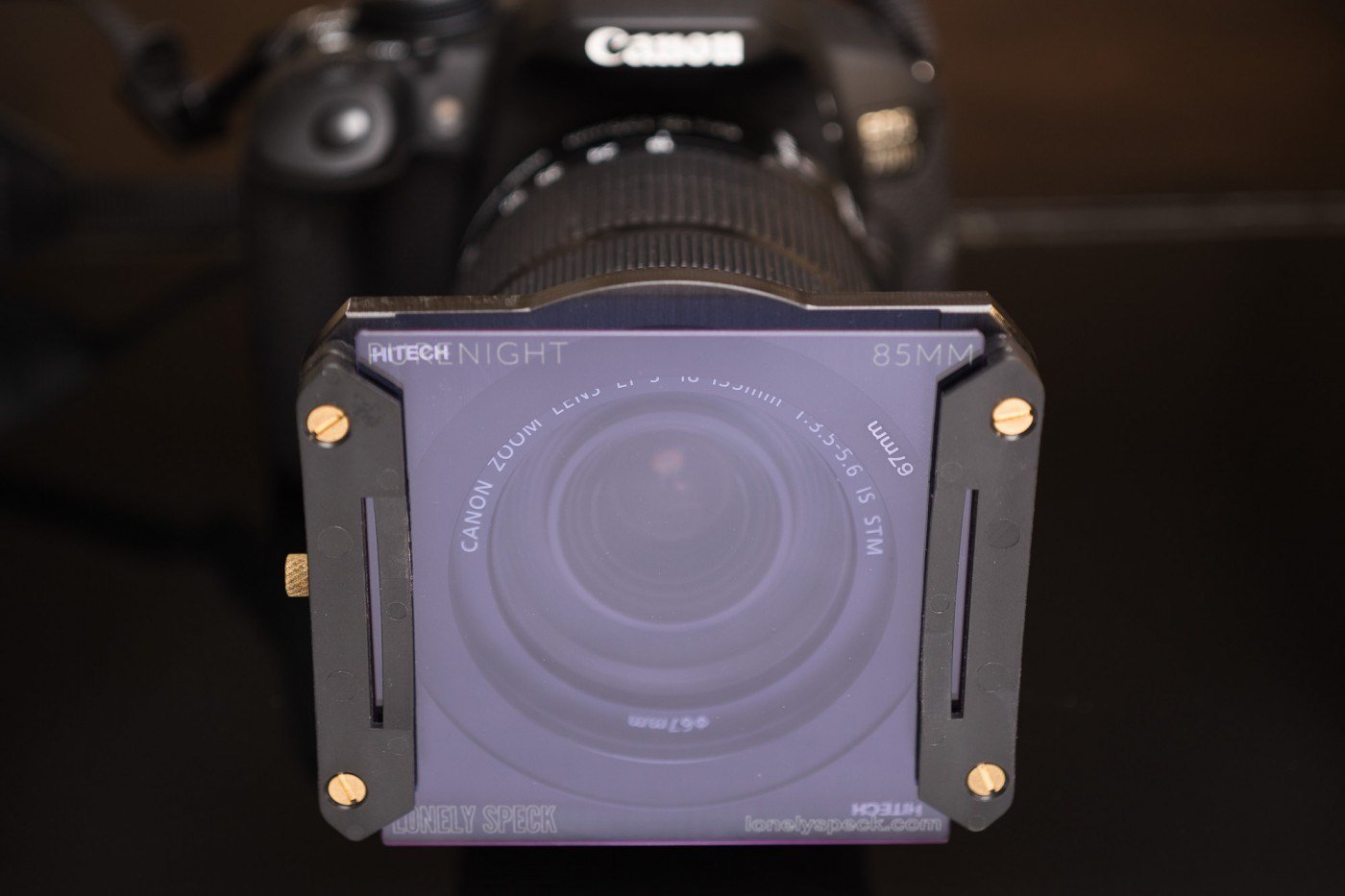
Light pollution is a drag for night sky photographers, usually requiring some post-processing magic in Lightroom or Photoshop to fix. But what if you could slap on a special glass filter that drastically cut down on the light pollution your camera sensor captures? Well… you can.
That’s exactly what the PureNight filter, the latest creation by night sky photographer Ian Norman of Lonely Speck, promises to do. This premium glass filter is made from special didymium glass that specifically reduces the transmission of light from sodium vapor lamps, one of the main causes of light pollution.
Here are a few before and after images that show the filter in action. According to Ian, “These are all converted from RAW with no edits other than exposure bump of 0.7EV on the PureNight shots to compensate for the reduced light pollution.” The filter seems to work like a charm:
Lonely Speck promises the highest quality from the PureNight filter.
“PureNight is precision ground and polished and features an anti-reflective multi-coating,” writes Ian. “[This] greatly reduces the effect of internal reflections and ghosting that plague most filters when used at night with bright light sources in the image.”
And since the filter is being made available in standard 85mm and 100mm versions, you can mount it to just about any camera using common square filter holders.
To learn more about this filter or help Lonely Speck reach their production minimums for the 85mm and 100mm filters, click here.
Pre-ordering the filter will cost you $220 for the 85mm and $240 for the 100mm, but these early bird prices won’t last, so act fast if you’re interested—we don’t think these filters will have a hard time getting funded by the December 31st deadline. Estimated shipping for the first run is March of 2017.
Image credits: All photos by Ian Norman and used with permission.
There are some excellent time-tracking apps out there, but if you prefer the comfort of good old Microsoft Excel, here’s some good news. A Redditor made an Excel-based to-do list with built-in time tracking, and the template is free to download.
Take retro cool on the road with this sweet vintage-style camper that serves as a family sleeper, food or event cart, complete with smooth curves and hidden surprises.
A thousand-found fiberglass shell contains a pop-top just like its classic counterpart but packs a lot more, too, in its streamlined body than the original.
Inside the ten-foot trailer, a convertible dinette set with a pair of opposing benches and center table folds up to reveal a bed in the cozy-but-spacious cabin.
A smaller variant is also coming to the market without the pop-top – the Dinky Dub features most of the same interior amenities, however.
Keep Going - Check out this Great Related Gajitz Article:



 (Image credit:
  The article above is reprinted with permission from Uncle John's newest volume,
  Since 1988, the Bathroom Reader Institute had published a series of popular books containing irresistible






 Contrary to popular belief, Atlanta’s best Mexican food isn’t only found along Buford Highway. Recently, the concentration has shifted to other neighborhoods such as Tucker, Jonesboro, and Smyrna, where you can find top-notch tacos in all manner of styles. While this list is by no means exhaustive, my picks span the spectrum of authentic to Americanized indulgence. Did your favorite taco spot make the cut? Taqueria La OaxaquenaPhotograph by Ted Golden Taqueria La Oaxaquena This Southside Atlanta taqueria makes excellent tacos with a variety of flavorful fillings like tripe (beef stomach) and asada (beef). An impeccable condiment bar lets you customize your taco with smokey salsas or pickled chilies. Oaxaca is considered the culinary capital of Mexico, and the kitchen makes an impressive regional specialty: a…
 Photo by Ethan Payne 13 Questions is a weekly series where we ask chefs and industry folk 13 questions to get to know them outside of the kitchen. Eric Johnson is the brewmaster at Wild Heaven Craft Beers. What’s the most annoying beer trend? Two things: I have great admiration for anyone who makes these styles, but the unmitigated love that IPAs have creates almost an exclusion of any other style. My hope is it’s an American fad that fades with the saturation of the market. Also quick sours, which are sour beers that are basically made in 48 hours but marketed in the same way as more traditional European sour beers. I have very strong opinions that sour beers take 12 to 24 months to make. That [creates]…
 Rising between the Eastern seaboard and the Midwestern plains, the Appalachian Mountains house an embarrassment of riches. Rolling vineyards. Stunning vistas. Charming town squares. Selecting a mere ten communities from its southern portion, which spans the Blue Ridge, Great Smoky, and Cumberland ranges, was a daunting task. To narrow the scope, we focused our search on small towns, places where you can often see Main Street end-to-end and where time seems to move at its own unhurried pace. Some of our picks are celebrated locales; others may be new to you. All share these essential elements: natural splendor, a colorful history, and a slate of interesting places to drink, dine, and do a little shopping. Come along on a whirlwind tour of some of the…
 The biscuit sandwich at 8ARM.Photograph courtesy of ryanfleisher.com. For Southerners, the humble biscuit is a foodstuff as hotly debated as barbecue or fried chicken. Ask someone where to get a good biscuit in the Atlanta, and you’ll get recommendations with passionate proclamations on the benefits of lard, shortening, or butter. Let me make things easy for you—just go to 8ARM, where baker Sarah Dodge is making my current favorite biscuit in Atlanta. Before 8ARM, Dodge worked at Octopus Bar (which is owned by Angus Brown and Nhan Lee, the team behind 8ARM and the now shuttered Lusca), Little Tart Bakeshop, Spice to Table, and, most recently, the Preserving Place, where she managed special events and cooking classes. Teaching a how-to class on biscuits actually landed…
 Photograph by Caroline C. Kilgore The folks who brought us Twain’s Brewpub & Billiards struggled to name their newest business, a 30,000-square-foot bowling alley in Decatur that for 60 years was known as Suburban Lanes. They settled on the Comet Pub & Lanes, a nod to space-age nostalgia and again to Mark Twain, who was born and died during Halley’s Comet years. Ben Horgan and Uri, Ethan, and Talia Wurtzel renovated the space into the family-friendly but still cool—and a little bit kitschy—Comet this summer. It boasts 32 lanes, a shuffleboard area, a sprawling bar, and a menu from Savannah Sasser that gives a gastropub feel to straight-from-the-fryer food. Although the Comet Hot Pins’ panko crust and pimento cheese don’t improve on the original jalapeño…