Shared posts

14 Dec 17:30

Duck Hunting the Coasts

by Florida Sportsman

By Ian Nance
Florida’s Atlantic and Gulf coasts offer unique waterfowling opportunities.

duck hunting the coasts East coast pothole filled with ducks and coots.

As I trudged through the mud and waist-deep green water to retrieve a fallen Nature Coast redhead I’d consciously uncoupled from his hen, I reflected upon the other flocks that had wheeled by that morning, their bright domes glowing like stoplights in the early sunshine. Recalling previous hunts that season, I thought about how nice it was not to shine off masses of competing hunters for a spot to set up. Still, I hoped a fisherman, prepared to freeze his or her keister off for a trout or sheepshead, might spook the bluebills lazing in the glassy bay and punt them back in play. But then, as the current chugged the drake towards Mexico, I realized we probably should collect our gear before getting stranded and severed from the ramp.

duck hunting the coasts

Small-waters decoy array.

Different coast, different season, I had to bust out the other hand of fingers to keep count of the various species we’d cracked down at Merritt Island National Wildlife Refuge (MINWR). After years of drought and saltwater encroachment, the rains of two summers had sufficiently flushed the salinity to tolerable levels in order to grow the aquatic vegetation needed to coax the dabblers to visit. By the end of the season, word had spread. With that much pressure, the waterfowl in the Gulf beckoned.

If you’re unable to locate productive duck hunting in Florida, you’re simply not trying hard enough. Even a brief glance of Google Earth demonstrates we are not a state wanting for huntable waterways. The interior freshwater rivers, lakes, and Stormwater Treatment Areas garner most hunter attention, but excellent waterfowling exists along the coasts, too. With nearly 2,300 miles of tidal shoreline and rivers that greet the saltwater, Florida’s coastal habitats are winter homes to large numbers of waterfowl.

But from all that prospective room, where should hunters pitch their dekes? The Atlantic has its charms, as does the Gulf. With scouting and research, combined with the proper conditions, unearthing a hidden gem is an issue of effort.

Variety Along the Atlantic

When discussing the assortment and sheer numbers of birds, the East Coast has one major advantage over the Gulf. The St. Johns River and watershed is the premiere highway for waterfowl migrating into Florida. Ducks navigate this vast wetland system, winging down in the winter before diffusing across the peninsula.
The influence of this impressive landmark is evident in the mixed bag of ducks found within a stone’s throw of the Atlantic.

For hunters, MINWR is the most historically significant spot in the region. Generations have enjoyed hunts here that rival the top gunning found anywhere else in the Southeast. Waterfowling is legal on 36,000 acres of the refuge, and hunting areas include the open waters of Mosquito Lagoon and most impoundments outside the NASA security zones.

Through November and December, limited- entry permits are required to gun the impoundments the dabblers enjoy. In January, it’s a free-for-all with as many folks as you care to battle; however, when the hunting is popping, hunters shoot pintail, wigeon, gadwall, shovelers, mottled ducks, green-winged and blue-winged teal, and a mixture of divers, among other, less-frequent species such as cinnamon teal.

Another popular locale is Guana River, a 9,815-acre Wildlife Management Area (WMA) roughly 15 miles south of Jacksonville. Guana consists of a variety of managed wetland habitats, including Lake Ponte Vedra, a 2,300-acre brackish impoundment. According to FWC’s Check Station Harvest Data, bluebills and teal comprise the bulk of bag limits. One hundred hunters are allowed in per day during the season on a first-come, first-served privilege.

duck hunting the coasts

Green-wing teal decoy

Stretches of the Indian River towards Wabasso, Sebastian and Vero Beach hold lesser scaup (bluebills) and other divers. Same goes for Jacksonville hunters who ply the north end of the St. Johns. Not always the easiest to access, the multitude of wetlands around it are duck factories for the intrepid.

And every once in a while a strong cold front up north will drive flocks of scoters down the coast. Superstorm Sandy in 2012 reportedly marched legions of these sea ducks to Stuart and beyond. These hunts are more specialized but further illustrate the variety and opportunity along the Atlantic.

Solitude of the Gulf

While, generally speaking, the Atlantic Coast attracts a potpourri of ducks, the Gulf wins hands-down for lack of competition among hunters. Even in recent years as the popularity of duck hunting has surged, miles of the West Coast won’t experience the echo of a 12-gauge. For one, as you travel north from Tampa,
the population thins so there are fewer competing locals. Two, West Coast duck hunting primarily consists of divers in open water—redheads, bluebills and buffleheads the most likely game with canvasbacks and the merganser species rounding out the roster. These animals sport a lower bag limit than most puddle ducks, which turns off the novices, to speak nothing of the Duck Snobs who consider diver hunting a paganistic pursuit. The Gulf just isn’t the happening scene these days.

Chassahowitzka was a renowned duck destination in the early 1900s. In fact, in 1938 the sheriff of Citrus County, Charley Dean, purchased a 6-mile stretch of land bordering the Gulf south of the mouth of the Chazz river for a duck hunting reservation. Chassahowitzka NWR was established soon after this, which likely curtailed the hunting, but even into the ’60s, the region was well-known for both divers and dabblers. Over cocktails at the Old Mill in Homosassa a few years back, an Ol’ Timer spun stories of shoots in the ‘50s and ‘60s when his buddies would hammer the redheads off the Little River with little legal influence to curtail his missions—which probably explains why populations plummeted and bag limits are restricted today.

duck hunting the coasts

On remote Gulf marshes, redheads are pretty common; hunters, few and far between.

Nowadays, the dabblers still haven’t returned home to roost, but divers, especially redheads, have bounced back in a big way. From Homosassa north, their populations strengthen. By the time one reaches Panama City and Pensacola, canvasbacks are seriously in play, and those ducks are daymakers for inland waterfowlers.
Perdido Key and Santa Rosa Hunt Areas, which constitute a section of the Gulf Islands National Seashore National Park Service, are two places the FWC recommends for Panhandle hunters. Apalachicola Bay is immense and, rumor has it, well-stocked.

Rafts of divers can be found feeding several miles offshore, depending on where you launch, but it’s wiser to concentrate on inshore birds traveling back and forth to creeks and rivers for freshwater. With all of that open water, though, scouting is a priority to sort out which paths the flocks will fly. Locate muddy bottoms and/or eelgrass nearby where they’ll search for invertebrates along the way. Sprawling decoy spreads are the norm, but, again, there’s an awful lot of places for them to live life. Best to be where they want to go.

Not all of the action is restricted to the Big Bend and Panhandle. Depending on weather conditions to the north, Tampa Bay and Charlotte Harbor—and the rivers that feed them—host bluebills and some redheads. Savvy hunters of these estuaries, however, scour pools in the mangrove swamps for mottled ducks and teal by way of kayak. Once more, fortune favors the bold.

Coastal Considerations

While hunting along or near Florida’s saltwater environments is a wild experience— from dolphins visiting decoys to the wondrous waves of shorebirds that greet the morning—the uninitiated must heed situations not incumbent to those hunting mainland waters. Tides, for example, dictate scouting and hunting trips and are to be monitored wisely. Oyster and limestone outcroppings—even on high tides—are threats to props and hulls running through what appear to be safe channels. Mangroves are not to be cut for blinds or otherwise damaged. Saltwater is ruinous to shotguns and gear. And shallow-draft boats must take care in choppy, wintry conditions.

Also, while FWC states duck hunting is permitted on most water bodies with public access, you’ll need to research which areas are closed to hunting, such as parks, or zones where the discharge of firearms is prohibited.

None of this is meant to deter the would-be coastal duck hunter. It’s just a different game. But, the rewards are there to reap. In fact, the more I travel the state in pursuit of waterfowl, the more I discover the advantages and find myself gravitating towards the salt water.

duck hunting the coasts

Heavier loads are recommended when hunting large-bodied divers.

Guns and Loads for Coastal Ducks

While decoying dabblers do not command heavy firepower, the divers—and mergansers, in particular—require stouter rounds. These ducks are often shot while pass-shooting at greater distances than one would prefer. A 12-gauge is more than appropriate. It’s up to the individual hunter to decide if he or she wants to tote a 3 ½-inch magnum. The added payload offers a slight practical difference, in my experience, but hedge this bet by shooting No. 2s with a full choke. Make haste with follow-up shots. Unless stoned dead, divers have a habit of living up to their names. Non-toxic shot and shotguns plugged to a 3-round maximum are required.

About Mergansers

Not glamor species, red-breasted and hooded mergansers are catnip on otherwise duck-less days. Over the last several years, their bag limit has remained consistent of a daily allotment of 5 birds and possession limit of 15, except for hoodies of which you may collect 2 per day and possess 6. These birds do not count towards your daily waterfowl limit but always check current regulations. They prefer feeding over harder bottoms than divers and favor little tidal creeks and sloughs with a current. Mergansers are not the most decoy-friendly species but will investigate large bluebill spreads – they do tend to fly consistent patterns, so setting up for a pass-shoot is most successful. Fisheaters, their breasts are not, um, gourmet-quality; however, when soaked in milk, whacked with a tenderizer mallet, wrapped in bacon and grilled, you can almost convince yourself you are eating bluebill. Hooded mergansers are handsome animals, and a fully-plumed specimen should bring no embarrassment to the trophy room. FS

First Published Florida Sportsman Magazine November 2015

14 Dec 17:27

Spider Rigging for Crappie

by Florida Sportsman

By Dustin Catrett

Spider rigging for fall crappie.
Eight rods maximum is the allowance for tournament crappie fishing, a fitting count for the slow-trolling technique referred to as spider rigging.

Staring at the screen of his side imager, Matt Morgan points to a distinctive ridge along the bottom of the St. Johns River in west Volusia County. “See where it drops from eight to ten feet? This is a transition zone,” he says, as Lucas Oil teammate Kent Watson adjusts line depths for each of the eight rods splayed around the bow of the boat. The duo, who’ve won several major crappie tournaments including the 2014 Crappie Masters Florida Championship on this very river, are using a technique relatively new to this region. It’s called spider rigging.

Spider rigging employs the use of multiple rod holders mounted to the bow of the boat, enabling up to eight lines (per tournament regulation) to be presented simultaneously. Anglers may fish these rigs while drifting, or by “pushing” with a trolling motor, in order to increase or decrease speed dependent on conditions. The object is to present lures vertically at various depths above suspended fish. Crappie feed looking up, and not down. Crappie spend most of their time offshore, feeding on small baitfish in lakes or slow-moving rivers near channels, fallen timber, ledges and brush piles. As waters cool, crappie begin staging in pre-spawn colonies as early as October, suspending in depths of 10 to 15 feet near ledges and structure.

“Speed and depth of the drift is crucial,” says Morgan. “If you’re moving baits too quickly, then the jig will be horizontal in the water column which is unnatural, so make adjustments to find the correct speed to keep it vertical. We also mark the depth of each fish we catch. Because if you’re picking up fish suspended at six feet, then chances are there are more at that same depth.” Watching the rods, electronics and continuously adjusting the lure depth is crucial when spider rigging. Finding the right depth may determine how many slabs hit your frying pan.

Matt Morgan with a nice crappie caught on the St. Johns River.

GEAR

“We use Driftmaster Rod Holders with 14-foot ultra-light B’n’M jigging poles, matched with B’n’M ultra-light crappie reels,” Watson said. “The flexibility and sensitivity of these rods allows us to see the tips move during subtle bites.” Reels are filled with 10-pound-test high visibility monofilament line, attached to several types of jigs the team uses in conjunction with live minnows.

“During winter we’ll use a 1⁄16- to 1⁄8-ounce Blakemore Roadrunner jig that’s tipped with a live minnow,” said Watson. “If we start missing a few bites then we’ll add a few 1⁄8-ounce Rockport Rattler Outlaw Max jigs.”

The Outlaw Max is designed to hook short-striking crappie. Two stinger hooks protrude from each side of the main jig assembly. It was designed by crappie expert Whitey Outlaw for catching sluggish winter specks.

Watson and Morgan tie their jigs to the line using a Trilene knot, in order to keep them sitting vertical in the water column. Typically, they’ll use a small three-way swivel on the main line. To one ring of the swivel is tied a short leader and single panfish hook for live bait. To the other ring is a short leader and the jig. Above the three-way swivel, on the main line, is a slip weight of an ounce or so.

Each jighead is fitted with a Midsouth Tackle soft-plastic tube body in color combinations ranging from pink jigheads with blue-and-white or pink-and-white glitter bodies, to gray heads with chartreuse bodies. Glow is always a popular element in the color scheme when fishing in Florida’s tannic water.

“I also match the hatch of the crappie’s forage base when in Florida by using a Crappie Pro 2-inch Li’l Wasshoppah, which mimics the small grass shrimp found throughout the rivers,” Morgan explained. “A Blakemore Roadrunner Reality Shad jig also in chartreuse is a productive lure for enticing Florida crappie along the shoreline.” FS

First published Florida Sportsman November 2015

14 Dec 17:25

Stephen Wilkes Interview

by burn magazine


Stephen Wilkes

Day To Night

“There is no difference between Time and any of the three dimensions of Space except that our consciousness moves along it.”
―H.G. Wells, “The Time Machine” Published. 1895

Time and memory, the essence of why we photograph. Photography has historically been defined as a single moment, captured in time. Our memories are defined by these moments, illuminating our consciousness of time as we age. Years ago, I imagined changing time within a single photograph; compressing the best moments of a day and night into a single image. Photographic technology has now evolved to allow my dreams to now become reality. Day to Night. I photograph from locations and views that are part of our collective memory. Working from a fixed camera angle, I capture the fleeting moments of humanity and light as time passes. After up to 24 hours of photographing and over 1500 images taken, I select the best moments of the day and night. Using time as my guide, all these moments are then seamlessly blended into a single photograph, visualizing our conscious journey with time.


Bio

Since opening his studio in New York City in 1983, photographer Stephen Wilkes has built an unprecedented body of work and a reputation as one of America’s most iconic photographers, widely recognized for his fine art, editorial and commercial work.
His photographs are included in the collections of the George Eastman Museum, James A. Michener Art Museum, Houston Museum of Fine Arts, Dow Jones Collection, Griffin Museum of Photography, Jewish Museum of NY, Library of Congress, Snite Museum of Art, The Historic New Orleans Collection, Museum of the City of New York, 9/11 Memorial Museum and numerous private collections. His editorial work has appeared in, and on the covers of, leading publications such as the New York Times Magazine, Vanity Fair, Time, Fortune, National Geographic, Sports Illustrated, and many others.
In 1998, a one-day assignment to the south side of Ellis Island led to a 5-year photographic study of the island’s long abandoned medical wards where immigrants were detained before they could enter America. Through his photographs and video, Wilkes helped secure $6 million toward the restoration of the south side of the island.
Wilkes, who lives and maintains his studio in Westport, CT, is represented by Bryce Wolkowitz Gallery, New York; Peter Fetterman Gallery, Los Angeles; Monroe Gallery of Photography, Santa Fe; and ARTITLEDContemporary, The Netherlands.


Related Links

Stephen Wilkes

14 Dec 17:23

Today's Featured Article: Bill of Rights

14 Dec 17:21

It Was What It Was

by thad@pixelperfectcreative.com (Jonathan Bernstein)
Guy and Susanna Clark in Japan. Image courtesy of Tamara Saviano

A conversation with Guy Clark biographer Tamara Saviano.

“Guy was telling me for at least a year and a half before he died that he would not be here when the book came out.”

Over the last several decades, Tamara Saviano has seen almost every facet of the music business. She’s produced tribute albums for Jackson Browne (Looking Into You: A Tribute to Jackson Browne) and Stephen Foster (Beautiful Dreams: The Songs of Stephen Foster); worked as a journalist, profiling artists like Dolly Parton and George Strait; formed her own songwriting publishing nonprofit in Nashville, American Roots Publishing; and served as publicist for legendary artists like Kris Kristofferson. By her own account, the hardest thing Saviano ever did was write a biography of her close friend Guy Clark.

Without Getting Killed or Caught: The Life and Music of Guy Clark, released today, is the first-ever biography of the Texas singer/songwriter. Although the book is published just five months after Clark died—on May 17, from lymphoma—Saviano worked on the book for an overwhelming eight years, during which time she also served as the artist’s publicist. “The only reason I kept at it was because I didn’t want to let Guy down,” she says.

Fans of Clark’s music will be grateful to Saviano for completing the book, which is crammed with personal anecdotes from the likes of Rodney Crowell, Steve Earle, Verlon Thompson, and Emmylou Harris, reading at times like a who’s who of late twentieth-century Nashville. Without Getting Killed or Caught is a moving, revealing portrait of an artist whose literary storytelling set the standard for several generations of country songwriters. Saviano’s close relationship with Clark helped the notoriously guarded singer open up about all aspects of his turbulent life.

“The moment I turned on the recorder, Guy opened his mouth and spilled stories that many of his closest friends hadn’t heard,” writes Saviano. “He ventured down roads I never believed he would, not tiptoeing around the thorns but barreling right into them, scratches and cuts be damned.”

Regular readers of this magazine will already know Saviano’s name associated with Clark; she wrote a profile of him for the 2014 Texas Music Issue, which featured Clark and his late wife, Susanna, on the cover. Earlier this summer, I talked with Saviano about her new book.


WEB SavianoThat you were Guy’s publicist at the same time you were finishing this book must have made for a crazy last few months.

Guy was telling me for at least a year and a half before he died that he would not be here when the book came out. Early on, I would try to joke him out of it. I would say, “Don’t give me that shit, Guy. I’ve done way too much work for you to die on me now,” and we’d laugh.

But when he ended up in a nursing home earlier this year, our conversations turned to me assuring him he had done all the heavy lifting, that I could take it from here. About a week before he died, I brought my page scripts with me and asked if he wanted me to read anything to him. I’m paraphrasing, but Guy said, “I’m sure you wrote the book that you were meant to write. It’s perfect the way it is.”

Had you handed in your first draft of the book before Guy passed?

I handed in my manuscript in September 2015. The day that Guy died, my manuscript was on its way to the press. We had to stop everything because I needed to write an epilogue.

The epilogue is such a moving story.

That day, I was in Phoenix. Guy died early Tuesday morning, and the Monday before Rodney Crowell called me and said, “You need to get on the next plane home.” I booked a flight for 6:30 AM the next morning, and I didn’t make it. When I got home Rodney called me and said that they had met with the funeral director and that they were going to UPS Guy’s remains to Santa Fe. That’s when Verlon Thompson said, “Can I just drive him out there?” And then everybody jumped in said, “I want to go. I want to go, too.”

So Rodney told me the plan. [Guy Clark had requested that his remains be turned into a sculpture by his friend, the artist/musician Terry Allen.] I called Terry Allen. And Rodney started calling Guy’s friends. By the time we made it to Terry’s in Santa Fe and were sitting on the patio, it was like this sense of relief that we’d made it, that Guy was where he was supposed to be. We were all together. Guy would have loved it. He would have loved it.

Were there times when you felt conflicted about what to include, given how close you were with Guy?

There weren’t, and that’s thanks to Guy. He said to me numerous times: “I want the truth. I’m not out to make my life prettier than it is.” A month or so after Susanna died [in Summer 2012], he handed me all of her diaries. I said, “Guy, have you read these yet?” And he said, “No, and I’m not going to. These are Susanna’s truths, and you’ll use them how you see fit.”

Guy was such an honest person about his own faults. He wasn’t one to put himself in the best light; he was comfortable with being human. He really did try to do the right thing most of the time, but he was comfortable having flaws. So I felt comfortable writing about them.

How did you navigate writing about Susanna’s decline after Townes Van Zandt’s death?

Rodney and Guy talked a lot, even after the fact, up until Susanna died and afterward, about Susanna’s pain in her back, and whether she really had pain and whether she should have seen more doctors. I talked to a doctor who I can’t name but who knew what happened to Susanna, and he told me that absolutely she had a major issue with her back, that it would have been really painful. But he also said it is true in all the medical literature, that we hold grief in our backs. So was a little bit of both going on? Maybe.

There was no doubt that Susanna and Townes loved each other deeply. In this book, I tried to convey that Guy was such a stoic Texan, a “stand up and be a man” type of guy, and Townes and Susanna were much more vulnerable and sensitive. Townes, being so close to Susanna, took a lot of pressure off Guy, and he admitted that. Guy didn’t have to be that person for her because Townes was that person. Susanna basically had two husbands.

Reading about their unique relationship reinforces that the three of them were operating on some higher plane or alternate wavelength than the rest of us.

It’s very powerful. I had asked Guy several times if he was jealous of the relationship Townes and Susanna had. He said, “No, he was always in love with my wife, and she was always in love with him. It just was what it was.”

Did you have any revelations about Guy during the process of writing this book?

Several. The first was when I realized Guy was really, really protective of his sisters, Caroline and Jan. He just loved them and took care of them. He also had these strong grandmothers and a strong mother—and then Susanna—so another thing that really stuck with me is how Guy loved strong women. Some men are intimidated, but Guy, he loved it. He loved people who weren’t going to take any shit from him.

Do you have a favorite memory of your time with Guy that you return to?

The first thing I think about is sitting at Guy’s kitchen table with him. I would go to Guy’s house for an official interview, and we would sit at his workbench and talk for a couple hours. But then I’d go the next day without my recorder and sit at the kitchen table and just talk, and he would go so much deeper into stories when there wasn’t any recording. So then I’d go back to my car and furiously write everything down that he had just said. During the last few months of his life I saw him nearly every day, and I loved sitting there with Guy and talking. That’s my comfort memory.

Another memory I think about is when I went on the road with Guy and Verlon for part of my research. Guy ate so much junk food. He ate more junk food than any one person I’ve ever seen, at every truck stop, at every McDonald’s. I sent Verlon a message, saying, “Does he always do this?” And Verlon said, “No, he’s holding back because you’re here.”


Enjoy this interview? Subscribe to the Oxford American.

  • Guy Clark
  • interview
  • Writing On Writing
  • Music
  • Tamara Saviano
  • Nashville
  • Texas
    14 Dec 17:19

    Maserati Hearse

    We've all heard the phrase "go out in style". This Maserati Hearse takes the expression to its literal conclusion. Based on the Maserati Ghibli, this 21.7-foot behemoth has a custom...

    Visit Uncrate for the full post.
    14 Dec 17:17

    1964 Porsche 901 Cabriolet Prototype

    The Porsche 911 is one of the most iconic sports cars of all time. Before it was the 911, though, it was called the 901. This 1964 Porsche 901 Cabriolet...

    Visit Uncrate for the full post.
    14 Dec 17:11

    Five Surprising Meals You Didn't Know You Could Make in a Single Pan

    by Claire Lower on Skillet, shared by Alan Henry to Lifehacker

    Moving into an apartment with no dishwasher has taught me the importance of using as few dishes as possible. Anything I can make in a single cooking vessel highly prized, but there’s more to one-pan cooking than dumping everything in a casserole dish.

    Luckily, Cook’s Country’s One-Pan Wonders (available for pre-order now, out on December 27th) is a stunning collection of whole meals that can be prepared in a single skillet, baking sheet, casserole dish, roasting pan, or Dutch oven. Beyond recipes, the book features a few words of wisdom on how to make one-pan meals that let the distinct flavors of the various ingredients shine through.

    There’s a lot of good stuff in there, but two tips stuck out to me as truly helpful:

    • “Bloom” Your Flavors: Seasoning your food with herbs and spices is a no-brainer, but to truly bring those tasty additions to life, you need to do a little more than simply sprinkle them in. Cook’s Country recommends heating the spices in a little oil, butter, or rendered juices before incorporating them into your meal. (This can be done on the stove or in the microwave.
    • Cook in Stages: Just because you’re cooking everything in the same dish doesn’t mean everyone has to show up to the party at the same time. Fish and potatoes cook at very different rates, so add delicate, easily-overcooked ingredients later to avoid overcooked filets and undercooked spuds.

    Once you have a handle on how to cook up a big ol’ pot of awesome, there is virtually no limit to the dishes you can create. Here are a few of my favorites to get you going.

    Easy, Breezy Breakfast

    Usually, I think of breakfast as a bunch of separate components, such as poached eggs, fried bacon, and toast, but there a multitude of morning meals that can be assembled in a single cooking vessel.

    Shrimp and Grits

    Among some of the winners from One-Pan Wonders was a recipe for Spicy Shrimp Skewers with Cheesy Grits. It’s not surprising that grits can be cooked in a single dish, but the shrimp kind of threw me. Simply letting the shrimp simmer in a pool of grits and cheese won’t do, and the key getting perfectly cooked, not-soggy shrimp lies in the clever use of skewers.

    To begin, Cook’s Country combines grits, chicken broth, milk, scallion whites, and garlic in a prepared casserole dish, then covers and bakes it all at 350℉ until the grits are tender (around an hour). Then, seasoned, deveined shrimp are threaded onto 12-inch skewers, alternating heads and tails, until each skewer has six to eight shrimp. Once all the shrimp are skewered, remove the grits from the oven, stir in the cheese (adding it earlier will result in a greasy, clumpy mess), and lay the skewers lengthwise across the casserole dish so the shrimp are suspended over their cheesey fate. Return to the oven for another 10 minutes or so, until the shrimp are opaque.

    Breakfast Pizza

    Pizza is one of the ultimate one-pan meals, and there’s no reason dinner should have all the doughy fun. In my humble opinion, any pizza can be breakfast pizza as long as you crack an egg on there, and there are a couple of ways you can go about it. You can make a quick, super crispy with a tortilla and a cast iron pan, or you can use a traditional dough and a sheet pan.

    For the tortilla pizza, heat a little oil in your skillet until it starts to shimmer, then wipe it out with a paper towel. Place a flour tortilla in there and add your toppings. For breakfast pizza, I like a little ricotta or cottage cheese, some crumbled bacon or sausage, cheddar cheese and a whole egg, cracked right on top. (If you’re incorporating a breakfast meat, keep it all in one pan by cooking your bacon or sausage in the cast iron and using the resulting rendered fat in place of oil.) Place the whole thing under the broiler until the crust is crisp and the egg is set, about three to five minutes.

    If you’re using traditional dough, bake some bacon in a sheet pan until crispy, set it aside, and drain the bacon grease off. Once the pan has cooled a bit, brush some of the bacon fat back on to coat, then press some pizza dough (store-bought or homemade) in the pan to cover the sheet. Bake the dough for about five minutes at 400℉, then top with your favorite breakfast pizza toppings, crowning your masterpiece with several whole eggs. Pop the whole thing back in the oven and bake until cheese is melted and eggs are set.

    Tasty Tacos and Fajitas

    Both tacos and fajitas have a lot of components, but that doesn’t mean those components can’t cook in one pan in harmony.

    Fajitas

    To make a whole pan a fajita-y goodness, you’re going to want to combine one pound of sliced chicken with three bell peppers (get one of each color), an onion, and a whole bunch of tasty spices like cumin, chili pepper, garlic powder and chili flakes (see this recipe from Laughing Spatula for exact measurements). Toss it all together with a quarter cup of olive oil and cook in a 400-degree oven for half an hour or so, until the chicken is cooked through and the veggies are browned. Serve with your favorite fajita accoutrements, such as limes, cheese, sour cream, and fresh cilantro.

    Tacos

    Tacos are even easier, and can be made with almost any protein, but something that can be seared quickly like flank steak or thinly-pounded chicken breasts work especially well. In terms of vegetables, Cook’s Country uses frozen corn in their recipe, but fresh is fine, and any vegetable that tastes good slightly undercooked (like onions and bell peppers) are also good candidates. Add some oil to a skillet and heat until it starts to smoke. Sear your meat on high and cook through, then tent with foil and set aside while your prepare the veggies.

    Turn the heat down to medium and add a little more oil if your skillet is starting to look dry, making sure to leave all of those tasty, meaty brown bits in there. Add your vegetables of choice and saute until they are softened but have some color on them. Remove them from the pan, and heat up a few tortillas using the last bit of oil. Wrap the warmed tortillas in a clean dish towel, slice your protein up nice and thin, and assemble it all into delicious tacos.

    Complete Dinners That Are Real Winners

    There’s something extremely comforting about a meal composed of a well-prepared protein and a few hearty, complimentary vegetables and starches, but not all “side” dishes have to be prepared “on the side.”

    Chicken With Mushrooms and Kale

    The above video can show you how to whip up this rustic and warm chicken dinner, but this meal owes its speedy cooking time to a little process known as spatchcocking (or butterflying). By removing the bird’s backbone and flattening it out, you get a chicken that cooks more quickly and evenly. Tasting Table coats theirs inside and out with a tasty mixture of porcini powder, cayenne, and salt and pepper, then sets it on a bed of sliced lemons and fresh herbs before surrounding it with over six cups of various mushrooms, garlic, and fresno chilis before popping it in the oven for half an hour at 475℉. A quarter cup of kale (tossed in olive oil) is then added to the mix, and the whole thing goes back in the oven for another five minutes.

    Meat and Potatoes

    A complete steak dinner may not seem achievable in a single sheet pan, but this recipe from Bobbi’s Kozy Kitchen shows you how to make a meal of steak, potatoes, and something green using a single sheet pan and a wire rack. As with so many of these one-pan wonders, the key lies in cooking in stages.

    Click the link above for more detailed instructions, but you’ll want to start out by marinating a couple of flank steaks with a mixture of olive oil, balsamic vinegar, garlic, and salt and pepper. Chuck it all in a resealable plastic bag and let it hang out for an hour or so. While your meat is marinating, halve some tiny potatoes, toss them with some olive oil, and get them in the oven at 450℉ until the edges begin to brown. Add some chopped broccoli drizzled with a little more olive oil, place a wire rack over the vegetables, and lay the steaks on the rack. Return the pan to the oven, and cook until the internal temperature of the meat registers at 125℉ on an instant read thermometer (about 30 minutes).

    Lotsa Pastas

    In terms of one-pot pastas, you really needn’t look further than the above iconic recipe from Martha Stewart. Let Queen Martha walk you through the whole process, but all you’ll need is some dried spaghetti, sliced onions, halved cherry tomatoes, garlic, basil, some olive oil, and basic seasonings like salt, pepper, and red chili flakes. Add it all to a straight-sided saute pan and let simmer until the tomatoes have burst and the pasta is done. Top with freshly grated parm and enjoy.

    If you want to make your one-dish pasta a little meatier, try America’s Test Kitchen’s Hands-Off Spaghetti and Meatballs, which uses a casserole dish rather than a pot or pan. Just break 12 ounces of dried spaghetti noodles in half, place in a casserole dish, and toss with a jar of your favorite pasta sauce and two cups of water. Then, combine 1 pound 90 percent lean ground beef, ¾ cup panko bread crumbs, ⅓ cup prepared basil pesto, 1 teaspoon salt, and ¼ teaspoon pepper and roll into 1-inch meatballs. Scatter the meatballs on top of the spaghetti, cover tightly with foil, and bake for half an hour at 475℉. Remove foil and cook for another five minutes or so, until sauce has thickened. Serve with fresh basil.

    One-Pot Pies

    So okay, “pot pie” probably isn’t that surprising in terms of “things you can make in one pot,” but it’s a classic worth mentioning. There’s nothing wrong with a classic pastry crust, but I’m a big fan of a biscuit-topped version, like this one from Community Table. You can follow their recipe exactly, but once you’ve mastered the base, you can experiment with different vegetable combinations. To make a delicious foundation on which to build your pie, simply cook one pound of chicken (cut into bite-size pieces) with three tablespoons of butter in an oven-safe skillet until browned. Whisk in ¼ cup of flour and cook until golden, then gradually stir in three cups of chicken stock and cook until you have a nice, gravy-like sauce. Stir in your vegetables of choice—maybe a couple of ounces of Parmesan—and top with biscuits (either store-bought or homemade). Pop the whole thing in the oven at 375℉ until the biscuits are golden brown and the filling is hot and bubbly.

    After you’ve finished consuming your very satisfying, one-pan meal, it’s time to time to clean. Luckily, due to your very wise decision to choose something that can be prepared in a single pot or pan, this task is much less daunting than usual, and the person in charge of dishes will not only thank you for cooking, but for making their life that much easier.

    Illustration by Sam Woolley. Photos by Joy, Jeffrey Hsu, and Jeffrey W.

    14 Dec 17:10

    Five Timbercraft Skills Every Outdoorsman Should Master

    by Keith McCafferty

    Be a D.I.Y. logger by picking up these basic skills

    Be a D.I.Y. logger by mastering these five basic skill sets…
    14 Dec 17:09

    Relonch Camera

    Plenty of us have big, expensive standalone cameras — and folders full of unfulfilled potential to go along with them. Relonch Camera promises to shift this entire paradigm by making...

    Visit Uncrate for the full post.
    13 Dec 19:44

    Can You Visit a Doctor Without Leaving the House?

    by Beth Skwarecki on Vitals, shared by Andy Orin to Lifehacker

    One of the most annoying things about being sick is leaving the house for medical care, filling out forms and sitting in a waiting room when you would rather be in bed trying to get better. But with services like Teladoc and AmWell, a 24-hour doctor who can actually help you is only a video call away.

    Read more...

    13 Dec 19:38

    Long Exposure Photos of ‘Fog Waves’

    by Michael Zhang

    nicksteinberg_03

    For the past 8 years, San Francisco-based photographer Nick Steinberg has been obsessed with shooting fog. Through tireless researching and hunting, he has built up a gorgeous portfolio of “fog wave” photos.

    Steinberg and a group of about 20 other photographers (“Fogaholics,” as they call themselves) keep each other updated night and day on weather conditions. When conditions are right, they trek up Mt. Tamalpais and photograph the rolling fog from above at 2,572 feet.

    13391566_836054229861777_8525364230497703829_o

    “What I discovered from hundreds of trips up there is, when the fog rolls through and is at the perfect height and density, it will create wave-like movements as it contours the land,” Steinberg says. “This is where I coined the term “fog waves,” as it literally looks like waves that resemble the ocean.”

    13975443_873363606130839_66486268804362668_o

    Steinberg uses neutral density filters to shoot longer exposures — some as long as 2 minutes.

    14102771_876706015796598_7681236653191806341_o

    15259549_935232746610591_8782664676928424493_o

    14352355_892706434196556_5768171942160705800_o

    14047108_875672602566606_8873360260547724658_o

    13913879_871293406337859_1336947938923034891_o

    14884528_917940298339836_961059559136726463_o

    15003350_921953461271853_7095394069198951516_o

    This last photo is extremely similar to one captured at the same time and place by fellow fogoholic photographer Lorenzo Montezemolo — that photo went viral online back in September.

    You can find more of Steinberg’s work on his website, Facebook, and Instagram.

    (via Colossal)


    Image credits: Photographs by Nick Steinberg and used with permission

    12 Dec 14:50

    This is How You Get Tack Sharp Landscape Photos

    iStock 598237242

    If you’re like a lot of photographers, you probably like to take photos of landscapes now and again. And, like plenty of photographers, you likely notice that sometimes your photos aren’t sharp from front to back and that the focus is slightly off from time to time. Unfortunately, these issues can spell disaster for your landscape photos.

    In today’s video, Joshua Cripps of Professional Photography Tips gives us a few insights about how to correct this problem. It’s not complicated either - just use live view to get the focus spot on and perfect the depth of field as well. Have a look at the video, and in less than six minutes you’ll have a solution to your out-of-focus landscape photo problem!

    Amazon Recommendations


    12 Dec 14:41

    Chevrolet x Hurley Colorado Z71 Truck

    Designed specifically for getting surfers to and from the most remote beaches, the Chevrolet x Hurley Colorado Z71 Truck is a far cry from the woodies and buses synonymous with...

    Visit Uncrate for the full post.
    12 Dec 14:40

    Quadsaw

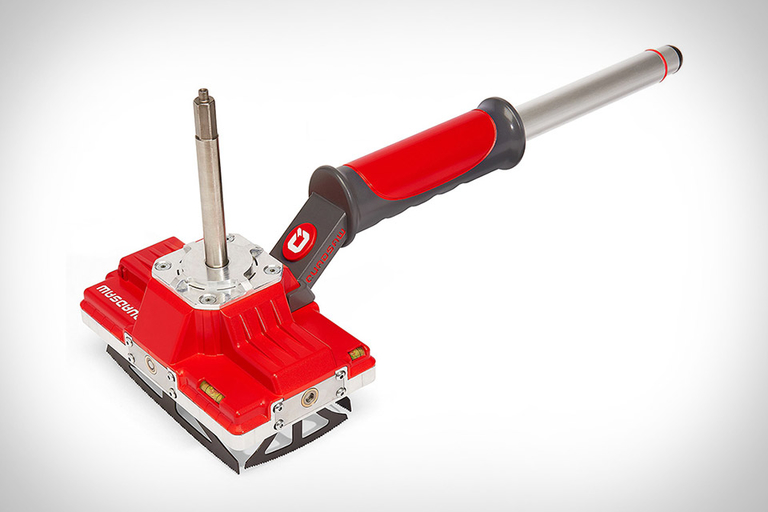
    Drills are built to make round holes. Light switches, power outlets, and other utility plates are square or rectangular. The Quadsaw makes the two compatible. It attaches to your drill...

    Visit Uncrate for the full post.
    12 Dec 14:39

    Solo Skiff Fishing Boat

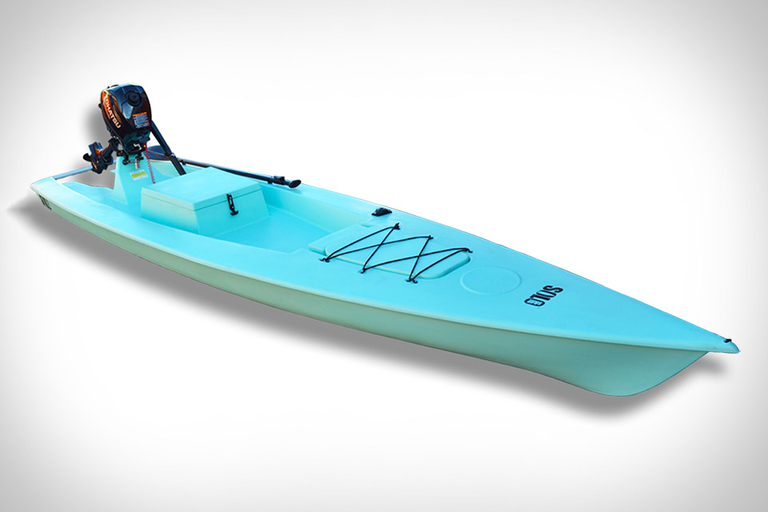
    Calling it a "boat" might be selling it short. The Solo Skiff Fishing Boat is billed as a fishing kayak, an SUP, and a power boat all in one. Its...

    Visit Uncrate for the full post.
    12 Dec 14:36

    A Man’s Primer on Advance Directives

    by Brett and Kate McKay

    man filling out living will document

    You’re driving home from work thinking about seeing your family and what’s for dinner tonight.

    CRASH!

    An inattentive driver looking at her smartphone drifts into your lane and hits you head on.

    The fire department and paramedics were able to resuscitate you at the scene of the accident, and they rush you to the ICU. You’re alive, but barely.

    While you’re not technically dead, you can’t eat or breathe on your own. You can’t move. You can’t talk to your family or doctors. Days turn into weeks, and there’s still no improvement in your status.

    Intense arguments start to flare up between your family members. Your wife says you wanted her to “pull the plug” if you ever ended up like this, while your parents say you told them years ago that you wanted to hold on as long as you could in case a miracle happened or some discovery was made that could fix what ailed you.

    Meanwhile, the hospital is charging you $10,000 a day to stay in the ICU and to perform the various tests that different specialists think you need. Thankfully, you have good health insurance that will cover a lot of the cost. But when it’s all said and done, the premium for your family will skyrocket.

    All while acutely emotional arguments regarding your fate continue to flare.

    Why You Need a Living Will and Health Care Proxy

    God forbid you end up in this situation.

    But you could.

    You don’t even have to be in a traumatic accident to end up on life support. Strokes, heart attacks, aggressive cancer, or even an adverse reaction to a medication all have the chance to put you on life support and leave you unable to communicate your desires for end-of-life care.

    The most common way you might end up on life support is simply old age. About 25% of Medicare costs are spent during the last two months of a patient’s life, and most of that is incurred from life support treatment.

    When you’re competent and able to communicate, you have the right as a patient to decide whether or not to accept the course of treatment your doctor offers, even if rejecting that treatment means you’ll die. This is called informed consent, and every state in the U.S. recognizes it.

    So if you’ve got terminal cancer and are conscious, competent, and able to communicate, you would be able to tell your doctor, “Yeah, go ahead with that experimental drug,” or “You know, that super expensive experimental drug might add two months to my life, but it won’t improve its quality. I’ve lived a good life. I want nature to run its course, and I’ll spend my last days in my home surrounded by those I love. “

    But, if you’re unconscious and unable to communicate, doctors would have to rely on a medical surrogate to make that decision for you. Many states have default surrogate consent laws that determine who gets to be your proxy. You’ve got no say in the matter because you’re unable to talk. If you’re married, your spouse is the default proxy. If you’re not married, it typically defaults to your parents, who may not agree as to what course to take.

    What’s more, there’s a chance that the person the law determines to be your surrogate doesn’t know what you would have wanted to do in this situation, and makes a decision that goes completely against your personal wishes. But again, tough luck. The hospital doesn’t know what you want (you’re unconscious, remember?) and will (in most cases) follow the dictates of your default surrogate.

    There are two ways to avoid this situation and make your health care wishes known for situations in which you’re incompetent and unable to communicate – to let yourself speak when you’re no longer physically able to. The first is a document called a “living will” which lays out your wishes for end of life decisions. The second is a document that authorizes a “health care proxy” to carry out your wishes for you. Both documents represent what are called “advance directives.”

    Living Will

    A living will is a document that you fill out while you’re still competent, conscious, and able to communicate consent that states your wishes about end-of-life care if you are terminally ill, permanently unconscious, or in the end-stage of a terminal illness. In your living will you can state whether or not you want your life extended by life-prolonging treatments in situations when you wouldn’t be able to give informed consent.

    You can get as specific as you want with your living will. For example, you can state that you want to forgo medicines that might prolong your life, while still receiving artificially administered nutrition and hydration. Or that you want to forgo all of those measures.

    You could even say that you want to be given life-sustaining treatment and artificially administered nutrition and hydration for a particular timeframe, but then have it withheld after this “waiting period” has passed. It’s up to you.

    Living wills give doctors immunity from lawsuits if they follow the documents’ recorded requests. A doctor can refuse to comply with your living will if they think your stipulations are medically inappropriate or they have an objection of conscience, but most state laws require a doctor who won’t comply with your living will to transfer you to a physician who will.

    Health Care Proxy

    A “health care proxy” is a person whom you appoint to make medical treatment decisions for you should you become unable to make them yourself. Creating a document that invests this person with this power (also known as the “durable power of attorney for health care”) prevents any debate as to who has the right to make medical decisions on your behalf when/if you become incapacitated.

    Most health care proxy forms allow you to designate alternates for your health care proxy if your first pick is unable or unwilling to carry out this role. In my case, my wife is my primary health care proxy. If she can’t act as my proxy, then it goes to my parents. If my parents can’t serve as proxies, then the power falls to my in-laws.

    You’ll want to have regular conversations with your health care proxy about what your wishes are. To really make sure that your health care proxy does what you’d like, you’ll want to give them a copy of your living will so they can see your requests spelled out.

    What About DNRs?

    A DNR, or a Do Not Resuscitate order, is a documented request that instructs health care providers not to perform CPR on you if you stop breathing or if your heart stops beating. If you want a DNR, you’ll need to ask your doctor to fill out a DNR order. You’ll also need to wear a bracelet saying you have a DNR so that paramedics don’t administer CPR on you.

    How to Create a Living Will and Health Care Proxy Documents

    Creating a living will and a health care proxy document is easy. So easy, in fact, that there’s no excuse for not having one.

    You can contact an attorney who specializes in estate law to help you put together the necessary paperwork. While you’re at it, have them do the rest of your estate planning too.

    Many states also have forms available for free for the public that create your living will and health care proxy. For example, here’s an advance directive form available at Oklahoma’s Department of Human Services. This is what my and Kate’s advance directive looks like. Just Google the state you live in plus “advance directive form,” and you’ll find the correct document.

    To make it official, you’ll need to fill it out and sign it in front of two witnesses. The witnesses must be 18 years or older, not related to you by blood or marriage, and don’t stand to inherit anything from you if you die. The witnesses must sign the advance directive.

    While you don’t need your advance directive notarized in most states, it doesn’t hurt to do so. The notary is there to verify that your advance directive was properly witnessed.

    Once you fill out and sign your advance directive, you’ll want to print off copies for your personal and family’s records, as well as send one to your doctor and lawyer.

    An advance directive may be revoked by you, either entirely or as to any part, at any time and in any manner, regardless of your physical condition (though you must still be mentally competent). The revocation becomes effective when you (or a person who witnessed the revocation) notify your attending physician or other immediate health care provider of it.

    You can also change your advance directive at any time while you’re still competent and able to communicate. Just fill out a new form, sign it in front of two legal witnesses, and have the witnesses sign it. In most states, your most recent advance directive is the one that will take effect.

    Advance Directives: The Beginning of a Lifelong Conversation

    An advance directive isn’t just a one and done thing. It’s just the beginning of a long conversation that you should be having with your loved ones and doctors. Talking to those who will possibly be involved in your end-of-life decisions is the most important thing you can do. Allison Hennigan, a neurologist in Texas I talked to about this subject, told me she and her husband sit down regularly to see where both of them are on the issue of end-of-life decisions. Your ideas about these weighty choices will likely change during different times in your life. So it’s good to revisit the conversation with loved ones and doctors now and again.

    Deciding How to Die: Factors to Consider

    End-of-life decisions are fraught with moral, ethical, and religious considerations. It’s also a highly personal choice. How do you decide how you want to live and die before you’re in a position to have to make that choice?

    Again, we’re not talking about Dr. Kevorkian-style, active, assisted suicide here. The situation that advance directives cover is when an individual is only maintaining life because he or she is receiving life-sustaining treatment — like medications or being connected to a ventilator — and artificially administered nutrition and hydration. But for this outside assistance, the person would naturally die.

    When I was working on my advance directive, I reached out to several doctors as well as a hospice nurse to get their take. Almost all of them said if they found themselves with a terminal disease, irreversible condition, or an end-stage condition, they would want to withhold all aggressive medical treatment, including artificial nutrition and hydration. The only exception was one doctor who said she stipulated that her family wait one month before pulling the plug, just in case she made a surprise recovery and emerged from her unconscious state.

    When I asked these medical professional why they all said they’d refuse all aggressive medical interventions to keep them alive, the responses were pretty much the same across the board, and came down to three factors: economics, your comfort during the last few months of your life, and the emotional well-being of your family.

    First, they talked about the economics of keeping someone on life support. They all marveled at how modern medicine can keep people alive for months or years who’d otherwise be dead. But it’s expensive to do so. Really expensive. And the studies indicate that there’s not much ROI on that investment in terms of improving the patient’s quality of life. Sure, people can eke out a few more months of life while hooked up to a bunch of tubes and wires, but when you’re in a vegetative state, that’s unlikely to mean much to you. While you may not care about how much your life support is costing the healthcare system as a whole, you may be concerned about what it will do to your family’s insurance premium.

    The more important factor in their desire to forgo life-sustaining interventions, however, was just being able to die naturally, comfortably, and surrounded by those they love. Justin Shurts, a doctor who specializes in critical care and works in the ICU, has seen firsthand what it’s like to be on life support. And it’s not a pretty picture.

    Take feeding tubes and artificial hydration. In his opinion, these measures should only be used in a few scenarios, like if someone had a stroke and was able to communicate and function in some meaningful ways, but the stroke affected their ability to swallow to such a degree that it would be potentially dangerous (e.g., aspiration into the lungs). With these folks, the feeding tube and artificial hydration are a temporary remedy until the ability to swallow comes back.

    But for someone who is unresponsive and needs feeding and hydration tubes indefinitely, things can get unpleasant. The stomach can stop absorbing nutrition, leading to possible obstruction and regurgitation. There’s also a risk of infections caused by feeding tubes.

    In her book, The Final Act of Living, hospice nurse Barbara Karnes talks about some of the risks of artificial hydration in unconscious individuals. For example, the body can be so overloaded with fluid that it starts to leak (gross), and electrolyte imbalances can occur that can make the patient feel uncomfortable.

    But isn’t it uncomfortable for a dying person to go without food and water? We certainly imagine so, based on our lived experience. But these sensations are experienced differently as you approach death. According to Barbara, part of the natural dying process is a decline in hunger and the desire for water. You know someone is getting close to dying when they no longer want food or water when you offer it to them. As Barbara puts it, dehydration is “the normal way that we die.” During the dying process, dehydration causes a spike in calcium levels, which acts as a natural sedative. We close our eyes, go to sleep, and don’t wake up. When we’re connected to feeding and hydration tubes, we override that natural process.

    A final factor that the doctors brought up about making their living will decisions was the emotional stress that being on life support for extended periods of time can inflict on a family. Justin says that these anguished bedside vigils – an open-ended grief that can’t begin to heal – are one of the hardest things to see with his line of work, and that he wouldn’t want his family to go through that.

    The opinions of the medical professionals I consulted are hardly anomalous; more than 80% of doctors surveyed do not wish to have aggressive life-prolonging treatment at the end of their lives either.

    But no matter what doctors think is best for themselves (which they ironically don’t often apply to their patients) end-of-life treatment is a personal choice that each man needs to make for himself. Talk to your family members and your doctor about it. I also recommend reading The Final Act of Living by Barbara Karnes. It helped me out a lot when making my own living will decisions.

    Whether you want life-prolonging treatments or not, make sure you make your wishes known with an advance directive so you can continue to have a voice — even when you can’t speak.

    The post A Man’s Primer on Advance Directives appeared first on The Art of Manliness.

    12 Dec 14:32

    On the Brink: 1906

    by Dave
    1906. "North from Brink Wood, Pen Mar Park, Maryland." With William Henry Jackson himself about to go snap. 8x10 inch glass negative. View full size.
    12 Dec 14:24

    The Real Story Behind the Myth of Area 51

    by Miss Cellania

    Once you classify something as top secret, people find a way to fill in the void of information with speculation, which can turn into conspiracy theory, and might become legend. The U.S. military's Area 51 in Nevada is legendary for its secret research on captured UFOs and the aliens they contain. The legend grew because the government wouldn't explain the classified aviation research going on there. The acreage was set aside for the development of the U2 spy plane in the 1950s.  

    U-2 testing began in July 1955, and immediately reports came flooding in about unidentified flying object sightings. If you read the details in a 1992 CIA report that was declassified with redactions in 1998 (and subsequently released nearly in full in 2013), it's easy to see why.

    Many of these sightings were observed by commercial airline pilots who had never seen an aircraft fly at such high altitudes as the U-2. Whereas today's airliners can soar as high as 45,000 feet, in the mid-1950s airlines flew at altitudes between 10,000 and 20,000 feet. Known military aircraft could get to 40,000 feet, and some believed manned flight couldn't go any higher than that. The U-2, flying at altitudes in excess of 60,000 feet, would've looked completely alien.

    Naturally, Air Force officials knew the majority of these unexplained sightings were U-2 tests, but they were not allowed to reveal these details to the public. So, "natural phenomena" or "high-altitude weather research" became go-to explanations for UFO sightings, including in 1960 when Gary Powers' U-2 was shot down over Russia.  

    These obviously lame excuses fed speculation about extraterrestrials. As the years went by, more astounding aviation breakthroughs were achieved at Area 51, but the geniuses behind them got no credit because of the secrecy. Meanwhile, the legend has become a moneymaker for businesses surrounding the forbidden zone. Read the history of Area 51 at Popular Mechanics. -via the Presurfer

    (Image credit: X51)

    12 Dec 14:21

    4 Ways to Completely Delete Your HDD

    by Kev Quirk
    completely-delete-hdd

    Did you know that formatting a hard drive doesn’t actually delete the data stored on it? Recovering data after a hard drive has been formatted is actually quite simple. When formatting a drive, the tool you use simply deletes the old partition, then creates a new one. The operating system can no longer read the data that the drive contained, but the data still exists. When selling an old machine, or HDD, or even if you’re just looking to dispose of it, securely erasing everything on your hard drive is very important. But how do you do that? 1. Software (DBAN) Darik’s Boot And...

    Read the full article: 4 Ways to Completely Delete Your HDD

    12 Dec 14:20

    6 Unique Ways to Use Google Maps With Other Google Tools

    by Ryan Dube
    google-maps-unique-use

    Google Maps is easily one of Google’s greatest achievements. It allows millions of people, every day, to find their way, share directions, and make it to their appointments on time.

    The usefulness of the application extends far beyond the basic features that you find on the website’s homepage, and part of this usefulness is due to Google’s other services being so neatly integrated with it. Here are some unique ways that you can use Google Maps with other applications.

    1. Google Now Features Have Been Integrated Into Google Maps

    Google Now Updated Integrated Google Maps

    Google Now is technically still functional: its app launcher is available through Google Play, too. However, Google Now as a brand is no longer being advertised.

    That’s because Google has restyled Google Now as the Google feed. It’s also worked a lot of its features directly into Google Maps along with its burgeoning Google Assistant.

    For example, Google Now used to let you look for a business close to your current location: all you had to do was ask for nearby coffee shops, gas stations, or convenience stores. Within seconds, you would be able to get a map with all your locations plotted out.

    Currently, this feature and others are directly available in Google Maps. So long as you have location services enabled on your phone, you can take advantage of this quick directory for stores and services.

    2. Use Google Maps With Google Drive

    Create My Maps in Google Drive

    If you have a Google account, the odds are pretty high that you use Google Drive on a regular basis. Did you know that you can also create and organize Google Maps within your Drive account itself?

    To create a new map, click on New> More > Google My Maps. This takes you to a Google Maps page where you can plot out your desired location using different layers.

    When you finish creating the map, just close the tab. All these changes are automatically saved to your Google Drive account, so make sure you give the map a name that you’ll remember!

    You can also sort your maps into different folders. This organization is useful for planning an extended family trip where you’ll be visiting a lot of different places, or you need to keep all your travel maps in the same folder.

    The integration of Google Maps with Google Drive is probably one of the most convenient ways you can make use of the app with very little effort.

    3. Embed a Google Map Into a Google Site

    Embed Google Map in Google Site

    If you use Google Sites to publish a web page, you can embed a Google Map into your website without much effort or coding at all.

    In the edit mode on your website, just click Insert > Map. On the next screen, you can type the address that you want to display on the page, and Google will pull it up. You’ll see a preview of the map in the window pane.

    After the map is inserted, you can adjust how the map will be embedded into your webpage. You can adjust the width and height, or additional visual elements to emphasize it.

    For more direction:

    • If you’re worried about the complexity of this process, have no fear. No coding is required, nor any special external add-ons or widgets, either.
    • If you want to use one of your customized maps that you’ve created in My Maps, you can click on My Maps instead of Maps on the Select a map screen. You’ll see a list of maps stored in your Google Drive account.

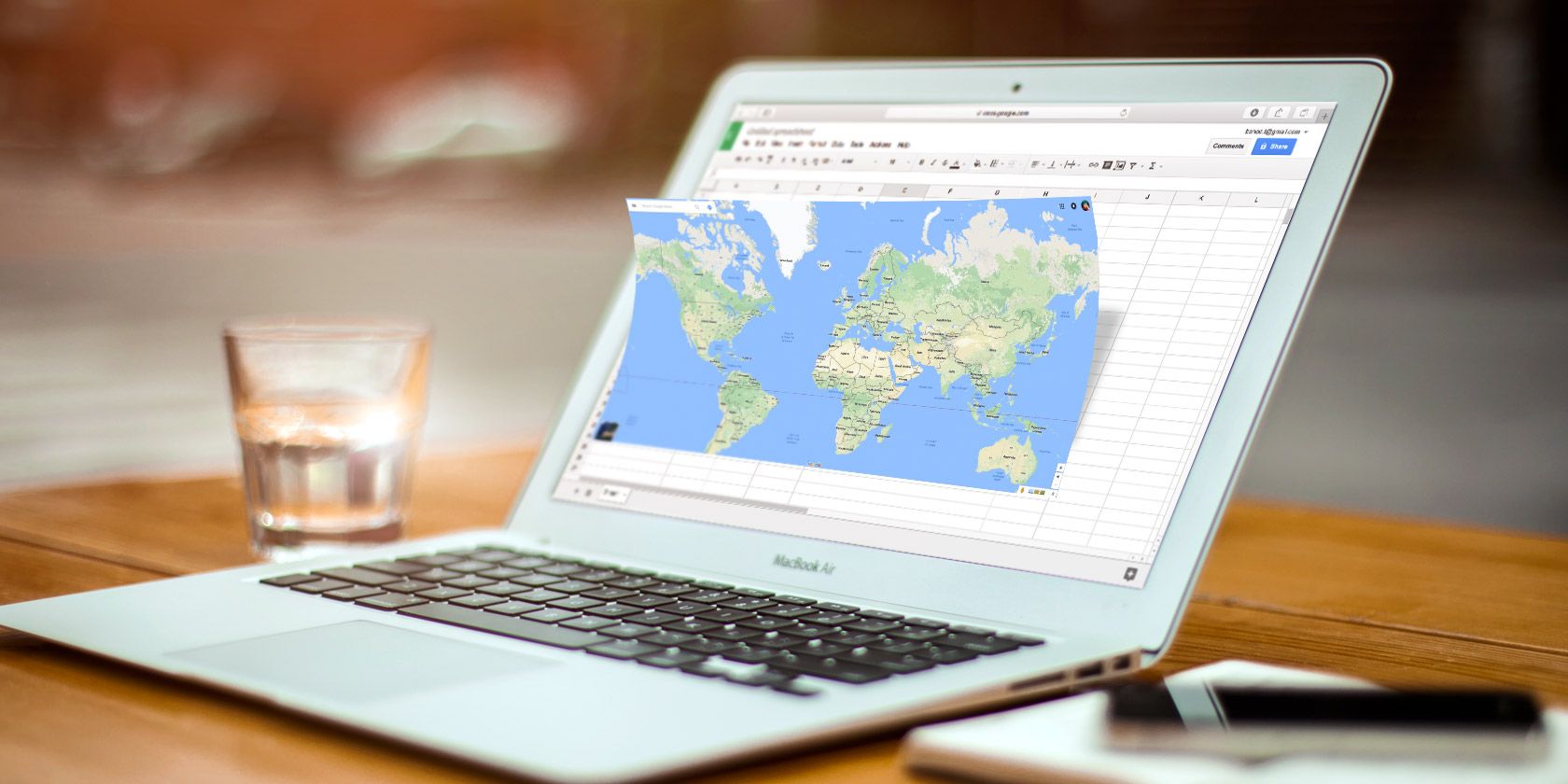
    4. Embed Google Maps in Google Sheets

    Embed Google Map in Google Sheet

    Now there are several ways that you can convert a spreadsheet address to embed it in a map. These methods usually involve a KML file, so you can transfer the address data to Google Maps.

    This is not a bad way to accomplish this task, but there’s an easier way to embed a Google Map in a Google Sheet.

    The first thing you need to do is install the Mapping Sheets add-on. Once installed—from inside Sheets—click Adds-ons > Mapping Sheets.

    Afterward, you’ll see the Mapping Sheets window pop up on the right side of the spreadsheet.

    Once you have the map data in your spreadsheet—using whatever headers you want for title, filter, or location—you can click on the View button at the bottom of the Add-on window. This will instantly map and pin all those addresses to Google Maps.

    Please note: While Mapping Sheets is free, it has also introduced a subscription plan.

    5. Embed a Google Map in a Google Doc or Gmail

    Embed Google Map in a Google Doc

    If you want to insert a Google Map into Google Docs or embed a Google Map in Gmail, there’s technically a simple solution to this. If you take a screenshot of it, you can actually embed it as an image in either place.

    However, Google has rules and regulations about how you can use Google Map images.

    The basics of it:

    • Google Maps are okay for non-commercial intent, so long as there’s clear attribution and it falls under the category of Fair Use.
    • These rules also apply to embed a map in Google Slides, too.

    Even still, the demand for static Google Maps remains high.

    Over the years, online map-making image tools have risen up to meet this demand. Several years ago, we even wrote about a Google Map image generator called Prodraw. It allowed you to input your address coordinates and get a picture of your map in return.

    After revisiting this tool, we found that Prodraw’s ability to consistently provide accurate images was unreliable.

    Another tool that you can use to generate static maps is the Static Map Maker. It requires an API key to work.

    The API is a great mapping tool for Google Map developers. However, if you aren’t a programmer and you don’t have an API key, then you’re out of luck. Sure, you could sign up for a key, but if you only plan on using this key once or twice, is it really worth it? Probably not.

    6. Add Google Maps to Google Calendar

    Embed Google Map in Google Calendar

    Another great integration of Google Maps with other Google products is the ability to link a map to a scheduled event in your Google Calendar.

    When you enter the details for your event, click on the Add location or conferencing text box. Type the address or focal point where your event will be held. Google will automatically pull up a list of the most closely-related addresses with those words in the titles.

    Click on the correct address to add it to your event. When you’re done including the details, press Save.

    Later—when you want to check the address for your event—expand the event on your Google Calendar. Click on the link to your location. Google will then take you directly to the map of that location. From there, you can get directions.

    Use Google Maps Everywhere

    An online map is a useful tool for a lot of things you may do every day. Whether it’s sending someone directions to your house or saving maps to your Google Drive for your upcoming family trip, these integrations are very handy.

    If you’re curious about other timesaving map tips, pull up your mobile and try these Google Maps tricks on your Android.

    Read the full article: 6 Unique Ways to Use Google Maps With Other Google Tools

    12 Dec 14:20

    The Excel VBA Programming Tutorial for Beginners

    by Brad Jones
    vba-excel

    If you’re using Excel, you have to try this power tool! Visual Basic for Applications (VBA) is the Microsoft Office programming language that allows you to create macros and userforms, add a message box, execute code inside a document in response to a trigger, and much more. With VBA you can supercharge your Excel spreadsheets. And you just have to learn a little bit about coding. This guide will help you try your hand at VBA with a simple project: a button that converts the value of a chosen cell from GBP to USD. We will introduce you to the ways that VBA and Excel...

    Read the full article: The Excel VBA Programming Tutorial for Beginners

    12 Dec 14:19

    Amazon Music Unlimited vs. Prime Music: What’s the Difference?

    by Dann Albright
    amazon-music-unlimited-prime

    When comparing streaming music services such as Spotify, Apple Music, and Google Play Music, most people don’t think of Amazon. But the online giant has two different options to choose from: Amazon Prime Music and Amazon Music Unlimited.

    In this article, we take an in-depth look at both Amazon Prime Music and Amazon Music Unlimited to help you determine which one is right for you.

    What’s the Difference Between Them?

    The most notable difference between the two services, outside of price, is the number of songs available. Amazon Prime Music boasts more than 2 million songs compared to the “tens of millions” of tracks available on Amazon Music Unlimited.

    For comparison, Spotify features more than 30 million tracks. So that’s a substantial difference to take notice of, especially if you’re a fan of more obscure music and artists.

    Both Music Unlimited and Prime Music allow for unlimited skips and the ability to download songs to an app for offline listening. The services are also free of any advertisements.

    What Does Amazon Music Unlimited Cost?

    Amazon Music Unlimited Logo

    New listeners can take advantage of a 30-day free trial for Amazon Music Unlimited. After that, the most affordable plan costs $3.99/month. But don’t get too excited just yet—that plan only gives you access to the service on one Alexa-enabled device like the Echo, Echo Dot, or Echo Spot.

    If you’re considering buying an Echo device, find out which Amazon Echo device is best for you.

    If you’re a college or university student, there’s another way to subscribe for less: the discounted student plan costs $4.99/month and features all of the perks of a regular subscription. You will, however, need to verify enrollment in a degree-granting college or university to nab that option.

    For Amazon Prime members, a regular Amazon Music Unlimited subscription costs $7.99/month or $79/year. If you’re not an Amazon Prime member, the standard price is $9.99/month.

    For multiple users, there is also a family plan that costs $14.99/month for up to six shared members. Amazon Prime members have the option to pay $149/year for the family plan.

    On the other hand, Amazon Prime Music is free for all Amazon Prime subscribers. Take a look at our primer to decide which one of the Amazon Prime payment options will work best for you.

    If you’re already an Amazon Prime member, the biggest factor in deciding whether to pay more for Amazon Music Unlimited is whether Amazon Prime Music’s small selection of music is enough for you.

    How to Listen to Amazon Prime Music/Music Unlimited

    Amazon Music App Availability

    Like Amazon Prime Music, you can access Amazon Music Unlimited through a web player or downloaded app. The Amazon Music app is available for just about every platform you can imagine, from an iPhone to your car.

    Unfortunately, one of the biggest downsides for users is that the web player and PC/Mac apps aren’t as polished as the clients from more well-known streaming services. It might take some work to find what you’re looking for, and you’ll need to put in a little more effort than you do with Spotify or Apple Music, but they work. Eventually.

    Comparing the Music Selections

    As you might expect, with tens of millions of songs available, the music selection is significantly better on Amazon Music Unlimited than it is on Amazon Prime Music.

    When comparing the two options, I found many more of the classic and modern artists I enjoy listening to on Amazon Music Unlimited. While there are a lot of great choices on Amazon Prime Music, the difference between the two is pretty obvious.

    But the availability of your favorite music may be different depending on your own tastes. That’s a big reason you should take advantage of the 30-day free trial for Amazon Music Unlimited before making a commitment with your wallet.

    Is Amazon Music Unlimited Worth Paying For?

    The biggest question for most music fans is whether or not Amazon Music Unlimited is worth paying money for, especially when Amazon Prime Music is one of the overlooked perks of being an Amazon Prime member.

    Obviously, it depends on whether you’re happy with the two million songs currently offered by Amazon Prime Music. To be fair to Amazon, that’s a huge number of songs. Whether your musical tastes are well represented, however, will depend a great deal on which genres and artists you like.

    If you have wide-ranging tastes, listen to a lot of music, or just aren’t satisfied with the selection offered by Amazon Prime Music, the monthly fee to upgrade to Amazon Music Unlimited is probably worth it. That’s unless you already use, and are happy with, other options like Spotify, Apple Music, or Google Play Music.

    If you’re new to the world of Amazon and are wondering whether an Amazon Prime subscription is worth the money, we’ll help you decide with our comprehensive primer for Amazon Prime.

    Read the full article: Amazon Music Unlimited vs. Prime Music: What’s the Difference?

    12 Dec 14:15

    How to Take Photos With Light Trails in 5 Easy Steps

    by Harry Guinness
    get-light-trail-photo

    Do you want to get more creative with your camera? Light trail photography is one of the best ways to get started. Capturing light streaks is relatively simple to do, and can produce truly striking results.

    You don’t need any special gear, and you can even do it on your phone. You just need to know how to set everything up properly. In this article we explain how to take incredible light trail photos in five easy steps.

    1. Set Up Your Camera for Long Exposure Photos

    Like with any long exposure image, a tripod is essential for photographing light streaks.

    Set your tripod up in a stable position and lock your camera down tight. When you’re shooting near a road, bear in mind that fast moving cars could cause it to shake if you don’t have it well positioned. Some tripods have a hook for a weight, so hang your gear bag from it.

    Need a new tripod? The Geekoto Tripod is lightweight and affordable and is very well regarded by its users. Or if you’re shooting on your phone, take a look at the UBeeszie Tripod S as an option.

    Geekoto Tripod, Camera Tripod for DSLR, Compact Geekoto Tripod, Camera Tripod for DSLR, Compact Buy Now on Amazon $79.99

    If you don’t have a tripod, find a nearby wall or somewhere else to prop up your camera. You’ll be using a shutter speed in the region of 30 seconds, so holding the camera in your hands is out of the question.

    Autofocus doesn’t work well very in low light, so switch your lens to manual focus mode and nail the focus yourself. Also, turn off image stabilization on your camera. While this is great for handheld shooting it can actually cause vibrations when your camera is mounted on a tripod.

    turn off image stabilization

    For light trail photography, you’ve got a pretty free rein when it comes to composition. You can use a wide angle or telephoto lens, and shoot from high up in a building or low to the ground. Almost anything will work. The only thing is to pick a composition that works with your surroundings. Select your focal length and frame your shot.

    2. The Best Settings for Light Trail Photography

    The most important step in capturing light streaks is to use the proper camera settings. You need to experiment to get the right settings for each shoot, but your starting points should include:

    • A very slow shutter speed, of around 30 seconds
    • Your camera’s base ISO setting
    • A small aperture, around f8-f11

    The Best Shutter Speed and ISO for Light Trail Photos

    shutter iso light trails

    Light trails work best with a really slow shutter speed—somewhere around 20 or 30 seconds. Any shorter, and some details from the objects causing the light trails might get recorded. Start with a shutter speed of 30 seconds. If you need to, you can lower it to 20, or even 15 seconds, later on.

    Any time you’re shooting long exposures it’s important to use a low ISO. You don’t need the low light benefits of a higher ISO, and choosing a lower value will help you minimize noise as far as possible. Set your camera to its base ISO setting, which is usually ISO 100.

    The Best Aperture for Light Trail Photography

    Next, choose a small aperture that will maximize your depth of field. This will ensure everything in your image is tack sharp, and also help you to control the exposure. Essentially, you want the background of your shot to be fairly dark, but still visible, and the streaks of light to be bright, but not blown out.

    A larger aperture, like f/2.8, lets more light into the camera and will force you to use a faster shutter speed to expose the shot correctly. A faster shutter speed won’t produce light trails.

    f8 f11 light streaks

    An aperture of between f/8 and f/11 works well on most lenses (you can push it f/16 if you’re shooting on a full frame camera). Once you’ve dialled that in you can change the shutter speed to make small tweaks to the exposure.

    Finally, this one should go without saying, but set your camera to capture RAW images. This will give you much greater wiggle room when it comes to processing and cleaning up your shots.

    3. Press the Shutter Button

    With everything ready to go, it’s time to take the shot. When you’re using a tripod and a slow shutter speed, just pressing the shutter button can introduce vibration into your photos.

    The best way to avoid this is to use a remote trigger or shutter release cable. Something as simple as the AmazonBasics Wireless Remote Control will do the job for Nikon or Canon cameras, or try the Pixel FSK for Sony.

    AmazonBasics Wireless Remote Control for Nikon Digital SLR Cameras AmazonBasics Wireless Remote Control for Nikon Digital SLR Cameras Buy Now on Amazon $8.49

    Otherwise, set the camera’s auto-timer to two seconds. This is the same mode you use for taking family portraits. It gives you time to press the shutter button without disturbing the shot, although you’ll need some practice to figure out exactly when to press.

    4. Repeat the Process

    light trails instagram

    Don’t stop after your first shot. Light trail photography takes experimentation, first to get the settings just right and then to get the image you really want. Check the #lighttrails hashtag on Instagram if you need some inspiration.

    It can be tempting to pack it in if it’s night, you’re cold, and each photo takes as long as a minute to capture, but keep shooting. Change the angle, try different focal lengths, use a longer or slower shutter speed, and just mix things up a little. Often, the random things you try towards the end of a shoot can be the ones that work best.

    5. Post Process the Image

    process light trail photos

    Editing your images is super important. For creative and abstract photography like light trails, it’s critical. The images will never look their best straight out of camera.

    Some edits you might like to make are:

    • Increase the saturation of the light trails to make them more intense.
    • Increase the contrast of the image to make the light trails stand out more.
    • Convert the image to black and white to give it a more abstract feel.
    • Remove distracting background elements.
    • Blend multiple light trail exposures to increase the effects.

    Take a look at how to edit photos in Photoshop and how to edit photos in GIMP if you need help getting started with this.

    A Few More Tips for Light Trail Photography

    That’s the straight how-to of shooting light trails but there’s a lot more you can experiment with.

    • Before setting up a shot, think about how the light trails are going to appear. Watch the lights move and visualize the lines. Bear them in mind when you’re composing the image.
    • Play around with compositional ideas like leading lines and symmetry. Light trails can be a great way to lead a viewer’s eyes and a lot of situations where you can shoot them lend themselves to perfectly symmetrical framings.
    • Just because you’re shooting light trails, don’t forget about the rest of the image. Compose for the background too. Crop out any distracting elements.
    • You don’t have to shoot at night. You can also shoot light trails in the hours around dusk or dawn. Try shooting them at different times; you’ll get very different images.
    • Cars are the traditional subject for light trails but play around with different subjects. Head to an airport and shoot planes, photograph runners using head torches, or any other situation where you can find moving lights.

    Shoot Light Trails on Your Smartphone

    light trail photography

    Generally speaking you’ll get the best results with long exposure photos if you use a DSLR or mirrorless camera. But by using the techniques outlined above you can get good night photos with a smartphone.

    Most smartphones offer a manual mode that allows you to control the shutter speed and ISO. You can’t change the aperture, but you don’t need to, as smartphone cameras all have a very large depth of field anyway. Make sure you switch off the flash and other software tricks like HDR mode.

    Better still, ditch the built-in app and use a more powerful third-party option instead. Our guide to the best camera apps for Android and iOS will help you take great light trail photos.

    Read the full article: How to Take Photos With Light Trails in 5 Easy Steps

    12 Dec 14:14

    Want to Work Remotely? Tips on How to Convince Your Boss

    by Rob Nightingale
    work-from-home

    For many people, working from home was a dream. Imagine waving goodbye to a grueling commute and office politics. Sounds great, right? Unfortunately, even if you know that working from home is the best option, convincing your boss to let you make the switch is not easy.

    In the current era with an ongoing pandemic, however, working from home might also become a necessity. So, here are some helpful tips and easy exercises to prepare you to sway your boss.

    Can I Work From Home?

    Work From Home Jobs Use a Laptop

    According to a study by Global Workplace Analytics, over 56 percent of employees in the US “have a job where at least some of what they do could be done remotely.” Just over 40 percent of the current workforce also “work remotely with some frequency.”

    With the state of employment in 2020, that number is set to rise.

    To emphasize just how much things have shifted: Twitter recently announced that employees could work from home indefinitely, as reported by Forbes and other outlets. Other companies are also starting to realize that working from home can be a boon for employers if they’re looking to cut back on rental office space.

    Additionally, since the early 2000s, the number of teleworkers in the US has skyrocketed. The internet has revitalized legitimate work from home jobs. And a Microsoft white paper cited by Forbes also shows why the idea of remote work is so appealing.

    The top five benefits of working from home, as cited, are:

    • A healthier work/life balance. (60%)
    • Less money spent on gas. (55%)
    • Less time spent sitting in traffic. (47%)
    • The ability to be more productive when working from home. (45%)
    • Less distractions. (44%)

    Faced with these kinds of benefits, working from home seems like an obvious choice.

    That said, you also need to see this from your boss’s perspective. If they aren’t used to the concept of non-traditional workspaces, they probably harbor doubts about your potential transition.

    This is why you need to be armed with the relevant tools, information, and strategy to put them at ease.

    Does Work From Home Reduce Productivity?

    How to Work From Home Effectively

    When it comes to learning how to work from home effectively, not only are you asking your boss to trust you to focus, you’re also asking to work with much less guidance than you had before.

    While some folks are naturally skilled at independent work, from your boss’ perspective there is still cause for concern. This worry boils down to the fact that they have no pre-existing knowledge of how you’ll work in a different environment.

    Will your current productivity levels keep up?

    Fortunately, plenty of studies have shown that these worries are vastly misplaced. If you’ve casually mentioned working from home to your boss, it might be worthwhile to send them links to relevant studies, especially if they’re anxious about the aforementioned productivity.

    Let’s run through those stats now.

    Here Are the Numbers

    • One Stanford study showed that working from home increases individual productivity by 13 percent. Of that number, “9% was from working more minutes per shift (fewer breaks and sick days), and 4% from more calls per minute (attributed to a quieter and more convenient working environment).”
    • A 2015 survey by CoSo Cloud also found that 52 percent of workers were “less likely to take time off when working remotely—even when sick… Overall, 44% have a more positive attitude, and 53% report reduced stress. 51% spend more time with their significant others, adding to greater job satisfaction.”
    • Also, a 2014 State of Telecommuting PGi report found that 82 percent of telecommuters experienced less stress, 80 percent experienced improved morale, 70 percent saw an increase in productivity, and 69 percent saw an improvement in absenteeism.

    Basically, the numbers are on your side when it comes to productivity in work from home environments. This doesn’t even begin to touch on the potential employer savings in overhead costs (such as office supplies and snacks), environmental benefits, and reduced employee turnover.

    When Should You Ask to Work From Home?

    How to Work From Home Effectively Use Asana

    The timing of when you should ask your boss is important. The question should be posed when your employer is in a confident state of mind about your work. It should also be done in a way that makes it clear that your boss will be getting more benefits by letting you work out of the office.

    As Ramit Sethi points out in his best-selling book I Will Teach You To Be Rich, this conversation would ideally happen soon after you’ve received a positive performance review.

    To keep track of when you need to ask your boss, we also recommend a project management tool like Asana. To learn more about this app, read our beginner’s guide to using Asana for any project.

    How to Prepare Your Work From Home Proposal

    Work From Home Proposal

    Now that you’ve found the perfect time to propose this work from home solution, you need to prepare your proposal. After all, even with the numbers on your side, there are other practical issues that might get in the way of receiving a thumbs up.

    Before you ask, you need to prepare a plan to show how you’ll adapt to this new working environment. Basically, the aim is to walk into that meeting knowing that you have every angle covered, and to cause as little inconvenience as possible.

    When mapping out your proposal, it’s best to turn it into a concise document that you can leave with your employer, if they request it. Remember, the trick is to be thorough, but short. No one likes reading rambling, page-long essays.

    When crafting this document, any word processing program should do. For this article, I’m using Google Docs as an example.

    You can also use this list of checkpoints below as a guide for what should be covered in the document itself.

    Working From Home Will Make Improvements to the Workday

    First, explain current frustrations and bottlenecks to your workflow within the office. Perhaps too many distractions interfere with your ability to complete your task.

    Point out how these issues have the potential to affect the productivity of all workers in the office, not just yourself. Explain that some of these issues would be resolved if you and the others could at least partially work from home.

    Working From Home Will Not Cause Connection Issues

    Your boss might be worried that you don’t have a reliable or fast enough internet connection. To allay this fear, you can run an internet speed test using a site like SpeedTest or Fast.com. If your personal connection is too slow, you can take steps to improve it.

    If your wi-fi goes down for any reason:

    • Be sure to have a backup solution to deal with this loss.
    • Reassure your boss that if there are any serious issues that occur, you can still make it to the office same-day as needed.

    Please Note: If a long commute was the main reason you wanted to work from home, your argument that you can make it to the office will appear flimsy.

    Access to Software and Company Data

    You might require access to certain software applications. Make sure that you can access all these applications on your own, too.

    • If you have a company laptop, this should be easy enough.
    • Also, if you need to access company data on a company server, you might already have access to a VPN connection. If not, your IT department might be able to help you out.
    • If you’re planning to use a personal computer, however, you’ll have to figure out a way to access this software and data securely.
    • You’ll need to learn about how VPN tunneling protects privacy, too.

    Working From Home Will Still Allow for Constant Communication

    Another worry for most employers is that you may not be as open to communication as you were in the office.

    Ease this worry by explaining that you will be available to talk, just as you were on-site, via phone, email, Skype, Google Hangouts, Slack, or your company’s specific communication tool.

    If needed, you could also suggest one of these collaboration tools for remote workers, too.

    Performance Reviews Still Apply

    To help your boss keep an eye on the work that you’re actually completing at home, suggest a regular performance review of your weekly goals.

    This simple step could be something like sending a regular email to keep your boss up to date on your progress. You can discuss what you’ve done, any problems you may be having, or any breakthroughs that you’ve made.

    How to Ask to Work From Home

    Ask to Work From Home

    To quote Ramit Sethi’s book, after a positive performance review, you could say something to your boss like:

    “I’d love to provide even more value to the company in the future. But lately, I’ve been getting burnt out from the commute. It would make a world of difference if I could work from home a day or two each week.”

    After explaining why you think working from home would solve this issue, Sethi advises people to keep quiet and wait for a reply.

    At MakeUseOf, we also recommend that you make it clear during your proposal that you’ve already checked out your own plan to see if it’s achievable. You can also offer to send over a short document explaining this plan, at your boss’ behest.

    Working From Home Is Achievable

    With all these steps in play, hopefully your boss will agree to let you do a trial run. If that trial goes well, you’ll be in a great position to request to work from home more regularly.

    Now, it’s up to you. Here’s how to tell if you have the self-discipline to work remotely. Additionally, if your boss absolutely refuses to let you work from home, and you absolutely need to, then you can also check out our list of the best companies that offer remote working jobs.

    Read the full article: Want to Work Remotely? Tips on How to Convince Your Boss

    12 Dec 14:10

    Now This Is How You Make Fried Chicken


    Stick-to-your-ribs comfort food — in the comfort of your own home.

    ...

    Read More »
    12 Dec 14:10

    The Definitive Supercars of the ’50s


    To see how far supercars have come, we look back decades to the first of their ilk.

    ...

    Read More »
    12 Dec 14:06

    5 Professional Photographers, 5 Different Camera Systems


    The shot is the finished product. This gear gets you there.

    ...

    Read More »
    12 Dec 13:19

    The Kid Should See This/Travel tip/Quora email digest

    by Claudia Lamar

    Listenable:
    Some of the best music being written these days is for movie soundtracks. Because they usually lack dialog and lyrics, I find movie scores easy to listen to while working. If you want some suggestions to start with, this is a decent list of the best scores since the start of this century. Quite a few of them are available on Spotify. — KK

    Learning:
    The website The Kid Should See This gathers the best short videos that explain how the world works. Subjects includes nature, science, technology, art, politics, So far they have collected 2,600 videos that “are not made for kids, but are perfect for them.” The videos are really great for any do-it-yourselfer, for any life-long learner. In fact, the site might be called “The Adults Should See This.” — KK

    Edible:
    I drop one Nuun tablet into my glass of water in the morning and another before I go to bed. Nuun tablets contain sodium, potassium, magnesium, and calcium. It’s very likely a placebo effect, but I feel better and more replenished from drinking water with a Nuun tablet in it. In any case, it’s a fizzy, citrusy treat that I look forward to. — MF

    Travel Tip:
    Here’s an easy way to approximately convert Centigrade to Fahrenheit: “double the Centigrade temp, subtract the first digit of the result from the result and add 32.” Example: 16 C = (32-3)+32 = 61 F. (This tip appeared on Fodor’s Travel website.) — MF

    Tool:
    I’ve been using the Clarisonic Mia2 for a couple of months now and I’ve seen a definite improvement in the appearance of my pores and brightness of my skin. It does a really great job at removing my makeup and exfoliating. I can’t imagine living without it now. — CD

    Followable:
    I am signed up for frequent email digests of the top questions in my Quora feed. I get these at least once a day, and often find myself falling down the rabbit hole and discovering new blogs and books and recommendations. One question I am following with really interesting perspectives and answers is: How do I become strong mentally? — CD

    Get the Recomendo weekly newsletter a week early by email.

    -- Kevin Kelly, Mark Frauenfelder and Claudia Dawson

    11 Dec 20:04

    Mailbag: We’re Building a Custom FJ40, and It’s All Yours


    Love for the custom FJ40 on Twitter, a Monty Python reference on Facebook, gear advice on Snapchat and more.

    ...

    Read More »