In addition to handmade gilded frames, Fred Reed Picture stocks a wide range of styles, from antiques to bark, tramp art, and acrylic.Photograph by Caroline C. Kilgore Frames, like fashion, can go out of style. That’s one reason it’s best to choose something classic. Besides, the perfect frame should draw attention to the art rather than to itself. “I try to go the simpler route,” explains Patricia Horton, a former art curator who now owns Fred Reed Picture Framing on Miami Circle. “If you use a simpler frame, the piece will change with you.” Founded in 1947, the studio now serves second- and even third-generation customers. Horton gave us a primer on framing essentials. French mats are reproductions of 19th-century framing materials. Reed hand-paints trims…View Original Post
If I had a buck for every half-baked idea posing as a life hack or product innovation I'd be drowning in dollars, but then I'd come across one of these genius ideas worth a million and I'd have to give the creator all my bucks!
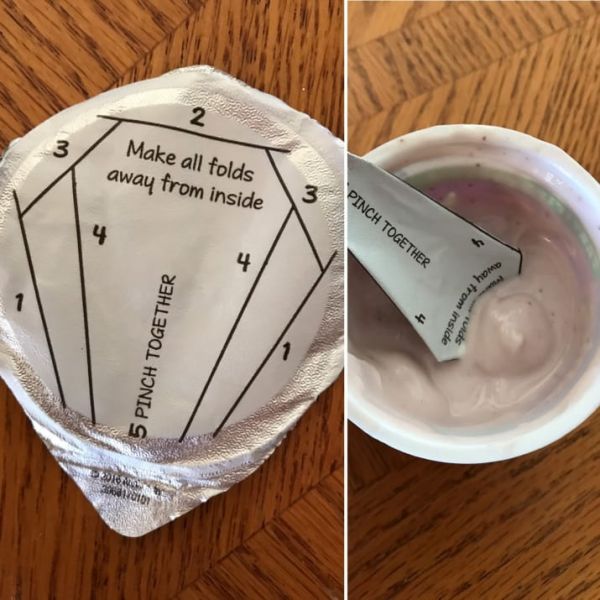
Seriously, who doesn't think a vertical chessboard you can hang on your wall, a fry basket that fits on top of your soda or a yogurt lid that folds into a spoon aren't million dollar ideas?
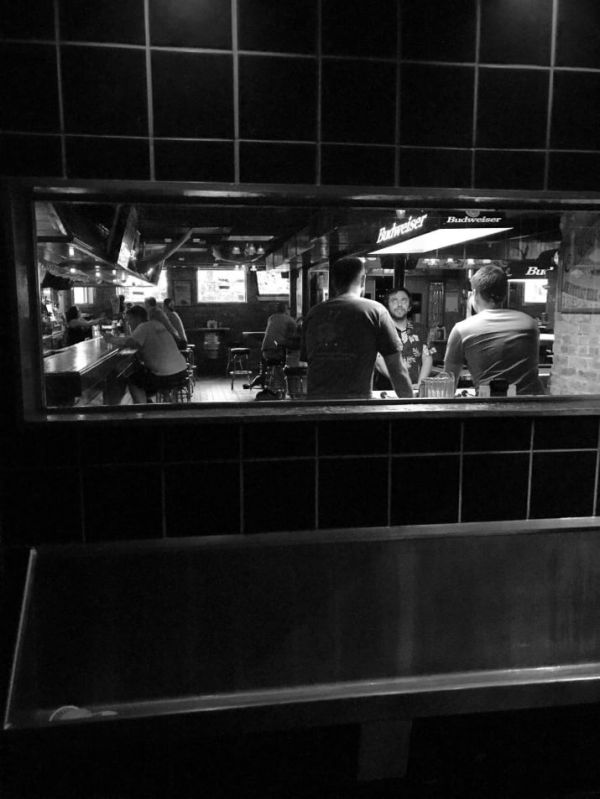
If you answered "I don't think these ideas are utterly brilliant" then tell me this- got a better idea than putting a two way mirror in the bar bathroom so you can keep an eye on what's happening while you're "indisposed"? Neither do I...
Noah has heard about the hidden job market where people get good jobs that are never advertised. How do they do it? How can Noah get into the hidden job market, too?
Bees get lots of love for their role as pollinators, an immense service they provide to the food system. That’s well-deserved, as they are Mother Nature’s most efficient pollinating workhorses, and they spread buzzy good vibes around the garden, to boot.But there are a host of other critters performing this service for the world’s food crops all the time. One study found that non-bee insects account for 38 percent of pollination services in 17 major crops. Some non-bee pollinators are barely visible, such as tiny midge flies, while others are likely to give you a fright, like bats. Here’s a rundown of some of our lesser-recognized but still highly valuable pollinator buddies. Pollinator: BatsA lesser long-nosed bat (yes, that is the species’ full and real name) pollinates a cross-section of a saguaro cactus flower. Photo: Merlin D. Tuttle, Bat Conservation International / USDA FlickrBats pollinate more than 500 species of plants worldwide, including many tropical fruits: mango, banana, durian, guava, cashew, and others. They also pollinate agave plants in Mexico, the source of an alternative sweetener (agave nectar) and booze (tequila). Not surprisingly, they are experts at pollinating night-blooming species, and favor large bell-shaped flowers, especially white ones with a sweet fruity odor. Bats are not major pollinators in the temperate regions of the U.S., though they do help pollinate peaches and almonds, as well as a number of cacti in the Southwest. To attract bats, install a bat house under your eaves or in a nearby grove of trees. You can also plant some of their favorite flowers: evening primrose, nicotiana, heliotrope, four o’clocks, moonflower, night-blooming jessamine, and honeysuckle.Pollinator: BeetlesA small beetle helping to pollinate an Aster flower. Photo: Garret Nuzzo-Jones / FlickrBeetles aren’t the most cute and cuddly creatures in the insect kingdom, but they play a major role in pollination. In fact, beetles were pollinating plants millions of years before bees even evolved. While they are not a primary pollinator for most food plants today besides a few obscure crops like macadamia nuts and pawpaws, beetles assist in the pollination of a large number of crops. There are hundreds of types of beetles, big and small, so almost any type of flower is fair game.You don’t need to do much to attract beetles, as most live in the duff that naturally accumulates on top of the soil or on decaying bits of wood. So as long as you don’t maintain a scorched earth policy in your yard, or spray insecticides, beetles should roam aplenty.Pollinator: ButterfliesMeadow Brown butterfly on Lavender at the Cambridge Botanical Gardens in the U.K. Photo: Bob Hall / FlickrButterflies are arguably the most charismatic of pollinators, and like bees, their populations are increasingly threatened. While bees are more likely to pollinate fruit crops, butterflies are primary pollinators for many vegetables and herbs, especially those in the carrot family (dill, fennel, celery, cilantro, parsnip), sunflower family (artichokes, lettuce, chicory, chamomile), legume family (peas, beans), mint family (lavender, basil, sage, rosemary, thyme, oregano), and brassica family (cabbage, kale, broccoli, cauliflower, Brussels sprouts). While pollination isn’t needed to produce the edible parts of these crops, as it is for fruiting plants, it is a prerequisite for seed production, on which next year’s planting depends.Butterflies like large flower clusters that form a landing pad. To attract them, plant species such as yarrow, milkweed, coneflower, butterfly bush, alyssum, and calendula. They also like patches of wet earth from which to glean moisture and minerals.Pollinator: BirdsA sugarbird feeding on a flower. Photo: Mike Cilliers / FlickrHummingbirds are well known nectar-hounds, pollinating flowers as they dip their slender beaks for a drink. But in other reaches of the globe, many other birds provide this ecological service: sun birds and spider hunters (Africa and Asia); honeyeaters and lorikeets (Australia); flowerpeckers (Asia and Australia); honeycreepers (Central and South America); and sugarbirds (Africa). The planet’s 2,000 or so bird pollinators mainly visit wildflowers, though in the tropics they help to pollinate food crops such as bananas, papaya, and nutmeg.You don’t need one of the those plastic feeders filled with sugary water to attract hummingbirds. Simply plant species with red or orange tubular flowers, such as salvias, honeysuckle, red-hot poker, and cardinal flower.Pollinator: Flies, Wasps, Moths, and Other InsectsA fly pollinating a flower. Photo: Ninfaj / Flickr Bees get all the credit, but spend time in any flower patch and you’ll quickly notice a plethora of other flying insects busily scavenging amid the petals. Flies generally favor wildflowers in moist, shady places, though certain species of hoverflies are major pollinators of orchards across North America. Moths compete with bats at night for large fragrant flowers, including the tropical crops like cashew and papaya. Wasps (mainly small, stingless ones) help pollinate a variety of crops, though none are more dependent than figs, which are exclusively pollinated by a specialized type of fig wasp. Midges, tiny gnats the size of a pinhead, are the exclusive pollinators of Theobroma cacao, the tree that produces chocolate. Even mosquitoes and ants are known to visit flowers, passing grains of pollen from one to the other along the way.As with beetles, attracting these additional insects to your garden is mainly about what you don’t do—namely, spraying insecticides.Pollinator: AnimalsThis is a black and white ruffled lemur. Photo: [martin] / FlickrThe prize for the world’s cutest pollinator might go to the honey possum, a 3-inch long marsupial from Australia with an elongated snout for sipping nectar. It is one of the only vertebrates that subsists almost exclusively on this sugary beverage. But a surprising number of even larger animals regularly come for a drink, including the black and white ruffed lemurs of Madagascar, and the large-spotted genet, a South African wildcat. Lizards, geckoes, and other reptiles have also evolved as specialized pollinators for certain plants.Here’s another specialized animal pollinator that you might not have considered, one that is responsible for pollinating many food crops: humans. “Hand pollination” is used when crops are grown outside of the native range of their pollinators, in greenhouses, or where native pollinators simply aren’t efficient enough for commercial production. Crops that are often hand-pollinated include date palms, vanilla vines, cherimoya trees, kiwis, greenhouse tomatoes, and certain pear varieties. Tools of the trade include pollination brushes for individual plants (a watercolor brush also does the trick), and a variety of battery-powered wands, electric pollination guns, gas-powered sprayers, and manual pollen poofers for larger plantings.The post Bats, Beetles, Butterflies… And Other Pollinators That Aren’t Bees (and How to Attract Them) appeared first on Modern Farmer.
Kiss bassist Gene Simmons is trying to trademark the hand sign made by holding the thumb, index finger, and pinky up while holding the middle finger and ring finger down, sometimes known as the Sign of the Devil. His application illustrates how artists often abuse intellectual property privileges, using them not just to secure their own work but to try to curb the work of others.
The gesture that Simmons is claiming is also American Sign Language for "I love you." In a music context, a slightly different version of the gesture—with the thumb holding the middle and ring fingers down—was popularized by Black Sabbath's Ronnie James Dio before Simmons adopted it. (According to Variety, Dio said in the 1990s that he picked up the gesture from his Italian grandmother, who used it when someone would give her or her grandchild the "evil eye.") The thumb-down version of the gesture is also used by fans of the University of Texas at Austin.
Simmons argues that his gesture is substantively different. "What I started [before Dio] involved the thumb outstretched," he said in the '90s, according to Variety. "Check our first poster, in 1974. I started doing it because of comic book artist Steve Ditko, who created both Spiderman and Dr. Strange, who both used the same hand sign. Spiderman used it upside down when he shot out webbing, and Dr. Strange used it as a magic incantation. I was paying homage." Simmons said that it wasn't until later that he learned the symbol was ASL for "I love you."
Simmons' acknowledgement that his gesture was borrowed from other pieces of intellectual property, namely Spider-Man and Dr. Strange, ought to be enough to to reject his application—and should've been enough to convince him not to apply in the first place.
Intellectual property attorney Victor Sapphire told Variety that Simmons would have a tough time defending his application because the gesture would have to be associated with a "single source of entertainment services." That isn't the case for this gesture, which has many uses.
"While there certainly may be a route to registration for this mark, this question may ultimately render the mark unenforceable, in which case the process of applying for registration will appear to have functioned as either another of Mr. Simmons' brilliant publicity-generating moves, a vanity exercise, or perhaps a bit of both," Sapphire said.
Simmons' application ought to spark a conversation on the need for IP and trademark reform. Complex laws, often promoted by vested interests, do more to thwart the progress of arts than promote them. Spider-Man and Dr. Strange could tell you a bit about that, too: Marvel shares a trademark on the term "superhero" and has tried to use it to suppress other comics work.
Bonus video: "How Should Libertarians Think About Intellectual Property?"
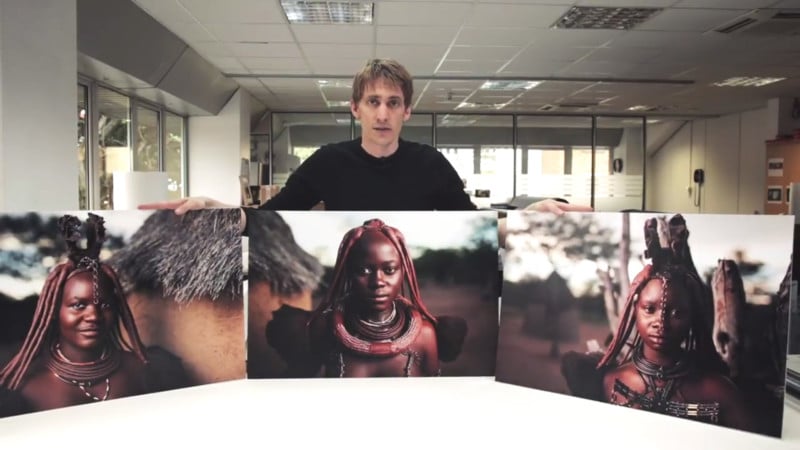
Have you ever had your photos professionally printed? It’s one thing to have your images stored away on a computer or SD card somewhere, but taking that final step and having them printed out for you to display gives them a new life. Photographer Sean Tucker visited his local print house and returned with some advice on printing your photos, which he shares in this 10 minute video.
As Tucker says, taking one of your shots and printing it immortalises it in a way – laying bare all of the mistakes and imperfections in an irreversible way. But it’s surprising how forgiving printed photographs can be, especially compared to viewing them on a desktop at 400% zoom.
Tucker decided to take three of his images from a recent trip to Namibia and have them printed. This was the first time he’d had his photographs printed professionally, and while he was there he asked the creative director of Genesis Imaging – Mark Foxwell – for some advice for those printing for the first time.
The video is broken down in to these sections:
0:00 – Intro 2:31 – What formats and export settings should you use for printing? 4:12 – How to choose what sort of paper and printing process to use 5:25 – What are you getting when you print with a professional lab vs printing online? 6:46 – Results
Tucker ends the video with a challenge to the viewer:
Take your favorite photograph that you’ve ever shot, take it down to your local professional printing house and get them to bring that photograph in to the physical world for you. Hang it in your home, and see if it makes you feel differently about the photographs you take.
Like Tucker, you may feel that you’re not ready to commit to finalising your images in this way. But there’s something about printing that solidifies all of the work you’ve done to create the image, and we really recommend taking Tucker’s advice.
Thirty miles off the southern coast of Cuba lies La Isla de la Juventud, the “Isle of Youth.” It is covered in lush vegetation and pine forests, and about half of the island falls under a “special municipality” designation, which prevents access except for those who have the proper permit from the Cuban government. The island is also home to the great ruin of an unusual and historic prison.
Most of the island’s residents are concentrated in Nueva Gerona, a port town on the north coast, which is only reachable by small, infrequent flights and a sometimes-unreliable ferry service. It is a sleepy existence today, but the island has a long and notorious history. It was popular with pirates, and was once known as Treasure Island—made famous by Robert Louis Stevenson. J.M. Barrie is also said to have drawn on accounts of the island when writing Peter Pan.
The island was given its name in 1978 by Fidel Castro (before that it was known as the Isle of the Pines), who had more than a passing acquaintance with it. In 1952, he spent two years there, along with his brother Raul, imprisoned by the regime of Fulgencio Batista after a leading a failed attack on the Moncada Barracks. After the revolution the same prison hosted enemies of the new regime and developed a reputation for overcrowding and harsh treatment.
The prison is called Presidio Modelo, and was modeled after the Stateville Correctional Center, a "panopticon" prison in Crest Hill, Illinois. The panopticon design originated from English philosopher Jeremy Bentham in the late 18th century, based around the idea that inmates are under constant surveillance, or at least are never able to know when they are being watched. In this case, in each building, the cells built in a five-story ring around a single, elevated watchtower. Panopticon prisons were built—but are no longer in use—in Cuba, Portugal, France, the Netherlands, Australia, and the United States. Other correctional facilities inspired by the design have been used all over the world.
Presidio Modelo has been closed for 50 years, following riots and hunger strikes. It is now a national monument and hosts a museum in its old hospital wing. It’s not difficult to visit—once one reaches Nueva Gerona, that is. Four cylindrical prison buildings surround a fifth, which appears to have hosted a mess hall on its top floor. (There are conflicting opinions on whether visitors are allowed to enter the panopticon buildings, but only one is physically closed off.)
From the entrance to the prison complex, long pathways lead to derelict colonial buildings, with the prison structures beyond. A hot wind seems to dampen surrounding sounds, except for the sharp creaks of metal roof panels peeling away from the structure high above. Small plants spring from cracks in the concrete and the edges of a few sun-drenched ledges. On rare occasions, a local person passes through the prison grounds—without ever looking up or acknowledging the looming, abandoned buildings.
On the morning of July 9, 1918, at this otherwise unremarkable spot along the railroad on the western outskirts of Nashville, two trains traveling in opposite directions on a single-track section of the railway collided head on, causing both cars to derail and kill 101 passengers.
The wreck on the Nashville, Chattanooga, and St. Louis Railway is considered the most deadly rail disaster in American history. Today a plaque on the site memorializes the dead, many of whom were African-American laborers traveling to Nashville to work in a gunpowder plant.
On the morning of the accident, the No. 4 left Nashville bound for Memphis ,while the No. 1, a half hour behind schedule, was heading from Memphis to Nashville. Due to a miscommunication between a conductor and tower operators, both trains entered a single-track section of the railway called Dutchman's Curve at the same time, heading toward each other.
At 7:20 a.m., the trains collided at a speed of around 60 mph, hurling their cars of the rails. Because the passenger cars were wooden, they were destroyed, killing 101 people and injuring 171. The tragedy prompted railroad companies across America to eventually stop using wooden passenger cars for good.
All the gin joints in all the towns in the world have got nothing on the the Sourdough Saloon, located inside the Downtown Hotel in Dawson City, Yukon. There, you can drink a "Sourtoe Cocktail”—a shot of whiskey (or whatever else you'd like) with a preserved human toe floating inside. As the cocktail's official site explains, "you can drink it fast, you can drink it slow, but your lips have gotta touch the toe."
This past weekend, though, all this fun was interrupted: Someone stole the toe.
As the CBC reports, the suspected thief, who came to the Downtown Hotel from Quebec, "had earlier boasted about wanting to steal the toe." He managed to convince a new staff member to serve him a Sourtoe Cocktail outside of the designated toe-drinking time, which normally spans from 9 to 11 p.m. He then absconded with the appendage.
"Salted human toe" might not sound like a particularly appealing garnish. But since its invention by local riverboat captain Dick Stevenson in 1973, the cocktail has proven mysteriously and enduringly popular. Over 100,000 people from all around the world are now certificate-carrying members of the "Sourtoe Cocktail Club," drawn to Dawson City by the chance to try to drink. "Stunts like this adversely affect the whole community, not just the Downtown Hotel," 'Toe Captain' Terry Lee wrote in a news release about the theft.
This is not the first time the hotel has lost a toe. The first ever Sourtoe—which Stevenson found in the cabin of a deceased miner, who had amputated it in the 1920s after a bad case of frostbite and stored it in a jar of alcohol for decades—was accidentally gulped down by a guest in July 1980.
In the years since, a number of locals have stepped in to fill the void, donating toes that they have lost to accidents and amputations. But plenty of these have also been stolen or swallowed—as many as three feet's worth—and the hotel eventually instituted a $500 fine for toe theft or ingestion. Even that wasn't enough to stop one 2013 guest, who chugged the toe on purpose and then slapped $500 on the table. (He was an American.) The fine has since been raised to $2,500.
This latest toe was donated last summer, and spent six months curing in salt before it took its spot behind the bar. "This was our new toe, and it was a really good one," hotel manager Geri Coulbourne told the CBC. "We just started using it this weekend."
They feel confident that they will find the thief. Besides his pre-drink boasting, he left his Sourtoe Cocktail certificate—with his name on it—behind. If the toe is not returned, they plan to press charges—which seems like a better deal for the thief than a more Biblical retaliation would be.
In the meantime, the hotel assures guests, the cocktails will keep flowing. "We fortunately have a couple of backup toes," Lee writes.
Every day, we track down a fleeting wonder—something amazing that’s only happening right now. Have a tip for us? Tell us about it! Send your temporary miracles to cara@atlasobscura.com.
Architecture students end their semesters sleep-deprived and often half-mad with caffeine, standing before juries of professors and peers. They try to sound coherent while explaining their final projects’ renderings and models and their visions of improving cityscapes. Once the course grades come in, the drawings and 3D constructions typically get stashed away in dorm rooms or university cupboards, never to be seen again, or perhaps to be pulled out occasionally with cringes or misty-eyed pangs by architects who changed their styles again and again during long careers.
At a few architectural institutions, however, there will be no forgetting of youthful submissions anymore. Librarians and archivists are creating searchable databases of classroom projects and competition entries produced in the last century. The digitized images reveal what students have imagined building without real-world limitations of budget or even rules of gravity—why not, before you actually have to earn a living, think about adding islands full of obelisks to the Manhattan shoreline or hanging urban observation pods from streetlights?
“It’s the impossible dreams” that turn up in the classwork records, explains Steven Hillyer, the director of the architecture school archive at the Cooper Union in Manhattan.
The Van Alen Institute in New York is posting over a century’s worth of student proposals, starting with rather elitist ideas for yacht harbors and riding schools. The Cooper Union has excavated classroom work dating back to curvaceous hot dog stand concepts suggested for the 1939 World’s Fair, and a comprehensive database of the material—even including transcripts of students’ presentations and teachers’ remarks—is scheduled to go live in the next year or so.
In the early 1900s, as the databases in progress show, ethnically diverse students from humble backgrounds made inroads in the WASP-dominated architecture profession and went on to fame. The Van Alen boxes contain ideas for neoclassical and Art Deco compounds from the 1920s and ‘30s by the future influential modernists Percival Goodman, Max Abramowitz and George Nelson. In the institute’s late 1930s entries, Minoru Yamasaki, the future designer of the World Trade Center, sketched prophetic pairs of blocky towers.
Every 20th-century shift in architectural tastes is recorded in the archives, as teachers encouraged students to experiment with forms and materials. By the 1960s, the Cooper Union’s future starchitect Daniel Libeskind was penciling in zigzag building footprints that soon became his professional trademark on landmarks like the Jewish Museum Berlin. In the 1970s, the school’s future starchitect Liz Diller, known for collaborations at Lincoln Center and the High Line, handed her professors some enigmatic renderings of masonry walls spiraling around corrals made of picket fencing and barbed wire.
In the 1980s, another future starchitect, Laurie Hawkinson, imagined traveling around in a Cinetrain, with rail cars full of cameras, projectors, film editing equipment, and screening rooms. As the train would roll across the landscape, Hawkinson told her teachers, “Spectator becomes both actor and audience.”
Hawkinson says her Cinetrain ideas have stayed with her; they have influenced, for instance, one of her public art installations, a giant red outdoor megaphone called the Freedom of Expression National Monument. She fondly remembers her Cooper Union days of time to think: “It was such a luxury and a gift,” she says.
The prominent architect and educator Karen Bausman likewise is a little nostalgic for her formative years at the Cooper Union in the 1980s, when she proposed cantilevering a “One-Way Bridge.” Its walkway to nowhere, she wrote at the time, “cannot distinguish the difference of footsteps offered with trepidation or with an imperious gate.” The drawings, she says now, “look as fresh as the day I stopped working on them.”
The Van Alen database contains proposals as loopy as Antarctic homes that look like overlapping Spirographs and a conversion of the Brooklyn Bridge into food stalls and apartments tucked beneath archways.
At the Cooper Union, among the most lovably impractical suggestions is Dominic Kozerski’s 1990s inhabitable metal pod that urban observers could hang from lampposts. It was meant to be used, he told his teachers, to study how “the illegible text of the inhabited city inscribes itself on the clear text of the planned legible city.” The classroom transcript shows that his professors praised him for introducing “a way, yes, a new way, another way of seeing our city.”
The database, Hillyer says, can be expanded as alumni and their loved ones come forth with memories and uncover documentation of schooldays squirreled away in storage: “I think we’re going to get a lot of blank-filling-in.”
In this episode of Car Hacks we get our hands on a can of WD-40 spray lubricant and try out 4 of the 2,000 plus uses listed by the company.
https://wd40.com/img/WD-40_2000_uses.pdf
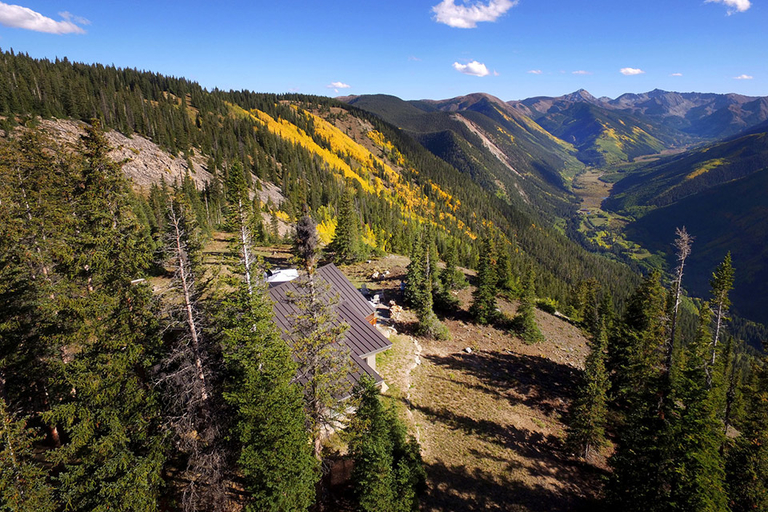
Set on the backside of Aspen Mountain, the Smith Cabin is a rustic getaway with unparalleled views. Thanks to its location, you get a unique perspective of the surrounding mountains...
The man stared at me, confused, then repeated his question: “You pay money to go break stuff?” I was sitting in the waiting area at the Break Room, a Sandy Springs-based business that for between $20 and $100 will dress you in protective gear, give you a bunch of breakables—think glasses, dishes, and electronics—and then give you 15 minutes in a safe, low-lit room to bash that stuff to bits with bats, crowbars, golf clubs, and sledgehammers. “Yes,” I said to the man, who had stopped to talk to me after checking out the Escape Room game across the hall. He remained incredulous. “If you’re feeling stressed, why not just go for a run?” “But what if you are so pissed off that you want…View Original Post
Five hundred years ago, Great Britain was full of beavers. They thrived in the country's forested, riverine landscape—by chewing down trees and building dams, they even helped to shape it.
Unluckily for them, though, they had warm fur and musky scent glands, two things that humans were willing to kill for. By the 1600s, there were none left in the entire country—no beavers in London, no beavers in , and definitely no beavers in Cornwall, a moorland county that makes up the country's southwest tip.
That is, until today. After meticulous planning (and a successful crowdfunding campaign), a pair of Eurasian beavers was just reintroduced in Ladock, thanks to a local Wildlife Trust initiative called the Cornwall Beaver Project.
Egged on silently by an enthused crowd, the two beavers, which were bred in captivity, left their transport containers at 4 PM local time. They immediately began to explore their new habitat, a six-acre glade that belongs to an organic farm. One sniffed at the vegetation, while the other made a confident beeline for the nearby shore, and slid into the pond.
Over the past few years, various UK counties, including Kent, Gloucestershire, and Lancashire, have brought back beavers. While most of these reintroductions were the result of careful planning, at least one was accidental—after a beaver family "of unknown origin" showed up in Devon in 2010, authorities agreed to keep them around, and to monitor their effects on the landscape.
Cornwall is being similarly careful: The beavers' new home is bordered by a wire and timber fence. "While technically captive, [the beavers] will be living lives as if they were wild," Peter Cooper wrote yesterday on the project blog. "There will be little interference from people, and they will become part of the local ecology in its own right."
— C'wallWildlifeTrust (@CornwallNature) June 6, 2017
Scientists will be watching to see how the beavers restructure their territory—they expect the enclosed stream to get much larger, and now-sparse species to return. They'll be tracking how the beavers affect the fish population—a big local concern—and whether their engineering reduces the impact of local floods.
That's a lot of pressure for a couple of beavers (and eventually, the organizers hope, a litter of kits). For today, though, observers were content to just watch them paddle around, bringing a splash of the past back to Cornwall.
You’ve heard of icons, and you’ve almost certainly heard of fonts, but what is an Icon Font? Today I’ll show you what icon fonts are, and how you can use them to liven up your website. Let’s get started. What Are Icon Fonts? Icon fonts are exactly the same as “regular” fonts — they define the look and feel of a piece of text. The big difference here is that icon fonts don’t contain letters and numbers, but symbols and icons. You may be confused by this, as what good is a font if you can’t write letters to your...
There's nothing in the world like your mom's cooking. Childhood memories of family gathered around the dinner table, everyone happy to be together — OK, that sounds more like an...
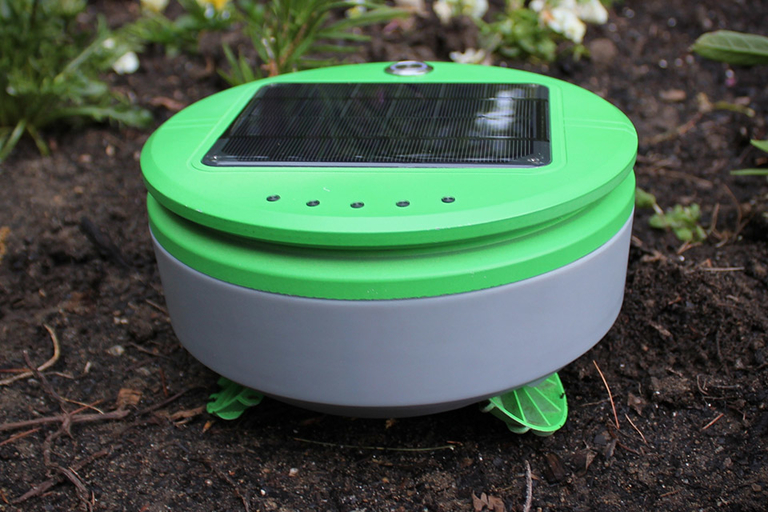
Created by the inventor of the Roomba, the Tertill Weeding Robot promises to do for weeds in your garden what the former does for dirt on your floor. Powered by...
Frank Underwood would step on a baby to keep his hands on the reigns of power. As good as Freddy's ribs were, they weren't good enough to keep him from...
The Teleguide. The Itera Bicycle. The Ford Edsel. You've probably never heard of these things because they were all flops. Samuel West celebrates these failures in a museum in Sweden....
In 1953, the Lesney company of England began producing a miniature replica of the Queen's Coronation Coach. The success of the toy lead to a line of detailed miniature cars,...
Almost anyone growing up in an English-speaking culture knows the story of The Tortoise and the Hare. In the tale, the two animals challenge one another to a race to prove who is fastest: mid-race, the hare lays down to rest, certain that it's going to win. Then out comes the tortoise, plodding along without pause, the winner; slow and steady wins the race, as the moral goes. Then there's a huge forest fire, and almost everybody dies.
Wait, what?
Turns out, some versions of The Tortoise and the Hare have a little more to say. As one of Aesop’s Fables, a collection of stories passed down by word of mouth since ancient Greece, the story has gone through many iterations, though most vary only slightly. Sometimes the tortoise is starting the trouble instead of the boasting hare; usually, a fox is the judge of the contest, as it was with the first written versions on record. And sometimes, things get a little morbid.
In the Irish writer Lord Dunsany’s 1915 version of The Tortoise and the Hare, the decision to award and support the tortoise is based on an unfounded capitalist ethos. The woodland animals support the tortoise during the race, believing he will win because of his hard shell. “Hard shell and hard living. That’s what the country wants. Run hard,” say the animals, who creepily chant “Run hard” in unison as he passes the sleeping rabbit, who had stopped running, having decided that racing against no one was a ridiculous task. The tortoise wins, and is celebrated by all as the fastest animal in the forest. Dunsany lets us know why we don’t usually hear this “real” version of the story, though:
“...very few of those that witnessed it survived the great forest-fire that happened shortly after. It came up over the field by night with a great wind. The Hare and the Tortoise and a very few of the beasts saw it far off from a high bare hill that was at the edge of the trees, and they hurriedly called a meeting to decide what messenger they should send to warn the beasts in the forest.
They sent the Tortoise.”
Obviously, according to Dunsany, slow and steady only wins the race sometimes.
Another subversive version from 1891, by the poet George Murray, called The Hare and the Tortoise, flips the moral in another way. In Murray’s story, a hare named Puss sleeps during the race, seeing that she is likely to win—but this time, the hare wakes up just in time to catch her mistake, leaping from her slumber. “Scared by the sight, with all her speed and strength, she galloped in a winner by length!” Murray writes. No need to be slow and steady if you wake up paranoid and ready to make up for lost time.
The anonymous nature of Aesop’s fables make them perfect for rearranging or reinforcing morals, and since no one really owns the stories or whether Aesop ever actually existed, anyone can make their own version. Hundreds of years after Aesop’s supposed death in the 5th century BC, the stories were written down in Greek, translated into Latin, and were finally translated into English in 1494, after which they became the most widespread collection of European folk lore out there—but not all of the oral stories in the current Aesop’s collection existed in the first Greek translation; new ones were added over time. The Tortoise and the Hare seems to be one of these stories, and may have snuck into the lexicon later.
In the 1668 French version of the story from Fables by Jean de La Fontaine, Le Liervre et la Tortue, the tortoise gets a bit persnickety at the end, asking how fast the hare thinks he could go if he were carrying his house around on his back. A Latin version of the story, called De Lepore et Testudine, was illustrated and printed in 1687 for an English audience with the moral and story printed as a rhyme, which reads: “Mean parts by Industry have luckier hitts, Than all the fancy’d power of lazyer witts,” indicating brains and perseverance prevail over the station one is born into. This was right around the time England came up with its Bill of Rights.
A book of English emblems and their meanings, The English Emblem Tradition, even describes the Tortoise and the Hare story as a guide to love; one emblem shows the Greek god of attraction, Eros, who is “walking along the roadway in a landscape, with the tortoise” when he “looks back over his shoulder, pointing at the resting hare.”
Early on, the Tortoise and the Hare story also made a foray into philosophy; in 490 BC Greek philosopher Zeno created the Achilles and the Tortoise paradox, which describes a problem of motion. After the tortoise is given a head start against the legendary warrior Achilles; Zeno argues that based on math, Achilles should never be able to catch up if the tortoise keeps moving. Lewis Carroll, who was also a mathematician, had his own take on the Tortoise and Achilles paradox, which he brought to life in an 1895 issue of Mind:
“Achilles had overtaken the Tortoise, and had seated himself comfortably on its back.
“So you've got to the end of our race-course?” said the Tortoise. “Even though it does consist of an infinite series of distances? I thought some wiseacre or another had proved that the thing couldn't be done?”
“It can be done,” said Achilles.”
This time, Achilles and the Tortoise end up sussing out the details of the paradox, with Achilles scribbling the logical steps toward their conclusion in a nearly-full notebook while riding happily on the tortoise’s back. Carroll lends fellow mathematicians a piece of advice; rules for a certain logic have to be carefully thought out without relying on assumed truths to carry the weight of the argument.
As for how a real tortoise and hare would fare in a race, that story has also played out—recently. In 2016, a turtle and rabbit (a close approximation to a tortoise and hare) were put to the test in real life to see who would win, competing in an original arena, and subsequent rematches. Each time, the tortoise won.
The punk movement gave birth to hundreds of bands in a small amount of time, like a petri dish that just explodes under the right conditions. Forty years later, we are still living in the aftermath of that explosion and sorting things out. Lists need to be made. And if you consider garage rock to be proto-punk, the list can be very long.
Four years ago, L.A. Weekly created a list of the Top 20 punk albums of all time, but purists might despair to see Green Day on there or just anything after the ‘90s.
But they also turned to their columnist, Black Flag vocalist, intense spoken word performer, and radio deejay Henry Rollins, and asked him to create his own list. See them below, and hear them above (via this playlist).
In his brief intro, Rollins mulls over the eternal genre question--where does punk stop and post-punk begin?
Could Wire, also be considered Post Punk? Where do you put bands like PIL, Joy Division, Television, Patti Smith, Suicide, and Killing Joke? What about Gang of Four, 999 and the Banshees? For me, as a lean definition, I go by the classic UK 1977 graduating class, Pistols, Clash, etc., and go from there.
The list, he says, is in no particular order, but it’s not a surprise to see the first Clash album at the top, followed by the debut albums of the Ramones, the Sex Pistols, The Damned, X, Wire, The Buzzcocks, The Saints, The Germs, X-Ray Spex, The Adverts, and Stiff Little Fingers. Very few on that list went on to top their debut, or even--such as the Pistols and The Germs--record a follow-up.
Rollins talked about this in an essay (also for the L.A. Weekly) on why he loves another band on his list, the U.K. Subs.
How some of those bands were able to follow up with another album is a fascinating bit of musical history, as well as a study of talent, vision and integrity. It is where the rubber truly meets the road. After the explosive excitement of the initial batch of songs has settled, the band often is left with a success-derived self-awareness that hangs like a cloud over the practice room. The awfulness of expectation enters the equation, and the results are not always good.
Rollins is a fan of the first four U.K. Subs LPs--"they are like desert island LPs. Records you can’t do without," he once said.
Other interesting choices on Rollins’ list: the shameless Ramones-copyists The Lurkers, The Minutemen’s first album (instead of the undisputed classic Double Nickels on the Dime), the lesser-known Eater, the Ruts, and the Fall’s Hex Enduction Hour, which is punk in aesthetic, but certainly not in production.
For a man who usually has something to say, it would have been cool to have some commentary from Rollins on his choices. On the other hand, maybe he’d just tell us to shut up. The music speaks for itself.
Ted Mills is a freelance writer on the arts who currently hosts the artist interview-based FunkZone Podcast and is the producer of KCRW's Curious Coast. You can also follow him on Twitter at @tedmills, read his other arts writing at tedmills.com and/or watch his films here.
Move into a home on Cange Street on the outskirts of Anchorage, Alaska, and you are essentially moving into an airport. The small sub-division is cut down the middle with a runway, and each house is equipped with a small built-in airplane hangar the same way many suburban homes have built-in garages.
The large, '80s-era houses in this neighborhood line what at first appears to be an ordinary gravel road, but is in fact a small airstrip called the Sky Harbor airport. The cooperatively owned airstrip runs exactly parallel to Cange Street, and the residents who own small propellor planes have exclusive access to the runway directly from their front doors.
An online real estate listing for a house in the neighborhood advertises: "An indoor preflight and a 30 second taxi to your 1800 foot gravel airstrip put all that Alaska has to offer just steps from your living room!" The hangar doors are visible on each home, although some prefer to park their planes outside close to the house.
Alaska is a state that is largely reachable and traversable by air. Roads do not connect Anchorage to many of the state's towns and national parks, and it takes days to drive from the city to even the northernmost reaches of the lower 48. In this remote part of the country, access to your own set of wings and a place to keep it seems a sensible enough variation on the American dream.
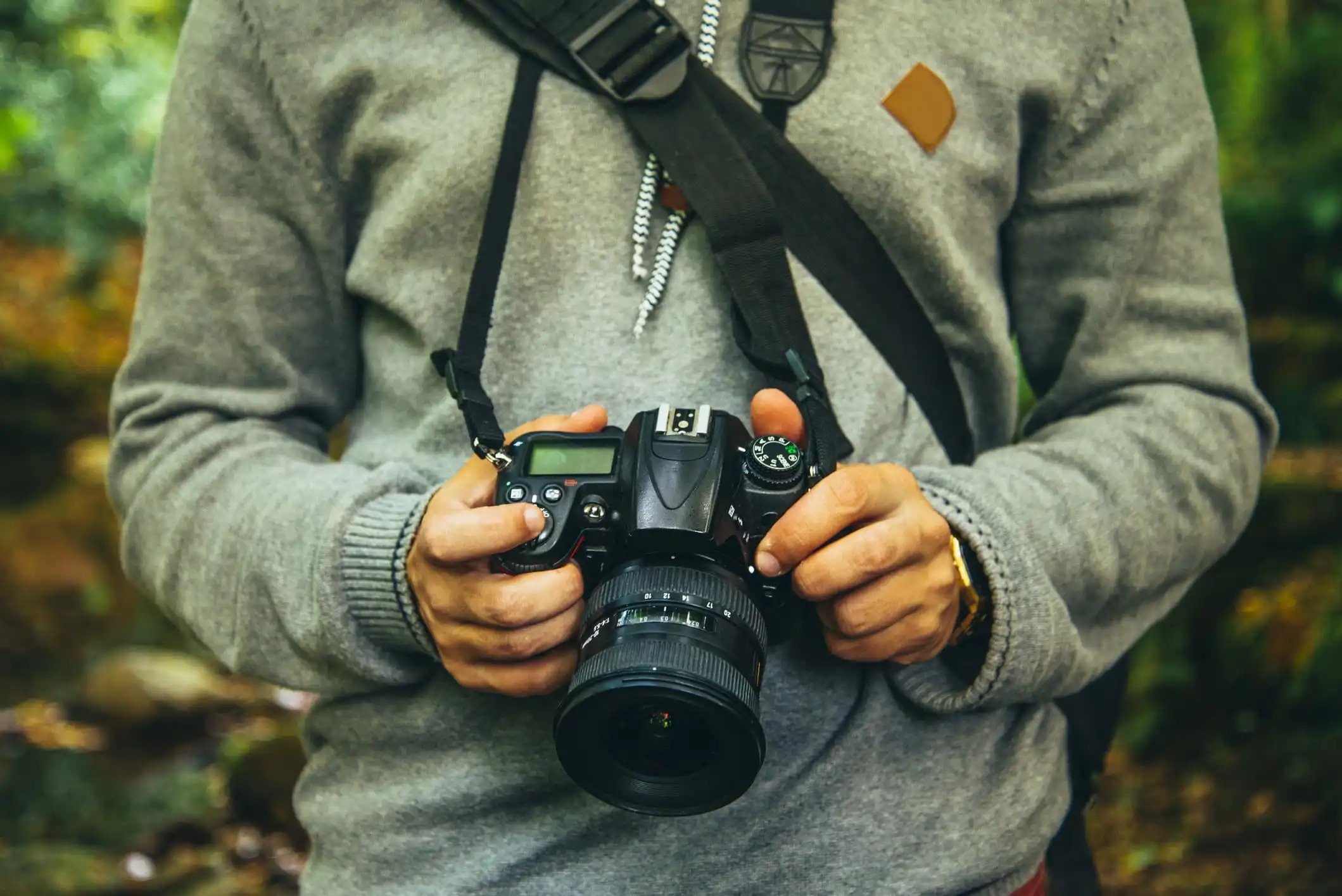
When you're a beginner photographer, just one look at all the buttons, dials, and menu options on your camera can send panic through your heart.
Add in a camera owner's manual that's more like a novel, and there's just a ton of information to soak up.
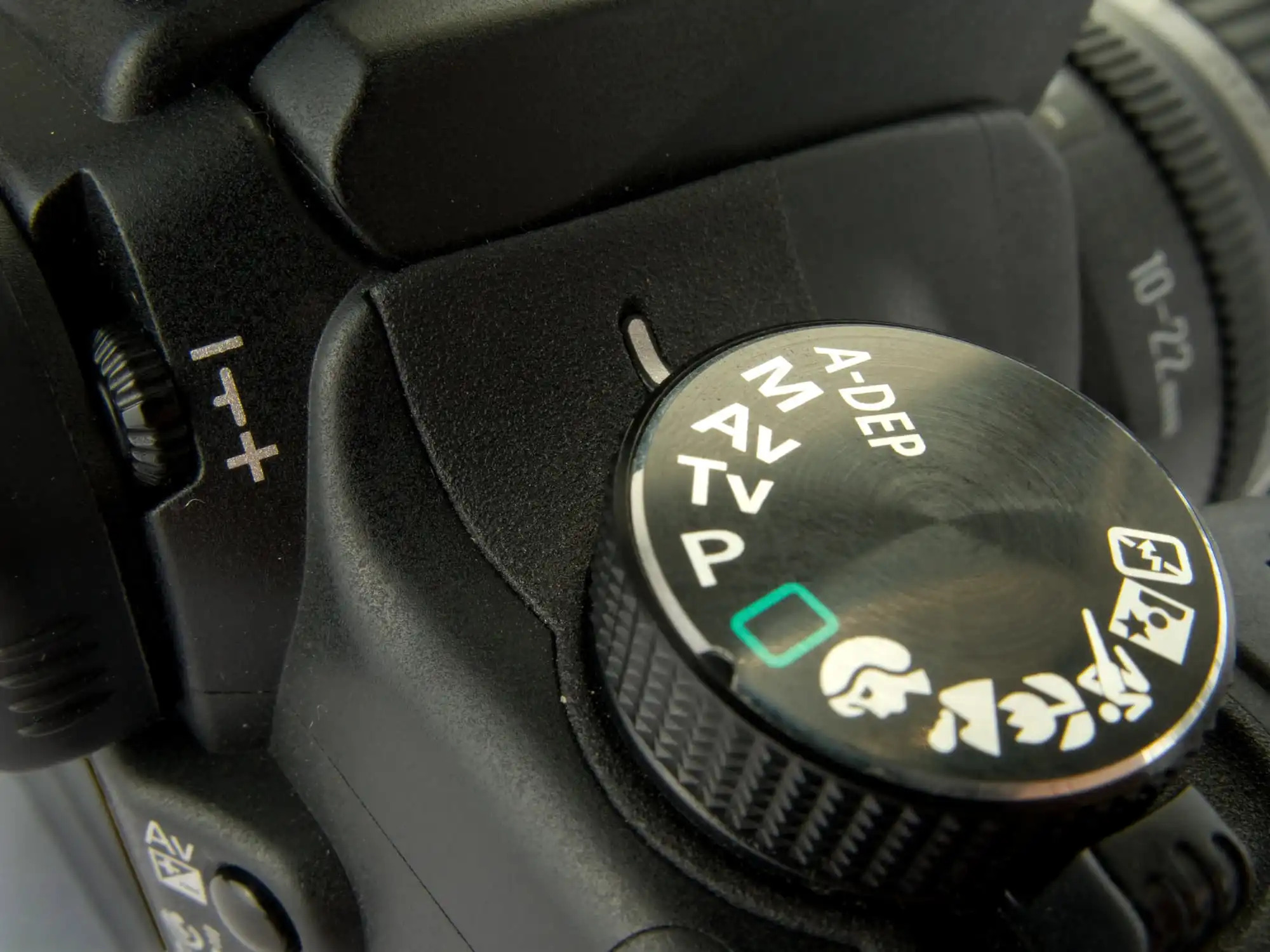
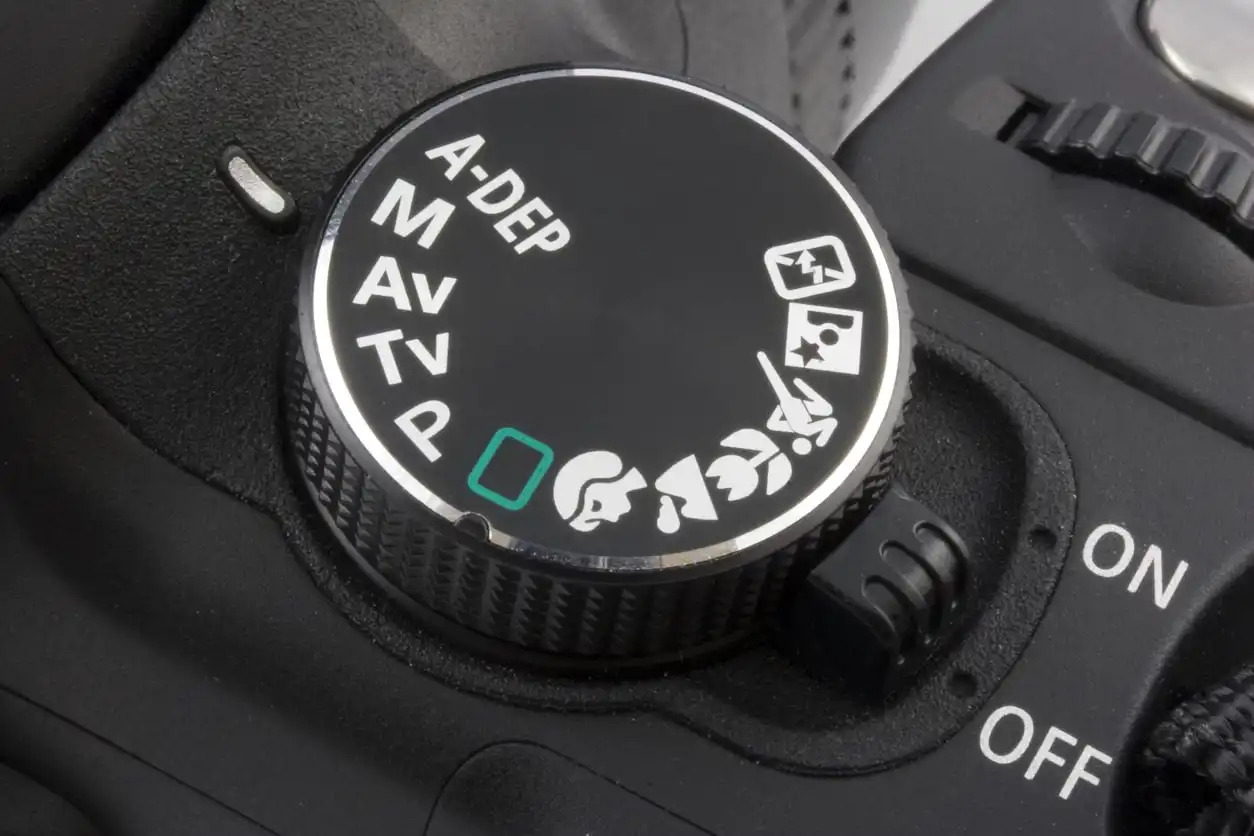
If you ask me, that's part of the reason why beginners seldom move beyond that little green box on the camera dial, otherwise known as automatic mode.
But here's a secret - moving beyond full auto opens up many more opportunities for you to get creative, learn more about photography, and take more control over how your photos look.
Let's take a quick look at the primary camera modes on your camera.
Automatic Mode
Since most beginners use automatic mode, I doubt there's much mystery about what it does...
But in the spirit of giving a complete overview, full auto mode gives the camera all the control over the settings.
That means you just point and shoot, and don't need to worry about changing things like aperture, shutter speed, and ISO.
Full auto also takes care of metering, focusing, white balance, and whether or not to fire the flash.
In other words, it's the camera's show - it decides what to do and how the final image will look.
However, because the camera takes care of all the decision-making, full auto is something that all beginners will eventually grow out of.
As a result, moving up to a semi-automatic mode could give you the tools you need to take your photography to the next level.
Semi-Automatic Modes
Aperture Priority Mode
Let's say you want to take a portrait that has a nice, blurry background like the one above.
So, you research how to get a blurry background and find that aperture is one of the principal factors that determines depth of field.
The question is, how do you control aperture without having to shoot in full manual mode?
The answer is aperture priority.
Denoted as A or AV on your camera's dial, aperture priority is a step up from full auto because you get to determine the aperture.
To help you out, your camera then selects a shutter speed to match, that, in normal lighting conditions, will result in a good exposure.
So, you turn the camera dial to A or AV, select a large aperture (i.e. f/2), and the camera selects the shutter speed.
Though you can adjust other settings like ISO, you might not even need to.
That means you can make one adjustment - aperture - and get a better image because you're telling the camera exactly what you want (for that setting, at least) rather than the camera simply guessing.
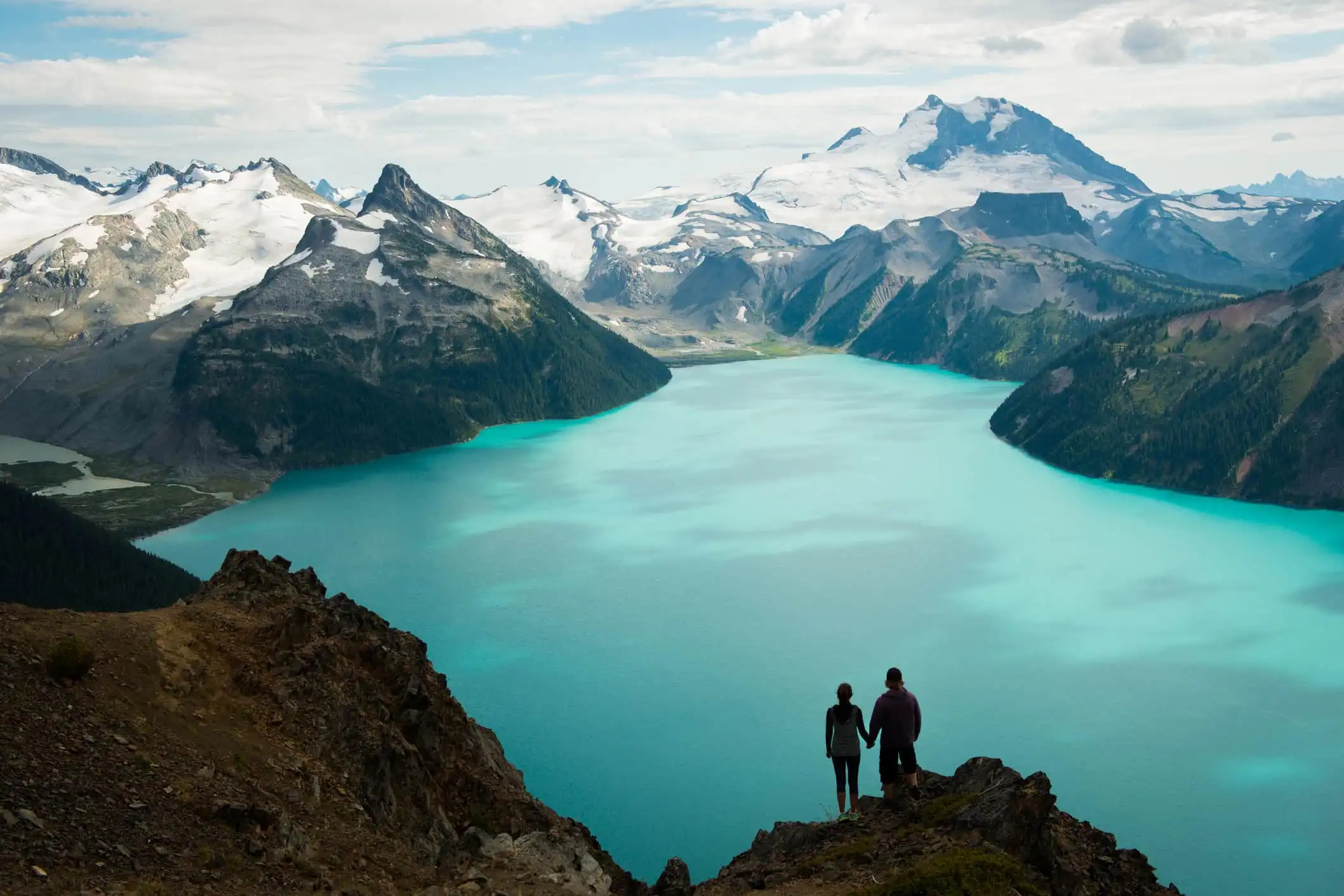
Conversely, if you want a deeper depth of field such that the scene is in focus from front to back (like the landscape shown above), you can dial in a smaller aperture (i.e. f/16), let the camera choose the shutter speed, and get a more pleasing picture.
Does aperture priority mode get a perfectly exposed picture every time? No. But under typical lighting conditions, it will typically outperform full auto mode, and that's a good thing!
Now let's assume that you're taking a photo of your kid playing soccer and you want to freeze their movement as they run by to kick the ball.
Since shutter speed controls the appearance of movement, you know you need to select a shutter speed that's fast enough to freeze movement.
So, you turn your camera's dial to S or TV to put it in shutter priority mode, select a shutter speed of 1/1000 seconds, and the camera selects an aperture to get a good exposure.
Of course, the same caveat that applies to aperture priority mode applies to shutter priority mode - it doesn't get a perfect exposure every single time, but under normal lighting conditions, it will work quite well.
You can also use shutter priority mode to blur movement.
Naturally, you just pick a slower shutter speed, and again, the camera will select an aperture that's appropriate to get a good exposure.
Program mode, which is denoted as P on your camera dial, is an interesting setting because it's a little more versatile than aperture priority and shutter priority.
To begin, you can think of program mode as "ISO priority mode" because you can select the ISO you'd like so you can control the camera's sensitivity to light.
The camera will then select an appropriate aperture and shutter speed to get a good exposure when shooting in typical lighting conditions.
For example, if you're in the yard with your kids in the early evening, and you want to minimize the sensitivity of the camera's sensor to light (given that there is so much light ), you can put the camera in program mode, select ISO 100 (the least sensitive setting), and shoot away.
Conversely, if you're indoors in the evening and there isn't much light, you can again select program mode, crank up the ISO to 1600 to make the sensor more sensitive to light, and take your photos.
However, program mode has a trick up its sleeve - you can override the aperture and shutter speed as you see fit.
So, where you're stuck with the shutter speed, the camera chooses when you're in aperture priority mode, in program mode, you can change it.
And, where you're stuck with the aperture the camera chooses when you're in shutter priority mode, again, in program mode, you can change it.
As I've noted for aperture priority and shutter priority modes, in program mode, the initial settings the camera selects to work with the ISO you've chosen will work for a good exposure in normal lighting conditions - but it isn't perfect.
That's why program mode is so valuable because you can change all three exposure settings if need be.
At the top of the heap, so to speak, is manual mode.
This is indicated as M on your camera dial and is the mode that many professionals use because it gives you complete control over the camera settings.
Think of it as the polar opposite of automatic mode...
Because you control aperture, shutter speed, and ISO, manual mode means that you can fine-tune the settings to fit the lighting situation.
It also means that you don't have to worry about the camera selecting settings that aren't quite right for more challenging lighting.
Of course, since you control all the exposure settings, that also means that you have to be wary of selecting the wrong settings.
Manual mode is more work than automatic mode or one of the semi-automatic modes.
However, because it gives you control over the situation, it's a goal to work towards because it will help you develop a better understanding of exposure and how to manipulate it.
For now, though, strive to get out of auto mode and into one of the semi-automatic modes outlined above.
After some practice with those mid-range modes, see what you can do in full manual!
Learn more about these camera modes in the video above by First Man Photography.
There's plenty that can go wrong in a landscape photo, but there's nothing quite as simple as a wonky horizon that can have such a negative impact on the overall shot.
You can have everything else about the photo perfect - the framing, the lighting, the focus, the composition - but if the horizon isn't perfectly straight, guess what people will notice?
The uneven horizon...
It's a simple problem to fix, too.
You can get a tripod with a bubble level to help you keep those horizons straight.
You can also use a hot-shoe mounted level if you already have a tripod that doesn't have a built-in level.
When shooting handheld, use live view and enable the rule of thirds grid to use as a guide for getting your horizons level.
Just align one of the two horizontal gridlines with the horizon, and you're good to go!
Slow Down and Compose With Purpose
I fully understand the excitement of being in a place that's so beautiful that you want to photograph as much of it from as many different viewpoints as possible.
But rushing around isn't going to do your landscape photos any favors.
One way to slow yourself down is to use a camera remote and a tripod.
It takes a few seconds to get these accessories setup, and in those few seconds, you can more thoroughly examine your surroundings and think about how you want to frame the shot.
Then, once you have your gear set up, you can use what you've learned about the landscape to make better decisions about composition.
For example, you might notice a distracting element in the foreground - like a downed tree - that you want to frame out of the shot.
You can then take measures to move your rig nearer your subject to crop the tree out of the image, or you can use a zoom lens to do the same thing.
The point is that rather than pointing and shooting very quickly, by taking a more measured approach, you can actually compose images that are much more pleasing while saving yourself a little time in post-processing because you won't have to do as much cropping or straightening.
That's not a bad deal if you ask me!
Bonus: Think About How the Landscape Will Look at a Different Time
As a bonus tip, I'd suggest that you envision what the landscape will look like earlier or later in the day.
For example, if you're shooting a mountain scene in the afternoon, think about how that scene will be different - and perhaps better - at sunset.
If you find that your photos of a dense forest lack impact, think about times of day that the impact will be ramped up - early morning, perhaps, when there's a chance that fog might form and roll in between the trees.
Also consider the season and how it will affect the landscape.
Visiting a forest in the fall will get you gorgeous colors.
Photographing a mountain in late spring might get you a nice shot of a snow-dusted peak.
The point is that to improve your landscape photography, you need to do more than just randomly fire the shutter.
Instead, get outfitted with gear like Pulse that will help you be more creative. Pay attention to the horizon and how you compose your images. Go back to your favorite spots over and over again to see how they change over the course of the day and the year.
If you can do even just one of these things, you'll find that the images you create have more impact!
Believe it or not, there was a time when photo sharing was a lot slower than in the age of Snapchat. 20 years ago, instantaneously capturing and sharing photos online was unheard of.
The first camera phone photo was sent two decades ago, on June 11th, 1997, a fact that we previously shared in 2011. When entrepreneur Philippe Kahn instantly shared a photo from the birth of his daughter to over 2,000 connections around the world, he was achieving a technological first.
The first camera phone photo sent on June 11th, 1997. Photo by Philippe Kahn.
It’s no surprise, then, that the moment has now been recreated by actors in the heartwarming 4-minute video above. The photo was even declared by Time Magazine to be one of the 100 most influential photos of all time.
In the video, Kahn tells the story of how he hacked together a mess of wires, phones, laptops, and cameras to enable the instant delivery of a photo of his new baby daughter. Armed with a soldering iron inside the hospital ward, he used a wire ripped from his car telephone to make his dream a reality.
Difficult to get to but worth the trip, Font’s Point, found in the heart of the Borrego Badlands, offers a stunning vista unparalleled in California.
While today the Borrego Badlands are subject to scorching heat and almost no rain, they were once lush and verdant. Here, the ancient Colorado River deposited fresh water into the Gulf of California as it carved out the Grand Canyon, and supported estuaries, grasslands, marshes, and forests. These rich ecosystems supported a variety of marine life, but also horses, giant sloths, camels, bears, big cats, and other ancient charismatic megafauna.
The Colorado River has since migrated (the nearby Salton Sea was created when the river burst its levies) and most of the life it supported has died out. But the ancient remains of the river and the life it supported are still clearly visible. The Borrego Badlands is one of the best places in the world to view sediment from the Pliocene and Pleistocene Epochs, displayed in dramatic canyons eroded away by millennia of wind and flash floods. The landscape is rife with fossilized remains of the flora and fauna that once inhabited the area. The Borrego Badlands offer a lifetime of exploration, but to gaze over it all in a day, perhaps no place is better than Font’s Point.
Father Pedro Font was the official chaplain, observer, and diarist on the de Anza expeditions of 1775-1776. As the expedition passed through the area, Font described the landscape as the “sweepings of the earth.” On the same expedition, he would go on to be the first to map the San Francisco Bay and chose the site for the Mission San Francisco de Asis, all while advocating for improved treatment for Native Americans. Font’s Point is an epic vantage point, worthy of the name of an epic man.
This Saturday, June 17, a boat is scheduled to arrive in Honolulu. But this is not just any boat: It is a 62-foot-long canoe that has spent the past three years circumnavigating the globe.
The canoe, based on an ancient design, set off from Hilo, on Hawaii's Big Island, in May 2014 with a crew of 17. It eventually visited 19 countries and traveled more than 46,000 miles, according to Scientific American. The trip was organized by the Polynesian Voyaging Society, and is as much about bringing attention to the effects of climate change as it is about showing how indigenous peoples traversed the Pacific Ocean to settle remote islands hundreds of years before modern navigation.
“For centuries, Europeans stubbornly refused to acknowledge Polynesian achievements because they simply could not believe that a so-called primitive society was demonstrably better at navigation than they were,” Wade Davis, an Explorer-in-Residence at the National Geographic Society, told Scientific American.
The canoe's navigators use a system known as wayfinding, which has been passed down for generations and requires navigators to commit the paths of hundreds of stars to memory, while also relying on "the direction of waves and the movement of seabirds," according to Scientific American. The canoe is named the Hōkūleʻa, the Hawaiian name of the Polynesian zenith star (Hōkūleʻa can also mean "Star of Joy").
The crew of the Hōkūleʻa has been documenting their voyage on Facebook and the Voyaging Society's website, including visits to Pacific islands that are most susceptible to climate change. Some of those places are less vulnerable to being inundated by rising seas than they are to running out of freshwater as salt water seeps into island aquifers.
“The irony is that the Pacific islands have nothing to do with creating climate change but they are the ones who are suffering the most," said Nainoa Thompson, president of the Polynesian Voyaging Society. "The good news is that we found thousands of people there full of aloha, full of compassion and caring for the Earth and for the oceans, which give us our life."
 In addition to handmade gilded frames, Fred Reed Picture stocks a wide range of styles, from antiques to bark, tramp art, and acrylic.Photograph by Caroline C. Kilgore Frames, like fashion, can go out of style. That’s one reason it’s best to choose something classic. Besides, the perfect frame should draw attention to the art rather than to itself. “I try to go the simpler route,” explains Patricia Horton, a former art curator who now owns Fred Reed Picture Framing on Miami Circle. “If you use a simpler frame, the piece will change with you.” Founded in 1947, the studio now serves second- and even third-generation customers. Horton gave us a primer on framing essentials. French mats are reproductions of 19th-century framing materials. Reed hand-paints trims…View Original Post



 Kiss bassist Gene Simmons is trying to trademark the hand sign made by holding the thumb, index finger, and pinky up while holding the middle finger and ring finger down, sometimes known as the Sign of the Devil. His application illustrates how artists often abuse intellectual property privileges, using them not just to secure their own work but to try to curb the work of others.




 In this episode of Car Hacks we get our hands on a can of WD-40 spray lubricant and try out 4 of the 2,000 plus uses listed by the company.
https://wd40.com/img/WD-40_2000_uses.pdf
In this episode of Car Hacks we get our hands on a can of WD-40 spray lubricant and try out 4 of the 2,000 plus uses listed by the company.
https://wd40.com/img/WD-40_2000_uses.pdf
 Set on the backside of Aspen Mountain, the Smith Cabin is a rustic getaway with unparalleled views. Thanks to its location, you get a unique perspective of the surrounding mountains...


 The man stared at me, confused, then repeated his question: “You pay money to go break stuff?” I was sitting in the waiting area at the Break Room, a Sandy Springs-based business that for between $20 and $100 will dress you in protective gear, give you a bunch of breakables—think glasses, dishes, and electronics—and then give you 15 minutes in a safe, low-lit room to bash that stuff to bits with bats, crowbars, golf clubs, and sledgehammers. “Yes,” I said to the man, who had stopped to talk to me after checking out the Escape Room game across the hall. He remained incredulous. “If you’re feeling stressed, why not just go for a run?” “But what if you are so pissed off that you want…View Original Post


 There's nothing in the world like your mom's cooking. Childhood memories of family gathered around the dinner table, everyone happy to be together — OK, that sounds more like an...
 Created by the inventor of the Roomba, the Tertill Weeding Robot promises to do for weeds in your garden what the former does for dirt on your floor. Powered by...
 Frank Underwood would step on a baby to keep his hands on the reigns of power. As good as Freddy's ribs were, they weren't good enough to keep him from...
 The Teleguide. The Itera Bicycle. The Ford Edsel. You've probably never heard of these things because they were all flops. Samuel West celebrates these failures in a museum in Sweden....
 In 1953, the Lesney company of England began producing a miniature replica of the Queen's Coronation Coach. The success of the toy lead to a line of detailed miniature cars,...