Here we get a look into the Matchbox car factory in Hackney, London, as they built toy cars in 1965. They were designed larger, and then shrunk to make the molds.
Parts were die-cast from molten metal and assembled by hand. Today's plastic Matchbox cars are probably are cast by robots, if they aren't being 3D printed already. Also neat to discover: British Pathe has some vintage films that are in color. -via Laughing Squid
 Four years before Orlando welcomed Walt Disney World, the Southeast’s first theme park—Six Flags Over Georgia—debuted. Now roughly 300 acres, the park counts 12 roller coasters and a half-century of highs (and a few lows). Dahlonega Mine TrainPhotograph courtesy of Six Flags over Georgia 1967 The opening-day crowd of 3,325 pays $3.95 for admission to attractions such as Dahlonega Mine Train (one of three original rides still operating). Great American Scream MachinePhotograph courtesy of Six Flags over Georgia 1973 The Great American Scream Machine opens as the fastest and tallest coaster on earth. Riders are issued buttons that read “Red Badge of Courage.” Mind BenderPhotograph courtesy of Six Flags over Georgia 1978 The Mind Bender opens, billed as the world’s first triple-looping coaster. 1981 The…View Original Post

The Works Progress Administration (WPA)—Franklin Delano Roosevelt’s nationwide effort to re-employ unemployed Americans during the depths of the Great Depression—conjures images of daring dam-builders and fearless steel-workers. But children’s books? Not so much.
Leave it to FDR and his stable of advisors to defy expectations.
While legions of laborers collected government paychecks for their contributions to massive infrastructural projects, thousands of idle creatives also hit the pavement on Uncle Sam’s dole. They, however, were commissioned to create a different type of public work: diverse portraits of the country’s past and present in pen, paint, and photographs. These were the employees of Federal Project Number One (aka, “Federal One”), the cultural wing of the WPA, which included a select group of children’s authors, illustrators, and editors.
Federal One’s five divisions dispatched authors and artists from state-based offices with the broad aim of sponsoring projects that served the public good. With this mandate, the Federal Writers’ Project (FWP) produced 276 volumes and 701 pamphlets, amounting to over 3.5 million individual items. Its archive includes extensive folklore and oral history collections (2,300+ recorded interviews with formerly enslaved people, among other life histories), as well as the renowned American Guides Series, which was conceived as a way to document local cultures threatened by the rising tide of commercialism. Contributors included many then-unemployed writers who later became giants of American letters; the Illinois office alone employed Margaret Walker, Studs Terkel, Nelson Algren, Richard Wright, and Saul Bellow.

While the guidebooks have been feted by figures ranging from John Steinbeck (how he so wanted to bring them all on his cross-country travels with Charley!) to Michael Chabon (essential in researching The Amazing Adventures of Kavalier and Clay), other pieces of FWP writing have largely faded from memory. Those forgotten works include children's books from three regional offices—New York City, Philadelphia, and Milwaukee—that produced diverse texts for juvenile readers.
New York’s New Reading Materials Program launched in 1936 with a run of cheaply produced typewritten, mimeographed texts designed to entice rough-and-tumble city kids, who, according to a New York Times account of March 15 of that year, were “largely inured to hard knocks.” The topics were engaging and of a variety of genres (realistic fiction, fairy tales, adventure serials, poetry, informational texts), the language was “living,” and the visuals striking. These materials were not made for instructional use by the teacher; rather, the intent was to build a desire to read for reading’s sake.

The program worked, and word of it traveled around the country. According to a 1937 St. Louis Post-Dispatch article on the New Reading Materials program, the NYC Board of Education soon began to receive fan mail from children eager to learn the fates of their favorite serialized characters, such as Alfred Sinks’ Tom Coe, Pirate. As the Post-Dispatch notes, the letter-writers “wanted to know ... whether the pirates settled down to become home-loving folk or whether they were pardoned.” Such queries followed Sinks on his school speaking junkets, where he not only addressed questions regarding Tom Coe’s future but also found himself inundated with autograph requests.
With this type of reception, the program adopted better printing techniques and wider circulation: by the end of 1937, more than 21,000 copies of the books were in use among 140 city schools.
Kids—tentative and avid readers alike—loved the New Reading Materials. The stories are often dark, funny, and realistic, defying the unstated rule of writing for elementary-aged children that things always resolve for the better, that even when protagonists get lost, they generally find their way home.

Author Sulamith Ish-Kishor’s Meggie and the Fairies, is case in point. In it, happy, flower-picking Meggie Morrison drifts too far afield, is lured by a fairy’s siren song, and finds herself an ambivalent prisoner in an underground fairy kingdom. Rescue attempts ensue, but all fail. Meggie is released 100 years later to find the world changed: there’s no more home, no more family. Distraught, she returns to the hill of the fairies, where she cries herself to death, only to be reclaimed by the agents of her destruction who watchfully wait for her awakening. While there was no happy ending for Meggie, there was for Sulamith—she later wrote countless acclaimed works, including the 1970 Newbery Honor book Our Eddie.

Irving Drutman, who variously worked as a journalist, editor, theater critic, songwriter, and memoirist, also penned a volume that defied the happy-ending rule. The Proud Prince picks up after the ever-after, centering on the undoing of the eponymous Proud Prince and his equally vain and greedy wife. Mere pages into Drutman’s story, the prince ascends to the status of king. He and the newly minted queen begin a quest for the world’s most elaborate, heavily jeweled robe. In the process of assembling it, they bankrupt the kingdom and themselves. And the robes? Too heavy to wear, totally useless. As the depressed royals sit down to dinner in their aged robes, they’re stunned to learn that there’s no dinner—all the money for food went to finance their greed.
New York’s New Reading Materials Program had analogue units in Pennsylvania and Milwaukee that produced children’s books, although the purposes and intended audiences differed. At the Philadelphia office of the Pennsylvania Writers’ Project, the 39 informational texts of the Children’s Science Series were assembled in conjunction with the commercial publishing house, Albert F. Whitman. In Milwaukee, four primers—along with hundreds of toys, games, dolls, tapestries, and other furnishings—were created by more than 5,000 artists and craftspeople, mostly women, many African-American. While less is known about the authors of these volumes and their reception, they merit mention as works that the government saw fit to print in an era when the authorial need for a paycheck was wed to children’s needs for resources to educate and entertain.
To see more of the WPA Children's Books, delve into the Digital Archives of Broward County.
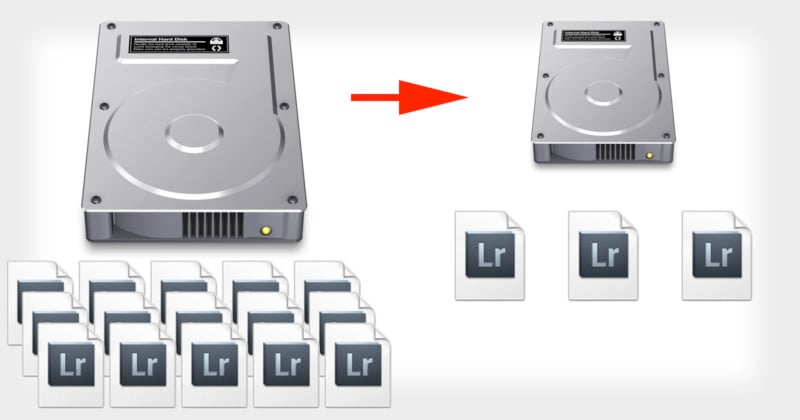
Photos take up a lot of storage space. That’s just something that us photographers have to deal with. That said, there’s no reason to waste space on our computers. So here’s a tip: deleting old, unneeded Lightroom data can clear up a ton of space.
Many laptops, like mine, come with relatively small SSD, where every gigabyte counts. I was recently cleaning out the storage on my computer, and realized that Lightroom’s files were taking up a pretty large chunk of space — about 20GB. After digging around a bit, I found that old previews and backups were responsible for a large chunk of that space, and could be safely deleted. (Of course, there’s always a chance that deleting files has the potential to mess things up, but risk seems awfully low here.)
First, you need to locate where your Lightroom folder is. Open the Catalog Settings, found within the Edit menu.

Once you’re there, click on the General tab, then find the entry for Location. This should show a file path, with a button labeled Show on the right.

Clicking this brings up a system file window, with your catalog folder selected. Open the folder.

Within the Lightroom catalog folder, you should see a folder named “Backups”. If your situation is anything like mine was, it’ll have backups all of the way back to when you first installed Lightroom. Delete the ones which you don’t need anymore. I’d suggest keeping the latest few, but anything older isn’t doing anything but taking up space. That along cleared a significant amount of space for me.
Once you’re done there, return to the main catalog folder. Next to the backup folder should be a file ending with “Catalog Previews.lrdata”. I use Lightroom 4, but other versions shouldn’t differ. This file contains your previews for imported photos. If you delete it, you’ll lose the previews. That’s not as bad as it sounds, because Lightroom will generate previews for photos without them. This will slightly slow down the program. I chose to delete the file, since I knew that it contained previews for many photos which I were done working with.
In the end, I freed up a good 16GB of space — 7GB of backups and 9GB of previews. I’m not a particularly heavy user of Lightroom, so other photographers ought to save even more. Hopefully this is a helpful tip!
About the author: Evan Pak is a photographer and college student. You can find more of his work on his website and Instagram.
One by one, the prints unfold before you. One shows sheep leaping in the grass, another, children on a tree-hung swing, the moon shifting above them. All are charming, sophisticated, and unbelievably detailed. They take the essence of everyday objects and activities, and unspool them into mesmerizing patterns. No matter how much you may want them, though, you can't get these prints on Etsy. In fact, you can't get them anywhere.
They live mere miles from where they were produced, at the Cape Ann Museum in Gloucester—the last bastion of the nearly forgotten Folly Cove Designers. Helmed by a children's book illustrator and comprised of her previously untrained friends and neighbors, the Folly Cove Designers were hardworking, tight-knit, and sincere—so sincere, they eventually voted themselves into obscurity.
To children worldwide, Virginia Lee Burton is the beloved hand behind half a dozen classics, including Mike Mulligan and His Steam Shovel, Katy and the Big Snow, and The Little House, intricately illustrated tales of close-knit communities. But to her neighbors at Folly Cove, on the north shore of Massachusetts, she was Jinnee Demetrios. Jinnee and her husband, the sculptor George Demetrios, moved to the area in 1932 with their one-year-old son Aristides, who was soon followed by Mike. The couple quickly became community pillars, making art all day, and spending evenings gathering their friends and neighbors for raucous sheep roasts.

"Folly Cove gets its name because it would be folly to bring a ship in and turn it around," says Christine Lundberg, producer of the film Virginia Lee Burton: A Sense of Place, as well as the upcoming Beautiful and Useful: The Art of the Folly Cove Designers. This ethos carried over into the rough-and-ready town life. "You couldn't get pretty little things," says Lundberg. "If you wanted them, you had to make them." An artist through and through, Jinnee surrounded herself with homemade treasures, including, as the story goes, a particularly nice set of block-printed curtains. One of her neighbors, Aino Clarke, admired the curtains so much she wanted to make her own. Jinnee and Aino struck a deal: Jinnee would give Aino top-to-bottom design lessons if Aino, a member of the local orchestra, would teach Jinnee's sons the violin. (A less legendary, but perhaps more truthful, version of this tale holds that Aino suggested Jinnee give design lessons to her neighbors in exchange for money to buy the necessary paper to illustrate her first book.)
Regardless of exactly how the two came together, Jinnee's flint struck on Aino's iron sparked an artistic movement. Within its rock-hard exterior, Folly Cove harbored a vein of artistic impulse that dated all the way back to the 1800s, when painters had flocked there to take advantage of the seashore's distinct sunlight. ("If you spend time lying on the granite around here, you get creative powers," one resident told Lundberg). As Jinnee and Aino dove into the lessons, other members of the community began joining them.

Thus began the Folly Cove Designers (FCD), a ragtag group of locals united by their desire to fill their lives and their minds with a particular form of well-thought-out beauty. Many members were, like Aino Clarke, the children of Finnish immigrants, and sought to combat the economic and emotional hardships of the Great Depression. Others were so-called "Yankees," who had moved permanently to Folly Cove after vacationing there as children, and who wanted something new to do. Eino Natti, one of the group's few male members, was an Army veteran and former quarryman—experiences he drew on for prints such as Polyphemus, of a granite-carting train, and PT, which shows near-identical soldiers in mid-squat. Elizabeth Holloran, the local children's librarian, printed young people skiing and sugaring. "A majority of them were never artists," says Cara White, director of the Cape Ann Museum's Folly Cove gallery. "They were editors, architects, housewives, accountants."
This didn't matter to Jinnee, who was convinced that—through practice—anyone could learn design. To enable this, Jinnee put her students through a rigorous artistic process that cycled with the seasons. In the fall, members met in the Folly Cove Barn for class, learning Jinnee's guiding design principles and choosing subjects for their prints. Jinnee steered her students away from lofty or imagined subjects, and encouraged them to find inspiration in everyday Cape Ann life.
The resulting familiarity and love, she believed, would come out in the design. Jinnee herself printed everything from commuter trains to spring lambs to her fellow guild members, gossiping over mailboxes cheekily labeled "VLB," "AC," and "FCD." When it came time to ink these designs, she often chose the greens and browns of an omnipresent local plant—seaweed.

During this time, members also did what Jinnee called "homework"—painstaking, repetitive drawing exercises, meant to help the artists get to know their subjects inside and out. "If a student wanted to feature an apple in her design, she had to fully explore the fruit: the whole apple, its sections, the seeds, the blossom," writes Jennifer Scanlon, a professor of Gender, Sexuality, and Women's Studies at Bowdoin College and the author of an article drawn from ethnographies of the group's members. "Through this examination, and the resulting series of drawings, the apple became hers."
Over the autumn of 1958, for example, veteran guild member Peggy Norton did at least 300 sketches for what would become Story and a Half House, a study of her own home in Gloucester. The drawings, all in stark black and white, show the house from every angle, repeated in a multiplicity of patterns—large and small, straight and spiraling, tiled, mirrored, and jauntily diagonal. The final print, a kaleidoscope of large and small houses, is the clear result of all these permutations, greater than the sum of its parts.

At the beginning of winter, members gathered in the barn once again, this time to jury their final designs before a small, rotating group of their peers. Approved drawings would be redrawn on linoleum blocks and painstakingly carved, a process that took anywhere from 60 to 100 hours. Members toted their blocks around like extra children, making time for them in between other responsibilities. Some worked at their kitchen counters, and later joked of finding linoleum hunks in the mashed potatoes. By spring, when the blocks were done, it was back to the barn to ink the linoleum, lay out their chosen fabric, and make the prints, which they did in their typical bootstrapped fashion: by jumping up and down on the block.
In 1940, the designers added a summer element to the cycle—they festooned the barn with their newly printed cocktail napkins, nightgowns, placemats, and swimwear, and opened it to the public for an informal exhibition. It paid off: "People were just all over what they were doing," says White. Within a few years, they were putting on an annual show, plying attendees with coffee and Finnish nissu bread and selling their wares to tourists and townies alike.

Those who made it far enough to publicly display a design had also "passed" the class. These new FCD members received a diploma, designed and hand-printed by Jinnee herself. Rather than Latin or cursive, this certificate got across the recipient's accomplishments via a 25-panel cartoon that detailed the entire printmaking process, from the initial brainstorming to the final jump.
As the guild grew, Jinnee kept steering it with an iron fist. "She was a woman driven," says White, before doubling down—"No, she was a woman obsessed." In a typical day, she might wake at 5 a.m., work until her sons clamored for breakfast, head out for a quick swim, and then duck back into her studio, where she focused so diligently on illustrations, prints, and other work that, according to her eldest son, she "nearly drove herself blind." Outside said studio, she hung a hand-painted sign featuring a cartoon self-portrait that stuck out her tongue and waggled her fingers at the viewer. "Working 5 AM to 5 PM," it said. "If you have nothing to do, don't do it here!"

She expected similar commitment from her students. Each guild member was required to produce at least one block per year, which they shepherded from a seed of an idea all the way to a fully blossomed print. Everyone, even longtime veterans, had to take Jinnee's class every year to remain in the group, redoing the homework and relearning the design principles until they were carved into their collective consciousness like, well, designs in a block. Though some members only stayed for one cycle, many stuck it out year after year, and begrudged this repetition only slightly. As one member put it, "We find new secrets in the darned thing every time."
In the early 1940s, the group voted in a business manager, member Dorothy Norton. She collected dues from each member and used the money to buy the guild consistent supplies—good ink, precise carving tools, and acre upon acre of battleship linoleum, decommissioned by the U.S. government after it proved too flammable for use in Navy boats. Eventually, members began acquiring professional-grade acorn presses, which, though less dynamic than the tried-and-true jumping technique, managed a steadier print. Spring evenings would see members criss-crossing Cape Ann, schlepping their blocks and fabrics to the nearest press.

Throughout the '40s, '50s, and '60s, a bigger audience found the FCD. Lord & Taylor dedicated 20 showrooms to the group's designs, and they were showcased in museums from the Metropolitan to the Smithsonian. As the spotlight intensified, the guild steadfastly refused to compromise. When a Macy's representative told Jinnee that if she played her cards right, she'd soon be able to drive a Rolls Royce, she was said to have replied, "I like my Ford."
Further temptations followed, but the group stuck fast to their principles. After a wholesale company ripped off one of their designs, they began patenting them, locking the originals in a safety deposit box. A porcelain company asked to print Eino Natti's Roosters on a set of dishware, but it proved too detailed for their machines. Rather than simplify the design, the guild cancelled the contract.
The money that did come in propelled the group forward—some members made a living off of it. But in the mid-'60s, Jinnee, an avid smoker, developed lung cancer. As she sickened, guild members helped her continue working; Natti even cranked the press for her, an act previously forbidden under the group's DIY ethos. But when she passed away, in 1968, they voted to disband. Over the course of the next year, they sold the barn and gave their inventory to the Cape Ann Historical Society, now the Cape Ann Museum. The members, and all the businesses they had worked with, agreed never again to reproduce any of the group's prints.

In Mike Mulligan and His Steam Shovel, perhaps Jinnee's most famous work, Mike and his machine, Mary Ann, volunteer to dig the foundation for a new town hall. After finishing the job in a single day, they find themselves stuck down there, unable to get out. Rather than scrapping the steam shovel or undoing her work, the community decides to transform her into the town hall's furnace, and Mike into the building's janitor. They figure her indomitable spirit will warm the town for decades to come.
In this way, Jinnee's dedication warmed the community she formed, even after her death. "She wanted people to have art in their daily lives, and she believed that people get something fundamental out of hard work," says Scanlon. "It became an important component of who they were, and how they participated in the world—and, probably most importantly, how they saw themselves in their everyday lives. As community members, as housewives, but also as people who produced something beautiful."
This story originally ran on August 21, 2016.
In this episode – Brian finds the perfect boat to introduce his three daughters to boating with. This 12-foot Boston Whaler Impact goes from junk to a jewel after a complete overhaul, with many over the top features including underwater lighting, stereo system and even a swim ladder installed right into the side of the boat. George Labonte joins Christian Rodriguez for a day of cobia fishing and to check out “Vintage Dreams”, his redone 1991 25′ Contender. Back at the shop, Dave makes quick work of a custom windshield fabrication for a customer’s bass boat.
The post Florida Sportsman Project Dreamboat – Boston Whaler Surprise appeared first on Florida Sportsman.
The New Yorker put together a side-by-side comparison of New York City in the 1930s and how it looks today. While there are plenty of changes (not to mention New York is now in color), there are a lot of things that remain from 80 years ago.
 Little’s Food Store has served Cabbagetown since 1929.Photograph by Patrick Heagney In a city that often feels like a tangled patchwork of sovereign territories, these independent grocers anchor their neighborhoods with a strong sense of place and pride. (And maybe even a really great cheeseburger.) Candler Park Market With bright lights buzzing overhead and roomy aisles, Candler Park Market seems like it’s part of a midsized grocery chain. But look closer and you’ll spot signs of this circa-1945 store’s community legacy: Family photos from patrons paper the walls and deli workers greet customers by name as they sling chicken salad sandwiches. 1642 McLendon Avenue, 404-373-9787 Sevananda Sevananda has been pushing organic produce since 1974—long before Whole Foods arrived. At this co-op, you’ll find all-natural versions of…View Original Post


Summer is just around the corner. Get ready to dust off your barbecue, break out your swimwear, buy a new pair of sunglasses, and visit some music festivals. Of course, festivals happen all year round these days, but the bulk of the most famous ones still occurs between June and September. Whether you’re heading to Burning Man or Glastonbury, technology can lend a hand. There’s a group of apps every festival user should be using to help you buy tickets, locate lost friends, and stay safe late at night. Buy Tickets The first step to any successful festival weekend is...
Read the full article: Don’t Go to a Music Festival Without Downloading These Apps
George Stephens, Sr. fabricated the first prototype of his iconic Weber kettle grill in 1952. My family didn’t get the memo until the 1970s, meaning that all the steaks that ended up on our table were cooked on a grill with a lidless shallow fire pan. I recall the grill grate could be raised or lowered via a crank-operated center stem over the coals, but only by a couple of inches. Consequently, everything was direct grilled. And my father did steaks one way and one way only—hot, fast, and well done, seasoned with table salt and pepper. (You’d have no more luck asking him to cook a medium-rare steak than asking the staff at Father’s Office—a popular gastropub in Santa Monica—to add ketchup to your burger.)
But there’s a whole world of steaks out there; just Google “steak” and “Steven Raichlen” and you’ll see what I mean. Here, just in time for your family’s Father’s Day celebration, are five of our favorite internationally influenced steaks featuring complex layers of flavor and multiple techniques.
 Cherry-Smoked Strip Steak with “Board Sauce”
Adapted from Steven’s latest book, Barbecue Sauces, Rubs, and Marinades (you’ll also see these magnificent steaks on Season 3 of Project Smoke), here’s an ingenious idea for saucing meat. Invented by the pit master-owner of New York City’s Daisy May, Adam Perry Lang combines fresh chopped herbs, scallions, chiles, extra virgin olive oil, and salt and pepper with the rich juices from a just-grilled steak right on the cutting board. This recipe will introduce you to the newly popular reverse-sear technique where the meat—preferably a thick steak or roast—is smoked to a threshold temperature and then seared over a hot fire. If you or Dad like your steaks cooked to sanguine perfection, you’ll want to add this method to your repertoire.
 Bistecca alla Fiorentina
Florentines like their steaks rare, and this bible-thick beef Porterhouse spends just enough time over a charcoal or wood fire—often in the fireplace—to sear the exterior dark and crusty while leaving the center rare. (This is the opposite of the reverse-sear method referenced above.) In a perfect world, you’d start with dry-aged Chianina, a massive breed of white cattle native to Tuscany, seasoned profligately with coarse salt and pepper, and drizzled with best-quality Tuscan extra virgin olive oil. The meat juices and oil comingle to form the brawny sauce. Lemon wedges optional. For killer grill marks or a sear to make Maillard proud, preheat our cast iron Best of Barbecue Tuscan Grill or Grilling Plancha on the rungs of your grill.
 “Caveman” T-Bone Steak with Hellfire Hot Sauce
This is it—the primal steak—the ultimate flavor junkie’s T-bone. It’s been a recurring favorite at Barbecue University at the Broadmoor in Colorado Springs, and will be back this year by popular demand. You grill it not on the grate, but directly on the embers. This produces a crusty surface char and a smoke flavor you can’t replicate on a conventional grill grate. Add a scorching pan sauce of jalapeños, cilantro, and garlic, and you’ve got T-bones with off-the-chart wow power.
 Lomo al Trapo (Salt-Crusted Beef Tenderloin Grilled in Cloth)
This is one of the most outrageous steaks in our stable: a hunk of center-cut beef tenderloin is crusted in heat-transmitting salt and dried oregano, then wrapped in a sacrificial cotton dish cloth before being thrown directly in the embers for 19 minutes. Steven discovered it in Colombia. The cloth chars, revealing a cast-like covering of herb-inflected salt that needs a solid whack or two to remove. The encased meat is uniformly rare from edge to edge, rebuking the “bulls-eye” pattern traditional cooking methods produce. We wouldn’t say no to a dab of Three Hots Horseradish Sauce.
 Wood-Grilled Tomahawks with Blue Cheese Butter
Tomahawk beef steaks—rib-eyes attached to a long, usually frenched rib bone—often weigh in at 40 ounces or more and are more than two inches thick. Though they’re sometimes known as cowboy steaks, their resemblance to a tomahawk is unmistakable. Rubbed with minced garlic and rosemary, this princely hunk o’ proteinaceous pleasure is seared on both sides over a hot wood fire (enhanced with fresh sprigs of rosemary) before being moved to a cooler part of the grill to finish cooking. This combination method of direct and indirect grilling ensures that the outside will be crusty and flavorful and the inside will be cooked to Dad’s preferred doneness—hopefully rare to medium-rare. Finally, the steak is crowned with a salty-savory disk of blue cheese butter.
The post In Time for Father’s Day: 5 Great Recipes for Grilled Steak appeared first on Barbecuebible.com.
It’s everyone’s favorite time of year: the time when we shed our scarves, break out the patio furniture, and gear up for some glorious summer grilling.
If you’ve been avoiding your grill since the first signs of winter, or simply need a brush-up on your technique, below are a few of my favorite grilling tips to help you kick off the season the right way.

1. Control the fire, don’t let it control you
Create a “3-zone” fire on your grill, with a hot zone, a medium-heat zone, and a cool, safety zone. If your food catches fire, or you’d like to keep it warm once it’s cooked, simply move it over to the cool zone.
To make a 3-zone fire on a charcoal grill: Arrange the coals in a thick layer over a third of the grill to build the hot searing zone. Arrange the remainder in a single layer in the center to create a moderate cooking zone. Leave the final third of your grill coal-free to create the cool safety zone. To make a 3-zone fire on a gas grill, turn your left or rear burner to high, your center burner to medium and leave your right or front burner off.
1a. Another way to control the fire is to use indirect grilling, which is especially good for brisket, whole chicken, skin-on chicken pieces (but not breasts), pork shoulders, ribs and rib roasts.
2. Practice the Grill Master’s mantra: Keep it hot. Keep it clean. Keep it lubricated.
To prevent food from sticking, and give it great grill marks, start with a hot grill. Clean the grates with a stiff wire brush or wooden grill scraper. Then rub a tightly-folded paper towel dipped in vegetable oil across the grates. Added advantage here: the towel cleans the grill grate.
Heat, clean, and oil your grill both before and after grilling. That salmon skin burnt on the grill grate last week doesn’t add extra flavor.

3. Know how to spot a quality cut of meat
Look for keywords like grass-fed, organic, non-antibiotic, or non-GMO-fed beef. Look for intrinsically tender cuts, like filet mignon, rib eye, rib steak, or New York strip. Prime steaks have the best marbling and richest flavor. Choice beef can also deliver on flavor, especially if it’s been dry-aged or wet-aged for 2 to 3 weeks.
4. Picking the right burger meat
Choose burgers with a fat content of 15 to 18 percent. For an even richer flavor, use a blend of ground sirloin, chuck, brisket, and short rib—ask your butcher to grind if for you.

5. Dimple the center of your burgers
By dimpling the center of a burger, you’ll help it plump more evenly. Do not, I repeat, do not press your burgers with the back of a spatula to get them to cook faster—you’ll squeeze out the delectable juices.

6. Lettuce leaves prevent sogginess
When serving burgers, place a lettuce leaf under the burger so the juices from the meat don’t make the bun soggy.
Make sure to check out the blog next month for more Tips from BBQ Bootcamp.
The post Tips from BBQ Bootcamp appeared first on Barbecuebible.com.

***
Before we commence with the festivities, I just wanted to let you know my first book is now a Wall Street Journal bestseller! To check it out, click here.
***
Everybody would like to get more of the right things done. But how does Stoicism fit into all of this?
The word “productivity” seems new and sleek and shiny. And Stoicism is old. Really old. Like older-than-grandpa-old.
I have news for you: Facebook and email may be recent but people have always wasted time. And smart people have been thinking about how to stop doing it for almost as long.
Most productivity advice is focused on work. Following it makes you feel like you’re turning into a machine. Nobody wants to be a Transformer. (On second thought, being a Transformer would be pretty cool, but you get my point.)
A more philosophical approach to getting stuff done is nice because sometimes the things you wanna do aren’t work. You wanna see friends, have fun, and all the stuff that gets shoved off the calendar by work.
And as we’ll see, the Stoics’ ideas are actually backed by a lot of modern science and expert advice.
Alrighty then, time to tighten your toga — we’re rolling old school…
The old saying is “time is money.” But we sure don’t act like that.
If people came up to you all day asking for $20 you’d tell them to get lost. But people do come up to you all day (or email, or text, or call) asking for your time. And you just hand it on over.
And the great Stoic philosopher Seneca does a face palm every time you offer up an hour of your day without thinking it through:
No person hands out their money to passers-by, but to how many do each of us hand out our lives! We’re tight-fisted with property and money, yet think too little of wasting time, the one thing about which we should all be the toughest misers.
And research has shown that to our brains, time and money are seen differently. You’re naturally conservative with money — not so with time.
They say time equals money, but they’re wrong. When researchers Gal Zauberman and John Lynch asked people to think about how much time and how much money they’d have in the future, the results didn’t add up. We’re consistently conservative about predicting how much extra cash we’ll have in our wallets, but when it comes to time, we always think there will be more tomorrow. Or next week. Or next year.
Plain and simple, you need to treat your time more like money. Be more miserly with hours than dollars. Why? You can get more money in this life. You can’t get more time.
(To learn more about the science of a successful life, check out my new book here.)
Alright, so you’re protecting your time and you have more of it. Great. But what’s to stop you from wasting all those hoarded hours procrastinating?
Stoicism isn’t just some old philosophy. Its central ideas went on to inspire some of the most powerful psychological tools of the modern era, like Cognitive Behavioral Therapy.
And what was one of those big ideas? Beliefs underlie feelings.
If I point something at you and you believe it’s a gun, you’re scared. If you believe it’s a toy gun, you’re not. You’re not psychic or omniscient. It’s your beliefs that create your feelings, not reality.
Here’s big-deal Stoic philosopher Epictetus:
Men are disturbed, not by things, but by the principles and notions which they form concerning things.
I know: Interesting insight, blogger-guy, but what the heck does that have to do with productivity?
Research shows your mood drastically affects how much you accomplish. You procrastinate the most when you’re in a bad mood and think you can improve it with something fun.
From Temptation: Finding Self-Control in an Age of Excess:
So procrastination is a mood-management technique, albeit (like eating or taking drugs) a shortsighted one. But we’re most prone to it when we think it will actually help… Well, far and away the most procrastination occurred among the bad-mood students who believed their mood could be changed and who had access to fun distractions. This group spent nearly 14 of their 15 minutes of prep time goofing off!
Don’t manage your mood by procrastinating. Ask yourself what beliefs underlie your feelings and question those.
Are you afraid of the task? Why? Does it have a knife pointed at you? No. You’re afraid you’ll do a lousy job. Well, you’re gonna do an even worse job if you don’t get started.
Change your beliefs and you change your feelings. Change your feelings and you’ll get more done.
(To learn the 6 rituals ancient wisdom says will make you happy, click here.)
Okay, you have more time and you’re not wasting it because now you’re managing your mood. But what should you do first when there’s a lot of stuff to accomplish?
You usually know what’s important. But often you do something else. Something that’s right in front of you or something screaming your name.
You do what’s easy or urgent, not what really moves the needle.
Well, Stoic legend Marcus Aurelius just ain’t having it:
It is essential to for you to remember that the attention you give to any action should be in due proportion to its worth, for then you won’t tire and give up, if you aren’t busying yourself with lesser things beyond what should be allowed… Since the vast majority of our words and actions are unnecessary, corralling them will create an abundance of leisure and tranquility. As a result, we shouldn’t forget at each moment to ask, is this one of the unnecessary things?
Productivity gurus Peter Drucker and Tim Ferriss both agree. Here’s Tim:
Doing something well does not make it important. I think this is one of the most common problems with a lot of time-management or productivity advice; they focus on how to do things quickly. The vast majority of things that people do quickly should not be done at all.
(To learn the 4 rituals Stoicism says will make you mentally strong, click here.)
Okay, you have enough advice to really get cranking. But how do you make sure you don’t get stressed out or discouraged and quit?
Another big idea from the Stoics: understanding what you have control over is critical.
They thought you didn’t have control over anything but your choices. And if you can’t control something, you shouldn’t worry about it.
Here’s that Epictetus guy again:
Some things are in our control and others not. Things in our control are opinion, pursuit, desire, aversion, and, in a word, whatever are our own actions. Things not in our control are body, property, reputation, command, and, in one word, whatever are not our own actions.
What’s that have to do with productivity? Plenty. Because you worry about all kinds of stuff that you can’t do anything about. And that’s wasted time and energy.
You cannot control any outcome. Things outside your control can always influence the final result. You can control how much effort you expend and what process you use. So focus on that.
Bestelling author and guy-who-knows-more-about-Stoicism-than-I-do, Ryan Holiday, explains:
What the Stoics are saying is so much of what worries us are things that we have no control over. If I’m doing something tomorrow and I’m worried about it raining and ruining it, no amount of me stressing about it is going to change whether it rains or not. The Stoics are saying, “Not only are you going to be happier if you can make the distinction between what you can change and can’t change but if you focus your energy exclusively on what you can change, you’re going to be a lot more productive and effective as well.”
And neuroscience research shows that by focusing on what you have control over, you decrease stress.
Steve Maier at the University of Boulder, in Colorado, says that the degree of control that organisms can exert over something that creates stress determines whether the stressor alters the organism’s functioning… Over and over, scientists see that the perception of control over a stressor alters the stressor’s impact.
And don’t just trust the research. Astronauts, Special Forces soldiers and even Samurai agree: a feeling of calm control can reduce how much you stress about a task.
(To learn how to be productive without being miserable, click here.)
Alright, we learned a lot. Let’s round it all up and find out the best piece of advice where the Stoics disagree with the research…
Here’s what the ancient Stoics can teach you about productivity:
So where do the Stoics and the modern experts part ways?
Karl Pillemer of Cornell University interviewed 1200 people age 70 to 100+ for his book, 30 Lessons for Living: Tried and True Advice from the Wisest Americans, asking them:
“If you look back over the course of your life, what are the most important lessons you learned that you would like to share with younger people?”
What was the #1 answer? “Life is short.”
Seneca, in a beautifully worded passage, strongly disagrees:
It’s not that we have too short a time to live, but that we squander a great deal of it. Life is long enough, and it’s given in sufficient measure to do many great things if we spend it well. But when it’s poured down the drain of luxury and neglect, when it’s employed to no good end, we’re finally driven to see that it has passed by before we even recognized it passing. And so it is – we don’t receive a short life, we make it so.
No offense to Karl. He did a survey. So he didn’t necessarily get the right answer, he got the most common answer.
I’m with Seneca. Life doesn’t have to be short. We all have 24hrs in a day. Every single one of us.
You can use them to create something awesome, to visit that someone special who misses you desperately, to provide for your family, or to savor a great moment.
But don’t waste your hours. Don’t end up wondering, “What have I been doing with my time?”
Leave a trail of accomplishments or smiles behind you.
Join over 295,000 readers. Get a free weekly update via email here.
Related posts:
New Neuroscience Reveals 4 Rituals That Will Make You Happy
New Harvard Research Reveals A Fun Way To Be More Successful
How To Get People To Like You: 7 Ways From An FBI Behavior Expert
The post This Is How To Be Productive: 4 Secrets From The Stoics appeared first on Barking Up The Wrong Tree.

The Inevitable:
I unabashedly recommend my book The Inevitable, available this week in paperback for $12, as a clear vision of the 25 years in digital technology. It’s an optimistic explanation of how we can use this tech for our mutual benefit with the least harm. Two years after I finished writing it, I wouldn’t change a word. I think it nails the big trends. — KK
Lazy read-later tip:
Sometimes I open a bunch of links I find interesting and just right click > Bookmark All Tabs, then save them in a folder with the date on it, or topic if they’re all related. I know I’ll get to them eventually. — CD
Free stock images and photos:
AllTheFreeStock gives you easy access to a bunch of different sites offering free photos, illustrations, stock videos, sound effects, fonts, and icons. A lot of the stuff is of surprisingly high-quality. — MF
Better test scores:
For high-schoolers: The Khan Academy, the premier free online classroom, will tailor an SAT study course to your personal abilities based on your PSAT scores. They claim to be able to increase scores by 115 points. Sign up at Khan Academy, give PSAT permission to share your completed test, and Khan will create a free course designed for you personally. It will focus on your weak areas. BTW, they found that students who study together learn 2.5x as much as those who study alone. — KK
Search tip:
Similar to Kevin’s search tip for troubleshooting, I’ve gotten in the habit of searching for “Things I wish I knew before I started X.” It can help you prepare for your next endeavor and avoid common pitfalls. I did this recently with “Things I wish I knew before I got pregnant,” and I’m so glad I did, because it eased a lot of my fears and makes me appreciate this in-between time. — CD
Goo Gone to go:
If you have an Amazon Prime account, you can buy a plastic dispenser bottle of 24 Goo Gone wipes for $4. It has a pleasant citrus smell and works like a charm to remove chewing gum jar labels, tree sap, sticker adhesive and more from most any surface. — MF
Get the Recomendo weekly newsletter a week early by email.
-- Kevin Kelly, Mark Frauenfelder, Claudia Dawson

Nothing beats a classic slow-smoked pulled pork. But is it possible to get great flavor by skipping on the grill and making it in the oven? You bet! And this easy one-pot recipe is here to show you how. Grill season, grill season, grill season. We get it. It’s the damned Martha Brady of the ... Read More about Oven Roasted Pulled Pork Recipe
The post Oven Roasted Pulled Pork Recipe appeared first on Girl Carnivore.

The Karma is GoPro’s first foray into the drone market. Many drones can be purchased with a GoPro or similar derivative camera, so it makes sense for GoPro to design the drone and sell a complete bundle. If you’re not sure why anyone would ever want a drone, checkout these industries drones will revolutionize, or how drones will benefit your life. Watch our video review below to find out what we think, or read on to enter our giveaway, where you can win a GoPro Karma drone complete with Hero 5 camera! It’s Raining Drones GoPro previously launched the Karma...
Read the full article: GoPro Karma Drone Review and Giveaway
Atlanta Journal Constitution (blog) |
Best barbecue cookbooks of the summer | Atlanta Restaurant Scene Atlanta Journal Constitution (blog) “The best new barbecue cookbooks explore the devoted lives, complex preparations, creative possibilities and diverse practices that gravitate around smoke ... and more » |

More thoughts from the F&S rifle test in West Virginia
Submitted by Derrick Broze via TheAntiMedia.org,
The release of a secret U.S. government catalog of cell phone surveillance devices has revealed the names and abilities of dozens of surveillance tools previously unknown to the public. The catalog shines a light on well-known devices like the Stingray and DRT box, as well as new names like Cellbrite, Yellowstone, Blackfin, Maximus, Stargrazer, and Cyberhawk.

The Intercept reports:
“Within the catalogue, the NSA is listed as the vendor of one device, while another was developed for use by the CIA, and another was developed for a special forces requirement. Nearly a third of the entries focus on equipment that seems to have never been described in public before.”
Anti Media has reported extensively on the Stingray, the brand name of a popular cell-site simulator manufactured by the Harris Corporation. The Electronic Frontier Foundation describes Stingrays as “a brand name of an IMSI (International Mobile Subscriber Identity) Catcher targeted and sold to law enforcement. A Stingray works by masquerading as a cell phone tower – to which your mobile phone sends signals to every 7 to 15 seconds whether you are on a call or not – and tricks your phone into connecting to it.”
As a result, whoever is in possession of the Stingray can figure out who, when, and to where you are calling, the precise location of every device within the range, and with some devices, even capture the content of your conversations.
Both the Harris Corp. and the Federal Bureau of Investigations (FBI) require police to sign non-disclosure agreements (NDA) related to the use of the devices. Through these NDAs local police departments have become subordinate to Harris, and even in court cases in front of a judge, are not allowed to speak on the details of their arrangements. Due to this secrecy, very little has been known about how exactly the Stingrays work.
The bit of publicly available information was disclosed through open records requests and lawsuits filed by journalists and researchers. This new catalog provides even more detail about how the devices operate.
We already knew that Stingrays drain the battery of a targeted device, as well as raise signal strength. We also knew that as long as your phone is on, it could be targeted. Some newer details include the fact that the Stingray I and II will not work if the user is “engaged in a call.” Also, the device can gather data from phones within a 200 meter radius. And the next generation Hailstorm device is even capable of cracking encryption on the newer 4G LTE networks.
A number of the devices in the catalog are Digital Receiver Technology (DRT) boxes, also known as dirt boxes, which can be installed in planes for aerial surveillance. DRT was recently purchased by Boeing. We first learned of dirt boxes in late 2014, when the Wall Street Journal revealed a cell phone monitoring program operated by the U.S. Marshals Service, using Cessna planes mounted with Stingrays. AntiMedia has also reported on surveillance planes equipped with thermal imaging technology.
Other devices include:
Jennifer Lynch, a senior staff attorney at the Electronic Frontier Foundation, told the Intercept that the use of these tools is part of the militarization of the police in the U.S.: “We’ve seen a trend in the years since 9/11 to bring sophisticated surveillance technologies that were originally designed for military use — like Stingrays or drones or biometrics — back home to the United States.”
The Office of the Director of National Intelligence, the FBI, NSA, and U.S. military declined to leave a comment with the Intercept regarding the catalog. Marc Raimondi, a Justice Department spokesperson, told the Intercept that the Department “uses technology in a manner that is consistent with the requirements and protections of the Constitution, including the Fourth Amendment, and applicable statutory authorities.”
The Intercept notes that Raimondi worked for Harris Corp. for six years prior to working for the DOJ.
Secrecy surrounding the use of these devices has been a contentious topic of debate for several years. Truth In Media recently reported that four members of the House Oversight Committee sent letters to 24 federal agencies including the Department of State and the Securities and Exchange Commission, demanding answers regarding policies for using the controversial surveillance technology.
House Oversight Committee Chairman Jason Chaffetz, ranking member Elijah Cummings, and Reps. Will Hurd (R-Texas) and Robin Kelly (D-Ill.), as members of the committee’s IT subcommittee, issued requests for information related to the potential use of stingrays.
Chaffetz also recently introduced the Stingray Privacy Act, which would expand newly established warrant requirements for the Department of Justice and Department of Homeland Security to all federal, state, and local agencies that use the cell-site simulators.
In September, the DHS joined the DOJ by announcing warrant requirements for the use of Stingray equipment, but those rule changes have come under fire for possible loopholes which may allow the continued use of surveillance equipment without a warrant.
“Because cell-site simulators can collect so much information from innocent people, a simple warrant for their use is not enough,” Jennifer Lynch told the Intercept. “Police officers should be required to limit their use of the device to a short and defined period of time. Officers also need to be clear in the probable cause affidavit supporting the warrant about the device’s capabilities.”
At this point, it’s painfully obvious that America is the home of the Police-Surveillance State. Awakened hearts and minds everywhere should continue to educate themselves and their communities about the dangers of these tools. We should also support initiatives to create technology that can defend against the prying eyes and ears of Big Brother. Privacy is a dying notion in a nation of fools determined to be safe rather than liberated. If you give a damn, now is the time to stand up and be heard.



Time capsules can be pretty boring. But time capsule nerds like me live for those rare capsules with something really cool inside. This year we saw time capsules filled with the weird, the rare, and the surprising. One thing that so many of 2015’s time capsules had in common: Lots of booze.
If the mythic gods of fire had an earthly temple, the Arteflame grill could serve as its baptismal font. Its design, at once primeval and modern, symbolizes mankind’s relationship with the awesome power of fire.
Company founder Michiel Schuitemaker, a charismatic, self-described “serial entrepreneur,” developed this singular grill to fill a need: When hosting barbecues, he longed for a stylish but functional grill that didn’t force him to turn his back on his guests.
Enter the Arteflame (specifically, the Classic and Euro Series)–a unique combination wood burning grill and plancha. A fire bowl of spun steel—up to 40 inches in diameter depending on the model—sits atop a simple pedestal (available in several heights). Together, they form a raised fire pit. Manufactured in in Cincinnati, the Arteflame uses a special alloy known as COR-TEN (aka architectural steel) that weathers well and requires no special protection from the elements. That’s the same alloy used for outdoor sculptures because the natural oxidation (rust) adds to its strength and visual appeal.
 A donut-shaped cook-top made of 1/2-inch-thick high-carbon steel fits atop the fire bowl, or in the case of the One Series, the pedestal. Its slightly concave surface allows you to cook foods in their own juices while directing excess drippings toward the fire where they burn off. To control the heat, you move the food closer to the fire pit in the center of the grill, or further away towards the periphery. This allows you to achieve a searing temperature of 600 degrees or a warming temperature of 300.
The heat-retentive flat surface of the Arteflame grill top (seen above on the set of Steven Raichlen’s Project Smoke, Season 3) makes cooking on it similar to a griddle or Spanish plancha. The center section is a heavy steel grate positioned directly over the wood fire. Thus, the Arteflame serves as both a wood-burning grill and plancha.
To use it, you might put a put a nice sear on a thick tuna steak or beef porterhouse, then move it over the open fire to blast it with wood smoke. Thanks to the Arteflame’s unique construction, flare-ups are a thing of the past.
Arteflame recently came out with an insert that allows you to convert your Weber kettle grill into an Arteflame-like grill. Check out Arteflame’s website for details.
To get started on the Arteflame, build a brisk fire in the fire bowl. (As with all grills, make sure your Arteflame is level on a non-flammable surface.) Add a lit chimney of charcoal or wood chunks. Add logs as the fire matures. You should be ready to cook in 20 to 30 minutes. Long-handled tongs, spatulas, and heavy duty grill gloves will help you manage the cooking. And because of its circular design (there’s no front or back), the Arteflame is a great grill to get your dinner guests involved in the cooking.
To clean the flat-top at the end of a grill session, simply use a wide-bladed metal scraper and push any surface grease or charred bits into the fire. Clean the wood burning grill section with a grill brush or wooden scraper. Season the surface by occasionally brushing it while warm with vegetable oil. Disuse can encourage rust, but unwanted oxidation can be removed with a steel wool pad. Re-season with oil as you would a cast iron skillet. And simply use the Arteflame more often to prevent a recurrence.
 The Arteflame works great for direct grilling tender, quick-cooking foods such as steaks, chops, chicken breasts or thighs, burgers, sausages, bacon, veggies, breads, etc. The plancha section makes this a great grill for fragile fish, like snapper and sole, that would otherwise stick to and disintegrate on a conventional grill grate. (Hint: When grilling fish, start it on the plancha section to firm up the surface, then move it over the wood grill section to flavor the fish with wood smoke.) You can also cook foods on the Arteflame you don’t normally associate with grilling, like eggs (serve them sunny side up with wood-grilled bacon and toast).
The Arteflame is not designed for foods that require indirect grilling or smoking, such as brisket, pork shoulders, whole chickens, turkeys, or lamb shanks.
Though in business only two years, Arteflame has already cultivated a strong presence in the world of live-fire cooking. The company is one of the sponsors of Project Smoke 3, which launches Memorial Day weekend on American Public Television. Earlier this spring, the company participated in the NCAA Final Four fan experience by hosting a cook-off for local chefs. (See the video below.) It also aligned itself with one of golf’s most prestigious tournaments, the Masters, and supported chefs, celebrities, and musicians in fighting hunger in America.
In a telephone interview, the California-based Schuitemaker confided that Arteflame has produced grills for the staff and players of national sports team, all embossed with the team logo. He is particularly proud of Arteflame’s responsive Customer Service Department and the fact that the small but nimble company can quickly fulfill a request for a custom grill, sometimes in less than a week. That’s impressive in our book.
Depending on the model, the Arteflame varies in price, from $850 to $2450. Shipping is free in the continental U.S.
Photos and video by Arteflame Grills.
The post Grills We Love: Arteflame appeared first on Barbecuebible.com.
 (
(
 (
(